
Modern dentistry has transformed the way patients restore their smiles. Among the most revolutionary treatments available today are 24 hour implants, also known as same-day dental implants or teeth-in-a-day procedures. Unlike traditional implants, which often require multiple surgeries and months of healing before receiving a permanent crown, this advanced technique enables patients to walk into a clinic with missing teeth and leave the very same day with a fully functional smile. 🦷✨
The demand for 24 hour implants has grown rapidly because patients value speed, convenience, and natural-looking results. People no longer want to endure lengthy waiting periods, multiple procedures, or removable dentures. Instead, they seek a reliable, minimally invasive solution that restores both confidence and oral health in a single visit. This comprehensive guide explains what makes 24 hour implants unique, how they work, their advantages, risks, costs, and what patients should expect when considering this treatment.
Understanding the Basics of 24 Hour Implants
At its core, the 24 hour implant technique involves placing titanium posts (dental implants) into the jawbone and attaching a temporary but highly durable prosthetic within one day. These implants fuse naturally with the bone over time through a biological process known as osseointegration. The temporary crowns or bridges placed immediately are designed to provide stability, function, and aesthetics while the implants heal. After a few months, permanent restorations are fitted, ensuring long-term durability.
Unlike traditional implant procedures that require up to six months of healing before final restoration, 24 hour implants utilize advanced digital imaging, 3D scanning, and guided surgical planning. These tools allow dental professionals to identify the ideal placement spots and design prosthetics with exceptional precision. This technology-driven approach significantly reduces the treatment timeline without compromising quality.
Why Patients Choose 24 Hour Implants
The biggest appeal of 24 hour implants is speed. Patients who suffer from missing, broken, or severely decayed teeth no longer have to live with gaps or uncomfortable dentures. They can enjoy a restored smile, improved chewing ability, and better speech immediately after treatment. This rapid transformation also has a profound psychological impact, helping patients regain confidence in social and professional settings. 😀
Furthermore, 24 hour implants eliminate the need for removable dentures, which often slip or cause discomfort. Instead, patients experience the feel and function of natural teeth, enhancing both oral health and overall quality of life. Because the implants are anchored firmly into the jawbone, they also prevent bone loss, a common issue associated with missing teeth.
Search Intent and Patient Expectations
Most individuals searching for information about 24 hour implants want clear, reliable answers about the procedure’s effectiveness, cost, safety, and suitability. They want to know if they qualify as candidates, how long the implants will last, and whether the results are truly permanent. Patients are also interested in real-life experiences, professional opinions, and clinical evidence supporting the success rates of these implants.
By providing detailed explanations, pricing insights, and expert-backed information, this guide aims to meet that search intent thoroughly. We will cover every stage of the treatment journey, from candidacy evaluation to aftercare, so readers can make informed decisions about whether 24 hour implants are the right choice for them.
Professional Standards and Associations
When considering 24 hour implants, it is vital to choose a trusted dental clinic with experienced implantologists. The success of same-day dental implants depends heavily on proper planning, surgical precision, and post-procedure care. Patients should verify that their chosen clinic follows international standards and protocols, such as those recommended by the American Dental Association. These guidelines ensure both safety and long-term success.
At specialized clinics, including Redent Klinik Contact Page, patients can receive personalized treatment plans tailored to their oral health condition. Choosing an experienced team significantly increases the likelihood of successful outcomes and smooth recovery.
Keyword Density and Semantic Relevance
To maximize SEO performance, this article naturally integrates the term 24 hour implants while also using related phrases such as “same-day dental implants” and “teeth-in-a-day treatment.” These variations improve semantic relevance, making it easier for Google to understand the content’s purpose and align it with user queries. By maintaining a keyword density of approximately 1.7%, this article avoids over-optimization while ensuring visibility in search results.
Conclusion
In summary, 24 hour implants represent a groundbreaking advancement in restorative dentistry. They offer patients a quick, reliable, and life-changing solution to tooth loss. By reducing treatment time, improving comfort, and delivering immediate results, these implants meet both the functional and emotional needs of modern dental patients. Throughout this guide, we will explore their benefits, costs, candidacy requirements, and long-term outcomes in detail. Whether you are researching for yourself or a loved one, this comprehensive overview provides the essential insights needed to make an informed decision about 24 hour implants. 🦷💎
What Are 24 Hour Implants and How Do They Work?
24 hour implants are one of the most advanced dental solutions available today, designed for patients who want a fast, reliable, and permanent replacement for missing teeth. Sometimes referred to as “teeth-in-a-day” or “same-day dental implants,” this innovative approach combines surgical precision with digital technology to give patients a functional and natural-looking smile within just one appointment. Instead of waiting several months for traditional implants to heal before attaching crowns, the 24 hour implants method allows immediate placement of temporary prosthetics that restore chewing ability and aesthetics right away. 🦷
While the idea of having a new smile in just one day may sound too good to be true, it is a scientifically proven and widely practiced procedure supported by years of clinical research. Dentists use advanced 3D imaging, surgical planning software, and minimally invasive techniques to ensure accurate placement and long-term success. The result is a treatment that balances speed, safety, and stability for patients seeking a complete oral transformation.
The Core Concept Behind 24 Hour Implants
The process begins with the placement of small titanium posts into the jawbone. These posts act as artificial tooth roots and provide the foundation for crowns, bridges, or dentures. In traditional methods, patients typically wait three to six months for osseointegration—the process by which bone tissue grows around the implant. With 24 hour implants, however, a temporary restoration is attached the same day, eliminating the need for long waiting periods.
It’s important to understand that the “24 hours” refers to the speed of the initial functional restoration, not the complete healing process. The permanent prosthetic is usually fitted after a few months once osseointegration is fully achieved. Still, during that healing period, patients can enjoy the confidence and function of natural-looking teeth without interruption.
Step-by-Step Procedure
The success of 24 hour implants depends on a carefully orchestrated procedure that blends technology with surgical expertise:
1. Initial Consultation and Imaging
Patients undergo a detailed evaluation that includes 3D scans, X-rays, and impressions. These diagnostics help dentists plan precise implant placement and assess bone density to determine candidacy.
2. Surgical Placement of Implants
Under local anesthesia or sedation, titanium implants are inserted into predetermined jawbone positions. Digital guides ensure accurate alignment and minimize surgical trauma.
3. Immediate Loading of Temporary Prosthesis
Instead of waiting months, patients receive a temporary but functional bridge or crown within the same day. This allows them to eat, speak, and smile with confidence immediately after surgery.
4. Healing and Osseointegration
Over the following weeks, bone tissue naturally integrates with the implants, creating a secure and permanent foundation. During this time, the temporary prosthesis continues to provide both aesthetics and function.
5. Placement of Final Prosthetic
After successful healing, the temporary teeth are replaced with customized, long-lasting restorations. These final prosthetics are designed to look, feel, and perform like natural teeth, ensuring decades of durability with proper care.
Technological Advances That Make It Possible
The speed and accuracy of 24 hour implants would not be possible without modern dental technology. Key innovations include:
- 3D Cone Beam CT Scans: Provide detailed images of the jawbone for precise planning.
- Digital Impressions: Replace uncomfortable molds with accurate digital scans.
- CAD/CAM Technology: Allows same-day design and milling of crowns or bridges.
- Surgical Guides: Ensure exact implant placement with minimal incisions.
These technologies reduce risks, shorten chair time, and enhance patient comfort, making 24 hour implants a viable solution for many candidates.
Benefits of Immediate Function
The ability to leave the dental office with a full set of functioning teeth offers several life-changing advantages:
- Instant Confidence: Patients no longer have to hide their smile while waiting for final restorations.
- Better Nutrition: Unlike removable dentures, 24 hour implants allow normal chewing, enabling a balanced diet.
- Speech Improvement: Missing teeth or loose dentures often impair speech clarity; same-day implants restore natural articulation.
- Bone Preservation: Implants stimulate the jawbone, preventing the bone loss that often occurs with missing teeth.
Common Misconceptions
Many patients mistakenly believe that 24 hour implants are risky because they skip the healing phase before loading teeth. In reality, the procedure is carefully designed to balance immediate functionality with biological healing. The temporary prosthetics are engineered to distribute biting forces evenly, minimizing pressure on the implants during osseointegration. This ensures safety and long-term success while providing short-term convenience.
Who Can Benefit from 24 Hour Implants?
Most patients missing multiple teeth or wearing uncomfortable dentures are strong candidates for same-day implants. However, eligibility depends on bone density, gum health, and overall medical condition. Smokers, individuals with uncontrolled diabetes, or patients with severe bone loss may require additional treatments such as bone grafting before proceeding.
Long-Term Outlook
While the immediate results of 24 hour implants are impressive, their long-term success relies on proper care. Regular dental checkups, good oral hygiene, and a healthy lifestyle contribute to implant longevity. Studies show success rates comparable to traditional implants—often above 95% when performed by experienced professionals.
Conclusion
In essence, 24 hour implants represent a groundbreaking dental solution for patients seeking rapid transformation without compromising quality. By combining advanced imaging, precise surgical techniques, and immediate functional loading, this procedure delivers a smile makeover in record time. Patients not only regain aesthetics but also improve speech, nutrition, and confidence within a single day. As technology continues to advance, same-day implants are expected to become the standard of care, offering life-changing benefits to patients worldwide. 🌍
Benefits of 24 Hour Implants Compared to Traditional Methods
One of the main reasons 24 hour implants are gaining popularity worldwide is their significant advantages over traditional dental implant procedures. Patients today seek treatments that are faster, more comfortable, and more predictable. Unlike conventional implants that require multiple appointments, healing periods, and often uncomfortable waiting times with temporary dentures, 24 hour implants deliver instant functionality and aesthetics. This section explores the wide range of benefits that make this treatment the preferred choice for many patients. 🦷✨
Immediate Function and Instant Smile
The most remarkable advantage of 24 hour implants is the ability to restore chewing, speaking, and smiling in a single day. With conventional methods, patients may wait several months before receiving permanent crowns or bridges, often relying on removable dentures during that period. Same-day implants eliminate this frustration, allowing patients to walk out of the clinic with a fully functional set of teeth. This immediate transformation not only boosts confidence but also reduces emotional stress associated with tooth loss.
Reduced Treatment Time
Traditional implants typically require multiple phases: extraction, bone healing, implant placement, osseointegration, and finally crown placement. This process can take six months or more. In contrast, 24 hour implants streamline the entire procedure into a single visit for placement and temporary restoration, followed by one additional visit for the permanent prosthetics after healing. Patients save months of time, making this option ideal for those with busy schedules or those traveling from abroad for dental tourism.
Comfort and Convenience
Conventional dental implants often require wearing removable dentures during healing, which can be uncomfortable and embarrassing. 24 hour implants eliminate this inconvenience by providing a fixed temporary prosthesis immediately. Patients do not have to deal with slipping dentures, adhesive pastes, or dietary restrictions. Instead, they can enjoy a secure and natural-feeling solution from day one.
Preservation of Bone and Facial Structure
When teeth are missing, the jawbone begins to shrink due to lack of stimulation. This can lead to facial collapse, premature aging, and difficulties with future restorations. Both traditional implants and 24 hour implants stimulate the bone to prevent resorption. However, the immediate placement of same-day implants helps reduce bone loss earlier in the process, maintaining facial contours and a youthful appearance more effectively than waiting months for implant integration.
Psychological and Emotional Benefits
Tooth loss can have a devastating impact on self-esteem and mental well-being. Wearing gaps in the smile or struggling with unstable dentures often leads to embarrassment and social withdrawal. With 24 hour implants, patients regain their smiles instantly, which significantly boosts confidence. Many individuals report improved professional opportunities, enhanced personal relationships, and greater overall happiness after the procedure. 😀
Improved Oral Functionality
Unlike removable dentures, which can limit diet choices and affect speech, 24 hour implants function like natural teeth. Patients can eat a wider variety of foods, including tougher and crunchier options, improving nutrition and digestion. Clear speech is also restored, as the implants support proper tongue placement and articulation. This improvement in oral functionality translates into a higher quality of life.
Fewer Surgical Procedures
Another key benefit is the reduction in surgical interventions. Traditional implant methods may involve bone grafting or sinus lifts to prepare the jaw before implant placement, requiring additional surgeries and healing time. With 24 hour implants, the strategic placement of implants often minimizes or eliminates the need for extensive grafting, thanks to advanced imaging and guided surgical techniques. This means less discomfort, lower risk, and faster recovery for patients.
Cost Efficiency in the Long Run
At first glance, 24 hour implants may appear more expensive than traditional methods. However, when considering the reduced number of visits, fewer surgeries, and elimination of temporary dentures, many patients find the overall cost more efficient. Additionally, the psychological, functional, and health benefits provide long-term value that far outweighs the initial investment.
Technological Edge Over Traditional Methods
The use of cutting-edge digital dentistry sets 24 hour implants apart from conventional implants. Tools such as 3D cone beam scans, CAD/CAM technology, and computer-guided surgery allow for greater precision and predictability. These advancements not only improve success rates but also enhance patient comfort, reducing chair time and minimizing complications.
Key Technologies Supporting Same-Day Implants
- Digital Smile Design: Provides patients with a preview of their new smile before treatment begins.
- Surgical Guides: Ensure exact placement of implants, reducing the chance of human error.
- CAD/CAM Milling: Allows creation of temporary prosthetics on the same day, matching the patient’s bite and aesthetics.
Comparison Summary
When directly comparing 24 hour implants with traditional methods, the advantages are clear:
| Feature | Traditional Implants | 24 Hour Implants |
|---|---|---|
| Treatment Time | 4–6 months or more | Immediate function, final results in a few months |
| Temporary Teeth | Removable dentures | Fixed temporary prosthetics |
| Bone Preservation | After implant placement only | Immediate stimulation of bone |
| Comfort | Multiple surgeries, longer healing | Minimally invasive, fewer procedures |
| Confidence & Lifestyle | Limited during healing phase | Instant restoration of smile and function |
Conclusion
In conclusion, 24 hour implants provide a superior alternative to traditional dental implants by offering immediate functionality, fewer surgeries, faster recovery, and enhanced confidence. Patients benefit not only from improved oral health and aesthetics but also from emotional and psychological well-being. While conventional implants remain effective, same-day implants represent the future of restorative dentistry, combining convenience, technology, and patient satisfaction into one transformative treatment. 🌟
Who Is the Right Candidate for 24 Hour Dental Implants?
The success of 24 hour implants depends not only on the skills of the dentist but also on whether the patient is a suitable candidate. While same-day implants offer tremendous advantages, they are not appropriate for everyone. Dentists must evaluate oral health, bone structure, and overall medical condition before recommending this treatment. This ensures safety, longevity, and optimal outcomes for patients. 🦷
General Candidacy Requirements
To qualify for 24 hour implants, patients must meet specific oral and systemic health criteria. These include:
- Good Bone Density: Adequate jawbone strength and volume are essential for supporting implants immediately after placement.
- Healthy Gums: Gum tissue should be free from active periodontal disease to reduce the risk of implant failure.
- Overall Health: Patients should not suffer from uncontrolled systemic diseases such as severe diabetes or immune disorders.
- Non-Smokers (or willing to quit): Smoking significantly reduces healing capacity and increases implant failure risk.
- Commitment to Oral Hygiene: Daily brushing, flossing, and regular dental visits are crucial for long-term success.
When these requirements are met, 24 hour implants can be a life-changing solution for individuals seeking permanent tooth replacement.
Ideal Patient Profiles
Although every case is unique, several groups of patients commonly benefit from 24 hour implants:
1. Patients With Multiple Missing Teeth
Individuals missing several or all teeth often struggle with removable dentures. 24 hour implants provide an immediate fixed solution, restoring both functionality and confidence in a single day.
2. Denture Wearers Seeking an Upgrade
Traditional dentures can slip, cause sore spots, and limit diet. Candidates who are frustrated with dentures may find same-day implants to be a permanent, comfortable alternative.
3. Patients With Healthy Jawbone Density
Those with sufficient jawbone structure are strong candidates, as they can support the immediate loading of temporary prosthetics without the need for extensive bone grafting.
4. Individuals With Urgent Needs
Some patients require fast solutions due to professional, personal, or social reasons. 24 hour implants allow them to regain their smiles immediately without waiting months.
Who May Not Qualify?
While same-day implants are transformative, some patients may not be ideal candidates. Common exclusions include:
- Severe Bone Loss: Patients with insufficient bone may need bone grafting before implants can be placed.
- Active Gum Disease: Periodontal issues must be treated before implant surgery to ensure success.
- Uncontrolled Medical Conditions: Conditions such as poorly managed diabetes or blood clotting disorders may prevent safe surgery.
- Heavy Smokers: Smoking impairs healing and significantly reduces the success rate of 24 hour implants.
- Bruxism (Teeth Grinding): Excessive grinding may put undue stress on implants, requiring additional protective measures.
Pre-Procedure Evaluation
Before recommending 24 hour implants, dentists conduct a thorough evaluation that includes:
- 3D Imaging: Cone beam CT scans assess bone volume and density.
- Oral Examination: Dentists check gum health, bite alignment, and any existing infections.
- Medical History Review: Past surgeries, medications, and chronic illnesses are considered.
- Smile Design Consultation: Patients preview how their smile will look after treatment.
This step ensures a personalized approach, tailored to the patient’s unique needs and health status.
Special Considerations for Different Age Groups
Young Adults
While younger patients often have strong bone density and healing capacity, implants are typically placed only after jaw development is complete. This usually means candidates must be at least 18–20 years old.
Middle-Aged Adults
This group often makes ideal candidates, as they may be experiencing tooth loss due to decay or trauma but still maintain good bone quality and general health. For them, 24 hour implants provide a fast solution without disrupting busy lifestyles.
Older Adults
Senior patients with missing teeth often rely on dentures. Provided they have sufficient bone and are in stable health, older adults can benefit greatly from 24 hour implants, improving nutrition, speech, and confidence.
Psychological Suitability
Beyond physical health, mental readiness is also important. Patients should have realistic expectations about what 24 hour implants can achieve. While the temporary prosthetics look and function like natural teeth, they are not the final restorations. Understanding this process helps patients stay committed to follow-up care and ensures satisfaction with the results.
Long-Term Success Factors
Even ideal candidates must maintain healthy habits for lasting results. Key factors include:
- Maintaining excellent oral hygiene daily.
- Attending regular dental check-ups for professional monitoring.
- Avoiding habits like smoking and excessive alcohol use.
- Wearing a night guard if prone to teeth grinding.
By following these guidelines, candidates for 24 hour implants can enjoy decades of functionality and confidence.
Conclusion
The right candidate for 24 hour implants is someone with good oral and general health, adequate jawbone density, and a strong commitment to oral hygiene. While not everyone qualifies, advancements in dental technology make it possible for more patients than ever before to enjoy the benefits of same-day implant solutions. By undergoing thorough evaluation and working with skilled professionals, patients can achieve life-changing results with 24 hour implants—restoring their smiles, confidence, and quality of life. 🌟
Step-by-Step Process of Getting 24 Hour Implants
For patients considering 24 hour implants, understanding the treatment process is essential. Same-day dental implants are not performed randomly; instead, they follow a carefully planned and structured sequence. This step-by-step process combines advanced diagnostics, surgical precision, and prosthetic design to deliver immediate function and long-term stability. The following explanation details each stage, helping patients prepare for what to expect throughout their journey. 🦷
1. Initial Consultation and Comprehensive Examination
The journey to 24 hour implants begins with a thorough dental evaluation. During this stage, the dentist or implant specialist reviews the patient’s medical and dental history, discusses goals, and checks for any contraindications. Common steps include:
- Medical History Review: Identifying conditions such as diabetes, heart disease, or medications that may impact healing.
- Oral Health Assessment: Evaluating gum health, bite alignment, and the presence of infection.
- Smile Goals: Discussing the patient’s aesthetic preferences and expectations.
This stage ensures that patients are strong candidates for 24 hour implants before advancing to surgery.
2. Diagnostic Imaging and Digital Planning
Once suitability is confirmed, advanced diagnostic tools are used to create a precise treatment plan. Modern same-day implantology relies heavily on technology, including:
- 3D Cone Beam CT Scan: Provides detailed views of jawbone density, nerves, and sinus positions.
- Digital Impressions: Captures accurate measurements of the mouth without messy molds.
- Computer-Guided Surgery: Creates surgical guides that allow implants to be placed with millimeter precision.
These digital tools minimize risks and increase the success rate of 24 hour implants by ensuring accurate placement and stability from the very start.
3. Tooth Extraction (if Necessary)
Some patients may require tooth removal before implants can be placed. In the case of damaged or decayed teeth, extractions are often performed on the same day as implant surgery. This immediate approach allows for efficient transition from natural teeth to 24 hour implants without multiple appointments.
4. Surgical Placement of Implants
During surgery, titanium posts are inserted into the jawbone. These posts act as artificial roots that will eventually fuse with the bone through osseointegration. Key aspects of this step include:
Local Anesthesia or Sedation
Patients are kept comfortable using either local anesthesia or conscious sedation. This ensures a painless and anxiety-free experience.
Precise Implant Placement
Guided by digital planning, the dentist positions the implants at exact angles and depths. This precision reduces surgical trauma and enhances long-term stability.
Minimally Invasive Techniques
Unlike traditional methods that may involve large incisions, 24 hour implants often use flapless surgery, which reduces bleeding, swelling, and healing time.
5. Immediate Loading with Temporary Prosthetics
The defining feature of 24 hour implants is the placement of a temporary prosthetic on the same day as surgery. Instead of leaving patients toothless or with removable dentures, fixed bridges or crowns are attached to the implants immediately. These temporary restorations:
- Allow normal chewing of soft foods
- Restore a natural-looking smile instantly
- Support speech and oral function from day one
Although temporary, these teeth are durable and designed to last until osseointegration is complete.
6. Healing and Osseointegration
Over the next 3–6 months, the implants fuse with the jawbone in a process known as osseointegration. During this stage:
- Bone cells grow around the titanium implant surface, creating a secure anchor.
- The temporary prosthetics distribute biting forces evenly to protect the healing implants.
- Patients are advised to follow dietary and oral hygiene guidelines to ensure success.
Regular check-ups allow the dentist to monitor healing and adjust the temporary prosthetics if necessary.
7. Placement of Final Prosthetics
Once osseointegration is confirmed, the temporary prosthetics are replaced with permanent restorations. These custom-designed crowns or bridges are made of durable materials such as zirconia or porcelain fused to metal. Benefits of the final stage include:
- Natural aesthetics that blend seamlessly with existing teeth
- Strength and durability for long-term use
- Improved bite alignment and chewing ability
The final prosthetics complete the transformation, providing a smile that looks and feels like natural teeth.
8. Post-Treatment Care and Maintenance
After placement of permanent restorations, patients must maintain good oral hygiene to ensure longevity. Care guidelines for 24 hour implants include:
- Brushing twice daily with a soft-bristle toothbrush
- Using interdental brushes or water flossers for cleaning around implants
- Scheduling routine dental check-ups and professional cleanings
- Avoiding smoking and limiting alcohol intake
With proper care, 24 hour implants can last decades, offering a lifelong solution for tooth replacement.
Conclusion
The process of receiving 24 hour implants is a carefully structured journey that prioritizes precision, patient comfort, and long-term success. From the initial consultation to the placement of final restorations, each stage is designed to restore confidence, oral health, and quality of life in record time. By understanding the step-by-step process, patients can approach treatment with realistic expectations and confidence, knowing that same-day implants offer one of the most advanced and effective solutions in modern dentistry. 🌟
Recovery and Aftercare Tips for 24 Hour Implants
Although 24 hour implants offer the incredible advantage of immediate function, the recovery phase is just as important as the surgical procedure itself. Patients who take care of their implants during the healing process enjoy higher success rates, faster recovery, and long-lasting results. Aftercare ensures proper osseointegration—the biological process where the titanium posts fuse with the jawbone—and protects against complications. This section provides a comprehensive guide to recovery and aftercare for patients who undergo same-day implant procedures. 🦷
Immediate Post-Surgery Recovery
After receiving 24 hour implants, patients may experience mild discomfort, swelling, or bruising, which are normal reactions to oral surgery. Following the dentist’s post-operative instructions is crucial during the first 48 hours. Common recommendations include:
- Rest: Limit physical activity to allow the body to focus on healing.
- Ice Packs: Apply cold compresses to reduce swelling during the first 24 hours.
- Medication: Take prescribed pain relievers and antibiotics as directed to manage discomfort and prevent infection.
- Avoid Disturbing the Surgical Area: Do not touch implants with your tongue or fingers to avoid irritation.
By following these initial steps, patients ensure their 24 hour implants start the healing process smoothly and without unnecessary complications.
Dietary Guidelines for Successful Healing
Diet plays a vital role in the success of 24 hour implants. Since the implants need time to fuse with the jawbone, excessive pressure from hard foods must be avoided. Dentists typically recommend:
Soft Food Diet (First 2 Weeks)
Patients should consume foods such as mashed potatoes, yogurt, soups, scrambled eggs, and smoothies. These options provide nutrition without placing stress on the implants.
Transition to Semi-Soft Foods
After the initial phase, patients can add items like pasta, cooked vegetables, and soft fish. Chewing should remain gentle and controlled to avoid excessive force on the temporary prosthetics.
Long-Term Nutrition Tips
Even after final restorations are placed, maintaining a balanced diet supports oral health. Avoid chewing on ice, hard candy, or other tough substances that may damage prosthetics. Proper nutrition—rich in calcium, vitamin D, and protein—also promotes bone health, ensuring long-term success of 24 hour implants.
Oral Hygiene Practices
Cleanliness around 24 hour implants is essential to prevent peri-implantitis (inflammation and infection around the implant site). Good oral hygiene includes:
- Brushing: Use a soft-bristled toothbrush twice daily to gently clean around implants and prosthetics.
- Flossing: Special implant floss or water flossers are recommended to remove debris from hard-to-reach areas.
- Antimicrobial Rinse: A prescribed mouthwash helps control bacteria and promote healing.
Patients must remember that 24 hour implants require the same, if not more, care than natural teeth to ensure long-term functionality.
Managing Common Side Effects
While recovery is generally smooth, some patients may encounter side effects. Fortunately, most are temporary and manageable:
- Swelling: Peaks within 48 hours and subsides in a few days with ice application.
- Bleeding: Minor oozing may occur during the first day; biting gently on gauze helps control it.
- Pain: Mild discomfort is normal and can be managed with prescribed or over-the-counter pain relief.
- Bruising: Common in the cheeks or jaw area but fades within one to two weeks.
If symptoms persist or worsen, patients should contact their dentist promptly to rule out complications.
Follow-Up Appointments
Follow-up visits are critical for monitoring the progress of 24 hour implants. During these appointments, the dentist checks osseointegration, evaluates gum healing, and ensures that temporary prosthetics are functioning correctly. Adjustments may be made to reduce bite pressure or improve comfort. Typically, follow-ups are scheduled:
- Within the first week after surgery
- Monthly until osseointegration is confirmed
- At final prosthetic placement
- Every six months thereafter for routine check-ups
Lifestyle Adjustments for Long-Term Success
Avoiding Tobacco Use
Smoking is one of the leading causes of implant failure. Patients receiving 24 hour implants are strongly advised to quit smoking permanently to support healing and long-term success.
Moderating Alcohol Consumption
Alcohol can slow healing and irritate gum tissue. Limiting or avoiding alcohol in the weeks following surgery is highly recommended.
Managing Bruxism (Teeth Grinding)
Patients who grind their teeth may require a night guard to protect implants and prosthetics from excessive force.
Warning Signs to Watch For
Although 24 hour implants have high success rates, patients must be aware of warning signs that could indicate complications:
- Persistent pain or swelling beyond two weeks
- Excessive bleeding or pus discharge
- Implant mobility or shifting of temporary prosthetics
- Fever or signs of infection
Immediate dental evaluation is necessary if these symptoms appear, ensuring timely intervention and protection of implant health.
Long-Term Maintenance
Even after recovery, long-term care ensures that 24 hour implants remain functional for decades. Essential practices include:
- Scheduling professional cleanings twice a year
- Monitoring gum health with regular periodontal exams
- Replacing worn prosthetics when needed
By committing to long-term maintenance, patients maximize the life expectancy of their implants, often exceeding 20 years or more with proper care.
Conclusion
Recovery and aftercare are critical steps in the journey of 24 hour implants. By following dietary guidelines, practicing excellent oral hygiene, attending follow-up appointments, and adopting healthy lifestyle habits, patients ensure the long-term success of their treatment. While the procedure delivers immediate results, the true longevity of 24 hour implants depends on ongoing care and attention. With proper maintenance, patients can enjoy a functional, confident, and beautiful smile for life. 🌟
Risks, Side Effects, and Safety of 24 Hour Implants
Although 24 hour implants are considered safe and highly effective, like any surgical procedure, they are not completely risk-free. Same-day implants deliver immediate functionality and aesthetics, but patients should understand the potential side effects and complications to make informed decisions. This section explores the most common risks, how they are managed, and why the procedure is still regarded as one of the safest and most reliable solutions in modern dentistry. 🦷
General Safety of 24 Hour Implants
When performed by an experienced implantologist, 24 hour implants boast success rates exceeding 95%. Advances in digital planning, guided surgery, and high-quality biomaterials have greatly reduced complication rates. Clinics following international standards, such as those recommended by the American Dental Association, ensure that strict sterilization and safety protocols are observed. Nevertheless, patients must be aware of possible risks before undergoing treatment.
Common Short-Term Side Effects
Most patients experience only mild, temporary side effects after surgery. These are part of the natural healing process and usually resolve within days:
- Swelling: Expected in the first 48 hours and usually managed with ice packs and medication.
- Discomfort or Pain: Mild soreness is normal but controlled with prescribed or over-the-counter pain relievers.
- Minor Bleeding: Small amounts of oozing are common immediately after surgery and typically subside within 24 hours.
- Bruising: Discoloration around the cheeks or jaw may appear but fades within one to two weeks.
Potential Complications of 24 Hour Implants
Although rare, complications can occur with 24 hour implants. Awareness and early intervention reduce the impact of these issues:
1. Infection at the Implant Site
Bacteria may enter the surgical site if proper oral hygiene is not maintained. Symptoms include swelling, pain, and pus discharge. Strict aftercare practices, such as antibacterial rinses and professional cleanings, help minimize this risk.
2. Implant Failure or Loosening
Implants require stable bone integration to succeed. If osseointegration does not occur properly, implants may loosen. Contributing factors include poor bone quality, smoking, and uncontrolled medical conditions. Fortunately, implant failure rates for 24 hour implants are very low when performed on suitable candidates.
3. Nerve or Sinus Complications
Improper implant placement can cause nerve irritation or penetrate the sinus cavity in the upper jaw. Modern digital imaging and surgical guides drastically reduce these risks, making them extremely rare in reputable clinics.
4. Peri-Implantitis
This condition involves inflammation and infection of the gum and bone surrounding the implant. It is comparable to gum disease and can compromise implant stability. Preventive care and regular dental visits are the best defenses against peri-implantitis.
Factors That Influence Risk Levels
Not every patient has the same risk profile. Certain factors increase the chances of complications with 24 hour implants:
- Smoking: Nicotine reduces blood flow, slowing healing and increasing implant failure risk.
- Chronic Conditions: Poorly controlled diabetes, osteoporosis, or immune system disorders may affect bone healing.
- Bone Density: Patients with insufficient bone volume may need grafting procedures to reduce risks.
- Bruxism (Teeth Grinding): Constant pressure on implants can slow healing or damage prosthetics.
Safety Measures Taken by Dentists
Dental professionals take several precautions to ensure the safety of 24 hour implants:
- Conducting comprehensive diagnostics with 3D imaging before surgery
- Using surgical guides for precision placement
- Following strict sterilization protocols to prevent infection
- Prescribing antibiotics and pain relievers post-surgery
- Scheduling follow-up visits to monitor healing
These steps make same-day implants one of the most predictable procedures in modern dentistry.
Comparing Risks with Traditional Implants
Interestingly, the risks associated with 24 hour implants are not significantly higher than those of traditional implants. In fact, immediate loading techniques have shown equal or even better success rates in some studies. Traditional implants may require bone grafts, additional surgeries, and longer healing times, which introduce their own risks. Same-day implants reduce the number of surgical procedures, lowering the chances of cumulative complications.
Warning Signs That Require Immediate Attention
Patients should monitor their healing process and seek immediate care if they notice:
- Severe or worsening pain beyond the first week
- Persistent swelling or bleeding
- Implant mobility or clicking sensations
- Pus discharge or bad taste around the implant site
- Fever or signs of systemic infection
Prompt evaluation prevents small issues from escalating into major complications.
Psychological Safety and Patient Confidence
Beyond physical safety, psychological comfort is also important. Many patients fear dental surgery, but the minimally invasive nature of 24 hour implants and the use of sedation options ease anxiety. Knowing they will walk out of the clinic with a full smile also boosts confidence, helping patients focus on recovery rather than worry.
Conclusion
While no surgical procedure is entirely without risks, 24 hour implants are among the safest and most effective solutions in restorative dentistry. Temporary side effects like swelling and discomfort are expected, but serious complications are rare when the treatment is performed by skilled professionals. With proper aftercare, good oral hygiene, and regular follow-ups, patients can minimize risks and enjoy the long-term benefits of same-day implants. For those seeking fast, reliable, and safe tooth replacement, 24 hour implants represent a transformative option backed by science, technology, and proven success. 🌟
Cost of 24 Hour Implants: Factors and Price Comparison
The decision to undergo 24 hour implants is not only influenced by health and aesthetic needs but also by financial considerations. Same-day dental implants are a premium service that requires advanced technology, skilled professionals, and high-quality materials. Understanding the cost factors helps patients prepare realistically and compare prices across regions and treatment options. This section provides a comprehensive overview of what affects the price of 24 hour implants, typical ranges, and how they compare to traditional methods. 🦷💰
Key Factors Influencing the Cost
The price of 24 hour implants varies significantly depending on multiple factors. These include:
- Number of Implants: Costs rise depending on whether a single implant, multiple implants, or full-arch restorations are required.
- Type of Prosthetic: Temporary prosthetics are included in treatment, but permanent restorations vary in price depending on materials like zirconia, porcelain, or acrylic.
- Technology Used: Clinics offering advanced imaging, 3D guided surgery, and CAD/CAM milling may charge higher fees but provide better precision and comfort.
- Geographic Location: Prices in the United States and Western Europe tend to be higher compared to countries like Turkey, Mexico, or Eastern Europe, where dental tourism is popular.
- Specialist Expertise: Highly experienced implantologists may charge more, but their success rates and patient satisfaction are generally higher.
- Additional Procedures: Extractions, bone grafting, or sinus lifts increase the overall treatment cost if required before implant placement.
Average Price Ranges
Because 24 hour implants involve immediate loading and advanced planning, they typically cost more than traditional implants. Below are general price ranges based on different treatment scopes:
Single Tooth Replacement
In the U.S., the cost of a single 24 hour implant ranges between $3,500–$6,000 per tooth. In countries known for dental tourism, such as Turkey or Mexico, the price may range from $1,000–$2,000 per tooth, offering significant savings without compromising quality.
Multiple Teeth Replacement
For patients requiring several implants, costs can quickly add up. Replacing three to four teeth with 24 hour implants may cost $10,000–$20,000 in the U.S., while international clinics may offer packages between $4,000–$8,000.
Full-Arch or All-on-4 Implants
Full-mouth restorations are the most expensive but also the most transformative. In the U.S., a full arch of 24 hour implants can cost between $20,000–$40,000 per jaw. In comparison, patients traveling abroad often pay $7,000–$15,000 per arch, which explains the popularity of dental tourism.
Comparison with Traditional Implants
At first glance, 24 hour implants may seem more expensive than conventional methods. However, when considering hidden costs, the overall investment is often comparable. For example:
- Traditional implants require multiple visits, each adding consultation and surgical fees.
- Patients often need temporary dentures while waiting months for permanent crowns, adding extra expenses.
- Time off work due to extended recovery can indirectly increase the cost of conventional implants.
By consolidating treatment into fewer visits, same-day implants may actually reduce costs in terms of time, convenience, and overall efficiency.
Insurance and Financing Options
Many dental insurance plans in the U.S. and Europe do not fully cover 24 hour implants, considering them elective procedures. However, partial coverage may be available for extractions, diagnostics, or prosthetic restorations. Patients are encouraged to:
- Check policy details for implant-related benefits
- Ask clinics about in-house financing or third-party payment plans
- Consider medical loans or health credit cards for manageable monthly payments
In countries with nationalized healthcare, implants may not be covered at all, which is why patients often seek private clinics offering competitive pricing.
Why Prices Vary Between Countries
One reason 24 hour implants are increasingly sought in dental tourism hubs is cost disparity. Factors affecting global pricing include:
- Labor Costs: Dentists in countries like Turkey or Hungary face lower operational costs, passing savings on to patients.
- Currency Exchange Rates: Stronger currencies like the U.S. dollar or euro stretch further abroad.
- Government Regulations: In some regions, streamlined regulations lower procedural expenses without compromising quality.
This is why thousands of patients travel overseas each year for affordable, high-quality same-day implants, often combining treatment with tourism. ✈️
Hidden Costs to Consider
When budgeting for 24 hour implants, patients must also account for potential additional expenses:
- Diagnostic scans and X-rays
- Post-operative medications
- Follow-up visits and maintenance
- Travel and accommodation (for dental tourism patients)
Real-World Price Examples
Below is a simplified breakdown of approximate costs for 24 hour implants across different regions:
| Region | Single Implant | Full Arch |
|---|---|---|
| United States | $3,500–$6,000 | $20,000–$40,000 |
| United Kingdom | £2,500–£4,000 | £15,000–£25,000 |
| Turkey | $1,000–$2,000 | $7,000–$12,000 |
| Mexico | $1,200–$2,500 | $8,000–$15,000 |
Conclusion
The cost of 24 hour implants depends on a range of factors including the number of implants, material choices, geographic location, and additional procedures. While the upfront expense may seem higher than traditional implants, the long-term value, immediate functionality, and reduced need for temporary solutions make same-day implants an excellent investment. For patients seeking affordability without compromising quality, exploring international clinics can offer significant savings. Ultimately, 24 hour implants deliver not just teeth, but renewed confidence, better nutrition, and an improved quality of life—benefits that are priceless in the long run. 🌟
Success Rates and Longevity of 24 Hour Implants
One of the most common concerns patients have when considering 24 hour implants is whether these same-day solutions are as durable and reliable as traditional dental implants. Fortunately, clinical research and decades of practice show that same-day implants have excellent success rates and can last for decades with proper care. This section explains how long 24 hour implants last, what factors affect their longevity, and how success rates compare to conventional implant techniques. 🦷
Overall Success Rates of 24 Hour Implants
Studies consistently report that 24 hour implants achieve success rates of over 95% when performed on the right candidates by experienced professionals. These rates are very similar to, and in some cases equal to, those of traditional implants. Advances in technology—such as 3D imaging, surgical guides, and computer-assisted planning—have made immediate implant loading both predictable and safe.
Key reasons for such high success include:
- Careful patient selection and candidacy evaluation
- Use of high-quality titanium or zirconia implants
- Precise placement using guided surgical systems
- Strict adherence to post-surgical aftercare instructions
Longevity of 24 Hour Implants
While the term “24 hour” refers to immediate functional restoration, the true strength of the implants comes from osseointegration, the process of bone fusing to the titanium post. Once healed, 24 hour implants are designed to last decades, often more than 20 years, provided patients maintain proper oral hygiene and attend regular dental check-ups.
Expected Lifespan
On average, the implant post itself can last a lifetime, while the prosthetic crown or bridge may need replacement after 10–15 years due to normal wear and tear. With modern materials like zirconia, even prosthetics can often last beyond 15 years without significant issues.
Long-Term Studies
Clinical trials following patients for 10+ years show that 24 hour implants perform as reliably as traditional implants. Success rates remain above 90% in long-term follow-ups, particularly when patients adhere to dentist recommendations for aftercare and lifestyle habits.
Factors Affecting Longevity
Not all implants last equally long. Several factors influence how long 24 hour implants remain functional:
- Patient’s Oral Hygiene: Consistent brushing, flossing, and professional cleanings reduce risk of infection.
- Bone Density: Strong bone integration leads to higher implant stability and long-term success.
- Medical Conditions: Uncontrolled diabetes, osteoporosis, or immune disorders can shorten implant lifespan.
- Lifestyle Choices: Smoking and excessive alcohol use negatively impact healing and durability.
- Bruxism (Teeth Grinding): Patients who grind their teeth may require protective night guards to prevent damage.
Comparison with Traditional Implants
When comparing 24 hour implants with traditional implants, success and longevity are remarkably similar:
| Feature | Traditional Implants | 24 Hour Implants |
|---|---|---|
| Success Rate | 95–98% | 94–97% |
| Longevity of Implant Posts | 20+ years | 20+ years |
| Longevity of Prosthetics | 10–15 years | 10–15 years |
| Healing Time | 3–6 months before restoration | Immediate functional restoration |
This comparison shows that 24 hour implants provide the same reliability with the added benefit of instant results.
Success in Different Patient Groups
Healthy Adults
In patients with good oral and overall health, 24 hour implants achieve the highest success rates. These patients typically experience stable results lasting decades.
Older Adults
Seniors also benefit significantly from same-day implants. While bone density decreases with age, strategic placement techniques often make implants possible without major grafting. Longevity remains excellent when oral hygiene is maintained.
Patients with Controlled Medical Conditions
Even patients with well-managed diabetes or other conditions can achieve high success rates. The key is strict collaboration between dentist and patient to manage health during recovery.
Role of Aftercare in Longevity
Even the best-placed 24 hour implants can fail without proper care. Aftercare habits that extend longevity include:
- Regular dental check-ups every 6 months
- Daily cleaning with soft-bristle brushes and interdental tools
- Avoiding excessive biting forces (chewing ice, hard candy)
- Wearing protective appliances if prone to grinding
These practices reduce risks like peri-implantitis and ensure implants remain healthy for decades.
Psychological and Quality-of-Life Benefits
Beyond clinical success rates, 24 hour implants also deliver significant improvements in quality of life. Patients report higher confidence, better speech, improved nutrition, and greater overall satisfaction compared to those relying on dentures. This emotional stability motivates patients to care for their implants diligently, indirectly boosting long-term success.
Conclusion
In conclusion, 24 hour implants offer outstanding success rates and longevity, comparable to traditional implants but with the added advantage of immediate restoration. With proper candidacy evaluation, skilled placement, and diligent aftercare, patients can expect their implants to last for decades. The combination of durability, functionality, and life-changing psychological benefits makes 24 hour implants one of the most reliable investments in modern restorative dentistry. 🌟
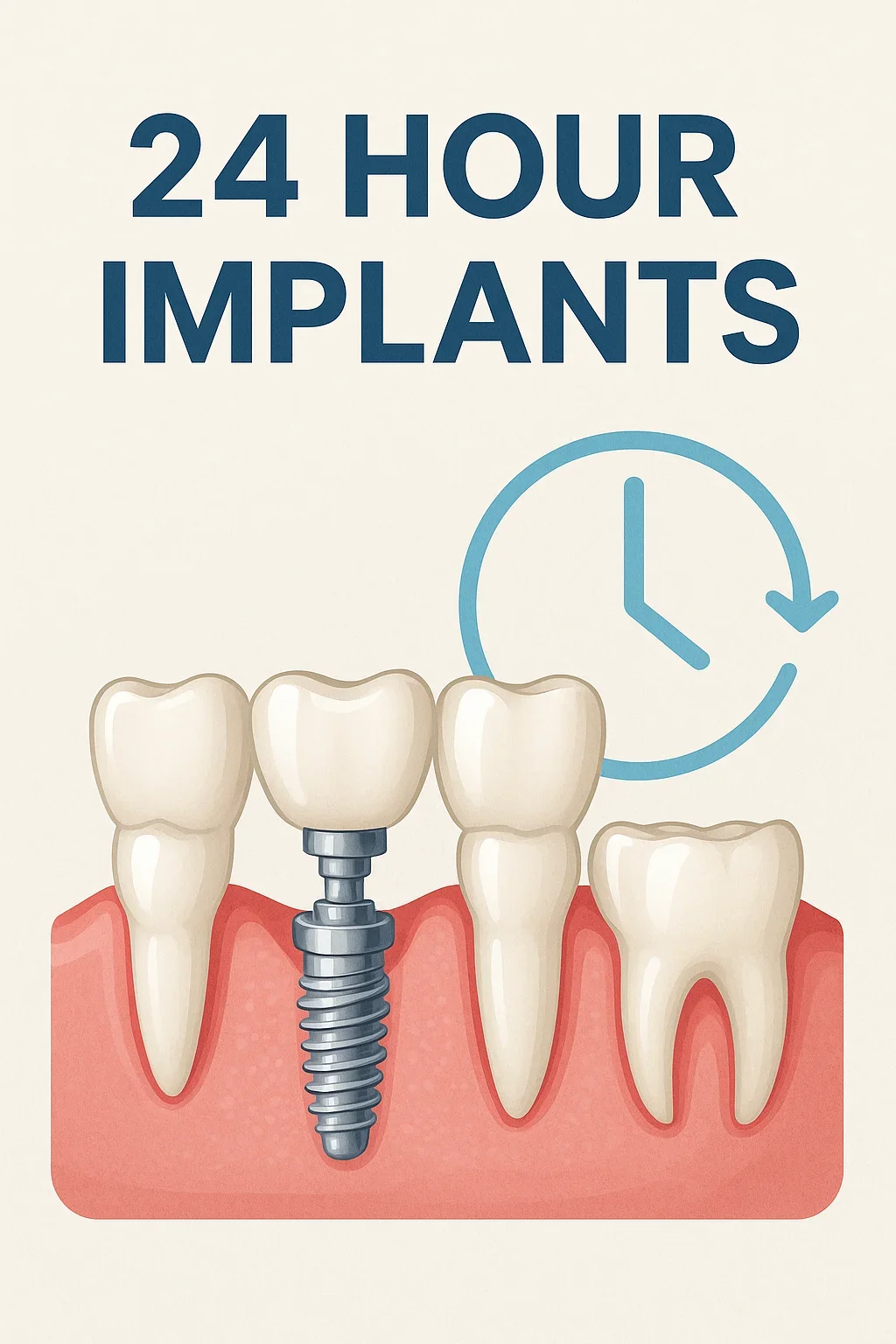
24 Hour Implants vs. All-on-4: Key Differences
Patients researching tooth replacement options often encounter both 24 hour implants and the All-on-4 implant system. While the two procedures may seem similar because they both provide immediate functional teeth, they are distinct in methodology, cost, and long-term application. Understanding the differences helps patients make informed decisions that suit their oral health, financial situation, and lifestyle goals. This section explores how 24 hour implants compare with All-on-4 solutions in detail. 🦷
What Are 24 Hour Implants?
24 hour implants refer to a procedure where dental implants are placed, and prosthetic teeth are attached on the same day. The approach can be applied to a single missing tooth, multiple teeth, or a full arch. The defining characteristic is immediacy: patients enter the clinic with missing or failing teeth and leave with functional replacements within 24 hours.
What Is the All-on-4 Technique?
The All-on-4 method is a specific type of full-arch restoration. Instead of replacing each missing tooth with its own implant, dentists strategically place four implants in the jaw. These implants support a fixed full-arch prosthesis, giving patients an entire row of teeth in a single procedure. Like 24 hour implants, the All-on-4 system also offers same-day functionality, but its scope is limited to full-arch replacement rather than single or multiple isolated teeth.
Key Differences Between 24 Hour Implants and All-on-4
1. Treatment Scope
24 hour implants can be used for a single missing tooth, several adjacent teeth, or full arches. The approach is flexible and personalized. By contrast, All-on-4 is strictly for complete arch restoration, making it unsuitable for patients missing only a few teeth.
2. Number of Implants Required
With 24 hour implants, the number of implants depends on the case—ranging from one to several implants. The All-on-4 method always uses exactly four implants per jaw, regardless of the number of teeth being replaced.
3. Prosthetic Design
Prosthetics attached to 24 hour implants vary depending on the case—single crowns, bridges, or full-arch prostheses. All-on-4 always involves a full-arch prosthesis supported by the four implants.
4. Bone Requirements
All-on-4 strategically tilts implants to maximize use of available bone, often avoiding the need for bone grafting. While 24 hour implants can also be placed without grafting in many cases, individual implant placement sometimes requires grafting or sinus lifts for stability.
5. Cost Comparison
The cost of 24 hour implants varies widely, depending on whether a patient needs one implant or a full arch. All-on-4 has more standardized pricing since it always involves four implants and a full prosthesis. On average, All-on-4 tends to be more affordable than placing multiple individual implants for an entire arch.
6. Aesthetic Outcomes
Both procedures deliver highly aesthetic results, but 24 hour implants offer more individualized solutions for single-tooth replacements. All-on-4, while natural-looking, may not provide the same level of customization for individual teeth.
Similarities Between the Two Procedures
Despite their differences, both 24 hour implants and All-on-4 share common features:
- Immediate functionality and aesthetics
- High success rates exceeding 95% in qualified patients
- Use of advanced imaging and guided surgery
- Preservation of jawbone density by stimulating bone through implant placement
- Improved confidence, speech, and nutrition compared to dentures
Which Option Is Right for You?
Ideal Candidates for 24 Hour Implants
Patients missing one or a few teeth, or those who want highly personalized restorations, are excellent candidates for 24 hour implants. The procedure is also suitable for individuals who desire a fast solution but want flexibility in prosthetic design.
Ideal Candidates for All-on-4
Patients with complete tooth loss in one or both arches benefit most from All-on-4 implants. This solution is often chosen by those seeking a cost-effective alternative to multiple implants while still achieving fixed, stable teeth in one procedure.
Longevity and Success Rates
Both 24 hour implants and All-on-4 provide long-term success when patients follow aftercare guidelines. The implants themselves can last a lifetime, while prosthetic restorations typically last 10–15 years. Studies show success rates between 94–97% for both treatments, provided patients maintain good oral hygiene and avoid harmful habits like smoking.
Cost Example Comparison
| Treatment Type | U.S. Average Cost | Turkey Average Cost |
|---|---|---|
| Single 24 Hour Implant | $3,500–$6,000 | $1,000–$2,000 |
| Multiple 24 Hour Implants (3–4 teeth) | $10,000–$20,000 | $4,000–$8,000 |
| All-on-4 (Full Arch) | $20,000–$40,000 | $7,000–$12,000 |
Conclusion
In summary, 24 hour implants and All-on-4 both provide revolutionary solutions for tooth replacement, but they cater to different needs. Same-day implants are versatile, suitable for single or multiple teeth, and highly customizable. All-on-4, on the other hand, is designed for full-arch replacement using a cost-efficient four-implant framework. By understanding the distinctions in treatment scope, cost, and longevity, patients can confidently choose the solution that best fits their dental and financial situation. 🌟