
When people first hear about 3 months invisalign, the immediate question is simple: “Can my smile really change in such a short time?” The answer depends on several factors, but for many patients with mild to moderate alignment issues, 3 months invisalign can deliver surprisingly noticeable improvements. 😊 In this comprehensive guide, we will explore exactly what happens during 3 months invisalign, what results you can realistically expect, and how to maximize your progress.
3 months invisalign refers to a short-term orthodontic treatment plan using clear aligners designed to gradually move teeth into better alignment. Unlike traditional braces, Invisalign aligners are nearly invisible, removable, and tailored specifically to your dental structure. This makes 3 months invisalign an attractive option for adults and teens who want quick, discreet improvements without long-term commitment.
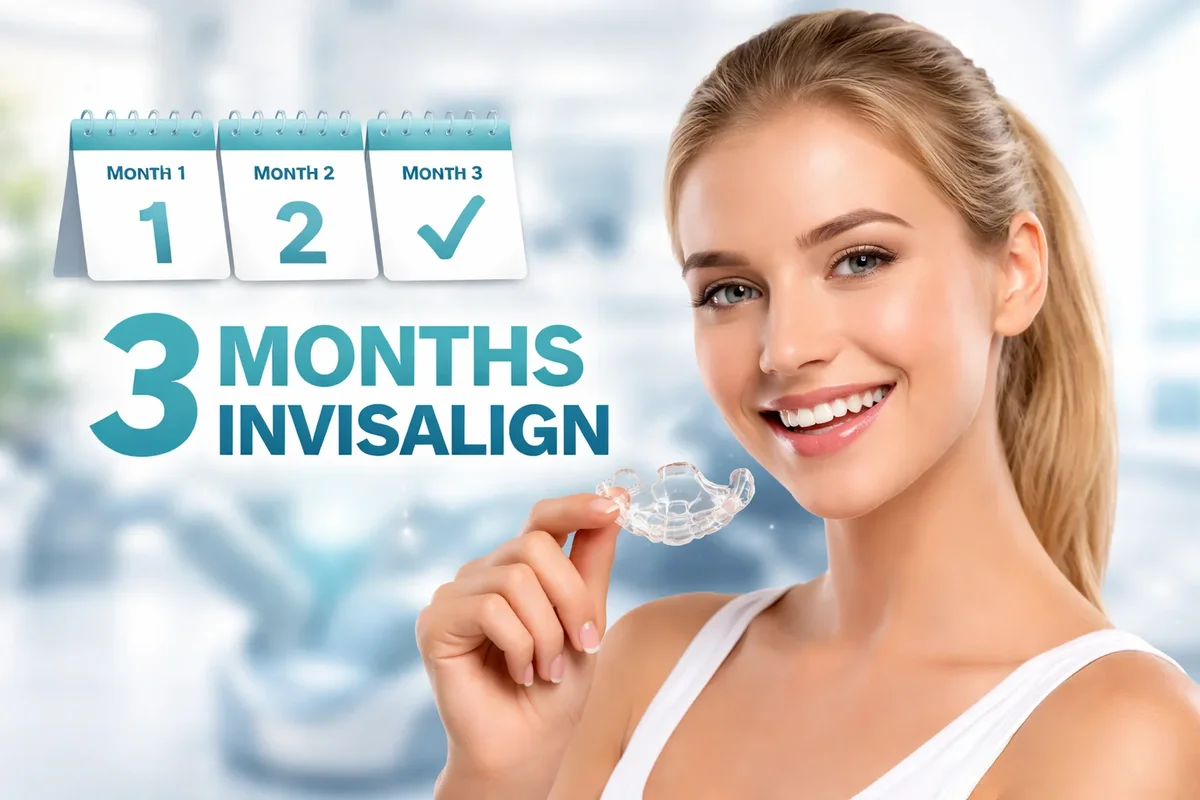
During the first few weeks of 3 months invisalign, your teeth begin to shift subtly. You may not notice dramatic changes immediately, but internally, the aligners are applying controlled pressure to guide teeth into new positions. By the end of the first month, many patients report visible differences, especially in spacing or minor crowding. This is one of the key advantages of 3 months invisalign—early motivation through visible progress. 🚀
By the second month of 3 months invisalign, the transformation becomes more apparent. Teeth that were slightly crooked may appear straighter, and gaps may start closing. This phase is critical because consistency plays a huge role. Wearing your aligners for 20–22 hours per day ensures that your 3 months invisalign plan stays on track. Skipping hours can delay progress and reduce effectiveness.
As you approach the final stage of 3 months invisalign, results become even more refined. The aligners continue to make small adjustments, improving symmetry and bite alignment. While 3 months invisalign may not completely fix complex orthodontic problems, it can significantly enhance your smile’s appearance. For many patients, this period acts as either a complete solution or the first phase of a longer treatment plan.
One of the biggest benefits of 3 months invisalign is its convenience. Because the aligners are removable, you can eat your favorite foods without restrictions and maintain better oral hygiene compared to traditional braces. Brushing and flossing are easier, which helps reduce the risk of cavities or gum issues during treatment. 🦷
However, it is important to understand that the success of 3 months invisalign depends on discipline. Patients who strictly follow their dentist’s instructions often see the best results. Regular check-ups and aligner changes are essential to ensure that your 3 months invisalign journey progresses smoothly.
From a professional standpoint, organizations like the American Dental Association emphasize the importance of personalized treatment planning in orthodontics. This means that while 3 months invisalign can be effective, your dentist will evaluate your specific condition before confirming if this short-term approach is suitable.
If you are considering starting 3 months invisalign, consulting with a qualified dental clinic is the first step. You can easily reach out through the Redent Klinik Contact Page to get a personalized assessment and begin your smile transformation journey.
In summary, 3 months invisalign offers a fast, comfortable, and discreet way to improve your smile. While results vary from person to person, many patients experience noticeable changes within this short timeframe. With proper usage, professional guidance, and commitment, 3 months invisalign can be a powerful solution for achieving a more confident smile in just a few months. ✨
What Happens During 3 Months Invisalign Treatment?
Understanding what happens during 3 months invisalign treatment is essential if you want realistic expectations and optimal results. While it may sound like a short timeframe, 3 months invisalign involves a highly structured and scientifically guided process that gradually shifts your teeth into better alignment. Each stage is carefully designed to ensure safe, controlled, and predictable movement. 😊
The Initial Consultation and Digital Planning
The journey of 3 months invisalign begins with a detailed consultation. Your dentist or orthodontist will examine your teeth, take digital scans, and create a customized treatment plan. Using advanced 3D imaging technology, they map out every stage of your 3 months invisalign transformation. This digital preview allows you to see how your smile is expected to change over time.
At this stage, your provider determines whether 3 months invisalign is suitable for your case. Typically, this short-term plan works best for mild crowding, small gaps, or minor alignment issues. If your case is more complex, your dentist may recommend extending beyond 3 months invisalign for optimal results.
Week-by-Week Tooth Movement Explained
Once your aligners are ready, your 3 months invisalign treatment officially begins. You will receive a series of clear aligners, each designed to be worn for about 1–2 weeks. These aligners apply gentle pressure to specific teeth, guiding them into their desired positions.
Weeks 1–4: Subtle Adjustments Begin
During the first month of 3 months invisalign, changes are often subtle but important. You may feel slight pressure or tightness when switching to a new aligner—this is a sign that the treatment is working. Teeth begin to shift gradually, even if the changes are not immediately visible.
Weeks 5–8: Noticeable Improvements
By the second month of 3 months invisalign, most patients start noticing visible improvements. Gaps may begin closing, and slightly crooked teeth may look straighter. This phase is often the most motivating part of 3 months invisalign, as progress becomes easier to see in the mirror. 🚀
Weeks 9–12: Refinement and Final Alignment
The final stage of 3 months invisalign focuses on refining tooth positions. Small adjustments are made to improve symmetry and bite alignment. While dramatic transformations may require longer treatment, 3 months invisalign can significantly enhance your smile’s overall appearance.
Daily Routine During 3 Months Invisalign
Your daily habits play a crucial role in the success of 3 months invisalign. Aligners must be worn for 20–22 hours per day to maintain consistent pressure on the teeth. Removing them too often can slow down progress and reduce the effectiveness of 3 months invisalign.
It is also important to clean your aligners regularly and maintain excellent oral hygiene. Because 3 months invisalign aligners are removable, brushing and flossing are much easier compared to traditional braces. This helps prevent plaque buildup and keeps your gums healthy throughout the treatment. 🦷
Monitoring Progress and Adjustments
Throughout your 3 months invisalign journey, you will have periodic check-ups with your dentist. These visits ensure that your teeth are moving as planned. If necessary, minor adjustments can be made to your treatment plan to improve results.
Some patients may require attachments—small, tooth-colored bumps that help the aligners grip and move teeth more effectively. These are commonly used during 3 months invisalign to enhance precision and control.
What Makes 3 Months Invisalign Effective?
The effectiveness of 3 months invisalign lies in its combination of advanced technology and patient compliance. Each aligner is designed with precision, but success ultimately depends on how consistently you wear them. Patients who follow instructions closely often achieve the best outcomes within the 3 months invisalign timeframe.
Trusted organizations like the American Dental Association highlight the importance of professional supervision in orthodontic treatments. This ensures that 3 months invisalign is both safe and effective for your specific needs.
Support and Guidance During Treatment
If you ever feel unsure during your 3 months invisalign journey, reaching out to your dental provider is essential. Professional guidance can help you stay on track and avoid common mistakes. You can easily contact experts through the Redent Klinik Contact Page to get personalized advice and support.
In conclusion, 3 months invisalign is a structured, step-by-step process that delivers gradual yet noticeable improvements. From digital planning to final refinements, every stage plays a vital role in achieving a healthier, more confident smile. With consistency, proper care, and expert supervision, 3 months invisalign can provide impressive results in a relatively short time. ✨
Visible Changes After 3 Months Invisalign: Before and After Insights
One of the most exciting aspects of starting 3 months invisalign is the anticipation of visible results. Patients often wonder how much their smile can truly change within such a short period. The truth is that 3 months invisalign can produce noticeable and satisfying improvements, especially for mild to moderate alignment issues. While results vary depending on individual cases, many patients experience a clear transformation that boosts both confidence and oral health. 😊
What “Before and After” Really Means in 3 Months Invisalign
When discussing 3 months invisalign, it’s important to set realistic expectations. “Before and after” does not always mean a complete orthodontic transformation. Instead, it often refers to visible improvement in alignment, spacing, and overall smile aesthetics. For example, slightly crooked teeth may become straighter, and small gaps can significantly reduce during 3 months invisalign.
The goal of 3 months invisalign is often to enhance your smile rather than completely overhaul complex dental issues. For many patients, this improvement is more than enough to achieve a confident, natural-looking smile without long-term treatment.
Common Changes You Can Expect
Straighter Front Teeth
One of the most noticeable outcomes of 3 months invisalign is the alignment of front teeth. Since these teeth are most visible when you smile, even small corrections can make a big difference. Patients often report that their teeth look more uniform and symmetrical after completing 3 months invisalign.
Reduction in Gaps and Spacing
Another major improvement seen in 3 months invisalign is the reduction of gaps between teeth. Small spaces can close significantly within this timeframe, making your smile appear fuller and more balanced. This is particularly beneficial for patients who feel self-conscious about visible gaps.
Improved Tooth Positioning
During 3 months invisalign, teeth gradually shift into more optimal positions. Even if the movement is subtle, it can improve how your teeth fit together and enhance overall bite alignment. These changes contribute not only to aesthetics but also to better oral function.
Real Patient Expectations vs Reality
It’s important to understand that 3 months invisalign is not a one-size-fits-all solution. While some patients achieve dramatic improvements, others may see more subtle changes. The effectiveness of 3 months invisalign depends on factors such as the complexity of your case, how consistently you wear your aligners, and your body’s natural response to treatment.
Patients who follow their treatment plan strictly—wearing aligners for 20–22 hours per day—tend to achieve the most impressive results within the 3 months invisalign period. Skipping wear time can delay progress and reduce the visible impact.
Visualizing Your Results Before Starting
One of the biggest advantages of 3 months invisalign is the ability to preview your expected results before treatment begins. Using digital simulation technology, your dentist can show you a projected “before and after” image. This helps you understand what 3 months invisalign can realistically achieve for your smile.
According to the American Dental Association, digital planning tools play a crucial role in improving patient satisfaction and treatment accuracy. This technology ensures that your 3 months invisalign journey is tailored to your specific dental needs.
Emotional Impact of Visible Changes
The transformation achieved through 3 months invisalign is not just physical—it’s emotional as well. Many patients report feeling more confident in social and professional settings. Smiling becomes more natural and less self-conscious, which can have a positive impact on overall well-being. ✨
Even small improvements can lead to significant psychological benefits. This is why 3 months invisalign is often considered a worthwhile investment for those seeking quick yet meaningful results.
When Results May Be Limited
While 3 months invisalign can deliver impressive changes, it may not be enough for more complex cases such as severe crowding, major bite issues, or rotated teeth. In such situations, your dentist may recommend extending treatment beyond 3 months invisalign to achieve optimal results.
However, even in these cases, the initial 3 months invisalign period can serve as a strong foundation for further improvements.
Tracking Your Progress Effectively
Taking photos throughout your 3 months invisalign journey is a great way to track progress. Comparing images from the beginning and end of treatment can highlight changes that might not be obvious day-to-day. This visual evidence reinforces the effectiveness of 3 months invisalign and keeps you motivated.
Professional Support for Best Results
To maximize the visible benefits of 3 months invisalign, staying in touch with your dental provider is essential. Regular check-ups ensure that your treatment is progressing as planned. If you need expert guidance or a personalized evaluation, you can easily reach out through the Redent Klinik Contact Page.
In conclusion, 3 months invisalign can produce noticeable and confidence-boosting changes in a relatively short time. While it may not completely transform complex cases, it offers a powerful solution for improving smile aesthetics quickly and effectively. With proper care, consistency, and professional support, 3 months invisalign can deliver results that truly make a difference. 😁
Who Is the Ideal Candidate for 3 Months Invisalign?
Not everyone is a perfect fit for 3 months invisalign, and understanding whether you are an ideal candidate is one of the most important steps before starting treatment. While 3 months invisalign offers fast and effective results, it is specifically designed for certain types of dental conditions. Knowing if you qualify will help you set realistic expectations and achieve the best possible outcome. 😊
Understanding the Scope of 3 Months Invisalign
3 months invisalign is typically recommended for mild to moderate orthodontic issues. This includes minor crowding, small gaps, and slight misalignment of teeth. If your dental concerns fall within this range, 3 months invisalign can be a highly effective and efficient solution.
However, if you have severe crowding, significant bite issues, or complex alignment problems, 3 months invisalign alone may not be sufficient. In such cases, your dentist may suggest extending the treatment beyond 3 months invisalign or combining it with additional orthodontic methods.
Key Characteristics of Ideal Candidates
Mild Crowding or Spacing Issues
Patients with slightly crooked teeth or small gaps are often the best candidates for 3 months invisalign. These issues can typically be corrected quickly, making 3 months invisalign an ideal choice for those seeking fast improvements without long-term treatment.
Healthy Teeth and Gums
Good oral health is essential before starting 3 months invisalign. Patients should have healthy gums and be free from untreated cavities or infections. Addressing these issues beforehand ensures that 3 months invisalign can proceed safely and effectively. 🦷
Commitment to Wearing Aligners
One of the most important requirements for 3 months invisalign is patient compliance. Aligners must be worn for 20–22 hours per day. Individuals who are disciplined and committed to following instructions are far more likely to achieve successful results with 3 months invisalign.
Desire for a Discreet Treatment Option
Many patients choose 3 months invisalign because of its nearly invisible appearance. If you prefer a subtle, low-profile orthodontic solution, 3 months invisalign is an excellent option compared to traditional metal braces.
Age Considerations for 3 Months Invisalign
3 months invisalign is suitable for both adults and teenagers, but it is particularly popular among adults who want quick results without noticeable braces. Since 3 months invisalign requires responsibility and consistency, it is best suited for individuals who can manage their aligner schedule effectively.
Teenagers can also benefit from 3 months invisalign, especially if their orthodontic issues are minor. However, parental supervision may be necessary to ensure proper usage and compliance.
Who May Not Be Suitable for 3 Months Invisalign?
While 3 months invisalign is highly effective for many patients, it is not ideal for everyone. Individuals with severe bite problems, such as overbite, underbite, or crossbite, may require longer treatment plans. Additionally, rotated teeth or complex structural issues often need more advanced orthodontic solutions beyond 3 months invisalign.
Patients who struggle with consistency—such as frequently removing aligners or forgetting to wear them—may also find 3 months invisalign less effective. In such cases, alternative treatments might be more suitable.
The Role of Professional Evaluation
A professional consultation is essential to determine if 3 months invisalign is right for you. Dentists use advanced diagnostic tools, including digital scans and bite analysis, to evaluate your dental condition. This ensures that your 3 months invisalign treatment plan is tailored to your specific needs.
According to the American Dental Association, personalized treatment planning is key to achieving successful orthodontic outcomes. This is especially important when considering short-term options like 3 months invisalign.
Lifestyle Factors That Influence Suitability
Your lifestyle can also impact whether 3 months invisalign is a good fit. For example, individuals with busy schedules often prefer 3 months invisalign because it requires fewer in-office visits compared to traditional braces. Additionally, the ability to remove aligners makes eating and cleaning teeth much more convenient.
However, this flexibility also requires responsibility. If you frequently snack or forget to put your aligners back in, your 3 months invisalign progress may be affected. Consistency remains the key to success.
Benefits for the Right Candidate
For those who meet the criteria, 3 months invisalign offers numerous benefits. These include faster results, improved comfort, and enhanced aesthetics. Patients often experience a boost in confidence as their smile improves within a relatively short period. ✨
Additionally, 3 months invisalign allows for better oral hygiene compared to braces, reducing the risk of plaque buildup and gum issues during treatment.
Getting Started with the Right Guidance
If you believe you are a good candidate for 3 months invisalign, the next step is to consult with a qualified dental professional. They will assess your condition and guide you through the process. For personalized advice and treatment planning, you can visit the Redent Klinik Contact Page.
In conclusion, the ideal candidate for 3 months invisalign is someone with mild alignment issues, good oral health, and a strong commitment to following treatment guidelines. With the right conditions and professional support, 3 months invisalign can deliver fast, effective, and confidence-boosting results. 😁
How Effective Is 3 Months Invisalign Compared to Braces?
When considering orthodontic treatment, one of the most common questions patients ask is how 3 months invisalign compares to traditional braces. Both options aim to improve tooth alignment and enhance your smile, but they differ significantly in terms of comfort, appearance, treatment duration, and effectiveness. Understanding these differences will help you decide whether 3 months invisalign is the right choice for your needs. 😊
Core Differences Between 3 Months Invisalign and Braces
3 months invisalign uses a series of custom-made, clear aligners to gradually move teeth into position. These aligners are removable and nearly invisible, making them a popular choice for adults and professionals. In contrast, traditional braces rely on metal brackets and wires that are fixed to the teeth and adjusted periodically.
One of the main advantages of 3 months invisalign is its flexibility. You can remove the aligners when eating or brushing, which is not possible with braces. However, this flexibility also requires discipline, as consistent wear is essential for 3 months invisalign to be effective.
Effectiveness for Different Dental Issues
Mild to Moderate Cases
For patients with minor alignment issues, 3 months invisalign can be just as effective as braces. It is particularly useful for correcting small gaps, slight crowding, and minor rotations. In these cases, 3 months invisalign often delivers faster results compared to traditional braces.
Complex Orthodontic Problems
When it comes to severe crowding, significant bite problems, or complex tooth movements, traditional braces still have an advantage. Braces provide more control over tooth positioning, making them more suitable for complicated cases. In such situations, 3 months invisalign may serve as an initial phase rather than a complete solution.
Speed of Results
One of the biggest selling points of 3 months invisalign is its speed. As the name suggests, this treatment is designed to produce noticeable improvements within a short period. Many patients see visible changes in just a few weeks, making 3 months invisalign ideal for those seeking quick results. 🚀
In comparison, traditional braces typically require 12 to 24 months to achieve full results. While braces may be more comprehensive, they are not as fast as 3 months invisalign for minor corrections.
Comfort and Convenience
Comfort is another area where 3 months invisalign stands out. The aligners are made from smooth plastic, reducing the risk of irritation to the gums and cheeks. Traditional braces, on the other hand, can cause discomfort due to metal brackets and wires.
Additionally, 3 months invisalign allows for easier oral hygiene. Since the aligners are removable, you can brush and floss normally, which helps maintain better dental health throughout the treatment. 🦷
Aesthetic Advantages
For many patients, appearance is a major factor when choosing orthodontic treatment. 3 months invisalign is virtually invisible, making it an excellent option for those who want to straighten their teeth discreetly. This is especially beneficial for adults in professional or social settings.
In contrast, traditional braces are more noticeable, which may make some patients feel self-conscious. This aesthetic advantage is one of the key reasons why 3 months invisalign has become increasingly popular.
Patient Responsibility and Compliance
While 3 months invisalign offers many benefits, it also requires a higher level of responsibility. Patients must wear their aligners for 20–22 hours per day to achieve optimal results. Failure to do so can significantly reduce the effectiveness of 3 months invisalign.
Braces, on the other hand, are fixed in place, so they do not rely on patient compliance in the same way. This can make braces a better option for individuals who may struggle with consistency.
Scientific and Professional Perspective
According to the American Dental Association, both clear aligners and traditional braces are effective orthodontic treatments when used appropriately. The key is selecting the right method based on the patient’s specific needs. For suitable cases, 3 months invisalign can deliver results comparable to braces in a much shorter time.
Cost vs Value Consideration
Although we will discuss pricing in more detail later, it is worth noting that 3 months invisalign can sometimes be comparable in cost to braces, depending on the complexity of the case. However, the shorter treatment duration and added convenience often make 3 months invisalign a high-value option for many patients.
Making the Right Choice
Choosing between 3 months invisalign and braces ultimately depends on your dental condition, lifestyle, and personal preferences. If you are looking for a fast, discreet, and comfortable solution for minor alignment issues, 3 months invisalign is an excellent choice.
For personalized advice and to determine the best treatment for your needs, you can consult professionals through the Redent Klinik Contact Page.
In conclusion, 3 months invisalign is highly effective for the right candidates, offering speed, comfort, and aesthetic advantages over traditional braces. While braces remain the gold standard for complex cases, 3 months invisalign provides a modern, convenient alternative for achieving a straighter smile in a shorter time. 😁
Daily Life with 3 Months Invisalign: Comfort, Eating, and Hygiene
Adapting to 3 months invisalign is generally smooth, but understanding how it fits into your daily routine is key to achieving the best results. Unlike traditional braces, 3 months invisalign offers flexibility and comfort, making it easier to maintain your lifestyle while improving your smile. However, this convenience also comes with responsibility. Let’s explore how 3 months invisalign affects your daily life in terms of comfort, eating habits, and oral hygiene. 😊
Comfort Level During 3 Months Invisalign
One of the most appreciated benefits of 3 months invisalign is its comfort. The aligners are made of smooth, medical-grade plastic that fits snugly over your teeth. Unlike metal braces, there are no sharp edges or wires that can irritate your cheeks and gums.
Initial Adjustment Period
During the first few days of 3 months invisalign, you may feel slight pressure or tightness. This is completely normal and indicates that the aligners are working. Each new aligner in your 3 months invisalign series may cause similar mild discomfort for a short period.
Speech and Daily Activities
Some patients notice a slight lisp when they first start 3 months invisalign, but this usually disappears within a few days as you adjust. Most people quickly become comfortable speaking, working, and socializing while wearing their aligners. 🎯
Eating with 3 Months Invisalign
One of the biggest lifestyle advantages of 3 months invisalign is the freedom to eat whatever you like. Since the aligners are removable, you do not have to avoid hard, sticky, or crunchy foods as you would with traditional braces.
Removing Aligners Before Meals
Before eating, you must remove your aligners. This is essential to prevent damage and maintain hygiene. After meals, it is important to brush your teeth before putting the aligners back in to keep your 3 months invisalign treatment clean and effective.
Avoiding Common Mistakes
While 3 months invisalign offers flexibility, some habits can negatively affect your progress. For example, drinking sugary or colored beverages while wearing aligners can lead to staining and plaque buildup. Always remove your aligners before consuming anything other than water during your 3 months invisalign journey.
Oral Hygiene During 3 Months Invisalign
Maintaining excellent oral hygiene is easier with 3 months invisalign compared to braces. Since the aligners are removable, you can brush and floss normally, reducing the risk of cavities and gum disease. 🦷
Brushing and Flossing Routine
During 3 months invisalign, you should brush your teeth after every meal and floss at least once a day. This prevents food particles from getting trapped under the aligners, which could lead to bad breath or dental issues.
Cleaning the Aligners
Your aligners also require regular cleaning. Rinse them with lukewarm water and gently brush them with a soft toothbrush. Keeping your aligners clean ensures that your 3 months invisalign treatment remains hygienic and comfortable.
Wearing Time and Daily Discipline
To achieve the best results, 3 months invisalign aligners must be worn for 20–22 hours per day. This means you should only remove them for eating, drinking, and cleaning. Consistency is crucial—missing wear time can delay your progress and reduce the effectiveness of 3 months invisalign.
Creating a routine can help you stay on track. For example, always putting your aligners back in immediately after meals ensures that your 3 months invisalign schedule remains consistent.
Social and Professional Life
One of the reasons many people choose 3 months invisalign is its discreet appearance. The clear aligners are barely noticeable, allowing you to smile confidently in social and professional settings. This makes 3 months invisalign especially appealing for adults who want subtle orthodontic treatment. ✨
You can attend meetings, events, and social gatherings without feeling self-conscious. This level of confidence is a major advantage of 3 months invisalign compared to traditional braces.
Travel and Convenience
Traveling during 3 months invisalign is simple, but it requires planning. Always carry your aligner case, toothbrush, and cleaning supplies. Maintaining your routine while traveling ensures that your 3 months invisalign treatment stays on track.
Professional Guidance and Support
If you encounter any issues during your 3 months invisalign journey, consulting your dentist is essential. Regular check-ups help ensure that your treatment is progressing correctly. For expert support, you can visit the Redent Klinik Contact Page.
Additionally, guidelines from the American Dental Association emphasize the importance of maintaining oral hygiene during orthodontic treatments, including 3 months invisalign.
Balancing Convenience and Responsibility
While 3 months invisalign offers unmatched convenience, success depends on your commitment. The ability to remove aligners is both a benefit and a responsibility. Staying disciplined ensures that your 3 months invisalign treatment delivers the desired results within the expected timeframe.
In conclusion, daily life with 3 months invisalign is comfortable, flexible, and easy to manage. From enjoying your favorite foods to maintaining excellent oral hygiene, this treatment fits seamlessly into modern lifestyles. With proper care and consistency, 3 months invisalign can help you achieve a healthier, more confident smile without disrupting your routine. 😁
Common Mistakes That Can Ruin Your 3 Months Invisalign Progress
Starting 3 months invisalign is an exciting step toward a better smile, but many patients unknowingly make mistakes that can slow down or even ruin their progress. While 3 months invisalign is designed to be convenient and effective, its success depends heavily on patient behavior. Understanding these common mistakes—and how to avoid them—can make a huge difference in achieving the results you expect. ⚠️
Not Wearing Aligners Enough Hours
The most common and damaging mistake during 3 months invisalign is not wearing the aligners for the recommended 20–22 hours per day. Because the aligners are removable, some patients take advantage of this flexibility too often.
Why Wearing Time Matters
3 months invisalign works by applying consistent pressure to your teeth. If you frequently remove your aligners, that pressure is interrupted, which slows down movement. This can extend your treatment time or reduce the effectiveness of 3 months invisalign.
How to Stay Consistent
Set reminders or create a routine to ensure you wear your aligners consistently. The success of 3 months invisalign largely depends on discipline and commitment. ⏰
Skipping Aligner Changes
Another common issue with 3 months invisalign is not switching aligners on schedule. Each aligner is designed to move your teeth gradually, and delays can disrupt the entire treatment plan.
Following the Treatment Plan
Your dentist will provide a clear schedule for changing aligners. Sticking to this schedule is essential for maintaining progress during 3 months invisalign. Skipping or delaying changes can lead to misalignment and reduced results.
Poor Oral Hygiene Habits
Maintaining good oral hygiene is crucial during 3 months invisalign. Neglecting this can lead to plaque buildup, bad breath, and even cavities.
Brushing and Flossing Importance
Always brush your teeth before putting your aligners back in. Food particles trapped under aligners can cause dental issues and interfere with your 3 months invisalign progress. 🦷
Cleaning Aligners Properly
Dirty aligners can harbor bacteria and affect both your oral health and the effectiveness of 3 months invisalign. Clean them daily using appropriate methods recommended by your dentist.
Eating or Drinking with Aligners On
One major mistake during 3 months invisalign is eating or drinking anything other than water while wearing aligners. This can stain the aligners and increase the risk of cavities.
Why This Is Harmful
Sugary or acidic drinks can get trapped between your teeth and aligners, creating an ideal environment for bacteria. This not only affects your oral health but can also compromise your 3 months invisalign results.
Losing or Damaging Aligners
Because 3 months invisalign aligners are removable, they can easily be misplaced or damaged if not handled carefully.
Proper Storage Tips
Always store your aligners in their case when not in use. Wrapping them in napkins or leaving them exposed increases the risk of loss or damage, which can delay your 3 months invisalign treatment.
Ignoring Discomfort or Issues
Some patients experience discomfort during 3 months invisalign and choose to ignore it or stop wearing their aligners. This can disrupt the treatment process.
When to Seek Help
If you experience unusual pain or issues, contact your dentist immediately. Professional guidance ensures that your 3 months invisalign treatment stays on track. You can easily reach out via the Redent Klinik Contact Page.
Not Attending Check-Ups
Regular dental check-ups are an essential part of 3 months invisalign. Skipping these appointments can lead to unnoticed problems that affect your progress.
According to the American Dental Association, professional monitoring is crucial for successful orthodontic treatment. This applies directly to 3 months invisalign as well.
Expecting Instant Results
While 3 months invisalign offers faster results than many alternatives, expecting immediate transformation can lead to frustration. Tooth movement is a gradual process.
Patience Is Key
Understanding that progress takes time helps you stay committed to your 3 months invisalign journey. Small, consistent improvements lead to the best results. 🌟
Overlooking Retention After Treatment
Some patients believe that once 3 months invisalign is complete, no further action is needed. However, retention is critical to maintaining your results.
Using Retainers
Your dentist may recommend wearing retainers after completing 3 months invisalign. This prevents teeth from shifting back to their original positions and ensures long-lasting results.
Final Thoughts on Avoiding Mistakes
Success with 3 months invisalign is not just about the technology—it’s about how you use it. Avoiding these common mistakes can significantly improve your outcome and help you achieve the smile you want.
In conclusion, 3 months invisalign is highly effective when used correctly, but small errors can have a big impact. By staying disciplined, maintaining good hygiene, and following professional advice, you can ensure that your 3 months invisalign journey is smooth, successful, and rewarding. 😁
Cost Breakdown of 3 Months Invisalign Treatment
One of the most important questions patients ask before starting 3 months invisalign is about the cost. While the idea of achieving a better smile in a short period is appealing, understanding the financial aspect of 3 months invisalign helps you make an informed decision. The cost can vary depending on several factors, but overall, 3 months invisalign is often considered a cost-effective solution for mild to moderate dental corrections. 💰
Average Cost of 3 Months Invisalign
The price of 3 months invisalign typically ranges between $1,500 and $4,000, depending on the complexity of your case and the clinic you choose. Because 3 months invisalign is a shorter treatment compared to full Invisalign plans, it is generally more affordable.
Here is a simplified cost overview:
Basic 3 months invisalign case: $1,500 – $2,500
Moderate correction case: $2,500 – $3,500
Advanced short-term cases: $3,500 – $4,000
It is important to note that these figures can vary based on location, dentist expertise, and additional services included in your 3 months invisalign plan.
Factors That Influence the Cost
Complexity of the Case
The more complex your dental issue, the higher the cost of 3 months invisalign. Minor spacing or alignment issues require fewer aligners, while more involved cases may need additional adjustments within the 3 months invisalign timeframe.
Clinic and Dentist Experience
Experienced dental professionals may charge more for 3 months invisalign, but their expertise often leads to better and more predictable results. Choosing a reputable clinic ensures that your 3 months invisalign treatment is both safe and effective.
Technology and Equipment
Clinics that use advanced 3D scanning and digital planning tools may have slightly higher costs for 3 months invisalign. However, these technologies improve precision and overall treatment outcomes.
What Is Included in the Price?
When you pay for 3 months invisalign, you are not just paying for the aligners. The cost usually includes several important components:
- Initial consultation and dental assessment
- 3D digital scans and treatment planning
- Custom aligner production
- Regular check-ups during 3 months invisalign
- Post-treatment evaluation
Some clinics may also include retainers after completing 3 months invisalign, while others may charge separately for them.
Insurance and Payment Options
Dental Insurance Coverage
Some dental insurance plans partially cover orthodontic treatments, including 3 months invisalign. Coverage varies, so it’s important to check with your provider to understand how much of your 3 months invisalign cost will be reimbursed.
Flexible Payment Plans
Many clinics offer installment plans to make 3 months invisalign more accessible. Instead of paying the full amount upfront, you can spread the cost over several months. This makes 3 months invisalign a practical option for many patients. 💳
Cost vs Value: Is It Worth It?
While the price of 3 months invisalign may seem significant, it is important to consider the value it provides. A straighter smile can improve your confidence, oral health, and even professional opportunities. Compared to longer treatments, 3 months invisalign offers quicker results, which many patients find highly valuable.
Additionally, the convenience and comfort of 3 months invisalign often outweigh the cost difference compared to traditional braces.
Comparing Costs with Traditional Braces
Traditional braces typically cost between $3,000 and $7,000 and require a longer treatment period. In comparison, 3 months invisalign is often more affordable and significantly faster for suitable cases.
However, braces may still be necessary for complex dental issues, where 3 months invisalign alone may not be sufficient.
Hidden Costs to Consider
While 3 months invisalign is generally straightforward, there may be additional costs to keep in mind:
- Replacement aligners if lost or damaged
- Retainers after treatment
- Additional refinements if needed
Discussing these potential costs with your dentist ensures there are no surprises during your 3 months invisalign journey.
Professional Guidance for Accurate Pricing
To get an exact cost for 3 months invisalign, a professional consultation is ضروری. Dentists evaluate your specific needs and provide a personalized quote. For detailed pricing and expert advice, you can visit the Redent Klinik Contact Page.
According to the American Dental Association, understanding treatment costs and options is an important part of making informed dental decisions, especially for treatments like 3 months invisalign.
Final Thoughts on Cost
In conclusion, 3 months invisalign offers a balance between affordability, convenience, and effectiveness. While costs can vary, the investment often pays off in the form of improved confidence and oral health. By understanding the pricing structure and planning accordingly, you can confidently start your 3 months invisalign journey and achieve the smile you’ve always wanted. 😁
Tips to Maximize Results in Your 3 Months Invisalign Journey
Getting the best possible outcome from 3 months invisalign is not just about wearing aligners—it’s about using the treatment strategically and consistently. While 3 months invisalign is designed to deliver fast and effective results, small daily habits can make a huge difference in how successful your treatment becomes. If you want to achieve the most noticeable improvement within this short timeframe, following the right tips is essential. 🚀
Wear Your Aligners Consistently
The number one rule for success with 3 months invisalign is simple: wear your aligners for 20–22 hours per day. This ensures continuous pressure on your teeth, which is necessary for proper movement.
Create a Daily Routine
Building a consistent routine is key to maximizing your 3 months invisalign results. Always put your aligners back in immediately after eating or brushing. Setting reminders on your phone can help you stay on track throughout your 3 months invisalign journey.
Avoid “Extended Breaks”
Leaving your aligners out for long periods can reverse progress. Even a few hours of missed wear time can impact the effectiveness of 3 months invisalign, so consistency is critical. ⏰
Switch Aligners on Schedule
Each aligner in your 3 months invisalign plan is designed for a specific stage of tooth movement. Changing them on time ensures that your teeth continue moving as planned.
Follow Professional Instructions
Your dentist will provide a schedule for switching aligners. Sticking to this schedule helps maintain the momentum of your 3 months invisalign treatment and prevents delays.
Maintain Excellent Oral Hygiene
Clean teeth and aligners are essential for achieving the best results with 3 months invisalign. Poor hygiene can lead to plaque buildup, bad breath, and even dental problems that interrupt your treatment. 🦷
Brush After Every Meal
Before reinserting your aligners, always brush your teeth. This prevents food particles from getting trapped and ensures your 3 months invisalign treatment remains hygienic.
Clean Your Aligners Daily
Rinse and gently clean your aligners every day to avoid bacteria buildup. Keeping your aligners clean supports both your oral health and the effectiveness of 3 months invisalign.
Be Mindful of What You Drink
During 3 months invisalign, you should only drink water while wearing your aligners. Sugary or colored drinks can stain the aligners and increase the risk of cavities.
Removing your aligners before consuming other beverages helps protect your teeth and ensures your 3 months invisalign treatment stays on track.
Track Your Progress
Monitoring your progress can help you stay motivated throughout your 3 months invisalign journey. Taking weekly photos allows you to see changes that might not be noticeable day-to-day.
Celebrate Small Wins
Every improvement matters. Recognizing the progress you make during 3 months invisalign keeps you engaged and committed to the process. 🎉
Attend Regular Check-Ups
Even though 3 months invisalign requires fewer visits than traditional braces, attending scheduled check-ups is essential. Your dentist will monitor your progress and make adjustments if necessary.
According to the American Dental Association, professional supervision plays a crucial role in ensuring successful orthodontic outcomes, including treatments like 3 months invisalign.
Use Attachments and Accessories Properly
Some 3 months invisalign treatments include attachments or elastics to improve tooth movement. These small additions can significantly enhance results when used correctly.
Follow Usage Instructions Carefully
Ignoring or misusing attachments can reduce the effectiveness of 3 months invisalign. Always follow your dentist’s instructions to get the best outcome.
Stay in Communication with Your Dentist
If you experience any issues during 3 months invisalign, do not hesitate to contact your dental provider. Early intervention can prevent small problems from becoming major setbacks.
For professional support and personalized guidance, you can visit the Redent Klinik Contact Page and get expert advice tailored to your needs.
Adopt a Long-Term Mindset
Although 3 months invisalign is a short-term treatment, maintaining results requires a long-term perspective. Following all guidelines during treatment ensures that your improvements last even after completion.
Prepare for Retention
After finishing 3 months invisalign, your dentist may recommend wearing retainers. This helps keep your teeth in their new positions and prevents relapse.
Final Thoughts on Maximizing Results
Success with 3 months invisalign comes down to consistency, discipline, and proper care. By following these tips, you can significantly enhance your results and achieve a straighter, healthier smile in a short period.
In conclusion, 3 months invisalign offers an efficient path to smile improvement, but the outcome depends on your daily habits. With the right approach, dedication, and professional support, your 3 months invisalign journey can deliver impressive and lasting results. 😁
When 3 Months Invisalign Is Not Enough: What Comes Next?
While 3 months invisalign can deliver impressive results for many patients, it is important to understand that this short-term treatment is not always the final step. In some cases, 3 months invisalign serves as the beginning of a longer orthodontic journey rather than a complete solution. Knowing what comes next helps you stay prepared, avoid disappointment, and continue progressing toward your ideal smile. 😊
Why 3 Months Invisalign May Not Be Enough
The effectiveness of 3 months invisalign largely depends on the complexity of your dental condition. While it works very well for mild issues, more advanced cases often require extended treatment.
Complex Alignment Problems
If you have severe crowding, rotated teeth, or significant bite misalignment, 3 months invisalign may only provide partial correction. In these situations, your dentist may recommend continuing treatment beyond the initial 3 months invisalign period.
Biological Response to Treatment
Every patient’s body responds differently to orthodontic movement. Some individuals may experience slower tooth movement, meaning that 3 months invisalign alone may not achieve the desired results within the expected timeframe.
Extending Your Invisalign Treatment
One of the most common next steps after 3 months invisalign is extending your aligner treatment. This involves continuing with additional sets of aligners to further refine your smile.
Refinement Aligners
Refinement aligners are often used after completing 3 months invisalign. These aligners target small imperfections that remain after the initial phase. They help perfect alignment and improve overall aesthetics.
Additional Treatment Phases
In some cases, your dentist may design a longer treatment plan that builds on the progress made during 3 months invisalign. This ensures that your smile reaches its full potential.
Combining Treatments for Better Results
Sometimes, 3 months invisalign is combined with other orthodontic methods to achieve optimal results. This hybrid approach can address more complex issues effectively.
Attachments and Elastics
Attachments and elastics may be added after 3 months invisalign to improve tooth movement and bite correction. These tools enhance the effectiveness of continued treatment.
Switching to Other Orthodontic Options
In rare cases, patients may transition from 3 months invisalign to traditional braces or longer Invisalign plans. This is usually recommended when more precise control is needed for complex dental problems.
The Importance of Retention After 3 Months Invisalign
Even if your results after 3 months invisalign meet your expectations, retention is crucial. Without proper retention, teeth can gradually shift back to their original positions.
Using Retainers
Your dentist will likely recommend wearing retainers after completing 3 months invisalign. Retainers help maintain your results and ensure long-term stability. 🦷
Long-Term Maintenance
Maintaining your smile after 3 months invisalign requires ongoing care. Regular dental visits and good oral hygiene habits play a key role in preserving your results.
Evaluating Your Results Realistically
After completing 3 months invisalign, it’s important to evaluate your results with your dentist. They will assess whether your goals have been met or if further adjustments are needed.
According to the American Dental Association, follow-up evaluations are essential in orthodontic treatments to ensure long-term success. This applies directly to 3 months invisalign and any subsequent steps.
Emotional and Confidence Benefits
Even if 3 months invisalign is not the final step, the improvements achieved during this phase can significantly boost your confidence. Many patients feel more motivated to continue treatment after seeing the initial results. ✨
Planning Your Next Steps
If additional treatment is needed after 3 months invisalign, your dentist will create a personalized plan tailored to your goals. This ensures that every step builds on the progress you have already made.
For expert guidance and personalized treatment planning, you can visit the Redent Klinik Contact Page to connect with dental professionals who can help you determine the best path forward.
Staying Committed to the Process
Continuing beyond 3 months invisalign requires the same level of discipline and commitment as the initial phase. Wearing aligners consistently, attending check-ups, and following professional advice remain essential for success.
Final Thoughts on What Comes Next
In conclusion, while 3 months invisalign can deliver excellent results for many patients, it is sometimes just the beginning of a longer journey. Whether you need refinement aligners, extended treatment, or additional orthodontic support, the key is to stay committed and follow professional guidance.
With the right approach, 3 months invisalign can serve as a powerful foundation for achieving a perfectly aligned, healthy, and confident smile. 😁