
When patients search for long-lasting, natural-looking, and stable full-arch tooth replacement solutions,
4 by 4 dental implants consistently stand out as one of the most advanced treatment options available today.
This innovative system uses four strategically positioned implants per arch to support a full set of replacement teeth,
offering exceptional strength, improved chewing efficiency, and a life-changing aesthetic transformation.
In this complete guide, you’ll discover how the procedure works, what makes it different from traditional methods,
and why it has become a preferred solution for individuals struggling with severe tooth loss or unstable dentures. 😁
The term 4 by 4 dental implants describes a restoration strategy where four implants are placed in the upper jaw
and four implants in the lower jaw, totaling eight implants for a full-mouth reconstruction.
This efficient and minimally invasive approach is engineered to provide a stable foundation while reducing
the need for excessive bone grafting. Instead of relying on many individual implants,
this system uses key areas of dense bone to anchor the entire prosthetic arch securely.
For many patients, this means faster treatment, fewer surgical steps, and a predictable long-term outcome.
One of the primary advantages of 4 by 4 dental implants is the ability to restore functionality quickly.
A temporary prosthetic is often attached soon after implant placement, allowing patients to smile and eat soft foods
without waiting months for traditional healing. This immediate-load protocol restores confidence and eliminates
the frustration of removable dentures. Even individuals with moderate bone loss can benefit due to the strategic angulation
of the implants. Dentists use advanced scanning technology to map jawbone density and ensure optimal placement,
maximizing stability while minimizing discomfort.
In addition to structural reliability, many patients choose this treatment for its aesthetic transformation.
Because 4 by 4 dental implants support a full arch of beautifully crafted teeth, the final result often looks
and feels like a natural smile. The prosthetic teeth are engineered to reflect light like real enamel,
match facial proportions, and enhance overall symmetry. This is especially important for individuals who have lived with
missing or damaged teeth for years, as restoring proper facial support can create a younger, healthier appearance.
This system also uses biocompatible titanium implants, which integrate naturally with the bone for long-term durability.
Beyond cosmetic benefits, 4 by 4 dental implants help maintain jawbone health.
Traditional dentures rest on the gums, causing the bone underneath to shrink over time.
Implants, however, stimulate the bone just like natural tooth roots, preventing further resorption
and supporting long-term oral stability. This is one reason why dental professionals and organizations such as the
American Dental Association emphasize the importance of choosing
implant-based solutions when appropriate. Patients who receive implant-supported restorations often report improved speech,
better digestion, and higher overall quality of life.
Choosing 4 by 4 dental implants also simplifies daily maintenance. Unlike removable dentures,
implant-supported arches do not require adhesives or frequent adjustments. Patients simply brush and clean their prosthetics
as they would natural teeth, ensuring hygiene remains straightforward. Regular dental checkups help monitor the integrity of
the implants and the health of surrounding tissues. With proper care, these restorations can last for decades.
This makes them an excellent long-term investment, especially for individuals looking for a reliable alternative
to constantly repairing or replacing conventional prostheses.
Patients considering 4 by 4 dental implants often begin their journey with a consultation,
where digital scans, health history, and bone structure are evaluated.
Anyone interested in scheduling an appointment may visit the
Redent Klinik Contact Page for further guidance.
During the consultation, dentists explain whether the patient requires preparatory treatments and how soon
the full restoration can be completed. Many individuals are pleasantly surprised to learn that they qualify
even if they have experienced long-term tooth loss, gum disease, or dissatisfaction with dentures.
Finally, it’s important to understand that 4 by 4 dental implants represent a modern evolution
of full-arch implant methods, sometimes referred to as “full mouth implant systems” or “all-arch implant solutions,”
both of which enhance semantic relevance and understanding. By combining precision engineering,
biocompatible materials, and digital planning, this treatment offers a powerful, transformative option for patients
seeking permanent, stable, and natural-looking teeth. 🌟
How 4 by 4 Dental Implants Work to Restore Full Arch Stability
Understanding how 4 by 4 dental implants work is essential for patients seeking a stable, long-lasting,
and natural-looking solution for full arch restoration. This innovative approach uses four implants in the upper jaw
and four in the lower jaw, strategically placed in areas with optimal bone density. By utilizing anatomic strengths
of the jawbone, dentists can create a strong, durable foundation that supports an entire arch of prosthetic teeth.
The engineering behind this system allows it to outperform traditional dentures and older implant methods, offering
exceptional comfort and function for individuals struggling with significant tooth loss. Because the placement design
maximizes bone support, this method is ideal even for many patients who previously believed they lacked sufficient bone
for implants. 😁
The Science Behind Strategic Implant Placement
The stability of 4 by 4 dental implants comes from advanced placement techniques based on bone anatomy.
In the posterior regions of the jaw, bone density is often lower due to resorption and sinus proximity. Instead of placing
implants there, dentists anchor them toward the front and angled areas of the jaw where the bone is naturally stronger.
This reduces the need for bone grafting and accelerates treatment timelines. The implants are inserted at biomechanically
optimized angles, distributing chewing forces evenly across the prosthetic arch. This engineering principle is one of the
key reasons why patients experience exceptional comfort and minimal post-treatment complications.
Once the implants are positioned, a titanium-to-bone fusion process known as osseointegration begins.
Titanium is biocompatible, which means the bone naturally adheres to the implant surface, creating a secure bond.
For patients choosing 4 by 4 dental implants, osseointegration provides both stability and longevity.
This biological response is critical, as it ensures the implants function like natural tooth roots, maintaining jawbone
density and preventing the collapse often associated with dentures. During this healing phase, patients may receive a
temporary prosthetic that allows them to eat soft foods and smile confidently without waiting months for the final teeth.
Immediate Load Technology and Its Advantages
Another essential feature of 4 by 4 dental implants is the ability to support immediate-load prosthetics.
This means that soon after implant placement, a temporary but fully functional arch of teeth can be attached. Traditional
implant methods often require several months of healing before attaching a prosthetic. In contrast, this modern system
enables faster recovery and instant improvement in function and aesthetics. Patients no longer need to endure long periods
without teeth or rely on unstable removable dentures.
Immediate-load technology works because each implant is placed at an angle that maximizes bone contact and mechanical grip.
The prosthetic arch then distributes pressure across the implants evenly, reducing strain and ensuring stability. For
patients with moderate bone loss, this is an excellent advantage because it reduces the need for complex bone augmentation.
The design also mimics the stability of natural teeth more closely than conventional bridges or partial dentures.
Digital Planning and Surgical Precision
Before the surgery begins, dentists use digital imaging technologies—such as cone-beam computed tomography (CBCT)—to
evaluate bone density, identify anatomical landmarks, and develop an individualized plan for implant placement.
This digital mapping ensures that 4 by 4 dental implants are positioned in the optimal locations for
maximum support and safety. These high-resolution images allow dentists to avoid nerves, sinus cavities, and other
sensitive structures while ensuring the implants anchor firmly in available bone.
Digital planning also makes the procedure more predictable. Surgeons often use custom surgical guides that mark the
precise angulation and depth of each implant. These guides act like a blueprint, reducing surgical errors and improving
accuracy. As a result, patients experience smoother procedures, shorter operating times, and reduced postoperative
discomfort. This advanced preparation contributes significantly to the success and durability of the treatment.
The Role of Prosthetic Design in Overall Stability
The prosthetic arch attached to 4 by 4 dental implants is engineered to be lightweight yet strong.
Modern prosthetics often use zirconia or high-strength acrylic materials, which provide exceptional durability while
maintaining a natural appearance. Because the prosthetic spans the entire arch, each implant works together to distribute
forces evenly. This design minimizes wear on individual implants and enhances longevity.
A well-designed prosthetic also improves speech clarity and chewing function. Patients often report that they can enjoy
a wide range of foods again, including those previously difficult to manage with dentures. Additionally, high-quality
prosthetics enhance facial support, reducing sagging caused by missing teeth and restoring a youthful appearance.
Why Stability Matters for Long-Term Oral Health
Stable implants are crucial for maintaining oral health. Dentures can slip, irritate the gums, and accelerate bone loss.
In contrast, 4 by 4 dental implants stimulate the jawbone, preventing bone resorption and supporting
long-term structural integrity. This contributes to better facial aesthetics, improved chewing efficiency, and a healthier
oral environment overall.
Stability also reduces the likelihood of prosthetic complications. When forces are evenly distributed, both the implants
and the prosthetic maintain their integrity for many years. This is why many dental clinicians describe this treatment
as a reliable full-arch implant solution—a term closely connected to semantic variations like “complete arch implant
restoration” or “full-mouth implant-supported system,” which patients may also encounter during research.
For individuals considering this life-changing solution, visiting the
Redent Klinik Contact Page can help them begin their journey
toward improved oral health, aesthetics, and lasting comfort. With a clear understanding of how 4 by 4 dental implants
work, patients are better prepared to make informed decisions and take the next steps toward restoring their smile. 🌟
Benefits of Choosing 4 by 4 Dental Implants for Full Mouth Reconstruction
Choosing 4 by 4 dental implants offers numerous advantages for individuals seeking a permanent, reliable,
and aesthetically pleasing solution for full-mouth restoration. This treatment option has become increasingly popular among
patients who want to regain natural chewing function, confidence in their smile, and long-term oral stability. Unlike
conventional dentures that rest on the gums and often cause discomfort, this method provides a secure foundation that mimics
real tooth roots. The benefits extend beyond cosmetic enhancement—they also include improved jawbone support, better speech,
higher durability, and an overall boost in quality of life. 😁
What sets 4 by 4 dental implants apart is their engineering and biological integration. The method uses four
strategically placed implants in each arch, maximizing bone contact and minimizing the need for additional surgical procedures.
Because the implants anchor into areas of high bone density, they provide superior stability compared to traditional full-arch
dentures. Patients can enjoy foods that may have been difficult or impossible to chew with removable replacements. Even better,
the prosthetic teeth are carefully designed to complement facial structure, giving the patient a more youthful and balanced
appearance. This combination of function and aesthetics makes the system one of the most powerful smile restoration solutions
in modern dentistry.
Aesthetic Transformation and Confidence Boost
One of the most appreciated benefits of 4 by 4 dental implants is the remarkable transformation they bring to a
patient’s facial aesthetics. Missing teeth often cause sunken cheeks, thin lips, and premature aging due to bone loss and lack
of structural support. Implant-supported prosthetics restore this lost volume by creating a stable foundation for the new teeth.
The prosthetic arch is custom-made so that the shape, size, and color of each tooth enhances facial harmony. Whether a patient
desires a subtle improvement or a complete smile makeover, the flexibility of modern prosthetic materials—such as zirconia and
high-grade acrylic—allows dentists to tailor results precisely.
Patients often report a dramatic increase in confidence after receiving 4 by 4 dental implants. Being able to smile,
speak, and enjoy meals without worry about shifting dentures builds emotional comfort and improves social interactions. This
psychological benefit is particularly impactful for individuals who have spent years feeling embarrassed by failing teeth or
uncomfortable dentures. With this system, they regain a natural-looking smile that feels as stable as their original teeth.
Improved Chewing Function and Eating Freedom
Traditional dentures can limit what patients eat, forcing them to avoid tough, crunchy, or chewy foods. With
4 by 4 dental implants, the chewing capacity improves significantly because the implants distribute bite forces
similar to natural tooth roots. This allows patients to enjoy a wider range of meals—everything from crisp vegetables to
protein-rich foods that support overall health. Because the prosthetic arch is firmly attached, there is no risk of slipping,
clicking noises, or discomfort while eating.
Better chewing also improves digestion and nutrient absorption. When food is thoroughly broken down, the digestive system can
process it more effectively. Many patients who previously struggled with dietary limitations find that their overall wellness
improves after treatment. This functional advantage is a major reason why implant-supported systems outperform removable
dentures.
Bone Preservation and Long-Term Oral Health
One of the long-term benefits of 4 by 4 dental implants is that they help prevent bone loss in the jaw.
When teeth are missing, the bone gradually shrinks due to lack of stimulation—a process known as resorption. Dentures cannot
stop this because they sit on the gums and do not interact with the bone. Implants, however, act like natural tooth roots and
stimulate the jawbone every time you chew. This maintains bone density and preserves facial structure as you age.
How Implants Protect Facial Shape
Jawbone stimulation also prevents the collapse of facial features. Hollow cheeks, a recessed chin, and a shortened lower face
are common signs of advanced bone loss. By integrating with the bone, 4 by 4 dental implants maintain essential
support and keep the face well balanced. This helps patients retain a youthful appearance and avoids the sunken look often
associated with long-term denture use.
Durability, Longevity, and Low Maintenance
Another key advantage of choosing 4 by 4 dental implants is the exceptional lifespan of the restoration.
Titanium implants are designed to last decades when properly cared for. The prosthetic teeth attached to them are also highly
durable and resistant to everyday wear. Compared to traditional dentures—which require frequent relining, adhesives, and
replacement—implant-supported solutions offer significantly lower long-term maintenance.
Care routines for these systems are simple. Patients brush and clean their prosthetic teeth just as they would natural ones.
Routine dental checkups help ensure that the implants and surrounding tissues remain healthy. Most individuals adapt quickly
to the new arch and find that maintenance is easier than managing removable dentures. Because the restoration is fixed in
place, there is no need for adhesives, soaking solutions, or nightly removal.
Enhanced Speech and Daily Comfort
Patients who struggle with speech difficulties caused by dentures often experience immediate improvement after receiving
4 by 4 dental implants. Removable dentures can shift while speaking, causing slurred words or clicking sounds.
Implants provide a stable base for the prosthetic arch, ensuring clear pronunciation and comfortable communication.
Comfort is also greatly improved. The prosthetic teeth do not rub against the gums or cause sore spots. Instead, they remain
firmly in place, allowing patients to enjoy daily activities without irritation. This enhanced comfort contributes to a more
active and fulfilling lifestyle.
Individuals ready to experience these life-changing advantages can begin by consulting a specialist. The first step is often
contacting a trusted clinic, such as through the
Redent Klinik Contact Page. The guidance provided there can help
patients determine whether 4 by 4 dental implants are the ideal solution for their dental goals, functional
needs, and long-term oral health. 🌟
Ideal Candidates for 4 by 4 Dental Implants: Who Qualifies?
Understanding who qualifies for 4 by 4 dental implants is essential for patients looking to restore their smile
with a stable and long-lasting solution. While traditional dentures or bridgework may work for some people, this advanced implant
technique is ideal for individuals seeking a more permanent and natural-looking restoration. The treatment involves placing four
implants in the upper jaw and four in the lower jaw to support full-arch prosthetics. Because the implants are strategically
positioned in areas with the strongest bone, many patients who thought they were not eligible for implants discover they actually
qualify. This section explores the characteristics of ideal candidates and the clinical factors that dentists use to determine
suitability. 😁
Modern technology, advanced imaging, and minimally invasive surgical techniques have greatly expanded who can receive
4 by 4 dental implants. Candidates range from individuals struggling with long-term tooth loss to those
experiencing denture-related discomfort. Since the method relies on bone-rich areas of the jaw, even those with moderate bone
loss may still be suitable. The goal is to create a stable, functional foundation that mimics natural teeth while preventing
further bone deterioration. In addition to clinical factors, psychological readiness and patient motivation also play a role
in determining who can benefit the most from the treatment.
Patients With Significant Tooth Loss
Individuals who have lost several or all of their teeth in one or both arches are among the best candidates for
4 by 4 dental implants. Tooth loss leads to functional problems—difficulty chewing, limited food choices,
and speech complications—as well as aesthetic concerns like sunken cheeks or facial collapse. Traditional dentures may offer
a temporary solution but often fail to provide long-term comfort or stability. In contrast, implant-supported arches restore
strength and appearance while improving oral health.
Many patients who suffer from chronic dental problems or repeated infections also qualify. Whether someone has lived with
loosening teeth, severe decay, or advanced periodontal disease, implant treatment may still be possible once active infections
are addressed. The stability of this system ensures that the prosthetic arch remains secure, eliminating the slipping or
irritation that often accompanies dentures.
Individuals With Moderate Bone Loss
A common misconception is that bone loss automatically disqualifies patients from receiving implants. With
4 by 4 dental implants, this is often not the case. Because the implants are angled and placed in the front
portions of the jaw—areas that typically retain better bone density—many individuals with bone loss remain excellent candidates.
Advanced imaging, such as CBCT scanning, allows dentists to analyze bone structure precisely and determine optimal implant
positions.
When Bone Grafting May Be Avoided
Unlike traditional implant procedures that may require significant bone grafting, 4 by 4 dental implants can
often be placed without these additional surgeries. This reduces healing time, lowers overall treatment costs, and improves
the patient experience. Only in cases of extreme bone deficiency might grafting be required, and even then, it is usually
minimal.
People Dissatisfied With Traditional Dentures
Patients who struggle with uncomfortable, loose, or unstable dentures frequently seek alternatives that provide better
function and stability. 4 by 4 dental implants offer a fixed, long-term solution that eliminates the need
for adhesives, soaking solutions, or frequent adjustments. For many individuals, this treatment restores dignity and comfort
by allowing them to speak clearly, eat confidently, and smile without worry.
Those experiencing chronic sore spots, speech difficulties, or denture-related bone loss are especially good candidates.
Because the implant-supported arch attaches securely to the implants, it remains stable at all times and does not irritate
the gums.
Patients Seeking a Permanent and Aesthetic Solution
Individuals who want a long-lasting and visually natural restoration typically do very well with
4 by 4 dental implants. The prosthetic arch is custom-designed to complement facial proportions, tooth shape,
and smile line. This treatment not only restores oral function but also significantly enhances appearance. Patients who desire
a dramatic yet natural-looking transformation often choose this system because it produces consistent, stable results that
look and feel like real teeth.
Psychological and Lifestyle Considerations
Candidates must also be committed to maintaining good oral hygiene and attending routine dental checkups. A willingness to
follow postoperative care instructions helps ensure long-term success. Additionally, individuals who do not smoke—or who are
willing to reduce or quit—generally experience better healing and implant integration. Smoking can impair blood flow to tissues
and may increase the risk of complications.
Systemic Health Requirements
While 4 by 4 dental implants suit a wide range of patients, certain systemic health conditions must be
evaluated. Controlled diabetes, mild osteoporosis, and other manageable health concerns often do not prevent someone from
qualifying. However, uncontrolled systemic diseases or conditions that impair healing may require additional assessment before
proceeding. Dentists work closely with patients to review medical history, discuss medications, and evaluate overall readiness
for treatment.
Patients interested in determining whether they are ideal candidates may begin with a consultation at a trusted clinic.
Scheduling an evaluation through the
Redent Klinik Contact Page allows individuals to receive personalized
guidance and a detailed assessment of their bone structure, oral health, and treatment goals. With a clear understanding of the
qualifying criteria, patients can confidently explore whether 4 by 4 dental implants are the best solution for
their full-mouth restoration needs. 🌟
The Step-by-Step Procedure of 4 by 4 Dental Implants Explained
Understanding the full treatment process of 4 by 4 dental implants helps patients feel informed, confident,
and prepared before beginning their journey toward complete smile restoration. This advanced implant technique is designed to
replace all teeth in both arches using eight strategically positioned implants—four in the upper jaw and four in the lower jaw.
The system provides a stable base for a full-arch prosthesis, delivering superior function and aesthetics compared to traditional
dentures. Below is a comprehensive, detailed breakdown of the entire step-by-step procedure, from the initial consultation
to the final prosthetic placement. 😁
Because 4 by 4 dental implants focus on using the densest areas of bone, the treatment is more streamlined than
conventional implant methods and often avoids bone grafting. Modern imaging and digital planning reduce uncertainty and make
the process predictable. This section explains every phase, helping patients understand what to expect and how each step
contributes to long-term success.
Step 1: Initial Examination and Consultation
The journey begins with a thorough dental examination. During this visit, the dentist evaluates oral health, medical history,
gum condition, and the extent of tooth loss. For patients considering 4 by 4 dental implants, this appointment is
critical because it establishes whether the individual is an appropriate candidate. The dentist discusses expectations, reviews
treatment goals, and explains how the procedure differs from conventional denture solutions.
Digital Scans and Diagnostic Imaging
Next, the clinic performs advanced imaging using cone-beam computed tomography (CBCT). This scan provides a 3D representation
of the jawbone, revealing bone density, nerve positions, sinus anatomy, and potential complications. Because
4 by 4 dental implants rely heavily on optimal bone support, these scans give dentists precise information needed
to design the surgical plan. Patients who previously believed they were unsuitable for implants due to bone loss are often
surprised to learn that strategic placement allows them to qualify.
Individuals ready to begin their assessment can start by contacting a specialist through the
Redent Klinik Contact Page, where experienced clinicians guide patients
through consultation requirements and preparation.
Step 2: Customized Treatment Planning
Once the diagnostic images are complete, the dentist creates a personalized treatment plan. This includes analyzing bone
structure, determining implant angulation, selecting implant size, and mapping out where each implant should be placed.
Digital planning software is used to simulate the procedure, ensuring accuracy and minimizing surgical risks.
The treatment plan also includes discussions about sedation options, expected recovery time, and any additional procedures
needed before surgery. In many cases, 4 by 4 dental implants require minimal preparatory work compared to
traditional implants.
Step 3: Preparatory Procedures (If Necessary)
Not all patients require preparatory treatments, but certain conditions may need to be addressed before surgery. These may
include removing damaged or infected teeth, treating gum disease, or correcting soft tissue issues. These procedures ensure the
mouth is healthy enough to support implant placement.
Tooth Extractions and Gum Treatment
If any remaining teeth are beyond restoration, they are gently extracted. Gum infections or diseases must also be resolved to
prevent complications. With 4 by 4 dental implants, preparations are often minimal because the implants anchor into
areas of stable bone that are less affected by disease or deterioration.
Step 4: Implant Placement Surgery
This is the core of the procedure. On the day of surgery, the patient is comfortably sedated to ensure a relaxed experience.
The dentist then uses computer-guided surgical templates to insert four implants into each jaw. Each implant is angled precisely
to maximize bone contact and stability, which is essential for supporting the full arch prosthesis.
Implants are made of biocompatible titanium, allowing them to fuse naturally with the bone. The placement of
4 by 4 dental implants typically takes less time than conventional implant surgeries because fewer implants are
required and grafting is often unnecessary.
Why Angled Placement Matters
Unlike traditional implants that are placed vertically, the angled positioning used in this technique improves mechanical
support and eliminates the need to rely on weaker bone zones. This engineering principle contributes significantly to the
immediate stability that many patients experience after surgery.
Step 5: Immediate Temporary Prosthesis
One of the most appealing aspects of 4 by 4 dental implants is that patients often receive a temporary
prosthetic arch on the same day as implant placement. This immediate-load approach ensures patients walk out of the clinic
with a functional, attractive set of teeth rather than waiting months for healing.
These temporary teeth are carefully shaped to fit the patient’s facial dimensions. They allow normal speaking and smiling while
the implants undergo osseointegration—the natural fusion process between bone and implant.
Step 6: Healing and Osseointegration Period
Healing typically takes several weeks to a few months. During this time, the implants strengthen through osseointegration,
creating a solid foundation for the permanent prosthetic. Patients are advised to stick to softer foods and follow post-operative
care instructions closely.
Monitoring Progress
Follow-up appointments allow dentists to check healing, ensure implants remain stable, and make adjustments to the temporary
arch if needed. Proper care during this phase significantly increases the long-term success rate of the treatment.
Step 7: Final Prosthetic Placement
Once healing is complete, the temporary prosthesis is replaced with a permanent, custom-designed arch. These final teeth are
crafted from durable materials such as zirconia or high-quality acrylic. They are shaped and colored to look extremely natural,
matching the patient’s facial structure and aesthetic preferences.
The final result of 4 by 4 dental implants is a fully restored smile that offers stability, comfort, and
lifelong durability. Patients can eat, speak, and smile with full confidence, enjoying a dramatic improvement in both function
and appearance.
This detailed step-by-step explanation gives patients a clear understanding of what to expect during the entire treatment
process. From advanced imaging to final restoration, 4 by 4 dental implants offer a transformative and highly
reliable solution for full-arch tooth replacement. 🌟
Healing, Recovery, and Aftercare for 4 by 4 Dental Implants
The recovery journey after receiving 4 by 4 dental implants is a crucial phase that determines the long-term
success and comfort of the treatment. Although the procedure is designed to be minimally invasive, patients still undergo a
healing process that requires careful attention, consistent oral hygiene, and close monitoring by the dental team. Fortunately,
with modern implant technology, advanced planning, and precision placement, healing tends to be smoother and quicker than with
traditional implant procedures. This section provides a detailed, step-by-step explanation of what patients can expect during
the healing period, how to care for their new implants, and the best strategies for ensuring a strong and stable outcome. 😁
Because 4 by 4 dental implants are positioned in areas with strong bone density, they typically integrate well
with the jawbone through a biological process known as osseointegration. Successful integration allows the implant to function
like a natural tooth root, strengthening the bone and ensuring long-term stability. Understanding each stage of healing empowers
patients to take an active role in their recovery and minimize potential complications.
Immediate Post-Surgery Recovery: What to Expect
Most patients experience mild swelling, minor bleeding, and slight discomfort following implant placement. These symptoms are
normal and usually subside within a few days. Dentists typically prescribe pain management medication or recommend over-the-counter
options to alleviate discomfort. Because 4 by 4 dental implants require fewer surgical sites than traditional
implant techniques, postoperative symptoms are often less intense, and recovery is generally faster.
Managing Swelling and Discomfort
Applying a cold compress intermittently during the first 24–48 hours can significantly reduce swelling. Patients should rest
with their head elevated to decrease pressure and avoid unnecessary strain on the surgical site. Staying hydrated and refraining
from hot beverages in the early hours helps reduce irritation and promotes healing.
Most individuals can resume light daily activities within 24 hours. However, strenuous activities such as heavy lifting or
exercise should be avoided for at least a week to prevent bleeding or implant movement.
Dietary Guidelines for a Smooth Recovery
Diet plays a major role in the healing process. During the first few weeks, patients must adhere to a soft-food diet to protect
the implants as they integrate with the bone. Although 4 by 4 dental implants provide excellent initial stability,
proper caution helps ensure long-term success.
Recommended foods include yogurt, mashed vegetables, soft eggs, soups, oatmeal, and smoothies. Patients should avoid
hard, crunchy, sticky, or chewy foods that could place unnecessary pressure on the implants. Gradually, as healing progresses,
the dental team will advise when firmer foods can be reintroduced.
Hydration and Nutritional Support
Healing requires adequate nutrition. Protein-rich foods support tissue repair, while vitamins like Vitamin C and Vitamin D aid
collagen formation and bone health. Hydration also supports recovery by keeping tissues moist and aiding circulation.
Osseointegration: The Critical Healing Phase
Osseointegration is the process where the jawbone fuses with the titanium implant. This phase typically lasts several weeks to
a few months. During this time, the implants become anchored securely within the bone, creating a stable foundation for the
final prosthetic arch.
Although patients can speak, eat soft foods, and smile comfortably during this phase, it is important to avoid actions that
could disturb the healing process. Regular follow-up appointments allow dentists to monitor progress and make any necessary
adjustments to the temporary prosthesis.
Factors That Influence Successful Osseointegration
- Good oral hygiene practices
- Avoidance of smoking, which can impair blood flow
- Healthy immune function and controlled systemic conditions
- Following postoperative guidance carefully
Patients who follow these guidelines greatly improve their chances of long-term success with 4 by 4 dental implants.
Daily Oral Hygiene During Recovery
Maintaining excellent oral hygiene is essential. Although the prosthetic arch covers the implants, bacteria and plaque can
still accumulate along the gumline. Patients should use a soft toothbrush, gentle circular motions, and non-alcoholic mouthwash
to keep the area clean. Harsh rinsing and aggressive brushing should be avoided during the initial days to prevent irritation.
Interdental brushes or water flossers may be recommended later in the healing process. These tools help clean underneath the
prosthetic arch and around the implant posts without causing trauma.
Preventing Infection
Infection is one of the most common risks after any implant procedure. Following hygiene instructions, attending all follow-up
appointments, and taking prescribed antibiotics (if provided) help minimize this risk. Early intervention ensures that minor
issues do not develop into major complications.
Follow-Up Appointments and Professional Monitoring
Regular follow-ups allow the dental team to observe the healing sites, evaluate osseointegration, and confirm that the implants
remain stable. These appointments are critical for detecting early signs of inflammation or other concerns. If adjustments to the
temporary prosthesis are required, they can be made quickly and comfortably.
Patients should also communicate any unusual symptoms—such as persistent pain, swelling, or mobility of the prosthetic—so that
dentists can address issues promptly. Continuous monitoring ensures that 4 by 4 dental implants heal successfully
and are ready for the final restoration stage.
Transitioning to the Final Prosthetic Arch
Once osseointegration is complete, patients will receive their custom-designed permanent prosthesis. This marks the final stage
of the treatment. The durable zirconia or high-grade acrylic teeth are shaped to complement the patient’s facial structure and
provide optimal function. The transition from temporary to permanent teeth is smooth and comfortable.
Patients who follow aftercare instructions, maintain good oral hygiene, and attend routine checkups can expect their
4 by 4 dental implants to last many years—often decades. The combination of proper recovery and long-term care
ensures a strong, stable, and beautiful smile. 🌟
Individuals who need guidance or assistance during recovery can always reach out to their care team through the
Redent Klinik Contact Page, where professional support is readily available.
Comparing 4 by 4 Dental Implants to Traditional Dental Implant Methods
Patients exploring full-mouth restoration options often encounter two major solutions: traditional implants and
4 by 4 dental implants. While both approaches aim to restore oral function and aesthetics, they differ
significantly in treatment time, surgical complexity, cost structure, healing duration, and long-term outcomes. Understanding
these differences helps patients make informed decisions that align with their dental needs and lifestyle goals.
Traditional implants typically require placing multiple individual implants—often 8 to 10 per arch—to support a full set of
prosthetic teeth. In contrast, 4 by 4 dental implants use just four implants in each arch, strategically
positioned to maximize bone support and stability. This streamlined method has gained popularity worldwide due to its efficiency,
predictability, and ability to eliminate or reduce bone grafting. Below is a detailed comparison of both treatment approaches to
help patients understand why the 4-by-4 system is increasingly preferred. 😁
Number of Implants Required
Traditional dental implant methods rely on a large number of implants—sometimes up to a dozen per arch—because each implant
supports a limited number of replacement teeth. This makes the procedure more invasive and increases the total healing time.
With 4 by 4 dental implants, only four implants are placed in each jaw. These implants are positioned at
precise angles to support a full arch of teeth. This dramatically reduces the number of surgical sites, simplifies the procedure,
and enhances patient comfort. Many individuals prefer this method due to fewer incisions, reduced discomfort, and faster recovery.
Why Fewer Implants Can Be More Effective
The engineering behind angled implant placement allows for maximum bone contact and superior mechanical support. This eliminates
the need for numerous vertical implants and avoids areas with weakened bone. As a result, fewer implants can often deliver
stronger and more stable results.
Bone Grafting Requirements
Traditional implant protocols frequently require bone grafting, especially for patients with significant bone loss. Grafting
lengthens the overall treatment time and increases costs. Healing from bone grafts can take several months before implants can
even be placed.
In contrast, 4 by 4 dental implants typically avoid bone grafting altogether. Because the implants are anchored
in bone-rich regions—particularly the front portion of the jaw—patients who would otherwise be ineligible for traditional
implants often qualify for this treatment without additional procedures. This reduces treatment time and surgical complexity
while improving comfort.
Treatment Timeline and Procedure Duration
One of the biggest differences between the methods is how long the overall treatment takes. Traditional implants often require
multiple surgical phases: extraction (if needed), bone grafting, implant placement, healing, and placement of the final prosthesis.
This can take 9 to 18 months or more.
With 4 by 4 dental implants, the procedure is significantly faster. In many cases, patients receive a temporary
full-arch prosthesis on the same day as implant placement. This “teeth-in-a-day” capability is one of the biggest reasons the
4-by-4 technique is preferred by individuals who want an efficient, immediate improvement in function and appearance.
Immediate Loading Advantages
Immediate loading allows patients to leave the clinic with a functioning smile, avoiding the uncomfortable transition period
common with traditional implants. This boosts confidence and simplifies daily life during healing.
Cost Comparison and Long-Term Investment
Traditional implants are typically more expensive when restoring a full arch because each implant must be individually placed.
Additional surgeries such as sinus lifts or bone grafts also increase costs.
The streamlined nature of 4 by 4 dental implants often results in a more cost-effective approach. Fewer implants,
fewer surgeries, and reduced treatment phases make the overall investment more manageable for patients seeking full-mouth
reconstruction. Even though the method is more affordable, it still provides excellent durability and long-term value.
Durability and Maintenance
Both traditional implants and 4-by-4 systems offer long lifespan potential. However, traditional methods may require more
maintenance due to the larger number of implants. In comparison, 4 by 4 dental implants simplify maintenance
because the prosthetic arch is supported by fewer implants, making hygiene easier and follow-up care more straightforward.
Aesthetic Differences
Traditional implants can provide excellent aesthetics, but they require careful planning to ensure evenly distributed support.
This can be challenging for patients with uneven bone distribution.
The prosthetic arches used in 4 by 4 dental implants are designed to deliver symmetrical, natural-looking
results. Because the implants anchor into dense bone regions, dentists have more flexibility in shaping the final smile. This
helps achieve optimal facial support and a balanced aesthetic outcome.
Patient Comfort and Experience
Traditional implant treatment can be physically demanding due to multiple surgeries, long healing times, and temporary
restorations that may not feel stable. This extended timeline may create emotional stress or inconvenience for some patients.
Patients undergoing 4 by 4 dental implants generally report a more comfortable overall experience. With fewer
incisions, minimized surgical trauma, and immediate temporary teeth, the entire journey feels smoother and less overwhelming.
This streamlined approach allows patients to resume daily life more quickly.
Success Rates and Clinical Predictability
Both methods have high success rates when performed by experienced clinicians. However, the predictability of angled implant
placement and the elimination of bone grafting often make 4 by 4 dental implants more consistent in challenging
cases. Digital planning tools further enhance the precision of implant placement.
Patients considering either option should consult with a qualified dental clinic to evaluate their bone structure and oral
health needs. For personalized guidance, individuals may visit the
Redent Klinik Contact Page. Understanding the differences allows patients
to select the solution that best matches their smile goals and long-term oral health. 🌟
Longevity, Durability, and Success Rates of 4 by 4 Dental Implants
One of the most important factors patients consider when choosing a full-mouth restoration method is long-term performance.
4 by 4 dental implants excel in this area due to their exceptional durability, impressive success rates, and
ability to maintain strong function for decades. Unlike removable dentures—which frequently require adjustments, relining,
or replacement—implant-supported prosthetics deliver long-lasting stability. With proper care, many patients experience
lifelong benefits from this treatment. Understanding the clinical success rates and the engineering behind these implants helps
patients appreciate why this system stands out as one of the most reliable restoration options available today. 😁
The unique design of 4 by 4 dental implants, combined with strategic placement in high-density bone areas,
significantly enhances long-term survival rates. Advanced imaging, digital planning, and biomimetic materials further improve
the treatment’s predictability. Patients who follow recommended aftercare protocols, maintain good oral hygiene, and attend
regular dental checkups often enjoy decades of strong function without major complications.
How Long Do 4 by 4 Dental Implants Last?
When properly maintained, 4 by 4 dental implants can last 20 years or more—and in many cases, a lifetime.
The titanium implants fuse with the jawbone through osseointegration, creating a structure that functions almost exactly like
natural tooth roots. This biological bond prevents bone loss, enhances stability, and supports the long-term durability of the
prosthetic arch.
While the implants themselves often last indefinitely, the prosthetic teeth placed on top may need replacement every 10 to
15 years depending on wear, oral hygiene habits, and lifestyle factors. High-quality zirconia prosthetics tend to last the
longest due to their superior resistance to staining and fractures.
Factors That Influence Implant Lifespan
- Quality of bone density and implant placement
- Patient’s oral hygiene routine
- Material quality of the final prosthesis
- Smoking habits or systemic health conditions
- Regular professional checkups and monitoring
Patients who actively care for their implants and follow dental recommendations dramatically increase the long-term success
of 4 by 4 dental implants.
Durability and Structural Strength
The long-term durability of this treatment is one of its strongest advantages. 4 by 4 dental implants are
engineered to withstand daily chewing forces, biting pressure, and temperature changes in the mouth. Because the implants are
placed at angles that maximize mechanical support, the entire arch distributes force evenly across all implants. This reduces
wear and prevents overloading any single implant.
The prosthetic materials used also contribute significantly to durability. Zirconia is especially popular due to its
high fracture resistance, biocompatibility, and natural-looking translucency. Acrylic options are also available, offering
lighter weight and aesthetic flexibility. Both materials allow patients to enjoy a wide range of foods without worrying about
breakage or distortion.
How Implant Engineering Enhances Strength
Engineers and dental implant manufacturers carefully design implants with micro-textured surfaces that enhance
osseointegration. This texture allows the bone to attach more firmly to the implant surface. Additionally, the threaded design
further increases stability during chewing and daily use.
Success Rates of 4 by 4 Dental Implants
Clinical studies consistently show high success rates for 4 by 4 dental implants, often between 95% and 98%
over a 10-year period. These numbers reflect how reliable and predictable the treatment is when performed by experienced
clinicians. The combination of angled placement, digital planning, and durable materials contributes to this impressive track
record.
Success rates remain high even among patients who would typically struggle with traditional implants due to bone loss. The
strategic placement in bone-dense areas makes the treatment more accessible and reduces the risk of complications. Because the
prosthesis is supported by fewer implants, the chance of failure in any one implant is also minimized.
Comparison to Traditional Implant Success Rates
Traditional full-arch implants may show slightly lower success rates due to the complexity of placing numerous implants and
the increased likelihood of bone grafting. Bone graft failure or insufficient integration can affect long-term outcomes.
4 by 4 dental implants avoid many of these issues by relying on strong bone regions and minimizing surgical steps.
Maintenance and Longevity Tips
To ensure the longest possible lifespan, patients should follow a consistent oral hygiene routine. This includes brushing
at least twice daily, cleaning around the implant-supported prosthesis, and using recommended tools such as water flossers.
Professional cleanings every six months help remove plaque buildup and allow the dentist to examine the implants for early
signs of wear or inflammation.
Lifestyle Influence on Longevity
Lifestyle factors can significantly impact the lifespan of 4 by 4 dental implants. Smoking slows tissue
healing and can interfere with osseointegration, increasing the risk of implant failure. Patients who grind or clench their
teeth may also need a night guard to protect the prosthetic arch from excessive pressure.
Systemic conditions such as diabetes, osteoporosis, or autoimmune disorders may influence healing, but when well-managed,
patients with these conditions still experience high success rates.
The Role of Regular Follow-Ups
Regular follow-up appointments allow dental professionals to evaluate implant stability, clean hard-to-reach areas, and
address concerns early. These visits are essential for preserving the long-term effectiveness of the treatment.
4 by 4 dental implants rely on healthy surrounding tissue, so early detection of inflammation or gum disease
helps prevent complications.
Patients interested in maximizing the longevity of their implants can seek personalized advice through the
Redent Klinik Contact Page. Proper maintenance combined with expert
clinical care ensures that 4 by 4 dental implants continue to deliver strong, reliable, and beautiful results
for decades. 🌟
Possible Risks, Safety Considerations, and Clinical Limitations
While 4 by 4 dental implants are widely known for their high success rates, advanced stability, and long-term
benefits, it is still important for patients to understand the potential risks, safety considerations, and clinical limitations
associated with the procedure. No surgical treatment is completely free of complications, and being fully informed helps patients
set realistic expectations and make confident decisions. Fortunately, when performed by experienced clinicians and supported by
proper aftercare, the risks associated with this treatment remain low. This section provides a comprehensive overview of the
possible challenges and safety considerations involved in the 4-by-4 implant approach. 😁
Understanding these aspects also empowers patients to participate actively in their treatment journey. By following postoperative
instructions, maintaining excellent oral hygiene, and attending scheduled appointments, individuals greatly increase their chances
of achieving a long-lasting result. Below, we examine each category of potential concern in detail.
Surgical Risks Associated With Implant Placement
Like any oral surgery, the placement of 4 by 4 dental implants involves certain procedural risks. These may
include swelling, temporary bleeding, minor discomfort, or bruising. These symptoms are normal and typically subside within the
first few days. More complex risks, although rare, may involve infection, nerve irritation, or sinus complications in the upper
jaw.
Thanks to CBCT imaging and digital surgical guides, the risk of implant misplacement has significantly decreased. Surgeons can
visualize the exact location of nerves, sinus cavities, and anatomical structures before the procedure. This precision greatly
reduces the likelihood of complications and improves treatment predictability.
Risk of Infection and How to Avoid It
Infection is among the most common concerns following implant placement. If bacteria accumulate around the surgical site, it can
lead to inflammation or peri-implantitis. Patients can minimize this risk by following all hygiene instructions, avoiding smoking,
and using antiseptic mouth rinses as prescribed. Early detection and professional intervention can effectively treat minor
infections before they become severe.
Healing and Integration Challenges
Osseointegration—the process where bone fuses with the implant—plays a crucial role in the long-term success of
4 by 4 dental implants. Although success rates are high, certain factors may slow or interfere with healing. For
instance, uncontrolled diabetes, autoimmune disorders, or compromised immune systems may delay the healing process. Smoking
significantly affects blood flow to the tissues, increasing the risk of complications and reducing the likelihood of successful
integration.
Most patients heal predictably and experience stable implant integration. However, understanding potential limitations helps
patients make informed choices about lifestyle adjustments that support healing.
When Implant Failure Occurs
Implant failure is rare but can happen due to infection, improper osseointegration, or excessive biting forces during the early
recovery period. If an implant fails, it can often be replaced once the area has healed. Dentists may modify the treatment plan
to improve bone support or adjust the prosthetic structure for better load distribution.
Prosthetic and Mechanical Risks
Although the implant hardware is highly durable, the prosthetic components (the full-arch teeth) may experience wear over time.
Chipping, fractures, or loosening can occur, especially if the patient grinds their teeth or frequently consumes hard foods.
4 by 4 dental implants provide excellent stability, but the prosthetic teeth—made from zirconia or high-grade
acrylic—will require proper care and maintenance to ensure longevity.
Routine dental visits help identify early signs of mechanical wear. Depending on material selection, the arch may need periodic
polishing, tightening, or eventual replacement after many years of use.
Influence of Bite Forces and Bruxism
Excessive grinding or clenching, known as bruxism, can place extreme stress on both natural teeth and implant-supported prosthetics.
Patients with bruxism may be advised to use a night guard to protect their 4 by 4 dental implants from long-term
damage. This simple precaution can significantly extend prosthetic lifespan and prevent mechanical complications.
Systemic Health Limitations
Not all patients are ideal candidates for implant surgery. Individuals with uncontrolled diabetes, untreated gum disease, bleeding
disorders, or severe immune deficiencies may face increased risks. However, many conditions—when properly managed—do not prevent
patients from undergoing treatment. Comprehensive evaluation and coordination with medical professionals ensure that risks are
appropriately managed.
Pregnant individuals are generally advised to postpone treatment until after delivery to avoid unnecessary stress and exposure to
medications used during oral surgery.
Bone Quality and Anatomical Limitations
One of the greatest advantages of 4 by 4 dental implants is their ability to avoid bone grafting in many cases.
However, patients with extreme bone loss or severely compromised jawbone anatomy may still require grafting or may be advised to
consider alternative treatment options.
Advanced imaging helps dentists evaluate whether the bone can support the angled placement technique. In rare cases, anatomical
limitations—such as very thin bone or proximity to critical structures—may limit treatment eligibility.
Sinus Considerations for Upper Jaw Implants
For implants placed in the upper arch, the maxillary sinus is an important structural factor. If the sinus cavity is too low or
the bone height insufficient, implant angulation may require careful planning. Fortunately, angled placement avoids many sinus
issues that affect traditional implants.
Psychological and Lifestyle Considerations
A stable mindset and commitment to aftercare greatly influence treatment success. Patients must be willing to maintain excellent
oral hygiene, follow dietary recommendations, and attend scheduled appointments. Individuals who smoke or consume excessive
alcohol may face higher risks and are encouraged to reduce or eliminate these habits for optimal healing.
For personalized guidance, patients can reach out through the
Redent Klinik Contact Page. Speaking with an experienced clinical team
helps identify potential risks early and ensures that 4 by 4 dental implants are performed safely and
successfully. 🌟
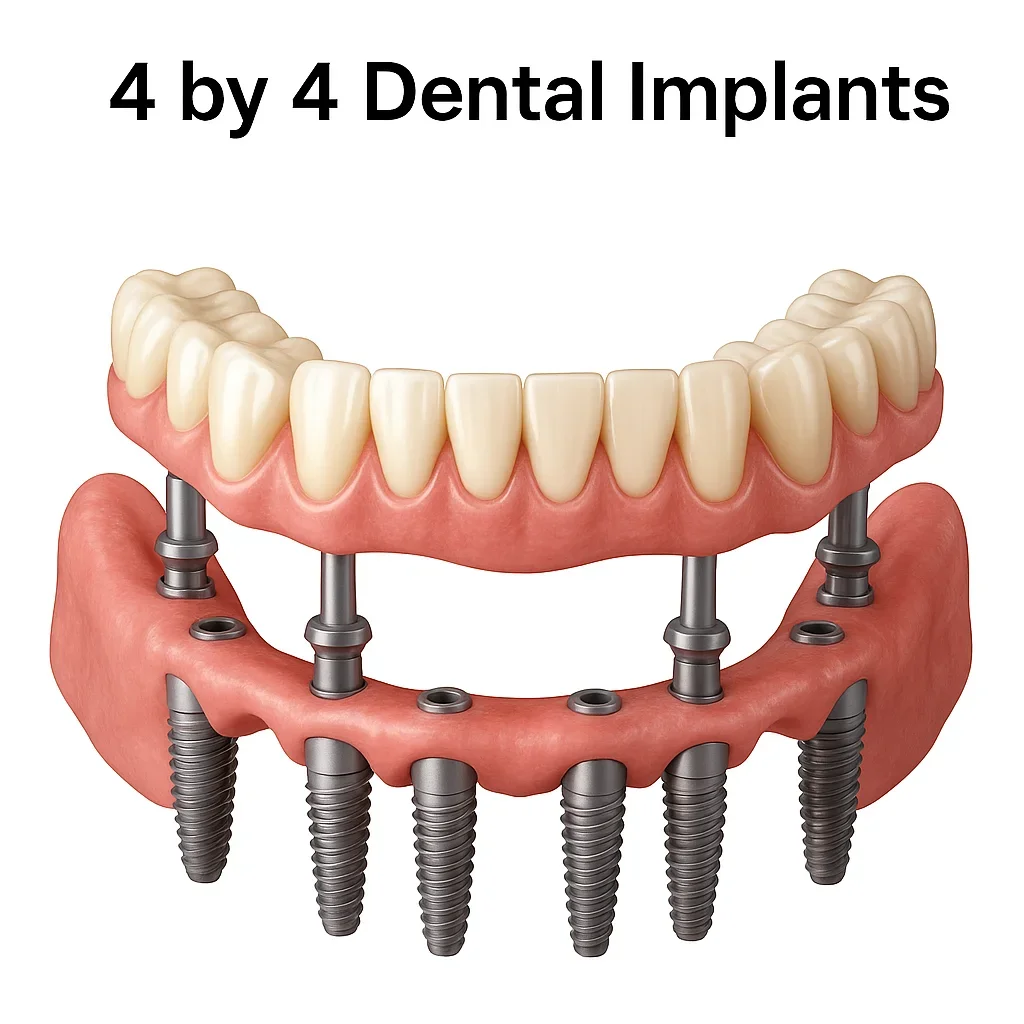
Cost Factors and Global Treatment Options for 4 by 4 Dental Implants
The cost of 4 by 4 dental implants varies significantly around the world, influenced by factors such as
geographic location, the experience of the dental team, the type of prosthetic materials used, and whether additional procedures
are required. Because this treatment combines advanced implant placement techniques with high-quality prosthetics, it is often
considered a long-term investment in oral health, aesthetics, and overall quality of life. Understanding these cost variables and
global treatment options helps patients make informed decisions and choose a clinic that meets their medical and financial needs. 😁
While pricing differences exist between countries, the value of 4 by 4 dental implants comes from their
durability, reduced need for future adjustments, and ability to restore full function and appearance. This section outlines all
major cost factors, compares typical pricing ranges in different regions, and offers guidance on selecting the right global
treatment option.
Primary Cost Factors That Influence Pricing
The overall cost of 4 by 4 dental implants is usually determined by several core elements. Although each patient
receives a personalized treatment plan, the following factors commonly affect total investment:
1. Number and Type of Implants
Four implants are placed in each arch, totaling eight implants for full-mouth reconstruction. High-quality titanium implants or
premium implant brands may increase cost, but they also provide superior long-term durability.
2. Prosthetic Material Selection
The prosthetic arch can be made of zirconia—known for strength and natural appearance—or high-grade acrylic, which offers
lightweight flexibility. Zirconia tends to be more expensive due to its longevity and resistance to staining or fractures.
3. Surgical Complexity
If the patient requires tooth extractions, gum treatment, or limited bone grafting, these additional procedures influence the
overall cost. Fortunately, 4 by 4 dental implants often reduce the need for bone grafts compared to traditional
methods.
4. Technology and Planning Tools
Clinics that use advanced CBCT imaging, digital scanning, and surgical guides typically offer higher precision but may charge
slightly more. These technologies greatly improve treatment predictability and are usually worth the investment.
5. Experience and Expertise of the Dental Team
Highly trained implant surgeons with extensive experience may have higher fees, but their expertise directly impacts treatment
success. Choosing a qualified professional minimizes risks and ensures optimal results.
Global Cost Comparisons
Treatment costs vary widely across regions. Below are general pricing trends, based on publicly available information and global
industry surveys. (Note: Prices are estimates and can vary according to clinic policies, prosthetic materials, and patient needs.)
Estimated Treatment Price Ranges (Research-Based)
Canada: $22,000–$40,000 per arch
United Kingdom: £15,000–£30,000 per arch
Germany: €14,000–€28,000 per arch
Turkey: $8,000–$15,000 per arch
Turkey in particular has become one of the most popular destinations for full-mouth implant procedures, thanks to its advanced
clinics, internationally certified surgeons, and significantly lower treatment costs. Many European patients choose Turkey
because they receive the same high-level care and technology for a fraction of the price compared to Western Europe.
Why Prices Differ Between Countries
Several economic factors influence global pricing: cost of living, import taxes on medical materials, clinic overhead, and
regional healthcare standards. In countries with a lower cost of living, dental clinics can provide world-class treatment at
more affordable rates without compromising quality.
Medical Tourism and Value-Based Care
Many patients travel abroad to receive 4 by 4 dental implants at a lower cost while enjoying high-quality dental
care. Turkey, Hungary, Mexico, and Thailand are among the top destinations for dental tourism, offering package deals that
include accommodation, transportation, and concierge support.
This combination of affordability and expertise has made such countries global hubs for advanced implant dentistry.
Insurance and Financing Options
In many countries, dental implants are considered elective procedures and may not be fully covered by insurance. However, some
insurance plans offer partial coverage for medically necessary components such as extractions or diagnostic imaging. Clinics
frequently provide financing plans to make treatment more accessible, allowing patients to spread payments over several months.
Patients should check with their insurance provider and request a detailed cost breakdown from the clinic to understand their
financial responsibilities clearly.
Long-Term Value and Cost Efficiency
Although the initial cost of 4 by 4 dental implants may seem high, the long-term value is significant. Unlike
removable dentures—which require continual adjustments, relining, and periodic replacement—implant-supported prosthetics provide
decades of stable use. This reduces lifetime costs and eliminates the inconvenience associated with ongoing denture maintenance.
Durability as a Cost-Saving Benefit
Because the implants stimulate bone and prevent resorption, they protect facial structure and avoid additional procedures down
the line. The durability of titanium implants and zirconia prosthetics ensures that major replacements are rarely needed when
the treatment is well maintained.
Selecting the Right Global Clinic
Choosing a clinic for 4 by 4 dental implants should involve careful research. Patients should look for clinics
that provide transparent pricing, digital planning technology, experienced implant surgeons, and verified patient reviews. It is
also wise to confirm what is included in the quoted treatment package—such as temporary prosthetics, final zirconia restorations,
follow-up visits, and medication.
Patients interested in exploring treatment options abroad or locally can start by contacting a professional clinic through the
Redent Klinik Contact Page. This ensures they receive accurate cost
information, personalized recommendations, and professional guidance tailored to their dental needs.
By understanding cost variables, geographic differences, and long-term value, patients can confidently choose where to receive
4 by 4 dental implants and invest in a treatment that improves both their smile and their quality of life. 🌟