
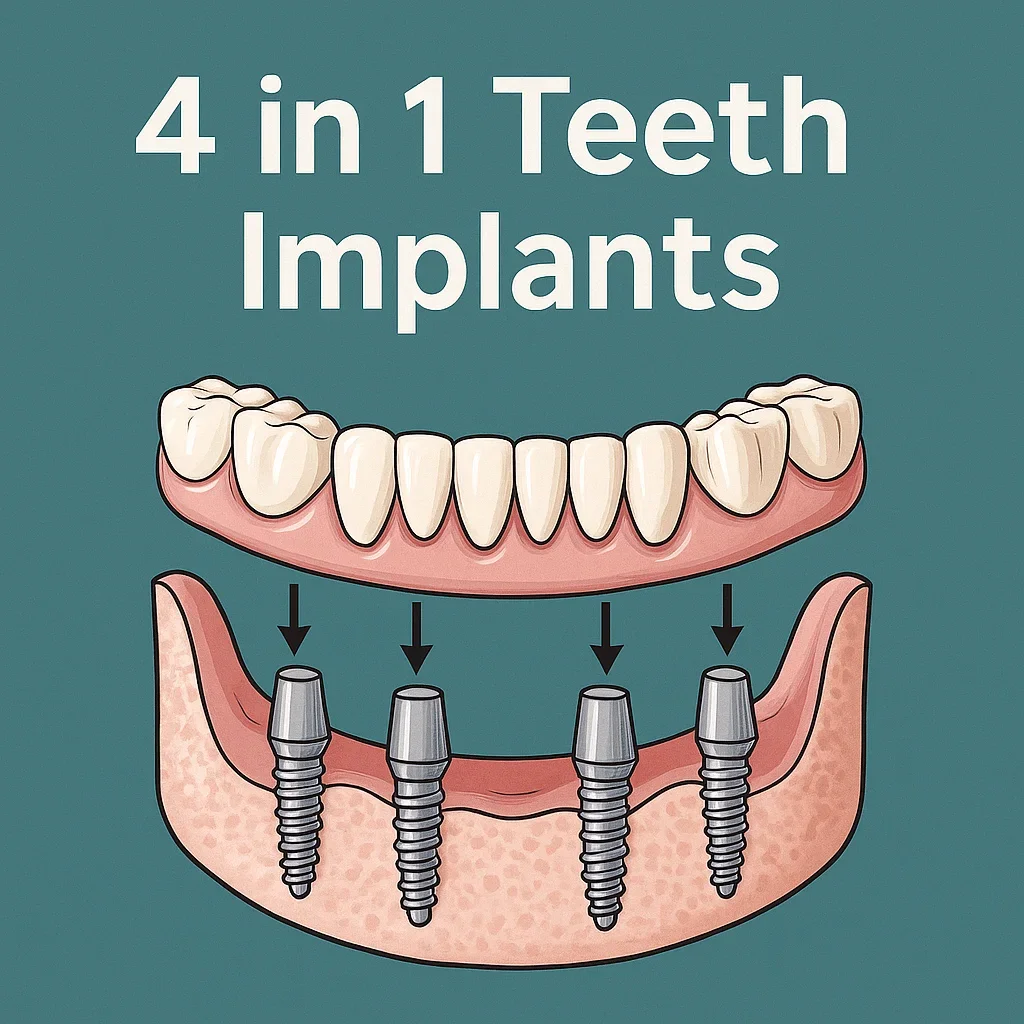
When it comes to restoring a full smile after tooth loss, 4 in 1 teeth implants have become one of the most revolutionary solutions available in modern dentistry. This advanced method provides patients with a fixed set of teeth using only four strategically placed implants in each jaw. Unlike traditional dental implants that may require up to 8–10 implants per arch, the 4 in 1 approach uses just four implants to support a full dental bridge. This not only makes the procedure less invasive but also reduces overall treatment time and cost.
Many patients searching for reliable solutions to missing teeth want something permanent, natural-looking, and long-lasting. 4 in 1 teeth implants meet all these expectations by combining dental science with surgical precision. Dentists carefully position two implants vertically at the front of the jaw and two implants at an angle in the back. This design allows for maximum stability, even for patients with limited bone density. By taking advantage of the strongest areas of the jawbone, the implants can firmly support an entire set of replacement teeth without the need for bone grafting in most cases.
One of the main reasons patients choose this method is the ability to leave the clinic with a brand-new smile on the same day. Traditional implants often involve multiple surgeries and months of waiting before attaching permanent crowns. With 4 in 1 teeth implants, patients can enjoy immediate function and aesthetics. Imagine walking into the clinic with missing or severely damaged teeth and leaving with a confident, fully functional smile—it’s life-changing! 😁
The term “4 in 1” is often used interchangeably with terms like All-on-4 implants or “full-arch dental implants.” These are synonyms that refer to the same innovative technique. The American Dental Association (American Dental Association) recognizes dental implants as one of the safest and most effective treatments for replacing missing teeth. By reducing the number of implants needed while maximizing results, this approach is considered one of the most efficient modern implant solutions.
Another major advantage is the long-term durability of the treatment. 4 in 1 teeth implants are designed to last for decades with proper care. Unlike dentures that slip, cause gum irritation, or require frequent adjustments, implant-supported bridges are fixed securely into place. Patients can bite, chew, and smile with total confidence. In fact, many report that their new teeth feel almost identical to natural ones. With success rates exceeding 95%, it’s no surprise this method has become the preferred choice for full-arch rehabilitation worldwide.
Beyond aesthetics, there are also important health benefits. Tooth loss often leads to bone resorption, where the jawbone begins to shrink due to lack of stimulation. Over time, this can cause facial sagging and an aged appearance. By placing implants directly into the bone, 4 in 1 teeth implants stimulate and preserve the jawbone, preventing this type of bone loss. This not only restores function but also helps patients maintain a youthful facial structure. 🌟
Another critical point patients ask about is comfort. Unlike removable dentures that can rub against the gums and cause sore spots, 4 in 1 teeth implants feel completely natural. Because they are fixed and anchored in the jaw, there’s no shifting or slipping. Patients can eat tough foods like steak, apples, or nuts without fear of embarrassment. They also don’t require messy adhesives or overnight soaking. The implants are brushed and flossed just like real teeth, making oral hygiene simple and straightforward.
It’s also important to highlight the emotional benefits. Many individuals with missing teeth suffer from low self-esteem, social anxiety, or even depression. The transformation after receiving 4 in 1 teeth implants goes beyond physical health—it restores confidence, self-image, and overall quality of life. Being able to smile, speak, and eat naturally again has a profound effect on mental well-being. For many, this is not just a dental procedure; it’s a second chance at a normal life.
From a financial perspective, while 4 in 1 teeth implants require an initial investment, they are often more cost-effective in the long run compared to alternatives. Dentures need frequent adjustments, replacements, and maintenance, which add up over the years. Meanwhile, properly cared-for implants can last a lifetime. Many clinics, including Redent Klinik Contact Page, offer detailed consultations, financing plans, and clear treatment options to make this life-changing solution accessible to more patients.
In summary, 4 in 1 teeth implants represent the perfect balance of science, aesthetics, and long-term oral health. They provide immediate results, prevent bone loss, restore natural function, and significantly improve quality of life. Whether you’re missing a few teeth or an entire arch, this treatment could be the key to regaining your smile. As dentistry continues to advance, the 4 in 1 system stands out as one of the most patient-friendly and effective options available today.
What Are 4 in 1 Teeth Implants and How Do They Work?
4 in 1 teeth implants are an advanced dental implant technique designed to replace a full arch of missing teeth using only four strategically placed titanium implants. Instead of placing an implant for every missing tooth, this innovative approach uses just four posts to support a fixed prosthesis that looks and functions like natural teeth. For patients struggling with multiple missing teeth, gum disease, or ill-fitting dentures, this method offers a permanent and highly effective solution. 🌟
Understanding the Concept Behind 4 in 1 Teeth Implants
The idea behind 4 in 1 teeth implants is to maximize stability while minimizing the number of implants needed. Two implants are placed vertically at the front of the jaw, where bone density is typically strongest. The other two implants are inserted at an angle in the back of the jaw, anchoring into dense bone areas that provide additional strength. This combination creates a solid foundation for a full-arch dental bridge, eliminating the need for bone grafting in many cases. By carefully distributing chewing forces across four implants, dentists ensure the prosthesis remains stable and functional even under heavy use.
Step-by-Step Mechanics of the Procedure
The process of receiving 4 in 1 teeth implants begins with a comprehensive consultation. During this stage, dentists take 3D scans and digital impressions to analyze bone quality and determine optimal implant placement. Once the treatment plan is finalized, the surgery is scheduled. Here’s what typically happens:
- Step 1: Preparation – Any remaining unhealthy teeth are extracted to create space for the prosthesis.
- Step 2: Implant Placement – Four titanium implants are carefully placed in the jaw, with the back implants angled to avoid anatomical structures like sinuses or nerves.
- Step 3: Temporary Teeth – A provisional fixed bridge is attached immediately after surgery, allowing patients to walk out with functional teeth the same day.
- Step 4: Healing and Osseointegration – Over 3–6 months, the implants fuse with the jawbone, creating a permanent bond through a process called osseointegration.
- Step 5: Final Prosthesis – Once healing is complete, the temporary bridge is replaced with a custom-designed permanent set of teeth that look natural and last for decades.
Why Only Four Implants Are Enough
Many patients wonder how just four implants can support an entire arch of teeth. The secret lies in biomechanics and implant angulation. By tilting the posterior implants at 30–45 degrees, dentists can maximize bone contact and distribute pressure evenly across the jaw. This design increases stability and minimizes stress on individual implants. Research shows that when placed correctly, 4 in 1 teeth implants can achieve success rates as high as traditional multi-implant approaches, but with fewer surgeries and lower costs.
Comparing With Traditional Implants
Traditional dental implants usually require 6–10 implants per jaw to support a full set of teeth. This often means longer surgery times, more healing, and in some cases, bone grafts to build sufficient support. In contrast, 4 in 1 teeth implants simplify the process:
- ✔ Fewer implants and surgeries
- ✔ Reduced need for bone grafting
- ✔ Immediate placement of functional teeth
- ✔ Lower overall cost
For patients seeking a quicker, more efficient treatment, this makes 4 in 1 implants the clear choice.
Materials and Technology Used
The implants themselves are made of medical-grade titanium, a biocompatible material that bonds naturally with bone. The bridge is typically crafted from zirconia or high-quality acrylic reinforced with titanium for durability. Advanced digital technology such as 3D CBCT scans, guided implant surgery, and CAD/CAM prosthetic design ensure accuracy and customization. This precision-driven approach reduces risk and ensures each patient receives a personalized restoration tailored to their unique anatomy.
Who Can Benefit From 4 in 1 Teeth Implants?
The treatment is suitable for a wide range of patients, including those who:
- Have lost most or all of their teeth in one or both jaws.
- Suffer from advanced gum disease leading to tooth loss.
- Wear removable dentures and want a fixed, stable alternative.
- Have limited bone density and want to avoid bone grafting.
- Desire a faster, more affordable full-arch restoration.
Immediate Results, Long-Term Benefits
Perhaps the most attractive aspect of 4 in 1 teeth implants is the same-day transformation. Patients can leave the dental clinic with a full set of functioning teeth after a single procedure. Over time, they experience improved chewing ability, clearer speech, and a restored facial structure. Unlike removable dentures that slip or cause discomfort, implant-supported bridges feel like natural teeth and can last for decades with proper care.
In conclusion, 4 in 1 teeth implants work by using four carefully positioned implants to anchor a full arch of teeth. With cutting-edge technology, strategic implant placement, and immediate functionality, this treatment is one of the most efficient, durable, and life-changing solutions in modern dentistry. Whether replacing a few teeth or an entire arch, this approach offers patients a second chance at a natural-looking, confident smile. 😃
Benefits of Choosing 4 in 1 Teeth Implants Over Traditional Methods
When patients compare dental restoration techniques, the advantages of 4 in 1 teeth implants quickly stand out. Traditional dentures and multi-implant procedures have long been used to restore smiles, but they often come with drawbacks like instability, longer treatment times, and higher costs. In contrast, the 4 in 1 technique offers a modern, efficient, and patient-friendly alternative that delivers life-changing results. 🌟
Immediate Transformation With Same-Day Teeth
One of the most remarkable benefits of 4 in 1 teeth implants is the immediate placement of a fixed prosthesis. With conventional implants, patients often wait months between surgery and the final prosthesis, relying on temporary dentures in the meantime. With the 4 in 1 approach, a provisional but fully functional bridge is attached on the same day as the surgery. This means patients leave the clinic with a new set of teeth and the ability to smile, speak, and eat right away. 😁
Fewer Implants, Less Invasive Surgery
Traditional full-arch implant methods typically require 6–10 implants per jaw, significantly increasing surgical complexity. By using only four implants, this technique minimizes surgical trauma while maintaining excellent stability. Fewer implants mean less bone drilling, reduced healing times, and a lower chance of complications. For patients seeking a quicker and less invasive solution, 4 in 1 teeth implants are ideal.
Reduced Need for Bone Grafting
Many patients are told they are not suitable for implants due to insufficient bone density. In traditional implant dentistry, this often means undergoing additional procedures like bone grafting or sinus lifts. These add months to the treatment timeline and increase costs. The angled placement of the posterior implants in 4 in 1 teeth implants maximizes the use of available bone, often eliminating the need for grafting altogether. This makes the treatment accessible to more patients who otherwise might not qualify for implants.
Cost-Effectiveness Compared to Other Options
Dental implants are an investment in long-term oral health, but the number of implants required directly affects cost. Since 4 in 1 teeth implants use fewer implants than traditional methods, patients save significantly on surgical fees, materials, and appointments. Moreover, because the procedure avoids unnecessary bone grafts, the total cost is reduced further. Over the years, patients also save money by avoiding denture adhesives, relines, and replacements.
Price Comparison (Estimated Range)
Based on current international averages, the cost of a full arch with 4 in 1 teeth implants is generally:
- Turkey: $4,000 – $7,000 per arch
- United States: $20,000 – $30,000 per arch
- United Kingdom: £12,000 – £18,000 per arch
- Germany: €10,000 – €15,000 per arch
These estimates highlight why countries like Turkey have become leading destinations for affordable, high-quality implant dentistry.
Natural Look and Feel
Patients want their new teeth to look natural and feel comfortable. Dentures can shift, click, or cause sore spots, while 4 in 1 teeth implants provide a fixed solution that feels just like real teeth. The prosthetic arch is custom-designed for each patient’s mouth, ensuring a natural shape, shade, and alignment. Whether laughing, speaking, or chewing tough foods, patients enjoy stability and confidence without worrying about slipping dentures.
Preservation of Jawbone and Facial Structure
Tooth loss leads to bone resorption, where the jawbone gradually shrinks due to lack of stimulation. This not only affects oral health but also alters facial appearance, making the cheeks look sunken and the face aged. By anchoring directly into the jaw, 4 in 1 teeth implants stimulate bone and prevent further deterioration. As a result, patients maintain a youthful facial profile and stronger oral foundation over time.
Improved Quality of Life and Confidence
The psychological benefits of 4 in 1 teeth implants are just as significant as the physical ones. Many patients report improved confidence, better social interactions, and a renewed desire to smile. Unlike removable dentures, which can cause embarrassment in public, implants allow patients to live without restrictions. They can enjoy their favorite foods, speak clearly, and laugh without hesitation.
Patient Testimonial Example
A 58-year-old patient shared: “After years of struggling with loose dentures, switching to 4 in 1 teeth implants changed my life. I can finally eat steak again, and I don’t worry about my teeth moving when I smile. I feel 20 years younger!” Testimonials like this demonstrate how profoundly this treatment impacts lives.
High Success Rates and Durability
Studies show that 4 in 1 teeth implants have success rates above 95%. With proper care—brushing, flossing, and regular dental check-ups—the implants can last a lifetime. Unlike dentures, which need regular replacements, this solution provides long-term stability. Patients invest once and enjoy decades of benefits, making it one of the most reliable dental restorations available today.
In summary, choosing 4 in 1 teeth implants over traditional methods means enjoying faster results, lower costs, fewer surgeries, improved comfort, and long-lasting health benefits. For patients seeking a permanent and life-enhancing solution to tooth loss, this technique stands out as the gold standard in modern dentistry. 🌐
Ideal Candidates for 4 in 1 Teeth Implants 👩⚕️👨⚕️
Not every dental procedure suits every patient, but 4 in 1 teeth implants are designed to help a wide range of individuals struggling with significant tooth loss. The technique is flexible, minimally invasive, and adaptable to various oral health conditions. Understanding whether you are a good candidate is the first step toward regaining a confident smile. This section explains who qualifies, what factors are considered, and why this treatment can be life-changing for the right patients. 🌟
General Requirements for Candidates
The best candidates for 4 in 1 teeth implants are individuals who have lost most or all of their teeth in either the upper or lower jaw. Patients who suffer from severe decay, gum disease, or damaged teeth that need extraction may also be excellent candidates. The essential requirement is that the patient has enough healthy bone to support the four implants, though thanks to angled placement, the treatment is suitable even for those with some bone loss.
- ✔ Patients with full or near-full tooth loss
- ✔ Individuals with advanced gum disease or failing teeth
- ✔ People dissatisfied with loose or uncomfortable dentures
- ✔ Patients with sufficient jawbone density (or those who can avoid grafting through angled implant placement)
- ✔ Adults seeking a permanent, stable, and natural-looking solution
Age Considerations
While dental implants are generally recommended for adults, there is no strict upper age limit for 4 in 1 teeth implants. What matters most is overall health rather than chronological age. Seniors in their 60s, 70s, or even 80s can qualify if they are in good medical condition. On the other hand, younger adults who have lost teeth due to trauma, disease, or genetic conditions can also benefit from the treatment. Since implants require mature jaw development, candidates should usually be over the age of 18.
Medical and Health Factors
Your overall health plays a major role in determining candidacy. Patients with well-controlled medical conditions such as diabetes or hypertension can often proceed safely. However, individuals with untreated systemic conditions may require medical clearance before undergoing implant surgery. Smoking and heavy alcohol use can impair healing and reduce implant success rates, so patients are encouraged to quit or reduce these habits before treatment.
Conditions That Require Extra Consideration
- ❗ Uncontrolled diabetes (can slow healing)
- ❗ Severe osteoporosis (reduces bone strength)
- ❗ Blood clotting disorders
- ❗ Recent chemotherapy or radiation therapy in the jaw area
In such cases, dentists will carefully evaluate risks and may collaborate with a patient’s physician to ensure safety.
Bone Density and Jaw Structure
One of the most common concerns for implant candidates is jawbone density. Traditional implants often require bone grafting to create sufficient support. However, 4 in 1 teeth implants are specifically designed to bypass this limitation. By placing posterior implants at an angle, the system uses existing bone in areas where density is naturally stronger, often eliminating the need for grafts. This means patients who were once told they were ineligible for implants may now have a reliable solution.
Patients with Dentures
Individuals who already wear dentures are often ideal candidates for 4 in 1 teeth implants. Dentures may slip, cause gum irritation, or limit food choices. By switching to implant-supported fixed teeth, patients experience improved comfort, speech, and eating ability. Many describe the change as life-transforming, as they regain confidence in everyday interactions.
Why Denture Wearers Prefer the Upgrade
- ✔ No more adhesives or messy pastes
- ✔ Ability to eat crunchy or chewy foods without worry
- ✔ A fixed, permanent solution instead of removable prosthetics
- ✔ Improved facial aesthetics and jawbone preservation
Lifestyle and Commitment to Oral Care
Although 4 in 1 teeth implants are highly durable, they require responsible aftercare. Candidates should be willing to maintain good oral hygiene through brushing, flossing, and regular dental checkups. Neglecting oral care can lead to gum inflammation, which may compromise implant longevity. Patients who demonstrate commitment to oral health routines are considered the best candidates for long-term success.
Psychological and Emotional Readiness
Beyond physical health, emotional readiness plays an important role. Many patients choose 4 in 1 teeth implants after years of living with missing teeth, low confidence, or discomfort from dentures. Being mentally prepared for the procedure and recovery period helps ensure a smooth and positive experience. Patients who understand the process and have realistic expectations are generally the most satisfied with their results.
Who May Not Be Ideal Candidates?
Although the treatment is widely accessible, certain individuals may not qualify immediately:
- ❌ Patients unwilling to quit heavy smoking
- ❌ Individuals with uncontrolled medical conditions
- ❌ Those with unrealistic expectations about results
- ❌ Children or adolescents with undeveloped jawbones
These patients may be offered alternative solutions or advised to stabilize their health before proceeding with implants.
In conclusion, 4 in 1 teeth implants are suitable for a broad spectrum of patients—from seniors struggling with dentures to younger adults facing full-arch tooth loss. With minimal surgical requirements, reduced need for grafting, and proven long-term success, this treatment opens the door to a healthy, confident smile for thousands worldwide. If you recognize yourself in the criteria listed above, you may be an ideal candidate for this transformative procedure. ✨
Step-by-Step Procedure of 4 in 1 Teeth Implants
Undergoing 4 in 1 teeth implants may sound complex, but the process is carefully designed to be efficient, minimally invasive, and highly predictable. Understanding the step-by-step procedure helps patients prepare for what to expect and reduces anxiety before surgery. From initial consultation to the final set of permanent teeth, the treatment journey can often be completed in just a few months, with immediate improvements in function and appearance from the very first day. 🦷
Step 1: Initial Consultation and Planning
Every successful implant journey begins with a detailed consultation. During this stage, your dentist or oral surgeon conducts a full clinical examination, reviews your medical history, and evaluates your specific needs. Advanced diagnostic tools are used to create a personalized treatment plan:
- 3D Cone Beam CT scans – Provide high-resolution images of jawbone density and nerve positioning.
- Digital impressions – Capture the exact shape of the mouth for prosthetic design.
- Smile preview software – Allows patients to visualize results before treatment begins.
This planning phase ensures that the 4 in 1 teeth implants are placed in the most strategic positions for maximum stability and aesthetics.
Step 2: Pre-Surgery Preparation
Before surgery, patients may need preparatory steps such as dental cleaning, treatment for gum infections, or extractions of any remaining unhealthy teeth. Since 4 in 1 teeth implants often replace an entire arch, removing damaged or decayed teeth is common. Sedation or anesthesia options are also discussed to ensure comfort during the procedure.
Step 3: Implant Placement Surgery
The surgical procedure is typically performed under local anesthesia with sedation for comfort. Here’s how the implants are placed:
- Two implants are inserted vertically in the front of the jaw where bone density is strongest.
- Two implants are placed at an angle in the back of the jaw to maximize bone support and avoid sinus cavities or nerves.
This unique configuration is the hallmark of 4 in 1 teeth implants, providing strength and stability without the need for additional bone grafting. The surgery usually takes 2–3 hours per arch, depending on complexity.
Minimally Invasive Techniques
Modern technology has made the placement process more accurate than ever. Many clinics use computer-guided surgery, where a digital template directs implant placement with millimeter precision. This reduces surgical trauma, shortens recovery, and enhances long-term success rates.
Step 4: Immediate Prosthesis Attachment
One of the most exciting benefits of 4 in 1 teeth implants is the same-day prosthesis. Instead of waiting months for permanent teeth, patients leave the clinic with a temporary but fully functional bridge fixed to the implants. This provisional set allows normal speaking, chewing, and smiling while the implants heal beneath the gums.
Advantages of Same-Day Teeth
- ✔ No embarrassing gaps during the healing period
- ✔ Immediate boost in confidence and self-esteem
- ✔ Ability to eat soft foods right after surgery
Step 5: Healing and Osseointegration
After surgery, a critical phase called osseointegration begins. This is when the titanium implants fuse naturally with the surrounding bone. The healing period typically lasts 3–6 months, depending on the patient’s health and bone quality. During this time:
- Patients follow a soft diet to reduce pressure on the implants.
- Swelling and mild discomfort are managed with prescribed medication.
- Follow-up visits are scheduled to monitor progress and ensure stability.
The success of 4 in 1 teeth implants largely depends on proper healing during this stage, which creates a strong foundation for the final prosthesis.
Step 6: Placement of the Final Prosthesis
Once osseointegration is confirmed, the temporary bridge is replaced with a custom-designed permanent prosthesis. This final set of teeth is crafted from durable materials such as zirconia or high-quality acrylic reinforced with titanium. The prosthesis is designed to match the patient’s facial features, ensuring a natural look and comfortable bite.
Custom Design Features
- ✔ Personalized tooth shape, size, and color
- ✔ Durable materials resistant to staining and wear
- ✔ Precision fit for long-term stability
Step 7: Aftercare and Maintenance
The journey doesn’t end once the permanent prosthesis is placed. Patients must maintain excellent oral hygiene and attend regular check-ups to ensure the implants remain healthy. Daily brushing, flossing with special tools, and professional cleanings are essential. With proper care, 4 in 1 teeth implants can last decades, offering patients a lifelong solution.
Timeline Overview
To summarize the process:
- Consultation and planning
- Pre-surgery preparation
- Implant placement
- Immediate temporary prosthesis
- Healing and osseointegration (3–6 months)
- Permanent prosthesis attachment
- Ongoing care and follow-ups
In conclusion, the 4 in 1 teeth implants procedure is a carefully structured journey from diagnosis to permanent restoration. With advanced technology, same-day teeth, and a streamlined healing process, patients experience a fast, effective, and life-changing transformation. This step-by-step approach ensures safety, predictability, and long-term success for anyone seeking a permanent solution to tooth loss. ✨
Cost of 4 in 1 Teeth Implants in Turkey vs. Other Countries 💰
One of the most important questions patients ask before committing to dental treatment is: “How much will it cost?” The price of 4 in 1 teeth implants varies significantly around the world, depending on the clinic’s location, materials used, surgeon expertise, and additional services provided. Understanding these cost differences helps patients make informed decisions about where to receive treatment and how to balance quality with affordability.
Average Cost of 4 in 1 Teeth Implants Globally
The cost of 4 in 1 teeth implants can differ by thousands of dollars depending on the country. In nations such as the United States or the United Kingdom, high labor costs and overhead expenses drive up prices. Meanwhile, countries like Turkey, Hungary, or Mexico offer the same high-quality treatment at a fraction of the cost, often attracting international patients seeking dental tourism opportunities.
Estimated Price Ranges (Per Arch)
- Turkey: $4,000 – $7,000
- United States: $20,000 – $30,000
- United Kingdom: £12,000 – £18,000
- Germany: €10,000 – €15,000
- Mexico: $6,000 – $9,000
- Hungary: €6,000 – €8,500
As seen above, Turkey offers some of the lowest prices globally without compromising quality. This cost advantage is one of the main reasons why Istanbul, Antalya, and Izmir have become international hubs for implant dentistry. 🌍
Why 4 in 1 Teeth Implants Are Cheaper in Turkey
The reduced cost in Turkey is not due to lower quality but rather differences in economy and healthcare systems. Here are some of the main reasons:
- ✔ Lower labor and operational costs for clinics
- ✔ Government support for medical tourism
- ✔ High patient volume reduces overall treatment prices
- ✔ Competitive market among internationally accredited clinics
Most Turkish dental clinics use the same premium implant brands as those in Europe and the United States. Additionally, many dentists in Turkey are trained internationally and adhere to global standards recognized by organizations such as the American Dental Association.
What’s Included in the Cost?
The total cost of 4 in 1 teeth implants usually covers much more than just the implants themselves. Treatment packages often include:
- ✔ Initial consultation and diagnostic scans
- ✔ Tooth extractions if needed
- ✔ Temporary prosthesis (immediate fixed bridge)
- ✔ Final zirconia or acrylic prosthesis
- ✔ All surgical procedures and anesthesia
- ✔ Post-operative care and follow-up appointments
- ✔ In some clinics: accommodation and airport transfers (especially in Turkey)
By comparison, clinics in the US or UK may charge separately for each stage, significantly increasing the final bill.
Cost vs. Long-Term Value
At first glance, the price of 4 in 1 teeth implants might seem high compared to dentures. However, dentures require ongoing adjustments, replacements, and adhesives, adding up over the years. Implants, when properly cared for, can last a lifetime, making them a more cost-effective investment in the long run. Patients should view the procedure as a permanent solution that enhances both health and quality of life.
Breaking Down the Savings
For example, if a patient in the US spends $25,000 on an arch of implants, the same treatment in Turkey may cost only $6,000. That means even after including flight tickets and hotel stays, the total savings can exceed $15,000. This is why many international patients choose dental tourism, combining high-quality dental care with a relaxing holiday.
Factors That Influence Cost
The exact price depends on several factors:
- Implant brand: Premium brands like Nobel Biocare or Straumann may cost more but offer excellent long-term results.
- Prosthesis material: Zirconia prosthetics cost more than acrylic but are stronger and more aesthetic.
- Surgeon’s expertise: Highly experienced surgeons often charge higher fees, but their success rates are also higher.
- Additional procedures: Tooth extractions, sinus lifts, or gum treatments may increase total cost.
Comparing Affordability and Quality
Patients sometimes fear that lower costs mean lower quality. However, in Turkey, clinics maintain international certifications, modern facilities, and use state-of-the-art technology. In fact, many clinics advertise “no compromise on quality” policies, highlighting their use of globally recognized implant systems. As a result, 4 in 1 teeth implants in Turkey deliver the same outcomes as in the US or Europe but at a fraction of the cost.
In conclusion, the cost of 4 in 1 teeth implants varies widely depending on where the treatment is performed. Turkey has established itself as a world leader in affordable, high-quality implant dentistry, attracting thousands of patients annually. By combining international expertise, lower operational costs, and patient-focused care, Turkey offers one of the best value options for those seeking a permanent and cost-effective solution to tooth loss. 💎
Recovery Process and Aftercare Tips for 4 in 1 Teeth Implants
After undergoing 4 in 1 teeth implants, the recovery period is a crucial part of ensuring long-term success. While the procedure is minimally invasive compared to traditional multi-implant methods, patients still need to follow proper aftercare to promote healing, protect the implants, and achieve the best functional and aesthetic results. With the right habits, most patients experience a smooth recovery and enjoy a brand-new smile for decades. 😃
Immediate Recovery: The First 48 Hours
The first two days after surgery are critical for healing. Patients may experience mild swelling, bleeding, or discomfort—normal side effects of the implant placement. Dentists often prescribe pain medication and antibiotics to reduce the risk of infection and manage soreness. To minimize swelling, applying a cold compress to the cheeks in short intervals is recommended. Rest and avoiding strenuous activity are essential during this period.
First 48-Hour Care Guidelines
- ✔ Apply ice packs to reduce swelling.
- ✔ Take prescribed medications exactly as directed.
- ✔ Avoid spitting, rinsing, or using straws, as these can dislodge blood clots.
- ✔ Stick to soft, cool foods such as yogurt, mashed potatoes, or smoothies.
- ✔ Rest and keep your head elevated when sleeping.
The First Week: Adjusting to Temporary Teeth
Most patients leave the clinic with a temporary fixed bridge on the same day of surgery. This provisional prosthesis allows normal speaking and chewing but requires special care. During the first week, patients should follow a soft diet to avoid placing excess pressure on the implants. Mild bruising or tightness in the gums may occur but usually subsides within a few days.
Foods to Eat and Avoid
- Recommended: soups, smoothies, eggs, pasta, soft fruits like bananas, steamed vegetables.
- Avoid: hard, crunchy, or sticky foods such as nuts, chips, caramel, and raw carrots.
By following these dietary guidelines, patients help protect the implants while they fuse with the jawbone.
Healing Phase: Osseointegration (3–6 Months)
The most important part of the recovery process is osseointegration—the natural fusion of titanium implants with the jawbone. This biological process typically takes 3–6 months. During this period, the implants gradually become stronger, providing a stable foundation for the final prosthesis.
Dentists schedule regular check-ups to monitor healing and ensure there are no signs of implant failure or infection. Patients who smoke, consume alcohol excessively, or neglect oral hygiene may compromise healing and increase the risk of complications. Therefore, lifestyle adjustments are strongly recommended.
Long-Term Care After Final Prosthesis Placement
Once the implants have fully integrated, the temporary teeth are replaced with a custom-designed permanent prosthesis. At this stage, recovery is complete, but maintenance is key to ensuring long-term success. 4 in 1 teeth implants are designed to last decades, but like natural teeth, they require consistent care.
Daily Oral Hygiene Routine
- ✔ Brush twice daily using a soft-bristled toothbrush and non-abrasive toothpaste.
- ✔ Use floss or water flossers specifically designed for implants.
- ✔ Rinse with an antimicrobial mouthwash to reduce bacteria.
Maintaining excellent hygiene prevents peri-implantitis, a condition similar to gum disease that can damage implant stability.
Follow-Up Visits and Professional Cleanings
Dentists usually recommend check-ups every 6 months after final restoration. These visits allow professionals to assess implant health, clean hard-to-reach areas, and identify early signs of wear or complications. In some cases, more frequent visits may be necessary, especially during the first year after surgery.
Lifestyle Adjustments for Better Recovery
Patients can extend the lifespan of their 4 in 1 teeth implants by adopting healthy lifestyle habits:
- ✔ Quit smoking to improve healing and reduce implant failure risks.
- ✔ Limit alcohol, which can slow down osseointegration.
- ✔ Protect teeth from trauma by wearing a night guard if prone to grinding (bruxism).
- ✔ Follow a balanced diet rich in calcium and vitamin D to support bone health.
Common Challenges During Recovery
Although recovery is usually smooth, some patients may face minor challenges. Temporary discomfort, speech adjustments, or dietary restrictions are common but improve over time. Rarely, complications such as infection or implant mobility may occur, requiring immediate dental attention. Choosing an experienced clinic and carefully following aftercare instructions significantly reduces these risks.
Emotional and Psychological Recovery
The journey does not end with physical healing—emotional recovery is equally important. Patients often report increased self-confidence and happiness after receiving 4 in 1 teeth implants. Adapting to a new smile may take a few weeks, but the long-term psychological benefits—such as improved self-esteem and greater social interactions—are invaluable.
In summary, the recovery process for 4 in 1 teeth implants involves several key stages: immediate care in the first 48 hours, dietary adjustments during the first weeks, a healing period of 3–6 months, and lifelong maintenance. With proper aftercare, patients enjoy a beautiful, functional, and confident smile for decades. 🌟
Potential Risks and Complications You Should Know
While 4 in 1 teeth implants have an excellent success rate of over 95% worldwide, no surgical procedure is entirely free of risks. Patients considering this treatment must be fully informed about potential complications, both short-term and long-term. Being aware of these risks not only prepares patients mentally but also helps them follow proper aftercare instructions to minimize chances of failure. Transparency is key to ensuring safe outcomes and long-lasting results. ⚠️
Immediate Post-Surgery Risks
In the hours and days following the placement of 4 in 1 teeth implants, patients may experience common post-surgical side effects. These are usually temporary and part of the body’s natural healing process:
- Swelling and Bruising: Typically peaks within 48 hours after surgery and subsides within a week.
- Mild Bleeding: Normal for the first 24 hours, but should gradually reduce.
- Pain or Discomfort: Managed with prescribed medication and usually resolves within days.
These symptoms are expected and not necessarily complications. However, patients should contact their dentist if pain intensifies instead of improving.
Short-Term Complications
Although rare, some issues can develop in the first few weeks:
- Infection: If bacteria enter the surgical site, it may cause inflammation, pus, or fever. Prompt antibiotics typically resolve this.
- Implant Instability: Occasionally, an implant may not integrate with the bone, causing mobility.
- Nerve Irritation: Improper placement in the lower jaw may affect the mandibular nerve, leading to tingling or numbness. This is minimized with 3D imaging and guided surgery.
Dentists trained in advanced implantology significantly reduce these risks by precise planning and sterile surgical techniques.
Long-Term Risks and Complications
Once healing is complete, long-term success depends heavily on aftercare and lifestyle choices. The following issues may arise over months or years if maintenance is neglected:
- Peri-implantitis: A gum infection around implants caused by poor oral hygiene. It can lead to bone loss and implant failure.
- Prosthetic Wear: Bridges made of acrylic may wear down or chip, requiring repair or replacement.
- Implant Failure: While rare, factors like smoking, uncontrolled diabetes, or chronic bruxism (teeth grinding) may cause implant loosening.
How to Prevent Long-Term Complications
- ✔ Maintain strict oral hygiene with brushing, flossing, and rinsing.
- ✔ Schedule dental check-ups at least twice a year.
- ✔ Use a mouthguard if prone to clenching or grinding teeth.
- ✔ Quit smoking and limit alcohol intake to improve healing.
Systemic Health Concerns
Certain systemic conditions may increase risks during or after 4 in 1 teeth implants surgery. For example:
- Uncontrolled Diabetes: Delays healing and raises infection risk.
- Osteoporosis: May weaken bone quality, reducing implant stability.
- Immune Disorders: Increase susceptibility to infection.
Patients with these conditions are not automatically disqualified, but they must work closely with both their physician and implant specialist to ensure safe outcomes.
Mechanical and Prosthetic Risks
Apart from biological complications, mechanical issues can also arise. Since 4 in 1 teeth implants support an entire arch, excessive force or improper bite alignment can cause:
- 🔧 Screw loosening or fracture within the implant.
- 🔧 Wear and tear of the prosthetic bridge.
- 🔧 Overloading of implants if the patient chews on very hard foods.
Fortunately, these risks are low when treatment is performed by skilled dentists using high-quality materials such as titanium implants and zirconia prostheses.
Signs of Potential Problems
Patients should monitor their implants closely and contact their dentist if they notice:
- Persistent pain or swelling beyond the first week.
- Loose or shifting prosthesis.
- Bleeding gums or pus around implants.
- Numbness or tingling that does not improve.
Early intervention can save the implants and prevent complications from escalating.
Risk Mitigation by Choosing the Right Clinic
The choice of clinic and surgeon plays a significant role in minimizing risks. Accredited clinics with advanced technology, 3D-guided surgery, and internationally trained surgeons typically achieve higher success rates. Many clinics in Turkey and Europe follow strict international protocols, ensuring safe and predictable outcomes for 4 in 1 teeth implants.
In conclusion, while 4 in 1 teeth implants are considered one of the safest and most predictable full-arch restoration techniques, patients must understand potential risks. Short-term discomforts, rare surgical complications, and long-term maintenance challenges are possible, but with proper aftercare and professional monitoring, most patients enjoy decades of healthy, stable, and confident smiles. 🌟
Patient Success Stories and Real Results with 4 in 1 Teeth Implants ✨
One of the most powerful ways to understand the value of 4 in 1 teeth implants is by looking at the experiences of real patients. Beyond clinical explanations, the real-life stories of individuals who underwent this procedure highlight its life-changing potential. From restoring lost confidence to enjoying foods they had avoided for years, these testimonials provide a human perspective on how transformative the treatment can be. 🌟
Case Study 1: From Dentures to Confidence
A 62-year-old woman had been wearing removable dentures for over a decade. She struggled with sore gums, frequent adjustments, and embarrassment when her dentures slipped while speaking. After receiving 4 in 1 teeth implants, her life changed dramatically. On the very same day of her surgery, she walked out of the clinic with a fixed set of teeth.
She reported, “For the first time in years, I bit into an apple without fear. I don’t carry denture glue anymore, and I can laugh without worrying that my teeth will move.” Her case illustrates how the procedure restores both functionality and emotional well-being.
Case Study 2: Reversing the Effects of Gum Disease
Another patient, a 55-year-old man, had lost most of his teeth due to severe periodontal disease. Traditional implants were not an option without extensive bone grafting. However, thanks to the angled implant design of 4 in 1 teeth implants, bone grafting was avoided. Within hours of surgery, he received a full set of functional teeth.
He shared that his new teeth gave him back his social life: “I had stopped smiling in photos and avoided social gatherings. After the implants, I not only smile again but also feel proud of how natural my teeth look.” His confidence skyrocketed, improving both personal and professional relationships.
Case Study 3: International Dental Tourism in Turkey
A 48-year-old woman from the United Kingdom traveled to Turkey for 4 in 1 teeth implants. The treatment cost in her home country was nearly three times higher. In Istanbul, she received top-quality care at an internationally accredited clinic, saving over £10,000.
Her testimonial emphasized not only affordability but also excellence: “The clinic was spotless, the technology was advanced, and the dentists spoke perfect English. My results are incredible, and I combined the treatment with a short holiday. It was the best decision I’ve ever made.” This story demonstrates why Turkey has become a leading destination for implant dentistry.
Financial and Emotional Outcomes
- ✔ Huge savings compared to UK and US costs
- ✔ Immediate restoration of oral function
- ✔ Enhanced quality of life and confidence
Case Study 4: Elderly Patient Regains Youthful Smile
A 74-year-old man worried that his age might disqualify him from dental implants. However, after medical clearance, he successfully underwent 4 in 1 teeth implants. His recovery was smooth, and within months, he had permanent prosthetics.
He explained, “I thought my age meant I’d have to live with dentures forever. Instead, I feel younger, eat what I like, and my grandchildren say I look happier than ever.” This case proves there is no strict upper age limit for the treatment, as long as overall health permits.
Case Study 5: Overcoming Trauma-Related Tooth Loss
A 36-year-old patient lost multiple teeth after a car accident. Traditional solutions would have required multiple implants, bone grafts, and long healing times. Instead, 4 in 1 teeth implants provided a quicker, cost-effective option. Within one surgery, her smile and oral function were fully restored.
She said, “The trauma was devastating, but having my smile back gave me strength to move forward. People don’t even know my teeth are implants—they look that natural.” This highlights how the treatment can also serve younger patients with complex needs.
Before-and-After Transformations
The visual difference before and after 4 in 1 teeth implants is striking. Patients who once had missing, decayed, or misaligned teeth now show full, bright, and natural-looking smiles. Beyond appearance, their speech, chewing ability, and overall facial structure also improve. These results are long-term and backed by decades of clinical research in implantology.
Common Patient-Reported Benefits
- ✔ Regained ability to enjoy a wide range of foods
- ✔ Improved speech clarity
- ✔ Elimination of denture adhesives and discomfort
- ✔ Enhanced self-confidence and quality of life
Psychological and Emotional Impact
Nearly all patients report a major boost in self-esteem after receiving 4 in 1 teeth implants. Smiling confidently, eating comfortably, and interacting socially without embarrassment has profound psychological benefits. For many, the procedure represents more than just dental work—it’s a second chance at living fully and joyfully.
In conclusion, real-world success stories show that 4 in 1 teeth implants are more than just a dental procedure—they are a life transformation. Whether it’s overcoming years of denture struggles, avoiding bone grafting, saving money through dental tourism, or simply regaining confidence, patients worldwide testify to the life-changing benefits of this innovative solution. ✨
Why Choose Turkey for Affordable and High-Quality 4 in 1 Teeth Implants?
Turkey has become one of the world’s leading destinations for dental tourism, particularly for patients seeking 4 in 1 teeth implants. Every year, thousands of international patients travel to Istanbul, Antalya, and Izmir to combine top-tier dental care with an affordable price point. What makes Turkey stand out is not only the cost advantage but also the high quality of treatment, modern facilities, and internationally accredited dentists. 🌍
Global Recognition of Turkish Dental Clinics
Many clinics in Turkey have achieved international accreditation and adhere to global standards set by organizations like the American Dental Association. Clinics often boast ISO certifications, advanced technology such as 3D imaging and guided surgery, and internationally trained surgeons. This means patients receive treatment that matches (or even exceeds) the standards found in the United States, the UK, or Germany, but at a fraction of the price.
Cost-Effectiveness Without Compromising Quality
The affordability of 4 in 1 teeth implants in Turkey does not come from cutting corners. Instead, it is a result of:
- ✔ Lower operational and labor costs compared to Western countries.
- ✔ Government support for the medical tourism sector.
- ✔ High patient volumes allowing clinics to streamline services efficiently.
- ✔ Competitive pricing among a large number of private clinics.
For example, while a full arch of implants in the United States may cost $25,000–$30,000, the same procedure in Turkey ranges between $4,000–$7,000. Even after including travel and accommodation, patients can save thousands of dollars.
Highly Skilled Dentists with International Training
Dentists in Turkey often complete part of their education or specialist training in Europe or the United States. Many are fluent in English, German, or French, which helps international patients communicate comfortably. Their expertise in full-mouth restorations makes them highly experienced in performing 4 in 1 teeth implants successfully, with success rates exceeding 95%.
Advanced Training and Experience
- ✔ Specialization in implantology and prosthodontics.
- ✔ Use of advanced computer-guided surgery for precision.
- ✔ Decades of combined clinical experience in handling complex cases.
Modern Technology and State-of-the-Art Facilities
Turkish dental clinics are equipped with cutting-edge technology, ensuring accuracy, safety, and comfort. This includes:
- ✔ 3D cone-beam CT scans for detailed jawbone analysis.
- ✔ Digital smile design technology to preview final results.
- ✔ Laser-assisted dentistry for minimally invasive treatments.
- ✔ In-house dental labs for same-day prosthesis adjustments.
This integration of advanced tools means shorter treatment times and highly predictable outcomes for 4 in 1 teeth implants.
Comprehensive All-Inclusive Packages
Another reason Turkey stands out is the convenience of all-inclusive treatment packages. Most clinics provide not just dental care but also full patient support services:
- ✔ Airport transfers and local transportation.
- ✔ Hotel accommodations in partnership with clinics.
- ✔ Translation services for international patients.
- ✔ Free consultations and follow-up check-ups.
These packages make the treatment journey seamless and stress-free, ensuring patients can focus on recovery and relaxation.
Combining Dental Care with Tourism
Turkey’s unique geographical location and cultural richness make it a perfect blend of healthcare and tourism. Patients often extend their trips to explore famous attractions like Istanbul’s Hagia Sophia, Cappadocia’s hot air balloons, or Antalya’s Mediterranean beaches. This makes receiving 4 in 1 teeth implants not just a medical decision but also a memorable travel experience. ✈️
Safety and Reliability
Turkey’s dental sector is regulated and increasingly focused on patient safety. Clinics working with international patients are inspected regularly and must meet strict hygiene and sterilization protocols. Many facilities use globally recognized implant brands like Nobel Biocare, Straumann, and Alpha-Bio, ensuring long-lasting durability.
How to Choose the Right Clinic in Turkey
- ✔ Check for international accreditations and certifications.
- ✔ Review patient testimonials and before-and-after photos.
- ✔ Ensure the clinic provides transparent pricing with no hidden fees.
- ✔ Look for clinics that offer lifetime implant guarantees.
Accessibility for International Patients
Major Turkish cities are well-connected by international flights, making travel convenient from Europe, the Middle East, and North America. Clinics typically assist patients with planning their itinerary, ensuring smooth coordination of medical and travel schedules. Furthermore, the presence of multilingual staff eliminates language barriers, creating a comfortable experience for patients.
In conclusion, choosing Turkey for 4 in 1 teeth implants offers an unbeatable combination of affordability, expertise, technology, and hospitality. Patients can achieve world-class dental results while saving significant amounts of money and enjoying a unique cultural experience. It is this perfect balance of quality and value that makes Turkey one of the top global destinations for dental implant treatments. 🌟