
If you are struggling with missing teeth, loose dentures, or ongoing discomfort while eating and speaking, 4 in one dentures may be the life-changing solution you are searching for. This modern dental treatment is designed to restore a full arch of teeth using a single, stable system that looks natural, feels comfortable, and dramatically improves quality of life 😊. Unlike traditional removable dentures, 4 in one dentures are fixed, secure, and created to function much like natural teeth.
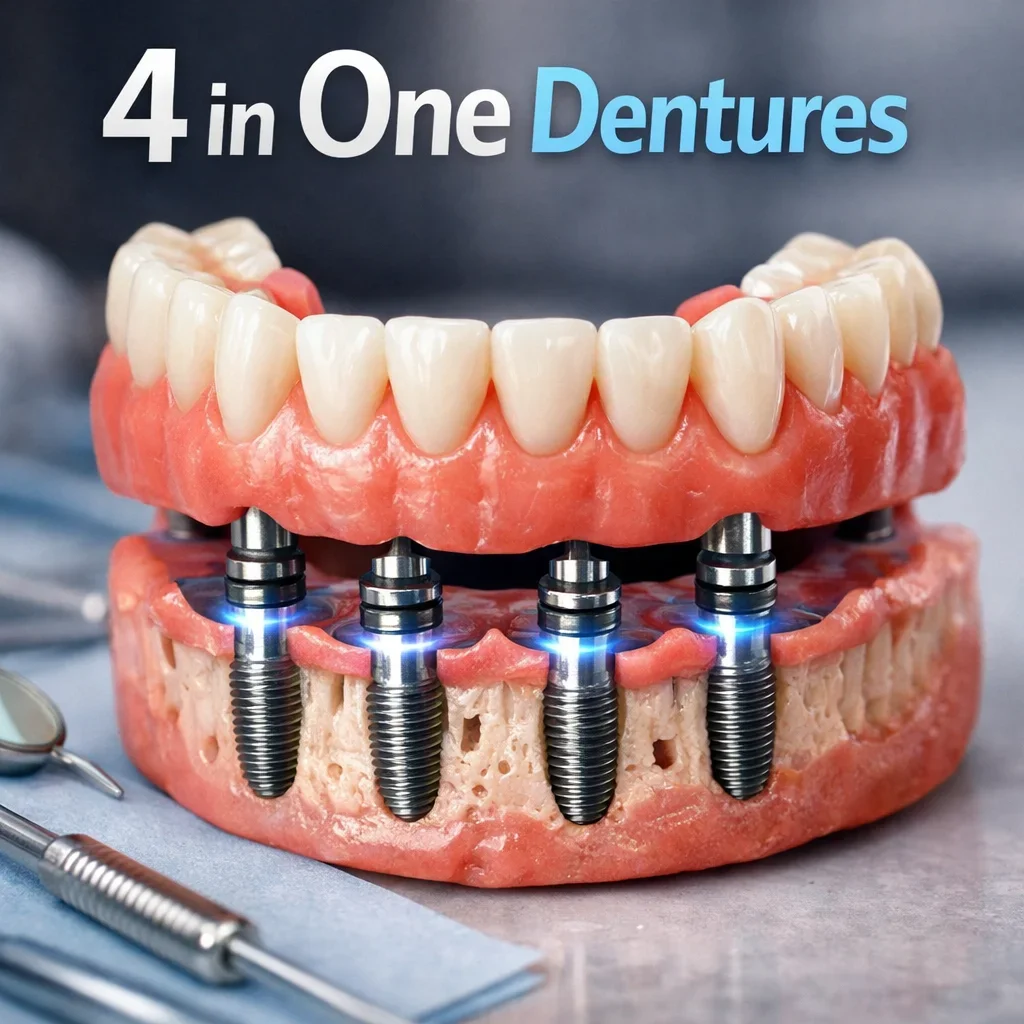
The concept behind 4 in one dentures is both simple and advanced at the same time. Instead of replacing each missing tooth individually, an entire upper or lower arch is supported by four strategically placed dental implants. These implants act as strong anchors within the jawbone, holding a full-arch prosthetic firmly in place. This approach allows patients to regain chewing power, clear speech, and facial structure without the inconvenience of removable dentures.
One of the biggest reasons patients search for 4 in one dentures is the desire for a long-term, reliable solution. Tooth loss does not only affect appearance; it can lead to bone loss in the jaw, facial sagging, digestive issues due to poor chewing, and a loss of confidence. With 4 in one dentures, the implants stimulate the jawbone, helping to preserve bone density and maintain a youthful facial profile over time.
From a functional perspective, 4 in one dentures provide remarkable stability. Traditional dentures often slip or move, especially while eating or speaking. This can cause embarrassment and discomfort. In contrast, 4 in one dentures are fixed in place, meaning there is no need for adhesives, no fear of movement, and no need to remove them at night. Patients can enjoy everyday activities like laughing, eating steak, or speaking confidently without hesitation 😁.
Another key advantage of 4 in one dentures is efficiency. In many cases, patients can receive temporary fixed teeth on the same day as implant placement. This is why the treatment is sometimes associated with “teeth in a day” or full-arch implant restoration. While the final prosthetic is placed after healing, patients are never left without teeth during the process, which is a major emotional and practical benefit.
Aesthetics also play a critical role in the popularity of 4 in one dentures. The prosthetic teeth are custom-designed to match your facial structure, smile line, and natural tooth color. This personalized approach ensures that the final result looks realistic rather than artificial. Many patients report that friends and family notice they look healthier and younger, without realizing dental work has been done.
It is important to understand that 4 in one dentures are not just a cosmetic upgrade. They are a comprehensive medical solution backed by modern implant dentistry principles. Organizations such as the American Dental Association recognize dental implants as a reliable and evidence-based treatment for tooth loss. When planned and executed correctly, this treatment can provide decades of comfort and function.
Patients considering 4 in one dentures often worry about comfort and adaptation. The good news is that most people adapt quickly. Because the dentures are fixed and stable, they feel far more natural than removable alternatives. Speech typically improves, pressure points are reduced, and daily oral hygiene becomes simpler than managing traditional dentures.
From a lifestyle perspective, 4 in one dentures can be truly transformative 🌟. Patients frequently report improved self-esteem, better social interactions, and renewed enjoyment of food. Being able to eat a balanced diet again also contributes positively to overall health, supporting digestion, nutrition, and energy levels.
If you are exploring whether 4 in one dentures are right for you, professional evaluation is essential. Factors such as bone quality, general health, and personal expectations all play a role in treatment planning. For personalized guidance, you can reach out directly through the Redent Klinik Contact Page and receive expert support tailored to your needs.
In summary, 4 in one dentures represent a powerful combination of stability, aesthetics, and long-term oral health benefits. They are designed for people who want a fixed, dependable solution that restores both function and confidence. As dental technology continues to advance, this treatment remains one of the most trusted and effective options for full-arch tooth replacement today.
What Are 4 in One Dentures and How Do They Work?
Understanding what 4 in one dentures are and how they work is essential for anyone considering a full-arch dental restoration. Many patients arrive at clinics feeling confused by terms like implants, fixed dentures, or full-mouth rehabilitation. This section breaks everything down clearly, so you know exactly what 4 in one dentures involve, how they function, and why they have become one of the most trusted solutions for extensive tooth loss.
The Basic Definition of 4 in One Dentures
At their core, 4 in one dentures are a fixed full-arch dental restoration supported by four dental implants placed in the jawbone. Instead of replacing each missing tooth separately, this system uses four strategically positioned implants to hold an entire row of prosthetic teeth. These teeth are permanently attached, meaning they do not need to be removed for cleaning or sleeping.
The term “4 in one” refers to the idea that four implants work together as a single, unified support system. This design distributes biting forces evenly across the jaw, making 4 in one dentures both strong and durable. For patients with significant tooth loss or failing teeth, this approach offers a stable alternative to removable dentures or extensive individual implant placement.
How the Implants Are Positioned
One of the most important aspects of 4 in one dentures is implant positioning. Two implants are typically placed vertically in the front of the jaw, where bone density is usually strongest. The remaining two implants are placed at an angle toward the back of the jaw. This angled placement maximizes contact with available bone and often eliminates the need for bone grafting.
This clever implant strategy is what allows 4 in one dentures to work for many patients who were previously told they were not suitable for implants. By using existing bone efficiently, dentists can provide a stable foundation even in cases of moderate bone loss.
Why Angled Implants Matter
Angled implants increase surface contact with the jawbone, improving stability and load distribution. This means 4 in one dentures can handle strong chewing forces while reducing stress on individual implants. The result is a secure, long-lasting restoration that feels natural during everyday activities like eating and speaking 😊.
The Role of the Full-Arch Prosthesis
The visible part of 4 in one dentures is the full-arch prosthesis. This is a custom-made set of teeth designed to look and function like natural teeth. Materials may include high-quality acrylic, porcelain, or zirconia, depending on the treatment plan and patient needs.
Each prosthesis used with 4 in one dentures is tailored to the individual. Factors such as facial shape, lip support, bite alignment, and smile aesthetics are carefully considered. This customization ensures the final result looks realistic rather than artificial, which is a common concern among denture wearers.
Temporary vs Permanent Dentures
In many cases, patients receiving 4 in one dentures are fitted with a temporary fixed denture on the same day as implant placement. This temporary set allows patients to leave the clinic with teeth immediately, maintaining confidence and function during healing.
After the implants fully integrate with the jawbone, a permanent denture is placed. This final version of 4 in one dentures is stronger, more refined, and designed for long-term use.
How 4 in One Dentures Function Daily
From a day-to-day perspective, 4 in one dentures function very similarly to natural teeth. Because they are fixed, there is no movement while eating or speaking. Patients can enjoy a wide variety of foods, including firmer textures that are often difficult with removable dentures.
Speech is another area where 4 in one dentures excel. Traditional dentures may affect pronunciation due to bulk or instability. Fixed dentures supported by implants allow the tongue to move naturally, improving clarity and confidence in communication.
Oral Health and Bone Preservation
A critical advantage of 4 in one dentures is their impact on long-term oral health. When teeth are missing, the jawbone no longer receives stimulation, leading to bone resorption over time. Dental implants used in this system stimulate the bone, helping to preserve its structure.
By maintaining bone density, 4 in one dentures also help prevent facial collapse and premature aging. Patients often notice improved facial support and a more youthful appearance compared to traditional denture wearers.
In summary, 4 in one dentures work by combining smart implant placement, a fixed full-arch prosthesis, and biomechanical efficiency. They are designed to restore function, appearance, and oral health in a single, integrated solution. For patients seeking a dependable and modern alternative to removable dentures, this treatment offers both immediate and long-term benefits 🌟.
Who Is an Ideal Candidate for 4 in One Dentures?
One of the most common questions patients ask is whether 4 in one dentures are suitable for their specific situation. The good news is that this treatment was developed to help a wide range of people, including those who were previously told they were not eligible for dental implants. Understanding candidacy helps set realistic expectations and ensures long-term success with 4 in one dentures.
Patients with Multiple Missing or Failing Teeth
People who have lost most or all of their teeth are often excellent candidates for 4 in one dentures. This includes individuals with advanced tooth decay, severe gum disease, or teeth that are no longer restorable. Instead of attempting to save compromised teeth, dentists may recommend removing them and replacing the entire arch with a stable implant-supported solution.
For patients tired of dealing with ongoing dental problems, 4 in one dentures offer a fresh start. By addressing the issue at the foundation level, this treatment restores both function and confidence in a single, comprehensive approach 😊.
Current Denture Wearers Seeking a Fixed Solution
Many ideal candidates for 4 in one dentures are people who already wear traditional dentures but are unhappy with their experience. Common complaints include slipping dentures, sore spots, difficulty eating, and embarrassment while speaking or laughing.
Because 4 in one dentures are fixed and anchored to implants, they eliminate the instability associated with removable dentures. Patients who want a more secure, natural-feeling alternative often find this treatment life-changing.
Problems That Fixed Dentures Can Solve
If you experience frequent denture movement, reliance on adhesives, or pain from pressure points, 4 in one dentures may be an ideal upgrade. Fixed dentures restore chewing efficiency and reduce irritation, making daily life far more comfortable.
Patients with Bone Loss in the Jaw
Jawbone loss is a common concern among people with long-term tooth loss. Fortunately, 4 in one dentures are specifically designed to work even in cases of moderate bone resorption. The angled placement of the posterior implants allows dentists to use available bone more effectively.
This means many patients who were told they need extensive bone grafting for traditional implants may still qualify for 4 in one dentures without additional surgical procedures. This not only shortens treatment time but also reduces overall complexity.
Age Considerations for 4 in One Dentures
Age alone is not a limiting factor for 4 in one dentures. Adults of various age groups, from middle-aged patients to seniors, can benefit from this treatment. What matters more is overall health, bone condition, and commitment to oral hygiene.
Older patients often choose 4 in one dentures to regain the ability to eat comfortably and maintain proper nutrition. Younger patients, on the other hand, may prefer this solution for its durability and long-term stability 🌟.
General Health Requirements
Good general health plays an important role in candidacy for 4 in one dentures. Conditions such as uncontrolled diabetes, heavy smoking, or certain immune disorders may affect healing and implant integration.
However, many health conditions can be managed successfully with proper medical coordination. A thorough evaluation ensures that 4 in one dentures are planned safely and effectively for each individual.
The Importance of a Professional Assessment
A comprehensive dental examination, including imaging and health history review, is essential to confirm suitability for 4 in one dentures. This assessment helps the dental team design a personalized treatment plan that maximizes success and longevity.
If you are unsure whether 4 in one dentures are right for you, professional guidance makes all the difference. You can begin this process by contacting a qualified clinic through the Redent Klinik Contact Page and receiving expert advice tailored to your needs.
In conclusion, ideal candidates for 4 in one dentures include individuals with extensive tooth loss, dissatisfied denture wearers, patients with moderate bone loss, and those seeking a stable, long-term solution. With proper evaluation and planning, this treatment can dramatically improve oral health, comfort, and quality of life.
Key Benefits of Choosing 4 in One Dentures Over Traditional Options
When patients compare modern implant solutions with conventional tooth replacement methods, the advantages of 4 in one dentures quickly become clear. This treatment was developed to solve many long-standing problems associated with traditional dentures and complex implant systems. Understanding these benefits helps patients make an informed and confident decision about their oral health 😊.
Superior Stability and Comfort
One of the most significant benefits of 4 in one dentures is their exceptional stability. Traditional removable dentures rest on the gums and rely on suction or adhesives, which can fail during eating or speaking. In contrast, 4 in one dentures are firmly anchored to dental implants placed in the jawbone.
Because of this secure foundation, 4 in one dentures do not slip, rock, or shift. Patients experience greater comfort throughout the day, with no pressure points or sore spots caused by denture movement. This stability allows for a more natural bite and a confident smile in social situations.
Freedom from Denture Adhesives
Many denture wearers dislike the daily hassle of adhesives. With 4 in one dentures, adhesives are completely unnecessary. The fixed nature of the prosthesis provides peace of mind and eliminates concerns about taste changes, residue, or unexpected loosening.
Improved Chewing Ability and Nutrition
Chewing efficiency is another major advantage of 4 in one dentures. Traditional dentures significantly reduce bite force, making it difficult to enjoy foods like meat, nuts, or raw vegetables. Over time, this limitation can negatively affect nutrition and digestion.
With 4 in one dentures, patients regain much of their natural chewing strength. The implants transfer chewing forces directly to the jawbone, allowing for a wider and healthier diet. Being able to eat comfortably contributes to better overall health and quality of life 🌟.
Long-Term Jawbone Preservation
A critical yet often overlooked benefit of 4 in one dentures is jawbone preservation. When teeth are missing, the jawbone gradually shrinks due to lack of stimulation. Traditional dentures do nothing to prevent this bone loss.
Dental implants used in 4 in one dentures stimulate the bone during chewing, helping to maintain bone density over time. This preservation supports facial structure and reduces the sunken appearance often associated with long-term denture use.
Maintaining Facial Aesthetics
By preserving bone and providing proper lip and cheek support, 4 in one dentures help maintain a youthful facial appearance. Patients often notice improved facial balance and reduced wrinkles around the mouth compared to removable dentures.
Enhanced Speech and Confidence
Speech problems are common with traditional dentures due to movement or bulkiness. 4 in one dentures are fixed in place, allowing the tongue and lips to move naturally during speech. This results in clearer pronunciation and fewer speech-related concerns.
Improved speech, combined with stable teeth, significantly boosts self-confidence. Patients with 4 in one dentures often feel more comfortable laughing, talking, and engaging socially without fear of embarrassment 😁.
Simplified Daily Maintenance
Caring for 4 in one dentures is often simpler than managing removable dentures. There is no need to remove them at night or soak them in solutions. Daily hygiene typically involves brushing and flossing techniques adapted for implant-supported restorations.
This convenience makes 4 in one dentures appealing to patients who want a low-maintenance, long-term solution that fits seamlessly into their lifestyle.
Cost-Effective Full-Arch Solution
While 4 in one dentures may appear like a significant investment initially, they are often more cost-effective than placing individual implants for each missing tooth. Using four implants to support an entire arch reduces surgical complexity and overall treatment time.
Additionally, the durability and longevity of 4 in one dentures mean fewer replacements and adjustments over the years, adding long-term value.
In summary, 4 in one dentures offer unmatched stability, improved function, bone preservation, aesthetic benefits, and lifestyle convenience. Compared to traditional options, they represent a modern, reliable, and patient-centered approach to full-arch tooth replacement. For individuals seeking comfort, confidence, and lasting oral health, this solution stands out as a powerful choice.
The Step-by-Step Treatment Process for 4 in One Dentures
Understanding the treatment journey is crucial for anyone considering 4 in one dentures. Many patients feel anxious simply because they do not know what to expect. In reality, the process is carefully planned, structured, and patient-focused. From the first consultation to the final smile, 4 in one dentures follow a clear sequence designed to maximize comfort, safety, and long-term success 😊.
Initial Consultation and Comprehensive Evaluation
The journey toward 4 in one dentures always begins with a detailed consultation. During this stage, the dentist evaluates your oral health, medical history, and expectations. Advanced imaging techniques such as panoramic X-rays or 3D scans are used to assess bone quality, nerve positions, and sinus anatomy.
This evaluation is essential because 4 in one dentures rely on precise implant placement. The dentist determines whether existing teeth need to be removed and whether immediate implant placement is possible. A personalized treatment plan is then created, outlining each step of the procedure.
Digital Planning and Smile Design
Modern clinics often use digital smile design tools when planning 4 in one dentures. These tools allow patients to preview their future smile before treatment even begins. Factors such as tooth shape, size, alignment, and facial harmony are carefully considered.
This planning phase ensures that 4 in one dentures are not only functional but also aesthetically pleasing and tailored to the individual.
Preparation and Tooth Extraction (If Needed)
If damaged or failing teeth are present, they are removed as part of the preparation for 4 in one dentures. This step is performed carefully to preserve as much healthy bone as possible. In many cases, extractions and implant placement can be done on the same day.
Combining procedures reduces overall treatment time and allows patients to progress more quickly toward their new smile with 4 in one dentures.
Implant Placement Surgery
The core of the 4 in one dentures process is implant placement. Four dental implants are strategically inserted into the jawbone. The two front implants are placed vertically, while the two rear implants are angled to maximize bone contact.
This surgical approach improves stability and often avoids the need for bone grafting. The procedure is typically performed under local anesthesia or sedation, ensuring patient comfort throughout 😌.
Why Precision Matters
Accurate implant placement is critical for the long-term success of 4 in one dentures. Proper positioning ensures even force distribution, reduces implant stress, and supports a durable prosthetic connection.
Immediate Temporary Dentures
One of the most appealing aspects of 4 in one dentures is the possibility of immediate teeth. In many cases, a temporary fixed denture is attached to the implants on the same day as surgery.
This means patients leave the clinic with a functional smile, avoiding the emotional discomfort of being without teeth. These temporary 4 in one dentures allow patients to eat soft foods and speak comfortably during the healing phase.
Healing and Osseointegration Phase
After implant placement, a healing period is required for osseointegration to occur. Osseointegration is the process by which the implants fuse with the jawbone, creating a strong and stable foundation for 4 in one dentures.
This phase typically lasts several months. During this time, patients follow dietary guidelines and oral hygiene instructions to protect the implants and temporary dentures.
Final Denture Fabrication and Placement
Once healing is complete, the final version of 4 in one dentures is crafted. This permanent prosthesis is more refined, durable, and customized than the temporary one. Materials such as zirconia or reinforced acrylic may be used for enhanced strength and aesthetics.
The dentist carefully adjusts the bite, fit, and appearance before permanently securing the final 4 in one dentures. This step marks the completion of the treatment journey 🎉.
Post-Treatment Follow-Up and Maintenance
Regular follow-up visits are essential to monitor the health of 4 in one dentures. These visits allow the dentist to assess implant stability, gum health, and prosthetic integrity.
With proper care and professional maintenance, 4 in one dentures can provide reliable function and comfort for many years.
In summary, the step-by-step process for 4 in one dentures is carefully designed to be efficient, predictable, and patient-friendly. From consultation to final placement, each stage focuses on restoring function, confidence, and long-term oral health in a structured and reassuring way.
4 in One Dentures vs Traditional Dentures: What’s the Difference?
When deciding on a tooth replacement solution, many patients find themselves comparing 4 in one dentures with traditional removable dentures. While both options aim to restore missing teeth, they differ significantly in terms of stability, comfort, function, and long-term oral health outcomes. Understanding these differences is essential for choosing the solution that truly meets your needs and expectations 😊.
Structural Differences Between the Two Options
The most fundamental difference lies in how each option is supported. Traditional dentures rest directly on the gums and underlying bone. They rely on suction, gravity, and sometimes adhesives to stay in place. Over time, changes in jaw shape can cause these dentures to loosen.
In contrast, 4 in one dentures are supported by four dental implants embedded in the jawbone. These implants act as artificial tooth roots, creating a fixed and immovable foundation. This structural advantage is what sets 4 in one dentures apart from conventional alternatives.
Impact on Daily Comfort
Because traditional dentures sit on soft tissue, they often create pressure points that lead to soreness and irritation. With 4 in one dentures, pressure is transferred to the implants and jawbone, resulting in a far more comfortable experience during daily activities.
Stability and Chewing Performance
One of the most noticeable differences patients experience is chewing ability. Traditional dentures significantly reduce bite force, limiting food choices and often leading to dietary compromises. Many patients avoid hard or chewy foods out of fear that their dentures may shift.
With 4 in one dentures, stability is dramatically improved. The implant-supported design allows patients to chew with confidence and enjoy a broader range of foods. This enhanced function supports better nutrition and overall health 🌟.
Speech and Social Confidence
Speech difficulties are common among traditional denture wearers, especially during the adjustment period. Dentures may move while speaking, causing slurred words or clicking sounds. This can lead to self-consciousness in social settings.
Because 4 in one dentures are fixed, they remain stable during speech. The tongue and lips move naturally, allowing for clearer pronunciation and improved confidence when communicating with others.
Jawbone Health and Long-Term Effects
A critical long-term difference between traditional dentures and 4 in one dentures is their effect on jawbone health. Traditional dentures do not stimulate the bone, which leads to gradual bone loss over time. This bone resorption can change facial appearance and cause dentures to fit poorly.
Dental implants used in 4 in one dentures stimulate the jawbone during chewing, helping preserve bone density. This preservation supports facial structure and reduces the sunken look often associated with long-term denture use.
Facial Appearance Over Time
Patients with traditional dentures may notice increased wrinkles and facial collapse as bone loss progresses. 4 in one dentures help maintain facial volume and a more youthful appearance by preserving underlying bone.
Maintenance and Daily Care
Traditional dentures require removal for cleaning and overnight soaking. They must be handled carefully to avoid damage and often require frequent adjustments as the jaw changes shape.
In contrast, 4 in one dentures are maintained much like natural teeth. Daily brushing and professional check-ups are usually sufficient. This simplified routine appeals to patients seeking convenience and long-term reliability.
Psychological and Lifestyle Considerations
Beyond physical differences, there is a psychological impact to consider. Many traditional denture wearers report anxiety about denture movement or embarrassment in public situations. These concerns can affect social interactions and self-esteem.
Patients who choose 4 in one dentures often experience renewed confidence and freedom. Knowing their teeth are secure allows them to engage fully in social and professional settings without hesitation 😁.
In summary, while traditional dentures may serve as a basic tooth replacement option, 4 in one dentures offer superior stability, comfort, function, and long-term oral health benefits. For individuals seeking a fixed, modern, and confidence-boosting solution, the differences clearly favor implant-supported dentures.
4 in One Dentures vs All-on-4 Implants: Understanding the Concepts
Patients researching full-arch implant solutions often encounter two very similar terms: 4 in one dentures and All-on-4 implants. This naturally raises an important question—are they the same thing, or is there a real difference? While these concepts are closely related, understanding the nuances helps patients make informed decisions and avoid confusion 😊.
The Core Concept Behind Both Treatments
At a foundational level, both 4 in one dentures and All-on-4 implants are based on the same biomechanical principle: supporting a full arch of teeth with four strategically placed dental implants. These implants act as anchors, providing stability, strength, and long-term support for a fixed prosthetic.
In everyday clinical practice, 4 in one dentures is often used as a patient-friendly term to describe the same full-arch implant concept. The emphasis is on the outcome—a complete set of fixed teeth supported by four implants—rather than the technical branding.
Terminology vs Treatment Philosophy
The term All-on-4 is widely recognized as a specific treatment concept developed and popularized within implant dentistry. 4 in one dentures, on the other hand, is a descriptive phrase that highlights the functional idea of four implants working together as one system.
From a patient’s perspective, both terms generally refer to the same type of treatment. However, clinics may use 4 in one dentures to communicate the concept more clearly and intuitively, especially for patients unfamiliar with implant terminology.
Why Clinics Use Different Names
Different clinics may adopt different terminology based on communication style, regional preferences, or patient understanding. What matters most is not the name, but how the 4 in one dentures system is planned, executed, and maintained.
Implant Placement and Surgical Approach
Both 4 in one dentures and All-on-4 implants use a similar surgical approach. Two implants are placed vertically in the front of the jaw, while two are angled toward the back. This technique maximizes bone contact and often eliminates the need for bone grafting.
This angled placement is a defining feature of 4 in one dentures. It allows patients with moderate bone loss to receive implants safely and efficiently, expanding eligibility for treatment.
Prosthetic Design and Materials
The prosthetic teeth used in 4 in one dentures can vary depending on patient needs, clinic protocols, and budget considerations. Materials may include acrylic, porcelain, or zirconia, each offering different advantages in terms of durability and aesthetics.
The key similarity is that both systems provide a fixed, non-removable prosthesis. Once attached, 4 in one dentures function much like natural teeth, offering stability during eating and speaking.
Customization and Aesthetics
Regardless of terminology, customization plays a major role in success. With 4 in one dentures, dentists carefully design the smile to match facial features, bite alignment, and natural tooth proportions. This ensures a realistic and harmonious result.
Patient Experience and Daily Function
From the patient’s point of view, daily life with 4 in one dentures is nearly identical to living with All-on-4 implants. Both provide excellent stability, improved chewing efficiency, and enhanced speech compared to removable dentures.
Patients often report increased confidence, better nutrition, and a greater willingness to socialize after receiving 4 in one dentures. These lifestyle improvements are a major reason for the growing popularity of this treatment 🌟.
Choosing the Right Provider Matters More Than the Name
Whether a clinic refers to the treatment as All-on-4 or 4 in one dentures, the most important factor is the expertise of the dental team. Proper planning, precise implant placement, and high-quality prosthetic design determine long-term success.
Patients should focus on finding a clinic that prioritizes thorough evaluation, transparent communication, and personalized care when considering 4 in one dentures.
In conclusion, 4 in one dentures and All-on-4 implants represent the same core treatment philosophy: restoring a full arch of teeth using four implants in a stable, fixed solution. The difference lies mainly in terminology, not function. By understanding this distinction, patients can approach treatment with clarity, confidence, and realistic expectations.
Recovery, Healing Time, and Aftercare Tips
Recovery is a major concern for anyone considering 4 in one dentures. Patients often want to know how long healing takes, what discomfort to expect, and how daily life will be affected after treatment. The good news is that recovery from 4 in one dentures is generally smoother and more predictable than many people expect, especially when proper aftercare guidelines are followed 😊.
What to Expect Immediately After Surgery
Right after the surgical placement of 4 in one dentures, it is normal to experience mild to moderate swelling, tenderness, and slight bruising around the jaw and gums. These symptoms are a natural part of the healing process and typically peak within the first 48 to 72 hours.
Most patients are able to return home the same day and rest comfortably. Pain is usually manageable with prescribed or over-the-counter medications. Because 4 in one dentures are designed for immediate stability, many patients leave the clinic with a temporary fixed denture already in place, which greatly improves comfort and confidence during recovery.
Managing Swelling and Discomfort
Cold compresses applied to the outside of the face during the first 24 hours can significantly reduce swelling. Keeping the head elevated while resting also helps. These simple steps support faster recovery after receiving 4 in one dentures.
The First Week of Healing
During the first week, patients should follow a soft-food diet to avoid putting excessive pressure on the implants. Foods such as soups, mashed vegetables, yogurt, eggs, and smoothies are ideal during this phase. This dietary adjustment protects the implants supporting 4 in one dentures while the initial healing begins.
Oral hygiene is extremely important during this time. Gentle brushing and the use of recommended mouth rinses help keep the surgical area clean without disturbing healing tissues.
Osseointegration: The Key Healing Phase
The most critical part of recovery for 4 in one dentures is osseointegration. This is the biological process where the dental implants fuse with the jawbone, creating a stable foundation for long-term function.
Osseointegration typically takes several months. During this period, the temporary version of 4 in one dentures allows patients to function normally while protecting the implants from excessive force.
Why Patience Is Essential
Although patients often feel comfortable quickly, it is important not to rush the process. Giving the implants time to fully integrate ensures the long-term success and durability of 4 in one dentures.
Daily Care During the Healing Period
Daily care routines play a major role in successful recovery. Patients with 4 in one dentures are usually advised to avoid smoking, as it can interfere with healing and implant integration.
Maintaining excellent oral hygiene helps prevent infection and inflammation. Using tools such as soft-bristled toothbrushes and water flossers can be especially helpful during this phase.
Follow-Up Appointments and Monitoring
Regular follow-up visits are essential after receiving 4 in one dentures. These appointments allow the dental team to monitor healing, check implant stability, and make adjustments if needed.
Any unusual pain, swelling, or discomfort should be reported promptly. Early intervention ensures that potential issues are resolved before they affect the success of 4 in one dentures.
Transition to the Final Dentures
Once healing is complete and osseointegration is confirmed, patients receive their permanent 4 in one dentures. This final prosthesis is stronger, more refined, and designed for long-term use.
At this stage, patients can gradually return to a normal diet and enjoy the full benefits of their restored smile 🎉.
Long-Term Aftercare Tips
Even after full recovery, ongoing care is vital. Patients with 4 in one dentures should maintain regular dental check-ups and professional cleanings. Daily brushing and proper hygiene techniques protect both the implants and surrounding gum tissue.
With consistent care, 4 in one dentures can remain comfortable, functional, and aesthetically pleasing for many years.
In summary, recovery from 4 in one dentures is a structured and manageable process. By following professional guidance, practicing good oral hygiene, and attending follow-up visits, patients can enjoy a smooth healing experience and long-lasting results that significantly improve quality of life.
How Long Do 4 in One Dentures Last?
Longevity is one of the most important factors patients consider when choosing a full-arch restoration. A common and very reasonable question is how long 4 in one dentures actually last. The answer depends on several factors, including implant integration, materials used, oral hygiene habits, and long-term maintenance. When properly planned and cared for, 4 in one dentures are designed to be a long-lasting, often decades-long solution 😊.
The Lifespan of Dental Implants
The foundation of 4 in one dentures is the dental implants themselves. These implants are made from biocompatible titanium and are surgically placed into the jawbone. Once osseointegration is complete, the implants become a permanent part of the jaw structure.
In healthy patients with good oral hygiene, the implants supporting 4 in one dentures can last 20 years or more, and in many cases, a lifetime. Implant failure is rare when treatment is properly planned and patients follow professional aftercare guidelines.
Factors That Affect Implant Longevity
Smoking, uncontrolled systemic conditions, and poor oral hygiene can reduce the lifespan of implants. Conversely, regular dental check-ups and consistent care significantly extend the durability of 4 in one dentures.
Durability of the Denture Prosthesis
While the implants are designed to last for decades, the denture portion of 4 in one dentures may require maintenance or replacement over time. The prosthesis is exposed to daily chewing forces, temperature changes, and natural wear.
On average, the denture itself may last between 10 and 15 years, depending on the materials used. High-quality materials such as zirconia tend to last longer than acrylic alternatives used in some 4 in one dentures.
Material Choices and Their Impact
The lifespan of 4 in one dentures is strongly influenced by material selection. Acrylic dentures are lighter and more affordable but may wear faster. Porcelain and zirconia options offer superior strength, stain resistance, and longevity.
Choosing the right material involves balancing aesthetics, durability, and individual bite forces. A well-matched prosthesis significantly extends the functional life of 4 in one dentures.
Bite Force and Wear
Patients who grind their teeth or exert excessive bite pressure may experience faster wear of the denture teeth. Protective measures such as night guards can help preserve 4 in one dentures and extend their lifespan.
The Role of Daily Oral Hygiene
Daily care plays a critical role in how long 4 in one dentures last. Although they cannot decay like natural teeth, plaque and bacteria can still accumulate around the implants and gums.
Proper brushing, flossing techniques adapted for implant-supported restorations, and professional cleanings help prevent peri-implant diseases. Healthy gums are essential for maintaining the long-term stability of 4 in one dentures.
Regular Dental Check-Ups and Maintenance
Routine dental visits allow early detection of minor issues before they become serious problems. Dentists can assess implant stability, check bite alignment, and inspect the prosthesis for signs of wear.
Periodic adjustments or minor repairs help keep 4 in one dentures functioning optimally and prevent unnecessary stress on the implants.
Lifestyle Factors That Influence Longevity
Lifestyle choices also affect how long 4 in one dentures last. Avoiding extremely hard foods, quitting smoking, and maintaining overall health all contribute to long-term success.
Patients who treat their 4 in one dentures with the same care as natural teeth often enjoy many years of reliable performance and comfort 🌟.
When Replacement or Upgrades May Be Needed
Even with excellent care, there may come a time when the denture portion of 4 in one dentures needs replacement due to wear, aesthetic changes, or updated materials. Importantly, this does not usually involve replacing the implants themselves.
Upgrading the prosthesis allows patients to refresh their smile while preserving the strong implant foundation.
In conclusion, 4 in one dentures are designed as a long-term investment in oral health and quality of life. With proper care, the implants can last a lifetime, while the denture may serve reliably for many years before needing renewal. Patients who commit to maintenance and professional follow-up can enjoy the full benefits of 4 in one dentures for decades.
Common Questions and Misconceptions About 4 in One Dentures
As interest in 4 in one dentures continues to grow, so do questions and misconceptions surrounding this treatment. Many patients encounter conflicting information online or hear outdated opinions that do not reflect modern implant dentistry. This section addresses the most common concerns, myths, and misunderstandings about 4 in one dentures, providing clear, accurate, and reassuring answers 😊.
Are 4 in One Dentures Painful?
One of the biggest misconceptions is that 4 in one dentures involve extreme pain. In reality, the procedure is carefully managed with modern anesthesia and sedation techniques. Most patients report far less discomfort than expected.
Post-surgical soreness is normal but usually mild to moderate and temporary. With proper medication and aftercare, discomfort after receiving 4 in one dentures is typically manageable and short-lived.
Pain vs Healing Sensation
It is important to distinguish between pain and normal healing sensations. Tightness, pressure, or mild tenderness are common during early healing and do not indicate a problem with 4 in one dentures.
Are 4 in One Dentures the Same as Removable Dentures?
A very common misunderstanding is that 4 in one dentures are simply another type of removable denture. This is incorrect. Traditional dentures can be taken out by the patient, while 4 in one dentures are fixed securely to dental implants.
Patients cannot remove 4 in one dentures on their own, which is precisely what provides superior stability, comfort, and confidence compared to removable options.
Do 4 in One Dentures Look Fake?
Some people worry that 4 in one dentures will look artificial or unnatural. In reality, modern prosthetic design focuses heavily on aesthetics. Each set is custom-made to suit the patient’s facial features, smile line, and natural tooth proportions.
When properly designed, 4 in one dentures are virtually indistinguishable from natural teeth. Many patients report that others simply notice they look healthier or younger, without realizing dental work was done 😁.
Are 4 in One Dentures Only for Older Adults?
Another misconception is that 4 in one dentures are only suitable for elderly patients. While they are popular among seniors, adults of many age groups choose this treatment due to severe tooth loss, genetic conditions, or trauma.
Age is far less important than oral and general health. Many younger adults choose 4 in one dentures for their durability, long-term value, and fixed nature.
Is Bone Grafting Always Required?
Many patients assume they will need bone grafting before receiving 4 in one dentures. While this may be true for some implant treatments, one of the strengths of this system is its ability to work with existing bone.
The angled placement of the posterior implants often eliminates the need for grafting, making 4 in one dentures accessible to patients with moderate bone loss.
When Bone Grafting May Still Be Needed
In cases of severe bone loss, additional procedures may be recommended. However, this is less common with 4 in one dentures compared to traditional implant approaches.
Are 4 in One Dentures Difficult to Clean?
Some patients worry that cleaning 4 in one dentures is complicated. In fact, daily care is often simpler than managing removable dentures. Brushing and specialized flossing tools are usually sufficient.
Professional cleanings and routine check-ups ensure that 4 in one dentures remain healthy and functional over time.
Will 4 in One Dentures Affect Speech?
Unlike removable dentures, which may interfere with speech, 4 in one dentures are fixed and stable. This allows the tongue to move naturally, improving speech clarity rather than hindering it.
Most patients experience a brief adjustment period, after which speaking feels normal and comfortable.
Are 4 in One Dentures a Guaranteed Solution?
While 4 in one dentures have a very high success rate, no medical treatment is entirely without risk. Success depends on proper planning, skilled execution, and patient cooperation with aftercare.
Choosing an experienced clinic and following professional guidance significantly increases the likelihood of long-term success with 4 in one dentures 🌟.
In conclusion, many fears and misconceptions about 4 in one dentures stem from outdated information or confusion with traditional dentures. When understood correctly, this treatment stands out as a reliable, comfortable, and modern solution for full-arch tooth replacement. Clear expectations and accurate knowledge empower patients to make confident decisions about their oral health.