
Missing teeth can affect far more than your smile—they influence your ability to eat comfortably, speak clearly, and feel confident in everyday life. Modern implant dentistry has evolved rapidly, and one of the most innovative full-arch restoration solutions available today is 4 point dental implants. This treatment concept is designed to restore an entire upper or lower arch of teeth using just four strategically placed implants, offering patients a stable, long-lasting, and highly functional alternative to traditional dentures. 😊
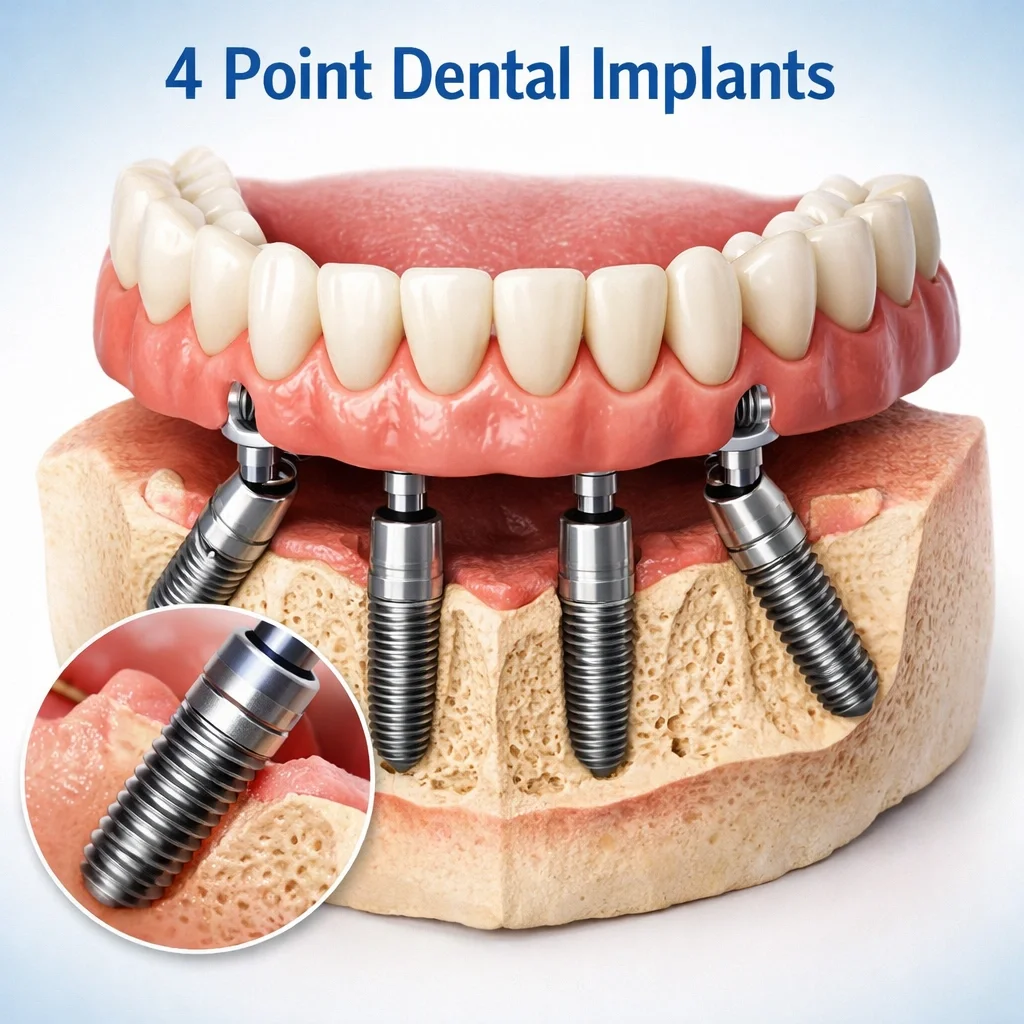
At its core, 4 point dental implants focus on efficiency and biomechanical stability. Instead of placing a separate implant for each missing tooth, dentists position four titanium implants in precise areas of the jawbone. Two implants are placed vertically at the front, while the remaining two are angled at the back to maximize contact with dense bone. This angulation technique allows the implants to support a full set of fixed teeth without the need for extensive bone grafting in many cases.
One of the main reasons patients search for information about 4 point dental implants is to understand whether this solution can truly replace traditional dentures. The answer, in most cases, is yes—and often with far superior results. Unlike removable dentures that can shift, click, or cause sore spots, this implant-supported system is fixed in place. Once the prosthetic bridge is attached, it feels much closer to natural teeth, enabling patients to bite and chew with confidence 🍎.
Another key advantage of 4 point dental implants is the possibility of immediate function. In suitable cases, patients can receive a temporary fixed bridge on the same day as implant placement. This means you don’t have to go weeks or months without teeth during the healing period. For many individuals, especially those who are socially or professionally active, this immediate transformation can be life-changing.
From a clinical perspective, 4 point dental implants are grounded in decades of research and real-world success. The concept is built on controlled force distribution across the jawbone, which helps preserve bone structure over time. When teeth are missing, the jawbone naturally begins to shrink due to lack of stimulation. Dental implants counteract this process by transmitting chewing forces directly to the bone, helping maintain facial structure and preventing the “sunken” appearance often associated with long-term tooth loss.
Patients often wonder whether age is a limiting factor for 4 point dental implants. In reality, age alone is rarely a barrier. What matters more is overall health, bone quality, and oral hygiene. Many patients in their 50s, 60s, and even 70s successfully undergo this treatment. With proper planning and follow-up care, the implants are designed to last for decades, making them a long-term investment in both health and quality of life 💙.
It’s also important to understand that 4 point dental implants are not a one-size-fits-all solution. A thorough examination—including digital scans, X-rays, and a review of your medical history—is essential. This detailed planning phase ensures that the implants are placed at the correct angles and depths to achieve optimal stability and longevity. Reputable dental clinics follow internationally recognized protocols and clinical guidelines supported by organizations such as the [American Dental Association](chatgpt://generic-entity?number=0).
For patients who have struggled with loose dentures or failing teeth, 4 point dental implants often represent a turning point. They combine modern technology, proven surgical principles, and patient-centered care into a single, comprehensive treatment. The result is not just a new smile, but improved comfort, better oral health, and renewed self-confidence 😁.
In the sections that follow, we will explore every aspect of 4 point dental implants in detail—from candidacy and benefits to costs, recovery, and long-term success. Understanding how this treatment works will help you make an informed decision and take the next step toward a healthier, more confident smile.
What Are 4 Point Dental Implants and How Do They Work?
4 point dental implants are a modern full-arch tooth replacement solution designed to restore an entire upper or lower jaw using only four dental implants. This approach was developed to address common challenges associated with traditional implant methods, such as extensive surgery, long treatment times, and the need for bone grafting. By focusing on strategic implant placement and optimal force distribution, 4 point dental implants provide a stable, fixed, and long-lasting alternative for patients with multiple missing or failing teeth.
The Core Concept Behind 4 Point Dental Implants
The fundamental idea of 4 point dental implants is efficiency without compromising strength. Instead of placing one implant per missing tooth, dentists use four titanium implants to support a full prosthetic bridge. Two implants are positioned vertically in the front part of the jaw, where bone density is typically higher. The remaining two implants are placed at an angle in the posterior region, allowing them to anchor securely into available bone while avoiding anatomical structures such as the sinuses or nerve canals.
This angled placement is a key reason why 4 point dental implants often eliminate the need for bone grafting. By engaging denser bone areas, the implants achieve strong primary stability, which is essential for immediate or early loading. For patients, this means fewer surgical procedures and a more streamlined treatment experience 😊.
How the Implants Support a Full Arch of Teeth
Once the four implants are placed, they act as a foundation for a fixed dental bridge that replaces all missing teeth in that arch. The bridge is custom-designed to fit your bite, facial structure, and aesthetic preferences. With 4 point dental implants, the prosthetic teeth are securely screwed or cemented onto the implants, creating a restoration that does not move or shift like removable dentures.
This fixed nature allows patients with 4 point dental implants to enjoy a much more natural chewing experience. Foods that are often difficult with dentures—such as apples, steak, or crusty bread—can usually be eaten comfortably again. Speech clarity also improves, as there is no bulky appliance covering the palate or moving during conversation 🗣️.
Immediate Function and Same-Day Teeth
One of the most appealing aspects of 4 point dental implants is the potential for immediate function. In suitable cases, a temporary fixed bridge can be attached on the same day as implant placement. This means patients leave the clinic with a full set of functional teeth, rather than waiting months for healing before receiving a prosthesis.
Immediate loading is possible because 4 point dental implants are designed to achieve excellent primary stability at the time of surgery. However, not every patient qualifies for same-day teeth. Factors such as bone quality, bite forces, and overall health play a role, which is why a detailed clinical evaluation is essential.
The Role of Biomechanics and Bone Preservation
Biomechanics are central to the success of 4 point dental implants. The angled posterior implants help distribute chewing forces evenly across the jawbone, reducing stress on any single implant. This balanced load distribution enhances long-term implant stability and contributes to high success rates.
Additionally, 4 point dental implants help preserve jawbone health. When teeth are missing, the bone no longer receives stimulation and gradually resorbs. Dental implants restore this stimulation, slowing bone loss and helping maintain facial contours over time. This is a significant advantage over traditional dentures, which sit on top of the gums and do not prevent bone deterioration.
Clinical Planning and Safety Standards
Successful 4 point dental implants treatment relies heavily on careful planning. Dentists use digital imaging, 3D scans, and detailed measurements to determine the ideal implant positions and angles. This planning phase ensures safety, accuracy, and predictable outcomes, aligning with internationally accepted dental standards and guidelines published by professional organizations such as the American Dental Association.
If you are considering 4 point dental implants, a personalized consultation is the first step. During this visit, your dentist will assess your oral health, discuss your expectations, and explain whether this treatment is suitable for you. You can also reach out directly through the Redent Klinik Contact Page to receive professional guidance and a tailored treatment plan.
In summary, 4 point dental implants work by combining strategic implant placement, advanced biomechanics, and fixed prosthetic design to restore full dental arches efficiently and reliably. Understanding how this system functions helps patients feel confident and informed as they move forward with treatment.
Who Is an Ideal Candidate for 4 Point Dental Implants?
One of the most common questions patients ask when researching 4 point dental implants is whether they are suitable candidates for this treatment. The good news is that this implant system was specifically developed to help a wide range of people who have lost multiple teeth or are facing complete tooth loss. However, like all advanced dental procedures, candidacy for 4 point dental implants depends on several important medical, anatomical, and lifestyle factors.
Patients with Multiple Missing or Failing Teeth
4 point dental implants are particularly well suited for individuals who are missing most or all of their teeth in one jaw. They are also an excellent option for patients with severely damaged, decayed, or loose teeth that cannot be saved. In many cases, failing teeth can be removed and replaced with implants in a single, well-planned procedure.
For patients who have struggled with traditional removable dentures, 4 point dental implants can offer a dramatic improvement in comfort and function. Because the prosthetic teeth are fixed to implants rather than resting on the gums, issues like slipping, irritation, and embarrassment in social situations are significantly reduced 😌.
Bone Quality and Jaw Structure Considerations
Bone availability plays a crucial role in determining eligibility for 4 point dental implants. Unlike conventional implant treatments that often require large volumes of bone, this system is designed to maximize the use of existing bone. The angled placement of the posterior implants allows dentists to engage denser bone areas, even in patients with moderate bone loss.
This means that many patients who were previously told they needed bone grafting may still qualify for 4 point dental implants. However, severe bone loss or advanced jaw deterioration may require additional procedures or alternative treatment plans. A detailed 3D scan is always necessary to make an accurate assessment.
Upper Jaw vs Lower Jaw Candidacy
The upper and lower jaws have different anatomical characteristics, and candidacy for 4 point dental implants can vary between them. The upper jaw often has softer bone and proximity to the sinus cavities, while the lower jaw typically has denser bone but contains important nerve structures.
Thanks to advanced planning and angled implant placement, 4 point dental implants can be successfully placed in both jaws. However, each case must be evaluated individually to ensure safety and long-term success.
General Health and Medical Conditions
Overall health is another key factor when considering 4 point dental implants. Patients should be in reasonably good systemic health and able to undergo minor oral surgery. Conditions such as uncontrolled diabetes, severe immune disorders, or recent cancer treatments may affect healing and implant integration.
That said, many common medical conditions do not automatically disqualify patients from receiving 4 point dental implants. With proper medical coordination, stable health conditions, and careful planning, a large number of patients can safely benefit from this treatment. Open communication between the patient, dentist, and physician is essential 🩺.
Lifestyle Factors That Influence Eligibility
Lifestyle habits can significantly impact the success of 4 point dental implants. Smoking, for example, is known to impair healing and increase the risk of implant failure. While smokers are not always excluded, they are often advised to reduce or quit smoking before and after the procedure to improve outcomes.
Good oral hygiene is equally important. Patients considering 4 point dental implants must be willing to maintain proper cleaning routines and attend regular dental check-ups. Although implants cannot decay like natural teeth, the surrounding gums and bone still require care to prevent infection and inflammation.
Age and Long-Term Expectations
Age alone is rarely a limiting factor for 4 point dental implants. Adults of various age groups—from middle-aged patients to seniors—can be excellent candidates. What matters more is bone quality, healing capacity, and commitment to aftercare rather than chronological age.
Patients should also have realistic expectations. 4 point dental implants are designed to be a long-term solution, but they require patience during the healing phase and ongoing maintenance afterward. When patients understand the process and actively participate in their care, success rates are consistently high 💪.
Professional Evaluation Is Essential
Ultimately, the only way to determine whether 4 point dental implants are right for you is through a professional dental evaluation. This includes a comprehensive oral examination, digital imaging, and a discussion of your goals and concerns. Dental professionals follow evidence-based guidelines supported by organizations such as the American Dental Association to ensure patient safety and optimal outcomes.
In summary, ideal candidates for 4 point dental implants are individuals seeking a stable, fixed solution for extensive tooth loss, who have adequate bone structure, manageable health conditions, and a commitment to oral care. Understanding these criteria helps patients make confident, informed decisions about their dental health journey.
Key Benefits of Choosing 4 Point Dental Implants
When patients explore full-arch tooth replacement options, one solution consistently stands out for its balance of efficiency, stability, and long-term comfort: 4 point dental implants. This treatment approach was designed not only to restore missing teeth, but also to improve overall oral function and quality of life. Understanding the benefits of 4 point dental implants helps patients clearly see why this method has become a preferred choice among dentists and patients worldwide.
Enhanced Stability and Fixed Comfort
One of the most important advantages of 4 point dental implants is their exceptional stability. Unlike removable dentures that rely on suction or adhesives, this system is anchored directly into the jawbone. The four implants act as a solid foundation, securely supporting a full arch of prosthetic teeth.
Because the teeth are fixed in place, patients experience a level of comfort that closely resembles natural teeth. There is no slipping, clicking, or unexpected movement while eating or speaking. This stability allows individuals with 4 point dental implants to enjoy everyday activities without constant awareness of their dental restoration 😊.
Improved Chewing Power and Nutrition
Chewing efficiency is significantly improved with 4 point dental implants. Traditional dentures can limit bite force, making it difficult to enjoy certain foods. In contrast, implant-supported teeth transmit chewing forces directly to the jawbone, enabling patients to eat a wider variety of foods with confidence.
This improved chewing ability supports better digestion and overall nutrition. Patients with 4 point dental implants often report feeling more comfortable eating fruits, vegetables, and protein-rich foods, which are essential for long-term health 🥗.
Natural Feel and Speech Clarity
Another key benefit of 4 point dental implants is the natural feel they provide. Because the prosthetic teeth are custom-designed and firmly attached, they do not interfere with tongue movement or speech patterns. This is especially important for patients who struggled with pronunciation or lisping caused by bulky dentures.
With 4 point dental implants, speech often becomes clearer and more natural, helping patients feel more confident in professional and social interactions.
Reduced Need for Bone Grafting
Many patients are concerned about bone grafting when considering dental implants. One of the standout benefits of 4 point dental implants is their ability to utilize existing bone more efficiently. The angled placement of the rear implants allows dentists to avoid areas with low bone density and anchor into stronger bone regions.
As a result, a large number of patients can receive 4 point dental implants without undergoing additional bone grafting procedures. This reduces surgical complexity, shortens treatment time, and lowers overall discomfort during recovery.
Faster Treatment and Immediate Results
Time is a major consideration for many patients, and 4 point dental implants offer a faster path to a complete smile. In suitable cases, patients can receive temporary fixed teeth on the same day as implant placement. This immediate function eliminates long periods without teeth and allows patients to return to daily life quickly.
Compared to traditional implant methods that may take many months to complete, 4 point dental implants provide a more streamlined and efficient treatment timeline ⏱️.
Long-Term Bone and Facial Preservation
Tooth loss leads to gradual jawbone resorption, which can alter facial appearance over time. 4 point dental implants help prevent this process by stimulating the jawbone through normal chewing forces. This stimulation preserves bone volume and supports facial structure.
Patients with 4 point dental implants often maintain a more youthful facial profile compared to those who rely on long-term dentures, which do not prevent bone loss.
High Success Rates and Predictable Outcomes
Clinical studies and long-term data consistently show high success rates for 4 point dental implants. When placed by experienced professionals and maintained with proper oral hygiene, these implants can last for many years, often decades.
Dental professionals follow strict planning and surgical protocols based on evidence-backed standards recognized by organizations such as the American Dental Association. This ensures that 4 point dental implants remain a safe, reliable, and predictable treatment option for eligible patients.
Psychological and Quality-of-Life Benefits
Beyond physical improvements, 4 point dental implants offer significant emotional and psychological benefits. Patients frequently report increased self-esteem, improved social confidence, and reduced anxiety about their teeth.
The ability to smile, laugh, eat, and speak without worry has a profound impact on daily life. For many, choosing 4 point dental implants is not just a dental decision—it is a step toward improved overall well-being 💙.
In summary, the benefits of 4 point dental implants extend far beyond tooth replacement. They provide stability, comfort, efficiency, and long-term oral health advantages that make them one of the most comprehensive solutions for full-arch restoration available today.
4 Point Dental Implants vs Traditional Implant Techniques
When considering full-mouth tooth replacement, patients are often faced with a critical decision: choosing between 4 point dental implants and traditional implant techniques. While both options aim to restore function and aesthetics, they differ significantly in terms of procedure complexity, treatment time, patient comfort, and long-term outcomes. Understanding these differences helps patients make an informed and confident decision based on their needs and expectations.
Number of Implants and Surgical Complexity
One of the most obvious differences lies in the number of implants used. Traditional implant techniques typically require six to ten implants per jaw to support a full arch of teeth. This means multiple surgical sites, longer procedures, and increased overall complexity. In contrast, 4 point dental implants use only four strategically placed implants to achieve full-arch support.
Because 4 point dental implants rely on precise positioning rather than quantity, the surgical procedure is generally less invasive. Fewer implants mean fewer incisions, reduced trauma to the tissues, and a more comfortable experience for many patients 😊.
Treatment Duration and Time to Results
Traditional implant treatments often require a lengthy timeline. After implant placement, patients may need to wait several months for osseointegration before the final teeth can be attached. During this time, removable temporary dentures are commonly used.
By comparison, 4 point dental implants are designed to support immediate or early loading in suitable cases. This means patients can often receive a fixed temporary bridge on the same day as surgery. The reduced waiting period is a major advantage for individuals seeking faster functional and aesthetic results ⏳.
Impact on Daily Life During Treatment
Extended treatment timelines can disrupt daily routines and social life. With traditional implants, repeated appointments and prolonged healing phases may be required. 4 point dental implants streamline this process, allowing patients to return to normal activities more quickly and with fewer interruptions.
Bone Grafting and Anatomical Limitations
Bone availability is a common concern in implant dentistry. Traditional implant techniques often require substantial bone volume, particularly in the back of the jaw. When bone loss is present, bone grafting procedures may be necessary, adding time, cost, and complexity to the treatment.
4 point dental implants are specifically designed to minimize or eliminate the need for bone grafting. The angled placement of the posterior implants allows dentists to utilize existing bone more effectively and avoid anatomical structures such as sinuses. This makes 4 point dental implants accessible to a wider range of patients, including those with moderate bone loss.
Stability, Load Distribution, and Longevity
Both traditional implants and 4 point dental implants are engineered for long-term stability, but they achieve this in different ways. Traditional systems rely on distributing forces across a larger number of implants. While effective, this approach increases surgical complexity.
4 point dental implants, on the other hand, use advanced biomechanics. The angled posterior implants help distribute chewing forces evenly across the jaw, reducing stress on individual implants. This optimized load distribution contributes to high success rates and long-term reliability when proper protocols are followed.
Patient Comfort and Recovery Experience
Recovery is another important factor when comparing treatment options. Traditional implant procedures with multiple implants and grafting can result in increased swelling, discomfort, and longer healing times.
With 4 point dental implants, fewer implants and less invasive techniques often translate into a smoother recovery. Many patients report less post-operative discomfort and faster overall healing, especially when immediate function is achieved 🌿.
Cost Efficiency and Overall Value
While costs can vary depending on location and clinical factors, traditional implant treatments with numerous implants and grafting procedures often result in higher overall expenses. 4 point dental implants reduce the number of implants, surgeries, and appointments required, which can improve cost efficiency.
More importantly, 4 point dental implants offer strong long-term value. Patients benefit from durable, fixed teeth, reduced maintenance issues compared to dentures, and improved oral health outcomes over time.
Which Option Is Right for You?
Choosing between traditional implants and 4 point dental implants depends on individual needs, bone condition, health status, and personal preferences. While traditional methods may be appropriate in certain complex cases, 4 point dental implants provide a balanced solution that combines efficiency, comfort, and proven clinical success.
A professional consultation is essential to determine the most suitable approach. Dentists rely on detailed diagnostics and evidence-based guidelines to recommend the best treatment option for each patient.
In summary, when comparing 4 point dental implants with traditional implant techniques, the former often stand out for their reduced invasiveness, faster results, lower need for grafting, and high patient satisfaction. These advantages make them a leading choice for modern full-arch dental restoration.
The Treatment Process Step by Step
Understanding the treatment journey is essential for anyone considering 4 point dental implants. Many patients feel anxious about implant procedures simply because they do not know what to expect. In reality, the process is highly structured, carefully planned, and designed to maximize comfort, safety, and long-term success. By breaking the procedure into clear steps, patients can approach 4 point dental implants with confidence and realistic expectations 😊.
Initial Consultation and Comprehensive Evaluation
The first step in the 4 point dental implants process is a detailed consultation. During this visit, the dentist evaluates your oral health, reviews your medical history, and discusses your goals. This phase is critical because it determines whether 4 point dental implants are the most appropriate solution for your specific needs.
Advanced diagnostic tools such as digital X-rays and 3D CBCT scans are used to assess bone quality, jaw anatomy, and implant positioning. These scans allow the dental team to plan the exact angles and depths of the implants, ensuring maximum stability and safety. Careful planning at this stage significantly increases the long-term success of 4 point dental implants.
Personalized Treatment Planning
Once diagnostics are complete, a customized treatment plan is created. This plan outlines every stage of the 4 point dental implants procedure, including tooth extractions if needed, implant placement, temporary teeth, and final restoration. Patients are informed about the timeline, recovery expectations, and post-treatment care.
This personalized approach ensures that 4 point dental implants are tailored to your bite, facial structure, and aesthetic preferences. It also allows patients to ask questions and fully understand the process before moving forward, which helps reduce anxiety and uncertainty.
Surgical Placement of the Implants
The surgical phase is the core of the 4 point dental implants procedure. On the day of surgery, local anesthesia or sedation is used to ensure comfort. Any remaining damaged or failing teeth are removed if necessary, and the jaw is prepared for implant placement.
Four titanium implants are then placed into the jawbone—two vertically in the front and two angled in the back. This strategic placement is what gives 4 point dental implants their strength and efficiency. The angled posterior implants help maximize bone contact and stability while avoiding sensitive anatomical areas.
Minimally Invasive Techniques
One major advantage of 4 point dental implants is the minimally invasive nature of the surgery compared to traditional implant methods. Fewer implants mean fewer surgical sites, which often results in reduced swelling, less discomfort, and faster recovery for patients 🌿.
Temporary Fixed Teeth and Immediate Function
In many cases, patients receive a temporary fixed bridge on the same day as implant placement. This is known as immediate loading. With 4 point dental implants, the high initial stability of the implants often makes this possible.
The temporary teeth are designed to look natural and function well, allowing patients to leave the clinic with a complete smile. While these provisional teeth are not the final restoration, they play a crucial role in maintaining appearance, speech, and basic chewing function during the healing period.
Healing and Osseointegration Phase
After surgery, the healing phase begins. During this time, the implants integrate with the jawbone through a process called osseointegration. This biological bonding is essential for the long-term success of 4 point dental implants.
Healing typically takes several months, although this can vary depending on individual health and bone quality. Patients are advised to follow specific dietary guidelines and oral hygiene instructions to protect the implants during this phase. Regular follow-up appointments ensure that healing is progressing as expected.
Final Prosthetic Placement
Once osseointegration is complete, the final step of the 4 point dental implants process begins. The temporary bridge is replaced with a custom-made permanent prosthesis. This final restoration is crafted from durable, high-quality materials designed for long-term use.
The permanent teeth are carefully adjusted to ensure a comfortable bite, natural appearance, and optimal function. At this stage, patients experience the full benefits of 4 point dental implants, including improved chewing efficiency, enhanced aesthetics, and long-term stability 😁.
Ongoing Care and Maintenance
Although 4 point dental implants are designed to be durable, ongoing care is essential. Patients must maintain good oral hygiene, attend regular dental check-ups, and follow professional advice to protect their investment.
With proper care, 4 point dental implants can provide reliable function and confidence for many years. Understanding each step of the treatment process empowers patients to actively participate in their care and achieve the best possible outcome.
In summary, the step-by-step process of 4 point dental implants is carefully structured to deliver predictable, long-lasting results. From consultation to final restoration, every phase is designed with patient comfort, safety, and satisfaction in mind.
Healing Time, Recovery, and Long-Term Expectations
A clear understanding of healing and recovery is essential for anyone considering 4 point dental implants. While the procedure itself is carefully planned and efficient, the success of the treatment largely depends on what happens afterward. Proper healing, realistic expectations, and long-term care all play a crucial role in ensuring that 4 point dental implants deliver stable, lasting results and a comfortable daily experience.
What to Expect Immediately After Surgery
Following the placement of 4 point dental implants, it is normal to experience mild to moderate swelling, tenderness, and minor bruising. These symptoms are a natural response to oral surgery and usually peak within the first 48 to 72 hours. Most patients report that discomfort is manageable with prescribed or over-the-counter pain medication.
Because 4 point dental implants require fewer implants than traditional techniques, many patients find that their recovery is smoother and less intense than expected. Rest, hydration, and following post-operative instructions closely are key during the first few days 😊.
Dietary Guidelines in the Early Healing Phase
During the initial recovery period, patients with 4 point dental implants are advised to follow a soft-food diet. Foods such as yogurt, soups, mashed vegetables, eggs, and smoothies help protect the implants while reducing strain on the surgical sites.
Although temporary fixed teeth may allow basic chewing, it is important to avoid hard, crunchy, or sticky foods during early healing. Gradually reintroducing firmer foods as advised by your dentist supports safe healing and implant stability.
The Osseointegration Process Explained
One of the most critical stages in the success of 4 point dental implants is osseointegration. This is the biological process in which the titanium implants fuse with the surrounding jawbone. Osseointegration creates a strong, stable foundation that allows the implants to function like natural tooth roots.
This phase typically takes several months, although healing times can vary depending on bone quality, general health, and lifestyle factors. During this period, patients must be mindful of their oral hygiene and avoid excessive pressure on the implants. Successful osseointegration is the reason 4 point dental implants are known for their long-term durability and reliability.
Recovery Timeline: Short-Term vs Long-Term
The recovery timeline for 4 point dental implants can be divided into short-term and long-term phases. Short-term recovery focuses on tissue healing and symptom management, usually lasting one to two weeks. Most patients can return to work and normal daily activities within a few days, depending on the nature of their job.
Long-term recovery, however, involves bone healing and adaptation to the implants. While patients may feel comfortable much earlier, full integration and stabilization continue behind the scenes for several months. Patience during this stage is essential for the long-term success of 4 point dental implants.
Oral Hygiene and Maintenance During Healing
Maintaining excellent oral hygiene is vital after receiving 4 point dental implants. Although implants cannot develop cavities, the surrounding gums and bone are still susceptible to inflammation and infection. Gentle brushing, prescribed mouth rinses, and careful cleaning around the prosthesis help protect the surgical sites.
Regular follow-up appointments allow the dental team to monitor healing progress and address any concerns early. Patients who actively participate in their aftercare significantly improve the longevity of their 4 point dental implants.
Long-Term Expectations and Implant Longevity
Once healing is complete and the final prosthetic teeth are placed, patients can enjoy the full benefits of 4 point dental implants. These include stable chewing, improved speech, enhanced aesthetics, and increased confidence. With proper care, implants are designed to last many years and often decades.
Long-term success depends on consistent oral hygiene, routine dental visits, and healthy lifestyle choices. Smoking cessation, balanced nutrition, and managing systemic health conditions all contribute positively to the lifespan of 4 point dental implants 💙.
Adapting to Your New Smile
Adapting to 4 point dental implants is usually a smooth process. Because the teeth are fixed and custom-designed, most patients quickly forget they are wearing a dental restoration. Speech, eating habits, and social interactions typically feel natural within a short time.
Some patients notice minor changes in bite sensation or pressure during the adjustment phase. These sensations usually resolve as the muscles and jaw adapt to the new prosthesis.
Signs of Healthy Healing vs Warning Signals
Healthy healing after 4 point dental implants includes decreasing swelling, minimal discomfort, and stable prosthetic teeth. Mild sensitivity or tightness around the implants can be normal during early healing.
However, persistent pain, excessive swelling, unusual discharge, or loosening of the prosthesis should be reported immediately. Early intervention helps protect the implants and ensures long-term success.
In summary, healing and recovery after 4 point dental implants are structured, manageable, and predictable when patients follow professional guidance. By understanding the recovery timeline and maintaining proper care, patients can confidently look forward to long-lasting comfort, function, and satisfaction with their restored smile.
Costs and Pricing Factors of 4 Point Dental Implants
One of the most searched and important topics for patients considering 4 point dental implants is cost. While this treatment offers long-term value and life-changing benefits, pricing can vary widely depending on several clinical and non-clinical factors. Understanding what influences the cost of 4 point dental implants helps patients set realistic expectations and make informed financial decisions.
What Is Included in the Cost of 4 Point Dental Implants?
The total cost of 4 point dental implants is not just about the implants themselves. It typically includes multiple components that together form a complete treatment. These components often cover the initial consultation, diagnostic imaging such as 3D scans, surgical implant placement, temporary fixed teeth, final prosthetic teeth, and follow-up visits.
In reputable clinics, the price of 4 point dental implants reflects a comprehensive treatment package rather than a single procedure. This approach ensures proper planning, safety, and long-term success, which is essential for full-arch restorations.
Main Factors That Influence Pricing
Several variables affect the final cost of 4 point dental implants. One of the most significant factors is the geographical location of the dental clinic. Treatment prices in countries such as the United States, the United Kingdom, or Western Europe are generally higher due to operational costs, labor expenses, and regulatory requirements.
Another major factor is the experience of the dental team. Clinics with highly experienced implant specialists, advanced technology, and strict adherence to international standards may charge more for 4 point dental implants, but they also offer higher predictability and safety.
Materials and Prosthetic Type
The materials used for the final prosthetic teeth play a crucial role in pricing. Acrylic-based bridges are generally more affordable, while zirconia or hybrid ceramic restorations are more durable and aesthetically pleasing but come at a higher cost.
Patients choosing premium materials for their 4 point dental implants often benefit from increased longevity, better aesthetics, and improved resistance to wear over time.
Additional Procedures That May Affect Cost
Although 4 point dental implants are designed to reduce the need for bone grafting, some patients may still require additional procedures. Tooth extractions, treatment of gum disease, or minor bone augmentation can influence the overall price.
However, compared to traditional implant techniques, 4 point dental implants often remain more cost-efficient because they minimize surgical stages and reduce treatment duration.
Average Cost Ranges (Indicative)
Below is a general price overview for 4 point dental implants. These figures are indicative and may vary based on clinic, materials, and location:
- United States: $18,000 – $30,000 per jaw
- United Kingdom: £14,000 – £25,000 per jaw
- Western Europe: €12,000 – €22,000 per jaw
- Turkey and similar destinations: €5,000 – €9,000 per jaw
These ranges typically include consultation, surgery, temporary teeth, and final restoration. Patients should always confirm exactly what is included when comparing 4 point dental implants prices between clinics.
Why Lower Cost Does Not Always Mean Lower Quality
Many patients are surprised to see significant price differences for 4 point dental implants between countries. Lower costs in certain regions are often due to reduced operational expenses rather than compromised quality. Clinics that serve international patients frequently use the same implant brands, digital planning systems, and materials found in higher-cost countries.
That said, it is essential to choose clinics that are transparent, experienced, and compliant with international dental standards. Cost savings should never come at the expense of safety or long-term success.
Long-Term Value vs Upfront Cost
While the initial investment for 4 point dental implants may seem high, it is important to consider long-term value. Traditional dentures often require frequent adjustments, replacements, and ongoing maintenance costs. Over time, these expenses can add up.
4 point dental implants are designed as a long-term solution. With proper care, they can last for many years, often making them more economical over a lifetime compared to repeated denture replacements 💡.
Financing and Payment Planning
Many dental clinics offer flexible payment plans or staged payment options to make 4 point dental implants more accessible. Discussing financing options during the consultation helps patients plan comfortably without unnecessary financial stress.
In summary, the cost of 4 point dental implants depends on multiple factors, including location, materials, expertise, and individual clinical needs. By understanding these variables and focusing on long-term value rather than upfront price alone, patients can make confident, informed decisions about their dental health.
Success Rates, Risks, and Clinical Safety
For patients considering 4 point dental implants, understanding success rates and potential risks is just as important as learning about benefits and costs. This treatment is widely recognized for its predictability and long-term reliability, but like any medical procedure, it must be approached with accurate information and realistic expectations. When properly planned and performed, 4 point dental implants are considered a clinically safe and highly successful solution for full-arch tooth replacement.
Overall Success Rates of 4 Point Dental Implants
Clinical studies and long-term follow-ups consistently report high success rates for 4 point dental implants, often exceeding 95% when strict protocols are followed. Success in this context means that the implants remain stable, functional, and free from infection while supporting a fixed prosthetic bridge comfortably.
One reason 4 point dental implants achieve such strong outcomes is their biomechanical design. The angled placement of the posterior implants allows for optimal force distribution during chewing, reducing stress on the bone and implants. This controlled load sharing significantly contributes to long-term implant stability and durability 💪.
Key Factors That Influence Success
Although 4 point dental implants have excellent overall success rates, individual outcomes depend on several important factors. Bone quality, surgical precision, prosthetic design, and patient compliance all play critical roles.
Patients who maintain good oral hygiene, attend regular dental check-ups, and follow post-treatment instructions carefully are far more likely to enjoy long-term success with 4 point dental implants. Lifestyle factors such as smoking cessation and proper nutrition also positively influence healing and implant longevity.
Experience of the Dental Team
The expertise of the dental team is one of the most decisive factors in the success of 4 point dental implants. Accurate diagnosis, advanced digital planning, and precise surgical execution are essential. Clinics that follow evidence-based protocols and internationally recognized standards consistently achieve better outcomes.
Professional guidelines and clinical best practices supported by organizations such as the American Dental Association emphasize thorough planning, patient selection, and long-term follow-up as key pillars of implant safety and success.
Potential Risks and Complications
While 4 point dental implants are generally safe, it is important to be aware of possible risks. Short-term complications may include swelling, temporary discomfort, or minor bleeding following surgery. These effects are usually mild and resolve with proper care.
Less common but more serious risks include infection around the implant, delayed osseointegration, or implant failure. These issues are relatively rare and often linked to poor oral hygiene, uncontrolled medical conditions, or excessive smoking rather than the implant system itself.
Prosthetic-Related Considerations
In some cases, adjustments to the prosthetic bridge may be required after placement. Bite imbalance, wear of temporary restorations, or minor loosening can occur, especially during the early adaptation phase. Regular follow-up appointments help identify and resolve these issues before they affect the implants.
With proper planning and maintenance, 4 point dental implants are designed to minimize prosthetic complications and provide long-term functional stability.
How Clinical Safety Is Ensured
Safety in 4 point dental implants begins long before surgery. Comprehensive diagnostics, including 3D imaging and medical evaluation, help identify anatomical risks and health-related concerns. This allows dentists to customize the treatment plan and avoid sensitive structures such as nerves or sinuses.
Sterile surgical protocols, high-quality implant materials, and digital precision further enhance clinical safety. When these standards are followed, 4 point dental implants offer a predictable and controlled treatment environment.
Long-Term Monitoring and Prevention
Long-term success with 4 point dental implants does not end after the final teeth are placed. Ongoing monitoring is essential to ensure the health of the surrounding gums and bone. Regular professional cleanings and examinations help prevent peri-implant diseases and detect early signs of complications.
Patients who treat their implants with the same care as natural teeth—brushing, flossing, and attending routine dental visits—significantly reduce risks and maximize implant lifespan 🦷.
Balancing Benefits and Risks
Every medical decision involves weighing benefits against potential risks. In the case of 4 point dental implants, the benefits—high success rates, fixed stability, improved quality of life, and long-term durability—far outweigh the relatively low risks when treatment is performed by experienced professionals.
In conclusion, 4 point dental implants are a clinically safe and well-documented solution with strong success rates worldwide. With proper case selection, expert execution, and responsible aftercare, patients can confidently expect reliable, long-lasting results that support both oral health and overall well-being.
Why Dental Clinics Recommend 4 Point Dental Implants
Dental professionals increasingly recommend 4 point dental implants because this treatment successfully combines clinical predictability, patient comfort, and long-term oral health benefits. From a clinician’s perspective, the goal is not only to replace missing teeth but also to deliver a solution that is safe, efficient, and sustainable over time. 4 point dental implants meet these criteria and have become a preferred option for full-arch rehabilitation in modern implant dentistry.
Proven Clinical Predictability
One of the main reasons dental clinics favor 4 point dental implants is their high level of predictability. The treatment protocol is well-documented, standardized, and supported by long-term clinical data. Dentists can plan implant placement with precision using digital tools, reducing uncertainty and improving surgical accuracy.
Because 4 point dental implants rely on strategic implant positioning rather than a large number of implants, clinicians can achieve consistent outcomes across a wide range of patients. This predictability benefits both the dental team and the patient, creating confidence in the treatment process 😊.
Efficient Use of Existing Bone
Dental clinics often encounter patients with varying degrees of bone loss. One of the strongest clinical advantages of 4 point dental implants is their ability to maximize the use of available bone. The angled posterior implants allow dentists to anchor securely into denser bone areas while avoiding complex grafting procedures.
From a clinical standpoint, this efficiency reduces surgical risks, shortens treatment timelines, and expands eligibility. Dentists can offer 4 point dental implants to patients who might otherwise require extensive preparatory procedures with traditional implant techniques.
Reduced Surgical Complexity
Fewer implants mean fewer surgical steps. Dental clinics appreciate that 4 point dental implants simplify the surgical process without compromising strength or stability. This streamlined approach often results in less chair time, reduced post-operative discomfort, and faster patient recovery.
For clinics focused on patient-centered care, minimizing invasiveness while achieving excellent results is a major advantage.
Immediate Function and Patient Satisfaction
Another key reason clinics recommend 4 point dental implants is the ability to provide immediate or early function. Many patients can receive fixed temporary teeth on the same day as surgery, which dramatically improves patient satisfaction.
From a clinical perspective, immediate function not only enhances the patient experience but also supports soft tissue shaping and aesthetic outcomes. Patients leave the clinic with a full smile, reinforcing trust in the treatment and the dental team 😁.
Long-Term Maintenance and Oral Health Benefits
Dental clinics prioritize treatments that are manageable in the long term. 4 point dental implants are designed for durability and ease of maintenance. With proper hygiene and routine check-ups, implants and prosthetic bridges can function reliably for many years.
Unlike removable dentures, 4 point dental implants help preserve jawbone density by transmitting chewing forces to the bone. This preservation supports facial structure and reduces future oral health complications, aligning with preventive dental care principles.
Consistency with International Dental Standards
Modern dental clinics operate within evidence-based frameworks. 4 point dental implants align well with internationally accepted implantology standards and clinical guidelines. The structured planning, digital diagnostics, and controlled biomechanics used in this approach reflect best practices taught in advanced implant training programs.
Because 4 point dental implants follow a well-defined protocol, clinics can maintain consistent quality control and patient safety across cases.
Balanced Cost-to-Benefit Ratio for Patients
From a clinical ethics perspective, dentists aim to recommend treatments that provide strong value to patients. 4 point dental implants offer a balanced cost-to-benefit ratio by reducing the number of implants, surgical procedures, and treatment stages while delivering fixed, long-term results.
This balance allows clinics to offer a high-quality solution that remains accessible to a broader patient population without compromising clinical outcomes 💡.
Positive Impact on Quality of Life
Dental professionals routinely witness the emotional and psychological transformation patients experience after receiving 4 point dental implants. Improved confidence, restored ability to eat comfortably, and freedom from removable dentures significantly enhance daily life.
Because dentistry is ultimately about improving patient well-being, clinics strongly value treatments like 4 point dental implants that deliver measurable improvements in both function and self-esteem.
Why Dentists Trust This Approach
Dentists recommend 4 point dental implants because the system works—clinically, functionally, and emotionally. It allows them to deliver predictable results, manage risks effectively, and meet patient expectations in a single, comprehensive treatment plan.
In conclusion, dental clinics recommend 4 point dental implants because they represent a modern, evidence-based solution that aligns professional standards with patient needs. Their reliability, efficiency, and long-term benefits make them a cornerstone of full-arch implant treatment in contemporary dentistry.