
Missing multiple teeth can seriously affect not only your smile, but also your ability to eat, speak, and feel confident in daily life. Modern implant dentistry has evolved rapidly, and one of the most innovative solutions available today is 4 x 4 dental implants. This treatment concept is designed for patients who need a full-arch tooth replacement but want a solution that is stable, long-lasting, and far more comfortable than traditional dentures.
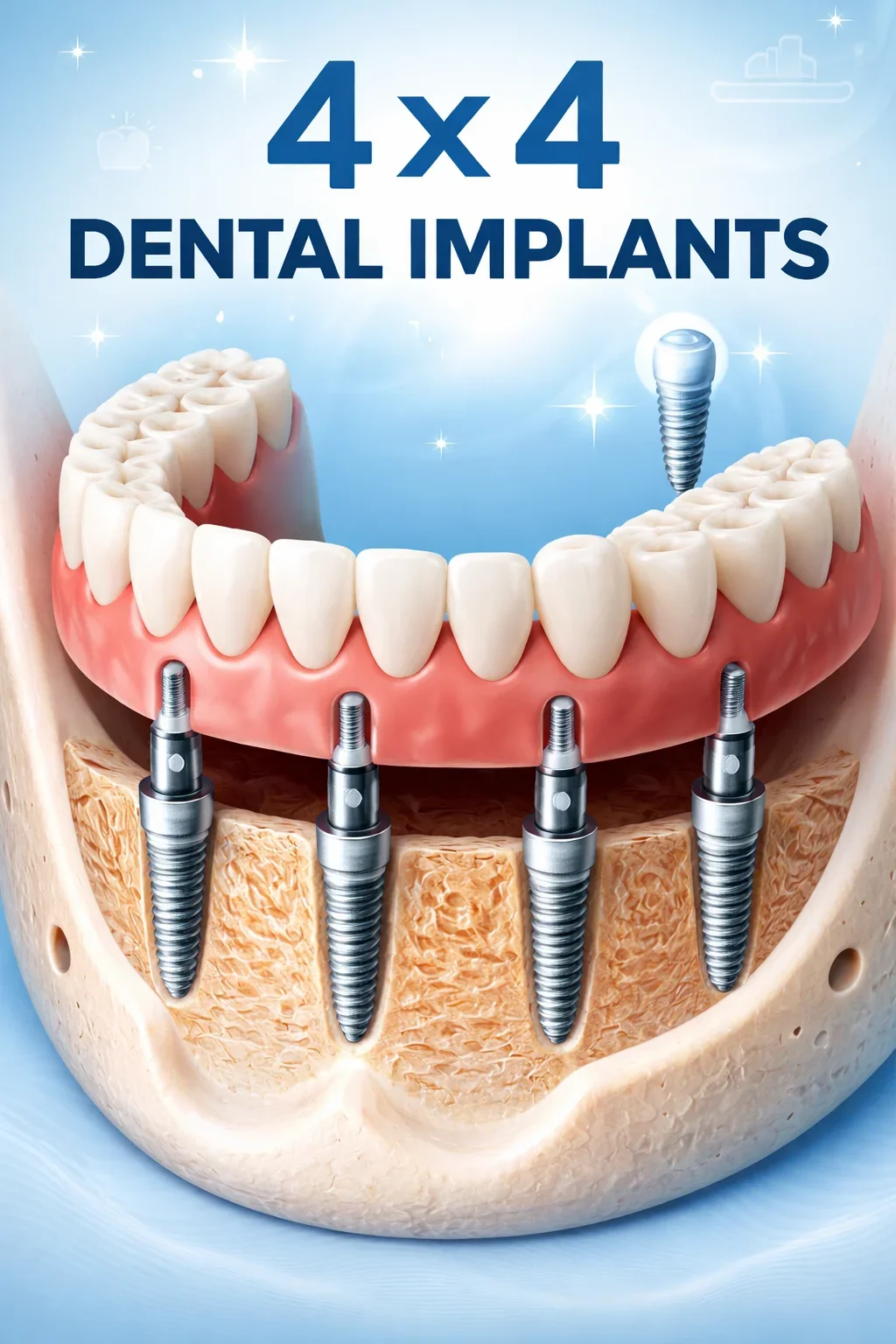
At its core, 4 x 4 dental implants refer to a full-arch restoration method where four dental implants are strategically placed in the jawbone to support a fixed prosthetic bridge. Unlike removable dentures, this system provides a permanent solution that looks, feels, and functions much like natural teeth. The technique focuses on maximizing bone support while minimizing the number of implants needed, making it both efficient and patient-friendly 😊.
One of the main reasons 4 x 4 dental implants have become so popular is their ability to restore an entire arch of teeth using a simplified approach. Instead of placing implants for every missing tooth, the dentist positions four implants at precise angles. These angles are carefully planned to utilize the strongest areas of the jawbone, often avoiding the need for complex bone grafting procedures. This makes 4 x 4 dental implants especially appealing for patients who have experienced some degree of bone loss.
From a functional standpoint, 4 x 4 dental implants dramatically improve chewing efficiency and bite strength. Patients who previously struggled with loose dentures often report a life-changing difference after treatment. Eating tougher foods, speaking clearly, and smiling without hesitation become part of everyday life again. Because the implants are anchored directly into the bone, they also help preserve jawbone structure over time, reducing the sunken facial appearance commonly associated with long-term tooth loss.
Another key advantage of 4 x 4 dental implants is the relatively streamlined treatment timeline. In many cases, patients can receive temporary fixed teeth on the same day or shortly after implant placement. This concept, sometimes referred to as immediate loading, means you do not have to spend months without teeth. While the implants integrate with the bone during the healing phase, you can continue your daily life with confidence and comfort.
When it comes to aesthetics, 4 x 4 dental implants offer outstanding results. The prosthetic teeth are custom-designed to match your facial features, gum line, and smile expectations. Modern materials allow for natural translucency, realistic tooth contours, and a healthy-looking gum appearance. The result is a smile that does not look artificial or bulky, which is a common concern with traditional removable dentures.
It is also important to understand that 4 x 4 dental implants are not a one-size-fits-all solution. A comprehensive evaluation is essential before treatment. This includes detailed imaging, digital planning, and a full assessment of oral and general health. Experienced dental teams follow evidence-based protocols supported by organizations such as the American Dental Association to ensure safety, predictability, and long-term success.
Patients considering 4 x 4 dental implants often have questions about comfort and daily maintenance. The good news is that once healing is complete, caring for implant-supported teeth is similar to caring for natural teeth. Regular brushing, flossing, and professional check-ups are usually sufficient. Because the bridge is fixed in place, there is no need for messy adhesives or nightly removal, which greatly improves quality of life.
If you are exploring 4 x 4 dental implants and want personalized guidance, speaking directly with a qualified clinic is the best next step. A professional consultation can help determine whether this treatment is right for you and what results you can realistically expect. You can easily reach out through the Redent Klinik Contact Page to get expert advice tailored to your needs.
In summary, 4 x 4 dental implants represent a modern, efficient, and highly effective solution for full-arch tooth replacement. By combining advanced surgical planning, strong biomechanical support, and natural-looking prosthetics, this treatment restores not just teeth, but confidence, comfort, and long-term oral health. For many patients, it is a true turning point toward a better quality of life 😁.
What Are 4 x 4 Dental Implants and How Do They Work?
4 x 4 dental implants are a modern full-arch tooth replacement solution designed for patients who have lost most or all of their teeth in one jaw. Instead of replacing each missing tooth with an individual implant, this approach uses four strategically placed implants to support a complete fixed dental bridge. The goal of 4 x 4 dental implants is to provide maximum stability, functionality, and aesthetics with a minimally invasive and highly efficient technique.
This concept is especially valuable for patients who want a permanent alternative to removable dentures. Traditional dentures often shift, cause discomfort, and reduce chewing efficiency. In contrast, 4 x 4 dental implants are anchored directly into the jawbone, creating a strong foundation that mimics the function of natural tooth roots. This anchorage allows patients to speak, eat, and smile with confidence 😊.
The Core Concept Behind 4 x 4 Dental Implants
The fundamental idea behind 4 x 4 dental implants is strategic implant placement. Two implants are usually placed vertically in the front part of the jaw, where bone density is typically higher. The remaining two implants are positioned at an angle in the posterior (back) regions of the jaw. This angled placement is a critical feature of 4 x 4 dental implants, as it allows the dentist to utilize available bone more effectively.
By angling the rear implants, important anatomical structures such as the sinus cavities in the upper jaw or the mandibular nerve in the lower jaw can often be avoided. This reduces the need for additional surgical procedures like sinus lifts or bone grafts. As a result, 4 x 4 dental implants are frequently suitable even for patients who have experienced moderate bone loss.
How 4 x 4 Dental Implants Support a Full Arch
Once the four implants are securely placed, they act as anchors for a full-arch prosthetic bridge. This bridge is custom-made to fit precisely over the implants and is permanently fixed in place. Unlike removable dentures, the prosthesis used in 4 x 4 dental implants does not rest on the gums alone. Instead, chewing forces are transferred directly to the jawbone through the implants, which helps maintain bone health and facial structure.
The distribution of biting forces is one of the key biomechanical advantages of 4 x 4 dental implants. The angled implants increase the surface area of bone contact and improve load distribution across the jaw. This design enhances long-term stability and reduces stress on individual implants, contributing to the high success rates associated with this treatment approach.
Immediate Function and Temporary Teeth
A major benefit of 4 x 4 dental implants is the possibility of immediate function. In many cases, patients receive a temporary fixed set of teeth on the same day or within a few days after surgery. This means you do not have to go through a long period without teeth. While the implants integrate with the bone during the healing phase, the temporary bridge allows you to maintain normal appearance and basic function.
Although these temporary teeth are not the final prosthesis, they play an important role in the overall treatment experience. They help protect the implants, support healing, and allow patients to adapt quickly to their new smile. Once osseointegration is complete, the final prosthetic teeth are placed, offering improved durability, aesthetics, and comfort.
The Role of Bone Integration in 4 x 4 Dental Implants
Osseointegration is the biological process that allows 4 x 4 dental implants to become a permanent part of your jaw. During this phase, the bone grows around the implant surface, locking it securely in place. This process typically takes several months, but it is essential for the long-term success of the treatment.
Because 4 x 4 dental implants rely on fewer implants compared to traditional full-mouth approaches, precise planning is absolutely critical. Advanced imaging techniques, such as 3D scans, are used to evaluate bone quality and determine the optimal implant positions. This careful planning helps ensure predictable results and minimizes the risk of complications.
Why This System Is Considered Patient-Friendly
One of the reasons 4 x 4 dental implants are considered patient-friendly is the reduced complexity of the procedure. Fewer implants mean shorter surgical time, faster recovery, and often lower overall treatment burden. Many patients appreciate that this approach delivers reliable results without requiring multiple invasive surgeries.
Additionally, 4 x 4 dental implants are designed with long-term maintenance in mind. Once healing is complete, daily care is similar to caring for natural teeth. Regular oral hygiene routines and professional check-ups are usually sufficient to keep the implants and prosthetic teeth healthy for many years.
In essence, 4 x 4 dental implants work by combining smart surgical planning, strong biomechanical principles, and modern prosthetic design. The result is a stable, natural-looking, and functional full-arch restoration that addresses both practical needs and aesthetic expectations. For patients seeking a reliable solution to extensive tooth loss, this system represents a powerful blend of innovation and comfort 😄.
Who Is an Ideal Candidate for 4 x 4 Dental Implants?
One of the most common questions patients ask is whether 4 x 4 dental implants are suitable for their specific situation. While this treatment concept is highly versatile, it is not automatically the right choice for everyone. Understanding who qualifies as an ideal candidate helps set realistic expectations and ensures long-term success. In general, 4 x 4 dental implants are designed for individuals who are missing most or all of their teeth in one jaw and are looking for a fixed, stable alternative to removable dentures.
Ideal candidates for 4 x 4 dental implants typically want a permanent solution that restores both function and appearance. These patients often struggle with loose dentures, difficulty chewing, or embarrassment caused by missing teeth. Because this system focuses on efficiency and stability, it is especially attractive to people who prefer a shorter treatment timeline and fewer surgical procedures 😊.
Patients With Multiple Missing or Failing Teeth
People who have lost many teeth due to decay, gum disease, or trauma are often excellent candidates for 4 x 4 dental implants. In many cases, remaining teeth may be weak, infected, or structurally compromised. Rather than attempting to save individual teeth with uncertain outcomes, a full-arch solution using 4 x 4 dental implants can provide a fresh start with predictable results.
Patients who are facing full-mouth extractions also frequently benefit from this approach. By removing failing teeth and placing implants in a single, well-planned procedure, treatment time can be reduced. This streamlined process is one of the reasons 4 x 4 dental implants are considered both practical and patient-centered.
Bone Structure and Jaw Health Considerations
A common misconception is that significant bone loss automatically disqualifies a patient from receiving 4 x 4 dental implants. In reality, this system was specifically developed to work around areas of limited bone volume. The angled placement of the posterior implants allows dentists to use available bone more efficiently, often eliminating the need for extensive bone grafting.
That said, a basic level of bone density is still necessary for implant stability. During the evaluation process, advanced imaging is used to assess bone quality and quantity. Patients with extremely severe bone loss may require additional procedures or alternative treatment options. However, many individuals who were previously told they were “not candidates” for implants are surprised to learn that 4 x 4 dental implants are still a viable solution.
Upper Jaw vs Lower Jaw Candidates
Candidacy for 4 x 4 dental implants can vary slightly depending on whether treatment is planned for the upper or lower jaw. The lower jaw typically has denser bone, which can make implant stability easier to achieve. The upper jaw, on the other hand, may involve considerations related to the sinus cavities. Thanks to angled implant placement, 4 x 4 dental implants often work well in both arches with proper planning.
General Health and Lifestyle Factors
Overall health plays a significant role in determining whether a patient is suitable for 4 x 4 dental implants. Chronic conditions such as uncontrolled diabetes, immune disorders, or certain heart conditions may affect healing and implant integration. This does not automatically exclude a patient, but it does require careful coordination with medical professionals.
Lifestyle habits are equally important. Smoking, for example, can negatively impact healing and increase the risk of implant failure. Patients considering 4 x 4 dental implants are usually advised to reduce or quit smoking before and after treatment. Good oral hygiene habits and a willingness to attend regular follow-up appointments are also essential for long-term success.
Patients Seeking a Fixed Alternative to Dentures
Many ideal candidates for 4 x 4 dental implants are current denture wearers who are unhappy with their experience. Common complaints include instability, gum irritation, difficulty eating, and loss of confidence in social situations. Because 4 x 4 dental implants provide a fixed prosthetic that does not move, these issues are often dramatically reduced or eliminated.
Patients who want to enjoy foods they previously avoided or who want a smile that feels truly secure often find that 4 x 4 dental implants meet their expectations far better than removable options. The psychological benefits of having teeth that feel “part of you” should not be underestimated 😄.
The Importance of a Professional Evaluation
Ultimately, the only way to determine candidacy for 4 x 4 dental implants is through a comprehensive professional assessment. This includes clinical examination, digital imaging, and a detailed discussion of goals and concerns. Every patient’s situation is unique, and treatment planning must be personalized.
When properly selected and planned, 4 x 4 dental implants offer an excellent solution for a wide range of patients. Those who are committed to their oral health and understand the responsibilities of implant care are often rewarded with a stable, natural-looking smile that can last for many years. For the right candidate, this treatment is not just a dental procedure—it is a meaningful upgrade in quality of life.
4 x 4 Dental Implants vs Traditional Implant Methods
When considering full-arch tooth replacement, patients often compare 4 x 4 dental implants with traditional implant methods. Understanding the differences is crucial for making an informed decision that balances cost, treatment time, invasiveness, and long-term results. While both approaches aim to restore function and aesthetics, their techniques, requirements, and outcomes differ significantly.
Traditional Full-Arch Implants
Traditional full-arch implant treatment often involves placing six to eight individual implants to support a complete bridge or denture. Each missing tooth may require a separate implant, or multiple implants are distributed along the jaw to support a fixed prosthesis. While this approach provides excellent stability and load distribution, it is usually more invasive, requires longer healing times, and may involve additional procedures such as bone grafting to ensure sufficient bone volume.
Traditional methods can be highly effective for patients with adequate bone density and who do not mind longer treatment timelines. However, they may require multiple surgical appointments and extended periods without functional teeth. For many patients, this can be inconvenient and impact their daily life during the healing process.
How 4 x 4 Dental Implants Differ
4 x 4 dental implants take a more streamlined approach by using only four strategically placed implants per arch. Two are placed vertically in the front jaw where bone density is typically higher, and two are angled in the posterior region to maximize available bone. This design allows the dentist to avoid critical anatomical structures such as sinuses or the mandibular nerve while reducing the need for additional bone grafting procedures.
One of the main advantages of 4 x 4 dental implants is that fewer implants are required, which reduces surgical complexity, treatment time, and overall patient discomfort. Because the implants are angled and carefully positioned, they provide excellent support for a full-arch prosthesis while ensuring optimal load distribution across the jaw. This makes them a highly efficient alternative to traditional methods without compromising stability or function.
Immediate Loading vs Delayed Loading
Many 4 x 4 dental implants cases are designed for immediate loading, meaning patients can receive temporary prosthetic teeth on the same day or shortly after surgery. Traditional implant methods often require several months of healing before placing the final bridge, resulting in a prolonged period without functional teeth. Immediate loading not only improves patient satisfaction but also allows the soft tissue to adapt naturally to the final prosthesis, enhancing aesthetics and comfort.
Comparison of Healing and Recovery
Recovery from 4 x 4 dental implants is typically faster and less complicated than traditional full-arch implants. Fewer surgical sites and reduced need for bone grafting contribute to less post-operative discomfort and swelling. Patients can often resume normal activities more quickly while still following recommended aftercare protocols.
In traditional implant methods, multiple implant sites and potential grafting increase the risk of complications and extend healing time. This can be particularly challenging for older adults or patients with systemic health concerns. In contrast, 4 x 4 dental implants offer a simplified, patient-friendly approach that minimizes these risks while providing a permanent and reliable solution.
Functionality and Aesthetic Outcomes
Both traditional and 4 x 4 dental implants provide excellent long-term function and aesthetics. However, the 4 x 4 system often achieves comparable results with fewer implants and less invasive surgery. Patients benefit from stable bite force, improved chewing efficiency, and a natural-looking smile. Prosthetic teeth are custom-designed to match facial features and gum lines, ensuring that 4 x 4 dental implants not only restore function but also enhance overall appearance.
Cost Considerations
Cost is another factor where the differences become clear. Traditional full-arch implants usually require more implants, more surgical appointments, and potentially additional procedures like bone grafts or sinus lifts, all of which increase overall treatment expenses. In contrast, 4 x 4 dental implants require fewer implants and can often avoid complex grafting, which may reduce total cost while still providing permanent results.
Patients should always consult with a qualified dental clinic to receive a personalized treatment plan and cost estimate. For guidance or to discuss candidacy for 4 x 4 dental implants, you can reach out through the Redent Klinik Contact Page. Expert evaluation ensures that the chosen treatment meets both functional and aesthetic goals effectively.
In summary, while traditional full-arch implant methods remain a reliable option for certain patients, 4 x 4 dental implants offer a modern, less invasive, and highly efficient alternative. With fewer implants, faster recovery, immediate function, and comparable long-term results, this technique has become a preferred choice for many patients seeking a permanent solution to extensive tooth loss. By leveraging strategic implant placement, advanced surgical planning, and high-quality prosthetics, 4 x 4 dental implants restore not only smiles but also confidence and quality of life 😁.
The Step-by-Step Procedure of 4 x 4 Dental Implants
Understanding the procedure for 4 x 4 dental implants helps patients feel more comfortable and confident before committing to treatment. This method combines precise surgical techniques with advanced prosthetic planning, ensuring that patients achieve a full-arch restoration that is both functional and aesthetically pleasing. Each step is carefully planned to maximize implant stability, minimize discomfort, and provide predictable long-term results.
Initial Consultation and Assessment
The first step in the 4 x 4 dental implants process is a thorough consultation with a qualified implant dentist. During this visit, the clinician evaluates oral health, bone density, gum condition, and overall medical history. Advanced imaging, such as 3D CBCT scans, is used to create a detailed map of the jawbone. This ensures precise planning of implant positions, taking into account vital anatomical structures such as nerves and sinuses.
During this stage, the dentist will also discuss your goals, expectations, and potential outcomes. Personalized treatment planning is crucial for 4 x 4 dental implants, as every patient’s jaw anatomy and oral condition are unique. The goal is to design a procedure that delivers a natural-looking smile, optimal bite force, and long-term stability.
Preparation for Implant Placement
Once the plan is finalized, the patient prepares for surgery. Pre-operative instructions may include improving oral hygiene, adjusting medications, or temporarily stopping smoking. On the day of surgery, local anesthesia and, in some cases, sedation are administered to ensure comfort. Unlike traditional methods that may involve multiple implants per arch, 4 x 4 dental implants require only four implants, reducing surgical complexity and time.
Extraction of Remaining Teeth (if needed)
If any failing or decayed teeth remain, they are extracted before implant placement. This step is done carefully to preserve as much bone as possible, which is critical for the success of 4 x 4 dental implants. In some cases, extractions and implant placement may occur during the same visit, allowing for immediate restoration and reducing overall treatment duration.
Implant Placement
The core of the procedure involves placing four implants strategically in the jaw. The front implants are positioned vertically, where bone density is usually stronger, while the posterior implants are angled to maximize available bone and avoid critical structures. This design provides excellent support for the full-arch prosthetic bridge.
The precision of placement is critical. Modern implant dentistry often uses surgical guides derived from digital scans to ensure implants are placed at the correct angle and depth. This reduces the risk of complications and improves the predictability of 4 x 4 dental implants.
Immediate Loading (Optional)
One of the unique features of 4 x 4 dental implants is the possibility of immediate loading. Temporary prosthetic teeth can often be attached the same day or within a few days, allowing patients to leave the clinic with a functional smile. While these temporary teeth are not permanent, they provide the necessary support for soft tissue healing and allow patients to eat and speak comfortably during the osseointegration phase.
Healing and Osseointegration
After placement, the implants must integrate with the jawbone, a process called osseointegration. This typically takes several months, during which the bone grows around the implant surface, locking it securely in place. Patients are given specific aftercare instructions to promote healing, including proper oral hygiene routines, dietary guidance, and activity limitations. Regular follow-up appointments are scheduled to monitor progress and ensure the implants are stable.
Placement of the Final Prosthesis
Once osseointegration is complete, the final prosthetic bridge is attached to the implants. This bridge is custom-made to match the patient’s natural teeth in shape, size, and color. The result is a fixed, natural-looking smile with restored function and bite strength. Unlike removable dentures, 4 x 4 dental implants allow patients to eat a variety of foods, speak clearly, and smile confidently without worry about shifting or slipping.
Post-Procedure Care and Maintenance
Long-term success of 4 x 4 dental implants depends on diligent care. Patients are advised to brush and floss regularly, use antimicrobial rinses if recommended, and attend routine dental check-ups. With proper care, 4 x 4 dental implants can last many years, often decades, while maintaining both function and aesthetics. This fixed solution also helps preserve jawbone density, preventing the sunken appearance that can occur after tooth loss.
In summary, the 4 x 4 dental implants procedure is a carefully coordinated process that combines advanced planning, precise surgical techniques, and high-quality prosthetics. From initial assessment to final prosthesis placement, each step is designed to ensure comfort, efficiency, and long-lasting results. For patients seeking a reliable, permanent alternative to dentures, this approach provides not only restored oral function but also renewed confidence and quality of life 😁.
Healing Time, Recovery, and Aftercare Expectations for 4 x 4 Dental Implants
The journey of 4 x 4 dental implants does not end with the surgical placement of implants; proper healing, recovery, and aftercare are critical for ensuring long-term success. Patients often wonder how long it takes to heal, what to expect during recovery, and how to care for their new implants. Understanding these aspects helps set realistic expectations and ensures a smooth and predictable outcome.
Initial Healing Phase
Immediately after the placement of 4 x 4 dental implants, the body begins its natural healing process. Swelling, mild discomfort, and minor bruising are common during the first few days. These symptoms are typically managed with prescribed pain medications, cold compresses, and anti-inflammatory measures recommended by the dentist. It’s essential to avoid strenuous activities during this period to prevent undue pressure on the surgical sites.
During this initial phase, patients should adhere to a soft diet to minimize stress on the implants. Foods such as mashed potatoes, yogurt, soups, and smoothies are ideal. Avoiding hard, sticky, or crunchy foods helps protect the healing tissues and prevents displacement of temporary prosthetic teeth if immediate loading was applied.
Osseointegration Period
One of the most critical aspects of recovery with 4 x 4 dental implants is the process called osseointegration. This occurs when the bone gradually fuses with the surface of the implants, creating a stable and permanent foundation for the prosthetic bridge. This process typically takes two to four months, depending on the patient’s bone quality, age, and overall health.
Factors Affecting Healing
Several factors influence the healing and integration of 4 x 4 dental implants:
- Bone density: Patients with denser bone in the jaw often experience faster and more predictable integration.
- Overall health: Conditions like diabetes or autoimmune disorders can slow healing, requiring careful monitoring.
- Lifestyle habits: Smoking or poor nutrition can impede recovery and increase the risk of complications.
- Oral hygiene: Maintaining clean teeth and gums around the implants supports tissue health and prevents infection.
Temporary Prosthesis Care
If temporary teeth are placed immediately after 4 x 4 dental implants, they must be treated with care. Patients are advised to avoid biting directly on hard foods with the temporary bridge and to follow any dietary restrictions provided by the dental team. Gentle brushing and antimicrobial rinses are recommended to keep the surgical sites clean without disturbing healing tissues.
Post-Operative Checkups
Regular follow-up visits are a critical component of recovery. During these appointments, the dentist assesses implant stability, tissue healing, and overall oral health. Adjustments to temporary teeth may be made to improve comfort and alignment. Early detection of potential issues, such as inflammation or infection, allows prompt management, reducing the risk of complications.
Transition to Permanent Prosthesis
Once osseointegration is complete, typically after 3–4 months, the final prosthetic bridge is placed on the implants. At this stage, patients often notice a significant improvement in bite strength, speech, and aesthetics compared to temporary restorations. The permanent bridge is custom-designed for a natural look and precise fit, ensuring that 4 x 4 dental implants provide both functional and visual benefits.
Long-Term Maintenance and Expectations
Even after the final restoration, maintaining 4 x 4 dental implants requires consistent oral hygiene practices. Patients should brush at least twice daily, floss around the prosthesis, and attend routine professional cleanings. Regular checkups allow the dentist to monitor implant health, prosthetic fit, and surrounding gum tissue. With proper care, 4 x 4 dental implants can last many decades, often outlasting natural teeth.
In addition to oral hygiene, lifestyle adjustments can enhance long-term success. Avoiding smoking, limiting excessive alcohol, and consuming a balanced diet all contribute to healthier bone and gum tissue. Patients should also remain vigilant for any signs of discomfort, loosening, or inflammation, and report these promptly to their dental team.
In summary, the recovery process for 4 x 4 dental implants is structured, predictable, and designed to ensure optimal outcomes. From the initial healing phase through osseointegration, temporary prosthesis care, and final restoration, each stage plays a vital role in achieving lasting results. By following professional guidance, maintaining excellent oral hygiene, and attending scheduled checkups, patients can enjoy a stable, functional, and natural-looking smile for years to come 😁.
Advantages and Long-Term Benefits of 4 x 4 Dental Implants
4 x 4 dental implants have gained widespread popularity in modern dentistry due to their ability to restore full-arch teeth with minimal invasiveness and maximum efficiency. Beyond replacing missing teeth, this treatment offers numerous functional, aesthetic, and health-related advantages that improve quality of life for patients of all ages. Understanding these benefits helps prospective patients make informed decisions about their dental care.
Restores Natural Functionality
One of the most immediate advantages of 4 x 4 dental implants is the restoration of natural chewing and speaking abilities. Unlike removable dentures, which can slip or shift during meals, implant-supported bridges are anchored directly into the jawbone. This secure fixation allows patients to bite, chew, and speak with confidence, enjoying foods that may have been challenging or impossible with traditional dentures. Over time, patients often report that their speech becomes clearer and more natural, reducing embarrassment or self-consciousness in social situations 😊.
Preserves Jawbone and Facial Structure
Missing teeth can lead to bone resorption and a sunken facial appearance. 4 x 4 dental implants help prevent this by stimulating the jawbone similarly to natural teeth. The implants transfer chewing forces into the bone, encouraging healthy bone maintenance and preserving facial contours. This not only maintains aesthetics but also improves oral health and long-term structural stability of the jaw. Patients often notice a more youthful appearance and reduced risk of shifting remaining teeth compared to those using conventional dentures.
Enhanced Comfort Compared to Dentures
Another key benefit is the comfort of 4 x 4 dental implants. Removable dentures often cause gum irritation, soreness, and difficulty in adaptation, especially when worn for long periods. In contrast, implant-supported bridges are fixed, eliminating the discomfort of movement and pressure points. Patients can sleep, eat, and speak without worrying about their teeth dislodging, creating a significant improvement in daily life quality.
Fewer Implants with Maximum Support
The efficiency of the 4 x 4 dental implants system is a major advantage over traditional full-mouth implants. Using only four strategically placed implants to support a complete arch reduces surgical complexity, treatment time, and overall recovery period. Despite the reduced number of implants, the angled posterior placements provide excellent load distribution, ensuring long-term stability and durability. This design minimizes bone grafting needs and allows patients with moderate bone loss to still receive a fixed prosthetic solution.
Immediate Aesthetic Improvements
With 4 x 4 dental implants, patients often receive temporary teeth immediately after surgery or within a few days. This immediate loading option allows patients to leave the clinic with a functional, natural-looking smile, significantly improving confidence and social interactions. Even before the final prosthetic bridge is placed, patients can experience the psychological and aesthetic benefits of restored teeth.
Long-Term Durability
When cared for properly, 4 x 4 dental implants can last decades, often exceeding the lifespan of natural teeth. Unlike removable dentures that require periodic adjustments or replacements, implant-supported bridges are permanent solutions. Routine dental care, including brushing, flossing, and regular check-ups, is generally sufficient to maintain both the implants and the prosthetic bridge in optimal condition.
Improved Overall Oral Health
Implant-supported restorations, like 4 x 4 dental implants, also contribute to overall oral health. They help maintain proper bite alignment, reduce stress on remaining natural teeth, and prevent common issues associated with tooth loss, such as TMJ disorders or gum recession. By providing a stable, permanent foundation, implants make it easier to maintain good hygiene and reduce the risk of periodontal disease.
Psychological and Lifestyle Benefits
The impact of 4 x 4 dental implants extends beyond physical health. Patients frequently report increased self-confidence, improved social interactions, and a greater willingness to smile and speak freely. Being able to enjoy a wide variety of foods without fear of slipping dentures also enhances lifestyle satisfaction. These psychological benefits, combined with restored function and appearance, make 4 x 4 dental implants a transformative solution for many patients 😄.
In conclusion, 4 x 4 dental implants offer a comprehensive package of benefits, from functional improvements and long-term durability to aesthetic enhancements and lifestyle upgrades. By preserving jawbone, providing stable support, and allowing immediate tooth replacement, this treatment not only restores teeth but also improves overall well-being. For those seeking a reliable and life-changing solution to extensive tooth loss, 4 x 4 dental implants represent one of the most effective options available in modern dentistry.
Potential Risks, Limitations, and How They Are Managed with 4 x 4 Dental Implants
While 4 x 4 dental implants are highly effective for full-arch tooth replacement, like any surgical procedure, they come with potential risks and limitations that patients should understand. A comprehensive awareness of these factors, combined with professional planning and follow-up care, helps minimize complications and ensures long-term success.
Common Risks Associated with 4 x 4 Dental Implants
Although rare, complications can occur with 4 x 4 dental implants. These may include infection at the implant site, bleeding, nerve injury, or implant loosening. Infection is the most frequently reported issue and is usually managed with antibiotics and proper oral hygiene. Early identification and prompt intervention are key to preventing long-term problems. Dentists closely monitor patients in the initial weeks after surgery to ensure any signs of infection are addressed immediately.
Nerve injury, particularly in the lower jaw, can result in temporary numbness or tingling of the lips, chin, or tongue. This is typically associated with improper implant placement or anatomical variations. Careful preoperative imaging, such as 3D CBCT scans, minimizes this risk. When performed correctly, the incidence of lasting nerve complications with 4 x 4 dental implants is very low.
Bone-Related Challenges
Adequate bone density is essential for the success of 4 x 4 dental implants. While the angled placement of posterior implants often allows treatment in patients with moderate bone loss, severe resorption may require bone grafting or alternative solutions. Patients with insufficient bone volume may be evaluated for additional preparatory procedures, ensuring that implants have sufficient support and long-term stability.
Limitations of 4 x 4 Dental Implants
Despite their advantages, 4 x 4 dental implants may not be suitable for every patient. Individuals with uncontrolled systemic conditions, such as diabetes, autoimmune disorders, or cardiovascular issues, may face increased healing challenges. Heavy smokers or those with poor oral hygiene may also experience reduced success rates. While these factors do not automatically disqualify a patient, they require careful consideration and collaboration with healthcare providers.
Immediate Loading Considerations
Immediate loading, where temporary teeth are attached shortly after surgery, is a significant benefit of 4 x 4 dental implants. However, it requires that the implants achieve primary stability in the bone. Patients with very soft bone or anatomical limitations may not be ideal candidates for immediate loading, as this could compromise osseointegration. In such cases, the dentist may recommend a staged approach, allowing the implants to heal before attaching the prosthetic bridge.
Management and Prevention of Complications
The success of 4 x 4 dental implants largely depends on thorough planning, surgical expertise, and patient compliance. Preoperative imaging and digital planning software allow the dentist to accurately map implant positions, avoiding nerves, sinuses, and weak bone areas. Surgical guides are often used to ensure precise placement, reducing risks of misalignment or implant failure.
Post-operative care is equally critical. Patients must follow instructions regarding diet, oral hygiene, and activity restrictions. Soft diets and gentle cleaning in the early stages prevent undue stress on the implants. Regular follow-up appointments allow early detection of complications, such as inflammation or prosthetic misalignment. When issues are identified early, interventions are often simple and highly effective.
Long-Term Monitoring
Even after complete healing and placement of the final prosthetic teeth, long-term monitoring of 4 x 4 dental implants is necessary. Routine dental check-ups help maintain oral hygiene, evaluate bone levels around implants, and ensure the prosthetic bridge remains stable. Patients are encouraged to report any changes, discomfort, or mobility promptly. By proactively managing risks, the long-term success rate of 4 x 4 dental implants remains exceptionally high, often exceeding 95% in properly selected cases.
In summary, while 4 x 4 dental implants carry some risks and limitations like any surgical procedure, careful planning, proper technique, and diligent aftercare can effectively mitigate these concerns. With professional guidance, patients can enjoy the long-term benefits of stable, functional, and natural-looking teeth while minimizing complications. Understanding the potential risks and management strategies ensures that 4 x 4 dental implants remain one of the safest and most effective solutions for full-arch restoration 😁.
Cost of 4 x 4 Dental Implants and What Affects Pricing
Understanding the cost of 4 x 4 dental implants is essential for patients planning full-arch tooth replacement. While these implants provide a permanent, stable, and natural-looking solution, several factors influence the overall price. Costs can vary depending on geographical location, clinic reputation, materials used, and the complexity of the procedure. A clear understanding of these elements helps patients budget effectively and make informed decisions.
Average Cost Range
On average, the cost of 4 x 4 dental implants ranges from $15,000 to $30,000 per arch in many countries. This estimate typically includes implant placement, temporary prosthesis, and final prosthetic teeth. However, the final price may vary depending on individual patient needs, clinic standards, and additional procedures that might be necessary. Some high-end clinics may charge above this range due to advanced technology, materials, and personalized care.
Factors That Influence Pricing
Several factors affect the cost of 4 x 4 dental implants:
- Clinic and Dentist Expertise: Experienced implantologists and highly reputable clinics may charge more, reflecting the quality of care and long-term success rates.
- Materials: The type of implant (titanium or zirconia), abutments, and prosthetic teeth (porcelain, ceramic, or hybrid materials) significantly impact cost.
- Pre-Operative Procedures: Additional treatments like extractions, bone grafting, or sinus lifts can increase expenses.
- Imaging and Planning: Advanced 3D CBCT scans and digital planning software are often included in the cost but may vary by clinic.
- Geographical Location: Prices differ worldwide. Clinics in major urban centers or popular dental tourism destinations may offer competitive rates compared to private local clinics.
Insurance Coverage and Financing Options
Most dental insurance plans provide limited coverage for 4 x 4 dental implants, if any, as these are often considered elective or cosmetic procedures. However, some plans may cover part of the treatment, such as extractions or temporary prosthetics. Patients are encouraged to check with their insurance provider to understand coverage details.
Many clinics offer flexible financing options to make 4 x 4 dental implants more accessible. Monthly payment plans, medical credit cards, or installment programs can help patients manage the cost over time without compromising treatment quality. Discussing financing options during consultation is recommended to plan for a comfortable payment strategy.
Comparing Cost with Traditional Methods
When compared to traditional full-arch implant methods, 4 x 4 dental implants often provide a more cost-effective solution. Traditional methods may require six to eight implants per arch, multiple surgeries, and potentially extensive bone grafting, all of which can significantly increase the total cost. By using only four strategically placed implants, 4 x 4 dental implants reduce both surgical complexity and material requirements while delivering comparable long-term results.
Value Considerations
While the initial investment for 4 x 4 dental implants may seem high, it is important to consider the long-term benefits and value. Unlike removable dentures that require periodic replacements, adhesives, or adjustments, implant-supported bridges are designed for decades of function. They restore proper chewing ability, prevent bone loss, improve aesthetics, and enhance quality of life. Patients often find that the long-term value outweighs the upfront cost.
Patients should also consider indirect savings. By preserving jawbone and preventing further dental complications, 4 x 4 dental implants may reduce the need for future costly procedures. Additionally, the psychological benefits of confidence and comfort in daily activities are invaluable and often contribute to overall satisfaction with the investment.
In summary, the cost of 4 x 4 dental implants depends on multiple factors including clinic, materials, patient needs, and geographic location. While prices range widely, the procedure’s efficiency, durability, and long-term benefits often make it a wise investment for patients seeking full-arch restoration. For a personalized quote and to discuss options tailored to your oral health needs, you can contact the clinic via the Redent Klinik Contact Page. Proper planning and understanding of pricing considerations ensure a smooth, successful, and satisfying implant experience 😁.
How to Choose the Right Clinic for 4 x 4 Dental Implants
Selecting the right clinic for 4 x 4 dental implants is a critical step in ensuring a successful, long-lasting, and comfortable treatment experience. Because full-arch restorations involve surgical procedures, precision, and advanced prosthetic planning, choosing a clinic with the right expertise, technology, and patient care standards can significantly affect both results and recovery.
Evaluate Dentist Expertise and Experience
The most important factor when considering 4 x 4 dental implants is the experience and qualifications of the dental team. Look for clinics with certified implantologists, oral surgeons, or prosthodontists who have performed multiple full-arch restorations. Experienced practitioners are more adept at handling anatomical variations, minimizing complications, and providing aesthetically pleasing results.
During your consultation, inquire about the dentist’s specific experience with 4 x 4 dental implants, including success rates, typical case complexity, and the number of procedures completed. A skilled team will provide clear explanations, realistic expectations, and personalized treatment plans that align with your oral health needs.
Review Case Studies and Patient Testimonials
Many clinics provide before-and-after images, case studies, and patient testimonials demonstrating their work with 4 x 4 dental implants. Reviewing these materials can give insights into the quality of prosthetic design, natural aesthetics, and functional outcomes. Pay attention to patient feedback regarding comfort, communication, and long-term satisfaction, as these experiences often reflect the clinic’s commitment to care and results.
Assess Technological Capabilities
Modern 4 x 4 dental implants procedures rely heavily on advanced technology for planning and precision. Clinics that utilize 3D CBCT imaging, digital scanning, and computer-guided surgical guides can provide more accurate implant placement, reducing risks of nerve damage or sinus complications. Digital planning also allows for better design of the final prosthetic bridge, ensuring optimal bite alignment, aesthetics, and long-term stability.
Availability of Immediate Loading
Not all clinics offer immediate loading options, where temporary prosthetic teeth are placed shortly after implant surgery. This feature is a hallmark of modern 4 x 4 dental implants treatment, allowing patients to leave the clinic with a functional smile. Verify whether the clinic provides this service and understand the protocols they follow for safe and predictable outcomes.
Check Patient Care and Support
Patient care extends beyond surgical expertise. The right clinic for 4 x 4 dental implants will provide clear pre-operative instructions, post-operative guidance, and consistent follow-up. Clinics should be responsive to questions, offer support during recovery, and provide detailed information about diet, oral hygiene, and warning signs of complications.
Additionally, inquire about emergency protocols and accessibility. Since recovery involves monitoring healing and managing potential discomfort, having a clinic that is easy to reach and attentive to patient needs is critical for a smooth treatment experience.
Consider Location and Accessibility
While expertise and technology are paramount, location can also influence your decision. Clinics located near your residence or with convenient transportation options make follow-up visits and emergency care easier. For international patients seeking 4 x 4 dental implants, consider travel accommodations, the duration of your stay, and availability of temporary prosthetics during your visit.
Understand Pricing and Financing
Cost is an important consideration, but it should not be the sole factor. Clinics offering extremely low prices may compromise on materials, technology, or professional experience. Instead, focus on the overall value, including the quality of implants, prosthetic design, follow-up care, and success rates. Many clinics provide flexible payment options, financing plans, or packages that cover both the surgical procedure and the prosthetic teeth. Discuss these options to find a solution that balances quality and affordability.
Verify Accreditation and Safety Standards
Ensure the clinic adheres to international dental safety standards and has proper accreditation. Sterilization protocols, infection control, and facility hygiene are essential for minimizing surgical risks associated with 4 x 4 dental implants. Accredited clinics typically follow strict guidelines to protect patients and maintain high standards of care.
In conclusion, choosing the right clinic for 4 x 4 dental implants involves evaluating dentist expertise, technological capabilities, patient care standards, accessibility, pricing, and safety protocols. By conducting thorough research, reviewing past cases, and consulting with professionals, patients can select a clinic that delivers predictable, long-lasting, and aesthetically pleasing results. A carefully chosen clinic not only ensures the success of 4 x 4 dental implants but also provides peace of mind, comfort, and confidence throughout the entire treatment journey 😁.