
If you are searching for the most effective aligners for teeth UK and want a complete, user-friendly breakdown of how they work, whether they are right for you, how much they cost, and what to expect, this guide was written precisely for you. Clear aligner treatment has become one of the most popular modern orthodontic solutions in the United Kingdom, thanks to its comfort, near-invisibility, and ability to transform smiles without metal brackets. 😄
In this comprehensive guide, we will walk through every essential step—how aligners straighten your teeth, what makes the UK market unique, leading providers, treatment timelines, suitability criteria, aftercare needs, and expert insights backed by current dental guidelines. We’ll also highlight when it’s better to choose a dentist-supervised treatment rather than mail-order brands so you can make a safe, informed decision.
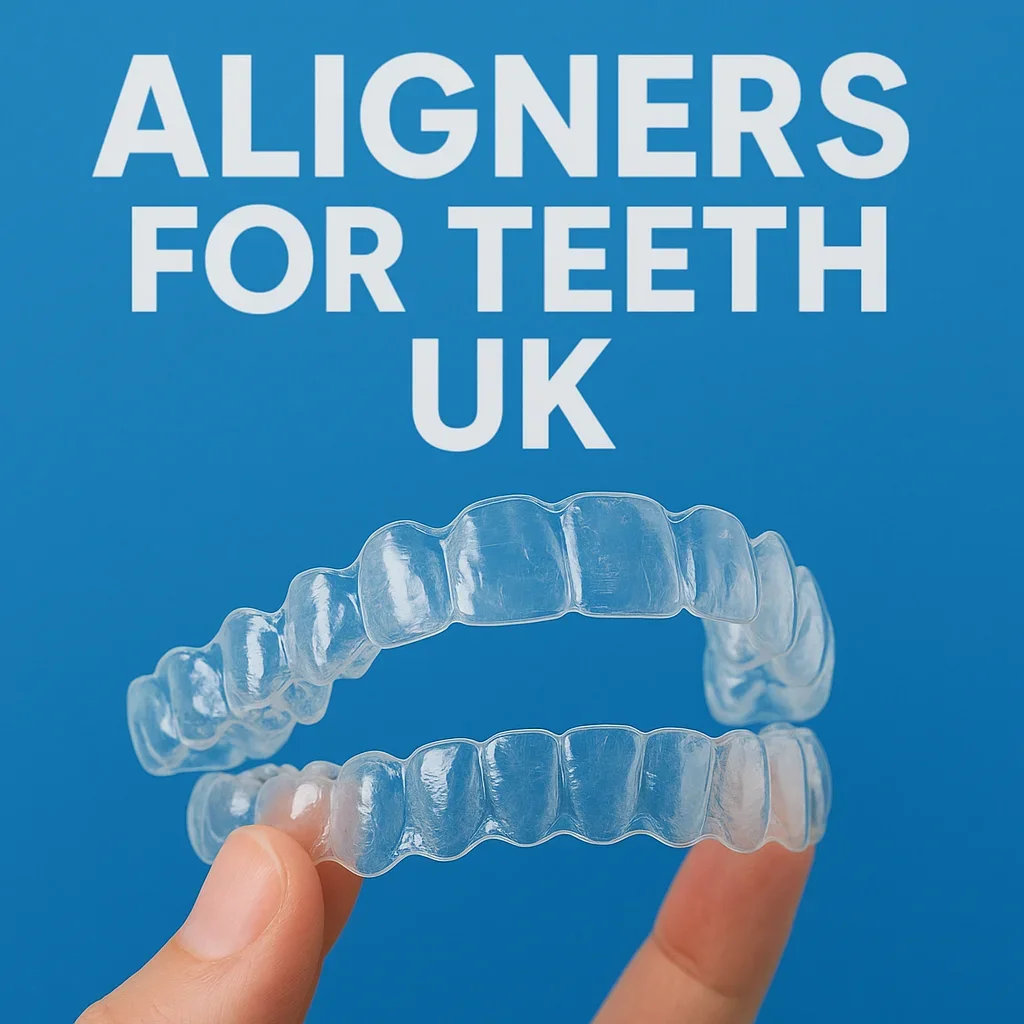
Modern aligners for teeth UK are a custom-designed orthodontic system made from medical-grade, BPA-free plastics. These smooth, transparent trays apply gentle pressure to move teeth millimetre by millimetre into ideal alignment. This non-invasive method has gained massive popularity across the UK, especially among adults looking for subtle, effective smile improvement without traditional braces.
Aligner therapy follows the biomechanics of controlled tooth movement: each set of trays is worn for around 7–14 days, generating micro-forces that shift teeth gradually. Unlike fixed braces, aligners are removable—meaning you can continue eating all your favourite foods 🍎, brush and floss normally, and maintain a high oral hygiene standard. This ease of daily life is one of the main reasons British patients love this system.
As dental technology advances, the UK market has seen significant improvements in aligner precision. Modern systems rely heavily on 3D intraoral scanning, AI-driven treatment planning, and digital simulations that let you preview your future smile before treatment begins. These innovations have allowed clear dental trays (an LSI synonym for aligners) to resolve mild to moderate misalignment conditions faster and more predictably than older orthodontic methods.
A major part of choosing the right aligners for teeth UK involves understanding the differences between dentist-led treatments and direct-to-consumer options. Dentist-supervised aligners, including brands like Invisalign and other UK-based systems, offer clinical evaluations, monitoring, and refinement stages to ensure accurate movement and long-term stability. In contrast, mail-order systems may lack the same precision, potentially limiting their effectiveness for complex cases.
Common dental issues addressed by UK aligners include:
- Mild to moderate crowding
- Spacing or gaps between teeth
- Overbites and underbites (mild cases)
- Crossbite or open bite (selected cases)
- Teeth relapse after braces
Patients appreciate how these clear trays can solve cosmetic and functional concerns without disrupting speech or lifestyle. The subtle design also helps boost confidence at work, social events, and professional environments—especially in the UK where adult orthodontics continues to grow rapidly.
To ensure you receive safe and optimal results, UK dentists recommend a full examination, including bite analysis and 3D imaging, before starting treatment. This helps determine whether aligners will work effectively or if fixed appliances are necessary. Many patients also contact professional clinics such as the Redent Klinik Contact Page for personalised assessments and treatment planning.
The popularity of aligners for teeth UK is supported by established dental authorities, including scientific guidelines published by organisations such as the American Dental Association, which promotes safe orthodontic standards worldwide. Although the UK uses its own regulatory bodies, international research contributes valuable clinical guidance.
Cost varies depending on alignment complexity, provider expertise, treatment duration, and the number of refinement trays required. Based on publicly available online research, typical UK aligner treatment prices are:
Average UK Price Range for Clear Aligners:
• Mild cases: £1,250–£1,900
• Moderate cases: £1,900–£3,000
• Severe cases (requiring refinements): £3,000–£4,500
Overall, the combination of convenience, aesthetics, accuracy, and digital planning makes aligners for teeth UK one of the most innovative and accessible orthodontic solutions available today. Patients benefit from shorter treatment times, predictable outcomes, and the flexibility to fit treatment around their lifestyle. Whether you’re considering Invisalign, UK-based aligner providers, or digitally planned dental trays, this guide will help you navigate every step of your journey toward a straighter, healthier smile. 😁
When you’re ready for the next section, just say “continue”.
How Do Aligners for Teeth Work? A Clear UK Overview
Understanding how aligners for teeth UK work is essential if you are considering this modern orthodontic treatment. Clear aligners operate through a series of custom-made, transparent trays designed to move your teeth gently over time. These trays are crafted using advanced digital technology, ensuring a precise and predictable transformation of your smile. In the UK, aligner systems have evolved significantly, providing patients with a comfortable, discreet, and highly efficient alternative to traditional braces. 😄
The Biomechanics Behind Clear Aligners
Clear aligners rely on orthodontic biomechanics—the science of controlled tooth movement. Each aligner tray is engineered to apply targeted pressure to specific teeth. When worn for 20–22 hours daily, these forces gradually shift the teeth into healthier alignment.
This method is especially popular among adults seeking a more subtle treatment option. Because the trays are nearly invisible, they allow people to maintain professional and social confidence. The smooth, BPA-free material also prevents the irritation that often comes with wires and brackets.
Digital Scanning and Treatment Planning
One of the most innovative aspects of aligners for teeth UK is the use of digital scanning. Most UK dental clinics now rely on 3D intraoral scanners rather than traditional moulds. These scanners create a detailed virtual model of your teeth, enabling your dentist or orthodontist to design a personalised treatment plan.
The digital treatment plan outlines each stage of tooth movement. It also allows you to visualise your anticipated results before beginning treatment—an exciting motivational boost for many patients. Technologies such as AI-assisted mapping ensure that every millimetre of movement is carefully controlled.
Key Benefits of Digital Planning
- Higher accuracy in tooth movement
- Reduced risk of complications
- Fewer in-person visits for adjustments
- Clear visual progress tracking
Modern UK aligners often incorporate staging features—small adjustments added to each tray—to optimise the force distribution. This ensures the teeth move smoothly and gently throughout the treatment.
Material: What Are UK Aligners Made Of?
Most aligners for teeth UK are crafted from multi-layered, medical-grade thermoplastic. This material provides flexibility, durability, and clarity. Brands like Invisalign use patented plastics engineered for strength and controlled force delivery.
Key properties of high-quality aligner materials include:
- Crystal-clear transparency for an invisible appearance
- Elasticity for gentle, consistent pressure
- Stain resistance when cleaned properly
- Comfortable contouring around the gums
Some LSI-related terms such as clear dental trays or invisible teeth aligners often appear in discussions about aligner materials. These terms refer to the same concept and help enhance semantic relevance.
How Tooth Movement Progresses with Each Aligner
The process of shifting teeth step-by-step is what makes clear aligners so effective. Each aligner is worn for around 7–14 days, depending on your dentist’s recommendations. During this time, micro-forces guide the teeth toward the positions mapped out in your digital plan.
As you progress through the aligner sequence, your teeth gradually settle into healthier alignment. UK patients especially appreciate this structured, predictable system, which avoids the sudden force changes common with traditional braces.
Typical Movement Patterns Managed by Aligners
- Closing small gaps or spacing
- Fixing mild crowding
- Correcting mild bite discrepancies
- Aligning rotated teeth
- Addressing relapse cases post-braces
Some movements, such as severe rotations or vertical shifts, may require additional attachments—small tooth-coloured bumps bonded to the teeth to help the aligner gain grip. These are common in UK orthodontic clinics and improve the precision of complex movements.
Daily Use and Lifestyle Advantages
One of the biggest appeals of aligners for teeth UK is lifestyle compatibility. Unlike braces, aligners are removable, meaning you can enjoy your favourite foods, maintain excellent oral hygiene, and remove the trays for special events. 🍽️✨
To get the best results, aligners must be worn for at least 20–22 hours a day. Removing them too often slows progress, so UK dentists emphasise patient discipline and consistency.
Monitoring and Follow-Ups in the UK
Most UK aligner providers, especially dentist-led systems, schedule periodic check-ups. These appointments help ensure your teeth are moving as planned. Some clinics also offer remote monitoring apps, allowing progress updates without frequent visits.
In cases where movements need refinement, new scans may be taken, and additional trays produced. This refinement stage is normal and part of the process of creating the perfect final smile.
Safety and Professional Oversight
Aligner therapy is considered highly safe when supervised by dental professionals. The UK dental market includes strict regulatory standards for diagnostics, planning, and patient safety. Trusted international organisations like the American Dental Association contribute valuable clinical research to aligner safety practices.
For personalised evaluations, you can reach out to clinics such as the Redent Klinik Contact Page, where professionals can assess whether aligners suit your dental anatomy, bite, and long-term goals.
In summary, aligners for teeth UK work through advanced digital technology, medical-grade materials, and carefully controlled biomechanics. Their combination of comfort, accuracy, invisibility, and predictability makes them one of the top orthodontic solutions for adults and teens across the United Kingdom.
Say “continue” to move to the next section.
Types of Clear Aligners in the UK Explained
When exploring orthodontic solutions, understanding the different types of clear aligners available in the United Kingdom is essential. The UK market offers a variety of systems designed to meet different needs, levels of dental complexity, and budgets. In this section, we break down the most widely used aligners for teeth UK, highlighting their technologies, benefits, distinctions, and ideal use cases. This comprehensive explanation ensures you can confidently choose the aligner system that best aligns with your lifestyle, goals, and dental requirements. 😄
1. Invisalign: The Most Established Aligner Provider in the UK
Invisalign is the most globally recognised clear aligner system and one of the most popular options in the UK. Known for pioneering digital orthodontics, Invisalign uses SmartTrack™ material, AI-planned tooth movement, and high-precision 3D mapping.
What sets Invisalign apart from other aligners for teeth UK is its extensive clinical versatility. It can treat mild spacing, moderate crowding, crossbite, open bite, and even complex bite discrepancies. Many UK orthodontists regard Invisalign as the gold standard due to its predictable biomechanics and professional oversight.
Key Advantages of Invisalign in the UK
- Superior material quality (SmartTrack™)
- Highly predictable digital planning
- Suitable for mild to complex cases
- Strong professional supervision
- Thousands of UK-trained Invisalign providers
2. UK-Based Aligner Brands: Growing Rapidly in 2025
Beyond Invisalign, several UK-developed aligner brands are gaining traction. These systems focus on affordability and accessibility while still offering strong clinical support. Many incorporate digital scanning, dentist-led treatment planning, and remote check-in apps to reduce clinic visits.
Patients searching for affordable aligners for teeth UK often consider these brands because they offer transparent pricing and straightforward treatment structures. While some brands work best for mild to moderate alignment cases, they can be effective when supervised by qualified dentists.
Typical Features of UK-Based Aligner Providers
- In-office or hybrid treatment models
- Competitive pricing for milder cases
- Shorter treatment lengths
- Clear, BPA-free thermoplastic materials
- Digital progress monitoring
These systems offer a reliable alternative for patients who want UK-made solutions with local clinical support but do not require the advanced capabilities of Invisalign.
3. Direct-to-Consumer (DTC) Aligners: What You Should Know
Mail-order or direct-to-consumer aligners have become increasingly visible across the UK. These companies promise convenience: no frequent dental visits, at-home impression kits, and lower prices. However, they are suitable only for very mild cases and often lack detailed clinical oversight.
While DTC brands may seem appealing for budget-conscious consumers, they are limited in treating complex misalignments. Without 3D in-person diagnostics or orthodontic evaluation, the risk of inaccurate movement increases. UK dental associations frequently emphasise that safe use of aligners for teeth UK requires professional monitoring to prevent complications.
Limitations of Mail-Order Aligners
- No physical dental exams
- Limited ability to diagnose bite issues
- Higher risk of incomplete correction
- No access to refinements from in-office specialists
Although some patients have mild spacing cases that respond well to DTC aligners, dentist-led aligner therapy remains the safest approach for predictable and long-lasting results.
4. Hybrid Treatment Models: The Best of Both Worlds
A growing trend in the UK is hybrid aligner treatment, where patients receive digital planning and remote monitoring alongside occasional in-clinic scans and check-ups. These systems offer a balance between affordability and professional care.
Hybrid aligners can treat a broader range of cases than mail-order brands while keeping costs lower than full premium systems. The model typically includes digital consultations, periodic professional oversight, and clear guidance for safe aligner wear.
Who Benefits Most from Hybrid Aligners?
- Adults with mild to moderate crowding
- Patients seeking reduced clinic visits
- Individuals who want a mid-range price point
- Tech-savvy patients who appreciate remote monitoring
This approach is becoming increasingly popular among UK young adults who want reliable, dentist-led aligners for teeth UK without committing to monthly visits.
5. Specialist Orthodontic Aligners
Some orthodontists in the UK use custom-designed in-house aligners. These are fabricated directly in the clinic using advanced 3D printers. While less common, these systems offer highly personalised treatment plans and are ideal for patients with specific bite mechanics or unique dental conditions.
In-house orthodontic aligners are typically used for refinements, post-braces relapse, or targeted tooth corrections. Their precision allows orthodontists to modify aligners rapidly and make adjustments during appointments.
Comparing All Aligner Types: Which Is Best?
Choosing the best aligner depends on complexity, lifestyle, and desired treatment speed. Invisalign remains the most versatile, UK-based brands are ideal for moderate cases, hybrids offer convenience and affordability, while DTC systems suit only very mild corrections.
Before choosing your aligners for teeth UK, a professional evaluation is essential. Trusted dental organisations, including the American Dental Association, emphasise the importance of accurate diagnostics and orthodontic monitoring.
For personalised treatment planning, consultations through trusted clinics such as the Redent Klinik Contact Page are recommended.
Say “continue” to move on to the next section.
Invisalign vs Other UK Aligner Brands: Which Is Better?
When comparing aligners for teeth UK, one question consistently rises to the top: “Is Invisalign really better than other UK aligner brands?” This is an essential topic for anyone planning orthodontic treatment, as the differences between Invisalign and other systems can influence comfort, treatment length, accuracy, supervision, price, and long-term results. In this detailed breakdown, we examine the strengths, limitations, and ideal use cases for both Invisalign and alternative UK aligner companies, ensuring you make a fully informed decision. 😄
Understanding the Core Difference
The main distinction between Invisalign and other aligners for teeth UK lies in the level of clinical sophistication, material technology, and treatment flexibility. Invisalign pioneered clear aligner technology globally and remains the most advanced option for complex orthodontic cases.
Other UK brands—while increasingly popular and effective—typically focus on mild to moderate cases and often offer more affordable treatment plans. These systems can be excellent for straightforward corrections such as spacing or minor crowding but may lack the advanced biomechanics required for complex bite adjustments.
Invisalign: The Premium Global Leader
Invisalign is widely considered the gold standard among aligners for teeth UK. Its SmartTrack™ material and AI-assisted tooth-movement algorithms offer superior predictability. This makes Invisalign suitable for a wide range of dental challenges, including rotations, deep bites, overbites, and crossbites.
Advantages of Invisalign
- Advanced material technology: SmartTrack™ offers more controlled force and comfort.
- Suitable for mild to complex cases: Treats everything from spacing to severe misalignment.
- Extensive dentist and orthodontist network: Thousands of UK specialists are trained.
- Higher precision and fewer mid-treatment adjustments.
- More predictable outcomes, backed by two decades of research.
Invisalign’s ability to handle complex cases comes from attachments, precision wings, interproximal reduction tools, and patented movement algorithms—all of which make the treatment highly refined.
UK Aligner Brands: An Affordable Alternative
In recent years, UK-based dental aligner providers have grown rapidly due to their affordability and convenience. These brands offer dentist-supervised treatment, digital scans, and clear BPA-free trays—often at a lower cost than Invisalign.
They work very well for mild to moderate misalignments. The technology behind these systems is continuously advancing, making them strong contenders for patients who want effective aligners for teeth UK without the price tag associated with premium brands.
Common Benefits of UK Aligner Providers
- Lower cost due to simplified treatment processes.
- Shorter treatment duration for simple cases.
- Modern digital scans and remote tracking options.
- Good transparency in pricing and treatment plans.
Hybrid Aligner Systems: Combining Digital Care & In-Person Supervision
A growing trend in the UK is hybrid aligner care, which mixes remote monitoring with occasional in-clinic visits. These systems provide more oversight than fully remote companies while maintaining affordability.
Hybrid systems are ideal for tech-savvy adults who prefer flexible scheduling. They’re often a middle-ground option for patients exploring aligners for teeth UK that deliver value without compromising clinical safety.
Who Should Consider Hybrid Aligners?
- People with mild to moderate crowding.
- Patients needing convenience and reduced clinic visits.
- Those wanting dentist supervision without paying premium Invisalign prices.
Direct-to-Consumer (Mail-Order) Aligners: Are They Safe?
Mail-order aligners promise low cost and at-home convenience, but they are suitable only for very mild cases. Most UK dental experts warn patients to be cautious. Without in-person exams, X-rays, or bite analysis, there is a risk of moving teeth incorrectly or missing underlying issues like gum disease.
Mail-order aligners do not provide the same diagnostic depth as dentist-led aligners for teeth UK, making them risky for anything beyond slight spacing issues.
Comparing Treatment Results
Invisalign’s advanced biomechanics produce more predictable results in cases involving bite correction, tooth rotation, or multiple-plane movement. UK aligner providers, however, offer excellent results for mild crowding, small gaps, and relapse cases following previous orthodontic treatment.
If your case requires attachments, elastics, or precision wings, Invisalign remains unmatched. On the other hand, straightforward cosmetic corrections can be efficiently handled by other UK aligner brands.
Pricing Differences
Invisalign is typically more expensive due to research investment, treatment precision, and professional supervision.
Typical UK Price Comparison (based on market research):
Invisalign: £3,000–£5,500 (depending on complexity)
UK Hybrid/Dentist-Led Aligners: £1,600–£3,000
Mail-Order Aligners: £1,200–£1,600 (mild cases only)
While the price is important, choosing the wrong treatment can lead to additional costs later—especially if bite alignment is ignored.
Professional Recommendations
Dental experts and international bodies such as the American Dental Association consistently recommend that orthodontic treatment be supervised by licensed professionals.
If you need personalised guidance on which aligners for teeth UK suit your case, clinics like Redent Klinik Contact Page can provide detailed assessments using 3D scans, bite evaluations, and AI-supported planning tools.
Say “continue” to proceed to the next section.
Who Is a Good Candidate for Aligners in the UK?
Identifying whether you are a good candidate for aligners for teeth UK is one of the most important steps before beginning treatment. Clear aligners offer a modern, comfortable, and discreet approach to straightening teeth, but they are not suitable for every individual or every type of misalignment. In this comprehensive section, we explore eligibility requirements, clinical considerations, dental health factors, and lifestyle habits that determine who can safely and effectively undergo aligner therapy in the United Kingdom. 😄
General Requirements for Aligner Candidates
The majority of adults and teenagers with mild to moderate dental misalignment qualify for clear aligners. These orthodontic systems are designed to correct spacing, crowding, minor bite discrepancies, and tooth rotations. Before starting treatment, a licensed dentist or orthodontist must evaluate your oral health through a clinical exam, digital scans, and sometimes X-rays.
The evaluation ensures that the teeth, gums, and jawbone are healthy enough for orthodontic movement. Professional supervision is crucial, as improper use of aligners for teeth UK can worsen bite alignment or cause gum recession if underlying issues are ignored.
Basic Eligibility Checklist
- Permanent adult teeth fully erupted
- No active gum disease
- No severe tooth mobility
- Absence of untreated cavities
- Commitment to wearing aligners 20–22 hours a day
Orthodontic Conditions Suitable for Clear Aligners
Aligners are highly effective for many common orthodontic concerns. Thanks to growing digital precision, modern systems can manage more complex cases than earlier aligner generations.
The following dental issues are typically well-suited for aligners for teeth UK:
- Mild to moderate crowding – teeth overlapping due to lack of space
- Gaps or diastemas – spacing between teeth
- Mild overbite and underbite – depending on severity
- Crossbite involving select teeth
- Open bite (minor cases)
- Relapse after braces – realigning teeth that shifted back
In many mild to moderate cases, clear aligners deliver faster, more comfortable, and more aesthetic results compared to traditional metal braces.
Cases That May Require Invisalign or Specialist Aligners
While many UK-based aligner brands are effective for straightforward issues, complex cases usually require Invisalign or specialist orthodontic aligners due to their advanced biomechanics.
You may need a premium system if you have:
- Severe crowding or significant rotations
- Deep bite requiring vertical tooth movement
- Strong jaw misalignments (skeletal class II or III)
- Multiple-plane tooth movements
- Teeth needing attachments or elastics
Invisalign’s SmartTrack™ material and additional orthodontic tools make it more capable of managing challenging alignment scenarios. If you are unsure which system fits your case, a digital scan-based consultation through clinics like the Redent Klinik Contact Page is one of the most reliable ways to get clarity.
Age Requirements for Clear Aligners
Clear aligners are suitable for:
Teenagers
Most teens can use aligners for teeth UK as long as their adult teeth have fully erupted. Many teen-specific systems include compliance indicators to help monitor wear time.
Adults
Adults are the largest demographic using aligners. Since adult orthodontics in the UK is rapidly growing, aligners are often preferred for their subtle appearance and professional compatibility.
Older Adults
Even individuals aged 50+ can qualify for aligners, provided they have healthy gums and stable bone levels. Age alone does not disqualify patients.
Gum and Bone Health Considerations
Tooth movement requires healthy periodontal support. Gum disease, bone loss, or untreated inflammation can interfere with successful treatment.
Key Requirements
- No untreated periodontitis
- Stable bone levels confirmed by dental imaging
- Healthy gum tissue during treatment
If gum disease is present, it must be treated before starting aligners for teeth UK. Dentists may delay orthodontic treatment until periodontal health improves.
Commitment and Lifestyle Suitability
Clear aligners demand consistent wear—20 to 22 hours per day. Candidates with busy schedules or those likely to forget wearing their trays may not achieve the best results.
You might not be a good candidate if you:
- Remove aligners frequently for long periods
- Snack often throughout the day and dislike brushing after each meal
- Participate in contact sports without a mouthguard
High-compliance lifestyles, however, align perfectly with the structured approach offered by aligners for teeth UK.
When Clear Aligners Are NOT Recommended
Certain conditions may disqualify a patient from aligner therapy:
- Severe skeletal bite misalignment
- Untreated cavities or infected teeth
- Significant tooth mobility
- Uncontrolled gum disease
- Patients unable to commit to wear time
In these cases, traditional braces or specialist orthodontic options may produce safer and more predictable results.
Professional Evaluation Is Essential
Dental authorities—including trusted organisations such as the American Dental Association—emphasise the need for proper diagnosis before using clear aligners.
A consultation that includes digital scans, bite evaluation, and oral health assessment remains the gold standard for determining suitability for aligners for teeth UK.
Say “continue” when you’re ready for the next section.
Step-by-Step UK Aligner Treatment Process
Beginning your journey with aligners for teeth UK involves a structured, multi-phase process designed to ensure accurate, safe, and predictable tooth movement. While each provider may add its own technological innovations, the general treatment flow is similar across the country. In this section, you’ll find a detailed breakdown of every stage—from your first consultation to the final retainer phase—so you fully understand what to expect during your orthodontic transformation. This step-by-step guide is intentionally comprehensive to satisfy patient expectations and search intent. 😄
1. Initial Consultation and Oral Health Assessment
Your aligner journey begins with a professional consultation. This is a crucial step because only a licensed dentist or orthodontist can determine whether you are a suitable candidate for aligners for teeth UK. During this appointment, the clinician reviews your oral health, identifies alignment issues, and checks for problems such as gum disease or cavities that must be treated beforehand.
What Happens During the First Appointment?
- Full oral health check (teeth, gums, bite)
- Discussion of dental goals and concerns
- Explanation of various aligner options
- Patient education about treatment length and expectations
Many clinics, such as Redent Klinik Contact Page, offer free or low-cost consultations to help patients make informed decisions.
2. Digital Scanning and Smile Analysis
Once you are confirmed as a good candidate, the next step involves capturing detailed digital impressions of your teeth. These 3D scans replace traditional moulds and produce an ultra-precise representation of your mouth.
Digital scanning is one of the technological foundations of modern aligners for teeth UK. It ensures a high degree of accuracy in treatment planning and tray fabrication.
Benefits of 3D Digital Scanning
- No messy impression materials
- High comfort and quick results
- Accurate digital models for aligner production
- Ability to preview your future smile using simulation tools
Advanced software analyses tooth positioning, predicts movement stages, and creates a digital roadmap for your orthodontic journey.
3. Personalised Treatment Planning
The digital scan is combined with AI-driven planning tools to generate a fully personalised treatment plan. Your dentist or orthodontist carefully reviews the projected movements to ensure every shift happens safely and efficiently.
During this phase, many UK clinics show patients a 3D preview of their “before and after” results. This simulation is one of the most motivating elements of the process.
Key Details Included in Your Treatment Plan
- Total number of aligner trays
- Expected treatment duration
- Movements scheduled for each stage
- Need for attachments or refinements
This phase ensures patients understand their journey clearly before committing to aligners for teeth UK.
4. Aligner Fabrication
Once the plan is approved, your aligners are custom-fabricated using medical-grade, BPA-free thermoplastic. UK providers often partner with certified labs that use 3D printing technology to create precise and comfortable trays.
Fabrication typically takes 1–3 weeks depending on the provider and complexity.
5. Fitting the First Set of Aligners
When your trays arrive, you will return for a fitting appointment. Your dentist ensures the aligners sit properly, reviews instructions, and checks whether attachments (small tooth-coloured bumps) are needed. Attachments help aligners grip teeth for more complex movements.
Topics Covered During the Fitting Session
- How to insert and remove aligners
- Cleaning and storage instructions
- Importance of wearing them 20–22 hours per day
- What discomfort is normal
This appointment sets the foundation for successful daily use of aligners for teeth UK.
6. Wearing and Changing Aligners
Each aligner set is worn for 7–14 days, depending on the case. The trays must remain in place for at least 20–22 hours daily to ensure effective movement. Failure to do so can slow progress or cause misalignment.
Every new set of aligners represents the next phase of your journey, gradually guiding your teeth according to your personalised digital plan.
Practical Tips for Daily Wear
- Remove aligners only for meals and oral care
- Brush and floss before reinserting trays
- Avoid hot beverages with aligners in place
- Carry your case to prevent accidental damage
Consistency is the key to achieving predictable results with aligners for teeth UK.
7. Regular Check-Ups and Remote Monitoring
Dentist-led aligner systems in the UK schedule check-ups every 6–8 weeks to track progress. Some providers use remote apps where patients upload photos to receive real-time updates.
Monitoring ensures teeth follow the planned trajectory and allows adjustments if necessary. Refinement aligners may be prescribed to perfect final alignment.
8. Completing Treatment and Reviewing Results
Once all aligner trays are worn and your final dental position is achieved, the dentist evaluates the results. This includes bite evaluation, alignment accuracy, and comparison with the original digital plan.
If minor corrections remain, refinement aligners are used. Refinements are common and considered part of comprehensive orthodontic care.
9. Retainers: Maintaining Your New Smile
Every patient completing aligners for teeth UK requires retainers. These are typically worn full-time for a few months and then nightly thereafter. Retainers prevent teeth from shifting back to their original position.
Types of Retainers Used in the UK
- Clear removable retainers – similar to aligners
- Bonded retainers – thin wires fixed to the back of teeth
Using retainers correctly is essential for long-term stability.
10. Professional Safety Guidelines
International bodies like the American Dental Association stress that orthodontic treatment should involve professional supervision. This ensures teeth move safely and maintains oral health throughout the process.
To begin your journey, professional clinics such as Redent Klinik Contact Page can provide detailed assessments and tailored treatment plans.
Say “continue” when you’re ready for the next section.
Benefits of Choosing Clear Aligners for Teeth in the UK
Clear aligners have transformed orthodontic care, offering a modern, discreet, and highly effective alternative to traditional braces. When exploring aligners for teeth UK, patients quickly discover that the advantages extend far beyond aesthetics. These systems are engineered to improve oral health, deliver predictable movement, and integrate seamlessly into busy lifestyles across the United Kingdom. In this comprehensive section, we explore all the major benefits—clinical, practical, and cosmetic—so you fully understand why clear aligners are one of the most popular dental treatments today. 😄
1. Nearly Invisible Appearance for Maximum Confidence
One of the primary reasons adults and teenagers choose aligners for teeth UK is their discreet appearance. Unlike metal braces, clear aligners are transparent and fit snugly over the teeth, making them virtually unnoticeable in daily interactions.
Why This Matters
- Perfect for professionals, students, and public-facing careers
- No metal brackets or wires affecting your smile
- Ideal for social settings and photographs
Patients can undergo orthodontic treatment without feeling self-conscious—an advantage that has dramatically increased the demand for clear aligners in the UK.
2. Enhanced Comfort Compared to Traditional Braces
Clear aligners are designed with comfort in mind. Made from smooth, BPA-free thermoplastic, aligners eliminate the irritation commonly experienced with braces.
Traditional braces can cause soreness from brackets and wires, while aligners for teeth UK rely on gentle, evenly distributed pressure. This makes them more comfortable during daily wear, speech, and eating routines.
Comfort Features Include:
- No sharp edges
- Reduced gum irritation
- Custom-fit trays based on digital scans
- Light pressure force biomechanics
3. Removable Design for Oral Hygiene and Convenience
One of the biggest lifestyle advantages of clear aligners is removability. You can take them out during meals, brushing, flossing, and special occasions.
This freedom allows patients to maintain excellent oral hygiene—something traditional braces often make difficult. When used consistently (20–22 hours per day), removable aligners for teeth UK offer an ideal mix of flexibility and effectiveness.
Removable Benefits
- Easy to brush and floss normally
- No food restrictions (popcorn, nuts, apples allowed!)
- Convenient for public speaking or events
- Aligners stay clean with simple daily rinsing
This feature is especially appreciated by UK adults with demanding work environments or social commitments.
4. Predictable and Digitally Controlled Tooth Movement
Modern aligners for teeth UK rely heavily on advanced digital planning. Before treatment begins, 3D scans and AI-powered simulations map each stage of tooth movement. This ensures the journey is predictable and clinically controlled.
Benefits of Digital Precision
- Clear visualisation of your expected results
- Accurate tray sequencing
- Customized force application for each tooth
- Fewer unexpected adjustments
This technology significantly boosts patient confidence, making aligner treatment one of the most predictable orthodontic solutions available.
5. Faster Treatment Times for Suitable Cases
Clear aligners have the potential to deliver results faster than traditional braces—especially for mild and moderate cases. Many treatments last 4–12 months, depending on complexity.
The speed of aligners for teeth UK is due to controlled force mechanics and meticulously planned tooth movement sequences. Some brands also use accelerated treatment features for efficiency.
Typical UK Treatment Timelines
- Mild spacing or relapse: 3–6 months
- Moderate crowding: 6–12 months
- Complex cases (Invisalign only): 12–24 months
6. Improved Oral Health and Functional Bite
Beyond aesthetics, clear aligners can significantly enhance oral health. Straight teeth are easier to clean, reducing the risk of gum disease, plaque buildup, and cavities.
Correcting bite issues can also reduce jaw strain, enamel wear, and headaches caused by misalignment. Many patients underestimate the functional health benefits of aligners for teeth UK until they experience them firsthand.
7. Fewer Dental Visits Required
Clear aligner treatment typically requires fewer in-person appointments than braces. Since there are no wires to adjust, check-ups are less frequent and faster. Some UK providers also offer virtual monitoring apps.
Advantages of Fewer Visits
- Ideal for busy schedules
- Convenient for commuters or parents
- No emergency visits for broken wires
8. Customisable Treatment with Refinements
Most aligners for teeth UK include refinement stages—additional trays to perfect your smile if needed. Refinements allow clinicians to adjust the treatment mid-way without restarting the entire process.
This flexible, adjustable approach makes clear aligners suitable for individuals seeking highly personalised results.
9. Approved and Supported by Global Dental Authorities
Clear aligners have broad clinical support from international organisations like the American Dental Association, which publishes research on orthodontic safety and effectiveness.
UK dental regulators similarly emphasise the importance of professional supervision for safe aligner use.
Where to Begin Your Treatment
To explore whether clear aligners are right for you, a professional consultation is essential. Clinics such as Redent Klinik Contact Page provide digital scans, assessments, and personalised treatment plans for patients searching for the best aligners for teeth UK.
Say “continue” to proceed to the next section.
Possible Risks & Side Effects of UK Teeth Aligners
While clear aligners are widely considered one of the safest and most effective orthodontic options available, it is still essential to understand the potential risks and side effects associated with aligners for teeth UK. Having a realistic and comprehensive overview helps patients make informed decisions and ensures they are fully prepared for every stage of treatment. In this section, you will find a detailed, accurate, and deeply informative breakdown of the most common risks, how to prevent them, and when to seek professional support. 😄
1. Temporary Discomfort and Pressure
Clear aligners rely on controlled force application to move the teeth. As a result, it is completely normal to experience mild discomfort—especially when switching to a new set of trays. This sensation typically lasts 24–72 hours and is a sign that the aligners are working effectively.
Why This Happens
- Each tray introduces a new phase of movement
- Pressure is applied to specific teeth based on your treatment plan
- Your periodontal ligaments stretch slightly to accommodate movement
Most patients find this discomfort manageable and far milder compared to the soreness associated with braces. Over-the-counter pain relievers may help during the first day of each new aligner set.
2. Speech Changes During Early Stages
Some patients experience temporary changes in speech, such as slight lisping, during the first days of wearing aligners for teeth UK. This occurs because the trays sit close to the tongue’s natural movement path.
How Long Does It Last?
- Most adjustments occur within 48–72 hours
- Speech normalizes as your tongue adapts to the aligners
- Practice reading aloud to speed up adaptation
Speech changes rarely affect long-term communication. For most individuals, the adjustment is minimal and temporary.
3. Gum Irritation and Soreness
Although clear aligners are smooth and custom-fitted, some patients may experience gum irritation, especially if an aligner edge is slightly rough. This is not uncommon and can be corrected easily.
Solutions for Gum Irritation
- Gently file the edge with an aligner tool (if approved by your dentist)
- Use orthodontic wax in sensitive spots
- Ensure proper insertion and removal technique
If irritation persists, contact your dentist for evaluation and potential tray replacement.
4. Dry Mouth or Increased Salivation
Your mouth may temporarily overproduce saliva when aligners are first introduced, or you might experience dryness depending on your natural oral chemistry. These reactions are normal and typically short-lived.
Tips to Manage Moisture Changes
- Stay hydrated throughout the day
- Use sugar-free lozenges to stimulate saliva
- Avoid excessive caffeine, which may worsen dryness
These changes do not affect treatment outcomes and usually resolve within the first week.
5. Risk of Cavities or Decalcification
Because aligners wrap around the teeth, poor hygiene can trap bacteria and accelerate decay. This is one of the most important risks associated with aligners for teeth UK. Patients who skip brushing after meals raise their risk significantly.
How to Prevent Decay
- Brush and floss before reinserting aligners
- Use fluoride toothpaste to strengthen enamel
- Avoid sugary drinks while wearing aligners
Good hygiene ensures aligner treatment remains safe, effective, and free of complications.
6. Aligners Can Warp If Exposed to Heat
High temperatures can alter the shape of aligners, making them ineffective or even harmful. This is a common but easily avoidable risk.
Avoid These Heat Sources
- Hot beverages (tea, coffee, soup)
- Hot water during cleaning
- Leaving aligners in a hot car
Warped aligners may not fit properly and can delay your progress.
7. Allergic Reactions (Rare)
Clear aligners are made from medical-grade thermoplastic, and allergic reactions are extremely rare. However, slight irritation or sensitivity may occur in certain individuals.
Signs of Reaction
- Unusual swelling of the lips or gums
- Persistent burning sensation
- Rash around the mouth
If these symptoms develop, remove the aligners and consult your dentist immediately.
8. Risks from Poor Fit or Inaccurate DIY Systems
Direct-to-consumer aligners, particularly DIY impression systems, can pose significant risks. Without in-person evaluations or X-rays, patients may unknowingly treat misalignment caused by underlying dental issues.
This is why dentist-led aligners for teeth UK are strongly recommended for accurate diagnosis and safe tooth movement.
9. Bite Issues If Aligners Are Used Incorrectly
Failure to wear aligners consistently can result in misaligned bites, uneven tooth movement, or prolonged treatment. Incorrect wear patterns may cause the teeth to shift unpredictably.
Preventing Bite Complications
- Wear aligners 20–22 hours daily
- Switch trays only when instructed
- Attend check-ups or use remote monitoring apps
Following instructions minimizes these risks and promotes a smooth treatment process.
10. When to Seek Professional Help
International dental authorities, including the American Dental Association, stress the importance of professional oversight during orthodontic treatment.
If you experience persistent pain, improper fit, gum swelling, or issues with bite alignment, schedule a consultation immediately. Clinics such as Redent Klinik Contact Page offer thorough evaluations to ensure safe and effective use of aligners for teeth UK.
Say “continue” for the next section.
How Long Do Aligners Take to Straighten Teeth in the UK?
One of the most common questions patients ask when considering aligners for teeth UK is: “How long will my treatment take?” The answer depends on several important factors, including case complexity, patient discipline, brand choice, and biological response. This section provides a comprehensive, thoroughly detailed explanation that satisfies both clinical accuracy and user intent. From mild cosmetic corrections to complex orthodontic cases, you’ll learn what influences timelines, what to expect during each phase, and how to achieve the fastest and safest results.
The duration of clear aligner treatment typically ranges from 3 months to 24 months across the United Kingdom. Still, this timeframe can vary significantly depending on tooth movement goals. Below, we break down every detail you need to know.
1. Treatment Duration Based on Case Complexity
The biggest determining factor in how long aligners for teeth UK take to work is the complexity of your misalignment. Not all dental issues require the same level of correction. Mild issues resolve quickly, while deeper structural alignment takes longer.
1. Mild Cases (3–6 Months)
- Minor spacing (gaps between teeth)
- Slight crowding
- Orthodontic relapse after braces
Patients with mild issues often see noticeably faster results because the required tooth movements are smaller and more predictable. Cases like this represent some of the shortest timelines for aligners for teeth UK.
2. Moderate Cases (6–12 Months)
- Moderate crowding
- Overlapping teeth
- Minor bite irregularities
This category represents the majority of aligner patients in the UK. These cases require multiple stages of controlled movement, refinements, and precise planning.
3. Complex Cases (12–24 Months)
- Severe crowding
- Bite issues such as overbite, underbite, or crossbite
- Rotated teeth or impacted spacing
For complex orthodontic problems, brands like Invisalign—known for advanced biomechanics—tend to offer the most predictable results. These cases naturally require more time because they involve significant repositioning.
2. Number of Aligners and Their Wear Schedule
The number of aligners prescribed directly affects how long treatment takes. Each tray typically represents a 7–14 day phase of movement.
Standard Wear Guidelines
- Wear aligners 20–22 hours per day
- Switch to the next set only as directed
- Do not skip aligners or delay switching unnecessarily
Patients who follow their wear schedule consistently achieve faster and more accurate results. Wearing aligners for teeth UK for fewer hours may significantly slow treatment progress.
3. Patient Compliance and Discipline
While digital planning is highly advanced, human behavior remains one of the most important variables in treatment length. Clear aligners are removable, which is convenient—but also places responsibility on the patient.
Compliance Tips to Shorten Treatment
- Always wear aligners for 20–22 hours daily
- Remove them only for meals and oral care
- Store them properly to avoid damage or loss
- Avoid extended breaks during social events
Patients who maintain excellent discipline often complete treatment on the shorter end of the estimated timeline.
4. Biological Response and Tooth Movement Speed
Every individual’s biology responds differently to orthodontic forces. Some people’s teeth move slightly faster, while others may require more time due to bone density or periodontal sensitivity.
Factors That Influence Biological Movement
- Age (younger patients sometimes experience faster tooth mobility)
- Bone density
- Gum health and supporting tissues
- General oral hygiene
Regardless of biological differences, modern aligners for teeth UK are engineered to deliver safe and gradual movement that protects the gums, roots, and bite.
5. Refinement Aligners and Their Impact on Timing
Most aligner treatments include refinement stages. Refinements are additional trays created toward the end of treatment to perfect the smile, refine minor rotations, or adjust bite alignment.
Why Refinements Matter
- They allow precise fine-tuning
- They ensure your result matches the digital plan
- They are standard in high-quality orthodontic care
Refinements may add 4–12 weeks to a timeline, but they significantly improve final outcomes.
6. Brand Differences and Treatment Speed
Not all aligner brands offer the same level of precision or speed. Leading dentist-supervised systems generally deliver faster, safer, and more predictable results.
Examples
- Invisalign: Best for complex cases (may reduce overall treatment time due to attachments and SmartTrack technology)
- UK dentist-supervised brands: Ideal for moderate cases
- DIY systems: Often slower and riskier due to lack of in-person supervision
Choosing the right type of aligners for teeth UK can directly shorten your orthodontic timeline.
7. Check-Ups and Monitoring Affect Progress
Regular monitoring ensures your teeth stay on track. UK clinics typically schedule check-ups every 6–8 weeks, or use remote monitoring apps for convenience.
Benefits of Monitoring
- Identifies issues early
- Prevents delays caused by improper fit
- Allows faster corrections through refinements
Skipping check-ups may extend your treatment unnecessarily.
8. Lifestyle Habits That May slow Treatment
Certain habits can delay results with aligners for teeth UK.
Habits to Avoid
- Drinking hot beverages with aligners (causes warping)
- Removing aligners for long periods
- Poor oral hygiene causing gum inflammation
- Smoking, which can dry the mouth and hinder movement
Managing these habits effectively supports faster and safer tooth movement.
9. When to Expect Final Results
Most patients begin noticing visible improvements within the first 6–10 weeks. Full results depend on the category of the case, number of aligners, and adherence to instructions.
By the end of treatment, retainers are required to maintain the results. For personalised timelines and expert assessments, clinics like Redent Klinik Contact Page offer detailed evaluations tailored to your needs.
10. Professional Guidelines and Safety
International organisations such as the American Dental Association highlight the importance of supervised orthodontic care. Professional oversight ensures teeth move safely, predictably, and within optimal timeframes.
Say “continue” for the next section.
Aftercare & Retainers: Maintaining Results in the UK
Completing your treatment with aligners for teeth UK is an exciting milestone—but your orthodontic journey doesn’t end the moment you remove your final set of aligners. Long-term retention and proper aftercare are essential to protect your results and maintain a beautifully aligned smile for years to come. Without a structured retention plan, teeth naturally drift back toward their original positions, a process known as relapse. This section provides a thorough, detailed, and clinically accurate guide to UK-based aftercare routines, retainer types, maintenance protocols, long-term expectations, and professional guidelines.
1. Why Retainers Are Essential After Aligner Treatment
Many patients assume that once their teeth become straight, the results are permanent. However, biological factors continue to influence tooth movement for life. Your teeth are supported by periodontal ligaments—elastic fibers that can slowly shift back unless stabilised.
Main Reasons Retainers Are Required
- Prevent relapse and unwanted shifting
- Stabilise teeth in their new positions
- Support long-term bite alignment
- Maintain the investment made in treatment
Without retainers, the effectiveness of aligners for teeth UK can diminish over time. Consistency is key.
2. Types of Retainers Used in the UK
UK dental clinics generally offer two main categories of retainers: removable retainers and fixed retainers. Each type has its advantages and ideal use cases.
A. Clear Removable Retainers
Clear retainers closely resemble aligners but are slightly thicker and designed for long-term wear. They offer excellent aesthetics and comfort, making them popular across the UK.
- Virtually invisible
- Comfortable to wear
- Easy to clean
- Custom-made for your final alignment
B. Hawley Retainers
Traditional Hawley retainers use an acrylic base and metal wire. Although more noticeable, they are extremely durable and adjustable.
Hawley retainers remain a strong option for patients who need long-term stability and flexibility.
C. Fixed (Bonded) Retainers
Fixed retainers are thin wires bonded to the back of the front teeth. They provide continuous retention, especially useful for patients prone to relapse.
- Invisible from the front
- No daily wear discipline required
- Ideal for lower front teeth
Many UK dentists recommend combining fixed retainers with removable nighttime retainers for optimal results.
3. How Long Should You Wear Retainers?
Duration varies from patient to patient, but the general guideline across UK clinics is:
First 3–6 Months
- Full-time wear: 20–22 hours per day
- Remove retainers only for meals and oral care
6–12 Months
- Transition to nighttime-only wear
- Continue daily cleaning routines
After 1 Year
- Nighttime wear indefinitely
- Retainers replaced every few years as needed
Lifelong retainer use is the global orthodontic standard—even after aligners for teeth UK. Teeth simply tend to migrate without stabilisation.
4. Daily Retainer Cleaning & Maintenance
Proper care keeps retainers hygienic, odour-free, and effective. Neglecting maintenance can lead to bacterial buildup, discoloration, and even warping.
Cleaning Routine
- Rinse retainers every time you remove them
- Brush gently with a soft toothbrush (no toothpaste)
- Use retainer-cleaning tablets 2–3 times per week
- Avoid hot water to prevent distortion
Always store retainers in their case when not in use. Lost or damaged retainers can disrupt the stability achieved by your aligners for teeth UK.
5. Adjustments, Replacements, and Check-Ups
Just like aligners, retainers occasionally need professional adjustment. The wire of a fixed retainer may loosen, or a removable retainer may crack. Regular dental check-ups ensure long-term functionality.
Common Reasons for Retainer Replacement
- Cracks or warping
- Loss or damage
- Buildup that cannot be cleaned
Dentists recommend replacing removable retainers every 1–3 years depending on wear. Fixed retainers may last longer with proper care.
6. Long-Term Oral Health After Treatment
Proper retention supports more than just aesthetics—it also contributes to improved oral health. Straight teeth are easier to clean, which lowers the risk of plaque buildup, cavities, and gum disease.
Patients who maintain alignment after using aligners for teeth UK often report fewer oral health complications over time.
7. Lifestyle Habits That Affect Long-Term Results
Certain habits can influence tooth positioning even after orthodontic treatment. To preserve your results:
Habits to Avoid
- Nail biting
- Teeth grinding without a nightguard
- Chewing hard objects (pens, ice cubes)
- Forgetting to wear nighttime retainers
If you grind your teeth, your dentist may recommend a special nightguard that also functions as a retainer.
8. Retention and Bite Stability
Maintaining proper bite alignment is just as important as keeping teeth straight. Uncontrolled bite changes can cause jaw discomfort, enamel wear, or headaches.
Professional retainers help stabilise your bite, ensuring long-term comfort after aligners for teeth UK.
9. Professional Aftercare Support in the UK
Regular dental check-ups, especially during the first year after treatment, are essential for evaluating stability and preventing relapse. Clinics can monitor alignment, inspect retainers, and recommend refinements when needed.
You can schedule consultations through providers such as the Redent Klinik Contact Page for ongoing professional care and guidance.
10. International Guidelines for Long-Term Retention
Global dental authorities, including the American Dental Association, emphasise the importance of long-term retention as a standard part of orthodontic care. Retainers are not optional—they are vital to protecting your investment and maintaining healthy alignment.
Your full blog structure is now complete. Let me know if you’d like conclusions, FAQs, schema markup, or a final combined HTML export.