
If you’re searching for a permanent and hassle-free solution to missing teeth, all in one dental implants might be the perfect answer. This revolutionary treatment allows patients to restore an entire arch of teeth—often in a single day. Combining advanced implantology with aesthetic dentistry, all in one dental implants have become a top choice for full-mouth restoration in 2025.
Unlike traditional implants that require multiple visits and months of healing, all in one dental implants streamline the process by using a minimal number of implants—usually four to six—to anchor a full set of upper or lower prosthetic teeth. These implants are strategically placed to maximize bone contact, even in patients with bone loss.
✨ Whether you’ve lost your teeth due to gum disease, trauma, or decay, this treatment offers a natural-looking, long-lasting solution. With proper care, your smile can last decades!
What Makes All in One Dental Implants Unique?
Traditional dental implants often involve lengthy treatments, bone grafts, and healing stages. In contrast, all in one dental implants reduce treatment time significantly. Patients can walk out of the dental office with a new smile in as little as 24 hours!
Here’s what makes this method exceptional:
- ✔️ Immediate placement of implants and prosthetic teeth
- ✔️ Reduced need for bone grafting thanks to strategic implant angles
- ✔️ Lower cost than placing multiple individual implants
- ✔️ Enhanced stability and bite strength
Clinical Success and Innovation
The success rate of all in one dental implants is comparable to traditional implants, often exceeding 95%. Thanks to innovations in digital imaging, guided surgery, and high-grade titanium materials, the procedure has become safer and more predictable than ever.
According to the American Dental Association, dental implants have become the gold standard in restorative dentistry due to their biocompatibility and long-term results. This is especially true for all in one systems, which integrate seamlessly with the jawbone through osseointegration.
Who Provides All in One Dental Implants?
It’s essential to select a skilled and experienced clinic to ensure optimal outcomes. Many top-rated clinics, such as Redent Klinik Contact Page, offer comprehensive consultation and treatment planning tailored to your specific oral health needs. These clinics use advanced imaging techniques and 3D modeling to personalize your dental implant journey.
LSI Keywords to Know
To help understand related terminology, here are a few common synonyms and related phrases used alongside all in one dental implants:
- 🦷 Full mouth dental implants
- 🦷 Same-day dental implants
- 🦷 Teeth in a day
Is This the Right Time for You?
If you’re tired of removable dentures or have multiple missing teeth, now is the ideal time to explore all in one dental implants. The year 2025 has brought significant advancements in both technology and affordability, making this life-changing treatment more accessible than ever.
In the next section, we’ll break down the key benefits of choosing all in one dental implants, from appearance and function to emotional well-being. Ready to discover why so many patients are switching to this modern solution? Let’s continue! 👇
What Are All in One Dental Implants and How Do They Work?
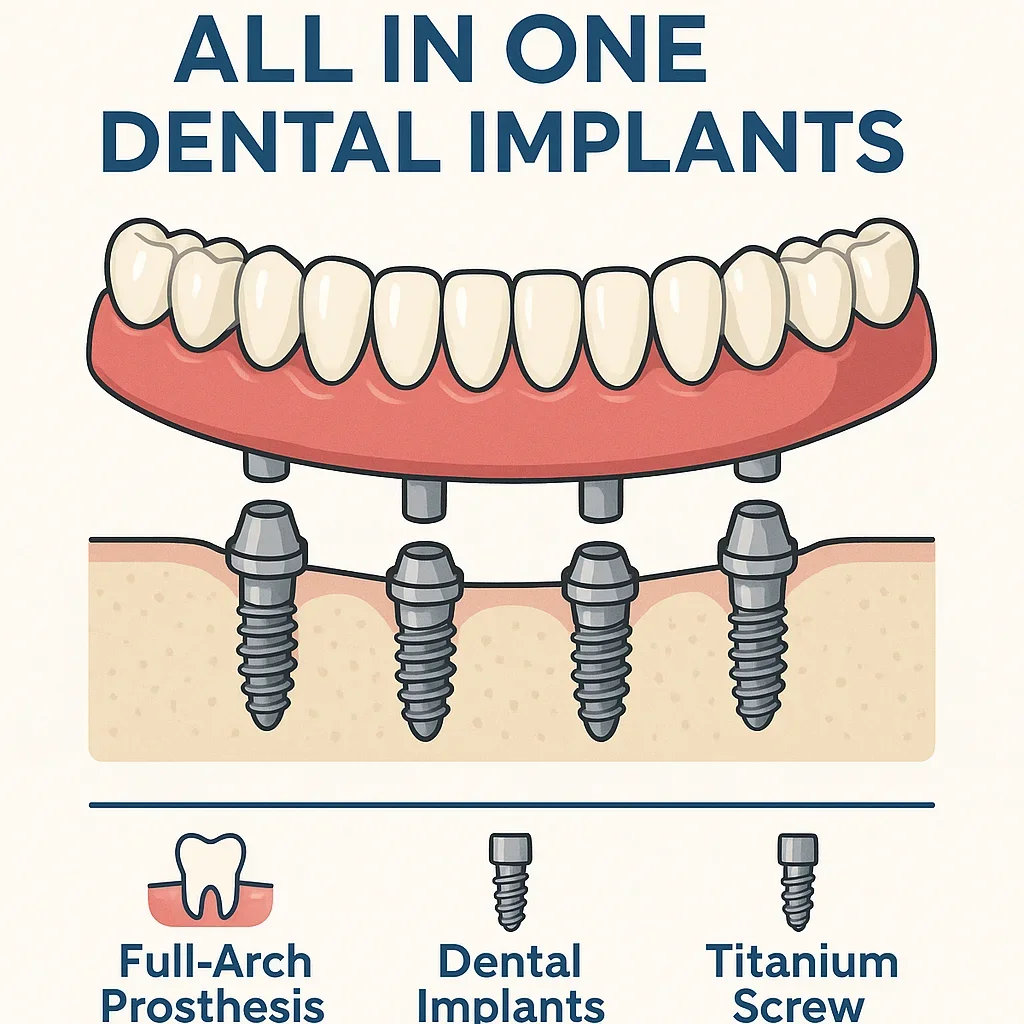
All in one dental implants are an advanced dental restoration system designed to replace a full arch of missing or damaged teeth using just a few strategically placed titanium implants. Unlike traditional individual implants, which require one implant per tooth, this technique uses four to six implants per arch to support a fixed, permanent dental prosthesis. This approach not only simplifies the procedure but also reduces recovery time and cost for patients.
The core idea behind all in one dental implants is efficiency. With fewer implants required and immediate placement of the final prosthesis in many cases, patients can enjoy a functional and aesthetic smile often within a single day. This “Teeth in a Day” approach is made possible through a combination of careful planning, digital imaging, and precision placement techniques.
Step-by-Step Explanation of the Procedure
Here’s how all in one dental implants typically work:
- Initial Consultation: Your dentist evaluates your oral health using digital X-rays or 3D imaging. This helps determine if you’re a good candidate and plan the implant positions.
- Implant Placement: On the day of surgery, the dentist places four to six titanium implants into your jawbone. These serve as the root structure for your new teeth.
- Temporary Teeth: A set of temporary prosthetic teeth is placed over the implants, allowing you to walk out with a new smile the same day.
- Healing & Integration: Over the next few months, your implants naturally bond with your jawbone in a process called osseointegration.
- Final Prosthesis: Once healing is complete, a custom permanent bridge or denture is securely attached to the implants, completing the restoration.
Why This System Works
All in one dental implants utilize strategic implant angulation and placement to avoid anatomical structures like sinuses and nerves, reducing the need for bone grafting. This makes the procedure more accessible for individuals who have experienced bone loss or wear dentures.
Additionally, because the prosthetic teeth are supported by multiple implants, they offer exceptional stability. Patients can speak, chew, and smile with confidence—no shifting or slipping like with removable dentures.
Technology Behind the Success
The success of all in one dental implants is largely due to advancements in digital dentistry. Dentists now use CBCT scans (Cone Beam Computed Tomography) to create a 3D map of your jaw. This data is used to guide implant placement with pinpoint accuracy, ensuring long-term function and aesthetics.
Custom CAD/CAM-designed prosthetics also play a crucial role. These restorations are milled with high precision to perfectly match your bite, facial structure, and smile line. The result is not only functional but visually indistinguishable from natural teeth. 🦷
Who Can Benefit from This Treatment?
Many patients who struggle with loose dentures, multiple missing teeth, or deteriorating oral health turn to all in one dental implants for a fresh start. Ideal candidates include:
- ✅ Adults with full or partial tooth loss
- ✅ Patients seeking a fixed, non-removable solution
- ✅ Individuals with sufficient jawbone or who qualify for angled implant placement
- ✅ Those looking for long-term oral health stability
How It Compares to Other Options
While traditional implants and dentures have their place, all in one dental implants offer a unique combination of speed, durability, and convenience. Full dentures rest on the gums and may shift, while traditional implants require multiple surgeries. All-in-one systems, by contrast, give you the best of both worlds—a permanent solution completed in less time.
Still Have Questions?
If you’re considering all in one dental implants, your best first step is to talk with an expert clinic. A personalized consultation at Redent Klinik Contact Page will help you understand your options, take 3D scans, and create a customized treatment plan based on your unique needs.
In our next section, we’ll explore the compelling advantages of choosing all in one dental implants. From better chewing to improved self-confidence, you’ll see why this option is changing lives in 2025 and beyond. 🌟
Top Benefits of Choosing All in One Dental Implants
When it comes to restoring your smile, all in one dental implants offer an unmatched combination of aesthetics, functionality, and long-term health benefits. Whether you’re dealing with tooth loss due to age, trauma, or chronic dental issues, this advanced solution is transforming lives across the globe. Here are the top reasons why more patients are choosing all in one dental implants in 2025. 🦷
1. One-Day Transformation
Perhaps the most celebrated advantage of all in one dental implants is the ability to walk out with a brand-new smile in a single day. This immediate load protocol allows patients to have implants placed and a full prosthetic arch attached during the same visit. Unlike traditional implants that can take months to complete, this accelerated process saves you both time and anxiety.
2. Natural Look and Feel
Thanks to the integration of 3D imaging and custom-designed prosthetics, all in one dental implants mimic the appearance of natural teeth with incredible accuracy. High-grade ceramic or zirconia materials are used to match the color, shape, and translucency of real enamel. The result? A smile that looks and feels like your own. 😁
3. Permanent and Stable Solution
Unlike removable dentures that can slip, shift, or require adhesives, all in one dental implants are fixed securely to your jawbone. This permanent anchoring ensures that you can eat, speak, and smile with confidence—without worrying about embarrassing moments or daily maintenance routines.
4. Improved Chewing and Digestion
With all in one dental implants, you regain up to 90% of your natural chewing power. That means you can enjoy a wider range of nutritious foods, from crunchy vegetables to lean meats. Better chewing leads to better digestion and, ultimately, better overall health. 🥦🍎
5. Bone Preservation
Tooth loss can lead to jawbone deterioration over time, causing facial sagging and a prematurely aged appearance. All in one dental implants stimulate the jawbone, just like natural tooth roots, helping to preserve bone density and facial structure. This is crucial for maintaining a youthful look.
6. Lower Long-Term Cost
While the upfront cost may seem higher compared to dentures, all in one dental implants offer superior long-term value. Dentures often need to be replaced every 5–7 years and require ongoing maintenance. Implants, on the other hand, are designed to last decades with proper care, minimizing future dental expenses.
7. Boosted Confidence and Mental Health
A full, attractive smile isn’t just about looks—it’s about how you feel. Patients who undergo all in one dental implants frequently report enhanced self-esteem, improved social interactions, and reduced anxiety in both personal and professional settings. 😊
8. Minimal Maintenance
Unlike dentures that need to be removed and soaked overnight, all in one dental implants can be cared for just like natural teeth. Regular brushing, flossing, and dental check-ups are all you need to keep your new smile in excellent shape.
9. Suitable for a Wide Range of Patients
Thanks to strategic implant placement techniques, even patients with bone loss or pre-existing oral health conditions may qualify for all in one dental implants. Clinics like Redent Klinik Contact Page offer in-depth evaluations to ensure you’re a good candidate, sometimes using angled implants to bypass areas of low bone volume.
10. Scientifically Backed and Trusted
The growing popularity of all in one dental implants is backed by science. As outlined by the American Dental Association, dental implants are among the most successful and evidence-based treatments in modern dentistry. The all-in-one variation builds upon this foundation to offer enhanced convenience and effectiveness.
With so many transformative benefits, it’s no wonder that all in one dental implants are the preferred option for full-mouth rehabilitation in 2025. In the next section, we’ll take a closer look at who qualifies for this procedure and what to expect during the candidacy evaluation process. 🧑⚕️
Are You a Candidate for All in One Dental Implants?
Not everyone is immediately eligible for all in one dental implants, but advancements in implantology have significantly broadened the pool of potential candidates. If you’re considering this life-changing procedure, it’s crucial to understand the specific criteria that determine your suitability. Let’s explore who qualifies, who might need pre-treatment, and how to prepare for your smile transformation. 😷
General Candidacy Criteria
While each case is unique, most ideal candidates for all in one dental implants meet the following general conditions:
- ✅ Missing most or all teeth in one or both arches
- ✅ Good overall health and immune system function
- ✅ Sufficient bone density or willingness to undergo minor grafting
- ✅ No uncontrolled chronic conditions like diabetes or autoimmune disease
- ✅ Non-smoker or willing to quit smoking during healing
If these checkboxes describe you, you’re likely a strong contender for the procedure. However, a comprehensive consultation is essential to confirm your suitability for all in one dental implants.
Bone Density: A Key Factor
Because all in one dental implants rely on osseointegration—where the implant fuses with the jawbone—adequate bone density is important. But don’t worry: even if you’ve suffered bone loss due to prolonged denture use or tooth extraction, advanced techniques like tilted implants or zygomatic implants can bypass low-density areas.
In many cases, patients who were previously told they didn’t qualify for traditional implants can still receive all in one dental implants using these specialized methods.
Age Requirements
There’s no strict age limit for all in one dental implants, but patients should have completed jawbone development—usually by their early 20s. On the other end of the spectrum, many senior patients in their 60s, 70s, and even 80s successfully undergo the procedure with minimal complications.
As long as you’re healthy enough for oral surgery, age is rarely a barrier.
Health Conditions That May Affect Eligibility
Some systemic health issues can influence your ability to safely receive all in one dental implants. These include:
- ❌ Uncontrolled diabetes
- ❌ Severe osteoporosis
- ❌ Bleeding disorders
- ❌ Recent cancer treatments (chemotherapy or radiation)
However, many of these concerns can be managed in coordination with your general physician. Be transparent with your medical and dental history to ensure the best outcome.
Smoking and Implant Success
One of the most significant risk factors in implant dentistry is smoking. Nicotine restricts blood flow, interferes with healing, and increases the risk of implant failure. Patients who smoke are encouraged to quit before undergoing all in one dental implants surgery. Even temporary cessation can dramatically improve healing and success rates. 🚭
The Role of 3D Imaging in Evaluation
Modern dental clinics use CBCT scans to precisely evaluate your bone structure and identify ideal implant sites. Clinics like Redent Klinik Contact Page employ advanced 3D mapping to ensure every patient receives a customized, accurate treatment plan tailored to their anatomy.
Psychological Readiness
Undergoing all in one dental implants can be a major life change, especially for those who have dealt with tooth loss for years. Patients should be emotionally prepared for the commitment, maintenance, and temporary adjustments that come with a new set of teeth. However, the emotional rewards—confidence, freedom, and joy—are absolutely worth it. 💪
Financial Preparedness
While we’ll discuss detailed pricing in the next section, it’s important to know that all in one dental implants represent a long-term investment in your oral health. Many clinics offer financing plans or dental credit options to make the procedure more accessible.
Summary: Are You Ready?
If you meet most of the criteria above, there’s a good chance you’re a candidate for all in one dental implants. The first step is always a thorough dental evaluation, including X-rays and scans. From there, a personalized plan can be created that accounts for your oral condition, health status, and lifestyle goals.
In the upcoming section, we’ll walk through the procedure itself—step by step—so you know exactly what to expect before, during, and after getting all in one dental implants. 🦷✨
Step-by-Step Procedure: What to Expect from Start to Finish
Undergoing all in one dental implants may sound complex, but the process has been refined over the years to maximize comfort, predictability, and results. This comprehensive treatment typically takes place over a few appointments, and in many cases, you’ll leave with a brand-new smile the very same day! Let’s walk through each step of the journey so you know exactly what to expect. 🦷⏳
1. Initial Consultation and Diagnostic Imaging
Every all in one dental implants case begins with an in-depth consultation. Your dentist will examine your gums, jawbone, and existing teeth, and take a full set of digital X-rays or 3D cone beam CT (CBCT) scans. This provides a high-resolution, three-dimensional map of your jaw, allowing for precise treatment planning.
This stage may also include a review of your medical history to ensure you’re a suitable candidate. If you’re working with a clinic like Redent Klinik Contact Page, expect thorough communication and full transparency about the next steps.
2. Personalized Treatment Planning
Using digital imaging and specialized implant planning software, your dentist will design a custom surgical guide. This guide dictates the exact angle, depth, and position of each implant. For all in one dental implants, the goal is to place four to six implants per arch, often tilted for optimal stability and to avoid sinus cavities or nerves.
Once your treatment plan is finalized, you’ll schedule your surgery—often just a few days or weeks later.
3. Implant Placement Surgery
On the day of your surgery, you’ll be given local anesthesia or IV sedation depending on your comfort level. The procedure is minimally invasive and usually completed in 1–2 hours per arch.
Here’s what typically happens during the surgery:
- 🛠️ Four to six titanium implants are placed into the jawbone using the pre-designed surgical guide
- 🦷 In many cases, your new temporary teeth are attached immediately after implant placement
- 😌 You’ll be able to speak and smile before leaving the clinic
This “same-day smile” approach is one of the hallmark benefits of all in one dental implants, dramatically reducing wait time for visible results.
4. Recovery and Healing
After the procedure, mild swelling and discomfort are normal and manageable with over-the-counter pain medication. Most patients resume light activities within 48 hours. The healing process—known as osseointegration—takes place over 3 to 6 months, during which the implants bond with the jawbone.
During this period, your temporary prosthesis ensures function and aesthetics while your body adjusts.
5. Follow-Up Visits
Periodic check-ups allow your dental team to monitor healing and ensure that your all in one dental implants are integrating successfully. These appointments typically include X-rays, bite evaluations, and professional cleanings.
6. Final Prosthesis Placement
Once osseointegration is confirmed, you’ll return to the clinic to receive your permanent prosthetic arch. These final teeth are made from high-quality materials such as zirconia or porcelain and are custom-designed to match your face, bite, and natural smile.
The final prosthesis is securely attached to the implants, resulting in a stable, beautiful, and fully functional smile.
7. Long-Term Maintenance
Although all in one dental implants are designed to be low-maintenance, they still require basic oral hygiene and routine check-ups. Brush and floss daily, and visit your dentist at least twice a year for professional cleanings and evaluations.
8. What Makes This Procedure Unique?
Unlike traditional implant approaches that require individual implants and multiple surgeries, all in one dental implants combine efficiency and innovation. From digital planning to immediate function, the entire experience is patient-focused and results-driven.
9. Emotional and Lifestyle Impact
Patients often report immediate improvements in self-esteem, speech clarity, and dietary freedom. Imagine enjoying a steak dinner or laughing freely with friends—without worrying about dentures slipping! That’s the everyday reality with all in one dental implants. 😊🍽️
Coming up next, we’ll explore how long the healing process takes and offer expert aftercare tips to help you preserve your investment and enjoy your smile for decades. 🧼
Recovery Time and Aftercare Tips for All in One Dental Implants
One of the most appealing aspects of all in one dental implants is the relatively smooth and speedy recovery process compared to traditional multi-stage dental implant procedures. While the initial transformation is often immediate, full healing and integration take time—and proper care is essential to ensure long-term success. In this section, we’ll guide you through the full recovery timeline and share expert aftercare tips to protect your investment and keep your new smile radiant. 🛌🪥
Typical Healing Timeline
Though every patient is different, the average healing time for all in one dental implants follows this general timeline:
- First 24–48 hours: Mild swelling, soreness, and slight bleeding are normal. You’ll be advised to rest, avoid strenuous activities, and stick to soft foods.
- 1st week: Discomfort subsides significantly. Most patients return to work within 2–3 days, depending on the complexity of their case.
- 2–3 months: Osseointegration—the fusion of implant and jawbone—continues silently under the gum line. You’ll have temporary prosthetics in place during this time.
- 3–6 months: Once integration is complete, your final prosthetic arch will be placed, offering full function and aesthetics.
This seamless timeline is one of the major advantages of all in one dental implants, allowing patients to enjoy immediate improvements while the body heals in the background.
Post-Surgery Care Instructions
Following your implant surgery, your dental team will provide specific instructions. These typically include:
- ❄️ Apply ice packs to reduce swelling
- 🛏️ Sleep with your head elevated for the first couple of nights
- 💊 Take prescribed or over-the-counter pain medications as directed
- 🍲 Stick to a soft, nutrient-rich diet for at least a week (soups, smoothies, mashed veggies)
- 🚭 Avoid smoking and alcohol during the initial healing phase, as these impair blood flow and healing
Long-Term Aftercare for Lasting Results
Once the final prosthetic teeth are placed, maintaining good oral hygiene is key to ensuring your all in one dental implants last a lifetime. Here’s how to care for your new smile:
- 🪥 Brush at least twice a day using a soft-bristle toothbrush
- 🧵 Floss or use interdental brushes around the prosthesis and under the bridge
- 🧼 Consider a water flosser to gently clean beneath the gumline
- 🦷 Use a non-abrasive toothpaste recommended by your dentist
- 🩺 Visit your dentist every 6 months for professional cleanings and implant checks
These habits help prevent peri-implantitis—a condition similar to gum disease that can compromise implant stability.
Foods to Enjoy and Avoid
During the healing phase, it’s wise to stick to softer foods. Once fully healed, all in one dental implants allow you to eat almost anything. Still, certain choices can help prolong the life of your prosthesis:
Best foods: Lean proteins, soft fruits, steamed vegetables, yogurt, eggs, and whole grains.
Foods to limit or avoid: Ice cubes, sticky candies, popcorn kernels, and hard nuts that could stress the prosthesis.
Recognizing Signs of Complications
Though rare, complications can occur. Contact your dentist immediately if you notice:
- 🚨 Persistent swelling or pain beyond 10 days
- 🚨 Loosening of the prosthetic arch
- 🚨 Bleeding that doesn’t subside
- 🚨 Signs of infection (fever, pus, foul odor)
Prompt intervention can resolve most issues before they affect the success of your all in one dental implants.
Patient Success Stories
Patients frequently report a smooth recovery and overwhelmingly positive outcomes. Many return to their normal routine within a few days, thrilled with their new appearance and functionality. Clinics like Redent Klinik Contact Page also offer continued support post-surgery to ensure that patients are healing well and satisfied with their results. 😊
Final Word on Recovery
While all in one dental implants offer a faster and easier recovery compared to traditional alternatives, the key to long-term success lies in how you care for your implants. With just a little extra attention, your new teeth can serve you reliably for 20 years or more.
In the next section, we’ll break down the costs of this procedure and explore what factors influence pricing, including location, materials, and more. 💰
How Much Do All in One Dental Implants Cost in 2025?
The cost of all in one dental implants is a significant consideration for many patients—and understandably so. While this treatment is a life-changing investment in your health and confidence, understanding the factors that influence pricing can help you make an informed decision. In 2025, the average cost of all in one dental implants varies depending on your location, provider expertise, materials used, and additional procedures needed.
Average Cost Breakdown
As of 2025, here’s a general breakdown of all in one dental implants costs in various regions:
| Region | Average Cost per Arch (USD) |
|---|---|
| United States | $20,000 – $30,000 |
| United Kingdom | £13,000 – £18,000 |
| Canada | CAD 22,000 – CAD 30,000 |
| Turkey (Medical Tourism) | $6,000 – $9,000 |
| Australia | AU$25,000 – AU$35,000 |
Note: These are estimated averages. A consultation at a clinic like Redent Klinik Contact Page can give you a tailored quote based on your individual case.
Factors Affecting the Cost of All in One Dental Implants
The price you pay isn’t just for the surgery—it includes several components. Understanding what you’re paying for helps demystify the overall cost:
- 🖥️ Diagnostic imaging and consultation: Includes 3D CBCT scans, impressions, and treatment planning
- 🦷 Number of implants placed: Most procedures require 4–6 implants per arch
- 🛠️ Materials used: Titanium implants, zirconia or acrylic prosthetic teeth
- 🧑⚕️ Surgeon and lab technician expertise: Highly skilled teams usually charge more—but deliver better long-term results
- 🏥 Location: Urban areas and high-demand clinics often have higher pricing; overseas dental tourism may offer savings
Are Payment Plans or Insurance Available?
In many cases, all in one dental implants are considered an elective or cosmetic procedure, meaning most insurance policies won’t cover the full cost. However, partial coverage for extractions, anesthesia, or preliminary diagnostics may be available.
To ease the financial burden, many clinics offer the following options:
- 💳 Dental financing plans with monthly payments
- 🏦 Health savings accounts (HSA) or flexible spending accounts (FSA)
- 📄 Third-party credit services such as CareCredit or LendingClub
Cost vs. Value: Why It’s Worth It
While the initial cost of all in one dental implants might seem high, consider the long-term benefits:
- ✅ Decades of durability with proper care
- ✅ No need for adhesives or regular denture replacement
- ✅ Improved oral health and bone preservation
- ✅ Enhanced confidence and quality of life
When you factor in these advantages, all in one dental implants often prove more economical over time than repeated denture fittings, maintenance, and adjustments.
How to Get an Accurate Estimate
The best way to determine your cost is through a personalized consultation. Clinics like Redent Klinik will assess your oral condition, discuss your goals, and offer a full cost breakdown, including potential optional treatments like bone grafts or sinus lifts (if required).
Budgeting Tips for 2025
Here are some tips to help you plan financially for your all in one dental implants in 2025:
- 📌 Start with a savings goal if paying out-of-pocket
- 📌 Compare quotes from multiple reputable providers
- 📌 Ask for package deals or promotions offered by clinics
What’s Next?
In the next section, we’ll compare all in one dental implants to traditional implant methods, so you can clearly see the pros, cons, and clinical distinctions that set this method apart. 🤓
All in One vs. Traditional Implants: Key Differences Explained
When considering dental restoration options, many patients wonder whether all in one dental implants or traditional implants are the better choice. While both are highly effective methods for restoring missing teeth, there are several crucial distinctions that set them apart. In this section, we’ll break down the differences in design, procedure, cost, timeline, and maintenance—so you can confidently decide which solution aligns with your goals and lifestyle. ⚖️
1. Number of Implants Required
One of the most obvious differences lies in the number of implants used. All in one dental implants typically use four to six implants per arch to support a full row of prosthetic teeth. In contrast, traditional implants often require one implant per missing tooth, which could mean 8–10 implants or more for a full arch.
This streamlined approach makes all in one dental implants less invasive and more cost-effective, especially for full-mouth rehabilitation.
2. Surgery and Healing Timeline
Traditional implants usually involve a two-stage process: first placing the implant, then waiting 3–6 months for healing before attaching the final crown. Some cases may also require bone grafting before implant placement.
All in one dental implants are designed for immediate load, meaning the temporary prosthesis is often attached on the same day as the surgery. Patients can walk out with a functional, aesthetic smile right away—making this a major win for convenience and confidence. ⏱️
3. Bone Requirements
Traditional implants often require sufficient vertical bone height, which can be a limitation for patients with bone loss. Additional procedures like sinus lifts or grafts may be necessary.
On the other hand, all in one dental implants use angled placement and longer implants to maximize bone contact, even in areas with limited bone density. This significantly reduces the need for bone grafting, making the procedure more accessible.
4. Cost Comparison
While individual traditional implants may seem less expensive at first glance, the total cost can escalate quickly if multiple implants and surgeries are needed. All in one dental implants are often more economical when replacing a full arch, thanks to fewer surgical sessions and less lab work.
As covered earlier, clinics like Redent Klinik offer tailored pricing that includes all components—making it easier to budget upfront without surprise fees.
5. Time to Final Smile
Traditional implants can take up to 6–9 months from consultation to final crown placement. All in one dental implants compress this timeline dramatically—often delivering a temporary smile in one day and final restoration within a few months.
This is ideal for patients seeking fast, transformative results without sacrificing quality.
6. Aesthetic Results
Both systems provide natural-looking teeth, but all in one dental implants are particularly known for producing a harmonious, full-arch smile. The prosthetic is designed as a single piece, ensuring symmetry, alignment, and optimal bite function.
Patients who have experienced years of tooth loss or facial collapse often see dramatic aesthetic improvements after switching to this method. 😁
7. Comfort and Functionality
Since traditional implants support individual crowns, they replicate the feel of natural teeth closely. However, all in one dental implants offer superior bite stability and chewing strength due to their full-arch support structure. This makes them ideal for those who want to enjoy a wide variety of foods without restrictions.
8. Maintenance and Longevity
Maintenance is comparable for both systems: good oral hygiene, regular checkups, and professional cleanings. However, all in one dental implants require less frequent adjustments since they don’t involve multiple crowns or removable parts.
With proper care, both types of implants can last 20+ years, though many patients find the full-arch prosthesis in all-in-one systems easier to manage.
9. Psychological and Lifestyle Impact
Patients often report a quicker return to normal life with all in one dental implants—thanks to immediate aesthetics, minimal downtime, and fewer follow-ups. This psychological boost is invaluable for those who’ve long suffered from low confidence due to missing teeth or uncomfortable dentures. 🙌
Conclusion: Which Is Right for You?
If you’re replacing a few individual teeth, traditional implants may still be the best route. But for full-mouth restoration, all in one dental implants provide a faster, more efficient, and often more affordable solution. Consultation with an experienced clinic is essential to determine the right path for your unique case.
In our next section, we’ll address some of the most common myths and misconceptions about all in one dental implants, so you can move forward with clarity and confidence. 🧠
Common Myths and Misconceptions About All in One Dental Implants
Despite the rising popularity and success of all in one dental implants, several myths and misconceptions still circulate—causing confusion and hesitation among potential patients. In this section, we’ll bust the most common myths and reveal the truth behind this revolutionary full-mouth restoration technique. Let’s separate fact from fiction so you can make your decision with confidence. 🧠✔️
Myth 1: All in One Dental Implants Are Only for the Elderly
While many older adults benefit from all in one dental implants, age alone is not a determining factor. Younger individuals in their 30s, 40s, or 50s who have lost most of their teeth due to trauma, decay, or periodontal disease are also excellent candidates. The primary eligibility factors are overall health and sufficient bone structure—not age.
Myth 2: They Look Fake or Unnatural
This is a common misconception, but modern all in one dental implants are designed with aesthetics in mind. Advanced CAD/CAM technology ensures that prosthetics are custom-designed to mimic natural tooth color, shape, and size. High-quality zirconia or porcelain materials enhance the realism, delivering a beautiful and natural-looking smile. 😁
Myth 3: The Procedure Is Painful and Risky
Many patients assume that all in one dental implants involve significant pain or risk, but the reality is quite the opposite. Thanks to local anesthesia, sedation options, and precise surgical planning, discomfort is minimal. Most patients report mild soreness for a few days—similar to tooth extraction—and resume normal activities quickly.
Additionally, the procedure has a high success rate, often exceeding 95%, especially when performed by skilled professionals like those at Redent Klinik.
Myth 4: Dental Implants Require Special Care
Contrary to popular belief, all in one dental implants are easy to maintain. They don’t require special cleaning products or techniques. Just like natural teeth, they only need daily brushing, flossing, and regular dental checkups. No adhesives, soaking, or complicated care routines are necessary. 🪥
Myth 5: Implants Can Fall Out Easily
Some people fear that implants can loosen or fall out over time. In truth, all in one dental implants are fused directly into the jawbone through osseointegration, making them extremely stable and secure. Once healing is complete, they function as firmly as natural roots.
As long as proper oral hygiene is maintained, implant failure is rare.
Myth 6: You Can’t Eat Normally with Implants
Another misconception is that you’ll need to avoid certain foods. In reality, all in one dental implants restore 80–90% of your natural chewing power. After the healing period, patients can enjoy virtually all foods—including apples, steak, and even crunchy vegetables—without discomfort or fear of shifting. 🥩🍎
Myth 7: Only People with Perfect Oral Health Qualify
While it’s true that certain conditions like uncontrolled diabetes or smoking can impact healing, most patients—even those with existing oral health issues—can still receive all in one dental implants after preparatory treatments. Techniques like angled placement or bone grafting expand eligibility for a broader range of patients.
Myth 8: The Results Don’t Last Long
This myth stems from confusion with dentures, which typically require replacement every 5–7 years. However, all in one dental implants are designed for longevity. With proper care, they can last 20 years or more. The titanium posts integrate with the jawbone and are resistant to decay—making them a durable solution.
Myth 9: They’re Too Expensive to Consider
While all in one dental implants do require an upfront investment, they often save patients money over time. Dentures and bridges may seem cheaper initially but come with recurring maintenance and replacement costs. When factoring in quality of life, health, and longevity, implants are often the better value.
Many clinics offer flexible financing plans, including third-party credit options and installment payments to make treatment more accessible.
Why Dispelling These Myths Matters
False beliefs can delay necessary treatment and prevent individuals from enjoying the many benefits of all in one dental implants. By separating myth from reality, you empower yourself to take control of your oral health and confidently pursue a permanent solution to tooth loss.
Up next, we’ll explore how to choose the right clinic for all in one dental implants, including what to look for in a provider, key questions to ask, and red flags to avoid. 🏥
Choosing the Right Clinic for All in One Dental Implants
Selecting the right provider is a critical step in achieving long-lasting, aesthetically pleasing, and safe results with all in one dental implants. With more clinics than ever offering this service in 2025, how can you ensure you’re choosing a qualified and reputable team? This section will guide you through what to look for, which questions to ask, and the essential qualities of a high-quality dental implant clinic. 🏥🦷
1. Specialization and Experience Matter
Not all dental professionals are implant specialists. For all in one dental implants, it’s crucial to work with an oral surgeon, periodontist, or prosthodontist who has advanced training in implantology. Look for clinics that highlight full-arch restorations in their service offerings and have documented success rates with similar cases.
Don’t hesitate to ask: “How many full-arch implant cases have you completed in the past year?” The answer should give you insight into their expertise level.
2. Technology and Equipment
Clinics that offer all in one dental implants should be equipped with modern technology, such as:
- 📸 Digital panoramic X-rays and CBCT scans
- 🧠 3D imaging and planning software
- 🦷 CAD/CAM systems for prosthesis design
- 🛠️ Guided surgery tools for precise implant placement
Advanced equipment allows for better diagnostics, improved accuracy, and a higher success rate. A tech-forward clinic signals a commitment to excellence and patient safety.
3. Customized Treatment Planning
A one-size-fits-all approach is a red flag when it comes to all in one dental implants. The best clinics take time to assess your individual needs, health history, and goals. They create a personalized plan that considers your bone density, bite pattern, facial structure, and budget.
At Redent Klinik, for example, each patient receives a fully customized roadmap, including 3D digital modeling and virtual implant placement simulations.
4. Comprehensive In-House Services
Top-tier clinics offer all services under one roof—from consultation and surgery to prosthesis design and final placement. This integrated model not only improves communication among dental professionals but also ensures continuity of care for the patient.
Benefits of in-house services for all in one dental implants include:
- ✔️ Faster treatment timelines
- ✔️ Consistency in prosthetic aesthetics
- ✔️ Fewer referrals or off-site appointments
5. Transparent Pricing and Financing Options
Before starting treatment, your clinic should provide a detailed, itemized quote that outlines the full cost of your all in one dental implants, including surgery, temporary and final prostheses, imaging, and follow-up care.
Ask about available payment plans, credit partnerships, or dental tourism packages—especially if you’re traveling internationally for more affordable options.
6. Verified Reviews and Testimonials
Online reviews and before/after galleries offer a glimpse into the clinic’s results and patient satisfaction. Look for testimonials that mention all in one dental implants specifically, as these are more relevant than general dental service reviews.
You can also request to speak with previous patients or browse video testimonials to gauge authenticity and outcomes.
7. Certifications and Affiliations
Reputable clinics often display certifications from organizations like the American Dental Association or the International Congress of Oral Implantologists (ICOI). Membership in such professional bodies indicates a commitment to continuing education and high standards.
8. Follow-Up and Maintenance Support
Your relationship with the clinic shouldn’t end after your implants are placed. Ensure they offer post-operative support, regular checkups, and maintenance services. Proper aftercare is key to the long-term success of all in one dental implants.
Final Checklist for Selecting Your Clinic
Before making your decision, ask yourself:
- 🔹 Does the clinic specialize in full-mouth implant restorations?
- 🔹 Do they use cutting-edge technology?
- 🔹 Are their pricing and services transparent?
- 🔹 Do past patients speak highly of their results?
Answering “yes” to these questions is a strong sign that you’re in good hands for your all in one dental implants journey. In the final section, we’ll hear from real patients and explore their life-changing experiences with this innovative treatment. 🎉