
If you are researching all in one implants cost, you are likely looking for a clear, honest, and complete explanation of what this treatment really involves, how much you should expect to pay, and whether it is worth the investment. This guide is written to fully satisfy that search intent by breaking down the true cost structure, clinical value, and long-term benefits of all in one dental implants in a way that is easy to understand and medically accurate 🦷.
The term all in one implants cost refers to a full-arch dental restoration solution where a complete set of fixed teeth is supported by strategically placed dental implants. Unlike traditional implant treatments that may require individual implants for each missing tooth, this approach replaces an entire upper or lower jaw using a smaller number of implants, typically in a single coordinated system. Because everything is planned and delivered as one integrated procedure, patients often experience faster treatment times, fewer surgeries, and more predictable outcomes.
One of the biggest reasons patients search for all in one implants cost is confusion. Prices can vary dramatically from clinic to clinic and from country to country. Some providers advertise extremely low figures, while others quote significantly higher prices without clearly explaining why. To truly understand the cost, it is essential to know what is included, what is optional, and what factors influence the final price you pay.
At its core, all in one implants cost usually includes several critical components. These typically cover advanced diagnostic imaging such as 3D CT scans, digital treatment planning, surgical placement of the implants, a temporary fixed prosthesis, and the final permanent prosthetic teeth. In reputable clinics, it also includes anesthesia, post-operative care, medications, and follow-up appointments. When comparing prices, it is vital to ensure you are comparing complete treatment packages rather than partial or misleading offers.
Another important aspect of all in one implants cost is the technology and expertise involved. This treatment relies heavily on precise digital planning, guided surgery, and high-quality implant systems. Clinics that invest in experienced implantologists, modern surgical equipment, and premium implant brands may charge more upfront, but this often translates into better long-term results, fewer complications, and a more natural-looking smile 😊.
Patients also want to know whether all in one implants cost is justified compared to other tooth replacement options. While the initial price may appear higher than removable dentures, the long-term value is often significantly better. Fixed implant-supported teeth do not slip, do not require adhesives, and help preserve jawbone structure. Over time, many patients find that they spend less on maintenance, repairs, and replacements compared to traditional removable solutions.
From a medical perspective, understanding all in one implants cost also means understanding candidacy. Not every patient requires additional procedures such as bone grafting or sinus lifting, which can increase overall costs. One advantage of all in one implant systems is that they are often designed to maximize existing bone, reducing or eliminating the need for costly preparatory surgeries. This is one of the reasons why many patients can achieve full-arch restoration at a more controlled and predictable cost.
Transparency is essential when evaluating all in one implants cost. Reputable dental organizations such as the
American Dental Association emphasize the importance of informed consent and clear treatment planning. Patients should always receive a written treatment plan that explains each step of the procedure, the materials used, and what happens if complications arise.
If you are considering treatment abroad or at an international dental clinic, all in one implants cost may be significantly lower than in countries like the United States or the United Kingdom. Clinics such as
Redent Klinik Contact Page often provide comprehensive packages that combine high clinical standards with cost advantages, making advanced implant treatment more accessible without compromising quality 🌍.
In summary, all in one implants cost is not just a number; it is a reflection of surgical skill, technology, materials, safety, and long-term outcomes. By understanding what the cost includes and why prices vary, you can make a confident, informed decision that supports both your oral health and your quality of life. In the next section, we will take a closer look at what all in one dental implants actually are and how they work in real clinical settings.
What Are All in One Dental Implants?
To fully understand all in one implants cost, it is essential to first understand what all in one dental implants actually are and how they differ from other tooth replacement solutions. All in one dental implants are a modern full-arch restoration technique designed to replace an entire set of missing or failing teeth using a fixed, implant-supported prosthesis. Instead of placing one implant per tooth, a carefully planned number of implants are used to support a complete arch of teeth in a single, integrated system 🦷.
The concept behind all in one dental implants is efficiency, stability, and long-term success. By strategically placing implants at specific angles and positions within the jawbone, dentists can maximize existing bone structure and provide strong support for a full row of teeth. This approach plays a direct role in shaping all in one implants cost, as it reduces the need for additional surgeries and shortens overall treatment time.
How All in One Dental Implants Work
The procedure typically begins with advanced digital diagnostics, including 3D imaging and computer-guided planning. This ensures precise implant placement and predictable results. During the surgical phase, implants are placed into the jawbone in a single session. In many cases, patients receive a temporary fixed set of teeth on the same day or within a very short timeframe. This immediate functionality is one of the reasons patients consider all in one implants cost a valuable investment.
Once healing is complete and the implants have fully integrated with the bone, a permanent prosthesis is attached. This final set of teeth is custom-designed to match the patient’s facial structure, bite alignment, and aesthetic preferences. When evaluating all in one implants cost, it is important to recognize that both the surgical and prosthetic phases are included in a comprehensive treatment plan.
Key Components of the All in One Implant System
Several essential elements make up an all in one dental implant treatment. These include titanium dental implants, abutments that connect the implants to the prosthesis, and a full-arch bridge typically made from high-quality materials such as zirconia or reinforced acrylic. Each of these components influences all in one implants cost, as material quality and manufacturing precision directly affect durability and long-term performance.
The use of premium materials often increases initial all in one implants cost, but it significantly reduces the risk of fractures, wear, or aesthetic deterioration over time. For patients seeking a long-lasting solution, this balance between upfront cost and long-term value is a critical consideration 😊.
Who Is a Good Candidate for All in One Dental Implants?
Many patients assume that extensive bone loss automatically disqualifies them from implant treatment. However, one of the advantages of all in one systems is their ability to work even in cases of moderate bone loss. By angling implants to engage stronger areas of the jaw, dentists can often avoid bone grafting procedures. This not only simplifies treatment but can also help control all in one implants cost.
Ideal candidates for all in one dental implants typically include individuals who are missing most or all of their teeth, those struggling with unstable dentures, or patients with severely damaged teeth that require full extraction. A thorough clinical evaluation is essential to determine suitability, and this evaluation is always factored into the overall all in one implants cost.
How All in One Dental Implants Differ From Traditional Implants
Traditional implant approaches often involve placing individual implants over multiple appointments, followed by separate healing periods and prosthetic stages. This extended process can significantly increase both time and expense. In contrast, all in one dental implants streamline the process into a coordinated workflow. This efficiency is one of the main reasons all in one implants cost can be more predictable and, in many cases, more affordable than multiple single-tooth implants.
Another major difference lies in patient experience. All in one treatments are designed to minimize surgical trauma and reduce overall chair time. Patients often report faster recovery, fewer complications, and greater satisfaction with their final results. These clinical and lifestyle benefits are key reasons why patients researching all in one implants cost ultimately choose this solution.
Functional and Aesthetic Benefits
Beyond cost considerations, all in one dental implants provide significant functional and aesthetic advantages. The fixed prosthesis restores natural chewing ability, improves speech clarity, and enhances facial support by preventing bone resorption. From an aesthetic standpoint, the teeth are designed to look natural and harmonious with the patient’s smile and facial features.
When patients evaluate all in one implants cost, these benefits often outweigh the initial financial commitment. The ability to eat comfortably, smile confidently, and maintain oral health without removable dentures has a profound impact on quality of life 🌟.
In conclusion, all in one dental implants represent a comprehensive, efficient, and clinically advanced solution for full-arch tooth replacement. Understanding how the system works, who it is for, and what components are involved provides essential context for evaluating all in one implants cost. In the next section, we will explore exactly what is included in the cost and how treatment packages are structured.
What Does All in One Implants Cost Include?
When patients research all in one implants cost, one of the most common frustrations is not knowing exactly what they are paying for. Many clinics advertise attractive headline prices, but those figures often represent only a portion of the full treatment. To make a truly informed decision, it is essential to understand every component that is typically included in a complete all in one implant package 🦷.
A transparent breakdown of all in one implants cost helps patients compare clinics fairly and avoid unexpected expenses later. A reputable dental provider will clearly outline what is included, what may be optional, and what circumstances could increase the final price. Below, we examine each major element in detail.
Initial Consultation and Diagnostic Planning
The foundation of any successful implant treatment is accurate diagnosis and planning. A significant portion of all in one implants cost covers the initial consultation, which includes a comprehensive oral examination, digital photographs, and advanced 3D imaging such as cone-beam CT scans. These diagnostics allow the dental team to assess bone quality, nerve positioning, and anatomical structures with high precision.
Modern all in one implant treatments rely heavily on digital planning software. This technology allows clinicians to simulate implant placement and prosthetic outcomes before surgery even begins. While this planning phase adds to all in one implants cost, it dramatically improves safety, accuracy, and long-term success rates 😊.
Surgical Implant Placement
The surgical phase is a major component of all in one implants cost. This includes the placement of multiple dental implants into the jawbone during a single, carefully coordinated procedure. The cost here reflects not only the implants themselves but also the surgeon’s expertise, surgical equipment, sterilization protocols, and operating facility standards.
In high-quality clinics, the cost also includes local anesthesia or sedation options to ensure patient comfort. Some centers offer conscious sedation or IV sedation, which may slightly increase all in one implants cost but greatly improves the patient experience during longer procedures.
Implant Materials and Brands
Not all dental implants are created equal. Premium titanium implants from well-established manufacturers are designed for optimal bone integration and long-term durability. These high-quality materials play a direct role in determining all in one implants cost. While lower-cost implants may reduce upfront pricing, they can increase the risk of failure or complications over time.
Choosing reliable implant systems is a decision guided by international clinical standards and recommendations from organizations such as the
American Dental Association. This commitment to quality is reflected in comprehensive treatment pricing.
Temporary Fixed Prosthesis
A key advantage of all in one dental implants is the ability to provide a fixed temporary set of teeth shortly after surgery. This temporary prosthesis allows patients to leave the clinic with a functional smile while the implants heal. The fabrication and fitting of this temporary bridge are typically included in all in one implants cost.
Although temporary, these teeth are carefully designed for comfort, aesthetics, and basic chewing function. Including this phase within all in one implants cost ensures patients do not experience a period without teeth, which is a major emotional and functional benefit 🌟.
Final Permanent Prosthetic Teeth
The final prosthesis is one of the most valuable components of all in one implants cost. After the implants have fully integrated with the jawbone, a permanent full-arch bridge is custom-made and securely attached. This bridge is often crafted from advanced materials such as zirconia or high-strength ceramic composites.
The design process involves detailed bite analysis, aesthetic customization, and precise manufacturing. Because the final prosthesis determines how your smile looks and functions for many years, it represents a significant portion of all in one implants cost.
Laboratory Work and Customization
Behind every successful all in one implant case is extensive laboratory work. Skilled dental technicians design and fabricate the prosthetic teeth to match facial proportions, gum contours, and natural tooth color. This high level of customization is built into all in one implants cost and directly affects patient satisfaction.
Lower-cost packages may reduce laboratory quality, leading to compromises in aesthetics or durability. Understanding this helps patients interpret differences in all in one implants cost between providers.
Post-Operative Care and Follow-Up
A complete treatment package does not end when the final teeth are placed. Post-operative check-ups, bite adjustments, and long-term monitoring are essential for implant success. These follow-up visits are usually included in all in one implants cost when treatment is provided by a reputable clinic.
This ongoing care ensures that any issues are addressed early and that the implants remain healthy and functional. When evaluating all in one implants cost, patients should always confirm that follow-up care is part of the package.
In summary, all in one implants cost typically includes diagnostics, surgery, implant materials, temporary and permanent prosthetics, laboratory work, and aftercare. Understanding this full scope allows patients to compare options accurately and avoid hidden expenses. In the next section, we will explore how all in one implant costs vary by country and why location plays such a significant role.
Average All in One Implants Cost by Country
One of the most searched aspects of all in one implants cost is how pricing differs from country to country. Patients are often surprised to discover that the same medical procedure can vary dramatically in price depending on geographic location, healthcare infrastructure, labor costs, and regulatory environments. Understanding these differences helps patients make informed decisions and avoid unrealistic expectations 🌍.
While the clinical principles behind all in one dental implants remain the same worldwide, the all in one implants cost can differ by tens of thousands of dollars. Below, we explore the most common destinations patients consider and explain why prices vary so significantly.
All in One Implants Cost in the United States
In the United States, all in one implants cost is typically the highest globally. This is due to high operating expenses, insurance-related administrative costs, advanced malpractice coverage, and elevated labor fees. On average, patients can expect to pay between $20,000 and $35,000 per jaw for a complete all in one implant treatment.
These prices often include diagnostics, surgery, temporary teeth, and the final prosthesis. However, not all clinics bundle services equally, so additional charges for sedation, imaging, or aftercare may apply. For this reason, patients researching all in one implants cost in the U.S. must carefully review treatment plans to understand the true final price.
Why Costs Are Higher in the U.S.
Several factors drive higher all in one implants cost in the United States. These include higher wages for dental professionals, expensive clinic overhead, and the high cost of regulatory compliance. While quality of care is generally excellent, these factors contribute to pricing that is out of reach for many patients.
All in One Implants Cost in the United Kingdom
In the UK, all in one implants cost is slightly lower than in the U.S. but still considered expensive by international standards. Prices typically range from £14,000 to £25,000 per arch. National Health Service coverage does not apply to implant treatments, meaning patients pay privately for the entire procedure.
UK clinics often offer high clinical standards and advanced technology, but similar to the U.S., high operational and staffing costs keep all in one implants cost elevated.
All in One Implants Cost in Western Europe
Countries such as Germany, France, and the Netherlands also have relatively high all in one implants cost. Average prices range from €12,000 to €25,000 per jaw. These countries are known for strict medical regulations and high-quality materials, which contribute to pricing consistency but not affordability.
While treatment quality is generally excellent, many European patients still look abroad due to rising all in one implants cost at home.
All in One Implants Cost in Turkey
Turkey has become one of the most popular destinations for patients seeking affordable yet high-quality dental care. All in one implants cost in Turkey typically ranges between $4,500 and $8,000 per jaw, often including accommodation, transfers, diagnostics, surgery, prosthetics, and follow-up care.
The lower all in one implants cost does not come from reduced quality but from lower labor costs, government support for medical tourism, and lower operational expenses. Many clinics use the same implant brands and technologies found in the U.S. and Europe 🦷.
Why Turkey Offers Lower All in One Implants Cost
Turkey’s medical tourism model allows clinics to offer comprehensive packages at significantly reduced prices. Dentists are highly trained, facilities are modern, and patient volume is high. These efficiencies help keep all in one implants cost accessible without compromising clinical standards.
All in One Implants Cost in Other Medical Tourism Destinations
Other popular destinations include Hungary, Poland, Mexico, and Thailand. In these countries, all in one implants cost generally falls between $6,000 and $12,000 per jaw. While savings are substantial, patients must carefully evaluate clinic credentials, communication quality, and post-treatment support.
Lower prices alone should never be the sole factor when choosing where to receive treatment. Evaluating experience, transparency, and long-term care is essential when comparing all in one implants cost.
Travel Costs and Overall Value
When considering treatment abroad, patients should factor in travel expenses, accommodation, and time off work. Even with these added costs, many still find international all in one implants cost significantly lower than domestic options. High-quality clinics often provide all-inclusive packages that simplify the process and reduce stress ✈️.
In conclusion, all in one implants cost varies widely by country due to economic, regulatory, and operational factors. Understanding these differences allows patients to balance affordability with safety and quality. In the next section, we will explore why all in one implants often cost less than traditional implant methods despite offering comprehensive full-arch restoration.
Why All in One Implants Cost Less Than Traditional Methods
Many patients are surprised to learn that all in one implants cost can be lower than traditional implant methods, even though the treatment replaces an entire arch of teeth. At first glance, a full-arch solution sounds more complex and therefore more expensive. However, when you look closely at how traditional implant treatments are structured, it becomes clear why all in one systems often offer better value 💡.
To truly understand why all in one implants cost is often more affordable, it is important to compare the total treatment journey rather than just the initial price tag. Traditional methods involve multiple stages, longer treatment timelines, and higher cumulative costs that add up over time.
Fewer Implants, Lower Surgical Complexity
One of the primary reasons all in one implants cost less than traditional approaches is the number of implants required. Traditional full-mouth restoration often uses one implant per missing tooth or relies on many implants spread across the jaw. This can mean placing 8, 10, or even more implants per arch.
All in one systems, on the other hand, are designed to support a full set of teeth using fewer strategically placed implants. By angling implants and utilizing stronger areas of the jawbone, dentists can achieve excellent stability with fewer surgical sites. This reduces surgical time, material costs, and overall clinical complexity, all of which directly influence all in one implants cost.
Reduced Risk and Faster Recovery
Fewer implants also mean less trauma to the jawbone and surrounding tissues. This often leads to quicker recovery times and fewer post-operative complications. Reduced complication risk lowers the likelihood of additional treatments, which helps keep all in one implants cost more predictable and controlled 😊.
Elimination of Multiple Surgical Stages
Traditional implant treatments are usually performed in multiple stages. After implant placement, patients often wait several months for healing before moving on to the next phase. Each stage involves separate appointments, anesthesia, surgical fees, and follow-up visits. Over time, these repeated steps significantly increase total costs.
All in one treatments streamline this process into a single, well-coordinated plan. In many cases, implants and a temporary fixed prosthesis are placed on the same day. By reducing the number of surgical phases, all in one implants cost is often lower than the combined expenses of traditional methods.
Lower Need for Bone Grafting
Bone grafting is one of the most expensive and time-consuming aspects of traditional implant dentistry. Patients with bone loss often require grafting procedures before implants can be placed safely. These procedures add months to treatment time and can significantly increase costs.
A major advantage of all in one systems is their ability to work with existing bone structure. By placing implants at precise angles, dentists can often avoid bone grafts altogether. This reduction in preparatory surgery is a key factor in lowering all in one implants cost.
Cost Savings from Advanced Planning
Digital treatment planning plays a critical role in minimizing unnecessary procedures. By identifying optimal implant positions in advance, clinicians can design a treatment plan that maximizes stability without extra surgical steps. This efficiency directly contributes to a more affordable all in one implants cost.
Shorter Treatment Time Equals Lower Total Cost
Time is an often-overlooked factor when evaluating dental treatment costs. Traditional implant workflows can take a year or longer to complete. During this time, patients may need temporary dentures, adjustments, relines, and additional visits.
All in one treatments dramatically shorten the timeline. Because patients receive fixed teeth much sooner, the need for prolonged temporary solutions is eliminated. This efficiency reduces both direct dental expenses and indirect costs such as travel, time off work, and repeated consultations. As a result, all in one implants cost is frequently lower when viewed holistically ⏱️.
Bundled Treatment Packages
Another reason all in one implants cost is often lower than traditional methods is the way treatments are packaged. All in one solutions are usually offered as comprehensive packages that include diagnostics, surgery, prosthetics, and follow-up care.
In contrast, traditional treatments are often billed item by item. Each component is priced separately, making it harder to control the final total. Bundled pricing provides transparency and helps patients avoid unexpected charges, making all in one implants cost easier to budget and compare.
Predictable Long-Term Value
Beyond initial savings, all in one dental implants are designed for durability and long-term performance. Fewer components, a stable prosthetic design, and high-quality materials reduce the likelihood of repairs or replacements. Over time, this reliability further reinforces why all in one implants cost is often lower than traditional alternatives.
In conclusion, all in one implants cost is lower than traditional methods not because of compromised quality, but because of smarter design, fewer surgical stages, reduced need for grafting, and efficient treatment planning. In the next section, we will examine the specific factors that influence pricing and why individual costs can still vary from patient to patient.
Factors That Affect All in One Implants Cost
Even though all in one dental implants are often offered as a bundled treatment, all in one implants cost is not a fixed number for every patient. The final price can vary significantly based on individual clinical needs, material choices, and treatment conditions. Understanding these factors helps patients set realistic expectations and avoid confusion when comparing different clinics 🦷.
Below, we explore the most important elements that directly influence all in one implants cost, explaining why prices may differ even for the same procedure.
Number of Implants Required
One of the most influential factors in determining all in one implants cost is the number of implants used to support the full arch. While many all in one systems rely on four to six implants, some cases may require additional implants to achieve optimal stability and load distribution.
Each additional implant increases material costs, surgical time, and complexity. As a result, patients who require more implants due to bone quality or bite forces may see a higher overall all in one implants cost.
Bone Quality and Jaw Anatomy
Bone density and jaw structure play a critical role in implant dentistry. Patients with strong, healthy bone are often ideal candidates for straightforward all in one procedures. However, those with advanced bone loss or irregular jaw anatomy may require modified surgical techniques.
Although all in one systems often reduce the need for bone grafting, some patients still require minor augmentation or additional stabilization. These clinical considerations can increase all in one implants cost, particularly in complex cases.
Upper Jaw vs. Lower Jaw Differences
The upper jaw typically has lower bone density than the lower jaw. This anatomical difference can affect implant placement strategies and prosthetic design. As a result, all in one implants cost for the upper arch may differ slightly from the lower arch due to technical demands and material requirements.
Type of Prosthetic Material Used
The material used for the final prosthetic teeth is a major determinant of all in one implants cost. Common options include reinforced acrylic, hybrid prostheses, and full zirconia bridges. Each material has different durability, aesthetics, and manufacturing costs.
Zirconia, for example, offers superior strength and a highly natural appearance, but it also increases all in one implants cost. Acrylic-based solutions may be more affordable initially but may require more maintenance over time.
Aesthetic Customization and Smile Design
Patients who desire advanced aesthetic customization, such as layered shading, gum contouring, and personalized smile design, may see a higher all in one implants cost. These details require additional laboratory time and specialized craftsmanship.
Experience of the Dental Team
The expertise of the implantologist and prosthodontist directly impacts treatment success and pricing. Clinics led by highly experienced specialists may charge more, but their skill reduces the risk of complications and implant failure.
When evaluating all in one implants cost, it is important to consider the long-term value of professional experience rather than focusing solely on the lowest price 😊.
Technology and Equipment Used
Advanced technology such as 3D imaging, digital smile design, and guided implant surgery enhances precision and safety. These tools improve outcomes but also contribute to all in one implants cost.
Clinics that invest in modern equipment typically deliver more predictable results and higher patient satisfaction. This technological advantage is reflected in pricing but often justified by improved outcomes.
Anesthesia and Patient Comfort Options
Anesthesia choices can also affect all in one implants cost. While local anesthesia is usually included, some patients opt for conscious sedation or IV sedation for greater comfort during surgery.
These options add to the total cost but significantly reduce anxiety and discomfort, making them a worthwhile consideration for many patients 😌.
Geographic Location of the Clinic
As discussed earlier, location plays a major role in determining all in one implants cost. Clinics in countries with higher operating expenses naturally charge more than those in regions with lower costs of living.
This does not necessarily reflect differences in quality, but rather economic conditions, taxation, and healthcare regulations.
Medical Tourism Packages
Some international clinics offer all-inclusive medical tourism packages that bundle treatment, accommodation, and transfers. These packages can significantly reduce all in one implants cost while simplifying logistics for patients traveling abroad.
In summary, all in one implants cost is influenced by a combination of clinical, technical, and geographic factors. Understanding these variables allows patients to make informed comparisons and choose a treatment plan that balances affordability, safety, and long-term success. In the next section, we will explore whether all in one implants are truly worth the investment from a patient’s perspective.
Is All in One Implants Cost Worth the Investment?
A critical question for anyone researching all in one implants cost is whether the treatment truly delivers value for the money invested. Dental implants are not an impulse decision; they affect daily comfort, long-term oral health, confidence, and overall quality of life. For this reason, evaluating all in one implants cost requires looking beyond the upfront price and focusing on long-term outcomes, durability, and lifestyle impact 🦷.
In this section, we examine whether all in one implants cost is justified from medical, functional, aesthetic, and financial perspectives. When viewed holistically, many patients find that this treatment offers exceptional value compared to alternative solutions.
Long-Term Durability and Cost Efficiency
One of the strongest arguments in favor of all in one implants cost is long-term durability. Unlike removable dentures or temporary solutions that require frequent replacement, implant-supported full-arch restorations are designed to last many years, often decades, with proper care.
While removable dentures may appear cheaper initially, they often involve recurring expenses such as relining, repairs, adhesives, and eventual replacement. Over time, these cumulative costs can rival or even exceed all in one implants cost. In contrast, all in one implants provide a fixed, stable solution that minimizes ongoing expenses.
Reduced Maintenance Over Time
Because all in one dental implants are anchored securely into the jawbone, they are less prone to movement, breakage, or wear compared to removable alternatives. This stability significantly reduces maintenance needs, making all in one implants cost more economical over the long term 😊.
Improved Oral and General Health
Another key factor when evaluating all in one implants cost is the impact on oral and overall health. Dental implants stimulate the jawbone, helping prevent bone loss that naturally occurs after tooth loss. Preserving bone structure supports facial contours and reduces the risk of further dental complications.
Removable dentures, by contrast, do not prevent bone resorption and may accelerate it. Over time, this can lead to facial sagging, discomfort, and difficulty maintaining a proper fit. From a health standpoint, all in one implants cost often proves worthwhile because it addresses the root causes of tooth loss rather than just the symptoms.
Functional Benefits That Affect Daily Life
Chewing efficiency and speech clarity are essential aspects of daily living. All in one dental implants restore near-natural biting force, allowing patients to eat a wide variety of foods without fear of movement or discomfort.
When patients compare all in one implants cost to the limitations of dentures—such as avoiding certain foods, experiencing sore spots, or worrying about slipping during speech—the functional advantages often outweigh the initial financial commitment 🍎.
Confidence and Social Comfort
Confidence plays a significant role in perceived value. Fixed implant-supported teeth look and feel natural, allowing patients to smile, laugh, and speak freely. For many individuals, this emotional and psychological benefit alone justifies all in one implants cost.
Time Savings and Convenience
Time is a valuable resource, and traditional dental treatments can require numerous appointments spread over months or even years. All in one treatments are designed to minimize disruption by consolidating procedures into a shorter timeframe.
This efficiency reduces time off work, travel expenses, and repeated clinic visits. When factoring in these indirect costs, all in one implants cost often becomes more attractive than it initially appears ⏱️.
Predictability and Peace of Mind
Another important aspect of value is predictability. All in one implant treatments are typically offered as comprehensive packages with clearly defined inclusions. This transparency helps patients budget accurately and reduces the risk of unexpected expenses.
Knowing the full scope of all in one implants cost upfront provides peace of mind and allows patients to focus on recovery and results rather than financial uncertainty.
Lower Risk of Future Complications
High-quality all in one implant systems, when placed by experienced clinicians, have excellent success rates. Reduced complication risk means fewer corrective procedures and lower long-term costs. This reliability further strengthens the value proposition behind all in one implants cost.
Comparing Value, Not Just Price
Ultimately, the question is not whether all in one implants cost is cheap, but whether it delivers meaningful, lasting benefits. When compared to the ongoing costs, limitations, and compromises of alternative treatments, many patients conclude that all in one implants represent a smart and worthwhile investment.
In summary, all in one implants cost is often justified by long-term durability, improved health, enhanced function, emotional confidence, and overall convenience. In the next section, we will compare all in one implants directly with other full-arch solutions such as All-on-4 and All-on-6 to further clarify value differences.
All in One Implants Cost vs. All-on-4 and All-on-6
When patients compare full-arch implant options, one of the most common questions is how all in one implants cost compares to other well-known solutions such as All-on-4 and All-on-6. While these treatments share similar goals—restoring a full set of fixed teeth—their design, clinical approach, and total cost structure can differ in meaningful ways 🦷.
Understanding these differences helps patients choose the solution that best fits their anatomy, expectations, and budget. Below, we examine each option and explain how all in one implants cost stacks up in terms of value, predictability, and long-term performance.
What Is the All-on-4 Concept?
All-on-4 is a treatment concept where a full arch of teeth is supported by four dental implants. Two implants are placed vertically in the front of the jaw, and two are angled in the back to maximize bone contact. This design allows many patients to avoid bone grafting.
From a pricing perspective, All-on-4 is often marketed as a lower-cost solution. However, when patients compare total expenses, all in one implants cost may be similar or even more predictable because of broader package inclusions.
Cost Considerations for All-on-4
All-on-4 treatments typically range between moderate and high price points depending on location and materials used. While fewer implants may suggest lower costs, the prosthetic materials, surgical expertise, and aftercare can still make the final price comparable to all in one implants cost.
Additionally, All-on-4 may not be suitable for patients with higher bite forces or advanced bone loss, potentially leading to additional procedures and increased costs over time.
What Is the All-on-6 Approach?
All-on-6 follows a similar principle but uses six implants to support a full arch of teeth. The additional implants provide greater load distribution and stability, particularly for patients with stronger chewing forces.
Because more implants are used, All-on-6 treatments are often more expensive than All-on-4. In many cases, the total price can exceed all in one implants cost, especially when advanced prosthetic materials are selected.
Stability vs. Cost Balance
All-on-6 offers excellent stability and may be recommended for patients seeking maximum durability. However, the increased number of implants raises surgical and material costs. For some patients, all in one implants cost provides a similar level of stability through optimized implant positioning without requiring six implants.
How All in One Systems Differ Structurally
The term “all in one” refers to an integrated treatment approach rather than a fixed number of implants. The system is customized based on bone quality, jaw anatomy, and functional needs. This flexibility allows clinicians to tailor the number and placement of implants for optimal results.
Because of this customization, all in one implants cost often includes more comprehensive planning, advanced diagnostics, and bundled services. This leads to greater predictability and fewer unexpected expenses.
Customization and Treatment Planning
Unlike rigid protocols, all in one systems adapt to the patient rather than forcing the patient to fit a predefined model. This individualized approach may slightly increase planning costs but often reduces long-term risks and revisions, reinforcing the overall value of all in one implants cost.
Comparing Total Cost, Not Just Entry Price
Many marketing materials focus on entry-level prices, but these figures rarely reflect the full treatment journey. When comparing options, patients should look at total cost, including diagnostics, temporary teeth, final prosthetics, follow-up care, and potential revisions.
In many cases, all in one implants cost proves more transparent because it is typically offered as an all-inclusive package. This reduces financial uncertainty and simplifies decision-making 😊.
Long-Term Performance and Risk Management
Long-term success depends on implant stability, prosthetic durability, and proper load distribution. While All-on-4 and All-on-6 are proven concepts, their success depends heavily on patient selection and surgical precision.
All in one systems are designed to optimize these factors through customization and advanced planning. This focus on long-term performance often makes all in one implants cost more attractive when evaluated over a 10–20 year timeframe.
Which Option Offers Better Value?
There is no single “best” solution for every patient. However, when balancing flexibility, predictability, and long-term outcomes, many patients find that all in one implants cost delivers superior overall value compared to rigid implant protocols.
In conclusion, comparing all in one implants cost with All-on-4 and All-on-6 requires looking beyond implant numbers. Customization, included services, long-term stability, and financial transparency all play crucial roles. In the next section, we will explore hidden costs patients should watch out for when considering all in one implant treatments.
Hidden Costs to Watch Out For in All in One Implant Treatments
When evaluating all in one implants cost, many patients focus only on the advertised price and assume it represents the full financial commitment. Unfortunately, this is not always the case. Hidden or poorly explained costs can significantly increase the final amount paid, leading to frustration and disappointment. Understanding these potential extras is essential for making a safe, informed decision 🦷.
A truly comprehensive understanding of all in one implants cost includes not only what is advertised, but also what may be excluded, optional, or conditional. Below are the most common hidden costs patients should carefully review before committing to treatment.
Diagnostic and Imaging Fees
Some clinics advertise a low base all in one implants cost but exclude advanced diagnostics such as 3D CT scans, digital impressions, or detailed treatment planning. These diagnostic tools are essential for safe implant placement and accurate prosthetic design.
If imaging and planning are billed separately, patients may face unexpected fees early in the process. A transparent clinic should clearly state whether these services are included in the quoted all in one implants cost.
Anesthesia and Sedation Charges
Patient comfort is a major factor during implant surgery. While local anesthesia is often included, options such as conscious sedation or IV sedation may carry additional fees. These costs can significantly increase all in one implants cost, especially for longer procedures.
Patients with dental anxiety should ask in advance what comfort options are included and whether upgraded sedation is optional or necessary 😌.
Extended Surgery Time
Complex cases may require longer surgical sessions. Some clinics charge extra if surgery exceeds a certain duration. This is rarely mentioned upfront but can impact all in one implants cost in more advanced cases.
Temporary Prosthesis Limitations
Most all in one treatments include a temporary fixed prosthesis, but not all temporaries are equal. Some clinics provide very basic temporary teeth that may not be suitable for normal chewing or long-term use.
Upgrading to a more durable or aesthetically pleasing temporary prosthesis can increase all in one implants cost. Patients should ask how long the temporary teeth are designed to last and whether upgrades are optional or recommended.
Final Prosthetic Material Upgrades
Another common source of hidden cost involves the final prosthetic material. Clinics may advertise all in one implants cost based on acrylic or composite bridges, while zirconia or premium ceramic options cost extra.
Because the final prosthesis determines aesthetics, durability, and long-term satisfaction, material choice should be clearly discussed. Unexpected upgrades can add thousands to the final all in one implants cost.
Wear, Repairs, and Longevity
Lower-cost prosthetic materials may wear faster or require more frequent repairs. While the initial all in one implants cost may be lower, long-term maintenance expenses can be significantly higher.
Post-Treatment Adjustments and Follow-Ups
Follow-up visits, bite adjustments, and minor repairs are essential for implant success. Some clinics limit the number of included follow-up appointments, charging extra for additional visits.
Before proceeding, patients should confirm how many post-treatment visits are included in all in one implants cost and what happens if adjustments are needed months later.
Management of Complications
While implant success rates are high, complications can occur. In some cases, treatment of inflammation, implant failure, or prosthetic issues may not be fully covered.
A responsible provider will explain how complications are handled and whether corrective care is included in the original all in one implants cost. Vague answers are a warning sign 🚩.
Travel-Related Costs for Treatment Abroad
Patients traveling internationally for lower all in one implants cost must consider travel expenses. Flights, accommodation, meals, and extended stays for follow-up visits may not always be included.
Some clinics offer comprehensive packages, while others leave logistics entirely to the patient. These additional costs should be factored into the overall budget to accurately assess all in one implants cost.
Unplanned Extended Stays
Healing timelines can vary. If additional time is needed before the next treatment phase, extended accommodation costs may arise. Planning for flexibility helps avoid stress and unexpected expenses.
Warranty and Long-Term Coverage
Not all clinics offer warranties on implants or prosthetic components. A lower all in one implants cost may come with limited or no long-term coverage, increasing financial risk if issues arise later.
Patients should ask about implant warranties, prosthetic guarantees, and long-term support before accepting a treatment plan.
In conclusion, understanding hidden expenses is critical when evaluating all in one implants cost. True affordability is not about the lowest advertised price, but about transparency, inclusions, and long-term security. In the final section, we will explore practical strategies for reducing all in one implant costs safely, without compromising quality or results.
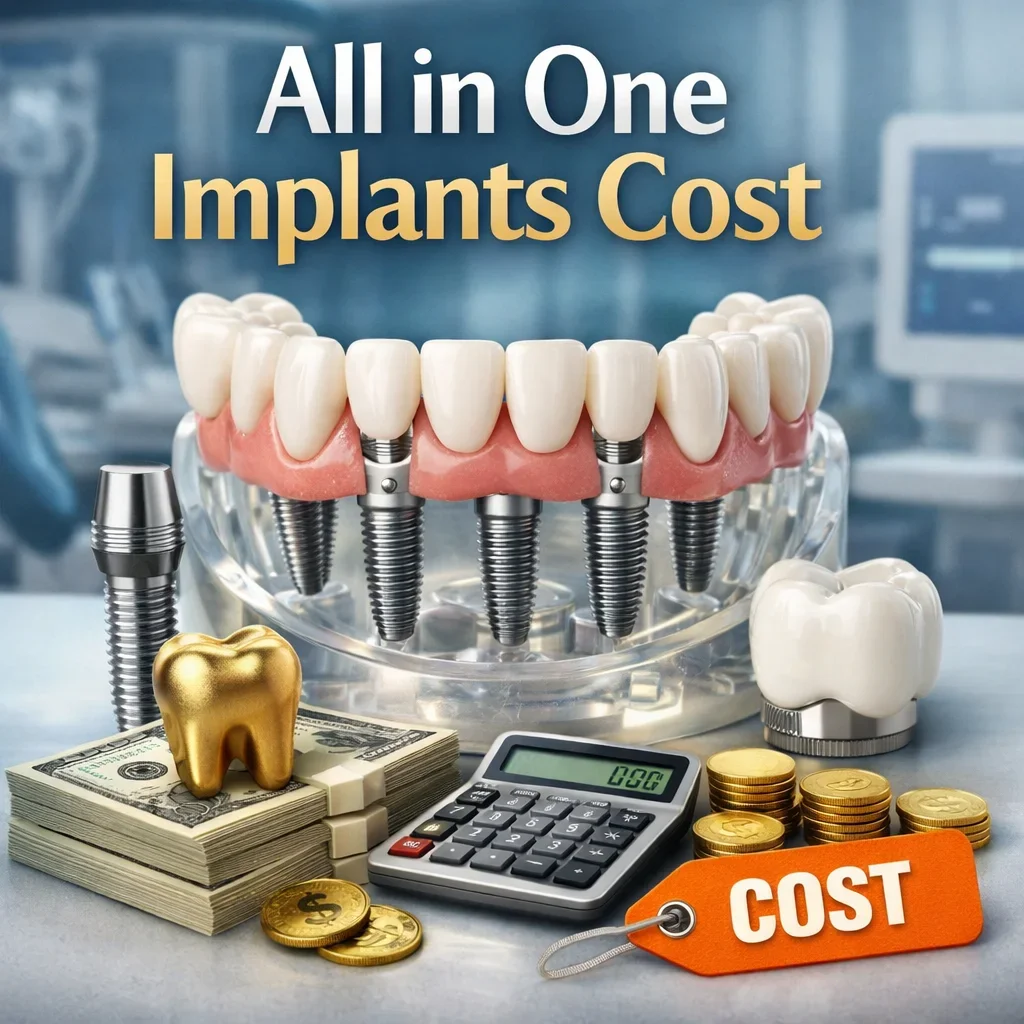
How to Reduce All in One Implants Cost Without Risk
For many patients, the goal is not simply to find the lowest possible all in one implants cost, but to achieve the best balance between affordability, safety, and long-term success. Cutting corners with dental implants can lead to serious complications, additional expenses, and disappointing results. The good news is that there are proven, safe strategies to reduce all in one implants cost without compromising quality 🦷.
In this section, we will explore practical, medically sound ways to manage and reduce all in one implants cost while still receiving reliable, high-standard care.
Choose Comprehensive Packages Instead of Itemized Pricing
One of the most effective ways to control all in one implants cost is to choose clinics that offer truly all-inclusive treatment packages. These packages typically include diagnostics, surgery, temporary and final prosthetics, anesthesia, and follow-up care.
Itemized pricing may appear cheaper at first, but it often leads to unexpected add-ons. A transparent package allows patients to know their full all in one implants cost upfront, making budgeting easier and reducing financial stress.
Consider Treatment in Reputable Medical Tourism Destinations
Geographic location has a major impact on all in one implants cost. Countries with lower operating and labor costs can offer the same medical procedures at a fraction of the price found in the U.S. or Western Europe.
Reputable international clinics often use the same implant brands, materials, and technologies while charging significantly less. The key is choosing accredited clinics with experienced specialists and transparent communication 🌍.
Look Beyond Price Alone
When considering treatment abroad to reduce all in one implants cost, patients should evaluate clinic credentials, dentist experience, before-and-after cases, and patient reviews. Saving money should never come at the expense of safety or clinical standards.
Get a Proper Diagnosis Before Accepting a Quote
Accurate diagnosis is essential for realistic pricing. Clinics that provide quotes without detailed imaging or examinations may underestimate complexity, leading to increased all in one implants cost later.
A thorough diagnostic process ensures that the proposed treatment plan is appropriate from the start, reducing the risk of additional procedures and unexpected expenses.
Avoid Unnecessary Add-Ons
Some clinics promote optional upgrades that may not be medically necessary for every patient. While advanced materials and premium aesthetics can be beneficial, not all upgrades are essential.
Discussing which options genuinely improve function and longevity helps patients avoid unnecessary increases in all in one implants cost while still achieving excellent results.
Focus on Function First, Aesthetics Second
Prioritizing stability, comfort, and long-term performance over purely cosmetic enhancements can significantly reduce all in one implants cost. A functional, well-designed prosthesis can still look natural and attractive without premium add-ons.
Plan Treatment Timing Strategically
Some clinics offer seasonal promotions or flexible scheduling options. Planning treatment during less busy periods can sometimes reduce all in one implants cost, particularly for international patients.
Additionally, completing treatment in fewer visits reduces travel and accommodation expenses, which contributes to overall savings ⏱️.
Ask About Financing and Payment Plans
While financing does not lower the absolute all in one implants cost, it can make treatment more accessible by spreading payments over time. Many clinics offer interest-free or low-interest payment plans.
This approach allows patients to choose high-quality care without delaying treatment due to budget constraints.
Choose Experience Over the Lowest Price
Selecting an experienced dental team may not always result in the lowest initial all in one implants cost, but it often reduces the risk of complications, revisions, or implant failure.
Corrective treatments can be far more expensive than doing the procedure right the first time. Long-term success is one of the most effective ways to control total all in one implants cost.
Long-Term Value Over Short-Term Savings
Implants are a long-term investment in health and quality of life. A slightly higher upfront all in one implants cost can translate into fewer repairs, better comfort, and greater satisfaction over many years.
Verify What Is Included in Aftercare
Follow-up care, adjustments, and monitoring are essential for implant success. Ensuring these services are included helps prevent additional costs down the line.
When comparing clinics, always ask how long post-treatment care is covered and what support is available if issues arise. This transparency protects your investment and stabilizes all in one implants cost.
In conclusion, reducing all in one implants cost safely is about making informed, strategic choices—not sacrificing quality. By selecting comprehensive packages, experienced providers, and transparent clinics, patients can achieve excellent outcomes while keeping costs under control. This approach ensures that your investment delivers lasting health, confidence, and peace of mind 🌟.