
What Are All on Six Dental Implants?
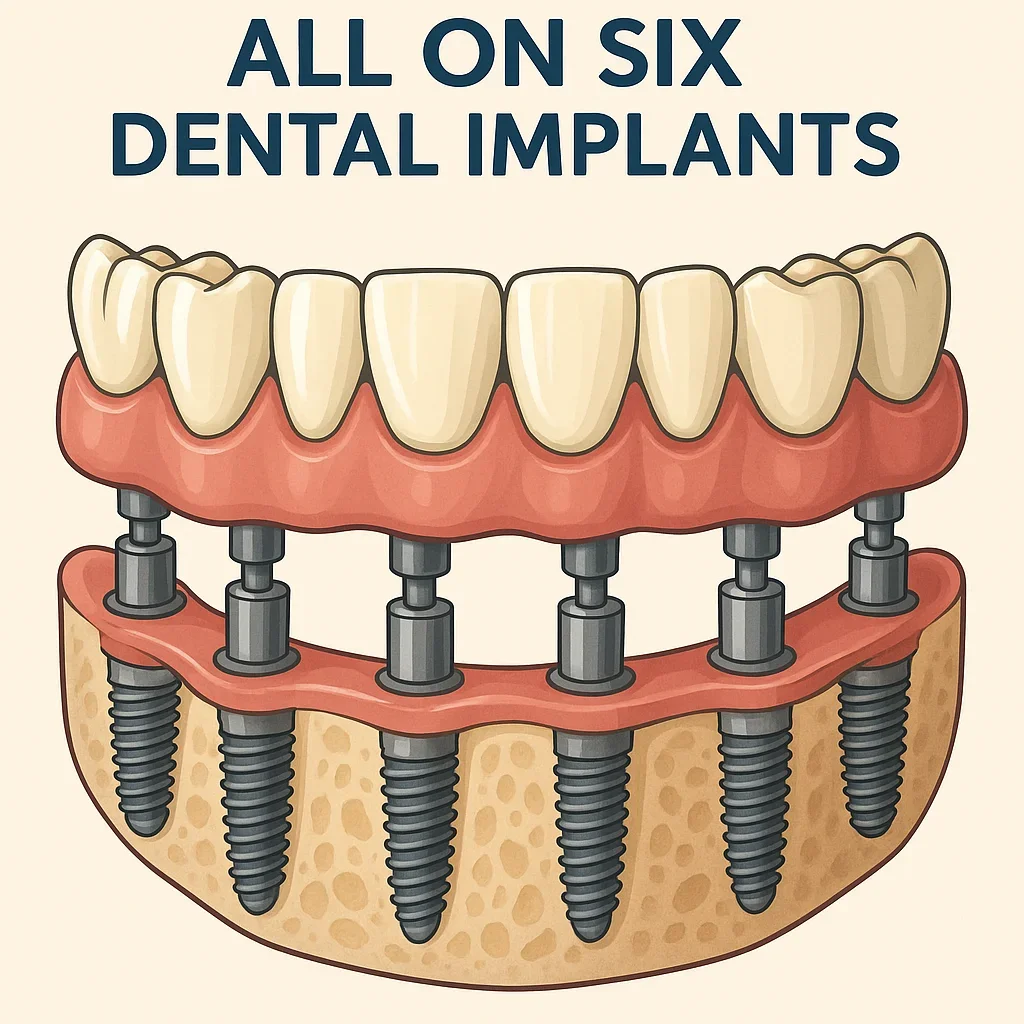
In 2025, all on six dental implants have become one of the most advanced and reliable solutions for patients who have lost most or all of their teeth. This treatment involves strategically placing six titanium implants into the jawbone, which then support a full arch of prosthetic teeth. 🦷 Unlike removable dentures, which can slip or cause discomfort, all on six dental implants provide a stable, permanent, and natural-looking smile.
The concept is simple yet revolutionary. Each implant acts as an artificial tooth root. Once placed into the jaw, the implants gradually integrate with the bone in a process known as osseointegration. After healing, a fixed dental bridge is attached to these implants, giving patients a full set of teeth that look, feel, and function just like natural ones.
One of the main reasons why all on six dental implants are so popular today is their balance between strength and affordability. By using six implants rather than one implant per tooth, patients can restore an entire dental arch with fewer surgical procedures and at a lower cost compared to traditional single-tooth implant methods.
Why Six Implants Instead of Four?
Patients often ask why six implants are recommended instead of four. While the All-on-4 technique is also widely used, the six-implant method offers enhanced stability, especially for patients with moderate bone density. By distributing the chewing forces across six implants, the treatment minimizes stress on individual implants, ensuring longer-lasting results and reduced risk of failure.
Additionally, six implants provide better support for the prosthetic bridge. This is particularly important in cases where patients have wider arches or need more strength for chewing tougher foods. With all on six dental implants, patients gain both functional and aesthetic benefits.
Materials and Technology Used
The success of this treatment relies heavily on advanced materials and modern technology. The implants themselves are typically made from titanium, a biocompatible material that fuses well with bone tissue. In some cases, zirconia implants may be used for patients seeking a metal-free alternative. Prosthetic teeth are often crafted from ceramic or high-quality acrylic, ensuring a natural appearance and long-lasting durability.
Digital dentistry has further improved the precision of all on six dental implants. Dentists now use 3D scans, computer-guided surgery, and CAD/CAM systems to design customized implants and bridges. This reduces human error and allows for a highly accurate fit, which leads to better patient outcomes and comfort.
Who Should Consider All on Six Dental Implants?
This treatment is ideal for individuals who have lost multiple teeth due to decay, gum disease, or trauma. It is especially beneficial for those who are tired of wearing removable dentures. Patients should have adequate bone structure to support six implants, but with modern bone grafting techniques, even those with bone loss may still qualify.
Moreover, all on six dental implants are recommended for patients who want a faster transformation. Unlike traditional implant treatments, which may take months or years, the all-on-six procedure can sometimes be completed in a single day with immediate-load implants. This means patients can walk out of the dental office with a brand-new smile in record time. ✨
Key Advantages in Daily Life
Living with missing teeth or unstable dentures can greatly affect a person’s confidence, nutrition, and overall quality of life. With all on six dental implants, patients regain the ability to eat, speak, and smile without worry. Since the implants are permanently fixed, they eliminate the need for adhesives or nightly removal. Patients often report feeling as if they have their natural teeth back, which contributes significantly to mental well-being and self-esteem.
Professional Recommendations
Leading dental associations, including the American Dental Association, emphasize the importance of seeking professional evaluation before undergoing implant surgery. Each case is unique, and factors such as bone density, gum health, and overall medical history must be carefully assessed. Consulting a trusted clinic such as Redent Klinik Contact Page can help patients receive tailored advice and treatment plans.
Conclusion
In summary, all on six dental implants represent a cutting-edge solution for full-mouth restoration in 2025. They combine modern surgical precision with durable materials to provide patients with a confident, functional, and natural-looking smile. By offering stability, comfort, and long-term results, this procedure has set the gold standard in restorative dentistry. Whether you’re looking for a permanent alternative to dentures or a comprehensive dental transformation, all on six implants remain one of the best choices available today.
What Are All on Six Dental Implants?
In 2025, all on six dental implants have become one of the most advanced and reliable solutions for patients who have lost most or all of their teeth. This treatment involves strategically placing six titanium implants into the jawbone, which then support a full arch of prosthetic teeth. 🦷 Unlike removable dentures, which can slip or cause discomfort, all on six dental implants provide a stable, permanent, and natural-looking smile.
The concept is simple yet revolutionary. Each implant acts as an artificial tooth root. Once placed into the jaw, the implants gradually integrate with the bone in a process known as osseointegration. After healing, a fixed dental bridge is attached to these implants, giving patients a full set of teeth that look, feel, and function just like natural ones.
One of the main reasons why all on six dental implants are so popular today is their balance between strength and affordability. By using six implants rather than one implant per tooth, patients can restore an entire dental arch with fewer surgical procedures and at a lower cost compared to traditional single-tooth implant methods.
Why Six Implants Instead of Four?
Patients often ask why six implants are recommended instead of four. While the All-on-4 technique is also widely used, the six-implant method offers enhanced stability, especially for patients with moderate bone density. By distributing the chewing forces across six implants, the treatment minimizes stress on individual implants, ensuring longer-lasting results and reduced risk of failure.
Additionally, six implants provide better support for the prosthetic bridge. This is particularly important in cases where patients have wider arches or need more strength for chewing tougher foods. With all on six dental implants, patients gain both functional and aesthetic benefits.
Materials and Technology Used
The success of this treatment relies heavily on advanced materials and modern technology. The implants themselves are typically made from titanium, a biocompatible material that fuses well with bone tissue. In some cases, zirconia implants may be used for patients seeking a metal-free alternative. Prosthetic teeth are often crafted from ceramic or high-quality acrylic, ensuring a natural appearance and long-lasting durability.
Digital dentistry has further improved the precision of all on six dental implants. Dentists now use 3D scans, computer-guided surgery, and CAD/CAM systems to design customized implants and bridges. This reduces human error and allows for a highly accurate fit, which leads to better patient outcomes and comfort.
Who Should Consider All on Six Dental Implants?
This treatment is ideal for individuals who have lost multiple teeth due to decay, gum disease, or trauma. It is especially beneficial for those who are tired of wearing removable dentures. Patients should have adequate bone structure to support six implants, but with modern bone grafting techniques, even those with bone loss may still qualify.
Moreover, all on six dental implants are recommended for patients who want a faster transformation. Unlike traditional implant treatments, which may take months or years, the all-on-six procedure can sometimes be completed in a single day with immediate-load implants. This means patients can walk out of the dental office with a brand-new smile in record time. ✨
Key Advantages in Daily Life
Living with missing teeth or unstable dentures can greatly affect a person’s confidence, nutrition, and overall quality of life. With all on six dental implants, patients regain the ability to eat, speak, and smile without worry. Since the implants are permanently fixed, they eliminate the need for adhesives or nightly removal. Patients often report feeling as if they have their natural teeth back, which contributes significantly to mental well-being and self-esteem.
Professional Recommendations
Leading dental associations, including the American Dental Association, emphasize the importance of seeking professional evaluation before undergoing implant surgery. Each case is unique, and factors such as bone density, gum health, and overall medical history must be carefully assessed. Consulting a trusted clinic such as Redent Klinik Contact Page can help patients receive tailored advice and treatment plans.
Conclusion
In summary, all on six dental implants represent a cutting-edge solution for full-mouth restoration in 2025. They combine modern surgical precision with durable materials to provide patients with a confident, functional, and natural-looking smile. By offering stability, comfort, and long-term results, this procedure has set the gold standard in restorative dentistry. Whether you’re looking for a permanent alternative to dentures or a comprehensive dental transformation, all on six implants remain one of the best choices available today.
Benefits of Choosing All on Six Over Traditional Implants
When it comes to restoring a full arch of missing teeth, patients often wonder what makes all on six dental implants such a popular choice compared to traditional implant methods. The answer lies in a unique combination of efficiency, durability, comfort, and aesthetics. In 2025, dental technology has advanced significantly, and the all-on-six technique continues to be one of the most trusted solutions for patients seeking a permanent smile restoration. 😃
1. Faster Treatment and Fewer Surgeries
Traditional dental implant treatments often require a separate implant for each missing tooth. This can involve 8–14 implants per jaw, multiple surgeries, and extended healing times. In contrast, all on six dental implants only require six implants strategically placed to support a full set of prosthetic teeth. This streamlined approach not only minimizes the number of surgeries but also reduces overall treatment time. Many patients can even receive temporary teeth on the same day of surgery, a process known as immediate loading.
2. Enhanced Stability and Chewing Power
One of the major advantages of all on six dental implants is the enhanced stability they provide. By distributing the chewing forces across six implants rather than relying on just four (as in All-on-4 treatments), patients experience greater balance and comfort. This additional support allows for stronger chewing power, enabling patients to enjoy a wide variety of foods, from crunchy apples to hearty steaks, without fear of slippage or discomfort. 🍎🥩
3. Cost-Effective Full Arch Restoration
Although all on six dental implants may initially seem more expensive than dentures, they are far more cost-effective in the long run. Traditional single implants for each tooth are not only costly but also time-intensive. With the all-on-six method, patients achieve a full arch restoration with just six implants, saving both time and money. Additionally, the long-term durability reduces the need for frequent repairs or replacements, which means fewer expenses over a lifetime.
4. A Natural and Aesthetic Smile
Patients who undergo the procedure consistently report that all on six dental implants look and feel like natural teeth. The prosthetic teeth are custom-designed to match the patient’s facial features, gum line, and bite pattern. Unlike traditional dentures, which can look artificial or slip during conversation, the all-on-six system ensures a fixed, natural-looking smile that boosts confidence and improves social interactions. ✨
5. Improved Bone Preservation
One of the most significant medical benefits of all on six dental implants is bone preservation. Traditional dentures do not stimulate the jawbone, leading to bone resorption and a sunken facial appearance over time. By contrast, the titanium implants in the all-on-six method mimic natural tooth roots, stimulating the jawbone and preventing bone loss. This not only maintains facial structure but also improves long-term oral health.
6. Comfort Without the Hassle of Dentures
Unlike removable dentures, which require adhesives and daily maintenance, all on six dental implants are fixed permanently in place. Patients no longer need to worry about removing their teeth at night, soaking them, or dealing with messy adhesives. Instead, daily care is as simple as brushing and flossing, just like with natural teeth. This convenience is a major reason why many patients prefer implants over traditional dentures.
7. Higher Success and Longevity Rates
Modern clinical studies show that all on six dental implants have a very high success rate, often exceeding 95%. With proper care and regular dental check-ups, these implants can last a lifetime. Traditional dentures, on the other hand, need to be replaced every 5–8 years due to wear and changes in jawbone structure. Choosing implants ensures long-term satisfaction and peace of mind.
8. Boosted Confidence and Quality of Life
The psychological impact of a restored smile cannot be overstated. Patients who choose all on six dental implants often experience improved self-esteem, enhanced communication, and more enjoyable dining experiences. They can laugh, smile, and speak freely without worrying about slipping dentures. The transformation often goes beyond physical appearance, contributing positively to mental health and overall quality of life. 🌟
9. Backed by Modern Dental Associations
Respected organizations such as the American Dental Association recognize the importance of evidence-based treatments like all-on-six. Dentists worldwide now recommend this method as a reliable, safe, and effective alternative to traditional implants and removable dentures. Choosing the right clinic, such as Redent Klinik Contact Page, ensures patients receive professional, personalized care tailored to their needs.
Conclusion
In conclusion, all on six dental implants stand out as one of the best modern solutions for full-mouth restoration in 2025. They offer a unique balance of stability, aesthetics, cost-effectiveness, and long-term oral health benefits. By choosing this treatment over traditional implants or dentures, patients invest not only in their smile but also in their overall well-being. The all-on-six method has truly revolutionized dentistry, giving thousands of patients worldwide the opportunity to smile with confidence once again.
Step-by-Step Procedure of All on Six Dental Implants
Understanding the process behind all on six dental implants is essential for patients considering this transformative treatment. In 2025, advancements in dental technology have made the procedure more precise, efficient, and comfortable than ever before. While each patient’s case is unique, the general steps remain consistent across clinics worldwide. Below is a detailed walkthrough of how this life-changing procedure is performed. 🦷
Step 1: Initial Consultation and Examination
The journey toward all on six dental implants begins with a comprehensive consultation. During this stage, the dentist evaluates the patient’s oral health, reviews medical history, and discusses expectations. Advanced diagnostic tools such as 3D cone beam computed tomography (CBCT) scans and digital impressions are used to assess bone density and gum condition. This information helps determine whether the patient is an ideal candidate for the procedure and ensures that the treatment plan is fully personalized.
At this stage, patients also receive an estimated treatment timeline and cost analysis. Clinics like Redent Klinik Contact Page emphasize transparency, allowing patients to make informed decisions before moving forward.
Step 2: Treatment Planning and Digital Simulation
Once suitability is confirmed, the dentist designs a digital treatment plan. Using computer-guided technology, implant placement is simulated virtually. This allows the surgeon to identify the best positions for the six implants, ensuring maximum stability and even distribution of chewing forces. Patients can often preview a 3D simulation of their future smile, which helps them feel more confident and excited about the outcome. 😁
Step 3: Pre-Surgical Preparations
Before surgery, patients may need preparatory treatments such as tooth extractions, bone grafting, or sinus lifts. These procedures create a stable foundation for all on six dental implants. In some cases, minor periodontal treatments may also be required to eliminate infections and optimize gum health before implant placement.
Step 4: Surgical Placement of the Implants
The implant surgery itself is performed under local anesthesia or sedation, ensuring patient comfort. The dentist makes small incisions in the gum and carefully drills into the jawbone at predetermined angles and depths. Six titanium implants are placed strategically across the dental arch—two near the front and four along the sides for optimal support.
Thanks to modern guided surgery, this process is highly precise and minimally invasive. Most patients report very little discomfort, and recovery time is significantly shorter compared to older implant techniques.
Step 5: Immediate Temporary Prosthesis
One of the major advantages of all on six dental implants is the ability to receive a temporary prosthesis on the same day of surgery. Known as “teeth in a day,” this step allows patients to leave the clinic with a fully functional and aesthetically pleasing set of temporary teeth. These provisional teeth restore confidence and function while the implants undergo osseointegration.
Step 6: Healing and Osseointegration
Over the next 3–6 months, the implants fuse with the jawbone through a natural biological process called osseointegration. This creates a strong foundation for the final prosthetic bridge. During this healing phase, patients should follow aftercare instructions carefully, including maintaining proper oral hygiene, avoiding hard foods, and attending regular check-ups.
Step 7: Designing the Permanent Prosthesis
After successful osseointegration, impressions of the healed implants are taken to design the permanent prosthesis. Using CAD/CAM technology, dental technicians craft customized bridges made from high-quality materials such as zirconia or porcelain fused to metal. These prosthetics are designed to mimic the shape, color, and alignment of natural teeth, ensuring a perfect match for each patient’s smile.
Step 8: Final Placement of Permanent Teeth
Once the final bridge is ready, the dentist removes the temporary prosthesis and securely attaches the permanent restoration to the implants. This marks the completion of the all on six dental implants procedure. The new teeth feel natural, look beautiful, and provide the stability of a lifelong solution.
Step 9: Aftercare and Long-Term Maintenance
After placement, patients receive detailed instructions on maintaining their implants. This includes proper brushing, flossing with special interdental tools, and attending regular professional cleanings. With proper care, all on six dental implants can last for decades, often for a lifetime. Dental experts, including the American Dental Association, emphasize the importance of long-term follow-up care to ensure ongoing success.
Conclusion
The step-by-step process of all on six dental implants highlights how modern dentistry combines surgical precision, digital innovation, and patient-centered care. From the first consultation to the placement of permanent teeth, every stage is designed to restore function, aesthetics, and confidence. This treatment is far more than a dental procedure—it is a life-changing transformation that allows patients to smile, eat, and speak with freedom again.
Ideal Candidates for All on Six Dental Implants
One of the most common questions patients ask in 2025 is whether they are suitable candidates for all on six dental implants. This advanced restorative treatment offers life-changing results, but like any surgical procedure, it requires specific conditions for success. Identifying who qualifies for the procedure ensures higher success rates, reduced complications, and long-term durability. Below, we will explore the factors that make someone an ideal candidate for this modern dental solution. 🦷
General Oral Health Requirements
To be considered for all on six dental implants, patients should have relatively healthy gums and be free from active oral infections. Severe gum disease, untreated cavities, or ongoing dental abscesses must be resolved before proceeding. Healthy gum tissue is crucial for the healing process and for ensuring the implants integrate properly with the bone. Dentists often recommend a full oral cleaning or periodontal treatment before starting the implant journey.
Sufficient Bone Density and Structure
A strong jawbone is vital for all on six dental implants. The six titanium posts must anchor securely into the bone, making density and volume critical factors. While patients with mild to moderate bone loss may still qualify, they might require bone grafting or sinus lift procedures first. Modern diagnostic tools like 3D cone beam CT scans allow dentists to evaluate bone structure with great precision. This ensures that the implants will be placed at the optimal angle and depth for long-term success.
Patients Missing Multiple or All Teeth
This treatment is designed specifically for individuals who have lost most or all of their teeth. Patients who are tired of removable dentures or struggling with failing dental work are often excellent candidates. Instead of placing one implant for each missing tooth, all on six dental implants allow for full-arch restoration with fewer implants, reducing both treatment time and cost. For those seeking a permanent, fixed alternative to dentures, this solution offers the perfect balance of comfort and durability.
Systemic Health Considerations
Overall health plays a major role in determining suitability. Candidates for all on six dental implants should be free from serious medical conditions that interfere with healing, such as uncontrolled diabetes, immune disorders, or bleeding disorders. Smoking, excessive alcohol consumption, and poor nutrition can also affect healing and reduce implant success rates. Dentists typically work alongside medical professionals to ensure each patient is fit for surgery.
Age Requirements
While there is no upper age limit for all on six dental implants, patients should have a fully developed jawbone before undergoing the procedure. This generally means candidates should be over the age of 18–20. Many older adults, including those in their 60s, 70s, or even 80s, successfully receive implants. In fact, seniors often benefit the most, as the treatment restores chewing function, nutrition, and quality of life.
Psychological Readiness and Expectations
Ideal candidates also need to have realistic expectations about the procedure. While all on six dental implants can transform smiles dramatically, they still require patience during the healing process, as osseointegration takes several months. Patients should understand that follow-up care and proper oral hygiene are key to maintaining their new teeth. Psychological readiness and a commitment to dental care ensure long-term satisfaction.
People Seeking a Fixed Alternative to Dentures
Many patients pursue all on six dental implants because they are frustrated with the limitations of removable dentures. Dentures can slip, cause sore spots, and make it difficult to chew certain foods. The all-on-six method eliminates these concerns by providing a fixed, secure, and permanent solution. For those who want to enjoy their favorite foods again and smile without worry, this treatment is often life-changing. 😃
Candidates for “Teeth in a Day” Solutions
Some patients qualify for immediate load implants, meaning they can receive a temporary prosthesis on the same day as surgery. Not all candidates qualify for this accelerated approach, as it requires sufficient bone density and overall good health. However, those who do meet the criteria can walk out of the clinic with a brand-new smile in just one appointment. This makes all on six dental implants especially attractive for individuals seeking rapid results.
Professional Evaluation Is Essential
Ultimately, the best way to know if you are a candidate is through a professional evaluation. Trusted clinics such as Redent Klinik Contact Page use advanced imaging and diagnostics to determine patient eligibility. They also provide customized treatment plans tailored to each individual’s oral health, lifestyle, and aesthetic goals. Professional guidance ensures patients receive safe and predictable results.
Conclusion
In conclusion, the ideal candidates for all on six dental implants are individuals with good oral and systemic health, sufficient jawbone density, and realistic expectations about treatment outcomes. Whether you are missing multiple teeth, struggling with dentures, or looking for a permanent full-arch restoration, this solution offers unmatched stability, function, and aesthetics. By undergoing a thorough evaluation and choosing the right clinic, patients can achieve a natural, confident smile that lasts for decades.
Cost of All on Six Dental Implants in 2025
One of the most important factors patients consider before choosing all on six dental implants is cost. In 2025, prices vary depending on location, materials, and the complexity of each case. While the initial investment may seem high, it is essential to understand that this treatment provides a permanent, long-term solution compared to temporary options like dentures. For many patients, the value and quality of life improvements far outweigh the price. 🦷
Average Global Prices in 2025
The cost of all on six dental implants differs around the world. In countries like the United States, the average price for a single arch ranges between $22,000 and $30,000, while in Europe, prices often fall between €12,000 and €18,000. In Turkey, where dental tourism continues to thrive, patients can often receive the same treatment for $6,000 to $9,000 per arch, without compromising on quality or safety. This makes Turkey one of the most affordable and reliable destinations for implant procedures.
Estimated Cost of All on Six Dental Implants (Per Arch, 2025)
- 🇺🇸 United States: $22,000 – $30,000
- 🇬🇧 United Kingdom: £10,000 – £15,000
- 🇩🇪 Germany: €12,000 – €18,000
- 🇹🇷 Turkey: $6,000 – $9,000
- 🇦🇺 Australia: AUD 20,000 – AUD 28,000
Note: Prices vary based on clinic reputation, materials used, and whether additional procedures like bone grafting are required.
Factors That Influence Cost
Several factors contribute to the total cost of all on six dental implants:
- Location: Dental tourism hubs like Turkey and Mexico offer lower costs due to favorable currency exchange rates and lower overhead expenses.
- Implant Materials: Titanium implants are standard, but zirconia options may increase the price.
- Prosthesis Type: Acrylic bridges are more affordable, while porcelain or zirconia prostheses cost more but last longer.
- Additional Treatments: Bone grafting, extractions, or sinus lifts increase overall costs.
- Clinic Expertise: Highly experienced surgeons or internationally accredited clinics may charge higher fees but offer greater reliability.
Insurance and Financing Options
In most countries, all on six dental implants are considered elective procedures and are not fully covered by insurance. However, some insurance plans may cover part of the cost, particularly if tooth loss is due to accident or medical necessity. Many clinics also offer flexible payment plans, financing, or medical credit options, allowing patients to spread costs over time.
Why All on Six Is Cost-Effective
Although the upfront price of all on six dental implants may seem significant, it is a cost-effective solution compared to traditional dentures or single-tooth implants. Dentures often require frequent adjustments and replacements every 5–8 years, while implants are designed to last decades, often a lifetime. Over time, patients save money by avoiding constant repairs, adhesives, and maintenance associated with removable dentures.
Cost vs. Quality of Life
The value of all on six dental implants extends beyond financial considerations. Patients experience improved nutrition, better oral health, and a dramatic boost in self-confidence. The ability to chew comfortably, speak clearly, and smile without hesitation often justifies the investment. For many, the transformation is priceless. 😃
Choosing the Right Clinic
Cost should never be the only deciding factor. Patients should prioritize quality, safety, and professional expertise. Leading clinics like Redent Klinik Contact Page offer transparent pricing and world-class care, ensuring patients receive excellent value for their investment. Additionally, organizations such as the American Dental Association recommend choosing accredited clinics to guarantee safety and effectiveness.
Conclusion
In 2025, the cost of all on six dental implants continues to vary worldwide, but the benefits remain universally significant. Whether you choose treatment in your home country or explore affordable dental tourism destinations, this procedure represents a long-term investment in health, function, and confidence. By carefully weighing cost against quality and expertise, patients can achieve a permanent solution that truly changes their lives.
Recovery Timeline and Aftercare Tips
After undergoing all on six dental implants, the recovery period plays a critical role in the success of the treatment. In 2025, thanks to modern surgical techniques and advanced materials, recovery times are shorter and smoother than ever before. However, patients must still follow specific aftercare guidelines to ensure long-term stability and comfort. Below, we’ll outline the typical recovery timeline and the most important aftercare practices that help patients achieve the best possible results. 🦷
First 24–48 Hours Post-Surgery
Immediately after the placement of all on six dental implants, patients may experience mild swelling, bruising, or discomfort around the surgical area. This is completely normal and usually subsides within a few days. During this time, dentists recommend applying ice packs to reduce swelling and taking prescribed medications for pain relief and inflammation. Patients should also avoid strenuous physical activities during the first 48 hours.
Soft foods such as yogurt, smoothies, mashed potatoes, and soups are recommended to minimize strain on the implants. Patients must avoid hot, spicy, or crunchy foods that could irritate the gums. Staying hydrated is equally important for healing.
First Week of Recovery
During the first week, the gums begin to heal around the implants. It’s crucial to maintain gentle but consistent oral hygiene. Brushing should be done with a soft-bristle toothbrush, and rinsing with an antibacterial mouthwash may be recommended by the dentist. Patients should avoid smoking and alcohol, as both can slow down the healing process and compromise the stability of all on six dental implants.
Temporary prosthetic teeth are usually already in place, allowing patients to smile and eat soft foods right away. However, the healing gums should be treated with care to prevent irritation or infection.
First Month of Recovery
By the end of the first month, most swelling and discomfort should be resolved. The implants are now in the process of osseointegration, where the titanium posts fuse with the jawbone. This is a vital phase of all on six dental implants, as it ensures a strong foundation for the permanent prosthetic teeth. Patients should continue to stick to a soft diet, gradually introducing more solid foods as advised by their dentist.
Follow-up appointments are usually scheduled during this period to check healing progress and adjust the temporary prosthesis if necessary. Regular monitoring ensures that no complications arise.
3–6 Months: Osseointegration Phase
The osseointegration phase typically lasts between 3–6 months. During this time, patients may feel fully adapted to their temporary teeth, but it is important to remember that the implants are still stabilizing. Dentists encourage patients to continue practicing excellent oral hygiene and to attend all scheduled check-ups. This ensures the all on six dental implants integrate properly with the bone and remain secure for decades to come.
At the end of this phase, impressions are taken for the permanent prosthesis. Using digital scanning and CAD/CAM technology, dental technicians design a custom bridge that perfectly matches the patient’s facial structure and smile aesthetics.
Placement of Permanent Prosthesis
Once osseointegration is complete, the temporary prosthesis is removed and replaced with the final permanent bridge. This marks the completion of the treatment process. The permanent teeth are stronger, more durable, and aesthetically superior to the temporary set. Patients can now enjoy a fully functional bite, restored confidence, and a natural-looking smile. 😃
Long-Term Aftercare Tips
After the final placement, proper maintenance is the key to ensuring the longevity of all on six dental implants. Here are the essential aftercare practices:
- Daily Oral Hygiene: Brush at least twice a day with a soft toothbrush and use interdental brushes or water flossers to clean around the implants.
- Regular Dental Check-Ups: Visit your dentist every 6 months for professional cleaning and examination.
- Healthy Diet: Avoid excessive sugary foods and drinks that could lead to gum disease or implant complications.
- Quit Smoking: Tobacco use is one of the leading causes of implant failure. Quitting significantly improves implant success rates.
- Protect Against Grinding: Patients who grind their teeth at night may be advised to wear a custom night guard to protect the implants and prosthesis.
Common Recovery Challenges
While most patients recover smoothly, some may experience minor challenges such as temporary speech difficulties, gum sensitivity, or adjustments to the bite. These issues usually resolve with time and professional guidance. Clinics like Redent Klinik Contact Page provide ongoing support to ensure patients adapt comfortably during recovery.
Conclusion
The recovery journey for all on six dental implants typically spans several months, but with proper aftercare, the results last a lifetime. By following professional advice, maintaining excellent oral hygiene, and attending regular check-ups, patients can enjoy stable, natural-looking teeth that restore both function and confidence. In 2025, this treatment remains one of the most reliable and rewarding dental solutions for full-mouth restoration.
Common Myths and Misconceptions About All on Six
Despite the growing popularity of all on six dental implants in 2025, there are still several myths and misconceptions that prevent some patients from considering this life-changing treatment. Misunderstandings about pain, cost, maintenance, and durability often discourage people unnecessarily. By debunking these myths, patients can make better-informed decisions and fully understand the true benefits of this advanced procedure. 🦷
Myth 1: The Procedure Is Extremely Painful
One of the biggest misconceptions about all on six dental implants is that the surgery is unbearably painful. In reality, modern anesthesia and sedation techniques ensure that patients experience minimal discomfort during the procedure. Most patients report only mild soreness and swelling afterward, which can be managed with over-the-counter medications. Thanks to advanced surgical planning and computer-guided implant placement, pain is far less than people expect.
Myth 2: Recovery Takes Too Long
Another common myth is that recovery from all on six dental implants takes years. While osseointegration—the process where implants fuse with the jawbone—does take a few months, patients usually receive temporary teeth immediately after surgery. This means they can walk out of the clinic with a functioning smile on the same day. The permanent prosthesis is placed once healing is complete, but patients can live normally during the recovery period.
Myth 3: Only Younger Patients Qualify
Some believe that all on six dental implants are only suitable for younger patients. This is false. In fact, many ideal candidates are older adults who have struggled with dentures for years. As long as patients have sufficient bone density and stable overall health, they can receive implants at almost any age—even in their 70s or 80s. Age is not a barrier to achieving a permanent, confident smile.
Myth 4: Implants Look Fake
Many patients worry that all on six dental implants will look unnatural. The truth is that modern prosthetics are custom-designed to match the patient’s facial structure, gum line, and bite. Advanced materials such as zirconia and porcelain ensure a natural appearance that blends seamlessly with the face. Most people cannot tell the difference between implant-supported teeth and natural teeth, making this concern completely unfounded. 😃
Myth 5: They Are Too Expensive for Everyone
While all on six dental implants do represent an investment, they are not as inaccessible as many believe. Costs vary by country, clinic, and materials, with affordable options available in dental tourism destinations such as Turkey. Compared to traditional dentures that require frequent replacement, implants are cost-effective in the long term. Additionally, many clinics, including Redent Klinik Contact Page, offer financing plans to make treatment accessible to more patients.
Myth 6: Maintenance Is Complicated
Some patients fear that maintaining all on six dental implants will be complicated or time-consuming. In reality, caring for implants is much simpler than managing removable dentures. Daily brushing, flossing with interdental brushes, and regular dental check-ups are all that’s required. Patients no longer need adhesives or nightly soaking. Maintenance feels almost identical to caring for natural teeth.
Myth 7: Implants Are Risky and Unreliable
Another misconception is that all on six dental implants have high failure rates. In truth, modern implants have success rates exceeding 95%. With proper aftercare, they can last decades—often a lifetime. Risks such as infection or implant rejection are very rare and can be minimized through professional planning, sterile surgical environments, and patient compliance with aftercare instructions.
Myth 8: Implants Can Fall Out Easily
Unlike dentures, all on six dental implants are permanently anchored into the jawbone. Once osseointegration is complete, the implants become as stable as natural tooth roots. They will not slip, shift, or fall out during eating, speaking, or daily activities. This stability is one of the biggest reasons why patients choose implants over removable dentures.
Myth 9: Dental Associations Don’t Endorse Implants
Some people believe that implant treatments lack professional endorsement. On the contrary, leading organizations such as the American Dental Association recognize the safety and effectiveness of implant-supported restorations, including all-on-six systems. The treatment is widely accepted as a standard of care for full-arch restoration in modern dentistry.
Conclusion
Myths and misconceptions about all on six dental implants often cause unnecessary hesitation. In reality, the procedure is safe, reliable, and backed by years of research and professional approval. With minimal pain, manageable recovery, natural-looking results, and long-term stability, all-on-six implants remain one of the best dental solutions available in 2025. By separating fact from fiction, patients can confidently take the first step toward restoring their smiles and improving their quality of life.
Success Rates and Long-Term Durability
One of the main reasons why all on six dental implants have become the gold standard for full-arch restoration in 2025 is their proven success rates and long-term durability. For patients seeking a permanent, reliable solution to missing teeth, understanding the lifespan of implants and the factors that contribute to their success is essential. Unlike removable dentures, which typically need frequent adjustments and replacements, all-on-six implants are designed to last for decades, often a lifetime, with proper care. 🦷
High Success Rates Backed by Research
Clinical studies consistently show that all on six dental implants have success rates exceeding 95%. These results hold true across diverse patient groups, including older adults and individuals with moderate bone loss. The high success rate is largely due to technological advancements, such as computer-guided surgery and the use of biocompatible materials like titanium and zirconia. By distributing biting forces across six implants, the system ensures stability and reduces the likelihood of implant failure.
Why Six Implants Ensure Greater Stability
Compared to the All-on-4 method, all on six dental implants provide enhanced stability because they spread the chewing load over six anchoring points. This reduces pressure on individual implants and lowers the risk of complications. Patients with weaker jawbone density or wider dental arches particularly benefit from this approach, as the added support improves long-term outcomes and durability.
Factors That Influence Longevity
Several key factors determine how long all on six dental implants last:
- Oral Hygiene: Consistent brushing, flossing, and regular dental check-ups are crucial to preventing gum disease that could threaten implant stability.
- Bone Health: Adequate bone density supports long-lasting osseointegration. Bone grafting may be recommended for patients with severe bone loss before implant surgery.
- Lifestyle Choices: Smoking, excessive alcohol consumption, and poor nutrition can negatively impact healing and longevity.
- Professional Maintenance: Regular visits to a trusted clinic such as Redent Klinik Contact Page allow early detection of issues and professional cleaning to keep implants in top condition.
Average Lifespan of All on Six Implants
With proper care, all on six dental implants can last 20 years or more. In many cases, the implants themselves last a lifetime, while the prosthetic bridge may need replacement or adjustment after 10–15 years due to natural wear. This is still far superior to traditional dentures, which typically require replacement every 5–8 years. Patients often find that implants not only provide better function but also save money in the long term by reducing the need for frequent repairs.
Durability of Prosthetic Materials
The materials used in all on six dental implants also play a role in longevity. Titanium implants are virtually indestructible once fused with the bone. For prosthetic bridges, zirconia and porcelain are highly durable options that resist wear and staining. Acrylic options are less expensive but may wear faster and need earlier replacement. Choosing high-quality materials increases the long-term value of the procedure.
Patient Experiences Over Time
Thousands of patients worldwide report that all on six dental implants dramatically improve their quality of life for decades. They restore the ability to chew a wide variety of foods, improve speech clarity, and eliminate the embarrassment of slipping dentures. Patients frequently highlight the confidence boost and renewed social comfort that come with long-lasting, natural-looking teeth. 😃
Professional Endorsements and Global Standards
Leading dental associations, including the American Dental Association, endorse implants as a highly reliable treatment option. Global research continues to confirm the durability and effectiveness of all-on-six solutions. Dentists now consider this procedure not just an alternative, but often the preferred treatment for patients missing an entire arch of teeth.
Conclusion
In conclusion, all on six dental implants offer one of the most reliable and durable solutions in modern dentistry. With success rates above 95% and the potential to last a lifetime, they provide unmatched value compared to dentures or other restoration methods. Patients who invest in proper aftercare and choose reputable clinics enjoy decades of stability, comfort, and confidence. In 2025, all-on-six implants remain the benchmark for long-term oral health and quality of life.
Comparing All on Six With All on Four and Other Options
When deciding on a full-arch restoration, patients often compare all on six dental implants with the All-on-4 method or other tooth replacement options. In 2025, advancements in implant dentistry have made both techniques highly reliable, but each has unique advantages. Understanding the differences helps patients make informed choices that suit their oral health needs, lifestyle, and budget. 🦷
All on Six vs. All on Four
The most common comparison is between all on six dental implants and the All-on-4 technique. While both approaches restore a full arch using fewer implants than traditional single-tooth methods, there are important distinctions:
- Number of Implants: All-on-4 uses four implants, while all-on-six uses six, providing more support and stability.
- Stability: With six anchoring points, chewing forces are distributed more evenly, making all on six dental implants better suited for patients with wider arches or moderate bone density loss.
- Durability: The extra implants reduce the risk of overload and implant failure, resulting in a longer-lasting solution.
- Cost: All-on-4 is generally less expensive due to fewer implants, but long-term stability may favor all-on-six.
In essence, patients seeking maximum durability and strength often prefer all on six dental implants, while those with budget constraints may consider All-on-4 as a more affordable alternative.
All on Six vs. Traditional Dentures
Compared to dentures, all on six dental implants are far superior in terms of comfort, stability, and oral health benefits:
- Dentures can slip, cause sore spots, and require adhesives, while implants remain fixed and stable.
- Implants stimulate the jawbone, preventing bone loss, whereas dentures accelerate resorption and facial collapse.
- Maintenance for implants is similar to natural teeth, while dentures require removal, soaking, and constant adjustments.
Although dentures are cheaper upfront, they often need replacement every few years. In the long term, all on six dental implants prove to be more cost-effective and life-enhancing.
All on Six vs. Single-Tooth Implants
Some patients consider replacing each missing tooth with an individual implant. While possible, this approach is more expensive, time-consuming, and requires significantly more bone density. Instead of 12–14 implants per arch, all on six dental implants achieve the same outcome with fewer surgeries and lower costs, making them a more practical choice for full-mouth restoration.
All on Six vs. All on Eight
For patients with excellent bone density, the All-on-8 method is sometimes recommended. It involves placing eight implants per arch, offering maximum support. However, most patients achieve outstanding results with six implants, making all on six dental implants a balanced option that provides stability without unnecessary surgical invasiveness or cost. All-on-8 may be considered only in special cases requiring extra reinforcement.
Key Considerations When Comparing Options
When weighing all on six dental implants against alternatives, patients should consider:
- Bone Health: Six implants distribute forces more evenly, which is ideal for patients with moderate bone loss.
- Budget: All-on-4 may be more affordable, while all-on-six provides long-term stability and reduced maintenance costs.
- Functionality: Both all-on-four and all-on-six allow patients to enjoy a wide variety of foods, but six implants offer slightly stronger chewing capacity.
- Longevity: Six implants reduce strain on each individual implant, increasing the treatment’s lifespan.
Professional Guidance Matters
Choosing the right method requires professional evaluation. Clinics such as Redent Klinik Contact Page offer personalized assessments based on bone density, health status, and aesthetic goals. Dental experts, supported by research from the American Dental Association, recommend all-on-six for patients who want a durable, balanced, and long-term solution.
Conclusion
In conclusion, all on six dental implants offer an ideal balance of stability, functionality, and affordability compared to All-on-4, traditional dentures, or single-tooth implants. With higher durability and long-term success, all-on-six remains the preferred choice for many patients in 2025. By carefully evaluating personal needs and seeking professional advice, individuals can confidently choose the treatment that restores their smile and enhances their quality of life.
How to Choose the Right Clinic for All on Six Dental Implants
Finding the right dental clinic is one of the most important steps when considering all on six dental implants. The procedure requires advanced technology, surgical expertise, and a commitment to patient care. In 2025, patients have many options worldwide, from local practices to international dental tourism destinations. Choosing wisely ensures not only the success of the surgery but also long-term comfort and satisfaction. 🦷
1. Verify Credentials and Experience
One of the first steps is checking the credentials of the dental surgeons. Look for clinics with specialists in implantology or prosthodontics, as these professionals have advanced training in implant-based restorations. Ask how many all on six dental implants procedures the clinic has successfully performed. Experience is crucial because it minimizes risks and improves the accuracy of implant placement.
2. Look for Advanced Technology
The best clinics use cutting-edge technology to plan and execute surgeries. Computer-guided implant placement, 3D CBCT scans, and CAD/CAM systems are essential tools that enhance precision. A clinic that offers digital smile design can even show patients a simulation of how their new teeth will look before treatment begins. Choosing a clinic with modern technology improves the chances of long-term success with all on six dental implants.
3. Check the Quality of Materials
Not all implants and prosthetic materials are created equal. Reputable clinics use high-quality titanium or zirconia implants, ensuring durability and biocompatibility. For prosthetic bridges, materials like zirconia or porcelain offer superior strength and a natural appearance. When evaluating clinics, always ask about the brands of implants they use, as reliable global manufacturers typically provide better outcomes for all on six dental implants.
4. Assess Transparency of Costs
Cost is a major factor, but transparency is equally important. Leading clinics provide detailed breakdowns of treatment costs, including surgery, prosthetics, anesthesia, and aftercare. Some facilities also offer financing plans or payment options to make treatment more affordable. Clinics such as Redent Klinik Contact Page are known for offering clear, upfront pricing, helping patients make informed decisions without hidden fees.
5. Read Patient Reviews and Testimonials
Patient experiences are a valuable indicator of a clinic’s reliability. Look for online reviews, before-and-after photos, and testimonials from patients who have received all on six dental implants. Positive feedback about comfort, professionalism, and long-term results provides reassurance that the clinic delivers consistent, high-quality care.
6. Evaluate Post-Operative Care
Aftercare is just as important as the surgery itself. A quality clinic offers follow-up appointments, professional cleanings, and long-term support to ensure implant success. Make sure the clinic has a structured aftercare program and a clear plan for addressing potential complications. Strong aftercare services reduce risks and maximize the longevity of all on six dental implants.
7. Consider Location and Accessibility
For patients considering dental tourism, location is a key factor. Countries like Turkey, Hungary, and Mexico offer high-quality implant services at more affordable prices compared to the U.S. or Western Europe. However, accessibility, travel convenience, and post-treatment follow-up must also be taken into account. Patients should plan for at least two trips: one for implant placement and another for the final prosthesis.
8. Ensure International Standards of Safety
Accreditation matters. Clinics that follow international safety and sterilization protocols provide added peace of mind. Look for certifications from recognized dental associations or compliance with ISO standards. Reputable organizations such as the American Dental Association emphasize choosing accredited clinics to ensure patient safety and predictable outcomes for all on six dental implants.
9. Personalized Consultation and Treatment Plans
The best clinics offer personalized consultations instead of one-size-fits-all solutions. Each patient’s bone density, gum health, and medical history should be carefully evaluated. A tailored treatment plan ensures that the placement of all on six dental implants is customized to meet the patient’s functional and aesthetic goals. Clinics that spend time listening to patients and explaining procedures are more likely to provide satisfying results.
Conclusion
Choosing the right clinic for all on six dental implants requires careful research and evaluation. Patients should prioritize experience, technology, materials, transparency, and aftercare when making their decision. Whether opting for local treatment or exploring dental tourism, selecting a reputable, patient-focused clinic ensures long-lasting results and a confident smile. In 2025, with so many options available, finding the right dental partner has never been more achievable—or more important—for those seeking a permanent solution to tooth loss.