
An apicoectomy is a specialized dental surgical procedure designed to save a natural tooth when conventional root canal treatment alone is no longer effective. Rather than removing the entire tooth, an apicoectomy targets the very tip of the tooth’s root—known as the apex—along with any infected tissue surrounding it. This precise approach allows dentists and endodontic specialists to eliminate persistent infection while preserving the structure, function, and aesthetics of your natural tooth 🦷.
In simple terms, an apicoectomy is often considered the last line of defense before tooth extraction. When bacteria remain trapped deep at the root tip after a root canal, the infection can continue silently, causing inflammation, bone loss, or recurring pain. An apicoectomy directly addresses this problem area by accessing the root from the gum side instead of through the crown of the tooth. This is why the procedure is sometimes referred to as root-end surgery, a commonly used synonym in modern dentistry.
The primary goal of an apicoectomy is long-term tooth preservation. Losing a tooth can trigger a cascade of issues, including shifting teeth, bite problems, jawbone loss, and the need for more complex restorations such as implants or bridges. By choosing an apicoectomy when indicated, patients can often avoid these complications and maintain their natural smile 😊. From both a biological and functional perspective, keeping your own tooth is almost always preferable to replacing it.
An apicoectomy is typically recommended when a previously treated root canal fails to heal properly. This failure does not necessarily mean the original treatment was done incorrectly. Teeth can have complex root anatomies, microscopic canals, or hidden fractures that are impossible to fully clean with standard instruments. In such cases, bacteria may persist at the root tip, causing chronic inflammation. An apicoectomy allows the dentist to visually inspect and seal the root end directly, significantly improving treatment success.
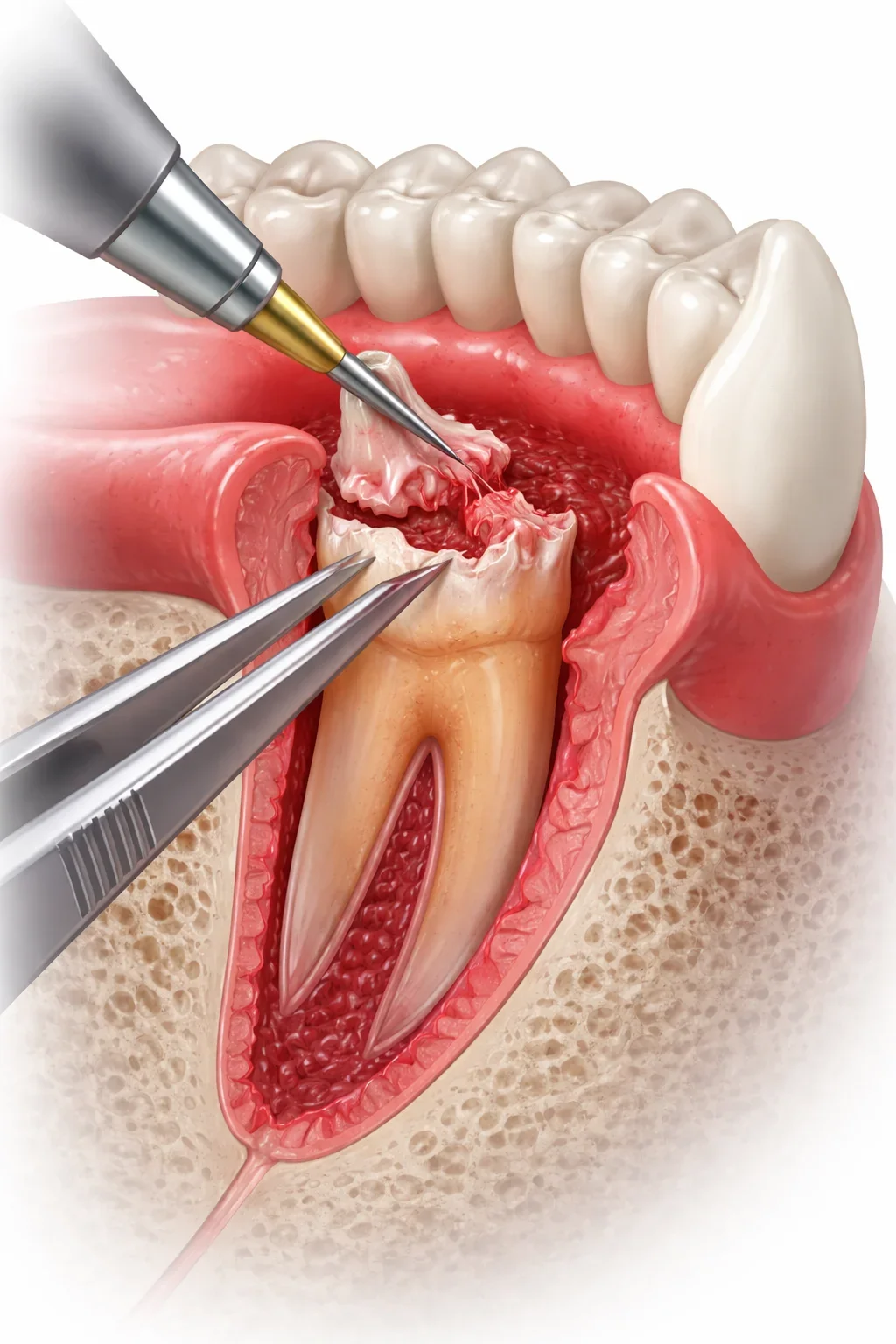
During an apicoectomy, the dentist makes a small incision in the gum near the affected tooth to access the underlying bone. A tiny window is created to expose the root tip, which is then carefully removed along with the infected tissue. The end of the root canal is sealed with a biocompatible filling material to prevent future bacterial leakage. Over time, the surrounding bone heals naturally, restoring stability and health to the area.
One of the most common misconceptions about apicoectomy procedures is that they are extremely painful or risky. In reality, modern apicoectomy techniques are highly refined and performed under local anesthesia, often with advanced magnification and microsurgical tools. Most patients report mild to moderate discomfort that is easily managed with prescribed or over-the-counter pain medication. Compared to tooth extraction and replacement, an apicoectomy is generally less traumatic and more conservative.
From a patient’s perspective, understanding why an apicoectomy is recommended can reduce anxiety and build trust in the treatment plan. Dentists follow strict clinical guidelines supported by organizations such as the
American Dental Association, which recognizes apicoectomy as a valid, evidence-based procedure for managing persistent endodontic infections. When properly indicated and performed, an apicoectomy can offer predictable and durable results.
It is also important to highlight that not every failing root canal automatically requires extraction. An apicoectomy offers a middle path—less invasive than removal, yet more targeted than retreatment through the crown. This makes it especially valuable for teeth with crowns, bridges, or posts that would be difficult or costly to remove. In such scenarios, an apicoectomy can save both time and additional dental work.
If you are experiencing recurring pain, swelling, or sensitivity around a previously treated tooth, it may be a sign that an apicoectomy should be considered. Early diagnosis improves outcomes, so consulting an experienced dental team is essential. If you would like professional guidance or a personalized evaluation, you can reach out via the
Redent Klinik Contact Page to discuss whether an apicoectomy is the right solution for your case.
In summary, an apicoectomy is a highly effective, tooth-saving surgical option that bridges the gap between root canal therapy and tooth extraction. By removing infection at its source while preserving the natural tooth, an apicoectomy supports long-term oral health, comfort, and confidence. Understanding this procedure empowers patients to make informed decisions and take proactive steps toward maintaining a healthy smile for years to come 🌟.
What Is an Apicoectomy and Why Is It Performed?
An apicoectomy is a minor oral surgical procedure performed to eliminate infection that persists at the very tip of a tooth’s root after a root canal treatment. While a standard root canal cleans and seals the inner portion of the tooth, it may not always reach microscopic bacteria hidden at the root end. When this happens, an apicoectomy becomes a highly effective solution to stop the infection at its source and preserve the natural tooth 🦷.
To understand why an apicoectomy is performed, it helps to understand tooth anatomy. Each tooth has one or more roots anchored into the jawbone. At the tip of each root is the apex, a narrow and complex area where nerves and blood vessels once entered the tooth. Even after a successful root canal, this area can harbor residual bacteria due to complex root structures, accessory canals, or scar tissue. An apicoectomy directly targets this region.
Why a Root Canal Alone May Not Be Enough
Root canal treatment is extremely successful, but no dental procedure has a 100% success rate. In some cases, infection returns months or even years after treatment. This does not necessarily indicate an error. Teeth can have curved roots, hidden branches, or calcified canals that are impossible to fully clean from inside the tooth. When bacteria remain trapped, inflammation develops at the root tip, leading to discomfort or bone damage.
An apicoectomy bypasses the limitations of internal access. Instead of approaching the infection through the crown of the tooth, the dentist accesses the root directly through the gum and bone. This external approach allows complete removal of infected tissue and precise sealing of the root end. For many patients, an apicoectomy is the only way to truly resolve the problem without removing the tooth.
Common Reasons Dentists Recommend an Apicoectomy
Dentists typically recommend an apicoectomy when non-surgical options are no longer effective or practical. One common scenario is when a tooth has a crown or post that would be difficult or risky to remove for retreatment. In such cases, performing an apicoectomy avoids damaging existing restorations while still addressing the infection.
Another reason for an apicoectomy is the presence of cysts or granulomas at the root tip. These inflammatory lesions may not heal on their own, even after root canal therapy. Left untreated, they can cause progressive bone loss and compromise neighboring teeth. An apicoectomy removes both the infected root tip and the surrounding lesion, allowing healthy bone to regenerate over time.
Apicoectomy as a Tooth-Saving Alternative
One of the greatest advantages of an apicoectomy is that it helps patients avoid tooth extraction. Tooth loss often leads to additional procedures such as implants, bridges, or dentures, which require more time, healing, and financial investment. By choosing an apicoectomy, patients retain their natural bite alignment, chewing efficiency, and smile aesthetics 😊.
From a biological standpoint, preserving a natural tooth is almost always the best option. Dental implants are excellent solutions, but they cannot fully replicate the natural periodontal ligament that connects a tooth to the jawbone. An apicoectomy maintains this natural connection, supporting long-term oral health and jawbone stability.
How Dentists Decide If an Apicoectomy Is Necessary
Before recommending an apicoectomy, dentists perform a thorough evaluation that includes clinical examination and advanced imaging such as digital X-rays or cone-beam CT scans. These tools reveal inflammation, bone loss, or lesions around the root tip that indicate persistent infection. Symptoms such as tenderness, swelling, or sensitivity when biting also play an important role in diagnosis.
Professional guidelines supported by organizations like the [American Dental Association](chatgpt://generic-entity?number=0) recognize apicoectomy as a predictable and evidence-based procedure when conventional endodontic treatment fails. This ensures that the decision to perform an apicoectomy is grounded in scientific research and patient safety.
If symptoms are ignored, the infection may worsen and spread, making tooth preservation impossible. That is why timely intervention with an apicoectomy can make the difference between saving and losing a tooth. Early diagnosis often results in simpler surgery, faster healing, and better long-term outcomes.
Patients who suspect ongoing issues after a root canal should seek expert evaluation rather than waiting for pain to intensify. If you are unsure whether an apicoectomy is appropriate for your situation, professional guidance is essential. You can consult a qualified dental team through the
Redent Klinik Contact Page for a personalized assessment and clear treatment recommendations.
In summary, an apicoectomy is performed when hidden infection remains beyond the reach of standard root canal therapy. By removing the infected root tip and sealing the canal from the end, an apicoectomy provides a powerful, tooth-preserving solution. Understanding why and when this procedure is used helps patients make confident, informed decisions about their oral health and long-term smile protection 🌟.
Apicoectomy vs Root Canal: Key Differences Explained
When patients hear that they may need an apicoectomy after already having a root canal, confusion is completely normal. Both procedures are designed to treat infection inside a tooth, but they differ significantly in approach, purpose, and timing. Understanding the key differences between an apicoectomy and a root canal helps patients feel confident, informed, and in control of their dental health 🦷.
A root canal is almost always the first line of treatment when a tooth becomes infected. An apicoectomy, on the other hand, is typically recommended only when a root canal alone cannot fully resolve the problem. While they share the same goal—eliminating infection and saving the natural tooth—the way they achieve that goal is fundamentally different.
How a Root Canal Works
Root canal treatment focuses on cleaning the inside of the tooth. During the procedure, the dentist removes infected or damaged pulp tissue from within the root canals, disinfects the space, and seals it with a filling material. This process eliminates bacteria from the main canal system and prevents reinfection.
In most cases, a root canal is highly successful and allows the tooth to function normally for many years. However, teeth are not always anatomically simple. Some have tiny side canals, curves, or complex root structures that can shelter bacteria beyond the reach of standard instruments. When infection remains at the root tip, symptoms may persist even after a technically well-performed root canal.
How an Apicoectomy Is Different
An apicoectomy approaches the infection from the opposite direction. Instead of entering the tooth through the crown, the dentist accesses the root tip through the gum and surrounding bone. This allows direct visualization and removal of infected tissue at the apex of the root, an area that cannot always be adequately cleaned from inside the tooth.
During an apicoectomy, the end of the root is removed and sealed with a biocompatible material. This prevents bacteria from re-entering the canal and allows the surrounding bone to heal. Because the procedure targets only the affected root tip, the rest of the tooth structure remains untouched and fully functional.
Why an Apicoectomy Is Often the Second Step
A key difference between a root canal and an apicoectomy is timing. Root canal treatment is almost always attempted first because it is non-surgical and less invasive. An apicoectomy is recommended only when retreatment through the crown is not possible or unlikely to succeed.
For example, if a tooth has a crown, bridge, or post, removing it to redo a root canal may cause damage or require extensive reconstruction. In these cases, an apicoectomy provides a targeted solution without disturbing existing restorations. This makes an apicoectomy a strategic and conservative alternative rather than an aggressive intervention.
Comparing Pain, Recovery, and Healing
Many patients assume an apicoectomy is far more painful than a root canal, but this is not necessarily true. Both procedures are performed under local anesthesia, and modern techniques make an apicoectomy surprisingly manageable. Post-procedure discomfort is typically mild to moderate and temporary.
Recovery from a root canal is usually quicker, as it does not involve surgical access to the bone. An apicoectomy may involve slight swelling or tenderness for a few days, but most patients return to normal activities quickly. When compared to tooth extraction and implant placement, an apicoectomy often results in faster healing and less overall disruption.
Which Option Has the Better Success Rate?
Root canal treatment has an excellent success rate when the infection is fully contained within the canal system. However, when infection persists at the root tip, success depends on addressing that specific area. In such cases, an apicoectomy significantly increases the likelihood of long-term healing.
Clinical guidelines and research supported by professional organizations like the
American Dental Association recognize apicoectomy as an effective, evidence-based solution when conventional root canal therapy is insufficient. When properly indicated and performed, an apicoectomy can preserve a tooth for many years.
Making the Right Choice for Your Tooth
Choosing between a root canal and an apicoectomy is not about preference—it is about diagnosis. Dentists rely on symptoms, imaging, and clinical findings to determine which approach will deliver the best outcome. In many cases, the decision is sequential: a root canal first, followed by an apicoectomy only if needed.
Ignoring persistent infection can lead to bone loss, swelling, and eventual tooth loss. That is why understanding the role of an apicoectomy is so important. It is not a failure of previous treatment, but rather a precise solution to a complex biological problem.
If you have ongoing discomfort after a root canal or have been told extraction is your only option, a professional evaluation may reveal that an apicoectomy could save your tooth. For expert advice and individualized treatment planning, you can contact the dental team via the
Redent Klinik Contact Page.
In summary, a root canal treats infection from inside the tooth, while an apicoectomy addresses infection at the root tip from the outside. Both procedures play essential roles in modern dentistry, but when used together in the right sequence, an apicoectomy often becomes the key to preserving a natural tooth and maintaining long-term oral health 🌟.
Who Is a Good Candidate for Apicoectomy Surgery?
Not every dental infection requires an apicoectomy, but for the right patient, this procedure can be the key to saving a natural tooth that would otherwise need extraction. Determining whether someone is a good candidate for an apicoectomy depends on several clinical, anatomical, and personal factors. Dentists carefully evaluate these elements to ensure that an apicoectomy will provide long-term benefits rather than temporary relief 🦷.
In general, an apicoectomy is recommended for patients who have already undergone root canal treatment yet continue to experience infection or inflammation at the root tip. This lingering problem may show up as pain, swelling, tenderness when biting, or a dark shadow on dental X-rays. When non-surgical retreatment is unlikely to succeed, an apicoectomy becomes a highly effective tooth-preserving option.
Patients with Persistent Infection After Root Canal
The most common candidates for an apicoectomy are patients whose root canal-treated teeth fail to heal properly. Even a well-executed root canal can leave behind microscopic bacteria in hard-to-reach areas near the apex. Over time, this can trigger chronic inflammation or cyst formation.
If imaging shows a lesion at the root tip that does not resolve on its own, an apicoectomy may be the only way to fully eliminate the infection. By removing the infected root end and sealing the canal from the outside, the procedure directly addresses the source of the problem rather than masking symptoms.
Teeth with Crowns, Bridges, or Posts
Another group of ideal candidates for an apicoectomy includes patients with restorations that make conventional retreatment difficult. Teeth that have crowns, bridges, or metal posts often cannot be easily accessed from the top without damaging existing dental work.
In such cases, an apicoectomy allows the dentist to treat the infection without removing or replacing these restorations. This not only preserves the tooth but also avoids additional procedures, costs, and healing time. For many patients, this makes an apicoectomy the most conservative and practical solution.
Anatomical Factors That Favor Apicoectomy
Certain tooth anatomies are especially well-suited for apicoectomy surgery. For example, front teeth and premolars often have simpler root structures that are easier to access surgically. Teeth with a single root or limited curvature tend to respond very well to apicoectomy treatment.
Additionally, patients with sufficient bone support around the affected tooth are better candidates. Healthy surrounding bone increases the likelihood that the area will heal properly after the apicoectomy and that the tooth will remain stable for many years.
Overall Health and Healing Capacity
A patient’s general health plays an important role in determining suitability for an apicoectomy. Individuals with well-controlled systemic conditions such as diabetes or hypertension can often undergo apicoectomy surgery safely. However, uncontrolled medical conditions, compromised immune systems, or poor healing capacity may affect outcomes.
Dentists carefully review medical history, medications, and lifestyle factors before recommending an apicoectomy. Smoking, for example, can slow healing and reduce success rates. In some cases, lifestyle adjustments may be recommended before proceeding with surgery.
When an Apicoectomy May Not Be Recommended
While an apicoectomy is highly effective, it is not suitable for every situation. Teeth with severe structural damage, advanced periodontal disease, or vertical root fractures may not benefit from this procedure. In such cases, extraction followed by replacement may be the more predictable option.
Similarly, if the tooth cannot be adequately restored after surgery, performing an apicoectomy may not provide long-term value. Dentists always consider the overall prognosis of the tooth before recommending treatment.
Professional Evaluation Is Essential
Determining candidacy for an apicoectomy requires professional expertise and diagnostic imaging. Dentists follow evidence-based guidelines supported by organizations such as the
American Dental Association to ensure patient safety and optimal outcomes. This structured approach helps identify patients who will benefit most from apicoectomy surgery.
If you are experiencing ongoing symptoms after a root canal or have been told that extraction is your only option, it may be worth seeking a second opinion. An experienced dental team can assess whether an apicoectomy could save your tooth and restore comfort.
For personalized guidance and a thorough evaluation, you can reach out to the specialists via the
Redent Klinik Contact Page. Early assessment often increases success rates and reduces the complexity of treatment.
In summary, a good candidate for an apicoectomy is someone with a restorable tooth, persistent root-end infection, and adequate bone support. When carefully selected and properly performed, an apicoectomy offers a reliable, tooth-saving solution that supports long-term oral health, comfort, and confidence 🌟.
Step-by-Step Apicoectomy Procedure: What to Expect
Understanding how an apicoectomy is performed can significantly reduce anxiety and help patients feel prepared for treatment. Although it is a surgical procedure, an apicoectomy is precise, controlled, and far less intimidating than many people imagine. Modern dental technology, microsurgical techniques, and local anesthesia make the apicoectomy process predictable, efficient, and patient-friendly 🦷.
An apicoectomy is usually performed by an endodontist or an experienced dental surgeon. The entire procedure typically takes 30 to 90 minutes, depending on the tooth’s location and complexity. From preparation to healing, every step of an apicoectomy is designed with one goal in mind: removing infection while preserving your natural tooth.
Pre-Procedure Evaluation and Preparation
Before an apicoectomy is scheduled, the dentist performs a thorough evaluation. This includes reviewing your dental history, assessing symptoms, and analyzing advanced imaging such as digital X-rays or 3D scans. These images help locate the exact position of the root tip and identify the extent of infection or bone involvement.
Once the diagnosis is confirmed, the dentist explains the procedure in detail and answers any questions. Local anesthesia is typically sufficient, ensuring that you remain comfortable throughout the apicoectomy. In some cases, mild sedation may be offered for anxious patients, but general anesthesia is rarely necessary.
Step 1: Local Anesthesia and Gum Access
The apicoectomy begins with the administration of local anesthesia to completely numb the area. Patients usually feel pressure but no pain during the procedure. Once numbness is achieved, the dentist makes a small incision in the gum tissue near the affected tooth.
This incision allows access to the underlying bone. A small opening is carefully created to expose the root tip and the surrounding infected tissue. Because the incision is localized, the rest of the mouth remains unaffected.
Step 2: Removal of the Infected Root Tip
After exposing the area, the dentist removes the infected tissue and carefully trims off the tip of the root. This step is the core of the apicoectomy. By eliminating the apex, the procedure removes the portion of the root most likely to harbor persistent bacteria.
Advanced magnification and microsurgical instruments are often used to ensure precision. This allows the dentist to preserve as much healthy tissue as possible while thoroughly cleaning the infected area.
Root-End Cleaning and Sealing
Once the root tip is removed, the dentist cleans the end of the root canal from the outside. A small cavity is prepared at the root end and filled with a biocompatible sealing material. This seal is critical, as it prevents bacteria from re-entering the canal system.
This step distinguishes an apicoectomy from other procedures. The root is sealed from the end rather than the crown, providing an additional layer of protection against future infection.
Step 3: Bone Healing and Tissue Closure
After sealing the root, the dentist ensures that all infected tissue has been removed. In some cases, a bone graft material may be placed to support healing, especially if significant bone loss was present. This is not always necessary, as the body can often regenerate bone naturally.
The gum tissue is then repositioned and sutured closed. These sutures are usually small and may dissolve on their own or be removed at a follow-up visit. The area is cleaned, and post-operative instructions are provided.
Immediately After the Apicoectomy
Following an apicoectomy, patients typically experience mild swelling or tenderness for a few days. This is a normal response and can be managed with prescribed or over-the-counter pain medication. Ice packs and rest during the first 24 hours help minimize discomfort.
Most patients return to normal daily activities within one or two days. Compared to tooth extraction and implant placement, recovery from an apicoectomy is often quicker and less disruptive.
Why the Procedure Is Considered Safe and Predictable
Decades of clinical research and standardized protocols have made apicoectomy surgery highly predictable. When performed on properly selected patients, success rates are high and complications are rare. Dentists follow evidence-based practices supported by professional organizations such as the
American Dental Association, ensuring patient safety and optimal outcomes.
The key to a successful apicoectomy lies in accurate diagnosis, precise surgical technique, and proper aftercare. When all three are aligned, the procedure offers an excellent chance of long-term tooth preservation.
If you are considering an apicoectomy or have been advised that you may need one, professional guidance is essential. A detailed consultation can clarify whether this procedure is right for you. You can schedule an expert evaluation through the
Redent Klinik Contact Page to discuss your options in depth.
In conclusion, an apicoectomy follows a clear, step-by-step process designed to remove infection at the root tip while preserving the tooth. By understanding each stage of the apicoectomy procedure, patients can approach treatment with confidence, knowing they are choosing a proven, conservative solution for long-term oral health 🌟.
Does an Apicoectomy Hurt? Pain, Anesthesia, and Comfort
One of the most common concerns patients have before scheduling an apicoectomy is whether the procedure is painful. This fear is completely understandable, especially when the word “surgery” is involved. The good news is that modern apicoectomy techniques are designed to prioritize patient comfort, and most people are pleasantly surprised by how manageable the experience is 🦷.
An apicoectomy is performed under local anesthesia, which means the treatment area is fully numbed before the procedure begins. Patients remain awake but comfortable, feeling pressure rather than pain. Advances in anesthesia, microsurgical instruments, and clinical protocols have transformed the apicoectomy into a well-tolerated and predictable procedure.
Pain Control During the Apicoectomy Procedure
Before the apicoectomy starts, the dentist administers a local anesthetic to the gum, surrounding tissues, and bone near the affected tooth. This ensures that pain signals are blocked throughout the surgery. Most patients report feeling only slight pressure or vibration during the procedure, not sharp pain.
For individuals with dental anxiety, additional comfort measures may be offered. These can include oral sedatives or conscious sedation, depending on the clinic and patient preference. While not always necessary, these options can make the apicoectomy experience even more relaxed and stress-free.
Why Patients Often Feel Less Pain Than Expected
Interestingly, many patients find that an apicoectomy causes less discomfort than the infection it treats. Chronic root-tip infections can produce constant pressure, throbbing, or sensitivity. By removing the infected tissue, the apicoectomy often provides immediate relief once anesthesia wears off.
Additionally, the surgical area is small and localized. Unlike tooth extraction, an apicoectomy preserves the tooth and surrounding structures, which contributes to reduced trauma and faster recovery.
What to Expect After an Apicoectomy
After the anesthesia fades, mild to moderate discomfort is normal for the first few days following an apicoectomy. This discomfort is usually described as soreness or tenderness rather than intense pain. Swelling around the gum or cheek may occur, particularly within the first 48 hours.
Pain is typically well-controlled with prescribed medication or over-the-counter pain relievers such as ibuprofen or acetaminophen. Dentists often recommend applying ice packs intermittently during the first day to minimize swelling and improve comfort.
How Long Does Post-Apicoectomy Pain Last?
For most patients, discomfort after an apicoectomy peaks within the first two to three days and gradually subsides. By the end of the first week, many people report minimal to no pain. Sutures, if non-dissolving, are usually removed during a follow-up visit.
It is important to note that pain severity varies from person to person. Factors such as individual pain tolerance, the extent of infection, and adherence to aftercare instructions all influence recovery. However, severe or worsening pain is uncommon and should always be reported to the dentist.
Managing Pain and Promoting Comfort at Home
Following post-operative instructions plays a major role in minimizing discomfort after an apicoectomy. Patients are usually advised to avoid chewing on the treated side for a few days, maintain gentle oral hygiene, and avoid smoking or strenuous activity during the initial healing phase.
Keeping the mouth clean without disturbing the surgical site helps prevent secondary infection and promotes faster healing. When these guidelines are followed, most patients find recovery from an apicoectomy to be smoother than anticipated.
Is an Apicoectomy More Painful Than Other Dental Procedures?
When compared to tooth extraction or implant surgery, an apicoectomy is often less painful and less invasive. Tooth extraction involves removing the entire tooth and can lead to greater bone and tissue trauma. An apicoectomy, by contrast, targets only the root tip and preserves the rest of the tooth.
Many patients who have experienced both procedures report that apicoectomy recovery is faster and more comfortable. This makes it an appealing option for those who want to avoid extensive dental work while resolving persistent infection.
Reassurance from Dental Authorities
Professional guidelines supported by organizations such as the
American Dental Association emphasize patient comfort and pain control as central elements of modern dental surgery. These standards ensure that apicoectomy procedures are performed with safety, effectiveness, and patient well-being as top priorities.
If fear of pain has been holding you back from treatment, it is important to discuss your concerns openly with your dentist. Clear communication allows the dental team to tailor anesthesia and aftercare to your specific needs.
For patients seeking reassurance, expert consultation can make all the difference. You can speak directly with an experienced dental team through the
Redent Klinik Contact Page to address concerns about pain, comfort, and recovery related to an apicoectomy.
In summary, while it is natural to worry about discomfort, an apicoectomy is generally not a painful procedure. With proper anesthesia, careful technique, and appropriate aftercare, most patients experience only mild, temporary discomfort. Understanding what to expect helps reduce anxiety and allows patients to approach an apicoectomy with confidence and peace of mind 🌟.
Apicoectomy Recovery Timeline and Aftercare Tips
Recovery after an apicoectomy is usually straightforward, but understanding what happens at each stage helps patients heal faster and with fewer complications. While the procedure itself is relatively minor, proper aftercare is essential to ensure that the surgical site heals correctly and that the tooth remains healthy long term 🦷.
An apicoectomy recovery period is typically shorter and less demanding than recovery from tooth extraction or implant surgery. Most patients resume normal activities quickly, provided they follow professional aftercare instructions. Knowing what to expect day by day can greatly reduce stress and improve outcomes.
The First 24 Hours After an Apicoectomy
The initial 24 hours following an apicoectomy are the most critical for healing. During this time, mild bleeding, swelling, and tenderness around the surgical site are completely normal. Dentists usually recommend resting and avoiding strenuous activity on the day of the procedure.
Applying an ice pack to the outside of the face in 15-minute intervals can significantly reduce swelling and discomfort. Patients should avoid rinsing aggressively, spitting, or touching the surgical area, as this can disrupt early healing and increase the risk of complications.
Eating and Drinking During the First Day
Soft, cool foods are ideal immediately after an apicoectomy. Yogurt, smoothies, soups (not hot), and mashed foods help maintain nutrition without irritating the surgical site. Chewing on the opposite side of the mouth is strongly advised.
Hot foods, alcohol, and smoking should be avoided, as they can increase bleeding and slow healing. Staying hydrated is important, but straws should not be used, as suction can interfere with clot formation.
Days 2–7: Early Healing Phase
During the first week after an apicoectomy, swelling and discomfort gradually decrease. Mild bruising may appear and fade on its own. Pain is typically manageable with prescribed or over-the-counter medication, and many patients report noticeable improvement within just a few days.
Oral hygiene should continue, but with care. Brushing should be gentle, and the surgical site should be avoided unless otherwise instructed. Some dentists recommend a mild saltwater rinse after the first 24 hours to keep the area clean without irritation.
Follow-Up Appointments and Suture Removal
A follow-up visit is usually scheduled within a week after the apicoectomy. During this appointment, the dentist checks healing progress and removes sutures if they are not dissolvable. This visit is also an opportunity to address any concerns or unusual symptoms.
Most patients are cleared to resume normal eating and oral hygiene routines shortly after this appointment. However, chewing directly on the treated tooth may still be limited for a short period depending on individual healing.
Signs of Normal Healing vs Warning Signs
Normal healing after an apicoectomy includes gradual reduction in pain, swelling, and tenderness. Slight sensitivity or tightness in the area may persist for a short time but should steadily improve.
Warning signs that require immediate dental attention include increasing pain after several days, excessive swelling, fever, or discharge from the surgical site. While complications are rare, early intervention ensures the best outcome.
Long-Term Healing and Bone Regeneration
Although surface healing occurs within weeks, complete internal healing after an apicoectomy takes longer. Bone regeneration around the root tip can take several months. Follow-up X-rays are often used to confirm that the bone is healing properly and that the infection has been fully resolved.
During this phase, the treated tooth continues to function normally. Patients are encouraged to maintain routine dental checkups to monitor long-term success.
Aftercare Tips to Maximize Apicoectomy Success
Successful recovery from an apicoectomy depends not only on the procedure itself but also on patient compliance with aftercare instructions. Avoiding smoking is one of the most important factors, as tobacco significantly slows healing and increases failure risk.
Maintaining excellent oral hygiene, managing chronic health conditions, and attending follow-up visits all contribute to long-term success. Dentists follow evidence-based protocols supported by the
American Dental Association to guide post-surgical care and recovery.
Returning to Normal Life
Most patients return to work and daily routines within one to two days after an apicoectomy. Exercise and heavy physical activity can usually be resumed after several days, depending on comfort level and professional advice.
Compared to more invasive dental procedures, an apicoectomy offers a relatively easy recovery while delivering powerful long-term benefits.
If you have questions about recovery or want personalized aftercare guidance, professional support makes a significant difference. You can contact the dental team via the
Redent Klinik Contact Page for detailed instructions tailored to your situation.
In summary, recovery from an apicoectomy is typically smooth and predictable when aftercare guidelines are followed. By understanding the recovery timeline and taking proactive steps to support healing, patients can maximize the success of their apicoectomy and enjoy lasting relief, comfort, and confidence 🌟.
Success Rate of Apicoectomy and Long-Term Outcomes
When patients consider an apicoectomy, one of the most important questions they ask is: “How successful is it?” The success rate of an apicoectomy is generally high, especially when the procedure is performed for the right reasons and by an experienced clinician. Understanding what success means, what factors influence outcomes, and what to expect long term helps patients make confident, informed decisions 🦷.
An apicoectomy is not an experimental or last-resort procedure—it is a well-established, evidence-based treatment designed to resolve persistent root-end infections. When conventional root canal therapy cannot fully eliminate infection, an apicoectomy directly addresses the problem area and significantly improves the chances of saving the natural tooth.
What Is the Success Rate of an Apicoectomy?
Clinical studies consistently show that the success rate of an apicoectomy ranges between 85% and 95%, depending on case selection, technique, and follow-up care. Success is typically defined as the absence of pain, infection, and inflammation, along with radiographic evidence of bone healing around the root tip.
These high success rates are comparable to, and in some cases better than, alternative treatments such as tooth extraction followed by replacement. For patients who wish to preserve their natural tooth, an apicoectomy offers a predictable and conservative solution.
How Dentists Measure Long-Term Success
Success after an apicoectomy is evaluated over time rather than immediately after surgery. Short-term success includes symptom relief and uncomplicated healing. Long-term success focuses on bone regeneration, stability of the tooth, and the absence of recurrent infection.
Dentists monitor healing using follow-up examinations and X-rays taken several months after the apicoectomy. Gradual bone fill around the root tip is a strong indicator that the procedure has worked as intended.
Functional and Quality-of-Life Outcomes
Beyond clinical measurements, patient comfort and function are critical markers of success. A successful apicoectomy allows patients to chew normally, speak comfortably, and maintain confidence in their smile. Most patients report that the treated tooth feels no different from their other natural teeth once healing is complete.
From a quality-of-life perspective, avoiding extraction often reduces stress, cost, and the need for future dental interventions.
Factors That Influence Apicoectomy Success
Several factors affect how successful an apicoectomy will be. One of the most important is accurate diagnosis. When the source of infection is correctly identified as being at the root tip, apicoectomy outcomes are significantly better.
The skill and experience of the clinician also play a major role. Modern apicoectomy procedures often use magnification, microsurgical instruments, and biocompatible root-end filling materials, all of which improve precision and outcomes.
Patient-Related Factors
Patient health and habits can influence long-term results. Smoking, uncontrolled diabetes, and poor oral hygiene may reduce healing capacity and slightly lower success rates. On the other hand, patients who follow aftercare instructions and attend follow-up visits tend to experience excellent outcomes.
The condition of the tooth itself also matters. Teeth with sufficient remaining structure, healthy surrounding bone, and no vertical root fractures respond best to apicoectomy treatment.
How Long Does an Apicoectomy Last?
A successful apicoectomy can last for many years—and often a lifetime. Once the infection is eliminated and the bone heals, the treated tooth continues to function like any other natural tooth. Regular dental checkups help ensure that any changes are detected early.
Long-term studies show that teeth preserved with apicoectomy frequently remain stable and symptom-free for decades, making this procedure a highly durable solution.
Apicoectomy vs Extraction: Long-Term Comparison
When comparing long-term outcomes, apicoectomy often outperforms extraction followed by replacement in terms of biological preservation. Extracting a tooth initiates bone loss and may require implants or bridges, each with their own risks and maintenance needs.
By preserving the natural tooth, an apicoectomy maintains jawbone integrity and natural bite mechanics. This conservative approach aligns with modern dental philosophy, which prioritizes preservation whenever possible.
Professional Consensus and Evidence
Dental authorities and clinical guidelines supported by the
American Dental Association recognize apicoectomy as a reliable treatment when conventional root canal therapy fails. This professional consensus reinforces confidence in both short-term and long-term outcomes.
Patients are encouraged to discuss prognosis openly with their dentist, as individualized factors always play a role in determining expected results.
If you are evaluating whether an apicoectomy offers lasting value for your situation, expert consultation is essential. You can receive personalized insight and prognosis through the
Redent Klinik Contact Page, where experienced professionals can assess your case in detail.
In summary, the success rate of an apicoectomy is high, and long-term outcomes are highly favorable when the procedure is properly indicated and performed. By eliminating persistent infection and preserving the natural tooth, an apicoectomy provides durable, functional, and biologically sound results that support lifelong oral health 🌟.
Possible Risks, Complications, and How to Avoid Them
Like any surgical procedure, an apicoectomy carries certain risks and potential complications. However, it is important to emphasize that serious problems are uncommon, especially when the procedure is performed by an experienced clinician and when patients follow post-operative instructions carefully. Understanding these risks in advance helps patients make informed decisions and reduces unnecessary anxiety 🦷.
An apicoectomy is considered a safe and predictable dental surgery, but no medical procedure is completely risk-free. Most complications are minor, temporary, and manageable. When patients are properly selected and the procedure is correctly indicated, the benefits of an apicoectomy overwhelmingly outweigh the risks.
Common Short-Term Side Effects After an Apicoectomy
The most common effects after an apicoectomy are mild and expected. These include temporary swelling, tenderness, and slight bruising around the surgical site. Such symptoms are a normal part of the body’s healing response and usually resolve within a few days.
Minor bleeding during the first 24 hours is also normal. Dentists provide clear instructions on how to manage this, and in most cases, it stops quickly without intervention. Pain is typically mild to moderate and responds well to prescribed or over-the-counter medication.
Temporary Numbness or Sensitivity
In rare cases, patients may experience temporary numbness or tingling near the surgical area, especially when the apicoectomy is performed on lower teeth close to nerves. This sensation is usually temporary and improves as healing progresses.
Permanent nerve damage is extremely rare and is carefully avoided through detailed imaging and surgical planning before the apicoectomy.
Less Common but Possible Complications
Although uncommon, certain complications can occur after an apicoectomy. These may include delayed healing, infection at the surgical site, or incomplete resolution of the original infection. In some cases, additional treatment or monitoring may be required.
Another rare complication is sinus involvement when an apicoectomy is performed on upper back teeth. Because the roots of these teeth can be close to the sinus cavity, dentists take special precautions to avoid sinus-related issues.
Why Apicoectomy Failure Is Rare
Failure of an apicoectomy is uncommon and usually related to factors such as undetected root fractures, complex anatomy, or compromised immune response. Modern imaging and microsurgical techniques have significantly reduced these risks.
When failure does occur, it does not pose a health threat but may lead to further treatment recommendations, including retreatment or extraction.
Patient Factors That Increase Risk
Certain patient-related factors can slightly increase the risk of complications after an apicoectomy. Smoking is one of the most significant, as it reduces blood flow and slows healing. Poor oral hygiene can also increase the risk of post-surgical infection.
Systemic conditions such as uncontrolled diabetes or immune disorders may affect healing. This is why dentists carefully review medical history before recommending an apicoectomy and may coordinate care with a patient’s physician if needed.
How Dentists Minimize Apicoectomy Risks
Risk reduction begins with accurate diagnosis and case selection. Dentists use advanced imaging to confirm that the infection is limited to the root tip and that the tooth is structurally sound. This ensures that an apicoectomy is the most appropriate treatment option.
During the procedure, sterile technique, magnification, and biocompatible materials are used to maximize precision and minimize trauma. These practices align with clinical standards supported by the
American Dental Association, which emphasizes patient safety and evidence-based care.
Patient Responsibilities in Risk Prevention
Patients play a crucial role in minimizing complications after an apicoectomy. Following aftercare instructions, avoiding smoking, maintaining oral hygiene, and attending follow-up appointments all contribute to a smooth recovery.
Reporting unusual symptoms early—such as increasing pain, swelling, or fever—allows dentists to intervene promptly and prevent minor issues from becoming serious.
Apicoectomy vs No Treatment: Risk Comparison
It is also important to consider the risks of not treating a persistent root-end infection. Leaving the condition untreated can lead to progressive bone loss, abscess formation, and eventual tooth loss. In some cases, infection may spread to surrounding tissues.
When compared to these risks, an apicoectomy is a proactive and conservative solution. By removing infection at its source, the procedure protects both oral and overall health.
If you have concerns about risks or complications, a personalized consultation can provide clarity and reassurance. You can speak directly with experienced professionals through the
Redent Klinik Contact Page to discuss whether an apicoectomy is right for you.
In summary, while an apicoectomy does carry some risks, they are generally minor, rare, and manageable. With proper diagnosis, skilled execution, and patient cooperation, complications are uncommon. Understanding these risks empowers patients to move forward confidently, knowing that an apicoectomy is a safe, well-established procedure designed to preserve natural teeth and long-term oral health 🌟.
Apicoectomy Cost, Insurance Coverage, and Value Comparison
When considering an apicoectomy, cost is naturally one of the most important factors for patients. While clinical success and tooth preservation are the primary goals, understanding the financial aspect helps patients plan confidently and avoid surprises. The cost of an apicoectomy can vary widely depending on several clinical and geographic factors, but in many cases, it offers excellent long-term value compared to alternative treatments 🦷.
An apicoectomy is often more affordable over time than tooth extraction followed by replacement. Although the upfront cost may seem significant, preserving your natural tooth can reduce the need for future procedures, making an apicoectomy a cost-effective and biologically conservative choice.
Average Cost of an Apicoectomy
The cost of an apicoectomy typically ranges between $600 and $1,500 per tooth in many countries, depending on complexity and provider expertise. Front teeth generally cost less to treat than molars, which may have multiple roots and require more surgical time.
In regions known for dental tourism, such as Turkey or parts of Eastern Europe, apicoectomy costs may be significantly lower—often ranging from $300 to $700—while still adhering to international clinical standards. In contrast, prices in the United States or Western Europe tend to be higher due to operating costs and insurance structures.
What Is Included in the Price?
Apicoectomy fees usually include diagnostic imaging, local anesthesia, the surgical procedure itself, and follow-up visits. However, some clinics may charge separately for advanced imaging such as 3D scans or for bone grafting if it is required.
It is important for patients to request a detailed cost breakdown before treatment to understand exactly what is included and avoid unexpected expenses.
Does Dental Insurance Cover Apicoectomy?
Insurance coverage for an apicoectomy depends on the patient’s dental plan and location. Many dental insurance policies classify apicoectomy as a medically necessary endodontic procedure rather than a cosmetic one, which increases the likelihood of partial coverage.
In the United States, dental insurance may cover 50% to 80% of the procedure cost, depending on annual maximums and policy limitations. However, coverage may be reduced if the patient has already reached their yearly benefit limit.
Important Insurance Considerations
Some insurance plans require pre-authorization or documentation showing that a root canal has failed before approving an apicoectomy. Dentists typically assist with this process by submitting X-rays and clinical notes.
Patients without insurance should not assume that an apicoectomy is unaffordable. Many clinics offer payment plans or financing options, making treatment more accessible.
Apicoectomy vs Extraction and Replacement: Cost Comparison
When evaluating cost, it is essential to compare an apicoectomy not just to extraction, but to what comes after extraction. Removing a tooth often leads to additional procedures such as implants, bridges, or dentures.
Dental implants alone can cost between $3,000 and $5,000 per tooth, excluding bone grafting or additional procedures. Bridges and partial dentures also involve ongoing maintenance and eventual replacement.
Long-Term Financial Value
By preserving the natural tooth, an apicoectomy avoids these downstream costs. Once healing is complete, the treated tooth usually requires no special maintenance beyond routine dental care.
From a long-term financial perspective, an apicoectomy often represents a one-time investment with lasting benefits, whereas tooth replacement solutions may involve repeated expenses over time.
Is an Apicoectomy Worth the Cost?
For most eligible patients, the answer is yes. An apicoectomy offers a high success rate, preserves natural tooth structure, and minimizes disruption to the bite and jawbone. When weighed against the biological and financial costs of tooth loss, apicoectomy frequently emerges as the most balanced option.
Professional dental organizations emphasize tooth preservation whenever possible. Clinical guidelines aligned with evidence-based dentistry—such as those supported by the
American Dental Association—recognize apicoectomy as a valid and valuable treatment when root canal therapy alone is insufficient.
Planning and Getting an Accurate Cost Estimate
Because each case is unique, the most accurate way to determine apicoectomy cost is through a personalized consultation. Factors such as tooth location, infection severity, imaging needs, and overall oral health all influence final pricing.
Patients considering treatment are encouraged to seek a detailed evaluation and transparent cost discussion. For individualized pricing information, insurance guidance, and treatment planning, you can contact the dental team via the
Redent Klinik Contact Page.
In summary, while the upfront cost of an apicoectomy may vary, its long-term value is often exceptional. By saving a natural tooth and avoiding more complex restorative procedures, an apicoectomy provides both clinical and financial advantages. Understanding costs, insurance options, and value comparisons empowers patients to make informed decisions that support long-term oral health and peace of mind 🌟.