
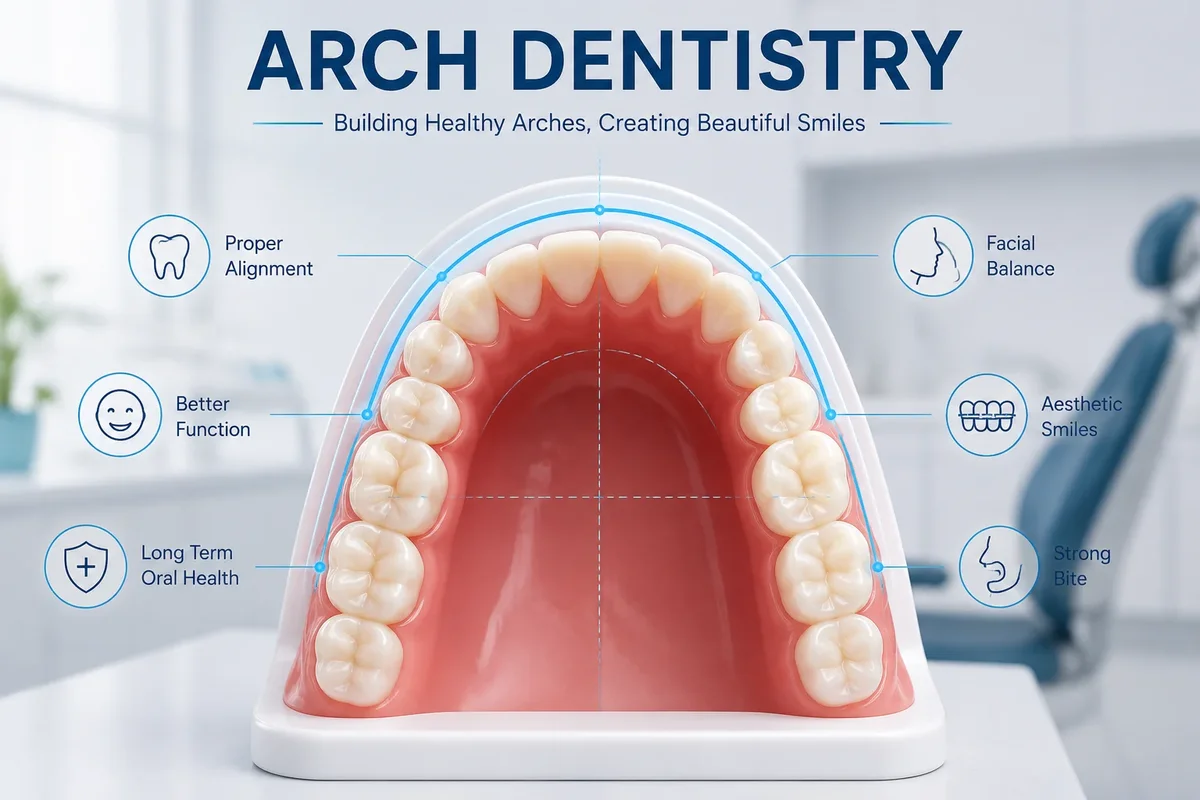
🦷 Arch dentistry is a specialized area of dental care that focuses on the shape, alignment, function, and health of the dental arches. The dental arch refers to the curved arrangement of teeth in the upper and lower jaws. While many people focus on individual teeth when thinking about oral health, the overall structure of the dental arch plays an equally important role in maintaining a healthy, functional, and attractive smile. Understanding the principles of arch dentistry can help patients make informed decisions about preventive care, orthodontics, restorative treatments, and long-term oral health management.
The concept of arch dentistry goes beyond aesthetics. A properly developed dental arch supports effective chewing, clear speech, balanced facial appearance, and optimal jaw function. When the arch becomes narrow, crowded, misaligned, or damaged, patients may experience numerous oral health issues. These problems can include tooth crowding, bite irregularities, temporomandibular joint discomfort, increased risk of tooth decay, gum disease, and uneven tooth wear. Because of these potential complications, modern arch dentistry emphasizes early diagnosis and comprehensive treatment planning.
In a healthy mouth, the upper and lower arches work together harmoniously. The upper arch is typically slightly wider than the lower arch, allowing the teeth to fit together properly during biting and chewing. One of the primary goals of arch dentistry is to maintain or restore this natural balance. Dentists carefully evaluate arch width, arch length, tooth positioning, jaw relationships, and bite function before recommending treatment options.
Many factors can influence the development of dental arches. Genetics often determine the overall size and shape of the jaws, but environmental factors also play a major role. Thumb sucking, prolonged pacifier use, mouth breathing, tongue posture issues, and premature tooth loss can all affect arch development. This is why arch dentistry often begins during childhood. Early intervention can help guide proper growth and reduce the need for extensive corrective procedures later in life.
Orthodontic treatment is one of the most common applications of arch dentistry. Braces and clear aligners are frequently used to improve arch form, create adequate space for teeth, and establish proper bite relationships. During treatment, orthodontists carefully monitor the movement of teeth within the dental arch to achieve optimal function and appearance. A well-aligned arch can improve oral hygiene because straight teeth are generally easier to clean than crowded or overlapping teeth.
Another important aspect of arch dentistry involves restorative procedures. Missing teeth can significantly disrupt the integrity of the dental arch. When a tooth is lost, neighboring teeth may drift into the empty space, causing changes in arch alignment and bite function. Dental implants, bridges, and other restorative treatments help preserve arch stability and prevent further complications. Through comprehensive arch dentistry, dentists can restore both aesthetics and functionality.
Modern technology has transformed the field of arch dentistry. Digital scanners, 3D imaging systems, computer-guided treatment planning, and advanced orthodontic software allow dental professionals to analyze the dental arch with remarkable precision. These innovations help create customized treatment plans that address each patient’s unique anatomical characteristics. As a result, patients often experience more predictable outcomes and improved comfort throughout their treatment journey.
😁 Beyond clinical benefits, arch dentistry also contributes significantly to confidence and quality of life. A balanced dental arch supports a naturally attractive smile, harmonious facial proportions, and improved self-esteem. Many patients report feeling more comfortable in social and professional situations after completing treatments designed to improve arch alignment and function. Because the dental arch affects both appearance and oral performance, maintaining its health can have a lasting positive impact.
Preventive care remains a cornerstone of arch dentistry. Regular dental examinations allow professionals to identify developing issues before they become serious problems. Dentists may evaluate bite relationships, monitor tooth eruption patterns, assess jaw growth, and recommend preventive measures when necessary. Consistent oral hygiene practices, including brushing, flossing, and professional cleanings, also help support the long-term success of treatments related to arch dentistry.
Patients seeking comprehensive dental care should choose providers who understand the importance of arch form and functional balance. Whether addressing crowding, spacing, missing teeth, or bite concerns, a well-planned arch dentistry approach can produce long-lasting improvements. Individuals who have questions about their dental arch or treatment options can contact qualified dental professionals through the Redent Klinik Contact Page for personalized guidance and support.
For additional information about oral health standards, preventive care recommendations, and professional dental guidelines, patients may also consult the American Dental Association. By combining evidence-based practices with modern technology, arch dentistry continues to play a vital role in helping patients achieve healthier smiles, improved oral function, and greater long-term dental stability. Ultimately, understanding the principles of arch dentistry empowers patients to protect one of their most valuable assets—a healthy, confident smile that lasts a lifetime.
What Is Arch Dentistry and Why Is It Important?
🦷 Understanding arch dentistry begins with understanding the role of the dental arch itself. Every person has two dental arches: the upper arch (maxillary arch) and the lower arch (mandibular arch). These arches form the foundation upon which teeth are positioned and function together. Arch dentistry focuses on maintaining, improving, and restoring the natural shape, alignment, and function of these arches to support optimal oral health.
Many people believe dental care is only about treating cavities or whitening teeth. However, arch dentistry takes a broader perspective by evaluating how all teeth interact within the arch. The shape and balance of the dental arch influence chewing efficiency, speech clarity, facial appearance, jaw comfort, and even long-term tooth stability. When dental arches are properly developed and aligned, patients typically enjoy better oral function and fewer dental complications.
The Definition of Arch Dentistry
Arch dentistry is a specialized approach to dental care that considers the entire dental arch rather than focusing solely on individual teeth. This field integrates concepts from orthodontics, restorative dentistry, prosthodontics, pediatric dentistry, and preventive care to achieve optimal arch form and function.
In modern arch dentistry, dentists evaluate several important factors, including:
- Arch width and shape
- Tooth alignment and spacing
- Bite relationships
- Jaw development
- Facial symmetry
- Chewing efficiency
- Long-term oral stability
By assessing these elements together, dental professionals can identify issues that may not be obvious when looking at individual teeth alone.
Why Dental Arches Matter
The dental arch serves as the structural framework of the smile. Every tooth depends on proper arch development for correct positioning and function. When arch development is compromised, several oral health concerns may arise.
For example, a narrow dental arch often leads to crowding because there is insufficient space for teeth to erupt properly. Conversely, excessive spacing may indicate developmental issues affecting arch integrity. Through arch dentistry, these problems can be identified and corrected before they create more serious complications.
The relationship between the upper and lower arches also influences how the teeth come together during biting and chewing. Poor arch alignment can result in malocclusion, which may increase stress on teeth, gums, and jaw joints.
Effects on Chewing Function
One of the primary goals of arch dentistry is to ensure efficient chewing function. Properly aligned dental arches distribute biting forces evenly across all teeth. This balanced force distribution reduces excessive wear and helps preserve natural tooth structure.
When arch relationships are abnormal, patients may experience:
- Difficulty chewing certain foods
- Uneven tooth wear
- Jaw discomfort
- Increased risk of fractures
- Muscle fatigue during eating
Correcting arch-related issues can significantly improve everyday comfort and oral performance.
Impact on Facial Appearance
😊 Beyond oral function, arch dentistry contributes significantly to facial aesthetics. The dental arches help support the lips, cheeks, and surrounding facial structures. Well-developed arches often create a balanced and attractive smile.
In contrast, underdeveloped or collapsed arches may contribute to:
- Narrow smiles
- Sunken facial appearance
- Asymmetry
- Premature aging signs
- Reduced smile width
Because facial appearance and dental health are closely connected, many modern treatment plans incorporate principles of arch dentistry to enhance both function and aesthetics simultaneously.
Common Conditions Addressed by Arch Dentistry
Dental professionals use arch dentistry principles to manage numerous oral health conditions. Some of the most common include:
- Crowded teeth
- Spacing issues
- Crossbites
- Open bites
- Deep bites
- Missing teeth
- Arch collapse following tooth loss
- Jaw growth abnormalities
Each of these conditions can affect oral health in different ways. Early diagnosis often allows for simpler and more effective treatment.
Role in Orthodontics
Orthodontic treatment is one of the areas most closely associated with arch dentistry. Braces and clear aligners are frequently used to reshape arches, create adequate space, and improve tooth positioning.
Rather than merely straightening teeth, orthodontists often focus on optimizing arch form. This comprehensive approach improves bite function, oral hygiene accessibility, and long-term treatment stability.
How Arch Dentistry Supports Long-Term Oral Health
The benefits of arch dentistry extend far beyond cosmetic improvements. A healthy dental arch can reduce the risk of many future dental problems.
Proper arch development helps:
- Improve plaque removal during brushing
- Reduce gum inflammation risks
- Prevent abnormal tooth wear
- Support jaw joint health
- Maintain proper speech patterns
- Improve restorative treatment outcomes
When teeth are correctly positioned within the arch, oral hygiene becomes more effective because patients can access difficult areas more easily. This reduces the likelihood of decay and periodontal disease over time.
Modern Technology in Arch Dentistry
Digital technology has revolutionized arch dentistry. Today’s dental professionals use advanced tools such as intraoral scanners, digital impressions, cone-beam computed tomography (CBCT), and 3D treatment planning software.
These technologies provide detailed views of the dental arches, allowing dentists to diagnose problems more accurately and develop highly personalized treatment plans. Digital workflows also improve patient comfort by reducing the need for traditional impression materials.
Who Can Benefit from Arch Dentistry?
Virtually anyone can benefit from principles associated with arch dentistry. Children may require early intervention to guide healthy jaw development, while teenagers often undergo orthodontic treatment to optimize arch alignment. Adults may seek arch-focused treatment to address crowding, bite issues, missing teeth, or aesthetic concerns.
Patients who have experienced tooth loss, shifting teeth, or jaw discomfort may particularly benefit from comprehensive evaluation based on arch dentistry principles.
Ultimately, arch dentistry is important because it addresses the foundation of oral function and aesthetics. By focusing on the dental arch as a complete system, dental professionals can create healthier, more stable, and more attractive smiles. Whether through preventive care, orthodontic treatment, restorative procedures, or advanced digital planning, arch dentistry plays a crucial role in helping patients maintain lifelong oral health and confidence.
How Arch Dentistry Supports Proper Oral Function
🦷 One of the most important goals of arch dentistry is to ensure that the teeth, jaws, muscles, and supporting oral structures work together efficiently. While many people associate dental treatment primarily with appearance, oral function is equally important. Every time a person chews, speaks, swallows, or smiles, the dental arches play a critical role. Arch dentistry focuses on maintaining the ideal shape, alignment, and relationship of the upper and lower arches so that these daily functions can occur naturally and comfortably.
The human mouth is a highly coordinated system. Teeth are designed to fit together in a specific way, allowing forces generated during chewing to be distributed evenly. When the dental arches develop correctly, patients typically experience efficient chewing, clear speech, proper breathing patterns, and reduced stress on the jaw joints. Through comprehensive evaluation and treatment planning, arch dentistry helps preserve these essential functions and prevents many long-term complications.
The Relationship Between Dental Arches and Oral Function
Every tooth occupies a specific position within the dental arch. This arrangement is not random; it is carefully designed by nature to maximize function. The upper and lower arches should work together harmoniously when biting and chewing. If either arch becomes misaligned, functional problems may develop.
In arch dentistry, dental professionals analyze how the arches interact during movement. They evaluate bite patterns, tooth contacts, arch width, arch length, and jaw positioning. These assessments help identify conditions that may interfere with proper oral function.
Common functional issues associated with arch irregularities include:
- Difficulty chewing food effectively
- Uneven pressure on teeth
- Excessive tooth wear
- Jaw discomfort
- Speech difficulties
- Increased risk of dental fractures
- Muscle tension around the face and neck
By addressing these concerns, arch dentistry contributes to improved comfort and long-term oral health.
How Arch Dentistry Improves Chewing Efficiency
🍎 Chewing is one of the most important oral functions. Proper digestion begins in the mouth, where food is mechanically broken down before swallowing. When dental arches are properly aligned, chewing forces are distributed evenly across multiple teeth.
In cases where arch development is compromised, patients may unconsciously avoid chewing on certain areas of the mouth. This uneven use can place excessive stress on specific teeth and muscles. Over time, these imbalances may lead to discomfort and accelerated wear.
Arch dentistry seeks to optimize the relationship between the upper and lower arches so that chewing can occur efficiently. Orthodontic treatment, restorative procedures, and bite adjustments are often used to improve arch function and enhance chewing performance.
Benefits of Balanced Bite Forces
When bite forces are distributed properly, patients often experience:
- Improved chewing comfort
- Reduced tooth wear
- Lower risk of cracked teeth
- Better digestion support
- Decreased muscle strain
- Enhanced long-term dental stability
These benefits demonstrate why arch dentistry is considered an important component of comprehensive oral care.
Arch Dentistry and Speech Development
Speech production depends on precise interactions between the tongue, teeth, lips, and palate. Even minor changes in dental arch shape can affect pronunciation. Certain sounds require specific tongue-to-tooth contact patterns, making arch alignment particularly important.
Patients with severe crowding, open bites, or arch irregularities may experience speech difficulties. In some cases, orthodontic treatment guided by arch dentistry principles can improve articulation and speech clarity.
Children are especially affected because their speech patterns develop alongside their oral structures. Early identification of arch-related concerns can support both dental development and communication skills.
The Role of Arch Dentistry in Jaw Joint Health
The temporomandibular joints (TMJs) connect the lower jaw to the skull. These joints are responsible for opening, closing, and moving the jaw during speaking and chewing. When the dental arches are properly aligned, the TMJs can function efficiently with minimal strain.
However, arch discrepancies may contribute to abnormal jaw movements and increased joint stress. Over time, this can lead to symptoms such as:
- Jaw pain
- Clicking or popping sounds
- Limited jaw movement
- Facial muscle fatigue
- Headaches
Although TMJ disorders have multiple causes, arch dentistry often plays an important role in evaluating and correcting contributing bite-related factors.
Protecting the Jaw Through Proper Arch Alignment
Modern arch dentistry focuses on achieving functional harmony between the teeth, jaws, and muscles. By establishing balanced arch relationships, dentists can reduce excessive stress placed on the temporomandibular joints and surrounding tissues.
This functional balance often improves patient comfort and supports long-term oral health outcomes.
How Arch Dentistry Supports Breathing and Airway Function
Recent research has increased awareness of the connection between dental arch development and airway health. The width and shape of the upper arch can influence tongue posture and available airway space.
In some patients, underdeveloped arches may contribute to mouth breathing, sleep-disordered breathing, or reduced oral function. While airway concerns require multidisciplinary evaluation, arch dentistry frequently plays a role in assessing structural factors that may affect breathing patterns.
Early intervention during childhood can be particularly valuable because the arches and jaws are still developing. Proper guidance of arch growth may contribute to improved oral and airway function later in life.
The Importance of Tooth Position Within the Arch
Every tooth contributes to overall arch stability. When teeth erupt into their ideal positions, they help maintain balanced bite relationships and efficient function. Crowding, spacing, or tooth loss can disrupt this balance.
One of the primary objectives of arch dentistry is preserving proper tooth positioning within the dental arch. This often involves preventive care, orthodontic treatment, dental implants, or restorative procedures designed to maintain arch integrity.
When teeth remain properly aligned within a healthy arch, patients typically experience:
- Better oral hygiene access
- Reduced plaque accumulation
- Improved chewing function
- Enhanced aesthetics
- Greater long-term stability
Long-Term Functional Benefits of Arch Dentistry
😁 The benefits of arch dentistry extend throughout a patient’s lifetime. By supporting proper oral function, healthy arch development can help prevent many common dental problems before they occur. Patients who maintain balanced dental arches often experience fewer complications related to tooth wear, gum disease, jaw discomfort, and bite dysfunction.
Comprehensive arch dentistry recognizes that oral health is about more than individual teeth. It focuses on the entire functional system, ensuring that the arches, teeth, jaws, muscles, and supporting structures work together efficiently. Through preventive care, orthodontics, restorative treatments, and modern diagnostic technology, arch dentistry helps create a strong foundation for lifelong oral health, comfort, and confidence.
The Connection Between Dental Arches and Overall Oral Health
🦷 Oral health is often viewed through the lens of individual teeth and gums, but the broader structure of the mouth plays an equally important role. One of the most significant components of oral anatomy is the dental arch. The shape, size, alignment, and stability of the upper and lower arches directly influence how well the teeth function and how effectively oral tissues remain healthy. This is where arch dentistry becomes essential. By focusing on the relationship between teeth and the dental arches, arch dentistry helps create a foundation for long-term oral health, improved function, and enhanced patient comfort.
The dental arches act as the framework that supports the teeth. When these arches are properly developed and aligned, the teeth can function as intended. However, if the arches are narrow, crowded, asymmetrical, or compromised by tooth loss, numerous oral health challenges may arise. Through preventive care, orthodontics, restorative treatments, and comprehensive evaluations, arch dentistry seeks to preserve and optimize the health of the entire oral system.
How Dental Arches Influence Oral Health
The position of every tooth depends on the shape and structure of the dental arch. A healthy arch provides sufficient space for teeth to erupt properly and remain stable throughout life. When the arch is well developed, patients typically experience better bite function, easier oral hygiene maintenance, and improved long-term dental stability.
One of the primary goals of arch dentistry is to ensure that teeth are positioned correctly within the arch. This alignment reduces stress on supporting tissues and helps maintain healthy oral function.
Problems that may result from poor arch development include:
- Tooth crowding
- Excessive spacing
- Impacted teeth
- Abnormal bite patterns
- Gum inflammation
- Uneven tooth wear
- Jaw discomfort
Addressing these issues early through arch dentistry can significantly improve overall oral health outcomes.
Arch Dentistry and Gum Health
Healthy gums are essential for maintaining strong teeth and supporting oral function. The alignment of teeth within the dental arch directly affects how easily patients can clean their teeth and gums.
When teeth are crowded due to insufficient arch space, certain areas become difficult to reach with a toothbrush or dental floss. Plaque and bacteria can accumulate in these areas, increasing the risk of gingivitis and periodontal disease.
Arch dentistry helps reduce these risks by creating better spacing and alignment within the dental arch. Properly positioned teeth are generally easier to clean, allowing patients to maintain healthier gums over time.
The Relationship Between Crowding and Periodontal Disease
Research has shown that severe crowding can contribute to poor oral hygiene and increased plaque retention. Although crowding does not directly cause gum disease, it may create conditions that support bacterial growth.
Through orthodontic and preventive approaches associated with arch dentistry, dentists can improve access for cleaning and help reduce long-term periodontal risks.
How Arch Dentistry Supports Tooth Longevity
🦷 Every tooth is exposed to significant forces during chewing and speaking. Ideally, these forces should be distributed evenly across the dental arches. When the arches are balanced and properly aligned, individual teeth are less likely to experience excessive stress.
However, arch irregularities can cause certain teeth to bear more force than others. Over time, this imbalance may lead to:
- Tooth fractures
- Enamel wear
- Sensitivity
- Loose teeth
- Restoration failure
One of the key objectives of arch dentistry is achieving balanced force distribution throughout the dental arch. This approach helps protect natural teeth and extends the lifespan of dental restorations.
The Impact of Missing Teeth on Arch Health
Tooth loss can have a major effect on the integrity of the dental arch. When a tooth is removed and not replaced, neighboring teeth often begin shifting toward the empty space. This movement can alter arch alignment and disrupt bite relationships.
As these changes occur, patients may experience additional oral health complications, including:
- Increased crowding
- Bite instability
- Difficulty chewing
- Additional tooth loss risks
- Jaw joint strain
Arch dentistry emphasizes the importance of preserving arch stability following tooth loss. Dental implants, bridges, and other restorative treatments are commonly used to maintain arch integrity and prevent future complications.
Why Early Tooth Replacement Matters
Replacing missing teeth promptly helps preserve the natural structure of the dental arch. Delayed treatment often allows unwanted tooth movement to occur, making future corrective procedures more complex.
By applying the principles of arch dentistry, dental professionals can restore both aesthetics and functionality while protecting long-term oral health.
Arch Dentistry and Bite Stability
A stable bite is essential for maintaining healthy teeth, muscles, and jaw joints. The upper and lower arches must work together efficiently for proper function. When bite relationships are compromised, excessive stress may be placed on specific areas of the mouth.
Common bite problems associated with arch irregularities include:
- Crossbite
- Open bite
- Deep bite
- Overbite
- Underbite
Modern arch dentistry focuses on correcting these conditions to improve oral health and reduce the risk of long-term complications.
The Connection Between Arch Dentistry and Oral Hygiene
🪥 Oral hygiene is significantly influenced by tooth positioning and arch form. Straight, properly aligned teeth are generally easier to clean than crowded or rotated teeth.
Patients who undergo treatments guided by arch dentistry principles often find it easier to maintain effective oral hygiene routines. Better access for brushing and flossing can lead to:
- Reduced plaque accumulation
- Lower cavity risk
- Healthier gums
- Improved breath freshness
- Greater long-term dental stability
Because prevention is a central focus of arch dentistry, maintaining proper arch form can provide significant benefits throughout life.
Psychological and Social Benefits
😁 The effects of oral health extend beyond physical well-being. A healthy, well-balanced dental arch often contributes to a more attractive smile and increased self-confidence. Patients who feel comfortable with their smile may experience improved social interactions, professional confidence, and overall quality of life.
Many individuals seek treatment through arch dentistry not only to improve oral function but also to enhance their appearance and self-esteem. These psychological benefits can be just as valuable as the clinical improvements achieved through treatment.
Long-Term Health Advantages of Arch Dentistry
The connection between dental arches and oral health is extensive. From supporting gum health and protecting teeth to improving oral hygiene and maintaining bite stability, the dental arch serves as a critical component of the oral system.
Through preventive care, orthodontic treatment, restorative procedures, and comprehensive evaluations, arch dentistry helps patients achieve healthier and more stable smiles. By focusing on the entire dental arch rather than isolated dental issues, arch dentistry provides a holistic approach that supports long-term oral health, functional efficiency, and overall well-being. As dental science continues to advance, the importance of arch dentistry in preserving healthy smiles will remain a fundamental part of modern dental care.
Common Treatments Used in Arch Dentistry
🦷 Arch dentistry encompasses a wide range of treatments designed to improve the shape, function, stability, and health of the dental arches. Because the dental arch serves as the foundation for tooth alignment, bite function, and facial aesthetics, maintaining its integrity is one of the primary objectives of modern dental care. Patients seeking treatment related to crowding, spacing, bite irregularities, missing teeth, or jaw development often benefit from procedures that fall under the scope of arch dentistry.
The treatment approach used in arch dentistry depends on each patient’s age, oral health condition, developmental stage, and treatment goals. Some individuals require preventive intervention to guide healthy arch development, while others may need orthodontic correction or restorative treatment to rebuild arch stability. Regardless of the specific procedure, the ultimate goal remains the same: creating a functional, balanced, and healthy dental arch.
Orthodontic Treatment in Arch Dentistry
Orthodontics is one of the most frequently used treatment categories within arch dentistry. Braces and clear aligners are designed to reposition teeth within the dental arch and improve overall bite relationships.
When teeth become crowded or misaligned, the natural shape of the arch may be compromised. Orthodontic treatment helps restore proper arch form while improving aesthetics and oral function.
Common orthodontic goals include:
- Correcting crowded teeth
- Closing unwanted gaps
- Improving bite alignment
- Enhancing chewing efficiency
- Supporting long-term oral stability
- Improving smile appearance
Modern arch dentistry often utilizes digital treatment planning software to precisely map tooth movement and optimize treatment outcomes.
Traditional Braces
Traditional braces remain highly effective for managing complex arch-related problems. Brackets and wires gradually move teeth into ideal positions within the dental arch. This treatment can address severe crowding, spacing issues, and significant bite discrepancies.
Braces continue to play a vital role in comprehensive arch dentistry because they provide precise control over tooth movement.
Clear Aligners
Clear aligners have become increasingly popular in arch dentistry. These removable appliances gradually shift teeth into their desired positions using a series of customized trays.
Benefits of clear aligners include:
- Improved aesthetics during treatment
- Easy removal for eating
- Simplified oral hygiene maintenance
- Enhanced patient comfort
For many patients, clear aligners provide an effective alternative to traditional braces while achieving similar arch improvements.
Arch Expansion Procedures
Some patients have dental arches that are too narrow to accommodate all teeth properly. Narrow arches frequently contribute to crowding, crossbites, and restricted oral function.
In these situations, arch dentistry may involve arch expansion procedures. Expansion increases the width of the dental arch and creates additional space for proper tooth alignment.
Palatal Expansion
Palatal expansion is commonly used in children and adolescents whose jawbones are still developing. A specialized appliance gradually widens the upper arch, promoting better alignment and improved bite relationships.
Potential benefits include:
- Reduced crowding
- Improved arch symmetry
- Enhanced bite function
- Potential airway improvements
- Reduced need for future extractions
Early intervention through arch dentistry often allows expansion procedures to achieve highly successful results.
Dental Implants and Arch Stability
🦷 Missing teeth can significantly affect the integrity of the dental arch. When a tooth is lost, neighboring teeth often shift toward the empty space, altering arch alignment and bite stability.
One of the most important restorative treatments in arch dentistry is dental implant placement. Dental implants replace missing tooth roots and help preserve the natural structure of the dental arch.
Implants offer several advantages:
- Preservation of jawbone volume
- Maintenance of arch alignment
- Improved chewing ability
- Enhanced aesthetics
- Long-term stability
Because implants help maintain the natural architecture of the arch, they are considered a valuable tool in comprehensive arch dentistry.
Single-Tooth Implants
Single implants replace individual missing teeth while preventing adjacent teeth from drifting. This helps preserve arch balance and supports proper oral function.
Full-Arch Implant Solutions
Patients with extensive tooth loss may benefit from full-arch implant restorations. These treatments restore an entire arch using strategically placed implants that support fixed prosthetic teeth.
Full-arch rehabilitation represents one of the most transformative procedures available in modern arch dentistry.
Dental Bridges and Restorative Treatments
Dental bridges are another common treatment used in arch dentistry. A bridge replaces one or more missing teeth by anchoring an artificial tooth between adjacent teeth or implants.
Although implants are often preferred when possible, bridges can still provide effective restoration of arch continuity and oral function.
Restorative procedures may also include:
- Crowns
- Inlays
- Onlays
- Composite restorations
- Full-mouth rehabilitation
Each treatment is selected based on the patient’s specific arch-related needs.
Tooth Extractions in Arch Dentistry
While preserving natural teeth is always the preferred goal, certain situations may require extraction as part of a broader arch dentistry treatment plan.
Extractions may be recommended when:
- Severe crowding exists
- Teeth are impacted
- Advanced disease affects a tooth
- Orthodontic space management is necessary
When performed appropriately, strategic extractions can help improve arch alignment and facilitate successful orthodontic treatment.
Preventive Treatments in Arch Dentistry
😁 Prevention remains one of the most valuable aspects of arch dentistry. Early diagnosis and routine monitoring can often prevent complex problems from developing.
Preventive strategies may include:
- Regular dental examinations
- Growth and development monitoring
- Space maintainers
- Oral hygiene education
- Early orthodontic assessments
By identifying concerns early, dentists can guide healthy arch development and minimize the need for extensive corrective treatment later in life.
Digital Technology in Arch Dentistry Treatment Planning
Modern arch dentistry increasingly relies on advanced technology to improve diagnostic accuracy and treatment outcomes. Digital scanners, 3D imaging systems, and computer-aided design software allow dentists to evaluate the dental arch with exceptional precision.
These technologies help clinicians:
- Create highly accurate treatment plans
- Visualize tooth movement
- Improve restorative design
- Enhance patient communication
- Increase treatment predictability
As technology continues to evolve, digital workflows are becoming an essential component of comprehensive arch dentistry.
Why Personalized Treatment Matters
Every patient has a unique dental arch, which is why individualized care is so important. Successful arch dentistry requires careful evaluation of arch shape, jaw relationships, oral health status, and patient goals before selecting a treatment plan.
Whether the solution involves orthodontics, implants, expansion, restorative dentistry, or preventive care, the treatments used in arch dentistry are designed to improve both function and aesthetics. By preserving or restoring healthy arch form, these procedures help patients achieve better oral health, enhanced comfort, and long-lasting dental stability throughout their lives.
Arch Dentistry for Children and Early Development
🦷 Childhood is one of the most important periods for oral development. During these formative years, the teeth, jaws, facial structures, and dental arches undergo significant growth and change. Because many future dental problems begin during childhood, early monitoring and intervention play a critical role in long-term oral health. This is why arch dentistry places strong emphasis on evaluating and guiding dental arch development from an early age. By identifying potential concerns before they become severe, arch dentistry helps children develop healthier smiles, improved oral function, and better long-term outcomes.
The dental arches begin forming long before permanent teeth erupt. Their growth is influenced by genetics, oral habits, breathing patterns, nutrition, and overall health. When the arches develop properly, there is usually adequate space for permanent teeth to emerge into healthy positions. However, when growth is disrupted, children may experience crowding, bite problems, speech difficulties, and other oral health concerns. Through preventive evaluations and early treatment, arch dentistry helps support normal development and reduce the need for more extensive procedures later in life.
Why Early Arch Development Matters
The dental arch serves as the framework for tooth eruption and alignment. If the arch develops appropriately, permanent teeth generally have enough room to emerge correctly. When the arch is too narrow or underdeveloped, crowding often occurs.
One of the primary goals of arch dentistry is to monitor the growth of the arches during childhood and identify any abnormalities as early as possible. Early intervention often allows dentists and orthodontists to guide development while the jaws are still growing.
Benefits of healthy arch development include:
- Proper tooth eruption
- Reduced crowding risks
- Improved bite function
- Better oral hygiene access
- Enhanced facial balance
- Lower need for future extractions
Because children’s bones are still developing, treatment options within arch dentistry are often more effective and less invasive than those required during adulthood.
Common Childhood Factors That Affect Arch Development
Several environmental and behavioral factors can influence the growth of dental arches. While genetics determine much of a child’s jaw structure, certain habits can significantly alter arch development.
Thumb Sucking and Pacifier Use
Prolonged thumb sucking or pacifier use may place pressure on developing teeth and jaws. Over time, these habits can contribute to:
- Narrow upper arches
- Open bites
- Misaligned teeth
- Speech difficulties
One focus of arch dentistry is identifying these habits early and providing guidance to minimize their impact on oral development.
Mouth Breathing
Mouth breathing is another important factor that can affect dental arch growth. Children who consistently breathe through their mouths may develop altered tongue posture and facial growth patterns.
Potential consequences include:
- Narrow arches
- Crowded teeth
- Improper jaw development
- Changes in facial appearance
Modern arch dentistry often involves collaboration with pediatricians, orthodontists, and airway specialists when mouth breathing is suspected.
The Role of Primary Teeth in Arch Dentistry
Many parents underestimate the importance of baby teeth. However, primary teeth play a vital role in maintaining proper arch development.
Baby teeth help:
- Preserve space for permanent teeth
- Guide eruption patterns
- Support normal chewing
- Assist speech development
- Maintain arch integrity
If a primary tooth is lost prematurely due to decay or trauma, neighboring teeth may drift into the empty space. This movement can reduce available room for permanent teeth and increase the likelihood of crowding.
One of the preventive goals of arch dentistry is preserving primary teeth whenever possible to support healthy arch development.
Early Orthodontic Evaluation
😁 Many dental professionals recommend orthodontic evaluations during childhood, even if treatment is not immediately necessary. Early assessments allow clinicians to monitor arch growth and identify developing concerns.
Conditions commonly detected through early evaluation include:
- Crossbites
- Open bites
- Severe crowding
- Impacted teeth
- Jaw growth discrepancies
- Arch asymmetry
Through proactive monitoring, arch dentistry can often prevent minor issues from becoming major orthodontic challenges.
Interceptive Orthodontics
Interceptive orthodontics refers to treatments performed while a child is still growing. These procedures aim to guide normal development and reduce future complications.
Examples include:
- Palatal expanders
- Space maintainers
- Habit-correcting appliances
- Partial braces
These interventions are frequently used within arch dentistry to optimize arch growth and improve future treatment outcomes.
Arch Expansion During Childhood
One of the most effective treatments available in pediatric arch dentistry is palatal expansion. When the upper arch is too narrow, a specialized appliance can gradually widen the arch while the bones are still developing.
Benefits of expansion may include:
- Increased space for erupting teeth
- Improved arch symmetry
- Enhanced bite function
- Reduced crowding
- Potential airway improvements
Because skeletal growth is more adaptable during childhood, expansion procedures often achieve highly successful results with relatively minimal intervention.
The Connection Between Arch Development and Facial Growth
The dental arches are closely connected to overall facial development. Proper arch growth supports balanced facial proportions and healthy jaw relationships.
When arch development is compromised, facial growth patterns may also be affected. Some children develop narrow smiles, asymmetrical facial features, or jaw discrepancies that influence both function and appearance.
Through careful monitoring, arch dentistry helps ensure that the teeth and facial structures develop together in a harmonious manner.
Preventive Care and Long-Term Benefits
🪥 Prevention remains a central component of arch dentistry. Routine dental visits allow professionals to evaluate tooth eruption, monitor arch development, and identify concerns before they become severe.
Preventive measures may include:
- Regular examinations
- Fluoride treatments
- Dental sealants
- Growth monitoring
- Oral habit counseling
- Space maintenance
These strategies help create a strong foundation for future oral health and minimize the need for extensive corrective treatment.
Why Early Arch Dentistry Matters
Early intervention can significantly influence a child’s lifelong oral health. By addressing developmental concerns during growth, arch dentistry helps establish healthy dental arches that support proper tooth alignment, efficient oral function, and balanced facial development.
The benefits often extend far beyond childhood. Children who receive appropriate monitoring and treatment through arch dentistry may experience fewer orthodontic complications, improved oral hygiene, better chewing efficiency, and enhanced confidence as they grow. Through a combination of prevention, early diagnosis, growth guidance, and individualized care, arch dentistry provides children with the best possible foundation for lifelong dental health and a healthy, functional smile.
Arch Dentistry and Orthodontic Treatment Planning
🦷 Orthodontic treatment is one of the most closely related disciplines to arch dentistry. While many people associate orthodontics with straightening teeth for cosmetic reasons, the true purpose extends far beyond aesthetics. Effective orthodontic treatment aims to establish healthy dental arches, balanced bite relationships, proper jaw function, and long-term oral stability. This is why arch dentistry plays a central role in modern orthodontic treatment planning. By evaluating the entire dental arch rather than focusing only on individual teeth, dental professionals can create treatment plans that support both function and appearance.
Every orthodontic case begins with a detailed assessment of the patient’s dental arches. The shape, width, length, symmetry, and relationship between the upper and lower arches influence nearly every treatment decision. Whether the goal is correcting crowding, closing spaces, managing bite irregularities, or preparing for restorative procedures, arch dentistry provides the foundation for comprehensive orthodontic care.
Why Arch Analysis Is Essential in Orthodontics
Orthodontists do not simply move teeth into straight lines. Instead, they seek to position teeth within an ideal arch form that promotes long-term stability and efficient function. Proper arch development allows the teeth, jaws, muscles, and temporomandibular joints to work together harmoniously.
One of the primary objectives of arch dentistry is understanding how the dental arch affects oral health and function. Before orthodontic treatment begins, clinicians carefully evaluate:
- Arch width
- Arch length
- Tooth crowding
- Spacing issues
- Bite relationships
- Jaw alignment
- Facial proportions
- Growth patterns
This comprehensive evaluation helps ensure that orthodontic treatment addresses the underlying cause of the problem rather than simply correcting visible symptoms.
Creating Functional Arch Forms
In successful arch dentistry, the goal is not only straight teeth but also a healthy arch shape. A balanced arch allows teeth to function efficiently, distribute biting forces evenly, and remain stable over time.
If orthodontic treatment ignores arch form, patients may experience relapse, bite instability, or functional problems after treatment is completed.
How Arch Dentistry Guides Orthodontic Treatment Decisions
Every orthodontic treatment plan is unique. The condition of the dental arches helps determine which treatment methods are most appropriate.
Common orthodontic decisions influenced by arch dentistry include:
- Whether arch expansion is necessary
- If tooth extraction should be considered
- The type of orthodontic appliance to use
- The amount of tooth movement required
- Long-term retention strategies
By incorporating principles of arch dentistry, orthodontists can develop highly individualized treatment plans designed to achieve stable and predictable results.
Managing Crowding Through Arch Dentistry
😁 Tooth crowding is one of the most common reasons patients seek orthodontic treatment. Crowding occurs when there is insufficient space within the dental arch to accommodate all teeth properly.
Several treatment options may be considered depending on the severity of the problem:
- Arch expansion
- Interproximal reduction
- Orthodontic alignment
- Strategic tooth extraction
Modern arch dentistry often prioritizes preserving arch integrity whenever possible. In many cases, expansion or careful orthodontic planning can create adequate space without removing healthy teeth.
Evaluating Available Arch Space
Before treatment begins, orthodontists calculate the amount of space available within the dental arch and compare it to the space required for proper tooth alignment. This analysis is a key component of arch dentistry and helps determine the most appropriate treatment approach.
Arch Expansion in Orthodontic Planning
Arch expansion is frequently used when the dental arch is too narrow. By increasing arch width, clinicians can create additional room for teeth and improve bite relationships.
Expansion may be recommended for patients with:
- Crossbites
- Crowded teeth
- Narrow arches
- Certain airway concerns
Within arch dentistry, expansion is carefully planned to ensure that changes remain stable and biologically appropriate.
Children and adolescents often respond especially well because their jaw structures are still developing. However, expansion techniques can also be applied successfully in selected adult cases.
The Relationship Between Arch Dentistry and Clear Aligners
Clear aligner therapy has become increasingly popular in modern orthodontics. These custom-made trays gradually move teeth into improved positions while maintaining patient comfort and convenience.
Successful aligner treatment depends heavily on accurate arch analysis. Clinicians use digital technology to design tooth movements that support ideal arch form and function.
One advantage of combining aligners with arch dentistry principles is the ability to plan highly precise tooth movements that contribute to long-term stability and improved oral health.
Digital Treatment Planning
Advanced software allows orthodontists to visualize the entire dental arch before treatment begins. Digital planning tools used in arch dentistry can simulate tooth movement, evaluate bite changes, and optimize treatment outcomes.
This technology improves accuracy and helps patients better understand their treatment process.
Arch Dentistry and Bite Correction
Proper bite function is one of the primary goals of orthodontic treatment. The relationship between the upper and lower arches determines how teeth come together during chewing and speaking.
Common bite problems addressed through arch dentistry include:
- Overbite
- Underbite
- Crossbite
- Open bite
- Deep bite
Correcting these issues can improve oral function, reduce tooth wear, and enhance long-term dental stability.
Retention and Long-Term Stability
🦷 Orthodontic treatment does not end when braces are removed or aligner therapy is completed. Maintaining treatment results is equally important.
Retention strategies are designed to preserve the arch form achieved during treatment. Without proper retention, teeth may gradually shift back toward their original positions.
Retention options may include:
- Removable retainers
- Fixed retainers
- Periodic monitoring appointments
One of the reasons arch dentistry emphasizes proper arch form is that stable arches are generally more resistant to relapse.
Facial Aesthetics and Orthodontic Planning
Beyond oral function, orthodontic treatment can significantly influence facial appearance. The dental arches help support the lips, cheeks, and surrounding facial structures.
Comprehensive arch dentistry considers facial harmony alongside tooth alignment. Treatment planning often involves evaluating smile width, profile balance, and overall facial proportions to achieve natural-looking results.
By focusing on both aesthetics and function, orthodontic treatment can provide substantial improvements in confidence and quality of life.
The Importance of Comprehensive Arch Evaluation
Ultimately, successful orthodontic treatment depends on understanding the dental arch as a complete system. Through detailed analysis of arch form, tooth positioning, jaw relationships, and bite function, arch dentistry helps clinicians develop personalized treatment plans that address each patient’s unique needs.
Whether treatment involves braces, clear aligners, expansion, retention, or bite correction, the principles of arch dentistry remain central to achieving healthy, stable, and attractive results. By integrating orthodontics with comprehensive arch evaluation, dental professionals can help patients achieve improved oral function, enhanced aesthetics, and lasting dental health for many years to come.
Benefits of Maintaining a Healthy Dental Arch
🦷 A healthy dental arch is far more important than many people realize. While patients often focus on individual teeth, the overall shape, balance, and function of the dental arch play a crucial role in long-term oral health. The dental arch serves as the structural foundation for tooth alignment, bite function, chewing efficiency, facial aesthetics, and jaw stability. This is why arch dentistry emphasizes preserving and maintaining healthy dental arches throughout life. When the arches remain properly developed and stable, patients are more likely to enjoy strong oral health, improved comfort, and enhanced confidence.
The benefits of healthy arches extend beyond cosmetic appearance. Proper arch form helps ensure that the teeth function efficiently, distribute biting forces evenly, and remain easier to clean. Through preventive care, orthodontics, restorative procedures, and routine monitoring, arch dentistry helps patients protect the integrity of their dental arches and avoid many common oral health complications.
Improved Tooth Alignment and Stability
One of the most obvious benefits of a healthy dental arch is improved tooth alignment. When the arch provides adequate space and support, teeth are more likely to erupt and remain in proper positions.
Healthy arch development helps reduce:
- Tooth crowding
- Overlapping teeth
- Rotated teeth
- Excessive spacing
- Bite irregularities
Within arch dentistry, maintaining proper arch dimensions is considered essential for preserving alignment over the long term. Even after orthodontic treatment, stable arch form contributes significantly to preventing relapse.
Why Stability Matters
Teeth naturally respond to forces from chewing, speaking, and surrounding muscles. When the arch is balanced, these forces are distributed evenly. A healthy arch provides a stable environment that helps maintain proper tooth positioning for many years.
This long-term stability is one of the primary goals of arch dentistry.
Enhanced Chewing Efficiency
🍎 Efficient chewing depends on the coordinated interaction of the upper and lower dental arches. When the arches fit together properly, food can be broken down more effectively before swallowing.
Healthy arches allow:
- Even force distribution
- Improved food processing
- Reduced strain on teeth
- Better muscle coordination
- Enhanced comfort while eating
One of the key advantages of arch dentistry is optimizing these functional relationships. Patients with balanced dental arches often report greater chewing comfort and improved oral performance during daily activities.
Reduced Risk of Tooth Wear
Every day, teeth are exposed to significant pressure during chewing and speaking. If the arches are misaligned, some teeth may absorb more force than others. Over time, this imbalance can contribute to excessive enamel wear, fractures, and sensitivity.
By maintaining proper arch form, arch dentistry helps distribute biting forces more evenly across all teeth. This balanced load reduces unnecessary stress and helps preserve natural tooth structure.
Protecting Restorations
Healthy arches also benefit patients with crowns, bridges, veneers, and implants. When bite forces are evenly distributed, dental restorations are less likely to experience premature wear or failure.
This is another reason why arch dentistry is frequently incorporated into restorative treatment planning.
Better Gum Health
🪥 Properly aligned teeth are generally easier to clean than crowded or overlapping teeth. When patients can effectively brush and floss around each tooth, plaque accumulation is reduced.
Healthy arches help support:
- Improved oral hygiene
- Reduced plaque retention
- Lower cavity risk
- Healthier gum tissue
- Reduced periodontal disease risk
Preventive care is a central focus of arch dentistry, and maintaining healthy arches plays a major role in supporting gum health throughout life.
Improved Jaw Function and Comfort
The dental arches influence how the jaws move during speaking, chewing, and swallowing. When the arches are balanced, the temporomandibular joints and surrounding muscles can function more efficiently.
Patients with healthy arches may experience:
- Reduced jaw discomfort
- Less muscle fatigue
- Improved jaw movement
- Better bite coordination
- Enhanced overall comfort
Because functional harmony is a major objective of arch dentistry, clinicians often evaluate jaw relationships alongside tooth alignment and arch form.
Reducing Excessive Stress
When bite forces are uneven, additional strain may be placed on specific muscles and joints. Over time, this can contribute to discomfort and dysfunction. Healthy arches help minimize these stresses and support efficient oral mechanics.
Enhanced Facial Appearance
😁 The dental arches contribute significantly to facial aesthetics. Proper arch development supports the lips, cheeks, and surrounding facial structures, helping create balanced facial proportions.
Benefits of healthy arches may include:
- Broader smiles
- Improved smile symmetry
- Balanced facial contours
- Enhanced profile appearance
- Greater self-confidence
One reason patients seek treatment related to arch dentistry is the positive impact that healthy arches can have on both appearance and self-esteem.
Long-Term Preservation of Oral Health
A healthy dental arch supports nearly every aspect of oral health. When arch integrity is maintained, patients are less likely to experience complications related to crowding, tooth movement, bite instability, and periodontal disease.
Preventive strategies used in arch dentistry help preserve:
- Natural teeth
- Jawbone health
- Bite function
- Oral comfort
- Facial harmony
These benefits often translate into fewer dental procedures and lower long-term treatment needs.
Improved Outcomes for Orthodontic and Restorative Treatment
Many dental procedures achieve better results when performed within a healthy and stable arch. Orthodontic treatment, implants, crowns, and full-mouth rehabilitations all depend on proper arch relationships.
Through the principles of arch dentistry, clinicians can create treatment plans that support lasting results and improved function.
Patients who maintain healthy arches often experience:
- More predictable treatment outcomes
- Greater treatment longevity
- Reduced complication risks
- Enhanced oral function
- Improved patient satisfaction
Psychological and Quality-of-Life Benefits
Oral health affects more than physical well-being. A healthy smile can significantly influence social interactions, self-image, and confidence. Patients who are comfortable with their appearance often feel more confident in personal and professional settings.
Because arch dentistry addresses both function and aesthetics, its benefits frequently extend beyond clinical outcomes. Improved smile appearance and oral comfort can positively affect overall quality of life.
Why Maintaining a Healthy Dental Arch Matters
Ultimately, maintaining a healthy dental arch is one of the most effective ways to support long-term oral health. From improving tooth alignment and chewing efficiency to protecting gum health and preserving facial aesthetics, the benefits are extensive. Through preventive care, routine evaluations, orthodontic treatment, and restorative procedures, arch dentistry helps patients maintain strong, functional, and attractive smiles. By focusing on the health of the entire dental arch rather than individual teeth alone, arch dentistry provides a comprehensive approach that supports lifelong oral wellness, stability, and confidence.
Modern Technologies Transforming Arch Dentistry
🦷 The field of arch dentistry has evolved significantly over the past few decades. Traditional diagnostic methods and treatment approaches have been enhanced by advanced technologies that provide greater accuracy, improved patient comfort, and more predictable results. Today, dental professionals can evaluate dental arches with remarkable precision, allowing them to identify structural issues earlier and create highly customized treatment plans. These innovations have transformed how clinicians diagnose, plan, and perform procedures related to arch dentistry, ultimately leading to better outcomes for patients.
Modern technology has changed nearly every aspect of dental care, from imaging and treatment planning to orthodontics and restorative dentistry. As a result, arch dentistry is now more efficient, patient-friendly, and data-driven than ever before. Understanding these technological advancements helps patients appreciate how modern dental care supports healthier, more functional, and aesthetically pleasing smiles.
Digital Imaging in Arch Dentistry
One of the most important innovations in arch dentistry is digital imaging. Traditional two-dimensional radiographs remain valuable, but advanced imaging technologies provide significantly more information about the dental arches and surrounding structures.
Digital imaging allows clinicians to evaluate:
- Tooth positioning
- Jawbone structure
- Arch symmetry
- Bite relationships
- Tooth eruption patterns
- Root positioning
- Airway anatomy
These detailed evaluations help improve diagnostic accuracy and support comprehensive treatment planning.
Cone Beam Computed Tomography (CBCT)
CBCT technology produces highly detailed three-dimensional images of the teeth, jaws, and surrounding structures. Unlike conventional radiographs, CBCT scans provide a complete view of the dental arch from multiple angles.
Within arch dentistry, CBCT is frequently used for:
- Orthodontic planning
- Implant placement
- Assessment of impacted teeth
- Evaluation of jaw relationships
- Complex restorative cases
The ability to visualize the entire dental arch in three dimensions has greatly improved treatment precision.
Intraoral Digital Scanners
😁 Traditional dental impressions often required bulky trays filled with impression material. While effective, these methods could be uncomfortable for many patients. Modern arch dentistry increasingly relies on intraoral scanners to capture highly accurate digital impressions.
These scanners create detailed three-dimensional models of the dental arches within minutes. The resulting images can be used for diagnosis, orthodontic planning, restorative treatment design, and long-term monitoring.
Benefits of digital scanning include:
- Improved patient comfort
- Enhanced accuracy
- Faster workflows
- Reduced distortion risks
- Better communication with dental laboratories
Digital scanning has become one of the most valuable tools in modern arch dentistry.
Computer-Aided Treatment Planning
Advanced software platforms have revolutionized treatment planning within arch dentistry. Dentists and orthodontists can now use sophisticated digital tools to analyze the dental arches and simulate treatment outcomes before any procedure begins.
These programs allow clinicians to:
- Measure arch dimensions
- Assess crowding severity
- Evaluate bite relationships
- Simulate tooth movement
- Predict treatment outcomes
This technology supports evidence-based decision-making and helps create highly personalized treatment plans.
Digital Smile Design
Digital Smile Design systems enable clinicians to evaluate how changes to the dental arches may affect smile appearance and facial aesthetics. By combining photographs, digital scans, and treatment simulations, providers can demonstrate expected outcomes before treatment begins.
This visual approach helps patients better understand how arch dentistry can improve both function and appearance.
Clear Aligner Technology
One of the most visible technological advancements in arch dentistry is the development of clear aligner systems. These custom-made transparent trays gradually move teeth into ideal positions while minimizing disruption to daily life.
Unlike traditional orthodontic methods, aligner therapy relies heavily on digital planning. Every stage of treatment is carefully mapped using advanced software that evaluates the entire dental arch.
Advantages of clear aligner technology include:
- Discreet appearance
- Improved comfort
- Removability for eating
- Simplified oral hygiene
- Predictable treatment progression
Because aligner systems are built around detailed arch analysis, they represent a major advancement in modern arch dentistry.
3D Printing Applications
🖨️ Three-dimensional printing has become increasingly important in dental care. In arch dentistry, 3D printers are used to create precise models, surgical guides, orthodontic appliances, retainers, and temporary restorations.
Benefits of 3D printing include:
- Improved manufacturing accuracy
- Faster appliance production
- Greater treatment customization
- Enhanced workflow efficiency
- Reduced laboratory turnaround times
These innovations allow dental professionals to deliver highly personalized care while improving overall treatment efficiency.
Artificial Intelligence in Arch Dentistry
Artificial intelligence is beginning to influence many areas of dental care, including arch dentistry. AI-powered software can assist clinicians by analyzing digital images, identifying abnormalities, and supporting diagnostic decisions.
Potential applications include:
- Automated arch measurements
- Treatment outcome prediction
- Orthodontic planning assistance
- Risk assessment
- Monitoring treatment progress
While AI does not replace professional judgment, it can enhance efficiency and improve consistency during treatment planning.
Improved Decision-Making
AI-supported systems help clinicians process large amounts of diagnostic information quickly. Within arch dentistry, this may lead to more accurate diagnoses and increasingly personalized treatment strategies.
Digital Monitoring and Remote Care
Technology has also improved patient monitoring. Some orthodontic systems now allow patients to submit digital photographs and progress updates remotely.
This innovation provides several advantages:
- Fewer office visits
- Early detection of problems
- Enhanced patient convenience
- Improved treatment compliance
- Better communication with providers
Remote monitoring represents another way that technology continues to expand the possibilities of arch dentistry.
Precision Implant Placement
Dental implants play an important role in maintaining arch integrity following tooth loss. Modern arch dentistry uses digital planning and surgical guides to improve implant accuracy.
By combining CBCT imaging with digital scans, clinicians can determine the ideal implant position before surgery begins. This approach helps preserve arch stability while minimizing surgical risks.
Precise implant placement supports:
- Improved aesthetics
- Enhanced function
- Better arch preservation
- Long-term restorative success
The Future of Arch Dentistry
🚀 Technological innovation continues to reshape the future of arch dentistry. Emerging developments in artificial intelligence, digital diagnostics, robotics, biomaterials, and personalized treatment planning are expected to further improve patient outcomes.
As these technologies become more advanced and accessible, patients can expect increasingly precise, comfortable, and efficient care. Modern arch dentistry already offers significant advantages through digital imaging, intraoral scanning, 3D printing, clear aligners, and AI-assisted diagnostics. By combining clinical expertise with cutting-edge technology, dental professionals can provide more accurate diagnoses, better treatment planning, and improved long-term results. The ongoing integration of technology ensures that arch dentistry will continue to evolve, helping patients achieve healthier smiles, stronger oral function, and greater confidence for years to come.
Choosing the Right Dental Clinic for Arch Dentistry Care
🦷 Selecting the right dental clinic is one of the most important decisions a patient can make when seeking treatment related to arch dentistry. The health, alignment, and function of the dental arches influence nearly every aspect of oral health, including chewing efficiency, tooth stability, bite balance, gum health, and smile aesthetics. Because treatment often involves a combination of diagnostics, preventive care, orthodontics, restorative dentistry, and long-term monitoring, choosing a qualified provider is essential for achieving successful outcomes.
Not all dental clinics approach treatment with the same level of focus on arch development and functional harmony. A clinic that understands the principles of arch dentistry evaluates the entire oral system rather than concentrating solely on individual teeth. This comprehensive perspective helps identify underlying causes of dental problems and supports long-term oral health.
Whether a patient requires orthodontic treatment, dental implants, arch expansion, restorative care, or preventive monitoring, selecting the right clinic can significantly influence treatment quality, comfort, and long-term success.
Why Expertise in Arch Dentistry Matters
The dental arch is a complex anatomical structure that affects multiple aspects of oral function. Effective treatment requires a detailed understanding of tooth positioning, jaw relationships, bite dynamics, facial growth, and long-term stability.
Clinics experienced in arch dentistry typically take a more comprehensive approach to diagnosis and treatment planning. Rather than addressing isolated symptoms, they evaluate how various components of the oral system interact.
Key areas of expertise may include:
- Orthodontic assessment
- Bite analysis
- Digital treatment planning
- Implant rehabilitation
- Growth and development monitoring
- Restorative treatment integration
Patients often benefit from working with providers who understand how changes to the dental arch affect overall oral health.
Comprehensive Evaluation Is Essential
One hallmark of quality arch dentistry is a thorough diagnostic process. Before recommending treatment, experienced clinicians evaluate arch dimensions, tooth alignment, jaw relationships, facial aesthetics, and functional concerns.
This detailed assessment helps ensure that treatment recommendations are tailored to the patient’s unique needs.
Technology and Diagnostic Capabilities
Modern technology plays a critical role in successful arch dentistry. Clinics that invest in advanced diagnostic tools can often provide more accurate evaluations and predictable treatment outcomes.
Useful technologies may include:
- Digital intraoral scanners
- Cone beam computed tomography (CBCT)
- Three-dimensional imaging
- Digital smile design software
- Computer-aided treatment planning
These technologies allow clinicians to analyze the dental arches with exceptional precision and create highly customized treatment plans.
Patients considering arch dentistry should ask about the technologies used during diagnosis and treatment planning.
Importance of Individualized Treatment Planning
😁 Every patient has unique dental arches, facial structures, and oral health goals. For this reason, personalized treatment planning is one of the most important factors when choosing a clinic.
A quality provider of arch dentistry avoids one-size-fits-all solutions. Instead, treatment recommendations are based on:
- Arch shape and size
- Age and developmental stage
- Oral health status
- Functional concerns
- Aesthetic objectives
- Long-term stability requirements
Individualized care helps improve treatment outcomes while reducing the likelihood of complications or relapse.
Long-Term Perspective
Clinics that specialize in arch dentistry generally focus on long-term results rather than short-term cosmetic improvements. Their treatment plans are designed to maintain oral health, functional balance, and arch stability for many years.
Evaluating Orthodontic Services
Orthodontics is often closely connected to arch dentistry. Patients with crowding, spacing, bite irregularities, or arch development concerns frequently require orthodontic evaluation.
When choosing a clinic, it may be helpful to determine whether the practice offers:
- Traditional braces
- Clear aligners
- Early orthodontic intervention
- Growth monitoring
- Retention planning
A clinic that integrates orthodontics with comprehensive arch analysis is often better equipped to manage complex cases.
Restorative and Implant Expertise
Missing teeth can significantly affect arch stability and oral function. Clinics providing comprehensive arch dentistry often offer restorative solutions designed to preserve or rebuild arch integrity.
Services may include:
- Dental implants
- Crowns
- Bridges
- Full-arch restorations
- Comprehensive rehabilitation
Because restorative procedures influence the entire dental arch, treatment should be planned with long-term function and stability in mind.
Full-Arch Rehabilitation
Patients with extensive tooth loss may require full-arch reconstruction. This advanced area of arch dentistry involves restoring an entire dental arch to improve chewing function, aesthetics, and quality of life.
Clinics experienced in full-arch treatment often provide more comprehensive solutions for complex cases.
Patient Communication and Education
📚 Effective communication is an important part of successful dental care. Patients should feel comfortable asking questions and discussing treatment options.
High-quality arch dentistry providers typically:
- Explain diagnoses clearly
- Discuss available treatment options
- Provide realistic expectations
- Review long-term maintenance needs
- Encourage patient participation
Understanding treatment goals and expected outcomes helps patients make informed decisions regarding their oral health.
The Importance of Preventive Care
Prevention is a cornerstone of arch dentistry. Clinics that emphasize preventive care often help patients avoid more extensive treatment in the future.
Preventive services may include:
- Routine examinations
- Professional cleanings
- Growth and development assessments
- Early orthodontic screening
- Bite monitoring
Regular evaluations allow clinicians to detect arch-related concerns before they become severe.
Signs of a Quality Arch Dentistry Clinic
Patients searching for comprehensive care should look for clinics that demonstrate:
- Advanced diagnostic technology
- Personalized treatment planning
- Multidisciplinary expertise
- Strong preventive focus
- Commitment to long-term results
- Clear patient communication
These qualities often indicate a practice that understands the broader principles of arch dentistry and prioritizes patient-centered care.
Making an Informed Decision
🏆 Choosing the right provider is essential for achieving successful outcomes in arch dentistry. Because the dental arch influences oral function, aesthetics, jaw health, and long-term stability, treatment should always be guided by comprehensive evaluation and evidence-based planning.
A clinic with expertise in arch dentistry can help patients address crowding, bite problems, missing teeth, developmental concerns, and other arch-related conditions while supporting overall oral health. By considering experience, technology, treatment philosophy, communication style, and preventive care services, patients can make informed decisions and select a provider capable of delivering high-quality care. Ultimately, the right clinic helps ensure that the benefits of arch dentistry extend far beyond treatment itself, supporting healthy smiles, improved function, and lasting confidence for years to come.
Disclosure: this page may contain affiliate links. We may earn a commission if you use them, at no extra cost to you.