
If you’re researching orthodontic treatment, you’ve probably asked yourself the exact question millions of patients type into Google every year: are braces better or invisalign? 🤔 This is not just a cosmetic concern—it’s a long-term health decision that affects your bite, oral hygiene, confidence, and even jaw function. Understanding what are braces better or invisalign really means for patients requires looking beyond marketing claims and into real-world outcomes, limitations, and expectations.
At its core, the question are braces better or invisalign reflects a comparison between two proven orthodontic systems: traditional fixed braces and modern clear aligner therapy. Both aim to straighten teeth, correct misalignment, and improve bite function, but they do so using very different mechanics. Patients often assume one is “modern” and the other “outdated,” yet the truth is far more nuanced. 🦷
When people search are braces better or invisalign, they are usually trying to solve a specific problem: crooked teeth, spacing issues, crowding, overbite, underbite, or crossbite. The best option depends on how severe these issues are. Braces apply continuous force using brackets and wires fixed to the teeth, while Invisalign uses a sequence of removable clear aligners designed digitally to guide tooth movement step by step.
Another important layer behind the question are braces better or invisalign is lifestyle. Braces are fixed, meaning they work 24/7 without patient effort—but they come with food restrictions and cleaning challenges. Invisalign aligners, on the other hand, are removable, offering flexibility and easier oral hygiene, but they demand discipline. If aligners are not worn 20–22 hours per day, results may be delayed or compromised.
From a clinical standpoint, orthodontists do not think in terms of trends; they think in terms of effectiveness. This is why dental professionals often reframe the question are braces better or invisalign into “which treatment is better for your case?” Complex tooth rotations, significant bite corrections, and skeletal discrepancies may respond more predictably to braces. Mild to moderate alignment problems often respond very well to Invisalign or other clear aligner systems.
Patients also care deeply about safety and long-term outcomes when asking are braces better or invisalign. Both treatments are considered safe and effective when supervised by a licensed orthodontist or dentist. According to guidelines supported by organizations such as the
American Dental Association, orthodontic treatment should always be customized and professionally monitored to avoid complications like root resorption, gum recession, or bite instability.
Emotionally, the question are braces better or invisalign often carries concerns about appearance and confidence. Adults frequently lean toward clear aligners because they are discreet, while teens may adapt more easily to braces. However, modern braces now include ceramic and tooth-colored options, narrowing the aesthetic gap significantly. ✨
It’s also important to understand that the debate are braces better or invisalign is not about which one is universally superior. Instead, it’s about matching the right tool to the right clinical need. Orthodontic success depends on biology, treatment planning, patient cooperation, and follow-up care—not just the appliance itself.
If you’re still unsure how the answer to are braces better or invisalign applies to your own smile, a professional evaluation is essential. A personalized consultation can assess tooth structure, jaw alignment, and treatment goals. You can easily schedule expert guidance through the
Redent Klinik Contact Page, where experienced dental professionals can help you choose the most effective and comfortable option for your needs.
In summary, asking are braces better or invisalign is the right first step—but the real answer lies in understanding your unique orthodontic condition, lifestyle, and expectations. With the right diagnosis and expert planning, both braces and clear aligners can deliver healthy, confident, long-lasting smiles. 😁
What Does “Are Braces Better or Invisalign” Really Mean for Patients?
When patients search the phrase are braces better or invisalign, they are rarely asking a simple comparison question. In reality, this search reflects deeper concerns about effectiveness, comfort, appearance, long-term results, and lifestyle impact. Understanding what are braces better or invisalign truly means for patients requires looking at orthodontic treatment from a patient-centered perspective rather than a purely technical one. 🦷
For most people, the question are braces better or invisalign arises at a turning point: they have decided to improve their smile but feel overwhelmed by conflicting advice online. Some sources claim Invisalign is the modern solution for everyone, while others insist braces are the gold standard. The truth lies between these extremes, and patients deserve a clear, honest explanation.
Why Patients Ask “Are Braces Better or Invisalign”
Patients usually ask are braces better or invisalign because they want predictability. Orthodontic treatment takes months or even years, so choosing the wrong option feels risky. People worry about wasting time, money, or ending up with unsatisfactory results. This is especially true for adults who may be undergoing orthodontic treatment for the first time.
Another reason behind the question are braces better or invisalign is lifestyle compatibility. Patients want to know how treatment will affect daily life—eating, speaking, working, socializing, and maintaining oral hygiene. These practical concerns often matter just as much as the final aesthetic result.
Clinical Perspective vs. Patient Perspective
From a clinical standpoint, orthodontists do not think in absolute terms like are braces better or invisalign. Instead, they evaluate tooth movement biology, jaw structure, bite mechanics, and treatment predictability. However, patients think in terms of comfort, visibility, and convenience. The challenge is aligning these two perspectives into one optimal treatment plan.
For example, braces are often more efficient for complex tooth movements because they apply constant force without relying on patient compliance. Invisalign, while highly advanced, depends heavily on how consistently aligners are worn. When patients ask are braces better or invisalign, they may not realize how much their own habits influence success.
Compliance and Responsibility
One hidden meaning behind are braces better or invisalign is the question of responsibility. Braces are fixed and always working, which reduces the risk of treatment delays caused by forgetfulness. Invisalign requires discipline—aligners must be worn 20–22 hours per day. Patients who struggle with consistency may achieve better outcomes with braces, even if they prefer the idea of clear aligners.
Emotional and Psychological Factors
Orthodontic treatment is not just physical; it is emotional. Many adults asking are braces better or invisalign feel self-conscious about visible braces in professional or social settings. Invisalign appeals strongly here because of its discreet appearance. On the other hand, some patients feel more secure knowing braces are always in place and working, which reduces anxiety about forgetting aligners.
Teenagers and parents often approach the question are braces better or invisalign differently. Parents may prioritize effectiveness and durability, while teens may focus on appearance and peer perception. Understanding these emotional dynamics is crucial when deciding which treatment is truly “better.”
Long-Term Expectations and Results
Another key meaning behind are braces better or invisalign involves long-term stability. Patients want to know whether results will last and whether one system is more reliable over time. Both braces and Invisalign can deliver stable, long-lasting results when followed by proper retention. The appliance itself matters less than correct diagnosis, treatment planning, and post-treatment care.
This is why dental professionals often explain that the question are braces better or invisalign has no universal answer. What matters most is how well the chosen treatment aligns with the patient’s specific orthodontic needs, biological response, and willingness to follow instructions.
Individualized Treatment Is the Real Answer
Ultimately, what patients really want to know when they ask are braces better or invisalign is: “What is best for me?” The honest answer is that orthodontic success is individualized. Factors such as age, severity of misalignment, bite issues, oral hygiene habits, and personal preferences all play a role.
In summary, the phrase are braces better or invisalign is not just a comparison—it is a request for clarity, reassurance, and personalized guidance. When patients understand this, they are better equipped to make confident, informed decisions that lead to healthier smiles and higher satisfaction. 😊
How Traditional Braces Work: Pros, Cons, and Ideal Candidates
To truly answer the question are braces better or invisalign, it’s essential to understand how traditional braces work and why they have remained a cornerstone of orthodontic treatment for decades. Braces are not outdated technology—they are a highly refined, biomechanically powerful system capable of moving teeth with exceptional precision. 🦷
Traditional braces consist of brackets bonded to each tooth and connected by an archwire. This wire applies continuous, controlled force that gradually guides teeth into their correct positions. When patients ask are braces better or invisalign, they often overlook the fact that braces work 24/7 without interruption, making them extremely reliable for complex corrections.
The Science Behind Braces
Braces work by applying steady pressure to teeth, stimulating bone remodeling around the tooth roots. This biological process allows teeth to move safely through the jawbone. When evaluating are braces better or invisalign, orthodontists often favor braces for cases requiring precise control over rotation, vertical movement, or bite correction.
Because braces are fixed appliances, orthodontists can adjust forces at each visit with high accuracy. This level of control is one of the main reasons braces remain the preferred choice for severe crowding, deep bites, open bites, and significant jaw discrepancies.
Advantages of Traditional Braces
One major advantage that influences the debate are braces better or invisalign is effectiveness. Braces can treat virtually all orthodontic problems, from mild misalignment to the most complex cases. They do not rely on patient compliance, which means treatment progresses as planned regardless of forgetfulness or lifestyle habits.
Another benefit is durability. Braces are fixed and robust, making them suitable for teenagers and patients who may not consistently wear removable aligners. Modern braces also come in various options, including metal braces, ceramic braces, and self-ligating systems, offering improved comfort and aesthetics compared to older designs.
Predictability and Control
When patients ask are braces better or invisalign, predictability is a key concern. Braces offer highly predictable outcomes because orthodontists control every aspect of tooth movement. This predictability reduces the likelihood of mid-treatment changes or extended treatment time.
Disadvantages and Limitations of Braces
Despite their strengths, braces are not without drawbacks, which is why the question are braces better or invisalign remains relevant. Braces are visible, which can affect self-confidence for some adults. They also come with dietary restrictions—hard, sticky, or chewy foods can damage brackets or wires.
Oral hygiene can also be more challenging. Brackets and wires create additional surfaces where plaque can accumulate, increasing the risk of cavities or gum inflammation if cleaning is not meticulous. Patients must commit to excellent brushing, flossing, and regular dental checkups.
Comfort and Adjustment Period
Discomfort is another factor in the discussion are braces better or invisalign. After adjustments, patients may experience soreness or pressure for a few days. While this is a normal part of orthodontic treatment, it can be more noticeable compared to clear aligners, especially during the early stages.
Who Are Braces Best For?
To answer are braces better or invisalign accurately, it’s crucial to identify ideal candidates for braces. Braces are often the best option for patients with severe crowding, rotated teeth, significant bite problems, or jaw alignment issues. They are also ideal for patients who prefer a “set it and forget it” approach without worrying about wearing aligners consistently.
Children and teenagers frequently benefit from braces because their jaws are still developing, allowing orthodontists to guide growth more effectively. Adults can also achieve excellent results with braces, especially when treatment complexity outweighs aesthetic concerns.
Braces in the Bigger Picture
In the broader debate are braces better or invisalign, braces represent strength, control, and versatility. While they may not be as discreet as clear aligners, their ability to handle complex orthodontic challenges makes them an indispensable option in modern dentistry.
Ultimately, understanding how braces work helps patients realize that the question are braces better or invisalign is not about old versus new—it’s about choosing the right tool for the right problem. With proper care and professional supervision, braces continue to deliver reliable, long-lasting, and life-changing results. 😁
How Invisalign Works: Clear Aligners Explained in Detail
To fully evaluate the question are braces better or invisalign, it’s essential to understand how Invisalign works and why clear aligner therapy has become so popular worldwide. Invisalign is not simply a cosmetic alternative to braces—it is a digitally planned orthodontic system that uses advanced technology to move teeth gradually and predictably. 😁
Invisalign treatment uses a series of custom-made, transparent aligners created from 3D digital scans of the patient’s teeth. Each aligner is designed to make small, precise movements over time. When patients ask are braces better or invisalign, they are often drawn to Invisalign because of its nearly invisible appearance and removable design.
The Technology Behind Invisalign
Unlike braces, which rely on manual adjustments, Invisalign treatment begins with a digital treatment plan. Orthodontists use specialized software to map out every stage of tooth movement from start to finish. This digital planning is a major factor in the discussion are braces better or invisalign, as it allows patients to preview their expected results before treatment even begins.
Each aligner is worn for about one to two weeks before switching to the next set. The gradual progression ensures controlled movement while minimizing discomfort. However, the success of this system depends heavily on patient compliance—an often underestimated factor when debating are braces better or invisalign.
Wear Time and Compliance
One of the most critical aspects of Invisalign is wear time. Aligners must be worn 20–22 hours per day to remain effective. When patients fail to follow this rule, tooth movement can stall. This is why orthodontists often explain that are braces better or invisalign depends not only on dental conditions but also on patient discipline.
Advantages of Invisalign Clear Aligners
The most obvious advantage influencing the question are braces better or invisalign is aesthetics. Invisalign aligners are virtually invisible, making them especially appealing to adults and professionals who want discreet treatment. Most people won’t even notice you’re undergoing orthodontic care.
Another major benefit is removability. Patients can take aligners out to eat, drink, brush, and floss. This significantly simplifies oral hygiene and reduces the risk of plaque buildup compared to traditional braces. For many, this convenience strongly shapes their answer to are braces better or invisalign.
Comfort is also an important advantage. Invisalign aligners are smooth and custom-fitted, reducing irritation to cheeks and gums. While some pressure is normal, it is often described as milder than the discomfort associated with braces adjustments.
Limitations and Challenges of Invisalign
Despite its benefits, Invisalign is not suitable for every orthodontic case. This is a crucial point often missed when people ask are braces better or invisalign. Severe bite problems, significant tooth rotations, and complex jaw issues may be more effectively treated with braces.
Another challenge is responsibility. Because aligners are removable, they can be lost, forgotten, or left out for extended periods. This lack of continuous force can delay treatment or reduce effectiveness. For patients who struggle with routine, this factor can shift the balance in the debate are braces better or invisalign.
Speech and Adjustment Period
Some patients experience a temporary lisp during the first few days of wearing Invisalign aligners. While this usually resolves quickly, it can be a concern for those whose work involves public speaking. These practical considerations are part of what patients truly mean when asking are braces better or invisalign.
Who Is Invisalign Best For?
Invisalign is often ideal for patients with mild to moderate crowding, spacing issues, or minor bite irregularities. Adults who value discretion, flexibility, and comfort frequently find Invisalign to be the better option. In such cases, the answer to are braces better or invisalign may clearly favor aligners.
However, Invisalign success relies on professional oversight and patient cooperation. Clear aligners are not a shortcut—they are a different method requiring commitment. Orthodontists carefully assess whether Invisalign can deliver predictable results before recommending it.
Invisalign in the Bigger Comparison
When placed in the broader context of are braces better or invisalign, Invisalign represents innovation, convenience, and aesthetics. It has transformed orthodontic care for millions of patients, but it is not a universal replacement for braces.
Ultimately, understanding how Invisalign works helps patients see that the real question behind are braces better or invisalign is not which option is more modern—but which option aligns best with their dental needs, lifestyle, and ability to follow treatment instructions. When used correctly and in the right cases, Invisalign can deliver excellent, long-lasting results with minimal disruption to daily life. ✨
Are Braces Better or Invisalign for Different Age Groups?
One of the most common follow-up questions after learning the basics of orthodontic treatment is: are braces better or invisalign for my age? Age plays a surprisingly important role in orthodontic planning, not because one option is unsafe, but because biological response, lifestyle habits, and expectations change over time. Understanding how age influences treatment outcomes helps patients make more realistic and successful choices. 😊
When people ask are braces better or invisalign, they often assume the answer is the same for everyone. In reality, children, teenagers, and adults experience orthodontic treatment very differently. Jaw development, tooth movement speed, compliance, and aesthetic priorities all vary by age group, which directly affects which treatment may be more suitable.
Children and Early Orthodontic Treatment
For younger children, especially those between the ages of 7 and 11, orthodontic treatment often focuses on guiding jaw growth rather than simply straightening teeth. In this age group, the question are braces better or invisalign usually leans strongly toward braces or other fixed appliances.
Children’s jaws are still developing, which allows orthodontists to influence growth patterns and prevent more serious issues later. Braces and expanders can correct crowding, crossbites, and jaw discrepancies more predictably during this growth phase. Invisalign is rarely used for early interceptive treatment, making braces the more practical and effective choice in most cases.
Compliance in Younger Patients
Another key reason why braces often win the debate are braces better or invisalign for children is compliance. Young patients may forget, lose, or remove aligners too often. Fixed braces eliminate this risk by working continuously without relying on the child’s memory or discipline.
Teenagers: A Balance of Effectiveness and Appearance
Teenagers represent one of the largest groups asking are braces better or invisalign. At this age, most permanent teeth are present, and jaws are still flexible enough to respond well to orthodontic forces. Both braces and Invisalign can be effective—but the choice depends on maturity, responsibility, and treatment complexity.
Traditional braces remain extremely common among teens because they are highly effective for correcting crowding, rotations, and bite problems. Modern braces are smaller and more comfortable than in the past, and options like ceramic brackets offer a more discreet appearance.
Invisalign Teen has also become popular, especially for teens concerned about appearance. However, success depends heavily on wear time. Teens who are motivated and responsible may do very well with aligners, while those who frequently forget them may see delayed results—shifting the answer to are braces better or invisalign back toward braces.
Adults: Lifestyle and Aesthetics Take Priority
For adults, the question are braces better or invisalign often centers on discretion, comfort, and lifestyle compatibility. Adults are more likely to prioritize appearance at work or in social settings, making Invisalign an attractive option. Clear aligners allow adults to straighten their teeth without drawing attention.
Biologically, adult teeth can still move effectively, but treatment may take slightly longer because jaw growth has stopped. Both braces and Invisalign can achieve excellent results, provided the treatment plan matches the complexity of the case.
Adult Compliance and Motivation
Adults tend to be more compliant, which is why Invisalign works particularly well in this age group. When adults ask are braces better or invisalign, orthodontists often consider lifestyle discipline as a major deciding factor. Adults who can commit to wearing aligners consistently often achieve outstanding outcomes.
That said, adults with complex bite issues or severe misalignment may still benefit more from braces. In these situations, effectiveness outweighs aesthetics, and braces may provide faster, more predictable results.
Age Is a Guide, Not a Rule
While age influences the discussion are braces better or invisalign, it should never be the only deciding factor. There are teenagers who do better with braces and adults who need braces despite preferring aligners. Conversely, some younger patients with mild issues may qualify for Invisalign under close supervision.
Orthodontic treatment should always be individualized. A thorough examination considers age alongside dental anatomy, bite function, oral hygiene habits, and personal goals. This holistic approach ensures that the answer to are braces better or invisalign is based on long-term success rather than short-term preference.
In conclusion, different age groups bring different priorities to the question are braces better or invisalign. Children often benefit most from braces, teens require a balanced evaluation, and adults frequently prefer Invisalign for its discretion—provided it meets their clinical needs. Understanding how age shapes treatment helps patients make confident, informed decisions that lead to healthier, more stable smiles for years to come. 😁
Effectiveness Comparison: Are Braces Better or Invisalign for Complex Cases?
When patients reach this stage of research, the question are braces better or invisalign becomes far more clinical than cosmetic. This section addresses one of the most important aspects of orthodontic decision-making: effectiveness. Specifically, how well do braces and Invisalign perform when treating complex orthodontic problems such as severe crowding, bite misalignment, rotations, and jaw-related issues? 🦷
Orthodontic effectiveness is not about preference or popularity—it is about biomechanics. When orthodontists evaluate whether are braces better or invisalign, they focus on how predictably and precisely each system can move teeth into their ideal positions while maintaining long-term stability.
What Makes a Case “Complex” in Orthodontics?
Before answering are braces better or invisalign for complex cases, it’s important to define what complexity means. Complex orthodontic cases often include severe crowding, teeth that are significantly rotated, deep overbites, open bites, crossbites, midline discrepancies, or skeletal jaw imbalances.
These cases require not only tooth movement but also precise control over force direction, timing, and anchorage. Even small errors in force application can compromise results, extend treatment time, or affect bite function.
Why Braces Excel in Complex Treatments
In the debate are braces better or invisalign, braces are often considered the gold standard for complex orthodontic cases. This is because braces allow orthodontists to control tooth movement in three dimensions with a high degree of accuracy. Wires, brackets, elastics, and auxiliaries can be combined to address multiple issues simultaneously.
Another major advantage is continuous force. Because braces are fixed, they work 24 hours a day without relying on patient compliance. This consistency is crucial in complex cases where interrupted force could lead to incomplete or unstable movement.
Rotations, Vertical Movements, and Bite Control
Certain tooth movements—such as severe rotations, vertical intrusion or extrusion, and bite correction—are particularly challenging. In these scenarios, orthodontists frequently find that braces outperform aligners. This is why, when facing advanced issues, the answer to are braces better or invisalign often favors braces.
Braces also allow for the use of elastics and other corrective tools that are difficult or impossible to replicate with clear aligners alone. These tools are essential for correcting jaw relationships and bite discrepancies.
How Invisalign Handles Complex Cases
Modern Invisalign systems have evolved significantly and can now treat a wider range of cases than in the past. Advanced attachments, optimized aligner materials, and refined digital planning have improved outcomes. As a result, the question are braces better or invisalign is no longer as one-sided as it once was.
However, Invisalign still has limitations in very complex cases. Because aligners are removable and rely on surface contact with teeth, certain movements may be less predictable. Invisalign can treat moderate complexity effectively, but extreme cases may require hybrid approaches or a transition to braces.
Compliance as a Limiting Factor
One of the most critical weaknesses of Invisalign in complex cases is compliance. Even the most advanced aligner system cannot work if it is not worn properly. When patients fail to meet wear-time requirements, treatment stalls. This reality strongly influences the clinical answer to are braces better or invisalign for complex corrections.
Long-Term Stability and Outcomes
Effectiveness is not just about finishing treatment—it’s about maintaining results. In complex cases, braces often provide more stable outcomes because of the precise control achieved during treatment. This stability is a key reason orthodontists may recommend braces when patients ask are braces better or invisalign for challenging conditions.
That said, Invisalign can still achieve excellent long-term results when used appropriately and followed by proper retention. The key is selecting cases where aligners can deliver predictable movement without compromise.
Professional Judgment Matters Most
Ultimately, the effectiveness comparison are braces better or invisalign for complex cases depends on professional diagnosis and experience. No online quiz or general rule can replace a thorough orthodontic evaluation. Dentists and orthodontists consider X-rays, bite analysis, tooth anatomy, and patient behavior before recommending one system over the other.
In conclusion, for complex orthodontic problems, braces often remain the most effective and predictable option. Invisalign continues to improve and can handle many moderately complex cases, but it is not a universal solution. Understanding these limitations helps patients realize that the real answer to are braces better or invisalign lies in matching the right treatment to the right level of complexity—ensuring both functional success and long-term satisfaction. 😁
Comfort, Pain, and Daily Life: Are Braces Better or Invisalign?
For many patients, the deciding factor in orthodontic treatment is not just effectiveness, but comfort. This is why the question are braces better or invisalign is so often tied to concerns about pain, irritation, and how treatment will affect everyday life. Orthodontic treatment is a long-term commitment, so understanding what daily life actually feels like with each option is essential. 😊
Both braces and Invisalign move teeth by applying pressure, and any tooth movement involves some level of discomfort. However, the type, intensity, and frequency of discomfort differ significantly. When patients ask are braces better or invisalign, they are often really asking: “Which one will be easier to live with?”
Initial Adjustment and Pain Levels
With traditional braces, discomfort is usually most noticeable right after placement and following adjustment appointments. Teeth may feel sore or tender for several days as they respond to new forces. This sensation is expected and temporary, but it can influence how patients answer are braces better or invisalign, especially during the early weeks.
Invisalign typically causes milder, more evenly distributed pressure. Each new aligner may cause slight soreness for a day or two, but many patients describe it as a “tight” feeling rather than pain. Because aligners are changed gradually, discomfort tends to be shorter and more predictable.
Soft Tissue Irritation
Braces include brackets and wires that can rub against the cheeks and lips, sometimes causing irritation or small sores. Orthodontic wax usually helps, but this is an important daily-life factor when comparing are braces better or invisalign.
Invisalign aligners are smooth and custom-fitted, which significantly reduces irritation. This comfort advantage is a major reason many adults lean toward aligners when asking are braces better or invisalign.
Eating and Dietary Freedom
Dietary restrictions play a big role in daily comfort. With braces, patients must avoid hard, sticky, or crunchy foods that can damage brackets or wires. This often means giving up foods like popcorn, nuts, chewing gum, and certain candies.
Invisalign offers far more flexibility. Aligners are removed during meals, allowing patients to eat normally without restrictions. For food lovers, this convenience heavily influences the answer to are braces better or invisalign.
Oral Hygiene and Cleanliness
Daily oral hygiene can be more challenging with braces. Brackets and wires create additional areas where plaque and food particles can collect. Patients must brush carefully, floss thoroughly, and often use special tools like interdental brushes.
Invisalign makes oral hygiene simpler. Aligners are removed for brushing and flossing, allowing patients to maintain their usual routine. For many people, this ease of cleaning is a major comfort factor in deciding are braces better or invisalign.
Impact on Gum Health
Because Invisalign allows better access for cleaning, it may reduce the risk of gum inflammation when compared to braces—provided aligners are cleaned properly. This long-term comfort consideration often matters to patients focused on overall oral health.
Speech and Social Interaction
Speech changes are another everyday concern tied to are braces better or invisalign. Braces rarely affect speech, though some patients may notice minor changes initially.
Invisalign may cause a temporary lisp during the adjustment phase, especially in the first few days. This typically resolves as the tongue adapts, but it can be a concern for people who speak frequently at work or in public.
Convenience and Lifestyle Fit
Braces require fewer daily decisions. Once placed, they work continuously without effort from the patient. This “set it and forget it” nature appeals to those who prefer simplicity, even if comfort is occasionally compromised.
Invisalign requires responsibility. Aligners must be worn consistently, removed carefully, cleaned regularly, and stored properly. For organized, motivated individuals, this is manageable—but for others, it can become inconvenient. This lifestyle factor strongly shapes the answer to are braces better or invisalign.
Overall Comfort Comparison
So, when it comes to comfort and daily life, are braces better or invisalign? Invisalign generally offers greater comfort, fewer irritations, and more lifestyle flexibility. However, braces provide consistency and simplicity, which some patients find reassuring despite occasional discomfort.
In conclusion, comfort is subjective. Some patients prefer the predictable soreness of braces, while others value the smoother, removable nature of aligners. Understanding these daily-life realities helps patients realize that the best answer to are braces better or invisalign depends on personal tolerance, habits, and priorities—not just clinical outcomes. 😄
Appearance and Confidence: Are Braces Better or Invisalign?
For many patients, the emotional side of orthodontic treatment matters just as much as the clinical outcome. This is why the question are braces better or invisalign is so often tied to appearance, self-esteem, and confidence. Straightening teeth is not only about function—it’s also about how people feel when they smile, speak, and interact with others every day. 😁
When people ask are braces better or invisalign, they are frequently weighing how visible their treatment will be and how it might affect their professional life, social interactions, or self-image. Understanding these psychological factors helps patients choose a treatment they can commit to confidently for months or even years.
The Visual Impact of Traditional Braces
Traditional metal braces are the most noticeable orthodontic option. Brackets and wires are clearly visible, which can initially affect confidence—especially for adults. This visibility is one of the main reasons patients hesitate and ask are braces better or invisalign.
However, modern braces have evolved significantly. Today’s brackets are smaller, sleeker, and more comfortable than those used decades ago. In addition, ceramic braces offer tooth-colored brackets that blend more naturally with the teeth, reducing visual impact while maintaining the effectiveness of fixed appliances.
Confidence Over Time with Braces
Interestingly, many patients report that initial self-consciousness with braces fades quickly. As treatment progresses and teeth begin to straighten, confidence often increases—even before braces are removed. For some, seeing visible progress reassures them that the treatment is working, which positively affects self-esteem.
This psychological shift is often overlooked in the debate are braces better or invisalign. Visibility does not always equal insecurity; for some patients, it represents commitment to self-improvement.
Invisalign and Discreet Confidence
Invisalign’s biggest advantage in the discussion are braces better or invisalign is discretion. Clear aligners are designed to be barely noticeable, allowing patients to smile, speak, and socialize without drawing attention to their orthodontic treatment.
This subtlety is especially appealing to adults in professional environments, public-facing roles, or social situations where appearance plays a significant role. Many patients feel more confident knowing others are unlikely to notice their aligners.
Psychological Comfort and Control
Another confidence-related benefit of Invisalign is control. Because aligners are removable, patients feel empowered—they can remove them briefly for important events, photos, or presentations. This sense of control strongly influences how people answer are braces better or invisalign.
However, this control also requires responsibility. Patients must remember to put aligners back in promptly. Anxiety about forgetting aligners or losing them can offset some of the psychological comfort Invisalign provides.
Social Perception and Age Factors
Social perception plays a major role in the question are braces better or invisalign. Teenagers may view braces as common and socially accepted, while adults may feel braces make them appear younger or less professional. These perceptions vary widely based on culture, environment, and personal mindset.
Invisalign often aligns better with adult social expectations, while braces are widely accepted among younger patients. Neither option is inherently better—the key is choosing what aligns with the patient’s comfort level and confidence goals.
Smile Transformation and Self-Esteem
Ultimately, both braces and Invisalign lead to the same destination: a straighter, healthier smile. As treatment progresses, patients frequently report increased confidence regardless of the method used. This long-term benefit often outweighs short-term aesthetic concerns.
When evaluating are braces better or invisalign, it’s important to remember that confidence is not only about invisibility during treatment—it’s about satisfaction with the final result. A well-aligned smile can improve self-esteem, social confidence, and even professional opportunities.
Which Option Supports Confidence Best?
So, are braces better or invisalign when it comes to appearance and confidence? Invisalign generally wins in terms of discretion and immediate aesthetic comfort. Braces, however, offer visible commitment and reliable progress, which some patients find equally empowering.
In conclusion, confidence is deeply personal. The best choice is the one that allows you to feel comfortable, motivated, and proud throughout your orthodontic journey. When patients align treatment choice with their emotional needs, the answer to are braces better or invisalign becomes clearer—and far more satisfying. 😊
Cost, Treatment Time, and Value: Are Braces Better or Invisalign?
For many patients, the final and most decisive factor in choosing orthodontic treatment is cost and overall value. This is why the question are braces better or invisalign often comes down to finances, treatment duration, and what patients receive in return for their investment. Orthodontic care is a long-term commitment, so understanding the full cost–benefit picture is essential. 💰
When people ask are braces better or invisalign, they are not just comparing price tags. They want to know which option delivers the best results within a reasonable time frame and whether the convenience, comfort, and aesthetics justify the cost difference.
Average Cost Comparison
The cost of orthodontic treatment varies depending on location, case complexity, and provider expertise. In general, traditional braces tend to be slightly more affordable than Invisalign. This cost difference plays a significant role when patients evaluate are braces better or invisalign.
Typical Price Ranges
Based on widely available international dental data, traditional braces typically range from approximately $3,000 to $7,000, depending on treatment length and complexity. Invisalign treatment often ranges from $3,500 to $8,000, with higher costs usually associated with more complex cases or extended aligner series.
While Invisalign may appear more expensive upfront, patients often consider whether the added comfort, removability, and aesthetics justify the additional cost when deciding are braces better or invisalign.
What’s Included in the Cost?
Another important aspect of the debate are braces better or invisalign is what the quoted price actually includes. Both treatments typically cover consultations, adjustments, monitoring appointments, and retainers after treatment. However, Invisalign may involve additional costs if aligners are lost or if refinements are needed beyond the original plan.
Braces, on the other hand, may involve occasional repair costs if brackets break due to food damage or accidents. Understanding these hidden or potential costs helps patients better assess true value.
Treatment Duration: Time Is Money
Treatment time is closely tied to perceived value. When asking are braces better or invisalign, patients often want the fastest path to results. On average, both braces and Invisalign treatments last between 12 and 24 months, depending on complexity.
Braces may complete complex treatments faster because they apply continuous force without interruption. Invisalign treatment time can be equally efficient for mild to moderate cases, but delays may occur if aligners are not worn as prescribed.
Predictability vs. Flexibility
Braces offer highly predictable timelines, which can be reassuring for patients who want certainty. Invisalign offers flexibility but relies heavily on patient compliance. This trade-off strongly influences how patients answer are braces better or invisalign when time constraints are a concern.
Long-Term Value and Results
Value is not just about cost or speed—it’s about long-term satisfaction. Both braces and Invisalign can deliver excellent, stable results when properly planned and followed by retention. The real value lies in achieving a healthy bite and a confident smile that lasts for years.
Patients who choose a treatment poorly suited to their needs may face extended treatment times, additional costs, or compromised results. This is why orthodontists emphasize that the best answer to are braces better or invisalign depends on matching treatment to the individual, not just choosing the cheaper or trendier option.
Insurance and Payment Considerations
Many dental insurance plans provide similar coverage for braces and Invisalign, especially when treatment is deemed medically necessary. Flexible payment plans, monthly installments, and financing options also make both treatments more accessible.
Patients are encouraged to discuss payment structures during consultations to fully understand how cost factors into the decision are braces better or invisalign.
Cost vs. Confidence: The Final Balance
So, when weighing cost, time, and value, are braces better or invisalign? Braces often offer a lower upfront cost and greater predictability, making them a strong value choice for complex cases. Invisalign may cost more but provides added comfort, discretion, and lifestyle flexibility—benefits many patients consider worth the investment.
In conclusion, the best value is not always the lowest price. True value comes from effective treatment, long-term stability, and personal satisfaction. When patients understand these factors, the answer to are braces better or invisalign becomes a thoughtful, informed decision rather than a financial guess. 😊
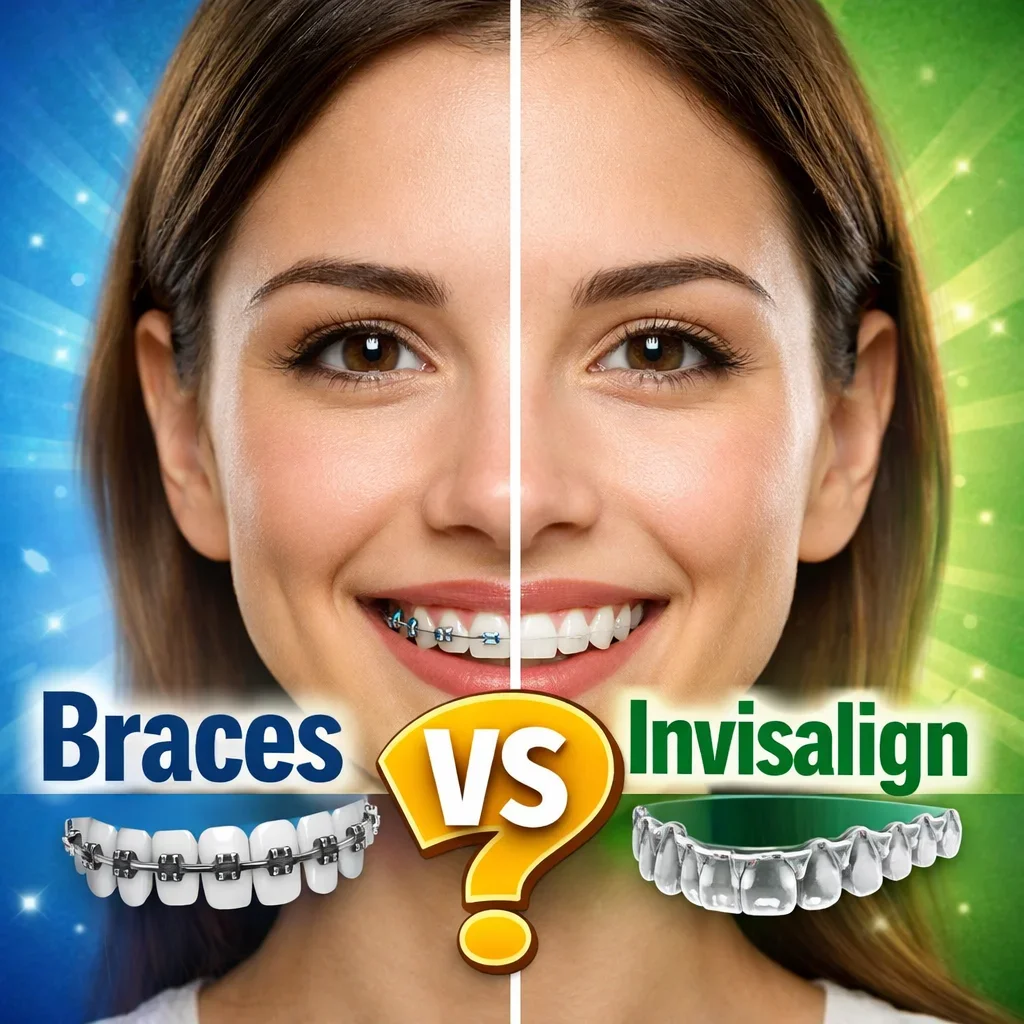
Final Verdict: Are Braces Better or Invisalign for You?
After exploring effectiveness, comfort, appearance, age suitability, cost, and lifestyle factors, we arrive at the most important question of all: are braces better or invisalign for you personally? This final verdict is not about declaring a universal winner—it’s about helping you make a confident, informed decision that aligns with your dental needs, expectations, and daily life. 🦷
When people search are braces better or invisalign, they often hope for a simple yes-or-no answer. However, orthodontic treatment is highly individualized. The “better” option depends on a balance of clinical requirements and personal priorities. Understanding this balance is the key to long-term satisfaction.
When Braces Are the Better Choice
In many situations, the answer to are braces better or invisalign clearly favors braces. Patients with complex orthodontic issues—such as severe crowding, significant bite problems, rotated teeth, or jaw discrepancies—often benefit more from braces. Their fixed nature allows for precise, continuous force and greater control over tooth movement.
Braces are also ideal for patients who prefer a low-responsibility approach. Because braces work around the clock without requiring daily decisions, they reduce the risk of treatment delays caused by missed wear time. For children, teenagers, and busy adults who may struggle with consistency, this reliability often makes braces the better option.
Long-Term Predictability
If predictability and efficiency matter most to you, braces often provide peace of mind. Orthodontists can adjust and guide treatment closely, making braces a strong choice when certainty is a priority. In these cases, many professionals confidently answer are braces better or invisalign with “braces.”
When Invisalign Is the Better Choice
On the other hand, there are many scenarios where the answer to are braces better or invisalign leans toward Invisalign. Patients with mild to moderate alignment issues who value discretion, comfort, and flexibility often find clear aligners to be the superior option.
Invisalign is particularly appealing to adults who want to maintain a professional appearance during treatment. The ability to remove aligners for meals and oral hygiene also makes Invisalign a strong choice for those committed to consistent wear and proper care.
Lifestyle and Confidence
If confidence during treatment is a major concern, Invisalign often stands out. Feeling comfortable smiling, speaking, and socializing can make the orthodontic journey far more enjoyable. For disciplined patients who can wear aligners as instructed, Invisalign delivers excellent results—making it the clear answer to are braces better or invisalign in these cases.
The Role of Professional Evaluation
One of the most important takeaways in the discussion are braces better or invisalign is that professional diagnosis matters more than personal preference alone. Orthodontists evaluate X-rays, bite function, tooth anatomy, and jaw structure before recommending a treatment.
Online information can guide your understanding, but it cannot replace an in-person consultation. A professional assessment ensures that your treatment choice is safe, effective, and tailored to your long-term oral health.
No One-Size-Fits-All Answer
The biggest misconception behind the question are braces better or invisalign is the idea that one option is universally superior. In reality, both systems are powerful tools when used correctly. Problems arise only when a treatment is chosen for the wrong reasons—such as aesthetics alone or cost alone—without considering clinical suitability.
Successful orthodontic treatment depends on three pillars: the right treatment plan, professional oversight, and patient cooperation. When these align, both braces and Invisalign can produce outstanding, life-changing results.
Making Your Final Decision
So, are braces better or invisalign? The best answer is the one that fits your orthodontic needs, lifestyle, and mindset. If you value maximum control and predictability, braces may be ideal. If discretion and flexibility matter most and your case allows for it, Invisalign may be the better choice.
In conclusion, the final verdict on are braces better or invisalign is deeply personal—but it doesn’t have to be confusing. With the right information and expert guidance, you can choose a treatment that not only straightens your teeth but also supports your confidence, comfort, and long-term oral health. A well-informed choice today leads to a healthier, happier smile tomorrow. 😁