
When patients lose a back tooth, one of the first questions they ask is: are dental implants necessary for molars? Molars are the large, flat teeth located at the back of your mouth, and they are responsible for most of your chewing power. Because they are less visible than front teeth, many people wonder whether replacing them is truly essential. Understanding whether are dental implants necessary for molars applies to your situation requires looking at function, bone health, long-term stability, and overall oral wellness.
Molars handle up to 90% of your chewing force. Every time you eat tough foods like meat, nuts, or crunchy vegetables, your molars absorb intense pressure. If one is missing, that pressure shifts to neighboring teeth. Over time, this imbalance can cause tooth wear, fractures, jaw discomfort, and even bite misalignment. That is one reason why dentists carefully evaluate whether are dental implants necessary for molars in each individual case.
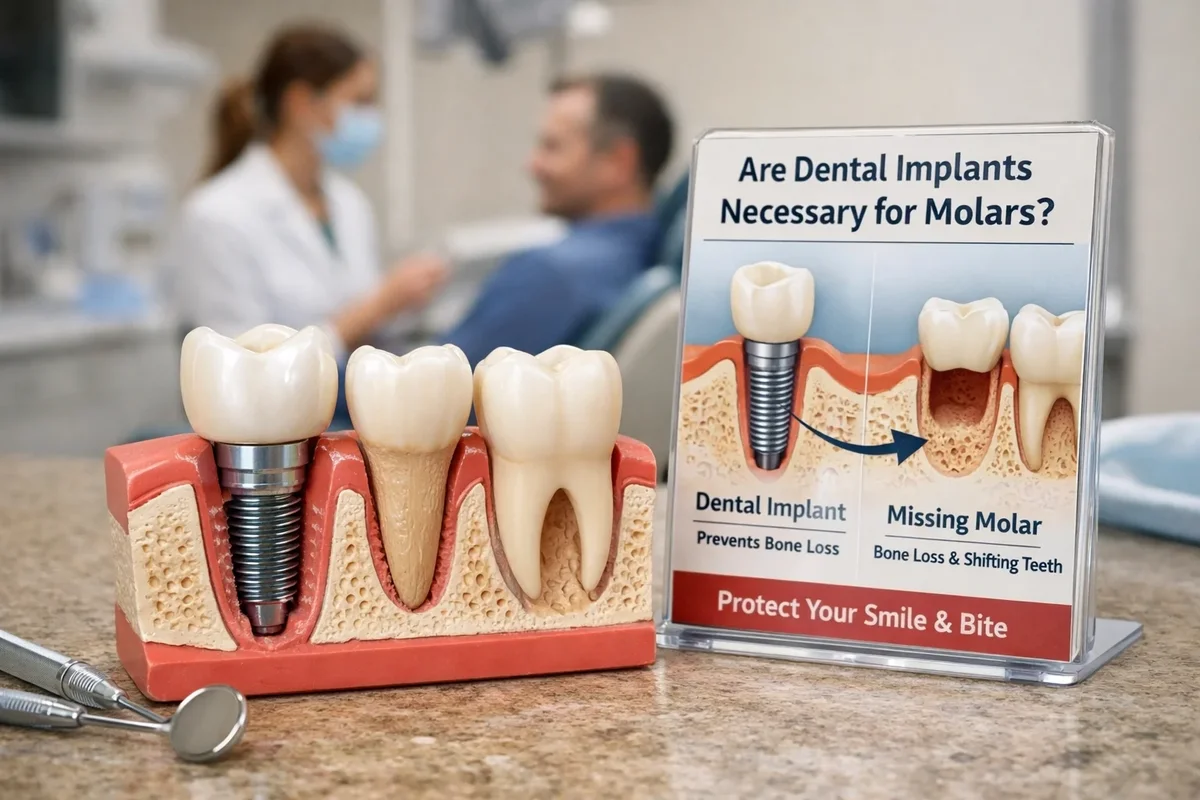
Another critical factor is jawbone preservation. Your tooth roots stimulate the surrounding bone whenever you chew. When a molar is removed and not replaced, the bone in that area begins to shrink—a process known as bone resorption. Studies show that significant bone loss can occur within the first year after extraction. So when asking are dental implants necessary for molars, it is important to consider not just the tooth, but the health of the jawbone underneath it.
Dental implants are designed to replace both the visible crown and the tooth root. A titanium post is surgically placed into the jawbone, where it integrates through a process called osseointegration. This creates a strong, stable foundation that mimics a natural tooth. Because implants restore root stimulation, they are often recommended when evaluating are dental implants necessary for molars, especially in younger or middle-aged adults who want long-term structural support.
However, the answer to are dental implants necessary for molars is not always a simple yes or no. Some patients may function reasonably well without replacing a second molar, particularly if their bite remains stable and there are no opposing teeth that could over-erupt. Others may be better candidates for alternatives such as dental bridges or partial dentures. Still, implants are generally considered the gold standard because they do not rely on neighboring teeth for support and help maintain jaw integrity.
From a long-term perspective, leaving a molar gap untreated can lead to shifting teeth, food trapping, gum inflammation, and even temporomandibular joint (TMJ) issues. When patients ask are dental implants necessary for molars, dentists also evaluate these risk factors. Preventive dentistry focuses on avoiding future complications rather than simply addressing current symptoms.
Cost is another consideration. In the United States, a single dental implant for a molar typically ranges between $3,000 and $5,500 depending on the clinic, bone graft needs, and crown materials. While this may seem like a large investment, it is important to compare it to the potential cost of ongoing dental repairs if a missing molar causes bite problems or additional tooth damage. When reviewing whether are dental implants necessary for molars, many patients realize that long-term stability often outweighs short-term savings.
According to the American Dental Association, replacing missing teeth is important for maintaining proper oral function and preventing future dental issues. While not every case demands immediate implantation, professional evaluation is crucial. If you are unsure whether are dental implants necessary for molars in your situation, consulting a specialist can provide clarity and a personalized treatment plan.
Ultimately, the question are dental implants necessary for molars depends on several factors: the location of the missing tooth, your bite alignment, bone density, oral hygiene habits, and long-term health goals. For many patients, implants provide durability, stability, and protection against bone loss. For others, monitoring the area or choosing an alternative restoration may be acceptable.
If you are experiencing discomfort, difficulty chewing, or concerns about jaw changes after losing a molar, seeking expert guidance is the best next step. You can reach out through the Redent Klinik Contact Page to receive a professional assessment tailored to your needs. A personalized evaluation will help determine clearly whether are dental implants necessary for molars in your specific case, ensuring both functional and long-term oral health. 🦷
1. Why Molars Play a Crucial Role in Your Oral Health
Before answering the question are dental implants necessary for molars, it is essential to understand why molars are so important in the first place. Molars are the large, multi-rooted teeth located at the back of your mouth. Their broad chewing surfaces are specifically designed to grind food into small, digestible pieces. Without them, your entire chewing system must adapt — often in ways that create long-term problems.
Many patients underestimate the importance of molars because they are not visible when smiling. However, when dentists evaluate whether are dental implants necessary for molars, they focus less on appearance and more on function, bite balance, and jaw health. Molars are the foundation of your chewing efficiency and structural stability.
The Biomechanics of Chewing and Bite Force
Your molars absorb the majority of chewing pressure. Studies show that the back teeth can generate bite forces of 150–250 pounds per square inch. When one molar is missing, that force is redistributed to neighboring teeth and the opposite arch. Over time, this imbalance can cause microfractures, enamel wear, and even tooth mobility.
This is why dentists carefully analyze whether are dental implants necessary for molars in patients who report jaw fatigue or uneven chewing. When molars are absent, the premolars and front teeth are forced to compensate, even though they are not anatomically designed for heavy grinding. This can accelerate wear and create sensitivity.
Impact on Adjacent Teeth
Teeth naturally shift toward empty spaces. When a molar is lost and not replaced, the neighboring tooth may tilt into the gap. The opposing tooth (the one above or below the missing molar) may over-erupt because it no longer has contact. These movements disturb your occlusion — the way your teeth fit together.
In clinical evaluations of whether are dental implants necessary for molars, dentists often observe bite collapse patterns in patients who delayed treatment. Correcting these changes later may require orthodontics or more complex restorative procedures.
Jawbone Stimulation and Structural Integrity
Each molar has multiple roots embedded deeply in the jawbone. These roots stimulate bone tissue every time you chew. Once a molar is removed, the surrounding bone begins to shrink due to lack of stimulation. This process, called bone resorption, can reduce bone volume significantly within the first year.
When asking are dental implants necessary for molars, bone preservation becomes a central factor. Dental implants replace the tooth root with a titanium post, maintaining bone density through functional stimulation. Without replacement, the jaw may gradually weaken in that area, potentially affecting facial structure over time.
Long-Term Facial Support
Although front teeth play a visible role in aesthetics, molars contribute to vertical facial dimension. If multiple molars are missing, the lower face can shorten slightly due to bite collapse. This may lead to wrinkles around the mouth and a prematurely aged appearance.
In discussions about are dental implants necessary for molars, dentists sometimes emphasize these structural effects, especially in patients who have lost several back teeth. Restoring molars with implants can help maintain facial harmony and bite height.
Digestive Health and Nutritional Impact
Proper chewing is the first step of digestion. Molars break food into smaller particles, increasing surface area for enzymes in saliva and the stomach. Without efficient molars, people may swallow larger food pieces, which can strain digestion and limit dietary choices.
Patients who hesitate and wonder are dental implants necessary for molars sometimes report avoiding certain foods like nuts, steak, or raw vegetables. Over time, this restriction can affect nutritional intake. Replacing molars restores full chewing capability, allowing a balanced and varied diet.
Are All Molars Equally Important?
First molars are generally more critical than second molars because they bear the highest chewing load. In some rare cases, losing a second molar may not significantly affect bite balance if the first molar remains intact. Therefore, the answer to are dental implants necessary for molars depends partly on which molar is missing.
Dentists evaluate:
- Which molar is absent
- Whether opposing teeth are present
- The patient’s bite alignment
- Bone density levels
- Overall oral hygiene
This individualized assessment ensures that the decision about whether are dental implants necessary for molars is based on science rather than assumption.
Functional vs. Cosmetic Dentistry Perspective
Unlike front teeth, molars are rarely replaced for cosmetic reasons. The motivation is primarily functional and preventative. From a restorative dentistry perspective, molars serve as load-bearing pillars in the dental arch.
When dentists discuss whether are dental implants necessary for molars, they are thinking long-term: preventing bite collapse, avoiding bone shrinkage, protecting adjacent teeth, and maintaining oral harmony.
Ultimately, molars are not optional components of your oral system — they are key structural players. Understanding their role helps clarify why the question are dental implants necessary for molars is not simply about replacing a tooth, but about preserving function, balance, and overall oral health for years to come. 🦷
2. What Happens If You Do Not Replace a Missing Molar?
When patients lose a back tooth, they often delay treatment because the gap is not visible. However, understanding what truly happens after molar loss is essential before deciding whether are dental implants necessary for molars. While it may seem harmless at first, the consequences of leaving a missing molar untreated can gradually affect your bite, bone health, and overall oral stability.
Tooth Shifting and Bite Misalignment
One of the first changes that occurs after losing a molar is tooth movement. Teeth naturally drift toward empty spaces. If you do not replace a missing molar, the neighboring teeth begin tilting into the gap. This can create uneven spacing, food traps, and difficulty cleaning.
When evaluating are dental implants necessary for molars, dentists carefully examine whether surrounding teeth have started to shift. Even minor tilting can disrupt your occlusion (bite alignment), leading to jaw discomfort and uneven pressure distribution. Over time, misalignment may require orthodontic correction in addition to restorative treatment.
Opposing Tooth Over-Eruption
If a molar in the lower jaw is lost, the upper molar above it no longer has contact. Without this opposing force, it may begin to erupt further down into the empty space. This process, known as supra-eruption, can create vertical bite discrepancies and gum sensitivity.
This is another key factor in determining are dental implants necessary for molars. When opposing teeth shift out of position, correcting the problem becomes more complex and may involve reshaping, crowning, or even extracting the over-erupted tooth.
Bone Loss and Jaw Deterioration
Bone resorption begins almost immediately after tooth extraction. The jawbone depends on stimulation from tooth roots to maintain its density. Without that stimulation, the body starts to reabsorb the bone in that area.
Within the first year, significant bone volume can be lost. This weakening of the jaw structure is one of the strongest reasons dentists recommend implants when discussing are dental implants necessary for molars. Unlike bridges or dentures, implants replace the root and preserve bone through functional stimulation.
Long-Term Structural Changes
If bone loss continues unchecked, it may eventually affect neighboring teeth. Teeth rely on strong surrounding bone for stability. Reduced support can increase mobility and raise the risk of periodontal complications.
When patients postpone deciding whether are dental implants necessary for molars, they may later require bone grafting procedures before implant placement. Early intervention is often simpler and more predictable.
Reduced Chewing Efficiency
Molars are responsible for grinding food into smaller particles. Losing even one molar reduces chewing efficiency. Many patients subconsciously shift chewing to the opposite side of the mouth, which can lead to uneven muscle development and jaw fatigue.
When considering are dental implants necessary for molars, dentists also assess functional complaints. Do you avoid certain foods? Do you experience discomfort when chewing tougher meals? Reduced chewing ability can impact digestion and overall nutrition.
Increased Risk of Tooth Wear and Fracture
When bite forces are redistributed due to a missing molar, the remaining teeth endure greater stress. Premolars and front teeth are not designed to handle heavy grinding loads. Over time, this excess pressure may lead to cracks, enamel wear, or even fractured restorations.
In cases where patients question are dental implants necessary for molars, dentists explain that protecting the remaining teeth is often just as important as replacing the lost one. Preventive restoration can save patients from more extensive procedures in the future.
Potential TMJ and Jaw Joint Problems
Bite imbalance can also influence the temporomandibular joint (TMJ). When chewing becomes uneven, jaw muscles may strain to compensate. This imbalance can contribute to headaches, clicking sounds, or jaw stiffness.
While not every missing molar leads to TMJ issues, dentists factor this risk into their evaluation of are dental implants necessary for molars. Restoring proper occlusion can reduce strain on the jaw joint and improve comfort.
Psychological and Lifestyle Effects
Although molars are not visible, patients sometimes feel self-conscious about missing teeth. Additionally, avoiding certain foods can reduce social enjoyment during meals. These lifestyle changes may seem minor but can affect quality of life over time.
When discussing are dental implants necessary for molars, it is important to consider not only structural health but also confidence and daily comfort.
Is It Ever Safe to Leave a Molar Unreplaced?
In some specific cases, particularly if the second molar is missing and the bite remains stable, monitoring may be acceptable. However, this decision should always be made after professional examination, including radiographs and bite analysis.
Ultimately, the consequences of not replacing a missing molar can accumulate gradually. Tooth shifting, bone loss, reduced chewing power, and bite imbalance are all potential outcomes. These risks explain why dentists carefully assess whether are dental implants necessary for molars for each individual patient.
Choosing to replace a molar is not merely about filling a gap — it is about maintaining long-term oral stability, protecting adjacent teeth, and preserving jaw health. Understanding what happens when you do nothing makes it easier to evaluate whether are dental implants necessary for molars in your personal situation. 🦷
3. Are Dental Implants Necessary for Molars or Are There Alternatives?
One of the most common concerns patients express after losing a back tooth is whether implants are the only solution. Many people directly ask their dentist, are dental implants necessary for molars, or can another treatment provide similar results? The answer depends on several clinical factors, including bite stability, bone health, oral hygiene habits, and long-term goals. While dental implants are widely considered the gold standard for tooth replacement, they are not the only option available.
To properly answer the question are dental implants necessary for molars, it is important to understand the alternatives and how they compare in terms of durability, function, and long-term oral health impact.
Option 1: Dental Bridges
A dental bridge is a fixed restoration that replaces a missing tooth by anchoring an artificial crown to the adjacent teeth. In many cases, patients wondering are dental implants necessary for molars consider bridges as a more affordable or less invasive alternative.
How Bridges Work
A traditional bridge requires reshaping the neighboring teeth to support crowns. The artificial molar is suspended between these crowns, restoring the visible gap and some chewing function. Bridges can typically be completed within a few weeks, making them attractive for patients seeking quicker solutions.
However, bridges do not replace the tooth root. Because they sit above the gum line, they do not stimulate the jawbone. This means bone resorption can still occur beneath the missing molar site. When evaluating are dental implants necessary for molars, bone preservation is a major consideration.
Advantages and Disadvantages of Bridges
- Advantages: Faster treatment time, lower upfront cost, no surgical procedure required.
- Disadvantages: Requires healthy adjacent teeth to be filed down, does not prevent bone loss, average lifespan 10–15 years.
For some patients, especially those with compromised bone density or medical conditions that limit surgery, bridges may be a practical alternative. Still, many dentists recommend implants when answering are dental implants necessary for molars because implants do not rely on neighboring teeth.
Option 2: Removable Partial Dentures
Another alternative for patients questioning are dental implants necessary for molars is a removable partial denture. This appliance replaces one or more missing teeth and can be taken out for cleaning.
Function and Comfort Considerations
Partial dentures are generally more affordable than implants and bridges. However, they may feel less stable during chewing, especially when replacing molars that handle strong bite forces. Some patients report discomfort, gum irritation, or difficulty adapting to removable appliances.
Because partial dentures also do not stimulate the jawbone, bone shrinkage continues over time. This often requires periodic adjustments or relining. Therefore, when patients ask are dental implants necessary for molars, dentists often explain that removable options provide temporary functional support but may not offer long-term structural benefits.
Option 3: Leaving the Space Untreated
Some patients consider doing nothing, especially if the missing molar is not visible. However, as discussed earlier, leaving the space untreated can lead to tooth shifting, bite imbalance, and bone loss.
When analyzing are dental implants necessary for molars, dentists assess whether the remaining teeth can maintain stability without intervention. In rare cases—such as a missing second molar with stable occlusion—monitoring may be acceptable. But in most cases, some form of replacement is recommended to prevent complications.
Why Implants Are Often Preferred
Dental implants replace both the crown and the root of the tooth. The titanium post integrates with the jawbone, providing strength and stability comparable to natural teeth. This root replacement is the key difference when evaluating are dental implants necessary for molars.
Long-Term Benefits of Implants
- Preserve jawbone density
- Prevent shifting of adjacent teeth
- Restore full chewing power
- Do not require altering neighboring teeth
- Can last 20 years or more with proper care
In terms of longevity, implants often outperform bridges and removable dentures. While the initial cost may be higher—typically ranging from $3,000 to $5,500 per molar implant in the United States—the long-term durability frequently makes them a cost-effective solution.
Medical and Personal Factors That Influence the Decision
Not every patient is automatically a candidate for implants. Conditions such as uncontrolled diabetes, severe bone loss, heavy smoking, or certain medications may affect healing. Therefore, when determining are dental implants necessary for molars, a comprehensive evaluation including X-rays and medical history review is essential.
Age is also a factor. Younger patients often benefit more from implants because preserving bone early prevents future complications. Older adults with stable bites may sometimes choose alternative solutions based on comfort and preference.
So, Are Implants Truly Necessary?
The answer to are dental implants necessary for molars is highly individualized. In many cases, implants provide the most biologically sound and long-lasting solution. However, bridges or partial dentures may be appropriate depending on health status, financial considerations, and personal goals.
Ultimately, deciding whether are dental implants necessary for molars requires balancing short-term convenience with long-term oral health. Consulting with a qualified dental professional ensures that the chosen treatment supports not only chewing function but also structural stability for years to come. 🦷
4. Functional Benefits of Molar Implants for Chewing and Bite Force
When patients lose a back tooth, they often underestimate how much it affects daily function. One of the strongest arguments behind the question are dental implants necessary for molars relates to chewing efficiency and bite force distribution. Molars are specifically designed to grind food and withstand intense pressure. Replacing them with a solution that restores both strength and stability can dramatically improve oral performance and long-term dental health.
How Molars Support Maximum Bite Strength
Molars are the workhorses of your mouth. Their wide surfaces and multiple roots allow them to handle significant chewing pressure. Scientific studies show that the highest bite forces are generated in the molar region, often exceeding 200 pounds per square inch. When a molar is missing, that force does not disappear — it is redistributed to neighboring teeth.
This redistribution is a central reason dentists evaluate are dental implants necessary for molars. Premolars and front teeth are not anatomically designed to absorb heavy grinding forces. Over time, this imbalance can cause accelerated wear, enamel cracks, or sensitivity.
Uneven Pressure and Tooth Damage
Without proper molar support, chewing often shifts to one side of the mouth. This creates asymmetric muscle activity and uneven pressure patterns. Patients may not notice it immediately, but gradual overloading can weaken restorations, damage crowns, or create microfractures.
In clinical discussions about are dental implants necessary for molars, preserving balanced bite mechanics is a primary concern. A well-placed implant restores proper load distribution and protects surrounding teeth.
Improved Chewing Efficiency and Digestion
Chewing is the first stage of digestion. Molars break down food into smaller particles, allowing saliva enzymes to begin chemical digestion. If chewing efficiency decreases due to missing molars, larger food particles may reach the stomach, potentially leading to digestive discomfort.
When patients wonder are dental implants necessary for molars, they often report avoiding hard or fibrous foods. This can limit dietary variety and nutritional balance. Restoring a missing molar with an implant helps reestablish full chewing capability, allowing patients to eat comfortably and confidently.
Restoring Confidence While Eating
Functional restoration also improves quality of life. Patients frequently express anxiety when chewing on the side of a missing molar. With an implant-supported crown, chewing feels natural and secure. This functional stability is a compelling factor in answering are dental implants necessary for molars.
Stability Compared to Other Restorations
Unlike removable partial dentures, dental implants are anchored directly into the jawbone. This integration provides exceptional stability during chewing. Bridges may restore surface function but still rely on adjacent teeth for support.
When evaluating are dental implants necessary for molars, stability under pressure becomes a defining difference. Implants function independently and mimic natural tooth biomechanics more closely than alternative treatments.
Osseointegration and Force Absorption
Dental implants fuse with the jawbone through osseointegration. This biological process allows the implant to absorb and distribute chewing forces in a way similar to natural tooth roots. As a result, implants help maintain structural integrity within the dental arch.
This root-level reinforcement explains why dentists frequently recommend implants when considering are dental implants necessary for molars. Without root replacement, force distribution remains compromised.
Long-Term Protection of Remaining Teeth
When molars are missing and not replaced, the remaining teeth compensate. Over years, this compensation may lead to excessive wear, fractures, or periodontal strain. Replacing the molar reduces stress on adjacent teeth and can extend their lifespan.
Therefore, answering are dental implants necessary for molars often involves preventative reasoning. Implants do not only restore one tooth — they protect the entire bite system.
Impact on Jaw Joint (TMJ) Health
Bite imbalance can affect the temporomandibular joint (TMJ). When chewing becomes uneven, jaw muscles may strain to compensate for missing support. This can contribute to tension headaches, clicking sounds, or jaw stiffness.
In some patients, restoring a missing molar with an implant improves occlusal harmony and reduces muscular strain. This functional improvement is another important consideration in the discussion of are dental implants necessary for molars.
Are Implants Always Required for Function?
While implants offer superior functional benefits, not every missing molar automatically requires replacement. If the second molar is absent but the first molar and overall bite remain stable, careful monitoring may be appropriate.
However, in most cases where chewing efficiency is compromised or bite balance is disrupted, the answer to are dental implants necessary for molars leans strongly toward yes. Restoring structural support early can prevent cascading dental complications.
Ultimately, molar implants are not merely cosmetic solutions. They are biomechanical restorations that reestablish balanced chewing forces, protect adjacent teeth, preserve jawbone density, and maintain oral harmony. Understanding these functional benefits provides a clearer perspective when evaluating whether are dental implants necessary for molars in your individual case. 🦷
5. Bone Loss and Jaw Changes: Do You Really Need an Implant?
One of the most medically important aspects behind the question are dental implants necessary for molars involves bone preservation. While many patients focus on chewing or visible gaps, dentists are often more concerned about what happens beneath the gum line. The jawbone is a living structure that depends on stimulation from tooth roots. When a molar is lost, the bone in that area begins to shrink. Understanding this biological process is critical when deciding whether are dental implants necessary for molars in your situation.
Why the Jawbone Shrinks After Tooth Loss
Every time you chew, pressure travels through the tooth root into the surrounding bone. This stimulation signals the body to maintain bone density. Once a molar is removed, that stimulation stops. The body interprets the unused bone as unnecessary and gradually begins resorbing it.
Clinical studies show that significant bone loss can occur within the first 6–12 months after extraction. Over several years, the bone width and height may reduce dramatically. This is one of the strongest biological arguments when evaluating are dental implants necessary for molars.
How Much Bone Loss Can Occur?
Research indicates that up to 25% of bone width may be lost within the first year after tooth extraction. Continued shrinkage may follow if the space remains untreated. This can weaken the support of neighboring teeth and change the contour of the jaw.
When dentists analyze are dental implants necessary for molars, they frequently use X-rays or 3D scans to measure bone levels. Early replacement often prevents the need for complex grafting procedures later.
The Role of Dental Implants in Bone Preservation
Dental implants are unique because they replace not only the visible crown but also the root. The titanium post integrates with the jawbone through osseointegration. This process allows the implant to transmit chewing forces into the bone, preserving its density.
When patients ask are dental implants necessary for molars, dentists often explain that implants are the only restoration that actively maintains bone structure. Bridges and partial dentures sit above the gum line and do not prevent bone resorption.
Preventing Future Surgical Complications
If bone loss progresses too far, placing an implant later may require bone grafting. Bone graft procedures increase treatment time, cost, and healing complexity. Addressing the missing molar earlier can simplify the process significantly.
For this reason, evaluating are dental implants necessary for molars sooner rather than later often leads to more predictable and conservative treatment.
Changes in Facial Structure and Bite Height
Bone loss does not only affect internal support — it can influence facial proportions. Molars contribute to vertical bite height. If multiple molars are missing, the lower third of the face may gradually shorten due to bite collapse.
This can lead to subtle aesthetic changes, such as deepening of smile lines or a slightly aged appearance. While these changes are gradual, they are part of the broader picture when assessing are dental implants necessary for molars.
Impact on Adjacent Teeth Stability
As bone density decreases, neighboring teeth may lose support. Teeth depend on strong surrounding bone for long-term stability. Reduced bone height may increase the risk of mobility or periodontal complications.
When discussing are dental implants necessary for molars, dentists consider whether preserving bone today will protect other teeth tomorrow.
Medical Factors That Influence Bone Health
Certain conditions accelerate bone loss, including osteoporosis, smoking, uncontrolled diabetes, and chronic gum disease. In these cases, delaying replacement may worsen structural damage.
Therefore, the answer to are dental implants necessary for molars may depend on overall health status. Patients with higher risk factors for bone deterioration often benefit from earlier intervention.
Is Bone Loss Always Severe?
Not every patient experiences extreme bone shrinkage. The degree of resorption varies depending on age, genetics, oral hygiene, and location of the missing molar. However, some degree of bone reduction is almost inevitable without root stimulation.
Even if the process is slow, dentists factor this progression into their evaluation of are dental implants necessary for molars. Preventative care often avoids future structural compromise.
Balancing Function and Structural Integrity
When deciding are dental implants necessary for molars, it is important to view the tooth not as an isolated structure but as part of a dynamic system. The jawbone, adjacent teeth, and overall bite harmony are interconnected.
Replacing a missing molar with an implant helps preserve bone, stabilize the dental arch, maintain facial proportions, and prevent future complications. While alternatives may restore surface function, they do not address underlying bone health.
Ultimately, bone preservation is one of the most compelling reasons why dentists frequently recommend implants when patients ask are dental implants necessary for molars. Protecting the jaw today supports long-term oral stability, reduces the need for future surgeries, and ensures that your dental foundation remains strong for decades to come. 🦷
6. Cost of Molar Implants: Investment vs Long-Term Value
For many patients, the biggest factor behind the question are dental implants necessary for molars is financial. Dental implants are often perceived as expensive compared to bridges or removable dentures. However, when evaluating treatment options, it is important to look beyond the initial price and consider long-term durability, maintenance costs, and overall oral health impact.
Understanding the true financial picture can help patients make informed decisions about whether are dental implants necessary for molars in their specific case.
Average Cost of a Molar Implant
In the United States, the cost of a single molar implant typically ranges between $3,000 and $5,500. This usually includes:
- Implant placement surgery
- Titanium implant post
- Abutment (connector piece)
- Custom-made crown
- Basic follow-up appointments
If additional procedures such as bone grafting or sinus lifting are required, the total cost may increase. These additional procedures can range from $500 to $3,000 depending on complexity.
When patients ask are dental implants necessary for molars, cost is often their first concern. However, it is important to compare this one-time investment to the long-term costs of alternative treatments.
Insurance Coverage Considerations
Dental insurance coverage for implants varies. Some plans partially cover implant crowns but not the surgical portion. Others consider implants elective procedures. Reviewing your policy details is essential when deciding whether are dental implants necessary for molars from a financial perspective.
Comparing Implants to Dental Bridges
A traditional dental bridge generally costs between $2,000 and $4,000. At first glance, this appears more affordable. However, bridges typically last around 10–15 years, while well-maintained implants can last 20 years or longer — often a lifetime.
Additionally, bridges require reshaping adjacent teeth. If those supporting teeth develop decay or fracture, replacement costs increase. Over decades, this can exceed the cost of a single implant.
When evaluating are dental implants necessary for molars, dentists often explain that implants protect neighboring teeth, potentially reducing future restorative expenses.
Comparing Implants to Partial Dentures
Removable partial dentures typically cost between $1,000 and $2,500. While this is the most affordable option upfront, dentures may require frequent adjustments, relining, or replacement over time.
Because dentures do not prevent bone loss, the jaw structure can change, leading to fit issues. Over years, repeated adjustments add cost and inconvenience. Patients considering are dental implants necessary for molars should factor in these long-term maintenance expenses.
Hidden Costs of Doing Nothing
Choosing not to replace a missing molar may seem like saving money. However, untreated gaps can lead to:
- Tooth shifting requiring orthodontic correction
- Cracked teeth from uneven bite force
- Gum disease due to food trapping
- Bone grafting if future implant placement is delayed
When these complications arise, treatment costs may exceed the original implant investment. Therefore, the financial evaluation of are dental implants necessary for molars should include potential future consequences.
Long-Term Value and Durability
Dental implants are made from biocompatible titanium designed to integrate with the jawbone. With proper oral hygiene and regular dental check-ups, implant survival rates exceed 95% over 10 years.
This durability makes implants a strong long-term solution. When patients weigh are dental implants necessary for molars, they often realize that implants function similarly to natural teeth in strength and reliability.
Cost Per Year Comparison
If a $4,500 implant lasts 25 years, the annual cost averages about $180 per year. A $3,000 bridge replaced every 12 years could cost $6,000 over 24 years — not including potential additional procedures.
This perspective shifts the discussion from immediate expense to long-term value when considering are dental implants necessary for molars.
Quality of Life and Productivity
Financial value is not measured only in dollars. Implants restore full chewing function, reduce discomfort, and improve confidence. Avoiding repeated dental procedures also reduces time away from work and daily responsibilities.
For many patients, understanding these benefits clarifies the answer to are dental implants necessary for molars beyond simple price comparison.
Financing and Payment Options
Many clinics offer financing plans, installment options, or medical credit services. Spreading payments over time can make implant treatment more manageable. Patients concerned about affordability should explore these options before concluding that implants are out of reach.
Ultimately, the decision regarding are dental implants necessary for molars involves balancing upfront cost with long-term protection, durability, and stability. While implants require a higher initial investment, they often provide superior functional, structural, and financial value over time.
Choosing wisely today can prevent more expensive and complex treatments tomorrow. 🦷
7. Risks and Complications of Leaving a Molar Gap Untreated
When patients hesitate to replace a missing back tooth, they often assume that the consequences will be minimal. However, understanding the risks of doing nothing is essential before deciding are dental implants necessary for molars. A molar gap may not be visible when you smile, but its long-term effects can gradually impact your entire oral system. Dentists evaluate not only the current condition but also the potential complications that may develop over time.
Progressive Tooth Shifting and Crowding
Teeth are not fixed in place permanently; they respond to pressure and space changes. When a molar is missing, adjacent teeth naturally begin drifting toward the empty space. This movement can lead to crowding, tilting, and bite irregularities.
When assessing are dental implants necessary for molars, dentists often observe early signs of tooth migration. Even slight shifting can alter how upper and lower teeth meet, leading to occlusal imbalance. Over time, this may require orthodontic correction or additional restorative work.
Food Trapping and Gum Irritation
Tilting teeth create open contacts where food can easily become trapped. This increases the risk of plaque buildup, gum inflammation, and periodontal disease. Patients who delay replacement sometimes report persistent irritation or bleeding gums around the affected area.
These hygiene challenges are a key factor when evaluating are dental implants necessary for molars, as preventing gum disease is a priority in long-term oral care.
Overloading of Remaining Teeth
Molars are designed to absorb strong chewing forces. Without one molar, surrounding teeth must compensate for the missing support. This overload may result in cracks, fractures, or accelerated enamel wear.
In many cases, patients only realize the functional impact after experiencing discomfort. Dentists frequently explain that protecting adjacent teeth is one of the strongest reasons behind the question are dental implants necessary for molars.
Fractured Crowns and Restorations
If a patient already has crowns or fillings on nearby teeth, uneven bite pressure can shorten their lifespan. Replacing damaged restorations increases both cost and treatment complexity.
Therefore, when considering are dental implants necessary for molars, the preventive benefit of stabilizing bite force becomes especially important.
Bone Resorption and Structural Weakness
As discussed previously, bone resorption begins shortly after tooth extraction. If the molar gap remains untreated, the jawbone in that region continues to shrink. This can weaken the structural support for neighboring teeth and alter jaw contour.
When dentists evaluate are dental implants necessary for molars, bone preservation is a central concern. Delayed treatment may eventually require bone grafting before implant placement is even possible.
Temporomandibular Joint (TMJ) Disorders
Uneven bite distribution can strain jaw muscles and joints. Over time, this imbalance may contribute to temporomandibular joint discomfort. Symptoms can include jaw clicking, headaches, ear pain, and difficulty opening the mouth fully.
Although not every missing molar causes TMJ problems, dentists include this risk in their assessment of are dental implants necessary for molars. Restoring proper occlusion can help maintain joint stability and reduce muscle strain.
Changes in Chewing Habits and Digestion
Many patients subconsciously avoid chewing on the side of a missing molar. This one-sided chewing can fatigue jaw muscles and reduce chewing efficiency. Inadequate breakdown of food may also affect digestion and nutritional intake.
When asking are dental implants necessary for molars, patients should consider not only structural damage but also daily comfort and dietary flexibility.
Psychological and Lifestyle Impact
Even though molars are not visible, patients sometimes feel uneasy about having a missing tooth. Fear of chewing discomfort or future dental problems may reduce overall confidence.
In clinical discussions about are dental implants necessary for molars, quality of life is a valid consideration. Restoring a molar can provide reassurance, functional security, and peace of mind.
Escalating Treatment Complexity Over Time
The longer a molar gap remains untreated, the more complex the dental situation may become. Tooth shifting, bone loss, and restorative damage can compound. What might have been a straightforward implant procedure initially could later require grafting, orthodontics, or additional restorations.
This progressive complexity explains why dentists often recommend early evaluation when patients question are dental implants necessary for molars. Preventive intervention is generally simpler and more cost-effective than corrective treatment years later.
Balancing Risks and Preventive Care
Ultimately, leaving a molar gap untreated introduces cumulative risks. While not every patient will experience severe complications, the probability of structural, functional, and periodontal issues increases over time.
When considering are dental implants necessary for molars, it is important to weigh these potential risks against the benefits of proactive restoration. Replacing a molar is not just about filling a space — it is about preserving balance, protecting adjacent teeth, maintaining jawbone integrity, and preventing escalating dental problems.
Understanding these risks helps patients make informed decisions based on long-term oral health rather than short-term convenience. 🦷
8. When Are Dental Implants Not Necessary for Molars?
While implants are often considered the gold standard for replacing missing teeth, the answer to are dental implants necessary for molars is not always an automatic yes. Dentistry is highly individualized. There are specific situations in which replacing a molar with an implant may not be immediately required, or where alternative treatment strategies may be appropriate. Understanding these scenarios helps patients make balanced, evidence-based decisions.
Missing Second Molars With Stable Bite
One of the most common cases where dentists carefully evaluate are dental implants necessary for molars is when the second molar (the very last tooth in the back) is missing. If the first molar remains intact and the opposing tooth is also absent or stable, the bite may remain functionally balanced.
In such cases, chewing efficiency might not significantly decrease, and adjacent teeth may remain stable. Dentists may recommend monitoring rather than immediate intervention. However, regular follow-up exams are crucial to ensure no shifting or bone loss progresses.
Factors That Support Monitoring Instead of Immediate Implant
- Stable occlusion (bite alignment)
- No opposing tooth causing over-eruption
- Healthy surrounding teeth and gums
- Minimal functional discomfort
Even in these scenarios, patients should still ask periodically whether are dental implants necessary for molars as conditions can change over time.
Medical Conditions That Delay Implant Placement
Certain health conditions may temporarily or permanently influence the decision regarding are dental implants necessary for molars. For example:
- Uncontrolled diabetes
- Severe osteoporosis
- Recent radiation therapy to the jaw
- Heavy smoking habits
These factors may affect healing and osseointegration. In such cases, dentists may recommend stabilizing the medical condition first or exploring non-surgical alternatives.
Temporary vs. Permanent Contraindications
Some conditions are temporary barriers rather than permanent ones. For instance, improving blood sugar control or quitting smoking can significantly improve implant success rates. Therefore, even if implants are delayed, the question are dental implants necessary for molars may still apply in the future.
Advanced Age With Minimal Functional Demand
Age alone is not a contraindication for implants. Many older adults successfully receive implants. However, in some elderly patients with low functional demand and stable chewing patterns, dentists may determine that replacement is optional.
If a patient eats a soft diet, has no opposing molar causing complications, and experiences no discomfort, careful observation may be acceptable. In such cases, the answer to are dental implants necessary for molars may depend more on comfort and preference than strict medical necessity.
Financial Priorities and Patient Preference
Dental care must align with personal priorities. Some patients may prioritize other medical treatments or financial responsibilities. While implants provide long-term stability, alternative treatments such as bridges or partial dentures may be acceptable compromises.
When discussing are dental implants necessary for molars, dentists consider patient values, lifestyle, and financial comfort. Shared decision-making ensures the chosen treatment supports both health and personal circumstances.
Minimal Bone Loss and Early Monitoring
If a molar has been recently extracted and bone levels remain stable, short-term monitoring may be reasonable. However, bone resorption typically begins soon after extraction. Delaying too long may complicate future implant placement.
Therefore, even if the immediate answer to are dental implants necessary for molars is “not urgently,” long-term planning remains important.
Regular Radiographic Evaluation
Patients choosing to monitor instead of replace should undergo periodic X-rays to track bone density and tooth movement. This ensures early detection of structural changes.
Orthodontic or Prosthetic Treatment Plans
In certain cases, missing molars are part of a broader orthodontic or prosthetic treatment strategy. For example, orthodontic space closure may eliminate the need for replacement. In these scenarios, the question are dental implants necessary for molars must be evaluated within the larger treatment context.
Balancing Risk and Prevention
Even in situations where implants are not immediately necessary, dentists emphasize preventive awareness. Conditions can evolve. Teeth may shift, bone may resorb, and bite forces may change. What is stable today may not remain stable in five years.
Ultimately, the question are dental implants necessary for molars does not have a universal answer. For many patients, implants provide the most predictable and long-lasting solution. For others, careful monitoring or alternative treatments may be appropriate.
The key is individualized assessment. Consulting a qualified dental professional ensures that the decision is based on clinical evidence, personal health, and long-term oral stability. Understanding when implants are not strictly necessary allows patients to make informed, confident choices while remaining attentive to future changes. 🦷
9. How to Decide If Dental Implants Are Necessary for Molars in Your Case
After exploring function, bone health, risks, costs, and alternatives, the final and most important step is personal evaluation. The question are dental implants necessary for molars ultimately depends on your individual dental condition, lifestyle, and long-term goals. While general guidelines are helpful, a customized assessment ensures the right decision for your specific situation.
Step 1: Comprehensive Clinical Examination
The first step in determining are dental implants necessary for molars is a detailed dental examination. This typically includes:
- Digital X-rays or 3D CBCT scans
- Bite analysis (occlusion assessment)
- Bone density evaluation
- Periodontal health check
These diagnostic tools allow the dentist to measure bone levels, detect early tooth shifting, and evaluate structural stability. Without imaging, it is impossible to accurately answer whether are dental implants necessary for molars in your case.
Why Imaging Matters
Many structural changes occur beneath the gum line. Bone resorption, root positioning, and sinus proximity (in upper molars) are not visible during a simple visual exam. Advanced imaging ensures precise treatment planning and reduces surgical risks.
Step 2: Evaluate Your Functional Symptoms
Ask yourself important functional questions:
- Do you avoid chewing on one side?
- Do you feel jaw fatigue after meals?
- Have you noticed changes in your bite?
- Is food frequently trapped near the gap?
If you answer yes to several of these, the likelihood increases that are dental implants necessary for molars may lean toward a positive recommendation. Functional discomfort often signals underlying imbalance.
Step 3: Consider Long-Term Oral Health Goals
Dental decisions should not focus only on the present moment. Consider where you want your oral health to be in 10, 20, or 30 years. Implants are often recommended because they preserve bone, stabilize adjacent teeth, and reduce future restorative needs.
When reflecting on are dental implants necessary for molars, think about prevention. Preventive dentistry frequently saves time, money, and complexity later.
Short-Term vs Long-Term Thinking
Choosing a bridge or partial denture may solve the immediate problem at a lower cost. However, implants typically offer greater longevity and structural protection. Balancing short-term affordability with long-term value is essential when answering are dental implants necessary for molars.
Step 4: Assess Bone Condition Early
Bone resorption begins soon after extraction. If significant bone loss occurs, future implant placement may require grafting procedures. Acting earlier can simplify treatment and reduce overall costs.
Therefore, even if you are unsure whether are dental implants necessary for molars right now, evaluating bone levels early keeps your options open.
Step 5: Review Medical and Lifestyle Factors
Your general health influences implant success. Smoking, uncontrolled diabetes, and certain medications can affect healing. However, many of these risk factors can be managed or improved.
Discussing these aspects with your dentist ensures that the decision regarding are dental implants necessary for molars is both medically safe and predictable.
Step 6: Seek Professional Guidance
Reliable information from professional organizations such as the American Dental Association emphasizes the importance of replacing missing teeth to maintain oral function and structural integrity. While not every case demands immediate action, professional evaluation is critical.
If you are still uncertain about are dental implants necessary for molars, consulting a qualified dental specialist is the most effective way to receive personalized advice. You can schedule an assessment through the Redent Klinik Contact Page to discuss your specific condition and receive tailored recommendations.
Step 7: Weigh Emotional and Lifestyle Comfort
Beyond clinical factors, consider how you feel about the missing molar. Do you experience reduced confidence while eating? Are you concerned about future complications? Emotional comfort and peace of mind are valid components when evaluating are dental implants necessary for molars.
Making an Informed Decision
The question are dental implants necessary for molars does not have a universal answer. For many patients, implants offer the most stable, durable, and biologically supportive solution. For others, monitoring or alternative treatments may be appropriate based on health, bone condition, and personal priorities.
Ultimately, the best decision comes from combining clinical evidence, professional guidance, and your long-term oral health vision. By evaluating structural stability, functional performance, bone preservation, and lifestyle needs, you can confidently determine whether are dental implants necessary for molars in your individual case.
A proactive, informed approach ensures that your choice supports not only today’s comfort but also decades of oral health stability. 🦷