
Many people today are searching for affordable and convenient ways to improve their smile without frequent dental office visits. This is why at home braces for teeth have become increasingly popular among teenagers and adults who want straighter teeth from the comfort of their homes. Modern orthodontic technology has changed dramatically over the last decade, making clear aligners and remote orthodontic systems more accessible than ever before. However, before choosing at home braces for teeth, it is essential to understand how they work, who they are suitable for, their risks, benefits, and realistic expectations. 😊
The term at home braces for teeth generally refers to orthodontic systems that allow patients to begin treatment remotely. Instead of visiting a dental clinic every few weeks, patients typically receive impression kits or digital scans and then obtain customized aligners delivered directly to their homes. These aligners gradually move teeth into better positions over time. Many companies now provide clear aligners, invisible trays, or remote orthodontic treatment plans that aim to correct mild to moderate alignment issues.
One major reason why at home braces for teeth are becoming so popular is convenience. Traditional braces usually require regular appointments, adjustments, and in-office monitoring. In comparison, remote aligner systems reduce the number of clinic visits and allow users to manage much of the process independently. This makes at home braces for teeth appealing for busy professionals, university students, and people who prefer discreet orthodontic treatment.
Another advantage of at home braces for teeth is aesthetics. Most systems use transparent aligners that are nearly invisible when worn. Unlike metal braces, these aligners do not involve brackets or wires. As a result, many adults feel more confident during treatment because clear aligners are less noticeable in professional and social settings. Invisible aligners have become especially popular among adults who avoided orthodontic treatment earlier in life.
Although at home braces for teeth may sound simple, the process still requires professional planning and careful monitoring. Most providers start with an online assessment or dental impression kit. Patients either take molds of their teeth at home or visit a scanning center for digital imaging. Orthodontists or dentists then analyze the scans and create a customized treatment plan. The aligners are manufactured specifically for the patient and shipped directly to their address.
The treatment duration for at home braces for teeth varies depending on the complexity of the dental problem. Mild spacing or crowding cases may improve within four to six months, while more complex alignment issues can take over a year. Patients are usually instructed to wear aligners for 20–22 hours daily for optimal results. Consistency is extremely important because failing to wear aligners properly may slow down tooth movement or reduce treatment effectiveness.
One important thing patients should understand is that at home braces for teeth are not suitable for everyone. Severe bite problems, jaw alignment disorders, impacted teeth, or advanced crowding often require direct supervision from an orthodontist. In some cases, traditional braces may provide safer and more effective results. Before starting remote orthodontic treatment, it is wise to obtain a complete dental examination including X-rays to ensure there are no hidden oral health problems.
Safety should always be a priority when considering at home braces for teeth. Moving teeth incorrectly can potentially lead to gum recession, bite issues, tooth instability, or jaw discomfort. Some patients may assume remote aligners are purely cosmetic, but orthodontic movement affects bone structures and oral tissues. This is why selecting a reputable provider with licensed dental professionals is essential. Reliable organizations such as the
American Dental Association emphasize the importance of professional dental oversight during orthodontic treatment.
The cost of at home braces for teeth is another factor attracting patients. Traditional braces can often cost between $4,000 and $8,000 depending on the country, clinic, and treatment complexity. In comparison, many remote aligner systems range between $1,500 and $4,000. Below is a general price overview for orthodontic treatment in 2026:
| Treatment Type | Average Price (USD) |
|---|---|
| Traditional Metal Braces | $4,000 – $8,000 |
| Ceramic Braces | $4,500 – $9,000 |
| Invisalign Treatment | $3,500 – $8,500 |
| At Home Braces for Teeth | $1,500 – $4,000 |
While affordability is important, patients should avoid choosing at home braces for teeth based solely on price. Cheap systems without professional supervision may increase risks and produce unsatisfactory outcomes. Reading verified reviews, checking dental credentials, and understanding the provider’s monitoring system are essential steps before starting treatment.
Patients using at home braces for teeth should also maintain excellent oral hygiene throughout treatment. Aligners should be cleaned daily using lukewarm water and gentle cleaning solutions. Teeth should be brushed and flossed after meals before reinserting aligners. Poor oral hygiene can trap bacteria beneath the trays, increasing the risk of cavities, gum inflammation, and unpleasant odors.
Another common concern regarding at home braces for teeth involves discomfort. Mild pressure or soreness is normal when switching to a new aligner tray because teeth are gradually moving into different positions. Most patients describe the discomfort as manageable and temporary. Orthodontic wax, cold water, and soft foods can help reduce irritation during adjustment periods.
People interested in improving their smile safely should always seek guidance from experienced dental professionals. If you would like personalized orthodontic recommendations or a professional dental consultation, you can visit the
Redent Klinik Contact Page for additional support and expert advice.
Overall, at home braces for teeth can be an effective option for patients with mild to moderate alignment concerns who want affordable, discreet, and convenient orthodontic treatment. However, success depends heavily on patient discipline, accurate diagnosis, and professional monitoring. Understanding both the advantages and limitations of at home braces for teeth allows patients to make informed decisions about their smile journey. 😁
How At Home Braces for Teeth Work Step by Step
Understanding how at home braces for teeth work is extremely important before starting any remote orthodontic treatment. Many people are attracted to these systems because they appear simple, affordable, and convenient. However, successful treatment depends on following a carefully structured process designed by dental professionals. Modern clear aligner technology has made at home braces for teeth more accessible than ever, but patients should still understand every stage of the treatment journey before making a decision. 😊
Unlike traditional metal braces, at home braces for teeth usually rely on custom-made transparent aligners that gradually move teeth into improved positions. These aligners apply controlled pressure over time, encouraging bone remodeling and tooth movement. The process may sound straightforward, but each step requires precision, consistency, and professional planning to achieve safe and predictable results.
Initial Online Assessment for At Home Braces for Teeth
The first stage of at home braces for teeth usually begins with an online smile assessment. Most remote orthodontic companies ask patients to upload photos of their teeth from multiple angles. Some providers also include questionnaires about oral health history, dental concerns, and smile goals. This initial screening helps determine whether the patient may qualify for remote aligner treatment.
Not every person is suitable for at home braces for teeth. Mild crowding, spacing, and minor alignment problems are typically easier to manage remotely. Severe bite problems, jaw discrepancies, impacted teeth, or advanced orthodontic complications often require direct supervision by an orthodontist in a clinical setting.
Taking Dental Impressions or Digital Scans
Once approved, patients using at home braces for teeth usually receive an impression kit delivered to their home. This kit contains trays and impression materials used to create molds of the upper and lower teeth. Patients follow detailed instructions to capture accurate impressions, which are then mailed back to the provider.
Some companies offering at home braces for teeth instead provide access to physical scanning locations where 3D digital scans are taken using advanced imaging technology. Digital scanning is often more accurate than traditional impressions and allows orthodontists to create highly detailed treatment simulations.
Why Accurate Impressions Matter
Accurate impressions are one of the most critical parts of at home braces for teeth. If impressions are incomplete or distorted, aligners may not fit correctly. Poorly fitting aligners can slow treatment progress, create discomfort, or move teeth incorrectly. This is why patients should carefully follow instructions during the impression stage and avoid rushing the process.
Creation of the Treatment Plan
After the dental impressions or digital scans are reviewed, licensed dental professionals create a personalized treatment plan for the patient. This step is extremely important because at home braces for teeth rely heavily on digital orthodontic simulations. Specialized software predicts how teeth should move gradually from their current positions into the desired alignment.
Most providers generate a digital preview showing the expected final smile results. Patients can often review before-and-after simulations to understand how at home braces for teeth may improve their appearance over time. This visualization helps set realistic expectations and allows adjustments before manufacturing begins.
Manufacturing the Clear Aligners
Once the treatment plan is approved, customized aligners are manufactured specifically for the patient. These transparent trays are typically made from medical-grade plastic materials. Every aligner in the series is slightly different and designed to move teeth step by step.
Patients using at home braces for teeth usually receive multiple aligner sets at once. Each tray is worn for approximately one to two weeks before progressing to the next stage. Over time, the gradual pressure created by the aligners shifts the teeth into improved alignment.
How Long Aligners Must Be Worn Daily
Most providers recommend wearing at home braces for teeth for approximately 20–22 hours per day. Aligners should only be removed while eating, drinking anything besides water, brushing, or flossing. Consistency is one of the biggest factors affecting treatment success.
Patients who frequently remove their aligners or fail to wear them long enough may experience delayed tooth movement. Inconsistent usage can also affect final results and increase total treatment time.
Monitoring Progress During Treatment
Even though at home braces for teeth reduce clinic visits, treatment still requires monitoring. Many providers request regular progress photos every few weeks. Dental professionals review these images to ensure the teeth are moving according to the treatment plan.
Some advanced providers offering at home braces for teeth also use smartphone applications with artificial intelligence tracking systems. Patients upload photos using guided positioning tools, allowing orthodontists to monitor progress remotely.
If treatment is not progressing correctly, adjustments may be necessary. In certain situations, additional aligners called refinement trays are created to improve final results.
Daily Care for At Home Braces for Teeth
Maintaining excellent oral hygiene is essential throughout treatment. Patients should clean their aligners daily using lukewarm water and approved cleaning products. Hot water should be avoided because it may warp the plastic trays.
Teeth should also be brushed and flossed after every meal before reinserting at home braces for teeth. Failing to clean properly may trap food particles and bacteria beneath the aligners, increasing the risk of cavities, gum disease, and unpleasant odors.
Foods and Drinks to Avoid
One advantage of at home braces for teeth compared to traditional braces is dietary flexibility. Since aligners are removable, patients can continue eating most foods normally. However, sugary drinks, coffee, tea, or colored beverages should never be consumed while wearing aligners because they may stain the trays.
Final Results and Retainers
After completing treatment, patients are usually provided with retainers to maintain their new smile. Teeth naturally tend to shift back over time, so retainers play a major role in preserving orthodontic results.
Patients who complete at home braces for teeth treatment successfully often experience improved confidence, easier oral hygiene, and enhanced smile aesthetics. However, maintaining the results requires long-term commitment and proper retainer usage.
People interested in remote orthodontic treatment should always prioritize safety and professional supervision. Trusted dental organizations such as the
American Dental Association recommend professional evaluation before starting orthodontic treatment.
If you are considering at home braces for teeth and would like personalized guidance from dental experts, you can contact experienced professionals through the
Redent Klinik Contact Page.
Overall, the process behind at home braces for teeth combines modern digital dentistry, clear aligner technology, and remote orthodontic monitoring to create a more convenient smile correction experience. While the process may seem simple, every stage requires careful planning, patient discipline, and professional oversight to ensure healthy and effective tooth movement. 😁
Benefits of Choosing At Home Braces for Teeth
The popularity of at home braces for teeth has grown significantly in recent years because many people are searching for affordable, convenient, and discreet ways to improve their smiles. Traditional orthodontic treatments remain highly effective, but remote aligner systems have introduced a modern alternative that appeals to busy adults and teenagers alike. Understanding the benefits of at home braces for teeth can help patients decide whether this treatment option matches their lifestyle, goals, and expectations. 😊
Modern advancements in digital dentistry and orthodontic technology have made at home braces for teeth more accessible than ever before. Many patients appreciate being able to improve their smile without frequent in-office appointments or visible metal braces. While remote orthodontic treatment is not suitable for every case, it can provide excellent results for many people with mild to moderate alignment issues.
Convenience of At Home Braces for Teeth
One of the biggest advantages of at home braces for teeth is convenience. Traditional braces usually require multiple clinic visits for adjustments, tightening, and progress checks. In contrast, remote aligner systems allow much of the treatment process to happen from home.
Patients using at home braces for teeth often receive impression kits or attend a one-time digital scan appointment. After the aligners are manufactured, they are delivered directly to the patient’s address. Most follow-up monitoring occurs remotely through uploaded photos or smartphone applications.
Ideal for Busy Schedules
Busy professionals, university students, parents, and travelers often prefer at home braces for teeth because fewer office visits are required. This flexibility makes orthodontic treatment easier to fit into demanding lifestyles. Instead of scheduling frequent orthodontic appointments, patients can manage treatment from the comfort of their homes.
Discreet Appearance and Better Confidence
Another major reason patients choose at home braces for teeth is aesthetics. Most systems use transparent aligners that are nearly invisible while worn. Unlike traditional metal braces with brackets and wires, clear aligners offer a more subtle appearance during treatment.
Adults who avoided orthodontic treatment earlier in life often feel more comfortable using at home braces for teeth because the aligners are difficult for others to notice. This discreet design allows people to smile, speak, and interact socially with greater confidence throughout treatment.
Professional and Social Advantages
Many professionals working in customer-facing careers appreciate the invisible appearance of at home braces for teeth. Teachers, business professionals, healthcare workers, and public speakers often prefer aligners because they feel less self-conscious during meetings, presentations, or social events.
Comfort Compared to Traditional Braces
Traditional braces can sometimes cause irritation due to metal wires and brackets rubbing against the cheeks or gums. In comparison, at home braces for teeth usually involve smooth plastic aligners that feel more comfortable inside the mouth.
Although patients may still experience temporary pressure when switching aligners, many people report that at home braces for teeth feel gentler overall than traditional braces. The absence of metal components also reduces the likelihood of mouth sores or soft tissue irritation.
Removable Aligners Make Daily Life Easier
One important comfort-related benefit of at home braces for teeth is that aligners are removable. Patients can take them out temporarily while eating, brushing, flossing, or attending special occasions. This flexibility provides a major lifestyle advantage compared to fixed metal braces.
Because at home braces for teeth are removable, patients can continue enjoying foods that are usually restricted during traditional orthodontic treatment. Sticky candies, popcorn, nuts, and crunchy foods often damage metal braces, but aligner users simply remove the trays before meals.
Improved Oral Hygiene During Treatment
Maintaining oral hygiene is generally easier with at home braces for teeth than with fixed braces. Traditional braces create many small areas where food particles and plaque can accumulate around brackets and wires. Cleaning these areas properly can be challenging.
With at home braces for teeth, patients remove the aligners before brushing and flossing, allowing them to clean their teeth normally. Better oral hygiene may help reduce the risk of cavities, gum inflammation, and plaque buildup during orthodontic treatment.
Cleaner Smile Throughout the Process
Since clear aligners are removable, many patients feel their mouths remain fresher and cleaner during treatment. Patients using at home braces for teeth can continue their normal oral care routines more comfortably compared to those wearing fixed orthodontic appliances.
Affordable Orthodontic Treatment Option
Cost is another major factor driving the popularity of at home braces for teeth. Traditional orthodontic treatment can be expensive due to office visits, manual adjustments, and long-term clinical supervision. Remote aligner systems often reduce operational costs, making treatment more affordable for patients.
The average price of at home braces for teeth is often significantly lower than traditional braces or in-office clear aligner treatments. Depending on treatment complexity and provider quality, many systems range between $1,500 and $4,000.
| Orthodontic Treatment | Average Cost (USD) |
|---|---|
| Traditional Metal Braces | $4,000 – $8,000 |
| Invisalign Treatment | $3,500 – $8,500 |
| At Home Braces for Teeth | $1,500 – $4,000 |
Technology-Driven Smile Planning
Modern at home braces for teeth systems use advanced digital orthodontic planning. Patients often receive 3D smile simulations that demonstrate projected tooth movement and expected final results before treatment begins.
This digital approach allows patients to visualize how at home braces for teeth may improve their smile. Many users appreciate the transparency and predictability of seeing simulated outcomes in advance.
Remote Monitoring and AI Support
Some companies offering at home braces for teeth now use artificial intelligence tracking systems to monitor progress remotely. Patients upload photos through mobile applications, allowing dental professionals to evaluate tooth movement without frequent office visits.
This combination of orthodontic technology and remote communication has transformed how at home braces for teeth are managed in modern dentistry.
Psychological Benefits of Straighter Teeth
Straighter teeth can positively influence self-confidence, social comfort, and emotional well-being. Many people who complete at home braces for teeth treatment report feeling happier with their appearance and more confident when smiling in photos or conversations.
Improved dental alignment may also support better speech clarity and easier chewing in certain mild cases. While cosmetic improvements are a primary goal, properly aligned teeth may contribute to better oral function and long-term dental maintenance.
However, patients should remember that not every orthodontic problem can be solved safely through remote aligners. Trusted organizations such as the
American Dental Association recommend professional evaluation before beginning orthodontic treatment.
If you are considering at home braces for teeth and would like expert guidance about the safest treatment options for your smile, you can visit the
Redent Klinik Contact Page to receive professional support and personalized recommendations.
Overall, the growing popularity of at home braces for teeth is largely driven by convenience, affordability, aesthetics, and modern technology. For suitable patients with mild to moderate alignment concerns, these systems may provide a practical and effective way to achieve a healthier and more confident smile from home. 😁
Who Is a Good Candidate for At Home Braces for Teeth?
Choosing the right orthodontic treatment is extremely important for achieving safe and successful results. While at home braces for teeth have become increasingly popular because of affordability and convenience, they are not suitable for every dental situation. Understanding who qualifies as a good candidate for at home braces for teeth helps patients avoid unrealistic expectations and potential treatment complications. 😊
Remote orthodontic systems are generally designed for mild to moderate alignment issues rather than severe orthodontic problems. Patients considering at home braces for teeth should ideally have healthy teeth, healthy gums, and relatively simple tooth movement needs. A professional dental evaluation remains highly recommended before starting any remote aligner treatment.
Patients With Mild Crowding
One of the most common reasons people seek at home braces for teeth is mild dental crowding. Crowding occurs when there is insufficient space in the jaw for teeth to align properly. Minor overlapping or slightly rotated teeth may respond well to clear aligner treatment performed remotely.
Patients with mild crowding often experience cosmetic concerns rather than major bite dysfunction. In these situations, at home braces for teeth may help improve smile appearance while also making oral hygiene easier. Straighter teeth can reduce plaque buildup areas and simplify brushing and flossing routines.
Examples of Mild Crowding Cases
- Slight overlap of front teeth
- Minor tooth rotations
- Small spacing inconsistencies
- Mild cosmetic alignment concerns
- Teeth that shifted after previous braces
Patients with these mild orthodontic conditions may achieve good results using at home braces for teeth under professional remote supervision.
People With Small Gaps Between Teeth
Spacing issues are another condition commonly treated using at home braces for teeth. Small gaps between teeth may develop naturally due to jaw size, tooth size differences, or previous orthodontic relapse. In many cases, clear aligners can gradually close these spaces over time.
Patients with mild spacing often choose at home braces for teeth because aligners are discreet and comfortable. Closing visible gaps may significantly improve smile aesthetics and boost self-confidence during social interactions.
When Gaps May Require Traditional Orthodontics
Although small gaps may respond well to at home braces for teeth, larger spacing problems sometimes indicate underlying bite or jaw issues. Severe spacing may require additional orthodontic techniques or direct supervision from an orthodontist. This is why professional evaluation remains essential before beginning treatment.
Adults Seeking Cosmetic Improvements
Adults are among the most common users of at home braces for teeth. Many adults avoided orthodontic treatment during childhood or experienced tooth shifting years after wearing braces. Because clear aligners are nearly invisible, adults often feel more comfortable choosing this discreet orthodontic option.
Patients interested mainly in cosmetic improvements rather than complex bite correction may be strong candidates for at home braces for teeth. The ability to straighten teeth without visible metal brackets is especially appealing for professionals, public speakers, and individuals working in customer-facing careers.
Busy Adults Often Prefer Remote Treatment
One major advantage of at home braces for teeth is convenience. Adults with demanding work schedules may appreciate reduced clinic visits and remote monitoring systems. Instead of frequent orthodontic appointments, many treatment updates occur online through progress photos or smartphone applications.
Patients With Healthy Teeth and Gums
Good oral health is one of the most important requirements for successful at home braces for teeth. Before teeth can be moved safely, gums and supporting bone structures must be healthy. Patients with untreated cavities, gum disease, or infections should resolve these problems before beginning orthodontic treatment.
Healthy gums provide stable support during tooth movement. Patients with periodontal disease may experience complications if orthodontic forces are applied improperly. This is why professional dental cleaning and oral examinations are strongly recommended before starting at home braces for teeth.
Importance of Dental X-Rays
Many dental professionals recommend X-rays before beginning at home braces for teeth. X-rays help identify hidden problems such as bone loss, impacted teeth, root issues, or decay that may not be visible in photographs alone.
Skipping diagnostic imaging can increase risks because remote orthodontic systems rely heavily on digital scans and visual assessments. Comprehensive dental evaluation improves treatment safety and predictability.
Disciplined and Responsible Patients
Patient discipline is another key factor determining success with at home braces for teeth. Unlike traditional braces that remain fixed to the teeth, clear aligners are removable. Patients must wear them consistently for approximately 20–22 hours per day to achieve proper results.
People who frequently remove aligners, forget to wear them, or fail to follow instructions may experience slower progress or incomplete treatment outcomes. Successful users of at home braces for teeth are usually motivated, organized, and committed to following the treatment plan carefully.
Daily Responsibilities During Treatment
- Wearing aligners consistently
- Cleaning aligners properly
- Brushing and flossing after meals
- Uploading progress photos regularly
- Changing trays according to schedule
- Attending follow-up evaluations if necessary
Patients who are prepared to follow these responsibilities carefully are more likely to succeed with at home braces for teeth.
Who May Not Be a Good Candidate?
Although at home braces for teeth offer many advantages, certain patients may require traditional orthodontic care instead. Severe orthodontic problems often need hands-on supervision and more advanced treatment techniques.
Cases That May Require In-Office Orthodontics
- Severe bite problems
- Major jaw alignment disorders
- Impacted teeth
- Advanced crowding
- Complex tooth rotations
- Severe overbite or underbite
- Temporomandibular joint problems
Patients with these conditions may not achieve safe or predictable results using only at home braces for teeth. Traditional braces, Invisalign with in-office supervision, or advanced orthodontic treatment may be more appropriate.
Teenagers and At Home Braces for Teeth
Teenagers sometimes use at home braces for teeth, but parental supervision and professional monitoring are extremely important. Since teenage jaws and teeth are still developing, orthodontic treatment may require closer observation than adult cases.
Some teenagers may not consistently wear aligners as instructed, which can affect results. Parents should ensure their child follows the treatment schedule properly and maintains good oral hygiene throughout the process.
The Importance of Professional Guidance
Even if someone appears to qualify for at home braces for teeth, professional guidance remains extremely valuable. Organizations such as the
American Dental Association emphasize the importance of dental supervision during orthodontic treatment.
Every smile is unique, and tooth movement affects bones, gums, and jaw function. A qualified dentist or orthodontist can help determine whether remote aligners are safe and realistic for a patient’s specific needs.
If you are considering at home braces for teeth and want personalized recommendations based on your oral health and smile goals, you can contact experienced professionals through the
Redent Klinik Contact Page.
Overall, ideal candidates for at home braces for teeth are patients with mild to moderate alignment issues, healthy gums and teeth, realistic expectations, and strong treatment discipline. While remote orthodontic systems can provide convenient and discreet smile improvement, professional evaluation is essential for ensuring safe and successful results. 😁
Risks and Limitations of At Home Braces for Teeth
Although at home braces for teeth have become extremely popular because of affordability and convenience, patients should also understand the possible risks and limitations associated with remote orthodontic treatment. Many advertisements focus heavily on convenience and aesthetics, but orthodontic tooth movement is a complex medical process involving bones, gums, roots, and jaw function. Before choosing at home braces for teeth, it is essential to understand both the advantages and the potential drawbacks. 😊
Remote aligner systems can work effectively for certain mild orthodontic cases, but they are not universally suitable for every patient. In some situations, improper treatment planning or lack of professional supervision may increase the risk of complications. Understanding these limitations helps patients make informed and realistic decisions about their smile treatment.
Limited Ability to Treat Complex Cases
One of the biggest limitations of at home braces for teeth is that they are generally designed for mild to moderate alignment issues only. Severe orthodontic conditions often require more advanced treatment methods that cannot be managed remotely.
Traditional orthodontists use specialized tools, attachments, elastics, wires, and detailed in-person evaluations to correct complicated bite problems. In contrast, at home braces for teeth mainly rely on removable aligners and digital simulations, which may not fully address more complex dental concerns.
Examples of Difficult Cases
- Severe overbite or underbite
- Crossbite correction
- Large jaw discrepancies
- Impacted teeth
- Advanced crowding
- Major tooth rotations
- Significant bite misalignment
Patients with these problems may require direct supervision from an orthodontist rather than relying solely on at home braces for teeth.
Lack of In-Person Dental Monitoring
Traditional orthodontic treatment includes regular in-office visits where dentists or orthodontists evaluate tooth movement, gum health, bite alignment, and treatment progress. One limitation of at home braces for teeth is the reduced level of physical monitoring during treatment.
Although remote systems often request progress photos, photographs alone cannot always reveal deeper oral health issues. Some problems may only become visible through direct clinical examination, dental X-rays, or bite analysis.
Hidden Dental Problems May Go Undetected
Without comprehensive in-person evaluation, patients using at home braces for teeth may unknowingly begin treatment despite having underlying dental conditions such as:
- Gum disease
- Bone loss
- Tooth decay
- Jaw joint disorders
- Root damage
- Undiagnosed infections
These conditions can become more serious if orthodontic movement begins before proper treatment and stabilization.
Risk of Improper Tooth Movement
Orthodontic tooth movement requires precise force control. If aligners are poorly designed or improperly fitted, at home braces for teeth may move teeth unpredictably. In some cases, teeth may tilt incorrectly instead of moving properly through the bone structure.
Improper movement can potentially lead to long-term complications involving the bite, gums, or jaw function. This is why professional supervision remains important even when using remote aligner systems.
Potential Complications of Incorrect Tooth Movement
- Uneven bite alignment
- Difficulty chewing
- Jaw discomfort
- Tooth instability
- Root resorption
- Gum recession
- Relapse after treatment
Patients considering at home braces for teeth should understand that moving teeth is not simply a cosmetic process. Tooth movement affects supporting bone structures and surrounding tissues throughout treatment.
Possible Gum and Bone Problems
Healthy gums and bone support are essential for successful orthodontic treatment. One concern associated with at home braces for teeth is that some patients begin treatment without fully understanding their periodontal health status.
If a patient already has gum disease or weakened bone support, orthodontic movement may worsen the condition. Teeth can become loose or unstable if excessive force is applied to compromised structures.
Importance of Dental X-Rays
Many remote orthodontic systems do not always require comprehensive X-rays before starting treatment. However, X-rays are extremely valuable because they help identify hidden issues involving roots, bone levels, and impacted teeth.
Professional dental organizations often recommend proper diagnostic imaging before beginning at home braces for teeth to improve patient safety.
Challenges With Patient Compliance
Successful treatment with at home braces for teeth depends heavily on patient discipline. Since clear aligners are removable, patients must wear them consistently for approximately 20–22 hours daily.
Patients who frequently remove their aligners or fail to follow instructions carefully may experience delayed progress or unsatisfactory results. Unlike traditional braces, which remain attached continuously, removable aligners rely heavily on patient responsibility.
Common Patient Mistakes
- Not wearing aligners long enough
- Skipping aligner stages
- Improper cleaning routines
- Losing aligners frequently
- Failing to upload progress photos
- Ignoring discomfort or complications
Patients considering at home braces for teeth should honestly evaluate whether they are disciplined enough to follow treatment instructions consistently.
Limited Emergency Support
Another limitation of at home braces for teeth involves emergency management. During traditional orthodontic treatment, patients can quickly visit their orthodontist if they experience pain, broken appliances, or unexpected complications.
Remote systems may rely mainly on customer support, online communication, or delayed consultations. In urgent situations, immediate clinical evaluation may not always be available.
Examples of Situations Requiring Immediate Attention
- Severe pain
- Sudden bite changes
- Bleeding gums
- Loose teeth
- Jaw locking or clicking
- Cracked aligners causing injury
Patients using at home braces for teeth should understand where to seek emergency dental care if complications occur during treatment.
Potential for Unrealistic Expectations
Marketing campaigns for at home braces for teeth often focus on dramatic smile transformations and rapid results. However, not all patients achieve perfect outcomes using remote aligners alone.
Some patients may still require additional refinements, in-office orthodontic treatment, or cosmetic dental procedures after completing aligner therapy. Setting realistic expectations is extremely important before beginning treatment.
Every Smile Responds Differently
Tooth movement varies significantly between individuals depending on bone density, age, oral health, genetics, and treatment compliance. Patients should avoid expecting identical results simply because they saw successful online advertisements for at home braces for teeth.
The Importance of Professional Guidance
Despite these risks, at home braces for teeth may still provide successful outcomes for carefully selected patients with mild alignment concerns. The key is proper diagnosis, realistic expectations, and professional supervision.
Trusted organizations such as the
American Dental Association recommend consulting dental professionals before starting orthodontic treatment.
If you are considering at home braces for teeth and would like expert evaluation regarding your smile condition, you can contact experienced dental professionals through the
Redent Klinik Contact Page.
Overall, while at home braces for teeth offer convenience and affordability, patients must understand the potential risks and limitations involved. Orthodontic treatment affects far more than appearance alone, and safe results depend on careful planning, accurate diagnosis, patient discipline, and professional oversight throughout the entire process. 😁
At Home Braces for Teeth vs Traditional Orthodontic Braces
When considering orthodontic treatment, many patients compare at home braces for teeth with traditional braces to determine which option best fits their needs, budget, and lifestyle. Both treatments aim to improve dental alignment and create healthier smiles, but they differ significantly in technology, supervision, cost, convenience, and treatment capabilities. Understanding these differences is essential before choosing between at home braces for teeth and traditional orthodontic care. 😊
Modern orthodontics offers several treatment options, including metal braces, ceramic braces, Invisalign, and remote clear aligner systems. While at home braces for teeth have gained popularity because of affordability and convenience, traditional braces remain the gold standard for correcting many complex orthodontic problems.
How Traditional Orthodontic Braces Work
Traditional braces use brackets, wires, bands, and orthodontic adjustments to gradually move teeth into proper alignment. Orthodontists manually tighten or adjust the braces during regular clinic visits to control tooth movement precisely.
Traditional braces are highly versatile and can treat a wide range of dental and jaw problems. Unlike at home braces for teeth, fixed braces remain attached to the teeth continuously, allowing orthodontists to apply more advanced force mechanics when necessary.
Types of Traditional Braces
- Metal braces
- Ceramic braces
- Lingual braces
- Self-ligating braces
These systems allow orthodontists to manage complicated tooth movements that may not be possible using only at home braces for teeth.
How At Home Braces for Teeth Work Differently
Unlike fixed braces, at home braces for teeth primarily use removable clear aligners created through digital orthodontic planning. Patients usually complete most of the treatment process remotely using impression kits, digital scans, progress photos, and smartphone applications.
The aligners gradually shift teeth through a sequence of customized trays. Each tray is designed to create small tooth movements over time. Patients wearing at home braces for teeth are responsible for changing aligners according to the prescribed schedule.
Remote Monitoring Systems
Many providers offering at home braces for teeth use remote communication systems instead of frequent in-office appointments. Patients upload progress photos that dental professionals review digitally. While this approach increases convenience, it also reduces direct clinical supervision compared to traditional orthodontics.
Differences in Treatment Complexity
One of the biggest differences between traditional braces and at home braces for teeth involves the complexity of cases they can treat effectively.
Traditional braces are capable of correcting severe orthodontic problems such as:
- Major crowding
- Severe overbite
- Underbite correction
- Crossbite treatment
- Jaw alignment issues
- Impacted teeth
- Large tooth rotations
In contrast, at home braces for teeth are generally best suited for mild to moderate cosmetic alignment issues. Complex bite problems often require in-person orthodontic supervision and more advanced treatment techniques.
Why Complex Cases Need Orthodontists
Orthodontists use specialized tools, elastics, attachments, and direct bite evaluations during treatment. These techniques allow precise tooth and jaw control that cannot always be replicated using remote aligners alone. Patients with severe dental issues may achieve safer and more predictable outcomes through traditional orthodontic care rather than relying entirely on at home braces for teeth.
Appearance and Aesthetic Differences
Aesthetics are one of the main reasons people choose at home braces for teeth. Clear aligners are transparent and difficult to notice during daily activities. Adults especially appreciate the discreet appearance because they may feel uncomfortable wearing visible metal braces.
Traditional braces, particularly metal braces, are more noticeable when speaking or smiling. However, ceramic braces and lingual braces offer more discreet alternatives for patients who want less visible orthodontic treatment.
Professional and Social Confidence
Many adults working in professional environments prefer at home braces for teeth because the aligners allow them to maintain a natural appearance during meetings, presentations, and social interactions.
For patients primarily concerned about appearance, invisible aligners may feel more comfortable psychologically compared to traditional braces.
Comfort and Daily Lifestyle
Traditional braces may sometimes cause irritation due to brackets and wires rubbing against the cheeks or gums. Patients also experience tightening discomfort during orthodontic adjustments.
In comparison, at home braces for teeth generally use smooth plastic trays that many patients find more comfortable overall. Because the aligners are removable, patients can temporarily remove them while eating, brushing, or flossing.
Dietary Flexibility
Patients with traditional braces often need to avoid:
- Sticky candy
- Hard nuts
- Popcorn
- Crunchy snacks
- Chewing gum
Since at home braces for teeth are removable, patients can continue eating most foods normally after removing the aligners before meals.
Oral Hygiene Comparison
Maintaining oral hygiene is usually easier with at home braces for teeth. Traditional braces create small areas around brackets and wires where plaque and food debris can accumulate.
Patients using removable aligners can brush and floss normally after removing the trays. This flexibility may reduce the risk of plaque buildup and improve oral hygiene during treatment.
Importance of Cleaning Aligners
Although oral hygiene is easier with at home braces for teeth, patients must still clean their aligners daily. Dirty aligners may trap bacteria and contribute to bad breath, gum irritation, or staining.
Cost Differences Between Treatments
Cost is another major factor influencing treatment decisions. Traditional braces usually involve higher overall expenses because of regular clinic visits and longer treatment supervision.
| Treatment Type | Average Cost (USD) |
|---|---|
| Traditional Metal Braces | $4,000 – $8,000 |
| Ceramic Braces | $4,500 – $9,000 |
| Invisalign Treatment | $3,500 – $8,500 |
| At Home Braces for Teeth | $1,500 – $4,000 |
For patients seeking lower-cost cosmetic improvements, at home braces for teeth may appear financially attractive. However, lower cost should never replace proper diagnosis and professional supervision.
Safety and Professional Supervision
Traditional orthodontic treatment provides continuous direct monitoring from orthodontists. Adjustments, X-rays, and bite evaluations help identify problems early during treatment.
With at home braces for teeth, monitoring is often remote and may rely heavily on photographs and digital communication. While many cases progress successfully, certain complications may be harder to identify without in-person examination.
Importance of Dental Evaluations
Organizations such as the
American Dental Association recommend professional dental evaluation before beginning orthodontic treatment. Even patients interested in at home braces for teeth should ideally receive comprehensive oral examinations and X-rays beforehand.
Which Option Is Better?
The best treatment option depends on the patient’s dental condition, budget, lifestyle, and orthodontic goals. Mild cosmetic alignment concerns may respond well to at home braces for teeth, especially when patients are disciplined and maintain proper communication with dental professionals.
However, patients with complex bite problems or severe crowding often benefit more from traditional orthodontic braces because they provide greater treatment control and professional supervision.
If you are unsure whether at home braces for teeth or traditional braces are right for your smile, you can contact experienced dental professionals through the
Redent Klinik Contact Page for personalized orthodontic guidance.
Overall, both traditional braces and at home braces for teeth offer valuable orthodontic solutions when selected appropriately. The key to successful treatment is accurate diagnosis, realistic expectations, patient commitment, and professional oversight throughout the smile transformation journey. 😁
Average Costs of At Home Braces for Teeth in 2026
One of the biggest reasons why people search for at home braces for teeth is affordability. Orthodontic treatment can be expensive, especially when patients require traditional braces or long-term in-office supervision. Modern remote aligner systems have introduced lower-cost alternatives that allow many people to improve their smiles without paying the extremely high prices often associated with conventional orthodontics. However, understanding the true cost of at home braces for teeth requires more than simply comparing advertisements online. 😊
The total price of at home braces for teeth can vary depending on treatment complexity, provider reputation, included services, treatment duration, and whether additional refinements are necessary. Patients should carefully evaluate all expenses before starting treatment to avoid unexpected costs later.
What Is Included in the Cost of At Home Braces for Teeth?
Many providers advertise low prices for at home braces for teeth, but patients should always understand exactly what the package includes. Some systems offer complete treatment plans with remote monitoring and retainers included, while others charge additional fees separately.
Typical costs associated with at home braces for teeth may include:
- Dental impression kits
- 3D digital scans
- Customized clear aligners
- Remote monitoring services
- Replacement aligners
- Retainers after treatment
- Refinement aligners
- Shipping fees
Patients should review treatment contracts carefully before purchasing at home braces for teeth to ensure they fully understand the pricing structure.
Average Price Range in 2026
The average cost of at home braces for teeth in 2026 generally ranges between $1,500 and $4,000 depending on the provider and treatment complexity. Mild cosmetic cases typically fall on the lower end of the price range, while more involved aligner treatments may cost more.
Compared to traditional orthodontics, at home braces for teeth are often significantly more affordable because they reduce the need for frequent office visits and direct clinical adjustments.
| Orthodontic Treatment Type | Average Cost in 2026 (USD) |
|---|---|
| Traditional Metal Braces | $4,000 – $8,000 |
| Ceramic Braces | $4,500 – $9,000 |
| Invisalign Treatment | $3,500 – $8,500 |
| At Home Braces for Teeth | $1,500 – $4,000 |
These estimates may vary by country, provider experience, treatment duration, and local dental regulations.
Why At Home Braces for Teeth Are Usually Cheaper
Several factors contribute to the lower average price of at home braces for teeth. Traditional orthodontic treatment involves regular clinic visits, manual wire adjustments, specialized orthodontic staff, and physical office overhead costs. Remote aligner companies reduce many of these operational expenses.
With at home braces for teeth, much of the communication occurs digitally. Treatment planning relies heavily on computer simulations and remote monitoring systems. Fewer in-person appointments help lower overall treatment costs for both providers and patients.
Reduced Clinical Appointments
Traditional braces may require monthly orthodontic visits over one to three years. In comparison, at home braces for teeth often involve only an initial scan or impression process followed by remote progress monitoring.
This streamlined process significantly reduces labor costs and contributes to lower treatment prices.
Additional Costs Patients Should Expect
Although many advertisements promote low prices for at home braces for teeth, patients should understand that additional expenses sometimes occur during treatment.
Common Extra Costs
- Replacement aligners for lost trays
- Additional refinement aligners
- New retainers after treatment
- Emergency dental visits
- Dental cleanings and X-rays
- Treatment extensions
Some patients require refinement aligners because teeth may not move exactly as predicted. These extra aligners help improve final alignment results but may increase the total cost of at home braces for teeth.
Monthly Payment Plans
Many providers offering at home braces for teeth now provide monthly installment plans to make treatment more accessible. Instead of paying the full amount upfront, patients may spread payments across several months or years.
Monthly financing options for at home braces for teeth typically range between $70 and $150 per month depending on the provider and treatment package.
Interest Rates and Financing Terms
Patients should carefully review financing agreements before committing to payment plans. Some providers advertise low monthly payments but include hidden interest rates or administrative fees. Reading the full treatment contract carefully is extremely important.
Insurance Coverage for At Home Braces for Teeth
Dental insurance coverage for at home braces for teeth varies significantly depending on the insurance provider and country. Some dental insurance plans partially cover orthodontic treatment, while others exclude remote aligner systems entirely.
Patients should contact their insurance company directly to verify whether at home braces for teeth qualify for reimbursement or orthodontic benefits.
Flexible Spending Accounts and HSA Plans
In certain countries, patients may use flexible spending accounts (FSA) or health savings accounts (HSA) to help pay for at home braces for teeth. These financial tools may reduce out-of-pocket expenses by using pre-tax funds for eligible healthcare costs.
Cheap At Home Braces for Teeth: Are They Safe?
While affordability is one advantage of at home braces for teeth, patients should avoid choosing providers solely based on the lowest price. Extremely cheap aligner systems may lack proper professional supervision, diagnostic imaging, or treatment monitoring.
Orthodontic treatment affects teeth, gums, jaw alignment, and supporting bone structures. Poor-quality treatment may increase risks such as bite problems, gum recession, or tooth instability.
Questions Patients Should Ask Before Buying
- Are licensed dentists or orthodontists supervising treatment?
- Are X-rays recommended before treatment?
- Are retainers included?
- What happens if treatment fails?
- Are refinement aligners free?
- How often is progress monitored?
Patients should always prioritize safety and professional oversight rather than focusing only on the lowest possible price for at home braces for teeth.
Long-Term Value of Orthodontic Treatment
Orthodontic treatment is not only cosmetic. Straighter teeth may improve oral hygiene, reduce plaque retention, and support better chewing function in certain cases. For suitable patients, at home braces for teeth may provide long-term value by improving confidence and dental aesthetics.
However, successful treatment depends on proper diagnosis, patient discipline, and realistic expectations. Choosing experienced providers and following treatment instructions carefully remain essential for achieving healthy results.
Organizations such as the
American Dental Association recommend professional dental evaluations before beginning orthodontic treatment.
If you are considering at home braces for teeth and would like personalized guidance about treatment options and pricing, you can contact experienced dental professionals through the
Redent Klinik Contact Page.
Overall, the cost of at home braces for teeth in 2026 remains one of the primary reasons many patients choose remote orthodontic treatment. While these systems are generally more affordable than traditional braces, patients should carefully evaluate provider quality, included services, and long-term treatment safety before making a final decision. 😁
How Long Do At Home Braces for Teeth Take to Work?
One of the most common questions people ask before starting orthodontic treatment is how long at home braces for teeth take to produce visible results. Many patients are attracted to remote aligner systems because they promise convenience and faster smile improvements compared to traditional braces. However, the actual treatment timeline for at home braces for teeth depends on several important factors, including the complexity of the dental problem, patient compliance, oral health condition, and the quality of professional supervision. 😊
Every smile is unique, which means there is no universal timeline for orthodontic treatment. Some patients may notice small improvements within a few weeks, while others require many months to achieve their desired results. Understanding the treatment timeline realistically helps patients stay motivated and avoid disappointment during the orthodontic process.
Average Treatment Time for At Home Braces for Teeth
Most providers offering at home braces for teeth estimate treatment durations between 4 and 18 months. Mild cosmetic alignment cases usually progress faster, while more complicated spacing or crowding issues may require additional time.
| Orthodontic Issue | Estimated Treatment Time |
|---|---|
| Mild Spacing | 4 – 6 Months |
| Minor Crowding | 6 – 9 Months |
| Moderate Alignment Problems | 9 – 15 Months |
| Complex Cases | 15 – 24+ Months |
Patients considering at home braces for teeth should remember that these are only general estimates. Actual treatment times vary significantly depending on individual circumstances.
How Tooth Movement Happens
To understand why at home braces for teeth require time, it helps to understand how orthodontic tooth movement works biologically. Teeth are not simply pushed into new positions overnight. Instead, controlled pressure gradually stimulates bone remodeling around the teeth.
When aligners apply gentle force, bone tissue on one side of the tooth breaks down while new bone forms on the opposite side. This slow biological process allows teeth to move safely within the jawbone.
Why Slow Movement Is Safer
Moving teeth too quickly can increase the risk of:
- Root damage
- Tooth instability
- Gum recession
- Bone loss
- Severe discomfort
This is why at home braces for teeth are designed to create gradual movement rather than immediate dramatic changes.
Factors That Affect Treatment Speed
Several important factors influence how quickly at home braces for teeth work. Some patients naturally respond faster to orthodontic treatment than others.
Severity of the Orthodontic Problem
Patients with mild alignment concerns usually complete at home braces for teeth treatment much faster than patients with moderate crowding or spacing issues.
Small cosmetic improvements often require fewer aligner trays, while more involved cases need longer treatment plans and additional refinements.
Patient Age
Younger patients sometimes experience slightly faster tooth movement because their bone structures are still developing. Adults can still achieve excellent results with at home braces for teeth, but treatment may occasionally progress more slowly depending on bone density and oral health.
Consistency and Compliance
One of the biggest factors affecting treatment speed is patient discipline. Most providers recommend wearing at home braces for teeth for approximately 20–22 hours daily.
Patients who remove aligners too often or forget to wear them consistently may experience delayed tooth movement and extended treatment times.
Oral Health Condition
Healthy gums and bone structures help support efficient orthodontic movement. Patients with gum inflammation, poor oral hygiene, or untreated dental disease may experience slower progress with at home braces for teeth.
When Results Become Noticeable
Many patients wonder how quickly they will see visible improvements after starting at home braces for teeth. Small tooth movements often become noticeable within the first 1–3 months of treatment.
Front teeth typically show visible changes earlier because they are easier to observe when smiling or speaking. Patients often feel encouraged once they begin noticing gradual alignment improvements.
Initial Tightness and Pressure
During the first few days of wearing new aligners, patients using at home braces for teeth may feel mild pressure or soreness. This sensation is usually temporary and indicates that the aligners are actively moving the teeth.
Most patients describe the discomfort as manageable and significantly milder than the tightening discomfort associated with traditional braces.
Why Some Cases Take Longer
Not all patients complete treatment within the estimated timeline. Certain situations may extend the duration of at home braces for teeth.
Common Reasons for Delays
- Inconsistent aligner wear
- Poor-fitting aligners
- Missed aligner stages
- Lost aligners
- Unexpected tooth movement
- Need for refinement trays
- Underlying bite complications
Patients should understand that orthodontic treatment sometimes requires adjustments or refinements to achieve optimal final results.
Refinement Aligners After Initial Treatment
Many patients using at home braces for teeth require additional refinement aligners after completing their original treatment plan. Refinements help improve smaller details of alignment that were not fully corrected during the initial phase.
Although refinement stages may extend total treatment time, they often improve overall smile quality and bite balance.
How Refinements Work
Patients usually submit updated scans or impressions after completing their primary aligners. Dental professionals then design new aligners to address remaining tooth movement needs.
This refinement process is common in both traditional clear aligner therapy and at home braces for teeth.
The Importance of Wearing Retainers
Even after treatment is complete, patients must continue wearing retainers to preserve their new smile. Teeth naturally tend to shift over time, especially during the months immediately after orthodontic treatment.
Patients who stop wearing retainers after completing at home braces for teeth may experience orthodontic relapse, causing teeth to gradually move back toward their previous positions.
Typical Retainer Schedule
- Full-time retainer wear during the first months
- Nighttime retainer use long term
- Periodic retainer replacement when necessary
Retainers are extremely important for maintaining the long-term success of at home braces for teeth.
How to Achieve Faster and Better Results
Patients who want the best possible results from at home braces for teeth should follow all treatment instructions carefully.
Helpful Tips for Faster Progress
- Wear aligners consistently
- Change trays on schedule
- Maintain excellent oral hygiene
- Attend all follow-up evaluations
- Avoid damaging the aligners
- Communicate with dental professionals regularly
Consistent cooperation greatly improves treatment efficiency and overall outcomes.
Organizations such as the
American Dental Association emphasize the importance of professional orthodontic supervision during tooth movement treatments.
If you are considering at home braces for teeth and want expert advice regarding treatment timelines and smile expectations, you can contact experienced dental professionals through the
Redent Klinik Contact Page.
Overall, the timeline for at home braces for teeth depends on individual dental conditions, treatment consistency, and professional planning. While some patients may notice improvements within a few months, achieving safe and stable long-term results requires patience, discipline, and proper orthodontic supervision throughout the entire treatment process. 😁
Tips for Cleaning and Maintaining At Home Braces for Teeth
Proper cleaning and maintenance are extremely important for anyone using at home braces for teeth. While clear aligners offer convenience and a discreet appearance, they also require consistent hygiene routines to keep both the aligners and teeth healthy throughout treatment. Poor cleaning habits may lead to bad breath, plaque buildup, gum irritation, tooth decay, staining, and even treatment complications. Understanding how to care for at home braces for teeth correctly helps patients achieve healthier smiles and better orthodontic results. 😊
Unlike traditional metal braces, at home braces for teeth are removable, which provides significant oral hygiene advantages. However, because the aligners cover the teeth for most of the day, bacteria and food particles can become trapped between the aligners and tooth surfaces if patients do not clean properly. Establishing a strong daily oral care routine is essential for successful treatment.
Why Cleaning At Home Braces for Teeth Matters
Patients often focus mainly on straightening their teeth and improving smile appearance, but oral hygiene is equally important during orthodontic treatment. Since at home braces for teeth are typically worn for 20–22 hours daily, bacteria can quickly multiply if aligners are not cleaned regularly.
Dirty aligners may develop unpleasant odors, cloudy discoloration, and bacterial buildup. More importantly, poor hygiene during treatment can increase the risk of:
- Cavities
- Gum inflammation
- Tooth sensitivity
- Plaque accumulation
- Bad breath
- Gum disease
- White spot lesions
Maintaining clean at home braces for teeth helps protect both oral health and the appearance of the aligners throughout treatment.
Daily Cleaning Routine for Aligners
Patients should clean their at home braces for teeth every day to remove bacteria, saliva residue, and food debris. Consistent cleaning keeps the aligners clear, fresh, and hygienic.
Recommended Daily Cleaning Steps
- Remove the aligners carefully.
- Rinse them immediately with lukewarm water.
- Use a soft toothbrush to clean the trays gently.
- Use clear, mild soap if recommended by the provider.
- Rinse thoroughly before reinserting.
- Brush and floss teeth before placing aligners back in the mouth.
Patients using at home braces for teeth should avoid using toothpaste directly on aligners because some toothpastes contain abrasive particles that may scratch the plastic and reduce transparency.
Avoid Hot Water
One of the most important care tips for at home braces for teeth is avoiding hot water. High temperatures can warp the plastic aligners, causing them to lose their proper shape. Warped aligners may fit incorrectly and negatively affect tooth movement.
Always use lukewarm or cool water when cleaning at home braces for teeth.
Brushing and Flossing During Treatment
Good oral hygiene goes beyond simply cleaning the aligners themselves. Patients using at home braces for teeth must also maintain excellent brushing and flossing habits throughout treatment.
Food particles trapped beneath aligners can create an environment where bacteria grow rapidly. Brushing and flossing after meals help reduce plaque buildup and protect gum health.
Ideal Oral Hygiene Routine
- Brush teeth after every meal
- Floss at least once daily
- Use fluoride toothpaste
- Clean aligners before reinsertion
- Rinse the mouth regularly
Patients who neglect oral hygiene while wearing at home braces for teeth may experience increased cavity risk during treatment.
Foods and Drinks to Avoid While Wearing Aligners
One major advantage of at home braces for teeth is dietary flexibility. Because the aligners are removable, patients can continue eating most foods normally. However, aligners should always be removed before consuming anything other than water.
Drinks That Can Damage or Stain Aligners
- Coffee
- Tea
- Red wine
- Colored sodas
- Sports drinks
- Fruit juices
These beverages may stain at home braces for teeth and increase bacterial buildup if consumed while aligners are in place.
Sugary drinks trapped beneath aligners may also contribute to tooth decay because sugar remains in close contact with the teeth for long periods.
How to Store At Home Braces for Teeth Safely
Proper storage is another important part of caring for at home braces for teeth. Many patients accidentally damage or lose their aligners because they fail to store them correctly.
Best Storage Practices
- Always use the provided storage case
- Keep aligners away from pets
- Do not wrap aligners in napkins
- Avoid placing aligners in pockets or bags loosely
- Protect aligners from heat exposure
Pets, especially dogs, are surprisingly attracted to the scent of used aligners and may chew them if left exposed. Replacing lost or damaged at home braces for teeth may increase treatment costs and delay progress.
How Often Should Aligners Be Cleaned?
Patients should ideally clean at home braces for teeth every time they remove them. At minimum, aligners should be thoroughly cleaned twice daily—once in the morning and once before bedtime.
Morning cleaning is especially important because saliva and bacteria accumulate overnight while the aligners remain in the mouth for extended periods.
Deep Cleaning Methods
Some providers recommend occasional deep cleaning methods for at home braces for teeth, including:
- Special aligner cleaning tablets
- Orthodontic cleaning crystals
- Non-abrasive antibacterial solutions
Patients should only use cleaning products approved by their aligner provider or dental professional.
Signs That Aligners Are Not Being Cleaned Properly
Poor hygiene during treatment can often be identified by certain warning signs. Patients using at home braces for teeth should monitor for:
- Bad breath
- Yellow or cloudy aligners
- Gum bleeding
- Persistent plaque buildup
- Tooth sensitivity
- Visible staining
If these symptoms appear, patients should improve their cleaning routine and consult a dental professional if necessary.
Replacing and Maintaining Retainers
After completing at home braces for teeth treatment, retainers become essential for maintaining the new smile alignment. Retainers require the same cleaning and hygiene routines as aligners.
Over time, retainers may wear down, crack, or accumulate stains. Patients should replace them when recommended by their dental provider to preserve long-term orthodontic results.
Long-Term Oral Health Benefits
Properly maintained at home braces for teeth not only improve smile aesthetics but may also support healthier oral hygiene habits overall. Straighter teeth are often easier to clean and may reduce plaque retention areas over time.
The Importance of Professional Monitoring
Even with careful cleaning, patients using at home braces for teeth should continue regular dental checkups and professional cleanings. Dentists can monitor oral health, identify early signs of decay or gum problems, and ensure orthodontic treatment is progressing safely.
Organizations such as the
American Dental Association recommend maintaining regular dental care during orthodontic treatment.
If you are currently using at home braces for teeth or considering starting treatment, you can contact experienced dental professionals through the
Redent Klinik Contact Page for personalized guidance about oral hygiene and aligner maintenance.
Overall, keeping at home braces for teeth clean is essential for protecting oral health, maintaining aligner transparency, and ensuring successful orthodontic results. Patients who follow consistent hygiene routines throughout treatment are more likely to achieve healthier teeth, fresher breath, and a confident long-lasting smile. 😁
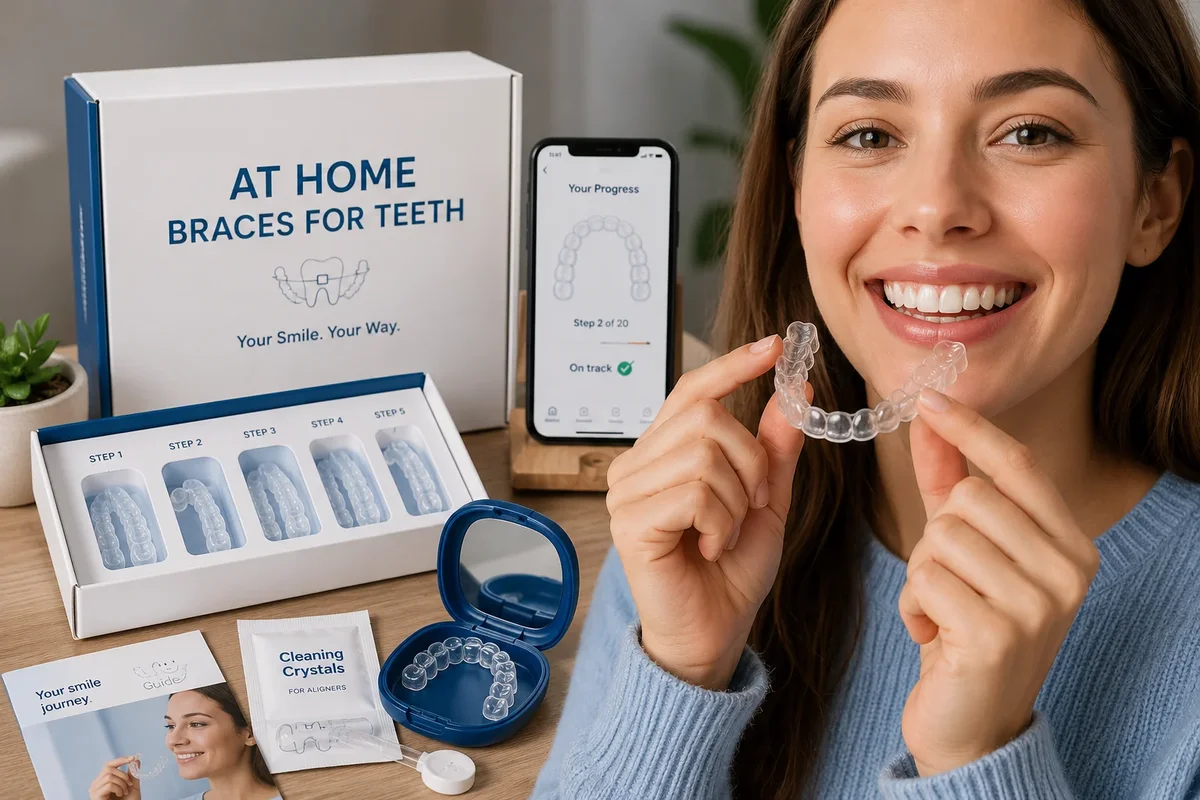
How to Choose the Best At Home Braces for Teeth Safely
Choosing the right orthodontic treatment provider is one of the most important decisions for anyone considering at home braces for teeth. While remote aligner systems have become increasingly popular because of convenience, affordability, and discreet appearance, not all providers offer the same level of quality, safety, or professional supervision. Patients should carefully evaluate their options before starting treatment to ensure that at home braces for teeth are both effective and safe for their specific dental condition. 😊
The growing popularity of remote orthodontics has created a highly competitive market with many companies advertising fast and affordable smile transformations. However, orthodontic treatment is not simply cosmetic. Tooth movement affects the gums, jawbone, bite alignment, and long-term oral health. This is why choosing high-quality at home braces for teeth requires careful research and realistic expectations.
Start With a Professional Dental Evaluation
Before beginning at home braces for teeth, patients should ideally undergo a complete dental examination. Many people focus only on the appearance of crooked teeth, but underlying oral health conditions may exist that need treatment first.
A professional evaluation can help identify:
- Gum disease
- Tooth decay
- Bone loss
- Jaw alignment problems
- Impacted teeth
- Bite disorders
- Root issues
Treating these problems before starting at home braces for teeth helps reduce the risk of complications during orthodontic movement.
Importance of Dental X-Rays
Patients should strongly consider obtaining dental X-rays before beginning at home braces for teeth. X-rays reveal hidden conditions that may not appear in photographs or digital scans alone.
Skipping proper diagnostics can increase the risk of unsafe treatment because aligners move teeth through bone and gum structures that require professional evaluation.
Choose Providers With Licensed Dental Professionals
One of the most important safety factors when selecting at home braces for teeth is ensuring that licensed dentists or orthodontists supervise the treatment process.
Some low-cost aligner companies may rely heavily on automated systems with minimal professional oversight. Patients should verify that qualified dental professionals review their impressions, scans, treatment plans, and progress updates throughout the treatment period.
Questions to Ask Before Starting Treatment
- Will a licensed orthodontist supervise treatment?
- How often is progress reviewed?
- Can patients contact dental professionals directly?
- Are X-rays recommended?
- What happens if complications occur?
- Is emergency support available?
Reliable providers of at home braces for teeth should answer these questions transparently and professionally.
Review the Provider’s Treatment Limitations
Honest orthodontic providers clearly explain the limitations of at home braces for teeth. Patients should be cautious of companies promising perfect results for every type of orthodontic problem.
Remote aligners are usually most effective for:
- Mild crowding
- Minor spacing
- Slight tooth rotations
- Cosmetic alignment improvements
Complex bite problems often require direct orthodontic supervision and traditional braces rather than relying solely on at home braces for teeth.
Warning Signs of Unrealistic Marketing
Patients should be cautious if providers:
- Guarantee instant results
- Promise treatment for every case
- Avoid discussing risks
- Skip professional evaluations
- Offer extremely low prices without supervision
Orthodontic treatment is a medical process, not simply a cosmetic product purchase.
Compare Treatment Monitoring Systems
Different providers of at home braces for teeth offer varying levels of monitoring during treatment. Some companies require regular progress uploads and provide direct communication with dental professionals, while others offer minimal supervision.
The best systems usually combine:
- Regular photo submissions
- Digital treatment tracking
- Professional evaluations
- Patient support services
- Refinement planning if necessary
Remote Monitoring Technology
Many modern providers of at home braces for teeth use smartphone applications with artificial intelligence tracking features. These systems help monitor tooth movement remotely and alert professionals if unexpected changes occur.
However, technology should complement—not completely replace—professional orthodontic supervision.
Understand the Full Cost Before Purchasing
Price is often one of the biggest reasons patients choose at home braces for teeth, but low prices should never be the only deciding factor.
Patients should carefully review what is included in the treatment package.
Important Cost Questions
- Are retainers included?
- Are refinement aligners free?
- What if treatment takes longer than expected?
- Are replacement aligners covered?
- Are financing options available?
Understanding the full financial commitment helps patients avoid unexpected expenses during treatment with at home braces for teeth.
| Service | Possible Additional Cost |
|---|---|
| Replacement Aligners | $50 – $250 |
| Retainers | $100 – $500 |
| Refinement Aligners | $0 – $800 |
| Dental X-Rays | $100 – $300 |
Read Verified Patient Reviews Carefully
Patient reviews can provide valuable insight into the quality of at home braces for teeth providers. However, patients should focus on detailed and balanced reviews rather than relying only on marketing testimonials.
What to Look for in Reviews
- Customer service quality
- Professional communication
- Treatment success consistency
- Handling of complications
- Refund policies
- Delivery reliability
Reviews discussing long-term treatment experiences are often more valuable than short promotional comments.
Evaluate Safety and Hygiene Standards
High-quality at home braces for teeth providers should use medical-grade materials and safe manufacturing processes. Patients should verify that aligners are produced using approved dental materials designed for oral use.
Poor-quality materials may increase the risk of irritation, poor fit, or reduced durability.
Signs of a Reputable Provider
- Licensed dental supervision
- Transparent treatment policies
- Professional diagnostic recommendations
- Clear communication channels
- Detailed treatment plans
- Secure medical data handling
Patients should avoid providers that prioritize aggressive marketing over patient safety and professional care.
Know When Traditional Orthodontics May Be Better
Sometimes traditional orthodontic braces or Invisalign with in-office supervision may provide safer and more effective results than at home braces for teeth.
Patients with severe crowding, jaw alignment issues, or complex bite problems often benefit more from direct orthodontic management.
Situations Requiring Orthodontic Supervision
- Severe overbite or underbite
- Crossbite correction
- Impacted teeth
- Advanced rotations
- Jaw growth concerns
- TMJ disorders
Choosing the right treatment option depends on accurate diagnosis and realistic expectations.
The Importance of Long-Term Retention
Even after treatment ends, maintaining results remains essential. Patients using at home braces for teeth should continue wearing retainers according to professional instructions.
Teeth naturally shift over time, especially during the first months after orthodontic treatment. Proper retainer use helps preserve the final smile results long term.
Retainer Maintenance Tips
- Clean retainers daily
- Store retainers properly
- Replace damaged retainers promptly
- Follow nighttime wear instructions
Long-term success with at home braces for teeth depends heavily on post-treatment retention habits.
Professional Guidance Is Always Valuable
Organizations such as the
American Dental Association emphasize the importance of professional evaluation and supervision during orthodontic treatment.
If you are considering at home braces for teeth and want personalized recommendations about safe orthodontic options, you can contact experienced dental professionals through the
Redent Klinik Contact Page.
Overall, choosing the best at home braces for teeth safely requires careful research, professional evaluation, realistic expectations, and consistent communication with qualified dental professionals. While remote orthodontic systems can provide convenient smile improvements for suitable patients, safety and oral health should always remain the highest priorities throughout the treatment journey. 😁