
Losing a tooth can significantly affect both oral health and personal confidence. Modern dentistry has developed highly effective solutions to replace missing teeth, and one of the most advanced options available today is atlantis dental implants. These innovative implant solutions combine cutting-edge digital technology with precision manufacturing to deliver personalized restorations that closely mimic natural teeth. Patients seeking long-lasting, aesthetically pleasing tooth replacement often discover that atlantis dental implants provide exceptional comfort, stability, and durability.
Unlike traditional implant restorations that rely on standard, pre-manufactured components, atlantis dental implants are designed using a patient-specific approach. Each restoration is digitally engineered to match the unique anatomy of the patient’s mouth. This individualized design process improves both functional and cosmetic results. When a dentist places atlantis dental implants, the restoration is not simply a generic piece attached to an implant post. Instead, it is a customized component created specifically for the patient’s gum line, bite alignment, and surrounding teeth.
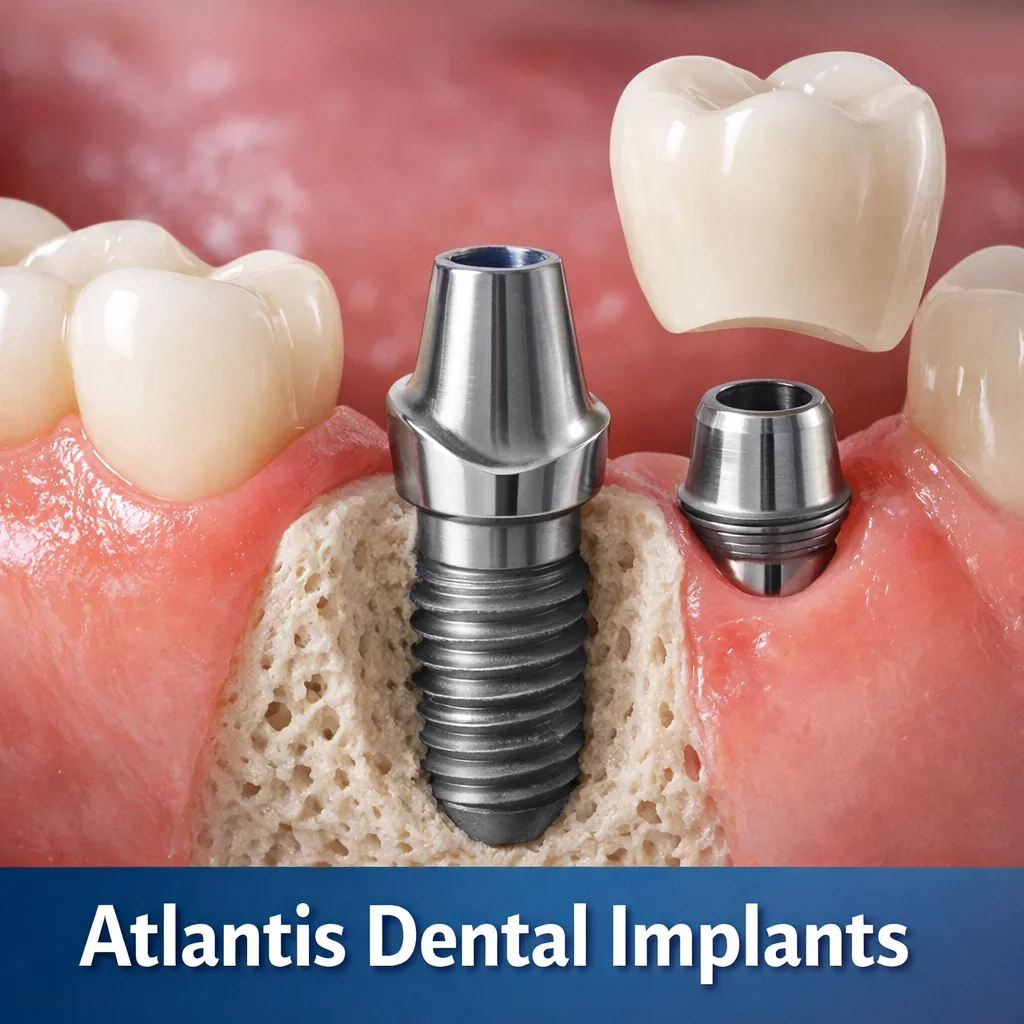
The foundation of atlantis dental implants is the dental implant itself—a small titanium post surgically inserted into the jawbone. This implant post acts as an artificial tooth root. Over time, the implant integrates with the bone through a biological process known as osseointegration. Once healing is complete, a custom abutment and dental crown are attached to the implant. In the case of atlantis dental implants, the abutment is designed using advanced CAD/CAM technology, ensuring a precise and natural fit.
One of the main reasons dental professionals recommend atlantis dental implants is the high level of precision involved in their design. Using digital scanning technology, dentists capture detailed 3D images of the patient’s mouth. These images are then used to design custom implant components that match the individual’s gum contours and tooth positioning. This digital workflow reduces the margin of error and improves the overall success rate of implant treatments involving atlantis dental implants.
Another major advantage of atlantis dental implants is their ability to deliver highly natural aesthetics. Because the abutment and crown are custom-designed, they blend seamlessly with surrounding teeth. Patients who receive atlantis dental implants often report that their replacement tooth looks and feels almost identical to a natural tooth. This level of cosmetic accuracy is especially important when replacing teeth in visible areas such as the front of the mouth.
Durability is another important factor. Dental implants are already known for their longevity, but atlantis dental implants enhance this reliability through personalized engineering. When the implant components fit perfectly within the patient’s mouth, stress distribution becomes more balanced during chewing and biting. This reduces the risk of complications and helps atlantis dental implants last for many years with proper care.
In addition to functional and aesthetic benefits, atlantis dental implants also contribute to improved oral health. When a tooth is missing, the jawbone in that area can begin to deteriorate due to lack of stimulation. Dental implants restore this stimulation by acting like natural tooth roots. With atlantis dental implants, patients can preserve bone density, maintain facial structure, and prevent the shifting of neighboring teeth.
Patients considering implant treatment should always consult with a qualified dental professional. Trusted organizations such as the
American Dental Association emphasize the importance of proper diagnosis, treatment planning, and long-term maintenance for successful dental implant outcomes. A dentist will evaluate factors such as bone density, gum health, and overall oral condition before recommending atlantis dental implants.
If you are exploring advanced implant solutions and want to learn whether atlantis dental implants are the right choice for you, contacting an experienced dental clinic is an important first step. You can reach out directly through the
Redent Klinik Contact Page to receive professional guidance and schedule a personalized consultation.
In summary, atlantis dental implants represent one of the most sophisticated tooth replacement technologies available in modern dentistry. Their combination of digital precision, custom engineering, long-term durability, and natural aesthetics makes them a preferred choice for many dental professionals and patients alike. As dental technology continues to evolve, solutions like atlantis dental implants demonstrate how personalized treatment can dramatically improve both the comfort and confidence of individuals seeking to restore their smile. 🙂
What Are Atlantis Dental Implants and How Do They Work?
Modern implant dentistry has evolved rapidly over the past two decades, providing patients with increasingly precise and natural-looking tooth replacement options. Among these advanced solutions, atlantis dental implants stand out as one of the most technologically sophisticated systems used in restorative dentistry today. Designed using digital engineering and patient-specific customization, atlantis dental implants provide a highly accurate solution for replacing missing teeth while maintaining long-term stability and natural aesthetics.
In simple terms, atlantis dental implants are a type of implant restoration that uses custom-designed abutments and advanced digital planning to create a precise connection between the implant and the final crown. Unlike traditional implant restorations that rely on standardized components, atlantis dental implants are individually engineered to match each patient’s anatomy. This personalized design improves both function and appearance, making atlantis dental implants an increasingly popular choice among modern dental clinics.
The Basic Structure of Atlantis Dental Implants
To understand how atlantis dental implants work, it is helpful to examine the three primary components involved in the implant restoration process. These components work together to recreate the structure and function of a natural tooth.
1. The Implant Post (Artificial Tooth Root)
The foundation of atlantis dental implants is the implant post. This small screw-shaped component is typically made from medical-grade titanium or zirconia and is surgically inserted into the jawbone. The implant post functions as an artificial tooth root, anchoring the replacement tooth securely within the mouth.
After placement, the implant undergoes a healing process known as osseointegration. During this stage, the surrounding bone tissue gradually fuses with the implant surface. This biological bonding process ensures that atlantis dental implants become firmly integrated within the jawbone, providing exceptional strength and stability.
2. The Custom Atlantis Abutment
One of the most unique features of atlantis dental implants is the custom abutment. The abutment is the connector piece that links the implant post to the dental crown. In traditional implant systems, dentists often use standardized abutments that may not perfectly match the patient’s gum line or tooth shape.
However, with atlantis dental implants, each abutment is designed using advanced CAD/CAM technology. Digital impressions of the patient’s mouth are analyzed by specialized software, which creates a custom abutment that fits precisely within the gum tissue and aligns perfectly with the implant position. This precise engineering significantly improves the aesthetic results and long-term function of atlantis dental implants.
3. The Final Dental Crown
The final component of atlantis dental implants is the dental crown. The crown is the visible part of the restoration and is designed to resemble a natural tooth in shape, color, and translucency. High-quality materials such as ceramic or zirconia are typically used to create crowns for atlantis dental implants.
Once the crown is attached to the custom abutment, the result is a fully restored tooth that looks, feels, and functions like a natural one. Patients receiving atlantis dental implants often find that the restored tooth blends seamlessly with surrounding teeth, creating a highly natural smile.
How the Atlantis Digital Design Process Works
The success of atlantis dental implants relies heavily on digital technology. The treatment process typically begins with a 3D scan or digital impression of the patient’s mouth. These scans capture detailed information about bone structure, gum tissue, and tooth alignment.
Using this data, dental technicians design the custom components of atlantis dental implants. This digital planning ensures that the abutment shape, angle, and emergence profile are optimized for the patient’s unique anatomy. Because atlantis dental implants are digitally engineered, they can achieve a level of accuracy that traditional manual methods cannot easily replicate.
Advanced digital workflows have significantly improved the predictability of implant treatments involving atlantis dental implants. Dentists can visualize the final result before the restoration is even manufactured, allowing them to adjust the design for optimal outcomes.
Advantages of Custom Implant Engineering
There are several important advantages associated with the personalized design of atlantis dental implants. One of the most significant benefits is improved gum tissue support. Because the abutment is customized to follow the natural contour of the gum line, atlantis dental implants promote healthier soft tissue adaptation.
Another advantage is enhanced bite alignment. When implant components are precisely engineered, chewing forces are distributed more evenly. This balanced load distribution helps protect both the implant and surrounding teeth. As a result, atlantis dental implants can provide excellent long-term durability when properly maintained.
According to the American Dental Association, dental implants have become one of the most reliable tooth replacement methods available today. With the added customization offered by atlantis dental implants, patients may experience even greater comfort and functional performance.
Why Many Dental Clinics Recommend Atlantis Dental Implants
Many modern dental clinics prefer using atlantis dental implants because of their precision, customization, and predictable results. When each component of the restoration is specifically designed for the patient, the final outcome tends to be more stable and aesthetically pleasing.
Patients who are interested in learning whether atlantis dental implants are suitable for their dental needs should consult an experienced implant specialist. Clinics such as Redent Klinik provide professional consultations to evaluate bone health, gum condition, and overall oral structure. You can easily request more information through the
Redent Klinik Contact Page.
Ultimately, atlantis dental implants represent a major step forward in personalized dental implant technology. By combining digital design, custom engineering, and advanced materials, this system allows dentists to deliver restorations that are not only durable but also incredibly natural-looking. For patients seeking a long-term solution to tooth loss, atlantis dental implants offer one of the most advanced and reliable treatment options available today. 🙂
Key Benefits of Choosing Atlantis Dental Implants for Tooth Replacement
Modern implant dentistry offers several solutions for replacing missing teeth, but atlantis dental implants have gained significant attention due to their precision, customization, and long-term reliability. Patients who lose one or more teeth often look for a solution that restores both functionality and natural appearance. In many cases, atlantis dental implants provide a superior outcome because they are designed using advanced digital technologies that tailor each restoration to the patient’s individual anatomy.
Unlike many traditional implant restorations that rely on standard components, atlantis dental implants focus on patient-specific engineering. Every element, particularly the implant abutment, is digitally designed to match the patient’s gum contours, bite alignment, and surrounding teeth. This high level of customization allows atlantis dental implants to deliver improved aesthetics, better comfort, and more predictable long-term results.
Personalized Design for Maximum Precision
One of the most important advantages of atlantis dental implants is the personalized design process used during treatment planning. Dentists begin by capturing highly detailed digital impressions of the patient’s mouth using 3D scanning technology. These scans are then used to design a custom abutment that perfectly connects the implant with the final crown.
Customized Implant Abutments
Traditional implant restorations often use prefabricated abutments that may not perfectly match the patient’s gum line or tooth position. However, atlantis dental implants eliminate this limitation by creating a custom abutment designed specifically for each individual patient.
This personalized design ensures that atlantis dental implants fit comfortably and align naturally with surrounding teeth. The precise engineering also improves soft tissue support, which contributes to healthier gums and a more natural-looking smile.
Improved Aesthetic Results
For many patients, the appearance of a dental restoration is just as important as its function. One of the most noticeable benefits of atlantis dental implants is their ability to produce extremely natural-looking results.
Because atlantis dental implants use digitally designed abutments and high-quality ceramic crowns, the final restoration can closely mimic the color, shape, and translucency of natural teeth. This level of detail is particularly important for patients replacing teeth in visible areas such as the front of the mouth.
With atlantis dental implants, dentists can also control the emergence profile of the crown—the way the tooth appears to emerge from the gum tissue. This small but important detail plays a major role in achieving realistic and aesthetically pleasing implant restorations.
Enhanced Comfort and Fit
Another reason why many dental professionals recommend atlantis dental implants is the improved comfort they provide. Because the implant components are customized for the patient’s mouth, they often fit more naturally compared to standardized implant systems.
When atlantis dental implants are properly designed and placed, patients typically experience a restoration that feels very similar to a natural tooth. The custom design minimizes pressure points and helps the implant integrate harmoniously with surrounding structures.
This precise fit also reduces the risk of complications such as gum irritation or improper bite alignment, which can sometimes occur with poorly fitted restorations.
Strong Long-Term Durability
Durability is one of the most critical factors when selecting a tooth replacement solution. Dental implants are already known for their long lifespan, but atlantis dental implants further improve durability through advanced engineering and balanced load distribution.
Because the components of atlantis dental implants are specifically designed for each patient, chewing forces are distributed more evenly across the implant and surrounding bone. This balanced force distribution helps protect both the implant and nearby teeth from excessive stress.
When patients maintain proper oral hygiene and attend regular dental checkups, atlantis dental implants can last for many years—often decades. According to the
American Dental Association, dental implants have one of the highest success rates among restorative dental procedures.
Better Gum Health and Tissue Integration
Healthy gums are essential for the long-term success of any implant restoration. One advantage of atlantis dental implants is their ability to support natural gum contours and soft tissue stability.
The customized design of the abutment encourages the gum tissue to adapt naturally around the implant crown. This improves the overall health of the surrounding tissue and reduces the likelihood of inflammation or infection.
Because atlantis dental implants support the natural shape of the gums, they also contribute to more attractive and balanced smile aesthetics.
Preservation of Jawbone Structure
When a tooth is lost, the jawbone in that area can begin to shrink due to lack of stimulation. Dental implants solve this problem by replacing the missing tooth root. Like other implant systems, atlantis dental implants stimulate the jawbone during chewing, helping maintain bone density.
Preserving bone structure is extremely important not only for oral health but also for maintaining facial appearance. Patients who choose atlantis dental implants often experience better long-term stability of the jawbone compared to those who rely solely on removable dentures.
Professional Consultation and Personalized Planning
The success of atlantis dental implants depends on proper treatment planning and expert placement by a qualified dental professional. Each patient’s bone density, gum health, and bite alignment must be carefully evaluated before implant treatment begins.
Patients interested in exploring advanced implant options can schedule a consultation through the
Redent Klinik Contact Page. A professional assessment helps determine whether atlantis dental implants are the most suitable solution for restoring missing teeth.
Ultimately, atlantis dental implants combine digital precision, customized engineering, and advanced restorative materials to deliver one of the most reliable tooth replacement options available today. Their ability to provide natural aesthetics, long-term durability, and improved comfort makes atlantis dental implants a preferred solution for many dentists and patients seeking high-quality implant restorations. 🙂
The Technology Behind Atlantis Dental Implants Custom Abutments
One of the main reasons atlantis dental implants have become highly respected in modern implant dentistry is the advanced digital technology used to design their custom abutments. Traditional implant restorations often rely on prefabricated components that may not perfectly match the patient’s gum line or tooth alignment. In contrast, atlantis dental implants are built using a patient-specific design process that allows dentists to create restorations with exceptional precision and natural aesthetics.
At the core of atlantis dental implants is a digital workflow that combines detailed scanning, computer-aided design (CAD), and computer-aided manufacturing (CAM). This process allows each implant restoration to be engineered individually for the patient rather than relying on standard components. As a result, atlantis dental implants often provide better tissue adaptation, improved comfort, and superior long-term function compared to many traditional implant solutions.
Understanding the Role of Custom Abutments
To understand why atlantis dental implants are so effective, it is important to examine the role of the implant abutment. The abutment is the connector that links the implant post inside the jawbone to the visible crown above the gum line.
Why Standard Abutments Can Be Limited
Standard implant systems frequently use prefabricated abutments that come in a limited range of shapes and sizes. While these components may work in many cases, they cannot always perfectly match the unique anatomy of every patient. This limitation may affect gum contour, crown positioning, and aesthetic appearance.
With atlantis dental implants, this limitation is removed. Each abutment is digitally designed to match the individual patient’s implant position, gum profile, and surrounding teeth. Because atlantis dental implants are customized in this way, dentists can achieve a more natural emergence profile and improved overall smile aesthetics.
The Importance of Emergence Profile
The emergence profile refers to the way a dental crown appears to rise naturally from the gum tissue. Achieving a natural emergence profile is one of the most challenging aspects of implant dentistry. With atlantis dental implants, the custom-designed abutment allows dentists to precisely control how the crown transitions through the gum line.
This personalized design approach helps atlantis dental implants create restorations that look nearly identical to natural teeth, especially in highly visible areas such as the front of the mouth.
Digital Scanning and 3D Imaging Technology
The digital process behind atlantis dental implants begins with high-resolution scanning. Dentists capture detailed 3D images of the patient’s mouth using intraoral scanners or digital impressions. These images provide extremely accurate information about bone structure, gum tissue, and tooth alignment.
This data is then transferred to specialized design software that engineers the custom abutment used in atlantis dental implants. Because the design is based on exact anatomical measurements, the final restoration fits more precisely than components created using traditional manual techniques.
Digital imaging also allows dental professionals to visualize the final restoration before it is manufactured. This predictive planning capability helps ensure that atlantis dental implants will align correctly with surrounding teeth and provide optimal function.
Computer-Aided Design and Manufacturing (CAD/CAM)
Once the digital scan is complete, the design phase begins. CAD software is used to engineer the custom abutment for atlantis dental implants. The system analyzes the patient’s implant position, gum shape, and bite alignment to create a restoration that integrates naturally within the mouth.
After the design process is finalized, CAM technology is used to manufacture the abutment with extremely high precision. Advanced milling machines produce the abutment from durable materials such as titanium or zirconia. This automated manufacturing process ensures that atlantis dental implants achieve a consistent level of accuracy and quality.
The CAD/CAM process used for atlantis dental implants significantly reduces human error and allows dentists to deliver restorations with superior fit and stability.
Material Quality and Durability
Another important technological advantage of atlantis dental implants is the use of high-quality materials designed for long-term performance. The custom abutments are typically manufactured from titanium or zirconia, both of which are known for their strength and biocompatibility.
Titanium abutments are extremely durable and integrate well with implant systems, while zirconia abutments offer excellent aesthetics due to their tooth-like color. Depending on the patient’s needs, dentists may choose the most appropriate material when designing atlantis dental implants.
These materials also resist corrosion and wear, ensuring that atlantis dental implants remain stable and functional for many years when properly maintained.
Improved Precision Leads to Better Long-Term Outcomes
Because atlantis dental implants are digitally engineered for each patient, they often provide improved long-term outcomes compared to restorations that rely on standardized components. The precise fit reduces gaps between the implant and abutment, which helps prevent bacterial accumulation and potential complications.
Better alignment also means that chewing forces are distributed more evenly across the implant and surrounding bone. This balanced force distribution helps protect the implant from excessive stress and supports long-term stability.
According to the American Dental Association, dental implants are one of the most reliable restorative treatments available when proper planning and maintenance are followed. The digital design advantages of atlantis dental implants further strengthen the predictability of implant therapy.
Professional Treatment Planning and Consultation
Although the technology behind atlantis dental implants is highly advanced, successful treatment still depends on careful diagnosis and expert placement by experienced dental professionals. Dentists evaluate bone density, gum health, and overall oral structure before recommending implant therapy.
Patients who wish to explore whether atlantis dental implants are the right solution for their smile can schedule a consultation through the
Redent Klinik Contact Page. A personalized consultation helps determine the most appropriate treatment plan for long-lasting results.
In conclusion, the technology behind atlantis dental implants represents one of the most advanced developments in modern restorative dentistry. Through digital scanning, CAD/CAM engineering, and custom abutment manufacturing, atlantis dental implants provide a highly precise and personalized approach to tooth replacement. This combination of technology and customization helps patients achieve strong, natural-looking smiles that can last for many years. 🙂
Atlantis Dental Implants Procedure: Step-by-Step Treatment Process
Understanding the treatment journey is essential for anyone considering atlantis dental implants. While the technology behind the system is advanced, the overall process follows a structured and predictable path designed to maximize safety, comfort, and long-term success. Dental professionals use modern diagnostic tools, digital planning, and customized components to ensure that atlantis dental implants integrate naturally with the patient’s oral anatomy.
The procedure for atlantis dental implants usually takes place over several stages, allowing the jawbone to heal and integrate with the implant. Each step is carefully planned to ensure optimal function, durability, and aesthetic results. Below is a detailed overview of how the treatment process for atlantis dental implants typically unfolds in modern dental clinics.
Initial Consultation and Oral Examination
The first stage in receiving atlantis dental implants is a comprehensive dental consultation. During this appointment, the dentist evaluates the patient’s oral health, reviews medical history, and determines whether implant treatment is appropriate.
Diagnostic Imaging and Assessment
To plan the placement of atlantis dental implants, dentists typically use digital imaging techniques such as panoramic X-rays or 3D CBCT scans. These advanced imaging methods provide detailed views of the jawbone, surrounding teeth, and nerve structures.
By analyzing these scans, the dentist can determine whether the patient has sufficient bone density to support atlantis dental implants. If bone volume is insufficient, procedures such as bone grafting may be recommended before implant placement.
Customized Treatment Planning
Once diagnostic information is collected, the dentist develops a personalized treatment plan. Because atlantis dental implants rely on digitally designed abutments, precise measurements and digital impressions are taken at this stage. This planning process ensures that the final restoration fits naturally within the patient’s bite and gum structure.
Surgical Placement of the Implant
After the treatment plan is finalized, the next step in the atlantis dental implants process is surgical implant placement. This procedure is typically performed under local anesthesia, although sedation options may be available for patients who experience dental anxiety.
Implant Post Insertion
During the surgery, the dentist carefully places a titanium implant post into the jawbone at the site of the missing tooth. This post acts as the artificial root for the future tooth restoration used in atlantis dental implants.
The procedure is generally precise and minimally invasive thanks to modern surgical guides and digital planning techniques. Many patients report only mild discomfort following implant placement.
Healing and Osseointegration
Following surgery, the implant enters a healing phase known as osseointegration. During this period, the surrounding bone tissue gradually bonds with the implant surface. This biological integration process provides the stability needed for atlantis dental implants to function like natural tooth roots.
The osseointegration stage typically takes between three and six months depending on the patient’s bone quality and healing capacity. Once healing is complete, the implant becomes securely anchored within the jawbone.
Digital Design of the Atlantis Custom Abutment
After the implant has fully integrated with the bone, the next stage of the atlantis dental implants process begins: designing the custom abutment. This is one of the most distinctive aspects of the Atlantis system.
Using digital impressions and advanced CAD technology, dental technicians design an abutment specifically tailored to the patient’s gum line and implant position. Because atlantis dental implants rely on patient-specific components, the resulting abutment provides improved alignment, aesthetics, and tissue support.
Precision Manufacturing
Once the design is complete, the custom abutment used in atlantis dental implants is manufactured using computer-controlled milling technology. The abutment is typically crafted from titanium or zirconia, both of which are highly durable and biocompatible materials.
This precision manufacturing process ensures that the components of atlantis dental implants fit together perfectly, reducing the risk of mechanical complications.
Placement of the Final Crown
The final stage of the atlantis dental implants treatment process involves attaching the custom abutment and dental crown. The crown is the visible portion of the implant restoration and is designed to replicate the appearance of a natural tooth.
Dentists carefully select crown materials that match the color, shape, and translucency of the patient’s surrounding teeth. Once attached, the restoration created with atlantis dental implants blends seamlessly with the natural smile.
Patients often notice an immediate improvement in both chewing ability and confidence after their atlantis dental implants are completed.
Post-Treatment Care and Monitoring
After receiving atlantis dental implants, maintaining good oral hygiene is essential for long-term success. Patients should brush and floss regularly while attending routine dental checkups to ensure the implant remains healthy.
According to the American Dental Association, dental implants can last many years when properly maintained. With proper care, atlantis dental implants often provide decades of reliable performance.
Patients who want personalized guidance regarding implant treatment can schedule a professional consultation through the
Redent Klinik Contact Page. A qualified dental team can evaluate whether atlantis dental implants are the best option for restoring missing teeth.
Overall, the treatment process for atlantis dental implants is carefully structured to maximize safety, functionality, and aesthetics. Through digital planning, precise surgery, and customized restoration design, atlantis dental implants provide patients with a durable and natural-looking solution for tooth replacement. 🙂
Who Is a Good Candidate for Atlantis Dental Implants?
Choosing the right tooth replacement treatment depends on several medical, anatomical, and lifestyle factors. While modern implant technology has made treatment accessible to many patients, not everyone is immediately ready for implant surgery. Understanding who qualifies for atlantis dental implants is an important step in determining whether this advanced restoration option is suitable for your needs. Because atlantis dental implants rely on both surgical placement and customized prosthetic design, dentists carefully evaluate each patient before recommending this treatment.
Generally, patients who are missing one or more teeth and want a long-lasting, natural-looking solution may benefit from atlantis dental implants. Unlike removable dentures or traditional bridges, atlantis dental implants replace both the tooth root and crown, restoring stability and chewing function. However, successful outcomes require healthy gums, sufficient bone structure, and good overall oral hygiene.
Key Requirements for Atlantis Dental Implants Candidates
Before placing atlantis dental implants, dentists conduct a thorough evaluation to determine whether a patient is a suitable candidate. This assessment includes reviewing dental history, performing diagnostic scans, and examining the condition of the jawbone and gum tissues.
Sufficient Jawbone Density
One of the most important requirements for atlantis dental implants is adequate bone density in the jaw. Dental implants are anchored into the bone, so there must be enough healthy bone tissue to support the implant post.
If the jawbone has deteriorated due to long-term tooth loss, a dentist may recommend bone grafting before placing atlantis dental implants. Bone grafting procedures rebuild the bone structure and create a stable foundation for implant placement. Once the bone has healed and strengthened, patients may become eligible for atlantis dental implants.
Healthy Gum Tissue
Gum health is another essential factor in determining eligibility for atlantis dental implants. Patients should not have active periodontal disease or severe gum infections at the time of implant surgery.
Healthy gums provide the necessary support for the implant restoration and help protect atlantis dental implants from infection or complications. If gum disease is present, dentists will typically treat the condition before proceeding with implant placement.
Patients Who Commonly Benefit from Atlantis Dental Implants
Many types of patients can benefit from atlantis dental implants. Because the system uses customized abutments and digital planning, it can accommodate a wide variety of dental restoration needs.
Individuals Missing a Single Tooth
Patients who have lost a single tooth often find atlantis dental implants to be an excellent solution. Unlike dental bridges, implants do not require grinding down adjacent healthy teeth. Instead, the implant replaces the missing tooth independently.
With atlantis dental implants, dentists can design a crown that blends naturally with surrounding teeth, providing a seamless aesthetic result.
Patients Missing Multiple Teeth
Patients who have lost multiple teeth may also benefit from atlantis dental implants. In these cases, implants can support implant bridges or partial restorations that restore chewing ability and smile appearance.
Because atlantis dental implants are digitally customized, dentists can design implant-supported restorations that align properly with the patient’s bite and jaw structure.
Patients Seeking a Long-Term Alternative to Dentures
Individuals who currently wear removable dentures may find that atlantis dental implants provide a more stable and comfortable alternative. Implant-supported restorations eliminate many of the issues associated with dentures, such as slipping, discomfort, or difficulty eating certain foods.
By anchoring the restoration directly into the jawbone, atlantis dental implants offer improved stability and chewing strength compared to removable prosthetics.
Lifestyle Factors That Influence Implant Success
In addition to oral health conditions, certain lifestyle habits may affect the long-term success of atlantis dental implants. Dentists consider these factors during the consultation process.
Smoking and Implant Healing
Smoking can negatively affect the healing process after implant surgery. Tobacco use may slow bone integration and increase the risk of complications. Patients considering atlantis dental implants are often advised to reduce or stop smoking to improve treatment success.
Oral Hygiene Habits
Maintaining excellent oral hygiene is critical for the long-term success of atlantis dental implants. Regular brushing, flossing, and professional dental cleanings help prevent plaque buildup and gum inflammation around the implant.
The American Dental Association emphasizes that proper oral hygiene and routine dental visits are essential for maintaining healthy dental implants over time.
The Importance of Professional Consultation
Determining candidacy for atlantis dental implants requires a professional dental examination. Every patient’s oral structure and health history are unique, which is why dentists carefully evaluate multiple factors before recommending implant treatment.
If you are considering atlantis dental implants and want to know whether you are a suitable candidate, scheduling a consultation with an experienced implant dentist is the best next step. You can contact the dental team through the
Redent Klinik Contact Page to receive personalized advice and treatment planning.
In conclusion, many patients with missing teeth may qualify for atlantis dental implants provided they have healthy gums, sufficient bone structure, and good oral hygiene habits. Through careful evaluation and advanced digital planning, dentists can determine whether atlantis dental implants offer the most effective and long-lasting solution for restoring a patient’s smile and oral function. 🙂
Atlantis Dental Implants vs Traditional Implant Systems
When patients research modern tooth replacement options, they often compare atlantis dental implants with traditional implant systems. Both methods rely on a titanium implant post placed in the jawbone, but the design philosophy and technological process behind atlantis dental implants differ significantly from conventional implant restorations. Understanding these differences helps patients make informed decisions about which treatment offers the best combination of aesthetics, durability, and long-term oral health.
Traditional dental implants have been used successfully for decades and remain a reliable solution for replacing missing teeth. However, atlantis dental implants introduce an advanced digital workflow that focuses on individualized customization. Instead of relying on standard prefabricated abutments, atlantis dental implants use patient-specific components designed using digital scanning and CAD/CAM technology. This customization provides several advantages in terms of fit, gum tissue support, and natural appearance.
Design Differences Between Implant Systems
The most noticeable difference between traditional implants and atlantis dental implants lies in how the restoration components are designed and manufactured. While both approaches aim to restore missing teeth, the level of customization and digital precision varies significantly.
Standardized Abutments in Traditional Systems
Many conventional implant systems rely on prefabricated abutments that come in a limited number of shapes and angles. Dentists select the closest matching abutment and make adjustments to accommodate the patient’s anatomy. While this method often works well, it may not always provide a perfectly tailored fit.
Because traditional systems use standardized components, the final restoration may sometimes require additional adjustments to achieve optimal gum contour or bite alignment. This limitation is one of the reasons why many modern clinics are increasingly choosing atlantis dental implants.
Customized Abutments in Atlantis Dental Implants
Unlike conventional restorations, atlantis dental implants rely on digitally engineered abutments designed specifically for each patient. Dentists capture highly detailed 3D scans of the patient’s mouth, and this information is used to create a customized abutment that perfectly matches the gum line and implant position.
Because atlantis dental implants are individually designed, the final restoration often provides better soft tissue support and more natural aesthetics compared to standard abutments.
Aesthetic Advantages
For many patients, the appearance of their restoration is one of the most important considerations. One area where atlantis dental implants excel is aesthetic precision. The custom abutment design allows dentists to control the emergence profile of the crown—the way the tooth appears to emerge from the gum line.
Traditional implant systems can produce excellent cosmetic results, but atlantis dental implants often provide a more refined outcome because the restoration is designed specifically around the patient’s gum contours and tooth alignment.
This personalized design process is especially beneficial when replacing front teeth, where even small differences in shape or gum contour can affect the overall appearance of the smile.
Functional Performance and Bite Alignment
Another important difference between traditional implants and atlantis dental implants involves bite alignment and stress distribution. Proper alignment is essential to ensure that chewing forces are evenly distributed across the implant and surrounding teeth.
Load Distribution
With traditional implant restorations, standardized abutments may occasionally require additional adjustments to achieve ideal load distribution. If forces are uneven, the implant may experience additional stress over time.
In contrast, atlantis dental implants are digitally designed to optimize the alignment between the implant post, abutment, and crown. This precision helps distribute chewing forces more evenly and can contribute to long-term implant stability.
Improved Tissue Support
The custom abutment design used in atlantis dental implants also supports healthier gum tissue adaptation. When the abutment shape follows the natural contour of the gums, the surrounding soft tissue can heal more naturally around the restoration.
Healthy gum tissue plays a crucial role in protecting atlantis dental implants from bacterial accumulation and inflammation.
Digital Workflow and Predictability
Another advantage of atlantis dental implants is the advanced digital workflow used during treatment planning. Dentists use digital scans and computer-aided design software to plan the restoration before it is manufactured.
This digital planning process allows dentists to visualize the final result and make adjustments before the restoration is created. As a result, atlantis dental implants often provide a higher level of predictability compared to traditional methods that rely more heavily on manual adjustments.
According to the American Dental Association, implant dentistry has continued to evolve through digital technology, allowing clinicians to deliver more precise and reliable treatments.
Long-Term Reliability
Both traditional implants and atlantis dental implants are designed to provide long-term tooth replacement solutions. With proper care, both systems can last many years. However, the customized engineering used in atlantis dental implants may provide additional advantages in certain clinical situations.
Because each component of atlantis dental implants is designed specifically for the patient, the restoration may achieve better mechanical stability and reduced wear over time.
Choosing the Right Implant System
Ultimately, the choice between traditional implant systems and atlantis dental implants depends on the patient’s dental condition, aesthetic goals, and treatment plan. Both options can provide excellent results when performed by experienced dental professionals.
Patients who want to explore advanced implant solutions can consult with a qualified dental clinic to determine whether atlantis dental implants are the best option for their situation. If you would like personalized guidance or wish to schedule a consultation, visit the
Redent Klinik Contact Page.
In summary, while traditional implant systems remain effective, atlantis dental implants offer additional advantages through digital customization, improved aesthetics, and optimized bite alignment. These features make atlantis dental implants an increasingly popular choice for patients seeking a modern, precise, and highly personalized approach to dental implant restoration. 🙂
Recovery, Healing Time, and Aftercare for Atlantis Dental Implants
Successful outcomes with atlantis dental implants depend not only on precise surgical placement and custom restoration design but also on proper healing and aftercare. Recovery plays a crucial role in ensuring that atlantis dental implants integrate securely with the jawbone and function reliably for many years. Fortunately, modern implant procedures are highly predictable, and most patients experience a manageable recovery period when appropriate care instructions are followed.
The healing journey after receiving atlantis dental implants generally occurs in stages. Each stage involves biological processes that allow the implant to fuse with the jawbone and support the customized prosthetic components designed specifically for the patient. Understanding these stages helps patients know what to expect during recovery and how to protect their atlantis dental implants for long-term success.
Immediate Recovery After Implant Surgery
The first stage of recovery begins immediately after the implant post is surgically placed. During this phase, the surrounding tissues begin the healing process and the body initiates the early stages of osseointegration.
First 24–72 Hours After Surgery
Most patients who receive atlantis dental implants experience mild swelling, tenderness, or minor discomfort during the first few days following surgery. These symptoms are a normal part of the healing process and typically improve quickly with proper care.
Dentists often recommend several measures to support recovery after atlantis dental implants, including:
- Applying cold compresses to reduce swelling
- Taking prescribed or recommended pain medication
- Avoiding hard or hot foods for several days
- Maintaining gentle oral hygiene around the surgical area
Following these guidelines helps ensure that atlantis dental implants remain stable during the early healing phase.
Soft Diet and Oral Care
During the first week after implant placement, dentists usually recommend eating soft foods. Foods such as yogurt, soup, mashed vegetables, and smoothies are commonly suggested while the surgical area heals.
Patients should also keep the area clean to protect their atlantis dental implants from infection. Gentle brushing and antimicrobial mouth rinses may be recommended to maintain oral hygiene without disturbing the implant site.
Osseointegration: The Key Healing Phase
The most critical stage in the recovery process for atlantis dental implants is osseointegration. This biological process occurs when the jawbone gradually bonds with the titanium implant post.
During osseointegration, bone cells grow and attach to the surface of the implant. This natural fusion creates a strong and stable foundation that allows atlantis dental implants to function like natural tooth roots.
Typical Healing Timeline
The osseointegration period for atlantis dental implants typically lasts between three and six months. However, healing time may vary depending on factors such as bone density, overall health, and the location of the implant.
During this stage, dentists monitor the progress of atlantis dental implants through follow-up appointments to ensure the implant is integrating properly with the bone.
Placement of the Custom Atlantis Abutment and Crown
Once the implant has successfully integrated with the jawbone, the next step in completing atlantis dental implants involves attaching the custom-designed abutment and final crown.
Because atlantis dental implants use digitally engineered abutments, the restoration is carefully designed to match the patient’s gum contours and bite alignment. This personalized approach improves comfort and ensures the final crown blends naturally with surrounding teeth.
After the crown is placed, patients can typically resume normal chewing and speaking functions with their new atlantis dental implants.
Long-Term Aftercare for Atlantis Dental Implants
Maintaining proper oral hygiene is essential for protecting atlantis dental implants over the long term. Although implants are not susceptible to cavities, the surrounding gum tissue and bone must remain healthy to support the implant structure.
Daily Oral Hygiene
Patients should brush their teeth twice daily and floss regularly to keep atlantis dental implants clean and free from plaque buildup. Specialized floss or interdental brushes may be recommended to clean around implant restorations effectively.
Maintaining consistent oral hygiene habits helps prevent peri-implantitis, a condition that can affect the tissues surrounding atlantis dental implants.
Routine Dental Checkups
Regular dental visits are also important for monitoring the health of atlantis dental implants. Dentists can examine the implant, crown, and surrounding gum tissue during routine checkups to ensure everything remains stable.
The American Dental Association recommends consistent dental care and professional cleanings to maintain long-term oral health, including the health of dental implants.
Lifestyle Habits That Support Implant Longevity
Certain lifestyle habits can significantly influence the long-term success of atlantis dental implants. Patients should avoid habits that place excessive stress on the implants, such as teeth grinding or chewing hard objects.
Smoking can also interfere with healing and may increase the risk of implant complications. Dentists often encourage patients considering atlantis dental implants to reduce or quit smoking to improve treatment outcomes.
When to Contact Your Dentist
Although complications are rare, patients should contact their dentist if they experience persistent pain, swelling, or unusual mobility in their atlantis dental implants. Early intervention can prevent minor issues from developing into more serious problems.
Patients who have questions about recovery or wish to schedule a follow-up consultation can reach out through the Redent Klinik Contact Page for professional assistance and guidance.
In summary, the recovery process for atlantis dental implants involves several carefully monitored stages, including initial healing, osseointegration, and restoration placement. With proper care, regular dental visits, and good oral hygiene, atlantis dental implants can provide a stable, natural-looking solution for missing teeth that lasts for many years. 🙂
Estimated Cost of Atlantis Dental Implants Around the World
Understanding the financial aspect of dental treatment is an important part of planning restorative care. Patients considering atlantis dental implants often want to know how much the treatment costs and why prices can vary significantly between countries. Because atlantis dental implants involve advanced digital design, customized abutments, surgical placement, and high-quality restorative materials, the total treatment cost typically reflects several different factors.
While atlantis dental implants may initially appear more expensive than some conventional implant restorations, many patients consider them a worthwhile investment due to their precision, durability, and natural aesthetics. The final price of atlantis dental implants depends on the complexity of the treatment, the clinic’s technology, the experience of the dentist, and the geographic location where the procedure is performed.
Main Factors That Influence the Cost of Atlantis Dental Implants
Several elements contribute to the total cost of atlantis dental implants. Understanding these components helps patients better evaluate treatment proposals and compare international pricing options.
Diagnostic Imaging and Consultation
The process of receiving atlantis dental implants begins with a detailed consultation and diagnostic evaluation. Dentists typically use panoramic X-rays or 3D CBCT scans to analyze bone structure, gum health, and implant positioning.
These imaging technologies help ensure accurate treatment planning for atlantis dental implants, but they also add to the overall cost of the procedure.
Surgical Implant Placement
The surgical stage is another important cost component. During this procedure, the dentist places the implant post into the jawbone to serve as the artificial root for atlantis dental implants. The complexity of the surgery may vary depending on the patient’s bone condition and whether additional procedures are required.
In some cases, patients may need bone grafting or sinus lifting before receiving atlantis dental implants. These procedures help create a stable foundation for the implant but can increase the total treatment cost.
Custom Atlantis Abutment Design
One of the unique aspects of atlantis dental implants is the custom-designed abutment. Unlike standard implant systems that use prefabricated connectors, atlantis dental implants rely on digitally engineered abutments tailored specifically for the patient.
This customization improves aesthetics and function but also requires advanced CAD/CAM technology and precision manufacturing, which contributes to the overall cost of atlantis dental implants.
Final Crown Restoration
The visible part of atlantis dental implants is the dental crown. High-quality ceramic or zirconia crowns are typically used to replicate the appearance of natural teeth. Because these crowns are individually designed to match surrounding teeth, their fabrication is another factor that affects pricing.
When combined with the custom abutment used in atlantis dental implants, the crown creates a restoration that blends seamlessly into the patient’s smile.
Average Price of Atlantis Dental Implants by Country
The cost of atlantis dental implants varies significantly depending on where the treatment is performed. Dental tourism has become increasingly popular because some countries offer high-quality implant treatment at more affordable prices.
Estimated Price Range per Implant
United States:       $4,000 – $6,500 per tooth
United Kingdom:      $3,500 – $5,500 per tooth
Germany:             $3,000 – $5,000 per tooth
Canada:              $3,500 – $5,500 per tooth
Turkey:              $1,200 – $2,500 per tooth
Eastern Europe:      $1,500 – $3,000 per tooth
These estimates typically include implant placement, the custom abutment used in atlantis dental implants, and the final crown. However, additional procedures such as bone grafting may increase the total cost.
Why Many Patients Consider Dental Tourism
Because implant treatment costs can be significantly lower in certain countries, many patients travel internationally to receive atlantis dental implants. Countries with well-developed dental tourism industries often offer advanced technology, experienced implant specialists, and competitive pricing.
Clinics that provide atlantis dental implants in these regions frequently use the same high-quality materials and digital design systems found in Western dental centers.
Insurance Coverage and Financing Options
In some cases, dental insurance plans may partially cover implant procedures, especially if the treatment is considered medically necessary. However, many insurance providers still classify implants as elective procedures.
Patients considering atlantis dental implants should consult their insurance provider to determine whether any portion of the treatment may be reimbursed. Some dental clinics also offer payment plans or financing programs to make atlantis dental implants more accessible.
For more information about oral health standards and dental procedures, patients can consult trusted organizations such as the
American Dental Association.
Finding a Qualified Implant Clinic
Although cost is an important factor, patients should prioritize quality, experience, and safety when selecting a dental clinic for atlantis dental implants. A skilled implant dentist, advanced diagnostic technology, and proper sterilization protocols are essential for successful treatment.
Patients who wish to explore their options for receiving atlantis dental implants can schedule a professional consultation through the
Redent Klinik Contact Page. During the consultation, the dental team can evaluate the patient’s needs and provide a personalized treatment estimate.
In summary, the cost of atlantis dental implants varies depending on multiple factors including location, treatment complexity, and customization level. While prices may initially seem high compared to other dental treatments, many patients find that the durability, aesthetics, and long-term benefits of atlantis dental implants make them a valuable investment in their oral health and quality of life. 🙂
Why Dental Clinics Recommend Atlantis Dental Implants for Long-Term Results
Dental professionals around the world continuously evaluate treatment methods to ensure patients receive safe, durable, and aesthetically pleasing solutions. Among modern restorative technologies, atlantis dental implants have gained widespread recognition for their precision, customization, and long-term performance. Many implant specialists recommend atlantis dental implants because they combine digital design technology with advanced implant restoration techniques, allowing clinicians to achieve predictable and highly natural-looking results.
Unlike traditional implant restorations that rely on standardized components, atlantis dental implants use individually engineered abutments designed specifically for each patient. This personalized approach allows dentists to optimize gum tissue support, improve crown positioning, and ensure the implant restoration integrates seamlessly into the patient’s smile. Because of these advantages, many dental clinics view atlantis dental implants as a reliable solution for patients seeking long-term tooth replacement.
Precision Engineering Improves Treatment Outcomes
One of the primary reasons clinicians recommend atlantis dental implants is the level of precision involved in their design and manufacturing. Implant dentistry requires extremely accurate alignment between the implant post, abutment, and crown. Even small discrepancies can affect bite function, gum health, and aesthetic appearance.
Digital Design Technology
The process used to create atlantis dental implants begins with digital scanning and 3D imaging. Dentists capture detailed images of the patient’s oral structures using advanced intraoral scanners or CBCT technology. These images are then used to design a custom abutment using computer-aided design software.
Because atlantis dental implants rely on precise digital measurements, the final restoration often fits more accurately than restorations made with traditional manual techniques. This precision improves both comfort and long-term implant stability.
Customized Abutment Geometry
Another advantage of atlantis dental implants is the custom geometry of the abutment. Each abutment is designed to match the patient’s gum line and implant position, creating a natural emergence profile for the crown. This design helps ensure that atlantis dental implants look and function like natural teeth.
Enhanced Aesthetic Outcomes
For many patients, the visual appearance of their dental restoration is just as important as its functional performance. One reason dental clinics frequently recommend atlantis dental implants is their ability to produce highly aesthetic results.
Because the abutment used in atlantis dental implants is individually designed, dentists can control the way the crown emerges from the gum tissue. This allows the restoration to blend naturally with neighboring teeth, especially in the visible front area of the smile.
High-quality ceramic crowns are typically used with atlantis dental implants, further enhancing the natural appearance of the restoration. The combination of customized abutments and advanced crown materials allows clinicians to achieve results that closely resemble natural teeth.
Improved Long-Term Stability
Longevity is one of the most important factors when selecting a tooth replacement solution. Dental implants are already known for their durability, but atlantis dental implants offer additional benefits due to their precise engineering.
Optimized Load Distribution
When implant components fit precisely, chewing forces are distributed more evenly across the restoration. The custom abutment design used in atlantis dental implants helps achieve this balanced load distribution.
By reducing uneven stress on the implant structure, atlantis dental implants can help minimize wear and improve the long-term success rate of implant restorations.
Support for Healthy Gum Tissue
Healthy soft tissue plays an essential role in protecting dental implants. The personalized abutment design used in atlantis dental implants supports natural gum contours, allowing the tissue to heal and adapt more effectively around the restoration.
This improved tissue adaptation helps protect atlantis dental implants from bacterial accumulation and reduces the risk of inflammation or peri-implant complications.
Advanced Materials for Durability
Another reason clinicians recommend atlantis dental implants is the quality of the materials used in their construction. Custom abutments are typically manufactured from titanium or zirconia, both of which offer excellent strength and biocompatibility.
These materials allow atlantis dental implants to withstand the mechanical forces generated during chewing and speaking. With proper care, many patients enjoy the benefits of atlantis dental implants for decades.
According to the American Dental Association, dental implants are one of the most reliable and predictable restorative treatments available in modern dentistry when properly planned and maintained.
Comprehensive Patient Evaluation
Dental clinics also recommend atlantis dental implants because the treatment process includes detailed diagnostic planning. Dentists evaluate bone density, gum health, and bite alignment before proceeding with implant placement.
This careful assessment helps ensure that atlantis dental implants are placed in optimal positions for long-term stability and functionality.
Professional Guidance and Consultation
Patients interested in restoring missing teeth with atlantis dental implants should consult an experienced dental professional to determine whether this treatment is appropriate for their situation. A qualified implant dentist can evaluate oral health conditions and develop a personalized treatment plan.
If you would like to learn more about implant options or schedule a consultation, you can visit the
Redent Klinik Contact Page for professional guidance and assistance.
In conclusion, many dental clinics recommend atlantis dental implants because they combine advanced digital technology, customized design, and durable materials to deliver predictable long-term results. With proper planning and maintenance, atlantis dental implants provide patients with a highly reliable solution for restoring both oral function and smile aesthetics. 🙂