
If you are researching the average cost of teeth aligners, you are likely considering a straighter smile but want clear, honest information before making a financial decision. Clear aligner therapy has become one of the most popular orthodontic treatments worldwide because it is discreet, comfortable, and highly effective for mild to moderate alignment issues. However, understanding the average cost of teeth aligners can feel confusing due to wide price variations, marketing claims, and differences between providers.
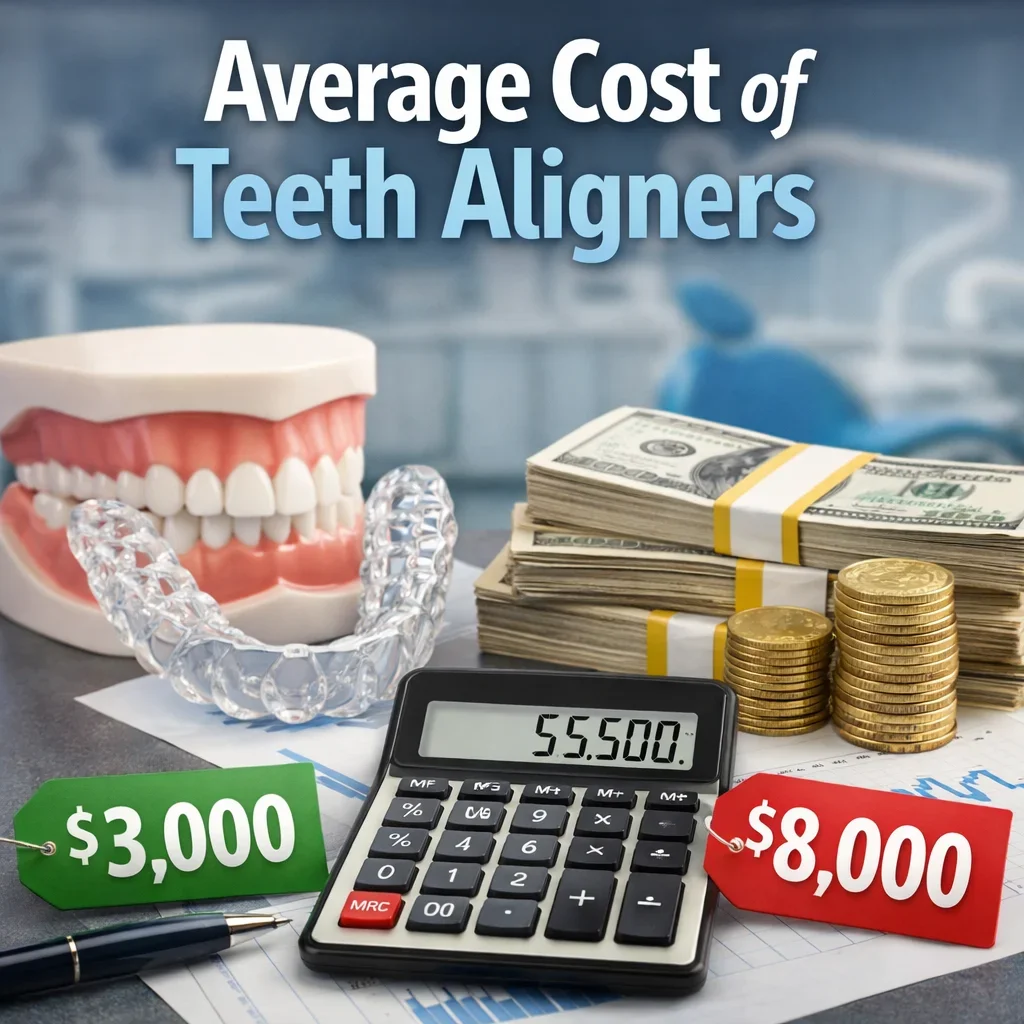
In 2026, the average cost of teeth aligners typically ranges between $3,000 and $8,000 in the United States. This range depends on several clinical and logistical factors, including case complexity, treatment duration, dentist expertise, and geographic location. For minor corrections, patients may pay closer to $3,000–$4,500, while comprehensive orthodontic cases requiring longer treatment plans can reach $6,000–$8,000 or more.
To help you understand the average cost of teeth aligners more clearly, here is a simplified price overview:
Mild cases (3–6 months): $3,000 – $4,500
Moderate cases (6–12 months): $4,000 – $6,500
Complex cases (12–24 months): $6,000 – $8,000+
It is important to understand that the average cost of teeth aligners reflects not just the plastic trays themselves, but the entire treatment process. This includes digital scans, 3D treatment planning, progress monitoring, refinement aligners, and professional supervision. Many patients mistakenly assume they are paying only for trays, when in reality, the average cost of teeth aligners covers a complete orthodontic care package.
When evaluating the average cost of teeth aligners, you should also consider the value of professional guidance. Orthodontic tooth movement is a biological process that affects bone and gum health. According to the American Dental Association, orthodontic treatment should always be supervised by a licensed dental professional to ensure safety and optimal results. Choosing treatment solely based on a lower average cost of teeth aligners without professional oversight can lead to complications.
Another factor influencing the average cost of teeth aligners is brand selection. Well-known systems like Invisalign often fall in the mid-to-high range of the cost spectrum due to research, advanced technology, and clinical track record. Meanwhile, newer or direct-to-consumer brands may advertise a lower price. While these options may reduce the upfront average cost of teeth aligners, they may not include in-person monitoring or refinement stages, which can impact final results.
Globally, the average cost of teeth aligners varies significantly. In countries like Turkey, patients may find prices between $2,000 and $4,000 for similar treatments performed by experienced orthodontists. This is one reason dental tourism has grown rapidly. However, when comparing international options, patients should consider travel expenses, follow-up logistics, and provider credentials alongside the average cost of teeth aligners.
Many patients also ask whether the average cost of teeth aligners is worth it compared to traditional braces. Aligners provide aesthetic advantages, fewer emergency visits, removable convenience, and often shorter appointment times. For working professionals and adults concerned about appearance, the slightly higher average cost of teeth aligners may offer substantial lifestyle benefits.
It is also helpful to understand that the average cost of teeth aligners usually includes retainers at the end of treatment, though this varies by provider. Retainers are essential to maintain results. If retainers are not included, they may cost an additional $200–$600. Therefore, when discussing the average cost of teeth aligners with your dentist, always request a full breakdown of what is included.
Flexible payment plans can make the average cost of teeth aligners more manageable. Many clinics offer monthly installment options ranging from $100 to $300 per month depending on total cost and financing duration. Health savings accounts (HSA) and flexible spending accounts (FSA) can also be applied toward the average cost of teeth aligners, helping reduce the financial burden.
Ultimately, the average cost of teeth aligners should be evaluated as an investment in oral health, function, and confidence 😊. Properly aligned teeth are easier to clean, may reduce the risk of gum disease, and can improve bite stability. If you would like a personalized consultation and transparent pricing, you can reach out through the Redent Klinik Contact Page to receive a customized treatment estimate.
In summary, the average cost of teeth aligners in 2026 typically ranges between $3,000 and $8,000, depending on case complexity and provider expertise. Rather than focusing only on price, patients should prioritize safety, professional supervision, included services, and long-term results. A carefully planned aligner treatment ensures that the average cost of teeth aligners translates into lasting value and a confident, healthy smile.
What Is the Average Cost of Teeth Aligners in 2026?
Understanding the average cost of teeth aligners in 2026 is essential for anyone planning orthodontic treatment. While prices have remained relatively stable over the past few years, technological improvements and increased demand have slightly influenced the average cost of teeth aligners across different regions. In general, patients can expect a national price range between $3,000 and $8,000, depending on the complexity of their case and the experience of the dental provider.
The average cost of teeth aligners is not a fixed number because aligner therapy is highly personalized. Each treatment plan is digitally customized using 3D scans and advanced planning software. Therefore, the average cost of teeth aligners reflects the time, technology, and professional expertise required to achieve safe and predictable tooth movement.
National Average Cost Breakdown
When discussing the average cost of teeth aligners, it helps to look at the breakdown by treatment category. Mild alignment corrections generally cost less, while more complex bite corrections increase the average cost of teeth aligners due to longer treatment durations and additional refinement trays.
Mild crowding or spacing: $3,000 – $4,500
Moderate misalignment: $4,000 – $6,500
Severe or complex cases: $6,000 – $8,000+
This pricing structure shows that the average cost of teeth aligners increases proportionally with case difficulty. Longer treatments require more aligner sets, more monitoring visits, and sometimes additional attachments or elastics, all of which influence the final average cost of teeth aligners.
What Determines the 2026 Pricing Standard?
The average cost of teeth aligners in 2026 is influenced by multiple economic and clinical factors. Advances in digital orthodontics, including artificial intelligence-driven treatment planning and high-precision 3D printing, have improved outcomes but also contribute to the overall average cost of teeth aligners. Clinics invest heavily in scanners, software licenses, and staff training to provide safe and accurate care.
1. Case Complexity
Complex cases that involve bite correction (overbite, underbite, crossbite) significantly affect the average cost of teeth aligners. These cases require more trays and longer supervision. A patient needing 40+ aligners will naturally face a higher average cost of teeth aligners compared to someone needing only 14 trays.
2. Treatment Duration
The duration of treatment directly impacts the average cost of teeth aligners. A six-month cosmetic alignment plan costs less than an 18-month comprehensive orthodontic correction. The longer the timeline, the more clinical oversight is required, increasing the average cost of teeth aligners.
3. Provider Experience
Orthodontists with advanced certifications and extensive experience may charge more, which can increase the average cost of teeth aligners. However, this often ensures greater treatment accuracy and reduces the likelihood of mid-treatment complications.
United States vs International Pricing
While the U.S. average cost of teeth aligners ranges between $3,000 and $8,000, international options may present lower figures. For example:
UK: £2,500 – £5,500
Canada: $4,000 – $7,500 CAD
Australia: $4,500 – $9,000 AUD
Although these figures may reduce the perceived average cost of teeth aligners, patients should factor in travel, follow-up logistics, and provider credentials. Lower pricing does not always guarantee comprehensive monitoring.
Is the Average Cost of Teeth Aligners Worth It?
Many patients compare the average cost of teeth aligners to traditional braces. Aligners are removable, nearly invisible, and generally more comfortable. For working professionals and adults concerned about aesthetics, the slightly higher average cost of teeth aligners may be justified by lifestyle benefits and improved confidence 😊.
Additionally, straighter teeth can improve oral hygiene. Misaligned teeth trap plaque and increase the risk of gum disease. Investing in the average cost of teeth aligners may reduce future dental treatment costs related to periodontal disease or tooth wear.
Does Insurance Impact the 2026 Average?
Insurance coverage can significantly affect the out-of-pocket average cost of teeth aligners. Many dental plans with orthodontic benefits cover $1,000 to $3,000 of treatment. This can reduce the effective average cost of teeth aligners considerably. Patients should always verify whether aligners are categorized similarly to braces in their policy.
Flexible spending accounts (FSA) and health savings accounts (HSA) can also help offset the average cost of teeth aligners, allowing pre-tax funds to be used toward treatment.
What Is Typically Included in the Price?
When evaluating the average cost of teeth aligners, it is important to understand what is included:
- Initial consultation and examination
- Digital 3D scanning
- Custom treatment planning
- Full series of aligners
- Monitoring appointments
- Refinement trays (if needed)
- Final retainers (sometimes included)
This comprehensive package explains why the average cost of teeth aligners may appear high at first glance. It covers professional expertise and full orthodontic supervision rather than just plastic trays.
According to the American Dental Association, orthodontic treatment should always be managed by licensed professionals to ensure safety and proper diagnosis. Choosing treatment based only on a low advertised average cost of teeth aligners without clinical supervision can pose risks.
In summary, the average cost of teeth aligners in 2026 ranges between $3,000 and $8,000 in the United States, with international variations available. The final amount depends on complexity, duration, and provider expertise. When evaluating the average cost of teeth aligners, patients should focus not only on price but on long-term value, safety, and treatment quality. A well-informed decision ensures that the average cost of teeth aligners becomes an investment in lasting oral health and self-confidence.
Factors That Influence the Average Cost of Teeth Aligners
When patients research the average cost of teeth aligners, they often expect a single fixed number. However, the reality is that the average cost of teeth aligners varies widely because orthodontic treatment is highly personalized. Several clinical, technical, and economic factors directly impact the final price. Understanding these variables helps you interpret why one clinic may quote $3,500 while another recommends $7,500 for what appears to be a similar treatment.
The average cost of teeth aligners reflects much more than just the transparent trays. It includes diagnostics, treatment planning, monitoring, and post-treatment stabilization. Below, we explore the most important factors that determine the average cost of teeth aligners in 2026.
Case Complexity and Orthodontic Diagnosis
The single biggest factor influencing the average cost of teeth aligners is case complexity. Mild spacing or slight crowding requires fewer aligner trays and less supervision. In contrast, patients with overbites, underbites, crossbites, or severe crowding need longer treatment and more advanced biomechanical planning.
Mild Cases
Minor alignment corrections usually require 10–20 aligners. Because the treatment timeline is shorter, the average cost of teeth aligners for these cases is typically on the lower end of the pricing spectrum, often between $3,000 and $4,500.
Moderate to Severe Cases
Complex bite corrections may require 30–50 aligners or more. These cases increase chair time, digital planning adjustments, and refinement phases, which raise the average cost of teeth aligners significantly. Severe cases often reach $6,000–$8,000.
Treatment Duration
The length of treatment plays a major role in determining the average cost of teeth aligners. A six-month cosmetic correction involves fewer appointments and less monitoring than an 18–24 month comprehensive orthodontic plan.
Longer treatment means:
- More aligner sets
- Additional progress scans
- Possible refinement trays
- Extended professional supervision
All these elements contribute to the overall average cost of teeth aligners. Patients often underestimate how treatment duration affects pricing, but time and expertise are central components of the final cost.
Technology and Digital Planning
Modern aligner systems rely heavily on digital orthodontics. Clinics use advanced intraoral scanners and 3D treatment planning software to simulate tooth movement. The investment in this technology directly impacts the average cost of teeth aligners.
3D Imaging and Scanning
High-resolution digital scans replace traditional impressions. While this improves comfort and precision, the equipment costs thousands of dollars. These operational expenses are reflected in the average cost of teeth aligners.
AI-Driven Treatment Planning
Some premium systems use artificial intelligence to optimize tooth movement. This increases accuracy and reduces complications, but it may slightly increase the average cost of teeth aligners compared to simpler systems.
Provider Experience and Expertise
The qualifications of your orthodontist or dentist also influence the average cost of teeth aligners. Highly experienced providers often charge more because of their clinical expertise and proven success rates. While this may increase the average cost of teeth aligners, it often reduces the risk of treatment errors or prolonged refinements.
According to the American Dental Association, orthodontic treatment should always be supervised by licensed dental professionals to ensure patient safety. Choosing a lower average cost of teeth aligners without professional oversight may lead to unsatisfactory outcomes.
Geographic Location
The city or country where treatment is performed significantly affects the average cost of teeth aligners. Urban clinics with higher rent and staffing costs typically charge more than practices in smaller cities.
Major U.S. cities: $5,000 – $8,000
Suburban areas: $3,500 – $6,500
Turkey: $2,000 – $4,000
UK: £2,500 – £5,500
While traveling abroad may reduce the average cost of teeth aligners, patients must consider travel expenses and follow-up logistics.
Brand and Treatment System
Different aligner brands influence the average cost of teeth aligners. Premium brands invest heavily in research and long-term clinical studies, which can increase pricing. Direct-to-consumer systems may advertise a lower average cost of teeth aligners, but they often provide limited in-person supervision.
It is important to compare not only the advertised average cost of teeth aligners, but also what services are included in that price.
Refinement and Retainers
Many patients require refinement trays after the initial series. Some clinics include refinements in the quoted average cost of teeth aligners, while others charge additional fees. Retainers are also critical to maintaining results. If not included, they may add $200–$600 to the total average cost of teeth aligners.
Insurance and Financing Options
Orthodontic insurance coverage can reduce the effective average cost of teeth aligners. Many plans cover $1,000–$3,000 toward treatment. Flexible spending accounts (FSA) and health savings accounts (HSA) can also lower the out-of-pocket average cost of teeth aligners.
Clinics frequently offer monthly payment plans, making the average cost of teeth aligners more manageable. Instead of paying $6,000 upfront, patients may spread payments over 12–24 months.
Long-Term Value vs Initial Price
While focusing on the average cost of teeth aligners is important, long-term value matters even more 😊. Properly aligned teeth improve oral hygiene, reduce gum disease risk, and enhance confidence. Choosing treatment based solely on a lower average cost of teeth aligners without evaluating quality may lead to additional corrective expenses later.
In summary, the average cost of teeth aligners is shaped by case complexity, treatment duration, technology, provider expertise, location, brand selection, and included services. By understanding these factors, patients can make informed decisions and evaluate whether a quoted average cost of teeth aligners reflects comprehensive care and long-term oral health benefits.
Average Cost of Teeth Aligners vs Traditional Braces
One of the most common questions patients ask when evaluating orthodontic treatment is how the average cost of teeth aligners compares to traditional metal braces. While both options aim to straighten teeth and improve bite alignment, their pricing structures, treatment experience, and long-term value differ significantly. Understanding the differences helps patients decide whether the average cost of teeth aligners justifies the additional investment compared to conventional braces.
In 2026, traditional metal braces typically cost between $2,500 and $7,000, depending on case complexity and geographic location. Meanwhile, the average cost of teeth aligners generally ranges from $3,000 to $8,000. Although aligners may appear slightly more expensive at first glance, the comparison requires deeper analysis beyond just the sticker price.
Initial Cost Comparison
Metal Braces: $2,500 – $7,000
Ceramic Braces: $4,000 – $8,000
Average Cost of Teeth Aligners: $3,000 – $8,000
Lingual Braces: $8,000 – $12,000
This comparison shows that the average cost of teeth aligners falls within a similar range to ceramic braces and often below lingual braces. Therefore, aligners are not necessarily the most expensive orthodontic option available.
Aesthetic Differences and Lifestyle Impact
A major reason patients accept the average cost of teeth aligners is aesthetics. Clear aligners are nearly invisible, making them especially attractive to adults and professionals. Traditional braces, even ceramic ones, remain visible and can affect confidence during treatment.
For many patients, the slight increase in the average cost of teeth aligners is offset by the ability to maintain a natural appearance throughout treatment 😊. This benefit is difficult to quantify financially but significantly impacts patient satisfaction.
Professional and Social Considerations
Adults in public-facing careers often prefer aligners despite the higher average cost of teeth aligners because they can remove them temporarily for important meetings or events. Braces, in contrast, are fixed appliances and cannot be removed.
Comfort and Maintenance
When comparing comfort, many patients report that aligners feel smoother and cause less irritation than brackets and wires. Although the average cost of teeth aligners may be slightly higher, the reduced discomfort and fewer emergency visits can improve the overall treatment experience.
Oral Hygiene
Aligners are removable, allowing patients to brush and floss normally. Braces require specialized cleaning tools and careful hygiene routines. Poor oral hygiene during braces treatment may increase the risk of decalcification or gum inflammation. For some patients, the improved hygiene convenience justifies the average cost of teeth aligners.
Treatment Effectiveness
Modern aligner systems are highly effective for mild to moderate orthodontic cases. However, in extremely complex cases, traditional braces may still provide more precise control. This means that while the average cost of teeth aligners is competitive, braces may sometimes be recommended for severe bite corrections.
According to the American Dental Association, both braces and aligners are effective when prescribed and monitored by qualified professionals. The decision should not be based solely on the average cost of teeth aligners, but also on clinical suitability.
Appointment Frequency and Time Commitment
Traditional braces require regular wire adjustments, typically every 4–6 weeks. Aligners often require fewer in-office visits because multiple trays are provided in advance. This efficiency contributes to the perceived value of the average cost of teeth aligners, especially for busy patients.
Fewer emergency visits (such as broken brackets or poking wires) also make aligners appealing. Although the average cost of teeth aligners may be comparable to braces, the reduced inconvenience can improve overall treatment satisfaction.
Long-Term Value and Retention
Both braces and aligners require retainers after treatment. In many cases, retainers are included in the average cost of teeth aligners, while braces may require a separate retainer fee. Patients should always confirm what is included in the total treatment estimate.
Additionally, aligners often involve digital treatment planning that simulates final results before treatment begins. This predictability can make the average cost of teeth aligners feel more transparent compared to traditional braces, where outcomes may be visualized less precisely at the start.
Cost vs Value: What Should Patients Consider?
When evaluating braces versus aligners, focusing only on the average cost of teeth aligners may overlook important lifestyle and comfort factors. While braces can sometimes be slightly less expensive, aligners provide:
- Discreet appearance
- Removability for eating and cleaning
- Improved comfort
- Fewer emergency visits
- Digital treatment previews
For many adults, these benefits justify the average cost of teeth aligners. However, teenagers or patients with highly complex bite issues may still benefit more from traditional braces.
Final Comparison Summary
The average cost of teeth aligners is generally similar to ceramic braces and slightly higher than basic metal braces, but often lower than lingual braces. While braces remain an effective and sometimes more affordable solution, aligners offer clear aesthetic and lifestyle advantages.
Ultimately, choosing between braces and aligners should involve a professional consultation, not just a price comparison. The average cost of teeth aligners represents an investment in comfort, convenience, and modern orthodontic technology. When evaluated holistically, many patients find that the average cost of teeth aligners provides strong long-term value and confidence throughout the treatment journey.
How Location Affects the Average Cost of Teeth Aligners
Geographic location plays a significant role in determining the average cost of teeth aligners. While many patients assume pricing is standardized nationwide, the reality is that the average cost of teeth aligners can vary dramatically depending on the city, region, or country where treatment is provided. Local economic conditions, clinic overhead expenses, provider demand, and regulatory standards all influence how much patients ultimately pay.
If you are comparing quotes from different clinics, understanding how location impacts the average cost of teeth aligners will help you evaluate whether a price difference is justified or simply reflects regional cost structures.
Urban vs Suburban vs Rural Pricing
One of the most noticeable variations in the average cost of teeth aligners occurs between large metropolitan cities and smaller towns. Clinics in major cities typically face higher operational costs, including rent, utilities, staff salaries, and marketing expenses. These factors increase the average cost of teeth aligners in urban areas.
Major Metropolitan Areas
In cities like New York, Los Angeles, or London, the average cost of teeth aligners often ranges between $5,500 and $8,500. High demand for cosmetic dentistry and higher living costs contribute to elevated pricing.
Suburban Regions
In suburban areas, the average cost of teeth aligners typically falls between $3,500 and $6,500. Lower overhead expenses allow clinics to offer competitive pricing while maintaining professional standards.
Rural Locations
In smaller towns, the average cost of teeth aligners may be slightly lower, often ranging from $3,000 to $5,000. However, patients should ensure that provider experience and available technology meet modern orthodontic standards.
International Differences in the Average Cost of Teeth Aligners
Beyond domestic differences, international pricing can vary significantly. Many patients explore dental tourism because the average cost of teeth aligners in certain countries may be substantially lower than in the United States or Western Europe.
United States: $3,000 – $8,000
United Kingdom: £2,500 – £5,500
Canada: $4,000 – $7,500 CAD
Turkey: $2,000 – $4,000
Australia: $4,500 – $9,000 AUD
For example, the average cost of teeth aligners in Turkey is often significantly lower due to reduced operational expenses and favorable exchange rates. However, patients considering treatment abroad must factor in travel costs, accommodation, and follow-up logistics. A lower advertised average cost of teeth aligners does not always reflect the total investment.
Economic Factors and Purchasing Power
The broader economic environment influences the average cost of teeth aligners. In countries with higher wages and stronger currencies, dental services tend to cost more. Conversely, in regions with lower living costs, clinics can offer more affordable pricing while maintaining profitability.
Currency exchange rates also affect the perceived average cost of teeth aligners for international patients. Favorable exchange rates may reduce the effective cost for travelers seeking treatment abroad.
Regulatory Standards and Professional Requirements
Healthcare regulations vary between countries and states. In regions with stricter regulatory standards, licensing requirements, and malpractice insurance costs, the average cost of teeth aligners may be higher. These regulations often ensure higher safety and quality standards.
According to the American Dental Association, orthodontic treatment should be supervised by licensed professionals to guarantee proper diagnosis and safe tooth movement. Choosing treatment solely based on a lower average cost of teeth aligners without verifying credentials can pose risks.
Demand and Market Competition
Market demand also impacts the average cost of teeth aligners. In highly competitive markets where many clinics offer aligner therapy, pricing may be more competitive. Conversely, in areas with limited providers, the average cost of teeth aligners may be higher due to reduced competition.
Brand Recognition and Premium Clinics
Some clinics position themselves as premium providers with luxury facilities and advanced technology. These clinics may charge above the standard average cost of teeth aligners. Patients should evaluate whether the additional amenities justify the increased expense.
Follow-Up Care and Accessibility
Location influences not only the average cost of teeth aligners but also access to follow-up care. Aligners require periodic monitoring to ensure teeth are moving as planned. If you travel internationally to reduce the average cost of teeth aligners, consider how refinements or emergencies will be managed.
Frequent travel for check-ups may increase the total expense beyond the initially quoted average cost of teeth aligners. Convenience and accessibility are important factors when evaluating location-based pricing.
Is Traveling Worth It to Lower the Average Cost of Teeth Aligners?
For some patients, traveling to reduce the average cost of teeth aligners can be financially beneficial. However, a comprehensive cost analysis should include:
- Travel and accommodation expenses
- Time away from work
- Number of required visits
- Emergency support availability
- Provider credentials and experience
When these factors are considered, the apparent savings in the average cost of teeth aligners may decrease.
Making an Informed Decision
Ultimately, the average cost of teeth aligners is closely tied to geographic location, economic conditions, competition, and regulatory standards. While it is natural to compare prices, treatment quality, safety, and long-term results should remain the priority 😊.
The average cost of teeth aligners should be viewed as an investment in both oral health and confidence. By understanding how location influences pricing, patients can make informed decisions that balance affordability with professional care. A slightly higher average cost of teeth aligners in your local area may provide greater convenience, accountability, and peace of mind throughout your orthodontic journey.
Does Insurance Cover the Average Cost of Teeth Aligners?
One of the most important financial questions patients ask is whether insurance helps reduce the average cost of teeth aligners. Orthodontic treatment can represent a significant investment, and understanding insurance coverage can dramatically lower the out-of-pocket average cost of teeth aligners. The answer, however, depends on the type of dental insurance plan, age restrictions, lifetime orthodontic maximums, and policy details.
In many cases, dental insurance does partially cover the average cost of teeth aligners, especially if the plan includes orthodontic benefits. However, coverage is rarely 100%, and patients should understand how reimbursement structures work before committing to treatment.
How Orthodontic Insurance Benefits Work
Dental insurance plans that include orthodontic coverage typically contribute a fixed lifetime maximum amount rather than paying a percentage indefinitely. This means that regardless of whether you choose braces or aligners, the coverage applied toward the average cost of teeth aligners is usually capped.
Lifetime Orthodontic Maximums
Most insurance plans offer a lifetime orthodontic benefit ranging between $1,000 and $3,000. If your treatment falls within the national average cost of teeth aligners range of $3,000 to $8,000, this benefit can significantly reduce your financial burden.
For example:
Insurance orthodontic benefit: $2,000
Estimated remaining balance: $4,000
In this case, insurance lowers the effective average cost of teeth aligners considerably.
Percentage-Based Coverage
Some insurance plans cover a percentage of orthodontic treatment rather than a fixed maximum. Common structures include covering 25% to 50% of treatment up to a lifetime limit. If your aligner therapy falls within the average cost of teeth aligners range, percentage-based coverage can still reduce total expenses.
It is essential to confirm whether aligners are categorized under orthodontic treatment in your policy. Most modern plans treat aligners the same as traditional braces when calculating the average cost of teeth aligners coverage.
Age Restrictions and Eligibility
Insurance coverage often depends on patient age. Many policies provide orthodontic benefits primarily for patients under 18. Adults may have limited or no orthodontic coverage, which means the full average cost of teeth aligners becomes an out-of-pocket expense.
Adult Orthodontic Coverage
In recent years, more insurance providers have expanded adult orthodontic coverage. However, benefits may be lower than pediatric plans. Patients should verify whether their adult policy contributes toward the average cost of teeth aligners before starting treatment.
Flexible Spending Accounts (FSA) and Health Savings Accounts (HSA)
Even if traditional insurance does not fully cover the average cost of teeth aligners, patients can often use pre-tax funds through FSA or HSA accounts. These accounts allow you to allocate pre-tax income toward qualified medical expenses, including orthodontic treatment.
Using FSA or HSA funds effectively reduces the real average cost of teeth aligners because you are paying with untaxed income. This strategy can save hundreds or even thousands of dollars depending on your tax bracket.
Medical Necessity vs Cosmetic Treatment
Insurance providers sometimes evaluate whether orthodontic treatment is medically necessary. If aligners are prescribed to correct bite dysfunction, jaw pain, or significant malocclusion, coverage is more likely. However, if treatment is purely cosmetic, insurance may not reduce the average cost of teeth aligners.
According to the American Dental Association, orthodontic treatment plays an important role in improving oral health, not just aesthetics. Proper documentation from your dentist may help justify coverage and reduce the average cost of teeth aligners.
Payment Timing and Reimbursement Structure
Insurance reimbursement for the average cost of teeth aligners may not be paid upfront in a lump sum. Some insurers distribute payments over the course of treatment, often monthly or quarterly. This means your clinic may structure payment plans around insurance reimbursement schedules.
Understanding how and when insurance pays toward the average cost of teeth aligners helps avoid unexpected financial surprises.
Out-of-Network vs In-Network Providers
Choosing an in-network provider can significantly reduce the average cost of teeth aligners because negotiated rates may apply. Out-of-network providers may still accept insurance, but reimbursement rates may be lower.
Before committing to treatment, ask your clinic to provide a pre-treatment insurance estimate. This allows you to calculate the adjusted average cost of teeth aligners after insurance benefits are applied.
What If You Don’t Have Insurance?
If you do not have orthodontic coverage, the full average cost of teeth aligners will likely be your responsibility. However, many clinics offer in-house financing or third-party payment plans. Monthly installments can make the average cost of teeth aligners manageable without requiring a large upfront payment.
Some providers also offer promotional discounts or bundled pricing that includes retainers and refinements within the quoted average cost of teeth aligners.
Final Thoughts on Insurance and Aligners
Insurance can substantially reduce the average cost of teeth aligners, but coverage varies widely depending on policy details, age eligibility, and provider networks. Patients should carefully review their benefits, verify orthodontic limits, and consult their dental office for assistance with pre-authorization.
Ultimately, while insurance may not eliminate the average cost of teeth aligners, it can significantly lower the financial burden 😊. Combining insurance benefits with FSA or HSA funds and flexible payment plans allows many patients to access treatment without overwhelming upfront expenses. Making an informed financial decision ensures that the average cost of teeth aligners becomes a manageable investment in long-term oral health and confidence.
Payment Plans and Financing Options for Teeth Aligners
For many patients, the biggest concern about starting orthodontic treatment is not whether aligners work — it is how to afford the average cost of teeth aligners. While the national average cost of teeth aligners typically ranges between $3,000 and $8,000, very few patients pay that amount in a single upfront payment. Modern dental clinics understand that the average cost of teeth aligners represents a significant financial commitment, which is why flexible payment plans and financing solutions are widely available.
If you are worried about managing the average cost of teeth aligners, this section will explain the most common financing strategies, how they work, and how to choose the safest and most practical option for your situation.
In-House Monthly Payment Plans
One of the most popular ways to manage the average cost of teeth aligners is through in-house financing offered directly by dental clinics. These plans typically allow patients to divide the total treatment fee into smaller monthly payments.
How In-House Plans Work
Instead of paying the full average cost of teeth aligners upfront, patients may pay a down payment (often $500–$1,500), followed by monthly installments spread over 12 to 24 months. For example:
Down payment: $1,000
Remaining balance: $5,000
Monthly payment (20 months): $250
This structure makes the average cost of teeth aligners more manageable without requiring a large lump-sum payment. Some clinics offer interest-free plans, while others may charge small administrative fees.
Third-Party Financing Companies
Many dental practices partner with healthcare financing companies such as CareCredit or similar providers. These companies allow patients to finance the average cost of teeth aligners through structured payment plans.
Interest-Free Promotional Periods
Some financing providers offer 6-, 12-, or even 24-month interest-free periods. If the full balance of the average cost of teeth aligners is paid within the promotional period, no interest is applied. However, failing to pay the balance in time may result in retroactive interest charges.
Extended Payment Terms
Longer-term financing options (36–60 months) reduce monthly payments but may increase the total amount paid due to interest. While this spreads out the average cost of teeth aligners, patients should carefully review interest rates and total repayment amounts.
Using Health Savings Accounts (HSA) and Flexible Spending Accounts (FSA)
HSA and FSA accounts are powerful tools for reducing the effective average cost of teeth aligners. These accounts allow patients to use pre-tax income for qualified medical expenses, including orthodontic treatment.
Because funds are deducted before taxes, using an HSA or FSA effectively lowers the real average cost of teeth aligners by reducing taxable income. For patients in higher tax brackets, this can represent substantial savings.
Insurance Combined with Financing
If your insurance covers part of the average cost of teeth aligners, financing can be used for the remaining balance. For example, if insurance contributes $2,000 toward a $6,000 treatment, financing can be applied to the remaining $4,000.
Combining benefits and structured payments significantly reduces the financial burden of the average cost of teeth aligners and makes treatment accessible to a wider range of patients.
Discount Programs and Special Offers
Some clinics periodically offer discounts that reduce the average cost of teeth aligners. These may include:
- Seasonal promotions
- Student discounts
- Family or referral discounts
- Full upfront payment discounts
While discounts can lower the average cost of teeth aligners, patients should ensure that treatment quality and supervision remain uncompromised.
Employer Benefits and Orthodontic Assistance
Some employers provide supplemental orthodontic benefits or wellness stipends that can be applied toward the average cost of teeth aligners. It is worth checking with your HR department to see if orthodontic coverage is included in your benefits package.
Budget Planning for the Average Cost of Teeth Aligners
Before starting treatment, patients should create a realistic financial plan. The average cost of teeth aligners should be evaluated alongside monthly expenses and income stability.
Questions to Ask Your Provider
- Is the quoted average cost of teeth aligners inclusive of refinements?
- Are retainers included?
- Is financing interest-free?
- What happens if treatment extends beyond the initial plan?
Clarifying these points ensures there are no hidden fees that increase the true average cost of teeth aligners.
Why Financing Makes Orthodontics More Accessible
Aligner therapy is often seen as a cosmetic luxury, but properly aligned teeth improve oral hygiene, reduce gum disease risk, and support long-term dental health. The average cost of teeth aligners should therefore be viewed as a health investment rather than a cosmetic expense 😊.
According to the American Dental Association, properly managed orthodontic treatment contributes to overall oral health. Financing options allow patients to access care without delaying treatment due to financial concerns.
Final Thoughts on Financing
The average cost of teeth aligners may initially seem high, but modern payment structures make it far more manageable. In-house plans, third-party financing, insurance contributions, and tax-advantaged accounts all help reduce the financial barrier.
Rather than postponing treatment due to the average cost of teeth aligners, patients should explore all available financial tools. With proper planning, the average cost of teeth aligners becomes a structured, predictable monthly investment in long-term oral health, improved confidence, and a healthier smile.
Are At-Home Aligners Cheaper? A Full Cost Comparison
As clear aligner treatment becomes more popular, many patients begin comparing professional in-office treatment with direct-to-consumer systems. A common question is whether at-home systems significantly reduce the average cost of teeth aligners. On the surface, mail-order aligners appear less expensive, but the true financial comparison requires a deeper evaluation of supervision, treatment scope, safety, and long-term outcomes.
Understanding how at-home systems compare to professionally supervised care is essential before deciding based solely on the average cost of teeth aligners. While cost savings may look attractive initially, treatment quality and safety should always remain the priority.
What Are At-Home Aligners?
At-home aligner systems (also called direct-to-consumer aligners) allow patients to order impression kits or visit scanning centers without ongoing in-person orthodontic supervision. These companies often advertise prices lower than the traditional average cost of teeth aligners, promoting affordability and convenience.
How They Work
Patients typically:
- Take impressions at home or receive a digital scan
- Submit photos of their teeth
- Receive aligners by mail
- Track progress remotely
Because in-person visits are limited or eliminated, these companies can advertise a lower average cost of teeth aligners compared to in-office orthodontic treatment.
Cost Comparison: At-Home vs In-Office Treatment
At-Home Aligners: $1,500 – $3,500
In-Office Aligners (Average Cost of Teeth Aligners): $3,000 – $8,000
Traditional Braces: $2,500 – $7,000
At first glance, at-home systems appear to undercut the average cost of teeth aligners by several thousand dollars. However, this difference reflects reduced supervision and limited case complexity rather than identical treatment value.
Limitations of At-Home Aligners
Most at-home systems are approved only for mild cosmetic corrections. They generally cannot treat complex bite issues such as severe overbites, underbites, or jaw misalignment. In contrast, professionally supervised treatment within the typical average cost of teeth aligners range includes comprehensive diagnosis and advanced biomechanical planning.
No Comprehensive Clinical Exam
In-office orthodontic treatment begins with X-rays, periodontal evaluation, and bite analysis. These steps are included in the average cost of teeth aligners. At-home providers may skip full radiographic evaluation, which can overlook underlying bone or gum conditions.
Limited Monitoring
Orthodontic tooth movement is a biological process. Teeth move through bone, and improper force application can cause gum recession or root resorption. The average cost of teeth aligners in a clinical setting includes continuous professional monitoring to prevent complications.
Risk vs Savings Analysis
While reducing the average cost of teeth aligners may seem appealing, complications can result in additional corrective treatment expenses. If at-home treatment fails or causes bite problems, patients may ultimately pay more than the original average cost of teeth aligners required for supervised care.
According to the American Dental Association, orthodontic treatment should be managed by licensed professionals to ensure safe and effective tooth movement. Choosing treatment solely based on a lower average cost of teeth aligners without adequate supervision may increase risks.
What Is Included in Professional Treatment?
When evaluating the average cost of teeth aligners in a professional setting, patients typically receive:
- Comprehensive oral examination
- Digital 3D scanning
- Customized treatment planning
- Progress monitoring appointments
- Refinement aligners
- Retention planning
This full-service approach explains why the average cost of teeth aligners is higher than mail-order systems. Patients are paying for expertise, safety, and predictable results.
Are At-Home Aligners Ever Appropriate?
For patients with extremely minor spacing or crowding and excellent oral health, at-home aligners may provide acceptable cosmetic improvements. In these limited cases, reducing the average cost of teeth aligners could be financially reasonable.
However, most orthodontists recommend at least an in-person consultation before starting treatment. Even if a patient ultimately chooses a lower-cost solution, understanding the full average cost of teeth aligners for supervised care allows for informed decision-making.
Long-Term Stability and Retainers
Retention is critical after any orthodontic treatment. Some at-home systems charge extra for retainers, which increases the total expense beyond the advertised average cost of teeth aligners. Professional clinics often include retainers within the quoted treatment fee.
Long-term stability depends on accurate bite alignment, which may not always be fully corrected in remote systems. If relapse occurs, additional costs may exceed the original average cost of teeth aligners that could have been invested in comprehensive care from the beginning.
Value Beyond the Price Tag
The average cost of teeth aligners should be evaluated not just as a price, but as an investment in oral health, safety, and confidence 😊. Professional supervision minimizes risks and ensures that teeth move predictably within healthy biological limits.
While at-home aligners may reduce the upfront average cost of teeth aligners, patients should carefully weigh potential limitations, risks, and the possibility of future corrective treatment. In many cases, the slightly higher average cost of teeth aligners in a clinical setting delivers stronger long-term value and peace of mind.
Ultimately, the decision should be based on clinical suitability rather than price alone. A consultation with a qualified provider helps determine whether the reduced average cost of teeth aligners offered by at-home systems truly aligns with your oral health needs and treatment goals.
What Is Included in the Average Cost of Teeth Aligners?
When patients first hear the average cost of teeth aligners, the number can seem high. However, many people assume they are paying only for a set of clear plastic trays. In reality, the average cost of teeth aligners includes a comprehensive orthodontic treatment process involving diagnostics, digital planning, clinical supervision, refinements, and long-term retention. Understanding exactly what is included helps patients evaluate whether the quoted average cost of teeth aligners reflects true value.
The average cost of teeth aligners typically covers a complete start-to-finish orthodontic journey rather than a simple product purchase. Below is a detailed breakdown of what is commonly included.
Initial Consultation and Comprehensive Examination
Before aligner treatment begins, a full oral examination is required. This step is included in the average cost of teeth aligners at most reputable clinics.
Diagnostic Imaging and X-Rays
Orthodontic movement affects both teeth and surrounding bone. X-rays and, in some cases, 3D CBCT scans are performed to evaluate root position, bone density, and overall oral health. These diagnostic procedures are part of the average cost of teeth aligners and ensure that treatment is safe and biologically appropriate.
Periodontal and Bite Assessment
Gum health and bite function must be evaluated before starting treatment. If gum disease or significant occlusal problems are present, they must be addressed first. This comprehensive evaluation is built into the average cost of teeth aligners and reduces the risk of complications later.
Digital 3D Scanning and Treatment Planning
Modern aligner systems rely on digital scanning technology rather than traditional impressions. High-resolution intraoral scanners create a precise 3D model of your teeth.
This scanning process, along with advanced computer simulation of tooth movement, is included in the average cost of teeth aligners. Patients can often preview their projected final smile before treatment even begins.
Customized Treatment Simulation
Orthodontists use specialized software to design each stage of tooth movement. Every aligner is manufactured based on this digital plan. The development of this personalized treatment roadmap contributes significantly to the average cost of teeth aligners.
Full Series of Custom Aligners
The core component of the average cost of teeth aligners is the production of the aligner trays themselves. Depending on case complexity, patients may receive anywhere from 10 to 50+ aligners.
Each aligner is precisely engineered to apply controlled force to specific teeth. The manufacturing process involves medical-grade thermoplastic materials and precision 3D printing. The cost of producing these custom trays is built into the average cost of teeth aligners.
Attachments and Auxiliary Components
In many cases, small tooth-colored attachments are bonded to teeth to improve aligner grip and control movement. These attachments allow more complex corrections.
The placement and later removal of these attachments are included in the average cost of teeth aligners. Some patients may also require elastics to correct bite alignment, which are typically provided as part of the treatment package.
Monitoring and Progress Appointments
Regular check-ups are essential to ensure teeth are moving as planned. These monitoring visits are included in the average cost of teeth aligners for professionally supervised treatment.
Unlike at-home systems, in-office treatment provides clinical oversight throughout the process. Adjustments can be made if teeth are not tracking properly. This ongoing supervision explains why the average cost of teeth aligners may be higher than mail-order alternatives.
Refinement Aligners
After the initial aligner series is completed, some patients require additional refinement trays to fine-tune the final result. Many clinics include a certain number of refinements within the quoted average cost of teeth aligners.
Without refinements, minor imperfections may remain. Including this phase ensures that the average cost of teeth aligners covers a fully optimized final outcome rather than a partially corrected smile.
Retention and Post-Treatment Care
After teeth reach their final positions, retainers are necessary to prevent relapse. In many clinics, retainers are included in the average cost of teeth aligners, though some providers charge separately.
Why Retainers Matter
Teeth naturally tend to shift over time. Retainers stabilize results and protect the investment represented by the average cost of teeth aligners. Failing to wear retainers can result in relapse, potentially requiring additional treatment.
Professional Expertise and Safety
Perhaps the most important inclusion in the average cost of teeth aligners is professional supervision. Orthodontic treatment involves biological processes that must be carefully managed.
According to the American Dental Association, orthodontic procedures should be supervised by qualified dental professionals to ensure safe and predictable results. This clinical oversight is a critical component of the average cost of teeth aligners.
Are There Any Hidden Fees?
While the average cost of teeth aligners often includes most treatment components, patients should ask whether the following are included:
- Refinement trays
- Retainers
- Replacement aligners if lost
- Emergency visits
Clarifying these details ensures the quoted average cost of teeth aligners reflects the full scope of treatment without unexpected expenses.
Final Thoughts on What You’re Really Paying For
The average cost of teeth aligners represents far more than transparent trays. It includes diagnosis, digital planning, customized manufacturing, professional monitoring, refinements, and retention. When viewed as a comprehensive healthcare service rather than a cosmetic product, the average cost of teeth aligners becomes easier to understand 😊.
Ultimately, patients are investing not just in straighter teeth, but in long-term oral health, improved function, and greater confidence. Evaluating what is included in the average cost of teeth aligners allows you to make an informed and confident decision about your orthodontic journey.
How to Reduce the Average Cost of Teeth Aligners Safely
For many patients, the decision to begin orthodontic treatment comes down to affordability. While the average cost of teeth aligners typically ranges between $3,000 and $8,000 in the United States, there are legitimate and safe ways to reduce the financial burden without compromising treatment quality. The key is to lower the average cost of teeth aligners strategically — not by sacrificing professional supervision or clinical standards.
This section explains how patients can responsibly manage and potentially reduce the average cost of teeth aligners while maintaining safety, effectiveness, and long-term oral health.
Start with a Comprehensive Consultation
The first step in controlling the average cost of teeth aligners is to receive a proper evaluation. Some patients assume their case is complex when it may only require minor correction. A thorough assessment can determine whether a shorter treatment plan is possible, which may lower the average cost of teeth aligners.
Why Accurate Diagnosis Matters
An accurate diagnosis prevents overtreatment. If only minor crowding is present, a limited aligner plan may reduce the average cost of teeth aligners significantly compared to a comprehensive package. However, this should only be determined by a qualified dental professional.
Compare Treatment Plans — Not Just Prices
When researching the average cost of teeth aligners, patients often compare only the final price. Instead, compare what each quote includes. A lower advertised average cost of teeth aligners may exclude refinements, retainers, or follow-up appointments.
Request a Detailed Cost Breakdown
- Are refinement trays included?
- Are retainers included?
- How many monitoring visits are covered?
- Are emergency appointments extra?
Understanding these details ensures that the quoted average cost of teeth aligners reflects the true total investment.
Use Insurance and Tax-Advantaged Accounts
Insurance coverage can substantially reduce the average cost of teeth aligners. Many orthodontic plans contribute $1,000–$3,000 toward treatment. Even if insurance does not fully cover the average cost of teeth aligners, combining benefits with flexible payment plans can significantly lower out-of-pocket expenses.
HSA and FSA Benefits
Health Savings Accounts (HSA) and Flexible Spending Accounts (FSA) allow patients to use pre-tax income toward orthodontic care. Using these accounts effectively reduces the real average cost of teeth aligners because you are paying with untaxed dollars.
Take Advantage of Payment Plans
Most dental clinics offer structured monthly payment options. Instead of focusing on the full average cost of teeth aligners, patients can break the cost into manageable installments.
Total treatment: $6,000
Down payment: $1,000
Monthly payment (20 months): $250
This approach makes the average cost of teeth aligners more accessible without lowering treatment quality.
Look for Seasonal Promotions
Some clinics offer limited-time discounts that can slightly reduce the average cost of teeth aligners. These promotions may include reduced consultation fees, complimentary retainers, or bundled pricing packages.
However, patients should be cautious about unusually low prices. A dramatically reduced average cost of teeth aligners may indicate limited supervision or hidden fees.
Avoid Unsafe Shortcuts
While it may be tempting to lower the average cost of teeth aligners by choosing unsupervised or mail-order systems, safety should remain the priority. Orthodontic tooth movement is a biological process that requires careful monitoring.
According to the American Dental Association, orthodontic treatment should be supervised by licensed professionals to ensure safe and predictable results. Attempting to drastically reduce the average cost of teeth aligners by avoiding professional oversight can lead to complications that ultimately increase expenses.
Choose the Right Provider the First Time
Selecting an experienced orthodontist can prevent costly corrections later. Although a highly qualified provider may not offer the lowest average cost of teeth aligners, proper planning reduces the risk of extended treatment or retreatment.
Paying slightly more upfront for expert supervision often results in fewer refinements and greater efficiency, which protects your investment in the average cost of teeth aligners.
Maintain Excellent Oral Hygiene
Good oral hygiene during treatment prevents complications such as gum inflammation or decay. If dental issues arise mid-treatment, additional procedures may increase the total average cost of teeth aligners.
By maintaining proper brushing, flossing, and regular dental cleanings, patients help ensure that the original average cost of teeth aligners remains stable without unexpected interruptions.
Consider Long-Term Value Over Short-Term Savings
The average cost of teeth aligners should be viewed as an investment in long-term oral health and confidence 😊. Straighter teeth are easier to clean, which may reduce the risk of gum disease and future restorative expenses.
Attempting to reduce the average cost of teeth aligners by compromising quality can result in additional corrective procedures that exceed the original budget. Instead, focus on smart financial planning, insurance optimization, and reputable providers.
Final Thoughts on Reducing Costs Safely
There are many legitimate ways to manage the average cost of teeth aligners without sacrificing treatment quality. Insurance benefits, tax-advantaged accounts, flexible financing, accurate diagnosis, and transparent pricing all help reduce financial strain.
Ultimately, the goal is not to find the lowest possible average cost of teeth aligners, but to secure safe, effective, and professionally supervised treatment at a fair and transparent price. With careful planning, the average cost of teeth aligners becomes a manageable investment in a healthier, more confident smile.