
When it comes to restoring your smile and improving oral health, few treatments compare to the benefits of teeth implants 😁. Dental implants are a long-term solution that replaces missing teeth with natural-looking artificial ones, designed to function just like your real teeth. Unlike removable dentures or temporary fixes, implants become a permanent part of your mouth by bonding directly with your jawbone. This not only enhances aesthetics but also improves speech, chewing, and overall quality of life. Patients who have undergone the procedure often describe it as life-changing, and modern dentistry has made it more accessible and successful than ever before.
The benefits of teeth implants go beyond appearance. They contribute to better oral function, prevent bone loss, and maintain the natural structure of your face. When you lose a tooth, the surrounding bone begins to deteriorate over time because it no longer receives the necessary stimulation from chewing. Dental implants restore this stimulation, preserving your jawbone density and preventing sagging facial features that often come with missing teeth. 🦷 Additionally, implants help in evenly distributing bite force, which reduces pressure on neighboring teeth and helps prevent future dental issues.
One of the most significant benefits of teeth implants is durability. With proper care, they can last a lifetime, making them an excellent investment for long-term oral health. Compared to bridges that may need replacement every 10–15 years, implants are designed to withstand daily wear and tear for decades. They’re made from biocompatible titanium, which integrates seamlessly with your natural bone through a process called osseointegration. This creates a stable foundation that acts like the root of a real tooth, giving you the confidence to eat, speak, and smile freely.
Beyond the functional and structural benefits of teeth implants, there are psychological advantages too. People who lose teeth often experience a decline in self-esteem and avoid social interactions due to embarrassment or discomfort with their appearance. Dental implants restore not just your smile but also your confidence. You can laugh, talk, and enjoy your favorite meals without worrying about dentures slipping or gaps showing. This emotional and social improvement is one of the most profound impacts implants have on patients’ lives ❤️.
Maintaining dental implants is also much simpler than caring for removable dentures. You don’t need special adhesives or overnight soaking routines. Regular brushing, flossing, and dental check-ups are usually enough to keep them in perfect condition. This convenience makes them one of the most practical oral health solutions available. Moreover, because they don’t rely on neighboring teeth for support, implants preserve the integrity of surrounding natural teeth — something that dental bridges and partial dentures often compromise.
From a medical perspective, the benefits of teeth implants include reduced risk of gum disease and infections. When there’s a gap left by a missing tooth, bacteria can accumulate easily, leading to gum inflammation or even periodontal disease. Implants fill these gaps, creating a healthier oral environment and reducing the likelihood of future complications. Additionally, by stabilizing your bite, they can help alleviate jaw discomfort and reduce strain on your temporomandibular joint (TMJ), improving overall comfort during everyday activities like chewing or speaking.
For patients who are concerned about the cost, it’s important to see implants as a long-term investment in health and happiness. While the initial price may seem higher than other treatments, the lasting benefits of teeth implants — both medically and aesthetically — make them worth every penny. Over time, implants prove to be more cost-effective because they don’t require frequent replacement or repair like other prosthetics. For detailed consultation or cost estimation, you can visit our Redent Klinik Contact Page and connect with our dental experts for personalized guidance.
Another vital point is safety and reliability. The success rate of dental implants is exceptionally high — around 95% according to the American Dental Association. This is largely due to advancements in materials, technology, and surgical techniques. Most patients experience minimal discomfort during recovery, and once healed, implants feel completely natural. Furthermore, modern implant procedures can now accommodate patients who previously weren’t candidates due to low bone density, thanks to innovations like bone grafting and zygomatic implants.
In conclusion, the benefits of teeth implants encompass more than just replacing missing teeth — they redefine the way you experience oral health. They restore the natural look of your smile, maintain bone structure, prevent future dental complications, and give you renewed self-confidence. Whether you’ve lost a single tooth or multiple ones, implants are an outstanding solution backed by decades of clinical success and patient satisfaction. Investing in dental implants means investing in your comfort, health, and happiness — and that’s a decision worth smiling about. 🌟
Why Dental Implants Are the Best Tooth Replacement Option
When it comes to replacing missing teeth, dental implants have revolutionized modern dentistry by offering unmatched stability, aesthetics, and functionality. Among all available restorative options, the benefits of teeth implants make them stand out as the gold standard solution 🦷. Unlike dentures or bridges that merely sit on the gums or rely on adjacent teeth, implants fuse directly with the jawbone — creating a firm, natural foundation that mimics a real tooth root. This structural integration not only restores appearance but also preserves oral health and prevents complications that can arise from tooth loss.
Understanding What Makes Dental Implants Unique
The most distinctive feature that defines the benefits of teeth implants is their biological integration with bone tissue. Through a process known as osseointegration, the titanium post of an implant merges with the jawbone, forming a permanent anchor for the prosthetic tooth. This process provides exceptional strength and durability that removable dentures and traditional bridges simply cannot match. Once integrated, implants function just like natural teeth — allowing patients to eat, speak, and smile without fear of slipping or discomfort 😄. Furthermore, the implant structure ensures even bite distribution, reducing strain on surrounding teeth and supporting long-term dental alignment.
Dental Implants vs. Traditional Alternatives
When comparing treatment options, the benefits of teeth implants become even more apparent. Traditional dentures rest on the gums and often cause soreness, slippage, and difficulty while chewing. Bridges, on the other hand, require adjacent healthy teeth to be filed down for support — a process that can weaken those teeth over time. Implants eliminate these disadvantages entirely. They stand independently, without relying on neighboring teeth, and offer superior comfort and security. Additionally, implants preserve bone density, whereas dentures and bridges cannot prevent bone resorption that occurs after tooth loss.
Durability and Longevity
Another major factor that solidifies the benefits of teeth implants is longevity. Properly placed and cared for implants can last a lifetime, whereas other prosthetic options usually require replacement every 5–10 years. The titanium and ceramic materials used in implants are biocompatible and resistant to decay, meaning they won’t corrode or weaken over time. For patients seeking a one-time, lasting investment in their oral health, implants provide unmatched value. Over the years, studies have consistently shown a success rate of around 95%, according to the American Dental Association.
Improved Comfort and Natural Feel
One of the most appreciated benefits of teeth implants is the level of comfort they provide. Because they become a permanent part of your mouth, they feel just like natural teeth — no adhesives, no slipping, and no awkward adjustments. The crown that sits on top of the implant is custom-designed to match the color, shape, and size of your existing teeth, creating a seamless, natural smile. This comfort translates into confidence; patients can enjoy social activities, meals, and conversations without anxiety or self-consciousness.
Preserving Jawbone Health
Tooth loss doesn’t just leave a visible gap — it also leads to bone deterioration beneath the surface. Without stimulation from chewing, the jawbone begins to shrink, resulting in a sunken facial appearance. One of the critical benefits of teeth implants is their ability to preserve bone health. The implant post acts as an artificial root, stimulating the bone and preventing resorption. This helps maintain the natural contour of the face and jawline, preserving a youthful appearance for many years to come.
Enhancing Oral Hygiene and Overall Health
Many people underestimate how the benefits of teeth implants extend to oral hygiene. Because implants do not affect neighboring teeth, they make cleaning and flossing much easier compared to bridges or partial dentures. Food particles are less likely to get trapped, reducing the risk of gum inflammation and periodontal disease. Maintaining a clean mouth around implants is simple — routine brushing, flossing, and regular dental check-ups are usually all that’s needed. Moreover, improved chewing ability allows for better digestion and nutrition, which positively impacts overall health.
Cost-Effectiveness Over Time
While the initial cost of implants might seem higher than other tooth replacement options, their durability makes them a cost-effective choice in the long run. Patients who choose implants rarely need replacements or major repairs. Bridges and dentures, on the other hand, often require maintenance, relining, or complete replacement within a decade. When you calculate the cumulative costs, the benefits of teeth implants clearly outweigh the initial investment. For personalized information about treatment and consultation, visit our Redent Klinik Contact Page for expert guidance and assessment.
Aesthetic Advantages of Dental Implants
Beyond function, implants also offer remarkable aesthetic benefits of teeth implants. The design of the crown closely replicates the translucency and shape of natural enamel, making it virtually indistinguishable from your real teeth. This realistic appearance enhances not just your smile but your overall facial harmony. Unlike dentures that can shift or appear artificial, implants stay fixed and stable, allowing you to maintain a beautiful, confident smile under any circumstance 🌟. This is particularly beneficial for those in public-facing professions or social settings where appearance plays a key role.
Confidence, Functionality, and Lifestyle Impact
The benefits of teeth implants reach far beyond the mouth. Patients often report renewed confidence, improved mental well-being, and a more active lifestyle after implant treatment. They can enjoy foods they previously avoided, speak clearly without hesitation, and engage socially without worrying about dental issues. These psychological and lifestyle improvements make implants a transformative solution that extends well beyond cosmetic enhancement. In essence, choosing implants is choosing a better quality of life — one filled with confidence, health, and lasting smiles 😊.
In summary, when comparing all available options, it’s clear that the benefits of teeth implants surpass traditional tooth replacement methods in every category — from comfort and appearance to longevity and health preservation. Dental implants represent the future of restorative dentistry, offering both practical and emotional advantages that empower patients to smile without compromise.
How Teeth Implants Improve Your Confidence and Quality of Life
The benefits of teeth implants go far beyond restoring a missing tooth — they can transform your emotional well-being, self-image, and daily experiences 🌟. When you lose one or more teeth, it’s not only your ability to chew that suffers; your confidence, social interactions, and even career performance may also decline. Dental implants solve these issues comprehensively, bringing back a natural smile that feels authentic and empowering. This section explores how dental implants can dramatically enhance your confidence, self-expression, and overall quality of life, making them a truly life-changing investment.
Restoring a Natural Smile for Emotional Well-being
One of the most immediate benefits of teeth implants is the psychological comfort they offer. A smile plays a vital role in human communication, signaling friendliness, confidence, and trustworthiness. Missing teeth can make people hide their smiles, avoid photos, or feel self-conscious during conversations. Implants restore a complete, natural-looking smile, allowing individuals to express themselves freely again. This improvement in self-perception often translates into stronger relationships and a more positive outlook on life 😁. People who once felt embarrassed about their appearance report feeling rejuvenated and outgoing after implant placement.
Boosting Self-Esteem and Social Confidence
The emotional benefits of teeth implants are profound. Many patients say that dental implants help them feel “whole” again. Social events, interviews, or even daily interactions become more enjoyable because the fear of dentures slipping or gaps showing disappears. Unlike removable prosthetics, implants are fixed and stable, which means you can laugh, talk, and eat without any hesitation. This restoration of control over your appearance significantly enhances self-esteem and promotes mental well-being. When you feel confident about your smile, it radiates in your posture, voice, and expressions — leading to more positive impressions and opportunities in both personal and professional settings.
Improving Speech and Communication
Speech clarity is another underestimated yet crucial aspect of the benefits of teeth implants. Missing teeth or ill-fitting dentures can distort pronunciation, making it harder to articulate certain words. This can lead to frustration, embarrassment, and reduced confidence during conversations. Implants provide a stable structure that supports the tongue and lips in their natural positions, restoring clear, effortless speech. The ability to speak naturally not only enhances communication but also boosts confidence in public speaking, teaching, or customer-facing professions. Patients frequently note that they feel “like themselves again” once their normal speech returns.
Freedom to Enjoy Favorite Foods Again
Another life-enhancing aspect among the benefits of teeth implants is the ability to eat freely. People with missing teeth or unstable dentures often avoid crunchy, chewy, or hard foods out of fear that their dental prosthetics might slip or break. Implants eliminate that concern completely. They allow you to bite and chew with strength similar to natural teeth, restoring your ability to enjoy all types of meals 🍎🥩🥗. Being able to eat comfortably not only improves nutrition but also makes social dining experiences more enjoyable, reinforcing confidence in everyday situations like family gatherings and restaurant outings.
Enhancing Professional Presence and First Impressions
Confidence has a direct impact on career success. A healthy, radiant smile supported by implants can enhance first impressions, which are critical in professional settings. The benefits of teeth implants extend to improving your body language and how others perceive you. People with restored smiles tend to maintain better eye contact, speak more openly, and project assurance — qualities that can make a positive difference in interviews, client meetings, and networking events. Studies have shown that people with confident smiles are often perceived as more competent and trustworthy, which can lead to career advancement and stronger social influence.
Psychological Transformation After Dental Implant Treatment
The psychological benefits of teeth implants cannot be overstated. Regaining a full smile can lift years of emotional burden caused by tooth loss. Many patients describe the experience as a rebirth of self-confidence. Anxiety, self-doubt, and social withdrawal often diminish after treatment. The sense of empowerment that comes from having a stable, attractive smile fosters greater participation in social and professional life. For those who have struggled for years with removable dentures or visible gaps, implants deliver a renewed sense of normalcy and dignity that profoundly improves mental health.
Better Oral Function Leads to Overall Well-being
Beyond aesthetics and self-confidence, the benefits of teeth implants also impact physical health, which in turn affects your overall quality of life. With restored chewing ability, you can eat a balanced diet rich in fruits, vegetables, and proteins — nutrients essential for maintaining energy and vitality. Improved digestion and nutrition contribute to better systemic health, supporting heart function, metabolism, and immune strength. Moreover, implants prevent bone loss and jaw shrinkage, helping maintain facial symmetry and a youthful appearance for years to come. This combination of physical and emotional improvements enhances every aspect of daily living.
Social and Relationship Benefits
Smiling plays a fundamental role in social connection and emotional bonding. The benefits of teeth implants extend into interpersonal relationships by allowing you to engage more openly with others. A complete, natural-looking smile encourages positive interactions and emotional warmth. Whether it’s a friendly conversation, a date, or a family reunion, having confidence in your appearance strengthens relationships. Studies in social psychology reveal that smiling not only makes people appear more approachable but also triggers endorphin release, promoting feelings of happiness and relaxation. Therefore, dental implants indirectly contribute to greater social satisfaction and emotional balance ❤️.
Empowerment Through Self-Care
Choosing dental implants represents a proactive decision to invest in yourself. The benefits of teeth implants are not merely cosmetic — they symbolize self-care, commitment to health, and the desire to live life fully. Taking charge of your oral health can inspire similar improvements in other areas, such as nutrition, fitness, and confidence in pursuing new opportunities. Patients who undergo implant treatments often describe a shift in their mindset — a sense of empowerment that radiates into all aspects of their lives. It’s not just about replacing teeth; it’s about reclaiming your smile, your confidence, and your identity.
Ultimately, the benefits of teeth implants create a powerful transformation that combines physical restoration with emotional renewal. By improving speech, eating ability, appearance, and self-esteem, dental implants elevate your overall quality of life. They enable you to smile boldly, engage socially, and live without the constant reminders of tooth loss. For expert consultation and personalized treatment plans, visit our Redent Klinik Contact Page. Dental implants aren’t just about teeth — they’re about rediscovering your confidence and embracing life with a smile that truly represents who you are.
Comparing Teeth Implants vs. Dentures and Bridges
The benefits of teeth implants become most evident when compared directly with other tooth replacement options such as dentures and dental bridges. Each solution aims to restore function and aesthetics, but the differences in comfort, durability, oral health impact, and long-term results are significant. While dentures and bridges have helped millions of people restore their smiles, dental implants represent a revolutionary leap forward in restorative dentistry 🦷. In this section, we’ll take an in-depth look at how implants outperform traditional alternatives and why they are considered the most advanced option for tooth replacement today.
Structural Differences Between Implants, Dentures, and Bridges
To understand the benefits of teeth implants, it’s essential to recognize how each treatment works. Dentures are removable appliances that rest on the gums, held in place by suction or adhesive. They replace multiple teeth but don’t integrate with the bone. Bridges, meanwhile, are fixed prosthetics that rely on neighboring teeth for support — requiring them to be filed down and capped to anchor the replacement tooth. Dental implants, however, are different. A small titanium post is surgically inserted into the jawbone, acting as an artificial tooth root. Once healed, a crown is attached to the post, creating a stable, permanent, and natural-looking tooth replacement.
How Implants Integrate With the Bone
The key difference that underpins the benefits of teeth implants is osseointegration — a biological process in which the titanium implant fuses with the jawbone. This creates a rock-solid foundation that mimics the function of natural tooth roots. Neither dentures nor bridges provide this bone integration. As a result, implants preserve the jawbone’s density, while dentures and bridges allow bone loss to progress over time. This bone preservation not only maintains oral health but also helps retain facial structure, preventing the sunken appearance that can develop after years of tooth loss.
Comfort and Functionality Comparison
When it comes to daily comfort, the benefits of teeth implants are unparalleled. Dentures, especially lower ones, often slip or move while eating or talking, leading to irritation and discomfort. Adhesives can help but rarely eliminate the problem entirely. Bridges feel more stable but can strain the supporting teeth over time. Implants, however, feel identical to natural teeth — there’s no slipping, clicking, or discomfort. You can chew any type of food with confidence, from crunchy apples to juicy steaks 🥩. This natural functionality helps patients regain full oral performance and enjoy a diet that supports better nutrition and overall health.
Speech and Stability
Speech clarity is another important factor where the benefits of teeth implants stand out. Dentures may cause slurred speech or clicking sounds due to movement inside the mouth. Bridges usually don’t affect speech but can feel bulky initially. Implants, being permanently fixed, restore natural pronunciation by providing stable support for the lips and tongue. This stability enhances articulation, allowing you to speak clearly and confidently in any situation — whether during a business presentation or a casual conversation.
Durability and Longevity
Durability is one of the most significant benefits of teeth implants. While bridges and dentures need periodic replacement, dental implants can last a lifetime with proper care. Bridges typically last 10–15 years, while dentures might need relining or full replacement every 5–7 years due to changes in gum shape and bone loss. Implants, on the other hand, maintain their position and strength because they integrate with the bone itself. This longevity not only makes implants more reliable but also more cost-effective in the long term, despite the higher initial investment. According to the American Dental Association, modern dental implants boast a success rate exceeding 95%, far surpassing other restorative methods.
Impact on Oral Health
One of the often-overlooked benefits of teeth implants is how they preserve the health of surrounding teeth. Bridges require adjacent healthy teeth to be shaved down, which can weaken them and increase the risk of decay or sensitivity. Dentures, meanwhile, place pressure on the gums and underlying bone, accelerating bone resorption and changing facial contours. Implants stand independently, without compromising nearby teeth or tissues. They also stimulate the jawbone, promoting bone regeneration and maintaining a strong, healthy oral foundation. This protective effect supports long-term oral health and helps avoid future dental complications.
Maintenance and Hygiene
The ease of maintenance is another important point in favor of the benefits of teeth implants. Dentures must be removed daily for cleaning and soaking, while bridges require careful flossing underneath the artificial tooth using special tools. Implants, however, are cleaned just like natural teeth — with regular brushing, flossing, and dental checkups. There are no adhesives, no special cleaning solutions, and no risk of bacterial buildup under removable plates. This simplicity encourages better oral hygiene habits and reduces the risk of gum infections or inflammation over time.
Appearance and Aesthetics
The aesthetic benefits of teeth implants are remarkable. Implants look and feel exactly like real teeth, designed to match the shape, color, and alignment of your natural smile. Dentures may appear artificial or shift out of place while talking or laughing, while bridges can sometimes reveal metal edges or slight mismatches in color. Implants eliminate these concerns completely, offering a confident, natural appearance that enhances facial harmony and restores youthful vitality 🌟. Many patients report feeling younger and more attractive after implant treatment due to the realistic results.
Cost and Long-Term Value
Although the initial cost of implants is higher than dentures or bridges, the long-term benefits of teeth implants make them a more valuable investment. Because implants last decades without replacement, they save patients from future repair and maintenance costs. Dentures and bridges, while cheaper at first, require ongoing expenses for adjustments, replacements, and cleaning products. Over 20–30 years, implants typically prove to be the most economical choice — not just financially, but also in terms of convenience and satisfaction. For detailed advice about cost and suitability, you can visit our Redent Klinik Contact Page and consult with our implant specialists.
Lifestyle and Confidence Benefits
The final and perhaps most personal benefits of teeth implants relate to lifestyle and confidence. Implants restore more than just your bite — they restore your freedom to live without limitations. There’s no need to remove them before bed, worry about slippage in public, or feel self-conscious while smiling. This freedom fosters emotional confidence, social ease, and overall happiness. Unlike dentures, which serve as a daily reminder of tooth loss, implants make you feel whole again. They represent not just a restoration of your smile, but of your identity and vitality.
In conclusion, comparing all three options — dentures, bridges, and implants — reveals that the benefits of teeth implants far outweigh the rest. They combine the best of aesthetics, durability, comfort, and oral health protection. Dental implants aren’t simply replacements; they’re permanent solutions that let you eat, speak, and smile as naturally as before. For anyone seeking a modern, lasting, and life-enhancing dental solution, implants remain the superior choice.
The Role of Teeth Implants in Jawbone Preservation
Among the most significant yet lesser-known benefits of teeth implants is their crucial role in maintaining jawbone health and structure. When a tooth is lost, the jawbone beneath it begins to shrink — a process known as bone resorption. This occurs because the bone no longer receives stimulation from chewing forces, which are essential for maintaining density and strength. Dental implants are the only restorative solution that effectively prevents this deterioration by mimicking the natural function of a tooth root. Through direct integration with the bone, implants preserve facial structure, oral health, and long-term functionality 🦷.
Understanding the Connection Between Tooth Loss and Bone Loss
To appreciate the benefits of teeth implants in bone preservation, it’s important to understand how bone tissue responds to stimulation. The jawbone, like other bones in the body, relies on mechanical stress to stay healthy. When teeth are lost, the bone in that area is no longer engaged during chewing. Over time, this lack of stimulation triggers bone resorption — the gradual shrinking and weakening of the jaw. This process can lead to facial sagging, misaligned bites, and even difficulties wearing dentures properly. Within the first year of tooth loss alone, patients can lose up to 25% of the bone’s width in the affected area.
How Dental Implants Prevent Bone Resorption
The unique design of dental implants allows them to act as artificial tooth roots. This is one of the most vital benefits of teeth implants. Made from biocompatible titanium, the implant post fuses directly with the jawbone through a process known as osseointegration. Once healed, every bite you take transmits natural chewing forces through the implant into the bone, just like a real tooth root would. This mechanical stimulation signals the body to maintain bone density, effectively halting the resorption process. No other dental restoration — not bridges, not dentures — provides this essential biological feedback loop.
Preserving Facial Structure and Appearance
Beyond oral function, one of the aesthetic benefits of teeth implants is that they help preserve the natural contours of the face. Bone loss in the jaw often leads to a sunken or aged appearance as the distance between the nose and chin decreases. This can make a person appear older than they are, even if they maintain good overall health. By maintaining bone volume, dental implants support facial muscles and skin, ensuring a youthful and balanced appearance. This cosmetic advantage is especially valuable for individuals seeking both functional and aesthetic restoration 🌟.
Impact on Adjacent Teeth and Bite Alignment
Another key factor in the benefits of teeth implants is their role in preserving dental alignment. When a tooth is missing, the surrounding teeth tend to shift toward the gap, leading to misalignment and bite irregularities. These changes not only affect appearance but can also cause uneven wear and joint discomfort. Because implants occupy the missing tooth’s space and integrate seamlessly with bone, they prevent neighboring teeth from drifting out of position. This stabilizing effect helps maintain proper bite function and prevents complications such as temporomandibular joint (TMJ) disorders.
Comparing Bone Health with Dentures and Bridges
Traditional dentures and bridges cannot prevent bone resorption because they only replace the visible portion of missing teeth. Dentures rest on top of the gums, offering no root-like stimulation, while bridges depend on adjacent teeth for support. As a result, bone loss continues beneath these restorations, often requiring future adjustments or replacements. This is where the benefits of teeth implants clearly outshine other options. Implants are integrated directly into the bone, maintaining both volume and strength. Over time, this contributes to better long-term oral stability and prevents the progressive deterioration that often accompanies conventional treatments.
The Science Behind Osseointegration
The biological process that underpins the benefits of teeth implants is osseointegration — the direct bonding of the implant surface to bone tissue. When the titanium post is inserted, the body recognizes it as a compatible structure rather than a foreign object. Over several months, bone cells grow and attach to the implant’s surface, forming a permanent bond. This integration ensures stability and endurance, allowing the implant to function just like a natural tooth root. According to the American Dental Association, osseointegration success rates exceed 95%, making it one of the most reliable biological processes in modern dentistry.
Long-Term Health Benefits of Bone Preservation
Maintaining bone density through implants has far-reaching effects beyond oral health. The benefits of teeth implants include preventing bone-related conditions that can affect jaw function and overall well-being. When bone resorption occurs, it can lead to nerve exposure, jaw discomfort, and difficulty securing future prosthetics. By preserving the bone, implants ensure long-term stability for any future dental work, reducing the risk of complications. Additionally, preserving jawbone health supports better chewing efficiency, digestion, and nutritional balance — all of which contribute to systemic health improvement.
Enhanced Confidence Through Structural Stability
The visual and psychological benefits of teeth implants also stem from bone preservation. A firm, well-supported jawline enhances facial aesthetics and contributes to self-confidence. People often feel rejuvenated after implant placement, reporting improved satisfaction with their appearance and comfort. Unlike dentures that may cause slipping or bone deterioration, implants provide permanent strength and peace of mind. This sense of stability encourages patients to smile, laugh, and engage socially without fear or embarrassment 😊.
Long-Term Maintenance and Preventive Care
Proper care is essential to maintain the structural benefits of teeth implants. While implants prevent bone loss, maintaining gum health and regular dental hygiene ensures that the surrounding tissue stays healthy. Daily brushing, flossing, and professional cleanings help prevent peri-implantitis — an inflammatory condition that can threaten bone stability if neglected. With consistent care, implants can last a lifetime, continuing to stimulate the bone and preserve jaw structure indefinitely. For expert maintenance guidance and personalized aftercare, visit our Redent Klinik Contact Page.
In conclusion, the benefits of teeth implants extend well beyond cosmetic restoration — they play a vital role in maintaining jawbone health, facial aesthetics, and overall oral stability. By integrating with bone and preventing resorption, implants protect both form and function in ways no other treatment can match. Whether your goal is to preserve your smile, maintain facial harmony, or secure long-term dental health, dental implants offer a scientifically proven and life-changing solution that safeguards your foundation for decades to come.
A Step-by-Step Guide to the Dental Implant Procedure
Understanding the full process of dental implant treatment helps patients appreciate the many benefits of teeth implants. While the procedure may sound complex, it is actually a highly structured and predictable process with excellent long-term success rates. Every stage—from initial consultation to final restoration—is carefully planned to ensure maximum comfort, precision, and natural results. In this section, we’ll explore each step in detail to help you understand exactly how dental implants work, what to expect, and how this life-changing treatment restores both your smile and confidence 🦷.
Step 1: Initial Consultation and Treatment Planning
The first step toward experiencing the benefits of teeth implants begins with a thorough dental examination. During this consultation, the dentist evaluates your oral health, bone density, and medical history to determine if you are a suitable candidate for implants. Diagnostic tools such as panoramic X-rays and 3D CBCT scans are used to assess jawbone quality and identify the precise implant placement area. A personalized treatment plan is then developed to ensure optimal function and aesthetics. If bone loss is detected, procedures like bone grafting or sinus lifts may be recommended before implant placement to strengthen the jawbone foundation.
Customized Planning for Best Results
Every patient’s mouth is unique, which is why individualized planning is essential to maximizing the benefits of teeth implants. Advanced digital imaging and computer-guided planning allow dentists to pinpoint the ideal angle, depth, and position for each implant. This accuracy minimizes risks and ensures the implants integrate seamlessly with surrounding bone and tissue. Patients also receive a detailed timeline outlining each stage of treatment, recovery expectations, and care instructions to achieve the best possible outcome.
Step 2: Preparing the Jawbone (If Necessary)
For patients with insufficient bone density, this stage plays a vital role in securing long-term benefits of teeth implants. Bone grafting involves adding natural or synthetic bone material to areas where the jawbone has thinned or weakened. This step reinforces the structure so the implant can fuse securely with the bone later. Depending on the patient’s condition, healing after a graft may take several months, during which the bone naturally integrates with the new material. Although it adds time to the process, bone grafting ensures lasting stability and prevents implant failure in the future.
Sinus Lift Procedures for Upper Implants
For implants placed in the upper jaw, especially near the molars, a sinus lift might be necessary. This minor surgical procedure raises the sinus membrane to create additional bone height. It’s another example of how precise preoperative care ensures the long-term benefits of teeth implants by establishing the proper bone structure to anchor them securely.
Step 3: Implant Placement Surgery
This is the stage where the magic happens. Under local anesthesia (and sedation if needed), the dentist places the titanium implant post directly into the jawbone. The surgery is typically painless and performed in a single visit. Once the implant is positioned, a healing cap is placed on top to protect it during the recovery phase. The post now acts as an artificial root, setting the stage for the body to begin osseointegration — the process by which the bone naturally fuses with the implant. This biological bonding is one of the fundamental benefits of teeth implants, ensuring their strength and permanence.
Healing and Integration Period
After implant placement, healing takes several weeks to a few months. During this time, osseointegration occurs — the titanium implant bonds with the jawbone at a microscopic level, creating unmatched stability. Patients can typically resume normal activities within a day or two, and discomfort is minimal. Proper post-operative care, including oral hygiene and avoiding hard foods, supports the best healing outcomes and maximizes the benefits of teeth implants.
Step 4: Abutment Placement
Once the implant has fully fused with the bone, the next phase involves attaching an abutment. This small connector piece joins the implant post to the final crown. The abutment extends slightly above the gumline and serves as the foundation for the visible portion of your replacement tooth. Placing the abutment is a simple outpatient procedure, often performed under local anesthesia. This step ensures the restoration will fit perfectly and look natural, aligning with the aesthetic benefits of teeth implants that patients value most.
Gum Healing Around the Abutment
After the abutment is attached, the gum tissue is allowed to heal for about 1–2 weeks. This short healing period helps the tissue form a natural seal around the abutment, preventing infection and ensuring proper contour. It’s a small but vital part of the overall process that contributes to both the health and longevity of dental implants.
Step 5: Crown Placement and Smile Restoration
The final stage in the journey toward enjoying the full benefits of teeth implants is attaching the dental crown. This custom-made prosthetic tooth is crafted from high-quality materials like porcelain or zirconia to perfectly match the color, shape, and size of your natural teeth. Once fitted, the crown blends seamlessly with your smile — so much so that it’s virtually impossible to distinguish from your real teeth. Patients can chew, speak, and smile with complete confidence again 😁. The final result is both functional and aesthetically pleasing, completing the transformation that began with the first consultation.
Maintenance and Follow-Up
After crown placement, your dentist will schedule follow-up visits to monitor your healing progress and implant stability. Maintaining your new smile is easy — regular brushing, flossing, and dental checkups are usually sufficient. Unlike removable dentures, there’s no need for special cleaning solutions or adhesives. This simplicity is one of the lasting benefits of teeth implants, making them both low-maintenance and reliable over a lifetime. For guidance or follow-up appointments, visit our Redent Klinik Contact Page.
Step 6: Long-Term Success and Care
With proper care, dental implants can last for decades — even a lifetime. Studies cited by the American Dental Association confirm their high success rate and durability compared to other tooth replacement options. Regular oral hygiene and avoiding harmful habits like smoking further enhance their longevity. The combination of advanced technology, biological integration, and aesthetic precision explains why the benefits of teeth implants are unmatched in restorative dentistry.
In summary, understanding the dental implant process from start to finish highlights just how transformative this treatment is. Each stage — from diagnosis and bone preparation to integration and final restoration — contributes to the long-term success and function of your new smile. The benefits of teeth implants are not limited to restoring lost teeth; they restore confidence, health, and the natural joy of smiling freely for years to come.
Caring for Your Implants: Maintenance Tips and Best Practices
Once you’ve experienced the benefits of teeth implants, maintaining them properly is the key to ensuring they last a lifetime. Dental implants are remarkably durable, but like natural teeth, they require consistent oral hygiene and care to remain healthy and functional. Neglecting maintenance can lead to gum inflammation, bone loss, or even implant failure. Fortunately, with proper cleaning techniques, professional monitoring, and healthy lifestyle habits, you can protect your investment and enjoy a beautiful, strong smile for decades 🦷.
Daily Oral Hygiene for Long-Term Success
One of the fundamental benefits of teeth implants is that they don’t decay like natural teeth — but the surrounding gums and tissues still need care. Bacteria can accumulate around implants, leading to a condition called peri-implantitis, which is similar to gum disease. Brushing twice a day using a soft-bristled toothbrush and non-abrasive toothpaste is essential. Electric toothbrushes are also effective, as they clean more thoroughly around the implant base. Daily flossing with implant-safe floss or interdental brushes removes food debris between the crown and gums, preventing infection and plaque buildup.
Choosing the Right Cleaning Tools
Specialized tools can enhance the benefits of teeth implants by helping you clean hard-to-reach areas. Water flossers are an excellent addition to your oral care routine, providing gentle but effective cleaning between implants and along the gumline. Avoid metal or hard-bristled brushes, which can scratch the implant surface. Using antimicrobial mouthwash daily also helps control bacterial growth and keeps your breath fresh. These simple habits can prevent complications and protect both the aesthetic and functional longevity of your implants.
Professional Maintenance and Dental Checkups
Routine dental visits are crucial to maintaining the long-term benefits of teeth implants. Your dentist will perform professional cleanings using special tools designed not to damage the implant surfaces. These appointments also allow the dentist to check the health of your gums, bone levels, and overall implant stability. In most cases, two visits per year are sufficient, but patients with higher risks of gum disease may benefit from quarterly checkups. Early detection of inflammation or gum recession ensures that small problems can be treated before they become major issues.
Implant-Specific Cleaning Techniques
During professional cleanings, dentists use instruments made of plastic or titanium to avoid scratching the implant’s surface. This specialized care supports the biological integration and prevents plaque accumulation at the gum line. Regular maintenance ensures that the benefits of teeth implants — such as durability and natural aesthetics — are preserved over time.
Healthy Lifestyle Habits for Implant Longevity
Just like natural teeth, implants benefit from a healthy diet and balanced lifestyle. The benefits of teeth implants can be maximized by avoiding smoking, which restricts blood flow and slows healing around the gums. Excessive alcohol consumption should also be avoided during the healing phase, as it can interfere with osseointegration. A diet rich in calcium, vitamin D, and protein promotes bone health, ensuring the implant remains well-anchored in the jaw. Drinking plenty of water also helps maintain oral hygiene by washing away bacteria and food particles throughout the day.
Habits to Avoid
Certain habits can compromise the structural benefits of teeth implants. Avoid chewing on hard objects such as ice, pens, or fingernails, as this can chip the crown or damage the underlying structure. If you suffer from bruxism (teeth grinding), using a custom nightguard is essential. Grinding exerts excessive pressure on implants and can lead to micro-movements or bone loss over time. Protecting your implants from unnecessary force ensures their long-term stability and function.
Recognizing Early Warning Signs
Even with meticulous care, it’s vital to monitor for early signs of potential problems. The benefits of teeth implants depend on maintaining healthy gums and stable bone. Symptoms such as bleeding during brushing, persistent bad breath, gum swelling, or discomfort when chewing could indicate inflammation. Addressing these issues early can prevent more serious conditions like peri-implantitis. Regular dental monitoring combined with self-awareness ensures that your implants stay healthy for years to come.
Preventing Peri-Implantitis
Peri-implantitis is a condition caused by bacterial infection and inflammation around the implant. It can compromise the bone structure if left untreated. The best defense is prevention — consistent oral hygiene, professional cleanings, and avoiding smoking. If inflammation develops, early intervention using scaling, antibiotics, or laser therapy can effectively control it. Protecting the tissues around the implant preserves both the health and the structural benefits of teeth implants.
Long-Term Benefits of Proper Maintenance
Proper implant care not only extends their lifespan but also enhances the quality of your daily life. The long-lasting benefits of teeth implants include improved chewing ability, clear speech, and a confident smile that looks and feels natural. Patients who maintain their implants well often forget they even have prosthetic teeth — that’s how seamlessly they integrate into daily life. According to the American Dental Association, well-maintained implants can last over 25 years or more, outperforming all other tooth replacement options in both durability and aesthetics.
Integrating Implants into Your Oral Care Routine
Adding implants to your oral care routine is straightforward and doesn’t require complicated products. Continue brushing twice daily, flossing once a day, and scheduling regular cleanings. Consistency is the secret behind preserving the benefits of teeth implants. The more diligently you care for your mouth, the longer your implants will serve you — often for life. For tailored aftercare advice or follow-up appointments, you can reach our experts via the Redent Klinik Contact Page.
In conclusion, proper care and maintenance are essential to fully realizing the lifelong benefits of teeth implants. With daily cleaning, healthy habits, and professional supervision, implants remain strong, stable, and aesthetically pleasing. This combination of technology and care ensures that your smile continues to radiate confidence, health, and vitality for decades to come. Investing time in maintenance today guarantees a lifetime of worry-free smiles tomorrow 😁.
Common Myths About Teeth Implants Debunked
Despite the proven success and remarkable benefits of teeth implants, many misconceptions still surround this treatment. Some people believe implants are painful, unaffordable, or only suitable for young patients — yet modern dentistry has completely transformed how implants work and who can benefit from them. Understanding the truth behind these myths helps patients make informed, confident decisions about restoring their smiles. In this section, we’ll examine and debunk the most common myths about dental implants, revealing the facts that demonstrate why they’re one of the most successful restorative solutions available today 🦷.
Myth 1: Dental Implants Are Painful
One of the most widespread misconceptions about dental implants is that the procedure is extremely painful. In reality, this could not be further from the truth. One of the key benefits of teeth implants is that the procedure is performed under local anesthesia, which numbs the treatment area completely. Most patients report that the discomfort is minimal — often less than that of a tooth extraction. Modern implant techniques are precise and minimally invasive, meaning tissue trauma is reduced and recovery is much faster. After surgery, mild soreness can be managed easily with over-the-counter pain relievers and proper care instructions provided by your dentist.
The Role of Modern Technology
Digital imaging, 3D planning, and computer-guided surgery have made implant placement safer and more accurate than ever before. These technological advancements amplify the benefits of teeth implants by reducing healing time and eliminating guesswork during the procedure. With personalized treatment plans, your dentist can ensure comfort, accuracy, and predictable results every time.
Myth 2: Implants Are Only for the Elderly
Another common myth is that implants are meant only for older patients. In truth, the benefits of teeth implants extend to adults of all ages who have lost one or more teeth. Whether due to injury, decay, or congenital issues, implants offer a permanent solution for anyone whose jawbone is fully developed. Younger adults often choose implants because they want long-lasting, natural-looking results instead of removable dentures or temporary bridges. As long as the patient has good oral and overall health, age is not a limiting factor — implants can work just as effectively for a 25-year-old as for a 65-year-old 🌟.
Suitability and Evaluation
Before recommending treatment, your dentist will assess your bone density and gum condition through advanced imaging techniques. This ensures that the benefits of teeth implants can be achieved safely and effectively for each individual. Even patients with minor bone loss can qualify for implants through preparatory procedures such as bone grafting or sinus lifts.
Myth 3: Dental Implants Look Fake
Many people worry that implants will look artificial or unnatural. However, this couldn’t be further from reality. One of the most striking benefits of teeth implants is their ability to blend seamlessly with your natural teeth. The visible part of the implant — the crown — is custom-designed to match the color, shape, and size of your existing teeth, ensuring a completely natural appearance. Skilled dental professionals use high-quality materials such as porcelain or zirconia that mimic the light-reflecting properties of real enamel. Once placed, even close friends and family often can’t tell the difference between an implant and a natural tooth 😁.
Advances in Aesthetic Dentistry
Modern dental technology, including CAD/CAM design and 3D printing, allows for highly accurate customization of the implant crown. These innovations maximize the cosmetic benefits of teeth implants, giving patients smiles that look youthful and perfectly natural.
Myth 4: Implants Require Too Much Maintenance
Some people assume implants are high-maintenance or difficult to care for. In fact, one of the most convenient benefits of teeth implants is that they require no special maintenance at all. Unlike dentures, which must be removed nightly and cleaned with special solutions, implants are cared for just like natural teeth. Daily brushing, flossing, and routine dental check-ups are enough to keep them clean and healthy. Because they are permanently fixed in the mouth, there’s no risk of them slipping or needing adhesive creams. Their simplicity makes them ideal for anyone seeking a low-maintenance, lifelong dental solution.
Preventing Complications
As with natural teeth, maintaining gum health around implants is crucial. Consistent oral hygiene prevents inflammation and ensures the long-term benefits of teeth implants such as stability and longevity. Regular professional cleanings and check-ups ensure any issues are detected early and addressed quickly.
Myth 5: Implants Are Too Expensive
Cost is often cited as a major concern, but this myth overlooks the long-term value of implants. While the initial investment is higher than that of dentures or bridges, the lifetime benefits of teeth implants make them far more cost-effective. Unlike other options that require frequent replacements or adjustments, implants can last for decades with proper care. Considering their durability, comfort, and health advantages, implants often prove to be the more economical choice over time. For personalized cost guidance and treatment planning, visit our Redent Klinik Contact Page for a consultation.
Long-Term Financial Perspective
When viewed as a lifelong investment in oral health and confidence, the benefits of teeth implants justify their cost. Over time, they eliminate the recurring expenses associated with other prosthetics, such as relining, replacements, and adhesives. According to the American Dental Association, implants offer the highest satisfaction rates among tooth replacement methods due to their durability and natural performance.
Myth 6: The Procedure Takes Too Long
Some patients worry that getting dental implants will take months or even years. While the entire process does involve several stages, modern techniques have significantly shortened the timeline. Thanks to same-day implants and immediate loading protocols, many patients can now receive temporary crowns right after implant placement. The biological integration process (osseointegration) still takes a few months, but most patients resume normal eating and speaking within days. Therefore, the extended timeline is a small trade-off for the permanent benefits of teeth implants that last a lifetime.
Efficiency Through Planning
With careful digital planning and precise surgical guides, dentists can minimize healing times and deliver predictable results faster. This innovation underscores the evolving nature of implant dentistry and highlights how accessible the benefits of teeth implants have become in today’s world.
In conclusion, myths surrounding dental implants often stem from outdated information or misconceptions about modern techniques. The reality is that implants are safe, natural-looking, comfortable, and designed to last for decades. Understanding the truth behind these myths reveals the full scope of the benefits of teeth implants — from superior function and aesthetics to life-changing confidence. For those seeking a permanent and reliable solution, dental implants remain the gold standard in restorative dentistry, supported by decades of scientific research and patient success stories 🌟.
Comparing Dental Implants with Other Tooth Replacement Options
When considering ways to restore missing teeth, understanding the benefits of teeth implants compared to other replacement options like dentures and bridges is essential. Each solution serves a purpose, but dental implants stand out as the most advanced, durable, and natural-looking choice. Their ability to replicate the structure and function of real teeth makes them the gold standard in restorative dentistry. In this section, we’ll explore how implants compare to traditional alternatives in terms of comfort, cost, maintenance, and long-term results — so you can make an informed decision about your smile 🦷.
Dental Implants vs. Dentures
Dentures have been a common solution for missing teeth for centuries, but they come with limitations. While they provide a basic aesthetic fix, they cannot match the functional benefits of teeth implants. Dentures rest on the gums and are not anchored to the jawbone, which can cause slipping, discomfort, and speech difficulties. Over time, bone loss occurs because dentures do not stimulate the jawbone — leading to changes in facial structure, sagging cheeks, and an aged appearance. In contrast, dental implants fuse directly with the bone through osseointegration, preventing bone resorption and maintaining facial harmony.
Comfort and Stability
One of the major benefits of teeth implants over dentures is stability. Implants remain firmly fixed in place, allowing patients to eat, speak, and laugh freely without worrying about movement. Dentures, on the other hand, often require adhesives and can slip out of position during meals or conversations. This lack of stability can affect confidence and quality of life, especially for long-term denture users. Implants restore not just functionality but also emotional comfort — providing a sense of permanence and natural feel that dentures cannot replicate 😁.
Oral Health Preservation
Another key difference lies in oral health preservation. Dentures can irritate gums and accelerate bone loss, whereas the benefits of teeth implants include stimulating the bone and preserving gum tissue health. Over time, implant-supported restorations also prevent the “sunken” look that often develops in denture wearers, maintaining a youthful facial contour and proper bite alignment.
Dental Implants vs. Dental Bridges
Dental bridges are another traditional method for replacing missing teeth. While they offer a faster solution than implants, bridges rely on grinding down adjacent healthy teeth to support the replacement crown. This process can weaken those teeth and make them more susceptible to decay or damage. In contrast, the benefits of teeth implants include independence — they don’t rely on neighboring teeth for support. Instead, they act as standalone replacements, preserving the natural tooth structure around them.
Longevity and Maintenance
Bridges typically last between 10 and 15 years, while properly maintained dental implants can last a lifetime. This longevity is one of the most notable benefits of teeth implants. Maintenance is also simpler; bridges require special flossing techniques and may trap food particles, whereas implants are cleaned just like natural teeth. Over the long term, implants are more cost-effective due to fewer replacements and less need for complex dental work on surrounding teeth.
Functional Advantages: Chewing, Speech, and Stability
The functional benefits of teeth implants extend beyond aesthetics. Implants allow you to bite and chew with the same force as natural teeth, while dentures and bridges often limit certain foods. Patients with implants can enjoy crisp apples, steaks, and crunchy vegetables without discomfort. Speech is also clearer, as implants do not shift or affect pronunciation like dentures might. Because implants become part of the jawbone, they restore full oral function and enhance everyday comfort in ways other solutions cannot.
Eating Without Fear
With dentures, many patients report fear of their prosthetic slipping or clicking during meals. The benefits of teeth implants eliminate this concern completely. You can eat confidently and naturally, knowing that your implants are firmly anchored and will not shift or loosen. This stability significantly enhances quality of life and dietary freedom — essential for both physical and emotional well-being.
Aesthetic Comparison: Natural Look and Feel
When it comes to appearance, the benefits of teeth implants are unparalleled. Each implant is customized to match the shape, size, and color of your existing teeth. The result is a perfectly natural look that blends seamlessly with your smile. Dentures and bridges, while cosmetically improved in recent years, still cannot match the translucency and lifelike quality of implant crowns. Additionally, implants support facial muscles and prevent the hollowed look that can develop with long-term denture use. They not only replace missing teeth but also restore facial symmetry and youthfulness 🌟.
Confidence and Self-Esteem
One of the most underrated benefits of teeth implants is the emotional confidence they bring. Patients who switch from dentures or bridges to implants often report feeling younger and more self-assured. The ability to smile, laugh, and speak naturally without fear of slippage or visible gaps has a powerful impact on self-image and social interactions.
Cost and Value Analysis
While implants have a higher upfront cost, their lifetime value far outweighs short-term savings from bridges or dentures. The benefits of teeth implants include durability, reduced maintenance costs, and improved oral health — all of which translate to long-term savings. Traditional dentures may need frequent adjustments, relines, or replacements, which can accumulate significant expenses over time. For a comprehensive cost evaluation and consultation, you can visit the Redent Klinik Contact Page.
Evidence from Dental Research
According to the American Dental Association, dental implants have a 95% success rate and consistently outperform other restorative options in terms of longevity and patient satisfaction. This scientific backing reinforces the practical and health-related benefits of teeth implants, making them the top choice among dental professionals and patients alike.
Overall Verdict: The Superior Choice for Modern Dentistry
When comparing implants with dentures and bridges, the evidence is clear — the benefits of teeth implants make them the most advanced and effective solution for tooth replacement. They provide superior comfort, functionality, and aesthetics while preserving long-term oral health. Unlike temporary alternatives, implants restore both the physical and emotional aspects of a complete smile, allowing patients to live without restrictions. With proper care, they can last a lifetime, making them a wise and rewarding investment in your overall well-being. For those seeking permanent results and a confident smile, dental implants stand as the ultimate modern solution 🦷✨.
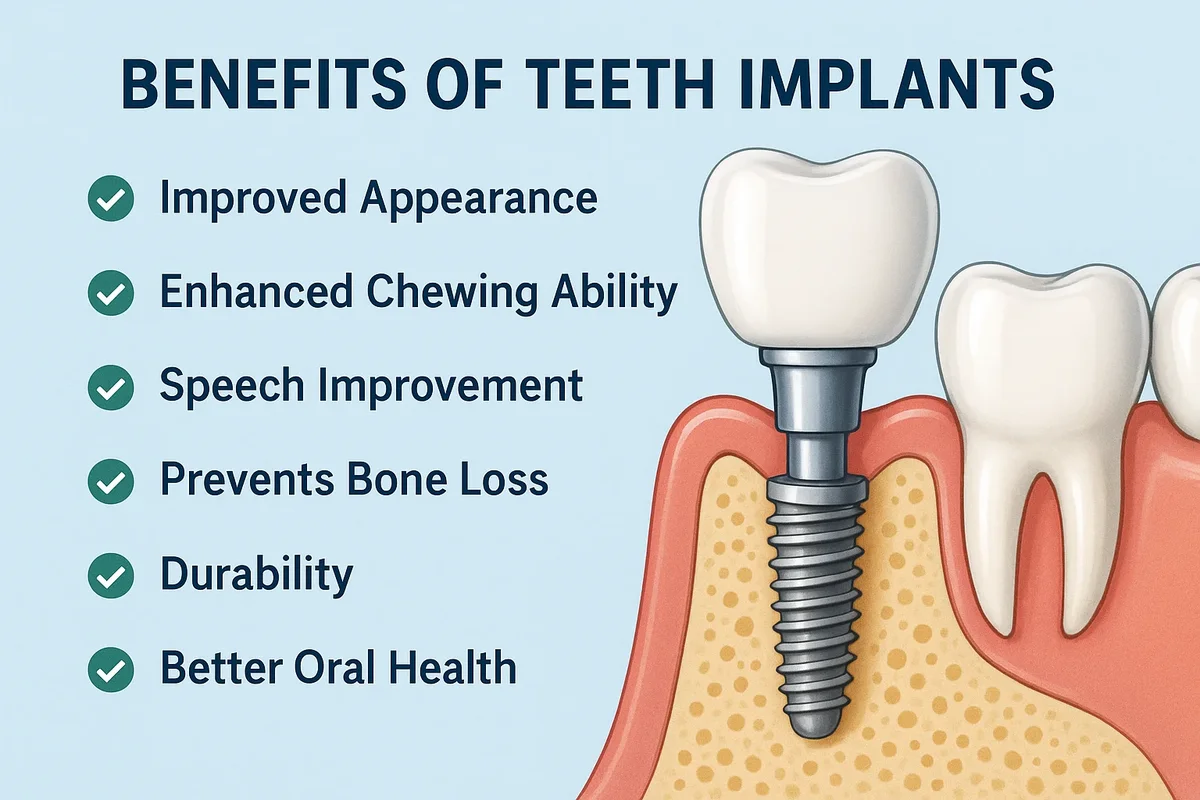
Long-Term Impact: How Dental Implants Enhance Health and Lifestyle
The benefits of teeth implants extend far beyond restoring a beautiful smile — they contribute to long-term oral health, emotional well-being, and overall lifestyle improvement. Unlike temporary tooth replacement solutions, implants are designed to integrate naturally into your body, providing permanent strength and stability. Over the years, countless patients have experienced how dental implants not only improve their ability to eat and speak but also enhance their confidence, nutrition, and even facial structure. In this section, we’ll explore the comprehensive long-term advantages of dental implants and how they transform your daily life 🦷.
Preserving Jawbone and Facial Structure
One of the most critical benefits of teeth implants is their ability to prevent jawbone deterioration. When a tooth is lost, the surrounding bone begins to shrink due to a lack of stimulation from chewing. This process, known as bone resorption, can lead to facial collapse, sagging cheeks, and premature aging. Dental implants solve this issue by acting like natural tooth roots. They stimulate the jawbone through chewing forces, preserving bone density and maintaining your facial profile. This structural preservation is not just cosmetic — it’s essential for long-term oral health and stability.
Prevention of Bone Loss
Traditional dentures and bridges do not engage the jawbone, which causes gradual bone loss over time. The benefits of teeth implants include halting this process by integrating directly into the bone (a process called osseointegration). This keeps your facial features well-supported, ensuring you maintain a youthful appearance even decades after implant placement.
Improving Nutrition and Digestion
Another overlooked advantage among the benefits of teeth implants is improved nutrition. Missing teeth or loose dentures often limit a person’s ability to chew certain foods, such as fruits, vegetables, and protein-rich meats. With implants, patients regain full chewing efficiency, allowing them to enjoy a balanced diet. Proper chewing aids digestion by breaking down food effectively, enabling better absorption of nutrients. This improvement in diet contributes to better overall health — including energy levels, metabolism, and even cardiovascular wellness. Eating without restrictions brings a sense of freedom that profoundly enhances daily life 🍎.
Enjoying a Balanced Diet Again
Patients with dental implants can confidently eat foods they may have avoided for years. The benefits of teeth implants include the ability to bite into apples, nuts, and crusty bread without fear of slippage or discomfort. This not only improves physical health but also the joy of eating and social dining experiences.
Enhancing Confidence and Psychological Health
The emotional benefits of teeth implants are equally important. Tooth loss can affect self-esteem, leading to embarrassment, social anxiety, or even withdrawal from social interactions. Implants provide a permanent solution that restores not only your smile but also your confidence. Patients often report feeling rejuvenated after implant treatment — they smile more, speak clearly, and no longer hide their teeth in photos. This newfound confidence often translates into better professional and social interactions, ultimately improving quality of life ❤️.
The Emotional Transformation
Unlike dentures that can slip or click unexpectedly, implants feel completely natural and secure. This peace of mind is one of the life-changing benefits of teeth implants, allowing patients to speak and laugh freely without worry. Studies have shown that individuals with healthy smiles tend to experience higher self-esteem and lower stress levels, proving that oral health has a direct connection to mental wellness.
Supporting Speech and Clarity
Missing teeth or poorly fitting dentures can make speech difficult. The benefits of teeth implants include restoring clear pronunciation by stabilizing the jaw and tongue movement. Since implants function like natural teeth, they help maintain the proper spacing needed for accurate enunciation of words. Whether you’re giving a presentation, talking with friends, or participating in meetings, implants ensure your speech remains confident and articulate.
Confidence in Communication
Speech improvement might not be the first thing people think of when considering implants, but it’s one of the subtle yet meaningful benefits of teeth implants. The ability to speak effortlessly and clearly contributes greatly to personal and professional confidence — especially in careers that involve frequent communication.
Long-Term Health and Financial Value
While implants may seem like a significant investment initially, the long-term benefits of teeth implants make them one of the most cost-effective dental solutions available. Unlike bridges or dentures that require replacement every 5–15 years, implants can last a lifetime with proper care. Their stability prevents future dental complications such as shifting teeth, gum disease, or bone loss — reducing the need for corrective treatments later. Over decades, implants pay for themselves by minimizing additional expenses and ensuring lasting oral health. For individualized advice or treatment estimates, contact the experts via our Redent Klinik Contact Page.
Proven Durability and Reliability
According to the American Dental Association, dental implants have a success rate exceeding 95%. This statistic highlights one of the greatest benefits of teeth implants: unmatched longevity. When maintained with good oral hygiene and routine dental checkups, implants can function perfectly for decades, offering the most reliable return on investment in modern dentistry.
Better Quality of Life and Aging Gracefully
Beyond oral health, one of the most powerful benefits of teeth implants is the overall improvement in quality of life. Patients who receive implants report enhanced comfort, better social interactions, and greater independence in daily activities. Implants eliminate the embarrassment or inconvenience of removable dentures, allowing individuals to live fully without constant adjustments or fear of slipping prosthetics. As people age, this freedom becomes increasingly valuable — supporting both physical and emotional well-being throughout life.
Aging with Confidence and Dignity
Unlike other dental restorations that can wear out or become unstable over time, implants preserve bone, structure, and functionality for decades. This ensures you can age gracefully, maintaining a natural smile and strong bite. The lifelong benefits of teeth implants make them not just a dental treatment but a life-enhancing investment in overall health and happiness 🌟.
In summary, the long-term impact of dental implants reaches beyond restoring teeth — it restores confidence, nutrition, and vitality. The benefits of teeth implants include preserved bone structure, improved speech, better diet, and an enriched quality of life that lasts for years. For those seeking a permanent, natural, and health-enhancing solution, dental implants remain the most advanced and rewarding choice in modern dentistry.