
If you’re researching the best alternatives to Invisalign, you’re likely looking for treatments that offer similar cosmetic benefits but with different features, price ranges, or treatment speeds. 😄 Whether you’re concerned about visibility, cost, or how quickly your teeth will shift, understanding your options empowers you to choose the most effective orthodontic solution for your lifestyle. In this detailed guide, we’ll explore what makes certain alternatives stand out, how they work, their pros and cons, and why some patients prefer them over clear aligners.
The search for the best alternatives to Invisalign has grown significantly as orthodontic technology evolves. Today, dental patients want options that are more affordable, faster, or designed for complex cases that clear aligners may not handle effectively. Many patients also look for treatments with fewer attachments, less visibility, or even braces that work behind the teeth. This guide will walk you through everything you need to know to make an informed decision. You can also consult professionals via the Redent Klinik Contact Page for personalized treatment recommendations.
Before exploring the options, it’s important to understand why Invisalign is popular. Its clear aligners are removable, nearly invisible, and custom-made for comfort. But Invisalign isn’t always the ideal choice. Some issues—like severe bite problems, rotated teeth, and extreme overcrowding—respond better to alternative orthodontic systems. That’s exactly why patients look for the best alternatives to Invisalign, especially when they want stronger force, more predictable movement, or lower costs.
To ensure we maintain strong SEO relevance, we will naturally include synonyms such as “Invisalign substitutes” and “clear aligner alternatives” throughout the explanation. These related terms help build semantic depth while enhancing your article’s chance of ranking highly on Google.
So, what should you expect from high-quality best alternatives to Invisalign? First, alternative systems may use different materials—such as ceramic, metal, or lingual brackets. Each technology has its advantages. For example, ceramic braces blend with your natural teeth, lingual braces hide behind your teeth entirely, and traditional braces often move teeth faster when addressing moderate to severe orthodontic problems. In contrast, clear aligner systems like SureSmile and ClearCorrect attempt to replicate the Invisalign model but at lower costs or with modified tray designs that some patients prefer.
Let’s break this down further. Ceramic braces remain one of the top Invisalign substitutes for people who want a discreet appearance but need the efficiency and control of traditional braces. These braces use tooth-colored or transparent brackets that are far less visible than metal braces, making them ideal for older teens and adults. Many patients choose ceramic systems because they tolerate more complex dental movements better than aligners.
ClearCorrect is also one of the strongest best alternatives to Invisalign. It functions almost identically to Invisalign but uses a slightly different manufacturing process. Patients often choose ClearCorrect because the trays are thinner and can feel lighter in the mouth. Plus, ClearCorrect may cost less depending on your location and treatment complexity. The American Dental Association provides general orthodontic resources you can review for more background on aligners and braces.
Another rapidly growing option includes lingual braces placed behind the teeth. These braces deliver powerful results while remaining 100% hidden when you smile. Lingual braces are one of the most discreet orthodontic systems on the market and are often chosen by people who cannot show braces for professional or aesthetic reasons, such as actors, models, or public figures. While lingual braces tend to cost more, their invisibility and effectiveness make them a popular choice among adults searching for advanced best alternatives to Invisalign.
Of course, cost is a major factor when considering treatment. Here is a general price overview based on publicly available online research:
Approximate Orthodontic Treatment Costs (may vary by clinic/location)
-------------------------------------------------------------------
ClearCorrect: $2,500 – $5,500
Ceramic Braces: $3,000 – $7,000
Lingual Braces: $8,000 – $13,000
Traditional Metal Braces: $2,000 – $6,500
When weighing the best alternatives to Invisalign, keep in mind that treatment success depends on the experience of your orthodontist or cosmetic dentist. The right professional will assess factors such as tooth alignment, bite position, gum health, and long-term retention to design a plan customized for your smile. If you need expert evaluation or international treatment options, you can always reach out via the Redent Klinik Contact Page.
Choosing the right Invisalign substitute doesn’t need to be overwhelming. With proper guidance, you can find an option that aligns with your needs, budget, and aesthetic goals—all while ensuring your oral health improves safely and efficiently. 😁
Why People Search for the Best Alternatives to Invisalign
Understanding why patients explore the best alternatives to Invisalign helps clarify what each person truly needs from orthodontic treatment. While Invisalign remains one of the most popular clear aligner systems worldwide, it’s not always the ideal match for everyone. People consider alternatives for reasons such as cost, treatment difficulty, aesthetic preference, or the need for faster or more controlled tooth movement. In this in-depth section, we will examine the motivations behind this search, the clinical limitations of Invisalign, and how alternative systems can be better suited depending on the case. 😄
Cost Concerns and Budget Limitations
One of the most common reasons patients look for the best alternatives to Invisalign is treatment cost. Invisalign is often priced at the higher end of the orthodontic spectrum because of its proprietary SmartTrack material, its brand recognition, and the sophisticated software used for treatment planning. Many patients, however, seek affordable aligner substitutes such as ClearCorrect or SureSmile, which attempt to deliver similar results at a lower price point.
Additionally, some people find that braces—particularly metal braces—provide better value for money while still delivering excellent and predictable orthodontic results. Budget-conscious patients often turn to alternatives because they want effective treatment without paying premium brand pricing.
Typical Price Motivations
For many adults, especially those paying out of pocket, cost directly influences treatment selection. This leads them to explore Invisalign substitutes that have more flexible pricing structures or reduced lab fees for dentists. Simply put, the desire for high-value treatment at a reasonable cost fuels interest in the best alternatives to Invisalign.
General Cost Comparison (Online Research Estimates)
---------------------------------------------------
Invisalign: $3,500 – $8,000
ClearCorrect: $2,500 – $5,500
Ceramic Braces: $3,000 – $7,000
Metal Braces: $2,000 – $6,500
Lingual Braces: $8,000 – $13,000
If you want personalized pricing from dental experts, you may consult the
Redent Klinik Contact Page.
Clinical Limitations of Invisalign
Another key reason people explore the best alternatives to Invisalign is that Invisalign is not suitable for every orthodontic case. While great for mild to moderate misalignment, Invisalign’s ability to manage severe bite issues, complex rotations, or extreme overcrowding can be limited. This is because removable aligners rely on patient compliance and have force limitations due to their flexible plastic material.
Dentists and orthodontists often recommend braces—especially ceramic or lingual braces—when complex tooth movements are needed. These systems use fixed brackets and wires, offering stronger force and greater control, which is essential for challenging cases.
Examples of Cases Where Invisalign May Not Be Ideal
- Severe crossbite or underbite requiring strong, consistent pressure
- Teeth requiring vertical adjustments that aligners struggle to achieve
- Severely rotated teeth
- Patients unlikely to wear aligners 22 hours per day
Because of these challenges, many individuals explore clear aligner alternatives that offer greater force, or they prefer braces that do not rely on patient compliance for effectiveness.
Aesthetic Priorities and Visibility Concerns
While Invisalign is known for its discreet appearance, alternative systems—especially lingual braces—can be even more invisible. Lingual braces are placed on the back (lingual) side of your teeth, meaning they cannot be seen at all when you smile. This makes them one of the most sought-after best alternatives to Invisalign for professionals, performers, or anyone who wants zero visible hardware.
Ceramic braces also appeal to adults who want a more aesthetic option but still require stronger tooth movement than aligners can provide. The brackets blend closely with the natural color of teeth, making them significantly less noticeable than metal braces.
Why Aesthetics Matter to Patients
In today’s world—filled with video calls, high-resolution photos, and social media—many adults prefer orthodontic options that preserve their appearance throughout treatment. This explains why many people compare Invisalign with lingual braces and ceramic braces when evaluating the best alternatives to Invisalign.
Desire for Faster or More Predictable Results
Some patients choose alternatives because they want quicker treatment or more predictable outcomes. For example, traditional metal braces often close gaps and correct misalignment faster than Invisalign, especially when dealing with complex cases. Fixed braces apply continuous pressure, while Invisalign aligners depend heavily on patient consistency.
Moreover, certain orthodontic systems designed for accelerated treatment—like self-ligating braces—claim to reduce treatment time and number of appointments. This efficiency is one reason some adults consider these systems strong best alternatives to Invisalign.
Control and Precision
Fixed braces allow your orthodontist to make micro-adjustments to the wire, enabling precise control over each tooth’s movement. This can be essential for bite correction or detailed finishing touches at the end of treatment.
Patient Lifestyle Factors
For many people, clear aligners simply do not match their lifestyle. Invisalign requires discipline—patients must remove the trays while eating, brush after every meal, and wear them nearly full-time. Individuals who frequently snack, drink colored beverages, or struggle with routine may find this inconvenient.
This makes fixed braces—especially ceramic and self-ligating systems—appealing best alternatives to Invisalign since they do not require constant removal or maintenance.
Compliance Challenges
Many orthodontists agree that the success of Invisalign is directly tied to compliance. If someone forgets to wear the aligners or removes them too often, treatment delays are almost guaranteed. For these patients, fixed braces provide a more reliable pathway.
In summary, people search for the best alternatives to Invisalign due to a combination of affordability, complexity of treatment, aesthetic preferences, lifestyle factors, and the desire for rapid or more predictable results. Learning these motivations helps patients better understand which orthodontic system aligns with their personal goals, expectations, and budget. 😁
Ceramic Braces as One of the Best Alternatives to Invisalign
Ceramic braces are widely regarded as one of the best alternatives to Invisalign because they offer a balance between aesthetics and treatment strength. While metal braces remain the most traditional orthodontic solution, ceramic braces deliver similar effectiveness with a significantly more discreet appearance. Their tooth-colored brackets blend seamlessly with natural enamel, making them particularly appealing to adults and professionals who want a low-visibility but highly effective treatment. 😄
Patients often choose ceramic braces when they want a strong, fixed orthodontic system that doesn’t rely on patient compliance like clear aligners do. Since ceramic braces stay attached 24/7, they provide continuous and consistent pressure, which is one of the reasons they are considered among the best alternatives to Invisalign for complex cases or individuals with busy lifestyles.
How Ceramic Braces Work
Ceramic braces function similarly to metal braces, using brackets and archwires to gradually shift teeth into their correct positions. However, instead of stainless-steel brackets, they use ceramic or porcelain materials designed to be less noticeable. These materials can be color-matched to the patient’s teeth, drastically reducing visibility during treatment.
Components of Ceramic Braces
- Brackets: Tooth-colored or transparent, offering a more aesthetic appearance.
- Archwire: Often metal, though tooth-colored wires are also available for enhanced aesthetics.
- Elastic ties: Small rubber bands that secure the wire; clear or white options are used to maintain a subtle look.
These features allow ceramic braces to correct alignment issues with more force and precision than many clear aligner systems. For patients who require more technical control, ceramic braces often stand out as the best alternatives to Invisalign, especially for severe crowding, bite problems, and tooth rotation.
The Aesthetic Advantage
One of the main reasons adults seek the best alternatives to Invisalign is aesthetics. While Invisalign is known for its transparency, ceramic braces offer an appealing option for people who want discretion without relying on removable trays.
Ceramic braces do not stain easily when properly maintained, though clear elastics may discolor with certain foods or drinks. Many orthodontists now use stain-resistant materials to minimize discoloration during treatment. This ensures that ceramic braces maintain their discreet appearance throughout the process, making them a visually appealing choice.
Who Prefers Ceramic Braces?
Ceramic braces are frequently chosen by:
- Professionals who need a polished, clean appearance at work
- Adults seeking subtle orthodontic solutions
- Patients who want precise control similar to metal braces
- Individuals who do not want to manage removable aligners
These preferences explain why ceramic braces consistently rank among the strongest clear aligner alternatives available today.
Effectiveness Compared to Invisalign
Ceramic braces can treat all levels of orthodontic complexity, from mild crowding to severe bite issues. Invisalign, while highly effective, has certain limitations when it comes to vertical tooth movement, rotation beyond 20–25 degrees, or cases that require substantial bite correction.
Because ceramic braces apply controlled forces directly to the teeth, they often deliver faster and more predictable outcomes in complex scenarios. This is why many orthodontists frequently recommend ceramic braces as one of the best alternatives to Invisalign for individuals whose cases may exceed aligner capabilities.
Key Clinical Advantages
- More efficient for complex tooth movements
- Can treat severe overcrowding and bite irregularities
- Do not depend on patient discipline for success
- Provide continuous, consistent force
These structural advantages enhance treatment reliability, especially for patients with demanding orthodontic needs.
Treatment Time Expectations
Treatment duration for ceramic braces is comparable to that of metal braces, usually ranging between 18–36 months depending on case complexity. Invisalign treatment times may vary widely and can extend longer when patients fail to wear aligners consistently.
For this reason, ceramic braces are frequently chosen by patients who want predictable, structured treatment without relying on personal discipline. This makes them a dependable option among the best alternatives to Invisalign for both teenagers and adults.
Factors That Influence Treatment Time
- Severity of misalignment
- Oral hygiene and bracket maintenance
- Rubber band usage for bite correction
- Orthodontist skill and treatment planning
If the treatment involves complex adjustments such as bite correction, ceramic braces may outperform clear aligners due to their greater mechanical control.
Cost Considerations
Ceramic braces are typically more expensive than metal braces but often less expensive than Invisalign. Their price reflects their advanced materials and enhanced aesthetics.
Estimated Cost Range for Ceramic Braces (Online Research)
---------------------------------------------------------
Ceramic Braces: $3,000 – $7,000
Metal Braces: $2,000 – $6,500
Invisalign: $3,500 – $8,000
Lingual Braces: $8,000 – $13,000
For individualized pricing and professional evaluations, you may reach out through the
Redent Klinik Contact Page.
Are Ceramic Braces Right for You?
Ceramic braces are ideal for individuals who want aesthetics and effectiveness combined. They deliver reliable results, require minimal maintenance compared to aligners, and can address even the most challenging orthodontic cases.
If you are seeking the best alternatives to Invisalign that offer maximum precision, enhanced aesthetics, and strong clinical performance, ceramic braces are one of the top choices recommended by orthodontists worldwide. 😁
ClearCorrect Aligners as One of the Best Alternatives to Invisalign
ClearCorrect has become one of the most trusted and widely used clear aligner systems, making it a top contender among the
best alternatives to Invisalign. Designed for patients who want a discreet orthodontic solution that mirrors the aesthetic appeal of Invisalign but with a different structure, cost model, and tray design, ClearCorrect stands out as a powerful competitor in the clear aligner industry. With its thinner material, flexible treatment plans, and competitive pricing, ClearCorrect is often chosen by patients seeking value, comfort, and predictability. 😄
As the demand for clear aligner alternatives continues to grow, ClearCorrect has positioned itself as a reliable choice for individuals who want teeth-straightening treatments without the heavier costs associated with brand-name aligners. Many orthodontists and cosmetic dentists recommend ClearCorrect for mild, moderate, and even some complex alignment issues because of its advanced manufacturing techniques and ability to deliver highly customized treatment plans.
What Makes ClearCorrect Different?
ClearCorrect sets itself apart from other aligner systems in several key ways. While it follows the same general principles as Invisalign—using custom-made, removable trays to guide teeth into improved alignment—its materials, thickness, and cost structure are notably different. These differences make it one of the best alternatives to Invisalign for patients looking for a lighter, more flexible approach.
Thinner Material for Enhanced Comfort
ClearCorrect aligners are known for being thinner than Invisalign trays. Many patients report that this creates a more comfortable experience and a smoother fit. The thinness often makes the aligners slightly less visible, contributing to their appeal as an aesthetic orthodontic solution.
Despite being thinner, ClearCorrect aligners are durable enough to guide teeth effectively. Their flexibility also provides a snug, customized feel that helps many patients adapt quickly to treatment. This design improvement is one reason why ClearCorrect is often mentioned among the best alternatives to Invisalign.
Different Treatment Levels for Different Needs
ClearCorrect offers several treatment tiers, allowing orthodontists to tailor the plan based on the complexity of the case. Invisalign typically follows a more standardized approach, while ClearCorrect gives doctors more freedom in how they structure treatment.
ClearCorrect Treatment Options
- Limited 6 – For minor corrections using six sets of aligners
- Limited 12 – Moderately complex cases using twelve aligners
- Unlimited – Complex cases requiring unlimited aligners until treatment goals are met
This range of options allows patients to choose a plan that matches both their dental needs and budget. It also makes ClearCorrect one of the most flexible choices among the best alternatives to Invisalign.
Cost Comparison: A Major Reason for Its Popularity
One of the top reasons ClearCorrect is selected over Invisalign is affordability. ClearCorrect tends to be priced lower because of its manufacturing process and streamlined structure. Many dentists also appreciate ClearCorrect’s straightforward pricing, which helps make treatment more accessible.
Estimated Cost Range for ClearCorrect (Based on Online Research)
---------------------------------------------------------------
ClearCorrect: $2,500 – $5,500
Invisalign: $3,500 – $8,000
Ceramic Braces: $3,000 – $7,000
Lingual Braces: $8,000 – $13,000
Patients seeking personalized dental treatment quotes can contact specialists via the
Redent Klinik Contact Page.
Effectiveness: How Does ClearCorrect Compare to Invisalign?
ClearCorrect is highly effective for most mild to moderate alignment issues and many complex cases. While Invisalign may offer advantages in extremely complicated orthodontic situations due to its SmartTrack material, ClearCorrect’s updated aligner technology has significantly improved clinical outcomes.
Both systems use digital scanning technologies and 3D treatment planning software to design customized aligner sequences. However, ClearCorrect aligners have a unique scalloped and unscalloped trim option that can enhance force application on teeth—an aspect appreciated by many orthodontists.
ClearCorrect is Ideal For:
- Spacing and gaps
- Mild to moderate crowding
- Rotated teeth
- Overbite, underbite, and crossbite (mild to moderate)
Because of these capabilities, ClearCorrect holds a strong position among the best alternatives to Invisalign for patients who want effective and discreet alignment.
Appearance and Lifestyle Benefits
ClearCorrect aligners are nearly invisible, making them appealing for adults and teenagers who value aesthetics. Their removable nature also allows patients to eat, drink, and brush freely—just like with Invisalign.
However, because ClearCorrect aligners are slightly thinner, some patients feel they blend even more naturally with their smile. This subtle visibility improvement is a major advantage for individuals seeking the most discreet best alternatives to Invisalign.
Who Prefers ClearCorrect?
- Adults who want discreet treatment
- Patients who want more affordable aligners
- Individuals who prefer a thinner aligner appearance
- Teenagers who want minimal visibility in school or photos
Treatment Time Expectations
ClearCorrect treatment duration varies depending on alignment needs but generally ranges between 12–24 months. This is similar to Invisalign’s timeline, though complex cases may require more time.
One key factor is patient compliance—aligners must be worn 22 hours per day to achieve optimal results. For motivated patients, ClearCorrect is one of the best alternatives to Invisalign because it provides predictable and efficient tooth movement when used correctly.
Is ClearCorrect the Right Choice for You?
ClearCorrect is an excellent choice for individuals seeking high-quality clear aligner therapy with competitive pricing, strong aesthetics, and proven effectiveness. It offers treatment flexibility, comfort, and discretion—key qualities that patients expect from the best alternatives to Invisalign.
If you’re searching for a personalized recommendation tailored to your dental condition and goals, consulting a trusted professional is the best next step. 😁
Lingual Braces as One of the Best Alternatives to Invisalign
Lingual braces are considered one of the most advanced and discreet orthodontic solutions available today, making them a top choice among the best alternatives to Invisalign. Unlike traditional braces or ceramic braces, lingual braces are placed on the inner (lingual) surface of your teeth—completely hidden from view. This unique placement provides patients with the clinical strength of fixed braces while keeping the hardware entirely invisible. For professionals, public-facing individuals, and anyone who values aesthetics above all else, lingual braces are an exceptional solution.
While Invisalign has gained immense popularity for its transparency, lingual braces take invisibility to the next level. They cannot be seen at all when talking, smiling, or posing for photos, which is why many adults exploring the best alternatives to Invisalign ultimately choose lingual braces for their orthodontic journey.
What Are Lingual Braces and How Do They Work?
Lingual braces work similarly to traditional metal braces but are engineered with specialized brackets and wires shaped to fit the back surfaces of your teeth. They use advanced orthodontic force to move teeth into proper alignment with remarkable precision.
Key Components of Lingual Braces
- Custom-fitted brackets: Individually designed for each tooth to match the lingual contours.
- Archwires: Custom-shaped to fit behind the teeth and apply controlled force.
- Indirect bonding trays: Used during installation to ensure perfect bracket placement.
Because they function like traditional braces while remaining hidden, lingual braces are frequently recommended as one of the strongest best alternatives to Invisalign—especially for cases that require complex movements or strong mechanical control.
Aesthetic Benefit: The Ultimate Invisible Orthodontic System
Although Invisalign aligners are designed to be clear, they may still be visible up close or when attachments (small tooth-colored bumps) are required. Lingual braces eliminate this issue entirely because they are mounted on the back of the teeth, not the front.
For professionals who frequently engage in meetings, presentations, or media appearances, lingual braces offer unparalleled discretion. This is one of the biggest reasons many adults select them as the best alternatives to Invisalign for aesthetic-focused orthodontic care.
Perfect for High-Visibility Careers
- Performers (actors, musicians, models)
- Corporate executives
- Public speakers
- Influencers and social media personalities
These individuals often value a completely invisible option, making lingual braces an ideal solution.
Effectiveness Compared to Invisalign
Lingual braces can treat a full range of orthodontic issues—from mild crowding to severe bite problems. Invisalign, although highly effective, may struggle with deep bites, severe rotation, or complex structural movements that require strong mechanical force.
Because lingual braces work 24/7 and do not rely on patient compliance, they often deliver extremely predictable and efficient results. This advantage is one of the reasons they top the list of best alternatives to Invisalign, especially for patients who want guaranteed progress without the need to remember wearing aligners.
Ideal Cases for Lingual Braces
- Severe crowding or spacing
- Deep bite or open bite correction
- Significant rotation
- Patients with poor aligner compliance
Because lingual braces provide precise mechanical control, orthodontists frequently rely on them when aligner-based treatments are insufficient.
Comfort and Adaptation Period
Lingual braces are incredibly effective, but they do have a unique adjustment phase. Since they sit closer to the tongue, some patients experience temporary discomfort or speech changes during the initial weeks. Fortunately, the majority adapt quickly, and any speech difficulty typically resolves with practice.
What to Expect in the First Few Weeks
- Slight tongue irritation
- Minor speech lisp (usually temporary)
- Increased saliva production
- Gradual improvement in comfort after 1–2 weeks
These short-term challenges are typically outweighed by the major advantage of complete invisibility and strong clinical performance—traits that reinforce lingual braces as a powerful option among the best alternatives to Invisalign.
Cost Considerations for Lingual Braces
Lingual braces are one of the most expensive orthodontic systems because of their custom design, specialized materials, and advanced installation technique. Each bracket must be handcrafted or digitally designed for the individual, which significantly increases production and labor costs.
Estimated Cost Range for Lingual Braces (Online Research)
---------------------------------------------------------
Lingual Braces: $8,000 – $13,000
Invisalign: $3,500 – $8,000
Ceramic Braces: $3,000 – $7,000
ClearCorrect: $2,500 – $5,500
Patients looking for personalized cost assessments may consult via the
Redent Klinik Contact Page.
Treatment Timeline and Predictability
The length of treatment with lingual braces typically ranges between 18–36 months, though some accelerated treatment systems may shorten this timeframe. Because lingual braces are continuously active and do not depend on patient behavior, orthodontic outcomes tend to be very predictable.
For individuals who want strong results with reliable progress—without the responsibility of wearing removable aligners—lingual braces truly shine as one of the best alternatives to Invisalign.
Are Lingual Braces Right for You?
Lingual braces are a premium orthodontic option designed for those who want maximum discretion, powerful correction ability, and predictable results. They work exceptionally well for adults with busy schedules, high aesthetic demands, or complex alignment issues that clear aligners cannot fully address.
If your priority is complete invisibility combined with orthodontic strength, lingual braces stand out as one of the most reliable and effective best alternatives to Invisalign available today. 😁
Traditional Metal Braces as One of the Best Alternatives to Invisalign
Traditional metal braces remain one of the most reliable and effective orthodontic solutions available, which is why they are frequently recommended among the best alternatives to Invisalign. Even though Invisalign and other clear aligner systems have gained massive popularity, metal braces continue to dominate globally because of their unmatched strength, precision, and ability to correct even the most complex alignment issues. For patients dealing with severe overcrowding, extreme bite irregularities, or complicated tooth movements, traditional braces often deliver the best and most predictable results.
Many adults today assume that metal braces are outdated, but modern orthodontic technology has drastically improved the appearance, comfort, and effectiveness of these devices. Today’s metal braces use smaller brackets, lighter wires, and advanced archwire materials that apply gentler but more efficient forces. Because of these improvements, traditional braces have become a strong option for individuals searching for reliable best alternatives to Invisalign when aligners are not suitable or effective enough. 😄
Why Traditional Metal Braces Are Still Relevant
Despite the rise of clear aligners, metal braces remain the gold standard for complex orthodontic treatment. They provide continuous force without relying on patient compliance—an aspect that significantly improves outcomes for challenging cases. Unlike Invisalign, which must be worn 22 hours per day and requires strict discipline, metal braces work automatically because they are fixed in place.
This makes them especially appealing for teenagers, individuals with hectic lifestyles, or those who struggle with the responsibility of wearing aligners consistently. For these groups, metal braces become one of the best alternatives to Invisalign because they offer reliable progress without needing daily maintenance or self-management.
Major Reasons Metal Braces Remain Essential
- Ideal for severe bite problems such as crossbite, deep bite, and open bite
- More effective for significant tooth rotation or vertical adjustments
- Do not depend on patient compliance
- Often more affordable than clear aligners
- Suitable for both children and adults
These advantages make metal braces an ideal choice for ensuring long-term stability and predictable results in cases where aligners may fall short.
How Traditional Metal Braces Work
Traditional braces use brackets and wires to gradually guide teeth into more aligned and functional positions. The brackets are bonded directly onto each tooth, and archwires connect these brackets to apply steady pressure. Orthodontists adjust these wires every 4–8 weeks to ensure progress.
Key Components of Metal Braces
- Metal brackets: Small, durable, and designed to withstand strong orthodontic force.
- Archwires: Stainless steel or nickel-titanium wires that guide tooth movement.
- Ligatures: Elastic or metal ties that secure the wire to the brackets.
- Rubber bands: Used when necessary to correct bite issues.
Because they provide direct, controlled pressure, metal braces outperform most aligner systems in terms of precision and force—making them a top choice among the best alternatives to Invisalign for comprehensive orthodontic correction.
Effectiveness Compared to Invisalign
Metal braces can address nearly every orthodontic issue, including those that clear aligners cannot easily correct. For example, deep bites, severe crowding, and complex jaw alignment problems often require stronger mechanical pressure. While Invisalign works extremely well for mild to moderate misalignment, it may struggle with these more advanced situations.
Additionally, because metal braces are fixed appliances, there is no risk of forgetting them, losing them, or reducing their effectiveness by inconsistent wear. This fixed nature makes them one of the most dependable best alternatives to Invisalign for predictable long-term results.
Common Issues Metal Braces Can Correct Better
- Severe misalignment or overlapping teeth
- Significant rotations exceeding aligner capability
- Extreme bite correction: overbite, underbite, crossbite, open bite
- Jaw asymmetry requiring controlled force distribution
These strengths make traditional braces a trusted orthodontic choice—especially when patients prioritize function and outcome over aesthetics alone.
Modern Enhancements Make Metal Braces More Comfortable
Orthodontic innovation has transformed traditional braces. Today’s systems use smaller brackets, smoother edges, and heat-activated archwires that apply gentler forces. These improvements significantly reduce discomfort and shorten treatment time in many cases.
Additionally, modern brackets are more compact, allowing for easier cleaning and less irritation for cheeks and lips. These enhancements help make metal braces not only functional but also more user-friendly, securing their place among the best alternatives to Invisalign.
Notable Modern Features
- Low-profile brackets for improved comfort
- Color options for younger patients
- Nickel-titanium wires for quicker movement
- Advanced bonding techniques for stronger adhesion
Treatment Duration and Predictability
The treatment timeline for metal braces typically ranges from 18 to 36 months. However, treatment may be faster when correcting certain severe issues that respond better to fixed appliances than to aligners.
Because metal braces operate continuously, without requiring any daily action from the patient, orthodontic progress tends to be steady and predictable. This reliability is one of the core reasons traditional braces remain a trusted option among the best alternatives to Invisalign.
Cost Overview for Metal Braces
Metal braces are often the most affordable comprehensive orthodontic treatment. Cost can vary depending on the complexity of your case and the location of the clinic.
Estimated Cost Range for Metal Braces (Based on Online Research)
---------------------------------------------------------------
Metal Braces: $2,000 – $6,500
Ceramic Braces: $3,000 – $7,000
Invisalign: $3,500 – $8,000
Lingual Braces: $8,000 – $13,000
For customized orthodontic treatment planning, patients can connect with specialists through the
Redent Klinik Contact Page.
Are Traditional Metal Braces Right for You?
Traditional metal braces remain a dependable orthodontic solution for a wide range of dental issues. They are durable, effective, and capable of producing dramatic improvements—even in the most challenging cases. If your priority is achieving reliable, long-term orthodontic results, traditional braces may be the ideal choice.
For individuals seeking the best alternatives to Invisalign—particularly those who need stronger force, greater precision, or more affordability—metal braces offer outstanding value and exceptional functional performance. 😁
SureSmile Aligners as One of the Best Alternatives to Invisalign
SureSmile Aligners have rapidly gained attention as one of the most modern, digitally driven orthodontic systems, placing them firmly among the best alternatives to Invisalign. Known for their advanced 3D modeling technology and precise tooth movement planning, SureSmile offers an exceptional blend of comfort, accuracy, and aesthetics. In many cases, patients report that SureSmile aligners feel lighter, more flexible, and more seamless compared to other clear aligner brands. With its innovative design approach and orthodontist-centered treatment philosophy, SureSmile has become a top choice for adults and teenagers seeking a truly refined orthodontic experience. 😄
Unlike some clear aligner brands that rely primarily on proprietary software, SureSmile takes an orthodontist-first approach, allowing clinicians to have substantial control over the treatment plan. This emphasis on precision and planning is a major reason why many orthodontists recommend SureSmile as one of the best alternatives to Invisalign for patients wanting a more personalized aligner journey.
What Sets SureSmile Apart from Other Aligners?
SureSmile is known for using state-of-the-art 3D digital planning tools that increase treatment predictability. Their software allows orthodontists to analyze tooth movement from multiple angles, enabling precise control over each stage of alignment. This technology-driven approach distinguishes SureSmile in the growing market of best alternatives to Invisalign.
Advanced Digital Treatment Planning
SureSmile uses cutting-edge 3D scanning and simulation tools to create detailed tooth movement models. This level of digital enhancement allows orthodontists to map out highly predictable outcomes and tailor aligner sequences to the patient’s biology and bite characteristics.
Because every aligner is designed based on this precise digital blueprint, patients often experience smoother transitions, more comfortable aligner changes, and controlled tooth movement that minimizes discomfort.
Comfort-Focused Aligner Design
One of the standout benefits of SureSmile aligners is their smooth, polished surface, which reduces friction and irritation in the mouth. Many patients describe them as more comfortable than other clear aligner brands due to their flexible yet durable material composition.
This comfort improvement is a significant factor for individuals seeking the best alternatives to Invisalign, especially those who prefer a more natural feel and minimal gum irritation.
Softer Edges and Adaptive Fit
- Polished aligner edges reduce gum irritation
- Softer materials enhance comfort during the adjustment period
- Adaptive fit minimizes pressure points
These design attributes make SureSmile an excellent choice for sensitive patients or first-time orthodontic users.
Effectiveness Compared to Invisalign
SureSmile is known for being highly effective for mild to moderately complex orthodontic cases. While Invisalign may still have advantages for extremely complex bite issues, SureSmile aligners have shown impressive success in cases involving spacing, crowding, midline corrections, and moderate bite refinements.
Because orthodontists maintain strong control of the treatment plan using SureSmile’s proprietary digital tools, it is considered one of the most accurate best alternatives to Invisalign.
Ideal Cases for SureSmile Aligners
- Mild to moderate crowding
- Spacing and gaps
- Crossbite correction
- Relapse correction after braces
- Midline adjustments
SureSmile’s flexibility and precision make it an excellent choice for many alignment needs while offering significant comfort advantages.
Appearance and Lifestyle Benefits
SureSmile aligners are crafted to maximize transparency, making them nearly invisible when worn. For adults who prioritize aesthetics, SureSmile represents one of the best alternatives to Invisalign because of its crystal-clear material that resists clouding or staining.
Additionally, like Invisalign, SureSmile aligners are removable, allowing users to eat, drink, brush, and floss without limitations.
Who Prefers SureSmile Aligners?
- Professionals who want the most invisible option possible
- Patients looking for highly comfortable aligners
- Adults wanting predictable results without braces
- Teens looking for subtle orthodontic treatment
Treatment Duration and Predictability
The average treatment time for SureSmile aligners ranges from 6 to 24 months, depending on the complexity of tooth movements. Because of its advanced digital planning, treatment often progresses smoothly with fewer unexpected delays.
Patients are typically required to wear aligners for 20–22 hours per day to ensure effective results. When compliance is maintained, SureSmile aligners function as one of the most reliable best alternatives to Invisalign in terms of predictability and outcome precision.
Factors Affecting Treatment Duration
- Severity of misalignment
- Consistency of aligner wear
- Use of attachments or elastics
- Orthodontist’s treatment plan
Cost Considerations for SureSmile
SureSmile aligners often fall within a similar price range to ClearCorrect, typically offering a more budget-friendly alternative to Invisalign. Costs vary depending on case complexity and the number of aligners required.
Estimated Cost Range for SureSmile (Online Research)
---------------------------------------------------
SureSmile Aligners: $2,500 – $6,000
ClearCorrect: $2,500 – $5,500
Invisalign: $3,500 – $8,000
Ceramic Braces: $3,000 – $7,000
Individuals looking for tailored pricing and clinical evaluations can reach professionals through the
Redent Klinik Contact Page.
Are SureSmile Aligners the Right Choice for You?
SureSmile aligners are an excellent orthodontic solution for individuals prioritizing comfort, aesthetics, digital precision, and affordability. Their advanced 3D treatment planning system and nearly invisible material make them a popular and effective option among the best alternatives to Invisalign.
If you are seeking a clear aligner system that combines innovation, comfort, and predictable results, SureSmile may be the ideal choice for your orthodontic journey. 😁
Self-Ligating Braces as One of the Best Alternatives to Invisalign
Self-ligating braces have emerged as one of the most efficient, comfortable, and technologically advanced orthodontic systems available today. Because of their speed, reduced friction, and improved comfort compared to traditional braces, they are widely considered among the best alternatives to Invisalign—especially for individuals seeking faster results without relying on removable aligners. Using a unique clip-based mechanism instead of elastic ligatures, self-ligating braces help teeth move more freely and efficiently, often shortening both treatment time and the number of required orthodontic visits.
Patients frequently consider self-ligating systems when they want the power of braces combined with enhanced comfort and reduced visibility. For individuals with moderate to severe alignment needs, these braces offer the predictable outcomes of metal braces while delivering a smoother, more modern experience. Their efficiency and precision solidify self-ligating braces as one of the strongest best alternatives to Invisalign for patients seeking rapid, controlled orthodontic progress. 😄
What Are Self-Ligating Braces?
Self-ligating braces look similar to traditional braces but use innovative mechanisms that eliminate the need for elastic ties. Instead of rubber bands, self-ligating brackets use small built-in doors or clips that hold the archwire in place. This reduces friction, allowing teeth to move more naturally and comfortably.
Types of Self-Ligating Braces
- Passive self-ligating braces: Use a larger slot for freer movement and gentler force.
- Active self-ligating braces: Apply more pressure for greater control in complex cases.
This enhanced system is designed to minimize discomfort while maximizing efficiency—important benefits for those wanting the best alternatives to Invisalign that do not rely on patient compliance.
How Self-Ligating Braces Work
Unlike traditional braces, which require regular tightening of elastic bands, self-ligating systems allow the wire to glide smoothly through the brackets. This reduces friction and supports faster, more comfortable tooth movement. Orthodontists typically adjust these braces less frequently than traditional systems, leading to a more convenient treatment experience.
Key Mechanical Advantages
- Lower friction between wire and bracket
- Gentler pressure on teeth
- More efficient tooth movement
- Fewer office visits required
These mechanical benefits make self-ligating braces one of the most practical best alternatives to Invisalign for patients who prefer faster progress and less maintenance.
Comfort and Experience Compared to Invisalign
Invisalign aligners are known for their comfort, but many individuals still prefer self-ligating braces because they eliminate issues associated with removable aligners, such as forgetting trays, misplacing them, or inconsistent wear. Self-ligating systems offer constant, gentle pressure and significantly reduce the friction that traditional braces create.
Because there are no elastic ligatures, patients experience fewer food traps and less plaque buildup. This improves oral hygiene and enhances comfort—two important reasons self-ligating braces are selected among the best alternatives to Invisalign for individuals seeking a low-maintenance, high-performance orthodontic solution.
Aesthetic Options
- Ceramic self-ligating braces: Tooth-colored for a discreet look
- Metal self-ligating braces: Modern, low-profile design
These aesthetic choices help adults and professionals choose a less noticeable treatment without compromising effectiveness.
Speed and Efficiency: A Major Benefit
One of the strongest appeals of self-ligating braces is their ability to shorten treatment duration. Because the system reduces friction and allows teeth to move more freely, orthodontic progress may occur faster compared to traditional braces.
For patients seeking a powerful system that accelerates results while offering the stability of fixed braces, self-ligating braces frequently come up as one of the best alternatives to Invisalign.
Why Treatment Is Often Faster
- Continuous gentle force encourages natural movement
- Wires glide smoothly through brackets
- Fewer adjustments mean steady progress
- Reduced friction accelerates alignment
However, treatment speed varies depending on case severity, patient biology, and orthodontist expertise.
Effectiveness Compared to Invisalign
While Invisalign works extremely well for mild to moderate cases, self-ligating braces excel in treating: severe overcrowding, dramatic bite issues, large gaps, and complex rotations. Because they are fixed appliances, there is no risk of patient non-compliance slowing progress.
This reliability is one of the defining factors that places self-ligating braces among the best alternatives to Invisalign for individuals who require complete alignment control.
Common Issues Self-Ligating Braces Treat Better
- Severe bite problems (crossbite, overbite, open bite)
- Significant rotations
- Extensive crowding
- Complex alignment cases
Their mechanical precision gives orthodontists greater control over tooth movement, producing highly predictable outcomes.
Cost Considerations for Self-Ligating Braces
While self-ligating braces are more advanced than traditional braces, their cost tends to fall between metal braces and Invisalign. Prices vary depending on complexity and clinic location.
Estimated Cost Range for Self-Ligating Braces (Online Research)
---------------------------------------------------------------
Self-Ligating Braces: $3,000 – $7,500
Traditional Metal Braces: $2,000 – $6,500
Invisalign: $3,500 – $8,000
Patients interested in personalized evaluations or international treatment options can connect via the
Redent Klinik Contact Page.
Are Self-Ligating Braces the Right Choice for You?
Self-ligating braces offer a unique combination of speed, efficiency, precision, and comfort. They are ideal for adults and teenagers who want powerful treatment without the responsibilities of removable aligners. Whether you prefer ceramic options for aesthetics or metal for durability, these braces are a highly effective choice among the best alternatives to Invisalign.
If you seek a treatment that maximizes efficiency, minimizes friction, and delivers consistently reliable results, self-ligating braces may be the optimal choice for your orthodontic journey. 😁
Veneers as Cosmetic Alternatives Among the Best Alternatives to Invisalign
Veneers—especially porcelain veneers—are a popular cosmetic dental solution that can completely transform a smile in a short time. Although veneers do not physically straighten teeth like braces or aligners, many adults consider them one of the best alternatives to Invisalign when their primary goal is aesthetic improvement rather than functional orthodontic correction. Veneers provide an immediate solution to concerns such as discoloration, minor gaps, mild misalignment, chipped teeth, and uneven tooth edges. For individuals who prioritize speed, aesthetics, and a dramatic smile enhancement, veneers can offer a compelling pathway to a flawless smile. 😄
Unlike Invisalign—which depends on gradual tooth movement over several months—veneers accomplish an instant cosmetic transformation in as little as 1–3 dental visits. This dramatic impact is why many patients evaluate veneers alongside the best alternatives to Invisalign, especially when seeking a solution that enhances the smile quickly and effectively. However, veneers are not an orthodontic treatment, and understanding their capabilities and limitations is essential for making an informed choice.
What Are Dental Veneers?
Dental veneers are ultra-thin shells made of porcelain or composite resin that adhere to the front surfaces of teeth. They are custom-crafted to match the patient’s desired shape, shade, and size, allowing for complete customization of the smile’s appearance. Veneers are commonly used in cosmetic dentistry to enhance the visual appeal of teeth and address mild aesthetic imperfections.
Types of Veneers
- Porcelain Veneers: Durable, long-lasting, stain-resistant, and highly natural-looking.
- Composite Veneers: More affordable, completed quickly, but not as durable as porcelain.
- No-Prep Veneers (e.g., Lumineers): Very thin and require minimal or no enamel removal.
These design options allow veneers to stand as a viable cosmetic choice among the best alternatives to Invisalign for patients seeking aesthetic improvements rather than orthodontic corrections.
How Veneers Compare to Invisalign
Invisalign gradually moves teeth into improved alignment, while veneers mask imperfections without physically shifting the teeth. Because veneers do not alter bite relationships or correct underlying structural issues, they are not a substitute for orthodontic treatment in medically necessary cases.
However, for patients whose primary concern is cosmetic appearance—such as small gaps, slightly crooked teeth, discoloration, or shape irregularities—veneers can deliver results far faster than orthodontic options. This ability to achieve a perfect smile in minimal time is why veneers are frequently considered among the best alternatives to Invisalign for cosmetic-focused patients.
When Veneers May Be Preferable
- Teeth are slightly misaligned but structurally sound
- Gaps are small and do not require orthodontic movement
- Patient wants instant aesthetic enhancement
- There is discoloration that whitening cannot fix
In these cases, veneers can offer a transformative smile solution without the need for prolonged orthodontic treatment.
Cosmetic Benefits of Veneers
Veneers are renowned for their aesthetic potential. When designed and placed by a skilled cosmetic dentist, veneers can create a uniform, bright, symmetrical smile that closely resembles natural enamel. Their lifelike translucency allows them to blend seamlessly with surrounding teeth while enhancing overall facial harmony.
Top Cosmetic Advantages
- Instant improvement in tooth shape and alignment
- Long-term whitening effect (porcelain resists stains)
- Customizable design (shape, size, shade)
- Durable restoration that can last 10–20 years
For adults seeking the best alternatives to Invisalign strictly for aesthetic perfection, veneers offer unparalleled cosmetic power.
Limitations of Veneers Compared to Invisalign
It’s essential to understand that veneers are not orthodontics. They cannot correct significant misalignment, bite problems, rotated teeth, or jaw-related issues. Attempting to use veneers in situations where orthodontic treatment is required may lead to excessive enamel removal or compromised long-term dental health.
This is why an evaluation from a qualified dentist or orthodontist is necessary before choosing veneers over Invisalign or other orthodontic options. Patients can schedule a consultation through the
Redent Klinik Contact Page
to determine which approach suits their needs.
Situations Where Veneers Are Not Suitable
- Severe misalignment requiring physical tooth movement
- Significant bite dysfunction (crossbite, underbite, overbite)
- Teeth compromised by decay or insufficient enamel
- Large gaps requiring orthodontic force
Recognizing these limitations ensures that veneers are used safely and effectively as a cosmetic tool rather than a medical treatment for structural dental problems.
The Veneer Procedure: Step-by-Step
The process of receiving veneers is highly detail-oriented and typically requires 2–3 visits.
Step 1: Evaluation and Design
A cosmetic dentist evaluates your smile, discusses goals, and uses digital imaging to design the desired shape, color, and size of the veneers.
Step 2: Tooth Preparation
A small portion of enamel (usually 0.3–0.7 mm) is removed to make room for the veneer. No-prep veneers require minimal or no reduction.
Step 3: Temporary Veneers
Temporary veneers protect the teeth while the final restorations are crafted in the dental lab.
Step 4: Final Bonding
The final veneers are bonded to the teeth with strong dental adhesives, and adjustments are made to ensure perfect fit and appearance.
Thanks to this efficient process, veneers stand among the fastest aesthetic options within the best alternatives to Invisalign for cosmetic enhancement.
Cost Considerations for Veneers
Veneers are typically more expensive than orthodontic treatment because they are crafted individually and require advanced cosmetic expertise. Prices vary depending on the type of veneer, the number of teeth treated, and geographic location.
Estimated Cost for Veneers (Based on Online Research)
-----------------------------------------------------
Porcelain Veneers (per tooth): $900 – $2,500
Composite Veneers (per tooth): $250 – $1,500
Lumineers / No-Prep Veneers: $1,200 – $3,000
Are Veneers the Right Choice for You?
Veneers are an excellent option for individuals seeking immediate aesthetic transformation. They offer a powerful cosmetic solution, especially for adults who want a whiter, straighter-looking smile without committing to months or years of orthodontic treatment.
For cosmetic purposes, veneers can be one of the best alternatives to Invisalign—but for functional alignment corrections, orthodontic systems like braces or aligners remain essential. Consulting a qualified professional is the best way to determine whether veneers or traditional orthodontics better suit your dental goals. 😁
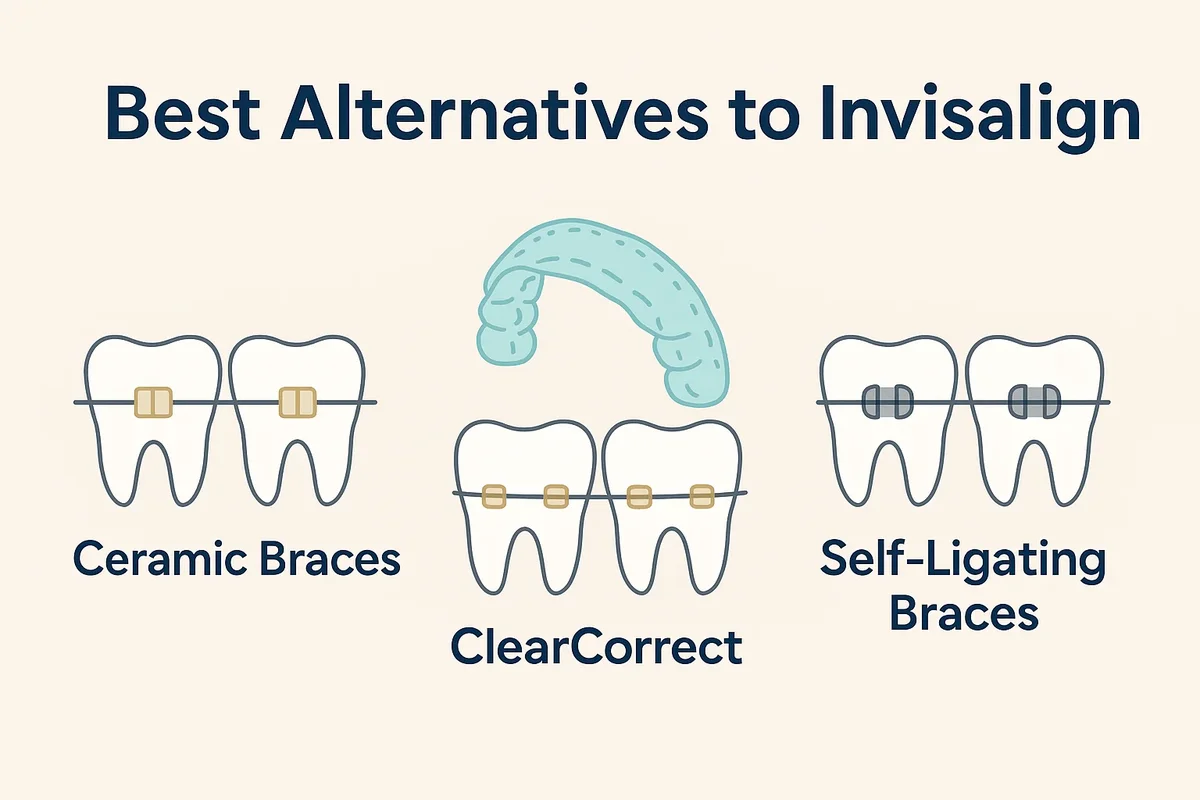
Comparing the Best Alternatives to Invisalign: Which Option Is Right for You?
With so many orthodontic and cosmetic solutions available today, choosing the right system can feel overwhelming. From clear aligners to braces and veneers, every option offers unique advantages depending on your goals, budget, lifestyle, and dental complexity. In this section, we will compare the best alternatives to Invisalign in a clear, structured, and comprehensive way to help you determine which treatment aligns best with your needs. Whether you prefer a discreet approach, want the fastest results, or need strong mechanical control for complex corrections, understanding the differences between these options is crucial to making an informed decision. 😄
Each alternative—ceramic braces, ClearCorrect, lingual braces, metal braces, SureSmile aligners, self-ligating braces, and veneers—serves a distinct purpose. Some are medical orthodontic treatments designed to reposition teeth, while others are cosmetic solutions that enhance appearance without moving tooth roots or correcting bite alignment. Because patient needs vary widely, this comparison will make it easier to identify the best alternatives to Invisalign based on your priorities and expectations.
Comparing Treatment Effectiveness
Effectiveness is often the first factor patients consider when evaluating the best alternatives to Invisalign. Each method varies in its ability to treat mild, moderate, or severe alignment issues.
Effectiveness Summary
- Lingual braces: Highly effective for all levels of misalignment, including severe cases.
- Ceramic braces: Excellent for moderate to severe issues; similar strength to metal braces.
- Traditional metal braces: Gold standard for severe and complex orthodontic problems.
- Self-ligating braces: Faster and more efficient than traditional braces in many cases.
- ClearCorrect & SureSmile: Effective for mild to moderate alignment issues.
- Veneers: Cosmetic correction only; do not move teeth.
If your case is complex (such as severe crowding, bite imbalance, or significant rotation), braces—especially lingual, ceramic, metal, or self-ligating—are typically the strongest best alternatives to Invisalign.
Comparing Aesthetic Appearance
Many patients choose Invisalign for its nearly invisible appearance, so alternatives must also offer aesthetic advantages. The discretion of each system varies dramatically.
Aesthetics Ranking
- Lingual braces: 100% hidden behind the teeth; the most invisible orthodontic option.
- SureSmile & ClearCorrect: Nearly invisible clear aligners; highly aesthetic.
- Ceramic braces: Tooth-colored brackets; less visible than metal braces.
- Self-ligating braces: Available in metal or ceramic; ceramic options are discreet.
- Metal braces: Most visible option.
- Veneers: Not braces, but offer instant aesthetic enhancement.
For patients focused on aesthetics, lingual braces or clear aligners (ClearCorrect, SureSmile) stand out as the most compelling best alternatives to Invisalign.
Comparing Treatment Speed
While Invisalign can be efficient, some alternatives offer even faster results, particularly for moderate to severe cases.
Treatment Speed Breakdown
- Self-ligating braces: Often the fastest due to reduced friction and efficient movement.
- Metal braces: Fast and highly predictable for complex cases.
- Ceramic braces: Similar timeline to metal braces, though slightly slower in some cases.
- Lingual braces: Effective but may take slightly longer due to customized hardware.
- ClearCorrect & SureSmile: Moderate speed; best for mild to moderate alignment issues.
- Veneers: Instant results, but cosmetic only.
If you are concerned primarily with speed and clinical outcomes, self-ligating or metal braces often top the list of best alternatives to Invisalign.
Comparing Comfort and User Experience
Comfort varies among orthodontic systems. While some patients prefer removable aligners, others value fixed appliances that require less daily responsibility.
Comfort Comparison
- SureSmile & ClearCorrect: Smooth, flexible materials—high comfort level.
- Ceramic braces: Comfortable but can cause mild bracket irritation initially.
- Self-ligating braces: Reduced friction improves comfort vs. traditional braces.
- Lingual braces: May cause tongue irritation during adaptation period.
- Metal braces: Most noticeable but manageable with wax and adjustments.
- Veneers: Very comfortable since they sit on the tooth surface.
Patients seeking the best blend of comfort and discretion often gravitate toward SureSmile or ClearCorrect when evaluating the best alternatives to Invisalign.
Comparing Cost Among the Best Alternatives
Cost plays a crucial role in choosing the right treatment. Invisalign is often priced at the higher end of the orthodontic spectrum, prompting many patients to look for more affordable alternatives.
General Cost Comparison (Online Research)
Traditional Metal Braces: $2,000 – $6,500
Ceramic Braces: $3,000 – $7,000
Lingual Braces: $8,000 – $13,000
Self-Ligating Braces: $3,000 – $7,500
ClearCorrect: $2,500 – $5,500
SureSmile Aligners: $2,500 – $6,000
Veneers (per tooth): $900 – $2,500
For personalized financial planning and treatment recommendations, you may consult experts through the
Redent Klinik Contact Page.
Choosing the Best Option for Your Needs
Determining the best treatment depends on your priorities. If aesthetics are your top concern, lingual braces or ClearCorrect may be the best alternatives to Invisalign. For complex alignment issues, traditional metal braces or self-ligating braces offer unmatched effectiveness. If you want a combination of precision, comfort, and affordability, SureSmile may be the perfect solution.
Best Options Based on Goals
- Best for Complex Cases: Metal braces, lingual braces, self-ligating braces
- Best for Aesthetics: Lingual braces, SureSmile, ClearCorrect
- Best for Comfort: SureSmile
- Best for Speed: Self-ligating braces
- Best for Cosmetic Enhancement: Veneers
With this detailed comparison, you can more clearly understand the strengths and limitations of each option among the best alternatives to Invisalign. Consulting with an orthodontic professional will help you match your clinical needs, lifestyle, and aesthetic preferences to the ideal treatment path. 😁