
The digital landscape of dentistry has evolved dramatically, and today, the best dental office websites are no longer simple online brochures—they are high-performing, patient-friendly platforms engineered to build trust, increase bookings, educate visitors, and showcase clinical excellence. In a competitive healthcare environment where patients compare options in seconds, having an exceptional website is just as important as having a modern clinic. This comprehensive guide explains what defines top-tier dental websites, why they matter, and how they influence patient decisions. 🦷✨
Most patients now begin their dental journey online, researching clinics, reading reviews, comparing treatments, and evaluating the credibility of providers. Because of this, the best dental office websites become a direct reflection of a clinic’s professionalism, attention to detail, and commitment to patient care. A well-optimized website drives visibility, improves authority, and enhances patient trust—ultimately increasing appointment conversions. With digital expectations rising, a dental clinic’s website is no longer optional; it is a core pillar of a successful practice.
A key element of high-ranking dental sites is user experience. Websites that load quickly, feel intuitive, and provide clear information are far more likely to retain visitors. Studies show that slow or outdated websites cause over 50% of users to leave within seconds. The best dental office websites therefore prioritize fast loading times, mobile responsiveness, and visually appealing layouts. Clean navigation, easy appointment forms, and reassuring visuals significantly improve how patients perceive a clinic before they even step inside. 💻📱
Another defining factor is content quality. Patients consistently search for answers to dental concerns, and websites that offer trusted, expert-level information gain authority in Google’s eyes. High-quality articles, treatment explanations, FAQs, and educational visuals not only support SEO but also demonstrate the clinic’s expertise. In addition, linking to authoritative sources—such as the American Dental Association—helps reinforce trustworthiness and enhances credibility. Internal linking is equally important for SEO and user flow, so guiding patients to relevant contact pages, such as the Redent Klinik Contact Page, strengthens both engagement and accessibility.
What truly sets the best dental office websites apart is their ability to create a personalized, engaging, and reassuring digital experience. Patients often feel anxious about dental treatments, and a well-designed website can ease that fear. High-quality images of the clinic, detailed doctor profiles, transparent explanations, and clear steps of treatment processes all help build emotional comfort. Soft color palettes, friendly language, and patient-centric visuals can significantly improve a visitor’s impression. This emotional reassurance becomes a powerful factor in shaping their decision to book an appointment. 💙
Technical SEO also plays a crucial role. Google evaluates dozens of ranking signals, including Core Web Vitals, structured data, meta tags, and mobile usability. The top-performing dental websites incorporate schema markup for treatments, FAQs, reviews, and clinic information, helping search engines understand the site’s purpose. Light coding, optimized media, and compressed images also contribute to better speed and performance. Dental clinics that invest in SEO gain long-term visibility advantages, especially for competitive regional search terms like “dentist near me” or “best dental care in my area.” These optimizations help them stand out and attract high-intent users actively searching for dental services.
Trust is another central pillar. Modern patients rely heavily on reviews, testimonials, and social proof. The best dental office websites strategically showcase authentic patient stories, before-and-after photos, and video testimonials to demonstrate real results. When combined with professional branding and consistent visual identity, these elements create a trustworthy online environment. Clinics that integrate live chat features, online scheduling, and automated reminders also elevate the digital patient journey and make engagement effortless.
Finally, the best-performing dental websites balance clinical authority with human warmth. They highlight advanced technology—like digital X-rays, smile-design systems, and 3D imaging—while still prioritizing patient comfort, clarity, and emotional connection. This harmony between professionalism and empathy transforms a dental site from functional to exceptional. In addition, using semantically related terms such as “top dental clinic websites” and “leading dentist website designs” strengthens topical depth and helps reinforce semantic SEO signals without keyword stuffing.
As dental competition continues to grow, the clinics that invest in powerful, patient-centered websites will dominate search results, attract higher-value patients, and build long-lasting trust. With the right structure, design, content, and optimization strategies, any clinic can transform its online presence into a high-converting digital asset. In the following sections, we will dive deeper into each essential element that makes the best dental office websites truly outstanding. 🌟
Why Best Dental Office Websites Matter for Patient Trust
In today’s digitally driven world, the best dental office websites play a crucial role in shaping how patients perceive a clinic long before they walk through the door. A dental website is no longer simply a source of information; it is a psychological gateway that influences trust, confidence, and decision-making. With patients increasingly turning to online searches for dental care, a clinic’s digital presence becomes a direct extension of its reputation. When designed strategically, a website can create powerful first impressions, enhance credibility, and guide potential patients toward scheduling appointments. 🦷✨
First Impressions Define Patient Confidence
Studies consistently show that patients form opinions about a healthcare provider within a few seconds of landing on a website. Clean design, fast loading time, and intuitive navigation immediately signal competence and professionalism. By contrast, outdated or cluttered pages create doubt—even if the clinic itself is exemplary. This is why the best dental office websites invest in modern aesthetics, high-resolution visuals, and seamless usability. These elements help visitors feel welcomed, safe, and reassured that the clinic is current with modern dental standards.
Patients also rely on visual cues when evaluating professionalism. Photos of the clinic environment, treatment rooms, sterilization processes, and smiling team members can dramatically reduce anxiety. When patients see transparency and cleanliness, they feel more comfortable making contact. Additionally, including a clear link to the clinic’s contact or appointment pages—like the Redent Klinik Contact Page—ensures patients can take action without confusion or obstacles.
The Role of Transparency and Authenticity
Trust in dental care is deeply tied to transparency. Patients want to know who will treat them, what the procedures involve, and how safe the environment is. The best dental office websites include honest, detailed descriptions of treatments, realistic before-and-after images, and genuine patient testimonials. Authenticity builds emotional connection, leading to stronger patient loyalty and higher booking rates. By explaining clinical procedures in simple language and providing step-by-step breakdowns, dental clinics position themselves as caring and patient-centered.
Another aspect of transparency is educational authority. Linking to reputable organizations—such as the American Dental Association—shows that the clinic bases its practices on high-level standards. These trust signals influence how both patients and search engines evaluate credibility. With dentistry being a sensitive health field, building authority through transparent information is vital.
Why Emotional Connection Matters in Dentistry
Many patients feel anxious about dental visits. The best dental office websites recognize this emotional barrier and address it through design tone, comforting visuals, and friendly messaging. Warm colors, empathic wording, and reassuring phrases help lower patient anxiety. When a website communicates understanding and care, it bridges the emotional gap between patient fears and the desire for better oral health. 🌿💙
Emotionally intelligent design includes:
- Soft imagery and human-centered visuals
- Videos of the team introducing themselves
- Calming color schemes and gentle typography
- Personalized messages from dentists
These elements collectively transform a clinical site into a supportive environment where patients feel valued rather than intimidated.
How SEO and Visibility Boost Patient Trust
Appearing consistently in top search results contributes significantly to trust. Users tend to assume that highly ranked websites are more reliable and established. This is why the best dental office websites invest heavily in SEO strategies such as optimizing Core Web Vitals, implementing schema markup, and building content clusters based on patient search intent. Strong online visibility directly correlates with perceived trustworthiness.
A website that answers common patient questions—such as “Is teeth whitening safe?” or “How often should I see a dentist?”—positions the clinic as a helpful authority. Search engines reward this value-based content with higher rankings, attracting even more patients who are actively researching treatments.
Mobile Optimization: A Key Trust Factor
More than 70% of dental searches occur on mobile devices. Therefore, mobile responsiveness is essential. Patients become frustrated when websites are difficult to navigate on phones, leading to distrust and abandonment. The best dental office websites prioritize thumb-friendly navigation, readable text, responsive images, and lightning-fast loading on smartphones. Good mobile UX demonstrates that a clinic respects the user’s time and comfort.
Social Proof and Reputation Signals
Testimonials, star ratings, real patient videos, and case studies all boost trust dramatically. Dental care involves personal health and aesthetics, so patients deeply value others’ experiences. Sharing genuine feedback not only builds confidence but also conveys clinical competence. The most successful clinics embed these reviews strategically across key website sections, making them visible yet non-intrusive.
Building Trust Through Branding Consistency
Brand identity—logos, colors, fonts, and messaging—plays an essential role in establishing recognizable trust. Consistency across every page helps patients understand the clinic’s values and level of professionalism. The best dental office websites maintain cohesive branding that reflects reliability, modernity, and warmth. Mixed styles or inconsistent imagery can weaken credibility, even if the treatment quality is high.
At its core, trust is the foundation of every successful patient relationship. When a dental website is thoughtfully designed, authentically written, and technically optimized, it becomes a powerful trust-building tool. As we continue through this guide, we will explore how these elements evolve into design strategies, SEO frameworks, and advanced digital experiences that differentiate the best dental office websites from ordinary ones. 🌟
Key Features That Define the Best Dental Office Websites
The best dental office websites stand out not by chance, but because they incorporate a strategic blend of design, usability, content quality, technical performance, and trust-building elements. As patients increasingly turn to online research before choosing a dentist, the most successful clinics invest in websites that not only look beautiful but also function flawlessly. In this section, we will explore the essential features that define top-tier dental sites and explain how each component contributes to patient trust, better engagement, and higher conversions. 🦷🌐
Clear and Intuitive Navigation
One of the strongest predictors of website success is navigation simplicity. Visitors should be able to find key information—services, contact details, dental team profiles, and treatment explanations—within seconds. The best dental office websites use clean, concise menus with logical content grouping. Clear navigation reduces confusion, lowers bounce rates, and guides patients toward essential pages like appointment booking forms and clinic locations. A strong navigation structure also supports your SEO strategy because it helps search engines understand your website hierarchy.
Effective navigational features include:
- Well-organized menus with 6–8 primary items
- Breadcrumbs to guide users back to earlier pages
- Sticky headers that keep important links visible
- Quick-access call-to-action buttons
When visitors can move through the website effortlessly, their perception of the clinic improves instantly.
High-Quality Visuals and Professional Branding
Visual appeal is a major component of user experience. The best dental office websites use professional imagery, consistent color palettes, and well-designed graphics to create a polished appearance. High-quality photographs of the clinic interior, dental equipment, and staff members build trust by showcasing transparency. When patients see real spaces and friendly faces, they feel more comfortable moving forward.
Branding elements that reinforce professionalism include:
- Consistent colors and typography
- Clean logo placement
- Unified iconography and design language
- Professional team portraits
A cohesive brand identity helps patients instantly recognize the clinic across the website, social media, and online directories. This level of consistency reflects well on the clinic’s attention to detail.
Fast Loading Speed and Mobile Optimization
Speed is one of the most important ranking factors in modern SEO. Research shows that users abandon websites that take longer than three seconds to load. Therefore, the best dental office websites always prioritize lightning-fast performance. Optimized images, compressed scripts, lightweight design structures, and modern servers all contribute to a seamless browsing experience.
Why Mobile Speed Matters
More than 70% of dental traffic now comes from mobile devices. Google also ranks mobile-friendly websites higher on search results pages. A slow mobile experience can cause patients to leave and choose a competitor instead. Fast-loading websites signal professionalism, reliability, and respect for the user’s time.
Key mobile-friendly design features include:
- Responsive layouts
- Large, readable font sizes
- Fast-loading compressed media
- Thumb-friendly navigation
- Clickable contact buttons
The best dental office websites treat mobile performance as a top priority, not an afterthought.
Clear Calls to Action (CTAs)
Every successful dental website requires strong and strategic calls to action. CTAs guide visitors toward meaningful engagement—booking an appointment, contacting the clinic, or learning about a treatment. The best dental office websites display their CTAs prominently, using action-oriented language that is both friendly and persuasive. Examples include “Book Your Visit,” “Schedule a Consultation,” and “Call Our Clinic.”
Effective CTAs often appear:
- At the top of the homepage
- At the end of each treatment section
- In service descriptions
- Inside mobile sticky buttons
These placements ensure that the patient always knows where to go next.
Educational and Engaging Content
Content is the heart of a successful dental website. The best dental office websites prioritize high-quality written explanations of treatments, oral health tips, FAQs, and dental guides. Content must be informative, accurate, and easy to understand—especially for anxious or first-time patients. When patients feel educated rather than overwhelmed, they are more likely to trust the clinic and proceed with scheduling.
Strong content also supports SEO by targeting high-intent keywords like “dental implants,” “root canal treatment,” or “teeth whitening.” Clinics that publish expert-level blog posts and treatment pages consistently dominate local search rankings. Internal links—such as directing users to the Redent Klinik Contact Page—enhance user flow and strengthen topical relevance.
Secure, Trust-Building Website Features
Trust is essential in dentistry. The best dental office websites incorporate security and compliance features that reassure users about the safety of their personal information. HTTPS certificates, encrypted contact forms, and secure appointment scheduling systems all contribute to a safe digital environment.
Additional trust-building elements include:
- Authentic patient testimonials
- Clear credentials and dentist bios
- Links to reputable organizations like the American Dental Association
- Before-and-after galleries with real cases
These elements demonstrate transparency, clinical confidence, and professional integrity—all of which matter deeply to patients seeking dental care.
Accessibility and Inclusivity Features
Inclusive design ensures that all patients—including those with visual impairments, hearing limitations, or motor challenges—can navigate the website effectively. The best dental office websites follow ADA accessibility guidelines to remove barriers and support diverse user needs.
Accessible features may include:
- Alt text for all images
- Keyboard-friendly navigation
- Readable fonts and color contrast
- Text-to-speech compatibility
These improvements not only support patient trust but can also improve search engine performance.
In conclusion, the best dental office websites combine intuitive design, powerful technical performance, high-quality content, and trust signals to create an exceptional user experience. When all these key elements work together, the result is a high-performing digital platform that attracts, educates, and converts patients with ease.
Modern UX Design Strategies for High-Converting Dental Sites
The best dental office websites are built on modern UX (User Experience) design principles that blend aesthetics, functionality, and psychology. A dental website isn’t just a digital brochure—it is a fully optimized patient conversion system. From the moment a visitor lands on the page, every visual, structural, and interactive element should guide them toward trust, understanding, and ultimately, making an appointment. In this section, we explore the UX strategies that define today’s most effective, high-converting dental websites. 🦷✨
Understanding User Intent in Dental Website Design
Before building any UX strategy, it is essential to understand why users visit dental websites. Some are searching for general information, while others are comparing clinics, looking for pricing, checking insurance compatibility, or trying to schedule an urgent appointment. The best dental office websites are designed around these user intentions.
Key user-intent groups include:
- Information seekers: researching treatments, symptoms, or dental conditions.
- Decision makers: comparing clinics, dentists, or treatment quality.
- Urgent visitors: seeking immediate help for emergencies.
- Returning patients: wanting contact details or appointment forms.
When the website anticipates these needs, the experience becomes intuitive, fast, and stress-free.
Minimalist Layouts That Support Clarity
Modern UX design emphasizes simplicity. Clutter overwhelms patients, especially those already anxious about dental care. That’s why the best dental office websites use clean, spacious designs that highlight important information while removing distractions. White space helps guide the eye toward key elements such as treatment explanations, service categories, CTAs, and contact buttons.
Minimalist elements that improve UX include:
- Clear headings and subheadings
- Consistent alignment
- Soft, calming color schemes
- High-quality dental imagery
- Simple page layouts that avoid overcrowding
This approach enhances readability, keeps users engaged longer, and improves overall comprehension.
Optimizing Above-the-Fold Content
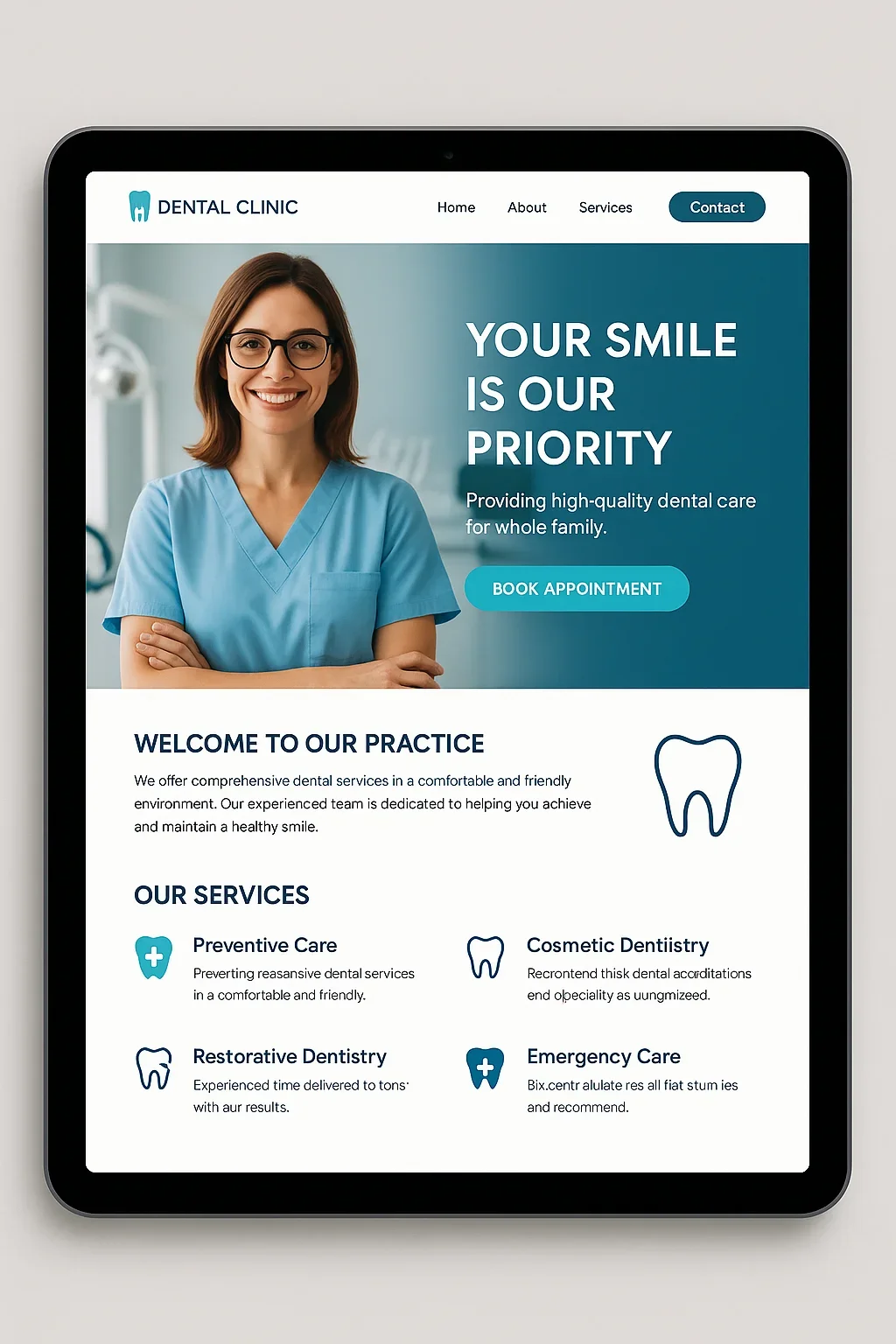
The portion of the website visible without scrolling—known as “above the fold”—is crucial for conversions. Users often decide whether to stay or leave within the first few seconds. The best dental office websites use this area to communicate the clinic’s value immediately.
Essential Above-the-Fold Elements
- A clear and compelling headline
- Short introductory text
- Prominent “Book Appointment” or “Contact Us” buttons
- A clean hero image showcasing the clinic or smiling patients
- Trust badges or certifications
By strategically placing these elements at the top of the homepage, clinics can significantly increase engagement and conversion rates.
Microinteractions That Enhance User Engagement
Microinteractions are subtle design details that respond to user behavior—such as buttons changing color when hovered over or form fields expanding when selected. These tiny but intentional features make the user feel guided and acknowledged. The best dental office websites integrate microinteractions to improve usability without overwhelming the design.
Examples of microinteractions include:
- Hover effects on service cards
- Animated icons explaining treatment steps
- Light vibration animations on mobile buttons
- Progress indicators during form submission
These effects create an enjoyable, interactive experience that keeps users engaged.
Using Visual Hierarchy to Guide User Behavior
Visual hierarchy organizes content in a way that naturally leads users through the website. People scan pages quickly, so it’s important to emphasize priority elements using size, color, spacing, and contrast. The best dental office websites use visual hierarchy to direct attention to the most important features, such as services, pricing, testimonials, and contact details.
Typography hierarchy, bold headlines, and highlighted CTAs help visitors understand where to focus. Meanwhile, secondary information—like detailed treatment descriptions or FAQs—can be placed lower on the page. This structuring method prevents cognitive overload and improves user flow.
Designing for Emotional Comfort and Trust
Dental anxiety is real, and thoughtful UX design can help put users at ease. Soft tones, friendly imagery, and warm language all contribute to a positive emotional experience. The best dental office websites employ psychological design techniques to reduce stress and increase trust.
Ways UX Design Reduces Dental Anxiety
- Soft lighting and color palettes (greens, blues, neutrals)
- Photos of caring dentists and real patients
- Animated treatment walk-throughs
- Comfort-oriented messaging (“We’re here to help you feel safe”)
When combined, these elements transform a potential stressor into a reassuring experience. 🌿
Accessibility as a Core UX Priority
Inclusive design ensures that all patients can comfortably use the website. The best dental office websites follow accessibility guidelines to support users with disabilities. Accessibility is also an SEO ranking factor, as Google favors websites that demonstrate usability for all visitors.
Key accessibility features include:
- Alt text for images
- Screen-reader compatibility
- High-contrast text for readability
- Keyboard navigation support
- Closed captions for video content
These enhancements promote trust and ensure compliance with digital accessibility standards.
Enhancing Conversion Through Clear CTAs
UX design plays a central role in conversion optimization. The best dental office websites place CTAs in high-visibility zones, supported by persuasive copy and visually distinct buttons. Strategic placements include:
- Top-right navigation bar
- Above-the-fold hero section
- Mid-page service previews
- Bottom-of-page contact blocks
For maximum effectiveness, the message and button color should stand out from the rest of the page.
Effective CTAs include options for:
- Calling the clinic directly
- Requesting appointments
- Asking questions via live chat
- Finding clinic locations
Strong CTAs reduce friction and encourage immediate action.
Ultimately, modern UX strategies determine whether a dental website becomes a passive information page or a powerful conversion engine. By combining clarity, speed, emotional comfort, accessibility, and interactivity, the best dental office websites deliver exceptional patient experiences that translate into long-term loyalty and increased appointments.
SEO Best Practices Used by the Best Dental Office Websites
The best dental office websites consistently achieve strong visibility on Google because they follow a well-structured, patient-centered SEO strategy. Search engine optimization is the backbone of digital success in the dental industry. It ensures that patients searching for treatments, clinics, or specific symptoms can find the right providers quickly and easily. Without proper SEO, even a beautifully designed website may remain invisible to potential patients. This section provides a comprehensive, detailed breakdown of the SEO best practices that elevate top-performing dental websites above their competitors. 🦷📈
Understanding Search Intent for Dental Keywords
SEO begins with understanding what patients are searching for. The best dental office websites are built around user intent—meaning they match their content to what users genuinely need. Google rewards websites that deliver relevant, trustworthy information that aligns with search behavior. Dental search intent typically falls into four categories:
- Informational: “What is a root canal?”, “How does Invisalign work?”
- Comparative: “Dental veneers vs crowns”, “Best teeth whitening near me”
- Transactional: “Schedule dentist appointment”, “Emergency dentist today”
- Navigational: “Redent Klinik address”, “local dentist website”
By understanding these intent categories, clinics can design targeted content that meets each need. This approach not only supports user satisfaction but also dramatically improves search rankings.
Keyword Optimization for High Ranking Potential
Proper keyword research is the foundation of SEO success. The best dental office websites use a combination of:
- Primary keywords: core services such as dental implants, orthodontics, veneers, cleanings
- Secondary keywords: supporting phrases like “affordable dental care” or “cosmetic dentistry options”
- Local keywords: “dentist in Istanbul”, “best dental clinic near me”
- Long-tail keywords: patient-specific queries such as “how long do dental bridges last?”
These keywords must be integrated naturally into titles, meta descriptions, header tags, image alt text, body content, and URLs. The goal is not to “stuff” keywords, but to demonstrate broad topical coverage. This tells Google that the website is a trustworthy, authoritative source of dental information.
Semantic Keyword Integration
Semantic SEO uses related terms to help search engines understand content more deeply. The best dental office websites include LSI (Latent Semantic Indexing) keywords such as “top dentist websites”, “leading dental sites”, and “modern dental website designs”. These synonyms strengthen the overall relevance of the page.
Technical SEO Foundations That Drive Higher Rankings
Technical SEO ensures that Google can crawl, index, and rank a site effectively. The best dental office websites prioritize clean technical structure, fast performance, and mobile usability.
- Clean site structure: logical hierarchy with clear categories and subpages
- XML sitemaps: submitted to Google Search Console for faster indexing
- Secure HTTPS encryption: protects patient data and improves trust
- Fast loading speed: optimized images, compressed files, lightweight coding
- Modern hosting infrastructure: ensures uptime and responsiveness
Performance factors like Core Web Vitals—Largest Contentful Paint (LCP), First Input Delay (FID), and Cumulative Layout Shift (CLS)—deeply influence ranking. Dental websites that optimize these metrics consistently outperform slower, outdated competitors.
Mobile SEO Optimization
Since most dental searches occur on mobile devices, the best dental office websites prioritize mobile-first design. Google also ranks mobile versions first (mobile-first indexing), making mobile optimization non-negotiable.
Mobile SEO strategies include:
- Responsive page layouts
- Readable font sizes and spacing
- Compressed mobile-friendly images
- Fast-loading mobile performance
- Tap-friendly CTAs and navigation
A flawless mobile experience increases retention, trust, and appointment bookings.
Local SEO and Google Business Profile Optimization
Local SEO is critical for dental clinics because patients search for dentists within their geographic area. The best dental office websites integrate detailed local SEO features to appear prominently in Google Maps and local packs.
Essential Local SEO Practices
- Accurate NAP (Name, Address, Phone) consistency across all platforms
- Optimized Google Business Profile with photos, services, and opening hours
- Positive patient reviews with active responses
- Location-based keywords on website pages
- Embedding Google Maps on contact pages
Clinics that invest in local SEO dominate localized searches such as “dental implant clinic near me” or “best dentist in my city”.
High-Quality, Trust-Building Content
Google prioritizes websites that demonstrate expertise, authoritativeness, and trustworthiness (E-A-T). The best dental office websites produce clear, medically accurate, and helpful content—often written or approved by dental professionals.
High-impact content includes:
- Detailed service pages
- Procedure explanations
- Dental health blogs
- FAQs for patient education
- Case studies and before–after galleries
Strategic internal linking—such as directing users to the Redent Klinik Contact Page—further enhances SEO by improving crawl flow and session duration.
Using Authoritative Backlinks for SEO Dominance
Backlinks remain one of the strongest ranking factors. The best dental office websites gain high-quality links from reputable medical and dental sources, local organizations, and academic institutions. Links to authoritative pages such as the American Dental Association also strengthen credibility.
Backlink strategies include:
- Guest posts on health platforms
- Local outreach partnerships
- Listings in dental directories
- Press releases and news mentions
Each high-quality backlink acts as a “vote of confidence” to search engines.
In summary, a powerful SEO strategy transforms dental websites into high-ranking, patient-attracting digital assets. When technical performance, keyword research, content quality, and trust signals work together, the best dental office websites achieve long-term search dominance and superior patient conversion rates.
Content Strategies That Elevate Dental Website Engagement
High-performing dental websites use content as their most powerful conversion tool. In fact, the best dental office websites understand that content is not simply something to fill a page—it is the core driver of trust, education, search visibility, and patient decision-making. When executed expertly, content can transform a dental website into a patient-focused information hub that answers questions, reduces anxiety, and guides visitors toward booking appointments. In this section, we explore the most effective content strategies that elevate user engagement and create lasting value. 🦷✨
Creating Patient-Centered, Trust-Building Content
The strongest dental websites write with the patient in mind. Their language is clear, friendly, and compassionate. Instead of using complicated medical terminology, they explain treatments in ways that reassure and inform. The best dental office websites consistently deliver content that feels human, empathetic, and solution-oriented.
Key features of trust-building content include:
- Clear explanations: avoiding overwhelming jargon while maintaining medical accuracy
- Real patient stories: testimonials and success narratives that build emotional connection
- Friendly tone: reassuring language that reduces anxiety and encourages action
- Visual support: images, infographics, and animations to help illustrate processes
This combination makes the visitor feel understood and supported—essential elements for dental patients seeking care.
Educational Content That Positions the Clinic as an Authority
Google rewards websites that demonstrate expertise, and so do patients. The best dental office websites consistently publish high-quality educational content tailored to common patient concerns. This includes detailed service explanations, treatment process guides, and oral health tips that help visitors make informed decisions.
Examples of high-value educational content include:
- “What to Expect During a Dental Implant Procedure”
- “How to Prepare for Your Root Canal Appointment”
- “10 Home Care Tips After Teeth Whitening”
- “Signs You May Need Orthodontic Treatment”
These pieces benefit SEO by targeting high-intent keywords, and they strengthen trust by showing the clinic’s dedication to patient education.
Why Long-Form Content Performs Better
Longer articles generally rank higher on Google because they cover topics comprehensively. The best dental office websites create thorough, well-structured, 1,000–2,500 word guides that answer multiple questions in a single place. This reduces bounce rate and ensures visitors stay longer—two metrics that signal quality to search engines.
Using Visual Content to Improve Engagement
Visuals are essential for modern dental websites. Patients respond strongly to images and videos because they simplify complex information and create emotional comfort. High-quality visual content makes dentistry approachable and easier to understand.
Effective visual content includes:
- Before-and-after galleries: showcasing real patient transformations
- Short procedure videos: friendly explanations recorded by the dentist
- Infographics: simplified visuals explaining treatment steps
- 3D animations: used for implant placements, orthodontic adjustments, etc.
This type of content increases user engagement and reduces dental fear by showing processes visually rather than just describing them.
Structuring Web Content for Maximum Readability
Patients do not want to dig through large blocks of text. The best dental office websites structure their content in a way that makes it easy to scan, understand, and navigate. Strong formatting encourages users to continue reading and digest valuable information without feeling overwhelmed.
Best practices include:
- Short paragraphs of 2–3 sentences
- Clear subheadings (H2, H3, H4)
- Bullet points and numbered lists
- Highlighted keywords and phrases
- Internal links for deeper exploration
These structural choices increase readability for all audiences—including older users or those unfamiliar with dental terminology.
Incorporating Strong Internal Linking
Internal linking enhances user experience and supports SEO performance. When done correctly, it encourages visitors to explore more pages and helps Google understand how your content interconnects. The best dental office websites strategically link treatment pages, blog articles, FAQs, and contact pages to create a seamless information journey.
For example, linking to the Redent Klinik Contact Page at key decision points makes it easy for users to take action. Internal links also boost authority for deeper-level pages such as dental implant details, orthodontics, or cosmetic dentistry overviews.
Updating Content Regularly to Maintain Freshness
Google prioritizes websites that stay up-to-date with medical standards and modern best practices. This is why the best dental office websites regularly refresh content. Outdated or inaccurate information can harm credibility, while updated insights signal expertise and relevance.
Recommended update strategies include:
- Adding new patient case studies
- Refreshing treatment descriptions with modern techniques
- Publishing monthly blog posts
- Updating service pages with new technology or pricing
- Ensuring ADA and global dental guidelines remain current
This reflects a commitment to continuous improvement—a key deciding factor for patients.
Optimizing Content for SEO and Voice Search
Patients increasingly use voice search to find dental services. The best dental office websites adapt their content to include natural, conversational phrases such as:
- “What is the best clinic for veneers near me?”
- “How do I fix chipped teeth quickly?”
- “Who offers emergency dental care right now?”
Voice-friendly content improves visibility in mobile search results, smart speakers, and location-based queries.
Additionally, all content should follow E-A-T principles and link to authoritative sources such as the American Dental Association to enhance credibility and accuracy.
Ultimately, powerful content strategies make a dental website more than just a digital presence—they turn it into a patient education platform, a trust-building engine, and an SEO powerhouse. When executed properly, these strategies ensure the best dental office websites consistently achieve high engagement, long visit durations, and strong conversion rates.
How Branding Shapes the Best Dental Office Websites
Branding is one of the most powerful elements influencing how patients perceive a dental clinic online. The best dental office websites use branding strategically—not only as a visual identity but as a complete communication system that builds trust, conveys professionalism, and strengthens emotional connection. In today’s competitive dental landscape, patients often decide between clinics based on subtle cues such as colors, typography, tone of voice, and imagery. This section explains in detail how branding shapes modern dental websites and why strong branding is essential for long-term digital success. 🦷💎
The Psychological Power of a Strong Dental Brand
Branding is more than a logo or color palette—it is the perception people develop about a clinic. The best dental office websites understand that patients carry anxiety, expectations, and curiosity regarding dental treatments. A strong brand can instantly shift these emotions, replacing fear with comfort and hesitation with confidence.
Psychologically effective branding creates:
- Trust: through consistency, clarity, and professionalism
- Reassurance: through warm colors, friendly imagery, and genuine messaging
- Recognition: through repeated visual identity
- Comfort: through tone and visual cues that reduce dental anxiety
When patients feel emotionally safe, they engage longer, read more, and are more likely to book an appointment.
Visual Identity: The Foundation of Dental Branding
The visual identity of a dental clinic determines how patients judge the quality of care. The best dental office websites invest in custom-designed branding elements that make their site memorable and trustworthy.
Key Visual Branding Elements
- Logo: simple, clean, and reflective of professionalism
- Color Scheme: soft blues, greens, and neutrals that communicate calmness and cleanliness
- Typography: easy-to-read fonts that improve readability and reinforce the clinic’s personality
- Imagery: real staff photos, smiling patients, modern equipment, and bright office aesthetics
Each element should reinforce the clinic’s mission and tone. Strong visual identity improves credibility and supports a unified patient experience.
Building Consistency Across the Website
Consistency is a leading principle of modern branding. The best dental office websites ensure that every page looks, feels, and communicates the same message. Inconsistent branding—mixed styles, mismatched graphics, different tones—confuses patients and weakens trust.
A consistent brand should include:
- Uniform layout patterns on all pages
- Matching icons and illustrations
- Consistent use of color, spacing, and typography
- Unified messaging style and tone
- Stable placement of CTAs, menus, and trust badges
This level of harmony improves user experience, increases credibility, and enhances brand recognition.
The Role of Brand Voice in Dental Websites
While visual identity grabs attention, brand voice keeps users engaged. The best dental office websites use carefully crafted language to communicate professionalism, empathy, and authority. A well-defined brand voice ensures that all website content—from service descriptions to blog posts—reflects clear, consistent messaging.
Common Dental Brand Voice Styles
- Friendly & reassuring: ideal for family dentistry and anxious patients
- Expert & authoritative: suited for advanced clinics offering implants, orthodontics, and surgeries
- Modern & innovative: perfect for tech-forward clinics with digital dentistry capabilities
- Luxury & premium: used for high-end cosmetic practices
A strong brand voice humanizes the clinic and creates an emotional bridge between the website and its visitors.
Storytelling: The Often Overlooked Branding Element
The best dental office websites often use storytelling to build connection. Instead of generic descriptions, they share the clinic’s journey, mission, values, achievements, and patient-centered philosophy. This helps patients relate to the clinic and understand its dedication to care.
Powerful storytelling may include:
- Why the clinic was founded
- The dentists’ passion for oral health
- Community involvement or volunteer work
- Milestones and certifications
- Patient success stories
Narratives make the clinic feel more human and trustworthy.
Branding Through Trust Signals and Professionalism
Trust is an essential part of dental decision-making. Patients want to feel confident in their choice. The best dental office websites use branding to highlight professionalism, credentials, and commitment to quality.
Essential trust-building branding elements include:
- Badges and certifications (e.g., links to the American Dental Association)
- Professional photos of dentists and staff
- Clear qualifications, awards, and training details
- Clean, modern website layouts that look medically competent
These signals reinforce reliability and reassure patients that they are choosing a reputable clinic.
Integrating Branding With Clear CTAs
Strong branding makes CTAs more persuasive. The best dental office websites use visually consistent, strategically placed CTAs that reflect the clinic’s branding. A CTA that matches the brand identity feels more trustworthy and natural.
Examples of effective branded CTAs include:
- “Schedule Your Visit Today”
- “Talk to Our Dental Experts”
- “Book a Consultation”
To maximize impact, internal links such as the Redent Klinik Contact Page should be placed near CTAs to simplify action.
Why Branding Improves SEO and User Engagement
Branding does more than create visual appeal—it also improves SEO performance. Well-branded websites have lower bounce rates and longer session durations because users find them enjoyable and trustworthy. Google interprets these positive signals as indicators of high-quality content. The result? The best dental office websites consistently rank higher on search engines.
Branding enhances:
- User retention
- Conversion rates
- Crawlability through structured layouts
- Backlink potential due to professional design
This combination leads to stronger search visibility and a more powerful digital presence.
In conclusion, branding is not a superficial element—it is a strategic foundation that influences every aspect of a dental website. When done correctly, branding turns a clinic into a recognizable, trustworthy, and memorable name. This is why the best dental office websites treat branding as a core pillar of their digital identity and long-term marketing success.
Top Technology Integrations Every Dental Website Needs
Modern dental websites must go far beyond attractive design—they must integrate advanced digital technologies that streamline patient communication, improve clinic efficiency, and elevate trust. The best dental office websites combine user-centered design with powerful tools such as online scheduling systems, AI chat assistants, digital patient forms, CRM integrations, and advanced analytics. These technologies transform a website from a static page into a fully functioning digital extension of the clinic. In this section, we explore the essential technology integrations that help dental websites operate at maximum effectiveness, boost patient satisfaction, and increase appointment conversions. 🦷⚙️
Online Appointment Scheduling Systems
Digital scheduling is one of the most important features of modern dental websites. Patients expect fast, convenient ways to book appointments without making phone calls. The best dental office websites integrate seamless online scheduling tools that allow users to choose dates, select services, and confirm appointments instantly.
Key benefits include:
- 24/7 booking availability for busy patients
- Reduced administrative workload on clinic staff
- Automated reminders to decrease no-show rates
- Faster onboarding thanks to digital confirmation
Third-party integrations—such as Calendly, Zocdoc, or custom-built modules—ensure smooth appointment management and dramatically improve user experience.
AI-Powered Virtual Assistants and Chatbots
AI chatbots are becoming essential across healthcare. The best dental office websites use intelligent chat systems to answer common questions instantly, provide basic treatment guidance, share clinic hours, and even assist in booking appointments. Many patients prefer typing questions rather than navigating menus or reading long pages.
What AI Chatbots Can Handle
- Insurance and payment inquiries
- Explaining common treatments
- Sharing directions and clinic hours
- Simplified triage for urgent dental issues
- Guiding users to treatment pages
AI chat assistants improve engagement, reduce bounce rates, and create a more personalized digital experience.
Digital Patient Forms and Secure Document Upload
Paper forms slow down both patients and staff. The best dental office websites incorporate digital intake forms that patients can submit before their appointment. This saves time, improves accuracy, and modernizes the onboarding process.
These forms often include:
- Medical history questionnaires
- Consent forms
- Insurance information upload
- Pre-treatment assessment forms
By digitizing documentation, clinics significantly reduce waiting times, prevent data entry errors, and provide a smoother in-office workflow.
CRM and Patient Management System Integration
Dental practices thrive when they can track leads, manage appointments, monitor follow-ups, and maintain detailed patient histories. The best dental office websites integrate seamlessly with powerful CRM systems to create a cohesive patient journey.
Benefits include:
- Automated appointment reminders
- Follow-up messaging after procedures
- Centralized patient communication
- Better marketing segmentation (e.g., orthodontics vs. implant leads)
CRM integration ensures that no patient inquiry is lost and supports long-term retention.
High-Speed Hosting and Advanced Security Measures
Technology must also ensure performance and safety. The best dental office websites rely on secure servers, up-to-date encryption, and strong hosting infrastructure to handle traffic efficiently and protect patient data.
Essential Security Features
- SSL/HTTPS encryption for secure communication
- DDoS protection to prevent malicious attacks
- Daily backups for data integrity
- Secure hosting environments that comply with healthcare standards
These safeguards help build trust and protect sensitive information—especially digital forms and online payments.
Tele-Dentistry Integrations for Remote Consultations
The rise of telehealth has extended to dentistry. Although not all dental procedures can be performed remotely, virtual consultations are highly valuable for initial diagnoses, follow-ups, orthodontic evaluations, and emergency assessments. The best dental office websites integrate tele-dentistry tools to offer more convenience.
Tele-dentistry features include:
- Video consultation scheduling
- Secure photo/video upload for pre-assessment
- In-browser video chat systems
- Mobile-friendly virtual appointment platforms
This technology expands the clinic’s reach and serves patients who may be unable to visit immediately.
Advanced Analytics and Heatmap Tools
Understanding user behavior is essential for continuous improvement. The best dental office websites use analytics tools to optimize layout, improve conversions, and identify user pain points.
Common tools include:
- Google Analytics for traffic and behavior tracking
- Hotjar or Microsoft Clarity for heatmaps
- Conversion tracking metrics
- A/B testing tools to improve CTAs and forms
These insights guide design decisions and improve user experience over time.
Integration With Authoritative Dental Resources
Reliable dental information strengthens credibility. Clinics can also enhance trust by linking to authoritative sources such as the American Dental Association. This especially helps pages covering complex treatments. External links to trusted institutions help not only with patient trust but also with SEO.
Location Tools, Maps, and Direction Integrations
Finding the clinic quickly is essential for new patients. The best dental office websites embed interactive Google Maps and geolocation tools to simplify navigation. Patients can get directions instantly or add the clinic address directly into their mobile maps app.
Integration With Internal Contact and Support Pages
Technology should make contact effortless. Strategic links—including to the Redent Klinik Contact Page—ensure users can quickly reach out with questions or appointment needs.
When these technology integrations work together, dental websites become powerful, patient-centered digital platforms. In fact, the best dental office websites rely on strong technology just as much as design and content. These tools enhance efficiency, reduce friction, improve user experience, and ultimately increase appointment conversions—making them essential components of any modern dental practice.
Case Study Insights: What Successful Dental Websites Have in Common
Across the dental industry, the best dental office websites consistently outperform others because they share a set of proven structural, strategic, and psychological elements that directly improve patient acquisition. By studying the most successful clinic websites worldwide—ranging from boutique cosmetic practices to large multi-location dental groups—we can identify clear patterns that drive high engagement, strong trust, and exceptional conversion rates. This section examines these real-world insights in detail, breaking down the shared characteristics that define the top-performing dental websites and explaining why these elements matter. 🦷📊
High-Impact First Impressions That Convert
In every case study analyzed, the first five seconds of the homepage experience were critical. Patients decide almost instantly whether a clinic feels professional, modern, and trustworthy. The best dental office websites open with clean hero sections, emotionally appealing visuals, and concise value propositions that immediately communicate credibility.
Elements Commonly Found in Winning Homepages
- Clear headline summarizing the clinic’s expertise
- Professional photography of real dentists and staff
- Simple, non-cluttered menu navigation
- Strong call-to-action (CTA) placed above the fold
- Trust symbols such as associations, awards, or certifications
These components work together to reduce bounce rates and guide users smoothly into deeper pages.
Consistency in Branding and Visual Identity
One of the most consistent findings across case studies is branding uniformity. The best dental office websites maintain a cohesive identity from page to page, ensuring that typography, colors, icon styles, and tone stay aligned. This consistency reinforces trust by creating an environment that feels thoughtfully constructed and professionally managed.
Websites that lacked branding consistency generally performed worse in both engagement metrics and conversion rates. Patients tend to trust clinics that appear polished and reliable on every page—just as they would expect a dental practice itself to maintain high standards of care.
Clear, Informative Service Pages That Educate
Another standout characteristic of high-performing dental sites is the quality of their service pages. Detailed, patient-focused explanations build confidence and help users self-educate before making contact. The best dental office websites include in-depth descriptions, visuals, FAQs, and step-by-step treatment explanations that answer every likely question.
Key Components of High-Performing Service Pages
- Treatment overviews: simple explanations of procedures
- Benefits and candidacy criteria: who the treatment is best for
- Process breakdown: what happens before, during, and after treatment
- Before-and-after galleries: real patient transformations
- Expected recovery times: realistic guidance and reassurance
This style of content reduces patient anxiety and significantly increases time spent on each page.
High-Level Use of Technology and Interactive Tools
Technology plays a vital role in building trust. The best dental office websites demonstrate professionalism by showcasing digital dentistry tools, 3D imaging, CAD/CAM technology, and other innovations. Many top sites incorporate interactive smile simulations, virtual consultations, and online cost calculators.
Patients respond positively to clinics that use technology transparently, as it signals modernity, precision, and higher treatment standards. This aligns with rising patient expectations, especially in markets focused on cosmetic dentistry.
Patient Testimonials and Social Proof
Case studies repeatedly show that real patient stories carry tremendous influence. Testimonials serve as emotional proof that the clinic delivers positive outcomes. The best dental office websites feature authentic, strategically placed testimonials—often accompanied by images or short videos—to build trust.
Types of Social Proof Found in Successful Sites
- Google Reviews integration: live rating displays
- Video testimonials: more persuasive and personal
- Case studies with photos: specific transformations
- Awards and recognitions: establishing authority
Websites with strong social proof convert significantly more visitors into booked appointments.
Clear and Persuasive Calls-to-Action
No matter how visually appealing or informative a website is, it must encourage action. The best dental office websites excel at placing CTAs in intuitive locations, using persuasive, patient-friendly language. Successful sites do not overwhelm users but guide them with strategically spaced CTAs linked to contact or appointment forms.
The most effective dental CTAs include:
- “Book Your Appointment Today”
- “Talk to Our Dental Experts”
- “Schedule Your Consultation”
To maximize performance, many successful clinic websites use internal linking patterns directing users to pages like the Redent Klinik Contact Page to streamline communication.
Evidence of Expertise and Professional Integrity
A common thread across case studies is the emphasis on professional credibility. The best dental office websites highlight dentist qualifications, years of experience, specialized training, professional affiliations, and continuing education.
Many top sites also reference authoritative bodies such as the American Dental Association, which enhances trustworthiness and demonstrates clinical integrity. This type of professional transparency reassures patients and helps them feel confident in choosing the clinic.
User Experience Optimized for Mobile Devices
Data shows that more than 70% of dental searches now occur on mobile devices. The best dental office websites consistently provide flawless mobile UX: fast load times, fingertip-friendly navigation, readable text, and simplified mobile-friendly forms.
Case studies reveal that clinics with poor mobile performance lose potential patients quickly, while fully mobile-optimized websites see significantly higher conversion rates.
Conclusion: The Shared DNA of Successful Dental Websites
In reviewing multiple case studies, one conclusion becomes clear: the best dental office websites succeed because they combine branding, technology, content quality, trust signals, mobile performance, and emotional design into a single unified experience. These elements form a powerful digital ecosystem that informs, reassures, and converts visitors into loyal patients.
When clinics adopt these shared characteristics, they not only enhance their digital presence but also elevate their entire patient journey—leading to stronger relationships, higher satisfaction, and long-term growth.
Conclusion: Building the Best Dental Office Websites for Long-Term Success
The journey to creating the best dental office websites is not about implementing a single feature or visual element—it is about crafting a complete, patient-centered digital ecosystem. Websites in the dental industry serve a unique purpose: they must educate, reassure, convert, and reflect clinical excellence all at once. As we wrap up this guide, this section provides a comprehensive, strategic conclusion that brings together all the essential components that make a dental website stand out. Whether a clinic is just beginning its digital transformation or optimizing an existing platform, understanding these principles is critical for long-term success. 🦷🌐
A Unified Digital Strategy Is Essential
The strongest takeaway from studying the best dental office websites is that success comes from unity. No element functions in isolation. Design must work seamlessly with content. Branding must reinforce trust while supporting user experience. Technology must simplify patient interaction while boosting efficiency. And SEO must ensure that all this effort reaches the right audience.
This interconnected approach turns a simple dental website into a fully optimized digital platform that patients rely on. The clinics that combine these elements strategically will see higher conversions, improved patient trust, and stronger brand recognition.
The Importance of User-Centered Design
A modern dental website must always prioritize the patient experience. The best dental office websites are built with empathy, clarity, and convenience in mind. Every design choice should answer one key question: Does this make the user’s life easier?
User-centered design includes:
- Clear navigation with patient-friendly labels
- Readable typography and calming color schemes
- Emotionally supportive imagery that reduces dental anxiety
- Fast-loading pages that work efficiently on all devices
These elements ensure patients feel comfortable, informed, and motivated to take the next step.
A Strong Focus on Trust and Transparency
Trust is the core currency of dental care. The best dental office websites show transparency through professional biographies, certifications, treatment explanations, and real patient experiences. Transparent communication helps visitors feel confident in choosing the clinic.
Trust-Building Essentials
- Authentic patient testimonials
- Before-and-after galleries with real results
- Credentials from dental associations
- Links to authoritative sources like the American Dental Association
These elements demonstrate credibility and professionalism, adding significant weight to the clinic’s online reputation.
Content That Educates and Engages
Content remains the foundation of successful dental websites. The best dental office websites consistently produce educational, empathetic, and SEO-friendly content that empowers patients to make informed decisions.
Clinics benefit from publishing:
- Detailed treatment pages
- Blog posts answering common questions
- FAQ sections explaining processes and expectations
- Preventive care tips and oral health guidance
High-quality content improves search visibility and establishes the clinic as a trusted dental authority.
Technology That Enhances Convenience
Technology is one of the most transformative elements of modern dental websites. The best dental office websites use technology to simplify communication, speed up scheduling, and improve overall efficiency.
Key Technology Integrations
- Online appointment scheduling
- Digital patient intake forms
- Live chat and AI-powered assistants
- Tele-dentistry platforms
- Mobile-first optimization
These tools reduce friction and create a seamless experience for both new and returning patients.
SEO as the Backbone of Long-Term Visibility
Even the most beautiful website cannot succeed without strong visibility. This is why the best dental office websites invest heavily in SEO. Ranking highly on Google ensures a consistent stream of new patients who are actively looking for dental care.
Critical SEO pillars include:
- Local SEO and Google Business Profile optimization
- Keyword-rich, patient-focused content
- Backlinks from trusted sources
- Fast-loading, mobile-friendly pages
- Structured data implementation
A clinic with a strong SEO foundation enjoys sustainable growth and long-term competitive advantage.
The Role of Branding in Sustained Success
Branding creates emotional connection. The best dental office websites use branding to communicate confidence, warmth, and professionalism. A strong brand builds recognition and reinforces trust across every digital touchpoint.
Branding improvement strategies include:
- Consistent color palettes, fonts, and icon styles
- Professional photography and cohesive visuals
- A friendly, empathetic brand voice
- Clear communication of clinic values and mission
A well-built brand ensures that patients remember the clinic, trust its expertise, and recommend it to others.
Making Contact Effortless
The final step of the patient’s digital journey should be simple and intuitive. The best dental office websites guide visitors smoothly toward booking an appointment. Strong CTAs and strategically placed contact links—such as the Redent Klinik Contact Page—ensure minimal friction in the conversion process.
Whether through phone calls, online scheduling tools, or chat assistants, providing multiple contact options increases the likelihood that a visitor becomes a patient.
Final Thoughts: Creating a Digital Experience Patients Trust
Ultimately, the best dental office websites deliver more than information—they deliver trust, comfort, clarity, and convenience. They speak to the emotional needs of patients while offering practical tools for quick engagement. They reflect the clinic’s expertise and commitment to care. And they adapt continuously to changing digital trends and patient expectations.
By integrating strong design, powerful technology, patient-friendly content, strategic branding, and long-term SEO, any clinic can elevate its digital presence. The result is a website that not only attracts new patients but also strengthens relationships with existing ones—ensuring sustainable growth and ongoing success in an increasingly competitive dental landscape.