
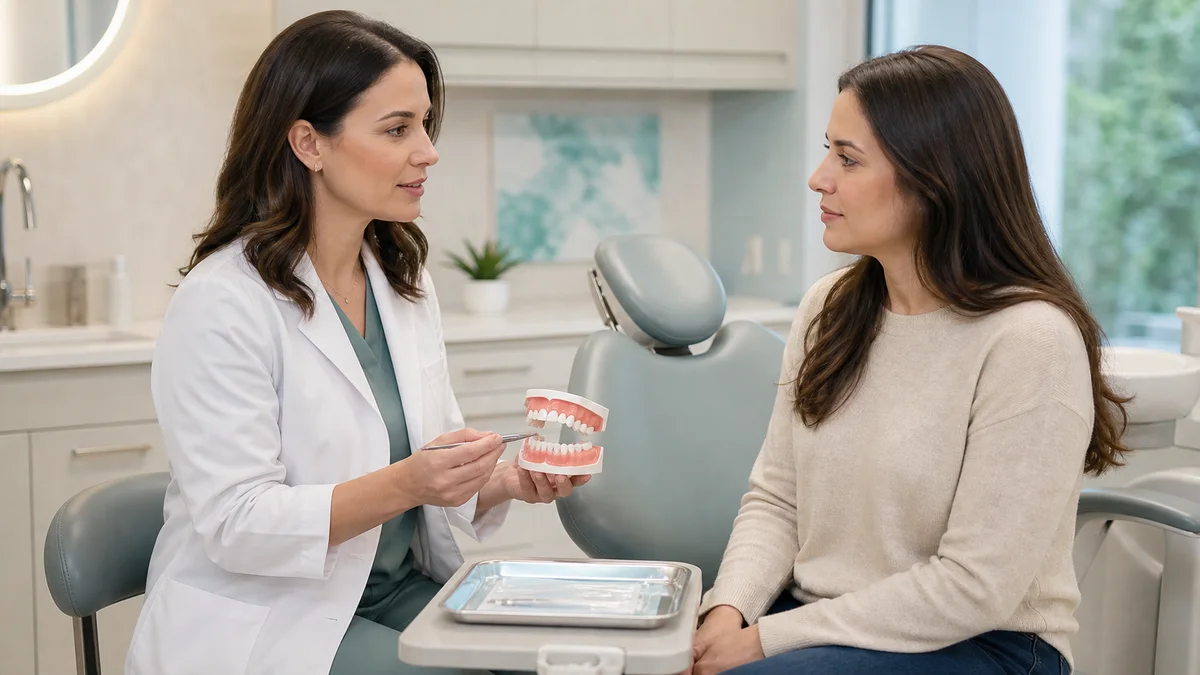
The best dentist for cleaning teeth is not the person promising the brightest polish or the fastest appointment. Look for verified professional credentials, an examination before treatment, periodontal risk assessment, clear consent, an individualized cleaning plan, careful infection control and documented follow-up. Persistent bleeding, deep pockets or loose teeth may require periodontal treatment rather than routine cleaning.
Searching for the best dentist for cleaning teeth often starts with reviews, photographs or a convenient price. Those clues can help with access, but they cannot show whether a clinician distinguishes removable plaque, hardened calculus, external stain, gingivitis and periodontitis. Safe preventive care begins by identifying what is present and why it has accumulated. The useful question is therefore not “Who can polish fastest?” but “Who can assess my mouth, explain the findings and choose the least intensive appropriate care?”
This guide turns that question into practical checks. It explains routine professional cleaning, periodontal treatment, comfort, qualifications, consent, home-care coaching and follow-up without naming one universal winner. The best dentist for cleaning teeth for a healthy adult may not be the right clinician for a person with diabetes, implants, pregnancy, severe anxiety or a history of periodontitis. Individual examination remains essential, and this article does not diagnose disease or guarantee a result.
What a Professional Teeth Cleaning Should—and Should Not—Do
A routine professional cleaning is commonly intended to remove plaque, calculus and surface deposits that home care has not removed, then leave accessible tooth surfaces clean and comfortable. Depending on local scope-of-practice rules, a dentist, dental hygienist or another appropriately authorized professional may perform parts of the appointment. The dentist remains responsible for ensuring that diagnosis, delegation and the care plan are appropriate within the jurisdiction.
The US Centers for Disease Control and Prevention explains that plaque can harden into tartar, also called calculus, and that tartar cannot be removed by toothbrushing; professional treatment is needed. That does not mean every patient needs the same procedure. A light deposit above healthy gums is different from calculus and inflammation below the gumline. The best dentist for cleaning teeth identifies that difference before selecting instruments, appointment length or recall timing.
Cleaning can reduce deposits and help patients control plaque, but it is not tooth whitening, enamel replacement or a cure-all. Polishing may reduce some external stain, yet it cannot change every intrinsic color, repair decay, close gaps or reverse bone loss. A trustworthy clinician corrects those expectations rather than selling cleaning as a cosmetic transformation. No ethical appointment should promise permanently white teeth, painless treatment for everyone or immunity from future gum disease.
Routine Cleaning, Deep Cleaning and Periodontal Maintenance Are Different
Everyday language can blur three different pathways. A routine prophylaxis is generally preventive care for a mouth without untreated periodontitis. Scaling and root planing—often called “deep cleaning”—is non-surgical therapy directed at affected root surfaces and periodontal pockets. Periodontal maintenance is ongoing care after active periodontal treatment. The correct pathway depends on current findings and history, not on which name sounds more thorough.
| Clinical pathway | Typical reason | What should support the decision | Useful follow-up question |
|---|---|---|---|
| Routine professional cleaning | Plaque, calculus or stain without diagnosed periodontitis | Oral examination, gum screening and individual risk review | “What findings make routine cleaning appropriate today?” |
| Scaling and root planing | Diagnosed periodontal disease requiring subgingival instrumentation | Periodontal measurements, inflammation, attachment or bone findings and relevant imaging when indicated | “Which sites need treatment, and how will healing be reassessed?” |
| Periodontal maintenance | Continuing management after periodontal therapy | Previous diagnosis and treatment, present stability and risk factors | “Why is this interval suitable for my current risk?” |
| Assessment or referral first | Unexplained pain, swelling, mobility, complex disease or a finding outside the clinician’s scope | History, examination and a reasoned referral question | “What must be clarified before instrumentation begins?” |
The American Academy of Periodontology describes scaling and root planing as cleaning the root surfaces below the gumline and notes that ongoing maintenance is commonly needed afterward. That is not simply a premium version of a polish. When comparing candidates for the best dentist for cleaning teeth, ask for the diagnosis and sites being treated, not only the marketing label or duration.
12 Checks for the Best Dentist for Cleaning Teeth
1. Verifiable credentials and a clearly identified care team
Confirm that the dentist is registered or licensed with the authority that governs the place of treatment. If a hygienist or therapist will provide care, ask for that professional’s name, role and authorization too. Regulatory databases differ by country, so use the official register rather than a social profile or clinic badge. The best dentist for cleaning teeth should make team roles easy to understand and should never object to a credential check.
2. A medical and dental history before instruments are used
Professional cleaning is usually straightforward, but the plan can be influenced by diabetes, pregnancy, tobacco use, dry mouth, immune conditions, bleeding disorders, medicines, allergies, joint or heart history, previous periodontal treatment and dental anxiety. Patients should not stop prescribed medicine or self-start antibiotics because of online advice. The clinician should review relevant history, decide whether clarification is needed and document the discussion. A checklist without a conversation is not the same as risk assessment.
3. Examination before a “standard package” is assigned
A good appointment looks beyond visible tartar. It considers gums, teeth, restorations, implants, sensitivity, recession, mobility, bite concerns and oral soft tissues. Periodontal screening or full charting should be selected according to findings and history. Radiographs are not automatically required at every cleaning; when proposed, their expected diagnostic benefit should be explained. The best dentist for cleaning teeth can show which findings support today’s procedure and which questions remain uncertain.
4. A diagnosis-based choice between routine and periodontal care
“You have a lot of buildup” is not a complete explanation for deep cleaning. Equally, a quick polish is not an adequate substitute when there are signs of periodontitis. Ask whether the gums show bleeding, pocketing, attachment change or bone findings, which areas are involved, and whether local or specialist management is appropriate. The best dentist for cleaning teeth does not upgrade or downgrade treatment merely to fit a promotion, insurance code or one-size schedule.
5. Clear consent, alternatives and costs before treatment
Valid consent is an ongoing conversation. You should understand what will be done, by whom, why it is recommended, reasonable alternatives, common discomforts, material limitations and the proposed fee before care begins. If the plan changes after examination, the clinician should explain the reason and obtain agreement. The UK General Dental Council’s standards, for example, emphasize understandable information, options, costs and documented consent. Those principles are useful selection signals even when treatment occurs under another regulator.
6. Technique chosen for the patient, not the gadget
Hand scalers, powered ultrasonic instruments, polishing systems and air-polishing devices are tools rather than quality certificates. Selection can depend on deposit location, tissue condition, implants, restorations, sensitivity, aerosol precautions and clinician judgment. Some appointments appropriately combine methods. The best dentist for cleaning teeth explains why a method suits the clinical goal and modifies technique when tissues, restorations or comfort require it.
7. Infection prevention that is visible but not theatrical
The clinic should follow applicable rules for hand hygiene, personal protective equipment, instrument reprocessing, clean and contaminated zones, surface management and sharps disposal. Sterile packs should be intact and opened appropriately; single-use items should not be reused. Patients do not need to audit an autoclave, but reasonable questions about sterilization and waterline or aerosol protocols deserve specific answers. A spotless reception area alone does not prove clinical infection control.
8. A comfort and anxiety plan without false promises
Sensitivity varies with inflammation, exposed root surfaces, deposit depth and individual response. Ask whether you can use a stop signal, take breaks, adjust powered settings or discuss topical or local anesthesia when clinically appropriate. A calm explanation often helps, but “you will feel absolutely nothing” is not a responsible guarantee. The best dentist for cleaning teeth listens when something hurts, distinguishes expected sensitivity from a warning sign and adapts within safe limits.
9. Attention to implants, crowns and vulnerable surfaces
Restorations and implants need careful assessment because surface materials, margins and surrounding tissues differ. The objective is deposit removal without avoidable scratching or damage. Tell the team about implants, bonded retainers, veneers, crowns, recent surgery and sensitivity even if these are visible in the chart. The best dentist for cleaning teeth selects compatible instruments and does not aggressively polish every surface by default.
10. Personalized home-care coaching
Professional cleaning occupies a small part of the year. The American Dental Association notes the importance of individualized home-care recommendations and daily interdental cleaning, while the World Health Organization supports twice-daily brushing with fluoride toothpaste. Effective coaching demonstrates a technique, checks whether the patient can use it and offers realistic alternatives. A bag of products without instruction is not personalized prevention.
11. Records, findings and a measurable follow-up plan
After treatment, you should know what was found, what was removed, whether bleeding or deeper sites need reassessment, and when to seek help. If periodontal treatment is provided, the plan should identify how response will be evaluated rather than assuming success. The best dentist for cleaning teeth documents relevant findings and uses later measurements to judge stability, not memory or a before-and-after selfie.
12. Recall timing based on risk, not a universal calendar
Six-month visits are common, but one interval does not fit every patient. ADA evidence summaries support tailoring recall to assessed disease risk, while CDC guidance advises at least yearly professional evaluation and cleaning, with more visits when a provider recommends them. Active disease, smoking, diabetes, dry mouth, difficult plaque control, orthodontic appliances or prior periodontitis may change frequency. The best dentist for cleaning teeth can explain why your interval is longer or shorter and revisit it as risk changes.
A Decision Scorecard You Can Use Before Booking
Reviews can describe kindness or waiting time, but they rarely confirm diagnosis. Use the following scorecard during a call or consultation. No single “yes” proves who is the best dentist for cleaning teeth; a consistent pattern is more informative. Choosing the best dentist for cleaning teeth is therefore a process check, not a popularity contest.
- Credentials: Can you verify the treating professional on the relevant official register?
- Assessment: Does the clinic examine and review history before assigning a cleaning type?
- Clarity: Will the team explain routine cleaning versus periodontal therapy?
- Consent: Are fees, alternatives, likely discomfort and changes discussed before proceeding?
- Safety: Can staff answer infection-control questions without vague slogans?
- Personalization: Are technique, home care and recall based on your tissues, restorations and risks?
- Continuity: Is there a documented review route if bleeding, sensitivity or deeper pockets persist?
A clinic that refuses to identify the clinician, sells deep cleaning without assessment, guarantees a painless or permanent result, or pressures you to pay before explaining findings should lose points. Conversely, a careful clinician may recommend that cleaning wait while acute pain, swelling or another problem is assessed. That pause can be evidence of judgment rather than poor service.
What to Expect Before, During and After the Appointment
Before: history, goals and baseline findings
Bring an accurate medicines list and mention previous periodontal treatment, bleeding, sensitivity, implants and dental anxiety. Explain whether your priority is prevention, stain removal, bad breath or follow-up after gum treatment. The clinician should examine before deciding the scope. If you are comparing the best dentist for cleaning teeth across clinics, compare the assessment and endpoint, not merely the advertised minutes.
During: deposit removal with ongoing communication
The provider may use hand or powered instruments and may polish selected surfaces. Water spray, vibration, pressure and brief sensitivity can occur. You should be able to request a pause. Local anesthesia may be discussed for deeper periodontal instrumentation or significant sensitivity where appropriate. Instrumentation should remain directed by clinical need; more scraping is not automatically better.
After: realistic short-term effects and instructions
Gums can feel tender or bleed briefly, and exposed areas may feel temporarily sensitive, especially after heavier deposit removal or periodontal therapy. Follow individualized instructions rather than an influencer’s routine. Contact the clinic if pain is severe or worsening, swelling develops, bleeding does not settle, you notice an altered bite or a restoration feels loose. The best dentist for cleaning teeth gives a clear route for these questions.
When “Just a Cleaning” Is Not the Safe Starting Point
Some symptoms require diagnostic attention rather than an automatic hygiene slot. Gum disease can progress without dramatic pain, and professional assessment matters when signs persist. Seek timely dental evaluation for:
- red, swollen or repeatedly bleeding gums;
- gum recession, pus, persistent bad taste or bad breath;
- loose teeth or a change in the way teeth meet;
- pain when chewing, unexplained sensitivity or a cracked tooth;
- facial swelling, fever, difficulty swallowing or rapidly worsening pain;
- a mouth ulcer, lump, color change or other soft-tissue change that does not resolve;
- implant bleeding, discomfort, mobility or a loose implant restoration.
Facial swelling with breathing or swallowing difficulty can be urgent and should not wait for a routine appointment. Local emergency pathways differ, so use the appropriate urgent dental or medical service where you are. The best dentist for cleaning teeth recognizes when the requested service is not enough and arranges suitable investigation, treatment or referral.
Special Considerations That Can Change the Plan
Diabetes and periodontal risk
Diabetes and periodontal health can affect one another, and current health status may influence monitoring and coordination. Tell the dentist about diagnosis, medicines and relevant medical advice. Do not change diabetes treatment for a cleaning without the prescribing clinician. The best dentist for cleaning teeth integrates health history into risk planning without claiming that cleaning alone treats diabetes.
Pregnancy
Pregnancy can coincide with gum changes, nausea and altered home-care tolerance. Necessary dental assessment should not automatically be postponed; timing, positioning, imaging and medicines should be considered individually. Share pregnancy status and obstetric concerns. A clinician should use evidence-based precautions, not blanket fear or unsupported claims that one cleaning guarantees pregnancy outcomes.
Implants, orthodontics and extensive restorations
Implants and appliances can create additional plaque-retentive areas and require compatible techniques. Ask for specific daily-cleaning demonstrations and maintenance goals. A provider who sees complex peri-implant inflammation may recommend periodontal or implant-focused assessment. Here, the best dentist for cleaning teeth may be the clinician who coordinates with a hygienist, periodontist, orthodontist or restorative dentist.
Dental anxiety, disability and sensory needs
Tell the clinic what has helped or harmed in past visits. Longer visits, step-by-step explanation, a stop signal, reduced sensory load or reasonable positioning adjustments may help. Sedation, when considered, is a separate clinical decision with its own assessment, consent and safety requirements. Respectful accommodation is more meaningful than a generic “anxiety-free” claim.
Technology: Helpful Tool or Marketing Distraction?
Powered scalers, magnification, disclosing agents, intraoral cameras and air-polishing systems can support care in appropriate situations. None independently proves that a clinic offers the best dentist for cleaning teeth. Technology should answer a clinical question, help remove a particular deposit, improve communication or protect a vulnerable surface. Ask what benefit the tool offers in your mouth and whether a simpler option would be equally suitable.
Be cautious when a device is promoted as painless for everyone, able to “detox” the body, capable of regrowing lost periodontal bone or guaranteed to sterilize all pockets. Periodontal outcomes depend on diagnosis, instrumentation, risk-factor control, home care and maintenance. A device may be useful without being magical. Balanced explanations include limitations and alternatives.
How to Compare Reviews, Prices and Travel Plans
Online ratings can reveal patterns in communication, scheduling and complaint handling, but they are vulnerable to selection bias and cannot verify a diagnosis. Look for detailed comments about explanations, respect and follow-up rather than dramatic stain photographs. The best dentist for cleaning teeth should not need fabricated cases, guaranteed scores or pressure tactics. No article, ranking platform or clinic testimonial can replace checking credentials and discussing your findings.
Ask whether the quoted fee includes examination, radiographs only if indicated, periodontal charting, routine prophylaxis, deep cleaning by area, anesthesia, polishing, fluoride where appropriate and reassessment. A low figure may describe a different endpoint. If insurance is involved, verify network rules and benefits with the insurer; an estimate is not a payment guarantee.
For travel, cleaning may look simple, but continuity still matters if deeper disease is discovered. Confirm who will review healing, how records are provided and where urgent concerns are handled after you return. The best dentist for cleaning teeth for a travelling patient is one who defines what can be completed safely within the available time and what should continue locally.
Questions to Ask the Dentist or Hygienist
Short, specific questions are more revealing than asking whether the clinic is “the best.” Consider taking this list to the appointment:
- Who will examine me, who will provide the cleaning, and how can I verify their credentials?
- Do my findings indicate routine cleaning, periodontal treatment or specialist assessment?
- Were my gums screened or charted, and what did the measurements show?
- Which instruments are suitable for my natural teeth, implants and restorations?
- What can we do if an area is sensitive or I need a break?
- Which benefits and limitations should I expect from polishing?
- What should I do at home, and can you demonstrate the technique?
- Why are you recommending this recall interval?
- What changes should prompt an earlier review or urgent help?
- How will the plan and fee change if periodontal disease is found?
The best dentist for cleaning teeth need not answer every question with certainty at the first minute. Good clinical reasoning includes acknowledging uncertainty, gathering more information and referring when appropriate. What matters is whether the explanation is coherent, documented and centered on your interests.
Patient-Safe Planning With Redent Klinik
Patients can review the Redent Klinik English patient information to understand the clinic’s general approach. To discuss symptoms, previous periodontal care, restorations, anxiety or the records useful for an initial conversation, use the Redent Klinik English contact page. Remote information may help organize questions, but it cannot confirm whether routine cleaning or periodontal treatment is appropriate.
Content is prepared for review by Dentist Esma Çevrük Çakır and prioritizes evidence-based, patient-safe language. Redent Klinik does not claim to be the best dentist for cleaning teeth for every person, promise a fixed procedure, or guarantee comfort and outcomes. Suitability, scope and follow-up depend on examination, professional judgment and individual consent.
Frequently Asked Questions About the Best Dentist for Cleaning Teeth
Can the best dentist for cleaning teeth remove all stains?
No. Professional cleaning may reduce many external deposits and stains, but intrinsic discoloration, existing restorations and enamel differences may remain. Aggressive polishing can be inappropriate on some surfaces. The best dentist for cleaning teeth explains the likely cleaning endpoint and separately assesses whether whitening or restorative care is safe and suitable.
Should the best dentist for cleaning teeth always use an ultrasonic scaler?
No single instrument is mandatory for every patient. Powered scalers can efficiently remove deposits and may be combined with hand instruments, but surface type, implant components, sensitivity, aerosol considerations and deposit location influence selection. The best dentist for cleaning teeth chooses tools for the clinical task rather than using a device as a marketing badge.
Is bleeding during a cleaning normal?
Inflamed gums may bleed during gentle probing or deposit removal, but bleeding is a clinical sign to assess, not proof that cleaning is “working.” Its location and persistence matter. Ask what caused it and how it will be reviewed. Ongoing spontaneous bleeding, swelling or pus needs evaluation rather than repeated polishing.
How often should I book the best dentist for cleaning teeth?
There is no universal interval. History of periodontitis, current inflammation, diabetes, smoking, dry mouth, appliances, home-care effectiveness and other risks can change timing. CDC advises at least yearly checkups and professional cleanings, with additional visits when recommended. The best dentist for cleaning teeth records why a particular interval fits you and updates it when risk changes.
Does a painful cleaning mean the dentist is bad?
Not automatically. Inflamed tissues, deep deposits and exposed roots can be sensitive even with careful technique. Quality is better judged by assessment, communication, adaptation and appropriate pain control. Severe or worsening pain should not be dismissed. The best dentist for cleaning teeth responds to discomfort, explains options and stops to reassess unexpected symptoms.
Can a hygienist be the best person to clean my teeth?
An appropriately trained and authorized dental hygienist may be highly skilled in preventive and periodontal care, depending on local law and the patient’s needs. The important questions are professional registration, scope, supervision or referral arrangements, and diagnosis. A coordinated team can be a strength; patients should know each person’s name and role.
Is deep cleaning better than routine cleaning?
It is not “better” in general; it is a different intervention for diagnosed periodontal needs. Unnecessary subgingival treatment adds burden, while routine polishing may be insufficient for periodontitis. The best dentist for cleaning teeth selects the least intensive care that adequately addresses documented disease and sets a reassessment plan.
Can the best dentist for cleaning teeth cure bad breath?
Cleaning may help when plaque, calculus or gum inflammation contributes, but bad breath can have multiple oral and non-oral causes. Persistent symptoms deserve assessment of gums, decay, dry mouth, tongue coating, habits and other factors, with medical referral when indicated. No clinician should guarantee a cure without identifying the cause.
What is the biggest red flag when choosing a cleaning provider?
A major red flag is irreversible or intensive treatment offered before an adequate history, examination and explanation. Other concerns include unverifiable credentials, guaranteed results, refusal to discuss sterilization, unexplained fees and no follow-up route. The best dentist for cleaning teeth welcomes informed questions and does not use fear or urgency to block a second opinion. A credible search for the best dentist for cleaning teeth should always leave room for consent and reflection.
Key Takeaway
Choose on evidence of process: verified credentials, individualized assessment, correct distinction between routine and periodontal care, clear consent, compatible instruments, infection prevention, comfort planning, useful home-care coaching and documented follow-up. The best dentist for cleaning teeth is the clinician who can justify what your mouth needs today, explain what cleaning cannot do and revise the plan when findings or risks change. That makes the best dentist for cleaning teeth a patient-specific choice rather than a universal title.
Sources
- US Centers for Disease Control and Prevention: About Periodontal (Gum) Disease
- US Centers for Disease Control and Prevention: About Oral Health
- National Institute of Dental and Craniofacial Research: Oral Hygiene
- American Dental Association: Home Oral Care
- American Dental Association: Dental Floss and Interdental Cleaners
- American Academy of Periodontology: Non-Surgical Treatments
- General Dental Council: Put Patients’ Interests First
- General Dental Council: Communicate Effectively With Patients
- General Dental Council: Obtain Valid Consent
- World Health Organization: Oral Health Fact Sheet