
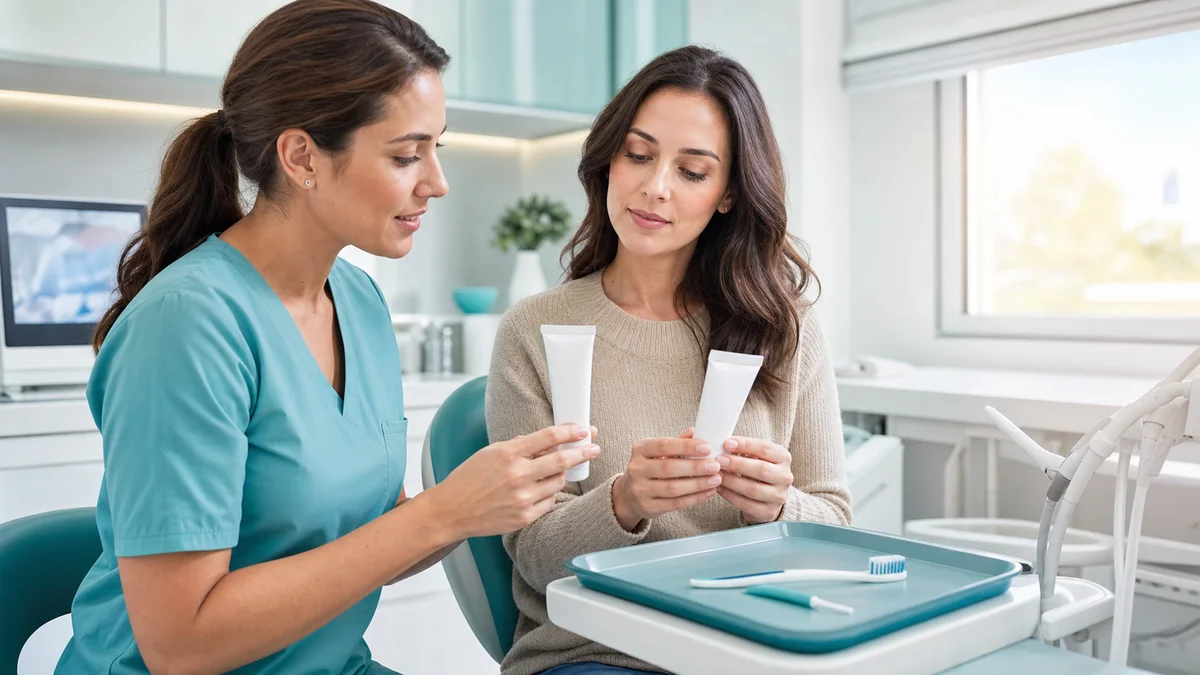
For many adults, the best toothpaste for gingivitis is a fluoride toothpaste with an evaluated plaque-and-gingivitis claim, often using stabilized stannous fluoride. Comfort, correct brushing and interdental cleaning still matter. Toothpaste cannot remove hardened calculus or diagnose bleeding, so persistent symptoms need a dental examination rather than repeated product switching.
Choosing the best toothpaste for gingivitis is not really a contest between colorful boxes. Gingivitis is inflammation at the gum margin, most often associated with a bacterial plaque biofilm. A toothpaste can support daily plaque control, but the tube cannot inspect the gums, clean between every tooth or remove calculus that has hardened onto a tooth surface. A safe choice therefore combines an evidence-backed active formulation with a brushing method you can use gently and consistently.
This guide provides 17 practical checks rather than naming one universal winner. That matters because sensitivity, dry mouth, ulcers, restorations, orthodontic appliances, pregnancy and personal preferences can change what is tolerable. It also prevents a common mistake: assuming that every fluoride or whitening paste has been evaluated for a gingivitis claim. The best toothpaste for gingivitis should fit both the label evidence and the person using it.
Bleeding during brushing can occur with gingivitis, but it is not a diagnosis on its own. Swelling, persistent bad taste, pain, recession, pus, loose teeth or bleeding that does not settle deserve professional assessment. Sudden facial swelling, difficulty swallowing or breathing, fever with spreading swelling, or rapidly worsening symptoms require urgent care. This article is educational and cannot replace an examination by a dentist.
Use the 17 checks below to identify the best toothpaste for gingivitis without mistaking a consumer product for treatment. Each check links the label to a practical clinical question: what the formula can support, what it cannot do, and when a dental assessment should take priority.
What gingivitis means before you compare toothpaste
Healthy-looking gums are usually comfortable and do not repeatedly bleed with gentle cleaning. Gingivitis can make the gum edge red, puffy, tender or prone to bleeding. The condition may improve when plaque is disrupted thoroughly and regularly, yet similar symptoms can also accompany periodontitis, local trauma, medication effects or systemic conditions. That is why the best toothpaste for gingivitis is only one part of a broader plan.
Plaque is a structured biofilm, not merely food debris. Brushing disturbs plaque on accessible tooth surfaces and at the gumline. Interdental brushes or floss reach areas a conventional toothbrush may miss. Professional cleaning may be necessary when calculus is present because toothpaste and home brushes cannot predictably remove it. If gingivitis persists despite careful cleaning, changing tubes again is less useful than asking why inflammation remains.
- Look for a formulation that states what it is evaluated to do, not just a vague “fresh” or “natural” promise.
- Use a soft-bristle brush with light pressure at the gum margin for about two minutes, twice daily.
- Clean between teeth with a method sized and demonstrated for your mouth.
- Arrange a dental review when bleeding, swelling or discomfort persists or worsens.
Check 1: Choose fluoride protection as the foundation
Fluoride toothpaste is the default foundation for most people because it helps prevent tooth decay while brushing removes plaque. The American Dental Association notes that ADA-Accepted toothpastes making a cavity-protection claim contain fluoride. Common fluoride actives include sodium fluoride, sodium monofluorophosphate and stannous fluoride. However, their presence does not automatically mean the product has been evaluated for plaque or gingivitis reduction.
When searching for the best toothpaste for gingivitis, first confirm that the package identifies a fluoride active and gives age-appropriate directions. Then check whether it makes a specific gum-health claim. A product can be a sound anticaries toothpaste without being the most relevant option for someone prioritizing gingival inflammation. Children, people with swallowing difficulties and anyone advised to use prescription-strength fluoride need individualized guidance.
Check 2: Read the exact plaque-and-gingivitis claim
Front-of-pack language can be broad, so turn the tube around. Look for an explicit, regulated or independently evaluated statement concerning plaque and gingivitis, rather than relying on words such as “detox,” “herbal,” “complete” or “professional.” The ADA Seal program evaluates evidence for the claims a product is permitted to display; the exact accepted benefit matters more than the Seal image alone.
The best toothpaste for gingivitis should therefore match your goal at the claim level. A paste accepted only for cavity prevention should not be assumed to deliver a clinically evaluated gingivitis benefit. Likewise, “tartar control” and “whitening” are not synonyms for treating gum inflammation. Reading the active ingredient, intended claim, directions and warnings together is more reliable than choosing by package color or foam.
Check 3: Understand why stannous fluoride is often considered
Evidence reviews summarized by the ADA associate toothpastes containing stannous fluoride with reductions in gingivitis and related periodontal risk measures. Modern stabilized formulations can combine cavity protection with plaque-and-gingivitis benefits. For many adults, this makes a properly evaluated stannous fluoride product a reasonable starting point when looking for the best toothpaste for gingivitis.
“Contains stannous fluoride” is still not enough by itself. Formulation, concentration, stabilization, instructions, safety and the evidence for the finished product all matter. Some users dislike a taste, notice temporary staining concerns or experience irritation with a particular formula. A theoretically strong active is not helpful if discomfort leads to rushed or skipped brushing. Select a recognized product with the relevant claim and reassess tolerance.
Check 4: Do not confuse anticaries fluoride with a gum claim
Sodium fluoride and sodium monofluorophosphate are well-established anticaries actives. They can be excellent parts of daily oral care, yet a formula using either active is not automatically the best toothpaste for gingivitis. Its relevance depends on whether the complete product has a credible plaque-and-gingivitis claim and whether the rest of the home-care plan controls plaque effectively.
This distinction prevents both overclaiming and unnecessary rejection. A dentist may still recommend a different fluoride formula because sensitivity, caries risk, dry mouth or tolerance is the more urgent priority. If technique and interdental care are excellent but gingival inflammation continues, professional assessment should come before layering on increasingly aggressive products.
In other words, the best toothpaste for gingivitis is defined by the finished product’s evidence and your needs, not by treating all fluoride compounds as interchangeable.
Check 5: Prioritize tolerability over intense flavor or foam
Foam, tingling and strong mint do not measure clinical performance. Detergents, flavors and essential-oil components can feel refreshing but may irritate some mouths. People prone to recurrent ulcers, dry mouth or oral burning may benefit from discussing a milder formulation. The best toothpaste for gingivitis is one that supports full, gentle brushing without making the tissues feel raw.
If symptoms begin shortly after a product change, stop and examine the timing rather than forcing continued use. Record the product, ingredient list and reaction, then ask a dental professional or pharmacist for guidance. Swelling of the lips or face, wheezing or breathing difficulty can signal a serious reaction and needs urgent medical attention.
Check 6: Avoid using abrasiveness as a ranking game
Abrasives help remove surface deposits, but more abrasive does not mean more effective against gingivitis. The ADA requires accepted toothpaste to remain within an established relative dentin abrasivity limit. The ADA also cautions against using values below that safety threshold as a simple numerical ranking of product safety. In practice, brushing pressure, frequency, exposed roots and technique also influence wear.
Someone with recession or dentin sensitivity may need a gentler-feeling option and a soft brush. A whitening paste chosen for stain removal is not necessarily the best toothpaste for gingivitis, especially if discomfort makes gumline cleaning less complete. Do not use improvised powders, salt scrubs or abrasive charcoal mixtures as a substitute for an evaluated toothpaste.
Check 7: Treat whitening, charcoal and “natural” claims cautiously
Whitening pastes mainly address external stain; they do not diagnose or remove the cause of gingival bleeding. Charcoal marketing may emphasize adsorption or “detox,” but those concepts do not replace evidence for plaque-and-gingivitis reduction. “Natural” also has no automatic relationship to effectiveness, allergy risk or gentleness. Plant-derived flavors can still irritate tissues.
If a product lacks fluoride or a relevant evaluated claim, it is unlikely to be the best toothpaste for gingivitis merely because its ingredient list looks simple. Ask three questions: does it protect against decay, does it carry evidence for the exact gum claim, and can you use it comfortably as directed? If any answer is unclear, choose a more transparent option or seek advice.
A short ingredient list can be appealing, but the best toothpaste for gingivitis still needs a defensible benefit, suitable directions and a formulation that protects the teeth as well as supporting gum care.
Check 8: Do not self-prescribe medicated rinses as toothpaste substitutes
Antiseptic products such as chlorhexidine may be recommended by a clinician for specific situations and limited periods, but they are not universal, indefinite substitutes for brushing with fluoride toothpaste. They can cause staining, taste changes and other unwanted effects. Their timing may also matter. Do not combine multiple antimicrobial products on the assumption that stronger must be better.
The best toothpaste for gingivitis remains part of mechanical plaque control. If a dentist prescribes an additional rinse or gel, follow the exact duration and spacing instructions. Continuing it longer than advised can create avoidable problems without addressing calculus, faulty restorations or difficult-to-clean sites.
Check 9: Match the formula to sensitivity and exposed roots
Cold sensitivity can discourage careful cleaning. Desensitizing actives may help some people when used consistently, but they do not establish the cause of pain. Sharp, lingering, spontaneous or bite-related pain needs assessment. When sensitivity and gingivitis coexist, the best toothpaste for gingivitis may be a dual-purpose fluoride formulation with credible claims that you can tolerate.
Use light pressure rather than scrubbing harder. Place a pea-sized amount on a soft brush, angle the bristles toward the gum margin and make controlled movements. After brushing, spit out the excess and avoid vigorous rinsing immediately afterward unless a clinician gives different instructions. This can help leave fluoride available on tooth surfaces.
Check 10: Consider dry mouth, ulcers and medication effects
Saliva supports comfort, cleansing and mineral balance. Dry mouth may arise from medicines, dehydration, systemic disease, head-and-neck treatment or mouth breathing. It increases the importance of fluoride protection while also making intense flavors or detergents uncomfortable. The best toothpaste for gingivitis for a dry mouth is often mild, fluoride-containing and compatible with a clinician-led prevention plan.
Do not stop prescribed medication without medical advice. Instead, tell the dentist and prescriber about oral dryness, new bleeding or ulcers. Persistent ulcers, unexplained patches, numbness or lesions lasting more than two weeks should be examined. A toothpaste change may relieve irritation, but it should not delay diagnosis of a continuing abnormality.
Check 11: Adapt care for braces, implants, bridges and dentures
Fixed braces and complex restorations create extra plaque-retentive areas. A fluoride paste with a plaque-and-gingivitis claim can support care, but specialized brushes, interdental brushes or water irrigation may be needed. Around implants, inflammation should never be dismissed as ordinary gingivitis without evaluation because peri-implant tissues require specific assessment.
People with removable dentures still need to clean their natural teeth and gums. Denture cleansers are not interchangeable with fluoride toothpaste, and highly abrasive toothpaste can damage some denture materials. The best toothpaste for gingivitis must be selected for the natural teeth while the prosthesis follows its own cleaning instructions.
For complex dental work, choosing the best toothpaste for gingivitis should happen alongside a demonstration of how to access margins and spaces without damaging tissues.
Check 12: Use a decision table instead of brand loyalty
The table below turns label information and symptoms into safer next steps. It is not a diagnosis or prescription. If two priorities conflict, such as strong sensitivity and persistent bleeding, a dental review is more useful than guessing which package should win.
| Situation | What to look for | What not to assume | Best next step |
|---|---|---|---|
| Mild bleeding with plaque at the gumline | Fluoride plus an evaluated plaque-and-gingivitis claim; often stabilized stannous fluoride | That toothpaste alone removes calculus | Improve brushing and interdental cleaning; arrange review if persistent |
| Sensitivity or exposed roots | A tolerable fluoride formula with a relevant sensitivity claim and soft brushing | That whitening or harder brushing will solve the pain | Ask for evaluation if pain is sharp, lingering or localized |
| Dry or easily irritated mouth | Mild flavor, suitable detergent profile and fluoride protection | That intense tingling means better cleaning | Review medicines, hydration and caries prevention with clinicians |
| Braces, bridgework or implants | Fluoride, plaque claim and tools that access complex spaces | That a powered brush or paste reaches every site automatically | Obtain personalized technique and interdental-size guidance |
| Swelling, pus, loose tooth or persistent bad taste | No product should be used to postpone assessment | That this is simple gingivitis | Book a prompt dental examination |
For a straightforward adult case, the best toothpaste for gingivitis is usually the option in the first row, provided it is comfortable and used correctly. The table also shows why one recommendation cannot safely cover every mouth.
Check 13: Pair the best toothpaste for gingivitis with correct brushing
Product selection cannot compensate for a rushed technique. Brush twice daily for about two minutes with a soft-bristle manual or powered brush. Place the bristles so they clean where tooth and gum meet, use light pressure, and follow an order that prevents missed surfaces. A powered brush can help some people, but either type can work when used effectively.
The best toothpaste for gingivitis performs only as part of this repeatable routine; extra paste, harder scrubbing or a more expensive brush does not replace coverage and control.
- Apply a pea-sized amount of the best toothpaste for gingivitis selected for your needs.
- Start at the gumline and clean outer, inner and chewing surfaces systematically.
- Slow down around crowded teeth, the back molars, braces and restoration margins.
- Spit out excess paste; follow professional advice about rinsing and any additional products.
- Rinse the brush, let it air-dry, and replace the head when bristles spread or according to its instructions.
Hard pressure can bend bristles away from the gumline and traumatize tissues. If bleeding makes you avoid cleaning, seek a technique demonstration rather than stopping. Consistent gentle disruption of plaque is central to improving plaque-induced gingivitis.
Check 14: Clean between teeth every day
A toothbrush does not reliably clean all interdental surfaces. Appropriately sized interdental brushes are useful where space permits, while floss may suit tighter contacts. Bridges, implants and orthodontic appliances may need special threaders or brushes. The best toothpaste for gingivitis supports this routine, but it cannot travel between teeth by itself.
- Ask a dental professional to demonstrate the correct size and insertion angle for interdental brushes.
- Do not force a brush through a contact or repeatedly snap floss into the gum.
- Clean methodically so every reachable space is addressed without trauma.
- Report one site that repeatedly bleeds, tastes unpleasant or discharges fluid.
Initial bleeding can occur when inflamed areas are cleaned, but persistent or heavy bleeding deserves assessment. The goal is not to “scrub until it stops”; it is to remove plaque gently and identify any site that needs professional care.
Check 15: Give the routine time, then reassess objectively
Changing products every few days makes it difficult to judge comfort, adherence or response. Once you have chosen the best toothpaste for gingivitis for your situation, use it exactly as directed alongside improved plaque control. Track bleeding sites, swelling, tenderness and whether cleaning is becoming easier. Do not promise yourself a fixed cure date because severity and causes differ.
If there is no meaningful improvement, or if symptoms worsen, arrange an examination. A dentist can assess plaque, calculus, periodontal pocketing, restorations, bite factors, dry mouth and other contributors. Professional cleaning and tailored instruction may be necessary. Improvement in bleeding does not eliminate the need for routine preventive visits.
Check 16: Know when toothpaste is not enough
Toothpaste cannot distinguish gingivitis from periodontitis, remove subgingival calculus, repair a defective filling or identify a medical cause of bleeding. The best toothpaste for gingivitis should never be presented as a cure for every red gum. Seek prompt dental care for persistent swelling, pus, gum recession, loose teeth, a changing bite, persistent bad breath or pain.
People who smoke or vape may show less obvious bleeding even when disease is present, so absence of bleeding is not a guarantee of health. Diabetes, immune conditions, pregnancy-related hormonal changes and some medicines can alter gum response. Inform the dental team of medical conditions, pregnancy status and current medicines so recommendations remain safe.
These risk factors can change which product is the best toothpaste for gingivitis, how frequently monitoring is needed and whether professional periodontal care is indicated.
Check 17: Confirm the plan with a dental professional
A product label can tell you its active ingredient and accepted claims; an examination tells you what your gums need. At Redent Klinik, a consultation can assess why inflammation is present, demonstrate brushing and interdental techniques, and discuss suitable fluoride products without promising a universal brand. The best toothpaste for gingivitis is ultimately the evidence-backed option that fits the diagnosis, risks and preferences identified for you.
You can learn more about our patient-centered approach on the Redent Klinik English homepage or use the Redent Klinik contact page to request an appointment. Bring the tube or a photo of its active-ingredient panel if you want the clinician to review a specific product.
Frequently asked questions about the best toothpaste for gingivitis
Is stannous fluoride always the best toothpaste for gingivitis?
It is often a sensible evidence-based option when the finished product carries an evaluated plaque-and-gingivitis claim. It is not automatically ideal for everyone. Taste, irritation, staining concerns, sensitivity, age, caries risk and professional recommendations all matter. The finished formulation and exact label claim are more informative than the ingredient name alone.
Can the best toothpaste for gingivitis stop bleeding immediately?
No safe product should promise an immediate or guaranteed result. Bleeding may improve as plaque control improves, but the cause and severity vary. Persistent, heavy or localized bleeding needs examination, especially when accompanied by swelling, pain, pus, recession, a bad taste or loose teeth.
Should I stop brushing when my gums bleed?
Usually, avoiding the area allows more plaque to remain. Continue gentle cleaning with a soft brush and an appropriate interdental method, but do not scrub aggressively. Ask a dental professional to assess continuing bleeding and demonstrate technique. Seek urgent help if bleeding is uncontrolled or associated with significant swelling or systemic symptoms.
Is a whitening paste the best toothpaste for gingivitis?
Not simply because it whitens. Whitening pastes focus on external stain and may not have an evaluated plaque-and-gingivitis claim. Check fluoride, the specific gum claim, abrasiveness considerations and comfort. If exposed roots or sensitivity are present, stain removal may be a lower priority than a tolerable prevention plan.
Does charcoal toothpaste improve gingivitis?
Charcoal branding does not establish clinical benefit for gingivitis. Some products may lack fluoride or rely on abrasive stain removal. Choose according to credible evidence and exact claims, not “detox” language. An evaluated fluoride toothpaste plus effective gumline and interdental cleaning is a more defensible starting point.
Can children use the same best toothpaste for gingivitis?
Children need age-appropriate fluoride amounts, supervision and a diagnosis of why gums are inflamed. They may swallow toothpaste, and adult-strength directions may not apply. A parent or caregiver should follow local professional advice and the product label rather than transferring an adult recommendation directly.
What if the best toothpaste for gingivitis causes ulcers or burning?
Stop using the suspected product and record its ingredients and timing. A milder flavor or different detergent profile may be appropriate, but recurring ulcers or burning can have other causes. Seek assessment for persistent lesions, swelling, breathing difficulty or symptoms that do not settle after the product is withdrawn.
How much toothpaste should an adult use?
A pea-sized amount is generally sufficient for adult brushing unless a clinician or prescription label directs otherwise. More paste does not replace two minutes of systematic, gentle cleaning. Spit out the excess and follow professional advice about rinsing, particularly when another medicated product is also used.
Do I still need floss or interdental brushes?
Yes. Even the best toothpaste for gingivitis cannot reliably reach every contact area. Use floss for tight contacts or appropriately sized interdental brushes where space permits. Braces, bridges and implants may require specialized tools. A clinician can select sizes and demonstrate a non-traumatic method.
When should I book a dental examination?
Book when bleeding or swelling persists, recurs, worsens or affects one site repeatedly. Seek prompt care for pus, loose teeth, recession, persistent bad taste, pain or a changing bite. Facial swelling with difficulty swallowing or breathing is urgent. Product selection should not delay evaluation of warning signs.
A practical shopping checklist
Before buying, compare evidence rather than price, tube size or influencer claims. The best toothpaste for gingivitis does not have to be the most expensive, but it should disclose its active ingredient, intended benefits, directions and warnings clearly.
- Fluoride active and clear age-appropriate directions.
- An explicit, credible plaque-and-gingivitis reduction claim.
- A recognized evidence review such as the ADA Seal for the exact stated benefit, where available.
- A flavor and detergent profile you can use comfortably twice daily.
- No dependence on vague “detox,” “chemical-free” or instant-cure language.
- A plan for gumline brushing, interdental cleaning and dental review.
In short, the best toothpaste for gingivitis is an adjunct, not a shortcut. For many adults, an evaluated fluoride formula with a plaque-and-gingivitis claim—often based on stabilized stannous fluoride—fits the evidence. Its benefit depends on gentle technique, daily interdental care, consistent use and timely professional assessment. Revisit the choice if the best toothpaste for gingivitis on paper is uncomfortable or symptoms continue.
Evidence and official sources
- American Dental Association: Toothpastes
- American Dental Association: Home Oral Care
- American Dental Association: ADA Seal of Acceptance
- American Dental Association official website
- NHS: Gum disease
- World Health Organization: Oral health fact sheet
- US Food and Drug Administration: OTC anticaries drug products monograph