
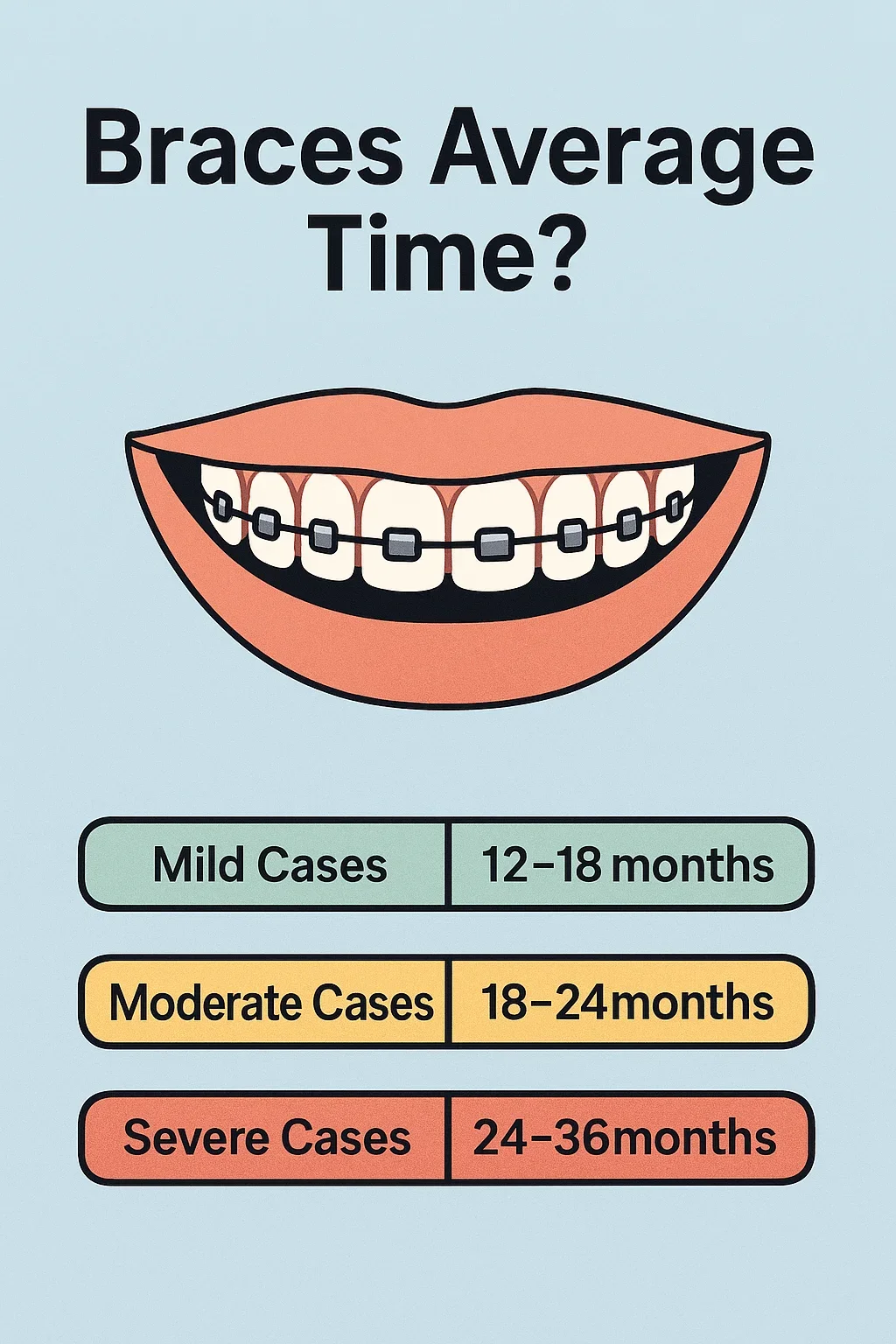
When it comes to straightening your teeth, one of the first questions people ask their orthodontist is, “How long will I need to wear braces?” Understanding the braces average time is crucial for setting realistic expectations and maintaining motivation throughout the treatment. On average, most orthodontic treatments with braces last between 18 to 24 months, but the duration can vary greatly depending on the complexity of the case, the patient’s age, the type of braces, and how closely the patient follows the dentist’s instructions. Let’s explore in detail what affects this timeline and how you can ensure the fastest, healthiest outcome possible. 🦷
The braces average time is not a fixed number—it’s a personalized process tailored to each individual’s dental condition. Some people with minor alignment issues might finish treatment in as little as 6 months, while others with severe crowding or bite problems may require up to 3 years. Orthodontic treatment is a gradual process of applying continuous, gentle pressure to move teeth into their ideal positions. The bone around the teeth also needs time to remodel, which is why speeding through the process isn’t advisable. Patience is essential because rushing can lead to relapse or long-term instability in the results. ⏳
Age plays a significant role in determining the braces average time. Generally, younger patients—especially teenagers—experience quicker results because their jawbones are still developing, making it easier for teeth to shift into alignment. Adults, on the other hand, may require slightly longer treatment times because their bone density is higher, and their tissues adapt more slowly. However, modern orthodontic techniques such as self-ligating braces and invisible aligners have helped reduce treatment times even for adults, making orthodontics more accessible and efficient than ever before.
Another major factor influencing the braces average time is the type of braces you choose. Traditional metal braces are often the most reliable and fastest in achieving desired results for complex cases. Ceramic braces, while more aesthetic, can sometimes require a bit more time because they create slightly more friction during tooth movement. Invisalign and other clear aligners can be faster or slower depending on how consistently the patient wears them—usually 20–22 hours a day. Skipping aligner wear or missing appointments can add months to your treatment. Consistency truly makes a difference. 😁
It’s important to note that patient cooperation can significantly impact the overall treatment duration. Orthodontists often stress the importance of maintaining good oral hygiene and keeping regular appointments. Missed visits or poor hygiene can cause delays, as your orthodontist might need to address complications such as cavities or broken brackets. Similarly, following dietary guidelines—like avoiding sticky candies, hard nuts, and chewing ice—helps prevent damage to braces, ensuring your braces average time stays on track. Every small effort you make contributes to a smoother and faster process. 🧩
Advancements in orthodontic technology have also changed what we consider the “average time” for braces. Modern options like accelerated orthodontic devices use gentle vibrations or micro-pulses to stimulate bone movement, helping teeth move faster and more efficiently. Additionally, new materials like heat-activated archwires respond to body temperature, allowing for steady, comfortable movement. These innovations mean that in some cases, the braces average time has shortened by several months compared to treatments from just a decade ago.
While shorter treatment times are appealing, it’s essential to prioritize quality and stability. Orthodontic treatment is not just about moving teeth—it’s about ensuring your bite is functional and your smile is long-lasting. Cutting corners or trying to rush the process can lead to relapse, where teeth shift back to their original positions. That’s why orthodontists emphasize post-treatment care with retainers to maintain alignment once braces are removed. Proper retention ensures that the results you worked for remain permanent, even years after your braces come off. 🔒
Financial considerations also influence treatment decisions. In the U.S., the average cost of braces ranges from $3,000 to $7,000, depending on the complexity and type of braces used. Some clinics offer accelerated treatment packages, but remember that a faster timeline should never compromise safety or quality. If you’re comparing clinics or considering dental tourism, always verify that the orthodontist is certified by trusted organizations such as the American Dental Association. A qualified orthodontist can help personalize your treatment plan for optimal efficiency and comfort.
Patients who want to know their estimated braces average time should schedule a consultation with a reputable dental clinic. An orthodontist will conduct X-rays, photographs, and 3D scans to analyze your jaw alignment, spacing, and bite pattern. These diagnostics allow for an accurate timeline estimate and customized plan. If you’d like to discuss your orthodontic needs with professionals, you can visit the Redent Klinik Contact Page to get personalized information and a detailed treatment roadmap tailored to your case.
In summary, the braces average time varies based on several factors—your age, case complexity, brace type, and cooperation level. While the general timeframe of 18–24 months applies to most people, every smile is unique. The key is to stay consistent, maintain good oral hygiene, and communicate openly with your orthodontist. Whether you’re considering traditional braces or aligners, understanding your expected timeline helps you stay motivated and enjoy the process toward your dream smile. Remember, orthodontic treatment is not just about straight teeth—it’s about creating a healthy, confident, and lasting transformation. 🌟
What Is the Average Time for Braces Treatment? ⏱️
When people first consider orthodontic treatment, one of the most common questions is, “How long will I have to wear braces?” Understanding the braces average time helps set realistic expectations and reduces anxiety about the process. While the typical duration of braces treatment falls between 18 and 24 months, several factors determine how long your treatment will actually take. Some patients finish in under a year, while others require up to three years for complex corrections. Knowing what affects this timeline allows you to better prepare for your orthodontic journey and maintain consistent motivation. 🦷
Understanding the Basics of Orthodontic Timing
Orthodontic treatment works by applying continuous, gentle pressure to the teeth and supporting structures. Over time, this pressure causes the bone surrounding each tooth to remodel, allowing teeth to shift into their proper alignment. The biological process behind this movement takes time—bone cells break down on one side of the tooth while rebuilding on the other. This is why the braces average time cannot be drastically shortened without risking tooth or gum damage. The human body needs sufficient time to adapt to these controlled changes, ensuring a stable and healthy result. ⏳
Typically, the orthodontic process begins with an initial consultation and diagnostic evaluation, including X-rays, digital scans, and photographs. Based on these diagnostics, the orthodontist designs a treatment plan that specifies the estimated duration. Most people start noticing visible changes within 3 to 6 months, but the complete correction takes longer depending on the severity of misalignment, bite issues, and jaw structure. Orthodontists adjust wires and bands periodically to maintain constant pressure and guide the teeth toward their optimal position.
Different Stages of Braces Treatment
The braces average time can be broken into distinct phases, each serving a unique purpose in achieving perfect alignment. Here’s an overview of these stages:
1. Initial Alignment Phase (3–6 months)
During this stage, the braces begin to align crooked or overlapping teeth. The focus is primarily on leveling the arch and reducing major crowding. Patients often feel tightness or mild discomfort as the teeth start moving. The visible progress during this phase can be highly motivating since changes are easily noticeable in photos and mirrors. 📸
2. Space Closure and Bite Correction Phase (6–12 months)
Once the teeth are aligned, the orthodontist starts adjusting the bite and closing any gaps. This is when elastic bands or power chains may be used to bring the bite into balance. This middle stage represents the heart of the orthodontic process, where the braces average time plays a crucial role in ensuring the bite functions correctly—not just looks straight.
3. Finishing and Detailing Phase (3–6 months)
In this stage, the orthodontist makes precise adjustments to refine tooth positions, ensuring symmetry and alignment perfection. Small movements are made to correct rotation, spacing, and the way the upper and lower teeth meet. Even though progress might seem slower, this final step is essential for a flawless, stable smile. Skipping or rushing this stage could increase the risk of relapse after braces removal. 💎
Why Braces Duration Varies Between Individuals
While averages are helpful, no two patients are identical. The braces average time varies because every person’s mouth, bone density, and compliance differ. For example, a teenager’s teeth typically move faster than an adult’s because their jawbones are still developing. On the other hand, adults often have more stubborn bone structures, requiring a few extra months. Lifestyle habits also influence the duration—patients who follow instructions, maintain excellent oral hygiene, and keep regular appointments often complete their treatment faster. Meanwhile, missed appointments, broken brackets, or skipped elastic use can significantly extend treatment time. 🧩
Influence of Braces Type on Treatment Duration
Different orthodontic systems can slightly alter the overall braces average time:
- Traditional metal braces: These are the most efficient for complex cases and usually deliver results within 18–24 months.
- Ceramic braces: They’re more aesthetic but sometimes require slightly more time because they generate more friction between the brackets and the archwire.
- Self-ligating braces: These modern systems can reduce treatment time by several months by allowing teeth to move more freely and comfortably.
- Clear aligners (like Invisalign): When worn properly (20–22 hours per day), they can produce results in 12–18 months. However, inconsistent use can extend the timeline.
Choosing the right type of braces plays a big role in determining the braces average time for your specific case. Your orthodontist will evaluate your bite pattern, crowding level, and personal preferences before recommending the best system.
How Orthodontists Estimate Treatment Duration
Orthodontists use diagnostic data to predict the braces average time for each patient. Factors such as spacing, crowding, overbite, and jaw misalignment are measured precisely. They also take into account biological factors like bone metabolism and gum health. Some clinics use 3D imaging software to simulate expected movements and provide a visual timeline of treatment progress. This helps patients understand the process better and commit to the plan.
In modern dentistry, digital orthodontics allows for highly accurate projections. For example, clear aligner systems can calculate how each set of aligners moves teeth week by week. These simulations show patients not only how long they will need treatment but also how their smile will evolve over time. This transparency motivates patients to stay consistent, reducing unnecessary delays that could increase the braces average time.
Typical Treatment Timelines by Case Type
Below are some general examples of how long braces treatment usually takes depending on dental condition:
| Condition Type | Estimated Duration |
|---|---|
| Mild crowding or spacing | 6–12 months |
| Moderate misalignment | 12–20 months |
| Severe bite correction (overbite, underbite) | 20–30 months |
| Combined orthodontic and surgical treatment | 24–36 months |
Tips for Staying Within the Expected Timeline
Patients can actively help ensure their braces average time stays within the predicted range. The most effective habits include:
- Attending every scheduled adjustment appointment on time.
- Maintaining meticulous oral hygiene to prevent cavities and gum inflammation.
- Avoiding hard or sticky foods that could break brackets or wires.
- Wearing elastics or aligners exactly as prescribed.
- Reporting broken braces or discomfort immediately instead of waiting until the next visit.
Consistency is the key to keeping your treatment on schedule. Each delay, whether from missed appointments or broken appliances, can add weeks or months to your braces average time. On the other hand, patients who are diligent with care and communication often achieve faster and more predictable results.
Final Thoughts on Average Braces Duration
The braces average time reflects not just how long the hardware stays on your teeth but also your cooperation, biology, and lifestyle. While most people complete treatment in 18–24 months, your orthodontist can offer a more personalized estimate after evaluating your specific case. Remember, the goal is not speed alone but a balanced, functional bite and a beautiful smile that lasts a lifetime. For more details or to get an accurate estimate tailored to you, reach out through the Redent Klinik Contact Page and consult with certified orthodontic specialists.
Factors That Influence the Braces Average Time 🧩
Many people wonder why orthodontic treatment durations differ so much between patients. While some finish their braces journey in a year, others might wear them for two or even three years. The truth is that the braces average time depends on a wide variety of factors — biological, behavioral, and technical. Understanding these influences can help you take proactive steps to minimize your treatment duration and ensure that your results are both quick and long-lasting. 🦷
1. The Complexity of Your Orthodontic Case
The most significant factor determining your braces average time is the complexity of your dental alignment. Patients with simple spacing or crowding issues may complete treatment in under 12 months, while those with severe bite problems such as overbites, underbites, or crossbites often require up to 36 months. Complex cases often involve more movement of teeth and jaw repositioning, which takes longer because bone and tissue must gradually adapt to new positions. For example, correcting a deep overbite requires precise vertical movement of teeth and sometimes the use of elastics or auxiliary appliances, which extend the total treatment duration. ⏳
How Complexity Is Assessed
During your initial consultation, the orthodontist will take X-rays, 3D scans, and impressions to evaluate your jaw and tooth alignment. Using this data, they can estimate your personalized braces average time. A patient with minimal crowding may need only mild correction, while one with skeletal discrepancies could need surgical intervention followed by braces, extending the total process. Every millimeter of movement matters, so the more extensive the correction required, the longer the treatment will naturally take.
2. Patient Age and Biological Response
Age plays a major role in determining how quickly your teeth can move. Younger patients—especially those in their teenage years—usually experience faster tooth movement because their bones are still growing and more malleable. Adults, on the other hand, have denser jawbones and less responsive tissue, making tooth movement slower. This is why an adult’s braces average time might be around 24 months, while a teenager’s might only be 18 months.
Bone Remodeling and Healing Rate
The biological process behind orthodontic treatment is called bone remodeling. As braces apply continuous pressure, bone on one side of the tooth dissolves while new bone forms on the opposite side. This process happens faster in younger patients and slower in adults. Factors like hormonal balance, nutrition, and even genetics can influence the rate of bone turnover, further affecting the braces average time.
3. Type of Braces Used
The kind of braces you choose has a direct impact on how long your treatment takes. Traditional metal braces are often the most efficient for complex orthodontic issues. Self-ligating braces, which use advanced clips instead of rubber bands, can reduce friction and allow teeth to move more freely, shortening treatment time. Ceramic braces and clear aligners, while aesthetically pleasing, may extend the braces average time slightly because they generate more friction or depend heavily on patient discipline.
- Traditional Metal Braces: Average 18–24 months, suitable for complex corrections.
- Ceramic Braces: Typically 20–30 months, favored for cosmetic reasons.
- Self-Ligating Braces: Often 15–20 months, faster and more comfortable for many patients.
- Clear Aligners (e.g., Invisalign): 12–18 months, depending on patient compliance.
4. Patient Compliance and Lifestyle Habits
Orthodontic treatment success isn’t just in your orthodontist’s hands—it’s a team effort. Your personal commitment can either shorten or lengthen the braces average time. Patients who attend every scheduled appointment, follow instructions precisely, and maintain excellent oral hygiene typically finish treatment on time or even early. Conversely, those who skip appointments, break brackets, or neglect cleaning can add several months to their timeline. ⏰
Daily Habits That Affect Treatment Duration
- Avoiding hard or sticky foods (like nuts, popcorn, and caramel) that can damage brackets or wires.
- Wearing rubber bands and elastics as instructed for bite correction.
- Maintaining proper brushing and flossing to prevent gum inflammation and cavities.
- Not chewing on pens, fingernails, or ice cubes.
- Contacting the orthodontist immediately if a bracket breaks or a wire pokes.
Neglecting these small details can delay progress and extend your braces average time considerably. The more consistent your cooperation, the smoother your results.
5. Frequency of Orthodontic Adjustments
Orthodontic adjustments are essential to maintain steady progress. Most patients visit their orthodontist every 4–8 weeks for wire tightening or elastic replacement. The timing and precision of these visits ensure that teeth keep moving correctly. Missing even one or two appointments can slow the process dramatically. Regular adjustments ensure consistent force application, keeping your braces average time on track.
6. Oral Health and Hygiene During Treatment
Your oral hygiene directly affects the efficiency of your braces treatment. Plaque buildup, gum disease, or cavities can all interrupt orthodontic progress. For instance, if a tooth develops decay or gum inflammation, your orthodontist might need to pause adjustments to treat the issue, leading to longer overall treatment. Maintaining proper brushing (twice a day) and flossing daily helps ensure that your gums stay healthy and teeth move as planned. 🪥
7. Use of Additional Orthodontic Appliances
In some cases, orthodontists recommend extra devices such as palatal expanders, elastics, or retainers to support jaw correction and tooth movement. These appliances can either extend or shorten the braces average time, depending on how well they’re used. For example, expanders may initially add a few months to the treatment but make the overall correction more stable and efficient.
8. Technological Advancements and Modern Tools
Modern orthodontics offers several tools designed to reduce the braces average time. Devices like AcceleDent or VPro+ use gentle vibrations to stimulate bone remodeling and accelerate tooth movement. Likewise, advanced software and 3D imaging allow orthodontists to plan tooth movements precisely, reducing unnecessary delays. Heat-activated wires also help maintain consistent force levels, making each adjustment more effective.
9. Nutrition and General Health
Believe it or not, your diet and overall health can influence how fast your teeth move. A balanced diet rich in calcium, vitamin D, and protein supports bone remodeling and gum health. Meanwhile, smoking or chronic illnesses can slow healing and extend the braces average time. Staying hydrated and eating nutrient-dense foods supports optimal biological response and minimizes complications during orthodontic treatment. 🥦
10. Consistency in Retainer Use After Braces
Although retainers come after active braces treatment, their role in maintaining results is vital. Neglecting retainer wear can cause teeth to shift back, meaning you might need braces again in the future. Retainer compliance ensures your investment in the braces average time pays off for life.
In conclusion, the duration of orthodontic treatment depends on multiple interconnected factors—from your biological makeup and treatment type to your daily habits and lifestyle choices. While you cannot control everything, being proactive, disciplined, and communicative with your orthodontist significantly improves the outcome. For personalized guidance and professional advice about your treatment duration, visit the Redent Klinik Contact Page or consult trusted organizations like the American Dental Association for expert resources. The more you understand and cooperate, the closer you get to a confident, radiant smile within the optimal braces average time. 😁
How Age Affects Orthodontic Treatment Duration 👶🧓
One of the most critical factors influencing the braces average time is age. Age affects not only how quickly teeth move but also how efficiently the surrounding bone and gum tissues adapt to orthodontic pressure. While orthodontic treatment works effectively at any stage of life, children, teenagers, and adults experience it differently because of biological and structural differences in their jaws and tissues. Understanding these distinctions helps you estimate your expected treatment time more accurately and make informed choices about when to begin orthodontic care. 🦷
1. The Biological Basis: How Teeth Move at Different Ages
Braces work by applying continuous, gentle force to move teeth through bone. This movement happens through a process called bone remodeling, in which bone dissolves on one side of the tooth and reforms on the other. The speed of this process depends largely on age-related bone density and metabolic activity. Younger patients generally have higher cell turnover rates, meaning bone remodels faster and teeth shift more easily. Adults, on the other hand, have denser bone structures and slower biological responses, which can lengthen the braces average time.
Additionally, the periodontal ligaments—fibrous tissues that connect the tooth root to the jawbone—are more flexible in younger individuals. This elasticity allows smoother and more predictable tooth movement, whereas older patients may experience minor resistance during adjustments, leading to slightly slower progress. ⏳
2. Braces for Children: Early Intervention Advantage
Children typically experience the fastest orthodontic results because their jaws and teeth are still developing. Pediatric orthodontists often recommend starting treatment between ages 7 and 11 to guide proper jaw growth and create space for permanent teeth. This phase, known as interceptive orthodontics, can sometimes shorten the braces average time later in life.
Benefits of Early Treatment
- Guides jaw growth: Helps prevent severe misalignments before they develop.
- Corrects bad habits: Thumb-sucking or mouth breathing can be addressed early.
- Reduces need for extraction: Early intervention can minimize or eliminate tooth extractions in the future.
- Shortens future treatment: Proper jaw alignment early on means less complex adjustments later, reducing the braces average time in teenage or adult years.
For many children, early treatment may involve simple expanders or partial braces. Once permanent teeth emerge, a second, shorter phase of full braces is used to perfect alignment—often taking less than 18 months total.
3. Teen Orthodontics: The Ideal Window for Speed and Efficiency
The teenage years (usually between ages 12 and 18) are widely considered the most optimal period for orthodontic treatment. At this stage, the body is still growing, but most permanent teeth have erupted, allowing orthodontists to make comprehensive corrections efficiently. The braces average time for teens generally falls between 16 and 22 months, depending on the complexity of the case.
Why Teenagers Respond Quickly
Teens benefit from an active metabolism and ongoing jaw growth, which help teeth move more predictably. Additionally, teenage bone tissue responds faster to orthodontic pressure. Hormonal activity also plays a part—growth hormones support bone adaptation and regeneration, allowing the teeth to shift more efficiently. However, consistency remains crucial: skipping appointments, eating foods that damage brackets, or neglecting elastic wear can still extend treatment time. 🧩
Most orthodontists recommend starting braces treatment as soon as all permanent teeth have erupted, which ensures maximum control over tooth movement while still leveraging natural growth potential. Starting too late could mean the jawbones have hardened, resulting in longer treatment duration.
4. Adult Orthodontics: Slower but Highly Predictable
It’s never too late to get a beautiful smile, but adults must be aware that their braces average time is typically longer than that of younger patients. Adult bone density is higher, and cellular activity involved in tooth movement is slower. As a result, adult treatments can range between 20 and 30 months, depending on the case’s complexity. However, technological advancements such as self-ligating braces, ceramic systems, and clear aligners have made adult orthodontics more efficient and comfortable than ever before. 😁
Challenges Faced by Adult Patients
- Bone Density: Denser jawbone slows down movement and requires longer treatment.
- Existing Dental Work: Crowns, fillings, or implants can limit tooth movement options.
- Gum Health: Adults may experience mild gum recession, requiring gentler forces.
- Compliance: Adults with busy lifestyles might miss appointments, extending the braces average time.
Despite these challenges, adult orthodontics often results in highly stable, long-lasting outcomes. Because adults tend to be more disciplined and careful, their overall treatment adherence offsets the slower biological pace.
5. Comparing Braces Duration by Age Group
| Age Group | Average Treatment Duration | Key Characteristics |
|---|---|---|
| Children (7–11 years) | 6–12 months (Phase 1) + 12–18 months (Phase 2) | High growth potential, early jaw correction possible |
| Teenagers (12–18 years) | 16–22 months | Most responsive period due to active metabolism |
| Adults (19+ years) | 20–30 months | Slower movement but predictable, stable results |
6. How Hormones and Health Impact Tooth Movement
Hormonal changes can significantly influence the braces average time. For instance, during puberty, growth hormones accelerate bone remodeling, while during pregnancy or menopause, hormonal fluctuations may temporarily slow movement or increase gum sensitivity. General health conditions like diabetes or thyroid disorders can also affect bone metabolism. Orthodontists often coordinate with physicians when treating patients with systemic conditions to ensure safe, effective progress.
7. Modern Techniques for All Age Groups
Modern orthodontics has revolutionized treatment speed across all ages. For younger patients, growth modification devices can direct jaw development. Teenagers often benefit from accelerated orthodontic systems like VPro+ or AcceleDent, which stimulate faster bone response. Adults can take advantage of invisible aligners and self-ligating braces that minimize friction and reduce total treatment time by months. These tools have helped standardize the braces average time even across different age groups.
8. Tips to Optimize Results Regardless of Age
- Keep all scheduled orthodontic visits—each missed appointment delays adjustments.
- Maintain excellent oral hygiene to prevent inflammation or gum problems.
- Follow dietary restrictions and avoid foods that can damage braces.
- Wear elastics and other prescribed appliances consistently.
- Use retainers as instructed after braces removal to maintain results permanently.
9. Consulting the Right Expert
Whether you’re a parent planning braces for your child or an adult considering orthodontics, consulting with a certified professional is essential. Clinics like Redent Klinik Contact Page provide age-specific treatment plans using the latest technology for efficient, precise outcomes. Additionally, referring to authoritative resources such as the American Dental Association ensures you receive scientifically backed orthodontic care.
In summary: while age significantly impacts the braces average time, every age group can achieve excellent results with modern orthodontic methods. Children benefit from faster movement and prevention, teens experience the most efficient correction period, and adults enjoy advanced techniques that offer subtle, professional results. Orthodontic success is possible at any age—it’s all about commitment, consistency, and expert guidance. 🌟
Types of Braces and Their Typical Timeframes 🧲
When it comes to orthodontic treatment, not all braces are created equal. The type of braces you choose can have a major impact on your braces average time, comfort level, aesthetics, and overall experience. Each system works differently to move your teeth, and certain types are more efficient for specific dental issues. Understanding these differences helps you make an informed decision that balances effectiveness, treatment speed, and appearance. Let’s explore each major braces type and how it influences your treatment duration in detail. 🦷
1. Traditional Metal Braces
Traditional metal braces are the most widely used orthodontic system and remain the gold standard for achieving reliable, precise results. Made of high-grade stainless steel, they consist of brackets attached to the teeth and connected by an archwire. Adjustments are made periodically to maintain gentle, constant pressure that gradually moves the teeth into alignment.
Average Treatment Time
For most patients, metal braces result in a braces average time of 18 to 24 months. However, in more complex cases—such as severe crowding, bite correction, or jaw misalignment—the duration can extend to 30 months or more. Despite the slightly longer timeframe compared to newer technologies, metal braces are still among the most efficient options for comprehensive corrections because they can handle nearly any orthodontic condition.
Advantages and Considerations
- ✅ Highly effective for complex cases and severe misalignments.
- ✅ Usually the most affordable orthodontic option.
- ⚙️ Require regular adjustments every 4–8 weeks to maintain movement.
- 🍬 Patients must avoid sticky or hard foods to prevent damage.
- 📅 Strong patient compliance helps keep the braces average time on schedule.
2. Ceramic (Clear) Braces
Ceramic braces function similarly to metal braces but use clear or tooth-colored brackets that blend in with your natural teeth. This makes them an appealing choice for adults and teens seeking a more discreet treatment option. However, because ceramic materials create more friction against the wire, tooth movement can be slightly slower compared to metal braces. 🧩
Average Treatment Time
The typical braces average time for ceramic braces ranges between 20 and 30 months. This difference of a few months compared to metal braces is mainly due to the material’s properties and the need to use gentler forces to prevent bracket breakage. However, with proper care and consistent appointments, ceramic braces can achieve the same results within a reasonable timeframe.
Advantages and Considerations
- ✨ Aesthetic appeal—barely visible compared to metal braces.
- 🪩 Suitable for adults in professional environments.
- ⚠️ Require careful cleaning to prevent discoloration of the elastic ties.
- 🕐 Slightly longer braces average time due to friction and material sensitivity.
3. Self-Ligating Braces
Self-ligating braces are an innovative design that uses clips or sliding mechanisms instead of rubber bands to hold the wire in place. This reduces friction and allows the teeth to move more freely, potentially shortening the overall treatment time. These braces come in both metal and ceramic versions, providing an efficient and comfortable alternative to traditional systems.
Average Treatment Time
The braces average time for self-ligating systems typically ranges between 15 and 20 months, making them one of the fastest options available. Because they exert more consistent pressure, adjustments are less frequent, and overall treatment tends to progress more smoothly.
Advantages and Considerations
- 🚀 Faster tooth movement due to reduced friction.
- 🧼 Easier to clean, as there are fewer components to trap food particles.
- 🪶 Often more comfortable with less pressure on the teeth and gums.
- 💰 Slightly more expensive than traditional braces but may save time overall.
4. Lingual Braces (Hidden Braces)
Lingual braces are attached to the back (lingual) surfaces of the teeth, making them completely invisible from the front. While they are discreet, they also require specialized orthodontic skills and custom-made brackets, which can make the treatment more complex. Lingual braces are particularly popular among adults who want the benefits of braces without visible hardware.
Average Treatment Time
The braces average time for lingual braces can vary widely, usually between 20 and 30 months. Because each bracket is customized to fit the inner surfaces of your teeth, adjustments are more intricate and may take longer. However, for patients prioritizing aesthetics, this system provides a perfect balance between invisibility and effectiveness. 😁
Advantages and Considerations
- 👀 Completely invisible from the outside.
- 🔧 Custom-fit brackets for precise results.
- 💬 May affect speech slightly during the initial adaptation period.
- 🪥 More challenging to clean, requiring excellent oral hygiene habits.
5. Clear Aligners (Invisalign and Similar Systems)
Clear aligners like Invisalign have become a modern favorite for patients who want a removable, transparent alternative to traditional braces. The system uses a series of clear plastic trays that gradually shift your teeth into the desired position. Since they are nearly invisible and can be taken out for eating and brushing, they offer unmatched convenience and aesthetics. 🌟
Average Treatment Time
The braces average time with clear aligners generally ranges from 12 to 18 months. However, this depends heavily on the patient’s consistency. Aligners must be worn for 20–22 hours per day to achieve timely results. If worn irregularly, the treatment could extend beyond two years. In mild cases, treatment may even conclude in as little as six months. 🕐
Advantages and Considerations
- 🦷 Virtually invisible and removable for meals and cleaning.
- 🥗 No food restrictions, unlike fixed braces.
- 🧑⚕️ Requires strong patient discipline to wear as prescribed.
- 📈 Shorter braces average time for minor or moderate misalignments.
6. Accelerated Orthodontic Systems
Recent innovations in orthodontics aim to shorten the braces average time using supplemental technologies such as AcceleDent, VPro+, and Propel Orthodontics. These devices use gentle vibrations or micro-pulses to stimulate bone remodeling and enhance tooth movement. When combined with any type of braces, they can reduce treatment duration by up to 25–30%.
Are Accelerated Options Safe?
Yes, when monitored by a certified orthodontist. These devices are FDA-approved and clinically tested to ensure they safely speed up tooth movement without damaging enamel or roots. However, they work best when combined with consistent orthodontic care and compliance.
7. Comparing Treatment Durations by Braces Type
| Type of Braces | Average Duration | Ideal For |
|---|---|---|
| Traditional Metal Braces | 18–24 months | Complex alignment and bite issues |
| Ceramic Braces | 20–30 months | Patients seeking aesthetic yet powerful correction |
| Self-Ligating Braces | 15–20 months | Faster treatment with less discomfort |
| Lingual Braces | 20–30 months | Discreet, behind-the-teeth option |
| Clear Aligners | 12–18 months | Mild to moderate crowding or spacing |
8. Choosing the Right Option for You
Ultimately, the right type of braces depends on your dental condition, personal preferences, lifestyle, and budget. Consulting a qualified orthodontist ensures you select a system that delivers both speed and precision. Clinics such as Redent Klinik Contact Page provide customized orthodontic plans that consider all these factors. For professional guidance and credible information, the American Dental Association also offers educational resources on different orthodontic systems.
In summary: while the braces average time varies depending on the type of braces chosen, modern advancements have made all systems more efficient than ever. Whether you opt for traditional metal braces, aesthetic ceramic options, or cutting-edge clear aligners, consistent care, cooperation, and professional supervision will ensure you achieve your ideal smile in the shortest possible time. 🌟
The Role of Consistency in Dental Appointments 📅
Consistency is the hidden key to reducing the braces average time and ensuring successful orthodontic results. Many patients underestimate how critical regular dental visits and proper follow-up routines are in achieving a straight, healthy smile. Orthodontic treatment is a dynamic process that depends on timely adjustments, close monitoring, and your active participation. Missing even one appointment or ignoring small issues can delay progress by weeks or even months. In this section, we’ll explore how consistency in appointments, oral hygiene, and daily habits directly affects your treatment timeline. 🦷
1. Why Regular Orthodontic Visits Matter
Orthodontic treatment isn’t a “set it and forget it” process. Your braces constantly apply gentle pressure to your teeth, but that force needs to be fine-tuned regularly by your orthodontist. Each adjustment reactivates movement and ensures that the teeth are shifting correctly. Missing appointments can disrupt this rhythm, increasing the braces average time and potentially causing your teeth to regress. The optimal adjustment frequency is every 4 to 8 weeks, depending on your case and the type of braces used.
What Happens During an Adjustment?
During a follow-up visit, your orthodontist checks for several key elements:
- 🧩 Tightening or replacing wires to maintain consistent pressure.
- 🦷 Assessing the movement progress compared to planned results.
- 📊 Changing elastics or power chains to correct bite alignment.
- 🔧 Checking for any broken brackets or wire irritations.
Every adjustment is designed to guide your teeth closer to their ideal positions. Delaying or skipping these sessions means that your teeth stop progressing efficiently, which can easily add several months to your overall braces average time.
2. The Science Behind Treatment Progression
Tooth movement follows a biological process known as bone remodeling. When steady force is applied through braces, bone tissue on one side of the tooth dissolves while new bone forms on the opposite side. However, this process requires continuous and balanced force. If appointments are delayed, the force level weakens, halting the remodeling process. This not only slows down treatment but can also cause unwanted side effects like minor tooth drifting or discomfort when adjustments resume. ⏳
The Ideal Time Between Adjustments
Most orthodontists prefer a schedule of every 6 weeks for standard cases. Self-ligating systems might extend this to 8–10 weeks, while faster systems or accelerated orthodontics may require visits as often as every 3–4 weeks. These intervals are scientifically chosen to maintain optimal biological movement. Keeping these intervals consistent helps preserve an efficient braces average time and minimizes discomfort.
3. The Impact of Missed or Delayed Appointments
Skipping or rescheduling orthodontic appointments can have cascading effects. Even a single missed visit can interrupt treatment continuity. For instance, a missed tightening may cause teeth to stagnate in their movement phase. Over time, these small disruptions accumulate, leading to prolonged braces average time. In some cases, orthodontists might need to reverse or redo previous adjustments to correct unintended tooth shifts caused by delayed maintenance.
Consequences of Inconsistent Visits
- 🕐 Prolonged overall treatment by several months or more.
- ⚙️ Uneven tooth movement, causing bite misalignment.
- 🧾 Increased treatment costs due to additional visits and repairs.
- 💬 Greater discomfort when adjustments finally resume.
Maintaining a steady appointment schedule is one of the simplest and most effective ways to stay on track and minimize your braces average time. Consistency ensures that each stage of treatment builds upon the last without unnecessary regression.
4. The Role of Patient Cooperation
Your orthodontist provides the plan, but it’s your cooperation that makes it succeed. Wearing elastics, rubber bands, or aligners as prescribed is just as crucial as attending check-ups. Patients who fail to wear their orthodontic elastics correctly often add several months to their braces average time. The same applies to clear aligner users who don’t wear their trays for the recommended 20–22 hours per day.
Examples of Good Cooperation
- 🪥 Keeping brackets clean and free of plaque buildup.
- 🎯 Wearing prescribed elastics consistently to correct bite issues.
- 📅 Arriving on time for every adjustment appointment.
- 📞 Calling your orthodontist immediately if a wire breaks or a bracket comes loose.
Each of these actions contributes to maintaining progress and ensuring the braces average time remains within the expected range.
5. Oral Hygiene Consistency and Its Connection to Treatment Time
Poor oral hygiene is another common reason for delayed orthodontic progress. Plaque buildup, gum inflammation, or cavities can interrupt treatment because the orthodontist must first resolve these issues before continuing adjustments. Inflamed gums can make tooth movement painful and unpredictable. To avoid these problems, brushing after every meal and flossing daily are non-negotiable habits. Patients who maintain good oral hygiene typically experience a smoother and shorter braces average time.
Recommended Hygiene Routine
- Brush after each meal using a soft-bristled or orthodontic toothbrush.
- Use fluoride toothpaste to strengthen enamel and prevent decay.
- Floss daily using orthodontic floss threaders or water flossers.
- Rinse with antibacterial mouthwash to reduce inflammation and bacteria.
Incorporating these steps not only maintains healthy gums but also ensures teeth can move efficiently during treatment.
6. Nutrition and Appliance Care
Your diet directly impacts your braces’ durability and effectiveness. Biting into hard or sticky foods can break brackets or bend wires, forcing emergency visits and delaying treatment. Foods such as popcorn, chewing gum, or nuts should be avoided at all costs. Maintaining a braces-friendly diet of soft foods—like steamed vegetables, yogurt, and fish—helps prevent damage and keeps your braces average time on schedule. 🥗
7. Technology and Appointment Tracking
Many modern orthodontic clinics use digital systems to help patients stay consistent with their appointments. Automated reminders via text or email ensure patients don’t forget upcoming visits. Some even provide apps to track progress and send alerts when it’s time for a new adjustment. Utilizing these tools can prevent missed appointments and help reduce your braces average time by keeping everything on schedule. 📲
8. The Importance of Emergency Visits
Sometimes accidents happen—brackets may break, or wires may poke into your gums. Promptly addressing these issues is vital. Ignoring small emergencies can disrupt tooth movement and extend the braces average time. Orthodontists can usually fix such problems quickly if you act fast, minimizing delays in your progress.
9. Staying Motivated Throughout the Process
Consistency also depends on motivation. Orthodontic treatment is a long journey, and it’s easy to lose enthusiasm over time. Taking monthly photos of your progress or celebrating small milestones can help you stay committed. Every visit brings you closer to the final goal—a confident, healthy smile. Remember: every missed appointment is one step backward in that journey. Maintaining discipline ensures your braces average time stays efficient and rewarding. 💪
10. Final Thoughts on Consistency
Orthodontic success relies on teamwork—you and your orthodontist working together in perfect rhythm. Consistent attendance, compliance with instructions, and good oral hygiene habits can significantly shorten your braces average time. For patients seeking expert, guided care, you can schedule an appointment through the Redent Klinik Contact Page and receive personalized orthodontic planning. For professional standards and patient care information, visit the American Dental Association website. 🏆
In conclusion: consistency in dental appointments is more than a recommendation—it’s the foundation of successful orthodontic treatment. Staying on schedule, maintaining hygiene, and promptly addressing issues all play essential roles in reducing your braces average time and achieving a beautiful, lasting smile. 🌟
Can You Shorten the Braces Average Time? Expert Tips 💡
Many patients wonder if it’s possible to finish orthodontic treatment faster than the projected schedule. While the braces average time generally falls between 18 and 24 months, some individuals achieve their perfect smile in less than a year. The key lies in understanding what influences tooth movement and applying techniques that promote efficiency—without compromising safety or long-term stability. In this section, we’ll explore proven strategies, technological advances, and lifestyle habits that can help reduce your treatment time under professional supervision. 🦷
1. The Science Behind Faster Orthodontic Results
Before attempting to shorten your braces average time, it’s important to understand how teeth move. Orthodontic tooth movement occurs through a process called bone remodeling, where bone tissue dissolves on one side of a tooth and rebuilds on the other. This biological process takes time—typically a few weeks per small adjustment. Pushing for speed without allowing bone to heal properly can lead to root damage or instability. Therefore, the goal isn’t to rush treatment but to optimize the natural biological rhythm for the best possible outcome.
How Controlled Acceleration Works
Modern orthodontic technology can safely accelerate this process by stimulating faster bone turnover. Devices such as AcceleDent and VPro+ use gentle micro-pulses to enhance cellular activity, allowing teeth to move more efficiently. Patients using these devices daily have been shown to reduce their braces average time by up to 30% in clinical studies. These methods work in harmony with natural bone biology rather than forcing it to move faster than it safely should. ⚙️
2. Staying Consistent with Appointments and Instructions
The simplest and most effective way to shorten your braces average time is by maintaining absolute consistency. Every appointment builds upon the progress of the previous one, and each missed visit disrupts your treatment rhythm. Regular adjustments keep the orthodontic forces optimal, ensuring that your teeth continue moving in the right direction. Following your orthodontist’s instructions—such as wearing elastics or retainers as prescribed—is equally critical. Skipping elastics for even a week can undo several weeks of progress. ⏰
Proactive Patient Behavior
- 🦷 Attend every scheduled appointment without delays.
- 🧼 Keep brackets and wires clean to prevent plaque buildup or gum inflammation.
- 📞 Report any discomfort or broken components immediately.
- 📅 Follow dietary restrictions to avoid damaging your braces.
Small lapses in care can easily stretch your braces average time by months, whereas consistent behavior often allows patients to finish earlier than expected.
3. Choosing the Right Type of Braces
Your choice of orthodontic system also plays a vital role in determining how quickly you’ll see results. Self-ligating braces and clear aligners are popular among patients seeking faster treatment times. Self-ligating systems reduce friction between wires and brackets, allowing teeth to move more freely, while aligners apply precise and controlled pressure across each tooth. With correct wear, aligner systems can shorten the braces average time to 12–18 months for mild or moderate cases.
Comparison of Systems by Treatment Speed
| Type of Braces | Typical Duration | Speed Advantage |
|---|---|---|
| Traditional Metal Braces | 18–24 months | Standard, effective for all cases |
| Self-Ligating Braces | 15–20 months | Reduced friction accelerates movement |
| Clear Aligners | 12–18 months | Efficient with high patient compliance |
| Accelerated Braces (with vibration devices) | 10–16 months | Stimulates bone response for faster results |
4. Good Oral Hygiene Speeds Up Progress
Healthy teeth move faster. Maintaining excellent oral hygiene prevents gum inflammation and bone loss that can slow treatment. Braces trap food particles and plaque easily, so brushing after every meal and using interdental brushes is essential. A clean mouth ensures that the orthodontic forces are distributed evenly, preventing unnecessary delays in your braces average time. 🪥
Hygiene Tools That Help
- Use an orthodontic toothbrush with a V-shaped head for better access.
- Floss daily using a water flosser or orthodontic threaders.
- Rinse with fluoride mouthwash to strengthen enamel and protect against decay.
- Visit your dentist every six months for professional cleanings during orthodontic treatment.
5. Dietary Choices That Influence Treatment Time
Your diet has a direct impact on how effectively your braces function. Hard or sticky foods can break brackets and wires, causing delays in treatment. On the other hand, eating soft, nutrient-rich foods that promote bone and gum health can actually support faster tooth movement. Nutrients such as calcium, vitamin D, and protein strengthen your jawbone and make orthodontic adjustments more effective.
Foods That Help or Hinder Progress
| Helpful Foods | Foods to Avoid |
|---|---|
| Yogurt, soft fruits, steamed vegetables, fish, eggs | Popcorn, caramel, nuts, hard candy, chewing gum |
| Leafy greens rich in calcium and magnesium | Crusty bread, raw carrots, and ice cubes |
6. The Role of Technology in Speeding Up Treatment
Orthodontic innovation has made it possible to safely reduce treatment duration. Technologies like accelerated orthodontics, micro-osteoperforation, and high-frequency vibration therapy are clinically proven to stimulate faster tooth movement. These technologies can reduce the braces average time by improving cellular activity and promoting quicker bone adaptation. When used correctly, they maintain the same level of precision and safety as traditional methods. ⚡
Modern Techniques That Shorten Braces Time
- Vibration Devices: 5–10 minutes per day improves circulation around teeth.
- Laser Therapy: Encourages bone regeneration for faster movement.
- 3D Imaging: Allows orthodontists to plan tooth movement with pinpoint accuracy.
7. Avoiding Habits That Cause Delays
Bad habits like biting nails, chewing pens, or skipping elastic wear are among the most common reasons for extended orthodontic treatment. These small mistakes can easily add several months to your braces average time. Inconsistent elastic use can particularly delay bite correction. Using reminder systems or mobile apps can help patients stay disciplined with daily routines. 📱
8. Using Retainers Wisely After Braces
Even after the braces come off, retainers are crucial to locking in results. Neglecting retainer wear can cause teeth to shift back, undoing months or years of effort. To prevent relapse, wear your retainers as prescribed—usually full-time for the first six months, then nightly. Consistent retainer use ensures your new smile remains permanent and prevents the need for retreatment, which would ultimately increase your total braces average time.
9. Consulting an Experienced Orthodontist
Choosing the right professional is one of the smartest ways to minimize your treatment duration. Experienced orthodontists can identify potential obstacles early, use advanced tools, and customize a plan that maximizes efficiency. Clinics such as Redent Klinik Contact Page specialize in personalized, technology-assisted orthodontic care that balances speed, safety, and aesthetics. For reliable information about accelerated orthodontics, refer to the American Dental Association, which provides verified guidance for patients worldwide. 🏆
In summary: While it’s impossible to completely bypass biology, you can absolutely shorten your braces average time through consistency, proper hygiene, smart dietary choices, and the use of advanced orthodontic technologies. Working closely with a qualified orthodontist ensures you achieve a faster, healthier, and more confident smile—without risking long-term stability. 🌟
Post-Braces Retention and Maintaining Results 🦷
Completing orthodontic treatment is a huge milestone—but the work doesn’t end when the braces come off. The final stage, known as the retention phase, is just as critical for maintaining your results as the active phase of wearing braces. In fact, improper retention can undo months—or even years—of progress, causing teeth to shift back toward their original positions. Understanding how retention works, and how it influences the braces average time and long-term stability, will ensure your new smile remains straight and healthy for life. 🌟
1. Why Retention Is Essential After Braces
After braces are removed, your teeth are not yet firmly fixed in their new positions. The surrounding bone and soft tissue need time to stabilize and adapt. This period of adjustment typically lasts several months, which is why orthodontists recommend wearing retainers consistently. Without proper retention, your teeth can relapse—meaning they gradually move back to their previous misaligned positions. This can make your entire braces average time meaningless if not properly maintained. 🧩
The Biological Explanation
When orthodontic forces move teeth, the bone around them undergoes remodeling—resorption on one side and deposition on the other. Once braces are removed, the newly formed bone is softer and more susceptible to movement. Retainers act as stabilizers, holding the teeth steady while bone tissue fully hardens. On average, this biological stabilization takes 6 to 12 months, though subtle adaptation may continue for years.
2. Types of Retainers and Their Functions
Retainers come in several forms, each designed to meet specific needs and preferences. The choice depends on factors such as your orthodontic history, the complexity of your treatment, and your level of compliance. Choosing the right type ensures that your braces average time yields long-lasting results.
Fixed (Permanent) Retainers
Fixed retainers are thin metal wires bonded to the inner surfaces of your front teeth—typically the lower front six. They remain in place indefinitely and prevent teeth from shifting back. These are ideal for patients who had severe crowding or rotations. While they provide consistent support, they require careful cleaning to prevent plaque accumulation.
Removable Retainers
Removable retainers, such as Hawley retainers or clear Essix retainers, can be taken out for eating and cleaning. They offer flexibility but require strict discipline. Most orthodontists recommend wearing them full-time for the first 3–6 months post-braces, then nightly afterward. Patients who neglect their retainers risk relapse, which may add unnecessary months to their braces average time if retreatment becomes necessary.
3. How Long Should You Wear Retainers?
Retention schedules vary by individual. In general, patients should wear their retainers full-time for the first 6 months after brace removal, then nightly for life. Some orthodontists recommend indefinite nighttime wear, as teeth can continue to shift slightly with age. The more consistently you wear your retainer, the more permanent your orthodontic results will be. Neglecting this phase can reverse much of the progress achieved during your braces average time. ⏰
Example Retention Schedule
- Months 1–6: Full-time wear (22 hours per day, except meals)
- Months 7–12: Nighttime wear only (8–10 hours)
- After 1 year: Nighttime wear several times a week for maintenance
This gradual reduction ensures that bone and gum tissues stabilize properly while maintaining your smile alignment long-term.
4. Retainer Maintenance and Hygiene
Proper care extends the life of your retainers and protects your oral health. Fixed retainers need meticulous brushing and flossing to remove plaque buildup around the bonded wire. Removable retainers should be cleaned daily with a soft toothbrush and mild soap—never with hot water, as it can warp the plastic. Soaking retainers in specialized cleaning solutions once a week helps eliminate bacteria and odors.
Do’s and Don’ts of Retainer Care
- ✅ Clean retainers daily to avoid plaque and bacteria buildup.
- ❌ Avoid soaking them in mouthwash containing alcohol—it can degrade the plastic.
- ✅ Store removable retainers in a case when not in use.
- ❌ Don’t wrap them in tissues—they can easily get thrown away accidentally.
5. Managing Common Retainer Issues
It’s common to experience mild discomfort when first wearing retainers, as they apply gentle pressure to keep teeth aligned. However, if pain persists or if a fixed retainer comes loose, contact your orthodontist immediately. Delaying repairs can lead to unwanted movement, increasing the total braces average time if corrections become necessary later.
Signs You Need a Retainer Check
- 🦷 Tightness or unusual pressure after months of use
- ⚙️ A cracked or bent retainer tray
- 🪞 Teeth appearing slightly out of alignment
- 📞 Any visible detachment of a bonded wire
6. Lifestyle and Habits That Affect Retention
Post-braces retention also depends on your daily habits. Teeth can shift over time due to chewing patterns, grinding (bruxism), or even natural aging. Using retainers as prescribed prevents these shifts. Patients who grind their teeth should discuss wearing a protective night guard, which can be designed to double as a retainer. Maintaining overall oral health, including regular dental visits and avoiding excessive pressure on teeth, ensures the braces average time yields lasting benefits.
Additional Lifestyle Tips
- 💧 Stay hydrated—dry mouth increases bacterial growth and weakens gum stability.
- 🍎 Avoid biting hard foods like apples or ice directly with your front teeth.
- 😬 If you clench your jaw during sleep, use a custom night guard.
- 🦷 Schedule check-ups every 6 months to monitor alignment stability.
7. Relapse Prevention Strategies
Relapse occurs when teeth gradually move back after braces removal. To prevent this, orthodontists may recommend dual-phase retention—a combination of fixed and removable retainers. Regular monitoring during the first year post-treatment is essential. If minor shifts occur, aligner-based retainers can quickly re-correct them without restarting a full orthodontic process, thus maintaining your initial braces average time results.
Orthodontic Retreatment
In rare cases of significant relapse, retreatment may be necessary. Modern aligner systems can correct mild relapses within 3–6 months. However, this extra step is avoidable with consistent retainer use. Always follow your orthodontist’s post-treatment care plan precisely to protect the investment you’ve made in your smile. 🏆
8. Professional Follow-Up Care
Your orthodontic journey doesn’t end with brace removal—it transitions into long-term maintenance. Most clinics schedule follow-up visits every 3–6 months for the first year after removal, then annually. These visits ensure that both your bite and alignment remain optimal. Trusted clinics like Redent Klinik Contact Page offer ongoing support and retainer adjustments as part of their orthodontic care programs. The
Factors That Can Extend the Braces Average Time ⏳
While every orthodontic patient hopes for a quick and efficient treatment, several variables can prolong the braces average time. Understanding these factors helps you anticipate potential challenges and take steps to avoid unnecessary delays. Whether the cause is biological, behavioral, or mechanical, most treatment extensions are preventable with proper care, consistency, and communication with your orthodontist. In this section, we’ll explore the most common reasons braces take longer than expected and how to ensure your treatment remains on track. 🦷
1. Severity and Complexity of Dental Issues
The primary factor affecting the braces average time is the complexity of your dental misalignment. Patients with mild crowding or spacing may complete treatment within 12 to 18 months, while severe cases involving jaw discrepancies or crossbites may require up to 3 years. More complex treatments demand multiple stages of movement—alignment, bite correction, and detailing—each requiring its own biological healing time.
Examples of Complex Cases
- ⚙️ Severe overbites or underbites requiring jaw repositioning.
- 🧩 Crossbites or open bites that demand elastics or orthopedic devices.
- 🦷 Teeth with unusual root shapes that move slower under pressure.
- 🧠 Skeletal discrepancies needing combined orthodontic-surgical correction.
These situations naturally extend the braces average time since orthodontists must move teeth carefully to avoid complications like root resorption or gum recession. Patience and precision are essential when correcting these intricate cases.
2. Age of the Patient
Age significantly affects treatment speed. Younger patients—especially adolescents—often experience faster tooth movement because their jawbones are still developing and more responsive to orthodontic forces. Adults, however, have denser bone structures that resist movement, making their braces average time slightly longer, typically by several months.
Age-Related Comparison
| Age Group | Average Duration | Explanation |
|---|---|---|
| Teens (12–18 years) | 12–20 months | High cellular activity and bone adaptability |
| Young Adults (19–30 years) | 18–24 months | Moderate bone density; efficient movement |
| Adults (30+ years) | 20–30 months | Slower biological response to orthodontic pressure |
While age can’t be changed, proper adherence to your orthodontist’s instructions can still help minimize the total braces average time for adults through consistent maintenance and cooperation.
3. Missed Appointments and Inconsistent Care
Skipping or delaying appointments is one of the most common—and easily avoidable—causes of extended orthodontic treatment. Each visit is planned to make specific adjustments, ensuring steady progress. Missing even one session can cause tooth movement to plateau, delaying your braces average time by several weeks. Inconsistent elastic wear, damaged wires, or poor hygiene also contribute to slow progress.
Impact of Irregular Visits
- 🕐 Delayed tightening and archwire changes interrupt progress.
- ⚙️ Broken brackets go unrepaired, halting tooth movement.
- 📉 Teeth drift back slightly without continuous controlled force.
Sticking to your orthodontic schedule and reporting issues immediately helps maintain a smooth, efficient timeline.
4. Oral Hygiene and Gum Health
Maintaining excellent oral hygiene directly affects your braces average time. Plaque buildup and gum inflammation can slow tooth movement, as the supporting tissues become less responsive. Additionally, untreated gum disease can compromise bone density, requiring treatment pauses to restore gum health before adjustments can continue.
Hygiene-Related Delays
- 🪥 Gum inflammation makes orthodontic adjustments uncomfortable, causing skipped visits.
- 🧼 Plaque buildup interferes with bracket adhesion and precision movement.
- 🦷 Cavities under brackets require temporary removal of components.
To avoid these issues, brush after meals, floss daily using orthodontic threaders, and use fluoride mouthwash. Healthy gums and clean brackets ensure smooth progress and help maintain a predictable braces average time.
5. Non-Compliance with Orthodontic Instructions
Orthodontic success depends on teamwork between you and your orthodontist. Failure to follow daily care instructions can easily extend your braces average time. Common compliance issues include not wearing rubber bands, not using aligners for the recommended duration, or ignoring dietary restrictions. Orthodontists often design specific instructions to guide teeth into precise positions, and any lapse in adherence causes setbacks.
Typical Non-Compliance Mistakes
- 🎯 Skipping elastic wear for bite correction.
- 🦷 Removing aligners too frequently during the day.
- 🍬 Eating sticky or hard foods that damage brackets.
- 😴 Failing to wear nighttime appliances as prescribed.
Developing consistent habits and following your orthodontist’s plan exactly is the most reliable way to prevent unnecessary delays in treatment.
6. Unforeseen Biological Factors
Every patient’s biology is unique, and in some cases, teeth move slower than expected despite perfect cooperation. Genetics, bone density, and hormonal changes can all influence how teeth respond to orthodontic forces. Conditions like diabetes, osteoporosis, or thyroid imbalance may also impact bone remodeling and thus the braces average time.
Managing Biological Variations
Your orthodontist can adjust your treatment plan based on how your body responds. For example, they may modify wire strength, use different elastics, or employ accelerated orthodontic devices to maintain progress. Communication is key—reporting discomfort or lack of progress ensures timely adjustments and avoids stagnation in treatment.
7. Dental Emergencies and Appliance Damage
Broken brackets, bent wires, or loose bands are among the most disruptive events during orthodontic treatment. These issues not only halt tooth movement but can also reverse progress if left unaddressed. Each repair requires a new adjustment cycle, inevitably lengthening your braces average time. 🛠️
Common Causes of Damage
- 🍿 Eating hard foods like popcorn or nuts.
- 🥤 Chewing on pens or ice.
- 🏀 Sports injuries without using a mouthguard.
To minimize risk, follow all dietary guidelines and wear protective gear during contact sports. Promptly visiting your orthodontist after an emergency can prevent extended delays in your timeline.
8. Lifestyle and Stress Factors
Habits such as teeth grinding (bruxism), smoking, or high stress can interfere with orthodontic progress. Bruxism exerts counterforces that oppose the braces’ pressure, making teeth harder to shift. Smoking reduces blood flow to the gums, slowing down bone remodeling and tissue healing. Eliminating or reducing these habits helps maintain a healthier mouth and keeps your braces average time within its expected range.
Tips for Lifestyle Improvement
- 🧘♀️ Manage stress through relaxation techniques like yoga or meditation.
- 🚭 Avoid smoking to support gum and bone health.
- 💤 Wear a night guard if you grind your teeth during sleep.
9. Orthodontist’s Skill and Technology Used
The expertise of your orthodontist and the technology they use can also influence how long your treatment lasts. Clinics that use advanced digital imaging, 3D treatment planning, and modern self-ligating systems typically achieve faster, more predictable results. Choosing an experienced professional ensures efficient alignment and minimizes unnecessary extensions of your braces average time. 🧠
At clinics like Redent Klinik Contact Page, personalized orthodontic care combines advanced planning software and precision materials to keep treatments on schedule. The American Dental Association also emphasizes the importance of professional supervision throughout treatment to ensure predictable outcomes and reduced risks.
10. Preventing Treatment Extensions
Ultimately, minimizing your braces average time comes down to collaboration, consistency, and awareness. Attend all appointments, maintain proper hygiene, and immediately report any discomfort or breakage. Most importantly, trust your orthodontist’s expertise—following their recommendations ensures steady progress and lasting results. With discipline and the right approach, you can keep your treatment on track and achieve your perfect smile faster than you think. 😁
In conclusion: The braces average time may vary based on multiple factors—some controllable, some not. But by staying proactive, consistent, and communicative, you can prevent unnecessary delays and ensure that your orthodontic journey leads to a beautiful, confident, and long-lasting smile. 🌟
How to Shorten the Braces Average Time Effectively ⏰
Orthodontic treatment is an investment in both time and confidence. While some aspects of your treatment duration are out of your control—like bone biology or tooth complexity—there are many practical steps you can take to shorten the braces average time without compromising results. Through smart habits, consistent care, and the use of advanced orthodontic technologies, you can accelerate your journey to a straight, healthy smile. In this section, we’ll explore effective, evidence-based ways to make your treatment faster and more efficient while ensuring optimal dental health. 🦷✨
1. Follow Your Orthodontist’s Instructions Consistently
Your orthodontist designs your treatment plan to move teeth with precision and minimal discomfort. Ignoring their advice—such as when to wear elastics or how to clean your braces—can easily add weeks or even months to your braces average time. Compliance is the single most influential factor in maintaining progress.
What “Compliance” Really Means
- ✅ Wearing elastics as prescribed to correct your bite alignment.
- ✅ Avoiding forbidden foods like caramel, popcorn, and sticky candy.
- ✅ Attending every adjustment appointment on schedule.
- ✅ Keeping braces clean to prevent plaque buildup or bracket detachment.
Each instruction is part of a broader orthodontic plan that keeps teeth moving smoothly. Missing even one of these steps can delay progress and extend the braces average time.
2. Maintain Excellent Oral Hygiene
Clean teeth move faster—this is a well-established fact. When plaque and tartar accumulate around brackets, they can inflame the gums and slow bone remodeling, which is the biological process driving tooth movement. Keeping your mouth clean supports healthy tissue response and reduces friction between braces and wires, both of which help shorten your braces average time.
Daily Hygiene Checklist
- 🪥 Brush your teeth after every meal using a soft-bristled orthodontic brush.
- 🧵 Floss daily with orthodontic flossers or water flossers to reach under wires.
- 🪞 Rinse with a fluoride mouthwash to strengthen enamel.
- 🍃 Clean around brackets and under wires with an interdental brush.
Regular dental cleanings every 3–6 months also ensure that plaque buildup doesn’t interfere with orthodontic progress.
3. Keep Up With Regular Orthodontic Appointments
Every adjustment appointment is timed precisely according to your teeth’s biological movement. Missing appointments or delaying visits breaks this rhythm, slowing progress and extending the braces average time. Regular visits allow your orthodontist to tighten wires, replace broken components, and monitor tooth movement efficiently.
Pro Tip:
Book your next appointment before leaving the clinic to stay on schedule. A 2–3 week delay may seem minor, but it can disrupt your tooth movement cycle and add extra months to your treatment.
4. Eat Smart to Protect Your Braces
What you eat directly affects the integrity of your braces. Hard, crunchy, or sticky foods can cause bracket breakage, forcing your orthodontist to pause adjustments until repairs are made. Each incident adds to your braces average time. Eating soft, nutrient-rich foods not only prevents damage but also supports gum health and bone remodeling.
Foods That Help or Harm
- 🍎 Avoid: Hard foods (nuts, popcorn, chips, crusty bread).
- 🍬 Avoid: Sticky items (gum, caramel, chewy candy).
- 🥦 Choose: Soft veggies, mashed potatoes, smoothies, and fish.
- 🥛 Include: Calcium-rich foods for stronger teeth and bone support.
Eating right ensures you avoid appliance damage, which is one of the leading causes of prolonged braces average time among patients.
5. Use Accelerated Orthodontic Technologies
Modern orthodontics offers several devices and techniques designed to speed up tooth movement safely. These technologies stimulate bone remodeling and reduce friction between teeth and braces, thus lowering the overall braces average time.
Advanced Options to Discuss With Your Orthodontist
- ⚡ Vibrational Devices (AcceleDent®): Use gentle vibrations to stimulate tooth movement and reduce discomfort.
- 🧠 Self-Ligating Braces: Use a sliding mechanism that reduces friction, moving teeth faster than traditional brackets.
- 💡 Low-Level Laser Therapy: Enhances blood circulation and accelerates cellular activity around teeth.
- 🦷 Propel® Micro-Osteoperforations: Creates tiny micro-stimulations in bone to trigger faster remodeling.
While these methods may not be suitable for everyone, discussing them with your orthodontist can help you explore ways to shorten your braces average time while maintaining comfort and safety.
6. Avoid Bad Habits That Slow Progress
Even minor habits can interfere with orthodontic progress. Chewing on pens, nail-biting, or frequently pushing your tongue against your teeth can counteract the pressure applied by your braces. Similarly, teeth grinding (bruxism) exerts unwanted force that can delay alignment.
How to Break These Habits
- 🧘♀️ Practice mindfulness—notice when you’re grinding or clenching.
- 😬 Use a night guard if you grind your teeth during sleep.
- 🚫 Keep hands and objects away from your mouth during work or study.
Correcting these habits ensures that the forces applied by your braces work efficiently, maintaining a stable and predictable braces average time.
7. Stay Hydrated and Maintain Good Nutrition
Hydration and nutrition play subtle but important roles in orthodontic efficiency. Proper hydration keeps your saliva flowing, which helps buffer acids and reduce plaque formation. Meanwhile, a balanced diet rich in calcium, phosphorus, and vitamin D supports bone health—critical for efficient tooth movement during your braces average time.
Essential Nutrients for Faster Orthodontic Progress
- 🥛 Calcium: Strengthens teeth and jawbone.
- 🐟 Phosphorus: Supports mineralization of teeth and bones.
- ☀️ Vitamin D: Enhances calcium absorption and bone health.
- 🍊 Vitamin C: Promotes gum healing and tissue repair.
Incorporating these nutrients helps ensure your body has everything it needs for efficient, healthy tooth movement.
8. Manage Stress and Sleep Well
Stress influences your oral habits and even your biological healing speed. High stress levels can lead to jaw clenching, slower tissue regeneration, and increased inflammation—all of which can extend the braces average time. Getting enough quality sleep allows your body to repair tissues and support bone remodeling efficiently.
Simple Stress-Relief Tips
- 🧘 Practice deep breathing or short mindfulness breaks.
- 🎧 Listen to calming music or guided meditations.
- 😴 Aim for at least 7–8 hours of quality sleep each night.
9. Communicate Regularly With Your Orthodontist
Open communication ensures small issues don’t turn into big delays. If you experience discomfort, broken wires, or loose brackets, report them immediately instead of waiting for your next visit. Prompt repairs help maintain consistent pressure and minimize extensions to your braces average time. 💬
Clinics such as Redent Klinik Contact Page offer personalized follow-up care and digital appointment systems to make this communication easier. The American Dental Association also emphasizes the importance of regular monitoring to ensure treatments stay efficient and effective.
10. Stay Positive and Patient Throughout the Process
While the desire to shorten the braces average time is understandable, rushing the process can lead to unstable or incomplete results. Remember that orthodontics is a biological process—it takes time for bone and soft tissues to adapt. Staying motivated, following your care plan, and focusing on your end goal will help you complete your treatment efficiently while preserving your long-term smile stability. 🌟
In summary: Shortening the braces average time is absolutely possible through diligence, proper hygiene, adherence to orthodontic guidance, and a healthy lifestyle. Combining these efforts with advanced orthodontic options and consistent professional care ensures you achieve your dream smile in the shortest safe time possible—without compromising results. 😁