
One of the most frequently asked questions by patients considering tooth replacement is can a general dentist do implants. Dental implants have become the gold standard for replacing missing teeth because they provide excellent stability, natural aesthetics, and long-term durability. However, many patients are uncertain about who should perform the procedure. Some assume that only oral surgeons or periodontists can place implants, while others wonder whether their family dentist can handle the treatment. Understanding the answer to can a general dentist do implants is essential for making informed decisions about your oral health.
The short answer is yes. In many cases, can a general dentist do implants is a question with a straightforward answer. General dentists are legally permitted to place dental implants if they have received the necessary training, education, and clinical experience. After graduating from dental school, many dentists pursue additional courses and certifications focused specifically on implant dentistry. These advanced programs teach surgical implant placement, treatment planning, bone evaluation, digital imaging, and implant restoration techniques.
When patients ask can a general dentist do implants, they are often concerned about qualifications. It is important to understand that dental school provides a strong foundation in oral anatomy, surgery, restorative dentistry, and patient care. However, implant dentistry requires additional education beyond standard dental training. Many successful implant dentists participate in hundreds of hours of continuing education programs, hands-on workshops, and advanced implant training courses throughout their careers.
The question can a general dentist do implants has become even more relevant as modern technology has transformed dental treatment. Today, dentists can use digital scanners, cone beam computed tomography (CBCT), guided implant surgery systems, and advanced treatment planning software to improve precision and predictability. These technologies help trained general dentists evaluate bone structure, identify anatomical landmarks, and place implants accurately.
Dental implants consist of a titanium or titanium-alloy post that functions as an artificial tooth root. The implant is placed into the jawbone, where it integrates with the surrounding bone during a healing process known as osseointegration. After healing, an abutment and a custom-made dental crown are attached to complete the restoration. Because this treatment includes both surgical and restorative components, many patients continue asking can a general dentist do implants from beginning to end. In many straightforward cases, the answer is absolutely yes.
One advantage of choosing a qualified general dentist is convenience. Instead of visiting multiple specialists, patients can often complete consultations, implant placement, follow-up visits, and final restorations in one location. This streamlined approach is one reason why the question can a general dentist do implants has become increasingly common among patients looking for comprehensive dental care.
Another important factor is patient comfort. A dentist who has already treated you for years understands your dental history, oral health condition, and personal preferences. When asking can a general dentist do implants, many patients appreciate the fact that their trusted dentist can potentially perform the procedure. This continuity of care often reduces anxiety and creates a more personalized treatment experience.
Although many general dentists successfully place implants, not every case is suitable for treatment in a general practice. Patients with severe bone loss, advanced periodontal disease, complicated anatomical conditions, or significant medical issues may require referral to a specialist. Therefore, when evaluating can a general dentist do implants, it is important to remember that responsible dentists recognize their limitations and refer patients when necessary.
Success rates for dental implants are extremely high when treatment is performed correctly. Numerous studies report long-term success rates exceeding 95%. This impressive performance helps explain why so many people ask can a general dentist do implants rather than automatically seeking specialist treatment. With proper training, careful planning, and modern technology, general dentists can achieve outstanding outcomes in many implant cases.
If you are considering implant treatment, ask your dentist several important questions:
- How many implant procedures have you completed?
- What implant training and certifications do you hold?
- Do you use CBCT scans and digital treatment planning?
- What is your implant success rate?
- Will you perform both the surgical and restorative phases?
- Do you refer complex cases to specialists?
These questions can help determine whether your provider has the experience necessary to deliver safe and predictable treatment.
Cost is another topic patients frequently discuss when researching can a general dentist do implants. Implant treatment costs vary depending on the country, clinic, implant brand, and complexity of the case. In the United States, a single implant, abutment, and crown typically range between $3,000 and $6,000. Additional procedures such as bone grafting or sinus augmentation may increase costs. Patients should focus on quality, experience, and long-term value rather than choosing treatment based solely on the lowest price.
Professional organizations also support continuing education in implant dentistry. Resources from the American Dental Association provide valuable information about implant treatment, patient safety, and professional standards. Patients seeking personalized guidance can also contact experienced clinics through the Redent Klinik Contact Page to discuss their individual needs and treatment options.
Many patients also confuse implant placement with implant restoration. Some general dentists place implants themselves, while others collaborate with specialists for surgery and then complete the final crown restoration. Therefore, when asking can a general dentist do implants, it is important to clarify exactly which stages of treatment the dentist personally performs.
Ultimately, the answer to can a general dentist do implants is yes in many situations. Modern implant dentistry has evolved significantly, allowing properly trained general dentists to provide safe, effective, and highly successful implant treatment. While complex cases may require specialist involvement, many patients can receive complete implant care from an experienced general dentist. The key is not the professional title alone but the dentist’s training, experience, technology, and commitment to delivering high-quality care. By carefully evaluating these factors, patients can confidently choose the right provider and enjoy the long-term benefits of dental implants, including improved function, enhanced appearance, and a healthier smile for years to come. 😊
Can a General Dentist Do Implants Safely and Successfully?
One of the biggest concerns patients have before choosing dental implant treatment is whether a regular dentist can perform the procedure with the same level of safety and success as a specialist. The question can a general dentist do implants is becoming increasingly common because dental implants are now one of the most requested tooth replacement solutions worldwide. As implant dentistry continues to evolve, many patients are discovering that a properly trained general dentist can often provide excellent implant treatment outcomes.
The answer to can a general dentist do implants is generally yes, provided the dentist has received appropriate education, practical training, and ongoing professional development. Implant dentistry requires knowledge of oral anatomy, surgical procedures, restorative techniques, treatment planning, and patient management. Many general dentists dedicate hundreds of hours to advanced implant education after dental school, allowing them to confidently and safely place implants in suitable cases.
Understanding the Safety of Dental Implant Treatment
Safety is often the first issue patients consider when asking can a general dentist do implants. Fortunately, dental implant procedures today are significantly safer than they were decades ago. Modern technologies such as cone beam computed tomography (CBCT), digital treatment planning software, intraoral scanners, and guided implant surgery systems allow dentists to visualize the patient’s anatomy with remarkable precision.
These technologies help identify critical structures such as nerves, sinuses, blood vessels, and bone density before surgery begins. When evaluating can a general dentist do implants, it is important to understand that many implant-related risks can be minimized through careful planning and advanced imaging.
A trained implant dentist follows strict clinical protocols to ensure patient safety. These protocols include comprehensive examinations, detailed medical history reviews, digital imaging, sterile surgical procedures, and structured follow-up care. When these standards are followed correctly, implant placement is considered one of the most predictable procedures in modern dentistry.
Why Implant Success Rates Are So High
Many patients researching can a general dentist do implants are surprised to learn that dental implants have one of the highest success rates among dental procedures. Clinical studies frequently report success rates above 95% over many years.
This high success rate is largely due to the process known as osseointegration. During healing, the implant fuses directly with the jawbone, creating a stable and durable foundation for replacement teeth. Once integration is complete, the implant functions much like a natural tooth root.
The success of implant treatment depends on several factors:
- Proper diagnosis and treatment planning
- Good bone quality and quantity
- Patient oral hygiene habits
- Smoking status
- Overall health condition
- Clinical experience of the provider
- Regular maintenance visits
Because of these factors, the question can a general dentist do implants should not focus solely on the dentist’s title. Instead, patients should evaluate training, experience, technology, and commitment to continuing education.
Training Often Matters More Than Specialty Titles
A common misconception is that only specialists can achieve successful implant outcomes. While specialists certainly possess extensive expertise, many highly trained general dentists place implants every day with outstanding results.
When evaluating can a general dentist do implants, patients should remember that implant dentistry is heavily dependent on education and clinical experience. A general dentist who has completed advanced implant courses and performed hundreds of implant procedures may have substantial expertise in implant treatment.
Rather than focusing solely on whether the dentist is a specialist, patients should ask:
- How many implants have you placed?
- How many years have you been performing implant procedures?
- Do you attend implant training programs regularly?
- Can you show before-and-after implant cases?
- What technologies do you use for planning?
Cases Where General Dentists Commonly Place Implants
Many straightforward implant cases can be successfully managed by experienced general dentists. These commonly include:
- Replacement of a single missing tooth
- Replacement of multiple missing teeth
- Implant-supported crowns
- Implant-supported bridges
- Implant-retained dentures
- Front tooth implant restorations
- Posterior tooth implant restorations
In these situations, the answer to can a general dentist do implants is often yes, especially when adequate bone volume exists and no significant anatomical complications are present.
When Referral to a Specialist May Be Recommended
Although many dentists successfully perform implant procedures, some situations require additional expertise. When discussing can a general dentist do implants, patients should understand that ethical dentists know when referral is appropriate.
Referral may be recommended for:
- Severe jawbone loss
- Complex bone grafting procedures
- Sinus augmentation surgery
- Major reconstructive treatment
- Significant periodontal disease
- Complicated medical conditions
- Advanced full-mouth rehabilitation cases
In such circumstances, collaboration between general dentists and specialists often provides the best outcome for the patient.
The Role of Technology in Safer Implant Placement
Technology has transformed how implant treatment is performed. When patients ask can a general dentist do implants, they should also ask what technology the practice uses.
Modern implant systems may include:
- CBCT 3D imaging
- Digital surgical guides
- Intraoral scanners
- Computer-guided implant planning
- Digital smile design software
- Advanced implant navigation systems
These technologies improve precision, reduce complications, shorten treatment times, and enhance patient comfort.
Patient Satisfaction After Implant Treatment
Patients who receive implants from experienced providers often report significant improvements in quality of life. One reason the question can a general dentist do implants is so important is because dental implants affect more than appearance alone.
Successful implant treatment can improve:
- Chewing ability
- Speech clarity
- Facial aesthetics
- Jawbone preservation
- Self-confidence
- Long-term oral health
Unlike removable dentures, implants provide stability and function that closely resemble natural teeth. Many patients eventually forget which tooth was replaced because the implant feels so natural.
Final Thoughts on Safety and Success
Ultimately, when asking can a general dentist do implants, the most important consideration is not whether the provider is a general dentist or specialist, but whether they possess the education, experience, technology, and clinical judgment necessary to deliver safe treatment. Many modern general dentists successfully place and restore implants every day while maintaining excellent long-term success rates.
For patients considering dental implants, the key is selecting a provider who prioritizes proper diagnosis, detailed planning, ongoing education, and patient-centered care. When these elements are present, the answer to can a general dentist do implants is often a confident yes, allowing patients to receive safe, predictable, and highly successful implant treatment that can last for decades. 😊
Education and Training Required for Dental Implant Placement
When patients ask can a general dentist do implants, one of the most important factors to consider is education and professional training. Dental implant treatment is not a procedure that every dentist automatically performs after graduating from dental school. Instead, successful implant dentistry requires additional learning, hands-on experience, continuing education, and ongoing skill development. Understanding the educational pathway involved helps answer the question can a general dentist do implants more accurately and gives patients confidence when selecting a provider.
Many people mistakenly believe that only specialists can place implants. While specialists certainly receive extensive training in surgical procedures, many general dentists pursue advanced implant education that allows them to perform implant treatment safely and effectively. Therefore, when evaluating can a general dentist do implants, it is essential to focus on qualifications and experience rather than professional titles alone.
What General Dentists Learn in Dental School
Every licensed dentist begins with a comprehensive dental education. During dental school, students study subjects that provide the foundation for implant dentistry, including:
- Oral anatomy
- Head and neck anatomy
- Bone biology
- Oral surgery principles
- Periodontology
- Radiology
- Prosthodontics
- Infection control
- Patient management
This education helps dentists understand how teeth, gums, jawbones, nerves, and surrounding structures function together. Although implant placement may not be a major focus of every dental school curriculum, these core subjects provide the necessary foundation for future implant training.
Because of this strong educational background, the answer to can a general dentist do implants often begins with the fact that dentists already possess significant knowledge of oral health before pursuing implant-specific education.
Postgraduate Implant Education
After graduation, many dentists who wish to provide implant treatment enroll in specialized implant training programs. These programs are specifically designed to teach the surgical and restorative aspects of implant dentistry.
Advanced implant education often includes:
- Treatment planning
- Case selection
- CBCT interpretation
- Bone quality assessment
- Surgical implant placement
- Soft tissue management
- Implant restoration techniques
- Complication management
- Long-term maintenance protocols
These courses may involve lectures, laboratory training, live surgical demonstrations, and supervised patient treatment. This additional education plays a major role in answering the question can a general dentist do implants because it allows dentists to develop skills beyond their basic dental degree.
Hands-On Surgical Training Matters
One of the most valuable components of implant education is hands-on clinical experience. Reading textbooks alone is not enough to develop surgical competency. Implant placement requires practical training under the supervision of experienced mentors.
Many implant programs require dentists to place implants on real patients while being guided by instructors. Through this process, dentists learn how to:
- Administer local anesthesia
- Create surgical access
- Prepare implant sites
- Place implants accurately
- Manage healing protocols
- Recognize potential complications
This clinical experience is one reason why the answer to can a general dentist do implants depends largely on the dentist’s individual training history rather than the label of “general dentist.”
The Importance of Continuing Education
Implant dentistry is constantly evolving. New implant designs, surgical techniques, digital workflows, and treatment planning technologies are introduced every year. Dentists who place implants must remain current with these developments.
Continuing education allows dentists to stay informed about:
- New implant systems
- Digital implant planning
- Guided surgery techniques
- Bone grafting innovations
- Advances in prosthetic design
- Updated clinical research
When patients ask can a general dentist do implants, they should also ask whether the dentist regularly attends educational courses and professional conferences. Ongoing learning demonstrates commitment to delivering high-quality care.
Professional Organizations and Implant Training
Many dentists strengthen their implant expertise through participation in professional organizations dedicated to implant dentistry. These organizations provide education, mentorship, research updates, and clinical resources.
Examples include:
- American Dental Association (ADA)
- Academy of Osseointegration
- International Congress of Oral Implantologists
- American Academy of Implant Dentistry
- European Association for Osseointegration
Membership in these organizations does not automatically guarantee expertise, but it often reflects a commitment to professional growth and evidence-based care.
Digital Technology Requires Specialized Training
Modern implant dentistry relies heavily on advanced technology. Understanding how to use these tools correctly requires additional education beyond traditional dental training.
Today’s implant dentists commonly work with:
- 3D CBCT imaging
- Digital impressions
- Computer-guided surgery
- Intraoral scanners
- CAD/CAM restorations
- Digital smile design software
These technologies improve precision and predictability but require dedicated training. Therefore, when asking can a general dentist do implants, patients should inquire about both implant education and technological proficiency.
How Patients Can Verify Implant Qualifications
Patients should never hesitate to ask about a dentist’s implant experience. Qualified providers are generally happy to discuss their background and training.
Useful questions include:
- How many implants have you placed?
- How long have you been performing implant procedures?
- What implant courses have you completed?
- Do you place implants regularly?
- Can I see examples of previous implant cases?
- Do you use 3D diagnostic imaging?
Answers to these questions often provide far more valuable information than simply knowing whether the provider is a general dentist or specialist.
Why Experience Is Just as Important as Education
Formal education provides knowledge, but experience develops judgment and confidence. A dentist who has successfully completed hundreds of implant procedures gains practical insights that cannot be learned solely through classroom instruction.
Experienced implant dentists become skilled at:
- Selecting appropriate candidates
- Managing unexpected findings
- Adjusting treatment plans
- Preventing complications
- Creating natural-looking results
- Providing long-term maintenance care
This combination of education and experience is ultimately what determines whether a provider can safely perform implant treatment.
Final Thoughts on Implant Training
The question can a general dentist do implants cannot be answered solely by looking at a dentist’s title. What matters most is the quality of education, clinical training, continuing education, technological expertise, and real-world experience the dentist possesses. Many modern general dentists invest heavily in implant training and successfully perform implant procedures every day.
Patients who carefully evaluate qualifications, ask informed questions, and choose a provider committed to lifelong learning can often receive outstanding implant care from a highly trained general dentist. Ultimately, the answer to can a general dentist do implants is yes when that dentist has acquired the advanced knowledge, practical skills, and experience necessary to provide safe, predictable, and long-lasting implant treatment outcomes. 🦷✨
When Can a General Dentist Do Implants Without Referring a Patient?
Many patients researching dental implants eventually ask the question can a general dentist do implants without involving a specialist. This is an important concern because patients often want to know whether they can receive complete implant treatment from their regular dentist or if referral to an oral surgeon, periodontist, or prosthodontist will be necessary. The answer depends on several factors, including the complexity of the case, the patient’s oral health condition, available bone volume, and the dentist’s level of implant training and experience.
In many situations, the answer to can a general dentist do implants is yes. Modern implant dentistry has advanced significantly, allowing experienced general dentists to manage a wide range of implant cases independently. However, understanding exactly when a dentist can safely proceed without referral helps patients make better treatment decisions and set realistic expectations.
Understanding Straightforward Implant Cases
The simplest answer to can a general dentist do implants involves straightforward implant cases. These are situations where the anatomy is favorable, the patient is healthy, and no major complications are expected.
Examples of straightforward implant cases include:
- Replacing a single missing tooth
- Replacing two or three missing teeth
- Adequate jawbone volume exists
- Healthy gums are present
- No significant medical complications exist
- The implant site is easily accessible
- No major reconstructive procedures are needed
For these cases, many trained general dentists can successfully complete treatment from diagnosis through final restoration. As a result, when patients ask can a general dentist do implants, the answer is frequently yes for routine situations.
Patients With Good Bone Quality
One of the most important factors influencing whether can a general dentist do implants can be answered positively is bone quality. Dental implants rely on strong jawbone support for stability and long-term success.
Patients who have recently lost a tooth often maintain sufficient bone volume for implant placement. In these cases, treatment planning is generally more predictable and surgical placement is less complicated.
Healthy bone offers several advantages:
- Improved implant stability
- Faster healing potential
- Reduced surgical complexity
- Higher treatment predictability
- Lower risk of complications
When adequate bone exists, many general dentists feel comfortable proceeding without referral because the procedure falls within their training and experience level.
The Importance of Early Treatment
Patients often do not realize that delaying implant treatment can significantly increase complexity. After a tooth is lost, the surrounding jawbone begins to shrink over time.
When considering can a general dentist do implants, timing plays a major role. Early intervention may allow a dentist to place an implant before severe bone loss develops. This can eliminate the need for additional procedures such as bone grafting and make treatment more straightforward.
The longer a tooth remains missing, the more likely a patient may require specialist intervention due to anatomical changes.
Patients With Healthy Gums
Gum health is another key factor when evaluating can a general dentist do implants. Healthy soft tissues contribute significantly to implant success.
Patients with healthy gums typically experience:
- Reduced infection risk
- Improved healing response
- Better implant aesthetics
- More predictable treatment outcomes
- Long-term implant stability
If gum disease is absent or well-controlled, a general dentist with implant training can often proceed safely without specialist involvement.
However, advanced periodontal disease may require treatment before implant placement can begin.
Single-Tooth Implant Cases
One of the most common scenarios in which can a general dentist do implants is answered affirmatively involves single-tooth replacement.
Single implants are generally considered among the most predictable implant procedures when:
- Bone volume is sufficient
- The patient is healthy
- The bite is stable
- No infection is present
- Adjacent teeth are healthy
Many implant-trained general dentists routinely perform single-tooth implant placement and restoration. These cases often allow patients to receive complete care within a single practice.
Multiple Missing Teeth Can Also Be Managed
Some patients assume that only specialists can handle multiple implants. While complex full-mouth rehabilitation may require specialist involvement, many moderate cases remain suitable for experienced general dentists.
Examples include:
- Two adjacent implants
- Three-tooth implant-supported bridges
- Implant-supported partial restorations
- Limited posterior implant cases
Therefore, the answer to can a general dentist do implants extends beyond simple single-tooth replacement in many practices.
The Role of Advanced Technology
Technology has greatly expanded the types of cases that trained dentists can safely manage. When patients ask can a general dentist do implants, they should also ask what technology the practice uses.
Advanced tools include:
- 3D CBCT imaging
- Digital treatment planning software
- Guided surgery systems
- Intraoral scanners
- CAD/CAM restorations
- Digital smile design platforms
These technologies improve diagnostic accuracy and surgical precision, making implant treatment safer and more predictable.
Medical Conditions That May Influence Referral Decisions
While many patients qualify for treatment within a general dental office, certain health conditions may affect the answer to can a general dentist do implants.
Examples include:
- Uncontrolled diabetes
- Recent cancer treatment
- Immune system disorders
- Severe osteoporosis
- Heavy smoking habits
- Complex medication histories
In these situations, a dentist may recommend consultation with a specialist or physician before proceeding.
Good Clinical Judgment Is Essential
One characteristic of an experienced implant dentist is knowing when referral is unnecessary and when specialist support is beneficial. Patients often view referrals negatively, but referrals actually demonstrate professionalism and commitment to patient safety.
A responsible dentist evaluates each case individually and determines whether treatment can be safely completed in-house. This decision-making process is an important part of answering can a general dentist do implants.
Questions Patients Should Ask
Before beginning treatment, patients should discuss their case thoroughly with the dentist. Useful questions include:
- Do I have enough bone for implant placement?
- Will bone grafting be necessary?
- Have you treated similar cases before?
- Will you complete all phases of treatment?
- Could specialist referral become necessary later?
- What technology do you use during planning?
These questions help clarify whether treatment can be completed entirely by the general dentist.
Final Thoughts
The question can a general dentist do implants is often answered positively when the patient presents with healthy gums, sufficient bone volume, favorable anatomy, and no significant medical complications. Many trained general dentists successfully place and restore implants in routine and moderately complex cases every day. Thanks to advanced education, modern technology, and extensive clinical experience, general dentists can frequently provide complete implant treatment without specialist referral.
Ultimately, the decision depends on the specific circumstances of each patient. Rather than focusing solely on professional titles, patients should evaluate training, experience, technology, and clinical judgment. When these elements are present, the answer to can a general dentist do implants is often yes, allowing patients to receive safe, efficient, and highly successful implant treatment in a familiar dental environment. 🦷✨
Benefits of Choosing a General Dentist for Dental Implants
When researching dental implant treatment, many patients focus on a common question: can a general dentist do implants? While qualifications and training are critical considerations, patients should also understand the advantages that can come from receiving implant treatment from a highly trained general dentist. In many situations, the answer to can a general dentist do implants is yes, and there are several practical benefits associated with choosing a general dentist for implant care.
Dental implants are a significant investment in oral health, function, and appearance. Therefore, selecting the right provider is essential. Many patients are surprised to learn that experienced general dentists can often provide comprehensive implant treatment from consultation to final restoration. Understanding these benefits helps patients make informed decisions while evaluating whether can a general dentist do implants applies to their individual situation.
Convenience of Receiving Treatment in One Location
One of the biggest advantages associated with the question can a general dentist do implants is convenience. When a general dentist is trained in implant dentistry, patients may be able to complete every stage of treatment in one office.
This often includes:
- Initial consultation
- Diagnostic imaging
- Treatment planning
- Implant placement
- Healing evaluations
- Final crown placement
- Long-term maintenance visits
Without this option, patients may need to travel between multiple providers, coordinate appointments with different offices, and manage treatment records among various specialists. For many individuals, having a single provider oversee the entire process offers significant convenience and peace of mind.
Simplified Communication
Another benefit of receiving implant treatment from a general dentist is simplified communication. When patients ask can a general dentist do implants, they often overlook the value of having one clinician responsible for diagnosis, treatment planning, and follow-up care.
With a single provider:
- Treatment decisions are streamlined
- Questions can be answered quickly
- Progress is monitored consistently
- Fewer scheduling conflicts occur
- Documentation remains centralized
This coordinated approach often creates a smoother treatment experience and reduces patient stress.
Established Relationship With the Patient
A major advantage when considering can a general dentist do implants is that many patients already have an existing relationship with their dentist. Trust is an important factor in healthcare decisions, especially when surgery is involved.
A dentist who has treated a patient for several years typically understands:
- Previous dental history
- Oral health concerns
- Bite characteristics
- Cosmetic preferences
- Medical considerations
- Patient expectations
This familiarity can improve treatment planning and create a more personalized experience. Patients often feel more comfortable undergoing implant surgery with a provider they already know and trust.
Comprehensive View of Oral Health
When evaluating can a general dentist do implants, it is important to recognize that general dentists often have a broad understanding of overall oral health. Unlike providers who focus primarily on one area of dentistry, general dentists routinely assess:
- Teeth
- Gums
- Bite alignment
- Jaw function
- Restorative needs
- Preventive care requirements
This comprehensive perspective allows them to integrate implant treatment into a patient’s larger oral health plan. Instead of viewing the implant as an isolated procedure, the dentist considers how it affects long-term dental health and function.
Better Long-Term Maintenance
Dental implants require ongoing maintenance after placement. One reason the question can a general dentist do implants is important involves long-term care.
General dentists typically provide:
- Routine cleanings
- Periodic examinations
- Implant evaluations
- X-ray monitoring
- Occlusal assessments
- Preventive treatment recommendations
Because they already oversee regular dental care, they can continuously monitor implant health and identify problems early if they arise.
Potential Cost Efficiency
Many patients investigating can a general dentist do implants are also concerned about treatment costs. While implant fees vary depending on location, complexity, and materials used, treatment performed within a single practice can sometimes reduce overall expenses.
Potential savings may occur through:
- Fewer referral fees
- Reduced administrative costs
- Consolidated appointments
- Simplified treatment coordination
- Streamlined restorative procedures
Patients should never choose treatment based solely on price, but cost efficiency can be a meaningful benefit when quality standards remain high.
Faster Treatment Coordination
When multiple providers are involved, treatment timelines can become longer. Records must be transferred, consultations scheduled, and treatment plans coordinated.
When a qualified dentist handles treatment directly, the answer to can a general dentist do implants often includes improved efficiency. This can result in:
- Faster consultations
- Shorter waiting periods
- Quicker treatment planning
- Improved scheduling flexibility
- Reduced treatment delays
Patients frequently appreciate a streamlined process that minimizes unnecessary appointments.
Personalized Aesthetic Planning
Dental implants are not only functional restorations but also cosmetic solutions. A skilled general dentist often has extensive experience in restorative and aesthetic dentistry.
When discussing can a general dentist do implants, patients should consider how implant crowns will blend with surrounding teeth. General dentists routinely perform procedures such as:
- Crowns
- Veneers
- Teeth whitening
- Smile makeovers
- Cosmetic bonding
This experience helps them create implant restorations that match the patient’s natural smile and facial appearance.
Continuity of Care Throughout Treatment
Continuity of care is another significant benefit associated with can a general dentist do implants. When one provider manages the entire process, accountability remains clear throughout treatment.
The same dentist typically:
- Evaluates the initial condition
- Plans treatment
- Places the implant
- Monitors healing
- Designs the restoration
- Provides maintenance care
This continuity often results in more consistent treatment decisions and stronger patient-provider relationships.
Modern General Dentists Are Highly Trained
Many people still assume implant placement is limited to specialists. However, modern dentistry has evolved considerably. Numerous dentists complete advanced implant education programs, hands-on surgical training, and continuing education courses throughout their careers.
As a result, the answer to can a general dentist do implants is increasingly positive for routine and moderately complex cases. Advanced imaging systems, guided surgery technology, and digital treatment planning tools further support predictable treatment outcomes.
Final Thoughts
The question can a general dentist do implants extends beyond simple eligibility. Patients should also consider the many benefits of choosing a highly trained general dentist for implant care. These benefits include convenience, continuity of care, personalized treatment, comprehensive oral health management, efficient scheduling, long-term maintenance, and potentially lower overall treatment complexity.
Ultimately, the most important factor is not whether a provider is classified as a general dentist or specialist. What matters most is education, experience, technology, clinical judgment, and commitment to patient care. When those qualities are present, the answer to can a general dentist do implants is often yes, allowing patients to receive safe, effective, and highly satisfying implant treatment while enjoying the advantages of a familiar and trusted dental practice. 🦷😊
Dental Implant Procedures Offered by General Dentists
When patients ask can a general dentist do implants, they are often surprised to learn how many different implant-related procedures a trained general dentist may provide. Modern implant dentistry is not limited to placing a single implant. Depending on education, experience, and technology, many general dentists can offer a wide range of implant services, from simple tooth replacement to advanced implant-supported restorations.
The question can a general dentist do implants often arises because people assume implant treatment always requires a specialist. While some complex cases certainly benefit from specialist involvement, many implant procedures can be successfully completed by qualified general dentists. Understanding the various implant services available helps patients make informed treatment decisions and better appreciate the capabilities of modern dental practices.
Single-Tooth Dental Implants
The most common procedure associated with the question can a general dentist do implants is single-tooth implant replacement. This treatment is frequently recommended when a patient loses one tooth due to decay, trauma, fracture, or gum disease.
A single implant typically consists of three components:
- The implant fixture placed into the jawbone
- The abutment connecting the implant and crown
- The custom-made dental crown
For many straightforward single-tooth cases, experienced general dentists routinely perform the entire treatment process. This includes diagnosis, implant placement, healing management, and crown restoration.
Because single implants are among the most predictable procedures in dentistry, they are often the first example used when answering can a general dentist do implants.
Advantages of Single-Tooth Implants
Single implants offer several benefits compared to traditional bridges:
- No need to alter neighboring teeth
- Excellent chewing function
- Natural appearance
- Bone preservation
- Long-term durability
- Improved oral health
These advantages explain why single-tooth implants have become one of the most requested dental treatments worldwide.
Multiple-Tooth Implant Replacement
Another common scenario where can a general dentist do implants receives a positive answer involves replacing several missing teeth.
Patients who have lost multiple teeth may receive:
- Two individual implants
- Three individual implants
- Implant-supported bridges
- Combination implant restorations
Instead of relying on removable appliances, implant-supported solutions provide greater stability and comfort. Many trained general dentists routinely manage these treatments when adequate bone and favorable anatomy are present.
As implant training has expanded, more dentists have developed the skills necessary to perform multi-unit implant cases successfully.
Implant-Supported Dental Bridges
Traditional bridges rely on natural teeth for support. Implant-supported bridges use dental implants instead.
When considering can a general dentist do implants, patients should know that many dentists provide implant-supported bridge treatment for areas where multiple adjacent teeth are missing.
Benefits include:
- Improved chewing efficiency
- Enhanced aesthetics
- Greater durability
- Bone preservation
- Reduced stress on natural teeth
Implant-supported bridges can often replace several teeth while requiring fewer implants than individual replacements.
Why Bridges Are Sometimes Recommended
Not every patient requires an implant for every missing tooth. In some situations, strategic implant placement combined with bridge restorations offers an excellent balance of function, cost, and efficiency.
This treatment planning flexibility further demonstrates why the answer to can a general dentist do implants often extends beyond simple implant placement.
Implant-Retained Dentures
Patients missing most or all of their teeth frequently explore implant-retained denture solutions. These restorations combine traditional dentures with implant support for greater stability.
Many dentists who answer yes to can a general dentist do implants also provide implant-retained dentures.
Benefits include:
- Reduced denture movement
- Improved chewing strength
- Greater comfort
- Enhanced speech clarity
- Improved confidence
- Better denture retention
For many patients, implant-retained dentures represent a life-changing improvement compared with conventional removable dentures.
Full-Arch Implant Restorations
Some general dentists with advanced training also provide full-arch implant treatment. This approach replaces an entire upper or lower arch using multiple implants to support a fixed restoration.
Popular examples include:
- All-on-4 treatment concepts
- All-on-6 implant systems
- Full-arch hybrid prostheses
- Fixed implant bridges
These treatments are significantly more complex than single implants, but many experienced implant dentists have completed extensive education that allows them to manage such cases successfully.
Therefore, the question can a general dentist do implants may include full-mouth rehabilitation in selected practices with advanced expertise.
Technology Supports Complex Procedures
Modern technology has greatly expanded the procedures that trained dentists can perform.
Common technologies include:
- CBCT scanning
- Digital treatment planning
- Computer-guided surgery
- Digital impressions
- CAD/CAM fabrication
- Intraoral scanners
These innovations improve accuracy and allow dentists to plan treatments with exceptional precision.
Immediate Implant Placement
In certain situations, implants can be placed immediately after tooth extraction. This technique may reduce treatment time and preserve existing bone structure.
Patients frequently researching can a general dentist do implants are interested in immediate implant procedures because they often shorten the overall treatment timeline.
However, immediate placement is only appropriate when specific clinical criteria are met, including adequate bone quality and absence of severe infection.
Implant Restoration Services
Some dentists focus primarily on restoring implants rather than placing them surgically. In these situations, a specialist may place the implant while the general dentist fabricates and delivers the final restoration.
These services may include:
- Implant crowns
- Implant bridges
- Implant-supported dentures
- Temporary restorations
- Custom abutments
- Long-term maintenance care
This collaborative approach is another reason why the question can a general dentist do implants does not always have a simple yes-or-no answer. Some dentists provide every stage of treatment, while others focus on specific components.
Maintenance and Long-Term Care
Dental implants require ongoing monitoring to ensure long-term success. Many implant-trained general dentists provide comprehensive maintenance services after treatment.
These services often include:
- Routine examinations
- Professional cleanings
- Implant stability assessments
- Digital imaging
- Bite evaluations
- Preventive care recommendations
Long-term maintenance plays a crucial role in protecting implant health and maximizing treatment longevity.
Final Thoughts
The question can a general dentist do implants encompasses far more than simple implant placement. Today, many highly trained general dentists offer a complete range of implant procedures, including single implants, multiple implants, implant-supported bridges, implant-retained dentures, immediate implants, full-arch restorations, and long-term maintenance care.
Ultimately, the specific services available depend on the dentist’s training, experience, technology, and comfort level with implant treatment. Patients should discuss available options during consultation and evaluate qualifications carefully. In many modern practices, the answer to can a general dentist do implants is a confident yes, allowing patients to receive comprehensive implant care from diagnosis through final restoration while benefiting from continuity, convenience, and personalized treatment planning. 🦷✨
How to Evaluate Whether Your Dentist Is Qualified for Implants
One of the most important questions patients should ask before starting treatment is not only can a general dentist do implants, but also whether their specific dentist has the qualifications necessary to provide safe and successful implant care. While many modern dentists offer implant treatment, their education, experience, technology, and clinical skills can vary significantly. Understanding how to evaluate a provider is essential for achieving the best possible outcome.
The question can a general dentist do implants has become increasingly common because dental implants are now considered one of the most reliable tooth replacement options available. However, implant success depends heavily on the knowledge and experience of the clinician performing the procedure. Patients who take time to assess qualifications carefully are often better positioned to receive predictable, long-lasting results.
Look Beyond Professional Titles
Many patients assume that professional titles automatically determine implant expertise. While specialists often receive advanced surgical training, the answer to can a general dentist do implants is frequently yes because many general dentists invest heavily in implant education after dental school.
Instead of focusing solely on titles, patients should evaluate:
- Clinical experience
- Implant-specific education
- Continuing education participation
- Technology used in the practice
- Number of implants placed
- Documented treatment outcomes
A highly trained general dentist may possess more implant experience than some providers whose practices focus on other areas of dentistry.
Why Training Matters More Than Labels
Implant dentistry is a skill-based discipline. Formal education provides the foundation, but advanced training and real-world experience are often stronger indicators of competence.
When considering can a general dentist do implants, patients should focus on the dentist’s actual implant training rather than assuming expertise based solely on professional designations.
Ask About Implant Education
One of the simplest ways to evaluate a dentist is to ask about their implant education. Qualified dentists are generally happy to discuss their training and professional background.
Questions patients should ask include:
- What implant courses have you completed?
- How many hours of implant education have you received?
- Do you attend implant training regularly?
- Have you completed hands-on surgical programs?
- Do you receive mentorship from experienced implant clinicians?
These questions provide valuable insight into whether the answer to can a general dentist do implants applies confidently to that particular provider.
Evaluate Clinical Experience
Experience is one of the strongest predictors of implant success. While education is essential, repeated clinical exposure allows dentists to develop judgment, confidence, and technical precision.
Patients researching can a general dentist do implants should ask:
- How many implants have you placed?
- How many implant cases do you perform each month?
- How long have you been providing implant treatment?
- Do you routinely handle implant complications?
Dentists who regularly perform implant procedures are often better equipped to recognize potential issues and manage unexpected situations effectively.
Experience Builds Confidence and Accuracy
Every implant case presents unique challenges. Over time, experienced dentists learn how to evaluate bone quality, adjust treatment plans, optimize implant positioning, and improve aesthetic outcomes.
This practical expertise is one reason why the answer to can a general dentist do implants depends more on individual experience than professional classification.
Review Before-and-After Cases
Many implant providers maintain portfolios of completed treatments. Reviewing previous cases allows patients to evaluate the dentist’s work firsthand.
When examining before-and-after photos, consider:
- Natural appearance
- Gum tissue quality
- Smile symmetry
- Functional restoration
- Consistency across cases
Documented treatment results can provide reassurance that the dentist has successfully managed cases similar to your own.
Assess the Technology Used
Modern implant dentistry relies heavily on advanced diagnostic and treatment technologies. Therefore, when evaluating can a general dentist do implants, patients should also assess the equipment available within the practice.
Important technologies may include:
- CBCT 3D imaging
- Digital treatment planning software
- Intraoral scanners
- Computer-guided implant surgery
- CAD/CAM restorative systems
- Digital photography tools
These technologies improve diagnostic accuracy, treatment precision, and patient safety.
Technology Supports Better Outcomes
Advanced imaging allows dentists to visualize bone structure, identify anatomical limitations, and plan implant placement with exceptional detail.
As implant technology continues to improve, the question can a general dentist do implants increasingly depends on whether the provider combines education with modern diagnostic tools.
Ask About Success Rates
Qualified implant providers should be able to discuss their success rates openly. While no procedure can guarantee perfection, experienced clinicians typically track outcomes carefully.
Patients may ask:
- What is your implant success rate?
- How do you manage complications?
- What happens if an implant fails?
- How often do you need to replace implants?
Transparent discussions about outcomes demonstrate professionalism and confidence.
Evaluate Communication and Transparency
Successful implant treatment depends not only on technical skill but also on effective communication. During consultations, patients should assess whether the dentist clearly explains:
- Treatment options
- Benefits and risks
- Expected timelines
- Healing requirements
- Financial considerations
- Maintenance responsibilities
When discussing can a general dentist do implants, communication quality often reveals how committed the provider is to patient-centered care.
A Good Dentist Welcomes Questions
Patients should never feel rushed or discouraged from asking questions. Qualified implant providers understand that dental implant treatment represents a major decision.
A dentist who encourages discussion and provides detailed answers often demonstrates confidence in their abilities and commitment to informed consent.
Check Patient Reviews and Testimonials
Online reviews can provide additional insight when evaluating can a general dentist do implants. While reviews should not be the only factor considered, they often reveal patterns regarding patient satisfaction.
Look for comments related to:
- Implant outcomes
- Comfort during treatment
- Professionalism
- Communication
- Long-term success
- Office experience
Consistently positive feedback may indicate a strong reputation for implant care.
Understand When Referrals Are Appropriate
An experienced implant dentist recognizes when specialist involvement is beneficial. Patients sometimes assume referrals indicate a lack of expertise, but the opposite is often true.
Ethical providers understand their limits and prioritize patient outcomes above all else. Therefore, a willingness to refer complex cases can actually reflect strong clinical judgment.
This is an important consideration when evaluating can a general dentist do implants because proper case selection is critical to success.
Final Thoughts
The question can a general dentist do implants should always be followed by another important question: is this particular dentist qualified to perform my treatment? Patients can answer that question by evaluating education, implant-specific training, clinical experience, technology, success rates, communication style, treatment results, and professional transparency.
Ultimately, the most qualified implant provider is not necessarily determined by title alone. A general dentist with extensive implant education, years of experience, advanced technology, and a strong track record may provide outstanding care. By taking time to assess qualifications carefully, patients can confidently choose a provider capable of delivering safe, predictable, and long-lasting implant treatment results that support both oral health and quality of life. 🦷⭐
Success Rates and Long-Term Outcomes of Implant Treatment
One of the most important reasons patients ask can a general dentist do implants is because they want assurance that the treatment will be successful not only immediately after placement but also many years into the future. Dental implants are often considered a lifetime investment in oral health, and understanding long-term success rates helps patients make confident treatment decisions. Fortunately, modern implant dentistry has one of the highest success rates among all dental procedures, making implants a highly predictable option when performed by qualified professionals.
The question can a general dentist do implants is closely connected to treatment outcomes. Patients naturally want to know whether implants placed by a trained general dentist can achieve results comparable to those performed by specialists. Research and clinical experience have shown that success depends largely on education, treatment planning, surgical precision, patient selection, and maintenance rather than the provider’s title alone.
What Is the Success Rate of Dental Implants?
Numerous scientific studies have evaluated implant performance over decades. Most research reports success rates between 95% and 98% for properly planned and maintained implant cases.
These high success rates explain why so many people search for answers to can a general dentist do implants. Dental implants consistently outperform many traditional tooth replacement options in terms of stability, durability, and patient satisfaction.
Success rates vary depending on several factors:
- Implant location
- Bone quality
- Patient health
- Oral hygiene habits
- Smoking status
- Dentist experience
- Maintenance compliance
When these factors are managed appropriately, implants can remain functional for decades.
Success Versus Survival
Patients often hear terms such as “implant success” and “implant survival.” Although they sound similar, they describe different outcomes.
Implant survival means the implant remains in the mouth and continues functioning. Implant success involves stricter criteria, including:
- Stable bone levels
- Healthy gum tissues
- No persistent infection
- No pain or discomfort
- Proper chewing function
- Excellent aesthetics
When evaluating can a general dentist do implants, patients should understand that qualified providers focus on both survival and long-term success.
Why Dental Implants Last So Long
One reason implants achieve remarkable success rates is the biological process called osseointegration. During healing, the implant surface bonds directly with the surrounding jawbone.
This integration creates:
- Exceptional stability
- Strong chewing support
- Bone preservation
- Long-term durability
- Natural tooth function
Because implants become part of the jaw structure, they can withstand daily chewing forces remarkably well when maintained properly.
This predictable biological response contributes significantly to the positive answer often given to can a general dentist do implants.
Factors That Influence Long-Term Implant Outcomes
Although implants have excellent success rates, long-term results depend on several important factors.
Patient Oral Hygiene
Daily oral care plays a major role in implant longevity. Patients must maintain excellent hygiene around implants to prevent peri-implant disease.
Recommended practices include:
- Brushing twice daily
- Flossing regularly
- Using interdental cleaners
- Attending routine dental visits
- Following maintenance instructions
Patients who neglect oral hygiene may increase their risk of complications regardless of who placed the implant.
Smoking and Tobacco Use
Smoking is one of the most significant risk factors for implant complications. Tobacco use can reduce blood supply, impair healing, and increase infection risk.
When discussing can a general dentist do implants, patients should also understand that their own habits significantly influence treatment success.
Many dentists strongly encourage smoking cessation before and after implant surgery to improve outcomes.
Bone Quality and Implant Stability
The quality and quantity of available jawbone affect implant performance. Strong bone allows implants to integrate more effectively and withstand functional forces over time.
Patients with adequate bone typically experience:
- Higher primary stability
- Faster healing
- Improved osseointegration
- Reduced complication risk
- Excellent long-term outcomes
Modern imaging technology helps dentists evaluate bone conditions before treatment begins.
Do General Dentists Achieve Comparable Results?
A key concern behind the question can a general dentist do implants is whether outcomes are comparable to specialist treatment.
Numerous studies indicate that properly trained general dentists can achieve excellent success rates, particularly in routine and moderately complex cases. What matters most is:
- Appropriate education
- Clinical experience
- Case selection
- Treatment planning
- Use of modern technology
- Commitment to continuing education
When these elements are present, many general dentists produce long-term results that closely match those achieved by specialists.
The Importance of Proper Case Selection
One reason experienced implant providers maintain high success rates is that they understand which cases they can safely manage and which cases require referral.
Good case selection helps:
- Reduce complications
- Improve predictability
- Increase patient satisfaction
- Protect long-term outcomes
- Enhance overall treatment success
This clinical judgment is an essential part of answering can a general dentist do implants responsibly.
Patient Satisfaction After Implant Treatment
Success is not measured solely by clinical data. Patient satisfaction is equally important.
Most implant patients report improvements in:
- Chewing ability
- Speech clarity
- Comfort
- Appearance
- Confidence
- Quality of life
Many individuals describe implants as feeling remarkably similar to natural teeth. This level of satisfaction helps explain the continued growth of implant dentistry worldwide.
How Long Can Dental Implants Last?
One of the most encouraging aspects of implant treatment is longevity. While no dental restoration lasts forever, many implants remain functional for 20 years or longer.
Studies have documented successful implants functioning beyond:
- 10 years
- 15 years
- 20 years
- 25 years
- 30 years in some cases
With proper care, some patients may never need implant replacement during their lifetime.
Regular Maintenance Protects Results
Long-term success requires ongoing monitoring. Regular examinations allow dentists to identify potential concerns before they become serious problems.
Maintenance visits may include:
- Professional cleaning
- Digital imaging
- Bite analysis
- Gum evaluation
- Implant stability assessment
These appointments help maximize implant lifespan and preserve oral health.
Final Thoughts
The question can a general dentist do implants often stems from concerns about safety, predictability, and long-term success. Fortunately, dental implants consistently demonstrate some of the highest success rates in modern dentistry. When treatment is provided by a properly trained and experienced dentist, success rates commonly exceed 95%, and implants can remain functional for decades.
Ultimately, long-term outcomes depend on a combination of provider expertise, treatment planning, patient health, oral hygiene, and ongoing maintenance. Whether treatment is performed by a qualified general dentist or a specialist, the factors that matter most are education, experience, careful case selection, and commitment to excellence. When these elements come together, the answer to can a general dentist do implants becomes a confident yes, supported by outstanding clinical results and high patient satisfaction for many years to come. 🦷✨
Frequently Asked Questions About Can a General Dentist Do Implants
The question can a general dentist do implants is one of the most searched topics among patients considering dental implant treatment. Although many people understand the benefits of implants, they often remain uncertain about who can perform the procedure, what qualifications are required, how safe the treatment is, and whether choosing a general dentist is the right decision. This section addresses the most common questions patients ask and provides detailed answers to help clarify the topic.
Can a General Dentist Do Implants Legally?
Yes. In most countries, licensed general dentists can legally place dental implants if they have received the necessary education, training, and clinical experience. The answer to can a general dentist do implants is therefore generally yes from a legal standpoint.
However, legality alone is not enough. Patients should always evaluate:
- Training history
- Clinical experience
- Technology used
- Implant-specific education
- Treatment outcomes
A dentist’s qualifications and experience are often more important than simply knowing whether they are legally permitted to perform the procedure.
Why Additional Training Matters
Dental school provides a strong foundation in oral health and surgery, but implant dentistry often requires advanced education beyond the standard curriculum. Many successful implant providers complete hundreds of hours of postgraduate training before offering implant services.
This is why the question can a general dentist do implants should always be accompanied by questions about implant-specific education and experience.
Are Dental Implants Safe When Placed by a General Dentist?
This is one of the most common concerns associated with can a general dentist do implants. Fortunately, numerous studies demonstrate that properly trained general dentists can achieve excellent safety records and long-term success rates.
Modern implant treatment benefits from:
- CBCT 3D imaging
- Digital planning software
- Guided surgery systems
- Improved implant designs
- Evidence-based treatment protocols
When these tools are combined with proper training and case selection, implant treatment is considered highly predictable and safe.
How Can I Tell If My Dentist Is Experienced?
Patients researching can a general dentist do implants should never hesitate to ask direct questions about experience.
Useful questions include:
- How many implants have you placed?
- How many implant cases do you perform each year?
- What training programs have you completed?
- Do you use 3D imaging?
- Can I see before-and-after photos?
Most qualified implant dentists are happy to discuss their experience and treatment results.
Experience Often Improves Predictability
Clinical experience allows dentists to develop judgment, improve surgical precision, and manage complications effectively. While education is essential, practical experience often plays a major role in treatment success.
For this reason, the answer to can a general dentist do implants depends significantly on the individual dentist’s experience level.
Do General Dentists Perform the Entire Procedure?
Sometimes they do, and sometimes they do not. The answer varies from practice to practice.
In some clinics, a trained dentist may perform:
- Consultation
- Treatment planning
- Implant placement
- Healing evaluations
- Final crown restoration
In other situations, the implant may be placed by a specialist while the general dentist completes the restorative phase. Therefore, when asking can a general dentist do implants, patients should clarify which parts of treatment the dentist personally performs.
What Is the Success Rate of Dental Implants?
Dental implants consistently achieve some of the highest success rates in dentistry. Long-term studies commonly report success rates above 95%.
Success depends on factors such as:
- Bone quality
- Oral hygiene
- Patient health
- Smoking status
- Implant placement accuracy
- Maintenance care
When treatment is performed correctly, implants can function successfully for decades.
This impressive success rate helps explain why so many people ask can a general dentist do implants before beginning treatment.
Can Implants Last a Lifetime?
Although no restoration can be guaranteed forever, many implants remain successful for 20 years or more. Some patients maintain their implants for several decades with proper care and routine maintenance.
Long-term success depends heavily on:
- Excellent oral hygiene
- Regular dental visits
- Avoiding smoking
- Managing medical conditions
- Following professional recommendations
When Should a Specialist Be Involved?
While many cases can be managed by trained dentists, certain situations may require specialist involvement.
Examples include:
- Severe bone loss
- Advanced gum disease
- Complex bone grafting
- Sinus augmentation procedures
- Full-mouth reconstruction
- Complicated medical histories
Responsible dentists recognize these situations and recommend referrals when appropriate.
Therefore, the question can a general dentist do implants often depends on the complexity of the individual case.
Are Dental Implants Better Than Bridges or Dentures?
For many patients, implants offer advantages over traditional alternatives.
Benefits may include:
- Bone preservation
- Improved chewing ability
- Natural appearance
- Greater stability
- Long-term durability
- Protection of adjacent teeth
However, every patient is unique. A thorough consultation is necessary to determine the most appropriate treatment option.
Who Is a Good Candidate for Implants?
Good candidates typically have:
- Healthy gums
- Adequate bone support
- Good oral hygiene habits
- Reasonable overall health
- Commitment to maintenance care
Even patients who initially lack sufficient bone may qualify after additional treatment such as bone grafting.
How Much Do Dental Implants Cost?
Cost is another frequent topic associated with can a general dentist do implants. Prices vary depending on location, materials, technology, and complexity.
Typical U.S. estimates include:
- Single implant fixture: $1,000–$3,000
- Abutment: $300–$600
- Crown: $1,000–$3,000
- Total single implant restoration: approximately $3,000–$6,000+
Additional procedures such as bone grafting may increase treatment costs.
Should I Choose a General Dentist or a Specialist?
This is perhaps the ultimate question behind can a general dentist do implants. The answer depends on the provider’s qualifications, your clinical needs, and treatment complexity.
Many patients achieve excellent outcomes with experienced general dentists. Others may benefit from specialist involvement in more complicated situations.
Rather than focusing solely on titles, patients should evaluate:
- Education
- Training
- Experience
- Technology
- Communication
- Documented results
Final Thoughts
The question can a general dentist do implants has many dimensions, including safety, education, experience, technology, cost, and long-term success. The good news is that many modern general dentists possess the advanced training necessary to provide outstanding implant treatment. By asking informed questions, evaluating qualifications carefully, and choosing a provider committed to excellence, patients can confidently pursue implant treatment and enjoy the functional and aesthetic benefits that dental implants provide.
Ultimately, the answer to can a general dentist do implants is often yes. What matters most is not the title alone but the dentist’s ability to deliver safe, predictable, and patient-centered care that leads to long-lasting oral health and satisfaction. 🦷😊
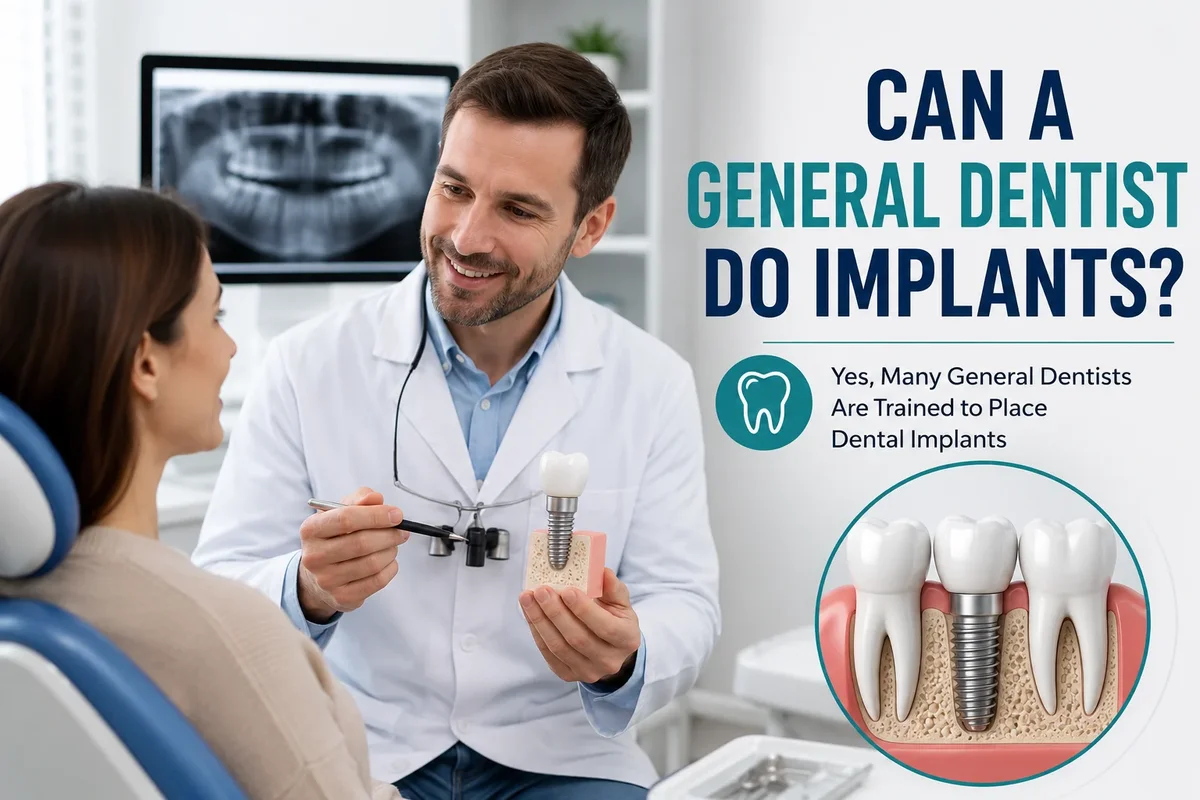
Final Verdict: Can a General Dentist Do Implants and Should You Choose One?
After exploring training requirements, implant procedures, success rates, patient selection criteria, and long-term outcomes, we arrive at the most important conclusion of this guide: can a general dentist do implants? The short answer is yes, many general dentists can successfully perform dental implant treatment. However, the complete answer requires a deeper understanding of what truly determines implant success.
Patients often begin their research with the question can a general dentist do implants because they want reassurance that they are choosing the right provider. While professional titles can provide some insight, the reality is that modern implant dentistry is heavily influenced by education, experience, technology, treatment planning, and clinical judgment. A dentist who has invested significant time and effort into implant training may be fully capable of delivering excellent outcomes in many implant cases.
The Most Important Takeaway
The biggest misconception surrounding can a general dentist do implants is the belief that the answer depends entirely on whether a provider is a specialist or a general dentist. In reality, the quality of treatment is often determined by factors such as:
- Implant-specific education
- Hands-on clinical training
- Years of experience
- Use of advanced technology
- Commitment to continuing education
- Ability to select appropriate cases
- Long-term maintenance protocols
These elements frequently have a greater impact on treatment outcomes than the professional title alone.
Why Patients Should Focus on Qualifications
Instead of simply asking can a general dentist do implants, patients should ask whether their dentist possesses the qualifications needed for their specific case.
Important questions include:
- How many implants have you placed?
- What implant training have you completed?
- Do you use CBCT imaging?
- What is your implant success rate?
- Can I review previous implant cases?
- Will you personally complete all treatment phases?
These questions provide far more useful information than titles alone.
Situations Where General Dentists Often Excel
Many implant-trained dentists successfully manage routine and moderately complex implant cases every day.
Examples include:
- Single missing teeth
- Multiple missing teeth
- Implant-supported bridges
- Implant-retained dentures
- Front tooth implants
- Posterior tooth replacements
In these situations, the answer to can a general dentist do implants is often a confident yes, especially when the patient has healthy gums, adequate bone support, and favorable anatomy.
Because many general dentists also provide restorative and cosmetic treatment, they may offer a particularly comprehensive approach to implant care.
When Specialist Collaboration May Be Beneficial
Although many dentists provide outstanding implant treatment, some cases involve challenges that require specialist support.
Examples include:
- Extensive bone loss
- Complex grafting procedures
- Advanced periodontal disease
- Full-mouth reconstruction
- Sinus augmentation surgery
- Complicated medical conditions
When such circumstances arise, referral should not be viewed negatively. In fact, a dentist who recognizes the need for specialist involvement demonstrates sound clinical judgment and a strong commitment to patient safety.
This reinforces the idea that the question can a general dentist do implants should always be evaluated on a case-by-case basis.
Good Dentists Know Their Limits
One characteristic shared by highly qualified implant providers is the ability to recognize when a case falls outside their comfort zone.
Ethical dentists prioritize:
- Patient safety
- Predictable outcomes
- Long-term success
- Appropriate referrals
- Evidence-based treatment
This willingness to collaborate with specialists when necessary is often a sign of professionalism rather than a limitation.
Technology Has Changed Implant Dentistry
Modern advancements have significantly expanded the types of implant procedures that trained dentists can safely perform.
Technology commonly used in implant treatment includes:
- CBCT 3D imaging
- Computer-guided surgery
- Digital treatment planning
- Intraoral scanning
- CAD/CAM restorations
- Digital smile design
These innovations allow dentists to evaluate anatomy with remarkable precision and improve treatment predictability.
As technology continues to advance, the answer to can a general dentist do implants becomes increasingly positive for many implant cases.
Long-Term Value of Dental Implants
Patients considering implants should remember that treatment decisions extend far beyond the surgical procedure itself. Dental implants provide benefits that may last for decades.
Long-term advantages include:
- Preservation of jawbone structure
- Improved chewing efficiency
- Natural appearance
- Enhanced confidence
- Protection of neighboring teeth
- Improved speech
- Greater quality of life
Because implants offer these significant benefits, choosing a qualified provider is essential.
Think Long-Term, Not Short-Term
When evaluating treatment options, patients sometimes focus heavily on immediate costs. However, implant dentistry should be viewed as a long-term investment.
A well-placed implant can potentially remain functional for 20 years or more, making quality and expertise more important than simply choosing the least expensive option.
Whether asking can a general dentist do implants or comparing providers, patients should prioritize qualifications and treatment quality above short-term savings.
How to Make the Best Decision
If you are considering implant treatment, the following steps can help you choose the right provider:
- Schedule a comprehensive consultation.
- Ask detailed questions about implant training.
- Review previous treatment cases.
- Discuss technology used in planning and surgery.
- Evaluate communication and transparency.
- Understand all treatment options.
- Request a personalized treatment plan.
Following these steps can provide confidence and clarity before proceeding with treatment.
Final Conclusion
So, can a general dentist do implants? In many situations, absolutely yes. Modern implant-trained general dentists successfully place and restore dental implants every day, often achieving outstanding long-term outcomes. The key factors are education, experience, technology, case selection, and commitment to patient care.
Rather than focusing exclusively on professional titles, patients should evaluate the qualifications and expertise of the individual provider. A highly trained general dentist may be an excellent choice for implant treatment, particularly for straightforward and moderately complex cases. At the same time, specialist collaboration remains valuable for more advanced situations.
Ultimately, the answer to can a general dentist do implants is not simply yes or no. It depends on the dentist’s training, the patient’s needs, and the complexity of the case. When these factors align appropriately, a general dentist can provide safe, predictable, and highly successful implant treatment that restores oral health, function, confidence, and quality of life for many years to come. 🦷✨
Disclosure: this page may contain affiliate links. We may earn a commission if you use them, at no extra cost to you.