
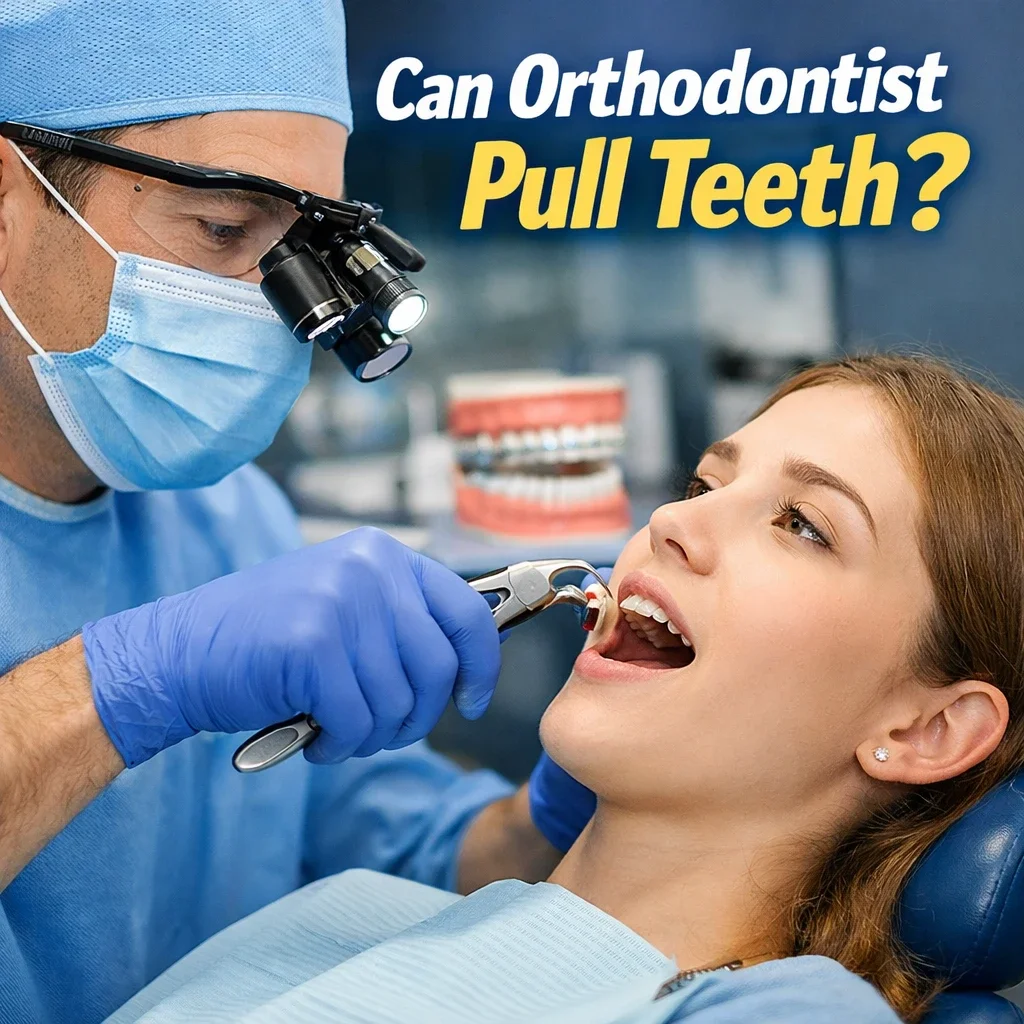
One of the most common and sometimes surprising questions patients ask before starting braces or clear aligner treatment is: can orthodontist pull teeth? This concern is completely natural. Tooth extraction sounds intimidating, and many people associate it with pain or permanent changes to their smile. However, in modern orthodontics, tooth removal is a carefully evaluated clinical decision made only when it truly benefits the patient’s oral health and long-term results.
To fully understand whether can orthodontist pull teeth is the right question to ask, it’s important to first understand the role of an orthodontist. Orthodontists are dental specialists who focus on correcting misaligned teeth, bite problems, jaw discrepancies, and spacing issues. Their primary goal is not simply to straighten teeth but to create a balanced bite, a healthy jaw structure, and a stable smile that lasts for decades 😊.
So, can orthodontist pull teeth as part of treatment? In many countries, the answer is yes—orthodontists are trained and legally permitted to extract certain teeth, especially when those extractions are straightforward and directly related to orthodontic planning. However, this decision is never automatic. Before determining that can orthodontist pull teeth applies to your situation, a detailed assessment is always performed.
This assessment typically includes digital X-rays, 3D scans, photographs, bite analysis, and facial profile evaluation. The orthodontist examines tooth crowding, jaw size, bite alignment, and facial aesthetics. If the teeth are severely crowded or protruding, removing one or more teeth may create the necessary space to move the remaining teeth into ideal positions. In these cases, the question can orthodontist pull teeth becomes a matter of achieving the best functional and cosmetic outcome rather than simply removing teeth.
It is important to emphasize that not every orthodontic patient needs extractions. Advances in orthodontic technology, such as self-ligating braces, clear aligners, and arch-expansion techniques, have significantly reduced the need for tooth removal. Still, there are situations where no alternative can safely or effectively provide enough space. In those scenarios, can orthodontist pull teeth is not only possible but sometimes the most responsible choice.
Another key factor is patient safety. When orthodontists decide that can orthodontist pull teeth applies, they usually select teeth that are least critical to function and aesthetics. Commonly removed teeth include premolars, as they are located between the front and back teeth and can create space without significantly affecting appearance. Wisdom teeth may also be extracted, although these are often handled by oral surgeons depending on complexity.
Patients often worry about pain or recovery. While it’s understandable to feel anxious, modern dental anesthesia and minimally invasive techniques make extractions far more comfortable than most people expect 😌. If can orthodontist pull teeth is part of your treatment plan, the procedure is usually quick, controlled, and followed by clear aftercare instructions to promote fast healing.
Another common misconception is that extractions will negatively change facial appearance. In reality, when done correctly, removing teeth can actually improve facial balance by reducing lip protrusion or excessive dental flaring. This is one reason why orthodontists carefully study facial structure before deciding whether can orthodontist pull teeth is appropriate. The goal is harmony, not collapse or flattening of the face.
From a long-term perspective, orthodontic treatment with properly planned extractions can lead to more stable results. Teeth that are forced into limited space without enough room may relapse after treatment. By addressing spacing issues correctly, can orthodontist pull teeth becomes part of a strategy to ensure that teeth remain aligned for years to come.
Ultimately, the question can orthodontist pull teeth should not be viewed with fear, but with understanding. Tooth extraction in orthodontics is not about removing teeth unnecessarily—it is about creating the healthiest, most functional, and most aesthetically pleasing outcome possible. A trusted orthodontist will always explain the reasons, benefits, and alternatives clearly, ensuring you feel informed and confident every step of the way 🦷✨.
Can Orthodontist Pull Teeth During Orthodontic Treatment?
When patients begin braces or clear aligner therapy, one of the most frequent questions is whether can orthodontist pull teeth during active orthodontic treatment. This concern often arises after hearing stories from friends or seeing treatment plans online. The reality is that orthodontic treatment is highly individualized, and tooth extraction is never a routine or careless decision.
To determine if can orthodontist pull teeth applies during treatment, orthodontists evaluate multiple clinical factors, including tooth crowding, jaw size, bite relationship, facial balance, and long-term stability. In some cases, extractions are planned before braces begin. In other cases, teeth may be removed after treatment has already started, once tooth movement reveals space limitations that could not be safely corrected otherwise.
Clinical Situations Where Can Orthodontist Pull Teeth
There are several well-established scenarios where can orthodontist pull teeth becomes a necessary part of orthodontic care. One of the most common reasons is severe crowding. If the jaw does not have enough space to accommodate all teeth, attempting to align them without removing any teeth may lead to gum damage, bone loss, or unstable results.
Another situation involves excessive protrusion of the front teeth. In these cases, can orthodontist pull teeth allows the orthodontist to move the teeth backward into a more balanced and functional position. This can significantly improve lip posture, facial profile, and bite efficiency 😊.
Asymmetrical bites are another factor. When the upper and lower jaws do not align properly, selective extractions can help correct midline discrepancies. Here again, can orthodontist pull teeth is part of a precise plan designed to improve harmony rather than simply remove teeth.
Legal and Professional Scope: Can Orthodontist Pull Teeth Safely?
A common misunderstanding is whether orthodontists are legally allowed to perform extractions. In many regions, orthodontists receive extensive training in tooth removal as part of their specialization. This means can orthodontist pull teeth is not only possible but also regulated and safe when performed within their professional scope.
However, complex extractions—such as impacted wisdom teeth or teeth with unusual root anatomy—are often referred to an oral surgeon. This referral does not mean the orthodontist lacks skill; it simply reflects a collaborative approach to patient safety. Even in these cases, the orthodontist remains responsible for deciding whether can orthodontist pull teeth is required as part of the overall treatment plan.
Coordination With Other Dental Specialists
Orthodontic care is rarely isolated. General dentists, periodontists, and oral surgeons often work together. If can orthodontist pull teeth is recommended, your orthodontist will coordinate timing so that tooth movement begins only after proper healing. This teamwork minimizes complications and ensures optimal outcomes.
Authoritative organizations like the American Dental Association emphasize interdisciplinary cooperation to ensure patient safety and ethical treatment planning. This reinforces that decisions around whether can orthodontist pull teeth are based on science, not convenience.
Patient Comfort and Treatment Timing
Many patients worry about discomfort if can orthodontist pull teeth during treatment. Fortunately, modern anesthesia techniques make extractions far more comfortable than expected. Mild soreness afterward is normal, but it typically resolves within a few days with proper care 😌.
Timing is also critical. Orthodontists carefully schedule extractions so they align with tooth movement stages. Removing teeth too early or too late can affect efficiency. This precise planning is another reason why can orthodontist pull teeth should only be decided by a qualified orthodontic specialist.
Long-Term Impact on Results
From a long-term perspective, choosing whether can orthodontist pull teeth during treatment directly impacts stability. Teeth that are aligned without adequate space are more likely to relapse. Properly planned extractions can reduce treatment time and improve long-term retention outcomes.
Ultimately, the question can orthodontist pull teeth during orthodontic treatment should be viewed as part of a comprehensive health decision. When recommended responsibly, extractions support healthier gums, improved bite function, and a more confident smile that lasts for years 🦷✨.
Why Can Orthodontist Pull Teeth Before Braces?
Many patients are surprised when their orthodontist discusses tooth extraction even before braces or aligners are placed. This often leads to the important question: can orthodontist pull teeth before orthodontic treatment begins, and why would that be necessary? The answer lies in proper planning, long-term stability, and achieving the healthiest possible outcome for both function and appearance.
Before any brackets or aligners are used, orthodontists perform a comprehensive diagnostic process. This includes X-rays, digital scans, bite analysis, and facial evaluation. Based on these findings, they determine whether enough space exists to align the teeth safely. If space is limited, can orthodontist pull teeth before braces becomes a proactive step rather than a reactive one.
Creating Space for Proper Alignment
The most common reason can orthodontist pull teeth before braces is severe crowding. When teeth overlap significantly, forcing them into alignment without creating space can damage tooth roots, gums, and surrounding bone. In such cases, removing specific teeth allows the remaining teeth to move freely into ideal positions.
Premolars are often selected because their removal provides space without compromising chewing efficiency or smile aesthetics. When orthodontists evaluate whether can orthodontist pull teeth applies, they carefully choose teeth that offer the greatest orthodontic benefit with the least functional impact.
Improving Facial Balance and Profile
Another important reason can orthodontist pull teeth before braces is facial harmony. In patients with protruding teeth or lips, aligning the teeth without extractions may worsen the facial profile. Strategic tooth removal allows teeth to be repositioned backward, resulting in a more balanced and natural facial appearance 😊.
Orthodontists do not look only at teeth; they evaluate how teeth support lips, cheeks, and jaw alignment. If can orthodontist pull teeth helps prevent excessive protrusion or strain around the mouth, it is often recommended early to guide proper movement from the start.
Preventing Unstable Results
Stability is a major concern in orthodontics. Teeth that are straightened without adequate space are more likely to shift back after treatment. One of the strongest reasons can orthodontist pull teeth before braces is to reduce relapse risk. Proper spacing allows teeth to settle into stable bone positions, making long-term retention easier and more predictable.
By planning extractions early, orthodontists can shorten overall treatment time and reduce the need for aggressive tooth movement later. This strategic approach reinforces why can orthodontist pull teeth before braces is often the most responsible option.
Reducing Treatment Complications
When extractions are delayed or avoided despite clear need, complications may arise. Teeth may flare outward, gums may recede, or roots may shorten due to excessive pressure. Deciding that can orthodontist pull teeth before braces helps prevent these issues by allowing controlled, gentle movement from day one.
Additionally, early extractions can simplify treatment mechanics. Brackets and wires work more efficiently when space is already available, reducing discomfort and unnecessary adjustments for the patient 😌.
Patient Age and Growth Considerations
Age also plays a role in determining whether can orthodontist pull teeth before braces. In adolescents, growth patterns are still developing, which may influence extraction timing. In adults, jaw growth is complete, making space management even more critical. In both cases, orthodontists tailor extraction decisions to the patient’s biological stage and treatment goals.
Ultimately, understanding why can orthodontist pull teeth before braces helps patients feel more confident and informed. Tooth removal is not about taking shortcuts—it is about creating the safest, most effective path to a healthy bite and a confident smile 🦷✨.
Which Teeth Can Orthodontist Pull Teeth Safely?
When patients hear that tooth extraction may be part of their treatment plan, a very natural follow-up question arises: if can orthodontist pull teeth, which teeth are actually removed, and how is that decision made safely? This is an important topic because not all teeth serve the same role in function, aesthetics, or orthodontic mechanics. Modern orthodontics follows strict clinical principles to ensure that any extraction supports long-term oral health rather than harming it.
Understanding which teeth may be removed helps patients feel more confident and informed. If can orthodontist pull teeth safely, it is always done with a clear purpose: to create space, improve bite alignment, and protect the health of surrounding teeth and bone.
Premolars: The Most Commonly Extracted Teeth
The teeth most frequently removed when can orthodontist pull teeth is part of a treatment plan are premolars. These teeth are located between the canine (eye tooth) and molar teeth. Premolars are often chosen because they provide significant space while maintaining proper chewing function and smile aesthetics.
From an orthodontic perspective, premolars sit in an ideal position to allow front teeth to move backward or crowded teeth to align properly. When orthodontists evaluate whether can orthodontist pull teeth applies, premolars often offer the best balance between space creation and functional preservation 😊.
Importantly, removing premolars does not usually affect speech or chewing ability. The remaining teeth adapt well, and the bite is carefully adjusted throughout treatment to maintain full function.
Wisdom Teeth and Orthodontic Treatment
Another category patients ask about is wisdom teeth. Many people wonder if can orthodontist pull teeth includes removing wisdom teeth as part of braces or aligner treatment. While wisdom teeth are not always directly involved in orthodontic alignment, they may be removed if they cause crowding, impaction, or hygiene challenges.
In some cases, wisdom teeth are extracted before or after orthodontic treatment to reduce future complications. However, complex wisdom tooth extractions are often referred to an oral surgeon. Even then, the orthodontist remains responsible for determining whether can orthodontist pull teeth fits into the overall treatment strategy.
Impacted or Problematic Teeth
Teeth that are impacted, severely damaged, or structurally compromised may also be candidates for removal. If a tooth cannot be aligned properly due to its position or condition, orthodontists may determine that can orthodontist pull teeth is the safest option to protect surrounding teeth and bone.
For example, a tooth with a very short root, severe decay, or previous trauma may not tolerate orthodontic forces well. Removing such a tooth can actually improve the success and safety of treatment.
Teeth Rarely Removed in Orthodontics
Patients are often relieved to learn that front teeth and molars are rarely removed unless absolutely necessary. These teeth play a major role in aesthetics and chewing efficiency. When evaluating whether can orthodontist pull teeth, orthodontists work hard to preserve these teeth whenever possible.
Advances in orthodontic technology, such as arch expansion, distalization, and clear aligner systems, have further reduced the need to remove prominent teeth. Still, in very specific cases, extraction may be unavoidable to prevent long-term damage or instability.
How Orthodontists Decide Which Teeth to Remove
The decision-making process behind whether can orthodontist pull teeth is highly individualized. Orthodontists analyze jaw size, tooth size, bite relationship, facial profile, and gum health. No two treatment plans are exactly the same.
Digital simulations are often used to predict outcomes with and without extractions. This allows orthodontists to choose the safest teeth to remove, ensuring the final result is both functional and aesthetically pleasing 😌.
Ultimately, when asking which teeth can orthodontist pull teeth safely, the answer depends on science, experience, and careful planning. Tooth extraction in orthodontics is not about removing teeth randomly—it is about making precise, informed decisions that support a healthy bite, stable alignment, and a confident smile for years to come 🦷✨.
Is It Normal That Can Orthodontist Pull Teeth for Crowding?
Dental crowding is one of the most common reasons people seek orthodontic treatment, and it often leads patients to ask: is it normal that can orthodontist pull teeth for crowding? The short answer is yes—under certain conditions, it is both normal and clinically appropriate. However, this decision is never made lightly and always follows a detailed diagnostic process designed to protect long-term oral health.
Crowding occurs when the jaw does not have enough space to accommodate all teeth in proper alignment. Teeth may overlap, rotate, or erupt in abnormal positions. When evaluating severe crowding, orthodontists must decide whether space can be created through non-extraction methods or whether can orthodontist pull teeth becomes the safest and most effective option.
Understanding the Severity of Crowding
Not all crowding is the same. Mild crowding can often be treated with expansion, tooth reshaping, or aligners. Moderate to severe crowding, however, may leave no biological room for safe alignment. In these cases, forcing teeth into place without removing any can cause gum recession, bone loss, or root resorption.
This is where the question can orthodontist pull teeth becomes highly relevant. If the total tooth size exceeds the available jaw space, extraction is sometimes the only way to align teeth without damaging surrounding structures 😊.
Why Crowding Makes Extractions Necessary
When crowding is ignored or treated without enough space, teeth may be pushed outward beyond the bone. This can weaken gum support and increase the risk of periodontal disease. Orthodontists therefore evaluate whether can orthodontist pull teeth is needed to keep teeth within healthy bone boundaries.
By removing select teeth—most often premolars—orthodontists can create controlled space. This allows the remaining teeth to move into proper alignment while maintaining healthy gums and stable bone support.
Facial and Bite Considerations
Another reason crowding may justify extraction is facial balance. In crowded mouths, teeth often flare outward, affecting lip posture and facial harmony. Deciding that can orthodontist pull teeth can help retract teeth into a more natural position, improving both appearance and bite function.
Bite alignment is equally important. Crowding can disrupt how upper and lower teeth meet, leading to uneven wear, jaw discomfort, or chewing difficulties. Strategic extractions help orthodontists correct these issues more predictably 😌.
Is Extraction Always the First Choice?
It’s important to clarify that orthodontists do not automatically extract teeth for crowding. Modern orthodontics prioritizes conservative solutions whenever possible. Techniques such as arch expansion, interproximal reduction (minor enamel reshaping), and advanced aligner systems are often explored first.
Only when these methods cannot provide enough space safely does can orthodontist pull teeth become the recommended approach. This ensures treatment remains ethical, patient-centered, and evidence-based.
Long-Term Stability and Relapse Prevention
One of the strongest reasons it is normal that can orthodontist pull teeth for crowding is long-term stability. Teeth that are aligned without sufficient space are more likely to shift back after braces are removed. Properly planned extractions significantly reduce the risk of relapse.
By addressing crowding at its root cause—lack of space—orthodontists create conditions for teeth to remain straight with minimal retention issues. This leads to more predictable and lasting results 🦷✨.
Patient Education and Informed Consent
When crowding leads to a recommendation that can orthodontist pull teeth, a responsible orthodontist will always explain the reasoning, benefits, and alternatives in detail. Patients are shown diagnostic images and treatment simulations to help them understand why extraction may be necessary.
Ultimately, it is completely normal that can orthodontist pull teeth for crowding when it protects gum health, improves bite function, enhances facial balance, and ensures long-term stability. Rather than being a negative step, extraction in these cases is often the key to achieving a healthy, confident, and sustainable smile.
Can Orthodontist Pull Teeth Instead of Oral Surgeon?
Many patients feel confused when they hear that a tooth may need to be removed as part of orthodontic treatment. This often leads to an important and practical question: can orthodontist pull teeth instead of referring the patient to an oral surgeon? The answer is not simply yes or no—it depends on the type of tooth, the complexity of the extraction, the patient’s medical condition, and legal regulations in the country where treatment is provided.
Understanding when can orthodontist pull teeth without involving an oral surgeon helps patients feel more confident and prepared for their treatment journey. In many cases, orthodontists are fully qualified to perform certain extractions safely and efficiently as part of a comprehensive orthodontic plan.
Training and Scope of Orthodontists
Orthodontists are dentists who complete additional years of specialized training focused on tooth movement, bite correction, and jaw alignment. During this advanced education, they also receive training in basic oral surgical procedures, including simple tooth extractions. Because of this background, can orthodontist pull teeth when the extraction is straightforward and directly related to orthodontic care.
Simple extractions typically involve teeth that are fully erupted, have normal root anatomy, and are not impacted in the jawbone. Premolars removed for space creation are a common example. In these situations, can orthodontist pull teeth safely without compromising patient comfort or outcomes 😊.
Legal and Regional Differences
Whether can orthodontist pull teeth instead of an oral surgeon also depends on local regulations. In many countries, orthodontists are legally permitted to extract teeth within their scope of practice. In others, laws may require that extractions be performed by a general dentist or oral surgeon.
Regardless of regulations, ethical orthodontists always act in the patient’s best interest. If an extraction falls outside their comfort level or legal scope, they will refer the patient appropriately rather than taking unnecessary risks.
When an Oral Surgeon Is the Better Choice
Although can orthodontist pull teeth in many situations, there are clear cases where an oral surgeon is the preferred professional. Impacted wisdom teeth, teeth close to nerves or sinuses, severely curved roots, or teeth requiring surgical exposure are best handled by oral surgeons.
Medical considerations also matter. Patients with bleeding disorders, complex medical histories, or severe dental anxiety may benefit from sedation or surgical facilities that oral surgeons provide. In these scenarios, even though can orthodontist pull teeth may be technically possible, referral ensures maximum safety 😌.
Collaboration Between Specialists
Orthodontic treatment often involves teamwork. When orthodontists determine that can orthodontist pull teeth is necessary but surgical complexity is high, they coordinate closely with oral surgeons. Timing is carefully planned so orthodontic forces are applied only after proper healing.
This collaboration ensures that extractions support orthodontic goals without delaying treatment or increasing complication risks. Patients benefit from specialized care at each stage rather than a one-size-fits-all approach.
Patient Comfort and Convenience
From a patient perspective, having extractions done by the orthodontist can be more convenient. Fewer appointments, familiar surroundings, and continuity of care all contribute to a smoother experience. When can orthodontist pull teeth safely in-office, many patients appreciate avoiding additional referrals.
Modern anesthesia techniques and gentle extraction methods mean discomfort is usually minimal. Most patients report mild soreness rather than significant pain, especially when extractions are simple and well-planned 🦷.
Impact on Orthodontic Results
Whether the extraction is performed by an orthodontist or oral surgeon, the most important factor is planning. Orthodontists decide if can orthodontist pull teeth aligns with the treatment strategy and long-term goals. The actual removal is only one step in a much larger process.
Ultimately, it is entirely normal—and often appropriate—that can orthodontist pull teeth instead of an oral surgeon for simple, orthodontically driven extractions. When complexity increases, referral is a sign of professionalism, not limitation. What matters most is that every decision supports patient safety, comfort, and a stable, healthy smile that lasts for years ✨.
Does It Hurt When Can Orthodontist Pull Teeth?
One of the biggest fears patients have when they hear about tooth extraction is pain. This fear often leads to the question: does it hurt when can orthodontist pull teeth? The concern is completely understandable, but modern orthodontic and dental techniques have made extractions far more comfortable and manageable than many people expect.
To fully understand discomfort levels, it’s important to look at how extractions are performed today, what patients feel during and after the procedure, and how orthodontists manage pain when can orthodontist pull teeth as part of treatment.
Pain Control During Tooth Extraction
When can orthodontist pull teeth, the procedure is always performed under local anesthesia. This means the area around the tooth is completely numbed before any work begins. Patients typically feel pressure or movement, but not sharp pain. Advances in anesthetic agents ensure fast onset and effective numbness, reducing anxiety and discomfort significantly 😊.
Orthodontists are trained to administer anesthesia carefully and to test numbness thoroughly before proceeding. If a patient feels anything more than pressure, additional anesthesia is given. This ensures that when can orthodontist pull teeth, the experience remains as comfortable as possible.
What Patients Actually Feel
During extraction, most patients describe the sensation as pushing or pulling rather than pain. The tooth is gently loosened and removed using controlled movements. Because the nerves are numbed, pain signals are blocked, making the procedure much easier than anticipated.
Understanding this helps reduce fear. Knowing that can orthodontist pull teeth does not automatically mean pain allows patients to approach treatment with more confidence 😌.
Post-Extraction Discomfort: What Is Normal?
After the anesthesia wears off, mild soreness or tenderness is normal. This is not sharp pain but rather a dull ache similar to muscle soreness. When can orthodontist pull teeth, they provide detailed aftercare instructions to manage this discomfort effectively.
Common recommendations include over-the-counter pain relievers, cold compresses, soft foods, and avoiding strenuous activity for a short period. Most patients find that discomfort peaks within the first 24 hours and improves quickly afterward.
Healing Timeline and Expectations
The healing process after an extraction is usually straightforward. Initial gum healing occurs within a few days, while deeper tissue healing continues over a couple of weeks. Orthodontists carefully plan treatment timing so braces or aligners apply force only after sufficient healing.
This structured approach ensures that when can orthodontist pull teeth, it does not slow down orthodontic progress or cause unnecessary discomfort.
Factors That Influence Pain Levels
Not all extractions feel the same. Several factors influence how much discomfort a patient may experience when can orthodontist pull teeth. These include the type of tooth removed, root shape, patient pain tolerance, and adherence to aftercare instructions.
Simple extractions of fully erupted premolars usually involve minimal discomfort. More complex cases may involve slightly longer recovery, but even then, pain is typically well-controlled with standard care.
Emotional Factors and Anxiety
Anxiety can amplify the perception of pain. Patients who are nervous may feel more discomfort even when the procedure is technically painless. Orthodontists understand this and take time to explain each step, helping patients relax.
When patients trust their provider and understand why can orthodontist pull teeth is recommended, anxiety levels drop, and the experience becomes much smoother 🦷.
Long-Term Perspective: Short-Term Discomfort vs. Long-Term Benefits
It’s important to weigh short-term discomfort against long-term benefits. The mild soreness experienced when can orthodontist pull teeth is temporary, while the benefits—proper alignment, healthy gums, improved bite, and stable results—last for years.
Many patients later report that the extraction was far easier than expected and that they would make the same decision again knowing the outcome.
In summary, while it’s natural to worry, the reality is that it usually does not hurt when can orthodontist pull teeth under proper care. Modern anesthesia, gentle techniques, and thoughtful planning make extractions a manageable part of orthodontic treatment, paving the way for a healthier, more confident smile ✨.
Risks and Side Effects When Can Orthodontist Pull Teeth
Whenever tooth extraction is discussed as part of orthodontic treatment, patients naturally want to understand the possible downsides. This leads to an important and responsible question: what are the risks and side effects when can orthodontist pull teeth? While orthodontic extractions are generally safe and well-planned, no medical procedure is completely free of risk. Understanding these risks helps patients make informed decisions and feel more confident about their treatment plan.
It is crucial to emphasize that when can orthodontist pull teeth is recommended, the benefits are carefully weighed against potential side effects. Orthodontists follow evidence-based protocols to minimize complications and protect long-term oral health.
Short-Term Risks After Tooth Extraction
The most common risks when can orthodontist pull teeth are short-term and temporary. These include mild pain, swelling, and tenderness at the extraction site. Such symptoms are a normal part of the body’s healing response and usually resolve within a few days.
Minor bleeding can also occur immediately after extraction. Orthodontists provide clear instructions—such as biting on gauze and avoiding vigorous rinsing—to control bleeding effectively. Following these instructions significantly reduces complications 😊.
Risk of Infection
Infection is a rare but possible side effect when can orthodontist pull teeth. It may occur if bacteria enter the extraction site during healing. Signs include persistent pain, swelling, or unusual discharge. Fortunately, proper oral hygiene and adherence to aftercare instructions make infections uncommon.
Orthodontists may prescribe preventive measures or recommend saltwater rinses to support healing. Prompt follow-up ensures that any early signs of infection are addressed quickly.
Effects on Bite and Tooth Movement
Another concern patients have is whether extraction will negatively affect their bite. When can orthodontist pull teeth without proper planning, there is a theoretical risk of unwanted tooth movement or bite imbalance. However, modern orthodontics relies on precise biomechanics and digital planning to prevent this.
Orthodontists design treatment so that space created by extraction is used intentionally. This controlled movement ensures that teeth settle into healthy, functional positions rather than shifting unpredictably.
Root Resorption and Bone Changes
Root resorption—shortening of tooth roots—is a known risk in orthodontics, whether or not extractions are involved. When can orthodontist pull teeth, excessive force is avoided to reduce this risk. Regular monitoring through X-rays helps detect any changes early.
Bone remodeling naturally occurs as teeth move. In properly planned cases, this process is healthy and supports stable alignment rather than weakening the jaw structure.
Facial Aesthetic Concerns
Some patients worry that extractions may negatively change facial appearance. If can orthodontist pull teeth is done without considering facial balance, issues such as flattened lips or an aged appearance could theoretically occur.
This is why orthodontists carefully evaluate facial profile, lip support, and smile aesthetics before recommending extraction. When planned correctly, extractions often improve facial harmony rather than detract from it 😌.
Psychological and Emotional Factors
Fear and anxiety themselves can be considered side effects. The idea that can orthodontist pull teeth may trigger stress or hesitation. Open communication plays a major role in reducing emotional discomfort.
Orthodontists who explain the reasoning, risks, and benefits clearly help patients feel empowered rather than fearful. Informed patients are more likely to experience smoother recoveries and higher satisfaction.
Long-Term Risks and How They Are Prevented
Long-term risks associated with orthodontic extractions are uncommon when treatment is properly planned. Issues such as relapse, bite instability, or excessive spacing usually stem from inadequate planning or poor retention—not from the extraction itself.
When can orthodontist pull teeth as part of a comprehensive plan, long-term stability often improves rather than worsens. Retainers, follow-up visits, and careful monitoring ensure that results remain consistent over time.
Why the Benefits Usually Outweigh the Risks
In cases of severe crowding, protrusion, or bite imbalance, avoiding extraction can actually increase risk. Teeth forced into limited space may damage gums or bone. In these situations, choosing that can orthodontist pull teeth becomes the safer option.
Ultimately, understanding the risks and side effects when can orthodontist pull teeth allows patients to approach treatment with realistic expectations. While minor risks exist, they are well-managed through modern techniques, professional expertise, and patient cooperation. The result is often a healthier bite, improved aesthetics, and a confident smile that lasts for years 🦷✨.
Alternatives If Can Orthodontist Pull Teeth Is Not Recommended
Not every orthodontic case requires tooth extraction, and many patients are relieved to learn that there are effective alternatives when can orthodontist pull teeth is not recommended. Modern orthodontics offers a wide range of techniques designed to create space, improve alignment, and correct bite problems without removing teeth. Understanding these alternatives helps patients feel empowered and confident about their treatment options.
Orthodontists always aim to preserve natural teeth whenever possible. Before deciding that can orthodontist pull teeth is necessary, they carefully evaluate non-extraction solutions based on jaw structure, tooth size, facial balance, and long-term stability.
Orthodontic Expansion Techniques
One of the most common alternatives when can orthodontist pull teeth is avoided is dental or skeletal expansion. Expansion techniques widen the dental arch to create additional space for crowded teeth. This approach is especially effective in younger patients whose jawbones are still developing.
Palatal expanders or advanced aligner systems can gradually increase arch width, allowing teeth to align without extractions. Even in adults, controlled expansion may be possible depending on bone density and anatomy 😊.
Who Benefits Most From Expansion?
Patients with narrow arches, mild to moderate crowding, or crossbites often benefit from expansion. Orthodontists assess whether expansion will remain stable long-term before choosing it over extraction. If stability cannot be guaranteed, can orthodontist pull teeth may still be considered the safer option.
Interproximal Reduction (IPR)
Another alternative when can orthodontist pull teeth is not ideal is interproximal reduction, often called IPR or enamel reshaping. This technique involves removing very small amounts of enamel between teeth to create space—typically fractions of a millimeter.
IPR is commonly used with clear aligner treatments and can be effective for mild crowding. Because enamel removal is minimal and controlled, tooth strength is preserved while alignment improves 😌.
Limitations of IPR
While IPR is useful, it has limits. Excessive enamel removal can increase sensitivity or compromise tooth structure. For this reason, orthodontists carefully calculate how much space can be gained safely. If IPR cannot provide enough room, the question can orthodontist pull teeth may resurface as part of the discussion.
Tooth Distalization and Movement Strategies
Distalization refers to moving teeth backward within the jaw to create space at the front. Advanced braces systems, temporary anchorage devices (TADs), and aligners can help shift molars posteriorly without extractions.
This approach is particularly helpful in patients with Class II bite relationships. When successful, distalization can eliminate the need for extraction, meaning can orthodontist pull teeth is no longer necessary.
Technology-Driven Planning
Digital treatment planning plays a crucial role in deciding between distalization and extraction. Orthodontists use 3D simulations to predict tooth movement and assess whether non-extraction methods will achieve stable results.
If simulations show excessive strain or instability, orthodontists may conclude that can orthodontist pull teeth remains the better long-term solution.
Clear Aligners and Modern Braces Systems
Innovations in orthodontic appliances have expanded non-extraction possibilities. Clear aligners, self-ligating braces, and low-friction systems allow for more efficient tooth movement and space utilization.
These systems can sometimes resolve crowding that previously required extraction. As a result, many patients today avoid extractions even in moderate cases where can orthodontist pull teeth would have been recommended in the past 🦷.
Patient-Specific Decision Making
No alternative works for every patient. Factors such as gum health, bone thickness, facial aesthetics, and bite forces all influence treatment decisions. Orthodontists carefully balance these variables before deciding whether can orthodontist pull teeth should be avoided or embraced.
Open communication is essential. Patients should feel comfortable discussing preferences, concerns, and expectations so the orthodontist can tailor the plan accordingly.
When Non-Extraction Is Not the Best Choice
While alternatives are valuable, avoiding extraction at all costs is not always beneficial. In cases of severe crowding, protrusion, or compromised gum support, forcing non-extraction treatment may increase risks.
In such scenarios, deciding that can orthodontist pull teeth is appropriate protects oral health and improves long-term stability. The goal is not to avoid extraction, but to choose the healthiest option.
Balancing Aesthetics, Health, and Stability
Ultimately, alternatives to extraction exist to serve the patient—not to replace sound clinical judgment. When non-extraction methods can deliver healthy, stable, and aesthetic results, orthodontists gladly use them.
However, when these methods fall short, understanding why can orthodontist pull teeth becomes necessary helps patients trust the process. The best orthodontic treatment is not defined by avoiding extractions, but by achieving a healthy bite, balanced appearance, and a confident smile that lasts a lifetime ✨.
Frequently Asked Questions About Can Orthodontist Pull Teeth
Patients considering braces or clear aligners often have many detailed questions before committing to treatment. One of the most searched and discussed topics remains can orthodontist pull teeth. Below, we address the most common questions patients ask in consultations, providing clear, evidence-based answers to help you feel informed and confident about your orthodontic journey.
Is It Always Necessary That Can Orthodontist Pull Teeth?
No, it is not always necessary. While can orthodontist pull teeth in some cases, many orthodontic treatments are completed successfully without any extractions. The decision depends on factors such as jaw size, tooth crowding, bite alignment, facial structure, and long-term stability.
Orthodontists always explore non-extraction options first. Only when these options cannot provide safe and stable results does can orthodontist pull teeth become part of the recommended plan 😊.
How Does an Orthodontist Decide If Can Orthodontist Pull Teeth?
The decision that can orthodontist pull teeth is based on a comprehensive diagnostic process. This includes digital X-rays, 3D scans, photographs, bite analysis, and facial profile evaluation.
Orthodontists assess whether teeth can be aligned within healthy bone limits. If alignment without extractions risks gum recession, bone loss, or instability, then deciding that can orthodontist pull teeth is often the safest option.
Is the Decision Reversible?
Once a tooth is removed, it cannot be replaced naturally, which is why orthodontists are extremely cautious. Before confirming that can orthodontist pull teeth, they often show patients simulations of expected outcomes with and without extraction to ensure full understanding.
Does Can Orthodontist Pull Teeth Affect Treatment Duration?
Many patients assume extractions make treatment longer, but this is not always true. In some cases, deciding that can orthodontist pull teeth actually shortens treatment time by allowing teeth to move more efficiently into their correct positions.
Without enough space, orthodontic movement may be slower and more complicated. Properly planned extractions can simplify mechanics and improve overall efficiency 😌.
Will My Smile Look Worse If Can Orthodontist Pull Teeth?
This is a common fear, but when planned correctly, extractions rarely harm appearance. In fact, in cases of protrusion or severe crowding, choosing that can orthodontist pull teeth often improves facial balance and smile harmony.
Orthodontists carefully consider lip support, facial profile, and smile aesthetics. Teeth are never removed without considering how the final result will look and function.
What About Sunken or Aged Appearance?
Concerns about a “sunken face” usually come from poorly planned cases or outdated techniques. Modern orthodontics prioritizes facial aesthetics. When can orthodontist pull teeth is recommended today, it is done with careful attention to maintaining natural fullness and balance.
Is It Safe Long-Term That Can Orthodontist Pull Teeth?
Yes, when clinically justified, it is safe long-term. In fact, avoiding extraction when it is truly needed can increase risks of relapse, gum problems, and bite instability. When can orthodontist pull teeth is part of a well-designed plan, long-term outcomes are often more stable.
Organizations such as the American Dental Association support evidence-based orthodontic planning, including extractions when necessary for health and function.
Who Should I Talk to If I Am Unsure?
If you feel uncertain or want a second opinion about whether can orthodontist pull teeth applies to your case, open communication is essential. A professional orthodontic consultation allows you to ask questions, review diagnostic records, and understand all available options.
If you would like expert guidance or personalized advice, you can reach out directly through the Redent Klinik Contact Page to discuss your concerns with experienced dental professionals 🦷.
Final Takeaway
The question can orthodontist pull teeth does not have a one-size-fits-all answer. It depends on your unique anatomy, orthodontic goals, and long-term oral health needs. When extractions are recommended responsibly, they are not a negative step but a strategic choice aimed at achieving the healthiest, most stable, and most confident smile possible ✨.