
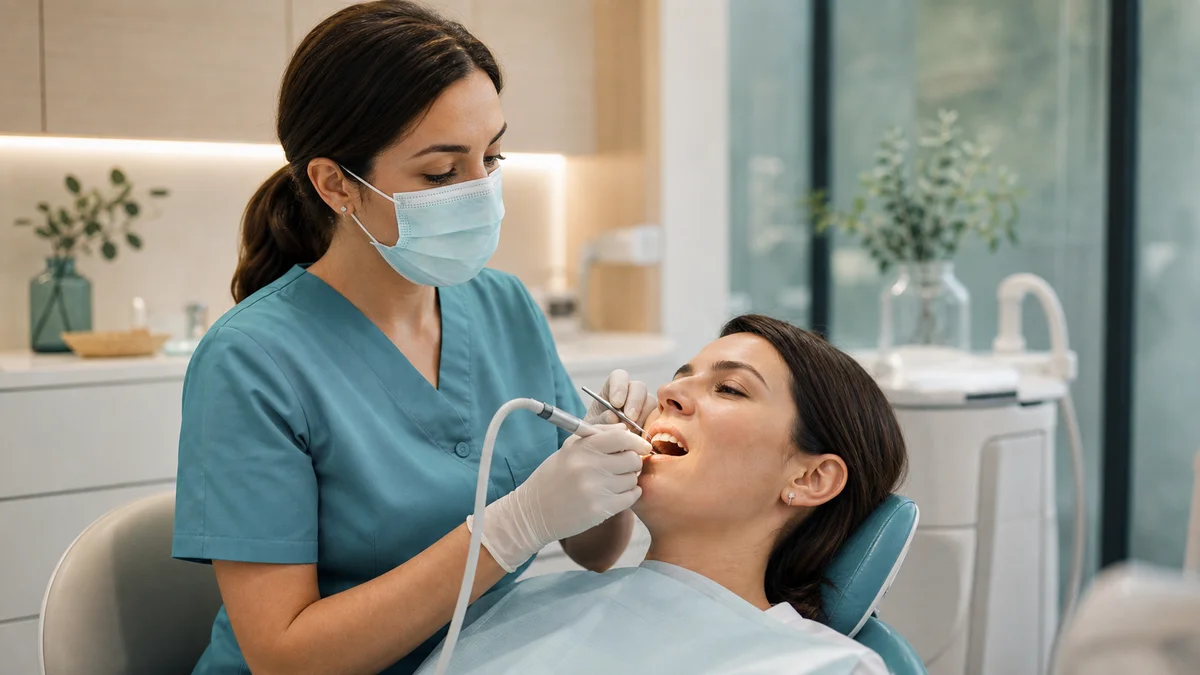
Quick answer: When searching for a cleaning dentist near me, look beyond distance. Choose a clinic that reviews your medical history, examines teeth and gums before cleaning, explains whether routine or periodontal care is appropriate, uses clear infection-control practices, discusses comfort, and gives you a personalised home-care and recall plan.
Typing cleaning dentist near me into a search bar usually means you want a convenient appointment, but convenience is only the first filter. A professional cleaning should be part of preventive dental care, not a one-size-fits-all polishing session. The right visit begins with questions about your health, medicines, symptoms and previous dental care. It then includes an examination that helps the clinician decide what kind of cleaning—if any—is suitable that day.
Some people have plaque and calculus above the gumline and may be suitable for a routine professional cleaning. Others have bleeding gums, deeper periodontal pockets, exposed roots, tooth mobility or medical factors that require a different assessment and plan. A reputable clinic should explain that distinction before treatment. This guide turns the broad search for a cleaning dentist near me into a practical, patient-safe checklist you can use when comparing clinics or preparing for a first appointment.
1. What a Professional Dental Cleaning Can—and Cannot—Do
A professional cleaning removes deposits that daily brushing and interdental cleaning may not fully control, especially hardened calculus. Depending on the clinical findings, the appointment may include plaque and calculus removal, cleaning between teeth, polishing where appropriate, and personalised advice. The examination around the cleaning matters because cavities, gum inflammation, worn restorations, dry mouth and other concerns can change the plan.
Cleaning is not a substitute for treating decay, a cracked tooth, an abscess or advanced periodontal disease. It also does not permanently whiten the natural tooth structure. Polishing may reduce some surface stain, but a noticeably lighter shade is not guaranteed. When you ask a cleaning dentist near me what the appointment includes, listen for a distinction between prevention, stain removal and disease treatment.
A cleaning dentist near me should also explain when cleaning must wait for an urgent examination or another priority treatment.
The US Centers for Disease Control and Prevention describes professional cleanings and dental check-ups as part of preventive care while also emphasising daily brushing and flossing. That balance is important: professional care and home care work together. Neither one replaces the other.
2. Why the Examination Should Come Before the Cleaning
A good response to the search cleaning dentist near me should include an assessment, not simply a promise to “clean everything.” Before instruments are used, the clinician may review your medical and dental history, ask about bleeding or sensitivity, inspect the soft tissues, examine teeth and restorations, and assess the gums. Radiographs are not automatically necessary for every cleaning; they should be prescribed according to clinical need and recent imaging history.
Medical information can affect care. Diabetes, pregnancy, dry mouth, tobacco use, immune conditions, heart conditions, anticoagulant medicines, antiresorptive medicines and previous adverse reactions are examples of information worth sharing. This does not mean a routine visit is unsafe. It means the dental team needs an accurate history to select suitable procedures, timing and precautions.
- Tell the clinic about current medicines, supplements, allergies and significant health conditions.
- Describe gum bleeding, swelling, bad taste, persistent bad breath, sensitivity or loose teeth.
- Bring the date of your last examination, cleaning and dental radiographs if known.
- Mention dental anxiety, a strong gag reflex, jaw discomfort or previous sensitivity during cleaning.
- Ask why any recommended radiograph or additional procedure is clinically useful.
A clinic should not imply that these questions are unnecessary. When selecting a cleaning dentist near me, a brief but meaningful health and gum review is a sign that care is being tailored rather than processed as a standard cosmetic service.
3. Routine Cleaning, Deep Cleaning and Periodontal Maintenance
Patients often use “cleaning” to describe several different procedures. Understanding the terms helps you compare recommendations fairly. A routine professional cleaning generally focuses on plaque and calculus in a mouth without untreated periodontitis. Scaling and root surface debridement, sometimes called deep cleaning, addresses deposits and inflamed tissues below the gumline when indicated. Periodontal maintenance is ongoing care after active periodontal treatment and is not identical to a routine cleaning.
The severity and distribution of gum disease, pocket measurements, bleeding, bone support, previous treatment and personal risk all influence the plan. The NHS gum disease guidance notes that treatment varies with severity and that serious disease may need cleaning under the gums or specialist care. A search for a cleaning dentist near me should therefore lead to diagnosis-based options, not an automatic upgrade sold without findings.
| Possible service | Typical purpose | Questions to ask before agreeing | Decision signal |
|---|---|---|---|
| Routine professional cleaning | Remove plaque, calculus and selected surface stains as part of prevention | Were my gums assessed, and what is included? | Appropriate findings are explained before treatment |
| Scaling below the gumline | Manage deposits associated with periodontal inflammation | What measurements or images support this recommendation? | Clinical evidence, areas and stages are clearly described |
| Periodontal maintenance | Support stability after periodontal therapy | How will progress and recurrence risk be monitored? | A documented maintenance plan follows active care |
| Cosmetic stain polishing | Reduce some external stain where clinically suitable | Is this separate from health-focused cleaning? | No promise of bleaching or permanent colour change |
4. How to Evaluate a Cleaning Dentist Near Me
Online ratings can identify communication themes, but they cannot confirm your diagnosis or the technical quality of a procedure. Use reviews as one signal among several. Check whether the clinic clearly identifies licensed clinicians, provides a real address and contact route, protects patient privacy, and is willing to explain its examination and consent process.
When calling a cleaning dentist near me, ask whether a new-patient examination is required, who performs the cleaning, whether a dentist evaluates the gums and teeth, and how additional treatment is discussed. In many settings, a dentist, dental hygienist or another appropriately authorised dental professional may deliver parts of preventive care within local rules and supervision arrangements. The important point is that roles are clear and care is coordinated.
- Clinical assessment: the clinic asks about symptoms and health history before promising a specific service.
- Qualified team: names, professional roles and responsibility for diagnosis are transparent.
- Informed consent: benefits, limits, alternatives and material risks are discussed in understandable language.
- Infection control: the team uses appropriate personal protective equipment and prepared instruments.
- Transparent scope: examination, cleaning, radiographs and optional extras are separated in the estimate.
- Continuity: findings and recommendations are documented for follow-up.
A modern interior is pleasant, but it is not a clinical quality measure. Likewise, a very short appointment is not automatically efficient, and a long appointment is not automatically thorough. For a cleaning dentist near me, choose the practice that can explain what will happen and why.
5. The 12-Point Phone and Booking Checklist
Before booking, use the following twelve checks. You do not need a perfect answer to every question, but evasive or pressure-based responses deserve caution.
- Is an oral and gum assessment included? A cleaning plan should follow relevant findings.
- Who will examine me? Clarify who diagnoses and who performs each part of care.
- What does the quoted appointment include? Ask about examination, cleaning, polishing and advice.
- Are radiographs separate and based on need? Imaging should not be described as automatic for everyone.
- How are gum measurements recorded? This is especially relevant if you report bleeding or prior gum disease.
- How are instruments processed? The clinic should be able to describe standard infection-control procedures.
- Can sensitivity or anxiety be accommodated? Ask about pauses, topical measures and communication signals.
- Will I receive a written plan if more care is advised? You should understand the reason, sequence and alternatives.
- Are fees explained before treatment? Avoid assuming an advertised cleaning covers every clinical need.
- How are urgent findings handled? A clinic should have a clear escalation or referral process.
- Will home-care instruction be personalised? Advice should relate to your mouth, dexterity and restorations.
- How is the next interval chosen? Recall should reflect individual risk rather than an unexplained fixed rule.
Searching cleaning dentist near me becomes more useful when you ask the same questions of two or three clinics. Compare the clinical process, not only the first available slot.
6. What to Expect During the Appointment
A well-organised visit usually begins with confirmation of your history and concerns. The clinician may examine the teeth, gums, tongue and other oral tissues, then explain the findings. If professional cleaning is appropriate, instruments may include hand scalers, an ultrasonic scaler, suction, polishing equipment and interdental tools. The exact combination depends on the deposits, tissues, restorations and comfort needs.
Ultrasonic scaling uses vibration and water to disrupt and remove deposits. Hand instruments can refine specific areas. Some people notice pressure, vibration, water spray or short-lived sensitivity. You should be able to signal for a pause. Local anaesthesia or staged treatment may be considered when clinically appropriate, particularly for deeper periodontal care, but it is not required for every routine cleaning.
A cleaning dentist near me should not continue through significant discomfort without checking the cause and discussing options. At the end, you should hear what was found, which areas need attention at home, whether further treatment is recommended, and what symptoms would justify earlier review.
Ask the cleaning dentist near me to describe each step before it begins if knowing the sequence helps you feel more comfortable.
7. How Often Should You Book a Cleaning?
There is no single interval that is optimal for every person. Oral health history, periodontal status, plaque control, dry mouth, smoking, diabetes, pregnancy, orthodontic appliances, implants, restorations and previous disease can affect risk. Some people may be reviewed more often; others may be suitable for a longer interval. The clinician should explain the reason for the recommendation and reassess it over time.
The CDC oral health guidance for adults encourages regular dental care and at least yearly visits, while acknowledging that some people—such as individuals with diabetes—may need more frequent cleaning. The ADA patient recommendations similarly advise regular visits and a personalised oral-care routine. These sources support risk-based planning rather than a universal calendar promise.
When a cleaning dentist near me recommends a particular interval, ask what finding or risk factor supports it. A clear explanation might refer to gum inflammation, calculus accumulation, previous periodontitis, orthodontic appliances or difficulty cleaning certain areas. “Everyone comes this often” is less informative.
8. When Bleeding Gums Need More Than a Routine Cleaning
Gums that bleed during brushing are common, but they should not be dismissed as proof that you brushed too hard. Plaque-related inflammation is one possible cause, but diagnosis requires assessment. Persistent bleeding, swelling, receding gums, bad taste, loose teeth or a change in the bite can indicate a need for prompt dental evaluation.
If you are looking for a cleaning dentist near me because your gums are sore or bleeding, say so when booking. This helps the clinic allocate an appropriate examination rather than treating the appointment as a cosmetic polish. Deep pockets, bone loss or previous periodontal treatment may change the procedure, time and follow-up.
Seek urgent dental advice for severe swelling, facial swelling, fever, difficulty swallowing or breathing, uncontrolled bleeding, dental trauma, or rapidly worsening pain. A routine cleaning appointment is not the correct pathway for an emergency. Contact local emergency services if breathing or swallowing is affected.
9. Comfort, Sensitivity and Dental Anxiety
Anxiety does not make you a difficult patient. Tell the clinic before the visit so the team can plan more time, explain instruments, agree on a stop signal and avoid surprises. Headphones, paced breathing, shorter sessions and step-by-step communication may help some people. The best strategy is individual.
Sensitivity during or after cleaning can occur, especially around exposed roots, inflamed gums or heavy deposits. It is usually manageable, but the cause and expected duration should be discussed. Sudden severe pain or persistent symptoms deserve review. A cleaning dentist near me should invite feedback rather than promise a completely sensation-free appointment.
Ask whether the clinician can begin with the most comfortable areas, reduce water temperature where equipment allows, use desensitising products when appropriate or divide extensive care into stages. These options are not necessary for everyone, but the willingness to adapt is a useful sign of patient-centred care.
10. Infection Control and Patient Safety
Patients are not expected to audit a sterilisation room, but a clinic should be comfortable answering basic questions. Treatment areas should be prepared between patients, reusable critical instruments should be processed appropriately, single-use items should not be reused, and team members should follow hand hygiene and personal protective equipment protocols.
Do not judge infection control by scent or décor. Visible organisation, intact instrument packaging where relevant, clean barriers and consistent hand hygiene are more meaningful. If something concerns you, ask before treatment begins. A reputable cleaning dentist near me should respond clearly and respectfully.
Patient safety also includes privacy, accurate records, medication review, consent and a process for reporting unexpected symptoms. Quality is a system, not a single piece of equipment.
A cleaning dentist near me should make these safety processes consistent for every patient while adapting the clinical plan to individual needs.
11. Home Care After Professional Cleaning
Professional cleaning creates an opportunity to improve daily care, but it does not protect teeth indefinitely. Brush twice daily with fluoride toothpaste and clean between the teeth every day using a method you can use safely and consistently. Your clinician may suggest floss, interdental brushes, a water flosser or special tools around bridges, braces or implants.
The American Dental Association promotes evidence-based oral health information, and its MouthHealthy guidance recommends twice-daily brushing with fluoride toothpaste, daily interdental cleaning and regular dental visits. The World Health Organization oral health fact sheet places prevention within a wider approach that includes reducing free-sugar exposure and tobacco use.
After seeing a cleaning dentist near me, follow the clinic’s individual advice. Mild temporary tenderness may occur, but contact the clinic if you develop worsening pain, persistent bleeding, swelling, fever or another unexpected symptom. Do not start antibiotics or use harsh home remedies without professional advice.
12. Planning a Visit to Redent Klinik
Redent Klinik’s patient pathway is designed around assessment, clear communication and an individual plan. You can review the clinic’s approach on the Redent Klinik English homepage. If you are comparing a cleaning dentist near me while arranging travel or coordinating appointments, explain your symptoms, available dates and recent dental history before assuming that cleaning alone is appropriate.
Use the Redent Klinik contact page to request an assessment. The team can explain what information to bring and how the examination is organised. An online message cannot establish a diagnosis; final recommendations depend on an in-person clinical evaluation and, when indicated, appropriate imaging.
The safest choice is not necessarily the closest clinic or the lowest advertised fee. It is the clinic that identifies your needs, explains its reasoning and respects your consent. Let the phrase cleaning dentist near me begin the search, then use clinical quality to make the decision.
Keep this checklist available when comparing a cleaning dentist near me so convenience remains one factor rather than the only factor. Choose a cleaning dentist near me carefully.
Frequently Asked Questions About a Cleaning Dentist Near Me
Does a cleaning dentist near me need to take X-rays?
Not automatically. Radiographs should be prescribed according to your examination, symptoms, disease risk and the availability and quality of recent images. Ask what clinical question an image is intended to answer. A clinic should explain the benefit and obtain consent rather than present the same imaging schedule as mandatory for every person.
Can a cleaning dentist near me remove all tooth stains?
Professional cleaning may reduce some external stains caused by substances such as tea, coffee or tobacco, but results vary. Internal discolouration and the natural shade of enamel do not disappear through routine cleaning. Whitening is a separate decision that requires assessment; no responsible clinician should guarantee a particular colour change.
Will a cleaning dentist near me make my gums bleed?
Inflamed gums may bleed during examination or cleaning, but bleeding should prompt assessment rather than blame. Tell the clinician if you take blood-thinning medication or have a bleeding condition, and do not stop prescribed medicine without advice from the relevant prescriber. Persistent or heavy bleeding warrants review.
Is a cleaning dentist near me the same as a dental hygienist?
No. “Dentist” and “dental hygienist” are distinct professional roles, and scopes of practice vary by jurisdiction. A coordinated clinic may have a dentist examine and diagnose while a hygienist delivers preventive or periodontal care within applicable rules. Ask who is responsible for each part of your appointment.
How long will an appointment with a cleaning dentist near me take?
Time depends on whether you are a new patient, the amount and location of deposits, gum health, sensitivity, medical factors and whether periodontal care is needed. A short advertised time cannot reliably represent every case. The clinic should give an estimate after understanding the intended scope, without treating speed as a quality guarantee.
Can I book a cleaning dentist near me if I have implants or braces?
Yes, but mention implants, braces, bridges or other appliances when booking. Cleaning methods and home-care tools may need adaptation to protect surfaces and reach difficult areas. Implant maintenance also includes assessment of the surrounding tissues; cleaning alone does not replace monitoring.
What should I bring to a cleaning dentist near me?
Bring identification requested by the clinic, a current medicine and allergy list, relevant health information, insurance or payment details if applicable, and any recent dental records or radiographs you can access. Write down symptoms and questions. Accurate information helps the team avoid duplication and plan safer care.
Sources and Clinical References
- American Dental Association — professional organisation and evidence-based oral health resources.
- ADA MouthHealthy: Official Dental Health Recommendations — brushing, interdental cleaning and regular personalised dental care.
- CDC: Oral Health Tips for Adults — preventive home care, risk factors and dental visits.
- NHS: Gum Disease — symptoms, prevention, urgency and treatment pathways.
- World Health Organization: Oral Health — global prevention and risk-factor overview.
Accessed 21 August 2026. This article is educational and does not replace an examination by a licensed dental professional.