
In recent years, clear aligners have revolutionized orthodontic care, offering a discreet and comfortable alternative to traditional metal braces. However, one of the most common questions patients ask before starting treatment is: “What is the clear aligners cost?” 🦷 Understanding this cost involves more than just the sticker price — it’s about what’s included, what affects pricing, and how to make the treatment more affordable. This comprehensive 2025 guide will break down everything you need to know about clear aligners cost, from price ranges to insurance coverage and saving options.
On average, the clear aligners cost ranges between $1,200 and $8,000 worldwide, depending on the brand, treatment duration, and the complexity of your dental alignment issues. While this may seem like a wide range, several factors play into it — including your location, dentist’s expertise, and whether you opt for at-home or in-office aligner systems. In the United States, most patients pay between $3,000 and $6,000, while in countries like Turkey, where dental tourism is booming, the same treatment can cost 40–60% less without compromising quality.
Patients often compare clear aligners with braces in terms of cost-effectiveness. While braces may appear cheaper initially, clear aligners provide benefits like removability, aesthetics, and shorter treatment times. These factors often make the overall investment worthwhile. Many dental professionals also point out that clear aligners require fewer clinic visits, saving both time and money over the course of the treatment.
Understanding What’s Included in Clear Aligners Cost
When you pay for clear aligners, you’re not just paying for the plastic trays. The clear aligners cost typically includes several key components:
- Initial consultation and 3D scans: Digital scans and imaging are used to design your personalized aligner plan.
- Customized aligner sets: These trays are made specifically for your teeth and are replaced every 1–2 weeks as your teeth gradually move.
- Check-ups and adjustments: In-office aligners like Invisalign require periodic visits to monitor progress, while at-home options rely on remote supervision.
- Retainers: After completing treatment, retainers are needed to maintain your new smile.
- Follow-up care: Some clinics include free follow-ups for a set period after treatment ends.
Some clinics also offer comprehensive care packages that cover whitening treatments, retainers, and digital progress monitoring. These extras can influence the final clear aligners cost but also improve long-term satisfaction and outcomes.
Global Overview of Clear Aligners Cost in 2025 🌍
In 2025, global pricing trends for clear aligners continue to reflect differences in healthcare systems and regional economic factors. Here’s a general overview:
| Country | Average Cost (USD) | Popular Brands |
|---|---|---|
| United States | $3,500 – $6,000 | Invisalign, ClearCorrect |
| United Kingdom | £2,500 – £4,500 | SmileDirectClub, Invisalign |
| Canada | $3,000 – $5,000 | Invisalign, Candid |
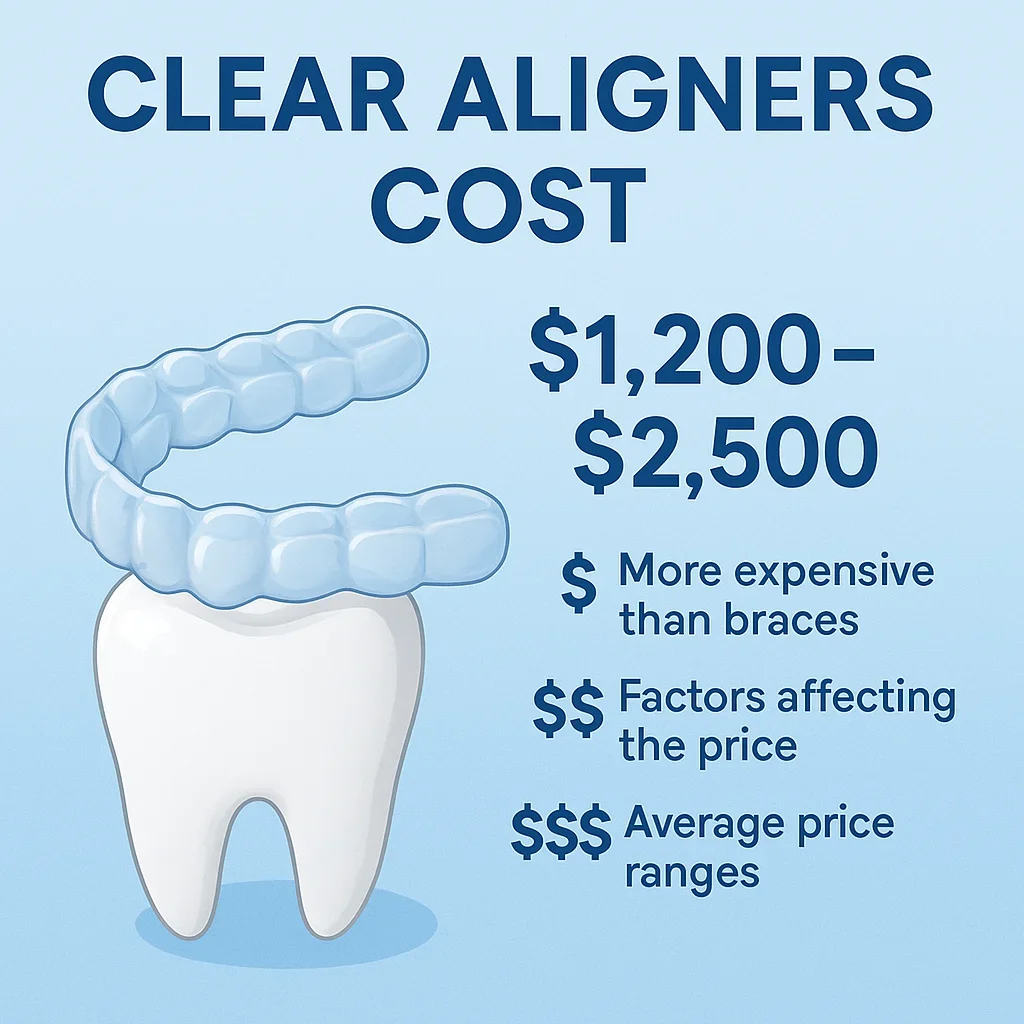
| Turkey | $1,200 – $2,500 | Invisalign, local brands |
| Australia | $4,000 – $6,000 | SmilePath, Invisalign |
As shown, Turkey remains one of the most affordable destinations for high-quality dental treatments. Many international patients choose clinics like Redent Klinik Contact Page to enjoy top-tier care at a fraction of Western prices. Patients often travel for clear aligner treatment as part of a larger dental holiday, combining expert care with significant cost savings.
Is the Investment Worth It?
When evaluating the clear aligners cost, it’s important to consider long-term benefits. Clear aligners can correct bite issues, crowding, and misalignment while preserving your smile’s natural beauty. The psychological boost of improved self-confidence and the convenience of an almost invisible appliance often outweigh the expense. Moreover, clear aligners can prevent costly oral problems down the line by improving bite alignment, which helps avoid issues like jaw pain and uneven tooth wear.
Another significant advantage is that aligner treatment can be tailored to your lifestyle. You can remove the trays during meals or important events, which is something traditional braces cannot offer. Many users appreciate the freedom and comfort aligners provide, making them a lifestyle-friendly orthodontic choice for adults and teens alike.
Professional Endorsements and Safety
The American Dental Association endorses orthodontic treatments that are planned and supervised by licensed professionals. Choosing a certified dentist or orthodontist ensures that your clear aligners cost translates into safe and effective results. Avoiding unregulated at-home kits without supervision can save you from complications and added costs later.
Conclusion
In summary, the clear aligners cost varies globally but remains a worthwhile investment for those seeking comfort, aesthetics, and effectiveness in orthodontic treatment. Whether you’re considering Invisalign, ClearCorrect, or affordable options in Turkey, understanding every aspect of the cost will help you make an informed decision. Clear aligners not only transform smiles but also enhance quality of life — a priceless outcome that extends beyond financial value.
What Are Clear Aligners and How Do They Work?
Clear aligners are one of the most revolutionary developments in modern orthodontics, offering a nearly invisible, removable, and highly effective way to straighten teeth. Before analyzing the clear aligners cost, it’s essential to understand how these systems work and why they have become the preferred choice for millions of patients worldwide. These advanced orthodontic devices are custom-designed plastic trays that gradually move your teeth into proper alignment without the need for metal brackets or wires. 🦷✨
What Exactly Are Clear Aligners?
Clear aligners are transparent, BPA-free thermoplastic trays tailored specifically to fit your teeth. They are created using 3D imaging and digital scanning technologies that map the entire structure of your mouth. The orthodontist or dentist creates a series of aligners, each slightly different from the last, to guide teeth into their correct positions step by step.
The beauty of these devices lies in their simplicity and aesthetics. Unlike traditional braces, which rely on visible metal wires, clear aligners provide a subtle and comfortable orthodontic experience. You can remove them for eating, brushing, or special occasions, giving you complete flexibility while maintaining your oral hygiene.
How Do Clear Aligners Work? Step-by-Step Process 🔍
Understanding how aligners move teeth can help you see why their precision contributes to both treatment success and clear aligners cost. Here’s a breakdown of the process:
- Initial Assessment and Consultation: Your orthodontist performs an oral examination and takes digital scans or impressions of your teeth to plan the treatment. Some clinics even use AI-assisted 3D mapping tools for more accurate results.
- Treatment Plan Creation: Using specialized software, the dentist predicts how your teeth will move over time. This plan determines how many aligners are required, directly influencing the overall clear aligners cost.
- Custom Aligner Fabrication: Each aligner is manufactured to apply gentle, controlled pressure to specific teeth, moving them gradually into place.
- Wearing the Aligners: Patients typically wear each set of trays for about 20–22 hours a day, replacing them every one to two weeks as progress continues.
- Monitoring and Adjustments: Regular check-ups or digital progress monitoring ensure that teeth are moving correctly. Minor adjustments may be made during the treatment.
- Retention Phase: Once teeth have reached the ideal alignment, retainers are provided to maintain the results permanently.
The Science Behind Clear Aligners
The principle behind clear aligner therapy is biomechanical movement. Each tray applies mild pressure on specific teeth, encouraging bone remodeling and gradual repositioning. Over time, this process aligns the teeth without causing significant discomfort. Advances in dental materials have also contributed to the rise in clear aligners cost, as manufacturers use patented thermoplastics designed for durability, clarity, and comfort.
Orthodontists use precise algorithms and simulation tools to predict how teeth will respond to movement. This technology-driven precision ensures minimal errors, reducing the risk of relapse and the need for re-treatment.
Invisalign, ClearCorrect, and Other Popular Systems
While the term “clear aligners” is often associated with Invisalign, several reputable brands have entered the market, each offering unique pricing and features that affect overall clear aligners cost. Some of the most recognized systems include:
- Invisalign: The pioneer and most well-known brand, offering advanced SmartTrack material and digital precision.
- ClearCorrect: A popular U.S.-based competitor that often provides a lower price point while maintaining quality results.
- SmileDirectClub: A direct-to-consumer model that allows patients to receive aligners without frequent in-office visits.
- Candid and Byte: Modern alternatives emphasizing teleorthodontics and shorter treatment durations.
The selection of the brand and the treatment model significantly influences your clear aligners cost. For instance, in-office treatments like Invisalign often come with higher costs due to personalized supervision and premium materials, whereas remote systems may offer more budget-friendly solutions but with limited clinical oversight.
Advantages of Clear Aligners Over Traditional Braces
Many patients choose clear aligners not only for aesthetics but also for practicality. The most prominent benefits include:
- 💡 Discreet appearance: They are nearly invisible, allowing patients to maintain confidence in social and professional settings.
- 🪥 Improved oral hygiene: Since they are removable, you can brush and floss normally, preventing plaque buildup.
- 🍽️ No food restrictions: You can remove aligners during meals, so there are no dietary limitations.
- 🕒 Fewer dental visits: Aligner systems often require fewer in-office checkups compared to braces.
- 😌 Comfort: Smooth edges reduce irritation of gums and inner cheeks.
These benefits explain why patients are increasingly willing to pay the clear aligners cost, as the long-term comfort and convenience often outweigh the higher upfront expense compared to braces.
Who Is an Ideal Candidate for Clear Aligners?
Clear aligners are ideal for patients with mild to moderate misalignment, crowding, or spacing issues. They can also address certain bite problems such as overbite, underbite, or crossbite. However, for complex orthodontic cases requiring major tooth movement, braces might still be more effective. Consulting a licensed orthodontist or dental specialist is the best way to assess your suitability.
Interestingly, age is no longer a limitation. Adults and even teenagers can undergo aligner treatment safely and effectively. In fact, aligners have become a popular choice among professionals who seek subtle orthodontic solutions without the stigma of visible braces.
Digital Dentistry and the Future of Clear Aligners 🖥️
The future of clear aligner therapy is deeply connected to advances in digital dentistry. 3D printing, AI-driven smile simulation, and intraoral scanning continue to enhance precision and efficiency. These innovations not only improve treatment accuracy but also influence the clear aligners cost structure by streamlining production and reducing manual labor.
Some clinics are now offering same-day aligner fittings and virtual progress monitoring through mobile apps. This technological integration allows patients to receive expert guidance without frequent clinic visits — a convenience that modern consumers value highly.
Final Thoughts
Understanding how clear aligners function helps explain their growing popularity and price variations. The clear aligners cost reflects the advanced technology, customized design, and professional supervision involved in every treatment. While they may seem costly upfront, their comfort, speed, and nearly invisible appearance make them a smart investment for long-term dental health and confidence.
For those seeking affordable yet high-quality aligner treatment, exploring reputable clinics abroad — such as Redent Klinik Contact Page — can significantly reduce expenses while maintaining world-class standards of care. As the American Dental Association emphasizes, professional oversight is key to achieving safe and lasting results with any orthodontic procedure, ensuring every dollar spent on your smile is worth it. 🌟
Average Clear Aligners Cost in 2025: Country Comparison
As 2025 progresses, the demand for aesthetic orthodontic solutions continues to grow, and so does the interest in understanding the clear aligners cost worldwide. The global market for clear aligners is estimated to exceed $10 billion, fueled by increased awareness, improved technology, and competitive international pricing. However, prices vary dramatically across countries due to differences in labor costs, material expenses, currency values, and clinical infrastructure. This section provides a comprehensive overview of how much you can expect to pay for clear aligner treatment in various regions — from North America to Europe and Asia — so you can make an informed decision about where to start your smile transformation. 🌍
Why Clear Aligners Cost Differs Around the World
The clear aligners cost is not universal. The final price reflects multiple variables, including:
- Geographic location: Developed countries like the U.S., U.K., and Australia generally have higher treatment costs due to overhead and practitioner wages.
- Brand and materials: Invisalign, the most recognized brand, often costs more because of its patented SmartTrack material and research-backed technology.
- Clinic experience and reputation: Established dental clinics with expert orthodontists may charge more for their professional supervision and precision.
- Extent of correction: Mild cases requiring fewer trays are cheaper, whereas severe misalignments needing extended treatment increase the overall clear aligners cost.
- Insurance and payment plans: Some regions offer better insurance coverage or financing options, affecting out-of-pocket expenses.
Understanding these influences helps patients evaluate whether paying a premium in one country brings added benefits or if traveling abroad could save thousands without compromising quality.
Global Clear Aligners Cost Comparison Table (2025)
Below is an updated table that outlines the average clear aligners cost in different countries as of 2025. These values are approximate and may vary by clinic, brand, and case complexity:
| Country | Average Cost (USD) | Treatment Type | Popular Brands |
|---|---|---|---|
| United States 🇺🇸 | $3,500 – $6,500 | In-office and remote hybrid | Invisalign, Byte, Candid |
| United Kingdom 🇬🇧 | £2,800 – £4,800 | Mostly in-office | SmileDirectClub, Invisalign |
| Canada 🇨🇦 | $3,000 – $5,000 | In-office | Invisalign, ClearCorrect |
| Australia 🇦🇺 | $4,000 – $6,000 | In-office | SmilePath, Invisalign |
| Germany 🇩🇪 | €2,500 – €4,500 | In-office and remote | PlusDental, Invisalign |
| Turkey 🇹🇷 | $1,200 – $2,500 | In-office (dental tourism hub) | Invisalign, local aligners |
| India 🇮🇳 | $900 – $2,000 | In-office and hybrid | Toothsi, Invisalign |
| UAE 🇦🇪 | $2,500 – $5,500 | In-office | Invisalign, ClearPath |
As visible from the comparison, Turkey and India stand out as leading destinations for affordable orthodontic care. Clinics like Redent Klinik Contact Page in Turkey attract international patients due to the balance of cost-effectiveness and clinical excellence. This cost advantage doesn’t mean lower quality; many Turkish dental centers operate with world-class facilities and certified orthodontists trained in Europe.
Cost Breakdown by Brand and Complexity
The brand of aligners significantly affects your final clear aligners cost. For instance:
- Invisalign Full: $4,000–$6,500 (used for moderate to severe cases).
- ClearCorrect: $3,000–$5,000 (slightly lower due to simpler manufacturing process).
- Byte or SmileDirectClub: $1,800–$2,500 (at-home kits for mild alignment).
The severity of misalignment also determines how many aligner trays are required. A mild case needing 10–12 trays might cost under $2,000, while complex cases requiring 40 or more trays could exceed $5,000. Furthermore, each brand’s technology and warranty conditions also contribute to the total clear aligners cost.
Regional Price Drivers and Economic Factors
Countries with lower manufacturing and labor costs tend to offer competitive dental pricing. Turkey, for example, benefits from favorable exchange rates, allowing international patients to receive top-quality care at lower prices. In contrast, North American and Western European clinics face high rent, labor, and insurance expenses, which are passed on to patients.
Currency fluctuations also impact international pricing. In 2025, strong U.S. and Euro exchange rates have made treatments abroad even more financially attractive. Patients from these regions often save 50–70% by traveling overseas for aligner therapy.
Hidden Expenses to Consider
When comparing the clear aligners cost globally, remember to account for additional fees, such as:
- Retainers: Usually required after treatment, costing $100–$400.
- Consultation and X-rays: Initial imaging can range from $100–$300.
- Revisions or refinements: Some cases need extra aligners if the teeth don’t move as planned.
- Travel costs: If you’re considering dental tourism, factor in airfare and accommodation.
Even with these extras, traveling to countries like Turkey or India can still reduce the total clear aligners cost significantly — often by more than half compared to the U.S. or U.K. 🇹🇷✈️
Why Turkey Leads the Market in Affordable Clear Aligners
Turkey has positioned itself as a global hub for dental tourism, offering treatments such as veneers, implants, and clear aligners at competitive rates. The clear aligners cost in Turkey is especially appealing because clinics like Redent Klinik Contact Page provide internationally accredited care using advanced 3D imaging and aligner manufacturing technology. Additionally, shorter wait times and personalized attention make Turkey a preferred destination for many European patients.
According to patient reviews and dental tourism reports, the average treatment time in Turkey is comparable to Western countries, and success rates are equally high. Moreover, the Turkish Ministry of Health ensures strict regulation of private clinics, ensuring patient safety and treatment quality.
Economic Outlook for Clear Aligners Cost in 2025
In 2025, analysts predict that the clear aligners cost will gradually decrease as manufacturing becomes more automated and new players enter the market. Increased competition is likely to make the technology accessible to a broader audience. However, brand reputation and professional oversight will remain the key factors determining the final price.
Meanwhile, the American Dental Association continues to emphasize the importance of professional supervision in orthodontic care, warning that low-cost, unsupervised aligner programs can lead to dental complications that may require expensive corrections later on. Therefore, when evaluating costs, prioritize safety and expertise over the lowest price tag.
Conclusion: Making a Smart Global Decision 🌏
Whether you’re comparing options in the U.S., U.K., or Turkey, understanding the clear aligners cost landscape helps you plan a treatment that fits both your budget and dental needs. Choosing a reputable clinic abroad can provide high-quality results at a fraction of Western prices, but only when done under professional guidance. Ultimately, investing in clear aligners is not just about saving money — it’s about improving your health, confidence, and overall well-being for years to come.
Factors That Affect Clear Aligners Cost
When considering orthodontic treatment, understanding what determines the clear aligners cost is essential for making an informed decision. The price of clear aligners varies widely among patients — not only because of geographical factors but also due to case complexity, treatment duration, and even brand reputation. Each of these elements plays a crucial role in shaping the total amount you’ll spend for your dream smile. Let’s explore these factors in detail so you can see where your investment truly goes and how to optimize it effectively. 💰🦷
1. Case Complexity and Treatment Duration
The biggest factor influencing clear aligners cost is the complexity of your dental alignment issues. If you have mild crowding or small gaps, you’ll likely require fewer trays and shorter treatment time. These cases can often be completed in 4–6 months, resulting in a lower cost. On the other hand, patients with severe crowding, overbites, or crossbites need more trays and longer treatment durations — sometimes up to 18–24 months.
In orthodontics, time equals money. Each set of aligners is custom-made, and more trays mean higher production costs. The dentist also needs to monitor complex cases more closely, which adds to the professional fees. Typically, mild cases may cost around $1,500–$2,500, while complex cases can push the clear aligners cost toward $5,000–$6,500 or more.
How Treatment Time Affects Cost
- 🕒 Short-term treatments (3–6 months): Ideal for small cosmetic corrections; most affordable.
- 📆 Medium-term treatments (6–12 months): Suitable for moderate misalignment; moderately priced.
- ⏳ Long-term treatments (12–24 months): Designed for severe alignment issues; higher total clear aligners cost.
For instance, a 6-month plan might include around 10–12 trays, while a 24-month plan could require over 40 trays, substantially increasing the final price.
2. Brand and Technology Used
Not all aligner systems are created equal. The brand you choose is one of the most significant factors in determining the clear aligners cost. Premium brands like Invisalign have established themselves as leaders due to their advanced SmartTrack materials and precision technology. They provide predictable results and superior comfort — but they also come at a higher price.
Newer or locally developed brands, such as SmilePath or ClearCorrect, often offer lower pricing by focusing on efficiency and simplified production processes. Meanwhile, direct-to-consumer models like SmileDirectClub or Byte cut out in-person visits, reducing overall expenses — but also eliminating clinical supervision, which can pose risks.
Brand Comparison and Cost Impact
| Brand | Approximate Cost | Supervision Type |
|---|---|---|
| Invisalign | $3,500 – $6,500 | Full in-office supervision |
| ClearCorrect | $2,500 – $5,000 | In-office supervision |
| SmileDirectClub | $1,800 – $2,500 | Remote monitoring |
| Byte | $1,900 – $2,800 | Remote supervision |
Choosing a reputable, dentist-supervised system ensures higher safety and accuracy. According to the American Dental Association, professional oversight prevents complications that could end up costing more in corrective treatment later.
3. Dentist’s Expertise and Location
Another major determinant of clear aligners cost is the practitioner’s experience and the location of the dental practice. A specialist orthodontist with advanced training and years of experience might charge more than a general dentist. However, that higher fee often reflects better precision, faster results, and fewer complications.
Location also plays a key role. For example, clinics in large cities like New York, London, or Sydney typically have higher overhead costs, leading to more expensive treatments. Meanwhile, clinics in developing countries or dental tourism hubs like Turkey offer the same high-quality service at more affordable rates.
Many patients travel to trusted clinics such as Redent Klinik Contact Page in Turkey, where the clear aligners cost can be 50–70% lower compared to Western countries, without compromising on materials or expertise.
Regional Cost Differences (Example 2025)
- 🇺🇸 USA: $3,500 – $6,000
- 🇬🇧 UK: £2,800 – £4,800
- 🇩🇪 Germany: €2,500 – €4,500
- 🇹🇷 Turkey: $1,200 – $2,500
This shows how local economic factors and clinic overheads significantly influence final pricing.
4. Materials and Manufacturing Technology
Modern clear aligners are made from medical-grade thermoplastic materials. Premium brands use patented, multilayered polymers designed to resist staining and cracking. These high-performance materials contribute to higher clear aligners cost but also improve patient comfort and treatment reliability. In contrast, budget-friendly aligners might use simpler plastics that need replacement more often, adding hidden costs.
Manufacturing technology also impacts cost. 3D printing and AI-driven tooth movement simulations reduce manual labor, but the setup and software licensing costs remain high. Clinics equipped with in-house printing systems may offer lower prices than those outsourcing aligner production to global labs.
5. Aftercare and Retention Fees
Once treatment is completed, retainers are required to maintain results. These post-treatment retainers can cost anywhere from $100 to $400. Some clinics include them in the total clear aligners cost, while others charge separately. Neglecting this step may lead to teeth shifting back, resulting in additional costs for corrective aligners later on.
6. Payment Plans, Insurance, and Financing Options
Financing options can make a significant difference in affordability. Many clinics offer monthly payment plans to spread the clear aligners cost over time. Additionally, dental insurance may cover part of the expense, especially if the treatment is deemed medically necessary. In the U.S., typical insurance coverage ranges from $1,000 to $2,500.
Flexible spending accounts (FSAs) and health savings accounts (HSAs) can also be used to offset expenses. Always confirm these options before beginning treatment to avoid unexpected financial strain.
7. Clinic Facilities and Technology Integration
High-end clinics with advanced digital scanning equipment, such as iTero scanners or AI-based smile design tools, tend to charge slightly higher fees. However, these technologies improve precision and reduce treatment errors — ensuring that every dollar spent on clear aligners cost yields visible results. Patients also benefit from faster aligner production and fewer adjustment visits.
Conclusion: Balancing Cost and Quality
When evaluating the clear aligners cost, remember that cheaper isn’t always better. Investing in quality materials, experienced orthodontists, and professional follow-ups ensures long-lasting, healthy results. Balancing affordability with expertise will lead to the best outcome both aesthetically and functionally.
If you’re exploring options abroad, countries like Turkey provide an excellent balance between price and performance, particularly at clinics like Redent Klinik Contact Page. The key takeaway? Always evaluate all influencing factors before committing, ensuring your smile transformation remains safe, effective, and cost-efficient. 🌟
Clear Aligners vs Traditional Braces: Price and Value
When deciding between orthodontic treatments, one of the first comparisons patients make is between clear aligners and traditional braces. Both options aim to straighten teeth and correct bite issues, yet they differ drastically in comfort, aesthetics, treatment time, and overall cost. Understanding these distinctions helps you determine whether the clear aligners cost justifies the benefits they provide. This comprehensive guide explores the financial and practical differences between these two popular orthodontic solutions, helping you make an informed decision. 🦷💡
Understanding the Fundamental Differences
Clear aligners are transparent, removable trays designed to gradually reposition teeth. They use digital scanning and 3D-printed plastic materials to create customized aligners for each stage of the treatment. Traditional braces, on the other hand, rely on metal brackets and wires fixed to the teeth, which are periodically tightened to achieve desired alignment. While both methods can achieve excellent results, the patient experience differs dramatically — especially when considering appearance, comfort, and convenience.
Aesthetic and Comfort Comparison
One of the main reasons people choose clear aligners despite the higher clear aligners cost is their near invisibility. Aligners are made from clear plastic, making them almost undetectable in social and professional settings. This appeals to adults and teens who prefer a subtle orthodontic solution. Braces, while effective, are visibly metallic, which can make some patients self-conscious.
In terms of comfort, clear aligners generally cause less irritation. The smooth plastic edges prevent the gum and cheek soreness often caused by metal brackets. However, aligners may cause mild pressure during initial use, which indicates that they’re working effectively. Many patients report that aligners feel more natural within just a few days of use.
Cost Breakdown: Clear Aligners vs Braces
Let’s compare the average costs associated with each option to understand how they differ financially:
| Treatment Type | Average Cost (USD) | Treatment Duration | Visibility |
|---|---|---|---|
| Clear Aligners | $3,000 – $6,000 | 6–18 months | Nearly Invisible |
| Traditional Metal Braces | $2,500 – $5,000 | 18–24 months | Visible (Metal) |
| Ceramic Braces | $3,500 – $6,000 | 18–24 months | Semi-Visible (Tooth-colored) |
| Lingual Braces | $6,000 – $9,000 | 18–30 months | Invisible (Placed Behind Teeth) |
From this data, we can see that while braces can sometimes be cheaper, the clear aligners cost is often justified by shorter treatment durations, aesthetic advantages, and improved comfort. Many patients find that the long-term value of aligners exceeds their initial expense.
Time and Lifestyle Considerations
Time efficiency is another key aspect that affects perceived value. Most clear aligner treatments last between 6 and 18 months, while braces often require 18–30 months. The fewer in-office visits required by aligners also mean less disruption to busy schedules. Since they are removable, clear aligners allow for normal eating, brushing, and flossing habits — an advantage that braces simply can’t match.
However, patient discipline plays a role. Aligners must be worn for 20–22 hours a day to remain effective. Removing them too frequently can prolong treatment, indirectly raising the overall clear aligners cost if extra trays or refinements are needed.
Maintenance and Hygiene
Braces can trap food particles around brackets and wires, increasing the risk of plaque buildup and cavities. Clear aligners, being removable, eliminate this problem entirely. You can clean your teeth normally and even rinse the aligners themselves with lukewarm water or specialized cleaning tablets. Maintaining proper hygiene not only keeps your smile healthy but also ensures that your investment in clear aligners cost is protected over the long term.
Effectiveness and Treatment Scope
When it comes to effectiveness, both braces and clear aligners can deliver impressive results. Braces are ideal for severe malocclusions, tooth rotations, and complex jaw corrections. Aligners, however, are perfect for mild to moderate crowding, spacing, or bite irregularities. Thanks to innovations in aligner design, even more complex cases can now be treated with clear aligners, closing the gap between them and braces.
In recent years, orthodontists have adopted hybrid methods — combining limited braces use with aligners for complex cases. This approach maximizes efficiency and comfort while optimizing clear aligners cost for the patient.
Long-Term Costs and Retainers
After treatment completion, both braces and clear aligner patients need retainers to maintain alignment. The typical cost of retainers ranges from $100 to $400, depending on the type. Since retainers are sometimes included in the total clear aligners cost, make sure to confirm this before starting your treatment. Neglecting retention can lead to teeth shifting, requiring new aligners or braces, effectively doubling your cost and time.
Durability and Adjustments
Braces are more durable since they are fixed to your teeth, while aligners can crack or warp if mishandled. Replacement aligners can add to your clear aligners cost. However, aligners are typically replaced every 1–2 weeks, minimizing the impact of accidental damage. Braces, conversely, require repair appointments if a bracket breaks, which also adds to maintenance costs and time spent in the chair.
Patient Experience and Satisfaction
Patient satisfaction studies consistently show higher comfort and confidence scores among clear aligner users. Many appreciate the transparency and predictability of aligner treatment — especially the ability to preview their final smile digitally before beginning. Although the clear aligners cost may initially seem higher, patients frequently report that the benefits in comfort, convenience, and aesthetics make it well worth the investment.
Professional Recommendations and Global Insights 🌍
Orthodontic professionals worldwide emphasize that treatment selection should depend on case requirements and patient lifestyle. While braces remain the gold standard for severe issues, clear aligners continue to gain popularity among adults and young professionals who value appearance and comfort. Clinics such as Redent Klinik Contact Page in Turkey offer advanced clear aligner therapy at globally competitive prices, making high-quality orthodontic care more accessible.
Moreover, according to the American Dental Association, professional oversight is vital in both systems to ensure safe, predictable results. Aligners should always be prescribed by a certified dentist or orthodontist to avoid potential damage from unsupervised mail-order systems.
Conclusion: Which Option Offers Better Value?
Ultimately, deciding between braces and aligners depends on your personal goals, case complexity, and budget. If your priority is affordability and you don’t mind visible brackets, braces can be a reliable choice. However, if you want comfort, aesthetic appeal, and convenience, investing in the clear aligners cost is a long-term decision that delivers excellent value. They not only enhance your smile but also boost self-confidence and overall quality of life — making them a smart, modern solution for today’s orthodontic patients. 😁
Hidden Fees and Additional Costs to Watch Out For
While many patients focus on the advertised price of orthodontic treatment, the true clear aligners cost often includes hidden fees and additional expenses that can catch you off guard. Understanding every potential charge upfront ensures there are no surprises along the way. From consultation fees to post-treatment retainers, these extra costs can add hundreds — sometimes thousands — of dollars to your final bill. This section breaks down the most common hidden costs, explains why they occur, and provides practical tips to help you plan a realistic budget for your smile transformation. 💸🦷
1. Initial Consultation and Diagnostic Imaging
The journey to a perfect smile begins with a comprehensive consultation. Most dental clinics perform diagnostic assessments before recommending treatment. These include 3D digital scans, X-rays, or impressions, all of which help design your customized aligners. Depending on your location and clinic, this initial phase can cost anywhere from $50 to $300. In some clinics, this is deducted from the overall clear aligners cost if you proceed with treatment, while others treat it as a separate, non-refundable service.
High-quality imaging plays an essential role in treatment accuracy. Advanced technology such as iTero scanners or panoramic X-rays gives your orthodontist precise data to create an efficient treatment plan. Although these tools increase the clear aligners cost, they also ensure better results and fewer corrections later.
Tip:
Ask your provider whether the consultation fee includes 3D scans and whether it will be deducted from your final treatment cost. Some clinics — like Redent Klinik Contact Page in Turkey — offer free initial consultations as part of their all-inclusive dental packages, saving you money upfront.
2. Refinement or Adjustment Costs
Many patients don’t realize that their treatment may require refinements — additional sets of aligners issued at the end of the process to perfect alignment. These refinements are normal and ensure precision, but they can affect your overall clear aligners cost. Some providers include refinements in the original price, while others charge extra depending on the number of new trays required.
For example, Invisalign typically includes one or two rounds of refinements in the total price, while smaller or budget brands might add $300–$600 for each refinement round. It’s important to clarify this detail before signing any treatment contract.
3. Retainers After Treatment
Once your teeth are properly aligned, retainers are necessary to keep them in their new positions. Neglecting this step could cause teeth to shift back, undoing your investment. Retainers usually add $100–$400 to your clear aligners cost. Many orthodontists recommend wearing retainers at night indefinitely, so it’s worth considering this as a long-term cost rather than a one-time fee.
Some premium packages include the first set of retainers free, while follow-up replacements are charged separately. It’s wise to verify if your clinic provides lifetime retainers or discounted replacement plans.
Retention Plan Tip:
Always budget for at least one extra set of retainers per year, especially if you grind your teeth at night, as this can wear them down over time.
4. Follow-up Visits and Check-ups
Another often-overlooked component of the total clear aligners cost is the cost of follow-up appointments. Some clinics include these in the initial package, but others charge per visit. Regular in-office check-ups are vital to ensure that teeth are moving correctly and that no new dental issues arise.
In-office visits can range from $50 to $200 each, depending on the clinic’s pricing structure. In contrast, remote monitoring systems (such as those offered by Byte or Candid) allow patients to upload digital progress scans through a mobile app, reducing these fees. However, direct dentist supervision typically ensures better, safer results.
5. Replacement Aligners and Lost Trays
It’s not uncommon for patients to misplace or damage an aligner tray. If that happens, a replacement must be ordered, and each additional tray can cost between $75 and $150. Although this might seem minor, repeated replacements can add up quickly, significantly impacting the overall clear aligners cost. Some aligner companies provide one free replacement per treatment, while others charge for every additional tray.
Proper care — such as storing aligners in protective cases when not in use — can help avoid this unnecessary expense.
Care and Maintenance Tip:
Use only approved aligner cleaning tablets or solutions to avoid warping or discoloration, which can lead to premature replacement costs. Never wash aligners with hot water — it can distort their shape, leading to misalignment.
6. Additional Dental Work Before Treatment
Before starting your aligner journey, you may need preparatory treatments such as dental cleanings, cavity fillings, or extractions. These procedures are crucial for achieving optimal results but are typically not included in the base clear aligners cost. For instance, removing wisdom teeth or correcting gum issues can add $100 to $500 or more to your initial expenses.
Patients with untreated dental decay or gum disease might need to delay aligner fitting until their oral health is stable. Discuss these prerequisites with your dentist to plan both financially and medically.
7. Teeth Whitening and Cosmetic Add-ons
Many patients choose to enhance their smile aesthetics with whitening treatments once their teeth are straightened. While optional, professional whitening procedures can cost $200–$600, depending on the clinic and product used. Some high-end clinics include teeth whitening as part of a full smile makeover package, slightly increasing the overall clear aligners cost but improving final results significantly.
8. Insurance Gaps and Payment Plan Fees
Although dental insurance may cover a portion of orthodontic treatment, it rarely covers the entire amount. Most policies pay a fixed benefit (typically $1,000–$2,500), leaving patients responsible for the rest. Additionally, some payment plans or financing options include service fees or interest, subtly increasing the clear aligners cost over time.
For example, a 12-month interest-free payment plan may include a small administrative charge, while extended financing could include up to 10% interest. Always read the fine print when selecting a payment option to avoid hidden fees.
Financing Tip:
If possible, pay upfront for a small discount. Many clinics offer 5–10% off when patients settle the full treatment cost in advance.
9. Travel Expenses for Dental Tourism
For patients seeking affordable treatment abroad — such as in Turkey — travel expenses must be factored into the total budget. Even though clinics like Redent Klinik Contact Page offer significantly lower clear aligners cost compared to the U.S. or U.K., airfare, accommodation, and travel insurance may add $500–$1,000 to your total. Still, the savings often outweigh these costs, especially when combined with a short vacation. ✈️🌍
10. Post-Treatment Touch-Ups or Re-Treatment
In rare cases, patients may require minor adjustments after treatment completion if teeth shift slightly over time. These follow-up aligners — often called “touch-up trays” — can add an extra $300–$700 to your overall clear aligners cost. While such cases are uncommon, planning for potential touch-ups ensures financial readiness.
Conclusion: Plan Ahead, Avoid Surprises
While the advertised price of clear aligners often looks straightforward, the true clear aligners cost includes many potential extras. From diagnostics and refinements to retainers and aftercare, being aware of hidden fees allows you to budget wisely and avoid unexpected expenses. Always request a detailed quote from your dental provider, confirming what’s included and what isn’t. Clinics like Redent Klinik Contact Page in Turkey are transparent about their pricing structure, helping patients plan treatment confidently. As emphasized by the American Dental Association, choosing professional and transparent care ensures that your investment not only beautifies your smile but also protects your long-term oral health. 🪥💎
How to Save Money on Clear Aligners Treatment
Orthodontic treatment is one of the best investments you can make in your health and confidence — but that doesn’t mean you have to pay full price for it. Although the clear aligners cost can vary widely depending on where and how you receive treatment, there are proven ways to reduce expenses without sacrificing quality. Whether through smart shopping, dental tourism, or flexible financing, patients today have more options than ever before to make treatment affordable. This section explores practical strategies and expert-backed methods to help you lower your clear aligners cost while achieving the beautiful, healthy smile you deserve. 😁💰
1. Compare Multiple Providers and Brands
One of the easiest ways to save money on orthodontic care is by comparing providers. The clear aligners cost can vary dramatically between clinics and brands. While Invisalign tends to have the highest price tag (typically $3,500–$6,500), brands like ClearCorrect, Byte, or SmilePath offer comparable results at lower costs. Some of these alternatives use slightly different materials or monitoring methods but still deliver excellent outcomes.
Before committing, request written quotes from at least two or three clinics. Be sure to compare what’s included in each package — such as follow-up visits, refinements, and retainers — rather than focusing solely on the initial sticker price. Clinics like Redent Klinik Contact Page in Turkey provide transparent, all-inclusive packages that include consultations, X-rays, aligners, and retainers for one fixed price, eliminating hidden fees and making it easier to plan financially.
Smart Comparison Tip:
Always check if your chosen clinic uses 3D digital scans and offers in-person supervision. While mail-order aligners may seem cheaper, the lack of professional oversight can lead to complications, which might increase your clear aligners cost in the long run.
2. Take Advantage of Dental Tourism
Dental tourism has become a major trend in recent years — and for good reason. Many patients now travel abroad to countries such as Turkey, Hungary, Mexico, or Thailand to receive world-class treatment at a fraction of domestic prices. For example, the average clear aligners cost in Turkey is $1,200–$2,500 compared to $4,000–$6,000 in the U.S. Even when factoring in travel and accommodation expenses, you can still save up to 60% overall.
Clinics in dental tourism destinations often employ internationally trained orthodontists, use the same materials as Western practices, and maintain high hygiene standards. Reputable centers like Redent Klinik Contact Page provide personalized treatment plans with follow-up support, ensuring that affordability does not come at the cost of quality.
Travel and Save Tip:
Combine your treatment with a short vacation. Many patients schedule aligner fittings alongside a few days of sightseeing, turning a medical visit into an enjoyable getaway — a trend now known as “dental holidays.” 🌍✈️
3. Use Dental Insurance and Flexible Spending Accounts
If you have dental insurance, check whether orthodontic coverage includes clear aligners. Some insurance plans reimburse a portion of the clear aligners cost — typically between $1,000 and $2,500. Even if aligners are not fully covered, partial reimbursement can make a big difference.
Additionally, in the U.S., patients can use Flexible Spending Accounts (FSAs) or Health Savings Accounts (HSAs) to pay for treatment with pre-tax dollars. This effectively gives you a discount of 20–30% depending on your tax bracket. Always confirm with your insurance provider or HR department to see if aligner treatment qualifies.
Insurance Tip:
Ask your orthodontist to provide a pre-treatment estimate form (often called a “predetermination of benefits”). This document helps you understand exactly how much of your clear aligners cost your insurance will cover before treatment begins.
4. Look for Seasonal Promotions or Discounts
Many clinics and aligner brands offer seasonal promotions, referral bonuses, or student discounts. Around major holidays or special dental awareness months, you can often find savings of 10–25% off. Some online aligner companies also offer referral programs where you can earn discounts or rewards for recommending friends.
In 2025, several dental chains are expected to increase promotional campaigns due to rising competition, which can further reduce your clear aligners cost. Following clinics on social media or subscribing to their newsletters ensures you don’t miss out on limited-time offers.
5. Choose Partial Treatment or Single Arch Aligners
If only your top or bottom teeth need adjustment, you might not require full-mouth treatment. Single-arch aligner therapy can cut the clear aligners cost nearly in half while still providing effective results for localized issues like crowding or gaps. Discuss this option with your orthodontist to see if your case qualifies for partial correction.
Expert Insight:
According to the American Dental Association, clear aligners are best suited for mild to moderate misalignments. If your bite problems are minimal, single-arch treatment may deliver excellent results at a reduced price.
6. Ask About In-House Financing or Payment Plans
Many clinics recognize that paying for orthodontic treatment upfront can be difficult. To make it easier, they offer monthly payment plans that spread the clear aligners cost over 6 to 24 months — often with zero or low interest. In-house financing allows you to begin treatment immediately without waiting to save the full amount.
It’s wise to compare financing terms between clinics and confirm there are no hidden administrative fees. Paying in full upfront, if possible, can sometimes unlock discounts of 5–10%.
7. Use University Dental Clinics
If you live near a dental school, consider receiving treatment from student orthodontists under professional supervision. The clear aligners cost in teaching institutions can be 30–50% lower than in private clinics. The students perform treatments as part of their practical training, and all procedures are overseen by licensed professors and experts.
This approach combines affordability with quality care — though it may take slightly longer due to teaching schedules.
8. Avoid Unsupervised Mail-Order Aligners
While DIY or mail-order aligners may seem like a budget-friendly option, they often come without professional oversight, which can lead to serious dental problems and ultimately higher corrective costs. If aligners move teeth incorrectly, you might end up paying more to fix the resulting misalignment. Therefore, what initially appears to be a cheaper clear aligners cost can actually become more expensive in the long term.
Always choose a dentist-supervised program — ideally one certified by reputable organizations like the American Dental Association — to ensure your oral health and investment are protected.
9. Consider Combination Treatments
In some cases, your orthodontist might suggest a hybrid approach: using clear aligners for part of the treatment and finishing with limited braces for final adjustments. This strategy can reduce overall treatment time and lower your clear aligners cost while maintaining precision.
10. Plan Ahead and Budget Wisely
Finally, saving on orthodontic care often comes down to planning. Before starting treatment, get a full cost breakdown from your provider and set aside a small emergency fund for refinements or replacement aligners. Budgeting tools and dental savings plans can also help you spread out payments comfortably without financial stress.
Conclusion: A Beautiful Smile Within Reach 🌟
Reducing the clear aligners cost doesn’t mean cutting corners — it means making smart, informed decisions. By comparing providers, exploring international options, leveraging insurance, and using available financing, you can make treatment both affordable and safe. Clinics like Redent Klinik Contact Page offer transparent, cost-effective orthodontic care that rivals Western standards at lower prices. With a bit of planning and research, achieving a confident, healthy smile is no longer just a luxury — it’s an attainable reality for everyone. 💎🦷
Are Clear Aligners Covered by Dental Insurance?
When considering orthodontic treatment, one of the most common questions patients ask is whether clear aligners cost is covered by dental insurance. The answer depends on several factors — including your insurance provider, policy type, and country of residence. Although many dental insurance plans include orthodontic benefits, the coverage terms for clear aligners can differ significantly from those for traditional braces. Understanding these differences is essential to plan your budget wisely and avoid unexpected expenses. 🦷💳
1. Understanding Dental Insurance Coverage for Orthodontics
Most dental insurance plans categorize orthodontic treatment as a separate benefit from standard dental care. Preventive procedures like cleanings and fillings are usually covered up to 100%, but orthodontics — including clear aligners — often falls under a lifetime maximum benefit cap. This means that insurance may reimburse part of your treatment cost only up to a specific limit, typically between $1,000 and $3,000.
For example, if your clear aligners cost is $5,000 and your plan includes a $2,000 orthodontic benefit, your out-of-pocket cost will be $3,000. This lifetime cap does not reset yearly, so it’s essential to plan accordingly.
Important Note:
Always confirm whether your provider distinguishes between “orthodontic” and “cosmetic” procedures. Some insurers consider clear aligners as a cosmetic treatment unless medically necessary, which could affect reimbursement.
2. Which Insurance Plans Cover Clear Aligners?
Not all insurance plans automatically cover clear aligners. However, coverage is becoming increasingly common as aligners grow in popularity and clinical acceptance. Plans from major providers such as Cigna, Delta Dental, Aetna, and MetLife often offer partial coverage for Invisalign and similar systems. Coverage is typically available for dependents (children and teens) and, in some cases, for adults.
It’s worth noting that employer-sponsored dental plans are more likely to include orthodontic benefits than individual plans. Therefore, reviewing your plan documents or speaking directly with your HR department can clarify whether the clear aligners cost qualifies for reimbursement.
3. How Insurance Coverage Works for Clear Aligners
The insurance claim process for clear aligners follows the same steps as traditional braces. Once your dentist or orthodontist diagnoses the need for treatment, they’ll provide a pre-treatment estimate or “pre-determination of benefits.” This document helps determine how much of the clear aligners cost your insurer will pay before treatment begins.
Typically, insurance covers a fixed percentage of the total fee (often 40–50%) up to the lifetime maximum. Payment may be released in installments as treatment progresses. For instance, if your total cost is $4,000 and the insurer covers 50%, they might pay $2,000 — either upfront or spread across the duration of your aligner treatment plan.
Tip:
Ensure that your orthodontist is an in-network provider. Out-of-network clinics might result in higher out-of-pocket expenses, even if the same clear aligners cost applies.
4. Common Limitations and Exclusions
Insurance policies often include fine print that can significantly affect your coverage. Some of the most common limitations include:
- Age restrictions: Certain plans only cover orthodontic treatment for patients under 18 years old.
- Waiting periods: New policyholders may need to wait 6–12 months before orthodontic coverage becomes active.
- Pre-existing conditions: If you started treatment before the insurance began, coverage typically won’t apply.
- Provider requirements: Some insurers only reimburse costs if treatment is provided by an approved orthodontist, not a general dentist.
These rules mean that even if your policy mentions orthodontic benefits, they may not automatically include the full clear aligners cost. Always review the exclusions section carefully.
5. International Coverage and Dental Tourism
For patients traveling abroad — for example, to Turkey — it’s important to check whether your dental insurance extends to international treatment. In most cases, standard insurance policies do not cover overseas dental services. However, certain international or premium plans may offer partial reimbursement if you provide detailed receipts and documentation.
Clinics like Redent Klinik Contact Page often assist international patients by providing detailed invoices and treatment breakdowns that comply with global insurance requirements. Even if your insurer doesn’t cover the full amount, the lower clear aligners cost in Turkey compared to Western countries often still results in significant savings.
6. Using FSAs, HSAs, and HRAs to Offset Costs
In countries like the United States, tax-advantaged accounts such as Flexible Spending Accounts (FSAs), Health Savings Accounts (HSAs), and Health Reimbursement Arrangements (HRAs) can help lower your net expenses. These accounts allow you to pay for qualified medical expenses — including orthodontic treatment — using pre-tax income, effectively reducing the real cost of your aligners by 20–30% depending on your tax bracket.
Even if your insurance plan doesn’t cover the entire clear aligners cost, combining partial insurance coverage with FSA or HSA funds can make treatment much more affordable.
Example:
Suppose your total aligner treatment costs $4,500. Your insurance covers $1,500, and you pay the remaining $3,000 with FSA funds. If you’re in a 25% tax bracket, you effectively save $750 on taxes — reducing your total out-of-pocket expense to $2,250. That’s a 50% saving compared to paying in cash without benefits!
7. Dental Discount Plans and Membership Programs
If you don’t have traditional dental insurance, dental savings or discount plans are an alternative worth exploring. These programs provide 10–60% discounts on dental services, including orthodontic care, in exchange for an annual membership fee (usually around $100–$200). Participating dentists agree to offer reduced rates to members, helping lower the clear aligners cost substantially.
While not insurance in the conventional sense, these plans can provide immediate access to discounted rates without waiting periods or approval delays. Many clinics worldwide, including Redent Klinik Contact Page, also offer their own membership-based loyalty programs or package deals that combine multiple dental services at a reduced rate.
8. Employer Assistance and Orthodontic Benefits
Some employers provide additional dental or wellness benefits beyond standard insurance coverage. These may include partial reimbursement for orthodontic care, direct partnerships with dental networks, or flexible reimbursement programs. Checking with your HR or benefits department could reveal untapped opportunities to lower your clear aligners cost.
Employers in industries focused on employee wellness (such as healthcare or technology) are increasingly adding orthodontic benefits as part of comprehensive health programs to support both appearance and confidence.
9. Maximizing Coverage Through Strategic Planning
To get the most out of your insurance, timing and documentation are key. If your plan includes an annual or lifetime cap, start treatment early in the policy year to maximize reimbursement. Also, coordinate with your orthodontist to submit accurate diagnostic codes and detailed invoices — these documents improve the chances of approval for your claim.
Additionally, some patients split treatment payments across two policy years, effectively doubling reimbursement if their plan includes annual limits. This advanced strategy requires careful coordination with your orthodontist but can significantly reduce your clear aligners cost.
Conclusion: Making Insurance Work for You
While not all policies fully cover clear aligners, most patients can reduce their clear aligners cost by combining insurance benefits, flexible accounts, and discount programs. The key lies in understanding your coverage terms, clarifying exclusions, and choosing a provider who offers transparent documentation. Clinics such as Redent Klinik Contact Page specialize in assisting international and insured patients with detailed receipts that meet global standards. According to the American Dental Association, professionally supervised orthodontic care ensures not only financial protection but also long-term oral health and treatment success. With the right strategy, achieving a straight, confident smile can be both affordable and stress-free. 💎🪥
Best Clear Aligner Brands and Their Price Ranges
Choosing the right aligner brand can significantly affect your treatment results, comfort, and overall clear aligners cost. With so many brands on the market today — from Invisalign to more affordable mail-order options — understanding what each offers is crucial to making an informed decision. While every brand uses similar technology to straighten teeth, there are key differences in materials, clinical supervision, customization, and pricing. This detailed comparison will help you evaluate which aligner system provides the best balance of quality and value for your budget. 🦷💎
1. Invisalign – The Global Leader in Clear Aligners
Invisalign is the most recognized and trusted name in the clear aligner industry. Established in 1997, it pioneered the use of 3D digital scanning and SmartTrack materials to deliver precise and comfortable results. Invisalign treatments are always monitored by a certified dentist or orthodontist, ensuring professional oversight throughout your journey.
The average clear aligners cost for Invisalign ranges from $3,500 to $6,500, depending on the complexity of your case and geographical location. Complex cases requiring bite correction or major tooth movement tend to be on the higher end of this range.
Advantages:
- Extensive clinical data and proven results.
- Custom-made using advanced iTero digital scans.
- Excellent comfort and fit due to patented SmartTrack material.
- Professional supervision ensures safety and predictability.
Disadvantages:
- Higher clear aligners cost than competitors.
- Requires regular in-office visits for progress monitoring.
2. ClearCorrect – A Reliable, Dentist-Supervised Alternative
ClearCorrect, a U.S.-based aligner company founded in 2006, offers a more affordable option compared to Invisalign while still maintaining professional oversight. The clear aligners cost for ClearCorrect ranges between $2,500 and $5,000, depending on the number of trays and treatment duration.
This brand is often favored by dentists who seek flexibility in treatment planning and lower lab costs. The aligners are slightly thinner and less visible than some other brands, offering strong aesthetics without compromising strength.
Advantages:
- Lower cost than Invisalign with comparable effectiveness.
- Suitable for mild to moderate alignment issues.
- Offers different treatment tiers (limited or unlimited).
Disadvantages:
- Fewer advanced features for complex orthodontic cases.
- Availability may vary by region.
3. Byte – Affordable At-Home Convenience
Byte is a leading direct-to-consumer aligner brand based in the United States, designed for at-home treatment under remote supervision. With its innovative HyperByte device that accelerates tooth movement using gentle vibrations, Byte promises faster results in as little as three to six months for minor cases. The average clear aligners cost for Byte is $1,999 to $2,499.
Although Byte offers convenience, it’s best suited for patients with mild misalignments. Complex cases requiring jaw adjustments or large tooth movements should still be treated under in-office supervision.
Advantages:
- Affordable and time-efficient.
- At-home monitoring system via mobile app.
- Lifetime “Byte-for-Life” guarantee (free replacement if teeth shift).
Disadvantages:
- Limited professional oversight compared to in-office aligners.
- Not suitable for severe malocclusions or bite issues.
4. SmileDirectClub – Widely Accessible but Mixed Reviews
SmileDirectClub revolutionized the aligner market by offering one of the first mail-order orthodontic services. Patients can take a 3D scan at a local shop or use an at-home impression kit. The clear aligners cost is around $2,000 to $2,500, making it one of the most budget-friendly options on the market.
While SmileDirectClub made orthodontic care more accessible, its remote-only model has raised concerns among dental professionals. Without regular in-person supervision, some patients have experienced discomfort or unsatisfactory outcomes.
Advantages:
- Low entry cost and easy accessibility.
- Flexible payment plans with zero interest.
Disadvantages:
- Lack of in-person dentist involvement increases risk.
- Limited ability to manage complex cases or complications.
5. 3M Clarity Aligners – Precision and Clinical Trust
Produced by the same company that pioneered orthodontic technology, 3M Clarity Aligners are designed for dental professionals who want advanced customization. They’re fully orthodontist-supervised and use unique material engineering for consistent, controlled tooth movement. The clear aligners cost is typically between $3,000 and $6,000.
3M aligners are best suited for complex cases that require high precision and professional management. Their clinical reliability makes them a top choice for patients who want trusted quality with medical-grade oversight.
6. Candid – Hybrid Treatment Model for the Best of Both Worlds
Candid offers a hybrid approach, combining remote monitoring with in-person diagnostics. Patients start with an in-office scan by a licensed dentist and then complete treatment remotely through AI-supported check-ins. The clear aligners cost ranges from $2,500 to $3,500.
This model ensures professional evaluation and digital convenience. The remote app allows patients to submit weekly progress photos, which are reviewed by their assigned orthodontist.
Advantages:
- Professional diagnostics ensure safety and accuracy.
- Remote convenience without sacrificing quality control.
Disadvantages:
- Limited availability outside the United States.
- Mid-range price may still be high for minor cases.
7. AlignerCo – The Most Budget-Friendly Option
For those on a strict budget, AlignerCo offers one of the lowest-priced aligner systems available, with a total clear aligners cost of $995 to $1,395. It’s a fully remote option with 3D-printed trays shipped directly to your home. While highly affordable, it’s primarily recommended for very mild crowding or spacing issues.
AlignerCo’s affordability comes from eliminating physical clinics and offering longer production times. While the treatment duration may be slower than in-office alternatives, the company’s low-cost plans make orthodontic care accessible to more people worldwide.
8. Spark Aligners – Premium Comfort and Aesthetics
Spark Aligners, developed by Ormco, are designed using TruGEN™ material that’s clearer and more stain-resistant than many other aligners. They’re only available through certified orthodontists, ensuring professional guidance. The average clear aligners cost is between $3,500 and $6,000, depending on the case complexity.
Patients often praise Spark for its comfort, clarity, and near-invisibility, making it an excellent premium alternative to Invisalign for those who prioritize aesthetics.
9. International Options – Affordable Treatment Abroad
Patients seeking affordable orthodontic care outside their home country often consider treatment abroad. Clinics such as Redent Klinik Contact Page in Turkey offer premium aligner systems, including Invisalign and ClearCorrect, at a fraction of Western prices. The typical clear aligners cost in Turkey is between $1,200 and $2,500, representing savings of up to 70% compared to U.S. rates.
These clinics often include diagnostics, retainers, and follow-up consultations in one all-inclusive price. This makes Turkey one of the most cost-effective destinations for international dental tourism.
10. Key Takeaways: Finding the Best Brand for You
While multiple brands offer effective teeth-straightening solutions, the best choice depends on your budget, dental condition, and preference for supervision. Invisalign remains the gold standard for complex cases, while brands like Byte or AlignerCo provide affordable solutions for mild misalignments. If you seek a balance between quality and savings, international clinics like Redent Klinik Contact Page deliver exceptional results at a lower clear aligners cost.
For accurate, evidence-based information on aligner effectiveness and safety, consult resources from the American Dental Association. Always choose a licensed professional for diagnosis and treatment supervision to protect your oral health and ensure predictable results.
Conclusion: Quality Meets Affordability 🌟
The market for clear aligners has evolved rapidly, offering patients more flexibility and affordability than ever before. From high-end brands like Invisalign and Spark to cost-efficient systems like Byte and AlignerCo, every patient can find a treatment that fits their needs. Ultimately, the right balance between expertise, technology, and price determines your success. By comparing options carefully and working with a trusted provider, you can enjoy a straight, radiant smile at a clear aligners cost that aligns perfectly with your financial goals. 😁✨
Why Patients Choose Turkey for Affordable Clear Aligners
Over the past decade, Turkey has become one of the world’s most popular destinations for dental tourism — and for good reason. Patients from the United States, the United Kingdom, Europe, and the Middle East are traveling to Turkey for premium dental treatments at a fraction of the cost. Among the most sought-after services are clear aligners, known for their comfort, aesthetics, and effectiveness. The clear aligners cost in Turkey is significantly lower compared to Western countries, yet the quality of care remains on par with — and often exceeds — international standards. 🌍🦷
1. The Cost Advantage: Why Clear Aligners Are Cheaper in Turkey
One of the biggest reasons patients travel to Turkey is the remarkable difference in prices. While in the U.S. or Western Europe, the clear aligners cost typically ranges between $4,000 and $6,500, the same treatment in Turkey costs between $1,200 and $2,500. This massive price reduction doesn’t mean lower quality — it’s primarily due to Turkey’s lower operational costs, favorable currency exchange rates, and government support for medical tourism.
Clinics in major cities like Istanbul, Antalya, and Izmir operate with world-class technology but at reduced labor and facility expenses, allowing them to offer premium services at competitive rates. When combined with the cost of airfare and accommodation, patients can still save up to 60–70% compared to their home country.
Example of Average Cost Comparison (USD):
| Country | Average Clear Aligners Cost | Includes Retainers & Scans? |
|---|---|---|
| United States | $4,500 – $6,500 | Not Always |
| United Kingdom | $3,500 – $5,000 | Varies |
| Germany | $3,800 – $5,500 | Varies |
| Turkey | $1,200 – $2,500 | Usually Included ✅ |
When calculated in terms of overall expenses — including flights and hotels — patients still save thousands of dollars by choosing Turkey for their aligner treatment.
2. World-Class Dental Clinics and Technology
Modern Turkish dental clinics rival, and often surpass, those in Europe and North America in terms of technology and patient experience. Clinics such as Redent Klinik Contact Page are equipped with the latest 3D imaging systems, intraoral scanners, and CAD/CAM manufacturing technologies. These innovations ensure that your aligners fit perfectly and that your treatment plan is customized with precision.
Turkish dentists frequently undergo international training and certifications, particularly in countries like Germany, the U.K., and the U.S. This ensures they adhere to global best practices in orthodontic treatment and patient care. As a result, patients enjoy high-quality treatment without the premium pricing found in Western markets.
Technology Used in Turkish Clinics:
- 3D Intraoral Scanning (iTero, Medit, 3Shape)
- Digital Smile Design (DSD) software for previewing results
- Laser-assisted teeth preparation
- Computer-aided aligner production with precise fitting
These technologies play a significant role in optimizing treatment outcomes while maintaining affordability in the clear aligners cost structure.
3. Comprehensive All-Inclusive Packages
Most Turkish dental clinics offer all-inclusive packages that combine treatment, accommodations, airport transfers, and even local tours. This approach allows international patients to experience both medical care and leisure during their visit. The total clear aligners cost in these packages typically covers:
- Initial consultation and 3D scan
- Custom-made aligners
- Professional monitoring during treatment
- Retainers and follow-up visits
- Translation services and travel coordination
This transparency eliminates hidden costs, giving patients full control over their budget. Some clinics even offer online follow-up programs for ongoing monitoring after patients return home.
4. Highly Qualified Dentists and International Standards
Turkish dentists are known for their professionalism and experience in treating international patients. Many are members of international organizations such as the American Dental Association and the European Federation of Periodontology. They regularly attend international conferences and training programs to stay updated with global dental innovations.
Moreover, dental clinics in Turkey are required to comply with ISO and JCI (Joint Commission International) standards for hygiene and patient safety. This ensures that every step of your aligner journey — from initial consultation to the final fitting — adheres to strict global medical standards while keeping the clear aligners cost remarkably reasonable.
5. Short Waiting Times and Efficient Scheduling
In many Western countries, patients wait weeks or even months for orthodontic appointments. In contrast, clinics in Turkey offer faster booking and streamlined workflows, allowing international visitors to start treatment within days. Since the aligners are digitally produced on-site, turnaround time is shorter — often just a few days from scan to first tray delivery. ⏱️
This efficiency means that patients spend less time waiting and more time enjoying their stay in a beautiful country. Fast service without sacrificing quality is one of the main factors contributing to Turkey’s growing reputation in dental care.
6. Tourism Opportunities and Patient Experience
Dental treatment in Turkey is more than a medical experience — it’s part of a luxury travel experience. Patients often combine their treatment with a relaxing vacation in iconic destinations like Istanbul, Cappadocia, or Antalya. Many clinics, including Redent Klinik Contact Page, offer concierge-style assistance that includes hotel reservations, local tours, and interpreter services.
This seamless integration of healthcare and hospitality makes dental tourism a pleasant, stress-free experience. Patients often describe it as “a smile makeover vacation.”
7. Reviews and Patient Satisfaction
Patient feedback consistently highlights Turkey’s balance of affordability, professionalism, and hospitality. Online reviews and international testimonials emphasize the high satisfaction rates among those who travel for orthodontic treatment. Many note that their clear aligners cost was less than half of what they would have paid at home, yet they received better attention, modern facilities, and transparent communication.
8. Aftercare and Remote Support
Even after returning home, patients can continue to receive remote support through digital check-ins and follow-up calls. Clinics use digital platforms to review patient progress and adjust treatment if needed. This ensures continuity of care and enhances the overall value of your investment in clear aligners cost.
Furthermore, most clinics provide detailed care instructions and retainers as part of the treatment package, ensuring that your results are long-lasting and well-maintained.
9. Safety and Regulation Standards
Turkey’s dental industry is tightly regulated by the Ministry of Health, which enforces strict sterilization and ethical standards. Every dental professional must be licensed, and foreign patients are protected under the “International Health Tourism Regulation” — ensuring legal transparency and patient rights. This framework guarantees that international visitors receive safe and high-quality dental care, reinforcing trust and value for the clear aligners cost paid.
10. Conclusion: Turkey – The Smart Choice for Modern Orthodontics 🇹🇷
Choosing Turkey for clear aligner treatment offers an unbeatable combination of affordability, expertise, and experience. With world-class clinics, internationally certified orthodontists, and advanced technology, patients receive premium-quality care at a fraction of Western prices. Whether you seek Invisalign or other reputable brands, the clear aligners cost in Turkey ensures exceptional value without compromise.
Clinics like Redent Klinik Contact Page lead the way in transparent pricing, personalized treatment, and outstanding results. Supported by trusted organizations such as the American Dental Association, these clinics uphold global standards while delivering cost-effective orthodontic solutions. For patients looking to enhance their smiles while enjoying one of the world’s most beautiful destinations, Turkey stands as the ideal choice for affordable and world-class dental care. 🌟✈️