
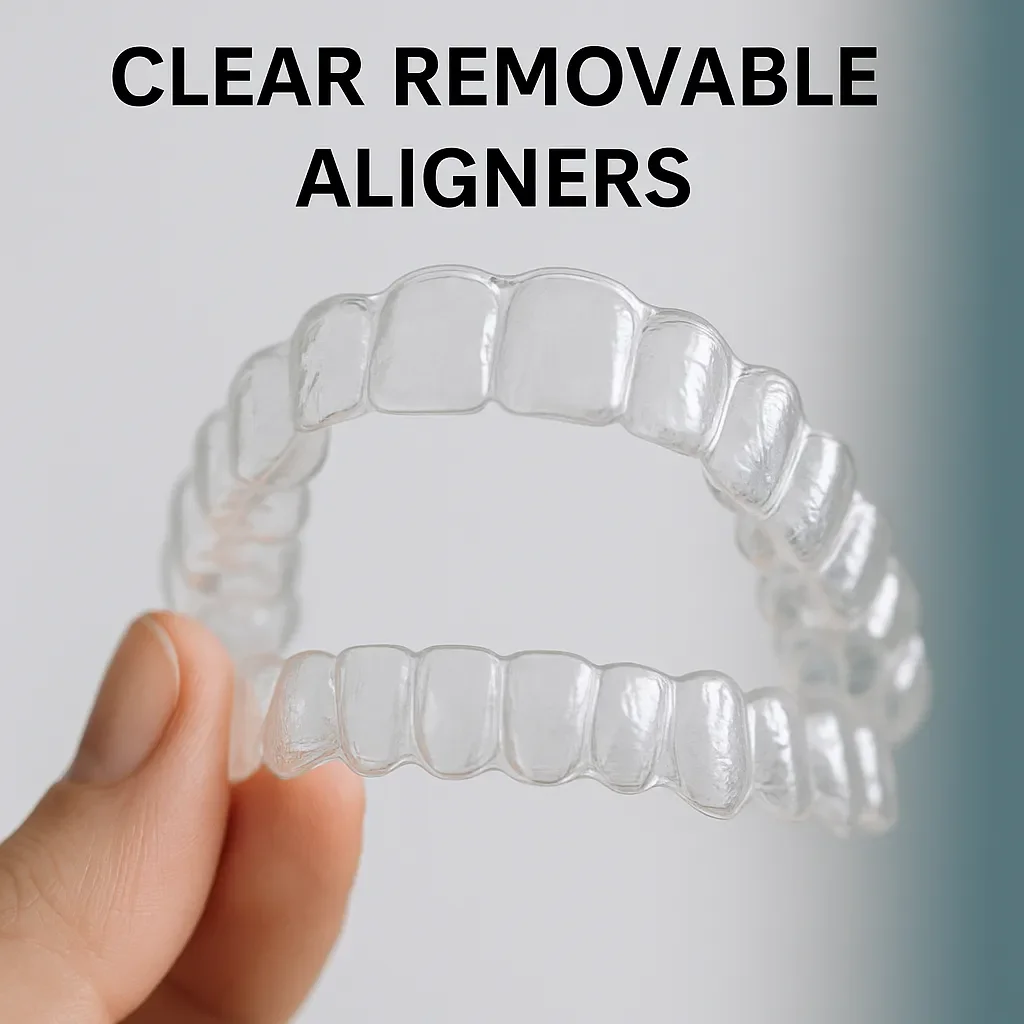
Clear removable aligners have rapidly transformed modern orthodontics, offering a comfortable, discreet, and highly predictable solution for people who want to straighten their teeth without the hassle of metal brackets. In this comprehensive guide, you will learn exactly how clear removable aligners work, what to expect during treatment, and why millions of patients worldwide now prefer this advanced digital orthodontic option. 😁
One of the most appealing features of clear removable aligners is how seamlessly they fit into daily life. These slim, transparent trays are engineered using 3D imaging technology, allowing dentists to customize every stage of tooth movement with precision. Unlike traditional braces, which require wires and monthly adjustments, aligner therapy uses a sequence of trays—each slightly different from the last—to gently guide teeth into better alignment. This process is not only more comfortable but also more predictable thanks to digital planning software used in clinics approved by the American Dental Association.
Patients who choose clear removable aligners usually do so because they want flexibility. Since these trays are removable, they allow for easier eating, brushing, and flossing. 🦷✨ You won’t need to worry about food restrictions or complex cleaning routines. Simply remove the aligners during meals, rinse them afterward, and continue with your day. This makes them especially popular among working adults, university students, and anyone wanting to maintain a natural appearance in professional or social environments.
Beyond aesthetics, clear removable aligners provide well-documented clinical advantages. They reduce the risk of plaque buildup, irritation, and enamel discoloration—problems commonly associated with metal braces. Because aligners exert controlled, gentle pressure on specific teeth, many patients report less soreness compared to traditional orthodontic systems. Additionally, the predictability of the treatment plan gives patients clearer expectations regarding the total duration, required discipline, and final results.
Before beginning treatment, patients undergo a digital scan or impression to map their dental structure. This scan is used to create a personalized roadmap showing how teeth will shift over time. Advanced planning tools enable the dentist to calculate the number of trays, the movement amount of each tooth, and the estimated treatment duration. This transparent process helps patients visualize their future smile from day one. Similar systems—sometimes described as “invisible orthodontic trays” or “transparent dental aligners”—support the same scientific principles but vary slightly in design and brand.
As part of your journey with clear removable aligners, you will receive a set of instructions tailored to your dental needs. Typically, aligners must be worn 20–22 hours per day for the best results. Since compliance is crucial, patients who follow the schedule consistently experience faster and more accurate outcomes. Wearing them during sleep ensures continuous, gentle pressure, contributing to steady tooth movement throughout the night.
Clear aligner therapy also integrates well with cosmetic and restorative dental plans. For example, individuals preparing for veneers, whitening, or contouring often begin with aligners to establish proper spacing and alignment. Straightening the teeth first improves both functional and aesthetic outcomes. Your dental clinic plays a key role during this phase, and if you need personalized assistance you can reach the Redent Klinik Contact Page for expert guidance.
For many people, the comfort and discreet design of clear removable aligners contributes to improved confidence and motivation throughout treatment. Since results become visible gradually—often within just a few weeks—patients feel encouraged to maintain good habits. 🪥 Maintaining proper aligner hygiene, attending routine check-ups, and following the dentist’s recommendations will further accelerate progress.
In summary, clear removable aligners offer a scientifically advanced, lifestyle-friendly, and highly effective approach to achieving a straighter smile. Whether you are considering them for mild spacing issues, moderate crowding, or bite correction, aligners provide an innovative orthodontic pathway supported by decades of research and clinical success. They are more than just transparent trays—they are a modern solution designed to enhance oral health, personal confidence, and long-term dental function.
How Clear Removable Aligners Work Step-by-Step
Understanding how clear removable aligners work is essential for anyone considering modern orthodontic treatment. This step-by-step guide explains every phase of the process, from initial consultation to the final result. By the end of this section, you will know exactly what to expect, how your teeth move, and why aligner therapy has become one of the most trusted methods of smile correction worldwide. 😄
Digital Assessment and Initial Consultation
Every treatment with clear removable aligners begins with a comprehensive dental evaluation. During this initial appointment, your dentist or orthodontist evaluates your bite, gum condition, and overall oral health to determine whether you are a suitable candidate.
A digital scan or high-precision impression is then taken. This is a crucial step because it creates a virtual model of your teeth. Unlike traditional methods, today’s advanced scanning technologies allow practitioners to capture your dental anatomy within seconds, resulting in highly accurate digital records. These digital maps form the foundation of your entire orthodontic journey.
Using 3D Imaging to Predict Tooth Movement
Once your digital scan is complete, advanced treatment-planning software generates a three-dimensional simulation. This tool allows the dental professional to map out each tooth’s planned movement. It ensures that clear removable aligners guide the teeth gently and predictably.
Patients love this stage because they can see a virtual preview of what their future smile will look like. It’s like seeing the “before and after” result before treatment even begins. This visualization improves motivation, compliance, and confidence in the chosen treatment path.
Crafting Your Customized Aligner Series
After planning is complete, your dentist orders a custom sequence of aligners. Each tray is slightly different from the previous one, designed to apply controlled pressure to specific teeth. These micro-movements accumulate over time, eventually leading to ideal alignment.
Most treatment plans include anywhere from 10 to 40 aligner trays, depending on the complexity of the case. Mild spacing or crowding requires fewer trays, while bite corrections may require more. Regardless of the number, each tray plays a precise role in your personalized treatment roadmap.
Aligner Material and Biomechanical Design
The material used in clear removable aligners is medically approved, BPA-free, and engineered to combine flexibility with controlled rigidity. This unique composition allows aligners to apply consistent forces without causing irritation. Similar systems, often referred to as “invisible aligner trays” or “transparent orthodontic devices,” use comparable biomechanical principles.
Aligners are manufactured under strict quality standards, often reviewed by recognized organizations such as the American Dental Association, ensuring safety and performance.
Wearing Your Aligners: The Daily Routine
The success of clear removable aligners depends heavily on patient compliance. Aligners must be worn 20–22 hours per day to maintain continuous pressure. Removing them for extended periods delays progress and may require additional trays.
A typical daily schedule includes:
- Wearing the aligners all day except during meals
- Removing trays before eating or drinking anything other than water
- Brushing and flossing before reinserting the trays
- Cleaning aligners with mild soap and a soft toothbrush
This routine enhances hygiene and prevents discoloration or odors. Since aligners are removable, it’s much easier to maintain proper oral care compared to fixed braces.
Switching to the Next Set of Aligners
Most patients switch to a new set of aligners every 7–14 days. Each step progresses your teeth closer to the final alignment based on the digital treatment plan. When worn correctly, changes become visible in as little as 2–4 weeks.
Your dentist monitors your progress during periodic check-ups. These visits ensure that teeth are moving according to the original plan, and adjustments can be made if needed.
Attachments, Elastics, and Additional Tools
Some patients require extra components to enhance the effectiveness of clear removable aligners. These include:
- Attachments: Small tooth-colored buttons bonded to teeth to guide complex movements.
- Elastics: Rubber bands used for bite correction.
- Interproximal reduction (IPR): A minor procedure to create space in cases of severe crowding.
These additions help the aligners achieve more advanced movements similar to traditional braces, offering superior control without compromising aesthetics.
Completing Treatment and Maintaining Results
When all trays have been worn and the teeth reach their targeted positions, the active phase of treatment is complete. However, retention is crucial. Teeth naturally attempt to shift back toward their original positions, so a retainer is required to maintain the results.
Retainers may be removable or fixed. Many patients prefer removable retainers because they resemble clear removable aligners and are comfortable to wear at night. Retention ensures your investment leads to long-lasting stability.
If you want personalized treatment planning or need advice on starting your orthodontic journey, you can always contact an expert clinic through the Redent Klinik Contact Page.
In summary, the process behind clear removable aligners is a remarkable blend of digital precision, biomechanics, and patient-friendly design. From scanning and simulation to customized trays and retention, every step is thoughtfully engineered to deliver predictable, comfortable, and transformative results.
Benefits of Clear Removable Aligners for Teens and Adults
The popularity of clear removable aligners has surged globally, and for good reason. They offer a powerful blend of comfort, aesthetics, efficiency, and predictable orthodontic outcomes. In this section, we will explore the most important advantages of using clear removable aligners for both teenagers and adults who want a healthier, straighter smile without the visibility or inconvenience of traditional metal braces. 😁
Discreet Appearance and Enhanced Confidence
One of the most celebrated benefits of clear removable aligners is their nearly invisible design. Unlike conventional braces with metal wires and brackets, aligners are transparent and sit flush against the teeth. This gives users the freedom to smile, speak, and socialize without feeling self-conscious about their orthodontic treatment.
Teens often appreciate the confidence boost that comes with a low-visibility treatment option. For adults, especially professionals, the discreet nature of aligners helps them maintain a polished appearance during business meetings, presentations, and social events. Aligners are frequently described as “invisible dental trays” or “transparent orthodontic systems,” highlighting their aesthetically pleasing appeal.
Confidence During Everyday Activities
From school photos to job interviews, clear removable aligners allow users to go about daily life without drawing unnecessary attention to their teeth. This emotional and social comfort is a major reason why many patients choose aligners over fixed braces.
Removability for Complete Lifestyle Flexibility
Another major advantage is the removable nature of the trays. This gives users unprecedented flexibility compared to fixed orthodontic systems. You can take your aligners out during meals, sports, or special events. This means:
- No dietary restrictions
- No worry about food getting trapped in metal wires
- No need for special orthodontic cleaning tools
For athletes, musicians, or anyone with an active lifestyle, clear removable aligners offer unmatched convenience. They allow temporary removal without interrupting or compromising treatment progress, as long as they are worn consistently for 20–22 hours per day.
Easier Eating and Oral Hygiene
Brushing and flossing are significantly easier with removable trays. Patients simply take out the aligners, perform their oral hygiene routine, and put them back in. This helps reduce plaque buildup, gum irritation, and staining—problems commonly associated with traditional braces.
Comfortable and Gentle Tooth Movement
The smooth, BPA-free material used in clear removable aligners is designed for comfort. There are no metal components, sharp edges, or wires that cause mouth sores. The gentle, controlled forces produced by each tray move the teeth gradually, reducing the discomfort typically experienced during wire tightening appointments.
Many patients report that aligners feel natural after only a few days of use. Even teens who are new to orthodontic treatment adapt very quickly. This comfort factor contributes significantly to treatment success, as compliance becomes easier when the device feels pleasant to wear.
Predictable Treatment Through Digital Planning
Every step of aligner treatment is planned digitally before manufacturing begins. This means patients and clinicians can visualize the expected tooth movements, estimated duration, and final results.
The digital approach makes clear removable aligners one of the most predictable orthodontic systems available. Teens and adults can see their future smile on screen, creating motivation to follow instructions closely.
Fewer Dental Visits and Minimal Disruption
Traditional braces require regular adjustments—sometimes every 3–4 weeks. But with clear removable aligners, dental visits are significantly less frequent because there are no wires to tighten.
Most progress checks occur every 6–10 weeks, depending on the clinic. These appointments are usually quick because the dentist mainly reviews tooth movement and provides the next set of aligners. For busy adults, university students, and parents of teenagers, this reduction in appointments saves time and simplifies the treatment process.
Convenient for Travelers and Busy Schedules
If a patient is traveling or temporarily unavailable, they can continue treatment by switching to the next tray on schedule. This flexibility is one of the reasons aligners are considered ideal for people with demanding lifestyles.
Better Oral Health During and After Treatment
Clear aligner treatment contributes to long-term improvements in oral health. Because patients can maintain better hygiene, issues such as cavities, staining, and gum irritation are less common compared to traditional braces. Teeth also become easier to clean once alignment improves, reducing the risk of periodontal problems later in life.
Straight teeth also distribute bite forces more evenly, helping prevent enamel wear and jaw discomfort. Teens benefit from developing proper alignment early, while adults enjoy improved dental function and aesthetics.
Support From Trusted Dental Organizations
Many aligner systems are backed by research and approval from reputable associations like the American Dental Association, reinforcing confidence in their safety and effectiveness.
Improved Aesthetics and Long-Term Stability
Perhaps the most rewarding benefit of clear removable aligners is the final result: a straighter, more harmonious smile. Whether correcting gaps, crowding, or bite misalignment, aligners deliver high-quality aesthetic outcomes.
When retainers are worn as recommended, results are long-lasting. Teens grow into adulthood with a stable, aligned smile, and adults experience renewed confidence in their personal and professional lives.
If you or your child is considering aligners and wants expert guidance, you can receive personalized help on the Redent Klinik Contact Page.
In conclusion, the benefits of clear removable aligners extend far beyond simple aesthetics. They offer comfort, predictability, flexibility, and long-term oral health advantages, making them one of the most preferred orthodontic solutions for both teens and adults in 2025.
Clear Aligners vs. Traditional Braces: Which Is Better?
When it comes to achieving a straighter, healthier smile, patients today have more choices than ever before. The decision between clear removable aligners and traditional braces often depends on lifestyle, orthodontic needs, comfort, cost, and treatment expectations. In this comprehensive breakdown, you will learn exactly how these two systems compare from a clinical, practical, and user-experience standpoint. This section is crafted for users who want complete clarity before starting orthodontic treatment—whether for themselves, a teenager, or a family member. 😁
Appearance and Aesthetic Considerations
One of the biggest differences between clear removable aligners and traditional braces lies in appearance. Aligners are transparent, thin, and nearly invisible, making them ideal for adults and teens who want a discreet orthodontic solution. In contrast, traditional braces involve metal brackets glued to each tooth, connected by wires that are far more visible.
Modern orthodontics even offers ceramic braces, but they still feature wires and hardware that cannot match the subtle aesthetic of aligners. For professionals, students, influencers, and individuals who frequently interact socially, the discretion provided by clear removable aligners is often a significant advantage.
Confidence and Social Comfort
Aligners allow individuals to smile naturally in photos, at work, or on social occasions without worrying about noticeable metal components. Meanwhile, braces may lead to self-consciousness, especially among adults or teens sensitive about their appearance.
Comfort and Daily Wear Experience
When comparing comfort, clear removable aligners consistently outperform traditional braces. Aligners are made of smooth, flexible medical-grade plastic designed to fit comfortably over the teeth. Because they contain no wires or sharp edges, they significantly reduce the risk of irritation to the inside of the cheeks, lips, or gums.
Traditional braces, however, often cause discomfort after tightening appointments. The metal brackets may rub against the soft tissues of the mouth, leading to soreness and ulcers that require wax or special gels for relief.
Avoiding Irritation and Mouth Sores
Patients wearing metal braces frequently experience friction-related irritation. With clear removable aligners, this discomfort is virtually eliminated, offering a smoother orthodontic experience—especially valuable for individuals with sensitive oral tissues.
Oral Hygiene and Dental Health Maintenance
Clear aligners offer a major advantage in oral hygiene because they are removable. Users take them out for brushing, flossing, and eating, making it much easier to maintain a cavity-free, plaque-free mouth.
Traditional braces, in contrast, make oral hygiene significantly more challenging. Food particles often become trapped around brackets and wires, requiring special brushes and tools to keep teeth clean. This increases the risk of plaque buildup, tooth discoloration, gum inflammation, and even cavities—especially among younger patients who may struggle with thorough cleaning.
Better Long-Term Oral Health Outcomes
Because patients with clear removable aligners can maintain excellent oral hygiene, they enjoy better long-term results. Fewer stains, fewer cavities, and healthier gums contribute to a more stable and attractive smile after treatment.
Treatment Duration and Predictability
Treatment duration varies from person to person, but clear aligners excel in predictability thanks to digital planning. Every tooth movement is mapped out using advanced 3D software, allowing patients to visualize their results before treatment begins.
Traditional braces can also be effective for complex movements, but the process is less predictable because adjustments rely more heavily on manual wire bending and tightening.
Digital Simulation and Customized Planning
The precision behind clear removable aligners comes from detailed planning tools and simulation technology. Patients often appreciate seeing a digital “preview” of their future smile—something braces cannot offer.
Food Restrictions and Lifestyle Compatibility
Clear aligners are removed during meals, so patients continue enjoying all their favorite foods. No dietary restrictions exist as long as aligners are removed and teeth are cleaned afterward.
Traditional braces come with a long list of forbidden foods, such as:
- Popcorn
- Sticky or hard candies
- Chewing gum
- Crunchy snacks like nuts or chips
- Hard bread or tough meats
These restrictions often frustrate teens and adults who enjoy a varied diet.
Convenience for Active Lifestyles
Athletes, musicians, and performers often prefer clear removable aligners since they can remove them temporarily during high-impact activities. Braces cannot be removed and may pose a higher risk of injury in contact sports.
Cost Comparison and Financial Factors
While prices vary depending on the clinic, location, and dental complexity, aligner therapy and traditional braces are often comparable in cost. Some treatments with clear aligners may be more affordable depending on brand and severity of correction.
Clinics offering aligner treatment typically provide detailed digital breakdowns of the entire process. You can always request guidance from a specialist through the
Redent Klinik Contact Page.
Both systems are recognized and supported by reputable dental organizations, and aligner materials are approved by associations including the
American Dental Association.
Effectiveness for Different Dental Cases
The effectiveness of each system depends on the complexity of the dental issue. Traditional braces remain highly effective for severe malocclusions, rotated teeth, vertical misalignments, and complex bite problems.
However, clear removable aligners have significantly expanded their capability thanks to innovations like attachments and elastics. Today, many cases that once required braces can be successfully treated using aligners.
Who Should Choose Which Option?
Ideal candidates for clear removable aligners:
- Mild to moderate crowding
- Spacing issues
- Minor bite corrections
- Patients wanting an aesthetic alternative
Ideal candidates for traditional braces:
- Severe crowding or rotation
- Complex bite disorders
- Patients who prefer a non-removable system
In summary, both systems offer effective orthodontic solutions, but clear removable aligners provide unmatched comfort, aesthetics, hygiene benefits, and lifestyle compatibility. Traditional braces remain a strong choice for certain complex cases, but for most patients seeking a modern and convenient solution, aligners are often the preferred option.
Eligibility Criteria: Who Can Use Clear Removable Aligners?
Before beginning orthodontic treatment, it’s essential to determine whether a patient is a suitable candidate for clear removable aligners. These modern orthodontic systems are versatile and effective, but they are not ideal for every case. This detailed section explains eligibility requirements, clinical considerations, age factors, oral health conditions, and limitations that determine who can safely and successfully use clear removable aligners.
Many individuals mistakenly assume that aligners are only for mild cosmetic corrections. In reality, advancing treatment-planning software, new biomechanical enhancements, and improved materials now allow aligners to correct a wide variety of dental issues that previously required metal braces. This guide covers everything you need to know to assess your suitability or that of your child.
General Requirements for Clear Aligner Treatment
Most patients who consider clear removable aligners share a common goal: achieving straight teeth with minimal disruption to daily life. However, a successful treatment outcome depends on a foundation of healthy oral conditions and patient compliance.
- Healthy gums without active periodontal disease
- Teeth free from untreated cavities or large infections
- Stable bone structure supporting the teeth
- Commitment to wearing the aligners 20–22 hours per day
These baseline conditions ensure that tooth movement can occur safely. If gum disease or decay is present, these issues must be resolved before beginning treatment with clear removable aligners.
The Importance of Patient Motivation
Unlike traditional braces, aligners rely heavily on patient discipline. Removing the trays too often or forgetting to wear them slows down progress and may compromise the outcome. Motivated teens and responsible adults make excellent candidates because they tend to follow instructions consistently.
Who Is an Ideal Candidate for Clear Removable Aligners?
Generally, most individuals with mild to moderate orthodontic concerns can benefit from clear removable aligners. These include spacing issues, crowding, and mild bite irregularities. Advances in treatment accessories—such as attachments, elastics, and precision cuts—have made aligners even more capable than before.
Below are the most common cases where aligners deliver excellent results:
- Mild to moderate crowding: Teeth overlapping or shifting inward due to lack of space.
- Spacing gaps: Open spaces between teeth, often due to genetics or missing teeth.
- Overbite or deep bite: The upper teeth overlap the lower teeth more than normal.
- Underbite: Lower teeth extend beyond the upper teeth.
- Crossbite: A misalignment where upper and lower teeth don’t sit correctly.
- Open bite: Upper and lower teeth do not touch when the mouth is closed.
For many of these conditions, aligners now perform on par with braces thanks to advancements in orthodontic materials and software recognized by authoritative bodies such as the American Dental Association.
Age Considerations: Teens vs. Adults
One of the reasons clear removable aligners have become so popular is their flexibility across different age groups. Both teens and adults can benefit from their discreet design and predictable treatment capabilities. However, age-specific factors influence eligibility.
Eligibility for Teenagers
Teens are often excellent candidates if their permanent teeth have fully erupted. Clear aligner systems designed specifically for teens sometimes include compliance indicators—a colored dot that fades with consistent wear—helping parents and dentists monitor treatment adherence.
Active teens appreciate the removability of aligners, especially during sports, musical performances, or events where traditional braces may feel restrictive.
Eligibility for Adults
Adults make up a large portion of aligner users. They often prefer clear removable aligners because they can maintain a professional appearance during treatment. Adults typically demonstrate higher compliance, which results in predictable and efficient outcomes.
Even adults who had braces in childhood but experienced relapse due to not wearing retainers can receive excellent results from aligners. This group represents one of the most common aligner populations.
When Are Clear Removable Aligners Not Recommended?
Although aligners can treat many conditions, they are not suitable for extremely complex orthodontic problems. Dentists may recommend traditional braces instead when:
- Large skeletal jaw discrepancies are present
- Severe tooth rotation needs correction
- Vertical discrepancies require major movement
- Multiple teeth require aggressive repositioning
Additionally, individuals who cannot commit to consistent wear (e.g., younger children or adults with irregular schedules) may not achieve optimal results with clear removable aligners.
Oral Health Conditions Affecting Eligibility
Certain dental conditions must be addressed before starting aligner therapy. These include:
- Active gum disease — must be treated first to avoid complications.
- Untreated cavities — require restoration before wearing trays.
- Dental implants or crowns — may limit movement options.
- Missing teeth — may require special planning or attachments.
Your dentist will create a personalized plan considering your oral health history. If you need a detailed evaluation or want to ask questions, you may contact experts through the
Redent Klinik Contact Page.
Diagnostic Tools That Determine Eligibility
A thorough assessment involves:
- 3D digital scans
- Intraoral photographs
- Panoramic X-rays
- Bite analysis and jaw evaluation
These diagnostics are used to create a precise simulation of tooth movement and identify whether clear removable aligners are capable of achieving your desired results.
In conclusion, determining eligibility for clear removable aligners requires evaluating oral health, lifestyle, orthodontic complexity, and personal commitment. While aligners are suitable for most mild to moderate cases across all age groups, certain complex conditions call for alternative orthodontic options. With proper assessment and planning, aligners offer a modern, effective, and patient-friendly path to a beautifully aligned smile.
Treatment Timeline: What to Expect From Start to Finish
Understanding the complete treatment timeline for clear removable aligners is essential for anyone considering this modern orthodontic approach. While exact durations vary depending on the complexity of each case, most patients follow a predictable step-by-step journey from their initial consultation to the final retainer phase. In this detailed guide, you will discover every stage of the process, how long each phase typically lasts, what responsibilities patients must follow, and how progress is evaluated.
Whether you are a teen seeking a subtle alternative to braces or an adult wanting an efficient and discreet solution, knowing what to expect allows you to stay committed and achieve optimal results with clear removable aligners.
Stage 1: Initial Consultation and Diagnostic Assessment
Your journey with clear removable aligners begins with an in-depth consultation. During this visit, the dentist assesses your oral health, bite alignment, and overall suitability for treatment. This includes examining teeth for decay, evaluating gum health, and screening for any underlying issues that could affect tooth movement.
The diagnostic assessment phase typically involves several important procedures:
- 3D Digital Scanning: A high-tech scanner captures a precise image of your teeth.
- Intraoral Photos: Detailed photos help track changes over time.
- X-rays: Necessary to evaluate bone structure and root alignment.
- Bite Analysis: Helps identify overbite, underbite, crossbite, or open bite issues.
This initial stage generally takes one appointment, although additional visits may be needed if dental cleaning or fillings are required before starting clear removable aligners.
Stage 2: Digital Treatment Planning and Preview Simulation
After your scans are collected, your dentist uploads them to specialized aligner software. This is the stage where digital planning technology shines. Every tooth movement is mapped out using computer simulations that forecast your smile transformation step by step.
What Happens During Digital Planning?
The dentist or orthodontic technician adjusts tooth positions within the software, deciding:
- How far each tooth will move per tray
- Which teeth require attachments
- Total number of aligner stages
- Estimated treatment duration
- Predicted result and final smile alignment
This stage usually takes 1–2 weeks. Once the digital model is finalized, patients often receive a “virtual preview” of their final smile. Seeing the expected outcome of clear removable aligners motivates patients and builds confidence in the process.
Stage 3: Fabrication of Custom Aligner Trays
Once the treatment plan is approved, the aligner trays are manufactured using advanced thermoplastic materials. These trays undergo precise molding to match the planned sequential movements.
The manufacturing process normally takes about 2–3 weeks. Each tray is slightly different, helping guide your teeth smoothly into better alignment.
Receiving Your First Set of Aligners
During this appointment, the dentist checks the fit of your first tray, applies attachments if necessary, and teaches you proper insertion and removal techniques. You may also receive elastics if your bite correction requires additional force.
Stage 4: Active Treatment Phase (Most of the Timeline)
This is the longest and most important stage. You will wear your clear removable aligners daily, switching to the next tray in the sequence as advised. Most patients change aligners every 7–14 days, depending on the plan.
During this phase, consistent wear is crucial. Aligners must be worn 20–22 hours per day to ensure successful tooth movement.
Typical Duration of Active Treatment
The length of treatment varies widely:
- Mild spacing or crowding: 4–6 months
- Moderate cases: 6–12 months
- Complex cases: 12–24+ months
Progress check-ups are generally scheduled every 6–10 weeks. These appointments are quick and comfortable, often requiring only a few minutes to evaluate movement and provide new trays.
For personalized updates or clinical guidance at any time, patients may reach expert teams through the
Redent Klinik Contact Page.
Stage 5: Refinement Phase (If Needed)
A refinement phase is common and should not be viewed as a setback. Sometimes certain teeth need additional adjustments after the initial sequence of aligners is complete.
Refinement includes:
- New digital scans
- Updated simulation
- Additional trays for fine-tuning
This phase ensures optimal results, especially for perfection-focused patients.
Stage 6: Completion and Removal of Attachments
Once your dentist confirms that all movements are complete, the attachments are removed. This painless procedure marks the end of active aligner treatment.
Patients typically receive polishing and a final evaluation to ensure teeth have reached the desired alignment.
Documenting Your Transformation
Many clinics take before-and-after photos at this time, showcasing the visible improvement achieved through clear removable aligners.
Stage 7: Retention Phase (Lifetime Maintenance)
Retention is a lifelong commitment. Teeth naturally tend to move back toward their original position, so retainers prevent relapse.
Types of retainers:
- Clear removable retainers: Similar in appearance to aligners.
- Fixed retainers: A bonded wire behind the teeth.
Most patients wear retainers full-time for 3–6 months, then nightly indefinitely.
In summary, treatment with clear removable aligners follows a well-organized timeline supported by digital planning, flexible scheduling, and comfortable progress monitoring. From consultation to lifelong retention, every stage is designed to maximize comfort, predictability, and patient satisfaction.
Daily Care and Maintenance Tips for Clear Removable Aligners
Proper daily care is essential to protect your investment in clear removable aligners and to ensure that your treatment progresses smoothly. While aligners are designed to be low-maintenance, following the right cleaning, handling, and hygiene routines keeps both your trays and teeth healthy. This guide explains every detail you need to know—from cleaning products to travel-friendly routines—so you can maintain crystal-clear aligners throughout the entire treatment.
Because clear removable aligners sit tightly against your teeth for up to 22 hours a day, they can collect bacteria, plaque, and food debris if not cleaned properly. Daily maintenance prevents discoloration, odors, and oral health problems, making it easier to enjoy the discreet appearance of your aligners.
Why Proper Care Matters for Aligners
Just like any oral appliance, aligners require consistent care. Neglecting hygiene can lead to foggy trays, unpleasant smells, and an increased risk of plaque buildup. More importantly, good aligner hygiene supports good oral health because clean trays prevent harmful bacteria from staying in prolonged contact with your teeth and gums.
Patients using clear removable aligners often appreciate that proper care only takes a few minutes each day and doesn’t require any complicated tools. With just a few simple habits, you can keep your aligners sparkling and effective.
The Impact of Poor Cleaning Habits
Failure to clean aligners regularly can cause:
- Yellow or cloudy staining
- Unpleasant odors
- Increased bacteria buildup
- Gum irritation
- Visible plaque inside the trays
These issues can not only reduce the effectiveness of clear removable aligners but also affect your confidence—especially since aligners are meant to be discreet.
Daily Cleaning Routine for Clear Removable Aligners
Cleaning your aligners takes less than two minutes but significantly improves hygiene. This should be done twice per day—typically morning and evening.
Step-by-Step Cleaning Instructions
- Remove aligners and rinse them under lukewarm (not hot) water.
- Use a soft-bristled toothbrush with mild antibacterial soap.
- Gently brush the inside and outside surfaces.
- Rinse thoroughly to remove any soap residue.
- Allow aligners to air dry whenever possible.
Hot water should never be used because it may warp the material, causing trays to lose their precise orthodontic shape. Warped aligners can disrupt tooth movement and require replacement.
What Cleaning Products to Avoid
Not all cleaning products are safe for clear removable aligners. Some can scratch, discolor, or weaken the material.
Avoid using:
- Toothpaste (too abrasive)
- Mouthwash containing alcohol or dyes
- Hot water
- Bleach or strong chemical cleaners
- Baking soda (can scratch the surface)
Using abrasive or chemical-based cleaners may damage the smoothness of aligners, making them more visible against your teeth.
How to Store Aligners Safely
Storage is one of the most overlooked aspects of aligner care. When aligners aren’t in your mouth, they must be protected in their designated case.
Good Storage Habits
- Always use a hard protective aligner case.
- Never wrap aligners in tissue—they become easy to discard by mistake.
- Keep the case clean and dry.
- Replace damaged cases immediately.
Clear aligners are lightweight and transparent, so they can easily be lost if placed on a table, in a pocket, or inside a bag. Using the case prevents damage, accidental bending, and contamination.
Oral Hygiene While Using Aligners
Because clear removable aligners fit tightly to the teeth, maintaining excellent oral hygiene is even more important than usual. Any food particles left on your teeth are trapped between the tray and enamel, increasing the risk of decay.
A solid oral care routine should include:
- Brushing after every meal if possible
- Flossing at least once per day
- Using alcohol-free mouth rinse for freshness
- Drinking plenty of water to reduce bacteria buildup
What to Do After Eating or Drinking
Aligners should be removed before eating anything other than water. After finishing your meal:
- Rinse your mouth thoroughly
- Brush your teeth when possible
- Rinse the aligners before putting them back in
If brushing is not possible, rinsing thoroughly with water is enough until you can brush again. This temporary step prevents excessive sugar and acid exposure under the aligners.
Weekly Deep-Cleaning Methods
In addition to daily cleaning, weekly deep-cleaning keeps your clear removable aligners crystal clear and odor-free. This removes stubborn buildup that brushing alone cannot eliminate.
Recommended deep-cleaning techniques:
- Aligner cleansing tablets
- Non-abrasive denture cleaning solutions
- Ultrasonic aligner cleaning devices
These methods remove calcium deposits and kill bacteria without damaging the aligners.
Travel-Friendly Aligner Care Tips
Traveling with clear removable aligners is simple, but requires preparation.
Must-Have Items for Travel
- Portable aligner case
- Mini toothbrush and toothpaste
- Travel-size antibacterial soap
- Disposable floss picks
- A spare set of aligners (if advised by your dentist)
Keeping a small aligner kit in your bag ensures that you can clean and protect your trays no matter where you are.
When to Contact Your Dental Clinic
Contact your aligner provider immediately if you notice:
- Cracks or damage to the aligner
- Pain beyond mild pressure
- Severe discoloration
- Aligners no longer fitting correctly
For guidance or assistance, you can always reach an expert team via the
Redent Klinik Contact Page.
In conclusion, caring for clear removable aligners is simple, efficient, and essential for ensuring successful orthodontic results. With the right habits, your trays will remain invisible, hygienic, and comfortable throughout your treatment. Proper maintenance also contributes to better oral health and a smoother treatment experience.
Common Problems and How to Fix Aligners at Home
Even with their advanced design and high success rate, clear removable aligners can occasionally present minor issues during treatment. Fortunately, most of these problems are simple, easy to correct at home, and do not require an emergency dental visit. Understanding how to recognize, prevent, and fix these challenges ensures your treatment stays on track and remains comfortable, clean, and effective.
This section provides a comprehensive overview of common aligner-related concerns—including fit issues, discomfort, cracks, staining, hygiene obstacles, and wear-time challenges—and explains step-by-step solutions for each. By following these instructions, you’ll feel confident managing everyday aligner problems while protecting your investment in clear removable aligners.
Fit Issues: When Aligners Don’t Sit Properly
One of the most frequent concerns patients encounter is improper aligner fit. A tray may feel slightly loose, or it may refuse to snap fully into place. This is often normal during the first day of switching to a new tray, but persistent misalignment requires action.
Using Aligner Chewies for a Perfect Fit
Chewies are small foam cylinders designed to help seat clear removable aligners fully onto the teeth. To use them:
- Bite down gently but firmly on the chewie.
- Move it from one side of the mouth to the other.
- Continue for 2–5 minutes to ensure proper seating.
Chewies help eliminate small gaps and improve tracking throughout treatment. Most clinics provide them; if not, they are easily purchased online.
When Fit Issues Require Professional Help
Contact your aligner provider if:
- The tray does not align after 48 hours.
- Pain increases or becomes severe.
- Gaps between the aligner and teeth persist.
In rare cases, the dentist may adjust your treatment plan or provide a refinement scan.
Discomfort or Pressure During First Days of Wear
Mild discomfort is common with clear removable aligners, especially when switching to a new tray. This sensation is a sign that the aligner is actively moving your teeth.
Home Remedies to Reduce Discomfort
- Switch to a new tray at night so initial pressure occurs while sleeping.
- Use a cold compress on your cheek for brief relief.
- Take over-the-counter pain relief if approved by your dentist.
- Do not remove the aligner too often—continuous wear eases discomfort faster.
Most discomfort fades within 24–48 hours, allowing you to resume normal daily routines.
Cracked or Broken Aligners
Aligners may crack due to improper removal techniques, grinding habits, or accidental biting. While small cracks are usually manageable, large breaks require immediate attention.
Temporary Home Fixes for Minor Cracks
If the crack is small and the aligner still fits well, you can:
- Continue wearing it carefully until your next tray is due.
- Avoid removing it frequently to prevent worsening the crack.
- Use chewies gently to avoid additional warp.
Never attempt to glue the aligner—glue is unsafe in the mouth and may distort the tray.
When to Replace the Aligner
Request a replacement if:
- The aligner breaks in half.
- Sharp edges cause irritation.
- The crack compromises its fit or tooth movement.
In many cases, your dentist may advise moving on to the next tray early—but only with approval.
Staining and Cloudiness of Aligners
Even though clear removable aligners are durable and stain-resistant, they can become cloudy or yellow if exposed to certain foods, drinks, or poor cleaning habits.
Preventing Stains Before They Occur
- Never drink coffee, tea, or soda with aligners in.
- Rinse aligners immediately after removal.
- Clean aligners twice daily as part of your routine.
- Use clear, dye-free soaps for cleaning.
Removing Stains at Home
Weekly deep cleaning helps restore clarity. You can use:
- Aligner-cleaning tablets
- Ultrasonic cleaners
- Non-abrasive denture-cleaning crystals
Do not use toothpaste or baking soda—they scratch the surface and worsen cloudiness.
Lost or Misplaced Aligners
Because clear removable aligners are transparent, they can easily be lost—especially if placed in napkins or loose in a bag.
What to Do Immediately
- Search the area thoroughly—aligners are often nearby.
- Use the previous tray temporarily to maintain tooth position.
- Contact your clinic to request a replacement if not found within 24 hours.
Never jump ahead to the next tray without professional approval.
Irritation or Sharp Edges
Sometimes new trays may have tiny rough edges that irritate the cheeks or tongue.
Safe At-Home Edge Smoothing
You can gently smooth the troublesome spot using:
- A fine-grit nail file
- A polishing cloth for aligners
File gently to avoid altering the shape of the aligner.
Bad Breath or Unpleasant Smell
This is usually caused by trapped bacteria or insufficient cleaning.
Freshening Your Aligners
- Deep clean aligners twice weekly.
- Brush and floss after every meal.
- Increase water intake to reduce dry mouth.
- Use alcohol-free mouthwash to maintain freshness.
If the issue persists, consult your dentist as it may indicate a gum infection or hidden decay.
When to Contact Your Dental Clinic
You should reach out to your aligner provider immediately if:
- Aligners no longer fit despite chewies and proper wear
- Pain becomes severe or prolonged
- You notice bleeding gums or swelling
- Your tray cracks beyond repair
For assistance, you can always contact professionals using the
Redent Klinik Contact Page.
In summary, most issues with clear removable aligners are manageable at home with simple techniques and daily care. By understanding how to fix minor problems and when to seek expert help, you ensure a smoother, more comfortable, and more successful treatment journey.
Cost Factors and Global Price Comparison for Clear Aligners
Understanding the cost of clear removable aligners is one of the most important steps for patients considering orthodontic treatment. Prices vary widely depending on country, clinic expertise, technology used, and the complexity of your dental correction. This comprehensive guide dives deep into all cost factors, explains global price differences, highlights what you are really paying for, and offers practical tips on budgeting for treatment.
Because clear removable aligners are custom-made orthodontic devices, their pricing reflects advanced digital planning, high-quality materials, and personalized treatment monitoring. This section will help you make a fully informed decision and compare options around the world.
Main Factors That Influence Aligner Treatment Costs
The final price for clear removable aligners depends on several key elements. Understanding these factors allows you to compare clinics fairly and recognize what counts as a realistic price range.
1. Case Complexity and Treatment Length
Patients requiring minor cosmetic adjustments pay less, while those with complex bite misalignments need more trays, additional check-ups, and refinement stages. More trays automatically increase total cost.
- Mild cases: Fewer trays, lower cost.
- Moderate cases: Additional staging and attachments.
- Severe cases: Multiple refinement rounds and elastics.
Since clear removable aligners move teeth in small increments, more difficult cases generally take longer and require precise planning—which increases total fees.
2. Dentist or Orthodontist Expertise
Although aligner brands may stay consistent, clinical experience varies. Dentists with advanced orthodontic training often charge slightly more, but they deliver more predictable results and fewer complications.
3. Technology and Diagnostic Tools
Accurate treatment requires advanced 3D scanning, digital simulations, dental photography, and sometimes CBCT imaging. These technologies add to cost but significantly improve alignment precision.
4. Number of Refinement Trays
Most patients require refinement after the first series of aligners. Some clinics include refinements in the initial quote, while others charge separately. Always ask whether refinements are unlimited or capped.
5. Brand and Material Quality
Higher-end brands use more durable, stain-resistant materials designed for comfort and stability. These premium materials may increase cost but often shorten treatment time due to better force distribution.
Global Price Comparison: How Much Do Clear Aligners Cost Worldwide?
The price of clear removable aligners varies significantly around the world due to economic factors, labor costs, dental regulations, and brand availability. Below is a global comparison based on current market data from clinics and orthodontic providers.
Average Global Costs (Mild to Moderate Cases)
These price ranges represent complete treatment, including consultations, scans, and aligners:
- United States: $3,000 – $8,000
- Canada: $2,500 – $7,000
- United Kingdom: £2,000 – £5,500
- Germany: €2,000 – €6,000
- France: €2,000 – €5,000
- Turkey: $1,000 – $3,500 (significantly more affordable with high standards)
- Australia: $3,500 – $7,500
- Gulf Countries: $2,800 – $7,000
Turkey stands out as a leading destination for high-quality yet affordable orthodontic treatment because clinical expertise, dental tourism infrastructure, and competitive pricing intersect. Many international patients choose Turkey for clear removable aligners to receive premium care at a fraction of the cost.
What Is Included in the Treatment Price?
When comparing aligner prices, it is crucial to look beyond the initial number. Different clinics may package services differently, leading to major variations in what patients actually receive.
Typical Inclusions
- Initial consultation and dental examination
- 3D digital scan and treatment simulation
- Complete set of aligners based on your plan
- Attachments and elastics (if needed)
- Regular follow-up appointments
- Refinement scans and trays
- Final retainers at the end of treatment
Always ask your provider whether retainers are included, as they can add $150–$400 to your final cost if purchased separately.
Hidden Costs to Watch Out For
Some clinics charge separately for extras that others include. These may affect the total cost significantly, especially in longer treatments.
Common Additional Fees
- New impression or scan fees
- Lost or broken tray replacements
- Emergency visits for fit adjustments
- Additional refinement trays beyond the included number
- Retainer replacement every 1–2 years
Patients should clarify these costs early to avoid unexpected expenses during their clear removable aligners journey.
Insurance and Payment Options
Many dental insurance plans partially reimburse orthodontic treatments, even for adults. Coverage varies by country and type of plan.
Common Ways Patients Save Money
- Interest-free monthly payment plans
- Dental tourism for more affordable international treatment
- Health savings accounts (HSAs) or flexible spending accounts (FSAs)
- Seasonal discounts or promotional campaigns
Patients can contact clinics directly through the
Redent Klinik Contact Page
to learn about current offers or international patient packages.
Is the Cost Worth It? Evaluating Value Beyond the Price
While the price of clear removable aligners may seem high, the value lies in their comfort, aesthetics, predictability, and convenience. Most patients consider the treatment an investment in long-term confidence and oral health.
Benefits such as faster results, nearly invisible appearance, the ability to remove trays, and superior comfort over metal braces often justify the price difference.
Conclusion: Choosing the Best Option for Your Budget
The cost of clear removable aligners depends on multiple clinical and geographical factors, but patients worldwide have options that fit a wide range of budgets. By comparing countries, understanding what is included, and knowing how to avoid hidden fees, you can make an informed decision and start your treatment with confidence.
Whether you choose a local clinic or explore international options, the key is selecting a provider with strong expertise and transparent pricing. With proper planning, clear aligners can be both affordable and highly effective.
How to Choose the Right Dental Clinic for Clear Aligners
Selecting the right clinic for clear removable aligners is one of the most important decisions in your orthodontic journey. The quality of your results depends not only on the aligner brand but also on the expertise, technology, and support provided by your dental team. Because aligners require planning precision and continuous monitoring, choosing a clinic that excels in digital dentistry, patient communication, and treatment customization is essential.
In this detailed guide, you’ll learn how to evaluate clinics step-by-step, what questions to ask, how to compare technology and treatment plans, and what red flags to avoid. Understanding these criteria will help you confidently identify a clinic that can deliver predictable, beautiful results with clear removable aligners.
Why Choosing the Right Clinic Matters
While many people focus solely on aligner brands, the truth is that your clinical provider plays a more significant role than the brand itself. Even the most advanced aligners rely on accurate planning and skilled supervision.
A qualified clinic ensures that each stage—from digital scanning to final retainers—is executed with precision, helping clear removable aligners achieve their full potential.
The Importance of Clinical Expertise
Skilled dentists and orthodontists understand biomechanics, dental anatomy, and the limitations of aligner therapy. A provider with extensive aligner experience can predict movement patterns, anticipate challenges, and tailor your treatment for long-term stability.
Step 1: Evaluate the Dentist’s Experience and Credentials
The first step in choosing the right clinic is examining the dentist’s qualifications. Look for providers who have advanced training or certification in orthodontics or clear aligner therapy.
- How many aligner cases have they completed?
- Do they specialize in orthodontics or cosmetic dentistry?
- Do they treat mild, moderate, and complex cases?
- Are they certified providers for major aligner brands?
The more experience a provider has, the more accurately they can design your treatment plan. Expert providers understand how to use clear removable aligners to correct crowding, spacing, bite issues, and more.
Step 2: Check Technology and Diagnostic Tools
High-quality clinics use premium digital technologies that improve accuracy and comfort. A digitally advanced clinic produces more predictable results and minimizes errors.
Essential Technologies to Look For
- 3D intraoral scanners: Replace traditional impressions; more precise and more comfortable.
- Digital treatment simulation: Shows your predicted final smile before treatment begins.
- Orthodontic monitoring apps: Allow remote check-ins and faster adjustments.
- CBCT imaging (if needed): Provides detailed bone and root analysis for complex cases.
Clinics that use these tools produce more accurate aligner trays and help ensure smooth tooth movement throughout treatment with clear removable aligners.
Step 3: Review Before-and-After Results
A clinic’s portfolio is one of the strongest indicators of their quality. Reviewing past case results helps you predict your own likely outcome.
What to Look For in Case Photos
- Similarities between past cases and your dental issue
- Visible improvement in crowding, bite, or spacing
- Natural-looking final alignment
- Consistency across multiple patients
Reliable clinics provide documented transformations to showcase their true experience using clear removable aligners.
Step 4: Consider Patient Reviews and Reputation
Online reviews often reveal real patient experiences concerning communication, comfort, honesty, and support. Focus on reviews that mention aligner-specific treatments.
Key Review Categories to Evaluate
- How well the dentist explains the process
- Whether the clinic respects appointment times
- Whether treatment timelines were accurate
- How quickly concerns were addressed
Consistent positive reviews can signal trustworthiness and expertise with clear removable aligners.
Step 5: Compare Treatment Plans and Pricing Transparently
Not all clinics include the same services in their treatment plans. To compare accurately, request a detailed breakdown of what each package includes.
Questions to Ask About Pricing
- Are refinement trays included?
- Are retainers included at the end?
- What happens if an aligner breaks?
- Are follow-up visits free throughout treatment?
Transparent pricing helps you avoid hidden costs and ensures you’re getting true value from your clear removable aligners.
Step 6: Evaluate Communication and Follow-Up Support
A high-quality clinic provides clear guidance, fast communication, and personalized follow-up care.
Signs of Great Patient Support
- Quick responses to questions
- Regular check-ins to monitor progress
- Clear explanations about each aligner stage
- A caring, approachable dental team
Good communication ensures that you stay on track, maintain proper wear time, and feel confident during your clear removable aligners treatment.
Step 7: Ensure the Clinic Offers Retention After Treatment
Retention is crucial for preserving your results. A trustworthy clinic will discuss retainer options and long-term maintenance early in the process.
Important Retainer Questions
- Are retainers included in the treatment fee?
- Do they offer fixed or removable retainers?
- What is the replacement cost if a retainer breaks?
Clinics committed to long-term stability will guide you through retention care with the same diligence they apply to planning your clear removable aligners.
Step 8: Evaluate Clinic Cleanliness and Professional Standards
A professional environment reflects high-quality dental care. Cleanliness, organization, sterilization procedures, and modern equipment all signal a clinic’s commitment to patient safety and excellence.
If something feels outdated or unprofessional, it may be a red flag.
When to Contact a Trusted Clinic
If you’re seeking professional guidance, want to compare treatment plans, or wish to schedule an evaluation, you can easily reach out via the
Redent Klinik Contact Page.
Conclusion: Making an Informed, Confident Decision
Choosing the right clinic for clear removable aligners requires a combination of research, careful comparison, and understanding your personal needs. Providers with strong expertise, advanced technology, transparent pricing, and excellent communication consistently deliver superior outcomes.
By following the steps outlined above, you’ll be able to evaluate clinics effectively and select a dental provider who can guide you safely and confidently toward your ideal smile. The right clinic ensures not just straight teeth—but a comfortable, supported, and rewarding orthodontic experience.