
Choosing the right orthodontic treatment can feel overwhelming, especially with so many modern options available today. If you are researching clear aligners, chances are you want to compare Invisalign carefully before committing. This guide is designed to give you a clear, honest, and detailed understanding of Invisalign treatment, how it works, who it is for, and what you should realistically expect. By the end, you will feel confident in your ability to compare Invisalign with other orthodontic solutions and decide whether it aligns with your dental goals 😊.
When people search online to compare Invisalign, their intent is usually very specific. They want to understand effectiveness, comfort, aesthetics, treatment duration, lifestyle impact, and long-term outcomes. Invisalign has gained global popularity because it offers a discreet and flexible approach to teeth straightening, but it is not a one-size-fits-all solution. Understanding both its strengths and limitations is essential for making an informed decision.
Invisalign is a clear aligner system that uses custom-made, removable trays to gradually move teeth into proper alignment. Unlike traditional metal braces, Invisalign aligners are nearly invisible and can be removed during meals and oral hygiene routines. When you compare Invisalign to conventional orthodontic treatments, this removability is often the first major advantage patients notice. It allows for better oral hygiene, fewer dietary restrictions, and a more comfortable day-to-day experience.
Another important factor when you compare Invisalign is the technology behind it. Invisalign uses advanced 3D imaging and digital treatment planning to map out every stage of tooth movement. Patients can see a virtual preview of their expected results before treatment even begins. This level of predictability is a significant reason why many adults and teens prefer Invisalign over traditional braces 😄.
However, accuracy and success depend heavily on patient compliance. Invisalign aligners must be worn for 20 to 22 hours per day to achieve optimal results. If you are comparing orthodontic options, it is important to be honest with yourself about discipline and consistency. Those who follow instructions closely tend to achieve excellent results, while inconsistent wear can slow progress or reduce effectiveness.
From a health perspective, dentists often encourage patients to compare Invisalign not only based on appearance but also oral health benefits. Straight teeth are easier to clean, reduce plaque buildup, and lower the risk of gum disease. Invisalign aligners, being removable, make brushing and flossing easier compared to fixed braces. According to guidance from trusted institutions like the American Dental Association, maintaining proper oral hygiene during orthodontic treatment is essential for long-term dental health.
When evaluating providers, it is equally important to consider the clinic and professional experience. A qualified dentist or orthodontist will assess whether Invisalign is suitable for your specific case. Mild to moderate alignment issues, spacing problems, and minor bite corrections are often ideal for Invisalign. More complex cases may still benefit from alternative orthodontic solutions. If you are ready to discuss your options in detail, you can reach out through the Redent Klinik Contact Page to receive personalized guidance.
Many patients also want to compare Invisalign based on comfort. Invisalign trays are made from smooth, medical-grade plastic and are custom-fitted to your teeth. While mild pressure is expected as teeth shift, the absence of metal wires and brackets significantly reduces irritation to cheeks and gums. This makes Invisalign especially appealing for adults with busy professional or social lives 🙂.
Finally, when you compare Invisalign, it is crucial to focus on long-term satisfaction. Invisalign is not just about aesthetics during treatment; it is about achieving a healthier, well-aligned smile that lasts. Retainers are typically required after treatment to maintain results, just like with traditional braces. Patients who follow post-treatment instructions usually report high satisfaction and improved confidence.
In summary, to truly compare Invisalign effectively, you must look beyond marketing claims and understand how the system works, who it benefits most, and what responsibilities it requires from the patient. Invisalign can be an excellent choice for the right candidate, offering discretion, comfort, and predictable results when used correctly. Taking the time to educate yourself is the first step toward a healthier, more confident smile ✨.
What Does It Really Mean to Compare Invisalign Treatment Options?
When people search online to compare Invisalign, they are rarely looking for a simple definition. Instead, they want clarity. They want to understand what makes Invisalign different, how treatment plans vary, and whether those differences truly matter for their own dental needs. To compare Invisalign properly, you need to look beyond surface-level claims and examine how the system works in real-world clinical settings.
At its core, Invisalign is not a single, fixed treatment but a customizable orthodontic system. This is why the phrase compare Invisalign can actually refer to multiple layers of comparison: comparing Invisalign to other orthodontic methods, comparing different Invisalign treatment plans, and even comparing Invisalign providers. Each of these aspects plays a role in the final outcome.
Understanding Invisalign as a Treatment System
Before you can effectively compare Invisalign, it is important to understand that Invisalign uses a series of clear aligners designed specifically for each patient. These aligners are based on digital scans, facial analysis, and bite evaluation. The treatment is planned step by step, often months in advance, using advanced orthodontic software.
This means that when patients compare Invisalign experiences, they may hear very different stories. One person may have a short, simple treatment for mild crowding, while another undergoes a longer plan involving attachments and refinements. Comparing Invisalign treatments without considering case complexity can lead to misleading conclusions.
Why Customization Matters When You Compare Invisalign
Customization is one of the most important factors when you compare Invisalign. Every aligner set is made for a specific patient, not a general model. Tooth shape, jaw structure, bite alignment, and even lifestyle habits influence the design. Because of this, Invisalign outcomes depend heavily on proper planning and professional oversight.
This also explains why choosing an experienced provider is essential. Two patients may both choose Invisalign, but their results can differ significantly depending on the clinician’s expertise. So, when you compare Invisalign options, you are also indirectly comparing clinical skill and diagnostic accuracy.
Comparing Invisalign Plans Based on Case Severity
Another key element when you compare Invisalign is understanding which types of dental issues it is designed to treat. Invisalign is highly effective for mild to moderate crowding, spacing issues, and certain bite problems such as overbite or crossbite. In more complex orthodontic cases, Invisalign may still be used, but it often requires additional planning, attachments, or longer treatment durations.
This is why professional consultation is critical. Comparing Invisalign without a proper diagnosis can create unrealistic expectations. A qualified dentist or orthodontist will explain whether Invisalign alone is sufficient or if alternative or combined treatments are more appropriate.
Aligner Wear Time and Compliance Comparison
One of the most overlooked aspects when people compare Invisalign is patient responsibility. Invisalign aligners must be worn consistently, usually 20 to 22 hours per day. Unlike fixed braces, Invisalign relies heavily on patient compliance. This factor alone can dramatically affect treatment success.
When comparing Invisalign to other orthodontic solutions, this level of responsibility can be either an advantage or a drawback. Patients who value flexibility and discipline often thrive with Invisalign, while those who struggle with routine may experience delays.
Comparing Invisalign Technology and Digital Planning
Technology plays a major role when you compare Invisalign. Invisalign’s digital treatment planning allows patients to see a virtual simulation of their expected results. This predictive approach improves transparency and builds trust, as patients can visualize tooth movement before treatment begins.
However, it is important to understand that digital plans are only as accurate as the data input. High-quality scans, correct bite registration, and expert interpretation are essential. This is another reason why comparing Invisalign providers is just as important as comparing the treatment itself.
Why “Compare Invisalign” Is Not Just About the Brand
Many people assume that to compare Invisalign simply means comparing the brand to traditional braces or other clear aligners. In reality, it goes much deeper. Invisalign success depends on diagnosis, customization, compliance, and follow-up care. Ignoring any of these factors can lead to dissatisfaction, even with a high-quality system.
In summary, to truly compare Invisalign treatment options, you must evaluate the system as a whole. This includes understanding how Invisalign works, recognizing differences between treatment plans, considering your own lifestyle and discipline, and choosing the right provider. When all these elements align, Invisalign can deliver predictable, comfortable, and aesthetically pleasing results that meet both functional and cosmetic goals.
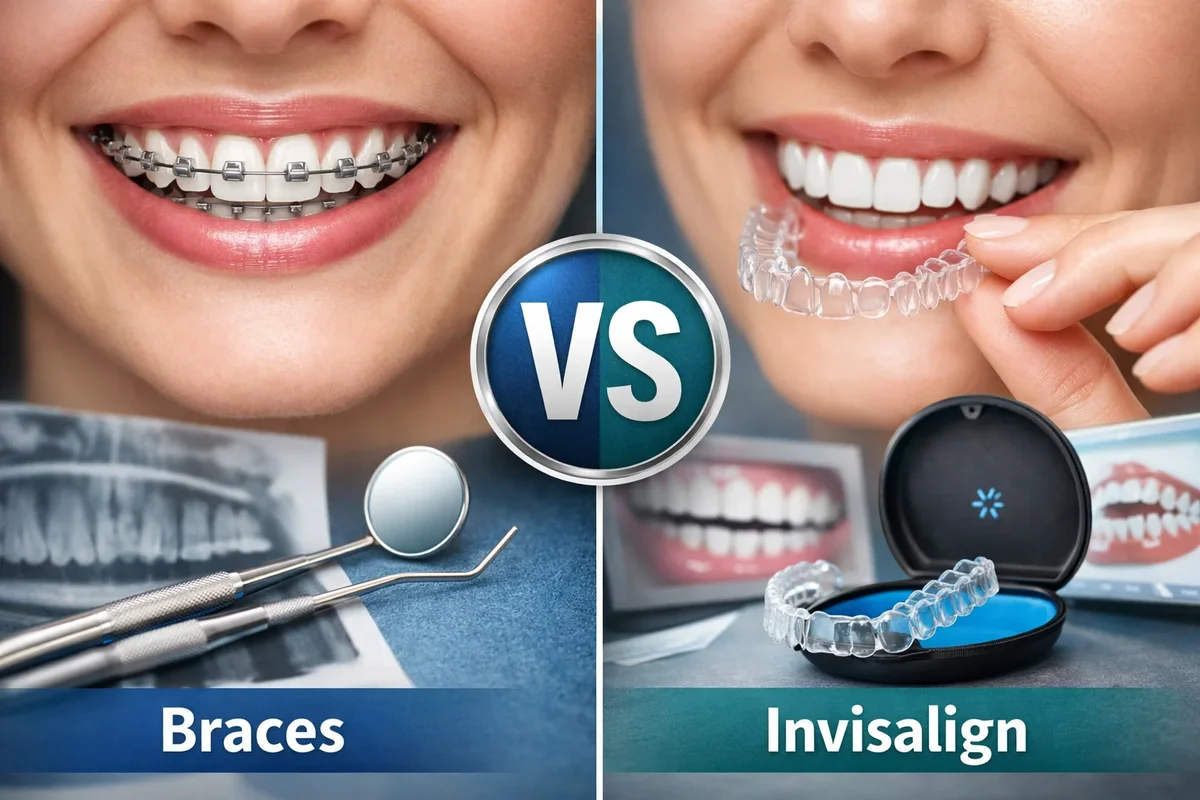
Compare Invisalign vs Traditional Braces: Key Differences Explained
One of the most common reasons people search to compare Invisalign is to understand how it truly differs from traditional metal braces. While both treatments aim to straighten teeth and improve bite alignment, the patient experience, technology, and lifestyle impact can be very different. Understanding these differences clearly is essential for choosing the orthodontic solution that fits your needs, expectations, and daily routine.
When you compare Invisalign with traditional braces, it is not about deciding which option is “better” in general, but which is better for you. Factors such as age, dental complexity, comfort expectations, appearance concerns, and discipline all play a role in this comparison 😊.
Appearance and Discretion: A Major Difference
For many patients, aesthetics are the first thing they consider when they compare Invisalign to braces. Traditional braces use metal brackets and wires that are clearly visible when you smile or speak. Invisalign, on the other hand, uses transparent aligners that are designed to be nearly invisible during everyday interactions.
This discreet appearance makes Invisalign especially appealing for adults and professionals who want orthodontic treatment without drawing attention. Teenagers also increasingly prefer Invisalign for social confidence. When comparing Invisalign and braces from an aesthetic standpoint, Invisalign almost always stands out as the more subtle option.
Social and Professional Confidence
Confidence plays a big role in orthodontic decisions. Patients who compare Invisalign often mention feeling more comfortable in meetings, photos, and social settings. Braces can sometimes cause self-consciousness, especially in adult patients. Invisalign allows people to straighten their teeth without visibly announcing their treatment.
Comfort and Daily Experience
Comfort is another key area when you compare Invisalign with traditional braces. Metal braces can cause irritation to the cheeks, lips, and gums due to brackets and wires. Adjustments may also lead to soreness that lasts several days.
Invisalign aligners are made from smooth, medical-grade plastic and are custom-fitted to your teeth. While you will still feel pressure as teeth move, many patients report fewer soft tissue injuries and less overall discomfort compared to braces 🙂.
Eating and Speaking Differences
Eating is one of the most noticeable lifestyle differences when patients compare Invisalign to braces. With traditional braces, certain foods are restricted to avoid damaging brackets or wires. Sticky, hard, or crunchy foods can be problematic.
Invisalign aligners are removable, which means you can eat normally once the aligners are taken out. This flexibility is a major advantage for many patients. Speech may feel slightly different during the first few days of Invisalign, but most people adapt quickly.
Oral Hygiene and Dental Health
When dentists encourage patients to compare Invisalign and braces, oral hygiene is often a major discussion point. Braces can make brushing and flossing more challenging, increasing the risk of plaque buildup and gum inflammation if oral care is not meticulous.
Invisalign aligners can be removed for brushing and flossing, allowing patients to maintain their normal oral hygiene routine. This can reduce the risk of cavities and gum disease during treatment. From a long-term dental health perspective, this is a meaningful advantage when you compare Invisalign to fixed braces.
Cleaning and Maintenance Responsibilities
However, Invisalign also requires responsibility. Patients must clean their aligners regularly to prevent odor and bacteria buildup. When people compare Invisalign honestly, they recognize that while hygiene is easier, it also requires consistent habits.
Treatment Effectiveness and Case Complexity
Another crucial factor when you compare Invisalign with traditional braces is treatment capability. Traditional braces are extremely versatile and can treat even the most complex orthodontic cases, including severe misalignment and jaw issues.
Invisalign is highly effective for mild to moderate cases and many complex ones when managed by experienced providers. However, in certain severe cases, braces may still be the preferred or more predictable option. This is why professional evaluation is essential before making comparisons.
Compliance vs Fixed Control
Traditional braces work continuously because they are fixed in place. Invisalign relies on patient compliance. When you compare Invisalign to braces, this difference is critical. Invisalign must be worn 20 to 22 hours per day. Patients who are disciplined achieve excellent results, while inconsistent wear can slow progress.
Treatment Duration and Adjustments
Treatment time varies for both options. When patients compare Invisalign and braces, they often assume Invisalign is faster, but this depends on case complexity and compliance. Invisalign treatments may range from a few months to over a year, similar to braces.
Braces require regular adjustments by the orthodontist, while Invisalign typically involves switching to a new set of aligners every one to two weeks. Many patients appreciate the predictability and fewer in-office adjustments that come with Invisalign.
In conclusion, when you compare Invisalign vs traditional braces, the decision comes down to lifestyle, comfort, appearance, and responsibility. Invisalign offers discretion, flexibility, and improved comfort for many patients, while braces remain a powerful and reliable option for complex cases. A professional consultation will help determine which approach aligns best with your dental needs and personal preferences ✨.
Who Is the Best Candidate When You Compare Invisalign Solutions?
One of the most important questions patients ask when they compare Invisalign treatment options is whether they are actually a good candidate. Invisalign is a highly advanced orthodontic system, but it is not designed for every dental situation. Understanding candidacy is essential, because choosing Invisalign when it is not suitable can lead to disappointment, extended treatment time, or suboptimal results.
When dentists help patients compare Invisalign, they start by evaluating dental structure, bite alignment, age, lifestyle, and expectations. Invisalign works best when there is a balance between clinical suitability and patient commitment 😊.
Ideal Dental Conditions for Invisalign Treatment
In general, Invisalign is most effective for patients with mild to moderate orthodontic issues. These include crowded teeth, gaps between teeth, minor overbites, underbites, crossbites, and slight rotations. When patients compare Invisalign to other orthodontic options, these types of cases often show excellent and predictable outcomes.
For patients with severe bite problems, significant jaw misalignment, or complex skeletal issues, Invisalign may still be an option, but it often requires advanced planning, attachments, and sometimes additional orthodontic techniques. This is why professional diagnosis is crucial before making a final decision.
Why Case Complexity Matters
When you compare Invisalign, it is easy to assume that the system works the same way for everyone. In reality, treatment success depends heavily on how teeth need to move. Simple movements like spacing and mild crowding are well-suited for aligners, while more complex movements may require longer treatment times or alternative solutions.
Age Considerations: Teens vs Adults
Age is another key factor when patients compare Invisalign. Invisalign is suitable for both teenagers and adults, but the reasons for choosing it often differ. Adults frequently choose Invisalign for its discreet appearance and professional convenience. Teens may prefer it for comfort and confidence, but parental involvement is often needed to ensure compliance.
Invisalign Teen includes special features like compliance indicators and allowances for growing teeth. When families compare Invisalign for teenagers, these features can make a significant difference in treatment success.
Bone Health and Growth Factors
For adults, bone density and periodontal health are important considerations when they compare Invisalign. Healthy gums and sufficient bone support are essential for safe tooth movement. A dental evaluation will ensure that Invisalign treatment does not compromise long-term oral health.
Lifestyle and Personality Fit
Beyond clinical factors, lifestyle plays a huge role when patients compare Invisalign. Invisalign requires responsibility. Aligners must be worn consistently, removed only for eating and cleaning, and stored properly. Patients who are organized, disciplined, and motivated tend to perform very well with Invisalign.
On the other hand, patients who frequently forget to wear aligners or misplace them may struggle. When comparing Invisalign with fixed braces, this self-management aspect is a defining difference.
Daily Habits That Influence Success
Frequent snacking, irregular routines, or inconsistent oral hygiene can impact Invisalign success. When you compare Invisalign honestly, you must consider whether your daily habits support long-term compliance. Invisalign rewards consistency and accountability.
Expectations and Aesthetic Goals
Patient expectations are another critical factor when dentists help people compare Invisalign. Invisalign delivers gradual, natural-looking improvements, but it is not an instant transformation. Patients who understand the process and trust the treatment timeline are usually more satisfied.
Those seeking dramatic or immediate cosmetic changes may need additional cosmetic dentistry after orthodontic treatment, such as bonding or veneers. Invisalign focuses on alignment, not tooth shape or color.
Psychological Readiness and Patience
Orthodontic treatment is a journey. When patients compare Invisalign, those who approach it with patience and realistic expectations tend to have the best experiences. Invisalign works through steady, controlled movements, and results improve progressively over time.
Professional Evaluation Is the Final Deciding Factor
No online guide can replace a professional orthodontic evaluation. While researching and learning to compare Invisalign is valuable, only a qualified dentist or orthodontist can confirm candidacy. Digital scans, bite analysis, and clinical examination are necessary to determine whether Invisalign is the right choice.
In summary, the best candidate for Invisalign is someone with suitable dental conditions, good oral health, realistic expectations, and the discipline to follow instructions. When you compare Invisalign thoughtfully and honestly assess your own needs and habits, you are far more likely to achieve a successful and satisfying outcome ✨.
Compare Invisalign Treatment Duration and Expected Results
One of the most common and practical questions patients ask when they compare Invisalign treatment options is how long the process will take and what kind of results they can realistically expect. Treatment duration and outcome predictability are crucial factors, especially for adults who are balancing professional, social, and personal commitments. Understanding these elements helps set clear expectations and reduces frustration during the orthodontic journey 😊.
When dentists explain how to compare Invisalign treatment timelines, they emphasize that no two cases are exactly the same. Invisalign treatment duration depends on several variables, including the complexity of tooth movement, patient compliance, biological response, and the precision of the treatment plan.
Average Invisalign Treatment Duration
On average, Invisalign treatment lasts between 6 and 18 months. Mild cases involving small gaps or slight crowding may be completed in as little as 6 months, while more complex cases can extend beyond a year. When patients compare Invisalign to traditional braces, they often find that treatment times are similar, though Invisalign can sometimes be faster for simpler cases.
Each Invisalign aligner is typically worn for one to two weeks before switching to the next set. This gradual progression allows teeth to move in small, controlled increments. Dentists carefully plan the entire sequence before treatment begins, which is why Invisalign is often praised for its predictability.
Why Some Invisalign Treatments Take Longer
When people compare Invisalign experiences online, they may notice a wide range of reported treatment times. Longer treatments are often associated with complex bite issues, significant tooth rotations, or cases requiring refinements. Refinements involve creating additional aligners to fine-tune tooth positions after the initial series is completed.
Another major factor is compliance. Invisalign must be worn 20 to 22 hours per day. Patients who consistently follow this rule tend to stay on schedule, while inconsistent wear can delay progress. This is a key difference when comparing Invisalign to fixed braces, which work continuously.
Expected Results: What Invisalign Can Achieve
When patients compare Invisalign outcomes, the majority are focused on visible improvements in smile alignment. Invisalign is highly effective at correcting crowding, spacing, and many bite issues. With proper planning and compliance, results are often comparable to those achieved with traditional braces.
Invisalign does more than improve appearance. Properly aligned teeth contribute to better oral hygiene, improved bite function, and reduced long-term wear on teeth. These functional benefits are an important part of the expected results when dentists help patients compare Invisalign options.
Predictability Through Digital Planning
One of the strongest advantages when you compare Invisalign is its digital treatment planning system. Before treatment begins, patients can see a 3D simulation of how their teeth are expected to move over time. This visual roadmap helps patients understand the process and stay motivated.
However, it is important to remember that simulations are projections, not guarantees. Biological factors such as bone density and individual tooth response can influence the pace of movement. This is why regular check-ups and professional monitoring remain essential.
Refinements and Adjustments During Treatment
Refinements are a normal part of Invisalign treatment and should not be seen as a failure. When patients compare Invisalign success stories, many involve one or more refinement phases. These additional aligners allow dentists to correct minor discrepancies and achieve optimal final alignment.
Refinements may add a few weeks or months to treatment, but they significantly improve the quality of results. Patients who understand this aspect of Invisalign tend to be more satisfied, as they value precision over speed.
How Often Progress Is Monitored
Regular follow-up appointments are essential when you compare Invisalign treatment expectations. These visits allow dentists to assess progress, address concerns, and make adjustments if needed. Some Invisalign cases require fewer in-office visits than braces, which is a major convenience factor for busy patients.
Long-Term Results and Retention
Achieving straight teeth is only part of the journey. When patients compare Invisalign outcomes, long-term stability is just as important as the initial result. After treatment, retainers are necessary to prevent teeth from shifting back to their original positions.
Retention protocols are similar for Invisalign and braces. Wearing retainers as instructed ensures that the results you worked for are maintained for years to come. Patients who follow post-treatment guidelines generally report high satisfaction and lasting improvements.
Realistic Expectations Lead to Better Satisfaction
One of the most important lessons when you compare Invisalign is that realistic expectations lead to better experiences. Invisalign is a powerful orthodontic tool, but it requires patience, commitment, and trust in the process. Patients who understand timelines and embrace gradual improvement are far more likely to feel positive about their results.
In conclusion, when you compare Invisalign treatment duration and expected results, you should focus on case complexity, compliance, and professional guidance rather than fixed timelines. Invisalign offers predictable, effective, and aesthetically pleasing outcomes for the right candidates, making it a strong choice for modern orthodontic care ✨.
Compare Invisalign Comfort, Appearance, and Daily Lifestyle Impact
For many patients, the decision to compare Invisalign goes far beyond clinical effectiveness. Comfort, appearance, and how treatment fits into everyday life are often just as important as straightening teeth. Invisalign was designed with modern lifestyles in mind, and understanding these daily experience factors can make a big difference in long-term satisfaction 😊.
When dentists help patients compare Invisalign with other orthodontic options, they often focus on how treatment feels, how noticeable it is, and how disruptive it may be to normal routines. Invisalign tends to score highly in these areas, but it also comes with responsibilities that patients should fully understand.
Comfort Compared to Traditional Orthodontic Methods
Comfort is one of the first things patients notice when they compare Invisalign to traditional braces. Metal brackets and wires can irritate the cheeks, lips, and tongue, especially after adjustments. Small cuts or sores inside the mouth are not uncommon with fixed braces.
Invisalign aligners are made from smooth, flexible plastic and are custom-designed to fit snugly over the teeth. While pressure is applied to move teeth gradually, most patients describe Invisalign discomfort as mild and temporary. This pressure usually lasts a day or two after switching to a new aligner and is generally more tolerable than brace adjustments.
Adjustment Period and Sensory Changes
When patients first compare Invisalign experiences, they often mention a short adjustment period. During the first few days, speech may feel slightly different, and teeth may feel sensitive. However, most people adapt quickly, and these sensations typically fade within a week.
Unlike braces, Invisalign has no sharp components, which significantly reduces ongoing irritation. This makes it a preferred option for patients with sensitive oral tissues.
Appearance and Aesthetic Advantages
Appearance is one of the strongest reasons people compare Invisalign to other orthodontic treatments. Invisalign aligners are transparent and designed to be barely noticeable in daily interactions. From a normal conversational distance, most people will not realize you are undergoing orthodontic treatment.
This discreet appearance is especially valuable for adults in professional environments, public-facing roles, or social settings. Invisalign allows patients to maintain confidence while improving their smiles, which is not always easy with visible metal braces 😄.
Photos, Meetings, and Social Situations
Patients who compare Invisalign often highlight feeling more comfortable in photos, presentations, and meetings. Invisalign aligners do not reflect light like metal brackets, making them less noticeable on camera. This subtle benefit can significantly improve self-esteem during treatment.
Daily Lifestyle Flexibility
Lifestyle flexibility is another major factor when patients compare Invisalign. Because aligners are removable, patients can eat their favorite foods without restriction. There is no need to avoid hard, sticky, or crunchy foods, which are commonly restricted with braces.
This freedom is particularly appealing for people who enjoy dining out, traveling, or maintaining specific diets. Being able to remove aligners for special occasions also adds to the sense of control Invisalign provides.
Eating, Drinking, and Social Habits
When you compare Invisalign honestly, it is important to note that aligners must be removed before eating or drinking anything other than water. This means patients need to plan ahead and maintain good habits. Frequent snacking may become less convenient, which some patients see as a positive lifestyle adjustment.
Oral Hygiene and Cleanliness
Another daily-life advantage when patients compare Invisalign is oral hygiene. Invisalign aligners can be removed for brushing and flossing, allowing patients to maintain their normal dental routine. This reduces the risk of plaque buildup and gum problems compared to braces.
However, aligners themselves must be cleaned regularly. Neglecting aligner hygiene can lead to odor or discoloration. This responsibility is part of the Invisalign lifestyle and should be considered during comparison.
Responsibility and Routine Building
When people compare Invisalign, they sometimes underestimate the level of responsibility involved. Aligners must be worn 20 to 22 hours per day to be effective. Forgetting to put them back in after meals or misplacing them can delay treatment.
Patients who build consistent routines tend to thrive with Invisalign. Those who prefer a “set and forget” approach may find fixed braces easier to manage.
Travel, Work, and Long-Term Convenience
For busy individuals, travel and work schedules matter when they compare Invisalign. Invisalign typically requires fewer emergency visits than braces, as there are no broken wires or brackets. Many patients appreciate the reduced need for urgent appointments.
Aligners are easy to pack, lightweight, and discreet, making Invisalign especially convenient for frequent travelers or professionals with demanding schedules.
Psychological Comfort and Control
Beyond physical comfort, Invisalign offers psychological comfort. When patients compare Invisalign, they often value the sense of control over their treatment. Being able to remove aligners temporarily, see progress digitally, and manage their own routine creates a more empowering experience.
In conclusion, when you compare Invisalign comfort, appearance, and daily lifestyle impact, Invisalign stands out as a modern, flexible, and patient-friendly option. While it requires responsibility and discipline, the benefits in comfort, aesthetics, and lifestyle integration make it an excellent choice for many individuals seeking orthodontic treatment ✨.
Compare Invisalign Costs: What Affects the Final Price?
One of the most searched and often misunderstood topics when patients compare Invisalign treatment options is cost. Many people assume Invisalign is always more expensive than traditional braces, but the reality is far more nuanced. Invisalign pricing depends on a combination of clinical, technical, and personal factors, and understanding these elements helps patients make informed and realistic decisions 😊.
When dentists explain how to compare Invisalign costs accurately, they emphasize that there is no single fixed price. Instead, Invisalign treatment is customized, and the final cost reflects the complexity and length of the treatment plan.
Average Invisalign Cost Ranges
Globally, Invisalign treatment typically falls within a broad price range. When patients compare Invisalign pricing internationally, costs can vary significantly depending on country, clinic reputation, and provider experience.
- Mild cases: Often lower-range treatment plans
- Moderate cases: Mid-range pricing
- Complex cases: Higher-range due to extended treatment and refinements
In many markets, Invisalign pricing is comparable to high-quality traditional braces. This surprises patients who initially assume Invisalign is a premium-only option.
Why Online Prices Can Be Misleading
When people search online to compare Invisalign costs, they often encounter advertised “starting prices.” These figures usually apply only to very simple cases and do not include refinements, retainers, or extended monitoring. A comprehensive consultation is the only way to determine true costs.
Key Factors That Influence Invisalign Pricing
Several core factors determine how much Invisalign treatment will cost. Understanding these variables is essential when you compare Invisalign options between clinics.
Case Complexity and Treatment Length
The most significant cost factor is case complexity. More complex tooth movements require more aligners, longer treatment time, and often additional refinement stages. When patients compare Invisalign pricing, longer treatments naturally cost more due to increased planning and follow-up care.
Number of Aligners and Refinements
Each Invisalign case involves a specific number of aligners. More aligners mean more production, planning, and monitoring. Refinements, which are additional aligners created after the initial series, can also influence the final cost. Clinics that include refinements upfront may appear more expensive but often provide better value.
Provider Experience and Clinic Standards
Another critical element when patients compare Invisalign costs is the provider’s experience. Experienced Invisalign providers often charge more, but they also deliver more predictable results, fewer complications, and more efficient treatment.
High-quality clinics invest in advanced digital scanners, ongoing training, and patient monitoring systems. These investments contribute to pricing but also significantly improve treatment accuracy and satisfaction.
Why Cheaper Is Not Always Better
When people compare Invisalign purely based on price, they may overlook the importance of expertise. Poor planning can lead to prolonged treatment, unsatisfactory results, or the need for corrective procedures later. In orthodontics, value often matters more than the lowest price.
What Is Usually Included in Invisalign Fees?
To truly compare Invisalign costs between clinics, patients must understand what is included in the quoted price. Comprehensive Invisalign packages often include:
- Initial consultation and digital scans
- Customized treatment planning
- All aligners in the treatment plan
- Refinements if needed
- Progress check-ups
- Retainers after treatment
Some clinics offer lower upfront prices but charge separately for refinements or retainers. Always ask for a full breakdown before deciding.
Payment Plans and Financing Options
Many dental clinics offer flexible payment plans, making Invisalign more accessible. When patients compare Invisalign affordability, monthly payment options can make a significant difference, especially for longer treatments.
Comparing Invisalign to Traditional Braces Cost-Wise
When patients compare Invisalign to traditional braces from a cost perspective, the difference is often smaller than expected. High-end ceramic or lingual braces can cost as much as, or even more than, Invisalign. The key difference lies in lifestyle benefits and treatment experience.
Long-Term Value and Satisfaction
Cost should never be evaluated in isolation. When you compare Invisalign, consider comfort, appearance, hygiene, convenience, and long-term satisfaction. Many patients feel Invisalign offers strong overall value despite a slightly higher initial cost.
In conclusion, when you compare Invisalign costs, focus on transparency, inclusions, provider expertise, and long-term value rather than headline prices. Invisalign is an investment in both dental health and quality of life, and understanding what affects pricing helps ensure that investment delivers lasting results ✨.
Compare Invisalign Attachments, Materials, and Technology
When patients begin to compare Invisalign, many focus on appearance and cost, but fewer understand the role of attachments, materials, and underlying technology. These elements are critical to how Invisalign works, how comfortable it feels, and how predictable the results are. A deeper look at these components helps patients evaluate Invisalign beyond surface-level impressions and appreciate why outcomes can vary from one case to another 😊.
To accurately compare Invisalign, it is essential to understand that Invisalign is not just a clear tray. It is a sophisticated orthodontic system built on advanced materials science, biomechanical principles, and digital treatment planning.
What Are Invisalign Attachments and Why Are They Used?
Attachments are small, tooth-colored shapes bonded temporarily to certain teeth during Invisalign treatment. When patients compare Invisalign experiences, attachments are often mentioned as a point of concern or curiosity. These attachments give aligners something to grip, allowing more precise and controlled tooth movements.
Not every Invisalign case requires attachments, but many moderate or complex cases do. Attachments help move teeth vertically, rotate them accurately, or shift them more efficiently. Without attachments, certain movements would be difficult or slower to achieve.
Are Attachments Noticeable?
Patients who compare Invisalign aesthetics often worry that attachments will make the aligners obvious. In reality, attachments are designed to blend with natural tooth color and are far less noticeable than metal brackets. When aligners are worn over them, attachments are usually barely visible during conversation.
Attachments are removed at the end of treatment, leaving the tooth surface smooth and unchanged when done properly by a professional.
Invisalign Aligner Materials Explained
The material used in Invisalign aligners is one of the most important factors when patients compare Invisalign to other clear aligner systems. Invisalign aligners are made from a patented, medical-grade thermoplastic material designed for comfort, durability, and controlled force application.
This material is engineered to deliver consistent pressure over time while remaining flexible enough for easy insertion and removal. It is also free from latex and common allergens, making it safe for long-term oral use.
Comfort and Fit Advantages
When people compare Invisalign comfort levels, the material quality plays a major role. The smooth edges and precise fit reduce irritation to gums and cheeks. Poorly made aligners from less advanced systems may feel stiff, rough, or imprecise, leading to discomfort and reduced compliance.
SmartTrack Technology and Tooth Movement Precision
One of the most advanced features patients encounter when they compare Invisalign is SmartTrack technology. SmartTrack is Invisalign’s proprietary material designed to apply more gentle, continuous forces compared to older aligner materials.
This technology improves aligner tracking, meaning the aligners stay better aligned with the teeth throughout each stage. Better tracking leads to more predictable tooth movement and reduces the need for mid-treatment corrections.
Why Predictable Force Matters
Orthodontic tooth movement relies on controlled biological responses. When patients compare Invisalign effectiveness, systems that apply steady, gentle force tend to achieve better results with less discomfort. SmartTrack technology helps maintain consistent force, improving both comfort and outcomes.
Digital Scanning and 3D Treatment Planning
Technology is at the heart of Invisalign. When dentists help patients compare Invisalign, they often highlight digital scanning and 3D treatment planning as major advantages. Instead of traditional impressions, Invisalign uses high-precision digital scans to create a virtual model of the patient’s teeth.
This digital model is used to design the entire treatment sequence from start to finish. Each aligner is planned to move teeth incrementally, and patients can see a simulation of expected results before treatment begins.
The Role of Clinician Expertise in Digital Planning
While the technology is advanced, human expertise remains critical. When patients compare Invisalign results, differences often come down to how well the clinician interprets and adjusts the digital plan. Experienced providers can fine-tune movements, optimize attachment placement, and anticipate potential challenges.
Comparing Invisalign Technology to Other Aligner Systems
Many patients assume all clear aligners are the same, but when they compare Invisalign to other systems, differences in materials, attachment design, and digital planning become clear. Invisalign’s long-standing research, large treatment database, and continuous innovation set it apart.
Other aligner brands may lack the same level of material refinement or predictive software, which can affect comfort, efficiency, and final results.
Innovation and Ongoing Development
Invisalign continues to evolve. When patients compare Invisalign over time, they benefit from ongoing research and technological improvements. New attachment designs, improved materials, and refined planning algorithms contribute to better patient experiences year after year.
In conclusion, when you compare Invisalign attachments, materials, and technology, you gain a deeper understanding of why Invisalign is more than just a cosmetic solution. Its advanced materials, precise attachments, and sophisticated digital planning work together to deliver controlled, comfortable, and predictable orthodontic results. This combination is a key reason why Invisalign remains a leading choice for modern orthodontic treatment ✨.
Compare Invisalign Outcomes: Long-Term Results and Patient Satisfaction
When patients decide to compare Invisalign, many focus heavily on the treatment phase itself, but long-term outcomes and patient satisfaction are just as important. Orthodontic treatment is not only about straightening teeth temporarily; it is about achieving lasting alignment, functional bite improvement, and confidence that endures for years. Understanding long-term results helps patients make decisions they will not regret 😊.
Dentists often emphasize that to truly compare Invisalign, patients must look beyond before-and-after photos and consider stability, retention, oral health benefits, and real-life satisfaction after treatment is complete.
What Long-Term Results Can Invisalign Deliver?
Invisalign is designed to deliver results comparable to traditional braces when used correctly. When patients compare Invisalign outcomes, studies and clinical experience show that Invisalign can effectively correct crowding, spacing, and many bite issues with lasting success.
Long-term alignment depends on two main factors: accurate treatment planning and proper retention after treatment. Invisalign’s digital planning system allows for precise control of tooth movement, which contributes to stable results when followed by appropriate retainer use.
Alignment, Bite Function, and Tooth Wear
Patients who compare Invisalign long-term benefits often report improvements not only in appearance but also in bite function. Proper alignment helps distribute biting forces evenly, reducing excessive wear on certain teeth. This can lower the risk of enamel damage, chipping, and jaw discomfort over time.
Corrected alignment also makes oral hygiene easier, which supports healthier gums and reduces the risk of periodontal problems in the future.
The Role of Retainers in Long-Term Success
No orthodontic treatment is complete without retention. When dentists explain how to compare Invisalign long-term outcomes, they stress that retainers are essential. Teeth naturally tend to shift back toward their original positions, especially in the first months after treatment.
Invisalign patients are usually provided with clear retainers that are worn full-time initially and then gradually reduced to nighttime use. Patients who follow retainer instructions closely tend to maintain their results for many years.
Retention Compliance and Stability
Just like aligner wear, retainer compliance plays a critical role when patients compare Invisalign satisfaction levels. Those who are consistent with retainer use experience significantly better long-term stability than those who neglect this phase.
Retention is a lifelong commitment, but the effort is minimal compared to the benefits of preserving a straight, healthy smile.
Patient Satisfaction and Quality of Life
Patient satisfaction is one of the strongest indicators when people compare Invisalign. Surveys and clinical feedback consistently show high satisfaction rates among Invisalign patients, particularly in adults. Comfort, aesthetics, and lifestyle flexibility contribute heavily to this positive experience.
Many patients report increased confidence in both personal and professional settings after completing Invisalign treatment. A well-aligned smile can positively influence self-esteem, communication, and social interactions 😄.
Emotional and Psychological Benefits
Beyond physical changes, patients who compare Invisalign often highlight psychological benefits. Feeling confident about one’s smile can reduce social anxiety and improve overall well-being. These emotional outcomes are an important but often underestimated part of orthodontic success.
Common Concerns About Long-Term Invisalign Results
Some patients worry that Invisalign results may not last as long as those from braces. When professionals help patients compare Invisalign objectively, they clarify that long-term stability depends more on retention and compliance than on the treatment method itself.
Invisalign failures are rare when treatment is properly planned and patients follow instructions. Most dissatisfaction cases are linked to inconsistent aligner wear, skipped refinements, or poor retainer compliance.
Managing Expectations for Long-Term Outcomes
Realistic expectations are essential when you compare Invisalign. Invisalign is highly effective, but it does not stop natural aging or future dental changes. Teeth may still shift slightly over decades, which is normal and manageable with ongoing retainer use.
Invisalign vs Other Treatments: Long-Term Perspective
When patients compare Invisalign with traditional braces from a long-term perspective, outcomes are generally comparable. The key differences lie in treatment experience rather than final alignment. Invisalign’s comfort and discretion often lead to higher satisfaction during treatment, which positively influences overall perception.
High satisfaction during treatment often translates into better compliance, which directly supports long-term success.
Why Patient Commitment Matters Most
Ultimately, when people compare Invisalign long-term outcomes, the most important factor is patient commitment. Invisalign rewards consistency, discipline, and follow-through. Patients who actively participate in their treatment tend to achieve excellent, lasting results.
In conclusion, when you compare Invisalign outcomes in terms of long-term results and patient satisfaction, Invisalign proves to be a reliable, effective, and rewarding orthodontic solution. With proper planning, compliance, and retention, Invisalign can deliver stable alignment, improved oral health, and lasting confidence that continues long after treatment ends ✨.
How to Compare Invisalign and Make the Right Final Decision
After reviewing comfort, cost, technology, and long-term outcomes, the final step is knowing how to compare Invisalign in a structured, confident way. Many patients reach this stage feeling informed but still unsure how to turn information into a clear decision. This section is designed to help you connect the dots and choose the option that truly fits your dental needs, lifestyle, and expectations 😊.
To compare Invisalign effectively, you must balance clinical facts with personal priorities. Invisalign is not just a product; it is a treatment process that requires cooperation between patient and provider. Making the right decision means understanding where Invisalign excels and where it may require compromise.
Start With Your Dental Needs, Not Marketing
The most important step when you compare Invisalign is starting with an accurate diagnosis. Online research and testimonials are helpful, but they cannot replace a professional evaluation. Tooth alignment, bite relationship, jaw structure, and gum health all influence whether Invisalign is the best solution.
Patients who base their decision purely on appearance or convenience may overlook important clinical limitations. A dentist or orthodontist can explain whether Invisalign is suitable for your specific case or whether alternative treatments may deliver better results.
Questions to Ask During Your Consultation
When preparing to compare Invisalign options, ask clear, practical questions:
- Is Invisalign suitable for my level of misalignment?
- How long is my estimated treatment time?
- Will attachments or refinements be needed?
- What is included in the total treatment fee?
Clear answers help transform comparison into confident decision-making.
Evaluate Lifestyle Fit Honestly
One of the most overlooked steps when people compare Invisalign is honest self-assessment. Invisalign requires daily commitment. Aligners must be worn 20 to 22 hours per day, removed responsibly, and cleaned regularly.
If you value flexibility, discretion, and control, Invisalign may be an excellent fit. If you prefer a treatment that works continuously without daily decisions, fixed braces may feel less demanding. There is no wrong choice, only the right match for your habits.
Consistency Equals Success
Patients who successfully compare Invisalign outcomes often share one trait: consistency. Those who follow instructions closely experience smoother treatment, fewer delays, and higher satisfaction. Invisalign rewards responsibility more than any other orthodontic system.
Compare Invisalign Providers, Not Just the Brand
Another critical step when you compare Invisalign is evaluating the provider, not just the aligner system. Invisalign outcomes depend heavily on planning, monitoring, and clinical expertise. Two providers using the same system can deliver very different results.
Experience, digital scanning quality, and follow-up protocols all matter. Choosing a skilled provider reduces the risk of prolonged treatment, unnecessary refinements, or compromised results.
Why Experience Impacts Results
When patients compare Invisalign providers, those with more experience are better at anticipating challenges and fine-tuning treatment plans. This often leads to shorter treatment times, better tracking, and more precise final alignment.
Balance Cost With Long-Term Value
Cost is important, but it should not be the sole deciding factor when you compare Invisalign. A lower upfront price may not include refinements, retainers, or long-term monitoring. A slightly higher investment often delivers better value, predictability, and peace of mind.
Think in terms of long-term benefits: improved oral health, reduced dental complications, and lasting confidence. Invisalign is an investment in both function and quality of life.
Avoid Short-Term Thinking
Patients who regret orthodontic decisions often focused too narrowly on price or speed. When you compare Invisalign with a long-term perspective, the focus shifts toward stability, comfort, and satisfaction over many years.
Set Realistic Expectations From the Start
One of the most important lessons when you compare Invisalign is understanding what the treatment can and cannot do. Invisalign is highly effective, but it works gradually. It improves alignment, not tooth color or shape, and it requires patience.
Patients with realistic expectations are far more likely to feel satisfied with both the process and the final outcome.
Trust the Process
Orthodontic treatment is a journey. When patients compare Invisalign thoughtfully and commit to the process, results tend to exceed expectations. Trusting your provider and following instructions closely creates the foundation for success.
Final Thoughts on How to Compare Invisalign
In conclusion, to compare Invisalign properly, you must look at the complete picture: clinical suitability, lifestyle fit, provider expertise, cost transparency, and long-term goals. Invisalign is not simply a cosmetic trend; it is a scientifically advanced orthodontic system that delivers excellent results for the right candidates.
When comparison turns into understanding, and understanding turns into commitment, Invisalign can become a powerful tool for achieving a healthier, more confident smile. Making an informed decision today sets the stage for results you will appreciate for years to come ✨.