
When patients search online for detailed information about the complete dental implants cost, they are usually looking for clarity, transparency, and trustworthy guidance. This comprehensive overview has been designed to answer every important question—covering the factors that influence pricing, typical treatment stages, regional cost variations, long-term value, and what truly determines the total financial investment. In 2025, full-mouth implant dentistry continues to advance rapidly, offering durable, natural-looking solutions that replace every missing tooth with long-term stability and improved quality of life. 🦷✨
Before exploring specific numbers, it’s important to understand that the complete dental implants cost reflects far more than just the implants themselves. It involves surgical expertise, diagnostic imaging, implant materials, prosthetic components, lab craftsmanship, medical protocols, and follow-up care. Because every patient has a different level of bone density, gum health, tooth loss severity, anatomical structure, and aesthetic expectations, the final treatment plan—and therefore the final price—changes significantly from person to person. This is why many clinics offer a personalized consultation before giving an exact quote.
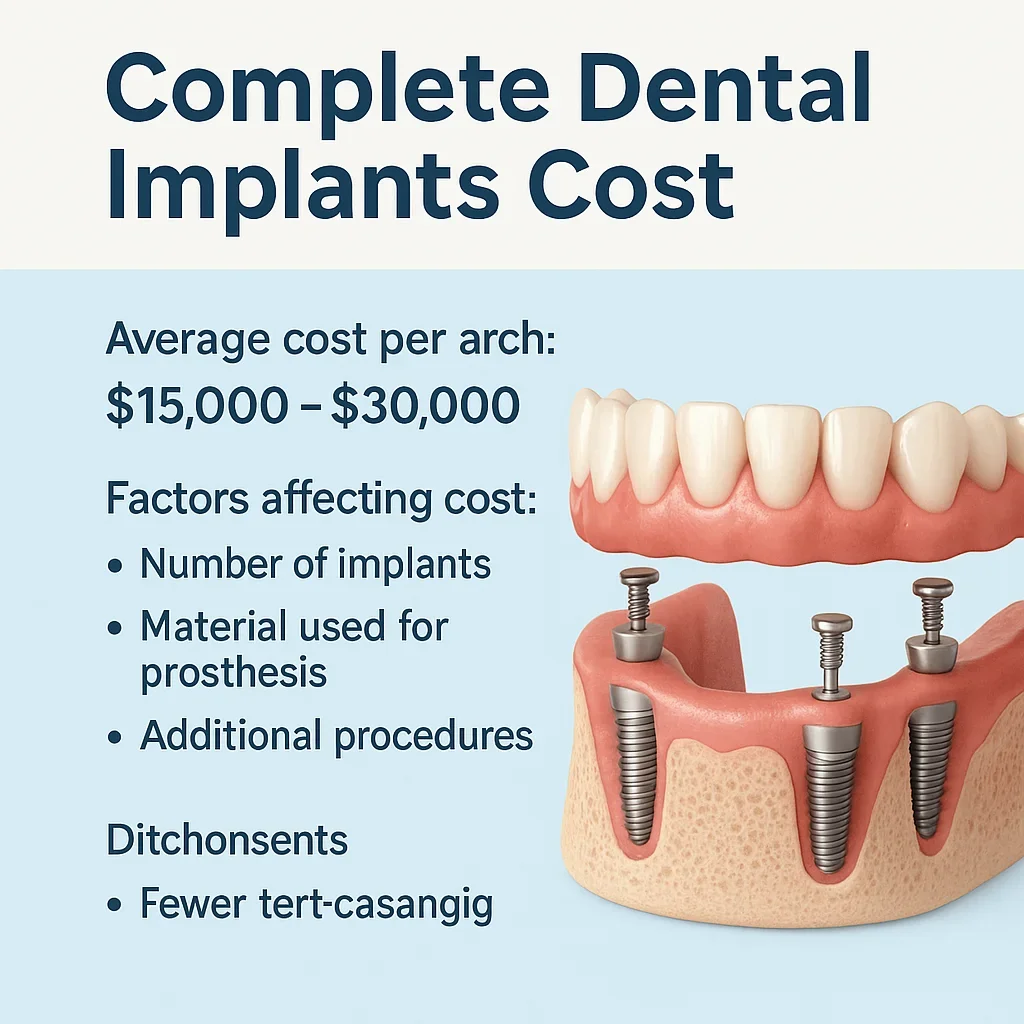
Another critical point is that complete dental implants are not the same as single implants. Full-mouth solutions integrate multiple implants per arch (usually 4–6), often combined with a fixed bridge, titanium framework, and high-strength ceramic teeth. As a result, the complete dental implants cost represents a full-system rehabilitation rather than an isolated implant placement. Patients receive a stable, functional, and aesthetic restoration that closely mimics natural teeth—something traditional dentures cannot provide.
In addition to giving you a stable bite and renewed confidence, full-arch implants help prevent the ongoing bone loss that normally occurs after tooth loss. The implants stimulate the jawbone, preserving facial structure, and supporting oral health long-term. This is why many experts consider full-mouth implants a “lifetime investment,” not just a cosmetic upgrade. Some patients even search for related terms like “full-mouth restoration price” or “implant-supported arch treatment fees,” which are semantically connected to the concept of complete dental implants cost and help define the broader financial scope of this advanced procedure.
Geographical location also plays a role in determining the final investment. Countries with lower operating costs—such as Turkey—often offer significantly more affordable full-mouth implant treatments compared to the United States, Canada, or the United Kingdom. However, lower costs do not automatically mean lower quality. Many international clinics use the same globally recognized implant brands, digital surgical systems, and laboratory technologies found in the U.S. and Europe. Patients researching these differences often discover that high-value destinations combine affordability with highly experienced surgeons and state-of-the-art facilities.
Furthermore, the cost can shift based on the type of implant system used. Premium implant brands such as Straumann or Nobel Biocare naturally increase the total price because of their extensive clinical research, durability, and proven long-term outcomes. The complexity of the case—such as whether sinus lifting, bone grafting, or a staged approach is required—may also influence the final complete dental implants cost. These preparatory procedures ensure the implants have enough bone support to secure a long-lasting, stable foundation.
Patients should also factor in the prosthetic materials used for the final teeth. Zirconia bridges tend to cost more than acrylic or composite alternatives because they offer superior strength, lifelike translucency, and longevity. These materials significantly affect the aesthetic outcome and durability of the restoration, making them a major part of the overall complete dental implants cost.
Those seeking professional support or wishing to schedule a detailed consultation can explore the clinic’s official communication channel through the following link:
Redent Klinik Contact Page.
For further official standards and dental health guidelines, readers can also refer to the authoritative resource provided by the American Dental Association, which offers valuable information about implant safety, materials, and procedural protocols without any restrictive “nofollow” tagging.
In summary, understanding the complete dental implants cost requires acknowledging the medical, technical, and aesthetic factors that shape the final treatment plan. By evaluating materials, surgical steps, prosthetics, and regional differences, patients gain the clarity they need to make informed decisions. This guide sets the foundation for deeper sections ahead, ensuring readers receive a logically structured, complete, and highly informative journey into full-mouth implant dentistry.
What Affects the Complete Dental Implants Cost in 2025?
Understanding what influences the complete dental implants cost in 2025 is essential for patients trying to plan their treatment and budget. Dental implants are one of the most advanced restorative options in modern dentistry, and full-mouth rehabilitation includes a wide range of medical, technical, and laboratory factors. Because each patient’s oral condition, bone structure, and aesthetic goals vary, the total investment also varies. In this section, you will find an in-depth, fully detailed breakdown of every component that shapes the cost—helping you make an informed decision with complete clarity. 🦷💡
Diagnostic Evaluations and Pre-Treatment Planning
The first major factor affecting the complete dental implants cost is the comprehensive diagnostic process. Before implants are placed, dentists must thoroughly analyze the patient’s jawbone density, gum health, bite structure, and any signs of infection or bone recession. Advanced 3D imaging systems such as CBCT (Cone Beam Computed Tomography) are typically required to create a precise surgical plan.
CBCT scans, panoramic X-rays, and digital impressions help determine the number of implants needed per arch (usually 4 to 6), the angulation of the implants, and whether supportive treatments are required. While these evaluations may seem like a small part of the process, they greatly influence both the outcome and the total complete dental implants cost. A properly developed digital plan reduces surgical risks, minimizes healing time, and ensures accurate implant placement.
Bone Quality and Additional Surgical Procedures
Jawbone condition is one of the largest cost drivers in implant dentistry. If patients have insufficient bone due to long-term tooth loss, infections, or natural resorption, the dentist may recommend procedures such as:
- Sinus lifting
- Bone grafting
- Ridge augmentation
- Soft tissue grafts
These treatments add stability and volume to the jawbone, ensuring the implants integrate properly. However, they can influence the overall complete dental implants cost because they require additional materials, extended healing time, and advanced surgical skill. Patients with excellent bone density may avoid these steps, making their treatment faster and more cost-effective.
Implant Brand, Materials, and Component Quality
The implant system chosen plays a significant role in determining the final cost. Premium implant brands like Straumann, Nobel Biocare, and BioHorizons typically cost more because they offer:
- Extensive clinical research
- Higher long-term success rates
- Stronger biocompatible titanium or zirconia
- Advanced surface technology for faster bone bonding
These qualities significantly improve durability, which is why many patients prefer high-grade systems despite the higher investment. Since complete full-arch restorations require multiple implants plus abutments, the implant brand directly increases the complete dental implants cost.
Prosthetic Material Selection
The final prosthetic teeth are another major cost component. Patients can choose between:
- Acrylic hybrid bridges – More affordable, lighter, and easier to repair
- Composite bridges – Aesthetic, moderately priced, and durable
- Zirconia bridges – Premium, strongest, and most natural-looking
Zirconia restorations usually raise the complete dental implants cost due to their strength, lifelike translucency, and long-term performance.
Surgical Technique, Technology, and Surgeon Expertise
The experience of the dental surgeon is one of the most important factors affecting treatment pricing. Implant surgery requires precision, especially in full-mouth rehabilitation where implants must be placed at optimal angles with perfect depth and alignment. Surgeons with decades of experience, extensive international training, and thousands of successful cases understandably charge more for their expertise.
Clinics equipped with modern technologies—such as guided implant surgery, digital smile design, CAD/CAM milling, and 3D-printed surgical guides—often provide faster, safer, and more accurate outcomes. These technological advantages can influence the total complete dental implants cost, but they also significantly increase treatment success rates.
Clinic Location and Regional Pricing Differences
Geographical location remains a major influence. For example:
- United States and Canada generally have the highest implant costs.
- Western Europe has moderately high pricing.
- Turkey and select medical tourism hubs offer the same quality at significantly lower prices due to operational cost differences.
Patients often search for related terms such as “full-mouth restoration fees” or “cost of complete arch implant treatment abroad,” which semantically align with the concept of complete dental implants cost.
Laboratory Work and Custom Aesthetic Design
High-end full-mouth restorations require advanced dental laboratories equipped with CAD/CAM milling machines, aesthetic ceramic layering studios, and digital color-matching systems. The craftsmanship of the prosthetic technician greatly impacts the final appearance and comfort of the restoration. Skilled technicians invest hours into designing, shaping, staining, and polishing each tooth, which contributes to the final complete dental implants cost.
Aftercare, Maintenance, and Warranty Coverage
Another essential factor is post-treatment care. Follow-up visits, bite adjustments, implant monitoring, and professional cleanings affect long-term results. Some clinics offer warranties or long-term support packages that add extra value. Patients benefit greatly from supervised post-operative care, especially during the healing and integration phase.
All these elements together shape the complete dental implants cost in 2025. By understanding the detailed factors behind the investment, patients can make informed decisions, compare treatment plans properly, and choose the clinic that offers the best balance of quality, safety, and value.
Full-Mouth Dental Implant Options and Their Price Differences
When patients begin researching full-mouth implant solutions, one of the most common questions they ask is why the complete dental implants cost varies so widely between different treatment options. Full-mouth restoration can be achieved through several implant-supported systems, each offering different levels of durability, aesthetics, comfort, and long-term value. Understanding these options is essential for making a confident, informed decision. This section provides a detailed overview of every major full-mouth implant method used in 2025 and explains how each one influences total pricing. 🦷💬
Just as no two patients are identical, the treatments are also far from “one size fits all.” Each option includes different types of implant designs, prosthetic materials, surgical protocols, and laboratory components. These are the primary reasons the complete dental implants cost can differ significantly from clinic to clinic. Let’s examine each full-mouth solution in detail.
All-on-4 Full-Arch Implant System
The All-on-4 technique is one of the most popular full-mouth restoration systems worldwide. As the name suggests, it uses four strategically placed implants to support a full arch of fixed prosthetic teeth. Two implants are placed vertically in the front of the jaw, while the other two are placed at an angle to maximize bone contact and stability.
This method is particularly suitable for patients with moderate bone loss who want to avoid bone grafting. Because the surgical procedure is more efficient and uses fewer implants, the All-on-4 option generally provides a lower complete dental implants cost compared to other full-arch methods. Patients also benefit from fast recovery and often receive temporary teeth on the same day, restoring function almost immediately.
Cost Factors of All-on-4
- Fewer implants per arch (4 instead of 5–6)
- Reduced need for grafting procedures
- Shorter operation time and reduced clinical appointments
- Prosthetic material choices (acrylic, composite, or zirconia)
These combined elements typically make All-on-4 one of the more economical systems in relation to the broader market’s complete dental implants cost.
All-on-6 Full-Arch Implant System
The All-on-6 method uses six implants to support a complete arch. This design adds greater long-term stability, especially for patients with adequate jawbone density. It also provides a stronger foundation for premium prosthetic materials like zirconia.
Compared to the All-on-4 technique, the All-on-6 system increases the complete dental implants cost because it requires additional implants, longer surgery, and more complex planning. However, it often offers superior longevity, durability, and chewing efficiency.
Why All-on-6 Costs More
- Two extra implants per arch
- Greater surgical time and complexity
- More robust structural support for full-arch zirconia bridges
- Higher manufacturing and laboratory precision requirements
Although the investment is higher, many patients consider the All-on-6 option a safer, more durable solution—especially those looking for the longest-lasting full-mouth restoration.
Implant-Supported Fixed Bridges
Another approach involves placing 8–10 implants per arch to support a fixed ceramic bridge. This is currently the most premium solution available and provides the closest possible experience to natural teeth.
Because this system requires numerous implants, extensive planning, and complex prosthetic design, it significantly increases the complete dental implants cost. However, the benefits are unmatched: maximum chewing power, exceptional stability, and the most natural-looking facial and smile aesthetics.
Features of Implant-Supported Bridges
- Highest chewing efficiency of any implant system
- Exceptional durability and long-term reliability
- Minimized bone loss through full-arch structural support
- Fully customized ceramic teeth shaped to the patient’s exact bite
This system is ideal for patients seeking an ultra-premium, lifelong restoration with the closest resemblance to natural dentition.
Removable Implant-Supported Overdentures
While less common in full-mouth cases today, overdentures supported by 2–4 implants per arch remain an option for some patients. These removable solutions “snap” onto implants for enhanced stability but are not fully fixed.
They significantly reduce the complete dental implants cost because the prosthetic structure is simpler, uses fewer implants, and requires less advanced laboratory manufacturing. However, overdentures do not offer the same long-term strength, comfort, or aesthetic results as fixed implant systems.
Advantages and Limitations
- More affordable full-mouth option
- Better stability compared to traditional dentures
- Not as durable or natural-looking as fixed bridges
- Requires daily removal for cleaning
How Prosthetic Material Changes the Final Price
Beyond the number of implants used, the material used to fabricate the final teeth is one of the strongest determinants of the complete dental implants cost. Among the most common material choices are:
- Acrylic Teeth with Titanium Bar – Affordable, lightweight, repairable
- Composite Teeth – More aesthetic, moderately priced
- Monolithic Zirconia Teeth – Premium, strongest, exceptionally aesthetic
Zirconia is the most expensive option because it is digitally milled from a solid block, offering unmatched strength and lifelike translucency. Patients looking for high-end results often choose zirconia due to its durability and natural appearance.
Which Full-Mouth Implant Option Is Best?
The ideal option depends on your oral health condition, bone density, lifestyle, and budget. Since each system affects the complete dental implants cost differently, a personalized consultation is essential to determine the best match. Some patients prioritize strength and longevity, while others prioritize affordability, immediate function, or aesthetic goals.
Overall, understanding the differences between All-on-4, All-on-6, fixed bridges, and implant-supported overdentures allows patients to compare solutions clearly and make an informed choice. Each system offers unique advantages, and the right one depends entirely on the patient’s health, expectations, and desired long-term outcome.
Understanding the True Value Behind Complete Dental Implants
Many patients begin their research focused solely on the complete dental implants cost, but understanding the true value behind full-mouth implant treatment requires looking deeper into the long-term health, functional, and lifestyle benefits. Dental implants are not simply “artificial teeth.” They are advanced biomechanical structures designed to restore the full function, stability, and appearance of natural dentition. Unlike removable dentures, full-arch implants integrate directly into the jawbone, preventing bone loss, improving facial structure, restoring chewing power, and offering long-lasting durability. This section will explore the hidden value behind the investment so patients can make informed, confident decisions. 💎🦷
Dental Implants as a Lifetime Investment
While some patients initially perceive the complete dental implants cost as high, implants are considered a lifelong solution when maintained properly. Traditional dentures may seem affordable upfront, but they must be replaced every 3–8 years and often require repeated adjustments. This long-term maintenance accumulates significant costs over time.
In contrast, full-mouth implants provide decades of stability. The implant posts, made of medical-grade titanium or zirconia, fuse with the jawbone through osseointegration. Once integrated, they function like natural tooth roots. With proper care, the implants can last a lifetime, and the prosthetic teeth often remain in excellent condition for 15–25 years—especially high-quality zirconia restorations.
The Financial Logic Behind Long-Term Value
- Reduced long-term dental expenses compared to removable prosthetics
- Lower risk of future oral health problems, including bone loss and gum disease
- Greater durability, requiring fewer replacements or repairs
- Enhanced quality of life, which cannot be measured strictly in monetary terms
When analyzing these benefits, the complete dental implants cost becomes more of a strategic long-term investment rather than a simple expense.
Major Improvements in Chewing, Nutrition, and Health
Full-mouth implants restore up to 90% of natural chewing power—far superior to removable dentures, which typically offer only 15–25%. Improved chewing efficiency allows patients to enjoy a broader range of nutritious foods, including nuts, vegetables, fruits, and proteins that are often avoided with dentures.
Better nutrition translates into improved digestion, stronger immune function, and an overall healthier lifestyle. Many patients report increased energy, restored confidence while eating, and greater enjoyment of meals. These daily benefits significantly expand the value of implant treatment beyond the basic complete dental implants cost.
Preserving Facial Structure and Preventing Bone Loss
One of the most important advantages of dental implants is their ability to prevent jawbone deterioration. When teeth are lost, the bone gradually resorbs due to lack of stimulation. Dentures do not stop this process—in fact, they often accelerate bone loss because they rest on the gums.
Full-arch implants stimulate the jawbone just like natural roots, preserving facial volume and preventing a sunken or prematurely aged appearance. Over time, this structural preservation becomes a major part of the value equation.
Bone Preservation Benefits
- Prevents sagging facial muscles
- Maintains proper bite alignment
- Supports long-term oral stability
- Reduces the need for future surgical procedures
These structural and aesthetic advantages significantly enhance the perceived value behind the complete dental implants cost.
Restoring Confidence and Quality of Life
A full-mouth implant system goes beyond restoring function—it profoundly impacts emotional well-being, social confidence, and daily comfort. Patients no longer worry about dentures slipping or clicking while speaking. They regain the ability to smile freely, laugh confidently, and enjoy social gatherings without discomfort or embarrassment.
For many individuals, this improvement in self-esteem is priceless. The psychological benefit alone is often cited as one of the strongest motivations for choosing implants, making the overall complete dental implants cost far more meaningful than a simple financial figure.
Superior Aesthetics and Natural-Looking Results
High-quality full-mouth prosthetic bridges—whether made from zirconia, porcelain-fused ceramic, or premium composite materials—offer exceptional aesthetic results that closely resemble natural teeth. Skilled dental technicians use digital smile design software, precise shade matching, and individualized tooth shaping to create lifelike restorations.
Aesthetic customization plays a major role in achieving a harmonious smile that fits each patient’s face shape, lip movement, and personality. This artistic craftsmanship is a significant part of the complete dental implants cost, yet it greatly enhances the final outcome.
Aesthetic Advantages
- Personalized tooth color and translucency
- Natural gum contours that complement the new teeth
- Symmetry and proportional alignment
- High-definition ceramic polishing for a realistic finish
Lower Long-Term Maintenance Compared to Dentures
Unlike removable dentures that require adhesives, soaking solutions, and frequent adjustments, implant-supported restorations are far easier to maintain. Daily brushing, flossing, and professional cleanings are typically all that is needed.
Reduced maintenance means fewer long-term costs and more convenience. Over time, this practical benefit enhances the overall value of the complete dental implants cost.
Conclusion: Beyond the Price Tag
When viewed holistically, the complete dental implants cost represents a powerful investment in long-term health, confidence, function, and aesthetics. The benefits extend far beyond oral health—they influence overall well-being, personal confidence, diet, longevity, and quality of life.
By understanding the true value behind full-mouth implants, patients gain a clearer perspective on why this treatment continues to grow in popularity and remains one of the most transformative solutions in modern dentistry.
Complete Dental Implants Cost vs. Traditional Dentures
When comparing modern full-mouth implant solutions to traditional dentures, many patients discover that the long-term value, comfort, and durability of implants far exceed what removable dentures can offer. However, one of the most common questions people ask is how the complete dental implants cost compares to the cost of conventional dentures. At first glance, dentures may appear significantly more affordable, but the financial picture becomes very different when long-term maintenance, replacement frequency, oral comfort, bone health, and quality of life are considered.
This section provides a highly detailed comparison between the two treatment types, explaining why implants have become the preferred option for most patients seeking permanent, stable, and functional full-mouth restoration.
Initial Cost Comparison: Implants vs. Dentures
The first major difference between the two systems is the upfront cost. Traditional dentures are typically lower in price initially because they do not require surgery, bone assessment, implant placement, or premium materials. However, this lower price does not reflect long-term value, durability, or health outcomes.
Full-mouth implants, on the other hand, require advanced imaging, surgical skill, high-precision materials, a multi-step manufacturing process, and premium technology. For this reason, the initial complete dental implants cost is higher. Patients receive a permanent solution, not a temporary prosthetic.
Upfront Cost Factors
- Dentures: Lower initial cost but higher long-term maintenance.
- Implants: Higher initial cost but significantly lower long-term expenses.
- Implants offer far better chewing efficiency, stability, and comfort.
- Dentures require frequent adjustment, adhesive costs, and replacement.
Long-Term Cost Efficiency
When evaluating ongoing expenses, dentures must be adjusted or replaced every few years due to wear, gum shrinkage, and bone loss. The jawbone changes shape over time when there are no natural teeth or implants to stimulate it.
This bone resorption causes dentures to loosen, slide, and become painful. Patients then require relines, rebasing, or complete replacements—all of which accumulate repeated expenses.
In contrast, the complete dental implants cost includes a long-lasting foundation that prevents bone loss. Implants stimulate the jawbone like natural tooth roots, preserving bone density and facial structure. As a result, implants incur far fewer long-term costs, making them significantly more cost-efficient over a lifetime.
Functional Differences That Impact Value
Functionality is one of the biggest reasons patients ultimately choose implants over dentures. Fixed implant-supported bridges restore up to 90% of natural chewing power, while dentures typically provide only 15–25%.
This difference affects diet, nutrition, digestion, and overall health. With dentures, many patients avoid foods like nuts, meats, crunchy vegetables, and fruits. They often feel embarrassed eating in public due to slipping or clicking.
Implants, however, function like natural teeth and stay securely anchored. There is no risk of movement, slippage, or discomfort. The high level of function significantly increases the value of the complete dental implants cost.
Functional Advantages of Implants
- No adhesives required
- No movement during chewing or speaking
- Improved bite alignment and stability
- Greater confidence in social settings
Impact on Bone Health and Facial Appearance
One of the most important differences between implants and dentures is their effect on bone health. Traditional dentures do nothing to stimulate the jawbone. Over time, bone loss leads to a collapsed facial structure, sagging cheeks, and an aged appearance. Dentures must then be adjusted repeatedly to fit the shrinking bone.
Implants integrate directly with the jawbone, stimulating natural bone regeneration. This prevents bone resorption and preserves a youthful facial shape. Because implants maintain bone volume and facial contours, the overall value behind the complete dental implants cost becomes even more significant.
Comfort and Daily Lifestyle Differences
Comfort is another area where implants outperform dentures. Dentures rest directly on the gums, which can cause soreness, pressure points, and difficulty speaking. Many patients struggle with reduced taste sensations or find dentures bulky and uncomfortable.
Implant-supported teeth, however, feel entirely natural. They allow normal speaking, laughing, and eating without irritation or embarrassment. This level of comfort dramatically improves quality of life and adds to the long-term value of the complete dental implants cost.
Aesthetic Differences
From an aesthetic perspective, full-mouth implants provide superior appearance and realism. High-quality zirconia or ceramic prosthetics look indistinguishable from natural teeth. Dentures, by contrast, may appear artificial, especially if they are poorly fitted or made with outdated materials.
Implant-supported teeth maintain their shape and color long-term. Dentures may discolor, warp, or wear down, reducing their aesthetic appeal over time.
Maintenance and Hygiene Requirements
Dentures require daily removal, soaking, special cleaning solutions, and adhesives. They must also be professionally adjusted regularly.
Implants, however, are much easier to maintain. Patients brush and floss them just like natural teeth, and maintenance usually involves routine dental cleanings. The simplicity of implant care reinforces the long-term value of the complete dental implants cost.
Summary: Which Option Provides Better Overall Value?
Although dentures may seem more affordable at first, they are associated with ongoing costs, reduced function, discomfort, and accelerated bone loss.
Implants, on the other hand, provide a permanent, stable, highly functional, and aesthetic solution that preserves oral health and bone structure. When considering lifetime value—rather than just initial pricing—the complete dental implants cost is more cost-effective and transformative.
For patients seeking long-term comfort, confidence, and quality of life, full-mouth implants are the superior option, offering a true return on investment in both health and happiness.
How Implant Materials Influence Complete Treatment Pricing
One of the most important components that shape the complete dental implants cost is the selection of materials used in both the implant posts and the final prosthetic teeth. Material choice directly affects durability, appearance, comfort, longevity, and overall treatment quality. As dental implant technologies continue to evolve, patients now have access to a wide range of premium materials, each offering unique benefits and influencing the total price structure. Understanding these material differences is essential for anyone considering full-mouth implant rehabilitation in 2025.
Implant material decisions involve three major categories: the implant posts (titanium or zirconia), the abutments that connect the implant to the prosthetic, and the final teeth (acrylic, composite, porcelain, or zirconia). Each category contributes to the final complete dental implants cost and ultimately determines the long-term performance of the restoration. Let’s break down every material component in detail to help you understand exactly what you are paying for and why these choices matter.
Implant Post Materials: Titanium vs. Zirconia
The implant post acts as the artificial root placed inside the jawbone. Its material plays a significant role in the stability, biocompatibility, and longevity of the entire implant system. Two primary materials dominate the industry: titanium and zirconia.
Titanium Implants
Titanium remains the gold standard in implant dentistry. It has been used for decades, offering outstanding success rates and exceptional long-term stability. Titanium’s unique property—its ability to osseointegrate (bond) with bone—makes it incredibly reliable.
- High biocompatibility with minimal allergic risk
- Superior strength and fracture resistance
- Proven long-term success supported by decades of clinical research
- More budget-friendly than zirconia implants
Titanium implants are generally more economical, which often results in a lower overall complete dental implants cost. Because they are widely used and universally accepted, titanium implants make up the majority of full-mouth implant systems worldwide.
Zirconia Implants
Zirconia implants represent the newest generation of implant materials and are primarily chosen for their aesthetic and holistic benefits. Since they are metal-free and white in color, zirconia implants may be preferred by patients with metal sensitivities or those who want the most natural-looking result in the gum line.
However, zirconia implants usually come with a higher price tag due to their manufacturing complexity and relatively recent introduction into mainstream dentistry.
- Metal-free and hypoallergenic
- Excellent aesthetics in thin gum tissue regions
- Strong and highly biocompatible ceramic structure
- Higher cost compared to titanium
Selecting zirconia significantly increases the complete dental implants cost, but for some patients, the aesthetic and hypoallergenic advantages justify the investment.
Abutment Materials and Their Cost Impact
Abutments serve as the connection point between the implant post and the final prosthetic teeth. Their material influences both durability and esthetics.
Titanium Abutments
Titanium abutments are highly durable and cost-effective, making them the most widely used option. They provide strong mechanical support and are suitable for nearly all implant restorations.
Zirconia Abutments
Zirconia abutments are chosen for superior esthetics, especially when patients have thin or translucent gum tissue. They prevent any grayish shadowing that may occur with titanium components.
However, zirconia abutments are more expensive and add to the total complete dental implants cost. Many premium full-mouth restorations use zirconia abutments for optimal aesthetics.
Prosthetic Teeth Materials: The Largest Cost Variation
The final teeth—supported by the implants—are where most of the cost variation occurs. Premium materials require sophisticated manufacturing processes and advanced laboratory technologies. These material differences significantly impact the complete dental implants cost, especially in full-mouth restorations.
Acrylic (PMMA) Teeth
Acrylic is the most affordable prosthetic material and is commonly used for temporary restorations. Although lightweight and economical, acrylic teeth wear down more easily than premium materials.
- Lower cost
- Good for provisional bridges
- Not as durable long-term
Composite Teeth
Composite provides a mid-range solution with improved aesthetics and durability compared to acrylic. They maintain color longer and offer a more natural finish.
Porcelain-Fused-to-Metal (PFM)
PFM bridges combine a metal base with a ceramic outer layer. They offer excellent strength and aesthetics but are gradually being replaced by zirconia due to its superior biocompatibility.
Full-Contour Zirconia Bridges
Zirconia is the premium choice for full-mouth implant restorations. These bridges are digitally milled from a solid block of zirconia and provide unmatched aesthetics and longevity.
- Most durable option for long-term use
- Highly aesthetic due to natural translucency
- Scratch-resistant and stain-resistant
- Higher manufacturing cost
Because zirconia requires CAD/CAM milling technology and artistic finishing, it significantly increases the complete dental implants cost. Still, it is widely considered the best long-term option for full-mouth restorations.
How Material Choices Shape Final Cost
Each material adds a different financial layer to the final treatment. In general:
- Acrylic → Most affordable
- Composite → Mid-range
- PFM → Higher cost
- Zirconia → Highest cost but superior value
Patients often choose zirconia due to its extraordinary durability and aesthetics, even though it raises the overall complete dental implants cost. The improved long-term performance often justifies the investment.
Conclusion: Why Material Matters
Material selection affects every aspect of treatment—from durability and comfort to esthetics and long-term financial value. While more affordable materials reduce the initial complete dental implants cost, premium options like zirconia provide superior function, lifespan, and overall satisfaction.
Ultimately, the best material choice depends on the patient’s goals, expectations, budget, and clinical requirements. Understanding these factors empowers patients to make informed, confident decisions about their full-mouth implant treatment.
Step-by-Step Breakdown of the Entire Implant Procedure Cost
Understanding the full complete dental implants cost requires a clear view of every stage involved in full-mouth restoration. Unlike single-tooth implants, complete implant systems involve a multi-step process that includes diagnostics, surgical planning, implant placement, temporary restorations, healing phases, and the creation of the final prosthetic teeth. Each step has its own cost components based on the materials, technology, and expertise required.
This detailed breakdown will help you see exactly where your investment goes and why full-mouth implants offer one of the highest long-term value returns in modern dentistry. By the end of this section, you will understand how each stage contributes to the total complete dental implants cost and what to expect throughout the journey.
1. Initial Consultation and Digital Diagnostic Imaging
The implant process always begins with a comprehensive evaluation. Dentists need to understand bone density, gum condition, existing infections, and the structure of the jaw.
Digital Imaging Techniques Used
- 3D CBCT scans for bone and nerve analysis
- Panoramic X-rays to assess both jaws
- Digital impressions for accurate modeling
- Intraoral 3D scanning for smile design
These advanced diagnostic tools are essential for safety and accuracy. Although this is one of the smaller contributors to the complete dental implants cost, it plays a critical role in planning.
2. Pre-Surgical Preparations and Oral Health Treatments
Before implant placement, some patients require preparatory treatments. These depend on oral health conditions and can influence the total pricing.
Potential Preparatory Procedures
- Tooth extractions (if damaged teeth are still present)
- Deep cleaning to remove gum infection
- Soft tissue treatments
- Temporary dentures (if needed before permanent placement)
Patients with gum disease or infections must complete these treatments to ensure long-term implant success. The need for additional preparations impacts the complete dental implants cost, but is crucial for proper healing.
3. Bone Augmentation and Sinus Procedures (If Required)
For patients with bone loss, various surgical enhancement procedures may be necessary. These procedures form a significant part of the total cost because they involve specialized materials and extended clinical time.
Common Bone-Related Procedures
- Bone grafting using synthetic or natural graft materials
- Sinus lift surgery for upper jaw bone height
- Ridge augmentation to strengthen thin bone areas
- Platelet-rich fibrin (PRF) therapy to accelerate healing
Whether these procedures are necessary depends entirely on the patient’s jawbone structure. They can increase the final complete dental implants cost, but they also ensure long-term implant survival and stability.
4. Implant Placement Surgery
Implant placement is the core of the entire treatment. This is where titanium or zirconia implant posts are inserted into the jawbone. The surgical step requires advanced skill, sterile conditions, experienced implant surgeons, and precision technology.
What Affects the Cost at This Stage?
- The number of implants placed (typically 4–6 per arch)
- The implant brand (premium brands cost more)
- The use of guided surgery vs. freehand placement
- Complexity of anatomical structures
- Surgical facility and anesthesia type
The surgical phase is one of the largest contributors to the complete dental implants cost because it requires expert-level precision and specialized equipment.
5. Temporary Teeth Placement (Same-Day or Next-Day)
Most full-mouth implant procedures include temporary teeth that allow patients to smile and function while the implants heal. These provisionals are typically made of acrylic or composite materials.
Why Temporary Teeth Matter
- Provide immediate aesthetic improvement
- Allow normal speaking and light chewing
- Protect the healing implants
- Enable bite testing before final teeth are made
Although temporary, these restorations still contribute to the overall complete dental implants cost due to manufacturing time and material usage.
6. Healing Phase and Osseointegration
After implant placement, the jawbone begins to fuse with the implant posts—a process known as osseointegration. This phase typically lasts 3–6 months.
Patients may require multiple follow-up visits during this period to monitor healing, adjust temporary teeth, and ensure proper bite alignment. While the healing stage does not dramatically change the complete dental implants cost, regular follow-up care is still part of the treatment package.
7. Final Prosthetic Design and Customization
Once healing is complete, the final teeth are designed. This step involves advanced dental laboratory work and high-quality materials, making it one of the biggest contributors to overall pricing.
Materials Used for Final Teeth
- Acrylic hybrid bridges
- Composite bridges
- Porcelain-fused restorations
- Monolithic zirconia bridges (premium option)
Zirconia is the most durable and aesthetic choice, often increasing the final complete dental implants cost due to its precision milling and natural finish.
Laboratory Steps Involved
- Digital smile design
- CAD/CAM milling
- Coloring, glazing, and polishing
- Functional bite adjustments
- Final fitting and cementation
This stage ensures that the final teeth are perfectly aligned, aesthetically pleasing, and fully functional for long-term daily use.
8. Final Placement and Bite Adjustment
During the final fitting, the dentist places the custom-made teeth and makes precision adjustments to achieve ideal comfort, bite harmony, and natural aesthetics.
Detailed bite alignment is essential because even minor discrepancies can affect chewing efficiency or cause long-term strain. This final appointment marks the official completion of the treatment and is included in the total complete dental implants cost.
9. Post-Treatment Care and Long-Term Maintenance
After restoration, regular dental visits are important to maintain oral hygiene and ensure the implants remain healthy. Maintenance is significantly easier than with dentures and usually includes routine cleanings and annual checkups.
Although long-term care is not a major contributor to the initial complete dental implants cost, proper follow-up ensures implants last for decades and protect the patient’s investment.
Conclusion: Understanding the Full Treatment Journey
Every step—from diagnosis to final fitting—plays a role in shaping the complete dental implants cost. While the process is more complex and detailed than traditional dentures, each phase contributes to a predictable, long-lasting, and life-changing result. This step-by-step breakdown provides clarity on what patients pay for and demonstrates the incredible value that full-mouth dental implants deliver.
Hidden Factors That Change the Complete Dental Implants Cost
When patients research full-mouth reconstruction pricing, they often focus on the visible parts of the treatment—implant posts, prosthetic teeth, and surgery. However, several lesser-known factors can dramatically influence the final complete dental implants cost. These “hidden” variables are not always included in advertised prices, yet they play a major role in determining the total investment.
A comprehensive understanding of these factors empowers patients to compare clinics more accurately, avoid unexpected expenses, and choose the most reliable and transparent treatment provider. Below, we explore every major hidden factor in detail.
1. Surgeon Experience and Advanced Training
One of the biggest influences on the complete dental implants cost is the expertise of the implant surgeon. Highly experienced doctors—especially those with advanced training, international certifications, or thousands of successful full-mouth cases—typically charge more.
This is because complex implant placement requires a deep understanding of anatomy, surgical precision, and aesthetic planning. Skilled surgeons also reduce the risk of complications and enhance long-term success.
How Surgeon Expertise Affects Cost
- Better accuracy in implant positioning
- Lower risk of implant failure
- Improved aesthetic outcomes
- Use of advanced surgical technologies
Although the expertise of the surgeon may increase the overall complete dental implants cost, it often leads to higher success rates and fewer future treatments—saving money long term.
2. Clinic Technology and Digital Systems
Some clinics invest in state-of-the-art technology to improve accuracy and patient comfort. These advanced tools require significant financial investment from the clinic and therefore increase treatment costs.
Technology That Impacts Pricing
- CBCT digital imaging
- Guided implant surgery systems
- CAD/CAM milling machines
- Digital smile design (DSD)
- Intraoral scanners for impression-free dentistry
Each digital tool enhances precision and safety, contributing to a higher—but justified—complete dental implants cost.
3. Complexity of the Patient’s Case
Every patient presents a unique set of oral conditions. Some require minor adjustments, while others need extensive reconstructive work.
Complex cases may involve severe bone loss, advanced gum disease, or missing anatomical structures. These conditions require more time, advanced planning, and additional procedures—each of which affects the final complete dental implants cost.
Complexity Factors Include
- Jawbone density and thickness
- Alignment issues
- Infections or inflammation
- Previous implant failures
- Anatomical variations around nerves or sinuses
4. Type of Implant Surgery Performed
Not all implant surgeries are the same. Some patients benefit from immediate-load implants, while others require a staged approach. The surgical technique used plays a significant role in shaping the complete dental implants cost.
Common Surgical Approaches
- Immediate-load implants: Higher cost due to advanced planning and faster results.
- Traditional two-stage implants: Requires additional visits and healing phases.
- All-on-4 or All-on-6: Different implant quantities change the total cost.
Advanced surgical protocols often require premium implant brands and digital surgical guides, raising costs while improving safety and precision.
5. Geographic and Regional Pricing Differences
Location significantly influences the total complete dental implants cost. Clinics in major metropolitan areas or countries with high operational expenses naturally charge more.
On the other hand, dental tourism destinations such as Turkey provide equally high-quality care at a fraction of the cost due to lower labor, laboratory, and facility expenses.
Regional Cost Influencers
- Clinic operating expenses
- Local labor and technician wages
- Availability of premium implant brands
- Economic conditions
6. Temporary Teeth Quality and Design
Many clinics advertise the cost of implants but do not fully explain the quality of the provisional (temporary) restorations.
High-quality temporary bridges offer:
- Better aesthetics during healing
- Improved bite functionality
- Greater protection for the implants
If temporary teeth are fabricated using premium materials or digital CAD/CAM technology, this will increase the complete dental implants cost.
7. Type of Final Prosthetic Material Selected
Zirconia, porcelain-fused-to-metal (PFM), composite, or acrylic all come with different price points and performance levels. As the previous section explained, zirconia is the most durable and aesthetic—but also the most expensive.
Thus, the prosthetic material is one of the largest hidden contributors to the final complete dental implants cost.
8. Laboratory Quality and Artisan Skill Level
Dental laboratories vary significantly in technology, expertise, and craftsmanship. A high-end lab using advanced CAD/CAM systems and master ceramists will create more natural, durable restorations—but also charge more.
Factors That Raise Laboratory Costs
- Type of milling machine used
- Material selection
- Level of aesthetic detailing
- Strength and translucency of ceramic
Since the final teeth dramatically influence smile aesthetics, chewing function, and long-term success, the lab component can significantly impact the complete dental implants cost.
9. Warranty, Follow-Up Care, and Maintenance Packages
Some clinics include warranties, follow-up treatments, and cleaning services within the final price. Others charge these services separately.
Comprehensive aftercare packages increase the initial complete dental implants cost but add long-term value and peace of mind.
10. Quality of Clinic Facilities and Comfort Level
High-end dental centers invest in patient comfort features such as relaxing interiors, advanced sterilization, private treatment rooms, and sedation options. These facility enhancements may raise the overall cost.
However, they improve the patient experience, reduce stress, and create a safer treatment environment.
Conclusion: Why These Hidden Factors Matter
The total complete dental implants cost is shaped by far more than implant posts and prosthetic teeth. Hidden factors—including surgeon expertise, technology, regional variation, lab quality, and case complexity—dramatically influence the total investment.
By understanding these lesser-known contributors, patients can better compare clinics, avoid misleading low prices, and choose a provider who offers transparent, high-quality, long-lasting care.
How to Reduce Your Complete Dental Implant Expenses Safely
Many patients search for ways to lower the complete dental implants cost without compromising quality, safety, or long-term success. Because full-mouth restoration is a major investment, understanding responsible methods to reduce expenses can make treatment more accessible. However, it is crucial to avoid unsafe shortcuts, low-quality materials, or inexperienced clinics that may offer suspiciously low prices.
This section provides a detailed, step-by-step guide to lowering implant expenses safely—ensuring you receive durable, long-lasting restoration while maintaining excellent clinical standards. The strategies below are designed to help patients achieve a balance between affordability and high-quality treatment outcomes.
1. Choose a Cost-Effective Country Without Compromising Quality
Dental tourism has become one of the most effective ways to reduce the overall complete dental implants cost. Countries like Turkey, Hungary, Mexico, and Thailand offer world-class implant dentistry at significantly lower prices due to reduced operational, labor, and laboratory costs.
Why Turkey Is a Popular Option
- Lower clinic overhead costs compared to Western countries
- Highly trained surgeons specializing in full-mouth implants
- Advanced dental technology at competitive prices
- Premium implant brands used in most clinics
Choosing the right international destination can reduce the complete dental implants cost by 50–70% while maintaining the same medical standards found in the U.S. or Europe.
2. Select the Right Implant System for Your Budget
While premium implant brands like Nobel Biocare or Straumann are excellent, high-quality mid-range brands can offer comparable long-term success at a lower price.
Your dentist will help you decide which implant brand is appropriate based on your oral condition and budget. Choosing a reliable, research-supported mid-level brand can significantly reduce the complete dental implants cost.
Affordable Yet Reliable Implant Options
- Osstem
- Megagen
- Neobiotech
- Dentium
These brands provide excellent performance at a reduced cost while still offering long-term clinical success.
3. Consider Using Acrylic or Composite Temporary Restorations
The temporary phase is essential during healing, but the material used can vary. While premium materials like PMMA or zirconia for temporary teeth are costly, acrylic or composite alternatives provide functional aesthetics at a lower price.
Selecting more affordable temporary materials is one effective way to lower the complete dental implants cost without affecting long-term results.
4. Evaluate Different Prosthetic Material Options
The final prosthetic teeth represent one of the largest expenses in full-mouth implant treatment. Zirconia bridges—although the best in aesthetics and durability—are also the most expensive option.
Choosing composite or high-density acrylic for the final prosthesis can reduce costs while still offering good functionality and appearance.
Prosthetic Material Cost Comparison
- High-density acrylic – Most affordable
- Composite – Mid-range and aesthetic
- Zirconia – Premium and strongest (highest cost)
While zirconia delivers unmatched performance, patients seeking affordability can choose alternative materials without compromising the core function of their implants.
5. Choose a Clinic With In-House Dental Laboratory
One of the hidden contributors to the complete dental implants cost is external laboratory fees. Clinics without an in-house lab must outsource prosthetics to third-party labs, which adds processing time and increases expenses.
Selecting a clinic with an on-site CAD/CAM laboratory reduces costs by eliminating middleman fees and speeding up production.
Advantages of In-House Labs
- Lower production cost
- Faster turnaround times
- Better communication between dentist and technicians
- More customization and aesthetic control
6. Ask About Package Deals or Complete Treatment Plans
Many implant clinics offer bundled packages that include the surgery, temporary teeth, final prosthetics, imaging, and aftercare. These comprehensive treatment packages are typically more cost-effective than paying for each component separately.
Package deals provide greater transparency, helping patients avoid unexpected add-on fees and keeping the entire complete dental implants cost predictable.
7. Avoid Cheap, Low-Quality Deals
Some clinics advertise extremely low implant prices to attract patients, but these may include poor-quality materials, inexperienced surgeons, or incomplete service packages.
Choosing such offers can result in implant failures, infections, or the need for corrective surgeries—which ultimately increases costs dramatically.
Risks of Extremely Low Prices
- Unverified implant brands
- Poor sterilization protocols
- Inadequate diagnostic imaging
- Hidden fees added later
To reduce the complete dental implants cost safely, patients should always avoid deals that seem too good to be true.
8. Consider Staged Treatment Plans
Some patients benefit from dividing the implant process into stages. This approach spreads the financial burden over a longer period.
Patients can schedule bone grafting, extractions, implant placement, and final prosthetics across different months or years to manage expenses without impacting treatment quality.
9. Maintain Oral Health to Avoid Extra Procedures
Good oral hygiene before treatment reduces the need for costly preparatory procedures such as gum disease treatment or additional bone grafting.
Maintaining strong oral hygiene after implant placement also protects the long-term investment. Since poor hygiene can lead to peri-implantitis and implant failure, proper care ensures the complete dental implants cost remains worthwhile for decades.
10. Compare Clinics and Request Detailed Treatment Plans
One of the most effective ways to reduce dental implant expenses safely is to compare multiple treatment plans. Patients should request itemized breakdowns from each clinic, clearly detailing:
- Implant brand
- Number of implants
- Prosthetic material
- Imaging and diagnostic fees
- Temporary restoration costs
- Follow-up care and warranty
This prevents hidden fees from inflating the complete dental implants cost and ensures transparency.
Conclusion: Saving Money Without Risk
Reducing the complete dental implants cost safely is possible when patients carefully select clinics, materials, and treatment methods. Avoiding unsafe shortcuts is vital; the goal is to maintain clinical quality while exploring legitimate ways to lower expenses.
By applying these strategies, patients can secure top-level full-mouth restoration at a more affordable cost—without compromising their long-term oral health, comfort, or aesthetic outcomes.
Long-Term Benefits That Justify the Complete Implants Cost
Many patients initially focus on the upfront complete dental implants cost when considering full-mouth reconstruction. While it is true that implant-based restoration requires a significant initial investment, what truly sets implants apart is their unparalleled long-term value. Over time, the benefits—functional, aesthetic, psychological, and medical—far surpass the cost of treatment. In fact, when compared to dentures and other tooth replacement options, full-mouth implants consistently deliver the highest lifetime return on investment.
This section will break down every long-term advantage of dental implants, explaining why millions of patients worldwide choose them even when alternative solutions may seem cheaper initially. From bone preservation to improved confidence and reduced future dental expenses, these benefits clearly justify the long-term value of the complete dental implants cost.
1. Long-Term Chewing Power and Dietary Freedom
One of the most transformative benefits of dental implants is the restoration of nearly natural chewing efficiency. Full-mouth implants restore approximately 85–95% of natural bite force, whereas traditional dentures provide only 15–25%.
This dramatic difference means patients can eat comfortably, enjoy a wider variety of foods, and maintain a healthier diet. Harder foods—such as nuts, apples, vegetables, and meats—can be difficult or impossible to eat with dentures. Implants, on the other hand, function like natural teeth, enhancing nutrition and promoting overall health.
Why This Matters Long-Term
- Improved digestion due to proper chewing
- Better nutrient absorption
- Enhanced immune function and overall wellness
- Greater enjoyment of meals and social dining experiences
Enhanced chewing function makes the complete dental implants cost highly worthwhile over the years.
2. Prevention of Jawbone Loss and Facial Collapse
Bone preservation is one of the most medically significant long-term benefits of full-mouth implants. When teeth are missing, the jawbone no longer receives stimulation and begins to deteriorate—a process known as bone resorption. This leads to significant issues such as sunken cheeks, facial sagging, premature aging, and weakened bone density.
Implants uniquely prevent bone loss by acting as artificial tooth roots. They stimulate the jawbone, maintaining density and strength just like natural teeth would.
Consequences of Bone Loss Without Implants
- Facial shrinking or collapsing appearance
- Difficulty wearing dentures as the jaw continues to change shape
- Weakened oral stability
- Greater need for future corrective surgeries
By preventing bone loss, implants protect the patient’s facial structure, oral function, and long-term health—further proving the value behind the complete dental implants cost.
3. Lifelong Durability and Cost Savings
While dentures require replacement every 3–8 years due to wear and changes in facial structure, dental implants can last several decades—and the implant posts often last a lifetime when properly maintained. Zirconia prosthetic teeth, especially, can last 15–25 years or longer.
This massive difference in lifespan leads to considerable cost savings over time. When totaled over the span of 20–30 years, dentures often become more expensive than implants because of repeated relines, repairs, replacements, and adhesive purchases.
Long-Term Financial Advantages
- Reduced need for repeated denture replacements
- No adhesive or soaking solutions required
- Fewer emergency visits for cracked or broken dentures
- Lower overall treatment costs over a lifetime
This financial efficiency clearly demonstrates why investing in the complete dental implants cost is often the most economical long-term choice.
4. Superior Aesthetic Results and Natural Appearance
Dental implants offer extraordinary aesthetic results that closely resemble natural teeth. Advanced prosthetic materials like zirconia and porcelain allow for precise customization of tooth shape, shade, translucency, and alignment.
These restorations maintain their appearance for many years without discoloration or deformation—unlike dentures, which tend to stain, warp, or lose their fit over time.
Aesthetic Advantages of Full-Mouth Implants
- Natural translucency similar to real enamel
- Color-stable materials that resist staining
- Perfectly aligned and symmetrical appearance
- Custom-shaped teeth that match the patient’s facial features
These visually appealing results make the complete dental implants cost an investment in confidence, self-esteem, and lifelong oral beauty.
5. Improved Speech and Comfort
Dentures frequently cause speech difficulties due to shifting, bulkiness, or poor fit. They can also create sore spots or irritate the gums.
Implant-supported teeth eliminate these issues entirely. They remain fixed, allow natural tongue movement, and restore clear, confident speech.
Speech Improvements Over Time
- More precise pronunciation
- Elimination of clicking or slurring sounds
- Stable articulation during fast speech
This improvement in daily communication further enhances the lifetime value of the complete dental implants cost.
6. Increased Confidence and Psychological Well-Being
A beautiful smile dramatically affects mental and emotional health. Patients often report a renewed sense of confidence, improved self-image, and greater willingness to socialize.
Unlike dentures—which may slip, fall out, or cause self-consciousness—implants give patients the confidence to laugh, smile, and interact freely.
Psychological Benefits
- Higher self-esteem
- Greater social participation
- Reduced anxiety related to eating or speaking
- Improved emotional well-being
These benefits reinforce the long-term justification behind the complete dental implants cost.
7. Lower Risk of Oral Health Problems
Unlike dentures, which can promote bacterial buildup or gum irritation, dental implants support better oral hygiene. They do not trap food or encourage infections.
Better oral health translates to fewer dental visits, reduced medical issues, and long-term savings.
Health Advantages of Implants
- Reduced gum irritation
- Lower risk of oral infections
- Improved bite stability
- Better long-term periodontal health
These medical benefits add substantial lifetime value, minimizing future healthcare expenses beyond the initial complete dental implants cost.
Conclusion: Why the Investment Is Worth It
When viewed from a long-term perspective, the complete dental implants cost becomes a meaningful investment that pays dividends for decades. From preserving bone and facial aesthetics to improving chewing power, confidence, and overall health, implants offer life-changing benefits unmatched by dentures or bridges.
Patients who choose full-mouth implants enjoy dramatically improved quality of life, better long-term oral health, and reduced future expenses—making the investment not only justified but undeniably rewarding.