
The cost of 1 dental implant is one of the most frequently asked questions by patients considering tooth replacement options in 2025. Dental implants have become the gold standard for restoring missing teeth because they provide long-lasting functionality, natural aesthetics, and improved oral health. However, the financial investment required can be confusing due to variations in geography, clinic reputation, technology, and materials used. This guide explores every detail about the price of a single implant so you can make an informed decision with confidence. 🦷
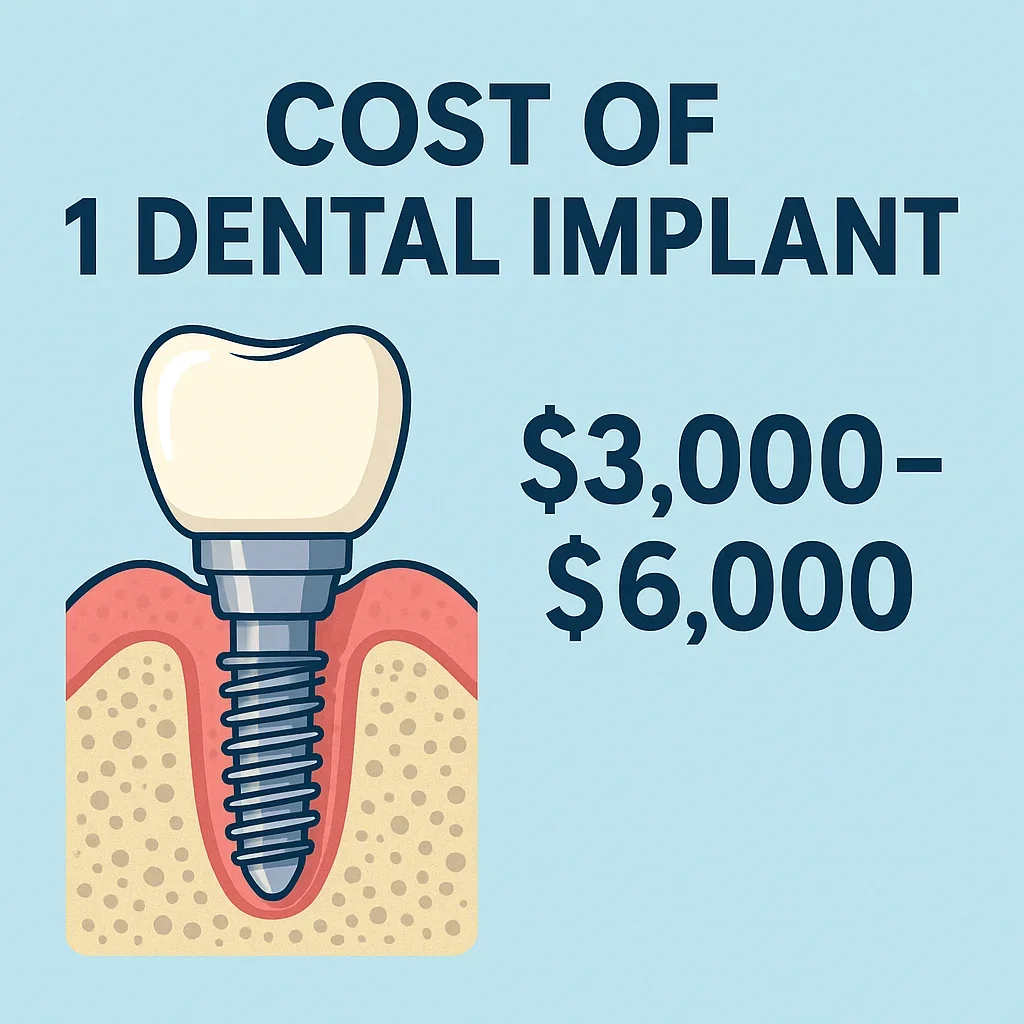
On average, the cost of 1 dental implant in the United States ranges between $3,000 and $6,000. This estimate includes the implant post (the titanium or zirconia screw placed in the jawbone), the abutment (the connector piece), and the crown (the visible replacement tooth). The exact figure depends on several factors such as the patient’s bone density, whether bone grafting or sinus lift is required, and the type of crown selected (porcelain, ceramic, or zirconia). In some countries, such as Turkey, India, or Mexico, the same procedure may cost significantly less due to lower operating expenses and favorable exchange rates.
When patients research the cost of 1 dental implant, they often encounter price differences that seem dramatic. For example, clinics in Western Europe may charge between €2,500 and €4,500, while dental tourism destinations like Turkey may offer the same treatment for as low as $700 to $1,500 per implant. These differences don’t necessarily reflect lower quality but rather economic and healthcare system variations. Still, it’s crucial to verify the credentials of the dentist and the materials used before making a decision.
Another important point is understanding what the quoted price actually covers. Some dental practices advertise a low initial rate but exclude essential components such as the abutment or crown. Patients must ask for a full breakdown of the cost of 1 dental implant to avoid hidden expenses later in the process. Additional procedures like bone grafting (average cost $300–$1,000 per area) or a sinus lift (average cost $1,500–$3,000) may be necessary for patients with insufficient bone volume to support the implant.
Beyond the clinical perspective, the financial side also involves insurance and financing. In the United States, most dental insurance plans do not fully cover the cost of 1 dental implant because implants are considered elective procedures. However, some plans may contribute partially, covering the crown or related procedures like extractions. Patients can also explore financing solutions such as monthly payment plans, health savings accounts (HSA), or medical credit systems to reduce the immediate financial burden.
From a health standpoint, dental implants are often more cost-effective in the long term compared to traditional options like bridges or dentures. While the initial cost of 1 dental implant may appear higher, implants can last 20 years or more with proper care, whereas dentures or bridges often require replacement every 5–10 years. Over a lifetime, this durability makes implants a financially smart choice despite the upfront expense.
Patients should also consider the value beyond money. Dental implants restore confidence, improve chewing ability, and prevent jawbone deterioration—a common consequence of tooth loss. These benefits justify the investment for many people, even if the initial price seems steep. In fact, studies have shown that implants can significantly improve quality of life by supporting better nutrition and social interaction, outcomes that are hard to measure in financial terms alone.
According to the American Dental Association, more than 5 million dental implants are placed each year in the United States. This increasing demand has also led to advancements in technology, which may influence the cost of 1 dental implant in the future. For example, digital 3D imaging and guided implant surgery improve accuracy and reduce complications, but they may add slightly to the treatment price.
For patients seeking affordable yet high-quality options, medical tourism has become increasingly popular. Countries like Turkey, Hungary, and Thailand offer internationally accredited clinics where English-speaking specialists provide implants at a fraction of the U.S. price. For instance, the Redent Klinik Contact Page provides direct access to one of Turkey’s trusted dental centers, which caters to international patients with advanced implantology services at competitive rates.
In conclusion, the cost of 1 dental implant is influenced by multiple factors, including location, materials, additional surgical needs, and clinic expertise. While the upfront cost can seem high, the long-term durability, health benefits, and improved quality of life make dental implants one of the best investments in modern dentistry. Patients are encouraged to compare quotes carefully, ask for transparent cost breakdowns, and select a qualified dental professional who uses high-quality implant systems. By doing so, they can achieve a beautiful, functional smile that lasts for decades. 😀
Average Cost of 1 Dental Implant in Different Countries
The cost of 1 dental implant varies dramatically depending on where you live or choose to receive treatment. Patients are often surprised at how wide the gap can be between nations, even for the same procedure using similar implant systems. Understanding these international price ranges helps patients make informed decisions, especially if they are considering dental tourism. 🌍
United States and Canada
In the United States, the average cost of 1 dental implant falls between $3,000 and $6,000. This price typically includes the implant fixture, abutment, and crown. However, it often excludes preparatory procedures such as extractions or bone grafting. In major metropolitan areas such as New York or Los Angeles, costs can lean toward the higher end of the spectrum due to elevated operating expenses and dentist fees. Canada shows similar trends, with average costs ranging from $3,000 to $5,500. Both countries generally uphold high standards of dental care, but insurance rarely covers the full expense, which makes financing plans essential for many patients.
Western Europe (UK, Germany, France)
In Western Europe, patients will encounter slightly different pricing models. The United Kingdom lists the cost of 1 dental implant at approximately £2,000 to £3,500 ($2,500–$4,500 USD). Germany, known for its exceptional dental engineering and implant materials, may charge between €2,500 and €4,500. France’s prices hover in a similar range, but French patients may occasionally receive partial support from national healthcare systems. Still, out-of-pocket costs remain significant, and many individuals seek treatment outside their home country for financial reasons.
Southern and Eastern Europe
Southern European countries such as Spain, Portugal, and Greece tend to offer more affordable options, with the cost of 1 dental implant ranging between €1,200 and €2,500. Eastern European destinations, including Hungary, Poland, and Romania, have become hotspots for dental tourism. In Hungary, for instance, patients can expect to pay as little as €900 to €1,800 per implant. These clinics often cater to international patients, offering English-speaking staff, modern facilities, and reputable implant systems. The lower price reflects reduced labor and operating costs, not necessarily lower quality.
Turkey: A Leading Destination for Affordable Implants
Turkey has positioned itself as one of the most attractive destinations for international patients. The cost of 1 dental implant in Turkey typically ranges from $700 to $1,500, a fraction of the price in the United States or Western Europe. Clinics in Istanbul, Antalya, and Izmir use globally recognized implant brands such as Straumann, Nobel Biocare, or Astra Tech. Many centers also provide complete package deals that include airport transfers, accommodation, and aftercare. For example, patients can visit the Redent Klinik Contact Page to explore specialized services for international dental tourism.
Asia: India, Thailand, and South Korea
In Asia, India and Thailand have become well-known for dental tourism due to affordable pricing and high standards of care. The cost of 1 dental implant in India averages between $500 and $1,200, while in Thailand, patients pay approximately $1,000 to $2,000. Both countries host internationally accredited dental centers, often staffed by English-speaking dentists trained abroad. South Korea, on the other hand, positions itself at a higher technological level, with prices ranging between $1,500 and $3,000. South Korea is renowned for advanced surgical techniques and digital dentistry innovations, which can justify the added expense.
Latin America: Mexico, Costa Rica, and Colombia
For North American patients, Latin America offers convenient and affordable alternatives. In Mexico, the cost of 1 dental implant ranges between $700 and $1,800. Many U.S. citizens travel just across the border to cities like Tijuana or Cancun, where clinics cater specifically to international patients. Costa Rica and Colombia offer comparable prices, with packages that may include vacation-style amenities. These destinations have built strong reputations for combining affordability with reliable outcomes, making them highly competitive on the global stage.
Australia and New Zealand
Patients in Australia and New Zealand often face higher fees, similar to those in the U.S. and Western Europe. The average cost of 1 dental implant in Australia is $3,000 to $5,500 AUD, while in New Zealand it ranges from $3,500 to $6,000 NZD. Limited public insurance coverage means that most patients pay out-of-pocket, although financing options are widely available.
Summary of Average Global Prices
- United States/Canada: $3,000–$6,000
- UK/Germany/France: €2,500–€4,500
- Spain/Greece: €1,200–€2,500
- Hungary/Poland: €900–€1,800
- Turkey: $700–$1,500
- India: $500–$1,200
- Thailand: $1,000–$2,000
- South Korea: $1,500–$3,000
- Mexico/Costa Rica: $700–$1,800
- Australia/New Zealand: $3,000–$6,000
From this comparison, it’s clear that the cost of 1 dental implant can differ by thousands of dollars depending on location. Many patients are now traveling abroad to balance affordability with quality. Regardless of the country, the most important factors remain the experience of the dentist, the type of implant used, and the aftercare provided. By carefully evaluating these aspects, patients can find the ideal balance between cost and quality care. ✈️
Ultimately, whether you are considering treatment locally or abroad, always request a detailed quote that specifies what is included in the cost of 1 dental implant. Transparency is crucial in preventing hidden costs and ensuring you receive the expected value. When done properly, a single implant can provide decades of function and confidence, making it a worthwhile investment across any country.
Factors That Influence the Cost of a Single Dental Implant
The cost of 1 dental implant is never a fixed figure—it is influenced by numerous clinical, material, and geographic variables. Understanding these factors helps patients anticipate potential expenses and evaluate whether a quoted price is reasonable. Each patient’s case is unique, and the final bill depends on a combination of medical complexity, dentist expertise, and chosen technology. Below, we will explore the most critical factors in detail. 🦷
Type and Quality of Implant Material
One of the most significant factors is the implant material itself. The two most common choices are titanium implants and zirconia implants. Titanium is considered the gold standard due to its durability and high success rate, and it is generally more affordable. Zirconia implants, on the other hand, are metal-free and preferred by patients seeking a more aesthetic or hypoallergenic option. However, zirconia tends to increase the cost of 1 dental implant because it is more expensive to manufacture and requires specialized handling.
Abutment and Crown Material
The implant fixture is only part of the treatment. The abutment (connector) and crown (artificial tooth) add additional costs. Options range from porcelain-fused-to-metal (PFM) crowns to full-ceramic or zirconia crowns. While PFM crowns are budget-friendly, zirconia crowns offer superior aesthetics and longevity but can raise the total cost of 1 dental implant by several hundred dollars.
Complexity of the Procedure
Another factor is whether additional surgical procedures are required. Some patients may need bone grafting if their jawbone is too thin to support the implant. Bone grafts can add anywhere from $300 to $1,000 per area. Others may require a sinus lift (average $1,500 to $3,000) before implants can be placed in the upper jaw. These procedures significantly affect the overall cost of 1 dental implant and are often not included in initial advertisements.
Number of Appointments and Treatment Duration
The treatment timeline plays an important role. Standard implant placement often takes several months, involving an initial consultation, surgery, healing period, and final crown placement. Some advanced clinics now offer “same-day implants,” reducing the total number of visits. While same-day options are convenient, they may cost slightly more due to the specialized expertise and equipment required. Longer treatment durations with multiple appointments may also increase overall fees because of added clinical time and resources.
Geographic Location
Location heavily influences the cost of 1 dental implant. For instance, urban centers like London, New York, or Sydney often have higher prices due to higher operational costs. In contrast, clinics in countries such as Turkey, Hungary, or Mexico offer significantly lower fees because of reduced labor and facility expenses. This factor explains why dental tourism has grown so rapidly in recent years, with patients saving up to 70% compared to local treatment prices.
Dentist’s Experience and Reputation
The qualifications and reputation of the implant dentist strongly impact pricing. Highly experienced specialists who have placed thousands of implants and are members of professional organizations such as the American Dental Association often charge premium rates. Their expertise minimizes the risk of complications and increases success rates, which is why many patients accept a higher cost of 1 dental implant for added peace of mind.
Clinic Facilities and Technology
Clinics equipped with advanced technology—such as 3D cone-beam computed tomography (CBCT) scanners, guided surgery software, and digital impressions—may charge more. These innovations improve accuracy and outcomes but add to the treatment overhead. While they increase the initial cost of 1 dental implant, they often reduce long-term risks and ensure superior results.
Type of Anesthesia or Sedation
The choice of anesthesia can influence cost as well. Local anesthesia is standard and usually included in the base price. However, patients who prefer intravenous (IV) sedation or general anesthesia will face additional fees, typically ranging from $500 to $2,000. Complex cases requiring surgical teams in hospital settings can further elevate the final cost of 1 dental implant.
Laboratory Fees and Customization
The dental lab responsible for fabricating the crown and abutment also plays a role. High-end labs that use CAD/CAM technology and premium materials generally produce longer-lasting, natural-looking restorations. However, this customization raises laboratory fees, which in turn increases the overall cost of 1 dental implant.
Aftercare and Maintenance
Follow-up care is an often-overlooked factor. While many clinics include the first few checkups in the initial price, others may charge separately for post-operative visits, X-rays, and maintenance. Comprehensive aftercare ensures the implant heals properly and lasts longer, but it may slightly raise the total cost of 1 dental implant.
Warranties and Guarantees
Some clinics provide warranties on implants, abutments, and crowns. While this adds to upfront costs, it can save patients significant expenses in case of future complications. A warranty acts as a safety net, especially for international patients who travel abroad for dental treatment.
Conclusion: The cost of 1 dental implant is shaped by numerous interconnected factors, from the materials chosen and the dentist’s experience to geographic location and post-operative care. Patients should request a detailed treatment plan that includes all possible additional expenses before committing. By understanding these variables, individuals can budget accurately and avoid unpleasant financial surprises. Ultimately, the right balance between affordability and quality ensures that a dental implant remains a valuable long-term investment. ✅
Cost of 1 Dental Implant vs. Multiple Implants 💡
One of the most common questions patients have when considering implant dentistry is how the cost of 1 dental implant compares with the price of multiple implants. While the initial price for a single tooth implant may seem straightforward, the costs associated with replacing two, four, or even a full arch of teeth can vary greatly depending on the chosen treatment approach. This section explores the key differences, price comparisons, and treatment options for patients needing more than one implant. 🦷
Understanding the Base Cost of 1 Dental Implant
The cost of 1 dental implant usually includes three main components: the implant post, the abutment, and the crown. On average, this totals between $3,000 and $6,000 in the U.S. or €2,500 to €4,500 in much of Western Europe. For a single missing tooth, the process is relatively straightforward and involves minimal surgical work beyond implant placement and crown restoration. However, when patients need multiple implants, dentists often apply different strategies that can significantly alter the overall cost.
Cost of Multiple Individual Implants
Replacing multiple teeth with individual implants is typically the most expensive option because each tooth requires its own implant, abutment, and crown. For example, two implants may cost between $6,000 and $12,000, while four implants can reach $12,000 to $24,000. Patients who choose this route usually do so for reasons of maximum stability and aesthetics, especially if missing teeth are scattered across different areas of the mouth. While effective, this method often doubles or triples the expenses compared to the cost of 1 dental implant.
Implant-Supported Bridges
When multiple adjacent teeth are missing, dentists often recommend an implant-supported bridge. Instead of replacing each tooth with an implant, two implants can support a bridge of three or four teeth. This approach dramatically reduces the cost of 1 dental implant multiplied across several teeth. For instance, replacing three teeth with a bridge supported by two implants may cost $6,000 to $10,000, which is far more affordable than placing three separate implants. The savings are substantial, yet patients still benefit from the durability and stability of implants.
Example of Savings with Implant Bridges
- Three separate implants: $9,000–$18,000
- Two implants + bridge (3 teeth): $6,000–$10,000
This example highlights how strategic treatment planning can lower the overall expense without compromising function or aesthetics.
Full-Arch Solutions: All-on-4 and All-on-6
For patients missing all teeth in one or both arches, full-arch solutions such as All-on-4 or All-on-6 offer an innovative and cost-effective alternative. Instead of replacing each missing tooth with an implant, just four or six implants are strategically placed to support a full arch of prosthetic teeth. The average cost for an All-on-4 procedure in the U.S. ranges from $15,000 to $30,000 per arch. Although this seems expensive, it is significantly cheaper than replacing each tooth individually. By comparison, the cost of 1 dental implant multiplied by 14 teeth could easily exceed $50,000 to $80,000 per arch.
Why All-on-4 is Cost-Effective
The All-on-4 technique reduces the number of implants required while still providing a stable, permanent restoration. Patients benefit from lower costs, shorter treatment times, and fewer surgeries, making this solution highly attractive for full-mouth restorations.
Geographic Price Variations
Just as with single implants, geography plays a crucial role in pricing. In the U.S., the average cost of 1 dental implant may be $4,000, while in Turkey or Mexico, it can be as low as $700–$1,500. For multiple implants, the difference becomes even more dramatic. For instance, an All-on-4 in the United States can cost up to $30,000, whereas in Turkey, the same treatment may cost $6,000–$10,000 per arch. Patients often turn to dental tourism to save substantial amounts while receiving care at internationally accredited clinics. For example, those interested can visit the Redent Klinik Contact Page to explore affordable full-mouth solutions in Turkey.
Additional Cost Factors for Multiple Implants
When more implants are involved, other costs can escalate as well. Bone grafting, sinus lifts, or custom abutments may be required on a larger scale, increasing the financial investment. Additionally, the prosthetic component (bridge or denture) for multiple implants often involves advanced lab work and premium materials, which can add thousands of dollars. Despite these added expenses, the cost remains significantly less than replacing each tooth individually.
Insurance and Financing Considerations
Insurance coverage for multiple implants is generally limited. While some plans may partially cover crowns or related procedures, most will not reimburse the entire cost. However, financing solutions such as extended monthly payment plans, healthcare credit systems, or personal medical loans make treatments more accessible. Even if insurance only covers part of the expense, patients find these options helpful for managing the difference between the cost of 1 dental implant and the higher investment for multiple implants.
Long-Term Value of Multiple Implants
Although the upfront expense of multiple implants can seem overwhelming, the long-term benefits often outweigh the cost. Dental implants preserve jawbone health, prevent shifting of surrounding teeth, and restore confidence in chewing and speaking. When comparing lifetime expenses, many patients find that investing in implant-supported solutions is more cost-effective than replacing dentures or bridges every 5–10 years.
Conclusion: The cost of 1 dental implant provides a baseline for understanding pricing, but replacing multiple teeth requires strategic planning. Whether through implant-supported bridges, All-on-4 systems, or individual implants, patients have several options to balance cost and quality. By evaluating the available approaches, seeking transparent quotes, and considering geographic variations, individuals can make informed decisions that provide both financial savings and long-lasting oral health benefits. ✅
Dental Implant Procedure Steps and Their Impact on Pricing
Many patients ask why the cost of 1 dental implant can vary so widely between clinics. The answer often lies in the procedure steps involved. A dental implant treatment is not a single visit; rather, it is a multi-stage process that combines surgical expertise, prosthetic craftsmanship, and sometimes additional procedures. Each step carries its own cost, which accumulates into the final figure a patient pays. Understanding the stages helps explain the differences in pricing and ensures patients know exactly what they are investing in. 🦷
Initial Consultation and Diagnostic Imaging
The first step in any implant treatment is a comprehensive evaluation. Dentists perform oral examinations, review medical history, and often take 3D cone-beam computed tomography (CBCT) scans. These scans provide a precise view of bone structure, sinus position, and nerves, which are critical for treatment planning. While some clinics include this fee in their packages, others charge separately, averaging $200 to $500. Even though this is a relatively small portion of the cost of 1 dental implant, it is essential for ensuring safe and predictable results.
Surgical Placement of the Implant Fixture
The surgical placement of the implant post is the foundation of the procedure. The titanium or zirconia screw is carefully inserted into the jawbone, where it will integrate through a process called osseointegration. The surgical stage typically represents the largest portion of the cost of 1 dental implant, often ranging from $1,500 to $3,000. Factors such as the complexity of the surgery, need for sedation, and the brand of implant used all influence this stage’s pricing.
Types of Implant Placement Techniques
- Traditional Placement: Requires a healing period of 3–6 months before the crown is attached.
- Immediate Placement: The implant is placed directly after extraction, potentially reducing costs but requiring advanced expertise.
- Guided Surgery: Uses 3D digital planning and surgical guides. This improves precision but can add $500–$1,000 to the final bill.
Healing and Osseointegration Phase
After surgery, patients enter a healing phase lasting several months. During this time, the implant bonds with the jawbone. While this step does not usually involve direct costs beyond check-up visits, any complications such as infections or failed osseointegration can lead to additional expenses. Some clinics charge separately for follow-up X-rays, adding another $100–$300 to the cost of 1 dental implant.
Placement of the Abutment
Once the implant has successfully integrated, an abutment is attached. The abutment acts as a connector between the implant and the crown. This stage typically costs between $300 and $600. Premium abutments made from zirconia or custom-designed with CAD/CAM technology can increase the price but offer superior aesthetics and fit. The type of abutment selected plays a significant role in the final cost of 1 dental implant.
Fabrication and Placement of the Crown
The crown is the visible portion of the implant that restores the natural look of a tooth. Costs vary widely depending on the material: porcelain-fused-to-metal crowns are usually less expensive, while all-ceramic or zirconia crowns can add $800–$1,500 to the final bill. Since the crown is custom-made in a dental lab, laboratory fees also factor into the overall cost of 1 dental implant. Many patients choose high-end zirconia crowns because they provide unmatched aesthetics and durability, especially for visible front teeth.
Additional Procedures That Increase Costs
Some patients require preparatory or adjunctive procedures before an implant can be placed successfully:
- Tooth Extraction: $150–$500 per tooth.
- Bone Grafting: $300–$1,000 per area, essential if bone is too thin.
- Sinus Lift: $1,500–$3,000, often needed for implants in the upper jaw.
- Soft Tissue Grafting: $500–$2,000, for gum enhancement and implant stability.
Each of these procedures can significantly raise the total cost of 1 dental implant, especially if multiple steps are required.
Type of Anesthesia or Sedation
While local anesthesia is often included in the base fee, many patients prefer sedation dentistry to minimize anxiety. Intravenous (IV) sedation or general anesthesia typically costs $500–$2,000, depending on the clinic and case complexity. This adds another layer to the total cost of 1 dental implant, especially in advanced cases requiring multiple surgeries.
Aftercare, Maintenance, and Warranty
Post-surgical care, including follow-up visits, professional cleanings, and periodic X-rays, is critical to the success of implants. While some clinics bundle aftercare into their overall price, others charge separately. Patients should also ask whether their implants come with warranties or guarantees, as this can protect them financially in case of implant failure. A warranty often adds slightly to the cost of 1 dental implant but provides peace of mind in the long run.
How Each Step Impacts the Final Price
When patients receive quotes, they should always ask whether the fee includes all stages—from consultation to crown placement—or only part of the process. Some clinics advertise low starting prices but exclude abutments, crowns, or follow-up care, which can mislead patients about the real cost of 1 dental implant. A transparent, itemized treatment plan is the best way to ensure there are no hidden expenses.
Conclusion: The cost of 1 dental implant reflects the complexity of a multi-step procedure. Each phase—from consultation and surgery to crown placement and aftercare—adds value and expense. While patients may be tempted by lower upfront quotes, understanding and budgeting for every stage ensures they receive lasting, high-quality results. A well-planned implant treatment is an investment not just in oral health but in confidence, comfort, and overall quality of life. ✅
Insurance Coverage and Financing Options for Dental Implants
One of the biggest concerns patients have when learning about the cost of 1 dental implant is whether insurance will help reduce the financial burden. Dental implants are widely recognized as the most reliable solution for missing teeth, but they are also among the most expensive. While dental insurance has historically offered little to no coverage for implants, recent years have seen a shift. Additionally, flexible financing options now make treatment more accessible than ever. In this section, we’ll break down how insurance works, what patients can realistically expect, and the financing methods that can ease the process. 💳
Does Dental Insurance Cover Implants?
Traditionally, dental insurance plans did not cover the cost of 1 dental implant, labeling implants as a “cosmetic” or elective procedure. However, the perception of implants has changed significantly. Many insurers now recognize implants as medically necessary since they preserve jawbone health, restore function, and prevent complications caused by missing teeth. That said, coverage is still inconsistent and often partial.
Partial Coverage for Components
Some insurance plans may cover parts of the procedure rather than the entire treatment. For example:
- Tooth extraction: Often covered if medically necessary.
- Bone grafting: May be covered in some cases.
- Crown placement: Occasionally covered, especially if a plan includes restorative benefits.
Even if the implant fixture itself is not included, these partial benefits can reduce the total cost of 1 dental implant by hundreds or even thousands of dollars.
Medical Insurance and Dental Implants
In some situations, medical insurance—not dental insurance—may contribute to the cost. This typically applies when tooth loss results from trauma, accident, or a medical condition such as oral cancer. Patients should check both dental and medical policies to determine whether coverage applies. While it may not reduce the entire cost of 1 dental implant, medical insurance can help with related procedures like bone grafting or anesthesia.
Limitations and Exclusions
Insurance policies often come with annual maximums, typically ranging from $1,000 to $2,000 per year. Given that the cost of 1 dental implant can exceed $3,000, insurance benefits usually cover only a fraction of the total expense. Additionally, many plans include waiting periods or exclude implants altogether. Patients should carefully review the fine print and contact their provider directly to confirm what is and isn’t included.
Employer-Sponsored Insurance and Group Plans
Some employers offer enhanced dental insurance packages that include partial implant coverage. Group dental plans may be more generous, covering crowns or abutments as standard restorative procedures. While these plans rarely cover 100% of the cost of 1 dental implant, they significantly reduce out-of-pocket expenses. Patients should consult with their HR department or benefits manager to maximize available coverage.
Financing Options for Dental Implants
Since insurance alone rarely covers the full amount, many patients rely on financing options to make dental implants more affordable. Flexible payment structures allow patients to spread the cost of 1 dental implant over time rather than paying everything upfront.
In-House Financing Plans
Many dental clinics offer in-house financing, allowing patients to pay in monthly installments. Some plans may even be interest-free if the balance is paid within a set period. Clinics specializing in international dental tourism, such as those in Turkey, often include financing in their treatment packages. Patients can explore clinics like Redent Klinik Contact Page to learn about structured payment solutions for overseas patients.
Third-Party Financing Providers
Medical credit companies such as CareCredit, LendingClub, or Alphaeon provide dedicated financing for healthcare expenses. These plans typically offer low or no-interest options if repaid within a promotional timeframe. Patients can finance not only the implant itself but also related procedures, effectively distributing the cost of 1 dental implant into manageable monthly payments.
Health Savings Accounts (HSA) and Flexible Spending Accounts (FSA)
Patients with HSA or FSA accounts can use pre-tax dollars to pay for dental implants. This reduces taxable income while lowering the effective cost of 1 dental implant. HSAs are especially valuable since funds roll over annually, while FSAs require use within the calendar year. Patients considering implants should plan contributions strategically to maximize savings.
Comparing Financing Across Countries
Patients traveling abroad for implants should also consider international financing policies. For example, in the U.S., patients often rely on third-party credit systems, whereas in Europe or Turkey, clinics may partner with banks to provide installment options. Since the cost of 1 dental implant abroad can be 50–70% lower, even without financing, many patients find it more economical to combine medical tourism with partial insurance or financing solutions.
Practical Tips for Patients
- Request a pre-treatment estimate from your insurance provider.
- Ask your dentist to submit a “pre-authorization” request to verify coverage.
- Compare multiple financing plans to avoid high interest rates.
- Use HSAs or FSAs to reduce taxable income.
- Check if your employer offers group coverage that includes implants.
Conclusion: While insurance rarely covers the full cost of 1 dental implant, partial benefits, combined with smart financing strategies, can make treatment significantly more affordable. By leveraging insurance contributions, exploring third-party financing, and using pre-tax accounts, patients can reduce the financial burden and invest confidently in their oral health. Proper planning ensures that dental implants remain accessible, even for patients with limited budgets. ✅
Hidden Costs Patients Should Know About Before Implant Surgery
When researching the cost of 1 dental implant, many patients focus only on the quoted price for the implant, abutment, and crown. However, dental implant treatment often involves additional expenses that may not be immediately obvious. These hidden costs can significantly impact the final bill, leaving patients surprised if they aren’t properly informed. A full understanding of potential extra charges ensures there are no financial surprises along the way. Below, we’ll uncover the most common hidden costs patients should be aware of before starting implant treatment. 💡
Initial Consultation and Diagnostic Work
Some clinics advertise free consultations, but others charge separately for the initial exam, panoramic X-rays, or 3D cone-beam computed tomography (CBCT) scans. These diagnostics are essential for planning the surgery. Fees range from $150 to $500, and while they may seem minor compared to the overall cost of 1 dental implant, they add to the total expense.
Laboratory and Impression Costs
Creating a custom-fit crown requires impressions or digital scans. Some clinics include this service in the treatment package, while others charge separately, adding another $100–$300. These small details are often overlooked when patients calculate the cost of 1 dental implant.
Tooth Extraction Fees
If a damaged tooth needs removal before implant placement, the extraction may not be included in the quoted implant price. Standard extractions cost $150–$300, while surgical extractions for impacted teeth can reach $400–$600. For patients requiring multiple extractions, this can add up quickly, raising the overall cost of 1 dental implant.
Bone Grafting and Sinus Lifts
One of the most significant hidden expenses involves preparatory procedures like bone grafting and sinus lifts. These procedures restore bone density and provide a stable foundation for the implant. Bone grafts typically cost $300–$1,000 per site, while sinus lifts range from $1,500 to $3,000. These add-ons can nearly double the original cost of 1 dental implant if not anticipated.
Temporary Restorations
During the healing phase, patients often need a temporary crown, bridge, or denture for functional and aesthetic purposes. While sometimes included, temporary restorations may cost an additional $200–$500. For front teeth, patients usually opt for natural-looking temporaries, which can further increase the total cost of 1 dental implant.
Anesthesia and Sedation
Most dental implants can be placed with local anesthesia, which is usually included in the base fee. However, patients who prefer intravenous (IV) sedation or general anesthesia face extra charges of $500–$2,000. The level of anesthesia chosen has a direct impact on the cost of 1 dental implant and should be discussed in advance.
Follow-Up Visits and Aftercare
Follow-up care ensures proper healing and implant integration. While some clinics bundle aftercare into the quoted price, others charge for post-surgery appointments, X-rays, and professional cleanings. Over time, these can add $200–$600 to the total cost of 1 dental implant. Patients should always confirm what aftercare services are included in the treatment plan.
Medication and Prescriptions
After implant surgery, patients may require antibiotics, painkillers, or special rinses. These prescriptions can cost an additional $50–$150. While relatively small compared to the overall treatment, they remain part of the hidden expenses.
Laboratory Upgrades and Premium Materials
Patients often choose higher-quality crowns or custom abutments for better aesthetics and durability. While a standard porcelain-fused-to-metal crown may be included, upgrading to full zirconia or ceramic can raise the cost by $300–$800. These upgrades directly increase the final cost of 1 dental implant, but many patients find them worthwhile for long-term satisfaction.
Complication Management
Although rare, complications such as infection, implant rejection, or failed osseointegration can occur. Treating these issues may involve additional procedures like implant removal, replacement, or further bone grafting. These unplanned costs are often not covered by the original treatment quote. Some clinics offer warranties that cover such risks, but warranties themselves may increase the upfront cost of 1 dental implant.
Travel and Accommodation (for Dental Tourism)
Patients traveling abroad to reduce the cost of 1 dental implant should factor in flight tickets, hotel stays, and local transportation. While international clinics like those in Turkey or Hungary may offer lower implant prices, total expenses rise once travel logistics are included. Some clinics, such as Redent Klinik Contact Page, offer bundled packages that cover treatment, accommodation, and transfers to help minimize these hidden costs.
Insurance Limitations
As explained earlier, insurance often covers only part of implant treatment. Patients relying on insurance to lower the cost of 1 dental implant may discover that only crowns or extractions are covered, leaving implant fixtures and surgery excluded. This partial coverage sometimes surprises patients who assumed insurance would reduce their expenses significantly.
Conclusion: While the advertised cost of 1 dental implant may seem clear-cut, hidden costs such as diagnostics, extractions, grafting, anesthesia, and follow-up care often increase the final bill. By asking for a detailed, itemized treatment plan and clarifying what is included, patients can avoid unexpected charges. Transparency from the clinic ensures better financial planning and peace of mind, allowing patients to confidently invest in their dental health. ✅
Comparing Cost of 1 Dental Implant with Alternatives (Bridges & Dentures)
When considering tooth replacement options, patients often compare the cost of 1 dental implant with alternatives such as dental bridges and removable dentures. While implants are generally more expensive upfront, they provide unique long-term benefits that often make them a more cost-effective choice over a lifetime. Understanding the differences in cost, durability, and health outcomes between implants, bridges, and dentures helps patients make an informed decision. 🦷
Dental Implants: Long-Term Investment
The cost of 1 dental implant averages between $3,000 and $6,000 in the United States, including the implant, abutment, and crown. This price reflects a treatment designed to last 20 years or longer, with many implants functioning successfully for a lifetime when properly cared for. Implants prevent jawbone loss, maintain facial structure, and function like natural teeth, making them the gold standard in restorative dentistry.
Advantages of Implants
- Durability lasting decades.
- Preservation of jawbone health.
- Natural look and feel.
- No impact on surrounding teeth.
Although the cost of 1 dental implant is higher initially, its long lifespan makes it less expensive in the long run compared to bridges or dentures that require frequent replacement.
Dental Bridges: Lower Initial Cost but Limited Lifespan
A traditional dental bridge typically costs between $1,500 and $3,500 per tooth replaced. At first glance, this appears more affordable than the cost of 1 dental implant. However, bridges usually last only 7–10 years, and replacing them multiple times throughout life significantly increases overall expenses. Additionally, bridges require the grinding down of adjacent healthy teeth to support the restoration, which can weaken natural structures and lead to additional dental costs later.
Hidden Costs of Bridges
While bridges save money initially, patients should consider:
- Additional procedures if supporting teeth decay or fail.
- Costs of replacing bridges every decade.
- Potential root canals or crowns on supporting teeth.
Over a lifetime, bridges may end up costing more than implants, despite their lower upfront price.
Removable Dentures: Budget-Friendly but Less Functional
Removable dentures are the most affordable option, costing $500–$2,000 for a partial denture and $1,000–$3,000 for a full set. Compared to the cost of 1 dental implant, dentures are much cheaper initially. However, they come with significant disadvantages in terms of comfort, stability, and oral health. Dentures can slip while eating or speaking, and they do not prevent bone loss, leading to changes in facial structure over time.
Maintenance and Replacement Costs
Dentures typically need replacement every 5–7 years due to wear and changes in the jawbone. Patients must also purchase adhesives, special cleaning solutions, and sometimes relining services, all of which add to ongoing expenses. Although the upfront price is low, the cumulative cost of maintaining dentures over 20–30 years may rival or even exceed the cost of 1 dental implant.
Quality of Life Comparisons
Beyond financial considerations, patients should weigh the impact of each solution on daily life. Implants function like natural teeth, restoring chewing ability and confidence. Bridges offer good stability but compromise adjacent teeth. Dentures, while affordable, often reduce quality of life due to discomfort and dietary restrictions. Patients must decide whether the savings outweigh these drawbacks compared to the lasting benefits of implants.
Geographic Variations in Pricing
The cost of 1 dental implant versus bridges or dentures varies globally. For example, in Turkey, a single implant may cost $700–$1,500, while bridges average $500–$1,000. In the U.S. or Western Europe, implants may cost several times more, but bridges and dentures also follow higher price ranges. Patients considering dental tourism should carefully compare total treatment packages, including travel expenses. Clinics such as Redent Klinik Contact Page offer transparent pricing for implants and alternatives, helping international patients make cost-effective choices.
Lifetime Cost Comparison
When comparing lifetime costs, dental implants frequently prove the better financial investment:
- Implant (20+ years): $3,000–$6,000 one-time investment.
- Bridge (7–10 years lifespan): $1,500–$3,500 x 3–4 replacements = $6,000–$14,000 lifetime cost.
- Dentures (5–7 years lifespan): $1,000–$3,000 x 4–6 replacements = $4,000–$18,000 lifetime cost + maintenance supplies.
This breakdown shows that while implants require more upfront spending, they may actually save money in the long term compared to bridges and dentures.
Health Outcomes and Hidden Expenses
The cost of 1 dental implant also needs to be evaluated against hidden costs associated with alternatives. For example, bridges may lead to additional treatments for damaged supporting teeth, and dentures often cause ongoing jawbone deterioration that may require bone grafting later. Implants eliminate these risks, offering better oral health stability over a lifetime.
Conclusion: Comparing the cost of 1 dental implant with bridges and dentures reveals that while implants require higher upfront investment, they often become the most cost-effective option over time. They provide superior function, aesthetics, and health benefits, making them the preferred solution for many patients. Patients who look beyond initial costs and consider long-term outcomes often find that implants deliver the best value for both health and finances. ✅
Long-Term Value: Why Dental Implants Are Worth the Investment 🦷
At first glance, the cost of 1 dental implant may appear high compared to bridges or dentures. However, implants provide significant long-term value that makes them one of the best investments in modern dentistry. Beyond financial considerations, implants improve oral health, restore function, and enhance quality of life in ways that alternatives cannot. In this section, we will explore why dental implants are worth every dollar, pound, or euro spent, and why patients often view them as a lifetime solution. ✅
Durability and Longevity
Dental implants are designed to last decades, often outliving other restorations entirely. A well-placed implant that is maintained with proper oral hygiene can last 20–30 years or more. By contrast, bridges and dentures typically require replacement every 5–10 years. While the cost of 1 dental implant may seem expensive initially, it becomes cost-effective when spread out over decades of function. Many patients end up saving money by avoiding repeated replacements and repairs.
Implants vs. Bridges and Dentures Over Time
- Implants: One-time investment of $3,000–$6,000, lasting 20+ years.
- Bridges: $1,500–$3,500, replaced 3–4 times = $6,000–$14,000 lifetime cost.
- Dentures: $1,000–$3,000, replaced 4–6 times = $4,000–$18,000 lifetime cost.
When viewed in terms of durability, the higher upfront cost of 1 dental implant becomes a logical and financially sound investment.
Preservation of Jawbone and Facial Structure
One of the unique benefits of implants is their ability to stimulate the jawbone, preventing bone loss that naturally occurs after tooth loss. Without implants, the jawbone deteriorates, leading to facial sagging, wrinkles, and premature aging. Dentures and bridges cannot stop this process. While the cost of 1 dental implant may be higher, the preservation of bone and facial appearance adds immeasurable long-term value by protecting both health and self-esteem.
Enhanced Function and Comfort
Unlike dentures that can slip or bridges that rely on adjacent teeth, implants function like natural teeth. Patients can bite into apples, chew steak, and smile with confidence. Over time, this functional stability saves money by reducing dietary restrictions, preventing digestive issues, and avoiding frequent adjustments. The cost of 1 dental implant is an investment in daily comfort that dentures and bridges often fail to provide.
Improved Oral Health
Another important long-term benefit is the protection of surrounding teeth. Traditional bridges require grinding down adjacent teeth for support, which can weaken them and lead to decay. Dentures place pressure on gums, sometimes causing sores and infections. Implants, on the other hand, stand independently, preserving natural teeth and maintaining oral health. This means fewer dental problems and reduced long-term expenses, further justifying the cost of 1 dental implant.
Lower Risk of Secondary Treatments
Because implants integrate with the bone and don’t compromise neighboring teeth, patients are less likely to need additional treatments like root canals, extractions, or new restorations. Avoiding these procedures helps balance the higher initial cost of 1 dental implant with lower cumulative costs over time.
Psychological and Social Value
The benefits of implants extend beyond physical health. Restoring a complete smile enhances confidence, improves self-image, and supports better social interactions. Patients often report feeling younger, more professional, and more socially active after receiving implants. These psychological advantages, while not easily measured in dollars, make the cost of 1 dental implant worthwhile for many patients.
Quality of Life and Nutrition
Dental implants restore full chewing function, allowing patients to enjoy a wider range of foods. Unlike denture wearers who may avoid hard, crunchy, or chewy foods, implant patients can eat a balanced diet rich in fruits, vegetables, and proteins. This leads to improved nutrition, better digestion, and overall health benefits. In this sense, the cost of 1 dental implant is not just about oral health—it directly contributes to general well-being and longevity.
Warranties and Long-Term Protection
Many clinics now offer warranties for implant fixtures, crowns, and abutments. While this may slightly increase the upfront cost of 1 dental implant, it adds long-term protection. Patients can feel reassured knowing that any complications or failures are covered. This makes implants not only a safe clinical choice but also a secure financial decision.
Global Perspective on Long-Term Value
In countries like Turkey, Hungary, and Mexico, the cost of 1 dental implant is significantly lower than in the U.S. or Western Europe. Yet the long-term value remains the same: decades of durability, improved oral health, and enhanced quality of life. Clinics such as Redent Klinik Contact Page provide international patients with high-quality implants at reduced costs, amplifying the long-term financial advantage of choosing implants abroad.
Conclusion: While the upfront cost of 1 dental implant may seem daunting, its unmatched durability, health benefits, and life-enhancing qualities make it a wise long-term investment. From preserving bone health and improving nutrition to restoring confidence and reducing future dental expenses, implants deliver value that far outweighs their initial price tag. For patients seeking a permanent, cost-effective solution, dental implants remain the clear winner. 🦷
Tips to Reduce the Cost of 1 Dental Implant Without Compromising Quality
The cost of 1 dental implant can feel overwhelming for many patients, especially when insurance does not cover the majority of the procedure. However, there are smart strategies to lower expenses without sacrificing quality or safety. From choosing the right clinic to leveraging financial options, patients can save thousands of dollars while still receiving excellent care. In this section, we’ll explore practical tips to make dental implants more affordable and accessible. 💡
Choose the Right Geographic Location
Geography is one of the most influential factors in determining the cost of 1 dental implant. Patients in countries like the U.S., UK, or Australia face higher treatment costs due to elevated clinic overhead and labor expenses. By contrast, dental tourism destinations such as Turkey, Hungary, and Mexico provide the same treatment at a fraction of the cost. For example, an implant that costs $4,000 in the U.S. may only cost $1,000 in Turkey. Clinics like Redent Klinik Contact Page cater specifically to international patients, offering high-quality implants, modern facilities, and internationally trained dentists at affordable rates.
Ask for a Transparent, Itemized Quote
One of the biggest mistakes patients make is accepting a flat quote without asking what is included. Some clinics advertise a low base price but exclude essential elements such as the abutment, crown, or temporary restorations. Always request a detailed, itemized breakdown of the cost of 1 dental implant. This prevents hidden expenses from surprising you later and allows a fair comparison between different clinics.
Checklist of What Should Be Included
- Initial consultation and diagnostic scans
- Surgical placement of the implant post
- Abutment and final crown
- Follow-up appointments and aftercare
- Warranty or guarantee options
A complete breakdown ensures that the quoted cost of 1 dental implant reflects the total treatment, not just part of the process.
Consider Dental Schools and Teaching Hospitals
Many universities with dental programs offer implant treatments performed by advanced students under the supervision of experienced professionals. These procedures are significantly discounted, sometimes reducing the cost of 1 dental implant by 30–50%. While treatment may take longer due to training requirements, quality and safety are not compromised thanks to faculty oversight.
Evaluate Implant Brands and Materials
Premium implant systems from companies like Straumann or Nobel Biocare often come with higher price tags. However, there are many reputable mid-range implant brands that provide excellent success rates at a lower cost. Discuss material options with your dentist to see if a less expensive, FDA-approved alternative could reduce the cost of 1 dental implant without lowering quality.
Balancing Cost and Durability
While it may be tempting to choose the cheapest available option, ultra-low-cost implants from unknown manufacturers may not provide the same long-term reliability. Always balance affordability with proven track records to ensure your investment lasts.
Use Financing, HSAs, and FSAs
Breaking down the cost of 1 dental implant into monthly payments makes treatment more manageable. Many clinics partner with financing companies that offer zero or low-interest payment plans. Patients with Health Savings Accounts (HSA) or Flexible Spending Accounts (FSA) can also use pre-tax dollars to lower their effective cost. Planning ahead by allocating funds into these accounts can save hundreds of dollars.
Combine Treatments for Cost Efficiency
Patients needing multiple implants may benefit from approaches like implant-supported bridges or All-on-4 solutions. Instead of paying the cost of 1 dental implant multiplied by each missing tooth, these strategies reduce the total number of implants required. For example, two implants supporting a three-tooth bridge are significantly cheaper than three individual implants.
Look for Warranty and Maintenance Packages
Some clinics offer implant warranties that cover complications, repairs, or replacements for several years. While the upfront price may be slightly higher, warranties protect patients from unexpected costs later. Choosing a clinic that provides aftercare and maintenance packages can save money in the long run, ensuring the cost of 1 dental implant remains a one-time investment instead of a recurring burden.
Travel Smart if Considering Dental Tourism
If you are traveling abroad to lower the cost of 1 dental implant, consider clinics that provide bundled packages including accommodation and airport transfers. This reduces hidden travel expenses and simplifies logistics. Some international clinics even collaborate with hotels to give patients discounted rates, making the overall cost even more attractive.
Seek Multiple Opinions Before Deciding
Prices can vary dramatically between dental providers, even within the same city. Always seek at least two or three opinions before committing. Comparing quotes allows you to identify fair market prices and negotiate better deals. More importantly, it ensures you understand the different treatment approaches that may influence the final cost of 1 dental implant.
Conclusion: While the cost of 1 dental implant can seem intimidating, patients have multiple ways to reduce expenses without compromising quality. Choosing the right location, requesting transparent quotes, considering dental schools, selecting reputable yet affordable materials, and exploring financing options all contribute to making implants more accessible. With careful planning and smart choices, patients can achieve a beautiful, long-lasting smile at a price that fits their budget. 🦷