
Understanding the cost of 5 dental implants is one of the most important steps for patients who are considering restoring multiple missing teeth with a long-lasting, natural-looking solution. Dental implants are widely regarded as the gold standard in modern dentistry, but they also represent a significant investment. This guide is designed to give you a clear, realistic, and patient-friendly explanation of what the cost includes, why prices vary, and what you should expect before starting treatment 😊.
At its core, the cost of 5 dental implants reflects far more than just five titanium posts placed into the jawbone. It is a comprehensive medical and restorative process that involves advanced diagnostics, surgical expertise, high-quality materials, and long-term follow-up care. For patients researching online, the main concern is usually simple: “How much will it really cost me, and is it worth it?” This section answers that question in detail.
On average, the cost of 5 dental implants can range widely depending on location and treatment complexity. In countries like the United States or the UK, prices often fall between $12,000 and $25,000 for a full treatment involving five implants and a fixed prosthetic. In other regions, such as parts of Europe or medical tourism destinations, the same treatment may range between $6,000 and $10,000, often with the same implant systems and technology. These differences are largely driven by labor costs, clinic overhead, and healthcare regulations rather than quality alone.
When patients look up the cost of 5 dental implants, they sometimes assume they are paying only for the implants themselves. In reality, the total fee usually includes consultations, 3D imaging (such as CBCT scans), surgical placement, abutments, and the final crowns or bridges. Reputable clinics also include post-operative checkups and aftercare, which are essential for long-term success. Organizations like the American Dental Association emphasize that implant treatment should always be evaluated as a complete medical procedure, not a single product.
Another key factor influencing the cost of 5 dental implants is your individual oral health. Patients with strong jawbone density and healthy gums typically require fewer preparatory procedures, which keeps costs lower. However, if bone loss is present, additional treatments such as bone grafting may be necessary. While this increases the initial expense, it significantly improves implant stability and long-term success, making it a wise investment rather than an unnecessary add-on.
From a long-term perspective, many patients find that the cost of 5 dental implants offers excellent value compared to removable dentures or repeated bridge replacements. Implants are designed to last decades with proper care, often making them more cost-effective over time. They also help preserve jawbone structure, prevent facial sagging, and restore full chewing power, which has a direct impact on overall health and quality of life 💪.
It’s also important to consider what is not always included when evaluating the cost of 5 dental implants. Some clinics advertise very low prices that exclude essential components like temporary restorations, sedation, or follow-up visits. Transparent pricing and a detailed treatment plan are critical. If you are comparing options or seeking personalized guidance, you can always reach out through the Redent Klinik Contact Page for a clear breakdown tailored to your needs.
Ultimately, the cost of 5 dental implants should be viewed as an investment in your health, confidence, and daily comfort. While the upfront expense may seem high, the durability, aesthetics, and functional benefits often outweigh the initial cost. By understanding exactly what goes into pricing and choosing an experienced clinic, you can move forward with confidence and realistic expectations 😄.
What Determines the Cost of 5 Dental Implants?
The cost of 5 dental implants is not a fixed number because every patient’s mouth, bone structure, and treatment needs are different. While many people search for a single price tag, the reality is that dental implant treatment is highly personalized. Understanding the main cost drivers helps patients make informed decisions and avoid unpleasant surprises later in the process 😊.
Clinical Examination and Diagnostic Imaging
One of the first factors influencing the cost of 5 dental implants is the diagnostic phase. Before any implant is placed, dentists must evaluate bone quality, nerve positioning, sinus anatomy, and gum health. This typically involves panoramic X-rays and 3D CBCT scans. Advanced imaging ensures precise planning, reduces surgical risks, and increases long-term success rates. Although this stage adds to the initial expense, skipping it can lead to complications that are far more costly to fix later.
Number and Type of Implants Used
Not all dental implants are the same, and this directly affects the cost of 5 dental implants. Premium implant brands made from high-grade titanium or titanium-zirconium alloys tend to cost more but offer superior osseointegration and durability. Some treatment plans may use five individual implants to support five crowns, while others may strategically place implants to support a fixed bridge. The materials, surface technology, and manufacturer reputation all play a role in the final price.
Implant Brand and Manufacturing Standards
Internationally recognized implant systems undergo extensive research, clinical trials, and quality control. This reliability is reflected in the cost of 5 dental implants. While lower-cost alternatives exist, experienced clinicians often recommend trusted brands because they reduce the risk of implant failure and long-term complications. In implant dentistry, quality materials are not a luxury—they are a necessity.
Surgical Complexity and Technique
The surgical aspect is another major determinant of the cost of 5 dental implants. Straightforward cases where implants can be placed without additional procedures are generally more affordable. However, if implants must be angled, placed near sensitive anatomical structures, or performed using guided surgery techniques, costs increase. Computer-guided implant surgery, for example, requires digital planning software and custom surgical guides, but it significantly improves accuracy and healing outcomes.
Need for Additional Procedures
Many patients researching the cost of 5 dental implants are unaware that preparatory treatments can significantly affect pricing. Bone grafting, sinus lifts, or gum treatments may be required to create a stable foundation for implants. These procedures add to the total cost but are essential for long-term implant success. Investing in proper preparation reduces the likelihood of implant failure and future corrective surgeries.
Bone Grafting and Jawbone Health
Jawbone volume plays a critical role in determining the cost of 5 dental implants. Patients who have experienced long-term tooth loss often have bone resorption. Bone grafting restores lost volume and allows implants to integrate securely. While grafting increases upfront costs, it dramatically improves stability, chewing function, and implant longevity.
Prosthetic Design and Final Restoration
The visible part of your treatment—the crowns or bridge—also impacts the cost of 5 dental implants. High-quality prosthetics made from zirconia or porcelain offer natural aesthetics, strength, and stain resistance. Custom-designed restorations require skilled dental technicians and advanced laboratory work, which adds value and cost. Cheaper materials may save money initially but often wear down or discolor faster.
Clinic Location, Experience, and Technology
Geographic location is another major factor affecting the cost of 5 dental implants. Clinics in countries with higher operational and labor costs naturally charge more. However, experience and technology are equally important. Clinics that invest in modern equipment, sterilization standards, and continuous professional training often deliver more predictable outcomes. The American Dental Association consistently highlights the importance of choosing qualified professionals for implant procedures.
In summary, the cost of 5 dental implants is shaped by diagnostics, materials, surgical complexity, additional procedures, and clinical expertise. While lower prices may seem attractive, true value lies in safety, longevity, and long-term oral health. Understanding these factors empowers patients to choose quality-driven care rather than focusing solely on the lowest number 💡.
Average Cost of 5 Dental Implants in Different Countries
One of the most common questions patients ask when researching treatment is how the cost of 5 dental implants differs from country to country. The price variation can be significant, and understanding why these differences exist helps patients make smarter, safer decisions. While the procedure itself follows the same medical principles worldwide, economic factors, healthcare systems, and clinic structures play a major role in final pricing 🌍.
Cost of 5 Dental Implants in the United States
In the United States, the cost of 5 dental implants is among the highest globally. On average, patients can expect to pay between $15,000 and $25,000 for a complete treatment that includes implant placement, abutments, and a fixed prosthetic restoration. This higher price is driven by factors such as advanced malpractice insurance, higher labor costs, expensive clinic overhead, and strict regulatory standards.
While the U.S. offers excellent technology and highly trained specialists, not all costs are related to quality alone. Many patients find that a large portion of the cost of 5 dental implants reflects administrative and operational expenses rather than the materials or surgical skill itself.
Cost of 5 Dental Implants in the United Kingdom and Western Europe
In the UK and countries such as Germany, France, or the Netherlands, the cost of 5 dental implants typically ranges from £10,000 to £18,000 or the equivalent in euros. These regions maintain high clinical standards, but pricing remains elevated due to strong labor protections, taxation, and clinic operating costs.
Although public healthcare systems exist in many European countries, implant dentistry is often considered elective. This means patients usually pay privately, and insurance coverage is limited. As a result, the cost of 5 dental implants remains a substantial out-of-pocket expense for many Europeans.
Cost of 5 Dental Implants in Medical Tourism Destinations
Countries known for dental tourism, such as Turkey, Hungary, Poland, and Mexico, offer a dramatically lower cost of 5 dental implants without compromising medical standards. In these regions, prices commonly range between $5,500 and $9,000 for the same treatment that might cost three times more elsewhere.
This price difference is largely due to lower labor costs, government-supported healthcare infrastructure, and reduced clinic overhead. Importantly, many clinics in these countries use the same internationally recognized implant brands and advanced digital technologies found in the U.S. and Western Europe.
What Is Usually Included in These Prices?
When evaluating the cost of 5 dental implants abroad, patients should carefully review what is included. Reputable clinics often bundle services such as consultations, digital scans, surgery, prosthetics, medications, and follow-up visits into one transparent package. Some even assist with accommodation and transportation, which further improves overall value.
Why Prices Differ So Much Between Countries
The variation in the cost of 5 dental implants is not random. It reflects economic conditions, currency strength, cost of living, and healthcare policies. Dentists in lower-cost countries are often trained to the same international standards and may even receive education or certifications from the U.S. or Europe.
It is important to note that a lower cost of 5 dental implants does not automatically mean lower quality. The key is choosing clinics that are transparent, experienced, and focused on long-term outcomes rather than volume-based treatment.
Travel Costs vs Treatment Savings
Patients considering treatment abroad often wonder whether travel expenses offset the lower cost of 5 dental implants. In most cases, even after flights and accommodation, the total expense remains significantly lower than domestic treatment in high-cost countries. This makes international care an attractive option for patients seeking high-quality results at a more accessible price ✈️.
How to Compare Prices Safely
When comparing the cost of 5 dental implants internationally, patients should always request a detailed treatment plan. This plan should clearly list the number of implants, prosthetic type, materials used, and aftercare services. Avoid clinics that advertise unusually low prices without providing medical details or guarantees.
In conclusion, the cost of 5 dental implants varies widely across the globe, but informed patients can take advantage of these differences safely. By focusing on experience, transparency, and comprehensive care rather than location alone, it is possible to achieve excellent results while managing costs effectively 😄.
Cost of 5 Dental Implants vs Other Tooth Replacement Options
When evaluating the cost of 5 dental implants, many patients naturally compare implants with other tooth replacement solutions such as removable dentures or traditional dental bridges. At first glance, implants often appear more expensive. However, a deeper comparison shows that cost alone does not tell the full story. Longevity, comfort, oral health impact, and long-term expenses must all be considered to make a truly informed decision 🦷.
Cost of 5 Dental Implants Compared to Removable Dentures
Removable dentures are usually the least expensive upfront alternative to implants. A full or partial denture replacing five missing teeth may cost a few thousand dollars initially, which is far lower than the cost of 5 dental implants. This price difference often makes dentures appealing to budget-conscious patients.
However, dentures come with ongoing costs that are frequently overlooked. They typically need relining, adjustments, or replacement every 5–7 years due to jawbone shrinkage. Over time, these recurring expenses can narrow the gap between dentures and the cost of 5 dental implants. Additionally, dentures do not prevent bone loss, which can lead to facial sagging, discomfort, and reduced chewing efficiency.
Functional and Lifestyle Differences
From a daily life perspective, implants feel and function like natural teeth, while dentures may slip, cause sore spots, or require adhesives. Many patients who initially choose dentures later transition to implants, effectively paying twice. In this context, the cost of 5 dental implants can actually represent better long-term value despite the higher initial investment.
Cost of 5 Dental Implants vs Fixed Dental Bridges
Dental bridges are another common alternative and often cost less upfront than the cost of 5 dental implants. A bridge typically relies on adjacent healthy teeth for support, which are shaved down to hold the prosthetic in place. While this approach reduces initial costs, it permanently alters otherwise healthy teeth.
Bridges also have a limited lifespan, usually lasting 10–15 years before needing replacement. When factoring in multiple replacements over a lifetime, the cumulative cost can approach or even exceed the cost of 5 dental implants. In contrast, implants are designed to last decades with proper care, making them a more durable solution.
Impact on Long-Term Oral Health
One of the most significant differences between implants and other options lies in their effect on oral health. The cost of 5 dental implants includes the benefit of preserving jawbone density by stimulating the bone just like natural tooth roots. Dentures and bridges do not provide this stimulation, which accelerates bone loss over time.
Bone loss can lead to additional dental issues, including bite changes, gum recession, and the need for more complex treatments in the future. When these potential complications are considered, the cost of 5 dental implants may actually reduce long-term dental expenses rather than increase them.
Maintenance and Ongoing Costs
Maintenance is another critical comparison point. Implants are cared for much like natural teeth—regular brushing, flossing, and dental checkups. Dentures, on the other hand, require special cleaning solutions, overnight soaking, and frequent professional adjustments. These ongoing maintenance costs add up and should be factored into any comparison with the cost of 5 dental implants.
Psychological and Quality-of-Life Benefits
Beyond financial considerations, implants offer psychological benefits that are difficult to quantify. Patients often report increased confidence, improved speech, and greater enjoyment of food. These quality-of-life improvements are part of the true value behind the cost of 5 dental implants, even though they are not reflected in a simple price comparison 😊.
Which Option Offers the Best Value?
While dentures and bridges may seem more affordable initially, they often involve hidden and recurring costs. The cost of 5 dental implants, although higher upfront, typically provides superior durability, comfort, and oral health preservation. For patients seeking a stable, long-term solution rather than a temporary fix, implants frequently emerge as the most cost-effective option over time.
In summary, comparing the cost of 5 dental implants with other tooth replacement methods requires looking beyond the initial price. When longevity, health benefits, and quality of life are taken into account, dental implants consistently stand out as a premium yet practical investment in long-term dental well-being 💡.
Breakdown of Costs: Implants, Surgery, and Prosthetics
To truly understand the cost of 5 dental implants, it is essential to break the treatment down into its core components. Many patients assume they are paying a single, bundled fee, but in reality, implant treatment consists of several distinct stages. Each stage requires specialized expertise, materials, and technology, all of which directly influence the total cost. Knowing how these parts fit together helps patients evaluate quotes accurately and avoid misleading price comparisons 🧩.
Cost of the Dental Implants Themselves
The foundation of the cost of 5 dental implants is the implants themselves. Dental implants are small titanium or titanium-alloy posts that act as artificial tooth roots. High-quality implants are manufactured under strict medical standards and designed to integrate with the jawbone through a process called osseointegration.
On average, the implant hardware alone can account for a significant portion of the cost of 5 dental implants. Premium implant systems cost more because they are backed by long-term clinical studies, offer higher success rates, and are compatible with a wide range of prosthetic components. While cheaper implant brands may reduce initial expenses, they often lack long-term data, which can increase the risk of complications or replacement.
Why Implant Quality Matters
Implant failure is costly—both financially and medically. Choosing reliable implant systems reduces the likelihood of bone loss, inflammation, or mechanical failure. For this reason, experienced clinics prioritize quality over shortcuts, even if it slightly increases the cost of 5 dental implants. In the long run, quality materials almost always save money.
Surgical Placement Costs
Surgery is another major component of the cost of 5 dental implants. This phase includes the dentist or oral surgeon’s expertise, clinical time, anesthesia or sedation, sterilization, and surgical planning. Implant surgery is a precision-based procedure that requires skill, experience, and strict infection control protocols.
In straightforward cases, surgical costs may remain moderate. However, if implants must be placed at precise angles, near nerves, or in areas with limited bone, surgical complexity increases. Advanced techniques such as guided implant surgery involve digital planning software and custom surgical guides, which raise the cost of 5 dental implants but significantly improve accuracy and safety.
Abutments and Connecting Components
Abutments are small connectors that attach the implants to the final prosthetic teeth. Although often overlooked, abutments play a critical role in both function and aesthetics. Custom abutments, which are tailored to the patient’s gum line and bite, typically cost more than standard components.
These parts are included in the overall cost of 5 dental implants and directly influence comfort, appearance, and hygiene. Poorly designed abutments can trap bacteria or irritate the gums, leading to long-term issues that require costly corrections.
Prosthetic Teeth: Crowns or Bridges
The visible and functional part of the treatment—the prosthetic teeth—represents another substantial portion of the cost of 5 dental implants. Depending on the treatment plan, patients may receive five individual implant crowns or a fixed bridge supported by five implants.
High-end prosthetics are typically made from zirconia or layered porcelain, offering excellent strength and a natural appearance. These restorations are custom-designed by skilled dental technicians and require advanced laboratory work. While premium prosthetics increase the cost of 5 dental implants, they also deliver superior aesthetics, durability, and patient satisfaction.
Temporary Restorations During Healing
In many cases, temporary teeth are provided while the implants heal. These temporaries allow patients to speak, smile, and eat comfortably during the healing phase. Although sometimes excluded from advertised prices, they are an important part of the overall experience and should be considered when evaluating the cost of 5 dental implants.
Follow-Up Care and Adjustments
Post-operative care is an often-underestimated component of the cost of 5 dental implants. Follow-up visits ensure proper healing, implant stability, and bite alignment. Reputable clinics include these appointments in their pricing because they are essential for long-term success.
When clinics offer unusually low prices, follow-up care is often excluded, leaving patients to pay additional fees later. Transparent pricing that clearly outlines each phase of treatment is a strong indicator of ethical, patient-centered care.
In conclusion, the cost of 5 dental implants is the sum of implants, surgery, abutments, prosthetics, and professional aftercare. Understanding this breakdown empowers patients to compare treatment plans accurately and focus on value rather than just the lowest advertised number. A well-executed implant treatment is not an expense—it is a long-term investment in health, comfort, and confidence 😊.
How Bone Grafting and Sinus Lifts Affect the Cost of 5 Dental Implants
One of the most misunderstood aspects of implant pricing is how preparatory procedures influence the cost of 5 dental implants. Many patients are surprised to learn that dental implants cannot always be placed immediately, especially if tooth loss occurred years ago. Bone grafting and sinus lift procedures are sometimes medically necessary to create a stable foundation for implants, and they play a significant role in determining the final cost 🦴.
Why Bone Loss Occurs After Tooth Loss
When a tooth is lost, the jawbone in that area no longer receives stimulation from chewing forces. Over time, the bone begins to shrink—a process known as bone resorption. Patients who delay implant treatment often experience significant bone loss, which directly affects the cost of 5 dental implants.
If the bone is too thin or weak to support implants, placing them without preparation increases the risk of implant failure. For this reason, experienced clinicians recommend bone grafting to rebuild the jawbone before or during implant placement. Although this adds to the initial cost of 5 dental implants, it dramatically improves safety and long-term success.
What Is Bone Grafting?
Bone grafting is a procedure in which bone material is added to areas of insufficient bone volume. This material may come from natural sources, synthetic materials, or processed donor bone. The graft integrates with the patient’s existing bone over time, creating a solid base for implants.
The extent of grafting required varies widely and directly impacts the cost of 5 dental implants. Minor grafts performed at the time of implant placement may add only a modest amount to the total cost. Larger grafts that require healing time before implants can be placed naturally increase treatment duration and expense.
Types of Bone Grafting and Their Cost Impact
There are different levels of bone grafting, ranging from small socket preservation grafts to major ridge augmentation. Simple grafts are relatively affordable, while extensive grafting procedures require more materials, surgical time, and follow-up care. As complexity increases, so does the cost of 5 dental implants.
Understanding Sinus Lift Procedures
For implants placed in the upper back jaw, sinus anatomy can significantly influence the cost of 5 dental implants. The maxillary sinuses sit just above the upper molars and premolars. If there is insufficient bone height between the jawbone and the sinus cavity, a sinus lift may be required.
A sinus lift involves gently elevating the sinus membrane and placing bone graft material beneath it. This creates enough vertical bone height to securely anchor implants. While this procedure adds to the cost of 5 dental implants, it is often the only safe way to place implants in the upper jaw.
How Much Do These Procedures Add to the Total Cost?
The additional expense of bone grafting and sinus lifts depends on severity and location. Minor grafting may add a few hundred dollars per implant site, while extensive procedures can add several thousand dollars to the overall cost of 5 dental implants. Although this may seem discouraging, skipping these steps often leads to implant failure, which is far more expensive to correct.
Importantly, many clinics include these procedures in a comprehensive treatment plan rather than charging separately. This bundled approach offers transparency and allows patients to understand the full cost of 5 dental implants upfront.
Long-Term Value of Proper Bone Preparation
While bone grafting and sinus lifts increase the initial cost of 5 dental implants, they protect your investment over time. Proper bone support reduces stress on implants, improves chewing efficiency, and lowers the risk of complications such as implant loosening or peri-implantitis.
Patients who undergo proper bone preparation often enjoy implants that last decades with minimal issues. From a long-term perspective, these procedures do not raise the true cost—they safeguard it 💡.
Can Bone Grafting Ever Be Avoided?
In some cases, advanced implant techniques or strategic implant placement can reduce the need for grafting. However, these decisions must be made by an experienced clinician based on detailed imaging. Attempting to avoid grafting solely to reduce the cost of 5 dental implants can compromise outcomes and lead to additional expenses later.
In summary, bone grafting and sinus lifts are not optional “extras” but medically driven procedures that ensure implant success. While they increase the initial cost of 5 dental implants, they provide stability, safety, and peace of mind. Understanding their role helps patients approach implant treatment with realistic expectations and confidence 😊.
Insurance, Financing, and Payment Plans for 5 Dental Implants
For many patients, understanding how to pay for the cost of 5 dental implants is just as important as understanding the medical procedure itself. Dental implants are a premium treatment, and while they offer long-term value, the upfront expense can feel overwhelming. Fortunately, there are several ways to manage the financial side of treatment through insurance considerations, financing options, and structured payment plans 💳.
Does Dental Insurance Cover the Cost of 5 Dental Implants?
One of the most common misconceptions is that dental insurance will fully cover the cost of 5 dental implants. In reality, most traditional dental insurance plans provide limited or no coverage for implants. This is because implants are often categorized as a major or elective procedure.
Some insurance plans may partially cover related components, such as tooth extractions, diagnostic imaging, or the crown placed on top of the implant. While this does not eliminate the cost of 5 dental implants, it can reduce certain portions of the overall expense. Patients are strongly encouraged to request a pre-treatment estimate from their insurance provider to avoid unexpected out-of-pocket costs.
Medical Insurance vs Dental Insurance
In specific cases, medical insurance may contribute to the cost of 5 dental implants, especially if tooth loss is related to trauma, congenital conditions, or medical necessity. However, this is less common and usually requires extensive documentation. Most patients should plan as if the majority of the cost will be self-funded.
Financing Options for Dental Implants
Because the cost of 5 dental implants can be substantial, many clinics partner with financing companies to offer monthly payment plans. These financing solutions allow patients to spread the cost over time, making treatment more accessible without compromising quality.
Financing plans may range from short-term, interest-free options to longer-term plans with fixed interest rates. Choosing the right plan depends on your budget, credit profile, and how quickly you want to complete treatment. For many patients, financing transforms the cost of 5 dental implants from a barrier into a manageable monthly expense.
In-House Payment Plans Offered by Clinics
Some clinics offer in-house payment plans, allowing patients to pay the cost of 5 dental implants in stages aligned with the treatment timeline. For example, payments may be divided between consultation, surgery, and final restoration phases.
These plans are often more flexible than third-party financing and may not require credit approval. However, not all clinics offer this option, and terms can vary significantly. Always ask for a written payment schedule to fully understand how the cost of 5 dental implants will be distributed.
Paying in Stages vs Paying Upfront
Some clinics provide discounts for patients who choose to pay the full cost of 5 dental implants upfront. While this is not always possible, it can reduce the total amount paid over time. Patients should weigh the benefits of upfront payment against the flexibility of financing.
Health Savings Accounts (HSA) and Flexible Spending Accounts (FSA)
In certain countries, HSAs and FSAs can be used to cover parts of the cost of 5 dental implants. These accounts allow patients to use pre-tax income for qualified medical expenses, effectively reducing the overall financial burden.
While contribution limits apply, using these accounts strategically can make implant treatment more affordable. Patients should confirm eligibility rules in advance, as not all components of implant treatment may qualify.
Comparing Long-Term Financial Impact
When considering financing, it is important to look beyond the monthly payment and evaluate the long-term cost. Lower monthly payments may increase the total amount paid due to interest. However, even with financing, the cost of 5 dental implants often compares favorably to repeated expenses associated with dentures or bridges over a lifetime.
From a financial planning perspective, implants are often a one-time investment rather than a recurring cost. This long-term stability is a key reason many patients choose implants despite the higher initial cost of 5 dental implants.
In summary, while insurance coverage for implants is limited, multiple financing and payment options exist to make the cost of 5 dental implants more accessible. By exploring insurance benefits, financing plans, and clinic payment structures, patients can find a solution that aligns with both their oral health goals and financial comfort 😊.
Why Clinic Experience and Technology Matter for Implant Costs
When patients compare prices online, it is easy to assume that the cost of 5 dental implants is mainly determined by geography or brand. In reality, one of the most influential factors is the experience of the clinic and the technology it uses. Two clinics may quote very different prices for the same number of implants, yet the difference often reflects the level of expertise, safety protocols, and long-term reliability rather than simple profit margins 🏥.
The Role of Clinical Experience in Implant Success
Dental implants are not a routine filling or cleaning; they are a surgical procedure that requires advanced training and judgment. Clinics with extensive implant experience tend to have higher success rates, fewer complications, and more predictable outcomes. This expertise is built through years of education, continuous training, and hundreds or thousands of completed cases.
Naturally, this level of skill influences the cost of 5 dental implants. Experienced clinicians invest heavily in education, certifications, and mentoring. While their fees may be higher, they significantly reduce the risk of implant failure, nerve damage, or poor aesthetics—issues that can dramatically increase costs if revisions are needed.
Experience vs Trial-and-Error Dentistry
Lower-cost clinics may rely on less experienced practitioners or high-volume treatment models. Although this can reduce the initial cost of 5 dental implants, it often increases the risk of errors, rushed treatment, or insufficient planning. Correcting failed implants is far more expensive and stressful than choosing an experienced clinic from the beginning.
Importance of Advanced Diagnostic Technology
Modern implant dentistry relies heavily on technology. Clinics that use 3D CBCT imaging, digital scanners, and computer-guided planning can place implants with exceptional accuracy. This technology allows clinicians to visualize bone density, nerve pathways, and anatomical limitations before surgery begins.
While advanced diagnostics add to the cost of 5 dental implants, they significantly improve safety and long-term success. Precise planning minimizes surgical trauma, shortens healing time, and reduces the likelihood of complications that could require additional treatment.
Computer-Guided Implant Surgery
One of the most impactful technological advances is computer-guided implant surgery. Using digital planning software and custom surgical guides, implants are placed according to a pre-designed plan rather than freehand estimation. This method enhances precision, especially in complex cases involving multiple implants.
Clinics offering guided surgery may charge more, increasing the cost of 5 dental implants, but the benefits often outweigh the added expense. Patients typically experience less swelling, faster recovery, and more predictable prosthetic outcomes.
Technology as a Cost-Control Tool
Interestingly, advanced technology can actually control long-term costs. Accurate placement reduces the risk of implant failure, misaligned prosthetics, or bite problems. By preventing complications, technology helps protect the original cost of 5 dental implants from escalating due to corrective procedures.
In-House Dental Laboratories and Customization
Some high-quality clinics operate their own in-house dental laboratories or work closely with specialized labs. This allows for better communication between the dentist and technician, resulting in more precise, natural-looking restorations.
Custom prosthetics require skilled technicians and high-end materials, which increases the cost of 5 dental implants. However, these restorations often last longer, fit better, and provide superior aesthetics compared to mass-produced alternatives.
Sterilization, Safety, and Quality Control
Strict sterilization protocols and infection control measures are essential in implant dentistry. Clinics that follow international safety standards invest in advanced sterilization equipment, disposable surgical kits, and rigorous quality control systems.
These behind-the-scenes investments are reflected in the cost of 5 dental implants, but they are critical for patient safety. Cutting corners in this area may lower prices, but it significantly increases health risks.
Long-Term Follow-Up and Support
Experienced clinics emphasize long-term follow-up care, monitoring implant integration and gum health over time. This ongoing support is often included in the overall cost of 5 dental implants and plays a major role in ensuring implants last for decades.
In contrast, clinics that focus solely on short-term treatment may offer lower prices but provide limited aftercare. Patients may then face additional costs elsewhere if issues arise.
In summary, clinic experience and technology are not optional luxuries—they are core components of successful implant treatment. While they may increase the upfront cost of 5 dental implants, they significantly reduce risks, enhance outcomes, and protect your investment in the long run. Choosing a clinic based on expertise and technology rather than price alone is one of the smartest decisions a patient can make 😊.
Is the Cost of 5 Dental Implants Worth the Long-Term Benefits?
After exploring all the technical and financial factors, many patients arrive at the most important question: is the cost of 5 dental implants truly worth it in the long run? While the upfront expense can seem high, the real value of dental implants becomes clear when you look beyond initial pricing and focus on durability, health benefits, and quality of life. This section breaks down those long-term advantages in a clear and practical way 😊.
Longevity and Durability Compared to Other Solutions
One of the strongest arguments in favor of the cost of 5 dental implants is their exceptional longevity. Dental implants are designed to last decades, and in many cases, a lifetime with proper oral hygiene and regular checkups. In contrast, dentures and bridges typically need replacement every 5–15 years.
When you calculate the cumulative cost of repairs, replacements, and adjustments over time, alternatives often become more expensive than the cost of 5 dental implants. Implants are not a temporary fix; they are a long-term solution built to withstand daily chewing forces and natural wear.
Impact on Oral and Overall Health
The cost of 5 dental implants also delivers measurable health benefits. Unlike dentures or bridges, implants stimulate the jawbone just like natural tooth roots. This stimulation prevents bone loss, preserves facial structure, and helps maintain a healthy bite.
Bone preservation is not just a cosmetic benefit. Bone loss can lead to shifting teeth, gum disease, jaw discomfort, and difficulty eating. By protecting the jawbone, the cost of 5 dental implants can help prevent future dental problems that would otherwise require additional treatment and expense.
Nutrition and Digestive Health
Patients with stable implants are able to chew a wide variety of foods effectively. This improves nutrition and digestion, especially for protein-rich and fiber-rich foods that are difficult to eat with dentures. Over time, better nutrition supports overall health, making the cost of 5 dental implants an investment in more than just your smile.
Quality of Life and Daily Comfort
Comfort is a major factor when evaluating the cost of 5 dental implants. Implants are fixed in place and feel like natural teeth. There is no slipping, clicking, or irritation commonly associated with removable dentures.
Patients frequently report improved speech, greater confidence in social situations, and reduced anxiety about eating in public. These psychological and emotional benefits are difficult to measure financially, yet they are a significant part of the overall value behind the cost of 5 dental implants.
Financial Value Over a Lifetime
From a long-term financial perspective, the cost of 5 dental implants often proves to be cost-effective. While the initial expense is higher, implants usually eliminate the need for frequent repairs, adhesives, special cleaning products, and repeated prosthetic replacements.
Many patients who initially choose lower-cost alternatives eventually switch to implants, effectively paying twice. Choosing implants from the start can prevent this cycle and provide lasting stability with a single comprehensive investment.
Peace of Mind and Predictability
Another overlooked benefit of the cost of 5 dental implants is predictability. Implant success rates are very high when performed by experienced clinicians. This predictability reduces uncertainty, emergency dental visits, and unexpected expenses later on.
Who Benefits Most from Dental Implants?
Patients who value long-term health, comfort, and stability tend to benefit the most from the cost of 5 dental implants. This includes individuals who want a fixed solution, those with active lifestyles, and patients seeking the most natural-looking and functional outcome possible.
While implants may not be the right choice for every situation, for many patients they represent the highest standard of care. When properly planned and executed, the benefits continue year after year.
In conclusion, the cost of 5 dental implants should be viewed not as a short-term expense, but as a long-term investment in health, confidence, and quality of life. When durability, oral health preservation, daily comfort, and financial predictability are considered together, dental implants consistently prove their value over time 😄.
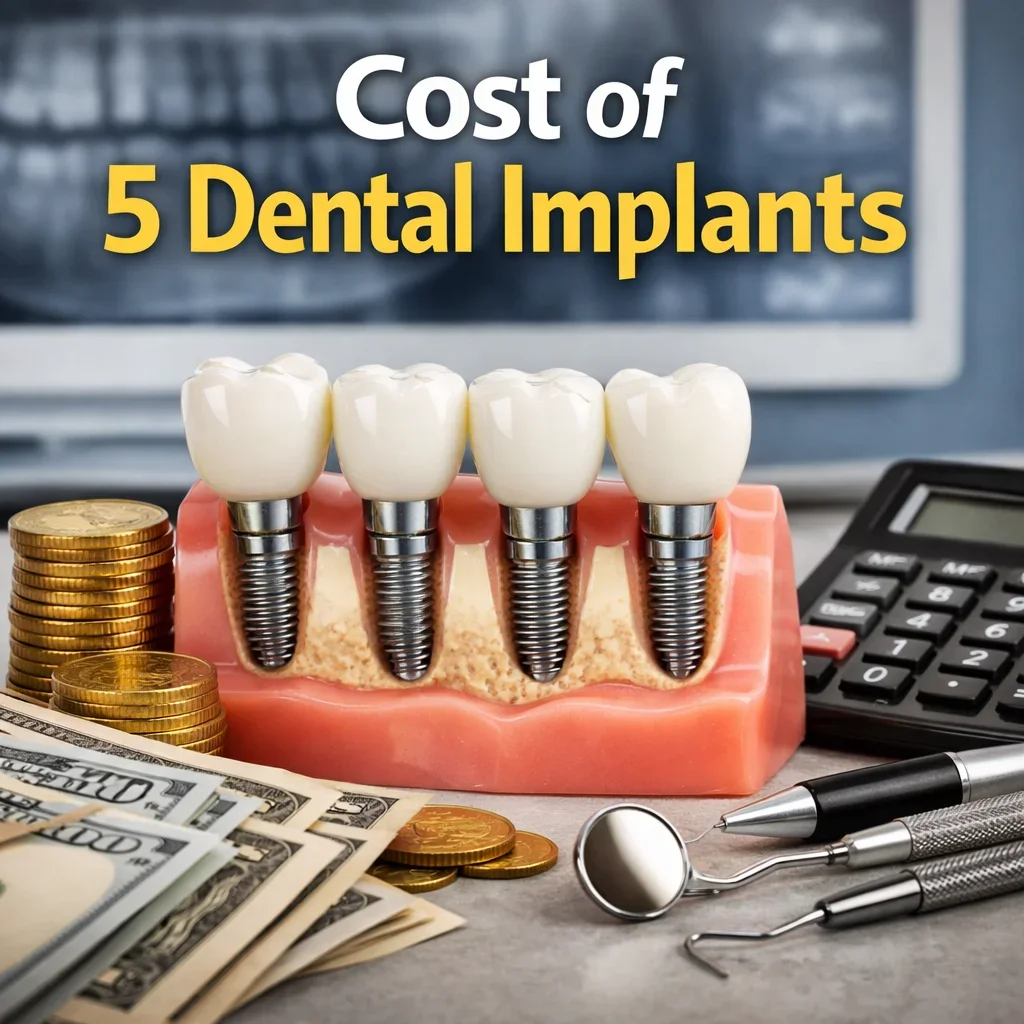
Hidden Costs to Watch for When Calculating Implant Treatment
When researching the cost of 5 dental implants, many patients focus only on the headline price they see online or in advertisements. However, one of the most important steps in financial planning is understanding potential hidden or overlooked costs. These are not necessarily unethical charges, but expenses that may not be included in an initial quote unless you ask the right questions. Being aware of them helps you avoid budget surprises and make a truly informed decision 🧐.
Diagnostic and Consultation Fees
Some clinics advertise a low cost of 5 dental implants but exclude diagnostic steps such as consultations, panoramic X-rays, or 3D CBCT scans. These diagnostics are essential for safe implant placement, yet they may be billed separately.
Advanced imaging allows the dentist to assess bone density, nerve positioning, and sinus anatomy. If these services are not included, they can add a noticeable amount to the final cost of 5 dental implants. Always ask whether diagnostics are part of the quoted price or charged separately.
Temporary Teeth During the Healing Phase
Another commonly overlooked expense related to the cost of 5 dental implants is temporary restorations. Implants require a healing period before the final prosthetic is placed. During this time, many patients need temporary teeth for aesthetic and functional reasons.
Some clinics include temporary crowns or bridges in their treatment packages, while others charge extra. Without temporary teeth, patients may experience difficulty speaking or smiling confidently. These costs should be clarified early when calculating the total cost of 5 dental implants.
Immediate Loading vs Delayed Loading
If a clinic offers immediate loading (placing temporary teeth on implants shortly after surgery), this may increase the cost of 5 dental implants due to additional planning and materials. However, it can significantly improve comfort and quality of life during healing.
Medication and Post-Operative Care
Medications such as antibiotics, pain relievers, and antiseptic mouth rinses are often required after implant surgery. These are not always included in the advertised cost of 5 dental implants. While individually they may seem minor, together they contribute to the overall expense.
Post-operative checkups and adjustments are another area to watch. Reputable clinics usually include follow-up visits, but some low-cost providers may charge separately for each appointment. This can quietly raise the total cost of 5 dental implants over time.
Adjustments, Repairs, and Bite Corrections
After the final prosthetic is placed, minor adjustments are sometimes needed to optimize comfort and bite alignment. These refinements are a normal part of implant treatment. However, not all clinics include them in the initial cost of 5 dental implants.
If adjustments or occlusal corrections are billed separately, patients may face additional fees weeks or months after treatment. A clear treatment agreement should specify whether such refinements are included.
Exclusions Related to Complications
Although implant success rates are very high, complications can occasionally occur. Some clinics exclude complication management from the original cost of 5 dental implants. This means additional fees may apply if an implant requires revision or replacement.
Clinics that stand behind their work often provide warranties or guarantees. These policies may slightly increase the initial cost of 5 dental implants, but they offer valuable protection and peace of mind.
Warranty and Guarantee Policies
Ask whether the clinic provides warranties on implants and prosthetics. A comprehensive warranty can prevent unexpected expenses and protect your investment. Without one, even minor issues can significantly increase the long-term cost of 5 dental implants.
Travel and Time-Related Costs
For patients traveling for treatment, indirect costs should also be considered. Flights, accommodation, time off work, and extended stays can affect the real cost of 5 dental implants. While treatment abroad may still be more affordable overall, these factors should be planned carefully.
Some clinics assist with travel logistics or include accommodation packages, which can offset these hidden expenses. Always ask what support is available when calculating the full cost of 5 dental implants.
In summary, the true cost of 5 dental implants goes beyond the advertised number. Diagnostics, temporary teeth, medications, adjustments, warranties, and indirect expenses all contribute to the final investment. By asking detailed questions and requesting a fully itemized treatment plan, patients can avoid surprises and confidently move forward with implant treatment that fits both their health needs and financial expectations 😊.