
The cost to remove permanent retainer is one of the most common questions patients ask after finishing orthodontic treatment. Permanent retainers, also known as bonded or fixed retainers, are thin wires glued behind the teeth to maintain alignment after braces or clear aligners. While they are highly effective, there comes a time when removal becomes necessary due to hygiene concerns, wire breakage, discomfort, or a change in dental treatment plans 🦷.
Understanding the cost to remove permanent retainer helps patients plan financially and avoid unpleasant surprises at the dental office. Many people assume removal is either free or extremely expensive, but the reality sits somewhere in between. The price depends on multiple factors such as location, dentist expertise, and whether complications are present.
From a patient’s perspective, search intent usually revolves around three core questions: How much does it cost?, Is it painful?, and Is removal really necessary?. This section answers all three in detail, starting with what a permanent retainer actually is and why dentists recommend removing it under certain conditions.
A permanent retainer is typically bonded to the back of the front teeth using dental adhesive. Over time, plaque and tartar can accumulate around the wire, increasing the risk of gum disease. If oral hygiene becomes difficult or the wire breaks, dentists often recommend removal. In such cases, the cost to remove permanent retainer becomes a practical concern rather than a cosmetic one.
In most clinics, the cost to remove permanent retainer is considered a minor dental procedure. It usually involves carefully breaking the adhesive bond, removing the wire, and polishing the tooth surface. When performed correctly, there is no damage to enamel. This precision work explains why prices vary and why professional removal is always recommended over DIY attempts ⚠️.
Patients in the United States typically encounter a cost to remove permanent retainer that reflects both chair time and professional skill. Dentists use specialized tools to ensure safe removal without micro-fractures in the enamel. This is especially important for patients who plan to use a removable retainer afterward or undergo whitening or restorative procedures.
Another important factor affecting the cost to remove permanent retainer is whether the retainer spans both upper and lower teeth. Removing a retainer from both arches requires more time and precision. Additionally, retainers that have been in place for many years may require extra care due to hardened adhesive.
From an SEO and medical accuracy standpoint, it is also worth noting that reputable dental organizations like the
American Dental Association emphasize professional intervention for all bonded appliance removals. Attempting removal at home may appear cost-saving, but it can lead to chipped enamel or gum injury—resulting in higher long-term expenses.
Patients often compare the cost to remove permanent retainer with the cost of replacement. In many cases, removal alone is less expensive than repairing a damaged retainer or treating gum inflammation caused by poor hygiene around the wire. Dentists frequently advise timely removal to avoid secondary costs.
Clinics that focus on international or comprehensive dental care—such as Redent Klinik—usually evaluate the patient holistically. If you are unsure whether removal is right for you or want an exact price estimate, contacting a professional clinic is the safest option. You can easily reach specialists via the
Redent Klinik Contact Page 📞.
In summary, the cost to remove permanent retainer is influenced by clinical complexity, location, and professional expertise. While it is not typically an expensive procedure, it should never be underestimated or postponed. Proper removal protects your teeth, gums, and long-term oral health—making the investment well worth it 😊.
What Is a Permanent Retainer and Why Is It Removed?
Before understanding the cost to remove permanent retainer, it is essential to clearly understand what a permanent retainer is and why dentists may recommend removing it. A permanent retainer—also called a fixed or bonded retainer—is a thin metal wire permanently attached to the back surface of the teeth, usually the lower or upper front teeth. Its primary purpose is to keep teeth from shifting after orthodontic treatment such as braces or aligners 🦷.
Permanent retainers are designed to be long-term solutions, but “permanent” does not mean “forever.” Over time, dental conditions change, oral hygiene habits evolve, and treatment needs may shift. This is where the cost to remove permanent retainer becomes a relevant and practical concern for many patients.
How a Permanent Retainer Works
A permanent retainer works by maintaining tooth alignment passively. Once orthodontic treatment is complete, the retainer is bonded using dental adhesive to prevent relapse. Unlike removable retainers, patients cannot take it out for cleaning, which can make oral hygiene more challenging.
Because plaque and tartar can accumulate around the wire, dentists carefully monitor these retainers during routine checkups. If buildup becomes excessive, gum inflammation and periodontal issues may develop. In these cases, the cost to remove permanent retainer is often far lower than the cost of treating advanced gum disease later on.
Common Reasons for Permanent Retainer Removal
There are several medically valid reasons why a dentist might recommend removal. One of the most common reasons is wire damage. If the retainer wire bends, breaks, or detaches from one tooth, it can cause discomfort or unwanted tooth movement. Repair is sometimes possible, but in many cases, removal is the safest option.
Another frequent reason involves oral hygiene challenges. Patients who struggle to floss properly around the wire may develop chronic inflammation or tartar buildup. In such scenarios, removing the retainer may significantly improve long-term oral health, making the cost to remove permanent retainer a preventative investment rather than an unnecessary expense.
Orthodontic or Cosmetic Treatment Changes
Patients planning further orthodontic treatment, teeth whitening, veneers, or bonding procedures may need their permanent retainer removed. Cosmetic dentistry often requires unobstructed tooth surfaces, and keeping the retainer in place can interfere with treatment outcomes.
In these situations, dentists evaluate whether a new retainer will be needed after removal. While this may add to overall expenses, the initial cost to remove permanent retainer is still considered a routine and manageable procedure when performed professionally.
Medical vs Elective Removal
It is important to distinguish between medically necessary removal and elective removal. Medically necessary removal typically occurs due to gum disease, tooth mobility, or retainer failure. Elective removal, on the other hand, may be driven by patient preference or lifestyle considerations.
In both cases, the cost to remove permanent retainer remains relatively similar, but medically indicated procedures may sometimes be partially covered by insurance, depending on the policy. Dentists often document the reason for removal carefully to support clinical necessity.
Professional Guidelines and Safety
Professional dental organizations such as the
American Dental Association strongly advise against attempting to remove a permanent retainer at home. While online videos may suggest DIY methods, improper removal can permanently damage enamel or loosen teeth.
Professional removal ensures that adhesive is carefully detached and tooth surfaces are polished afterward. This level of precision explains why the cost to remove permanent retainer reflects not just time, but expertise and safety.
Is Removal Always Necessary?
Not all permanent retainers need to be removed. Many patients keep them for decades without complications. However, when problems arise, delaying removal can increase risks. Dentists typically weigh benefits versus risks before recommending removal.
Ultimately, understanding what a permanent retainer is and why it may need to be removed helps patients better evaluate the cost to remove permanent retainer. When viewed in the context of long-term oral health, this cost is often a reasonable and proactive step toward maintaining a healthy smile 😊.
Average Cost to Remove Permanent Retainer in the US
The cost to remove permanent retainer in the United States varies widely, but most patients want a clear, realistic range before scheduling an appointment. On average, professional removal is considered a low-risk, outpatient dental procedure, yet pricing depends on geography, clinical complexity, and provider expertise. Understanding these variables helps patients align expectations with real-world dental billing 💵.
For most patients, the cost to remove permanent retainer falls within an affordable range compared to other dental procedures. Removal typically takes 15–45 minutes and does not require anesthesia unless complications are present. Despite being relatively simple, precision is critical to protect enamel and gum tissue.
National Average Price Range
Across the United States, the cost to remove permanent retainer generally ranges from $75 to $300 per arch. This means removing a retainer from only the lower or upper teeth usually costs less than removing both. Clinics in rural or suburban areas often charge on the lower end, while urban or high-demand practices may be closer to the upper limit.
Typical Price Breakdown
- $75–$150: Simple removal, single arch, no complications
- $150–$250: Hardened adhesive or long-term bonded retainers
- $250–$300+: Upper + lower retainer removal or complex cases
This pricing structure reflects chair time, professional tools, and post-removal polishing. When evaluating the cost to remove permanent retainer, patients should confirm whether polishing and enamel smoothing are included, as these steps are essential for comfort and aesthetics.
Urban vs Rural Cost Differences
Location plays a major role in the cost to remove permanent retainer. Dental clinics in major cities such as New York, Los Angeles, or Chicago often have higher operational costs, which are reflected in pricing. In contrast, practices in smaller towns or regional areas tend to offer lower fees.
However, higher cost does not always mean better quality. What matters most is the dentist’s experience with orthodontic appliances. Patients should focus on professional credentials rather than choosing a provider solely based on the lowest cost to remove permanent retainer.
General Dentist vs Orthodontist Pricing
Both general dentists and orthodontists can remove permanent retainers. Orthodontists may charge slightly more due to specialized training, while general dentists often offer competitive pricing. The cost to remove permanent retainer may increase if the dentist did not originally place the retainer, as extra evaluation time may be required.
In many cases, general dentists provide excellent outcomes at a lower cost, especially when removal is straightforward. Patients should ask whether the provider routinely performs retainer removals and how many similar cases they handle annually.
Additional Costs to Be Aware Of
While the base cost to remove permanent retainer covers removal itself, some clinics may charge separately for follow-up services. These may include:
- Post-removal polishing or fluoride treatment
- Dental cleaning if heavy tartar is present
- Replacement with a removable retainer
If a replacement retainer is needed, this is typically billed separately and may range from $100 to $400 depending on type. Even with these add-ons, the initial cost to remove permanent retainer remains a relatively small part of overall orthodontic care.
Are These Prices Backed by Dental Standards?
Pricing ranges align with common fee schedules referenced by dental professionals and guidelines promoted by organizations such as the
American Dental Association. While the ADA does not set prices, it emphasizes transparency and informed consent, encouraging patients to ask for clear estimates before treatment.
Clinics that follow these guidelines usually explain the cost to remove permanent retainer upfront and document the procedure clearly. This transparency builds trust and prevents billing disputes.
Is the Cost Worth It?
When weighed against the risks of gum disease, enamel damage, or tooth relapse, the cost to remove permanent retainer is generally considered a worthwhile investment. Delaying removal when indicated can lead to more expensive treatments later.
In summary, the cost to remove permanent retainer in the US is predictable, manageable, and justified by the precision required. Patients who understand pricing ranges, regional differences, and provider options are better equipped to make confident, informed decisions about their oral health 😊.
Factors That Affect the Cost to Remove Permanent Retainer
The cost to remove permanent retainer is not a fixed number, and patients are often surprised to learn how many variables influence the final price. While the procedure itself is relatively straightforward, individual clinical and logistical factors can significantly affect how much a dentist charges. Understanding these factors helps patients interpret quotes accurately and avoid confusion at the dental office 🧾.
Rather than focusing on a single price, it is more useful to understand why the cost to remove permanent retainer may differ from one patient to another. Dentists assess multiple elements before determining the final fee, and each one reflects time, risk, and professional responsibility.
Number of Teeth and Dental Arch Involved
One of the most influential factors in the cost to remove permanent retainer is whether the retainer is bonded to the upper teeth, lower teeth, or both. A retainer attached to six teeth on one arch requires less time and effort than a retainer bonded across both arches.
Lower permanent retainers are more common and often slightly easier to access, while upper retainers may require additional care due to visibility and enamel sensitivity. As the scope of work increases, so does the cost to remove permanent retainer.
Duration the Retainer Has Been in Place
How long the permanent retainer has been bonded plays a major role in pricing. Retainers that have been in place for many years tend to have stronger, more hardened adhesive. Removing them safely requires slower, more meticulous work.
Dentists may need additional chair time to gently break the bond without stressing the enamel. As a result, the cost to remove permanent retainer is often higher for long-term retainers compared to those placed more recently.
Condition of the Retainer and Adhesive
The physical condition of the retainer itself is another critical factor. Bent wires, partial detachments, or broken segments can complicate removal. In some cases, sharp wire edges may irritate the gums, requiring extra care during removal.
If the adhesive has spread unevenly or covers a large tooth surface, additional polishing is necessary after removal. These technical details directly influence the cost to remove permanent retainer, as they increase procedure complexity.
Tartar and Plaque Buildup
Excessive tartar buildup around a permanent retainer can also affect pricing. If heavy calculus is present, the dentist may need to perform scaling before or after removal. While this improves oral health, it adds time and may increase the cost to remove permanent retainer.
Dentist Experience and Specialization
The training and experience of the dental professional matter. Orthodontists and highly experienced dentists may charge more due to their specialized expertise. Their advanced skills reduce the risk of enamel damage, which is why some patients prefer them despite a higher cost to remove permanent retainer.
That said, many general dentists are fully qualified to perform safe removal at a lower cost. The key factor is experience with bonded orthodontic appliances rather than title alone.
Geographic Location of the Clinic
Geography significantly affects dental pricing across the United States. Clinics in large metropolitan areas typically have higher overhead costs, including rent, staffing, and insurance. These factors are reflected in the cost to remove permanent retainer.
In contrast, clinics in smaller cities or suburban areas often offer more affordable pricing. However, patients should never compromise quality purely to reduce the cost to remove permanent retainer.
Additional Services Included
Some clinics bundle services into one fee, while others itemize costs separately. The quoted cost to remove permanent retainer may or may not include:
- Enamel polishing
- Fluoride application
- Post-removal evaluation
Patients should ask for a clear breakdown to understand exactly what is included. Transparent pricing aligns with ethical standards encouraged by organizations like the
American Dental Association.
Emergency vs Scheduled Removal
Urgent or same-day appointments may increase the cost to remove permanent retainer. Emergency cases—such as a broken wire causing pain—often require schedule adjustments, which can affect pricing.
Scheduling removal during a routine checkup is usually more cost-effective and allows the dentist to plan adequate time for a smooth, controlled procedure.
Why These Factors Matter
Each of these variables exists for a reason: patient safety and treatment quality. The cost to remove permanent retainer reflects not only the physical act of removal but also risk management, professional expertise, and long-term oral health protection.
When patients understand the factors behind pricing, they are better equipped to make informed decisions. Rather than viewing the cost to remove permanent retainer as an inconvenience, it becomes a logical and justified investment in maintaining a healthy, stable smile 😊.
Is Permanent Retainer Removal Covered by Insurance?
One of the most confusing aspects for patients considering removal is whether dental insurance helps cover the cost to remove permanent retainer. Unlike cleanings or fillings, permanent retainer removal sits in a gray area between orthodontic care and general dentistry. As a result, coverage policies vary widely depending on the insurance provider, plan type, and the clinical reason for removal 🧾.
Understanding how insurance companies view the cost to remove permanent retainer can help patients avoid unexpected out-of-pocket expenses and plan their treatment more effectively. In this section, we will break down how coverage typically works, when reimbursement is possible, and what patients should ask before scheduling the procedure.
How Dental Insurance Classifies Retainer Removal
Most dental insurance plans categorize permanent retainer removal as an orthodontic-related procedure rather than routine dental care. This classification is important because many adult dental plans either limit orthodontic coverage or exclude it entirely.
As a result, the cost to remove permanent retainer is often not fully covered under standard preventive or basic dental benefits. However, that does not mean coverage is impossible—it simply depends on how the procedure is justified and documented.
Medical Necessity vs Elective Removal
Insurance providers are more likely to contribute to the cost to remove permanent retainer when removal is deemed medically necessary. Medical necessity typically includes situations such as:
- Gum disease or chronic inflammation caused by the retainer
- Broken or displaced wire causing pain or injury
- Risk of enamel damage or tooth mobility
In these cases, dentists can submit documentation explaining why removal is required for oral health. When properly coded, insurance may partially reimburse the cost to remove permanent retainer under basic or major dental services.
Elective and Cosmetic Reasons
If removal is requested for convenience, comfort, or cosmetic reasons—such as preference for a removable retainer—insurance is much less likely to help. Elective removal is usually classified as patient-initiated, meaning the full cost to remove permanent retainer becomes an out-of-pocket expense.
This distinction highlights why clear communication between dentist and patient is essential before proceeding.
Orthodontic Coverage and Age Limits
Some insurance plans include orthodontic benefits, but these are often limited to children and teenagers. Adult orthodontic coverage is less common and may come with lifetime maximums.
If orthodontic benefits are still active, they may cover part of the cost to remove permanent retainer, especially if the retainer was placed as part of the original orthodontic treatment. Patients should review their plan’s orthodontic section carefully.
Typical Insurance Scenarios
In real-world practice, most patients experience one of the following scenarios regarding the cost to remove permanent retainer:
- No coverage, full out-of-pocket payment
- Partial coverage after deductible is met
- Coverage only if removal is medically justified
Even when insurance contributes, patients should expect to pay at least a portion of the cost to remove permanent retainer. Knowing this in advance helps avoid frustration.
Preauthorization and Cost Transparency
Many dental offices offer preauthorization services, allowing patients to confirm coverage before treatment. This process involves submitting procedure codes to the insurance provider and receiving an estimated coverage response.
Requesting preauthorization is one of the best ways to clarify the cost to remove permanent retainer ahead of time. While estimates are not guarantees, they provide a useful financial guideline.
Why Insurance Often Doesn’t Fully Cover It
From an insurance perspective, permanent retainers are considered maintenance devices rather than medically essential appliances in most cases. Since removal does not always address an immediate disease, insurers often classify the cost to remove permanent retainer as optional.
However, professional dental organizations such as the
American Dental Association emphasize that oral health decisions should be based on clinical need—not insurance limitations. Dentists prioritize patient safety even when coverage is limited.
Planning for Out-of-Pocket Costs
When insurance does not apply, many clinics offer transparent, flat-rate pricing for removal. Compared to other dental procedures, the cost to remove permanent retainer is usually manageable and significantly lower than restorative treatments caused by delayed care.
Some clinics may also allow removal to be scheduled alongside routine visits, reducing overall costs.
Final Takeaway
While insurance coverage for the cost to remove permanent retainer is inconsistent, understanding policy rules, medical necessity criteria, and preauthorization options empowers patients to make informed choices. Whether covered or not, timely and professional removal protects oral health and prevents more expensive problems down the line 😊.
Cost to Remove Permanent Retainer vs Replacement Costs
When patients consider whether to keep, repair, or remove a fixed retainer, a common comparison arises: the cost to remove permanent retainer versus the cost of repairing or replacing it. This comparison is essential for making a financially and medically sound decision. While removal is often a one-time expense, replacement or ongoing maintenance can add recurring costs over time 💡.
Understanding how the cost to remove permanent retainer compares with alternative options helps patients avoid unnecessary spending and choose the most sustainable path for long-term oral health.
One-Time Removal vs Ongoing Maintenance
The cost to remove permanent retainer is typically a single, predictable fee. Once the retainer is safely removed and teeth are polished, no further expenses are required unless a new retainer is desired. In contrast, keeping a permanent retainer often involves periodic repairs, rebonding, or professional cleanings around the wire.
Over several years, these maintenance visits may cumulatively exceed the cost to remove permanent retainer. Patients who experience repeated wire failures or adhesive loosening often find removal to be the more economical choice.
Repairing a Broken Permanent Retainer
Repair costs vary depending on the extent of damage. Simple rebonding of one tooth may cost less than full removal, but repeated repairs can quickly add up. If the wire breaks multiple times, dentists may recommend removal instead of ongoing fixes.
In such cases, the cost to remove permanent retainer becomes a strategic decision to stop recurring expenses and reduce future dental visits.
Hidden Costs of Repeated Repairs
Each repair appointment involves chair time, professional fees, and sometimes emergency scheduling. These indirect costs—time off work, transportation, and stress—are often overlooked when comparing options. Factoring these in makes the cost to remove permanent retainer appear more favorable.
Replacing with a New Permanent Retainer
If a permanent retainer fails completely, replacing it involves fabrication, fitting, and bonding. Replacement costs are usually higher than the cost to remove permanent retainer, especially if impressions or digital scans are required.
Additionally, replacement does not eliminate hygiene challenges. Patients prone to plaque buildup may face the same issues again, potentially leading to another removal later.
Switching to a Removable Retainer
Many patients choose removal followed by a removable retainer. While this adds an extra cost beyond the cost to remove permanent retainer, removable retainers are easier to clean and replace.
From a long-term perspective, this option often reduces dental complications and unexpected expenses. Dentists frequently recommend this transition for patients with gum sensitivity or compliance with nightly wear.
Health-Related Cost Considerations
Beyond direct pricing, oral health risks play a role in cost comparison. Keeping a problematic permanent retainer can contribute to gum disease or enamel wear. Treating these conditions is significantly more expensive than the cost to remove permanent retainer.
Professional organizations like the
American Dental Association emphasize prevention as a cost-effective strategy. Timely removal often aligns with this philosophy.
Short-Term Savings vs Long-Term Value
While repairing a retainer may appear cheaper initially, it may not deliver long-term value. The cost to remove permanent retainer offers clarity and closure—once completed, the issue is resolved.
Patients who prioritize stability and predictability often favor removal over ongoing uncertainty.
Which Option Makes Financial Sense?
The right choice depends on retainer condition, oral hygiene, and patient preferences. However, when repairs become frequent or hygiene suffers, the cost to remove permanent retainer is usually the most rational and economical decision.
In summary, comparing the cost to remove permanent retainer with repair and replacement costs reveals that removal is often the smartest long-term investment—financially, medically, and emotionally 😊.
Does Removing a Permanent Retainer Hurt or Damage Teeth?
One of the most common concerns patients have—often even more pressing than the cost to remove permanent retainer—is whether the procedure hurts or causes damage to the teeth. This fear is understandable, as permanent retainers are bonded directly to enamel, and the idea of removing them can sound intimidating. Fortunately, when performed by a trained professional, removal is generally safe, comfortable, and low-risk 😊.
Understanding what the procedure feels like and how dentists protect tooth structure helps patients feel confident that the cost to remove permanent retainer is not being paid at the expense of dental health.
Is Permanent Retainer Removal Painful?
In most cases, removing a permanent retainer is not painful. Patients may feel slight pressure or vibration as the dentist carefully detaches the wire and adhesive, but sharp pain is uncommon. The procedure typically does not require local anesthesia.
Any minor discomfort experienced is usually brief and mild. Compared to other dental procedures, the physical sensation is minimal, making the cost to remove permanent retainer a reasonable trade-off for comfort and peace of mind.
What Patients Usually Feel
- Light pressure on the teeth
- Subtle scraping or vibration sounds
- Temporary tooth sensitivity in rare cases
These sensations subside quickly, and most patients resume normal activities immediately after the appointment.
Does Removal Damage Tooth Enamel?
When performed correctly, permanent retainer removal does not damage enamel. Dentists use specialized instruments designed to break the adhesive bond without harming the tooth surface. After the wire is removed, any remaining adhesive is gently polished away.
This careful technique is one reason the cost to remove permanent retainer reflects professional expertise. Improper tools or excessive force—often seen in DIY attempts—are what actually cause enamel damage.
Risk Factors for Enamel Issues
While enamel damage is rare, certain factors can increase risk if not managed properly:
- Extremely old retainers with hardened adhesive
- Previous enamel wear or cracks
- Improper removal techniques
Experienced dentists account for these risks and adjust their approach accordingly. Choosing a qualified provider ensures the cost to remove permanent retainer includes safety, not just speed.
Gum Health During Removal
Gum irritation is another common worry. Because retainers sit close to gum tissue, dentists take special care to avoid trauma. Minor redness may occur if gums are already inflamed, but this typically improves after removal.
In fact, many patients notice improved gum health shortly after removal, especially if plaque buildup had been present. This long-term benefit further justifies the cost to remove permanent retainer.
Can Teeth Shift After Removal?
Tooth movement is a valid concern. Permanent retainers prevent relapse, so removing them without a replacement plan can lead to shifting. Dentists usually recommend a removable retainer if alignment stability is still needed.
While this may add to overall expenses, it is separate from the cost to remove permanent retainer itself and helps preserve orthodontic results.
Why Professional Removal Matters
Organizations such as the
American Dental Association strongly advise against at-home removal. Online tutorials often underestimate the complexity of bonded appliances and can result in chipped teeth or gum injury.
Professional removal ensures precision, safety, and proper finishing—elements built into the cost to remove permanent retainer.
Psychological Comfort and Peace of Mind
Beyond physical safety, professional removal provides reassurance. Patients know their teeth are protected, and any issues can be addressed immediately. This peace of mind is often overlooked but is an important part of the value behind the cost to remove permanent retainer.
Final Reassurance
In summary, removing a permanent retainer does not hurt and does not damage teeth when done correctly. Minor pressure and brief sensitivity are normal, but serious complications are rare. When weighed against health benefits and comfort, the cost to remove permanent retainer represents a safe, smart investment in long-term oral well-being 😌.
Cost to Remove Permanent Retainer for Upper vs Lower Teeth
Many patients are surprised to learn that the cost to remove permanent retainer can differ depending on whether the retainer is placed on the upper teeth, the lower teeth, or both. While the procedure conceptually sounds the same, anatomical differences, access difficulty, and clinical risk all influence pricing. Understanding these differences helps patients interpret estimates more accurately and make informed decisions 🦷.
Dentists do not price arbitrarily. The cost to remove permanent retainer reflects how challenging the removal is and how much time and precision are required to protect enamel and gum tissue in different areas of the mouth.
Lower Permanent Retainer Removal: What to Expect
Lower permanent retainers are far more common than upper ones. They are usually bonded to the back of the lower front teeth (canine to canine). Because of their location, lower retainers are constantly exposed to saliva, plaque, and tartar buildup.
From a technical standpoint, lower retainer removal is often more straightforward in terms of visibility and access. As a result, the cost to remove permanent retainer for lower teeth is usually on the lower end of the pricing spectrum.
Why Lower Retainers Are Often Cheaper to Remove
- Easier visual access for the dentist
- More predictable wire placement
- Shorter chair time in uncomplicated cases
That said, heavy tartar buildup around lower retainers can increase complexity. In such cases, the cost to remove permanent retainer may rise slightly due to additional cleaning and polishing requirements.
Upper Permanent Retainer Removal: Added Complexity
Upper permanent retainers are less common but often more delicate to remove. The upper front teeth typically have thinner enamel on the inner (palatal) surface, and visibility can be more challenging due to tongue position and arch shape.
Because of these factors, the cost to remove permanent retainer for upper teeth is often slightly higher. Dentists must work more slowly and carefully to avoid enamel stress or surface irregularities.
Clinical Challenges of Upper Retainer Removal
- Reduced working space
- Higher aesthetic sensitivity
- Greater emphasis on enamel preservation
These challenges do not mean the procedure is risky—but they do explain why pricing differs.
Removing Both Upper and Lower Retainers
When a patient has both upper and lower permanent retainers, the cost to remove permanent retainer is typically calculated per arch. Removing both in one appointment is efficient but still requires additional time and precision.
Clinics may offer bundled pricing for dual-arch removal, but the total cost will still be higher than removing just one retainer. Patients should ask whether polishing and evaluation for both arches are included in the quoted cost to remove permanent retainer.
Does Tooth Count Affect the Cost?
Yes. A retainer bonded to six teeth requires more work than one bonded to four. Each bonding point must be carefully detached and polished. The more teeth involved, the greater the technical demand—and the higher the cost to remove permanent retainer.
Dentists assess this during the initial exam and factor it into the final estimate.
Comfort and Recovery Differences
Patients often ask whether upper or lower removal feels different. Sensation levels are similar, but upper removals may feel slightly more awkward due to tongue positioning. Pain levels remain minimal in both cases.
From a patient-experience standpoint, the cost to remove permanent retainer includes not just the procedure but also the dentist’s ability to ensure comfort regardless of location.
Why Location-Based Pricing Is Reasonable
Some patients initially question why upper and lower removals are priced differently. However, when viewed through a clinical lens, the logic becomes clear. Pricing reflects time, skill, and risk management—not arbitrary fees.
Dental organizations such as the
American Dental Association emphasize individualized treatment planning, which naturally extends to individualized pricing.
Final Perspective
In summary, the cost to remove permanent retainer varies between upper and lower teeth due to anatomical and technical differences. Lower retainers are often simpler and less expensive to remove, while upper retainers require greater care and precision.
Understanding these distinctions helps patients feel confident that the cost to remove permanent retainer they are quoted is fair, justified, and aligned with best clinical practices 😊.
DIY Removal vs Dentist Removal: Cost and Risk Comparison
When patients search for ways to reduce the cost to remove permanent retainer, they often come across DIY (do-it-yourself) removal videos and guides online. These sources may suggest that removing a bonded retainer at home is easy, fast, and essentially free. However, what these guides rarely explain are the serious risks involved and the potential long-term costs that can far exceed the original cost to remove permanent retainer performed by a professional ⚠️.
This section provides a clear, honest comparison between DIY removal and dentist-performed removal—looking not only at cost, but also safety, effectiveness, and long-term oral health outcomes.
Why DIY Removal Seems Appealing
The appeal of DIY removal is simple: avoiding the cost to remove permanent retainer charged by a dental clinic. Online videos often show individuals using household tools such as tweezers, nail clippers, or floss to pull the wire loose.
At first glance, this may appear harmless—especially if part of the retainer has already detached. Unfortunately, what looks like a money-saving shortcut often turns into a costly mistake.
Common DIY Motivations
- Trying to avoid dental fees
- Belief that removal is “simple”
- Fear of dental appointments
While understandable, these motivations do not account for the technical complexity involved in safe removal.
Hidden Risks of DIY Permanent Retainer Removal
Permanent retainers are bonded using strong dental adhesives designed to withstand years of force. Attempting to remove them without professional tools often results in uneven force distribution across the tooth surface.
This can lead to enamel cracks, chips, or even tooth mobility. Treating such damage can cost far more than the original cost to remove permanent retainer.
Potential Consequences of DIY Removal
- Permanent enamel damage
- Gum lacerations or infection
- Unexpected tooth movement
- Need for restorative dental work
Once enamel is damaged, it cannot regenerate. Repairs such as bonding or veneers significantly increase total dental expenses.
Why Dentist Removal Is Clinically Safer
Professional removal is performed using precision instruments designed to break adhesive bonds without stressing enamel. Dentists work incrementally, removing adhesive residue and polishing the tooth surface afterward.
This controlled approach is what the cost to remove permanent retainer actually pays for: safety, precision, and expertise.
Dental professionals are also trained to recognize early signs of enamel weakness or gum inflammation and adjust their technique accordingly—something no DIY method can replicate.
Cost Comparison: Short-Term vs Long-Term
On paper, DIY removal appears to cost nothing. In reality, even minor damage caused by improper removal can lead to:
- Dental bonding or enamel repair
- Emergency dental visits
- Gum treatment or infection management
Each of these treatments can cost several times more than the original cost to remove permanent retainer. What begins as a cost-saving attempt often becomes a financial setback.
Professional Standards and Ethical Guidance
Organizations such as the
American Dental Association strongly discourage non-professional removal of bonded orthodontic appliances. Their guidance emphasizes that procedures involving bonded materials and enamel should always be performed by licensed professionals.
This position reflects decades of clinical data showing that professional care reduces complications and long-term costs.
Psychological and Emotional Costs
Beyond physical and financial risks, DIY removal often leads to anxiety when something goes wrong. Patients frequently report panic after feeling a tooth crack or gum tear—resulting in emergency visits that could have been avoided.
The cost to remove permanent retainer at a dental clinic includes peace of mind, knowing that any unexpected issue can be addressed immediately.
When Cost Should Not Be the Only Factor
While budget considerations are valid, dental decisions should never be based on cost alone. Teeth are irreplaceable, and damage caused by improper removal can have lifelong consequences.
Viewed from this perspective, the cost to remove permanent retainer is not an expense to avoid—but a protective investment.
Final Comparison Summary
DIY removal may seem cheaper initially, but it carries high risk and unpredictable outcomes. Dentist removal, while involving a clear cost to remove permanent retainer, offers safety, precision, and long-term savings.
For patients who value their oral health and want to avoid preventable damage, professional removal is always the smarter, safer, and ultimately more economical choice 😌.
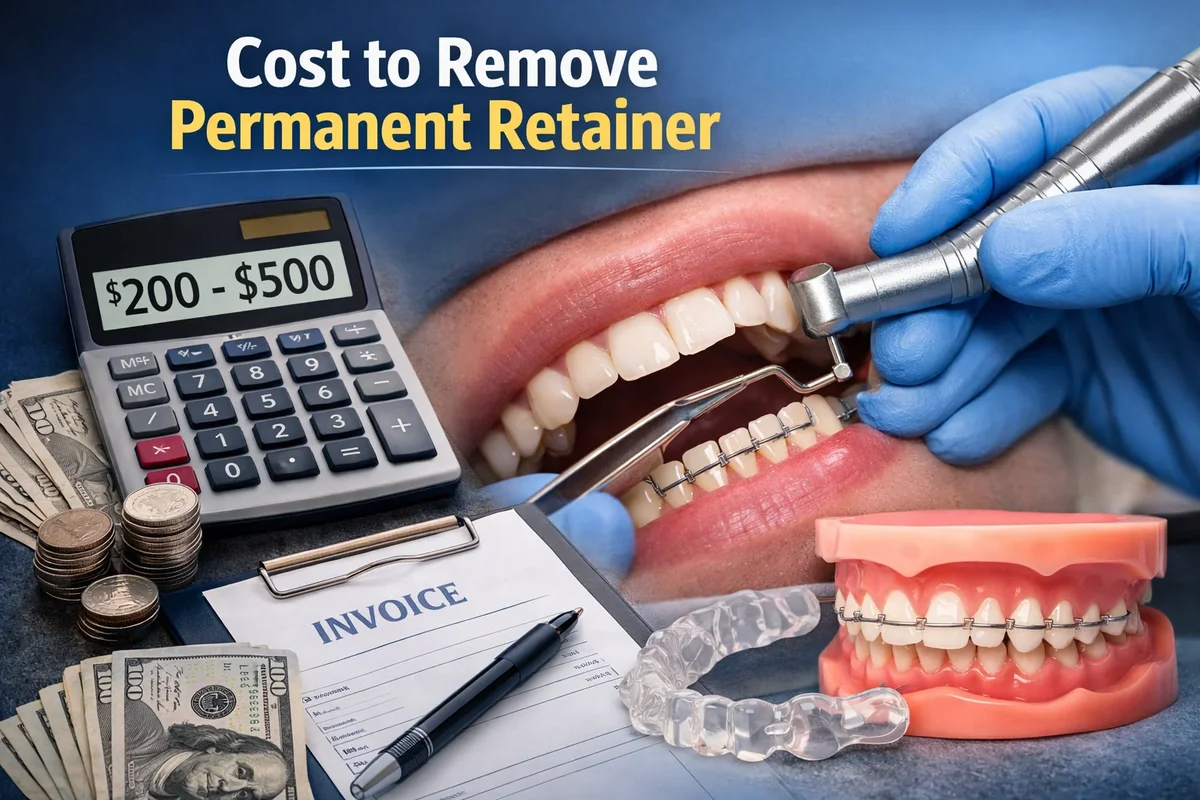
When Is the Right Time to Remove a Permanent Retainer?
Knowing the right moment to remove a fixed retainer is just as important as understanding the cost to remove permanent retainer. Many patients keep permanent retainers for years without issues, while others experience problems that make timely removal essential. The challenge lies in recognizing the signs and making a decision that protects both oral health and long-term orthodontic results ⏰.
This section focuses on timing—when removal is medically recommended, when it is optional, and how delaying the decision can influence both health outcomes and the cost to remove permanent retainer.
Clinical Signs That Indicate Removal Is Needed
Dentists typically recommend removal when a permanent retainer begins to cause problems. These issues may start subtly and worsen over time if ignored. One of the most common triggers is gum inflammation caused by plaque and tartar buildup around the wire.
If gum bleeding, swelling, or persistent irritation occurs despite good oral hygiene, the cost to remove permanent retainer becomes a preventative expense rather than a reactive one.
Warning Signs You Should Not Ignore
- Chronic gum inflammation around the retainer
- Difficulty flossing or cleaning effectively
- Wire bending, loosening, or breaking
- Unusual tooth sensitivity or discomfort
Addressing these signs early often keeps the cost to remove permanent retainer lower by avoiding complications.
How Long Are Permanent Retainers Meant to Last?
Despite their name, permanent retainers are not designed to last forever. Many orthodontists recommend periodic evaluation after 5–10 years. Over time, adhesive materials age, and tooth surfaces change slightly due to natural wear.
Waiting too long can make removal more difficult, potentially increasing the cost to remove permanent retainer due to hardened adhesive or secondary dental issues.
Age and Lifestyle Considerations
Life stages matter. Young adults who received retainers as teenagers may reach a point where long-term stability is achieved, and continued retention is no longer necessary. In such cases, planned removal can be a reasonable option.
Lifestyle factors—such as difficulty maintaining hygiene due to work schedules or health conditions—can also influence timing. Proactively scheduling removal often keeps the cost to remove permanent retainer predictable and manageable.
Orthodontic Stability and Risk of Relapse
One major concern patients have is whether teeth will shift after removal. This risk depends on individual orthodontic history, bite stability, and age. Dentists evaluate whether a removable retainer is needed to maintain alignment.
Importantly, planning for stability does not increase the cost to remove permanent retainer itself—it simply ensures results are preserved after removal.
Removing Too Early vs Too Late
Removing a retainer too early may increase relapse risk, while removing it too late can contribute to gum disease or enamel wear. Both scenarios can lead to higher overall dental costs.
From a financial standpoint, timely removal often keeps the cost to remove permanent retainer lower by preventing secondary treatments.
Professional Evaluation Is Key
Dentists rely on clinical exams, X-rays if necessary, and hygiene assessments to determine timing. This individualized approach aligns with best practices promoted by the
American Dental Association, which emphasizes patient-specific decision-making.
Trying to self-diagnose often leads to delayed care and higher long-term expenses than the original cost to remove permanent retainer.
Planning Removal with a Dental Professional
The ideal time for removal is often during a routine dental visit, allowing evaluation and removal in a controlled, non-urgent setting. This approach minimizes stress and helps keep the cost to remove permanent retainer stable.
If you are unsure whether it is time to remove your retainer or want a professional opinion tailored to your situation, consulting an experienced clinic is the safest step. You can easily reach specialists through the
Redent Klinik Contact Page 📞.
Final Timing Takeaway
There is no universal “perfect” time to remove a permanent retainer—but there is a right time for each patient. Monitoring warning signs, maintaining regular dental checkups, and acting before complications arise help ensure that the cost to remove permanent retainer remains a smart, preventive investment.
When done at the right moment, removal protects oral health, preserves orthodontic results, and provides long-term peace of mind—making both the timing and the cost to remove permanent retainer fully justified 😊.