
Cross bite orthodontics is a specialized area of orthodontic care focused on correcting a common but often underestimated dental misalignment known as a cross bite. In a healthy bite, the upper teeth slightly overlap the lower teeth when the mouth is closed. However, in a cross bite, this relationship is reversed for one or more teeth, causing the upper teeth to sit inside the lower teeth instead of outside. Cross bite orthodontics aims to restore proper alignment, improve oral function, and protect long-term dental health 🦷.
Understanding cross bite orthodontics is important because this condition is not just a cosmetic issue. Left untreated, a cross bite can lead to uneven tooth wear, jaw pain, gum recession, and even facial asymmetry over time. Many people live with a cross bite for years without realizing that headaches, chewing difficulties, or jaw clicking may be directly related. Cross bite orthodontics addresses the root of these problems by correcting the way the upper and lower jaws interact.
A cross bite can affect a single tooth, multiple teeth, or entire sections of the dental arch. Orthodontists typically classify it as an anterior cross bite (affecting the front teeth) or a posterior cross bite (affecting the back teeth). In both cases, cross bite orthodontics is designed to guide teeth and jaws into a more natural, functional position. This type of orthodontic treatment often overlaps with the broader concept of dental malocclusion, a term used to describe improper alignment between the upper and lower teeth.
One of the most important reasons to seek cross bite orthodontics early is jaw development. In children and teenagers, the jaws are still growing, making correction more efficient and often faster. When cross bite orthodontics is applied during growth phases, it can gently guide the jaw into a healthier position, reducing the need for more complex treatments later in life. That said, adults can also benefit significantly from cross bite orthodontics thanks to modern techniques and advanced orthodontic appliances.
From a functional standpoint, cross bite orthodontics improves how you chew, speak, and even breathe. A misaligned bite can force certain teeth to absorb excessive pressure, increasing the risk of fractures or enamel erosion. Over time, this uneven force distribution may contribute to temporomandibular joint (TMJ) disorders. By correcting the bite, cross bite orthodontics helps balance chewing forces and supports healthier jaw joint function 😊.
Aesthetics also play a role in why many patients explore cross bite orthodontics. A cross bite can subtly or noticeably affect facial harmony, especially if one side of the jaw develops differently from the other. Correcting the bite often results in a more symmetrical smile and facial appearance, which can significantly boost self-confidence. While appearance is not the primary goal, it is a valuable added benefit of cross bite orthodontics.
Diagnosis is the first step in any cross bite orthodontics plan. Orthodontists use a combination of clinical examination, dental impressions, digital scans, and X-rays to evaluate tooth position and jaw structure. According to guidance aligned with standards promoted by organizations such as the [American Dental Association](chatgpt://generic-entity?number=0), early detection of bite problems is key to preventing long-term complications. A precise diagnosis ensures that cross bite orthodontics is tailored to the individual rather than applied as a one-size-fits-all solution.
It is also important to understand that cross bite orthodontics is highly personalized. Factors such as age, severity of the cross bite, jaw growth patterns, and overall oral health all influence the treatment approach. Some cases may require simple orthodontic appliances, while others benefit from a combination of orthodontics and supportive dental procedures. A qualified orthodontist will explain the most effective path based on detailed evaluation.
If you suspect that you or your child may have a cross bite, seeking professional advice is the smartest next step. Early consultation can prevent unnecessary complications and shorten treatment time. You can easily reach out for a professional evaluation through the Redent Klinik Contact Page, where experienced dental professionals can guide you through the options for cross bite orthodontics.
For patients who want to explore trusted dental resources, the American Dental Association provides valuable educational material on orthodontic conditions and treatments. When approached correctly, cross bite orthodontics offers lasting improvements in comfort, function, and confidence — making it one of the most impactful investments you can make in your oral health ✨.
What Is Cross Bite Orthodontics and Why It Matters
Cross bite orthodontics focuses on diagnosing and correcting a specific type of bite misalignment where the upper and lower teeth do not meet in their correct horizontal position. In an ideal bite, the upper teeth should slightly overlap the lower teeth, protecting them and ensuring balanced chewing forces. When this relationship is reversed, cross bite orthodontics becomes essential to restore harmony between the teeth, jaws, and facial structure 🦷.
Many patients underestimate the importance of cross bite orthodontics because the condition may not always be immediately visible. However, even a mild cross bite can quietly cause long-term damage. Over time, improper tooth contact can lead to enamel erosion, cracked teeth, gum recession, and chronic jaw strain. Cross bite orthodontics is not simply about straightening teeth; it is about correcting the underlying bite mechanics that support lifelong oral health.
Understanding the Basic Mechanics of a Cross Bite
To fully appreciate cross bite orthodontics, it helps to understand how a cross bite affects the mouth. A cross bite occurs when one or more upper teeth bite inside the lower teeth instead of outside them. This can happen on one side of the mouth or both, and it may involve front teeth, back teeth, or a combination of both. Cross bite orthodontics works by gently guiding teeth and, in some cases, jaw growth into a more functional alignment.
From a biomechanical perspective, a cross bite shifts chewing pressure unevenly across the dental arches. This imbalance forces certain teeth to absorb more force than they are designed to handle. Over time, this can result in tooth sensitivity, abnormal wear patterns, and even bone loss. Cross bite orthodontics redistributes these forces evenly, allowing the mouth to function as intended 😊.
Anterior vs Posterior Cross Bite in Orthodontic Care
Cross bite orthodontics commonly addresses two main categories: anterior cross bite and posterior cross bite. An anterior cross bite involves the front teeth, often causing the upper incisors to sit behind the lower incisors. This can affect speech, smile aesthetics, and jaw movement. A posterior cross bite, on the other hand, involves the back teeth and is frequently associated with a narrow upper jaw.
Both forms require different cross bite orthodontics strategies. Anterior issues may be corrected with braces or clear aligners, while posterior cases often involve expansion techniques to widen the upper arch. Identifying the exact type is critical, as improper treatment planning can lead to relapse or incomplete correction.
Why Cross Bite Orthodontics Is More Than a Cosmetic Treatment
While many patients initially seek cross bite orthodontics for aesthetic reasons, the functional benefits are far more significant. A misaligned bite can interfere with efficient chewing, making it harder to break down food properly. This can place unnecessary stress on the digestive system and contribute to jaw fatigue. Cross bite orthodontics helps restore proper chewing efficiency, improving overall comfort and oral performance.
Another often-overlooked benefit of cross bite orthodontics is its role in protecting the temporomandibular joints. When the bite is off, the jaw may shift to one side during closure, increasing the risk of TMJ disorders. Symptoms such as clicking sounds, jaw locking, and chronic headaches may follow. Correcting the bite through cross bite orthodontics can significantly reduce these risks and promote healthier joint movement.
The Importance of Early Intervention
Early evaluation plays a crucial role in successful cross bite orthodontics. In children, the jaws are still developing, which allows orthodontists to guide growth more easily and efficiently. Intervening at a younger age can prevent the cross bite from becoming more severe and may eliminate the need for complex treatments later in life.
That said, cross bite orthodontics is not limited to children. Adults can also achieve excellent results thanks to advancements in orthodontic technology. Digital treatment planning, modern appliances, and customized aligners make it possible to correct cross bites at almost any age. The key is proper diagnosis and a personalized treatment approach.
Professional Evaluation and Clinical Significance
A comprehensive evaluation is the foundation of effective cross bite orthodontics. Orthodontists assess tooth position, jaw symmetry, bite force distribution, and facial balance. Diagnostic tools such as digital scans and X-rays help reveal whether the issue is dental, skeletal, or a combination of both. According to standards supported by the [American Dental Association](chatgpt://generic-entity?number=0), early identification of bite abnormalities can prevent progressive oral health problems.
If you notice signs such as uneven tooth wear, jaw discomfort, or difficulty chewing, it may be time to explore cross bite orthodontics. A professional consultation can clarify whether treatment is needed and what options are available. For expert guidance and personalized care, you can contact experienced specialists through the Redent Klinik Contact Page.
In summary, cross bite orthodontics matters because it addresses both visible and invisible aspects of oral health. By correcting misalignment at its source, this specialized orthodontic approach protects teeth, supports jaw function, and enhances overall quality of life ✨. When done correctly, cross bite orthodontics delivers benefits that extend far beyond a straighter smile.
Types of Cross Bite Orthodontic Problems Explained
Cross bite orthodontics addresses several distinct types of bite misalignment, each with its own causes, risks, and treatment considerations. Understanding these different types is essential because not all cross bites behave the same way. Some are purely dental, while others are skeletal and involve jaw structure. Effective cross bite orthodontics starts with correctly identifying the type of cross bite present and tailoring treatment accordingly 🦷.
A cross bite may involve a single tooth, a group of teeth, or an entire side of the mouth. In some patients, the issue is subtle and develops slowly, while in others it is clearly visible from an early age. Cross bite orthodontics categorizes these problems to ensure that correction improves both function and long-term stability, not just appearance.
Anterior Cross Bite in Orthodontic Treatment
An anterior cross bite occurs when one or more of the upper front teeth sit behind the lower front teeth when the mouth is closed. This is often noticed early because it affects the smile and can interfere with normal speech patterns. Cross bite orthodontics treats anterior cross bites with the goal of restoring proper front-to-back tooth alignment.
If left untreated, an anterior cross bite can place excessive pressure on the lower incisors, increasing the risk of enamel wear and gum recession. In children, this type of cross bite may also influence jaw growth, potentially leading to an imbalanced facial profile. Cross bite orthodontics corrects this issue by guiding the upper teeth forward into their correct position, often using braces or clear aligners 😊.
Posterior Cross Bite and Arch Width Problems
Posterior cross bite is one of the most common conditions treated with cross bite orthodontics. It involves the back teeth, where the upper molars bite inside the lower molars instead of outside. This type is frequently associated with a narrow upper jaw and can affect one side of the mouth (unilateral) or both sides (bilateral).
Posterior cross bites are particularly concerning because they often cause the jaw to shift to one side during chewing. Over time, this shift can lead to facial asymmetry, uneven muscle development, and temporomandibular joint discomfort. Cross bite orthodontics often uses expansion techniques to widen the upper arch, allowing the teeth to meet correctly and eliminating harmful jaw shifts.
Unilateral vs Bilateral Posterior Cross Bite
In unilateral posterior cross bite cases, only one side of the mouth is affected. This often causes the lower jaw to deviate toward the cross bite side when closing. Bilateral posterior cross bite affects both sides and is usually linked to overall maxillary constriction. Cross bite orthodontics approaches these cases differently, with careful attention to jaw balance and symmetry.
Dental Cross Bite vs Skeletal Cross Bite
Another critical distinction in cross bite orthodontics is whether the problem is dental or skeletal. A dental cross bite involves mispositioned teeth within otherwise normal jaw structures. These cases are often easier to treat and respond well to orthodontic appliances that reposition the teeth.
A skeletal cross bite, however, involves discrepancies in jaw size or position. For example, a narrow upper jaw or a forward-positioned lower jaw can create a cross bite even when the teeth themselves are properly aligned. Cross bite orthodontics in skeletal cases may require growth modification in children or combined orthodontic and surgical planning in adults to achieve optimal results.
Single-Tooth Cross Bite and Localized Issues
Not all cross bites involve large sections of the mouth. A single-tooth cross bite occurs when just one upper tooth bites inside the lower teeth. This is often caused by delayed tooth eruption, crowding, or retained baby teeth. Cross bite orthodontics addresses these localized problems early to prevent them from affecting neighboring teeth.
Even though a single-tooth cross bite may seem minor, ignoring it can lead to shifting of adjacent teeth and bite instability. Cross bite orthodontics uses targeted techniques to reposition the affected tooth while maintaining overall alignment.
Why Correct Classification Matters in Cross Bite Orthodontics
Proper classification is the backbone of successful cross bite orthodontics. Treating a skeletal cross bite as if it were purely dental can lead to incomplete correction or relapse. Similarly, failing to address arch width issues in posterior cross bites may result in long-term instability. Orthodontists rely on clinical exams, digital scans, and radiographic analysis to make these distinctions accurately.
Professional organizations such as the American Dental Association emphasize the importance of accurate diagnosis in orthodontic care. A well-planned cross bite orthodontics approach improves not only tooth alignment but also jaw health, facial balance, and chewing efficiency.
If you are unsure which type of cross bite may be affecting you or your child, a professional evaluation is essential. Personalized assessment ensures that cross bite orthodontics is both effective and stable over time. You can schedule a detailed consultation and receive expert guidance through the Redent Klinik Contact Page.
In summary, cross bite orthodontics covers a wide range of bite problems, from single-tooth misalignments to complex skeletal discrepancies. Understanding these types empowers patients to make informed decisions and highlights why tailored treatment planning is crucial for long-lasting oral health ✨.
Main Causes of Cross Bite in Children and Adults
Understanding the underlying causes is a critical part of effective cross bite orthodontics. A cross bite rarely develops randomly; instead, it is usually the result of genetic, developmental, or environmental factors that influence how the teeth and jaws grow. Identifying the exact cause allows cross bite orthodontics to focus not just on correcting tooth position, but also on preventing recurrence and long-term complications 🦷.
The causes of cross bite can differ significantly between children and adults. In younger patients, growth patterns and habits often play a major role, while in adults, untreated childhood issues or tooth loss may be the primary contributors. Cross bite orthodontics takes these differences into account when designing a treatment plan that is both effective and stable.
Genetic and Skeletal Factors
One of the most common causes addressed in cross bite orthodontics is genetics. Jaw size, shape, and growth direction are often inherited. If a child inherits a narrow upper jaw or a relatively wide lower jaw, the teeth may not align properly as they erupt. This skeletal imbalance frequently leads to posterior cross bites that require early orthodontic intervention.
Skeletal causes are especially important in cross bite orthodontics because they influence how the face develops over time. When the upper jaw does not grow sufficiently, the lower jaw may shift to compensate during chewing. This compensation can create facial asymmetry and uneven muscle development. Cross bite orthodontics aims to guide jaw growth in children or manage skeletal discrepancies carefully in adults 😊.
Delayed or Abnormal Tooth Eruption
Another major factor in cross bite orthodontics is delayed or abnormal tooth eruption. When permanent teeth erupt out of sequence or in the wrong position, they may settle into an incorrect bite relationship. This is particularly common with upper incisors and can result in an anterior cross bite.
Crowding is closely linked to eruption problems. If there is not enough space in the upper arch, teeth may erupt inward rather than outward. Cross bite orthodontics corrects this by creating adequate space and guiding teeth into their proper alignment before the bite becomes fully established.
Retained Baby Teeth and Space Loss
Retained primary (baby) teeth are another frequent contributor to cross bite orthodontics cases. When baby teeth do not fall out on time, they can block the path of permanent teeth, forcing them into incorrect positions. Similarly, premature loss of baby teeth can cause neighboring teeth to drift, reducing space for proper eruption.
Cross bite orthodontics addresses these issues by monitoring dental development closely and intervening at the right moment. Early correction helps avoid more complex treatments later.
Oral Habits and Functional Influences
Certain oral habits significantly increase the likelihood of needing cross bite orthodontics. Prolonged thumb sucking, pacifier use beyond early childhood, and tongue thrusting can all alter jaw growth and tooth position. These habits often place pressure on the upper jaw, restricting its development and increasing the risk of posterior cross bite.
Mouth breathing is another functional factor commonly linked to cross bite orthodontics. Chronic nasal obstruction may cause a child to breathe through the mouth, which can affect tongue posture and jaw development. Over time, this altered muscle balance can contribute to a narrow upper arch and bite misalignment.
Trauma, Tooth Loss, and Adult-Onset Causes
In adults, cross bite orthodontics often addresses problems that began earlier in life but were never treated. However, trauma and tooth loss can also create new cross bite issues. Losing a tooth without proper replacement may cause surrounding teeth to shift, altering the bite relationship.
Jaw injuries can change how the upper and lower teeth meet, sometimes resulting in a cross bite years after the initial trauma. Cross bite orthodontics evaluates these changes carefully to restore balance and function.
Why Identifying the Cause Is Essential
Successful cross bite orthodontics depends heavily on understanding why the cross bite developed in the first place. Treating only the visible misalignment without addressing its cause can lead to relapse. For example, correcting teeth without widening a narrow upper jaw may result in the bite shifting back over time.
Professional evaluation guided by standards supported by the [American Dental Association](chatgpt://generic-entity?number=0) emphasizes comprehensive diagnosis. Orthodontists use clinical exams, imaging, and growth analysis to pinpoint contributing factors and design a lasting solution.
If you or your child shows signs such as uneven chewing, jaw shifting, or visible misalignment, early consultation is key. A personalized assessment can determine the root cause and the most effective cross bite orthodontics strategy. You can arrange a professional evaluation through the Redent Klinik Contact Page.
In conclusion, the causes of cross bite are multifactorial and vary by age and individual development. Cross bite orthodontics succeeds when these causes are accurately identified and addressed, ensuring not only straighter teeth but also healthier jaws and long-term oral stability ✨.
How Cross Bite Orthodontics Is Diagnosed by Specialists
Accurate diagnosis is the foundation of successful cross bite orthodontics. Because a cross bite can involve teeth, jaws, or both, specialists must evaluate much more than what is visible during a simple smile check. A thorough diagnostic process ensures that cross bite orthodontics corrects not only the appearance of the bite but also its function, stability, and long-term health outcomes 🦷.
Many patients are surprised to learn that cross bite orthodontics diagnosis goes beyond identifying which teeth are misaligned. Specialists analyze how the jaws move, how chewing forces are distributed, and whether the bite problem is dental, skeletal, or a combination of both. Without this level of detail, treatment may appear successful initially but fail to deliver lasting results.
Comprehensive Clinical Examination
The first step in cross bite orthodontics diagnosis is a detailed clinical examination. During this assessment, the orthodontist observes how the upper and lower teeth come together when the mouth is closed. They check for signs such as jaw shifting, uneven tooth wear, gum recession, and facial asymmetry. These visual and functional clues provide important insights into the nature of the cross bite.
Specialists also evaluate muscle activity and jaw movement during speaking and chewing. In many cross bite orthodontics cases, the lower jaw shifts to one side to compensate for misalignment. Identifying this functional shift is essential, as it may indicate an underlying skeletal imbalance rather than a simple tooth-position issue 😊.
Digital Scans and Dental Impressions
Modern cross bite orthodontics relies heavily on digital technology. Intraoral scanners create precise 3D images of the teeth and bite relationship without the discomfort of traditional impression materials. These scans allow orthodontists to visualize how each tooth interacts with its opposing counterpart in real time.
Digital models help specialists simulate different cross bite orthodontics treatment approaches before therapy even begins. This predictive planning improves accuracy and allows patients to better understand their condition and expected outcomes.
Bite Analysis and Occlusal Mapping
Occlusal mapping is another advanced tool used in cross bite orthodontics diagnosis. This technique identifies which teeth contact first and where excessive pressure occurs during biting. Uneven contact points are common in cross bite cases and often explain symptoms such as jaw fatigue or localized tooth pain.
By mapping these pressure points, orthodontists can design cross bite orthodontics treatments that balance forces evenly across the dental arches, reducing the risk of future damage.
X-Rays and Skeletal Assessment
Radiographic imaging plays a crucial role in cross bite orthodontics, especially when skeletal involvement is suspected. Panoramic X-rays provide an overview of tooth position, eruption patterns, and bone health, while cephalometric X-rays reveal jaw relationships and growth direction.
These images help determine whether the cross bite is caused by tooth misalignment alone or by differences in jaw size or position. In children and adolescents, growth patterns are carefully evaluated to determine whether growth-guided cross bite orthodontics can be used to correct the issue early.
Differentiating Dental vs Skeletal Cross Bite
One of the most critical diagnostic goals in cross bite orthodontics is distinguishing between dental and skeletal causes. A dental cross bite involves teeth that are improperly positioned within normally sized jaws. These cases typically respond well to orthodontic appliances alone.
A skeletal cross bite, however, involves discrepancies in jaw width or alignment. Treating these cases requires a more comprehensive cross bite orthodontics strategy, which may include expansion devices or combined orthodontic approaches. Proper classification ensures that treatment addresses the root cause rather than just the symptoms.
Patient History and Symptom Evaluation
A complete diagnosis in cross bite orthodontics also includes reviewing the patient’s dental and medical history. Specialists ask about habits such as thumb sucking, mouth breathing, previous dental trauma, or early tooth loss. These factors often explain why the cross bite developed and help guide treatment planning.
Symptoms such as jaw clicking, headaches, difficulty chewing, or uneven tooth wear are carefully documented. These complaints often signal functional problems that cross bite orthodontics aims to resolve alongside alignment correction.
Why Accurate Diagnosis Impacts Long-Term Success
Precise diagnosis is what separates effective cross bite orthodontics from temporary cosmetic fixes. When specialists fully understand the nature of the cross bite, they can design a treatment plan that is stable, efficient, and tailored to the individual. Misdiagnosis can lead to prolonged treatment times, discomfort, or relapse after completion.
Trusted professional standards emphasize comprehensive evaluation as a cornerstone of orthodontic care. Patients who undergo a thorough diagnostic process are more likely to achieve lasting improvements in comfort, function, and smile aesthetics.
If you suspect a cross bite or have been experiencing bite-related discomfort, a professional assessment is the best place to start. You can schedule a detailed consultation with experienced specialists through the Redent Klinik Contact Page and receive personalized guidance on cross bite orthodontics options.
In summary, diagnosing a cross bite is a multi-step, highly detailed process. Cross bite orthodontics succeeds when specialists combine clinical expertise, advanced imaging, and functional analysis to create a clear roadmap for treatment ✨. This precision ensures results that are not only visually pleasing but also biologically sound and long-lasting.
Modern Cross Bite Orthodontics Treatment Options
Modern cross bite orthodontics offers a wide range of treatment options designed to correct bite misalignment efficiently, comfortably, and predictably. Thanks to advances in orthodontic technology, today’s treatments are more precise and patient-friendly than ever before. Whether the cross bite is dental or skeletal, mild or complex, cross bite orthodontics provides tailored solutions that address both function and long-term stability 🦷.
Choosing the right treatment option in cross bite orthodontics depends on several factors, including age, severity of the misalignment, jaw structure, and overall oral health. Specialists evaluate these variables carefully to select an approach that not only corrects the bite but also minimizes treatment time and relapse risk.
Orthodontic Braces for Cross Bite Correction
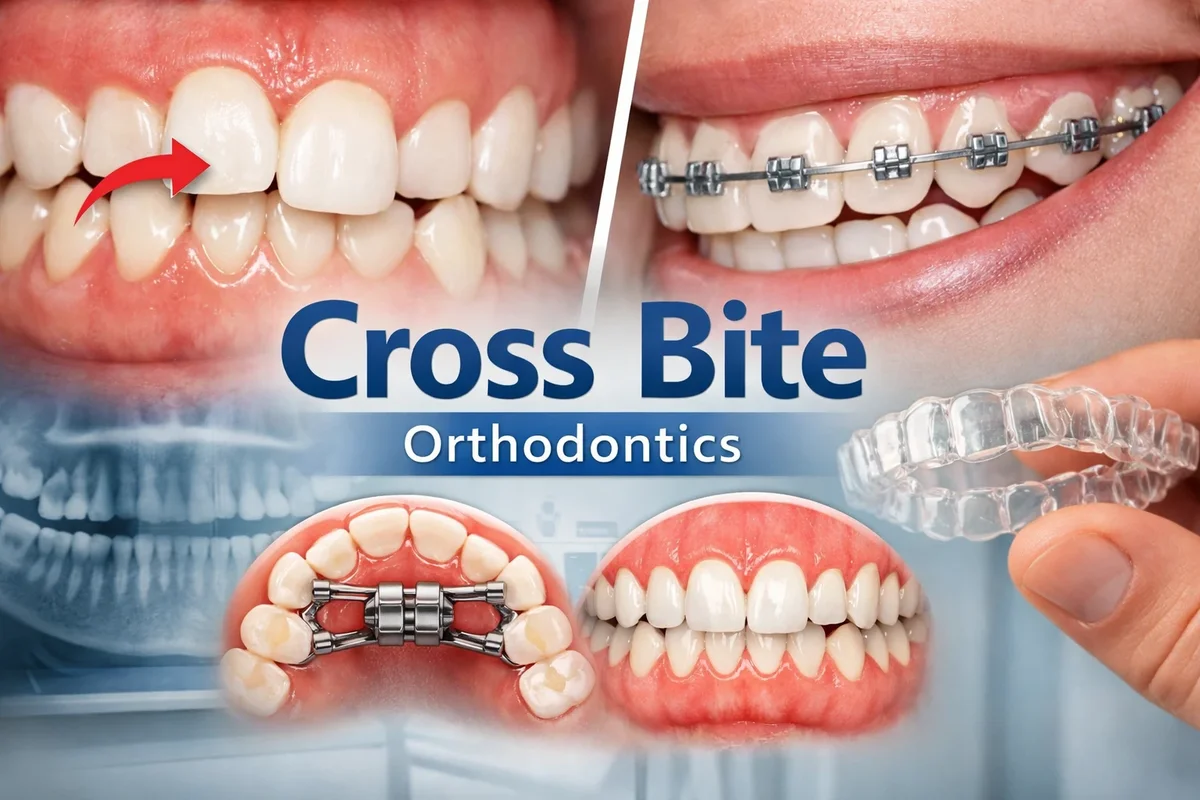
Traditional braces remain one of the most effective tools in cross bite orthodontics. Using brackets and wires, braces apply controlled forces to guide teeth into proper alignment. They are especially effective for complex cases involving multiple teeth or significant bite discrepancies.
In cross bite orthodontics, braces allow orthodontists to fine-tune tooth movement with a high degree of accuracy. Different types of braces, including metal and ceramic options, may be used depending on aesthetic preferences and clinical needs. Braces are often combined with additional appliances to address jaw width or bite depth issues 😊.
Clear Aligners in Cross Bite Orthodontics
Clear aligners have become an increasingly popular option in cross bite orthodontics, particularly for adults and teenagers seeking a more discreet treatment. These custom-made, removable trays gradually shift teeth into their correct positions.
While clear aligners are highly effective for mild to moderate dental cross bites, they may not be suitable for all cases. Skeletal cross bites or severe posterior cross bites often require additional appliances. In carefully selected cases, however, cross bite orthodontics with clear aligners offers excellent comfort, aesthetics, and convenience.
Palatal Expanders and Arch Expansion
For many posterior cross bite cases, especially in children, palatal expanders play a crucial role in cross bite orthodontics. These devices gently widen the upper jaw, creating enough space for the teeth to align properly. Expansion is most effective when the jaw is still growing, making early intervention particularly valuable.
Palatal expansion not only corrects the bite but also improves nasal airflow and facial balance in some patients. In cross bite orthodontics, expansion is often the key to preventing long-term skeletal issues and reducing the need for invasive treatments later in life.
Rapid vs Slow Expansion Techniques
Cross bite orthodontics may use either rapid or slow expansion, depending on age and skeletal maturity. Rapid expansion applies controlled force over a shorter period, while slow expansion uses gentler pressure over a longer time. Both approaches aim to achieve stable jaw width correction with minimal discomfort.
Functional Appliances and Growth Modification
In growing patients, functional appliances are an important component of cross bite orthodontics. These devices guide jaw growth into a more favorable position, correcting skeletal imbalances early. By influencing growth patterns, orthodontists can often avoid more complex treatments in adulthood.
Functional appliances are typically used in combination with braces or aligners to achieve comprehensive correction. Cross bite orthodontics that incorporates growth modification focuses on long-term stability and balanced facial development.
Adult Cross Bite Orthodontics and Advanced Planning
Adults seeking cross bite orthodontics benefit greatly from modern diagnostic and planning tools. Digital simulations allow orthodontists to map tooth movement precisely and predict outcomes before treatment begins. In some skeletal cases, orthodontic treatment may be coordinated with other dental procedures to optimize results.
While jaw growth has stopped in adults, cross bite orthodontics can still deliver excellent functional and aesthetic improvements. Treatment plans are carefully customized to ensure comfort, efficiency, and durability.
Choosing the Right Treatment Option
Selecting the most appropriate cross bite orthodontics treatment requires expert evaluation. No single method is ideal for every patient, and successful outcomes depend on personalized planning. Professional standards supported by the [American Dental Association](chatgpt://generic-entity?number=0) emphasize the importance of individualized orthodontic care based on accurate diagnosis.
If you are considering treatment or want to explore which option is best for your situation, a professional consultation is the next step. Experienced specialists can assess your bite and explain available cross bite orthodontics solutions in detail. You can schedule an evaluation through the Redent Klinik Contact Page.
In conclusion, modern cross bite orthodontics offers a versatile set of tools to correct bite misalignment safely and effectively. With the right approach, patients can achieve improved function, comfort, and confidence — all supported by advanced technology and expert care ✨.
Braces vs Clear Aligners for Cross Bite Orthodontics
When patients explore treatment options, one of the most common questions in cross bite orthodontics is whether braces or clear aligners are the better choice. Both systems are widely used, clinically proven, and effective when selected appropriately. The key difference lies in how each approach applies force, the types of cross bites they correct best, and how they fit into a patient’s lifestyle 🦷.
Choosing between braces and aligners in cross bite orthodontics is not about which option is “better” overall, but which is better for a specific bite pattern. Factors such as severity, tooth movement complexity, jaw involvement, and patient compliance all influence the final decision.
How Braces Work in Cross Bite Orthodontics
Traditional braces are one of the most powerful tools in cross bite orthodontics. They use fixed brackets bonded to the teeth and connected by wires that apply continuous, controlled pressure. This setup allows orthodontists to move teeth in multiple directions simultaneously with a very high level of precision.
In cross bite orthodontics, braces are particularly effective for moderate to severe cases, posterior cross bites, and situations involving multiple teeth or jaw asymmetry. Because braces are fixed, they do not rely on patient compliance for effectiveness, making them a reliable option for complex corrections 😊.
Advantages of Braces for Cross Bite Correction
Braces offer several advantages in cross bite orthodontics. They provide constant force, allow fine-tuned adjustments, and can be combined easily with auxiliary appliances such as elastics or expanders. This makes them ideal for cases where tooth rotation, vertical movement, or arch coordination is required.
Another advantage is predictability. Orthodontists have decades of clinical data supporting the effectiveness of braces in cross bite orthodontics, especially in cases involving skeletal discrepancies or long-standing misalignment.
Clear Aligners in Cross Bite Orthodontics
Clear aligners have transformed the patient experience in cross bite orthodontics, especially for adults and teens seeking a more discreet treatment. Aligners are removable, transparent trays custom-designed to move teeth gradually through a series of stages.
In cross bite orthodontics, clear aligners are most effective for mild to moderate dental cross bites where jaw structure is stable. Advances in aligner technology now allow for more complex movements than in the past, expanding their role in bite correction.
Benefits of Clear Aligners
One of the biggest advantages of aligners in cross bite orthodontics is aesthetics. They are nearly invisible, making them appealing for professionals and adults concerned about appearance. Aligners are also removable, allowing patients to eat freely and maintain excellent oral hygiene.
Comfort is another benefit. Many patients report less irritation compared to braces, as aligners lack metal brackets and wires. For the right candidate, cross bite orthodontics with aligners can be both effective and lifestyle-friendly 😊.
Limitations of Aligners in Cross Bite Orthodontics
Despite their advantages, clear aligners are not suitable for every cross bite case. Severe posterior cross bites, significant jaw width discrepancies, or cases requiring major skeletal correction may exceed the mechanical limits of aligners alone.
Additionally, aligner success depends heavily on patient compliance. Aligners must be worn for the recommended number of hours per day to be effective. Inconsistent wear can slow progress or compromise results in cross bite orthodontics.
Clinical Decision-Making: Which Is Right for You?
In professional cross bite orthodontics planning, the choice between braces and aligners is based on clinical findings, not trends. Orthodontists assess bite force distribution, tooth angulation, jaw symmetry, and long-term stability before recommending a system.
In some cases, a hybrid approach may be used. For example, braces may be applied initially to correct complex movements, followed by aligners for finishing. This flexibility allows cross bite orthodontics to adapt to individual needs rather than forcing a one-size-fits-all solution.
Professional Guidance and Evidence-Based Care
According to treatment principles aligned with the [American Dental Association](chatgpt://generic-entity?number=0), orthodontic appliance selection should always be evidence-based and patient-specific. What matters most is not the appliance itself, but how accurately it addresses the underlying bite problem.
If you are unsure which option is suitable for your situation, a professional consultation is essential. An experienced orthodontic team can evaluate your bite and explain whether braces, aligners, or a combined approach will deliver the best outcome. You can arrange a personalized assessment through the Redent Klinik Contact Page.
In summary, both braces and clear aligners play valuable roles in modern cross bite orthodontics. When selected and applied correctly, each can deliver excellent functional and aesthetic results. The success of treatment lies in accurate diagnosis, expert planning, and a method tailored precisely to your unique bite ✨.
Cross Bite Orthodontics in Children vs Adults
Cross bite orthodontics is effective at any age, but the approach, timing, and techniques can differ significantly between children and adults. Understanding these differences helps patients and parents set realistic expectations and choose the most appropriate treatment path. While the ultimate goal is the same—correcting bite alignment and improving oral function—the biological context of growing versus fully developed jaws plays a major role 🦷.
In both age groups, cross bite orthodontics aims to restore proper tooth-to-tooth relationships, balance chewing forces, and protect long-term dental health. However, children benefit from growth-related opportunities, whereas adults rely more on precise tooth movement and advanced planning.
Why Early Treatment Matters in Children
One of the strongest advantages of cross bite orthodontics in children is growth potential. During childhood and early adolescence, the jaws are still developing. This allows orthodontists to guide jaw growth and correct skeletal imbalances more easily than in adults.
Posterior cross bites caused by a narrow upper jaw are especially responsive to early intervention. With timely cross bite orthodontics, appliances such as palatal expanders can widen the upper jaw naturally, often preventing more complex problems later. Early treatment can also reduce treatment time and improve long-term stability 😊.
Interceptive Orthodontics and Growth Guidance
Interceptive cross bite orthodontics focuses on identifying and correcting problems before they fully develop. This may involve simple appliances that guide jaw growth, correct functional shifts, or create space for proper tooth eruption.
By addressing issues early, interceptive cross bite orthodontics can minimize the need for extractions, reduce the severity of future orthodontic treatment, and support balanced facial development.
Common Causes Addressed in Pediatric Cross Bite Orthodontics
In children, cross bites are often linked to habits such as thumb sucking, prolonged pacifier use, or mouth breathing. Genetics also play a significant role, particularly in jaw width discrepancies. Cross bite orthodontics in pediatric patients targets both the visible misalignment and the underlying cause to ensure lasting correction.
Monitoring dental development is key. Orthodontists track eruption patterns and jaw growth closely, intervening at the most effective moment for optimal results.
Cross Bite Orthodontics in Adults: What’s Different?
Adults seeking cross bite orthodontics face a different biological reality. Jaw growth is complete, meaning skeletal discrepancies cannot be corrected through growth modification alone. Instead, adult treatment focuses on precise tooth movement and, when necessary, compensatory strategies to achieve functional alignment.
Despite these limitations, modern cross bite orthodontics offers excellent outcomes for adults. Advances in digital planning, customized appliances, and aligner technology allow for highly controlled and predictable treatment, even in complex cases 😊.
Dental vs Skeletal Considerations in Adults
Many adult cross bite cases are dental in nature, making them well-suited for braces or clear aligners. Skeletal cross bites, however, require careful planning to ensure stability. Cross bite orthodontics for adults prioritizes comfort, efficiency, and realistic outcomes while protecting existing dental restorations and periodontal health.
Treatment Duration and Patient Expectations
Treatment timelines in cross bite orthodontics can vary by age. Children often experience faster correction due to bone adaptability, while adults may require longer treatment periods to achieve similar results. That said, adult patients frequently report high satisfaction due to improved comfort, aesthetics, and oral function.
Compliance is critical at any age. Whether wearing removable appliances or following elastic protocols, patient cooperation directly impacts the success of cross bite orthodontics.
Psychological and Lifestyle Factors
Children and adults often have different motivations for seeking cross bite orthodontics. Parents may focus on preventing future problems, while adults are often driven by functional discomfort or aesthetic concerns. Understanding these motivations helps orthodontists tailor communication and treatment strategies.
Adult patients may also prioritize discreet options and minimal lifestyle disruption. Clear aligners and low-profile appliances have made cross bite orthodontics more accessible and appealing for working professionals.
Professional Evaluation at Any Age
Regardless of age, accurate diagnosis remains the cornerstone of effective cross bite orthodontics. Professional standards aligned with guidance from the [American Dental Association](chatgpt://generic-entity?number=0) emphasize individualized treatment planning based on clinical findings, not age alone.
If you are considering treatment for yourself or your child, a professional consultation can clarify the best timing and approach. You can arrange a personalized evaluation through the Redent Klinik Contact Page and receive expert guidance tailored to your needs.
In conclusion, cross bite orthodontics delivers meaningful benefits for both children and adults, though the path to correction differs. Early intervention can simplify treatment, while adult care relies on precision and planning. In all cases, the right approach leads to healthier bites, improved comfort, and lasting confidence ✨.
How Long Cross Bite Orthodontics Treatment Takes
One of the most common questions patients ask before starting treatment is how long cross bite orthodontics will take. The answer depends on several variables, including the type of cross bite, its severity, the patient’s age, and the chosen treatment method. While no two cases are exactly the same, understanding the typical timelines helps set realistic expectations and reduces uncertainty 🦷.
Cross bite orthodontics is not a quick cosmetic fix; it is a structured medical process aimed at correcting bite mechanics and ensuring long-term stability. Treatment duration reflects the need to move teeth and, in some cases, influence jaw position safely and predictably.
Key Factors That Influence Treatment Duration
Several factors directly affect how long cross bite orthodontics treatment lasts. The most important is whether the cross bite is dental or skeletal. Dental cross bites, which involve tooth position only, usually respond faster to orthodontic forces. Skeletal cross bites, especially those involving jaw width discrepancies, often require a longer and more phased approach.
Age is another major factor. Children and adolescents typically experience faster results because their bones are still growing and more adaptable. In adults, bone remodeling occurs more slowly, so cross bite orthodontics may take additional time to achieve stable correction 😊.
Severity and Number of Teeth Involved
A single-tooth cross bite may be corrected in a relatively short period, sometimes within a few months. In contrast, cases involving multiple teeth or an entire side of the mouth require more comprehensive movement and therefore longer treatment times.
Orthodontists assess how many teeth are affected and how far they need to move. Cross bite orthodontics prioritizes controlled, gradual movement to protect tooth roots and surrounding bone.
Average Treatment Timelines for Different Cases
On average, cross bite orthodontics treatment ranges from 6 months to 24 months. Mild dental cross bites may be corrected in as little as 6 to 9 months, especially in younger patients. Moderate cases often take 12 to 18 months, while complex skeletal cases may extend beyond two years.
In children requiring palatal expansion, the active expansion phase may last only a few weeks, but stabilization and follow-up orthodontic treatment are essential for long-term success. Cross bite orthodontics is a multi-stage process, and each phase contributes to overall treatment time.
The Role of Appliances in Treatment Length
The type of appliance used in cross bite orthodontics also influences duration. Fixed braces provide continuous force and often allow for faster, more precise corrections in complex cases. Clear aligners may require additional time for certain movements, depending on compliance and case complexity.
Expansion devices used in cross bite orthodontics add another layer to the timeline. While expansion itself may be rapid, maintaining the new jaw width requires a retention period to allow bone to stabilize.
Patient Compliance and Its Impact
Patient cooperation plays a critical role in how long cross bite orthodontics takes. Wearing removable appliances as directed, maintaining good oral hygiene, and attending scheduled appointments all contribute to efficient progress.
Missed appointments or inconsistent appliance use can delay results significantly. Orthodontists design cross bite orthodontics treatment plans assuming proper compliance, so deviations can extend the timeline unnecessarily 😊.
Retention Phase: An Often Overlooked Step
Treatment does not end when the teeth appear aligned. The retention phase is a crucial part of cross bite orthodontics, ensuring that corrected teeth and jaws remain stable. Retainers are used to hold teeth in their new positions while supporting bone and tissue adaptation.
Skipping or shortening the retention phase increases the risk of relapse. Successful cross bite orthodontics always includes a well-planned retention strategy tailored to the individual.
Setting Realistic Expectations with Professional Guidance
Accurate timelines are established only after a thorough diagnostic evaluation. Orthodontists consider all clinical factors before estimating treatment length. Professional standards supported by the [American Dental Association](chatgpt://generic-entity?number=0) emphasize individualized treatment planning rather than generic timelines.
If you are considering treatment and want a clear idea of how long cross bite orthodontics may take in your specific case, a professional consultation is essential. You can schedule a personalized evaluation through the Redent Klinik Contact Page and receive a detailed treatment timeline based on expert assessment.
In summary, the duration of cross bite orthodontics varies widely, but every phase serves a purpose. With proper diagnosis, the right appliances, and good patient cooperation, treatment progresses efficiently and leads to stable, long-lasting results ✨. Understanding the timeline helps patients stay motivated and confident throughout their orthodontic journey.
Health, Aesthetic, and Functional Benefits of Cross Bite Orthodontics
The benefits of cross bite orthodontics extend far beyond straighter teeth. Correcting a cross bite improves oral health, enhances facial aesthetics, and restores proper function of the teeth and jaws. Because a cross bite affects how forces are distributed during chewing and speaking, addressing it through cross bite orthodontics delivers improvements that impact daily comfort and long-term dental stability 🦷.
Many patients seek cross bite orthodontics after experiencing symptoms such as jaw pain, uneven tooth wear, or difficulty chewing. Others are motivated by aesthetic concerns related to facial asymmetry or an unbalanced smile. In reality, the greatest value of cross bite orthodontics lies in the combined health, functional, and visual improvements it provides.
Oral Health Benefits of Cross Bite Orthodontics
One of the most important advantages of cross bite orthodontics is improved oral health. When the bite is misaligned, certain teeth are forced to absorb excessive pressure. Over time, this leads to enamel erosion, micro-fractures, and increased sensitivity. Cross bite orthodontics redistributes biting forces evenly, protecting teeth from premature wear.
Gum health also improves significantly after cross bite orthodontics. Teeth that are positioned incorrectly often place abnormal stress on the gums, increasing the risk of recession and inflammation. By aligning the bite properly, cross bite orthodontics helps maintain healthy gum attachment and reduces the likelihood of periodontal problems 😊.
Reduced Risk of Tooth Damage and Tooth Loss
Chronic uneven pressure can eventually weaken teeth and supporting bone. Cross bite orthodontics minimizes this risk by restoring proper occlusion, which supports long-term tooth retention. Patients who complete treatment often experience fewer restorative dental issues later in life.
Functional Improvements in Daily Life
Functional benefits are a major reason orthodontists recommend cross bite orthodontics even when cosmetic concerns are minimal. A corrected bite improves chewing efficiency, allowing food to be broken down more effectively. This not only reduces jaw fatigue but also supports better digestion.
Speech can also be affected by bite alignment. Certain sounds rely on precise tooth positioning, and a cross bite may interfere with clear pronunciation. Cross bite orthodontics helps restore proper articulation by aligning the teeth and jaws into their natural functional relationship.
Jaw Comfort and TMJ Health
Jaw discomfort is a common complaint among patients with untreated cross bites. When the bite is off, the jaw may shift during closure, placing stress on the temporomandibular joints. Cross bite orthodontics addresses this imbalance, helping the jaw close smoothly without deviation.
Many patients report reduced jaw clicking, fewer headaches, and less facial muscle tension after completing cross bite orthodontics. These improvements contribute significantly to overall quality of life 😊.
Aesthetic and Facial Harmony Benefits
Aesthetic improvement is one of the most visible outcomes of cross bite orthodontics. Correcting the bite often leads to a more symmetrical smile and balanced facial proportions. This is especially noticeable in cases where jaw asymmetry was present before treatment.
While cross bite orthodontics prioritizes health and function, the enhancement of facial harmony often boosts self-confidence. Patients frequently report feeling more comfortable smiling, speaking, and interacting socially after treatment.
Psychological and Social Impact
The psychological benefits of cross bite orthodontics should not be underestimated. Improved smile aesthetics and reduced discomfort can positively influence self-esteem and social interactions. Feeling confident about one’s appearance often translates into greater overall well-being.
Long-Term Stability and Preventive Value
Cross bite orthodontics plays a preventive role by addressing problems before they escalate. Correcting bite alignment reduces the likelihood of future dental restorations, jaw disorders, and uneven facial development. This proactive approach supports lifelong oral health.
Professional guidelines supported by the [American Dental Association](chatgpt://generic-entity?number=0) emphasize the importance of functional bite correction in maintaining oral health. Cross bite orthodontics aligns with these principles by focusing on stability and prevention, not just appearance.
When to Seek Professional Evaluation
If you experience symptoms such as uneven chewing, jaw discomfort, or visible bite misalignment, cross bite orthodontics may offer a comprehensive solution. Early evaluation allows for timely intervention and maximizes treatment benefits.
You can explore personalized treatment options and receive expert guidance by scheduling a consultation through the Redent Klinik Contact Page. A professional assessment ensures that cross bite orthodontics is tailored to your specific needs and goals.
In conclusion, cross bite orthodontics delivers a wide range of health, functional, and aesthetic benefits that extend well beyond a straight smile ✨. By correcting the bite at its foundation, this specialized treatment supports long-term comfort, confidence, and oral stability—making it a valuable investment in overall well-being.