
Dental restorations play a crucial role in maintaining oral health, function, and appearance. One of the most common restorative treatments is a dental crown, which protects damaged or weakened teeth. However, even high-quality crowns do not last forever. Over time, wear, damage, or changes in oral health may make crown replacement necessary. Understanding when and why crown replacement is required can help you maintain a healthy smile and avoid more serious dental problems.
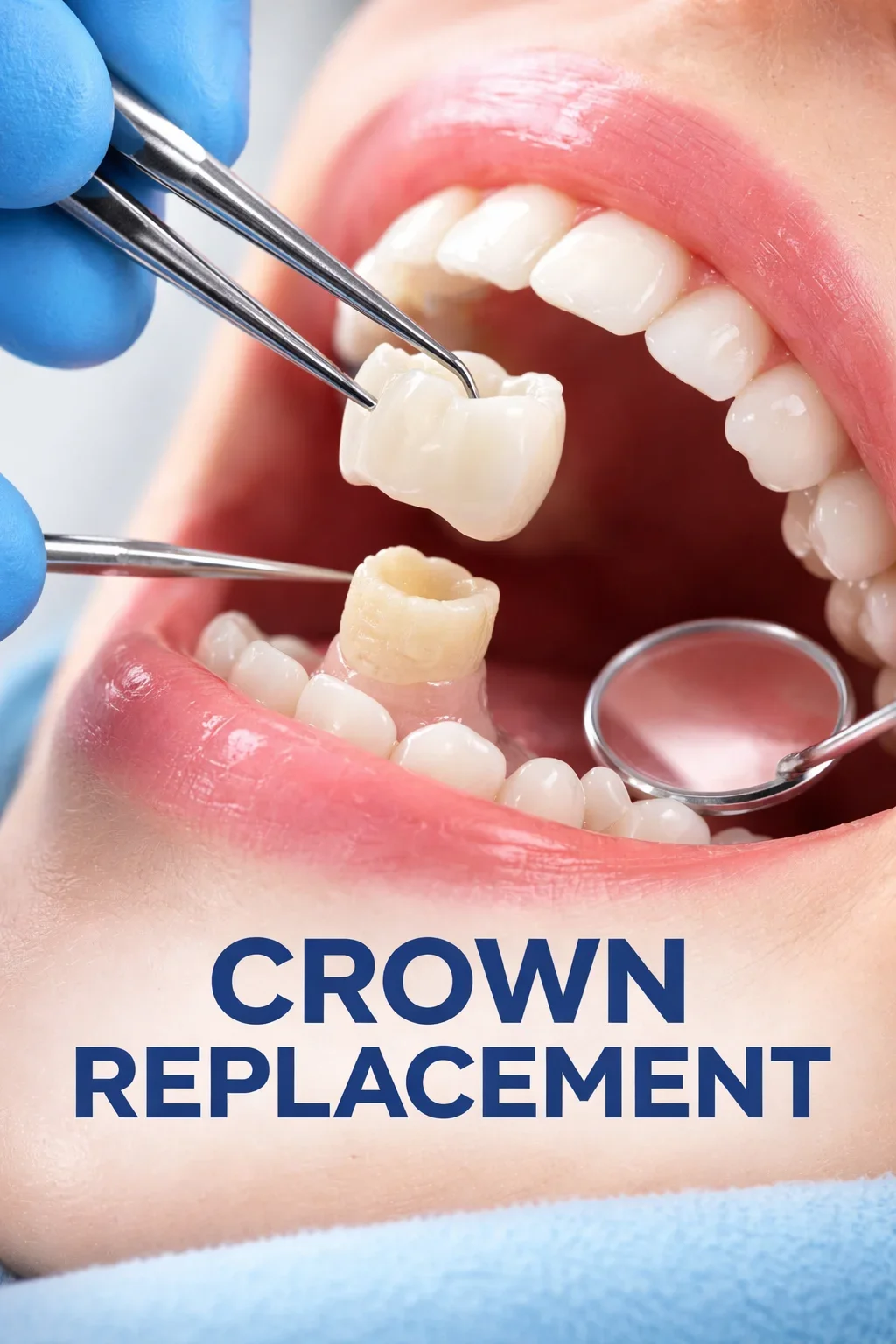
Crown replacement refers to the process of removing an existing dental crown and placing a new one to restore the strength, appearance, and function of the tooth underneath. Dental crowns are typically used to protect teeth that are cracked, severely decayed, or weakened after procedures such as root canal treatment. While crowns are designed to be durable, they can eventually deteriorate or become less effective, making crown replacement the best option for long-term oral health.
Most dental crowns last between 10 and 15 years, but several factors influence their lifespan. These include oral hygiene habits, the material used for the crown, biting forces, and lifestyle choices such as teeth grinding or chewing hard foods. When a crown becomes worn or damaged, crown replacement ensures that the tooth remains protected and functional. Ignoring a failing crown can lead to bacterial buildup, decay under the crown, and even tooth loss.
Patients often wonder why crown replacement becomes necessary even when the crown appears intact. In many cases, the issue occurs beneath the crown. Over time, the cement holding the crown in place can weaken, allowing bacteria to enter. This can lead to decay around the margins of the crown or infection inside the tooth. When this happens, dentists recommend crown replacement to remove the old restoration, treat any underlying problems, and restore the tooth with a new crown.
Another reason for crown replacement is structural damage. Dental crowns can crack, chip, or become loose due to everyday wear or accidental trauma. Although some minor damage can be repaired, more serious issues require full crown replacement to ensure proper protection. A damaged crown cannot effectively shield the tooth underneath, increasing the risk of fractures or further deterioration.
Modern dentistry has made crown replacement more comfortable and efficient than ever before. Dentists use advanced imaging technology to assess the condition of the tooth and crown before beginning treatment. In many cases, the procedure involves removing the old crown, cleaning and reshaping the tooth if necessary, and placing a new crown that fits precisely. This process restores the tooth’s natural strength while also improving its appearance. 😊
From an aesthetic perspective, crown replacement can also improve the look of your smile. Older crowns, especially metal or porcelain-fused-to-metal types, may appear darker near the gumline over time. Replacing them with modern materials such as zirconia or all-ceramic crowns can significantly enhance your smile’s natural appearance. These materials mimic the translucency of real teeth, making the new crown blend seamlessly with surrounding teeth.
Many patients choose to undergo crown replacement not only for functional reasons but also for cosmetic improvements. Dental technology has advanced considerably, and newer crown materials offer superior durability and aesthetics compared to older restorations. Replacing an outdated crown with a modern one can improve both oral health and confidence in your smile.
It is also important to consider the health benefits associated with timely crown replacement. When a failing crown is left untreated, bacteria can accumulate around its edges and cause gum inflammation or periodontal disease. By replacing the crown early, dentists can prevent these complications and preserve the natural tooth structure.
Professional dental guidance is essential when determining whether crown replacement is necessary. Dentists evaluate factors such as crown stability, gum health, and the integrity of the tooth underneath. According to the American Dental Association, regular dental checkups play a vital role in detecting problems with crowns before they become severe.
If you suspect that your crown may be damaged, loose, or worn out, scheduling a consultation is the best step. At Redent Klinik, dental specialists carefully assess your restoration and recommend the most suitable treatment plan. You can easily book an appointment through the Redent Klinik Contact Page to discuss your options for crown replacement and restore your smile’s health and beauty.
Ultimately, crown replacement is a safe, effective, and widely practiced dental procedure designed to protect your teeth and maintain oral function. By replacing worn or damaged crowns in time, patients can avoid complications, maintain a confident smile, and ensure their teeth remain strong for many years to come. 🦷
What Is Crown Replacement and Why Might You Need It?
Dental crowns are widely used restorative solutions that protect weakened, damaged, or heavily restored teeth. However, crowns are not permanent restorations. Over time, even the highest quality dental crowns may wear down, become loose, or fail due to various reasons. When this happens, crown replacement becomes necessary to restore the tooth’s function, strength, and appearance. Understanding what crown replacement is and why it may be required helps patients take proactive steps toward maintaining long-term oral health.
Crown replacement is the dental procedure in which an existing crown is removed and replaced with a new one. This process ensures that the underlying tooth remains protected from damage, decay, and infection. Although dental crowns are designed to last many years, their lifespan depends on several factors including oral hygiene, chewing habits, crown material, and overall dental health.
When a crown begins to fail, the protective barrier it provides weakens. This is why dentists recommend timely crown replacement to prevent complications such as tooth decay beneath the crown, gum irritation, or structural damage to the tooth.
Understanding the Purpose of Crown Replacement
The main goal of crown replacement is to maintain the integrity of a tooth that has previously been restored. Crowns are typically placed over teeth that are cracked, severely decayed, or treated with root canal therapy. They act as protective caps that reinforce the tooth structure while restoring its natural shape and appearance.
Over time, however, crowns may lose their effectiveness. The dental cement holding the crown may weaken, the crown itself may crack, or the tooth beneath may develop decay. In such cases, crown replacement is necessary to restore full protection.
Replacing an old crown with a new one ensures that the tooth remains functional and healthy. Modern crown materials, such as zirconia and advanced ceramics, are stronger and more aesthetic than many older crown types. Therefore, a well-timed crown replacement can improve both the durability and the appearance of your smile. 😊
Common Reasons Patients Need Crown Replacement
There are several situations in which dentists recommend crown replacement. While some crowns last 15 years or longer, others may need replacement sooner depending on wear and oral conditions.
1. Wear and Tear Over Time
Daily chewing and biting place continuous pressure on dental restorations. Over the years, this pressure can cause a crown to weaken or lose its original fit. When the crown no longer fits tightly against the tooth, bacteria can accumulate around its edges. In such cases, crown replacement is necessary to restore a proper seal and prevent decay.
2. Damage or Fractures
Crowns can chip or crack due to trauma, teeth grinding (bruxism), or biting hard foods. While minor chips may sometimes be repaired, larger fractures often require complete crown replacement. A cracked crown cannot provide the same protection as an intact one.
3. Tooth Decay Under the Crown
One of the most common reasons for crown replacement is decay developing beneath the crown. Bacteria may enter small gaps around the crown margins if the seal becomes compromised. Once decay begins under the crown, the dentist must remove the crown, treat the tooth, and place a new one.
4. Cosmetic Concerns
Sometimes patients choose crown replacement for aesthetic reasons. Older crowns may darken, show metal edges near the gums, or no longer match surrounding teeth. Modern crowns provide a more natural appearance and improved color matching.
Signs That Crown Replacement May Be Necessary
Many people are unaware that their crown needs replacement until symptoms develop. However, there are several warning signs that may indicate the need for crown replacement:
- Persistent tooth sensitivity
- Pain or discomfort when biting
- A loose or wobbly crown
- Visible cracks or chips in the crown
- Dark lines or discoloration around the crown margin
- Inflamed or irritated gums near the crown
If you experience any of these symptoms, it is important to visit a dentist promptly. Early evaluation can determine whether a simple adjustment is sufficient or if full crown replacement is required.
The Importance of Professional Evaluation
Only a qualified dental professional can accurately determine whether crown replacement is necessary. Dentists examine the crown’s stability, the health of the surrounding gums, and the condition of the underlying tooth. Digital X-rays may also be used to detect hidden decay beneath the crown.
Regular dental checkups play a critical role in identifying crown problems early. According to the American Dental Association, routine dental examinations allow dentists to monitor existing restorations and address issues before they worsen.
If you suspect that your crown may be failing, consulting a dental professional is the best course of action. The specialists at Redent Klinik can carefully assess your restoration and recommend appropriate treatment options. You can schedule an evaluation through the Redent Klinik Contact Page to discuss whether crown replacement is the right solution for your dental needs.
In summary, crown replacement is an essential restorative treatment that protects teeth, prevents complications, and maintains the appearance of your smile. By understanding why crowns may need replacement and recognizing the warning signs early, patients can take proactive steps to preserve their oral health and avoid more complex dental procedures in the future. 🦷
Signs Your Dental Crown Needs Replacement
Dental crowns are designed to protect and restore damaged teeth, but they do not last forever. Even the most durable crowns eventually experience wear, damage, or changes that make crown replacement necessary. Recognizing the early warning signs of crown failure is essential for protecting the underlying tooth and preventing more serious dental complications.
Many patients assume their crown will last indefinitely, but dentists typically estimate a crown lifespan of 10 to 15 years depending on the material, oral hygiene, and daily habits. When a crown begins to fail, it may not always be obvious at first. Subtle symptoms often develop before the crown visibly breaks or falls off. Identifying these early indicators can help you schedule crown replacement before the tooth becomes damaged.
In this section, we will explore the most common signs that indicate a crown may need replacement. Understanding these signs helps you act quickly and maintain your long-term oral health. 😊
Persistent Tooth Sensitivity
One of the earliest signs that crown replacement may be necessary is increased tooth sensitivity. A properly fitted crown protects the tooth from hot, cold, and sweet stimuli. However, when the crown begins to loosen or its margins wear down, the underlying tooth structure may become exposed.
Sensitivity to Hot or Cold
If you notice discomfort when drinking hot coffee or cold beverages, it could indicate that the crown is no longer sealing the tooth properly. This allows temperature changes to affect the inner layers of the tooth. In such cases, a dentist may recommend crown replacement to restore the protective barrier.
Sensitivity When Biting
Pain or pressure while chewing is another possible sign that your crown is no longer functioning correctly. A compromised crown may shift slightly when biting, placing stress on the tooth underneath. When this occurs, crown replacement may be required to stabilize the tooth and eliminate discomfort.
Loose or Moving Crown
A crown should remain firmly attached to the tooth. If you feel movement when touching the crown with your tongue or while chewing, the dental cement may have weakened. A loose crown allows bacteria and food particles to enter beneath it, increasing the risk of decay.
When a crown becomes loose, dentists often recommend crown replacement rather than simply re-cementing the crown. This ensures that the new crown fits precisely and provides long-term protection.
Food Getting Trapped Around the Crown
Another indicator of a loose crown is frequent food trapping around the restoration. If food constantly gets stuck near the crown margins, it may mean the crown is no longer sealing the tooth properly. In such cases, crown replacement may be necessary to restore proper alignment and hygiene.
Visible Damage or Cracks
Crowns are durable but not indestructible. Over time, they may develop chips, cracks, or structural weaknesses. These problems are common in crowns made from porcelain or porcelain-fused-to-metal materials.
Chipped Porcelain
Small chips in porcelain crowns may sometimes be repaired. However, when the damage is extensive, dentists typically recommend crown replacement to ensure the tooth remains protected.
Cracked Crown Structure
A cracked crown cannot properly distribute chewing forces across the tooth. This can lead to further fractures or even damage to the tooth underneath. When structural cracks occur, crown replacement is usually the safest and most reliable solution.
Gum Irritation Around the Crown
Healthy crowns should fit comfortably along the gumline without causing irritation. If you notice redness, swelling, or bleeding around the crowned tooth, it may indicate that the crown margins have deteriorated.
In some cases, bacteria accumulate around a poorly fitting crown, leading to gum inflammation. Replacing the crown through crown replacement can restore a proper seal and protect gum health.
Dark Line Near the Gumline
Older porcelain-fused-to-metal crowns sometimes develop a dark line near the gumline. While this may initially appear to be a cosmetic issue, it can also indicate wear or gum recession around the crown. Patients often choose crown replacement with modern ceramic crowns to improve both aesthetics and durability.
Decay Beneath the Crown
One of the most serious reasons for crown replacement is tooth decay beneath the crown. If bacteria enter under the crown margins, they can begin damaging the tooth structure. Unfortunately, this decay is often hidden and may only be detected during a dental examination or X-ray.
When decay develops beneath a crown, the dentist must remove the crown, treat the decayed area, and place a new crown. This process ensures the tooth remains healthy and protected.
Bad Taste or Persistent Odor
An unpleasant taste or odor near a crowned tooth can sometimes signal bacterial buildup underneath the crown. If food debris and bacteria accumulate in the gap between the crown and the tooth, it may lead to infection or decay.
In such situations, crown replacement is often recommended to remove the contaminated crown and restore proper hygiene conditions.
Regular Dental Checkups Are Essential
Many crown problems develop gradually and may not be obvious without a professional evaluation. Dentists use digital imaging and clinical examination to detect crown failure early. According to the American Dental Association, routine dental visits are essential for identifying issues with crowns before they cause severe damage.
If you suspect your crown may be failing, seeking professional advice is the best course of action. Dental specialists can assess whether repair or full crown replacement is necessary to protect your tooth.
If you are experiencing discomfort or noticing any of these warning signs, you can consult dental professionals through the Redent Klinik Contact Page. Early evaluation helps determine whether crown replacement is needed and prevents more serious dental complications.
In summary, recognizing the warning signs of crown failure is essential for maintaining oral health. Symptoms such as sensitivity, looseness, cracks, gum irritation, or decay beneath the crown often indicate the need for crown replacement. By addressing these problems early, patients can protect their teeth, maintain a healthy smile, and avoid more complex treatments in the future. 🦷
The Step-by-Step Crown Replacement Procedure
Understanding what happens during a crown replacement procedure can help patients feel more confident and prepared before visiting the dentist. Many people worry about dental treatments simply because they do not know what to expect. Fortunately, modern dentistry has made crown replacement a safe, efficient, and comfortable process. In most cases, the procedure restores both the strength and the appearance of the tooth while preventing further damage.
The goal of crown replacement is to remove a failing or worn dental crown and replace it with a new restoration that fits securely and protects the tooth underneath. The process usually requires two dental appointments, although some clinics can complete the procedure in one visit using advanced CAD/CAM technology.
Below is a detailed breakdown of each stage of the crown replacement process so you know exactly what to expect. 🦷
Initial Examination and Diagnosis
The first step in any crown replacement treatment is a thorough dental examination. Your dentist will evaluate the existing crown and the condition of the tooth underneath. This evaluation ensures that replacing the crown will solve the problem and that no additional treatment is required.
Dental Imaging and X-Rays
During the examination, dentists often take digital X-rays to check for hidden issues beneath the crown. X-rays help detect decay, infection, or bone problems that may not be visible during a visual inspection. If any underlying issues are discovered, they must be treated before completing the crown replacement.
According to the American Dental Association, dental imaging plays a crucial role in diagnosing restorative problems and ensuring successful treatment outcomes.
Assessment of Crown Fit and Stability
The dentist will also check whether the crown is loose, cracked, worn down, or poorly fitted. If the crown no longer seals the tooth properly, bacteria can enter and cause decay. In these situations, crown replacement becomes essential to protect the tooth and maintain oral health.
Removal of the Old Crown
Once the dentist confirms that crown replacement is required, the next step is carefully removing the old crown. This is usually done using specialized dental instruments designed to gently break the crown away from the tooth without damaging the underlying structure.
The process is typically painless because local anesthesia is used to numb the area. Patients may feel slight pressure but no discomfort during the removal stage of crown replacement.
Cleaning the Tooth Structure
After the old crown is removed, the dentist thoroughly cleans the tooth. This step is extremely important because bacteria or debris may have accumulated under the crown over time. Cleaning the tooth ensures that the new restoration will bond securely during the crown replacement procedure.
Treating Any Underlying Problems
If the dentist finds tooth decay or structural damage beneath the crown, these issues must be treated before placing the new crown. This may involve removing decay, rebuilding the tooth with filling material, or reinforcing the tooth structure. Addressing these problems ensures the success of the crown replacement.
Preparing the Tooth for the New Crown
Once the tooth has been cleaned and treated, the dentist reshapes it slightly so that the new crown can fit perfectly. This preparation stage is essential for ensuring the stability and longevity of the crown replacement.
Modern dental techniques allow dentists to preserve as much natural tooth structure as possible while still creating enough space for the crown material.
Taking Dental Impressions
After the tooth is prepared, impressions of the tooth are taken. These impressions help dental laboratories create a custom crown that fits precisely over the prepared tooth. Today, many dental clinics use digital scanning technology instead of traditional impression materials, making the crown replacement process faster and more comfortable.
The impressions are then sent to a dental laboratory where technicians design and fabricate the new crown.
Placement of a Temporary Crown
Because creating a custom crown takes time, dentists usually place a temporary crown to protect the tooth until the permanent crown is ready. The temporary restoration helps maintain the tooth’s shape, protects it from sensitivity, and allows patients to eat normally.
During this stage of crown replacement, patients should avoid chewing extremely hard foods and maintain good oral hygiene to prevent damage to the temporary crown.
Placement of the Permanent Crown
Once the permanent crown is ready, the patient returns to the dental clinic for the final stage of crown replacement. The dentist removes the temporary crown and carefully fits the new permanent crown over the tooth.
Checking the Fit and Bite Alignment
The dentist checks the crown’s fit, alignment, and color to ensure it blends naturally with surrounding teeth. Bite adjustments may be made so that the crown feels comfortable when chewing.
Cementing the New Crown
After confirming that the crown fits perfectly, the dentist permanently bonds it to the tooth using strong dental cement. This final step completes the crown replacement procedure and restores the tooth’s function and appearance.
Aftercare and Recovery
Most patients experience minimal discomfort after crown replacement. Mild sensitivity or gum irritation may occur for a few days, but these symptoms usually resolve quickly.
To ensure the success of your crown replacement, dentists recommend:
- Brushing twice daily with fluoride toothpaste
- Flossing carefully around the crown
- Avoiding extremely hard foods
- Attending regular dental checkups
If you are considering crown replacement or suspect your current crown may be failing, professional evaluation is essential. Dental experts can determine the best treatment plan for your needs. You can easily schedule a consultation through the Redent Klinik Contact Page.
In conclusion, the crown replacement procedure is a carefully structured process designed to restore tooth strength, function, and aesthetics. With modern dental technology and skilled professionals, replacing a crown has become a routine treatment that helps patients maintain healthy and beautiful smiles for many years. 😊
How Long Does a Crown Replacement Take?
One of the most common questions patients ask before undergoing dental treatment is how long the procedure will take. When it comes to crown replacement, the timeline can vary depending on several factors such as the condition of the tooth, the crown material, and the technology used by the dental clinic. While the overall process is straightforward, understanding the stages involved in crown replacement helps patients prepare for the treatment and manage expectations.
In most traditional dental settings, crown replacement typically requires two appointments over the course of one to two weeks. However, modern dentistry has introduced advanced digital technology that can significantly shorten the process. Some clinics now offer same-day crowns, meaning crown replacement can sometimes be completed in just a single visit.
Typical Timeline for Crown Replacement
The time required for crown replacement largely depends on the treatment method used by the dentist. The traditional process involves several stages that ensure the crown fits perfectly and restores the tooth effectively.
First Appointment: Removing the Old Crown and Preparing the Tooth
The first appointment is usually the longest stage of the crown replacement procedure. During this visit, the dentist removes the old crown, cleans the tooth underneath, and prepares it for the new restoration. This process generally takes between 60 and 90 minutes.
After the crown is removed, the dentist examines the tooth for decay or structural damage. If problems are detected, they must be treated before completing the crown replacement. Once the tooth is prepared, impressions or digital scans are taken to design the new crown.
These impressions are sent to a dental laboratory where technicians create a custom crown designed specifically for the patient’s tooth. Because this fabrication process requires precision and high-quality materials, it usually takes several days.
Temporary Crown Placement
At the end of the first appointment, a temporary crown is placed to protect the tooth until the permanent crown is ready. The temporary restoration ensures that patients can continue normal activities such as eating and speaking while waiting for the final stage of crown replacement.
Patients typically wear the temporary crown for about one to two weeks. During this time, it is important to avoid chewing hard foods and maintain good oral hygiene.
Second Appointment: Final Crown Placement
The second visit completes the crown replacement process. During this appointment, the dentist removes the temporary crown and fits the permanent one. This appointment usually lasts between 30 and 60 minutes.
Checking Fit and Bite Alignment
The dentist carefully checks the crown’s fit, color, and alignment with surrounding teeth. Adjustments may be made to ensure that the crown does not interfere with the patient’s bite. A properly aligned crown is essential for the long-term success of the crown replacement.
Cementing the Permanent Crown
Once the crown fits perfectly, the dentist bonds it to the tooth using a strong dental cement. This final step secures the crown in place and completes the crown replacement procedure.
After cementation, patients can typically return to normal activities immediately, although dentists may recommend avoiding extremely sticky foods for the first 24 hours.
Same-Day Crown Replacement Technology
Advances in dental technology have made it possible for some clinics to offer same-day crown replacement. Using CAD/CAM systems, dentists can scan the tooth digitally, design the crown on a computer, and mill it from ceramic material within the clinic.
This process eliminates the need for temporary crowns and laboratory waiting periods. The entire crown replacement can often be completed in a single appointment lasting approximately two hours.
Although same-day crowns offer convenience, they may not be suitable for every situation. Complex cases or specialized materials may still require traditional laboratory fabrication.
Factors That Can Affect the Duration of Crown Replacement
Several factors influence how long the crown replacement process will take. Understanding these variables helps patients plan their dental visits more effectively.
Condition of the Tooth
If the tooth beneath the crown is healthy, the crown replacement procedure will be relatively straightforward. However, if decay, infection, or structural damage is present, additional treatment may be required before placing the new crown.
Type of Crown Material
Different crown materials require different fabrication methods. For example, zirconia crowns often require specialized milling and finishing processes. These factors may slightly extend the timeline of the crown replacement.
Dental Laboratory Processing Time
Traditional crown fabrication relies on dental laboratories to create custom restorations. The quality and complexity of the crown can influence how long the laboratory takes to complete the work. Most laboratories deliver crowns within one to two weeks.
Recovery Time After Crown Replacement
Fortunately, recovery after crown replacement is usually very quick. Most patients experience only mild sensitivity or gum irritation for a few days after the procedure.
To ensure optimal healing and long-term success of your crown replacement, dentists recommend:
- Maintaining excellent oral hygiene
- Avoiding extremely hard foods
- Using a soft-bristled toothbrush
- Attending regular dental checkups
Regular dental visits help dentists monitor the condition of crowns and detect problems early. According to the American Dental Association, routine dental care is essential for preserving restorative treatments such as crowns.
When to Schedule a Crown Replacement Consultation
If your crown feels loose, cracked, or uncomfortable, it may be time to consider crown replacement. Early evaluation allows dentists to address problems before they become more serious.
If you would like professional advice about your crown or dental restoration, you can schedule a consultation through the Redent Klinik Contact Page. Dental specialists can evaluate your existing crown and determine whether crown replacement is the best solution.
In summary, the duration of crown replacement depends on the treatment method used and the condition of the tooth. While traditional procedures may take two appointments over one to two weeks, modern same-day technology can complete the process in a single visit. Regardless of the timeline, crown replacement remains a reliable and effective treatment for restoring dental health and protecting your smile for years to come. 😊
Cost of Crown Replacement and What Affects the Price
When considering dental treatment, one of the most common questions patients ask is about the cost. The price of crown replacement can vary significantly depending on several factors, including the material used, the condition of the tooth, the location of the dental clinic, and the complexity of the procedure. Understanding these factors can help patients plan their dental care and avoid unexpected expenses.
While crown replacement may seem expensive at first, it is important to remember that this procedure protects the underlying tooth and prevents more serious dental problems. Ignoring a failing crown can lead to infection, severe decay, or even tooth loss, which may require more extensive treatments such as implants or bridges. Investing in timely crown replacement can therefore save both money and discomfort in the long term.
Average Cost of Crown Replacement
The cost of crown replacement depends primarily on the material used to create the new crown. Each material offers different levels of durability, aesthetics, and price.
Typical Crown Replacement Price Range
Below is a general overview of typical costs associated with crown replacement based on crown materials:
- Porcelain-fused-to-metal crowns: $800 – $1,400
- All-ceramic or porcelain crowns: $1,000 – $1,800
- Zirconia crowns: $1,200 – $2,000
- Gold crowns: $1,200 – $2,500
These prices typically include removing the old crown, preparing the tooth, and placing the new crown as part of the crown replacement procedure. However, costs may increase if additional treatment is required before placing the new crown.
Factors That Influence Crown Replacement Cost
Several key factors influence the total cost of crown replacement. Understanding these elements helps patients evaluate treatment options and choose the most suitable solution for their needs.
1. Crown Material
The material used for the crown is one of the biggest factors affecting the price of crown replacement. Different materials offer varying levels of strength and aesthetics.
- Porcelain crowns provide excellent cosmetic results and are often used for front teeth.
- Zirconia crowns are extremely durable and resistant to fracture.
- Metal or gold crowns are highly durable but less aesthetic.
The choice of material for crown replacement depends on the location of the tooth, patient preference, and budget.
2. Condition of the Tooth
The condition of the tooth beneath the crown can also impact the cost of crown replacement. If the tooth has developed decay or structural damage, additional treatment may be required before placing the new crown.
For example, if significant decay is present, the dentist may need to rebuild the tooth using a core filling. In some cases, a root canal treatment may be necessary before completing the crown replacement.
3. Dental Laboratory and Technology
The dental laboratory responsible for fabricating the crown also influences the price of crown replacement. High-quality laboratories use advanced techniques and materials to create crowns that fit precisely and last longer.
Additionally, some clinics use digital scanning and CAD/CAM technology to design crowns. This advanced technology can improve accuracy and comfort during the crown replacement process.
4. Geographic Location
The location of the dental clinic also affects the cost of crown replacement. Dental treatments tend to be more expensive in large metropolitan areas due to higher operational costs.
Many international patients travel abroad for dental care because the same crown replacement procedure may cost significantly less in certain countries while maintaining high treatment standards.
Does Dental Insurance Cover Crown Replacement?
Dental insurance may cover part of the cost of crown replacement, especially if the treatment is medically necessary rather than purely cosmetic. Most insurance plans classify crowns as major restorative procedures and typically cover 40% to 60% of the treatment cost.
However, coverage varies widely depending on the specific insurance policy. Some plans may only cover crown replacement if the previous crown has been in place for a certain number of years.
Patients should review their insurance policy carefully and discuss coverage details with their dentist before proceeding with crown replacement.
Is Crown Replacement Worth the Investment?
Although the cost of crown replacement may seem significant, it is often a worthwhile investment in oral health. A properly fitted crown protects the tooth, restores chewing ability, and prevents further damage.
Delaying crown replacement when it is needed can lead to serious complications, including infections or fractures of the underlying tooth. Treating these complications often requires more expensive procedures such as dental implants.
How to Reduce the Cost of Crown Replacement
There are several ways patients can manage the cost of crown replacement while still receiving high-quality dental care.
Preventive Dental Care
Maintaining good oral hygiene and attending regular dental checkups can extend the lifespan of your crown and reduce the likelihood of needing early crown replacement.
Dental Payment Plans
Many dental clinics offer flexible payment plans that allow patients to spread the cost of crown replacement over several months.
Consulting Experienced Dental Professionals
Choosing a reputable dental clinic ensures that the crown replacement procedure is performed correctly the first time, reducing the need for future repairs or adjustments.
If you are considering crown replacement and would like professional advice, dental specialists at Redent Klinik can help determine the best treatment plan for your needs. You can schedule a consultation through the Redent Klinik Contact Page to discuss treatment options.
Regular dental evaluations also play a critical role in monitoring the condition of existing crowns. According to the American Dental Association, preventive dental care helps extend the lifespan of restorative treatments and maintain overall oral health.
In conclusion, the cost of crown replacement varies depending on materials, tooth condition, technology, and location. While prices can range widely, replacing a damaged crown is essential for protecting the tooth and preserving oral health. By understanding the factors that influence cost, patients can make informed decisions and ensure the long-term success of their crown replacement. 😊
Different Types of Dental Crowns Used in Crown Replacement
When planning a crown replacement, one of the most important decisions involves choosing the right type of dental crown. Modern dentistry offers several crown materials, each with unique advantages related to durability, aesthetics, and cost. Selecting the most appropriate material can significantly influence the long-term success of your crown replacement and the overall health of your restored tooth.
A dental crown acts as a protective cap placed over a damaged or weakened tooth. During a crown replacement, the dentist removes the old crown and installs a new one that restores the tooth’s shape, strength, and function. The crown material must be strong enough to withstand chewing forces while also matching the natural appearance of surrounding teeth.
Because every patient has different dental needs, dentists carefully evaluate several factors before recommending a material for crown replacement. These factors include the tooth location, bite pressure, aesthetic expectations, and the condition of the underlying tooth.
Why Crown Material Matters in Crown Replacement
The success of a crown replacement depends greatly on the type of crown used. Each material provides a different balance between durability and appearance. For example, back teeth experience higher chewing pressure, which may require stronger materials such as zirconia or metal crowns. Front teeth, on the other hand, often benefit from more aesthetic options like porcelain or ceramic crowns.
Advancements in dental technology have introduced highly durable and natural-looking materials that improve the outcomes of crown replacement. Modern crowns are designed to blend seamlessly with natural teeth while offering long-lasting protection.
Porcelain Crowns
Best for Natural Appearance
Porcelain crowns are one of the most popular choices for crown replacement, especially for front teeth. These crowns closely mimic the color and translucency of natural enamel, making them virtually indistinguishable from surrounding teeth.
Porcelain crowns are often recommended when aesthetics are a top priority. They provide excellent cosmetic results and are commonly used for patients who want their crown replacement to look completely natural.
Advantages of Porcelain Crowns
- Highly aesthetic and natural-looking
- Metal-free material
- Excellent color matching
- Suitable for visible teeth
However, porcelain crowns may not be as strong as other materials when used on back teeth that experience heavy biting forces.
Porcelain-Fused-to-Metal Crowns
A Balance of Strength and Appearance
Porcelain-fused-to-metal (PFM) crowns combine the strength of metal with the appearance of porcelain. These crowns consist of a metal base covered with a porcelain layer. For many years, they were the standard choice for crown replacement.
The metal base provides durability, while the porcelain exterior improves aesthetics. This combination makes PFM crowns suitable for both front and back teeth.
Limitations of Porcelain-Fused-to-Metal Crowns
Although PFM crowns are strong, they may develop a dark line near the gumline over time as gums recede. For this reason, many patients now choose more modern materials during crown replacement.
Zirconia Crowns
Superior Strength and Durability
Zirconia crowns are among the strongest materials used in modern crown replacement. Made from zirconium dioxide, these crowns are extremely resistant to fracture and wear.
Zirconia crowns are ideal for molars and other teeth that experience heavy chewing pressure. Their strength makes them a reliable choice for patients who grind their teeth or require a highly durable restoration.
Benefits of Zirconia Crowns
- Exceptional strength and durability
- Long-lasting performance
- Biocompatible material
- Natural-looking appearance
Because of their durability and aesthetic qualities, zirconia crowns have become one of the most recommended materials for crown replacement.
All-Ceramic Crowns
Metal-Free and Highly Aesthetic
All-ceramic crowns are another excellent option for crown replacement. These crowns are completely metal-free and provide outstanding aesthetics. They are particularly suitable for front teeth where appearance is critical.
Modern ceramic materials have improved significantly in strength and durability, making them a reliable choice for many patients undergoing crown replacement.
Gold Crowns
Exceptional Longevity
Although less common today, gold crowns remain one of the most durable options for crown replacement. Gold crowns rarely fracture and can last decades with proper care.
Dentists often recommend gold crowns for molars that require maximum strength. However, due to their metallic appearance, many patients prefer more aesthetic alternatives.
How Dentists Choose the Best Crown for Replacement
Selecting the ideal crown material during crown replacement involves evaluating several factors:
- Location of the tooth
- Bite pressure and chewing forces
- Aesthetic preferences
- Patient budget
- Oral hygiene habits
Your dentist will recommend the most appropriate option based on these considerations. According to the American Dental Association, choosing the correct restorative material plays a key role in the long-term success of dental treatments.
Longevity of Different Crown Materials
The lifespan of crowns varies depending on the material used. When performing a crown replacement, dentists often discuss durability to help patients make informed decisions.
- Porcelain crowns: 10–15 years
- Porcelain-fused-to-metal crowns: 10–15 years
- Zirconia crowns: 15–20 years or more
- Gold crowns: 20+ years
Proper oral hygiene, regular dental checkups, and avoiding excessive chewing forces can significantly extend the lifespan of your crown replacement.
Consulting a Dental Professional for Crown Replacement
If you are considering crown replacement, consulting an experienced dentist is the best way to determine the most suitable crown material for your needs. Dental professionals carefully evaluate your oral health and recommend the option that offers the best balance of strength, aesthetics, and longevity.
You can easily schedule a consultation through the Redent Klinik Contact Page to discuss your treatment options with experienced dental specialists.
In conclusion, choosing the right crown material is a crucial step in achieving a successful crown replacement. With modern dental materials such as zirconia, ceramic, and advanced porcelain, patients can enjoy strong, natural-looking restorations that protect their teeth and enhance their smiles for many years to come. 😊
How to Care for Your Teeth After Crown Replacement
Proper aftercare is essential for ensuring the long-term success of a crown replacement. While dental crowns are designed to be strong and durable, their lifespan largely depends on how well patients maintain their oral hygiene and daily habits. After a crown replacement, the surrounding tooth structure and gums still require consistent care to prevent complications such as decay, gum disease, or crown damage.
Many patients believe that once a crown is placed, the tooth underneath no longer requires attention. In reality, the tooth structure beneath the crown remains vulnerable to bacteria and plaque accumulation. Without proper care after crown replacement, problems such as decay around the crown margins or gum inflammation may develop.
Fortunately, maintaining the health of a tooth after crown replacement is simple when patients follow a consistent dental care routine. By practicing good oral hygiene and adopting healthy habits, you can significantly extend the lifespan of your dental crown and maintain a healthy smile. 😊
Daily Oral Hygiene After Crown Replacement
The most important step in maintaining the results of a crown replacement is practicing excellent daily oral hygiene. Even though the crown itself cannot develop cavities, the tooth beneath it and the surrounding gums can still be affected by plaque and bacteria.
Brushing Twice a Day
Brushing your teeth at least twice daily is essential after crown replacement. Use a soft-bristled toothbrush and fluoride toothpaste to gently clean the tooth and surrounding gumline. Pay special attention to the area where the crown meets the gum, as plaque tends to accumulate there.
Proper brushing removes food debris and bacteria that could compromise the seal of the crown and eventually require another crown replacement.
Flossing Around the Crown
Flossing is equally important for maintaining oral health after crown replacement. Carefully slide dental floss between teeth and along the crown margins to remove plaque that brushing alone cannot reach.
When flossing around a crown, avoid snapping the floss downward, which may loosen the crown over time. Instead, gently slide the floss out from the side to protect the stability of your crown replacement.
Avoiding Habits That Can Damage Your Crown
Although modern crowns are highly durable, certain habits can shorten the lifespan of a crown replacement. Being mindful of these behaviors helps protect your restoration and prevent unnecessary damage.
Avoid Chewing Hard Objects
Chewing ice, hard candy, or non-food objects can place excessive pressure on dental crowns. Even strong materials like zirconia may fracture under extreme force. Avoiding these habits helps preserve the integrity of your crown replacement.
Manage Teeth Grinding
Bruxism, or teeth grinding, is a common cause of crown damage. Continuous grinding can weaken the crown and eventually lead to failure requiring another crown replacement. If you grind your teeth at night, your dentist may recommend wearing a custom night guard to protect your dental restorations.
Monitoring Gum Health After Crown Replacement
Healthy gums play a critical role in maintaining the success of a crown replacement. Gum disease can cause the gums to recede, exposing the edges of the crown and increasing the risk of bacterial infiltration.
Signs of Gum Problems
After crown replacement, watch for signs of gum irritation such as redness, swelling, or bleeding around the crowned tooth. These symptoms may indicate plaque buildup or early gum disease.
Prompt treatment of gum issues helps preserve both the crown and the underlying tooth structure.
Regular Dental Checkups
Routine dental visits are one of the most effective ways to protect your investment in crown replacement. Dentists can evaluate the condition of the crown, check the margins for leakage, and ensure the crown remains stable.
During these visits, dentists may also take X-rays to monitor the health of the tooth beneath the crown. According to the American Dental Association, regular dental examinations are essential for maintaining restorative dental work and preventing oral health problems.
Dietary Considerations After Crown Replacement
Your diet can also influence the longevity of your crown replacement. Certain foods may place excessive stress on the crown or increase the risk of decay around its margins.
Foods to Limit
- Sticky candies such as caramel
- Extremely hard nuts
- Ice cubes
- Hard candy
These foods can potentially loosen or damage the crown, increasing the likelihood of needing another crown replacement in the future.
Foods That Support Oral Health
Instead, focus on foods that promote dental health after crown replacement, including:
- Fresh fruits and vegetables
- Dairy products rich in calcium
- Lean proteins
- Foods high in vitamin D
These nutrients help strengthen teeth and maintain healthy gums.
When to Contact Your Dentist
Although complications after crown replacement are uncommon, it is important to contact your dentist if you notice any unusual symptoms.
Warning Signs After Crown Replacement
- Persistent tooth sensitivity
- Pain when biting
- A loose or moving crown
- Swelling or bleeding around the crown
These symptoms may indicate that the crown needs adjustment or that another crown replacement may be necessary.
Professional Support for Crown Replacement
If you have recently undergone crown replacement or are considering replacing an old crown, consulting experienced dental professionals is the best way to ensure long-term success. Dental specialists can provide personalized advice on maintaining your restoration and preventing complications.
You can schedule a professional consultation through the Redent Klinik Contact Page to discuss your dental care and receive expert guidance on maintaining your crown replacement.
In conclusion, proper care after crown replacement is essential for protecting both the crown and the natural tooth beneath it. By maintaining excellent oral hygiene, avoiding damaging habits, monitoring gum health, and attending regular dental checkups, patients can ensure that their crown replacement remains strong, functional, and aesthetically pleasing for many years. 🦷
Risks and Complications of Crown Replacement
Although crown replacement is a routine and highly successful dental procedure, it is important for patients to understand that, like any medical treatment, it may involve certain risks and potential complications. Fortunately, serious problems are rare, especially when the procedure is performed by experienced dental professionals and patients follow proper aftercare guidelines. Still, understanding the possible risks associated with crown replacement allows patients to recognize early warning signs and seek timely dental care if needed.
The goal of crown replacement is to restore the strength and function of a tooth while protecting it from further damage. However, the tooth beneath the crown remains a living structure that can still be affected by bacteria, gum disease, or structural issues. Being aware of potential complications helps ensure the long-term success of your crown replacement.
Tooth Sensitivity After Crown Replacement
One of the most common temporary effects after crown replacement is tooth sensitivity. Patients may experience mild discomfort when consuming hot, cold, or sweet foods. This sensitivity usually occurs because the tooth has been reshaped during the procedure.
Why Sensitivity Occurs
During crown replacement, a small amount of tooth enamel is removed to ensure the new crown fits properly. This process can temporarily expose the dentin layer of the tooth, which contains microscopic tubules that respond to temperature changes.
In most cases, this sensitivity fades within a few days or weeks after crown replacement. Dentists may recommend using desensitizing toothpaste to reduce discomfort during this adjustment period.
Improper Crown Fit
A poorly fitted crown is another potential complication associated with crown replacement. If the crown does not fit precisely, it may affect bite alignment or create gaps that allow bacteria to enter beneath the crown.
Symptoms of an Ill-Fitting Crown
Patients may notice several symptoms if their crown does not fit correctly after crown replacement:
- Discomfort when biting or chewing
- Food getting trapped around the crown
- A feeling that the crown is too high
- Jaw pain due to uneven bite pressure
If any of these symptoms occur, the dentist can adjust the crown to improve the fit and restore comfort.
Infection or Decay Under the Crown
Although dental crowns protect the tooth surface, the underlying tooth can still develop decay if bacteria penetrate the crown margins. This complication may occur if the seal between the crown and the tooth weakens over time.
How Decay Develops Beneath a Crown
When plaque accumulates around the edges of the crown, bacteria can enter tiny gaps between the crown and the tooth. This can lead to cavities forming beneath the restoration. If decay occurs, the dentist may need to remove the crown and perform another crown replacement after treating the affected area.
Maintaining excellent oral hygiene and attending regular dental checkups significantly reduces the risk of decay after crown replacement.
Gum Irritation or Inflammation
Some patients experience temporary gum irritation after crown replacement. This is usually caused by minor trauma to the gum tissue during the procedure or slight pressure from the new crown.
Managing Gum Discomfort
Mild gum soreness usually resolves within a few days after crown replacement. Rinsing with warm salt water and maintaining good oral hygiene can help promote faster healing.
If gum inflammation persists, it is important to consult a dentist to ensure the crown margins are not irritating the gum tissue.
Crown Loosening or Detachment
In rare cases, the crown placed during crown replacement may become loose or detached. This can occur if the dental cement weakens or if the crown experiences excessive pressure.
What to Do If a Crown Becomes Loose
If you notice movement in your crown after crown replacement, contact your dentist immediately. A loose crown should be evaluated promptly to prevent bacteria from entering beneath it.
Most of the time, the dentist can re-cement the crown or adjust the restoration to restore stability.
Allergic Reactions to Crown Materials
Although extremely rare, some individuals may experience allergic reactions to certain materials used during crown replacement, particularly metal alloys. Symptoms may include gum irritation, redness, or unusual sensitivity.
For patients with known metal sensitivities, dentists often recommend metal-free materials such as zirconia or ceramic crowns during crown replacement.
How Dentists Minimize Crown Replacement Risks
Dentists take several precautions to ensure the success of crown replacement and minimize potential complications.
Accurate Digital Imaging
Advanced imaging technologies allow dentists to assess the tooth structure and ensure precise crown placement during crown replacement.
High-Quality Crown Materials
Modern dental materials provide excellent strength and durability, reducing the risk of crown fracture or failure.
Regular Follow-Up Visits
Follow-up appointments allow dentists to monitor the crown and identify potential problems early. According to the American Dental Association, routine dental visits are essential for maintaining the health of dental restorations.
When to Seek Professional Advice
While complications after crown replacement are uncommon, patients should contact their dentist if they experience persistent pain, swelling, or bite discomfort.
If you have concerns about a dental crown or suspect you may need a crown replacement, professional evaluation is essential. Experienced dental specialists can assess your situation and recommend the most appropriate treatment.
You can easily schedule a consultation through the Redent Klinik Contact Page to discuss your dental concerns and receive expert advice.
In summary, crown replacement is a highly effective and widely performed dental procedure. Although minor risks such as sensitivity, gum irritation, or crown loosening may occur, these complications are generally manageable and preventable with proper care. By maintaining good oral hygiene, attending regular dental visits, and addressing problems early, patients can ensure the long-term success of their crown replacement and maintain a healthy, confident smile. 😊
How to Extend the Life of Your Dental Crown
A successful crown replacement can restore the strength, appearance, and function of a damaged tooth for many years. However, the longevity of a dental crown does not depend only on the quality of the material or the dentist’s skill. Daily habits, oral hygiene routines, and regular dental care all play a significant role in determining how long your restoration lasts. Understanding how to care for your crown after crown replacement helps protect your investment and ensures your smile remains healthy and functional.
Most dental crowns last between 10 and 15 years, and some may last even longer with proper care. Patients who follow recommended dental practices often experience excellent long-term outcomes after crown replacement. On the other hand, neglecting oral hygiene or exposing the crown to excessive stress may shorten its lifespan.
Below are the most important strategies for extending the life of your dental crown after crown replacement. 😊
Maintain Excellent Oral Hygiene
One of the most important ways to protect your restoration after crown replacement is by maintaining proper oral hygiene. Even though crowns are resistant to cavities, the natural tooth underneath the crown can still develop decay if plaque accumulates around the crown margins.
Brush Twice Daily
Brushing your teeth at least twice per day is essential after crown replacement. Use a fluoride toothpaste and a soft-bristled toothbrush to gently clean all tooth surfaces, including the crown and the surrounding gumline.
Special attention should be given to the area where the crown meets the gum. Plaque tends to collect along this margin, and consistent brushing helps prevent bacterial buildup that could eventually require another crown replacement.
Floss Carefully Around the Crown
Flossing removes plaque and food particles from areas that brushing cannot reach. After crown replacement, it is important to floss daily around the crown to keep the surrounding gums healthy.
When flossing near a crown, gently slide the floss out from the side rather than pulling upward. This technique helps prevent unnecessary stress on the crown and preserves the stability of your crown replacement.
Avoid Habits That Can Damage Your Crown
Certain habits can place excessive pressure on dental crowns and increase the risk of damage. Avoiding these behaviors can significantly extend the lifespan of your crown replacement.
Avoid Chewing Hard Objects
Chewing ice, biting fingernails, or opening packaging with your teeth can crack or chip dental crowns. Although crowns are strong, they are not indestructible. Protecting your restoration after crown replacement requires avoiding unnecessary stress on the crown.
Limit Sticky Foods
Sticky foods such as caramel or chewing gum may loosen dental crowns over time. While occasional consumption may not cause immediate damage, regularly eating sticky foods could weaken the bonding of your crown replacement.
Protect Your Crown from Teeth Grinding
Teeth grinding, also known as bruxism, is a major cause of crown damage. Continuous grinding places intense pressure on dental restorations and can eventually lead to fractures or loosening.
Use a Night Guard
If you grind your teeth during sleep, your dentist may recommend wearing a custom night guard. This protective device creates a cushion between your upper and lower teeth, preventing excessive force on your crown and preserving the success of your crown replacement.
Attend Regular Dental Checkups
Routine dental visits are essential for maintaining the health of your crown after crown replacement. During these appointments, dentists examine the crown to ensure it remains stable and properly sealed.
Dentists may also take X-rays to check the health of the tooth beneath the crown. According to the American Dental Association, regular dental examinations are crucial for detecting problems with dental restorations before they become serious.
Professional cleanings performed during dental visits also remove hardened plaque (tartar) that cannot be eliminated through brushing alone. This helps maintain the long-term stability of your crown replacement.
Choose a Tooth-Friendly Diet
Your dietary habits can significantly influence the durability of your crown after crown replacement. Eating a balanced diet supports both tooth health and gum health.
Foods That Support Dental Health
- Dairy products rich in calcium
- Leafy green vegetables
- Lean proteins
- Fresh fruits and vegetables
These foods help strengthen teeth and maintain healthy gums, which are essential for protecting the tooth beneath your crown replacement.
Foods to Limit
Reducing sugary snacks and acidic beverages can also help protect your dental crown. Excess sugar promotes bacterial growth, which may lead to decay around the crown margins and increase the likelihood of needing another crown replacement.
Recognize Early Warning Signs
Even with excellent care, crowns may eventually wear out over time. Recognizing early warning signs allows you to address problems before serious damage occurs.
Signs That Your Crown Needs Attention
- Sensitivity when chewing
- A loose or wobbly crown
- Gum irritation around the crown
- Visible cracks or chips
If you experience any of these symptoms after crown replacement, it is important to consult your dentist promptly.
Professional Guidance for Crown Replacement
If you want to maximize the lifespan of your dental crown, professional guidance is essential. Experienced dental professionals can evaluate your crown’s condition and provide personalized advice for maintaining it.
You can schedule a consultation through the Redent Klinik Contact Page to receive expert dental care and recommendations regarding your crown replacement.
In conclusion, extending the lifespan of a crown after crown replacement requires consistent oral hygiene, healthy lifestyle choices, and regular dental checkups. By following these preventive measures and protecting your dental restoration from unnecessary stress, you can ensure that your crown replacement remains strong, comfortable, and aesthetically pleasing for many years to come. 🦷