
In modern dentistry, digital technologies have transformed how treatments are planned, designed, and delivered. One of the most impactful innovations is the crown scanner, a digital device that has revolutionized how dental crowns are created. A crown scanner is designed to capture highly precise 3D images of a patient’s teeth and oral structures, eliminating the need for traditional impression materials. Instead of messy trays and uncomfortable procedures, the crown scanner uses advanced optical technology to digitally map the tooth that will receive the crown. 🦷✨
At its core, a crown scanner functions as a bridge between diagnosis and fabrication. When a dentist prepares a tooth for a crown, the crown scanner captures thousands of data points in seconds. These data points are converted into a detailed digital model that represents the exact shape, size, and alignment of the tooth. This digital impression becomes the foundation for designing a perfectly fitting crown. Compared to older methods, the crown scanner provides a level of precision that was previously difficult to achieve consistently.
One of the main reasons the crown scanner has gained popularity is its ability to enhance accuracy. Even minor inaccuracies in traditional impressions can lead to ill-fitting crowns, discomfort, or the need for repeat visits. A crown scanner minimizes these risks by providing real-time feedback during scanning. If an area is missed or unclear, the dentist can rescan it immediately. This real-time control ensures that the final digital model is complete and reliable, which directly improves crown longevity and patient comfort.
Another critical advantage of crown scanner technology is patient experience. Many patients feel anxious or uncomfortable during conventional impression procedures due to gag reflexes or prolonged chair time. A crown scanner replaces this process with a small handheld device that gently scans the teeth. The scanning process is quick, non-invasive, and far more comfortable. 😊 This improved experience increases patient satisfaction and trust, which is especially important in cosmetic and restorative dental treatments.
From a clinical perspective, the crown scanner supports a fully digital workflow. Once the scan is complete, the data can be sent instantly to a dental laboratory or used in-house with CAD/CAM systems. This seamless integration reduces manual errors and shortens production timelines. In many cases, a crown scanner allows for same-day crown procedures, where scanning, design, and milling occur in a single visit. This efficiency benefits both the patient and the dental clinic.
The crown scanner also plays a vital role in communication and education. Dentists can show patients the 3D images captured by the crown scanner on a screen, explaining the condition of the tooth and the planned treatment. Seeing their own digital dental model helps patients better understand why a crown is necessary and how it will fit. This transparency builds confidence and supports informed decision-making, which is a key component of ethical dental care.
In terms of clinical accuracy, crown scanner systems are designed to capture fine details such as margins, occlusion, and neighboring teeth. These details are essential for ensuring that the final crown fits naturally within the bite and aligns properly with surrounding teeth. A well-used crown scanner reduces the need for post-placement adjustments, saving time for both the dentist and the patient. Fewer adjustments also mean less stress on the tooth structure over time.
It is also important to note that crown scanner technology continues to evolve. Modern scanners now incorporate artificial intelligence, improved light sources, and faster processing capabilities. These advancements further enhance scanning speed and image clarity. As a result, today’s crown scanner devices are more user-friendly and reliable than ever before, making them a standard tool in high-quality dental clinics around the world.
In summary, the crown scanner is far more than a digital gadget—it is a cornerstone of modern restorative dentistry. By combining precision, comfort, efficiency, and improved communication, the crown scanner addresses both clinical and patient-centered needs. Whether used for single crowns or complex restorative cases, crown scanner technology ensures that dental crowns are crafted with accuracy and confidence. As digital dentistry continues to advance, the crown scanner will remain a critical tool in delivering predictable, long-lasting, and patient-friendly dental care. 🚀
What Is a Crown Scanner and How Does It Work?
A crown scanner is a digital dental device designed to capture precise three-dimensional images of teeth and surrounding oral structures for the purpose of creating dental crowns. Unlike traditional impression methods that rely on physical molds, a crown scanner uses optical scanning technology to generate a highly accurate digital model of a patient’s mouth. This digital approach has become a cornerstone of modern restorative dentistry because it improves accuracy, efficiency, and patient comfort all at once. 🦷
Understanding how a crown scanner works helps patients appreciate why digital dentistry delivers better outcomes. From the moment a tooth is prepared to the final design of the crown, the crown scanner plays a central role in ensuring precision and predictability. Its function is not limited to image capture—it supports diagnosis, design, communication, and fabrication within a fully digital workflow.
Core Technology Behind a Crown Scanner
At a technical level, a crown scanner relies on advanced optical systems such as structured light or laser scanning. When the dentist moves the crown scanner over the prepared tooth, the device projects light onto the surface. Sensors within the crown scanner then record how this light reflects back. By analyzing these reflections from multiple angles, the system constructs a detailed 3D digital representation of the tooth.
This process happens in real time. As the crown scanner collects data, the digital model appears instantly on a screen. This allows the dentist to verify accuracy on the spot. If any area is incomplete or unclear, the crown scanner can immediately rescan that specific section without repeating the entire process. This level of control is impossible with traditional impressions and is one of the biggest advantages of crown scanner technology.
Step-by-Step Crown Scanner Workflow
1. Tooth Preparation and Isolation
Before using a crown scanner, the dentist prepares the tooth by removing decay or old restorations and shaping it to receive a crown. Proper isolation is crucial at this stage. A dry, clean surface ensures that the crown scanner captures fine details such as margins and contours accurately. Moisture control directly affects scan quality, so this step is essential for optimal results.
2. Digital Scanning Process
Once the tooth is ready, the dentist uses the crown scanner’s handheld wand to scan the area. The scanner is moved smoothly around the tooth, neighboring teeth, and opposing bite. The crown scanner captures thousands of images per second, stitching them together into a single cohesive 3D model. This process typically takes only a few minutes, making it significantly faster than conventional impression techniques. 😊
3. Real-Time Model Verification
One of the most valuable features of a crown scanner is immediate verification. The dentist can rotate, zoom, and inspect the digital model on-screen. If the crown scanner detects gaps or distortion, those areas can be rescanned instantly. This ensures that the final digital impression is complete and clinically reliable before moving forward.
How Crown Scanner Data Is Used After Scanning
After scanning, the crown scanner data becomes the foundation for crown design. The digital file can be sent directly to a dental laboratory or used in-house with CAD/CAM systems. Dental technicians or software algorithms design the crown based on the precise measurements captured by the crown scanner. This digital precision helps ensure a natural fit, proper bite alignment, and optimal aesthetics.
In many modern clinics, crown scanner data supports same-day crown procedures. The scanned model is used to design and mill the crown immediately, allowing patients to receive their final restoration in a single visit. This workflow would not be possible without the accuracy and speed of a crown scanner.
Why Crown Scanner Accuracy Matters Clinically
Accuracy is the defining strength of crown scanner technology. Even small discrepancies in crown fit can lead to discomfort, bite problems, or premature crown failure. A crown scanner captures microscopic details that help prevent these issues. Clear margin definition, accurate occlusal mapping, and precise interproximal spacing all contribute to long-term crown success.
By reducing human error and material distortion, the crown scanner improves consistency across cases. This reliability benefits dentists by reducing remakes and adjustments, and it benefits patients by delivering restorations that feel natural and last longer.
Crown Scanner vs Traditional Impressions at a Functional Level
Functionally, a crown scanner replaces physical materials with digital precision. Traditional impressions are vulnerable to shrinkage, tearing, and deformation. A crown scanner eliminates these variables entirely. The digital nature of crown scanner data also makes it easier to store, duplicate, and share, which improves long-term record keeping and collaboration with dental labs.
In conclusion, a crown scanner works by combining advanced optics, real-time data processing, and digital design integration into one seamless system. It transforms how crowns are planned and fabricated, offering superior accuracy, faster workflows, and a more comfortable patient experience. As dentistry continues to evolve, understanding how a crown scanner works makes it clear why this technology has become an essential tool in high-quality dental care. 🚀
Why Crown Scanner Systems Are Replacing Traditional Impressions
The shift from traditional dental impressions to digital solutions is not a trend—it is a fundamental transformation in dentistry. At the center of this change is the crown scanner, which is rapidly replacing conventional impression materials in dental clinics worldwide. Dentists are moving away from trays filled with impression paste and toward crown scanner systems because they offer superior accuracy, efficiency, and patient comfort. This transition is driven by both clinical necessity and rising patient expectations. 🦷
Traditional impressions have been used for decades, but they come with inherent limitations. Physical materials can distort, tear, or shrink, leading to inaccuracies that affect crown fit. A crown scanner eliminates these issues by capturing digital impressions that remain stable, precise, and easy to verify. As a result, crown scanner technology has become the preferred choice for high-quality restorative dentistry.
Limitations of Traditional Impression Techniques
Conventional impressions rely heavily on manual processes. Impression trays must be properly sized, materials must be mixed correctly, and timing must be perfect. Even when performed carefully, traditional impressions are vulnerable to errors. Small movements, saliva contamination, or delayed pouring of models can compromise accuracy. These limitations often lead to crown adjustments, remakes, or additional appointments.
In contrast, a crown scanner removes many of these variables. Because the crown scanner captures data digitally, there is no physical material that can deform or degrade. The digital model remains unchanged from the moment it is captured, ensuring consistent accuracy throughout the crown fabrication process.
Superior Accuracy Offered by Crown Scanner Technology
Accuracy is the most significant reason why dentists choose a crown scanner over traditional methods. A crown scanner captures fine details such as preparation margins, occlusal surfaces, and interproximal contacts with exceptional clarity. These details are critical for ensuring that a crown fits precisely and functions properly within the bite.
Traditional impressions often require guesswork when margins are unclear. With a crown scanner, dentists can magnify and inspect the scanned area in real time. If a margin is not clearly visible, the crown scanner allows immediate rescanning. This level of precision dramatically reduces errors and improves long-term crown success.
Improved Patient Comfort and Experience
Eliminating Gag Reflex and Discomfort
One of the most patient-friendly advantages of a crown scanner is comfort. Many patients dislike traditional impressions due to gag reflex, unpleasant taste, and prolonged chair time. A crown scanner replaces bulky trays with a small handheld device that gently scans the teeth. The process is faster, cleaner, and far more comfortable for patients. 😊
Shorter Appointments and Fewer Visits
Because a crown scanner reduces errors and remakes, patients often require fewer visits. In many cases, crown scanner workflows support same-day crowns, eliminating the need for temporary restorations. This convenience is highly valued by patients and contributes to higher satisfaction and trust in the dental practice.
Efficiency Gains for Dental Clinics
From an operational standpoint, crown scanner systems streamline the entire restorative process. Traditional impressions require shipping physical models to laboratories, which introduces delays and potential damage. A crown scanner sends digital files instantly, accelerating turnaround times and improving communication with dental labs.
Additionally, crown scanner technology reduces chairside time spent on adjustments. Because crowns are designed from precise digital data, they often fit correctly on the first try. This efficiency allows dentists to focus more on patient care and less on correcting avoidable issues.
Enhanced Communication and Digital Collaboration
A crown scanner also improves communication between dentists, dental technicians, and patients. Digital files can be shared instantly, reviewed collaboratively, and stored indefinitely. This level of transparency was not possible with traditional impressions. If a laboratory technician needs clarification, the crown scanner data can be reviewed together without repeating the impression process.
For patients, visualizing their digital scan helps them understand the treatment plan. Seeing a 3D model created by a crown scanner makes the process more tangible and builds confidence in the recommended treatment.
Long-Term Cost and Quality Benefits
While crown scanner systems require an initial investment, they often reduce long-term costs. Fewer remakes, less material waste, and improved efficiency offset the upfront expense. More importantly, the quality of restorations improves significantly. Crowns created using crown scanner data tend to last longer and require fewer repairs, benefiting both patients and clinics.
In summary, crown scanner systems are replacing traditional impressions because they solve long-standing problems in restorative dentistry. By offering unmatched accuracy, improved patient comfort, faster workflows, and better communication, the crown scanner represents a clear evolution in how dental crowns are created. As patient expectations and clinical standards continue to rise, the crown scanner is no longer an optional upgrade—it is becoming the new standard of care. 🚀
Key Benefits of Using a Crown Scanner for Patients
From a patient’s perspective, dental technology is only valuable if it improves comfort, outcomes, and overall experience. The crown scanner excels in all three areas, which is why patients increasingly prefer clinics that use digital scanning instead of traditional impression methods. A crown scanner does not just help dentists—it directly enhances how patients feel during treatment and how satisfied they are with the final result. 🦷😊
Patients today are more informed and more selective about dental care. They expect modern solutions that are efficient, transparent, and minimally invasive. The crown scanner aligns perfectly with these expectations by transforming crown procedures into a faster, cleaner, and more predictable experience.
Greater Comfort During the Crown Procedure
No More Messy Impression Materials
One of the most immediate benefits patients notice is comfort. Traditional impressions often involve thick trays filled with impression material that must remain in the mouth for several minutes. This can trigger gag reflexes, breathing discomfort, and anxiety. A crown scanner completely eliminates this step. Instead, the dentist uses a small handheld device to scan the teeth gently and quickly.
The crown scanner process is non-invasive and far more tolerable, especially for patients with sensitive gag reflexes or dental anxiety. This alone makes crown scanner technology a major improvement in patient-centered care.
Shorter Time in the Dental Chair
Because a crown scanner captures data rapidly and accurately, scanning takes only a few minutes. There is no waiting for materials to set or repeating impressions due to errors. For patients, this means shorter appointments and a smoother overall visit. ⏱️
Improved Accuracy Leads to Better-Fitting Crowns
A major concern for patients receiving dental crowns is how the crown will feel once placed. Poorly fitting crowns can cause discomfort, bite problems, and long-term complications. A crown scanner dramatically reduces these risks by capturing precise digital impressions that reflect the true shape and alignment of the teeth.
Because the crown scanner records fine details such as margins and bite relationships, the resulting crown is more likely to fit perfectly on the first try. Patients benefit from fewer adjustments, less chairside grinding, and a more natural-feeling restoration.
Fewer Appointments and Faster Treatment Completion
Reduced Need for Remakes and Adjustments
Traditional impressions sometimes lead to crown remakes due to inaccuracies. Each remake means additional appointments, inconvenience, and prolonged treatment. A crown scanner minimizes this risk by providing reliable digital data that dental laboratories can trust.
For patients, this means fewer follow-up visits and a more predictable timeline. The crown scanner helps ensure that the crown fits correctly from the start, allowing treatment to move forward without delays.
Potential for Same-Day Crowns
In clinics equipped with in-house CAD/CAM systems, a crown scanner can enable same-day crown procedures. After scanning, the crown is designed and milled on-site, allowing patients to receive their permanent restoration in a single visit. This eliminates the need for temporary crowns and return appointments, which is a major convenience for busy patients.
Enhanced Understanding and Trust Through Visualization
A crown scanner also improves patient communication. Dentists can show patients their digital scans on a screen, explaining exactly why a crown is needed and how it will fit. Seeing their own tooth structure in 3D helps patients better understand the treatment process.
This transparency builds trust. Patients feel more confident when they can visually follow each step of the procedure. The crown scanner turns abstract explanations into clear, visual information, empowering patients to make informed decisions about their dental health.
Reduced Anxiety and Improved Overall Experience
Dental anxiety is a common concern, and technology can play a significant role in reducing it. The crown scanner creates a calmer, more modern treatment environment. There are no unpleasant tastes, no pressure from trays, and no long waiting periods. The scanning process feels more like a quick photo session than a medical procedure.
Patients who have experienced both traditional impressions and crown scanner procedures often report a clear preference for digital scanning. This positive experience encourages regular dental visits and helps patients feel more relaxed about future treatments.
Long-Term Benefits for Oral Health
The benefits of a crown scanner extend beyond the appointment itself. Crowns created from accurate digital scans tend to have better marginal integrity and bite alignment. This reduces the risk of plaque accumulation, gum irritation, and secondary decay around the crown.
For patients, this means longer-lasting restorations and better overall oral health outcomes. A well-fitting crown designed from crown scanner data supports proper chewing function and preserves the health of surrounding teeth and gums.
In conclusion, the crown scanner delivers clear, patient-centered advantages that go far beyond convenience. By improving comfort, accuracy, communication, and treatment efficiency, the crown scanner transforms the crown experience into one that is smoother, faster, and more reassuring. For patients seeking high-quality, modern dental care, a clinic that uses crown scanner technology offers a level of comfort and confidence that traditional methods simply cannot match. 🚀
Crown Scanner Accuracy and Its Impact on Dental Crowns
Accuracy is the single most important factor in the success of a dental crown, and this is where the crown scanner truly defines modern dentistry. A crown scanner is designed to capture highly detailed digital impressions that directly influence how well a crown fits, feels, and functions over time. Even the smallest inaccuracies in crown design can lead to discomfort, bite issues, or long-term oral health problems. For this reason, crown scanner accuracy has become a critical standard in high-quality restorative care. 🦷
Traditional impression techniques depend heavily on manual skill and material stability. In contrast, a crown scanner relies on digital precision and real-time verification. This shift dramatically improves outcomes for both dentists and patients. When accuracy improves at the scanning stage, every step that follows—from design to fabrication to placement—benefits as well.
Why Accuracy Matters in Dental Crowns
Dental crowns must fit with extreme precision. They need to align perfectly with the prepared tooth, neighboring teeth, and the opposing bite. Even a minor misalignment can cause pressure points, jaw discomfort, or uneven wear. A crown scanner captures the true anatomy of the tooth and surrounding structures, reducing the margin for error.
When a crown scanner is used correctly, it records fine details such as preparation margins, occlusal grooves, and contact points. These details are essential for ensuring that the crown integrates seamlessly into the patient’s mouth. Without this level of accuracy, crowns may require repeated adjustments or complete remakes.
How Crown Scanner Precision Improves Crown Fit
Clear Margin Detection
One of the most critical areas in crown design is the margin—the edge where the crown meets the natural tooth. Poorly defined margins can allow bacteria to enter, leading to decay or gum inflammation. A crown scanner excels at capturing crisp, well-defined margins by magnifying and enhancing the scanned image.
Because the crown scanner provides real-time visualization, dentists can immediately confirm whether margins are clearly visible. If not, the area can be rescanned instantly. This ensures that the final crown seals properly against the tooth, protecting long-term oral health.
Accurate Bite and Occlusion Mapping
Another major advantage of crown scanner accuracy is occlusal mapping. The scanner records how the upper and lower teeth come together, allowing the crown to be designed with precise bite alignment. This reduces the risk of high spots, jaw strain, and post-placement discomfort.
Patients benefit greatly from this precision. Crowns designed using crown scanner data often feel natural immediately after placement, with minimal or no adjustment needed.
Impact of Crown Scanner Accuracy on Longevity
The lifespan of a dental crown is closely tied to how accurately it fits. Crowns created from crown scanner data tend to last longer because they distribute biting forces evenly and maintain healthy margins. When a crown fits correctly, there is less stress on the underlying tooth and surrounding tissues.
Poorly fitting crowns, on the other hand, can trap food, irritate gums, and accelerate wear. By improving fit from the beginning, the crown scanner plays a direct role in extending the life of the restoration.
Reducing Adjustments and Remakes
One of the most tangible benefits of crown scanner accuracy is the reduction in adjustments and remakes. Traditional impressions often result in crowns that require chairside grinding or reshaping. Each adjustment introduces stress to the material and consumes valuable clinical time.
With a crown scanner, crowns are designed to precise digital specifications. As a result, they typically seat correctly on the first attempt. This efficiency benefits patients by shortening appointments and benefits clinics by reducing material waste and remakes.
Consistency Across Complex Cases
In complex restorative cases involving multiple crowns or full-mouth rehabilitation, consistency is critical. A crown scanner ensures uniform accuracy across all scanned areas. Digital files remain stable and reproducible, which is especially important when treatment spans multiple visits.
This consistency allows dentists and dental laboratories to collaborate more effectively. The crown scanner provides a reliable digital reference that can be revisited at any time, ensuring continuity and precision throughout the treatment process.
Patient Confidence and Satisfaction
Accuracy is not just a technical advantage—it directly affects patient confidence. When crowns fit comfortably and look natural, patients are more satisfied with their treatment. A crown scanner supports this outcome by minimizing surprises and delivering predictable results.
Patients often notice the difference immediately. Crowns created with crown scanner technology feel more natural, require fewer adjustments, and integrate seamlessly into daily activities like chewing and speaking.
In summary, crown scanner accuracy has a profound impact on the quality, comfort, and longevity of dental crowns. By capturing precise digital impressions, the crown scanner eliminates many of the variables that compromise traditional methods. The result is better-fitting crowns, fewer complications, and higher patient satisfaction. As restorative dentistry continues to evolve, the crown scanner stands out as a key technology that elevates crown treatment from acceptable to exceptional. 🚀
Digital Crown Scanner Workflow in Dental Clinics
The introduction of the crown scanner has fundamentally changed how dental clinics operate on a daily basis. What was once a multi-step, partially manual process has evolved into a streamlined digital workflow that improves precision, efficiency, and communication. Understanding the digital crown scanner workflow helps patients see why modern clinics can deliver faster, more predictable, and more comfortable crown treatments. 🦷
A digital workflow built around a crown scanner connects diagnosis, scanning, design, and fabrication into one cohesive system. Each step builds directly on the accuracy of the scan, making the crown scanner the central pillar of the entire restorative process.
Initial Consultation and Treatment Planning
The digital crown scanner workflow begins even before scanning takes place. During the consultation, the dentist evaluates the tooth, discusses treatment options, and determines whether a crown is necessary. If a crown is recommended, the crown scanner becomes part of the treatment plan from the start.
Because the crown scanner produces visual 3D data, dentists can use it as an educational tool. Patients can see their tooth structure on a screen, helping them understand why a crown is needed. This early integration of crown scanner technology improves communication and sets clear expectations for the treatment process.
Tooth Preparation and Scan Readiness
Precision Tooth Preparation
Once treatment begins, the tooth is prepared to receive the crown. This includes removing decay, shaping the tooth, and refining margins. Proper preparation is essential because the crown scanner will capture exactly what is present. A well-prepared tooth allows the crown scanner to record clean, accurate data.
Moisture Control and Visibility
Before scanning, the dentist ensures the area is dry and clearly visible. Saliva and debris can interfere with scan quality, so isolation techniques are used. This step maximizes the effectiveness of the crown scanner and ensures that fine details are captured accurately.
Digital Scanning with the Crown Scanner
The scanning phase is the heart of the digital workflow. The dentist uses the crown scanner’s handheld wand to scan the prepared tooth, adjacent teeth, and opposing arch. The crown scanner captures thousands of images per second and stitches them together into a detailed 3D model.
As the scan progresses, the digital model appears in real time on the screen. This immediate feedback allows the dentist to evaluate scan quality instantly. If any area is incomplete, the crown scanner can rescan it immediately without restarting the entire process. This flexibility is one of the biggest advantages of a digital workflow.
Real-Time Validation and Refinement
After scanning, the dentist carefully reviews the digital model. The crown scanner software allows zooming, rotating, and highlighting critical areas such as margins and contact points. This validation step ensures that the scan meets clinical standards before moving forward.
If refinements are needed, the dentist can adjust the tooth or rescan specific sections. This iterative process ensures that the final digital impression is accurate and complete, which is essential for a successful crown.
Digital Design and Lab Communication
CAD Integration
Once the scan is approved, crown scanner data is transferred to CAD software. The crown is digitally designed based on the exact anatomy captured by the crown scanner. The software uses this data to create a crown that fits precisely and functions naturally within the bite.
Instant Digital File Sharing
If the crown is fabricated by an external laboratory, the digital file is sent instantly. This eliminates shipping delays and reduces the risk of damage associated with physical impressions. The crown scanner enables seamless communication between the clinic and the lab, improving turnaround times and accuracy.
In-House Milling and Same-Day Crowns
In clinics equipped with CAD/CAM systems, the crown scanner workflow can support same-day crowns. After digital design, the crown is milled on-site and prepared for placement. This allows patients to receive their permanent crown in a single visit.
The crown scanner is essential to this process because even minor inaccuracies would compromise the fit. High-quality scans ensure that same-day crowns meet the same standards as lab-fabricated restorations.
Final Placement and Adjustment
When the crown is ready, it is placed on the prepared tooth. Crowns created from crown scanner data typically seat smoothly with minimal adjustment. The precise digital workflow reduces chairside grinding and shortens placement time.
After final checks, the crown is permanently cemented. Because the crown scanner captured accurate bite and margin information, patients often report immediate comfort and natural function.
Long-Term Digital Records and Follow-Up
One of the lasting benefits of a crown scanner workflow is digital record keeping. The scan files are stored securely and can be accessed for future reference. If adjustments or additional treatments are needed later, the original crown scanner data provides a reliable baseline.
In conclusion, the digital crown scanner workflow transforms crown treatment into a precise, efficient, and patient-friendly process. By integrating scanning, design, fabrication, and placement into one connected system, the crown scanner elevates both clinical outcomes and patient experience. It is this seamless workflow that makes crown scanner technology a defining feature of modern dental clinics. 🚀
Crown Scanner vs Traditional Methods: A Detailed Comparison
When evaluating modern dental crown procedures, one of the most important comparisons is between the crown scanner and traditional impression methods. While both aim to achieve the same goal—creating a well-fitting dental crown—the way they reach that goal is fundamentally different. Understanding these differences helps patients and dental professionals see why crown scanner technology is increasingly considered the superior option. 🦷
Traditional methods rely on physical materials and manual steps, while a crown scanner uses digital precision and real-time data. This difference affects accuracy, comfort, efficiency, and long-term results. A detailed comparison highlights why dentistry is rapidly shifting toward digital scanning solutions.
Accuracy: Digital Precision vs Material Limitations
Accuracy is the most critical factor in crown success. Traditional impressions depend on impression trays and materials that are sensitive to movement, moisture, and timing. Even slight distortions can affect how the crown fits. Once the impression is removed from the mouth, there is no way to verify its accuracy until the crown is fabricated.
A crown scanner, by contrast, captures a precise digital model of the tooth and surrounding structures. The crown scanner allows immediate visualization and verification of margins, contours, and bite alignment. If any area is unclear, it can be rescanned instantly. This real-time control gives the crown scanner a clear advantage in accuracy.
Patient Comfort and Experience
Traditional Impression Discomfort
Many patients find traditional impressions uncomfortable. The trays are bulky, the materials can taste unpleasant, and the process often triggers gag reflexes. Patients must remain still for several minutes while the material sets, which can increase anxiety.
Crown Scanner Comfort Advantage
A crown scanner eliminates these issues entirely. The scanning process is quick, clean, and non-invasive. Patients experience minimal discomfort, making the overall visit more pleasant. 😊 This improved experience is one of the main reasons patients prefer clinics that use crown scanner technology.
Efficiency and Time Management
Traditional methods require multiple steps: taking the impression, disinfecting it, shipping it to a lab, and waiting for fabrication. Any error along the way can cause delays and require a repeat impression. This often leads to longer treatment timelines and additional appointments.
The crown scanner streamlines the entire process. Digital scans are sent instantly to laboratories or used in-house for same-day crowns. This efficiency reduces turnaround time and minimizes the risk of delays. For patients, this often means fewer visits and faster treatment completion.
Consistency and Reliability
Consistency is another area where the crown scanner outperforms traditional methods. Physical impressions can vary depending on technique, material handling, and environmental factors. Even experienced clinicians can encounter inconsistencies.
A crown scanner provides consistent, reproducible results. Digital data does not shrink, tear, or degrade. Once captured, crown scanner data remains stable and accurate, supporting reliable crown fabrication every time.
Communication with Dental Laboratories
Traditional impressions require physical shipping, which introduces the risk of damage or misinterpretation. Communication with labs is often limited to written notes and phone calls.
With a crown scanner, communication becomes digital and visual. Dental technicians receive precise 3D models and can collaborate more effectively with the dentist. Adjustments and clarifications are easier, reducing the risk of errors and remakes.
Adjustment and Remake Rates
Crowns made from traditional impressions often require chairside adjustments. Each adjustment consumes time and can weaken the crown material. In some cases, the crown must be remade entirely.
Crowns designed using crown scanner data typically fit better on the first attempt. This reduces the need for adjustments and remakes, benefiting both patients and clinics. Fewer adjustments also mean less stress on the tooth and surrounding tissues.
Cost Considerations from a Long-Term Perspective
While traditional impressions may appear less expensive initially, they often lead to hidden costs such as remakes, additional appointments, and wasted materials. These costs add up over time.
A crown scanner represents an investment in efficiency and quality. Over the long term, reduced errors and improved workflows often offset the initial cost. Patients also benefit from fewer visits and longer-lasting restorations.
Which Method Delivers Better Outcomes?
When comparing outcomes, the crown scanner consistently delivers superior results. Better fit, improved comfort, faster treatment, and higher patient satisfaction all point toward digital scanning as the future of crown dentistry.
In conclusion, the comparison between a crown scanner and traditional methods clearly favors digital technology. While traditional impressions played an important role in the past, the crown scanner offers a level of accuracy, comfort, and efficiency that physical methods cannot match. As dental standards continue to rise, the crown scanner is becoming the preferred—and often expected—approach for high-quality crown treatment. 🚀
How Crown Scanner Technology Improves Treatment Time
In modern dental care, speed and efficiency matter—but never at the expense of quality. One of the most impactful advantages of the crown scanner is its ability to significantly reduce overall treatment time while simultaneously improving accuracy and patient comfort. By replacing slow, manual steps with a streamlined digital process, crown scanner technology transforms what used to take weeks into a process that can often be completed in days—or even a single visit. ⏱️🦷
Treatment time is not just about convenience. Longer procedures increase patient fatigue, raise the risk of errors, and require more temporary solutions. A crown scanner addresses these challenges by accelerating every stage of crown treatment, from impression to placement.
Faster Data Capture Compared to Traditional Impressions
Traditional impressions require several time-consuming steps: tray selection, material mixing, placement, setting time, and removal. If the impression is flawed, the entire process must be repeated. Each of these steps adds minutes—or even entire appointments—to treatment time.
A crown scanner captures a full digital impression in minutes. The handheld scanner records thousands of images per second and instantly builds a 3D model. There is no waiting for materials to set and no risk of distortion after removal. This immediate data capture is one of the primary reasons crown scanner workflows are faster and more reliable.
Eliminating Delays Between Clinic and Laboratory
Instant Digital File Transfer
With traditional impressions, physical models must be packaged and shipped to a dental laboratory. Shipping alone can add several days to the timeline, and any damage during transport causes further delays.
A crown scanner eliminates shipping entirely. Digital scan files are transmitted instantly to the lab, allowing technicians to begin work immediately. This rapid transfer dramatically shortens turnaround time and improves coordination between the clinic and the laboratory.
Fewer Back-and-Forth Corrections
When labs receive unclear traditional impressions, they may need clarification or a remake. Each correction adds days to treatment. Crown scanner data is clear, precise, and easy to review, reducing misunderstandings and minimizing the need for revisions.
Supporting Same-Day Crown Procedures
One of the most impressive time-saving benefits of crown scanner technology is its ability to support same-day crowns. In clinics equipped with CAD/CAM systems, the crown scanner captures the digital impression, which is then used to design and mill the crown on-site.
This process allows patients to receive their permanent crown in a single appointment. Temporary crowns, follow-up visits, and extended treatment timelines are eliminated. For patients with busy schedules, this is a major advantage and a clear demonstration of how crown scanner technology improves efficiency.
Reducing Chairside Adjustments
Treatment time does not end when the crown is fabricated—it also includes placement and adjustment. Crowns made from traditional impressions often require chairside grinding to correct bite issues or contact points. These adjustments add time and can weaken the crown.
Crowns created from crown scanner data typically fit more accurately. Because the scanner captures precise bite and contour information, the crown often seats correctly with minimal adjustment. This shortens placement appointments and improves patient comfort.
Fewer Appointments Overall
By improving accuracy and reducing errors, a crown scanner lowers the likelihood of remakes and repeat visits. Traditional workflows often involve multiple appointments: impression, temporary crown placement, final crown delivery, and possible adjustments.
With a crown scanner, these steps are often consolidated. Patients may need fewer visits, and in some cases only one. This reduction in appointments saves time for both patients and dental teams.
Efficient Workflow for Dental Teams
Time efficiency also benefits the dental clinic internally. A crown scanner simplifies workflows, reduces manual tasks, and allows staff to work more efficiently. Digital files are easier to store, retrieve, and reuse than physical models.
This efficiency allows clinics to treat more patients without compromising quality. For patients, this means easier scheduling and shorter wait times. For clinics, it means improved productivity and smoother daily operations.
Patient Perception of Faster Treatment
Even when actual time savings are modest, patients often perceive crown scanner treatments as faster because the experience is smoother and more comfortable. There is less waiting, fewer interruptions, and no unpleasant impression materials.
This positive perception enhances patient satisfaction and reinforces trust in modern dental care. Patients are more likely to recommend clinics that use crown scanner technology because of the efficient, high-tech experience it provides.
In conclusion, crown scanner technology improves treatment time at every stage of the crown process. From faster impressions and instant lab communication to same-day crowns and reduced adjustments, the crown scanner delivers meaningful time savings without sacrificing quality. By combining speed with precision, the crown scanner sets a new standard for efficient, patient-focused restorative dentistry. 🚀
The Future of Crown Scanner Technology in Dentistry
The future of dentistry is digital, and the crown scanner sits at the very center of this transformation. What began as a tool to replace traditional impressions is rapidly evolving into an intelligent system that influences diagnosis, treatment planning, fabrication, and long-term patient care. As technology advances, the crown scanner is no longer just a device—it is becoming a smart platform that shapes the entire restorative workflow. 🦷🚀
Dental patients are increasingly drawn to clinics that adopt modern technology, while clinicians seek tools that improve precision and efficiency. The crown scanner answers both needs, and its future development promises even greater benefits for dentists, laboratories, and patients alike.
Artificial Intelligence Integration in Crown Scanner Systems
One of the most important developments shaping the future of the crown scanner is artificial intelligence (AI). AI-powered crown scanner software can already assist in detecting margins, identifying undercuts, and optimizing scan quality. As these systems mature, crown scanners will increasingly guide clinicians in real time, reducing reliance on manual interpretation.
Future crown scanner platforms are expected to automatically flag potential issues during scanning, suggest improvements in tooth preparation, and even predict areas where crown fit problems might occur. This level of intelligent assistance will further reduce errors and elevate clinical outcomes.
Enhanced Scan Speed and Image Resolution
Faster Data Processing
As computing power increases, crown scanner devices are becoming faster and more responsive. Future scanners will capture high-resolution data in even less time, making the scanning process almost instantaneous. This speed not only improves efficiency but also enhances patient comfort by reducing chair time.
Ultra-High Definition Detail
Next-generation crown scanner systems are expected to offer even greater image resolution. Improved optics and sensors will capture microscopic details of tooth structure and soft tissue, further refining crown fit and aesthetics. These advancements will be especially valuable in complex restorative and cosmetic cases.
Deeper Integration with CAD/CAM and 3D Printing
The future of the crown scanner is closely tied to advancements in CAD/CAM and 3D printing technologies. As these systems become more sophisticated, crown scanner data will integrate seamlessly with automated design and manufacturing processes.
In the coming years, crown scanners may directly communicate with milling machines and 3D printers without intermediate steps. This tight integration will allow for faster production, greater customization, and more consistent results across clinics and laboratories.
Cloud-Based Collaboration and Data Sharing
Cloud technology is also shaping the future of crown scanner workflows. Digital scans can already be shared instantly, but future systems will offer enhanced cloud-based collaboration. Dentists, specialists, and dental technicians will be able to access crown scanner data from anywhere, enabling real-time consultation and multi-disciplinary treatment planning.
For patients, this means faster decisions and more coordinated care. For clinics, it means improved efficiency and access to specialized expertise without geographical limitations.
Personalized and Predictive Dentistry
As crown scanner databases grow, they will support more personalized dentistry. By analyzing patterns across thousands of cases, future crown scanner systems may predict optimal crown designs based on individual anatomy, bite forces, and material selection.
This predictive capability will help dentists choose the most suitable crown type for each patient, improving durability and comfort. The crown scanner will evolve from a passive recording tool into an active decision-support system.
Improved Patient Engagement and Education
The future crown scanner will also enhance patient communication. Advanced visualization tools, augmented reality, and interactive displays will allow patients to see simulated treatment outcomes based on their own scans. This deeper engagement helps patients understand the value of crown treatment and increases acceptance of recommended procedures.
As patients become more involved in their care, the crown scanner will play a key role in building trust and transparency between dentists and patients.
Accessibility and Wider Adoption
As technology advances, crown scanner systems are becoming more compact, affordable, and user-friendly. This trend will make digital scanning accessible to a wider range of dental practices, including smaller clinics and emerging markets.
Wider adoption means that more patients worldwide will benefit from accurate, comfortable, and efficient crown treatments. The crown scanner will no longer be considered a premium feature—it will become a standard expectation in modern dental care.
Long-Term Impact on Dental Standards
The continued evolution of the crown scanner will raise the overall standard of restorative dentistry. As digital accuracy becomes the norm, patients will expect better-fitting, longer-lasting crowns. Clinics that embrace crown scanner technology will be better positioned to meet these expectations and remain competitive.
In conclusion, the future of crown scanner technology is defined by intelligence, integration, and personalization. With advancements in AI, imaging, cloud collaboration, and manufacturing, the crown scanner is set to become even more powerful and indispensable. As dentistry moves fully into the digital era, the crown scanner will not just support crown treatments—it will shape the future of how dental care is delivered. 🌐✨
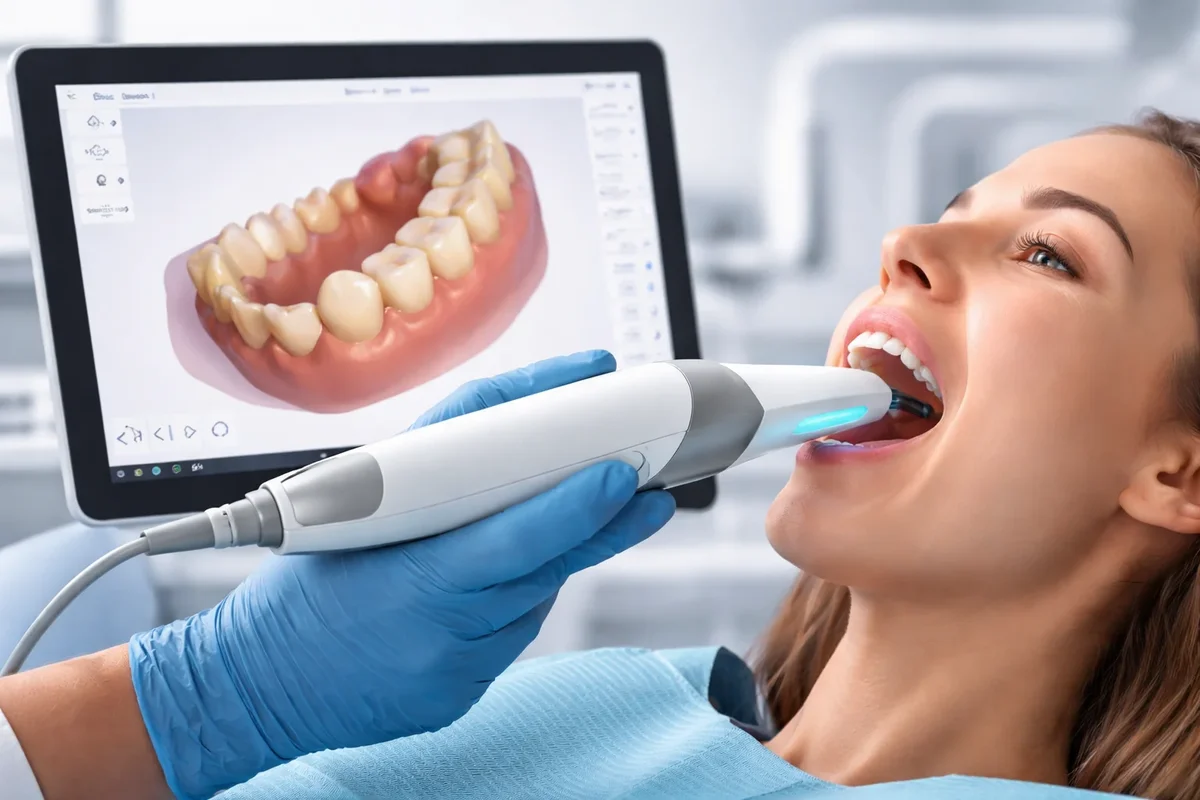
Choosing the Right Crown Scanner for a Dental Clinic
Selecting the right crown scanner is a strategic decision that directly affects clinical outcomes, patient satisfaction, workflow efficiency, and long-term return on investment. As crown scanner technology becomes a standard expectation rather than a luxury, dental clinics must carefully evaluate which system best fits their clinical goals, team experience, and patient volume. Not all crown scanner systems are created equal, and choosing the wrong one can limit efficiency rather than enhance it. 🦷
A crown scanner should be viewed not just as a device, but as the foundation of a digital ecosystem. The right choice supports accuracy, integrates seamlessly with existing systems, and grows with the clinic as technology evolves.
Clinical Accuracy and Scan Quality
The first and most important criterion when choosing a crown scanner is accuracy. The scanner must consistently capture fine details such as margins, occlusal anatomy, and interproximal contacts. High scan accuracy directly impacts crown fit, longevity, and patient comfort.
A reliable crown scanner should produce sharp, distortion-free images even in challenging areas. Consistent accuracy reduces remakes and adjustments, saving time and improving clinical confidence. Clinics should prioritize crown scanner systems with proven clinical validation and strong performance in real-world conditions.
Ease of Use and Learning Curve
User-Friendly Interface
A crown scanner should be intuitive and easy to operate for the entire dental team. Complicated software or awkward scanning techniques can slow adoption and reduce efficiency. A well-designed crown scanner offers a clear interface, guided scanning paths, and real-time feedback that helps users achieve accurate scans quickly.
Training and Team Adoption
The learning curve matters. A crown scanner that requires extensive training may disrupt workflows initially. Clinics should consider how quickly dentists and assistants can become proficient. Faster adoption means quicker return on investment and smoother integration into daily practice.
Integration with Existing Digital Systems
Modern dental clinics often use CAD/CAM software, milling machines, and digital patient management systems. A crown scanner should integrate seamlessly with these tools. Open-system crown scanners that support standard file formats offer greater flexibility when working with different laboratories and equipment.
Poor integration can create bottlenecks and limit workflow efficiency. Choosing a crown scanner that communicates easily with existing systems ensures a cohesive and future-proof digital setup.
Workflow Efficiency and Speed
Scanning speed and processing time are critical factors. A crown scanner should capture complete scans quickly without sacrificing accuracy. Faster scanning improves patient comfort and allows clinics to maintain efficient schedules.
Additionally, crown scanner software should process data smoothly without lag. Delays during scanning or model rendering can disrupt appointments and reduce productivity.
Support for Same-Day Crowns
For clinics aiming to offer same-day crowns, the crown scanner must deliver exceptional precision. Same-day workflows depend heavily on scan accuracy because there is little room for error when fabrication happens immediately.
A crown scanner designed for chairside CAD/CAM workflows supports rapid design and milling, allowing clinics to provide high-value, time-saving services that patients appreciate.
Patient Comfort and Experience
From a patient perspective, the crown scanner experience matters. A compact scanning wand, smooth operation, and quick scan times improve comfort and reduce anxiety. Patients often associate modern scanning technology with higher-quality care.
A positive crown scanner experience can enhance patient trust and increase treatment acceptance, especially for restorative and cosmetic procedures.
Software Updates and Future-Proofing
Technology evolves quickly, and a crown scanner should evolve with it. Clinics should consider whether the scanner receives regular software updates that improve performance, add features, and enhance security.
Future-proof crown scanner systems protect the clinic’s investment by staying compatible with new materials, workflows, and digital tools as dentistry continues to advance.
Technical Support and Reliability
Reliable technical support is essential. Even the best crown scanner can encounter issues, and prompt support minimizes downtime. Clinics should evaluate the availability of training resources, customer support, and service coverage when choosing a system.
A dependable crown scanner backed by strong support ensures uninterrupted workflows and long-term confidence in the technology.
Cost vs Long-Term Value
While upfront cost is an important consideration, it should not be the sole deciding factor. A lower-cost crown scanner that compromises accuracy or efficiency may result in higher long-term expenses due to remakes and lost productivity.
A high-quality crown scanner delivers value through improved outcomes, reduced errors, and increased patient satisfaction. When evaluated over time, the right crown scanner often pays for itself through efficiency gains and enhanced service offerings.
In conclusion, choosing the right crown scanner requires a balance of accuracy, usability, integration, and long-term vision. The ideal crown scanner supports clinical excellence today while positioning the dental clinic for future growth. By carefully evaluating these factors, clinics can select a crown scanner that elevates both patient care and operational success in the digital age. 🚀