
What Is Deep Teeth Cleaning and Why Is It Needed?
When people hear the phrase deep teeth cleaning cost, the first question that comes to mind is usually: what exactly is this procedure? Deep cleaning, also known in dentistry as scaling and root planing, goes beyond the standard cleaning that patients receive during a regular check-up. While a routine cleaning focuses on polishing the visible part of the tooth and removing plaque above the gumline, deep cleaning addresses hardened plaque (tartar) and bacterial buildup below the gumline. This type of treatment is often recommended when gum disease, such as gingivitis or periodontitis, begins to take hold. 🦷
The procedure typically involves two main steps. First, the dentist or hygienist performs scaling, which removes plaque and tartar from the teeth surface and under the gumline. Second, root planing smooths out the root surfaces, helping the gums reattach to the teeth and reducing future bacterial growth. Because the process is more detailed, time-consuming, and medically necessary than routine cleaning, the deep teeth cleaning cost is naturally higher.
But why is it needed? Gum disease is a silent condition that can progress without noticeable pain. Early stages may cause redness, swelling, and occasional bleeding. If left untreated, however, bacteria can damage the bone and connective tissue supporting your teeth, eventually leading to tooth loss. Deep cleaning serves as the frontline defense against this progression. Many patients are surprised to learn that regular brushing and flossing cannot always remove hardened tartar below the gumline, which is why professional treatment becomes necessary.
Another crucial reason for deep cleaning is its role in overall health. Research has linked periodontal disease to systemic conditions such as diabetes, cardiovascular disease, and even respiratory infections. By investing in treatment—despite the deep teeth cleaning cost—patients are also making an investment in their general well-being. The connection between oral and systemic health is well documented, and dentists emphasize that preventive care can save far more money in future medical expenses.
It is also worth noting that the procedure is often carried out in stages. For instance, one side of the mouth may be cleaned in a single appointment, while the other side is scheduled for another visit. This division ensures thoroughness and helps manage patient comfort. Local anesthesia is usually administered, making the process relatively painless, though mild soreness afterward is normal.
Patients frequently ask whether deep cleaning is a one-time procedure. In truth, the answer depends on individual oral health. For some, a single treatment paired with consistent home care and regular dental visits may suffice. For others with more advanced periodontal issues, follow-up treatments and maintenance sessions might be recommended. This reality influences not only the treatment plan but also the overall deep teeth cleaning cost.
Semantically related terms such as periodontal cleaning or scaling and root planing fees are often used interchangeably with deep cleaning. These phrases can cause confusion, but they all point toward the same procedure. Whether you see it listed on a treatment plan as “periodontal therapy” or “root planing,” the goal remains the same: to stop the progression of gum disease and restore oral health.
From a financial perspective, it helps to look at deep cleaning not just as an expense but as a preventive investment. Neglecting early gum disease can lead to much more serious treatments later on, such as gum surgery, tooth extractions, or even implants. Compared to these advanced treatments, the deep teeth cleaning cost is a smaller and more manageable step toward protecting your teeth and gums.
If you are concerned about whether this treatment is right for you, scheduling an evaluation with a dental professional is the first step. Dentists can perform a periodontal charting exam, measure gum pocket depths, and identify whether deep cleaning is necessary. For those interested in scheduling a consultation, you can easily reach out through the Redent Klinik Contact Page to discuss treatment plans tailored to your needs.
In conclusion, understanding why deep cleaning is recommended helps patients appreciate the value of the procedure. While the deep teeth cleaning cost may seem like a significant investment at first, its role in preserving oral health, preventing future complications, and supporting overall wellness makes it worthwhile. And with trusted resources such as the American Dental Association, patients can explore reliable information and feel confident about making informed decisions regarding their dental care.
Average Deep Teeth Cleaning Cost in 2025
One of the most common questions patients ask their dentist is: “What is the deep teeth cleaning cost this year?” As of 2025, prices can vary significantly depending on where you live, your dentist’s expertise, and whether you have dental insurance. However, by examining recent market data, we can provide a reliable overview of the current average costs so you can plan your budget with confidence. 💰
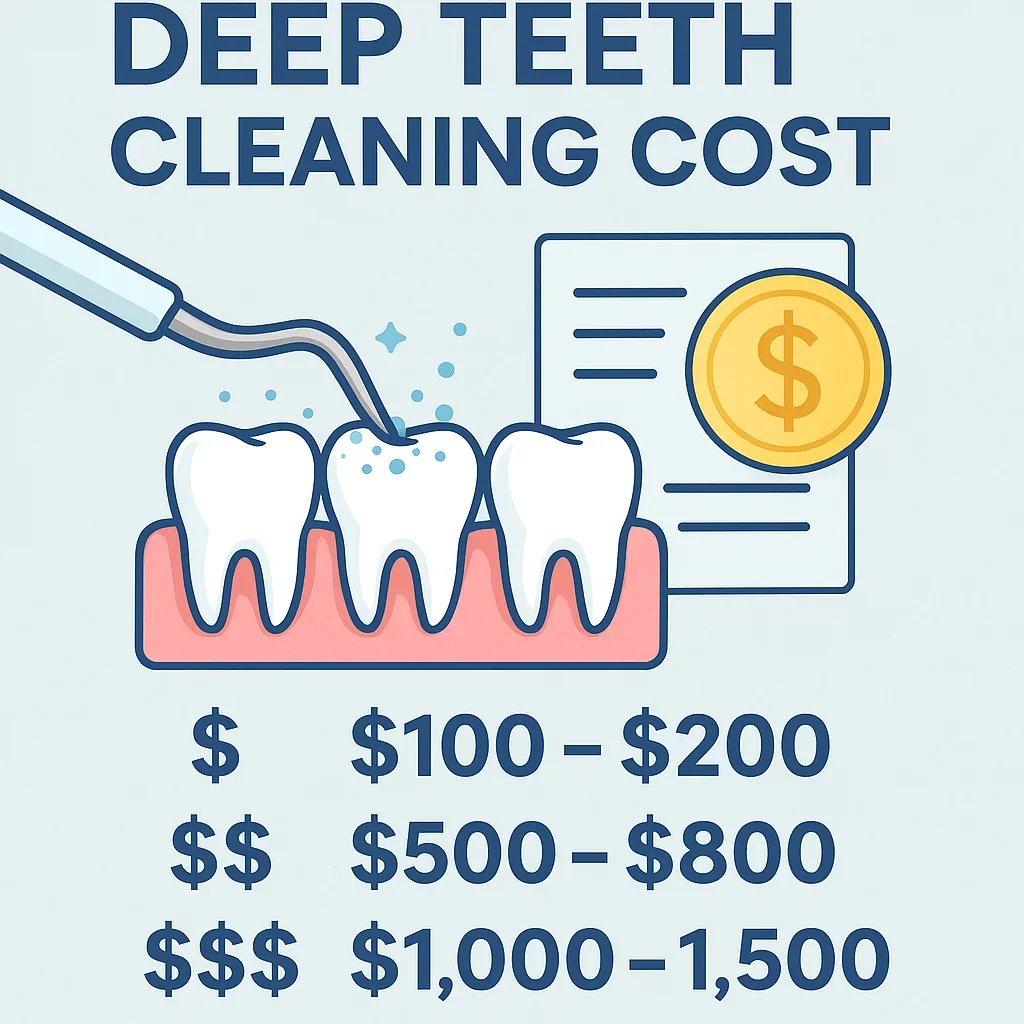
In the United States, the deep teeth cleaning cost typically ranges from $150 to $350 per quadrant of the mouth. Since most people require treatment on all four quadrants, the total price can range between $600 and $1,400. These estimates are based on national averages reported by dental associations and verified by clinics across major cities. Patients in metropolitan areas like New York City or Los Angeles may face costs closer to the higher end, while those in rural or suburban areas might benefit from lower pricing.
For international patients, the numbers look quite different. In the United Kingdom, deep cleaning is usually categorized as a private dental service, with prices ranging from £250 to £800 depending on the extent of gum disease and whether the treatment is performed under anesthesia. In Turkey, where dental tourism is rapidly growing, the average deep teeth cleaning cost is significantly more affordable, typically ranging from $200 to $400 for the entire mouth. This price difference has made Turkey an increasingly popular destination for international patients seeking quality dental care at a lower cost.
Below is a summarized block of average 2025 costs from various regions:
United States: $600 – $1,400 (full mouth)
United Kingdom: £250 – £800
Turkey: $200 – $400
Canada: CAD 700 – CAD 1,200
Australia: AUD 500 – AUD 1,000
The main reason the deep teeth cleaning cost differs so much between countries is due to variations in labor costs, healthcare systems, and insurance structures. For example, in countries where dentistry is subsidized or partially covered by national health systems, patients may pay significantly less out of pocket. In contrast, in private healthcare-driven countries, patients bear more of the expense directly.
It’s also important to note that the cost per quadrant is not always fixed. Dentists may adjust the price depending on the severity of periodontal disease, the number of follow-up visits required, and whether advanced tools like ultrasonic scalers or laser-assisted technology are used. These factors can increase the total deep teeth cleaning cost beyond the initial estimate.
Many clinics now offer payment plans or membership discounts, making treatment more accessible. For instance, some dental practices include deep cleaning as part of a preventive care package, which spreads the cost out over the year. Patients should inquire about these options, as they can help reduce immediate financial stress while ensuring gum health is maintained.
One hidden factor patients often overlook is post-treatment maintenance. After the initial procedure, dentists usually recommend regular follow-up cleanings every 3–4 months. While these sessions are shorter and less expensive than the initial deep cleaning, they still add to the overall budget. Understanding this helps patients better anticipate the true deep teeth cleaning cost over time.
In 2025, inflation and rising healthcare expenses have also had a slight impact on dental prices. Compared to 2023 or 2024, patients may notice an increase of approximately 5–10% in average fees. Still, the value of the treatment far outweighs the expense, as it prevents more costly and invasive procedures like gum surgery or implants later on.
If you are uncertain about the best place to receive care, seeking advice from reliable organizations such as the American Dental Association can provide clarity on fair pricing and treatment standards. You may also explore dental tourism options, especially in Turkey, where international clinics such as Redent Klinik Contact Page provide affordable packages while maintaining high-quality care.
Ultimately, the deep teeth cleaning cost is more than just a line item on your dental bill—it is an investment in your oral and overall health. By understanding the average costs in 2025, patients can prepare financially and make informed decisions about their care.
Factors That Influence Deep Teeth Cleaning Cost
When patients research the deep teeth cleaning cost, they often wonder why prices can vary so dramatically between individuals, cities, and even dental offices in the same area. Understanding the factors that influence cost helps set realistic expectations and provides clarity when comparing treatment plans. Let’s break down the most common elements that determine the final price of deep teeth cleaning. 🔍
1. Severity of Gum Disease:
The primary factor affecting the deep teeth cleaning cost is the extent of periodontal disease. Patients with mild gingivitis may require less extensive cleaning compared to those with advanced periodontitis. In cases where tartar has built up deep below the gumline, additional time, specialized instruments, and multiple appointments may be required—leading to higher fees.
2. Number of Quadrants Treated:
Deep cleaning is usually priced per quadrant (one quarter of the mouth). If you only need treatment in two quadrants, the cost is significantly lower than for a full-mouth procedure. Since each quadrant can range from $150 to $350 in the U.S., the total deep teeth cleaning cost will depend on whether your dentist recommends partial or full treatment.
3. Geographic Location:
Location plays a massive role in dental pricing. In major U.S. cities like San Francisco or New York, costs are usually at the higher end, while smaller towns and suburban areas offer more affordable rates. Internationally, countries like Turkey offer much lower deep teeth cleaning cost thanks to reduced overhead expenses and competitive dental tourism packages.
4. Dentist’s Expertise and Credentials:
The level of expertise and training of the dental professional also impacts the final bill. Periodontists, who specialize in gum treatment, may charge more than general dentists. While this can increase the deep teeth cleaning cost, patients often benefit from specialized knowledge and advanced techniques that ensure more effective treatment.
5. Technology and Equipment Used:
Traditional hand instruments are still common in many practices, but clinics that invest in ultrasonic scalers, laser technology, or advanced anesthesia may charge higher fees. While this increases the immediate deep teeth cleaning cost, it often improves patient comfort and reduces recovery time.
6. Anesthesia or Sedation:
For patients with severe anxiety or advanced gum disease, sedation dentistry may be recommended. Options like nitrous oxide (laughing gas) or IV sedation increase the total deep teeth cleaning cost, sometimes adding several hundred dollars to the treatment plan.
7. Insurance Coverage:
Dental insurance plays a vital role in determining how much patients pay out of pocket. Some insurance policies cover a significant portion of the procedure, while others may only pay for regular cleanings. Patients without insurance must cover the full deep teeth cleaning cost, which can make international options like Redent Klinik Contact Page particularly appealing for cost savings.
8. Follow-up Care and Maintenance:
Deep cleaning is not always a one-time procedure. After the initial scaling and root planing, dentists often schedule maintenance visits every 3–4 months. While these visits are less expensive than the first treatment, they add to the long-term deep teeth cleaning cost. Patients should consider the overall commitment, not just the initial price tag.
9. Hidden Costs:
Sometimes, patients are surprised by additional fees not included in the base estimate. These may include charges for X-rays, periodontal charting, or antibacterial rinses used during treatment. Always ask for a detailed breakdown of the deep teeth cleaning cost before committing to a procedure.
According to the American Dental Association, transparency and patient education are essential in dental care. By understanding these influencing factors, patients can compare providers more effectively and avoid unexpected bills. More importantly, recognizing what drives costs ensures that patients don’t make decisions based solely on price but also on quality of care and long-term outcomes.
In conclusion, the deep teeth cleaning cost is shaped by many variables: the severity of disease, the dentist’s skill, the clinic’s location, and the level of follow-up required. While some of these factors are beyond your control, others—such as choosing the right clinic or asking about payment plans—can help reduce expenses while maintaining excellent dental care.
Deep Teeth Cleaning vs. Regular Cleaning: Price Comparison
When people first learn about the deep teeth cleaning cost, they often wonder how it compares with the price of a standard dental cleaning. Understanding this difference is essential because while both treatments aim to maintain oral hygiene, the scope, complexity, and pricing structure are very different. 🪥
Regular cleaning, often referred to as prophylaxis, is a preventive procedure performed every 6 months for patients with healthy gums. It usually costs between $75 and $200 per visit in the U.S. and involves removing plaque and tartar from the visible surfaces of teeth, polishing them, and reinforcing proper home care practices. Most insurance plans fully or partially cover regular cleanings, making them an affordable part of oral health maintenance.
In contrast, a deep cleaning (scaling and root planing) targets tartar and bacteria below the gumline. Since this procedure involves local anesthesia, specialized instruments, and more time, the deep teeth cleaning cost is significantly higher. On average, as of 2025, it ranges from $150 to $350 per quadrant, or $600 to $1,400 for the entire mouth. Unlike a routine cleaning, deep cleaning is considered a periodontal treatment, often required only when gum disease has developed.
Here is a side-by-side comparison table to illustrate the differences more clearly:
| Type of Cleaning | Scope of Treatment | Average Cost (2025) | Insurance Coverage |
|---|---|---|---|
| Regular Cleaning | Above the gumline, surface polishing | $75 – $200 | Often fully covered |
| Deep Cleaning | Below the gumline, scaling & root planing | $600 – $1,400 (full mouth) | Partial coverage, depends on plan |
Patients should not see the deep teeth cleaning cost as a more expensive version of a regular cleaning. Instead, it should be understood as a therapeutic procedure designed to treat gum disease and prevent more serious complications like tooth loss. In fact, failing to address periodontal problems early could lead to much higher expenses for gum surgery, extractions, or implants later on.
One important note is that while a routine cleaning is scheduled regularly regardless of gum health, deep cleaning is only prescribed when clinical evidence of periodontal disease is found. Dentists often use periodontal charting to measure gum pocket depth, and if these pockets exceed 4 millimeters, a deep cleaning is usually recommended. This diagnostic step is what justifies the difference in deep teeth cleaning cost compared to regular cleanings.
Another distinction is frequency. Patients typically undergo deep cleaning only once every few years, depending on their oral health, while regular cleanings are recommended twice yearly. Although the deep teeth cleaning cost is higher upfront, the long-term maintenance may be more affordable when paired with diligent at-home care and regular follow-up visits.
Insurance coverage also differs. While regular cleanings are often included in standard dental plans, deep cleaning may only be partially reimbursed, especially if the insurance provider categorizes it as a periodontal treatment. Patients without insurance may face the full deep teeth cleaning cost, but options like dental tourism in Turkey—through clinics such as Redent Klinik Contact Page—offer affordable packages.
According to the American Dental Association, both treatments are vital in their own way. Routine cleaning prevents the buildup of plaque and tartar, while deep cleaning intervenes when gum disease has already advanced. Considering this, patients should not postpone deep cleaning simply due to cost concerns, as early intervention saves both money and health in the long run.
In summary, while regular cleaning is a low-cost preventive measure, the deep teeth cleaning cost reflects the procedure’s complexity and medical necessity. Both are crucial for oral health, but only deep cleaning can halt the progression of gum disease once it starts.
Insurance Coverage for Deep Teeth Cleaning Cost
One of the most important considerations for patients concerned about the deep teeth cleaning cost is whether their dental insurance will help cover the expense. Since this treatment is not purely cosmetic but medically necessary, many insurance providers offer partial or even significant coverage. However, the level of support varies greatly depending on your specific plan, the insurer’s policies, and the documentation provided by your dentist. 🧾
Most standard dental insurance plans distinguish between preventive care (like regular check-ups and cleanings) and periodontal treatment (which includes deep cleaning, also known as scaling and root planing). Preventive services are often covered at 100%, but periodontal care is usually covered at 50% to 80% of the total cost. This means if your full-mouth deep teeth cleaning cost is $1,000, your out-of-pocket expense might be between $200 and $500 depending on your plan.
Documentation is critical: Dentists typically need to provide detailed periodontal charting, X-rays, and gum pocket measurements to demonstrate the medical necessity of deep cleaning. Insurance providers use this information to approve coverage. Without this documentation, claims may be denied, leaving the patient responsible for the full deep teeth cleaning cost.
Annual maximums also play a role. Many insurance plans have an annual spending cap, often between $1,000 and $1,500. If a patient has already used part of that budget on other dental work such as fillings, crowns, or extractions, the reimbursement for deep cleaning may be lower. This is why it’s important to time your treatments carefully within the insurance calendar year.
Here’s a quick breakdown of typical insurance scenarios in 2025:
- PPO Plans: Cover 50–80% of deep cleaning after deductibles are met.
- HMO Plans: Often include discounted rates but require using in-network providers.
- Medicaid: Coverage varies by state, but some programs include periodontal treatment for adults.
- Private Plans: May offer flexible coverage but higher premiums.
For patients without insurance, the deep teeth cleaning cost can feel overwhelming. However, many dental clinics provide alternatives such as:
- In-house membership plans: Patients pay an annual fee for discounted services, including deep cleaning.
- Financing options: Monthly installment plans through healthcare credit providers.
- Discount programs: Some clinics participate in dental savings plans that reduce fees by 20–40%.
International options are also increasingly popular. Countries like Turkey offer affordable packages that can reduce the overall deep teeth cleaning cost even when factoring in travel expenses. Clinics such as Redent Klinik Contact Page welcome international patients, often providing transparent pricing and comprehensive aftercare.
Patients should also be aware that some insurance companies require a waiting period before covering periodontal treatments. For example, a plan might not cover deep cleaning until 6–12 months after enrollment. This condition prevents people from purchasing insurance only when they already need costly treatment. Checking these details before committing to a plan ensures fewer surprises when it comes time to cover the deep teeth cleaning cost.
The American Dental Association emphasizes that patients should ask their dental office for a “pre-determination of benefits.” This process involves submitting the treatment plan to the insurer in advance to verify how much will be covered. Doing so provides clarity, helps you budget better, and reduces the risk of unexpected bills.
In summary, while the deep teeth cleaning cost can be substantial, insurance coverage often reduces the burden significantly. By understanding your plan, asking the right questions, and exploring additional options like financing or international care, you can manage expenses effectively while still prioritizing your oral health.
Regional Price Differences: US, UK, and Turkey
One of the most fascinating aspects of the deep teeth cleaning cost is how much it varies depending on where you receive treatment. While the procedure itself—scaling and root planing—is fairly standard worldwide, the cost structure changes dramatically due to differences in labor costs, healthcare systems, and currency exchange rates. Patients often explore cross-border dental care to save money, especially when they need comprehensive treatment. 🌍
United States:
The U.S. has some of the highest dental fees in the world. As of 2025, the average deep teeth cleaning cost ranges from $150 to $350 per quadrant, adding up to $600 to $1,400 for the entire mouth. Prices are typically higher in metropolitan areas like New York, Los Angeles, and Chicago, where overhead costs are significant. Dental insurance can offset some of this expense, but patients without coverage may find the procedure financially challenging.
United Kingdom:
In the UK, the deep teeth cleaning cost varies depending on whether patients go through the National Health Service (NHS) or private practices. On the NHS, patients may pay a fixed Band 2 charge (around £70–£80 in 2025) if the dentist determines periodontal treatment is necessary. However, this does not always cover extensive deep cleaning. Private clinics usually charge £250 to £800, depending on the severity of gum disease, clinic location, and whether sedation is used. Many patients choose private treatment for faster appointments and more personalized care.
Turkey:
Turkey has become a global hub for dental tourism, attracting patients from Europe, the Middle East, and even North America. The deep teeth cleaning cost here is significantly lower, averaging between $200 and $400 for the entire mouth. Even when travel and accommodation are factored in, the overall expense can still be less than paying out of pocket in the U.S. or UK. Turkish clinics often cater to international patients with English-speaking staff, state-of-the-art facilities, and package deals that include transportation and aftercare. For example, clinics like Redent Klinik Contact Page specialize in providing affordable, high-quality care for patients seeking treatment abroad.
Why such a difference?
Several factors explain why the deep teeth cleaning cost differs so much:
- Labor Costs: Dentist salaries and staff wages are much higher in the U.S. and UK compared to Turkey.
- Healthcare Systems: NHS subsidies lower costs for some UK patients, while U.S. patients rely heavily on private insurance.
- Operational Costs: Rent, equipment, and malpractice insurance are significantly more expensive in the U.S.
- Currency Strength: Favorable exchange rates make Turkey an attractive destination for foreign patients.
Here’s a quick comparison snapshot for 2025:
United States: $600 – $1,400 (full mouth, uninsured)
United Kingdom: £250 – £800 (private clinics)
Turkey: $200 – $400 (full mouth, private clinics)
Patients traveling abroad for care should always consider not just the savings but also the quality of service. Fortunately, Turkish clinics with international accreditation have proven that lower deep teeth cleaning cost does not mean lower standards. In fact, many facilities rival Western clinics in technology and professionalism.
According to the American Dental Association, patients considering dental tourism should verify clinic credentials, ensure providers are licensed, and confirm that post-treatment care is available. By doing so, individuals can enjoy both affordability and peace of mind.
In conclusion, the deep teeth cleaning cost highlights how global economics impact healthcare. While the U.S. and UK offer trusted but higher-priced services, Turkey provides a cost-effective alternative without compromising on quality. For many patients, exploring international options has become a practical way to protect both oral health and financial well-being.
Deep Teeth Cleaning Cost Without Insurance
For many patients, the biggest concern is facing the deep teeth cleaning cost without the safety net of dental insurance. While insurance can significantly reduce out-of-pocket expenses, millions of people either don’t have coverage or find that their plan doesn’t extend to periodontal treatments. In 2025, the financial burden of paying for deep cleaning entirely out of pocket is a reality for many households. Let’s explore what this means in practical terms. 💳
Without insurance, patients are responsible for the full amount of the deep teeth cleaning cost. In the United States, this typically ranges from $600 to $1,400 for the entire mouth. Each quadrant costs around $150 to $350, and since most patients require treatment across all four quadrants, the bill can add up quickly. For those living in major cities with higher overhead costs, the expense may exceed the national average.
In the United Kingdom, the situation is similar for private care. If a patient cannot access NHS services—or prefers the convenience of private clinics—they may need to pay £250 to £800 entirely out of pocket. Meanwhile, in countries like Turkey, the absence of insurance is less daunting, as the deep teeth cleaning cost ranges from $200 to $400 for full-mouth treatment, making it much more accessible for international patients seeking affordable dental solutions.
Here’s a snapshot of typical out-of-pocket expenses in 2025:
United States: $600 – $1,400
United Kingdom: £250 – £800
Turkey: $200 – $400
Canada: CAD 700 – CAD 1,200
Australia: AUD 500 – AUD 1,000
Why does no insurance make such a difference?
Insurance plans often cover 50–80% of periodontal treatments, which means that without coverage, patients shoulder the full financial responsibility. Moreover, insurers sometimes negotiate discounted rates with dental providers, meaning uninsured patients may end up paying even more than what an insured patient would pay for the same treatment.
For uninsured patients, clinics often provide payment alternatives to make the deep teeth cleaning cost more manageable:
- Payment Plans: Many dental offices allow patients to split the total into monthly installments.
- Dental Membership Programs: Patients pay a yearly fee to receive discounts on cleanings and other services.
- Third-Party Financing: Credit options such as CareCredit can spread out payments over time.
- Dental Tourism: Traveling abroad to destinations like Turkey, where clinics such as Redent Klinik Contact Page provide high-quality care at lower costs.
Patients also need to consider the long-term implications of delaying treatment due to cost. Gum disease progresses silently, and untreated infections can eventually lead to tooth loss, bone damage, or the need for expensive dental implants. Compared to these advanced treatments, the deep teeth cleaning cost without insurance is still a financially wise choice.
Another factor to keep in mind is transparency. Some clinics offer bundled pricing that includes the full treatment, follow-up visits, and antibacterial rinses, while others charge separately for each service. Asking for an itemized treatment plan before beginning helps avoid unexpected costs.
According to the American Dental Association, uninsured patients should not skip care simply because of financial worries. Instead, they should ask about sliding-scale pricing, community dental programs, or university dental clinics where supervised students provide treatment at reduced rates. These programs can make the deep teeth cleaning cost far more affordable.
In summary, while paying the deep teeth cleaning cost without insurance can be challenging, patients have options to reduce the burden. Exploring dental memberships, financing, or even international treatment ensures that gum health is not sacrificed due to financial constraints.
Long-Term Benefits and Savings of Deep Cleaning
When patients first see the deep teeth cleaning cost, they may focus on the immediate financial burden. However, looking at the long-term benefits reveals that this procedure is not simply an expense—it’s an investment in both oral and overall health. By addressing gum disease early and effectively, deep cleaning helps patients avoid far more costly dental and medical treatments in the future. 💡
Preventing Tooth Loss:
One of the most significant long-term benefits of deep cleaning is preventing tooth loss. Gum disease is the leading cause of adult tooth loss, and once a tooth is gone, replacement options such as dental implants or bridges can cost thousands of dollars per tooth. In comparison, even the higher end of the deep teeth cleaning cost is minimal when weighed against the price of implants, crowns, or dentures required to restore function and aesthetics later.
Reducing Risk of Gum Surgery:
Patients who delay treatment for gum disease often end up requiring surgical interventions like flap surgery or bone grafts. These procedures not only carry higher risks but also cost several thousand dollars. Investing in the deep teeth cleaning cost now helps patients avoid these advanced—and expensive—procedures down the line.
Supporting Overall Health:
Medical research has consistently linked periodontal disease to systemic conditions such as diabetes, heart disease, and even respiratory illness. Inflammation in the gums can spread harmful bacteria throughout the body, increasing health risks. By controlling gum disease through deep cleaning, patients may reduce their risk of developing these conditions. In this sense, the deep teeth cleaning cost is also an investment in reducing future medical bills and hospital visits.
Lowering Maintenance Costs:
After deep cleaning, most patients only require maintenance visits every 3–4 months. These visits are less expensive than the initial procedure and help ensure gum health remains stable. This means the ongoing cost of care becomes manageable and predictable. Compared to letting gum disease worsen and requiring extensive treatments, the cumulative deep teeth cleaning cost plus maintenance is a fraction of the expense of advanced therapies.
Improved Quality of Life:
Beyond financial savings, deep cleaning provides intangible benefits such as fresher breath, healthier gums, and a brighter smile. Patients often report increased confidence and comfort in social interactions. Avoiding chronic gum infections also means less pain, fewer swollen gums, and the ability to enjoy a wider variety of foods without discomfort.
Financial Perspective:
Let’s put the numbers into perspective. If a patient spends around $1,000 on deep cleaning in 2025, plus $200 per year on maintenance, the total over 5 years would be about $2,000. Compare that to the potential cost of gum surgery ($3,000–$5,000), implants ($3,500–$6,000 per tooth), or full-mouth reconstruction (tens of thousands of dollars). Clearly, the deep teeth cleaning cost represents a smaller, preventive investment with long-term savings.
Insurance and International Options:
Patients concerned about affordability should also remember that insurance often covers part of the procedure, and international destinations like Turkey provide high-quality treatment at much lower rates. Clinics such as Redent Klinik Contact Page specialize in affordable dental care for international patients, helping them realize the long-term savings of early intervention.
According to the American Dental Association, periodontal health is a cornerstone of preventive dentistry. By managing gum disease through treatments like deep cleaning, patients significantly improve their chances of maintaining healthy teeth for life—while also saving money that would otherwise be spent on complex, invasive treatments.
In summary, while the deep teeth cleaning cost may appear high at first glance, the long-term benefits and financial savings make it a wise choice. Preventing tooth loss, avoiding surgery, supporting systemic health, and reducing future expenses all reinforce why deep cleaning is an essential, cost-effective step in maintaining a healthy smile.
How to Reduce Your Deep Teeth Cleaning Cost Safely
While the deep teeth cleaning cost can feel overwhelming, the good news is that there are safe and effective strategies to make it more affordable without compromising quality. Patients should avoid cutting corners with unreliable providers or skipping treatment altogether, as this can lead to more serious—and far more expensive—dental problems in the future. Instead, consider the following proven ways to reduce costs while still receiving excellent care. ✅
1. Use Dental Insurance Wisely:
If you have insurance, review your plan’s coverage for periodontal treatments. Most policies cover 50–80% of the deep teeth cleaning cost. To maximize benefits, ask your dentist to submit a pre-treatment estimate to confirm coverage before scheduling. Timing your appointments strategically within the insurance year can also help you avoid hitting your annual maximum too early.
2. Explore In-House Membership Plans:
Many dental offices now offer membership programs for uninsured patients. For a fixed annual fee, members receive discounts on treatments, including deep cleanings. These programs can reduce the deep teeth cleaning cost by 20–40%, making them an attractive option for patients who want predictable, lower fees.
3. Consider Dental Schools:
University dental schools often provide high-quality care at reduced rates, as supervised dental students perform the treatments. While it may take longer, the savings can be significant. In many cases, the deep teeth cleaning cost at dental schools is half the price of a private clinic, without compromising safety.
4. Ask About Payment Plans:
If paying the full amount upfront isn’t possible, many clinics allow installment payments. This can spread the deep teeth cleaning cost over several months, making it easier to manage financially. Ask about zero-interest financing or third-party providers like CareCredit that specialize in medical and dental expenses.
5. Take Advantage of Preventive Care:
The best way to lower future costs is to prevent gum disease from progressing. Brushing twice daily, flossing, using antibacterial mouthwash, and attending regular check-ups all reduce the likelihood of needing repeated deep cleanings. By investing in prevention, patients keep the long-term deep teeth cleaning cost lower.
6. Compare Regional Options:
Prices vary significantly depending on location. For example, patients in rural areas often pay less than those in large cities. International dental tourism is also an option—countries like Turkey provide deep cleaning at far lower rates while maintaining high standards of care. Clinics such as Redent Klinik Contact Page specialize in affordable packages for international patients.
7. Look for Seasonal Promotions:
Some dental offices offer seasonal discounts or promotions, particularly during slower months. Signing up for clinic newsletters or loyalty programs can help you catch these offers and reduce the deep teeth cleaning cost further.
8. Confirm Itemized Billing:
Always ask for a detailed breakdown of charges. Some clinics may bundle costs for X-rays, antibacterial rinses, or follow-up visits, while others list them separately. By understanding what is included, patients can avoid unnecessary add-ons that inflate the total deep teeth cleaning cost.
9. Seek Community Dental Clinics:
In many regions, nonprofit organizations and community health centers provide affordable dental care. These clinics often charge based on income, significantly reducing the deep teeth cleaning cost for low-income families while still ensuring safe treatment.
The American Dental Association advises patients to prioritize quality and safety over finding the absolute lowest price. By choosing reputable clinics and using smart financial strategies, patients can make treatment more affordable while still protecting their oral health.
In conclusion, while the deep teeth cleaning cost may seem like a challenge, there are numerous safe strategies to manage and reduce it. From insurance coverage and payment plans to dental tourism and preventive care, patients have many options to make this vital treatment accessible without compromising quality.
Finding Affordable Dental Clinics for Deep Teeth Cleaning
For many patients, the most stressful part of scheduling treatment is not the procedure itself but figuring out where to find an affordable and trustworthy clinic. Since the deep teeth cleaning cost can vary widely depending on the provider, location, and level of expertise, choosing the right clinic can make a huge difference. Fortunately, there are practical ways to identify reliable dental offices that offer high-quality care at a fair price. 🏥
1. Research Online Reviews and Testimonials:
The first step in finding affordable care is to read patient reviews. Websites like Google Reviews, Healthgrades, and dental-specific forums provide insights into pricing, service quality, and patient satisfaction. Clinics that consistently receive high ratings for transparency and professionalism are more likely to offer fair deep teeth cleaning cost without hidden fees.
2. Ask for Detailed Price Estimates:
Before committing to treatment, always request a written treatment plan. A good clinic will provide an itemized breakdown that includes anesthesia, scaling, root planing, antibacterial rinses, and follow-up visits. This transparency helps patients compare clinics and avoid surprises in the final deep teeth cleaning cost.
3. Explore Dental Tourism Options:
As mentioned earlier, dental tourism is increasingly popular. Countries like Turkey provide deep cleaning at much lower rates than the U.S. or UK. Many clinics cater to international patients with package deals that include airport transfers, accommodations, and aftercare. For example, Redent Klinik Contact Page offers comprehensive, affordable treatment plans for patients traveling from abroad. Choosing such clinics can reduce the deep teeth cleaning cost by 50% or more while maintaining high standards.
4. Compare Local and Regional Prices:
Even within the same country, the deep teeth cleaning cost can vary significantly. Urban dental practices often have higher fees due to overhead expenses, while suburban or rural clinics may charge less. Calling multiple offices for quotes and comparing their services can help patients find the best balance between affordability and convenience.
5. Consider Nonprofit and Community Clinics:
Community health centers and nonprofit dental clinics often provide periodontal care at reduced rates, sometimes using income-based sliding scales. These facilities ensure that even patients without insurance or with limited budgets can access treatment. While appointments may be harder to secure due to high demand, the potential savings on the deep teeth cleaning cost are substantial.
6. Check for Specialized Periodontists:
While periodontists may charge more than general dentists, their expertise can sometimes make treatment more efficient. For severe cases of gum disease, choosing a specialist may reduce the number of follow-up sessions needed, which could lower the overall deep teeth cleaning cost in the long run.
7. Ask About Clinic Financing and Memberships:
Many dental clinics offer in-house financing, loyalty discounts, or membership programs. Patients can enroll in yearly plans that include preventive care and discounts on advanced treatments. This can reduce the deep teeth cleaning cost by spreading expenses throughout the year.
8. Verify Credentials and Standards:
Affordability should never come at the cost of safety. Patients should confirm that clinics are licensed, hygienists are certified, and sterilization standards are followed. The American Dental Association recommends checking accreditation and professional memberships as part of the selection process. A clinic that is affordable but cuts corners on safety could end up costing more in corrective treatments later.
9. Use Preventive Care as a Cost Strategy:
The easiest way to reduce the need for repeated deep cleanings is to maintain good oral hygiene. Patients who brush, floss, and attend regular check-ups are less likely to require repeated procedures. This means lower cumulative deep teeth cleaning cost over time.
In summary, finding an affordable clinic for deep cleaning is possible with the right approach. By researching reviews, comparing estimates, considering international options, and prioritizing accredited clinics, patients can balance affordability with quality care. Ultimately, the deep teeth cleaning cost should not prevent anyone from accessing the treatment they need to maintain healthy gums and a confident smile.