
Many people today are searching for a reliable dental braces alternative because they want straighter teeth without the discomfort or appearance of traditional metal braces. Modern cosmetic dentistry has evolved rapidly, giving patients several advanced solutions that improve smile alignment while maintaining comfort, aesthetics, and convenience. Whether someone is an adult professional, a teenager concerned about appearance, or a patient looking for faster orthodontic treatment, finding the right dental braces alternative can completely transform both confidence and oral health. 😊
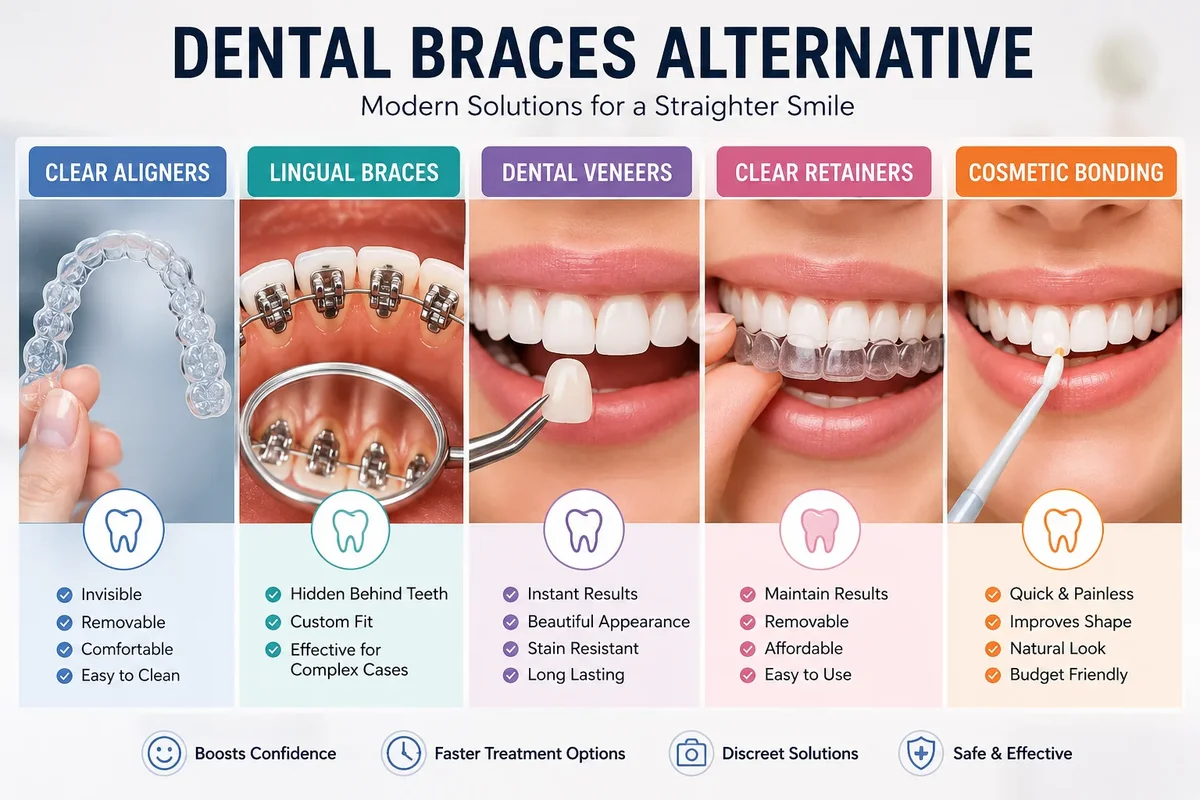
Traditional braces are still effective, but many patients prefer a dental braces alternative that is less visible and easier to maintain. In recent years, clear aligners, invisible orthodontic systems, removable retainers, porcelain veneers, and lingual braces have become highly popular among patients seeking discreet smile correction. These modern orthodontic treatments can address crowded teeth, mild bite issues, spacing problems, and crooked smiles while offering a more comfortable experience than conventional braces.
One major reason patients choose a dental braces alternative is aesthetics. Metal braces can affect self-confidence, especially for adults working in professional environments. Clear aligners are nearly invisible and allow patients to continue daily life without noticeable orthodontic hardware. For many individuals, a discreet smile correction system makes the treatment journey much easier emotionally and socially.
Another important benefit of selecting a dental braces alternative is comfort. Traditional braces include metal brackets and wires that may irritate the cheeks and gums. In contrast, modern aligner systems use smooth plastic trays custom-designed for each patient. This reduces friction and improves comfort during the orthodontic process. Many patients also report easier eating and oral hygiene maintenance when using removable aligners instead of fixed braces.
The best dental braces alternative depends on the patient’s oral condition, age, treatment goals, and budget. Some patients only need mild cosmetic correction, while others require more advanced orthodontic movement. During a professional dental consultation, digital scans and smile analysis help determine which treatment option offers the best long-term outcome. Clinics using modern 3D imaging technology can create highly personalized treatment plans for safer and more predictable results.
One of the most popular choices today is clear aligner therapy. Clear aligners are transparent trays worn over the teeth to gradually move them into proper alignment. Patients receive multiple aligners that are changed every few weeks as teeth slowly shift position. Because aligners are removable, patients can continue enjoying their favorite foods without restrictions. This makes clear aligners an extremely attractive dental braces alternative for adults and teenagers alike.
Another effective dental braces alternative involves cosmetic veneers. Veneers do not physically move teeth like orthodontics, but they can visually improve alignment by covering imperfections on the front surface of the teeth. Patients seeking immediate cosmetic enhancement sometimes choose veneers because treatment can often be completed faster than traditional orthodontic methods. However, veneers are generally more suitable for mild alignment issues combined with cosmetic concerns such as discoloration or chipped teeth.
Lingual braces are another advanced dental braces alternative. Unlike standard braces, lingual systems are attached behind the teeth, making them nearly invisible from the front. This treatment combines the effectiveness of braces with improved aesthetics. Although lingual braces may require a short adjustment period for speech and comfort, many patients appreciate the discreet appearance they provide.
The cost of a dental braces alternative varies depending on treatment complexity, clinic location, and treatment duration. Clear aligner systems may range from approximately $2,000 to $8,000 in some countries, while porcelain veneers may cost between $250 and $2,500 per tooth depending on material quality and dentist expertise. Patients considering treatment abroad often compare prices internationally because dental tourism destinations can provide advanced care at more affordable rates.
Estimated Treatment Price Comparison 💰
- Clear Aligners: $2,000 – $8,000
- Lingual Braces: $5,000 – $13,000
- Porcelain Veneers: $250 – $2,500 per tooth
- Retainers for Minor Correction: $300 – $1,500
- Traditional Braces: $3,000 – $10,000
Patients should always prioritize quality and expertise over low prices when selecting a dental braces alternative. Choosing an experienced orthodontic provider ensures safer treatment planning, accurate tooth movement, and healthier long-term results. A professional dental team also monitors gum health, jaw alignment, and bite function throughout treatment to prevent complications.
Straight teeth are not only cosmetic; they also support better oral health. Crowded or misaligned teeth can make cleaning difficult, increasing the risk of plaque buildup, gum disease, and tooth decay. Selecting the right dental braces alternative can improve brushing efficiency, reduce jaw stress, and support healthier chewing patterns. Patients frequently experience improved confidence and social comfort after completing smile correction treatment. 😁
Before starting treatment, patients should research clinics carefully and review credentials, patient reviews, before-and-after photos, and technology used by the practice. Consulting trusted organizations such as the
American Dental Association can help patients understand safe dental standards and treatment expectations.
If you are considering a modern dental braces alternative, professional consultation is the first step toward a healthier and more attractive smile. A personalized evaluation allows dental specialists to recommend the most effective solution for your individual needs. Patients looking for advanced smile correction solutions can also contact experienced professionals directly through the
Redent Klinik Contact Page for more information about available treatment options.
Ultimately, choosing a dental braces alternative can provide significant lifestyle benefits, improved aesthetics, greater comfort, and better confidence compared to traditional orthodontic methods. With modern technology and customized treatment planning, achieving a straighter smile has become more accessible, discreet, and patient-friendly than ever before.
Why Patients Choose a Dental Braces Alternative Today
In modern dentistry, more patients than ever are searching for a reliable dental braces alternative because they want straighter teeth without the inconvenience of traditional metal braces. Orthodontic technology has improved significantly over the past decade, allowing people to achieve healthier and more attractive smiles using treatments that are more comfortable, discreet, and efficient. Whether someone is concerned about appearance, comfort, lifestyle flexibility, or treatment duration, choosing the right dental braces alternative can dramatically improve both oral health and self-confidence. 😊
Traditional braces remain effective for severe orthodontic cases, but many adults and teenagers now prefer less noticeable treatment methods. Modern patients often work in professional environments, attend social events regularly, or simply want to avoid the visible appearance of brackets and wires. As a result, the demand for every type of dental braces alternative continues to increase globally.
The Growing Popularity of Invisible Orthodontics
One of the main reasons people choose a dental braces alternative is the rise of invisible orthodontic systems. Clear aligners have transformed modern smile correction by offering nearly invisible treatment trays that gradually move teeth into ideal positions. These transparent aligners are especially popular among adults who want discreet orthodontic treatment without affecting their professional image.
Unlike metal braces, clear aligners can be removed during meals and while brushing teeth. This flexibility makes eating easier and allows patients to maintain better oral hygiene throughout treatment. Many people consider this convenience one of the biggest advantages of selecting a dental braces alternative instead of traditional braces.
Comfort Compared to Traditional Braces
Comfort is another major factor influencing the decision to choose a dental braces alternative. Traditional braces include brackets and wires that may irritate soft tissues inside the mouth. Some patients experience discomfort after wire adjustments, while others find it difficult to adapt to metal components.
Most modern orthodontic alternatives use smooth materials designed to minimize irritation. Clear aligners, cosmetic aligner systems, and removable orthodontic appliances are generally considered more comfortable for daily use. Patients can also remove aligners temporarily during important meetings, photographs, or special occasions, which improves overall treatment satisfaction.
Aesthetic Benefits of a Dental Braces Alternative
Aesthetic appearance plays a huge role in orthodontic decisions today. Teenagers and adults frequently worry about how braces may affect their smile during treatment. Because of this concern, a discreet dental braces alternative has become highly attractive for people who want subtle smile correction.
Clear aligners are often almost invisible when worn correctly. Lingual braces are hidden behind the teeth, making them difficult to detect during conversation. Cosmetic veneers can also visually improve alignment while simultaneously enhancing tooth color and shape. These advanced solutions allow patients to improve their smile without drawing attention to the treatment itself.
Main Advantages of Choosing a Dental Braces Alternative 🌟
- More discreet appearance
- Greater comfort during treatment
- Easier oral hygiene maintenance
- Fewer dietary restrictions
- Improved confidence during treatment
- Flexible removable options
- Advanced digital smile planning
Better Oral Hygiene During Orthodontic Treatment
Many patients choose a dental braces alternative because maintaining oral hygiene is easier compared to fixed metal braces. Traditional braces can trap food particles around brackets and wires, increasing the risk of plaque buildup and gum irritation. Cleaning around braces often requires additional tools and extra effort.
Removable aligners simplify brushing and flossing because patients can remove them before oral hygiene routines. This helps reduce the risk of cavities and gingivitis during treatment. Straightening teeth while preserving gum health is one of the most important long-term benefits of selecting a modern dental braces alternative.
Faster Lifestyle Adaptation
Lifestyle flexibility is another important reason why patients prefer a dental braces alternative. Traditional braces may require dietary restrictions, meaning patients must avoid sticky foods, hard snacks, and certain crunchy products that could damage brackets or wires.
With removable aligners, patients can continue eating most foods normally after temporarily removing the trays. This convenience significantly improves the overall treatment experience. Patients who travel frequently or maintain busy schedules also appreciate the lower number of emergency orthodontic visits often associated with clear aligner therapy.
Confidence and Emotional Benefits
Orthodontic treatment can strongly affect emotional well-being and self-esteem. Many adults postpone orthodontic care for years because they feel uncomfortable wearing metal braces. Choosing a discreet dental braces alternative helps patients feel more confident during the smile correction process.
Improved confidence often positively affects social interactions, professional opportunities, and overall quality of life. Patients frequently report smiling more naturally after beginning modern orthodontic treatment. This emotional transformation is one reason why demand for invisible orthodontics continues to grow rapidly worldwide. 😁
Technology Has Improved Modern Orthodontics
Modern technology has revolutionized every type of dental braces alternative. Today, many clinics use digital smile scanners, 3D imaging systems, and computer-guided treatment planning to create highly customized orthodontic solutions. These technologies improve precision and help patients visualize expected results before treatment even begins.
Digital treatment planning also allows orthodontists to monitor progress more accurately throughout the correction process. Patients often appreciate seeing simulations of their future smile because it increases motivation and treatment satisfaction.
Clinics that use advanced orthodontic technologies generally provide more predictable results and a smoother treatment experience. Patients interested in exploring modern smile correction solutions can learn more through the
Redent Klinik Contact Page.
When researching orthodontic options, patients should always consult trusted professional resources such as the
American Dental Association to better understand oral health standards and treatment recommendations.
Ultimately, choosing a dental braces alternative offers multiple advantages beyond aesthetics alone. Modern orthodontic systems provide greater comfort, improved confidence, easier oral hygiene, and more flexibility during treatment. As technology continues to advance, patients now have more opportunities than ever to achieve straighter teeth comfortably and discreetly while maintaining a natural appearance throughout the smile transformation journey.
Clear Aligners as the Most Popular Dental Braces Alternative
Clear aligners have become the most requested dental braces alternative in modern orthodontics because they offer a nearly invisible, comfortable, and highly convenient way to straighten teeth. Millions of patients worldwide now prefer clear aligner systems over traditional metal braces due to their discreet appearance and lifestyle flexibility. Whether treating mild crowding, gaps between teeth, or moderate alignment issues, clear aligners provide a modern orthodontic solution designed for both aesthetics and functionality. 😊
A clear aligner system typically consists of a series of transparent plastic trays custom-made for the patient’s teeth. Each set of trays gently moves the teeth into better alignment over time. Patients usually wear aligners for approximately 20–22 hours daily and change to a new set every one or two weeks according to the treatment plan. Because of their effectiveness and appearance, clear aligners are widely considered the leading dental braces alternative available today.
Why Clear Aligners Became So Popular
One of the primary reasons clear aligners dominate the orthodontic market is their cosmetic appeal. Traditional braces use visible metal brackets and wires that many adults and teenagers find uncomfortable socially. A clear aligner-based dental braces alternative allows patients to straighten their teeth discreetly while maintaining confidence during treatment.
Professional workers, university students, public speakers, and individuals active on social media often choose clear aligners because they are difficult to notice during conversation or photographs. This invisible appearance significantly improves treatment acceptance among adults who previously avoided orthodontic care.
Comfort Advantages Over Traditional Braces
Comfort is another major advantage of selecting clear aligners as a dental braces alternative. Traditional braces may cause irritation because of brackets rubbing against cheeks and lips. Wire adjustments can also create temporary soreness.
Clear aligners are made from smooth medical-grade plastic designed to reduce irritation inside the mouth. Since there are no wires or brackets, many patients report a more comfortable orthodontic experience. Although slight pressure is normal when changing aligners, discomfort is generally milder compared to traditional orthodontic systems.
Main Benefits of Clear Aligners 🌟
- Nearly invisible appearance
- Comfortable smooth material
- Removable during meals
- Easier brushing and flossing
- Fewer emergency appointments
- Improved confidence during treatment
- Customized digital treatment planning
How Clear Aligners Work
The process of receiving a clear aligner dental braces alternative usually begins with a detailed orthodontic consultation. Dentists or orthodontists evaluate tooth alignment, bite position, gum health, and jaw function. Modern clinics often use digital intraoral scanners instead of traditional impressions to create highly accurate 3D images of the teeth.
Using advanced software, specialists design a step-by-step tooth movement plan tailored to the patient’s needs. Patients may even preview their future smile before starting treatment. This digital planning technology has made clear aligners one of the most technologically advanced forms of dental braces alternative treatment available today.
Each aligner tray applies gentle pressure to gradually reposition teeth. Over time, patients progress through multiple aligner sets until the final desired smile alignment is achieved. Treatment duration varies depending on complexity, but many mild to moderate cases can be completed within 6 to 18 months.
Oral Hygiene Benefits of Clear Aligners
Maintaining oral hygiene is significantly easier with a removable dental braces alternative such as clear aligners. Traditional braces can trap food particles around wires and brackets, increasing plaque accumulation and the risk of gum disease or cavities.
Because aligners are removable, patients can brush and floss normally without complicated cleaning tools. Better oral hygiene during treatment helps protect long-term dental health while improving treatment comfort. Many orthodontists consider this one of the greatest health-related advantages of choosing a modern dental braces alternative.
Dietary Freedom During Treatment
Another reason patients prefer clear aligners is dietary flexibility. Traditional braces require patients to avoid sticky foods, popcorn, hard candy, nuts, and chewing gum because these items may damage brackets or wires.
With removable aligners, patients simply remove the trays before eating and continue enjoying most foods normally. This freedom makes treatment easier to maintain over long periods and improves overall patient satisfaction.
Who Is a Good Candidate for Clear Aligners?
Clear aligners are an excellent dental braces alternative for many orthodontic concerns, including:
- Mild to moderate crowding
- Small gaps between teeth
- Minor bite irregularities
- Relapse after previous orthodontic treatment
- Cosmetic smile enhancement
However, some severe orthodontic cases may still require traditional braces or more advanced orthodontic intervention. Proper evaluation by an experienced orthodontic professional is essential before beginning treatment.
Clear Aligner Costs and Value
The price of a clear aligner dental braces alternative varies depending on treatment complexity, clinic reputation, and geographic location. In many countries, clear aligner systems may range between $2,000 and $8,000. International dental clinics sometimes provide more affordable treatment packages while maintaining high clinical standards.
Estimated Clear Aligner Treatment Costs 💰
- Mild Cases: $2,000 – $4,000
- Moderate Cases: $4,000 – $6,000
- Complex Cases: $6,000 – $8,000+
Patients should not select treatment based only on low pricing. Choosing experienced providers with advanced technology ensures better safety, predictable outcomes, and healthier long-term results.
The Emotional Impact of a Straighter Smile
A successful dental braces alternative treatment can dramatically improve confidence and emotional well-being. Many patients feel self-conscious about crooked teeth and avoid smiling in social situations or photographs.
After clear aligner treatment, patients often report increased self-esteem, improved communication confidence, and greater satisfaction with their appearance. A straighter smile may positively affect both personal and professional interactions.
Patients interested in modern orthodontic care can explore customized treatment solutions through the
Redent Klinik Contact Page. Reliable oral health guidance is also available from the
American Dental Association.
Ultimately, clear aligners remain the most popular dental braces alternative because they combine aesthetics, comfort, flexibility, and advanced technology into one highly effective orthodontic solution. As modern dentistry continues to evolve, invisible orthodontics will likely remain one of the preferred choices for patients seeking a healthier, straighter, and more confident smile.
Invisalign Treatment Benefits for Adults and Teens
Invisalign has become one of the most trusted solutions for patients seeking a modern dental braces alternative. Unlike traditional metal braces, Invisalign uses clear removable aligners specifically designed to move teeth gradually into proper alignment while remaining nearly invisible. Both adults and teenagers increasingly choose Invisalign because it combines comfort, aesthetics, flexibility, and advanced digital treatment technology. As modern orthodontics continues to evolve, Invisalign remains one of the most requested options for anyone searching for an effective dental braces alternative. 😁
For many years, orthodontic treatment was associated mainly with metal brackets and visible wires. Today, Invisalign has completely transformed how people think about smile correction. Patients who once delayed orthodontic treatment due to embarrassment or discomfort now feel more comfortable beginning treatment with this discreet dental braces alternative.
Why Adults Prefer Invisalign
Adult patients are among the biggest groups choosing Invisalign as a dental braces alternative. Many professionals want straighter teeth but do not feel comfortable wearing noticeable braces in business environments or social situations. Invisalign aligners are transparent and difficult to detect during conversations, meetings, or photographs.
This discreet appearance allows adults to improve their smile confidently without attracting attention to their orthodontic treatment. Professionals working in customer-facing industries, healthcare, education, sales, and media often prefer Invisalign because it supports a polished and natural appearance throughout treatment.
Confidence During Orthodontic Treatment
Confidence plays an important role in daily communication and self-esteem. Adults who feel insecure about crooked teeth may avoid smiling or speaking openly in social situations. Choosing Invisalign as a dental braces alternative helps many patients feel more comfortable because treatment remains almost invisible.
Patients frequently report improved confidence even before completing treatment because they know they are actively improving their smile. This emotional benefit is one of the strongest reasons Invisalign continues growing in popularity worldwide.
Why Teenagers Choose Invisalign
Teenagers also benefit greatly from Invisalign treatment. Many teens feel anxious about wearing traditional braces during important school years. Invisalign provides a modern dental braces alternative that helps teenagers maintain confidence while improving dental alignment.
Because aligners are removable, teenagers can participate more comfortably in sports activities, music performance, and social events. There are no metal brackets that may cause mouth injuries during physical activities. This makes Invisalign especially appealing for active teenagers.
Main Invisalign Advantages for Teens and Adults 🌟
- Nearly invisible appearance
- Improved confidence during treatment
- Comfortable smooth aligners
- Easy oral hygiene routines
- No dietary restrictions
- Fewer emergency appointments
- Customized treatment plans
- Advanced digital smile preview technology
Comfort Advantages of Invisalign
One major reason Invisalign is considered a leading dental braces alternative is comfort. Traditional braces contain wires and brackets that may irritate the lips, cheeks, and gums. Invisalign aligners are made from smooth transparent material that reduces friction and improves comfort during daily use.
Patients may feel mild pressure when changing aligner trays, but this usually indicates that the teeth are moving correctly. Compared to the discomfort often associated with tightening braces, many patients find Invisalign significantly easier to tolerate.
Removable Aligners Improve Convenience
The removable nature of Invisalign aligners is another reason this system remains a highly preferred dental braces alternative. Patients remove aligners while eating, drinking hot beverages, brushing, and flossing. This flexibility makes everyday life more convenient compared to fixed braces.
Traditional braces may require patients to avoid sticky or hard foods to prevent damage to brackets and wires. Invisalign patients can continue enjoying most foods normally after removing the aligners temporarily during meals.
Improved Oral Hygiene During Invisalign Treatment
Maintaining oral hygiene during orthodontic treatment is extremely important. Invisalign helps simplify cleaning routines because patients can brush and floss normally without navigating around brackets or wires. This makes Invisalign a healthier dental braces alternative for many patients.
Good oral hygiene reduces the risk of plaque buildup, cavities, gum inflammation, and staining during orthodontic treatment. Patients who struggle with cleaning around traditional braces often appreciate the hygiene advantages Invisalign provides.
Advanced Digital Technology Behind Invisalign
Modern Invisalign treatment uses advanced digital orthodontic technology to create customized treatment plans. During consultation, dentists or orthodontists often use 3D intraoral scanners to capture detailed digital impressions of the teeth. These scans eliminate the discomfort associated with traditional dental molds.
Using computer software, specialists design a personalized tooth movement sequence for each patient. Patients can often preview how their smile will look after completing treatment. This digital planning process improves accuracy and makes Invisalign one of the most technologically advanced forms of dental braces alternative treatment available today.
How Long Does Invisalign Treatment Take?
Treatment duration depends on the complexity of the orthodontic problem. Mild cases may require only six months, while moderate or complex alignment cases may take 12–24 months. Many patients appreciate that Invisalign often requires fewer office visits compared to traditional braces.
Patients must wear aligners consistently for approximately 20–22 hours daily to achieve the best results. Compliance is essential because removable aligners only work effectively when worn properly.
Estimated Invisalign Costs 💰
- Mild Cases: $2,000 – $4,000
- Moderate Cases: $4,000 – $6,500
- Complex Cases: $6,500 – $8,500+
Who Is a Good Candidate for Invisalign?
Invisalign is an excellent dental braces alternative for many orthodontic concerns, including:
- Crowded teeth
- Gaps between teeth
- Mild bite issues
- Overlapping teeth
- Minor orthodontic relapse
However, severe jaw alignment problems or highly complex orthodontic conditions may still require traditional braces or specialized orthodontic treatment. Professional evaluation is essential before starting treatment.
Patients interested in learning whether Invisalign is the right dental braces alternative for their smile can contact experienced dental professionals through the
Redent Klinik Contact Page.
For additional orthodontic guidance and oral health recommendations, patients may also review information from the
American Dental Association.
Ultimately, Invisalign continues to lead the orthodontic industry because it provides a modern, discreet, and comfortable dental braces alternative suitable for both adults and teenagers. With advanced technology, improved convenience, and highly aesthetic treatment results, Invisalign allows patients to achieve healthier and straighter smiles while maintaining confidence throughout the entire orthodontic journey.
Retainers and Minor Alignment Correction Options
Many patients searching for a reliable dental braces alternative do not necessarily require full orthodontic treatment. In cases involving minor tooth movement, slight crowding, or small spacing issues, retainers and limited alignment correction systems can provide effective and affordable solutions. Modern dentistry now offers several minimally invasive orthodontic approaches designed specifically for patients who want subtle smile improvements without committing to traditional braces. 😊
Retainers are commonly associated with post-orthodontic maintenance, but in certain situations they can also function as a mild dental braces alternative. Patients who previously completed orthodontic treatment but experienced slight tooth shifting may benefit significantly from corrective retainers or minor aligner systems. These treatments are generally simpler, faster, and less expensive compared to full orthodontic correction.
What Are Orthodontic Retainers?
Orthodontic retainers are custom-made dental appliances designed to maintain or slightly adjust tooth position. After braces or clear aligner treatment, retainers help prevent teeth from shifting back to their original positions. However, in some mild orthodontic cases, retainers themselves can serve as a limited dental braces alternative.
There are several different types of retainers available today, including removable retainers, clear plastic retainers, and fixed bonded retainers. The most appropriate option depends on the patient’s alignment concerns, oral health condition, and long-term treatment goals.
Clear Retainers for Minor Tooth Movement
Clear retainers resemble transparent aligners and are often chosen as a discreet dental braces alternative for patients with minor orthodontic relapse. These retainers apply gentle pressure to guide slightly shifted teeth back into alignment.
Patients appreciate clear retainers because they are nearly invisible when worn. They are especially popular among adults who want to improve minor alignment problems without beginning full orthodontic treatment. Since they are removable, patients can also maintain normal eating habits and oral hygiene routines during treatment.
Benefits of Retainers as a Dental Braces Alternative 🌟
- Lower treatment cost
- Comfortable removable design
- Discreet appearance
- Suitable for minor corrections
- Easy oral hygiene maintenance
- Shorter treatment duration
- Less invasive orthodontic option
Who Is a Good Candidate for Retainer Correction?
Not every patient qualifies for retainers as a dental braces alternative. Retainers are most effective for mild orthodontic concerns rather than severe bite or jaw alignment problems. Ideal candidates often include:
- Patients with slight tooth relapse after braces
- Individuals with mild spacing problems
- Adults seeking minor cosmetic improvements
- Patients with minimal front tooth crowding
- Teenagers requiring maintenance after orthodontics
A professional orthodontic examination is essential before selecting any dental braces alternative. Dentists evaluate bite function, tooth position, gum health, and jaw alignment to determine whether retainers alone can achieve the desired results.
Advantages of Minor Alignment Systems
Many patients prefer minor alignment systems because they involve less commitment than full braces treatment. Some orthodontic corrections may only require a few months instead of several years. This shorter treatment duration is one reason why retainers and limited aligner systems are increasingly viewed as an attractive dental braces alternative.
Patients also appreciate the lower visibility of removable retainers compared to metal braces. Adults working in professional environments often choose these solutions because they preserve a natural appearance throughout treatment.
Improved Oral Hygiene and Comfort
Traditional braces can sometimes make brushing and flossing more difficult because brackets and wires trap food particles. Removable retainers simplify oral hygiene by allowing patients to clean their teeth normally.
This easier cleaning process reduces the risk of plaque accumulation, gum inflammation, and cavities during treatment. As a result, many patients view removable systems as a healthier and more convenient dental braces alternative.
How Long Does Minor Alignment Correction Take?
Treatment duration depends on the severity of the alignment issue. Mild corrections may take only a few weeks or months, while more noticeable movement may require longer treatment periods. Compared to traditional braces, minor orthodontic correction is usually significantly faster.
Patients must follow instructions carefully and wear retainers consistently for successful results. Because retainers are removable, patient compliance is extremely important. Failure to wear retainers properly may slow treatment progress or reduce effectiveness.
Cost of Retainers and Minor Orthodontic Treatment
Another reason many people choose retainers as a dental braces alternative is affordability. Minor orthodontic correction generally costs much less than full braces or complex aligner systems. Treatment costs vary depending on appliance type, treatment duration, and clinic expertise.
Estimated Costs for Retainers and Minor Correction 💰
- Basic Clear Retainers: $200 – $600
- Custom Orthodontic Retainers: $500 – $1,500
- Minor Clear Aligner Correction: $1,500 – $4,000
- Bonded Fixed Retainers: $250 – $800
Patients should avoid choosing providers based solely on low prices. High-quality retainers and proper orthodontic supervision are essential for achieving safe and stable long-term outcomes.
Preventing Orthodontic Relapse
One important benefit of retainers is relapse prevention. After orthodontic treatment, teeth naturally tend to shift over time. Wearing retainers consistently helps preserve smile alignment and prevents future orthodontic complications.
Patients who neglect retainer use often experience gradual tooth movement that may eventually require additional orthodontic treatment. For this reason, retainers are considered a crucial long-term component of many dental braces alternative treatment plans.
Choosing the Right Provider
Selecting an experienced dental provider is essential when considering retainers or limited orthodontic treatment. Digital scanning technology, precise appliance fabrication, and personalized treatment planning all contribute to better results.
Patients interested in learning whether retainers are an appropriate dental braces alternative can contact qualified dental professionals through the
Redent Klinik Contact Page.
Patients should also review educational resources from the
American Dental Association to better understand proper orthodontic care and oral health maintenance.
Ultimately, retainers and minor alignment correction systems provide an effective dental braces alternative for patients with mild orthodontic concerns. These modern solutions offer affordability, convenience, comfort, and discreet treatment while helping patients maintain healthier and more attractive smiles with minimal disruption to daily life.
Cosmetic Veneers as a Fast Dental Braces Alternative
Cosmetic veneers have become one of the fastest and most visually dramatic solutions for patients seeking a modern dental braces alternative. While veneers do not physically move teeth like orthodontic systems, they can create the appearance of a straighter, brighter, and more symmetrical smile in a relatively short period of time. Many adults who want immediate cosmetic improvement choose veneers because they provide rapid smile transformation without the long treatment duration commonly associated with braces or aligners. 😊
A veneer is a thin shell made from porcelain or composite material that is bonded to the front surface of the teeth. Veneers are custom-designed to improve tooth shape, color, size, and alignment appearance. Patients with mild crowding, small gaps, uneven teeth, or cosmetic imperfections often consider veneers an excellent dental braces alternative because results can often be completed within only a few appointments.
Why Patients Choose Veneers Instead of Braces
One major reason patients select veneers as a dental braces alternative is speed. Traditional orthodontic treatment may require several months or even years to fully align teeth. Veneers can often provide dramatic cosmetic enhancement much faster.
Many adults prefer rapid smile correction because of upcoming weddings, professional goals, media appearances, or social confidence concerns. Instead of waiting through long orthodontic treatment, veneers can visually improve alignment while simultaneously whitening and reshaping teeth.
Immediate Smile Transformation
Patients seeking quick cosmetic results often view veneers as the ideal dental braces alternative. In many cases, smile transformation can be completed in one to three dental visits depending on treatment complexity.
Porcelain veneers are highly customized to match facial structure, smile symmetry, and patient preferences. This allows dentists to design a highly aesthetic and natural-looking smile. The ability to combine cosmetic correction with visual alignment improvement is one reason veneers remain highly popular worldwide.
Main Advantages of Veneers as a Dental Braces Alternative 🌟
- Fast cosmetic results
- Natural-looking smile enhancement
- Correction of minor alignment issues
- Whiter and brighter teeth
- Improved tooth symmetry
- Customized smile design
- Long-lasting aesthetic improvement
Who Is a Good Candidate for Veneers?
Veneers are most suitable for patients with mild cosmetic alignment concerns rather than severe orthodontic problems. Ideal candidates for veneers as a dental braces alternative often include:
- Patients with small gaps between teeth
- Individuals with slightly crooked front teeth
- Patients with worn or chipped teeth
- Adults seeking cosmetic smile enhancement
- People wanting faster results than orthodontics
Patients with major bite issues, severe crowding, or jaw alignment problems may still require orthodontic treatment instead of cosmetic veneers. Professional examination is essential before selecting the best dental braces alternative for each patient’s needs.
Porcelain Veneers vs Composite Veneers
There are two primary veneer types used in cosmetic dentistry: porcelain veneers and composite veneers. Both can function as a cosmetic dental braces alternative, but they differ in durability, appearance, and cost.
Porcelain Veneers
Porcelain veneers are highly durable and resistant to staining. They closely mimic the appearance of natural enamel and can last many years with proper care. Because of their aesthetic quality, porcelain veneers are considered the premium option for patients wanting a long-lasting dental braces alternative.
Porcelain veneers are fabricated in dental laboratories using highly precise digital measurements and smile design planning. Their natural translucency creates extremely realistic cosmetic outcomes.
Composite Veneers
Composite veneers are generally more affordable and can often be completed in a single appointment. Dentists sculpt composite resin material directly onto the teeth to improve appearance and minor alignment concerns.
Although composite veneers may not last as long as porcelain veneers, they still provide an effective cosmetic dental braces alternative for many patients seeking affordable smile improvement.
The Veneer Procedure Step by Step
The veneer treatment process usually begins with consultation and smile analysis. Dentists evaluate tooth position, gum health, bite function, and facial aesthetics before recommending veneers as a dental braces alternative.
Digital smile design technology is often used to preview the expected results before treatment begins. This helps patients understand how veneers will improve overall smile appearance.
During preparation, a small amount of enamel may be removed from the front surface of the teeth to create space for veneer placement. Impressions or digital scans are then used to fabricate custom veneers.
Once completed, veneers are bonded to the teeth using strong dental adhesive materials. Dentists carefully adjust shape, color, and bite alignment to ensure comfortable and natural results.
How Long Do Veneers Last?
Longevity is another reason veneers are viewed as a reliable dental braces alternative. High-quality porcelain veneers may last 10–15 years or longer when maintained properly. Good oral hygiene, regular dental checkups, and avoiding excessive biting forces help extend veneer lifespan.
Patients should understand that veneers are considered a permanent cosmetic treatment because some enamel removal is usually necessary. Therefore, choosing an experienced cosmetic dentist is extremely important.
Estimated Veneer Costs 💰
- Composite Veneers: $250 – $800 per tooth
- Porcelain Veneers: $800 – $2,500 per tooth
- Full Smile Makeover: $5,000 – $20,000+
Emotional and Social Benefits of Veneers
A beautiful smile often has a powerful emotional impact. Patients who choose veneers as a dental braces alternative frequently report increased confidence in professional settings, social interactions, and personal relationships.
Smile enhancement can positively influence self-esteem and encourage patients to smile more naturally. Many individuals who previously hid their teeth during conversations or photographs feel significantly more confident after veneer treatment. 😁
Choosing the Right Cosmetic Dental Clinic
Selecting a qualified provider is essential when considering veneers as a dental braces alternative. Smile design expertise, high-quality materials, and advanced digital planning technology all contribute to safer and more aesthetic outcomes.
Patients interested in cosmetic smile transformation can learn more through the
Redent Klinik Contact Page.
For additional oral health information and professional dental recommendations, patients can also consult the
American Dental Association.
Ultimately, veneers remain one of the fastest and most visually effective options for patients seeking a cosmetic dental braces alternative. Although veneers are not suitable for every orthodontic case, they provide immediate smile enhancement, improved aesthetics, and long-lasting confidence for patients wanting rapid cosmetic transformation with modern dental technology.
How Lingual Braces Compare to Modern Clear Aligners
Lingual braces and clear aligners are two of the most advanced solutions available for patients searching for a discreet dental braces alternative. Both treatments are designed to improve smile alignment while minimizing the visibility associated with traditional metal braces. Although these orthodontic systems share similar cosmetic goals, they differ significantly in treatment mechanics, comfort, appearance, maintenance, and suitability for different orthodontic conditions. Understanding these differences helps patients make informed decisions when selecting the best dental braces alternative for their personal needs. 😊
Traditional braces remain highly effective, but many adults and teenagers prefer orthodontic treatments that preserve a natural appearance during the smile correction process. Lingual braces and clear aligners have become increasingly popular because they provide modern orthodontic correction with greater aesthetic appeal.
What Are Lingual Braces?
Lingual braces function similarly to traditional braces but are attached behind the teeth instead of the front surfaces. Because they are hidden from view, lingual braces are considered a discreet dental braces alternative for patients who require more comprehensive orthodontic correction while still wanting minimal treatment visibility.
The brackets and wires used in lingual braces are customized to fit the inner surfaces of the teeth. This personalized design improves precision and allows orthodontists to correct complex alignment problems discreetly.
Advantages of Lingual Braces
One major advantage of lingual braces is that they remain virtually invisible during normal conversation. Adults working in professional settings often choose this dental braces alternative because it allows them to undergo orthodontic treatment privately.
Lingual braces are also capable of treating many complex orthodontic problems that may not always be ideal for removable aligners. Severe crowding, bite issues, and advanced tooth movement cases may benefit from the stronger mechanical control provided by lingual systems.
Main Benefits of Lingual Braces 🌟
- Completely hidden behind teeth
- Suitable for complex orthodontic cases
- Continuous treatment force
- No need for patient removal compliance
- Highly customized orthodontic system
- Professional and discreet appearance
What Are Clear Aligners?
Clear aligners are transparent removable trays designed to gradually move teeth into proper alignment. They have become one of the most requested forms of dental braces alternative treatment because of their comfort, convenience, and nearly invisible appearance.
Unlike lingual braces, clear aligners can be removed during meals and oral hygiene routines. Patients receive multiple aligner sets that are changed regularly throughout treatment according to a customized digital orthodontic plan.
Advantages of Clear Aligners
One of the biggest reasons patients choose clear aligners as a dental braces alternative is convenience. Removable aligners allow patients to eat normally without worrying about damaging wires or brackets.
Oral hygiene is also significantly easier with aligners because patients can brush and floss normally after removing the trays. Many adults appreciate the flexibility and comfort provided by removable orthodontic systems.
Comfort Comparison Between Lingual Braces and Aligners
Comfort is an important consideration when choosing a dental braces alternative. Lingual braces may initially affect speech and tongue comfort because the brackets are positioned behind the teeth. Some patients experience temporary tongue irritation during the adjustment period.
Clear aligners are generally considered more comfortable because they use smooth plastic material without wires or brackets. Patients often adapt more quickly to aligners compared to lingual orthodontic systems.
Speech and Daily Adaptation
Speech adaptation varies between both systems. Lingual braces may temporarily affect pronunciation because the tongue frequently contacts the brackets during speaking. Most patients adapt over time, but the adjustment period can be challenging initially.
Clear aligners may also cause slight speech changes during the first days of treatment, but these changes are usually mild and temporary. Because of this easier adaptation process, many patients view aligners as a more comfortable dental braces alternative.
Effectiveness for Complex Orthodontic Cases
Treatment complexity strongly influences which dental braces alternative is most appropriate. Lingual braces are often better suited for severe crowding, major bite correction, and complicated orthodontic movement because they provide continuous mechanical control over tooth positioning.
Clear aligners are highly effective for mild to moderate orthodontic concerns, including spacing, mild crowding, and cosmetic alignment improvement. However, some severe orthodontic problems may still require braces-based treatment.
Oral Hygiene and Maintenance Differences
Maintaining oral hygiene with lingual braces can be more challenging because food particles may become trapped around brackets and wires. Patients often require specialized cleaning tools and additional effort to maintain gum health during treatment.
Clear aligners simplify hygiene because they are removable. Patients can clean their teeth normally without orthodontic hardware blocking access. This makes aligners a healthier and more convenient dental braces alternative for many individuals.
Dietary Restrictions
Lingual braces require similar dietary precautions to traditional braces. Sticky foods, hard snacks, and chewing gum may damage orthodontic hardware.
Clear aligners allow patients to continue eating most foods after temporarily removing the trays. This flexibility significantly improves patient comfort and treatment satisfaction.
Estimated Treatment Costs 💰
- Lingual Braces: $5,000 – $13,000
- Clear Aligners: $2,000 – $8,000
- Traditional Braces: $3,000 – $10,000
Which Option Is Better for Adults?
Adults frequently choose clear aligners because of convenience and comfort. However, professionals requiring highly discreet orthodontic treatment for more complex alignment problems may prefer lingual braces as a more advanced dental braces alternative.
The ideal treatment depends on orthodontic complexity, patient lifestyle, oral health condition, and aesthetic goals. Personalized consultation with an experienced orthodontic provider is essential before making a decision.
Importance of Professional Evaluation
Every smile is unique, which means there is no universal orthodontic solution suitable for everyone. Digital scans, bite analysis, and smile assessment help determine whether lingual braces or aligners are the best dental braces alternative for a patient’s needs.
Patients interested in advanced orthodontic treatment can contact experienced professionals through the
Redent Klinik Contact Page.
Additional oral health guidance and orthodontic recommendations are also available through the
American Dental Association.
Ultimately, both lingual braces and clear aligners provide effective and modern dental braces alternative solutions for patients seeking discreet smile correction. While clear aligners offer greater convenience and comfort, lingual braces provide stronger orthodontic control for complex cases. Choosing the right option depends on professional evaluation, treatment goals, and the patient’s personal lifestyle preferences.
Cost Comparison of Every Dental Braces Alternative
Cost is one of the most important factors patients consider when choosing a dental braces alternative. Modern orthodontic and cosmetic dentistry treatments offer multiple options for improving smile alignment, but pricing can vary significantly depending on treatment complexity, technology, clinic expertise, materials, and geographic location. Patients researching orthodontic solutions often compare clear aligners, lingual braces, retainers, veneers, and traditional braces to determine which option provides the best balance between affordability, comfort, aesthetics, and long-term value. 😊
While many people focus only on initial treatment price, the true value of a dental braces alternative should also include treatment effectiveness, durability, maintenance costs, oral health benefits, and patient satisfaction. A cheaper treatment may not always provide the safest or most predictable long-term results. Therefore, understanding the complete financial picture is essential before beginning orthodontic care.
Why Costs Vary Between Orthodontic Treatments
Several factors influence the total cost of a dental braces alternative. Some treatments require advanced digital planning, custom fabrication, or specialized orthodontic expertise. More complex orthodontic cases generally require longer treatment times and additional clinical monitoring, which increases overall costs.
Geographic location also plays an important role. Dental clinics in major metropolitan areas or highly developed countries may charge significantly more than clinics in international dental tourism destinations. However, lower prices should never compromise treatment quality, patient safety, or professional experience.
Main Factors Affecting Orthodontic Costs
- Treatment complexity
- Length of treatment
- Technology used
- Orthodontist expertise
- Clinic reputation
- Material quality
- Follow-up appointments
- Retention phase requirements
Clear Aligners Cost Comparison
Clear aligners are one of the most popular forms of dental braces alternative treatment worldwide. Their transparent appearance, comfort, and convenience make them highly desirable among adults and teenagers.
The average price of clear aligners often ranges between $2,000 and $8,000 depending on the complexity of tooth movement required. Mild cosmetic alignment cases generally cost less, while severe crowding or bite correction cases may require more advanced treatment planning and additional aligners.
Estimated Clear Aligner Costs 💰
- Mild Cases: $2,000 – $4,000
- Moderate Cases: $4,000 – $6,000
- Complex Cases: $6,000 – $8,000+
Patients often view clear aligners as a valuable dental braces alternative because they combine aesthetics, convenience, and predictable orthodontic outcomes.
Lingual Braces Cost Comparison
Lingual braces are among the most advanced orthodontic systems available today. Because the brackets are placed behind the teeth, they remain nearly invisible during treatment. This discreet appearance makes lingual braces an attractive dental braces alternative for professionals and adults.
However, lingual braces are typically more expensive than traditional braces because they require highly customized fabrication and advanced orthodontic expertise. Average treatment costs usually range between $5,000 and $13,000 depending on complexity and treatment duration.
Why Lingual Braces Cost More
Lingual orthodontic systems involve:
- Customized hidden brackets
- Specialized orthodontic training
- Advanced digital treatment planning
- Longer clinical adjustment times
- More complex appliance fabrication
Although more expensive, lingual braces may be the best dental braces alternative for patients requiring discreet correction of complex orthodontic problems.
Veneers Cost Comparison
Veneers provide a cosmetic dental braces alternative for patients seeking immediate smile enhancement rather than gradual orthodontic movement. Veneers can visually improve alignment while simultaneously whitening and reshaping teeth.
Porcelain veneers generally cost between $800 and $2,500 per tooth, while composite veneers may range from $250 to $800 per tooth. Full smile makeovers involving multiple veneers can become significantly more expensive depending on the number of treated teeth.
Estimated Veneer Costs 💎
- Composite Veneers: $250 – $800 per tooth
- Porcelain Veneers: $800 – $2,500 per tooth
- Full Smile Design: $5,000 – $20,000+
Patients choosing veneers as a dental braces alternative often prioritize speed, aesthetics, and cosmetic transformation over traditional orthodontic correction.
Retainers and Minor Correction Costs
For patients with mild alignment concerns or minor orthodontic relapse, retainers may provide a more affordable dental braces alternative. Clear retainers and limited correction systems generally involve lower costs compared to full orthodontic treatment.
Basic retainers may cost only a few hundred dollars, while more advanced minor aligner systems may range between $1,500 and $4,000 depending on treatment complexity.
Affordable Orthodontic Maintenance
Retainers can be especially cost-effective for patients who previously completed orthodontic treatment and only require minor tooth adjustments. Early intervention often prevents the need for more expensive orthodontic correction later.
Traditional Braces Cost Comparison
Traditional braces remain one of the most common orthodontic treatments globally. Average costs often range from $3,000 to $10,000 depending on case severity and treatment duration.
Although traditional braces may sometimes cost less than advanced orthodontic systems, many patients still prefer a discreet dental braces alternative because of comfort and appearance advantages.
Additional Costs Patients Should Consider
When evaluating any dental braces alternative, patients should also consider additional expenses beyond the initial treatment price. These may include:
- Consultation fees
- X-rays and digital scans
- Retainers after treatment
- Emergency appointments
- Whitening procedures
- Replacement aligners
- Long-term maintenance
Understanding these additional costs helps patients plan their orthodontic investment more accurately.
Dental Tourism and International Treatment
Many patients explore international dental clinics to reduce orthodontic expenses. Countries known for dental tourism often provide advanced technology and experienced specialists at lower prices compared to some Western countries.
However, patients should prioritize clinic reputation, hygiene standards, professional credentials, and treatment quality rather than focusing only on low pricing.
Choosing Value Instead of Only Low Price
The cheapest treatment is not always the safest or most effective option. A high-quality dental braces alternative should provide predictable results, proper orthodontic supervision, healthy bite function, and long-term smile stability.
Patients should carefully review before-and-after cases, clinic certifications, technology used, and professional experience before committing to treatment.
Individuals interested in modern orthodontic solutions and cosmetic smile enhancement can explore professional treatment options through the
Redent Klinik Contact Page.
Patients can also review educational resources and oral health information provided by the
American Dental Association.
Ultimately, selecting the right dental braces alternative requires balancing cost, treatment effectiveness, comfort, aesthetics, and long-term oral health benefits. Modern dentistry now offers flexible solutions for nearly every budget and orthodontic need, allowing patients to achieve healthier and more confident smiles through personalized treatment planning.
Who Is the Best Candidate for a Dental Braces Alternative?
Choosing the right dental braces alternative depends on several important factors, including the patient’s age, oral health condition, orthodontic complexity, lifestyle preferences, cosmetic goals, and budget. Modern dentistry offers multiple orthodontic and cosmetic solutions designed to improve smile alignment while minimizing discomfort and visibility. However, not every treatment is suitable for every patient. Understanding who qualifies for each type of dental braces alternative helps patients make safer and more effective long-term decisions. 😊
Some patients only require mild cosmetic correction, while others need more advanced orthodontic treatment involving bite alignment and jaw positioning. This is why professional orthodontic evaluation is essential before selecting any treatment option. Dentists and orthodontists use digital scans, X-rays, bite analysis, and smile assessment to determine which dental braces alternative provides the most predictable and healthy outcome.
Adults Seeking Discreet Orthodontic Treatment
Adults are among the most common candidates for a modern dental braces alternative. Many adult patients avoided orthodontic treatment during childhood or experienced relapse after previous braces treatment. Others simply want cosmetic smile enhancement later in life.
Professional appearance is often very important for adults working in business, healthcare, sales, education, media, or customer-facing industries. Because of this, many adults prefer discreet orthodontic options such as clear aligners, lingual braces, or cosmetic veneers instead of visible metal braces.
Best Options for Adults
- Clear aligners for mild to moderate alignment issues
- Lingual braces for complex hidden treatment
- Porcelain veneers for rapid cosmetic enhancement
- Retainers for minor orthodontic relapse
Adults often prioritize convenience, comfort, and aesthetics when selecting a dental braces alternative. Treatments that allow easier oral hygiene and flexible eating habits are especially attractive for busy lifestyles.
Teenagers Looking for Modern Orthodontic Solutions
Teenagers are also excellent candidates for many forms of dental braces alternative treatment. Adolescence is often an ideal period for orthodontic correction because the teeth and jaw structures continue developing during these years.
Many teenagers feel self-conscious about wearing traditional braces. Modern invisible orthodontic systems help improve confidence during school years, sports participation, and social activities. Clear aligners are particularly popular among teens because they provide discreet treatment without visible brackets and wires.
Benefits of Modern Orthodontics for Teenagers 🌟
- Improved confidence during school years
- Less visible orthodontic treatment
- Better comfort during sports activities
- Easier oral hygiene maintenance
- Reduced risk of mouth injuries from brackets
- Improved long-term oral health
Teen Compliance Matters
Teenagers considering removable aligners as a dental braces alternative must be responsible enough to wear aligners consistently. Aligners generally require 20–22 hours of daily wear for effective results.
Patients who struggle with compliance may benefit more from fixed orthodontic systems because treatment effectiveness does not depend on appliance removal habits.
Patients With Mild Orthodontic Problems
Patients with mild crowding, small gaps, or minor tooth rotation are often ideal candidates for a removable dental braces alternative. Clear aligners, retainers, and cosmetic veneers can successfully improve many mild cosmetic orthodontic concerns.
Minor orthodontic correction cases generally involve shorter treatment times and lower overall costs compared to complex orthodontic treatment. Patients who previously completed braces treatment but experienced slight relapse are especially good candidates for limited correction systems.
Signs of Mild Orthodontic Concerns
- Slightly crooked front teeth
- Small spacing between teeth
- Minor crowding
- Small bite irregularities
- Cosmetic smile asymmetry
For these patients, a modern dental braces alternative often provides excellent cosmetic improvement with minimal disruption to daily life.
Patients With Complex Orthodontic Conditions
Not every patient qualifies for simple cosmetic correction. Individuals with severe crowding, jaw misalignment, large bite discrepancies, or significant tooth rotation may require more advanced orthodontic intervention.
In some complex cases, traditional braces or lingual braces may still represent the most effective dental braces alternative. Comprehensive orthodontic treatment allows more precise tooth movement and stronger bite correction capabilities.
Complex Cases May Require Advanced Treatment
Examples of complex orthodontic concerns include:
- Severe overbite or underbite
- Crossbite problems
- Large spacing issues
- Jaw alignment irregularities
- Significant tooth rotation
- Advanced crowding
Professional orthodontic diagnosis is essential because inappropriate treatment selection may lead to poor results or long-term bite complications.
Patients Interested in Cosmetic Smile Transformation
Some individuals prioritize cosmetic appearance over orthodontic tooth movement. These patients may choose veneers as a cosmetic dental braces alternative because veneers can visually improve alignment while simultaneously enhancing tooth color and shape.
Veneers are often ideal for patients with:
- Mildly uneven front teeth
- Discolored teeth
- Worn enamel
- Chipped teeth
- Small cosmetic gaps
However, veneers are not appropriate for severe orthodontic problems involving major bite correction.
Healthy Gums and Teeth Are Essential
Before beginning any dental braces alternative, patients must have healthy gums and teeth. Active gum disease, untreated cavities, or severe enamel damage should be addressed before orthodontic or cosmetic treatment begins.
Healthy supporting structures are necessary to ensure stable and long-lasting smile correction results.
Estimated Candidate Treatment Costs 💰
- Minor Aligner Cases: $2,000 – $4,000
- Complex Aligner Cases: $5,000 – $8,000
- Lingual Braces: $5,000 – $13,000
- Porcelain Veneers: $800 – $2,500 per tooth
- Retainers: $200 – $1,500
The Importance of Professional Consultation
Selecting the best dental braces alternative requires individualized treatment planning. Digital smile analysis, 3D imaging, bite assessment, and oral health evaluation help orthodontic specialists create customized treatment recommendations for each patient.
Patients interested in modern orthodontic and cosmetic smile correction options can contact experienced professionals through the
Redent Klinik Contact Page.
Additional oral health guidance and orthodontic education are also available through the
American Dental Association.
Ultimately, the ideal candidate for a dental braces alternative depends on individual smile goals, oral health, orthodontic complexity, and personal lifestyle preferences. Modern dentistry now offers highly personalized treatment solutions for patients of nearly every age and orthodontic condition, making straighter and healthier smiles more accessible than ever before.
How to Choose the Right Clinic for Teeth Straightening
Choosing the right clinic is one of the most important decisions for patients considering a modern dental braces alternative. Even the most advanced orthodontic technology cannot deliver optimal results without proper diagnosis, treatment planning, and professional supervision. Whether a patient is interested in clear aligners, lingual braces, veneers, or retainers, selecting an experienced dental clinic greatly affects treatment quality, comfort, safety, and long-term smile stability. 😊
Today, many clinics advertise cosmetic dentistry and orthodontic services online, making it difficult for patients to identify which providers truly offer high-quality care. A successful dental braces alternative treatment requires far more than attractive marketing. Patients should evaluate professional expertise, technology, hygiene standards, treatment transparency, patient reviews, and long-term support before making a final decision.
Look for Experienced Orthodontic Professionals
Experience is one of the most critical factors when selecting a clinic for any dental braces alternative. Orthodontic treatment affects not only tooth appearance but also bite function, jaw balance, speech, and long-term oral health.
Qualified orthodontists and cosmetic dentists understand how to safely move teeth while protecting gum tissue, enamel, and jaw alignment. Inexperienced treatment planning may result in bite complications, gum recession, tooth instability, or unsatisfactory cosmetic outcomes.
Questions Patients Should Ask
- How many orthodontic cases has the clinic completed?
- Does the provider specialize in invisible orthodontics?
- What technologies are used during treatment?
- Can the clinic show before-and-after results?
- What orthodontic options are available?
Patients researching a dental braces alternative should always prioritize professional expertise rather than focusing only on low prices.
Advanced Technology Improves Treatment Accuracy
Modern orthodontic clinics increasingly use digital technology to improve treatment precision and patient comfort. Clinics offering advanced orthodontic care often use:
- 3D digital smile scanning
- Computerized treatment simulation
- Digital X-rays
- Intraoral imaging systems
- CAD/CAM smile design software
These technologies help providers create highly personalized dental braces alternative treatment plans while reducing errors associated with traditional impressions and manual orthodontic measurements.
Benefits of Digital Smile Planning
Digital planning allows patients to preview potential treatment results before beginning orthodontic correction. This improves communication between patients and providers while helping set realistic expectations.
Advanced digital systems also improve aligner fabrication precision, treatment efficiency, and overall patient satisfaction.
Signs of a High-Quality Orthodontic Clinic 🌟
- Experienced orthodontic specialists
- Modern digital technology
- Transparent treatment planning
- Strong patient reviews
- Clean and professional environment
- Personalized smile design
- Long-term patient support
Patient Reviews and Before-After Photos Matter
Online reviews and real patient experiences provide valuable insight into clinic quality. Patients considering a dental braces alternative should carefully review testimonials, ratings, and treatment photographs before selecting a provider.
Consistent positive reviews often indicate good communication, successful treatment outcomes, and strong patient satisfaction. Before-and-after images help patients evaluate the clinic’s aesthetic quality and orthodontic expertise.
Be Careful With Unrealistic Promises
Patients should remain cautious of clinics making unrealistic promises such as “instant perfect results” or “extremely cheap complete smile correction.” Orthodontic treatment requires proper planning, realistic expectations, and professional supervision.
An ethical provider will explain treatment limitations, estimated duration, maintenance requirements, and potential risks before beginning any dental braces alternative.
Hygiene and Sterilization Standards
Clinic cleanliness and sterilization standards are essential for safe dental treatment. Patients should ensure that orthodontic instruments, aligners, imaging equipment, and treatment rooms follow proper hygiene protocols.
A reputable clinic offering a dental braces alternative should maintain a clean environment, use sterilized equipment, and follow modern infection control procedures. High hygiene standards reduce treatment risks and improve patient confidence.
Personalized Treatment Planning Is Essential
Every patient has unique orthodontic needs. The best clinics avoid “one-size-fits-all” treatment approaches and instead create customized treatment plans based on:
- Tooth alignment
- Bite relationship
- Jaw position
- Gum health
- Smile aesthetics
- Patient lifestyle preferences
A personalized dental braces alternative plan ensures safer tooth movement, better long-term stability, and more natural smile aesthetics.
Importance of Clear Communication
Good communication between the dental team and patient is extremely important during orthodontic treatment. Patients should fully understand:
- Treatment duration
- Expected results
- Required maintenance
- Potential limitations
- Follow-up appointment schedules
Clear communication improves patient cooperation and treatment success.
Comparing Treatment Costs Responsibly
Price is naturally an important consideration when choosing a dental braces alternative, but the cheapest option is not always the safest or most effective. Low-cost treatment may involve inferior materials, inexperienced providers, or inadequate monitoring.
Patients should compare value rather than focusing only on price. A high-quality orthodontic provider offers safer procedures, advanced technology, stronger long-term results, and better overall patient experience.
Estimated Orthodontic Costs 💰
- Clear Aligners: $2,000 – $8,000
- Lingual Braces: $5,000 – $13,000
- Traditional Braces: $3,000 – $10,000
- Retainers: $200 – $1,500
- Porcelain Veneers: $800 – $2,500 per tooth
Dental Tourism and International Clinics
Many patients explore international dental clinics for more affordable orthodontic care. Dental tourism destinations often combine lower treatment costs with advanced technology and experienced providers.
However, patients should thoroughly research international clinics before beginning any dental braces alternative. Factors such as accreditation, sterilization standards, communication quality, and follow-up support remain extremely important.
Long-Term Support and Retention Phase
Orthodontic treatment does not end immediately after tooth movement is completed. Retainers and follow-up care are essential for maintaining stable long-term results.
A reputable clinic offering a dental braces alternative should provide clear retention guidance and ongoing support after treatment completion.
Choosing a Clinic That Prioritizes Patient Health
The best orthodontic clinics focus not only on cosmetic improvement but also on functional oral health. Proper bite alignment, gum health, chewing efficiency, and jaw balance are all essential components of successful orthodontic treatment.
Patients interested in personalized orthodontic and cosmetic smile correction solutions can explore professional treatment options through the
Redent Klinik Contact Page.
Patients can also review trusted dental information and oral health recommendations from the
American Dental Association.
Ultimately, selecting the right clinic for a dental braces alternative requires careful research, professional evaluation, and attention to both cosmetic and functional treatment quality. A trusted clinic with experienced specialists, advanced technology, and patient-focused care can help patients achieve healthier, straighter, and more confident smiles with safe and predictable long-term results.