
Dental bridge insurance coverage is available under many dental insurance plans, but the amount covered depends on your specific policy, the reason the bridge is needed, waiting periods, annual benefit limits, deductibles, and whether your dentist is considered an in-network provider. In many cases, insurance providers classify a dental bridge as a major restorative treatment rather than preventive care, meaning patients often pay part of the treatment cost themselves. If you are researching dental bridge insurance coverage, the most important takeaway is that coverage is rarely identical from one insurance plan to another, so reviewing your benefits before treatment is an essential first step.
For many people, a missing tooth affects far more than appearance. It can change the way you chew, influence your speech, and allow neighboring teeth to shift over time. Because of these long-term effects, a dentist may recommend replacing the missing tooth rather than leaving the space untreated. This is where understanding dental bridge insurance coverage becomes valuable. Instead of focusing only on whether insurance pays, it is more helpful to understand how much assistance your plan may provide, which procedures qualify, and what additional expenses you should prepare for.
Many dental insurance policies contribute toward bridges that are considered medically appropriate restorative treatments. However, insurance companies usually evaluate several factors before approving benefits. These may include the condition of the supporting teeth, previous dental history, replacement frequency limitations, documentation provided by the dentist, and whether less expensive treatment alternatives exist. As a result, two people with similar missing teeth may receive different insurance benefits because their individual policies and clinical situations differ.
Another point that surprises many patients is that dental bridge insurance coverage usually does not mean the treatment will be completely free. Most plans require patients to contribute through deductibles, coinsurance, or costs that exceed the policy’s annual maximum benefit. For example, even if a policy helps pay for a bridge, laboratory fees, upgraded materials, or additional procedures needed before treatment may not be covered at the same percentage. Understanding these possibilities before starting treatment can help reduce unexpected expenses later.
Timing is another important consideration. Some insurance plans include waiting periods before major restorative procedures become eligible for benefits. If you recently purchased dental insurance, your bridge treatment may not qualify immediately. Likewise, policies often contain annual maximums, meaning insurance may stop contributing after a certain amount has been paid within a benefit year. Reviewing these details in advance allows patients to make informed decisions about scheduling treatment.
While searching for dental bridge insurance coverage, you may also notice that treatment recommendations vary between patients. That is because replacing a missing tooth is never based solely on insurance eligibility. Your dentist evaluates your oral health, bite, gum condition, surrounding teeth, bone support, and long-term treatment goals before recommending whether a bridge is the most appropriate solution. In some cases, alternatives such as dental implants or removable partial dentures may provide better long-term results depending on your individual circumstances. Insurance should support the treatment plan—not determine it entirely.
Patients frequently ask whether cosmetic concerns are covered. In general, insurance providers are more likely to contribute when a bridge restores normal function after tooth loss rather than when treatment is performed primarily for cosmetic improvement. Every policy defines medical necessity differently, making individual verification important before treatment begins.
If you are considering treatment abroad or comparing multiple clinics, remember that insurance reimbursement policies may vary depending on where treatment is performed. Some international providers can supply documentation needed for reimbursement, while others may not participate directly with your insurance company. Asking these questions before scheduling treatment can make the reimbursement process easier if your policy allows claims for overseas care.
Reliable information is also essential when researching dental bridge insurance coverage. Professional organizations such as the American Dental Association provide educational resources about restorative dentistry, although your own insurance provider remains the best source for explaining the specific benefits included in your policy.
If your dentist recommends a bridge, requesting a written treatment plan can be extremely helpful. Many clinics can prepare documentation that allows your insurance company to estimate benefits before treatment starts. This pre-treatment review does not guarantee payment, but it often provides a clearer understanding of your expected financial responsibility.
When discussing your options with a dental professional, consider asking questions such as:
- Does my insurance classify a dental bridge as a major restorative procedure?
- Is there a waiting period before my benefits apply?
- What percentage of treatment may be covered under my policy?
- Will additional procedures affect my overall costs?
- Are there alternative treatment options that better suit my oral health?
If you would like personalized guidance, a professional examination can determine whether a bridge is suitable for your specific dental condition while helping you understand how dental bridge insurance coverage may apply to your treatment plan. During a consultation, your dentist can evaluate your oral health, explain available treatment options, prepare documentation for insurance review when appropriate, and answer questions about expected costs based on your individual needs rather than general estimates.
For patients seeking an individualized evaluation, the team at Redent Klinik Contact Page can discuss treatment options, explain the bridge procedure, and help you understand which information you may need before contacting your insurance provider. Taking this step before committing to treatment allows you to compare options with greater confidence and make decisions based on both your oral health goals and your insurance benefits.
Practical next step: Before scheduling treatment, request a comprehensive dental examination, obtain a written treatment plan, review your insurance policy for major restorative benefits, and contact your insurance provider to confirm how dental bridge insurance coverage applies to your individual case.
Does Dental Bridge Insurance Coverage Pay for Treatment? A Quick Answer
The short answer is that dental bridge insurance coverage often helps pay for treatment, but the amount covered depends on your individual insurance policy rather than a universal rule. Many dental insurance plans classify bridges as major restorative procedures, meaning they may contribute toward the treatment after deductibles, waiting periods, coinsurance requirements, and annual maximum benefits are taken into account. If you are researching dental bridge insurance coverage, the most important point is that insurance is designed to reduce eligible costs instead of automatically paying the full treatment fee.
For someone who has recently lost a tooth, understanding how dental bridge insurance coverage works can make it easier to compare treatment options and avoid unexpected expenses. Instead of asking only whether insurance covers a bridge, it is more useful to ask how much your specific policy contributes, what limitations exist, and whether additional procedures are included. Every insurance company uses different benefit schedules, which means two patients receiving similar treatment may have different out-of-pocket costs.
How Insurance Companies Typically Evaluate Dental Bridges
Insurance providers generally review restorative treatments based on clinical necessity and policy terms. In many situations, dental bridge insurance coverage is more likely to apply when the bridge restores chewing ability, protects surrounding teeth, or replaces a missing tooth that affects normal oral function. Cosmetic improvements alone are less commonly covered because insurance policies usually focus on restoring health and function rather than appearance.
Most insurers also evaluate whether the proposed treatment is appropriate for the patient’s oral condition. Your dentist may submit X-rays, photographs, periodontal findings, and a written treatment plan so the insurance company can better understand why a bridge has been recommended. Although this documentation supports the claim, approval still depends on the specific benefits included in your policy.
What Dental Bridge Insurance Coverage May Include
Although every plan differs, dental bridge insurance coverage may contribute toward several parts of treatment, including:
- Clinical examination related to treatment planning.
- Preparation of supporting teeth.
- Laboratory fabrication of the bridge.
- Placement of the final restoration.
- Follow-up visits when included within the treatment package.
However, coverage percentages often vary between preventive, basic, and major restorative procedures. Bridges generally fall into the major restorative category, where patients commonly share part of the treatment cost through coinsurance.
Common Policy Limitations
One reason patients become confused about dental bridge insurance coverage is that approval does not always mean every related expense will be covered. Insurance policies frequently contain limitations such as:
- Annual maximum benefit limits.
- Waiting periods before major services become eligible.
- Replacement frequency rules.
- Coverage restricted to certain bridge materials.
- Network provider requirements.
- Deductibles that apply before benefits begin.
Understanding these limitations before treatment allows you to make informed financial decisions instead of relying on assumptions.
When a Bridge May Be Recommended
Your dentist does not recommend treatment based only on insurance eligibility. Instead, your oral health remains the primary consideration. A bridge may be appropriate when one or more missing teeth affect chewing efficiency, speech, bite stability, or the position of neighboring teeth. If the supporting teeth are healthy enough to anchor the restoration, a bridge can often provide a fixed replacement without surgery.
On the other hand, if the supporting teeth are weakened or significant bone loss exists, other treatments may deserve consideration. In those situations, comparing options before relying solely on dental bridge insurance coverage can lead to a better long-term decision.
Should Insurance Determine Your Treatment Choice?
One of the most common mistakes patients make is selecting treatment based entirely on insurance benefits. While dental bridge insurance coverage certainly affects affordability, it should not be the only factor influencing your decision. The most suitable treatment depends on your oral health, long-term goals, age, bite, gum condition, bone support, and the expected lifespan of each restorative option.
For example, one patient may benefit most from a traditional bridge, while another may achieve better long-term stability with a dental implant. Insurance benefits can help reduce expenses, but they should support a clinically appropriate treatment plan rather than replace professional judgment.
Questions Worth Asking Before Treatment
Before committing to any restorative procedure, consider discussing the following with both your dentist and insurance provider:
- Does my plan include dental bridge insurance coverage for my situation?
- What percentage of treatment is generally eligible?
- Have I satisfied my deductible?
- Is there a waiting period remaining?
- Will I exceed my annual benefit maximum?
- Should I obtain a pre-treatment estimate?
- Would another treatment option better suit my oral condition?
Receiving clear answers before treatment helps reduce uncertainty and allows you to compare financial responsibilities alongside clinical recommendations.
Making an Informed Decision
Instead of focusing only on whether dental bridge insurance coverage exists, think about the complete picture. Successful restorative dentistry depends on accurate diagnosis, realistic expectations, appropriate treatment planning, and understanding how insurance fits into the overall process. Even when insurance contributes, maintaining good oral hygiene and attending regular dental examinations remain essential for protecting your investment over the long term.
If you are considering treatment at Redent Klinik or another experienced dental provider, requesting a personalized consultation and written treatment plan can help clarify both your clinical needs and your expected insurance benefits before treatment begins.
What to check next: Review your insurance policy for waiting periods, annual maximum benefits, deductibles, and major restorative coverage. Request a written treatment plan and, if appropriate, a pre-treatment insurance estimate. Seek professional dental advice whenever you are unsure whether a bridge is the most suitable option for your oral health or when you need help interpreting your insurance benefits.
How Dental Bridge Insurance Coverage Works and What It Usually Includes
Understanding dental bridge insurance coverage is easier when you know how dental insurance companies typically process restorative treatments. Many patients assume that insurance either pays for a bridge or does not, but the reality is much more detailed. Every dental insurance policy has its own benefit structure, eligibility requirements, exclusions, annual limits, and reimbursement percentages. Knowing how these elements work together can help you make informed decisions before beginning treatment instead of discovering unexpected expenses afterward.
In general, dental bridge insurance coverage is designed to help reduce eligible treatment costs rather than eliminate them completely. Dental bridges are commonly categorized as major restorative procedures because they replace missing teeth and restore chewing function. Since major procedures usually receive different benefits than preventive services like cleanings or examinations, patients often share part of the overall treatment cost through deductibles, coinsurance, or costs that exceed the annual policy maximum.
The most practical approach is to think of dental bridge insurance coverage as one part of your overall treatment plan rather than the deciding factor. Your dentist first determines whether a bridge is clinically appropriate, while your insurance company evaluates whether the proposed treatment meets the terms of your policy.
How Dental Insurance Typically Processes a Bridge Claim
When your dentist recommends a bridge, the insurance process usually follows several steps. Although procedures differ among insurance providers, the overall workflow is often similar.
- Your dentist performs a clinical examination.
- X-rays and other diagnostic records are taken if needed.
- A personalized treatment plan is prepared.
- The treatment documentation may be submitted to your insurance provider for review.
- Your insurance company evaluates benefits according to your policy.
- The insurer determines which portions of the treatment are eligible for reimbursement.
This process explains why approval can vary from one patient to another. Even when two people require nearly identical treatment, their dental bridge insurance coverage may differ because their insurance plans have different rules and benefit schedules.
What Is Commonly Included in Dental Bridge Insurance Coverage?
Although no two policies are identical, dental bridge insurance coverage frequently contributes toward eligible components of restorative treatment when certain conditions are met. Depending on your policy, coverage may include:
- Diagnostic examinations related to treatment planning.
- Necessary dental X-rays.
- Preparation of the supporting teeth.
- Laboratory fabrication of the bridge.
- Placement of the final bridge.
- Some follow-up visits directly related to the procedure.
The exact percentage paid varies considerably. Some insurance plans contribute a larger percentage after deductibles have been met, while others provide lower reimbursement rates for major restorative procedures. Because of these differences, obtaining a written estimate before treatment is often beneficial.
Expenses That May Not Be Fully Covered
Many patients are surprised to learn that dental bridge insurance coverage rarely applies equally to every part of treatment. Depending on the policy, some expenses may remain partially or entirely the patient’s responsibility. Examples may include:
- Annual deductibles.
- Coinsurance payments.
- Treatment costs above the annual benefit maximum.
- Premium bridge materials not included in the policy.
- Additional restorative procedures required before bridge placement.
- Services considered cosmetic rather than restorative.
Understanding these possibilities helps patients create realistic financial expectations before treatment begins.
Waiting Periods Can Affect Eligibility
A common feature of many dental insurance policies is the waiting period for major restorative care. If you recently enrolled in a dental plan, your dental bridge insurance coverage may not become available immediately. Waiting periods vary depending on the insurance provider and policy type.
This does not necessarily mean treatment should be postponed without professional advice. If delaying treatment could affect your oral health, your dentist can explain the clinical implications while you review insurance timelines with your provider.
Annual Maximum Benefits Matter
One of the most important financial considerations is the annual maximum benefit. Most dental insurance plans place a yearly limit on the amount they contribute toward covered treatment. Once that limit has been reached, additional eligible expenses usually become the patient’s responsibility until the next benefit period begins.
Because dental bridges are significant restorative procedures, they may use a substantial portion of your available annual benefit. Coordinating treatment timing with your insurance renewal period may sometimes reduce financial pressure, although every situation should be evaluated individually.
Network Dentists and Reimbursement Differences
Your choice of dental provider may also influence dental bridge insurance coverage. Many insurance plans have preferred provider networks with negotiated fee schedules. Receiving treatment from an in-network provider may reduce your out-of-pocket expenses, while treatment performed outside the network could result in different reimbursement levels.
However, choosing a dentist should never depend solely on network status. Experience, treatment planning, communication, and clinical quality remain important considerations when selecting a provider for restorative dentistry.
Should You Request a Pre-Treatment Estimate?
Yes, requesting a pre-treatment estimate is often one of the most practical steps before beginning bridge treatment. A pre-treatment review allows your insurance provider to evaluate the proposed treatment and explain the estimated benefits according to your policy. Although it does not guarantee final payment, it provides valuable financial guidance and helps reduce uncertainty.
If you are considering treatment at Redent Klinik or another experienced dental clinic, asking for detailed documentation can simplify communication with your insurance provider and help you understand your expected responsibilities before treatment starts.
Making the Right Decision for Your Situation
The goal of researching dental bridge insurance coverage should not simply be finding the highest reimbursement percentage. Instead, focus on selecting the treatment that best supports your long-term oral health while understanding how your insurance contributes to the overall cost. A bridge that suits your clinical condition, preserves function, and fits your budget often provides greater value than making decisions based solely on insurance benefits.
Every patient has different oral health needs, insurance policies, and financial priorities. A personalized consultation allows your dentist to recommend appropriate treatment options while helping you understand how insurance fits into your overall treatment plan.
What to check next: Before scheduling treatment, confirm your waiting period, annual maximum benefit, deductible, provider network status, and reimbursement percentage with your insurance company. Request a written treatment plan from your dentist, and seek professional dental advice if you are uncertain whether a bridge is the most appropriate solution for your specific oral health needs or if you need help interpreting your dental bridge insurance coverage.
Cost Factors That Affect Dental Bridge Insurance Coverage and Out-of-Pocket Expenses
One of the biggest concerns for patients considering a bridge is not simply whether dental bridge insurance coverage exists, but how much they will actually pay after insurance contributes. The answer depends on several clinical and financial variables that work together. While many insurance plans help reduce the cost of eligible restorative treatment, the final amount you pay is influenced by your oral health, your insurance policy, the complexity of the procedure, the materials selected, and any additional treatment required before the bridge can be placed.
Understanding these cost factors before treatment allows you to compare options realistically instead of focusing only on advertised prices. Every patient has unique dental needs, which means the same insurance policy may produce different out-of-pocket costs depending on the treatment plan. Learning how dental bridge insurance coverage interacts with these variables can help you prepare financially while making decisions that support your long-term oral health.
The Number of Missing Teeth Matters
One of the first elements influencing treatment costs is the number of teeth that need replacement. A traditional bridge replacing a single missing tooth usually requires fewer materials and less laboratory work than a bridge restoring multiple missing teeth. As treatment becomes more complex, the overall fee may increase, which also affects how dental bridge insurance coverage applies.
Insurance companies generally evaluate each proposed restoration individually. Even when your policy contributes toward bridges, reimbursement is often calculated according to your plan’s benefit schedule rather than the total amount charged by the clinic.
The Condition of Supporting Teeth
A dental bridge depends on healthy neighboring teeth for support. Before treatment begins, your dentist carefully evaluates these teeth to determine whether they are strong enough to support the restoration. If decay, fractures, gum disease, or previous restorations are present, additional procedures may be recommended first.
These preliminary treatments may influence both the overall cost and your dental bridge insurance coverage. Some procedures may qualify for different insurance benefits than the bridge itself, while others may require separate deductibles or coinsurance depending on your policy.
Additional Procedures Can Affect Your Budget
Many patients focus only on the bridge itself, but comprehensive treatment sometimes includes other services before the final restoration can be placed. Examples include:
- Treatment of cavities.
- Professional periodontal therapy if gum disease is present.
- Replacement of failing restorations.
- Core buildups when supporting teeth require additional strength.
- Diagnostic imaging and treatment planning.
Whether these procedures receive the same level of dental bridge insurance coverage depends entirely on your individual insurance plan.
Bridge Material Influences Overall Cost
Modern dental bridges can be fabricated from several restorative materials, including porcelain fused to metal, all-ceramic restorations, zirconia-based bridges, and other clinically appropriate options. Material selection may affect durability, appearance, laboratory techniques, and total treatment costs.
Some insurance companies reimburse treatment based on a standard restorative material, while patients choosing premium materials may be responsible for the difference in cost. Before making a final decision, ask both your dentist and insurance provider how your chosen material affects dental bridge insurance coverage.
Insurance Deductibles and Coinsurance
Even when your insurance covers restorative dentistry, most policies require some level of patient participation. Two common examples are deductibles and coinsurance.
A deductible is the amount you must pay before insurance benefits begin. Coinsurance refers to the percentage of treatment costs shared between you and your insurance company after eligibility requirements have been met. Understanding these terms provides a much clearer picture of your expected financial responsibility than simply asking whether dental bridge insurance coverage exists.
Annual Maximum Benefits
Many dental insurance plans include an annual maximum benefit, which limits the total amount the insurer contributes during a benefit year. Since bridges are major restorative procedures, they may use a significant portion of this annual allowance.
If other dental treatment has already been completed during the same year, your remaining insurance benefits may be lower than expected. Reviewing your available annual maximum before treatment can help you plan accordingly.
In-Network Versus Out-of-Network Providers
Your choice of dental clinic may also influence overall expenses. Some insurance companies negotiate fee schedules with participating providers, potentially reducing patient costs. Receiving treatment outside your insurance network may result in different reimbursement calculations.
However, selecting a dentist should involve more than comparing insurance participation. Clinical experience, diagnostic accuracy, communication, treatment quality, and long-term planning remain equally important considerations when evaluating restorative care.
Should Cost Be the Main Decision Factor?
Although affordability is understandably important, choosing treatment solely because it has the lowest immediate cost may not always produce the best long-term outcome. A carefully planned bridge that restores function and supports oral health may offer greater long-term value than selecting an option based only on short-term savings.
Similarly, dental bridge insurance coverage should be viewed as financial support rather than the primary reason for choosing one treatment over another. Your dentist’s clinical evaluation remains the foundation of an appropriate treatment recommendation.
Planning Ahead Can Reduce Financial Surprises
Before committing to treatment, request a detailed written treatment plan that outlines recommended procedures, estimated fees, and expected insurance submissions. Many dental clinics can also help prepare documentation for a pre-treatment estimate, allowing your insurance provider to explain anticipated benefits before treatment begins.
If you are exploring treatment options at Redent Klinik or another experienced dental provider, discussing both clinical recommendations and insurance considerations during your consultation can help you compare choices more confidently. This approach supports informed decision-making without relying on assumptions about dental bridge insurance coverage.
Making an Informed Financial Decision
The true cost of a bridge is rarely represented by a single number. Instead, it reflects a combination of your oral health needs, treatment complexity, restorative materials, insurance benefits, and any additional procedures required to achieve a stable long-term result. Taking time to understand these factors before treatment helps reduce uncertainty and allows you to plan with greater confidence.
What to check next: Before starting treatment, review your insurance deductible, annual maximum benefit, reimbursement percentage, and network requirements. Ask your dentist whether additional procedures may affect your treatment plan, request a written cost estimate, and seek professional dental advice whenever you need help understanding how dental bridge insurance coverage applies to your individual clinical situation.
Who Is a Good Candidate for a Dental Bridge and When Insurance May Apply?
Choosing the right tooth replacement option involves more than comparing prices or reviewing dental bridge insurance coverage. While insurance is an important financial consideration, the first question should always be whether a dental bridge is the most appropriate treatment for your oral health. A bridge can be an excellent solution for many patients with one or more missing teeth, but it is not the ideal choice in every situation. Understanding the characteristics of a good candidate helps you make an informed decision while setting realistic expectations about both treatment outcomes and dental bridge insurance coverage.
Most dentists recommend a bridge after performing a comprehensive examination rather than relying solely on the fact that a tooth is missing. Factors such as gum health, the condition of neighboring teeth, bite alignment, oral hygiene habits, and long-term treatment goals all influence whether a bridge is likely to provide predictable results. Insurance providers may also review clinical documentation before determining how dental bridge insurance coverage applies under your specific policy.
Patients Who May Benefit from a Dental Bridge
A traditional dental bridge is often recommended when one or more missing teeth are surrounded by healthy natural teeth that can serve as stable supports. These neighboring teeth, known as abutment teeth, anchor the bridge and help distribute chewing forces during everyday function.
You may be a suitable candidate if:
- You have one or more missing teeth.
- The teeth next to the gap are healthy enough to support a bridge.
- Your gums are generally healthy or can be stabilized with treatment.
- Your bite allows a bridge to function properly.
- You maintain good daily oral hygiene.
- You attend regular dental examinations.
When these conditions are present, a bridge may restore chewing ability, improve speech, maintain tooth alignment, and enhance overall comfort. Whether dental bridge insurance coverage contributes to treatment depends on your insurance policy rather than your candidacy alone.
When a Dental Bridge May Not Be the Best Option
Although bridges are highly successful in many situations, they are not appropriate for every patient. Certain clinical findings may lead your dentist to recommend alternative treatment options instead.
Examples include:
- Advanced periodontal disease.
- Weak or severely damaged supporting teeth.
- Extensive bone loss requiring different treatment planning.
- Poor oral hygiene that increases the risk of future complications.
- Heavy grinding or clenching habits without proper protection.
In these situations, placing a bridge without first addressing underlying problems could reduce its long-term success. Even if dental bridge insurance coverage is available, insurance should not override sound clinical judgment.
Can Supporting Teeth Affect Treatment Decisions?
Yes. The health of the neighboring teeth is one of the most important factors in bridge treatment. Since these teeth support the restoration, they must be strong enough to withstand additional biting forces over time. If significant decay, fractures, or previous restorations weaken these teeth, your dentist may recommend strengthening them first or considering another tooth replacement option.
Some of these additional procedures may influence both treatment planning and dental bridge insurance coverage, depending on the benefits available under your policy.
How Missing Teeth Affect Oral Health
Many patients postpone replacing missing teeth because they can still eat or smile comfortably. However, leaving a gap untreated for an extended period may lead to gradual changes in the mouth. Neighboring teeth can drift into the empty space, opposing teeth may continue erupting, and bite balance may change over time.
Replacing missing teeth at an appropriate time may help maintain normal chewing function and reduce the likelihood of future restorative needs. Whether you ultimately choose a bridge, implant, or another solution, an early professional evaluation is often beneficial.
How Dental Bridge Insurance Coverage May Apply
Insurance providers generally evaluate restorative treatment according to the terms of each individual policy. In many cases, dental bridge insurance coverage is more likely to apply when the bridge restores function after tooth loss rather than serving only cosmetic purposes.
The insurer may consider factors such as:
- The reason the tooth was lost.
- The clinical necessity of replacement.
- Your policy’s waiting period.
- Annual benefit limits.
- Replacement frequency guidelines.
- Supporting documentation submitted by your dentist.
Because every policy differs, confirming benefits before treatment remains one of the most practical steps you can take.
Comparing Bridges with Other Tooth Replacement Options
Patients researching dental bridge insurance coverage often compare bridges with dental implants or removable partial dentures. Each option offers distinct advantages and limitations.
A bridge provides a fixed restoration without implant surgery and may be completed within a relatively shorter treatment timeline. Dental implants preserve bone and avoid preparing neighboring teeth but may require additional healing time and different treatment planning. Removable partial dentures generally involve a lower initial investment but may not provide the same fixed feeling during daily function.
The best solution depends on your individual oral health, expectations, financial considerations, and long-term goals rather than insurance coverage alone.
Why a Personalized Examination Is Important
Online research can help you understand the basics of dental bridge insurance coverage, but it cannot determine whether a bridge is appropriate for your unique clinical condition. Only a comprehensive dental examination can evaluate gum health, supporting teeth, bite relationships, bone support, and overall treatment suitability.
If you are considering treatment at Redent Klinik or another experienced dental provider, your consultation can include a complete assessment, discussion of available restorative options, and guidance about the documentation commonly requested by insurance companies before treatment approval.
Making the Right Decision
A successful bridge is based on more than replacing a missing tooth. Long-term function depends on careful diagnosis, healthy supporting structures, appropriate oral hygiene, and realistic treatment planning. While dental bridge insurance coverage may reduce eligible treatment costs, it should complement—not determine—the clinical decision regarding your care.
Taking time to evaluate all available options with your dentist allows you to balance function, appearance, long-term maintenance, and financial considerations before making a final decision.
What to check next: Schedule a comprehensive dental examination if you have one or more missing teeth, ask whether your supporting teeth are suitable for a bridge, review your insurance policy for major restorative benefits, and request professional advice whenever you are uncertain whether a bridge, implant, or another treatment option is most appropriate for your oral health. Confirm how dental bridge insurance coverage applies before beginning treatment so you can make an informed decision with realistic expectations.
The Dental Bridge Procedure Explained from Consultation to Final Placement
Understanding each stage of bridge treatment can help reduce uncertainty and make it easier to prepare for both the clinical process and dental bridge insurance coverage. Many patients focus primarily on the final restoration, but a successful dental bridge depends on careful planning, thorough evaluation, and regular follow-up care. Knowing what happens before, during, and after treatment allows you to make informed decisions while understanding how dental bridge insurance coverage may apply at different stages of the procedure.
Although treatment plans vary according to each patient’s oral health, most bridge procedures follow a similar sequence. Some patients require only routine preparation before receiving their restoration, while others may need preliminary treatment to improve the health of supporting teeth or gums. Insurance policies also differ regarding which parts of treatment qualify for reimbursement, making it helpful to review your benefits before the procedure begins.
Step 1: Comprehensive Dental Examination
The process begins with a complete clinical examination. During this appointment, your dentist evaluates the missing tooth, surrounding teeth, gum health, bite relationship, existing restorations, and overall oral condition. Digital X-rays or other diagnostic imaging may be recommended to assess the roots, bone support, and neighboring teeth.
This initial assessment determines whether a bridge is an appropriate treatment option or whether alternatives should also be considered. Even if dental bridge insurance coverage is available, treatment recommendations should always be based on clinical findings rather than insurance benefits alone.
Step 2: Personalized Treatment Planning
Once the examination is complete, your dentist develops an individualized treatment plan. This plan explains:
- Which teeth will support the bridge.
- The type of bridge being recommended.
- Any additional treatment needed beforehand.
- The estimated treatment timeline.
- Expected maintenance requirements.
- Documentation that may be submitted for dental bridge insurance coverage.
Many clinics also prepare a written estimate that patients can review with their insurance provider before treatment starts. Although insurance approval is never guaranteed, obtaining a pre-treatment estimate often provides greater financial clarity.
Why Additional Treatment May Be Necessary
Not every patient is ready for bridge placement immediately. If supporting teeth have cavities, failing restorations, or signs of periodontal disease, these conditions usually need to be treated first. Healthy supporting structures improve the long-term stability of the bridge and may reduce future complications.
These preliminary procedures may have different insurance classifications than the bridge itself, so it is worthwhile to ask how they affect your overall dental bridge insurance coverage.
Step 3: Preparing the Supporting Teeth
If a traditional bridge is selected, the neighboring teeth are carefully prepared so they can support the restoration. A controlled amount of tooth structure is reshaped to create space for the bridge. Local anesthesia is commonly used to improve patient comfort during this stage.
After preparation, precise impressions or digital scans are taken. These records allow the dental laboratory to fabricate a bridge designed specifically for your bite, tooth alignment, and smile.
Because laboratory work is highly individualized, the fabrication process usually requires additional time before the final bridge is ready.
Step 4: Temporary Bridge Placement
While the permanent bridge is being manufactured, many patients receive a temporary restoration. The temporary bridge protects the prepared teeth, maintains appearance, and helps preserve normal function during the waiting period.
Your dentist will provide instructions for caring for the temporary bridge, including dietary recommendations and oral hygiene techniques. Although temporary restorations are designed for short-term use, following these instructions can help prevent unexpected problems before the final appointment.
Step 5: Final Bridge Placement
Once the laboratory completes the restoration, you return for the fitting appointment. During this visit, your dentist carefully evaluates:
- The fit of the bridge.
- Your bite alignment.
- Comfort during chewing.
- The appearance of the restoration.
- The health of surrounding tissues.
Minor adjustments may be made before the bridge is permanently cemented into place. The goal is to achieve a comfortable fit that functions naturally while supporting long-term oral health.
Depending on your insurance policy, this appointment is typically included within the restorative procedure associated with dental bridge insurance coverage, although individual policies differ.
Recovery and Daily Care
Most patients adapt to their new bridge within a relatively short period, although mild sensitivity or changes in bite awareness may occur initially. Your dentist will explain how to clean beneath the bridge using specialized floss, interdental brushes, or other recommended cleaning aids.
Maintaining excellent oral hygiene is one of the most important factors influencing the longevity of a bridge. Even excellent dental bridge insurance coverage cannot prevent problems that develop because of inadequate daily care or missed routine dental examinations.
Possible Challenges During Treatment
Although bridge treatment is routinely performed, every dental procedure carries potential considerations that patients should understand before proceeding. These may include:
- Temporary tooth sensitivity.
- The need for additional adjustments after placement.
- Unexpected findings during treatment planning.
- Changes in the condition of supporting teeth over time.
- The possibility that another restorative option becomes more appropriate after further evaluation.
Your dentist discusses these possibilities during the consultation so you can make an informed treatment decision with realistic expectations.
How Insurance Fits into the Procedure
Throughout the treatment process, dental bridge insurance coverage may apply differently to examinations, diagnostic imaging, preparatory procedures, bridge fabrication, and final placement. Because policies vary, requesting a detailed breakdown of anticipated benefits before treatment begins is often helpful.
If you are considering treatment at Redent Klinik or another experienced dental provider, asking for a comprehensive written treatment plan and supporting documentation can simplify communication with your insurance company and help you better understand your expected financial responsibility.
Planning for Long-Term Success
A bridge is not simply a one-day procedure. Long-term success depends on careful diagnosis, appropriate treatment planning, healthy supporting teeth, good oral hygiene, and regular professional maintenance. Understanding every stage of the process allows you to prepare both clinically and financially while making realistic decisions about your oral health.
What to check next: Before beginning treatment, ask your dentist about each stage of the bridge procedure, whether any preliminary care is required, how to care for a temporary bridge, and what maintenance will be needed after placement. Review your insurance policy to understand how dental bridge insurance coverage applies to examinations, restorative procedures, and related services, and request professional advice whenever you have questions about whether a bridge is the most suitable treatment for your individual needs.
Risks, Limitations, and Alternatives to Consider Before Choosing a Dental Bridge
A dental bridge is a well-established restorative treatment, but like any dental procedure, it has advantages, limitations, and potential risks that should be understood before making a decision. While dental bridge insurance coverage can reduce eligible treatment costs, insurance should never be the primary reason for choosing a bridge. The most appropriate treatment is the one that best matches your oral health, lifestyle, long-term goals, and clinical condition. Taking time to understand possible challenges and available alternatives helps you make a confident decision with realistic expectations.
Many patients begin researching dental bridge insurance coverage after losing a tooth because they want an affordable fixed solution. Although cost is important, replacing a missing tooth successfully also requires healthy supporting teeth, good oral hygiene, and a treatment plan designed specifically for your needs. Before starting treatment, it is worth discussing not only the benefits of a bridge but also situations where another restorative option may provide a better long-term outcome.
Potential Risks of a Dental Bridge
Dental bridges have been used successfully for many years, but they are not completely free of risk. Understanding these possibilities allows patients to prepare appropriately and recognize the importance of ongoing maintenance.
Potential considerations may include:
- Decay developing around the supporting teeth if oral hygiene is inadequate.
- Gum inflammation caused by plaque accumulation beneath the bridge.
- Wear or damage to the restoration over time.
- Changes in bite that require adjustment.
- Loss of support if one of the anchor teeth develops significant problems.
These possibilities do not mean complications will occur, but they highlight why professional examinations and daily cleaning remain essential long after treatment has been completed. Even comprehensive dental bridge insurance coverage cannot replace proper maintenance or preventive dental care.
Limitations of Traditional Dental Bridges
Although bridges restore function effectively in many situations, they also have certain limitations that patients should understand before making a treatment decision.
One important consideration is that a traditional bridge typically relies on neighboring teeth for support. This means healthy adjacent teeth usually require preparation so they can hold the restoration. While this approach is appropriate for many patients, some individuals prefer alternatives that preserve neighboring teeth whenever possible.
Another limitation involves bone changes that naturally occur after tooth loss. Since a bridge replaces only the visible portion of the missing tooth, it does not stimulate the underlying jawbone in the same way a dental implant may. Over time, natural bone remodeling may occur in the area of the missing tooth.
These factors should be discussed alongside dental bridge insurance coverage so your decision is based on overall oral health rather than financial considerations alone.
Can Supporting Teeth Become a Future Concern?
Yes. Because the bridge depends on neighboring teeth for stability, the long-term condition of these teeth is extremely important. If one supporting tooth later develops extensive decay, periodontal disease, or a fracture, the bridge may require repair, modification, or replacement depending on the clinical situation.
This possibility reinforces the value of preventive care, regular dental visits, and maintaining excellent oral hygiene throughout the life of the restoration.
Alternatives to a Dental Bridge
Patients comparing treatment options often research dental bridge insurance coverage alongside information about implants and removable dentures. Each solution has its own advantages, disadvantages, and clinical indications.
Dental Implants
A dental implant replaces the root of the missing tooth as well as the visible crown. Unlike a traditional bridge, an implant usually does not require preparation of neighboring healthy teeth. It may also help preserve bone in the area of tooth loss. However, implant treatment generally involves surgery, a healing period, and different insurance considerations depending on the policy.
Removable Partial Dentures
Removable partial dentures are another option for replacing missing teeth. They are generally less invasive and may involve a lower initial cost than some fixed restorations. However, they are removable, which some patients find less convenient than a fixed bridge.
Leaving the Space Untreated
Some patients consider postponing treatment altogether. While this may appear to reduce immediate expenses, leaving a missing tooth unreplaced may contribute to shifting teeth, bite changes, altered chewing function, and additional restorative needs in the future. A dentist can explain whether delaying treatment is appropriate based on your specific clinical condition.
How Dental Bridge Insurance Coverage Fits into Treatment Decisions
It is understandable to compare treatment options based on affordability, but dental bridge insurance coverage should be viewed as financial assistance rather than the primary decision-making factor. Insurance policies differ considerably, and coverage for bridges, implants, and removable dentures is rarely identical.
Some plans contribute toward bridges while offering limited implant benefits. Others provide broader restorative coverage but include annual maximum limits or waiting periods. Because these details vary widely, confirming your policy before making a final decision is one of the most practical steps you can take.
Questions to Discuss with Your Dentist
Before choosing any tooth replacement option, consider asking questions such as:
- Is a bridge the most appropriate treatment for my oral health?
- Are my supporting teeth healthy enough for long-term success?
- Would an implant or removable denture better meet my needs?
- What maintenance will my bridge require?
- How does my insurance apply to each treatment option?
- Will future treatment be easier with one option than another?
These conversations help ensure that your decision reflects both your clinical needs and your financial circumstances.
Balancing Cost, Function, and Long-Term Oral Health
When comparing restorative treatments, it is helpful to consider more than the immediate cost. Comfort, function, maintenance requirements, expected longevity, oral hygiene responsibilities, and future treatment flexibility all deserve careful attention. While dental bridge insurance coverage may reduce the financial burden of treatment, selecting the option that best supports your long-term oral health usually provides the greatest overall value.
If you are exploring treatment at Redent Klinik or another experienced dental clinic, a personalized consultation allows your dentist to evaluate your oral condition, explain the advantages and limitations of each restorative option, and help you understand how your insurance benefits fit into your overall treatment plan.
Making a Well-Informed Decision
No single tooth replacement solution is ideal for every patient. A bridge may be an excellent option for one person and a dental implant or removable restoration may be more appropriate for another. Careful diagnosis, realistic expectations, and open discussion with your dental professional are essential for choosing the treatment that best matches your individual circumstances.
What to check next: Before deciding on treatment, ask your dentist to compare the advantages, limitations, maintenance requirements, and long-term expectations of a bridge, implant, and removable denture. Review your insurance policy to understand how dental bridge insurance coverage applies to each option, and request professional advice whenever you are unsure which treatment best supports your oral health, lifestyle, and financial goals.
Financing Options When Dental Bridge Insurance Coverage Is Not Enough
Even when you have dental bridge insurance coverage, your insurance benefits may not pay for every part of the treatment. Annual maximums, deductibles, coinsurance, waiting periods, and policy exclusions often leave patients responsible for a portion of the overall cost. For this reason, understanding available financing options is just as important as understanding your insurance benefits. Planning ahead can help you receive appropriate treatment without making rushed financial decisions.
If you have already confirmed your dental bridge insurance coverage and discovered that your policy only covers part of the procedure, do not assume your only option is delaying treatment. Many dental clinics offer flexible payment solutions, and there may be several ways to spread treatment costs over time depending on your financial situation and the clinic’s available services.
The goal should always be to balance affordability with appropriate dental care. Choosing the least expensive solution without considering long-term oral health may lead to additional treatment needs in the future. Instead, discuss both clinical recommendations and financial options with your dental provider before making your final decision.
Why Insurance May Not Cover the Entire Cost
Many patients are surprised after learning that dental bridge insurance coverage does not necessarily eliminate out-of-pocket expenses. This is not unusual. Dental insurance is generally intended to assist with treatment costs rather than fully fund every restorative procedure.
Several factors commonly influence your remaining balance, including:
- Annual benefit maximums.
- Deductibles that must be paid before benefits begin.
- Coinsurance percentages.
- Waiting periods for major restorative care.
- Material upgrades not included in the policy.
- Additional procedures required before bridge placement.
Reviewing these items before treatment helps you avoid misunderstandings and prepare a realistic financial plan.
Monthly Payment Plans
One of the most common financing solutions offered by dental clinics is an installment payment plan. Instead of paying the full treatment fee at once, eligible patients may have the opportunity to divide costs into scheduled payments according to the clinic’s available policies.
Monthly payment arrangements can make treatment more manageable for patients whose dental bridge insurance coverage leaves a remaining balance after insurance contributions have been applied. Before accepting any financing arrangement, ask about payment schedules, administrative fees if applicable, and the total amount that will be paid over time.
Questions to Ask About Payment Plans
Before selecting a financing option, consider asking:
- Is an installment plan available?
- How long is the repayment period?
- Are there administrative charges?
- When is the first payment due?
- Can payments be made earlier if desired?
- Does the clinic require an initial deposit?
Understanding these details helps you compare available payment options objectively.
Health Savings and Flexible Spending Accounts
Depending on your country and insurance arrangements, certain patients may have access to health savings accounts (HSAs), flexible spending accounts (FSAs), or similar healthcare reimbursement programs. These accounts sometimes allow eligible dental expenses to be paid using pre-tax funds when permitted by local regulations and account rules.
If you have access to one of these programs, ask your account administrator whether bridge treatment qualifies. Since regulations vary, confirmation before treatment is always advisable.
Using Insurance Together with Financing
In many situations, patients combine dental bridge insurance coverage with a financing solution. Insurance may first reduce the eligible treatment cost, while the remaining balance is paid through installments or another payment method accepted by the clinic.
This combined approach often makes treatment easier to budget because it separates insurance reimbursement from personal payment planning. Every clinic has its own policies, so discussing these possibilities during your consultation is worthwhile.
Should You Delay Treatment to Save Money?
Some patients postpone replacing a missing tooth because they hope to save additional money before beginning treatment. While delaying treatment may occasionally be reasonable, postponement is not always the best choice. Missing teeth can sometimes contribute to shifting adjacent teeth, bite changes, altered chewing efficiency, or additional restorative needs over time.
Rather than deciding based solely on finances, ask your dentist whether postponing treatment is clinically appropriate in your specific case. The answer depends on your oral health rather than insurance benefits alone.
Comparing Treatment Value Instead of Price Alone
When evaluating treatment options, avoid comparing only the initial fee. A lower-cost treatment today may require different maintenance, repairs, or replacement in the future. Likewise, a more comprehensive restorative plan may better support long-term function depending on your oral health.
Although dental bridge insurance coverage is an important financial consideration, choosing treatment based exclusively on the highest insurance reimbursement may not always produce the most appropriate clinical outcome. A thorough discussion with your dentist allows you to compare the expected benefits, maintenance requirements, and long-term considerations of each available option.
Preparing Financially Before Treatment
A few simple steps can make financial planning significantly easier before beginning bridge treatment.
- Review your insurance policy carefully.
- Request a written treatment estimate.
- Confirm expected insurance benefits.
- Ask whether pre-treatment authorization is recommended.
- Discuss available payment arrangements.
- Understand any additional procedures that may affect total costs.
These steps help reduce uncertainty while allowing you to compare financing options with realistic expectations.
How Your Dental Clinic Can Help
Experienced dental clinics understand that patients often have questions about treatment costs and insurance. If you are considering care at Redent Klinik or another qualified provider, your consultation may include a review of your treatment plan, estimated fees, commonly requested insurance documentation, and available payment arrangements when appropriate.
While clinics cannot determine the final decision made by your insurance company, they can often help you understand the treatment process and prepare the documents needed for benefit review.
Making a Financial Decision That Supports Your Oral Health
The most affordable option is not always the one with the lowest immediate payment. Instead, focus on selecting treatment that provides appropriate function, supports long-term oral health, and fits comfortably within your financial situation. By combining careful budgeting with a clear understanding of dental bridge insurance coverage, many patients are able to move forward with treatment more confidently.
What to check next: Before scheduling treatment, verify your insurance benefits, deductible, annual maximum, and reimbursement percentage. Request a written treatment estimate, ask about available financing or installment plans, and seek professional dental advice if you are unsure whether delaying treatment is appropriate or if you need help understanding how dental bridge insurance coverage affects your overall financial responsibility.
Frequently Asked Questions About Dental Bridge Insurance Coverage
Many people researching dental bridge insurance coverage have similar concerns before beginning treatment. While every insurance policy and clinical situation is different, understanding the answers to common questions can help you prepare for conversations with both your dentist and your insurance provider. Instead of relying on assumptions or general online advice, use these frequently asked questions as a starting point for making informed decisions based on your own treatment needs and insurance benefits.
Remember that insurance companies apply their own policy terms, benefit schedules, waiting periods, deductibles, and annual maximums. Because of these differences, the information below should be viewed as general educational guidance rather than confirmation of individual insurance benefits.
Will My Insurance Pay for a Dental Bridge?
Many dental insurance plans provide some level of dental bridge insurance coverage when the treatment is considered medically appropriate to restore chewing function or replace a missing tooth. However, the percentage covered varies depending on your policy. Some plans contribute significantly toward eligible restorative procedures, while others provide more limited benefits or apply waiting periods before coverage becomes available.
The best way to receive an accurate answer is to request a written treatment plan from your dentist and verify benefits directly with your insurance company.
Is a Dental Bridge Considered a Major Procedure?
In many insurance plans, yes. Dental bridges are commonly classified as major restorative procedures rather than preventive or basic services. Because of this classification, dental bridge insurance coverage often involves deductibles, coinsurance, and annual benefit limitations that differ from routine dental care.
Reviewing your policy before treatment helps you understand how major restorative benefits are calculated.
Will Insurance Cover the Entire Treatment?
Complete coverage is uncommon. Even when dental bridge insurance coverage applies, patients frequently remain responsible for deductibles, coinsurance, upgraded materials, or treatment costs that exceed the annual policy maximum. Additional procedures such as periodontal treatment or restorative work on supporting teeth may also have separate insurance rules.
Requesting a pre-treatment estimate can provide a clearer picture of your anticipated financial responsibility.
What Is a Pre-Treatment Estimate?
A pre-treatment estimate is documentation submitted by your dental clinic to your insurance provider before treatment begins. The insurance company reviews the proposed procedure and provides an estimate of anticipated benefits according to your policy.
Although this estimate is not a guarantee of final payment, it helps patients plan financially and compare treatment options with greater confidence.
Does Waiting Too Long Affect Treatment?
Possibly. Delaying replacement of a missing tooth may allow neighboring teeth to shift, alter your bite, or make future treatment more complex depending on your individual oral health. Whether immediate treatment is recommended depends on your dentist’s clinical evaluation rather than insurance timelines alone.
If waiting periods affect your dental bridge insurance coverage, discuss the risks and benefits of postponing treatment with your dentist before making a decision.
Can I Choose a Different Type of Bridge?
Several bridge designs and restorative materials are available depending on your oral condition. Your dentist may recommend a traditional bridge, cantilever bridge, Maryland bridge, or another restorative solution when clinically appropriate. Insurance policies sometimes reimburse different materials or bridge types differently, making it worthwhile to ask how your treatment recommendation affects dental bridge insurance coverage.
What If My Insurance Does Not Cover Enough?
If your insurance contributes only part of the treatment cost, additional payment options may still be available. Many clinics offer installment arrangements or other financing solutions that allow eligible patients to spread costs over time.
Rather than declining treatment immediately, discuss available financial options with your dental provider. Combining insurance benefits with a structured payment plan may provide a practical solution in many cases.
Should I Choose a Bridge or an Implant?
The answer depends on your oral health rather than insurance alone. A dental bridge may be appropriate when neighboring teeth are suitable for supporting the restoration, while an implant may offer advantages in other situations. Bone support, gum health, treatment timeline, maintenance requirements, and long-term goals should all be considered before making a decision.
Although dental bridge insurance coverage may differ from implant benefits, selecting treatment solely because one option receives greater insurance reimbursement may not always provide the most appropriate long-term result.
Can I Receive Treatment Abroad?
Some patients choose to receive restorative treatment in another country. Whether your insurance reimburses treatment performed abroad depends entirely on your individual policy. Before traveling, ask your insurance provider whether overseas treatment qualifies for reimbursement and whether specific documentation will be required.
Experienced clinics, including Redent Klinik, can often provide treatment documentation that may assist patients during the reimbursement process when their insurance policy permits international claims.
How Can I Improve the Success of My Bridge?
Long-term success depends on more than the procedure itself. Daily oral hygiene, regular dental examinations, healthy supporting teeth, and routine professional maintenance all contribute to the longevity of a bridge.
Insurance benefits may help pay for treatment, but maintaining the restoration remains your responsibility. Proper home care reduces the likelihood of complications affecting the supporting teeth or surrounding gums.
What Questions Should I Ask Before Starting Treatment?
Preparing questions in advance helps ensure you fully understand both the clinical and financial aspects of treatment.
- Am I a suitable candidate for a dental bridge?
- What alternative treatments should I consider?
- How does my insurance classify bridge treatment?
- Have I met my deductible?
- Is there a waiting period?
- Will I exceed my annual maximum benefit?
- Should I request a pre-treatment estimate?
- How should I care for my bridge after placement?
Receiving clear answers before treatment allows you to make confident decisions based on your individual oral health rather than general assumptions.
Making Your Final Decision
Researching dental bridge insurance coverage is an important step, but insurance should be viewed as one part of a broader treatment decision. Clinical suitability, oral health, long-term maintenance, financial planning, and your personal expectations all deserve equal attention. A comprehensive consultation provides the opportunity to review every available option while understanding how insurance fits into your overall treatment plan.
What to check next: Before proceeding, ask your dentist for a detailed treatment plan, verify your insurance benefits directly with your provider, request a pre-treatment estimate when available, and seek professional dental advice if you have questions about whether a bridge is the most appropriate solution for your oral health or how dental bridge insurance coverage applies to your specific policy.
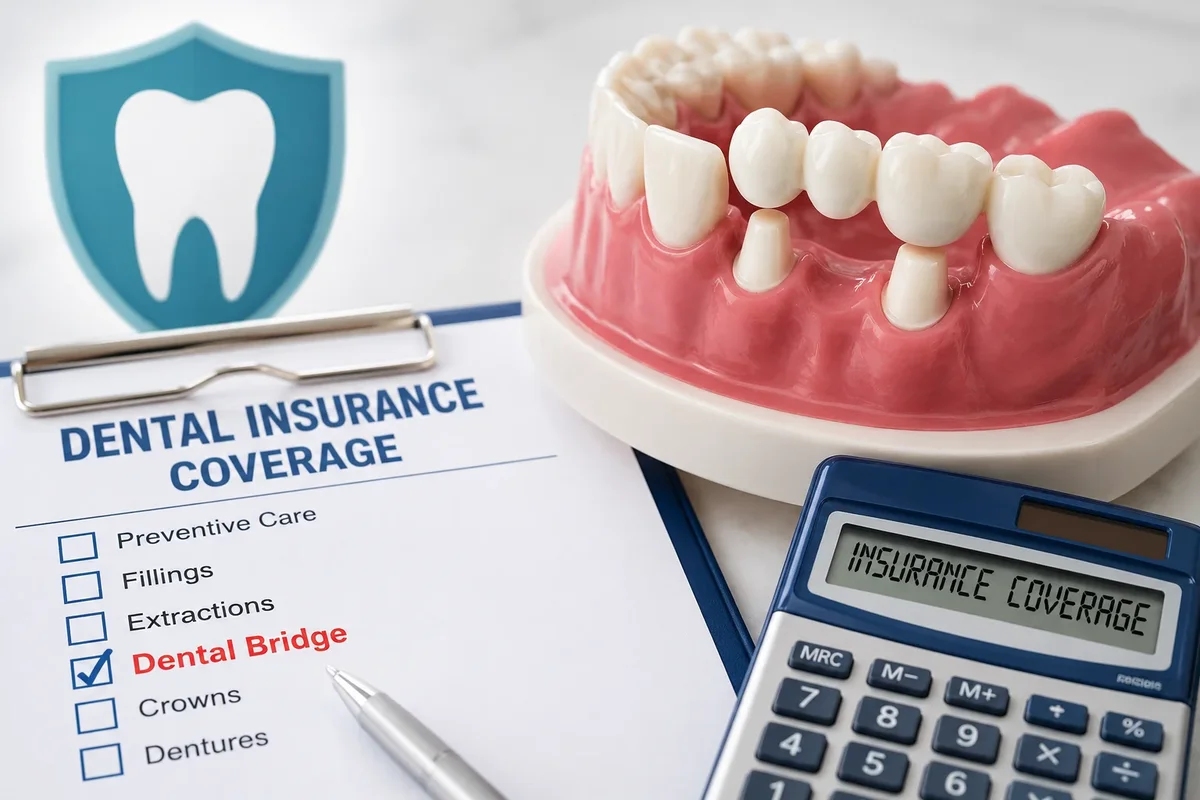
What Should You Do Next? Choosing the Right Treatment and Insurance Strategy
After learning about treatment options, costs, procedures, risks, and dental bridge insurance coverage, the final step is deciding how to move forward. Many patients spend weeks researching online but still feel uncertain because every situation is different. The most effective approach is to combine reliable information with a personalized dental evaluation and a careful review of your insurance benefits. This allows you to choose a treatment plan that supports both your oral health and your financial circumstances.
While understanding dental bridge insurance coverage is valuable, insurance should be viewed as a tool that helps manage eligible treatment expenses rather than the factor that determines which procedure you receive. Your long-term oral health, the condition of your supporting teeth, your bite, your gum health, and your treatment goals should always guide the final decision.
Step 1: Schedule a Comprehensive Dental Examination
The first practical step is arranging a comprehensive examination with an experienced dentist. During this appointment, your dentist will assess:
- The location and number of missing teeth.
- The condition of neighboring teeth.
- Your gum health.
- Your bite alignment.
- Bone support.
- Your overall oral health.
This examination forms the foundation of every treatment recommendation. Even excellent dental bridge insurance coverage cannot determine whether a bridge is clinically appropriate. Only a complete professional assessment can answer that question.
Step 2: Review All Suitable Treatment Options
A bridge is only one possible solution for replacing missing teeth. Depending on your individual circumstances, your dentist may also discuss dental implants, removable partial dentures, or other restorative approaches.
Rather than asking, “Which treatment does my insurance cover best?” consider asking, “Which treatment best supports my long-term oral health?” Once the most appropriate clinical solution has been identified, you can then evaluate how dental bridge insurance coverage or other insurance benefits contribute to the financial aspect of care.
Questions Worth Discussing During Your Consultation
Preparing questions before your appointment can help you make a more informed decision. Examples include:
- Why is a bridge recommended for my situation?
- Would another restorative option provide advantages?
- How long is the expected treatment process?
- Will additional procedures be needed?
- How should I maintain the restoration?
- How does my insurance apply to the proposed treatment?
These discussions provide valuable context that cannot be obtained from insurance documents alone.
Step 3: Understand Your Insurance Benefits
Before committing to treatment, review your insurance policy carefully. Although many patients focus only on reimbursement percentages, several other factors influence the final financial outcome.
Review:
- Waiting periods.
- Annual maximum benefits.
- Deductibles.
- Coinsurance percentages.
- Provider network requirements.
- Replacement frequency limitations.
If any part of your policy is unclear, contact your insurance company directly. Understanding dental bridge insurance coverage before treatment begins is much easier than resolving questions after the procedure has already been completed.
Step 4: Request a Written Treatment Plan
A detailed written treatment plan benefits both you and your insurance provider. It outlines the recommended procedures, explains why treatment is appropriate, and often includes estimated fees that can be reviewed before scheduling appointments.
Many dental clinics can also prepare documentation that supports a pre-treatment insurance estimate. While this estimate does not guarantee reimbursement, it provides a useful financial overview based on your current insurance policy.
Step 5: Consider Long-Term Value Instead of Immediate Cost
One of the most common mistakes patients make is comparing treatment options based only on today’s cost. Although affordability matters, long-term value should also be considered. Maintenance requirements, durability, oral hygiene responsibilities, future treatment flexibility, and expected function all contribute to the overall value of restorative dentistry.
Even when dental bridge insurance coverage significantly reduces initial costs, selecting treatment solely because it has the highest reimbursement may not provide the most suitable long-term outcome.
Step 6: Develop a Financial Plan
If insurance does not cover every eligible expense, discuss payment arrangements before treatment begins. Some clinics offer installment options or other payment solutions that help patients manage remaining costs after insurance benefits have been applied.
Planning ahead reduces financial stress and allows you to focus on your treatment rather than unexpected expenses.
Why Personalized Advice Is So Important
Online articles—including this guide—provide general educational information, but they cannot evaluate your oral health. Every patient’s clinical situation is unique. Two individuals with similar missing teeth may receive different treatment recommendations because of differences in gum health, bone support, bite relationships, or the condition of neighboring teeth.
This is why professional evaluation remains essential even after thoroughly researching dental bridge insurance coverage. A personalized examination ensures that your treatment recommendation is based on clinical findings instead of general assumptions.
Working With an Experienced Dental Team
If you are considering restorative treatment, choosing an experienced dental provider allows you to receive individualized guidance throughout the entire process. During a consultation at Redent Klinik, your dentist can evaluate your oral condition, explain whether a bridge is appropriate, compare alternative treatment options, discuss expected maintenance, and provide documentation that may assist with insurance review when applicable.
Having both clinical recommendations and financial information available before treatment begins makes decision-making significantly easier.
Making Your Decision with Confidence
The purpose of researching dental bridge insurance coverage is not simply to reduce costs—it is to make informed decisions that protect your oral health for years to come. By combining a comprehensive examination, a personalized treatment plan, realistic financial planning, and a clear understanding of your insurance policy, you can move forward with greater confidence.
Every treatment decision should balance clinical suitability, comfort, long-term maintenance, financial considerations, and your personal goals. Taking the time to evaluate each of these factors before beginning treatment is one of the best investments you can make in your future oral health.
Final Checklist Before Scheduling Treatment
- Schedule a comprehensive dental examination.
- Confirm whether a bridge is the most appropriate treatment.
- Review all suitable alternatives.
- Verify your dental bridge insurance coverage directly with your insurance provider.
- Request a written treatment plan and pre-treatment estimate if available.
- Discuss financing options if insurance does not cover all eligible expenses.
- Understand the long-term maintenance requirements before making your final decision.
What to check next: Before scheduling your procedure, confirm your insurance benefits, deductible, annual maximum, waiting period, and network requirements. Request a personalized consultation whenever you need guidance about treatment suitability, expected maintenance, or the financial implications of dental bridge insurance coverage. A professional evaluation will help ensure that your final decision is based on your individual oral health needs rather than general information alone.
Disclosure: this page may contain affiliate links. We may earn a commission if you use them, at no extra cost to you.