
In today’s highly competitive healthcare environment, dental clinic ads are no longer optional—they are essential. Patients no longer rely only on word-of-mouth or passing by a clinic on the street. Instead, they search online, compare options, read reviews, and make decisions within minutes. If your clinic is not visible at the exact moment a potential patient is searching, you are effectively invisible. This is where well-structured dental clinic ads become a powerful growth engine 🦷📈.
At their core, dental clinic ads are paid or strategic promotional efforts designed to place your practice in front of the right audience at the right time. Unlike generic advertising, modern dental clinic ads focus on intent-driven marketing. This means reaching people who are actively searching for dental services such as implants, cosmetic dentistry, teeth whitening, or emergency care. When done correctly, these ads do not feel intrusive; instead, they feel helpful and timely.
One of the biggest advantages of dental clinic ads is measurability. Traditional marketing methods like billboards or flyers offer little insight into performance. With digital dental clinic ads, you can track impressions, clicks, calls, form submissions, and even booked appointments. This data-driven approach allows clinics to continuously optimize campaigns, eliminate waste, and focus budgets on what actually converts into real patients 💡.
Another critical benefit of dental clinic ads is trust-building. Patients are naturally cautious when choosing healthcare providers. Ads that highlight certifications, patient testimonials, before-and-after results, and clear messaging help establish credibility quickly. Referencing authoritative organizations such as the
American Dental Association further strengthens trust and reassures patients that your clinic follows recognized professional standards.
Dental clinic ads also play a vital role in local visibility. Most dental searches are location-based, such as “dentist near me” or “best dental clinic in my city.” Properly configured dental clinic ads ensure your practice appears prominently in local searches, maps, and social platforms. This is especially important for clinics aiming to dominate a specific geographic area rather than compete nationally 🌍.
From a strategic perspective, dental clinic ads allow precise audience targeting. You can define who sees your ads based on location, age, interests, search behavior, and even previous interactions with your website. For example, someone who visited your implant page but did not book an appointment can later be re-engaged through remarketing dental clinic ads. This level of precision dramatically increases conversion rates compared to untargeted advertising.
Cost efficiency is another misunderstood aspect. Many clinic owners assume dental clinic ads are expensive. In reality, when campaigns are optimized correctly, the cost per patient acquisition is often far lower than traditional marketing. Even a modest budget can generate consistent patient flow if keywords, ad copy, and landing pages are aligned with patient intent. The key is not spending more—but spending smarter 💰.
Equally important is the patient experience after the click. Dental clinic ads should always lead to clear, fast, and mobile-friendly pages that encourage action. Whether it’s calling the clinic, filling out a form, or visiting a contact page like the
Redent Klinik Contact Page, the journey must be seamless. Ads without optimized landing experiences often fail, regardless of budget or visibility.
In summary, dental clinic ads are not just about promotion—they are about connection. They connect patients with solutions, clinics with growth opportunities, and marketing budgets with measurable outcomes. When aligned with ethical standards, patient-focused messaging, and long-term strategy, dental clinic ads become one of the most reliable tools for sustainable clinic growth 🚀.
Why Dental Clinic Ads Are Essential for Modern Dental Practices
The dental industry has changed dramatically over the last decade. Patients are more informed, more selective, and more digitally active than ever before. In this environment, dental clinic ads are not simply a marketing option—they are a foundational necessity for any clinic that wants to grow, compete, and remain relevant. Clinics that rely only on referrals or organic visibility often struggle to maintain consistent patient flow, especially in competitive urban areas 🏙️.
Dental clinic ads bridge the gap between patient intent and immediate action. When someone experiences tooth pain, considers cosmetic improvements, or searches for a new dentist, they usually turn to Google or social media first. Clinics running well-structured dental clinic ads appear exactly at these high-intent moments, making them far more likely to convert searches into booked appointments.
The Shift From Traditional Marketing to Digital Dental Clinic Ads
Traditional dental marketing methods—such as newspaper ads, radio spots, or printed flyers—once played a central role. Today, their effectiveness has significantly declined. Patients rarely make healthcare decisions based on offline promotions alone. In contrast, dental clinic ads in digital environments offer immediate visibility, real-time optimization, and measurable results 📊.
With digital dental clinic ads, clinics can instantly adjust messaging, targeting, and budgets based on performance data. This flexibility allows practices to respond quickly to seasonal demand, new services, or changes in patient behavior. Traditional advertising simply cannot offer this level of control or responsiveness.
Patient Behavior and the Role of Dental Clinic Ads
Modern patients behave differently than previous generations. They research extensively, read reviews, compare clinics, and often visit multiple websites before making contact. Dental clinic ads act as the first touchpoint in this journey. A well-written ad can position your clinic as professional, trustworthy, and patient-focused before the user even visits your website.
Importantly, dental clinic ads are not just about attracting clicks—they are about shaping perception. Ads that highlight advanced technology, experienced dentists, gentle care, or international standards help patients feel confident in their choice. This trust-building effect is crucial in healthcare marketing, where emotional reassurance plays a major role 😊.
Visibility at the Exact Moment of Need
One of the strongest arguments for dental clinic ads is timing. Organic SEO can take months to deliver results, while dental clinic ads provide immediate exposure. When someone searches for “emergency dentist” or “dental implants near me,” ads appear at the very top of the page. This prime placement captures attention at the precise moment the patient is ready to act.
Without dental clinic ads, even the best-designed website may never be seen. Visibility is the first step toward conversion, and ads ensure that your clinic is visible when it matters most.
Competitive Advantage Through Dental Clinic Ads
Competition among dental practices is intense, particularly in metropolitan areas and popular medical tourism destinations. Clinics that invest in dental clinic ads gain a clear competitive advantage by consistently appearing above competitors who rely only on organic traffic. Over time, this visibility reinforces brand recognition and patient familiarity.
Dental clinic ads also allow practices to promote specific high-value services such as implants, veneers, or orthodontics. By focusing ads on profitable treatments, clinics can strategically increase revenue while still providing valuable patient care.
Building Authority and Trust Online
Authority is critical in healthcare. Dental clinic ads that reference professional standards, modern facilities, and ethical practices help establish credibility. Linking out to respected organizations like the
American Dental Association reinforces professionalism and signals trustworthiness to both users and search engines.
Over time, consistent dental clinic ads combined with positive patient experiences create a strong digital reputation. This reputation leads to higher click-through rates, lower advertising costs, and better overall campaign performance.
Long-Term Sustainability With Dental Clinic Ads
Some clinic owners worry that advertising creates dependency. In reality, dental clinic ads support long-term sustainability when used strategically. Ads generate data—valuable insights into patient preferences, behavior, and conversion patterns. This data can then inform SEO strategies, website improvements, and service development.
When integrated with strong landing pages and clear contact options—such as directing users to a clinic’s contact page—dental clinic ads become part of a holistic growth system rather than a short-term fix. The result is predictable patient acquisition and stable clinic growth 🌱.
In conclusion, dental clinic ads are essential because they align with how patients search, decide, and act today. They provide immediate visibility, measurable ROI, competitive advantage, and trust-building benefits that no modern dental practice can afford to ignore. Clinics that embrace dental clinic ads position themselves not just to survive—but to lead in an increasingly digital healthcare landscape.
Understanding Your Target Audience Before Running Dental Clinic Ads
One of the most common reasons dental clinic ads fail is not budget, platform choice, or competition—it is a lack of audience understanding. Before spending even a single dollar, a dental clinic must clearly identify who the ideal patient is, what problem they are trying to solve, and how they search for solutions. Dental clinic ads are only effective when they speak directly to the right audience with the right message 🎯.
Every dental practice serves multiple patient segments, but not all segments should be targeted in the same way. Families, cosmetic dentistry patients, implant seekers, and emergency cases all have different motivations, fears, and decision-making processes. Successful dental clinic ads are built around these differences rather than using generic messaging.
Defining Patient Personas for Dental Clinic Ads
A patient persona is a semi-fictional representation of your ideal patient based on real data and behavior. Creating personas allows dental clinic ads to be precise, relevant, and emotionally engaging. For example, a patient seeking dental implants is usually motivated by long-term function and aesthetics, while an emergency patient prioritizes speed and pain relief.
When creating personas for dental clinic ads, consider factors such as age, location, income level, dental anxiety, and previous treatment history. These details influence how ads should be written, what offers are highlighted, and which platforms are used. Ads that feel personal consistently outperform generic campaigns 😊.
Intent-Based Segmentation
Intent is one of the most powerful concepts in dental marketing. Dental clinic ads should be segmented based on whether the patient is researching, comparing, or ready to book. Someone searching “best cosmetic dentist” is in a different stage than someone searching “book dentist appointment today.”
By aligning dental clinic ads with intent, clinics avoid wasted spend and increase conversion rates. High-intent ads should focus on clear calls to action, while research-stage ads should educate and build trust.
Geographic Targeting and Local Behavior
Most dental services are local by nature. Understanding local behavior is essential when running dental clinic ads. Patients typically choose clinics within a short driving distance, especially for routine or emergency care. Ads must reflect local language nuances, location-based keywords, and proximity benefits.
Dental clinic ads that include city names, neighborhood references, and local landmarks perform significantly better in search and social campaigns. This local relevance reassures patients that the clinic is accessible and familiar 🗺️.
Mobile vs Desktop User Behavior
Audience behavior also varies by device. Mobile users often search urgently and expect fast results, while desktop users tend to research more thoroughly. Dental clinic ads should account for this difference by using click-to-call extensions for mobile users and detailed landing pages for desktop traffic.
Ignoring device behavior leads to mismatched user experiences, which lowers ad effectiveness even if targeting is correct.
Emotional Triggers in Dental Decision-Making
Dental decisions are emotional. Fear, embarrassment, pain, and confidence all play a role. Effective dental clinic ads address these emotions directly. For example, phrases that emphasize comfort, gentle care, or judgment-free treatment help reduce anxiety and increase trust.
Understanding emotional triggers allows dental clinic ads to resonate on a deeper level. Patients are far more likely to click ads that make them feel understood rather than pressured 😌.
Using Data to Refine Dental Clinic Ads Over Time
Audience understanding is not a one-time task—it is an ongoing process. Dental clinic ads generate valuable data such as search terms, click behavior, and conversion paths. Analyzing this data reveals which audiences respond best and which messages underperform.
Over time, clinics can refine dental clinic ads by excluding irrelevant audiences, increasing bids for high-converting segments, and adjusting messaging based on real-world performance. This continuous improvement cycle is what separates profitable campaigns from wasted spend.
Aligning Ads With the Patient Journey
Every patient goes through a journey: awareness, consideration, and action. Dental clinic ads should support each stage rather than focusing only on immediate bookings. Educational ads build awareness, comparison-focused ads support consideration, and strong calls to action drive appointments.
When this journey is respected, dental clinic ads feel helpful rather than aggressive—and that leads to better long-term results 🚀.
In summary, understanding your target audience is the foundation of successful dental clinic ads. Without it, even the best platforms and budgets will fail. With it, ads become precise, empathetic, and highly effective tools for sustainable clinic growth.
Google Ads for Dentists: How Dental Clinic Ads Work in Search
Among all digital marketing channels, Google Search remains the most powerful platform for dental clinic ads. The reason is simple: Google captures intent. When someone types a search query related to dental care, they are actively looking for a solution. Dental clinic ads on Google allow practices to appear at the very top of search results exactly when potential patients are ready to take action 🦷🔍.
Unlike social media, where users are browsing passively, Google Search users have a specific goal. This makes dental clinic ads in search particularly effective for driving calls, appointment requests, and consultations. Understanding how these ads work—and how to structure them correctly—is essential for any modern dental practice.
The Core Mechanics of Google Search Dental Clinic Ads
Google Search dental clinic ads operate on a keyword-based auction system. Clinics bid on keywords that potential patients search for, such as service-based or location-based queries. When a user enters a search, Google evaluates all eligible dental clinic ads based on bid amount, relevance, and quality score.
Importantly, the highest bidder does not automatically win. Google prioritizes ads that are most relevant and useful to the searcher. This means well-written dental clinic ads with strong relevance and good landing page experiences can outperform competitors with higher budgets 💡.
Keyword Intent and Match Types
Not all keywords perform equally. Dental clinic ads must focus on high-intent keywords—queries that indicate a strong likelihood of booking. These often include service-specific searches combined with location indicators.
Google also offers different match types, allowing clinics to control how closely searches must match their keywords. Using the correct match types ensures dental clinic ads appear for relevant searches without wasting budget on unrelated traffic.
Ad Copy That Converts Searchers Into Patients
Ad copy is the first impression a clinic makes. Effective dental clinic ads use clear, patient-focused language that addresses needs directly. Headlines should highlight services, benefits, and location, while descriptions reinforce trust and ease of booking.
Strong dental clinic ads avoid vague promises and instead emphasize clarity: experienced dentists, modern technology, comfortable care, and easy appointment scheduling. The goal is to reduce hesitation and encourage immediate action 😊.
Using Ad Extensions to Boost Performance
Google offers ad extensions that significantly improve dental clinic ads. These include call extensions, location extensions, sitelinks, and structured snippets. Extensions provide additional information and make ads more prominent in search results.
For example, call extensions allow mobile users to contact the clinic instantly, while location extensions help patients find nearby practices. Ads with extensions typically achieve higher click-through rates and better overall performance.
Landing Pages and the Role They Play in Dental Clinic Ads
A common mistake in dental clinic ads is sending traffic to generic homepages. Search ads should always direct users to focused landing pages that match the intent of the keyword. If the ad promotes implants, the landing page should be specifically about implant services.
Google evaluates landing page experience when determining ad rankings. Pages that load quickly, display clearly on mobile devices, and guide users toward a single action perform best. Optimized landing pages lower costs and increase conversion rates for dental clinic ads 🚀.
Budget Control and Cost Efficiency in Search Ads
One of the biggest advantages of dental clinic ads on Google is budget control. Clinics can set daily limits, adjust bids by location or device, and pause campaigns at any time. This flexibility makes search ads accessible even for smaller practices.
Costs vary by market and competition, but well-managed dental clinic ads often deliver strong returns. By focusing on high-converting keywords and excluding irrelevant searches, clinics maximize efficiency without overspending.
Tracking Conversions and Measuring Success
Success in dental clinic ads is measured by actions, not clicks. Google Ads allows clinics to track phone calls, form submissions, and appointment requests. This data shows which keywords and ads generate real patients.
Over time, conversion data helps refine campaigns, eliminate underperforming elements, and scale what works. Clinics that actively optimize their dental clinic ads consistently outperform those that “set and forget” their campaigns 📈.
Why Google Search Remains a Cornerstone of Dental Clinic Ads
While new platforms emerge constantly, Google Search remains unmatched for intent-driven marketing. Dental clinic ads in search connect clinics with patients at the moment of need, offering immediacy, precision, and measurable outcomes.
When structured correctly, Google Search dental clinic ads deliver predictable patient acquisition and long-term growth. They are not just advertisements—they are a direct bridge between patient demand and professional care.
In summary, understanding how dental clinic ads work in Google Search empowers clinics to compete effectively, control costs, and attract patients who are already looking for dental solutions. Mastery of search advertising is one of the most valuable skills a modern dental practice can develop.
Social Media Dental Clinic Ads: Facebook and Instagram Strategies
While search-based campaigns capture active intent, social platforms play a different but equally powerful role in dental clinic ads. Facebook and Instagram allow dental practices to reach potential patients before they actively search for a dentist. These platforms are ideal for awareness, trust-building, and long-term patient acquisition, making them a critical pillar of a balanced dental marketing strategy 📱🦷.
Social media dental clinic ads focus less on immediate urgency and more on visibility, familiarity, and emotional connection. Patients may not need a dentist today, but repeated exposure to helpful, professional ads ensures your clinic is the first name they remember when the need arises.
Why Facebook and Instagram Work for Dental Clinic Ads
Facebook and Instagram are uniquely effective for dental clinic ads because of their advanced targeting capabilities. Clinics can target users based on location, age, interests, family status, behaviors, and even past interactions with the clinic’s website or social profiles.
This allows dental clinic ads to reach highly specific audiences, such as parents with children, adults interested in cosmetic treatments, or individuals who recently searched for health-related services. The result is higher relevance and stronger engagement compared to broad, untargeted advertising.
Visual Storytelling in Dental Clinic Ads
Dentistry is highly visual, which makes Instagram and Facebook ideal platforms. Before-and-after images, short educational videos, clinic tours, and dentist introductions all perform exceptionally well. These visuals humanize the clinic and reduce patient anxiety.
Effective dental clinic ads on social media focus on storytelling rather than selling. Showing real outcomes, friendly staff, and comfortable environments helps patients imagine themselves choosing your clinic 😊.
Audience Funnel Strategy for Social Dental Clinic Ads
Unlike search ads, social dental clinic ads work best when structured as a funnel. The first stage focuses on awareness, introducing the clinic and its values. The second stage builds consideration through testimonials, explanations, and educational content. The final stage encourages action through appointment-focused ads.
By aligning dental clinic ads with this funnel approach, clinics avoid pushing appointments too aggressively and instead nurture trust over time.
Retargeting and Remarketing Power
One of the strongest advantages of social dental clinic ads is retargeting. Users who visited your website, watched your videos, or interacted with your posts can be shown follow-up ads tailored to their interests.
For example, someone who viewed an implant-related page can later see an ad explaining the implant process in simple terms. This personalized approach significantly increases conversion rates and lowers overall ad costs 🔁.
Ad Formats That Perform Best for Dental Clinic Ads
Different ad formats serve different goals. Image ads are excellent for quick awareness, video ads build trust and engagement, and carousel ads allow clinics to showcase multiple services or benefits in a single campaign.
Short-form video content has become especially effective for dental clinic ads. Videos explaining procedures, addressing common fears, or answering patient questions tend to receive high engagement and strong algorithm support.
Messaging That Resonates on Social Platforms
Social media users are not actively searching for dental care, so messaging must be softer and more empathetic. Dental clinic ads should focus on benefits, comfort, and confidence rather than urgency or technical details.
Language that reassures patients—such as gentle care, modern techniques, and friendly staff—performs far better than purely promotional messaging. Emotion-driven copy builds familiarity and trust over time 🤍.
Consistency and Brand Recognition
Consistency is essential for success with social dental clinic ads. Repeated exposure to similar visuals, colors, and messaging helps build brand recognition. Over time, this familiarity reduces hesitation when patients finally decide to book.
Clinics that maintain consistent branding across dental clinic ads often experience lower costs and higher engagement because users already recognize and trust the brand.
Measuring Success in Social Media Dental Clinic Ads
Success metrics for social dental clinic ads differ from search ads. While direct bookings matter, engagement metrics such as video views, comments, shares, and profile visits are also valuable indicators.
Tracking these metrics helps clinics understand which messages resonate and which audiences respond best. Over time, this insight allows for continuous optimization and stronger campaign performance 📊.
In conclusion, Facebook and Instagram are indispensable platforms for dental clinic ads. They allow clinics to build trust, stay visible, and nurture patient relationships long before treatment is needed. When combined with search advertising, social dental clinic ads create a powerful, sustainable patient acquisition system that supports long-term clinic growth.
Local SEO and Dental Clinic Ads: Dominating Your City
For most practices, success with dental clinic ads depends on one critical factor: local visibility. Dentistry is inherently location-based. Patients almost always choose a clinic within their city or nearby area, especially for routine care and emergencies. This makes the combination of Local SEO and dental clinic ads one of the most powerful strategies for dominating a specific geographic market 🏙️🦷.
While national visibility may sound appealing, it rarely translates into real patients. Localized dental clinic ads, on the other hand, connect your practice with people who can actually visit your clinic. When Local SEO and paid advertising work together, clinics gain consistent exposure across search results, maps, and social platforms.
How Local SEO Supports Dental Clinic Ads
Local SEO focuses on optimizing your online presence so your clinic appears in location-based searches. This includes Google Business Profile optimization, local keywords, reviews, and consistent contact information. When dental clinic ads are layered on top of strong Local SEO, the result is amplified visibility.
Search engines favor businesses with clear local relevance. Dental clinic ads that align with optimized local pages achieve higher relevance scores, better ad placements, and lower costs. In short, Local SEO makes dental clinic ads more efficient and more profitable 💡.
Google Maps and Local Pack Visibility
One of the most valuable placements for dental practices is the local map pack. Appearing here dramatically increases calls and direction requests. Dental clinic ads can support this visibility by driving engagement and brand recognition, which indirectly strengthens local signals.
Clinics that appear both in ads and organic local results create a sense of dominance and trust. Patients are far more likely to choose a clinic they see repeatedly across multiple local placements.
Location-Based Targeting in Dental Clinic Ads
Precise geographic targeting is essential for controlling costs and maximizing relevance. Dental clinic ads should be configured to show only within realistic service areas. Targeting users who live, work, or regularly travel near your clinic ensures that ad spend is not wasted.
Advanced location targeting also allows clinics to adjust bids based on proximity. For example, higher bids can be applied to users within a short radius, where conversion likelihood is highest. This level of control gives dental clinic ads a significant advantage over traditional local advertising 📍.
Using Local Keywords and Language
Local keywords play a major role in ad performance. Including city names, neighborhoods, and local phrases helps dental clinic ads feel relevant and trustworthy. Patients respond better to ads that clearly reflect their location and community.
Beyond keywords, local language matters. Messaging that reflects local culture, expectations, and common concerns increases engagement and builds familiarity.
Reviews, Reputation, and Dental Clinic Ads
Online reviews are a powerful trust signal in local healthcare decisions. Dental clinic ads benefit greatly from strong review profiles because patients often research a clinic immediately after seeing an ad. A high rating reinforces confidence and reduces hesitation.
Encouraging satisfied patients to leave reviews strengthens both Local SEO and the effectiveness of dental clinic ads. Ads that lead to profiles with positive feedback convert at much higher rates 😊.
Consistency Across Listings and Ads
Consistency is critical for local dominance. Your clinic’s name, address, phone number, and branding must be identical across your website, local listings, and dental clinic ads. Inconsistencies confuse search engines and users alike.
When all local signals align, dental clinic ads perform better because search platforms can clearly identify and trust the business being promoted.
Connecting Ads to Local Landing Pages
Local dental clinic ads should always direct users to locally optimized landing pages. These pages should clearly display location information, directions, contact details, and service availability. This reassures patients that the clinic is nearby and accessible.
Strong local landing pages also improve quality scores, lowering the cost of dental clinic ads and increasing conversion rates 🚀.
Why Local Focus Wins in Dental Clinic Ads
Trying to reach everyone often means reaching no one effectively. Clinics that focus their dental clinic ads on dominating a single city or region consistently outperform those with broad, unfocused targeting.
Local dominance leads to brand recognition, word-of-mouth amplification, and long-term patient loyalty. Over time, dental clinic ads combined with Local SEO create a self-reinforcing growth cycle that is difficult for competitors to disrupt.
In conclusion, Local SEO is not separate from dental clinic ads—it is their foundation. Clinics that master local targeting, reputation management, and location-based messaging position themselves as the obvious choice in their city. This local-first approach is one of the most reliable paths to sustainable dental practice growth 🌱.
Budget Planning and ROI Tracking for Dental Clinic Ads
Running successful dental clinic ads is not about spending the most money—it is about spending money intelligently. Budget planning and return on investment (ROI) tracking are what separate profitable advertising campaigns from expensive experiments. Dental clinics that approach ads with a clear financial strategy gain predictable patient flow, stable growth, and full control over marketing performance 💰📊.
Many clinics either underinvest due to fear of wasted spend or overspend without tracking results properly. Both approaches lead to disappointment. Dental clinic ads work best when budgets are aligned with clinic goals, service priorities, and measurable outcomes.
Setting Realistic Budgets for Dental Clinic Ads
The first step in budget planning is understanding what you want to achieve. Are dental clinic ads meant to increase overall patient volume, promote high-value treatments, or fill appointment gaps? Each goal requires a different budget structure.
Instead of asking “How much should I spend?”, clinics should ask “How much is a new patient worth?”. Once the lifetime value of a patient is understood, it becomes much easier to justify ad spend and set realistic expectations for dental clinic ads.
Daily vs Monthly Budget Allocation
Most platforms allow both daily and monthly budgeting. Daily budgets provide flexibility and control, while monthly budgets help stabilize long-term planning. Dental clinic ads benefit from steady, consistent spend rather than short bursts of high investment.
Consistency allows algorithms to learn, optimize, and deliver better results over time. Frequently turning dental clinic ads on and off disrupts performance and increases costs.
Cost Per Lead and Cost Per Patient Metrics
Clicks and impressions are not success metrics for dental clinic ads. The most important indicators are cost per lead and cost per patient. A lead may be a phone call, form submission, or appointment request—but not all leads convert into patients.
Tracking how many leads become actual patients reveals the true effectiveness of dental clinic ads. This data helps clinics identify which campaigns drive real revenue rather than superficial engagement.
Understanding Conversion Quality
Not all conversions are equal. A call lasting several minutes is usually more valuable than a short inquiry. Dental clinic ads should be evaluated based on lead quality, not just quantity.
High-quality leads lower overall acquisition costs because staff time is used efficiently and appointment schedules are filled with motivated patients 😊.
Tracking ROI Accurately in Dental Clinic Ads
ROI tracking answers a simple but critical question: are dental clinic ads generating more revenue than they cost? To answer this accurately, clinics must connect ad data with real-world outcomes.
This often involves tracking calls, forms, booked appointments, completed treatments, and revenue generated. Without this connection, dental clinic ads may appear successful on the surface while actually underperforming financially.
Attribution Models and Their Importance
Patients rarely convert after a single interaction. They may see multiple ads, visit the website several times, and return later to book. Attribution models help assign value to each touchpoint in this journey.
Understanding attribution prevents underestimating the impact of dental clinic ads that assist conversions indirectly. Awareness and consideration campaigns often play a vital role even if they are not the final click.
Optimizing Spend Based on Performance Data
One of the biggest advantages of dental clinic ads is optimization. Campaigns generate constant data that reveals what works and what does not. Budgets should be shifted toward high-performing services, keywords, locations, and audiences.
Poorly performing ads should not be immediately abandoned—instead, they should be tested, refined, or repositioned. Small improvements in targeting or messaging can dramatically change ROI 📈.
Scaling Dental Clinic Ads Without Losing Profitability
Scaling does not mean simply increasing budgets. Profitable scaling requires maintaining or improving ROI as spend grows. This is achieved by expanding into new keywords, audiences, or platforms while preserving performance benchmarks.
Dental clinic ads that scale successfully are built on strong foundations: clear tracking, reliable conversion data, and optimized landing experiences.
When to Increase or Decrease Budget
Budgets should increase when campaigns deliver consistent, profitable results. They should decrease when ROI drops or when operational capacity is limited. There is no benefit in generating leads the clinic cannot handle.
Aligning dental clinic ads with staffing, chair availability, and service capacity ensures growth remains sustainable rather than chaotic 🧩.
Long-Term Financial Planning With Dental Clinic Ads
When budget planning and ROI tracking are done correctly, dental clinic ads become a predictable investment rather than a risk. Clinics can forecast patient acquisition, revenue growth, and marketing costs with confidence.
Over time, this financial clarity allows better decision-making, smarter expansion, and greater resilience during seasonal fluctuations or market changes.
In conclusion, budget planning and ROI tracking transform dental clinic ads from an expense into a strategic growth asset. Clinics that understand their numbers, monitor performance, and optimize continuously gain a decisive advantage in competitive markets—and build a marketing system that supports long-term success 🚀.
Common Mistakes That Make Dental Clinic Ads Fail
Even with strong demand and modern platforms, many dental clinic ads fail to deliver results. This failure is rarely caused by advertising itself, but rather by strategic and operational mistakes. Understanding these common errors helps clinics avoid wasted budgets, poor patient experiences, and disappointing returns. Dental clinic ads are powerful tools—but only when used correctly ⚠️.
Most unsuccessful campaigns share similar patterns. Clinics rush into advertising without preparation, rely on assumptions instead of data, or neglect the patient experience after the click. Identifying and correcting these issues can dramatically improve performance and profitability.
Lack of Clear Strategy in Dental Clinic Ads
One of the most damaging mistakes is running dental clinic ads without a clear objective. Ads launched without defined goals often generate traffic but not patients. Clinics must decide whether ads are meant to increase calls, book consultations, promote specific treatments, or build awareness.
Without strategic clarity, dental clinic ads become scattered and inconsistent. This leads to poor targeting, unclear messaging, and wasted spend. Every campaign should have a single primary goal supported by aligned messaging and landing pages.
Trying to Promote Everything at Once
Another common issue is attempting to advertise all services simultaneously. Dental clinic ads perform best when focused on one service or patient need at a time. Broad campaigns dilute relevance and confuse potential patients.
Targeted ads—such as those focused on cosmetic treatments or emergency care—consistently outperform generic “full-service clinic” messaging.
Poor Targeting and Audience Misalignment
Dental clinic ads fail quickly when shown to the wrong audience. Broad targeting may increase impressions but rarely results in quality leads. Clinics must define geographic boundaries, demographics, and intent signals clearly.
Showing ads outside realistic service areas or to users with low intent leads to low conversion rates and inflated costs. Precision is essential for effective dental clinic ads 🎯.
Ignoring Search Intent
Search intent mismatch is a frequent problem. Ads promoting routine checkups may appear for emergency-related searches, frustrating users and wasting budget. Dental clinic ads must align tightly with what the user is actually searching for.
When intent and messaging align, conversion rates increase and patient satisfaction improves.
Weak Ad Copy and Unclear Messaging
Ad copy is often overlooked or rushed. Dental clinic ads with vague headlines, generic promises, or overly technical language fail to connect emotionally. Patients want clarity, reassurance, and simplicity.
Effective dental clinic ads communicate benefits, not just services. Clear language reduces hesitation and builds immediate trust 😊.
Poor Landing Page Experience
Even the best dental clinic ads will fail if the landing page is weak. Slow load times, confusing layouts, and missing calls to action frustrate users and increase bounce rates.
Landing pages must match the ad’s promise exactly. If an ad promotes implants, the landing page should focus entirely on implants, not general clinic information.
Missing Contact and Conversion Elements
A surprising number of clinics forget to make it easy to take action. Dental clinic ads should always lead to pages with clear phone numbers, forms, and directions.
Every extra step reduces conversion rates. Simplicity drives results 🚀.
Neglecting Tracking and Performance Analysis
Running dental clinic ads without tracking is like treating patients without diagnostics. Without conversion tracking, clinics cannot know what works and what fails.
Many campaigns appear successful based on clicks alone but generate no real patients. Proper tracking connects ads to calls, bookings, and treatments.
Inconsistent Campaign Management
Dental clinic ads require ongoing attention. Campaigns that are launched and ignored quickly decline in performance as competition and behavior change.
Regular optimization—adjusting keywords, budgets, and messaging—is essential to maintain results. Successful clinics treat dental clinic ads as living systems, not one-time setups 🔄.
Unrealistic Expectations and Short-Term Thinking
Some clinics expect immediate, dramatic results. While dental clinic ads can generate fast visibility, optimization takes time. Early data is used for learning and refinement.
Clinics that abandon ads too quickly miss long-term gains. Sustainable success comes from testing, patience, and continuous improvement.
Ignoring the Patient Experience After the Click
Finally, ads do not operate in isolation. Poor phone handling, slow response times, or untrained staff can sabotage even the best dental clinic ads.
When front-desk processes align with advertising efforts, conversion rates increase significantly. Ads bring opportunities—but the clinic experience closes the deal 🤝.
In conclusion, dental clinic ads fail not because advertising does not work, but because of avoidable mistakes. By focusing on strategy, targeting, messaging, tracking, and patient experience, clinics can turn underperforming ads into consistent growth engines. Avoiding these common pitfalls is one of the fastest ways to improve results and protect marketing investment.
How to Optimize Dental Clinic Ads for Long-Term Growth
Achieving short-term results with dental clinic ads is relatively easy, but sustaining growth over months and years requires a deeper, more strategic approach. Long-term success is not about constant spending increases—it is about optimization, consistency, and systemization. Dental clinic ads that are optimized for longevity become predictable growth engines rather than volatile expenses 🚀.
Clinics that think beyond quick wins build advertising systems that improve over time. This means learning from data, refining messaging, strengthening patient experience, and aligning ads with broader business goals.
Building a Data-Driven Optimization Culture
Long-term growth begins with data. Every impression, click, call, and booking generated by dental clinic ads provides insight into patient behavior. Clinics that regularly review this data gain a clear understanding of what patients respond to and why.
Instead of guessing, optimization decisions should be based on performance metrics such as conversion rates, cost per patient, and treatment revenue. Over time, this data-driven approach turns dental clinic ads into increasingly efficient acquisition tools 📊.
Continuous Testing and Refinement
Optimization is never finished. Headlines, descriptions, visuals, and calls to action should be tested regularly. Small changes in wording or layout can produce significant performance improvements.
Dental clinic ads that evolve through testing remain competitive even as market conditions change. Clinics that stop testing eventually see declining results as competitors adapt faster.
Aligning Dental Clinic Ads With Clinic Capacity
Sustainable growth requires balance. Generating more leads than a clinic can handle leads to poor patient experiences and lost trust. Dental clinic ads should be aligned with staffing levels, chair availability, and service capacity.
When capacity is limited, ads can be adjusted to promote specific services, days, or appointment types. This flexibility ensures growth remains controlled and profitable rather than overwhelming 🧩.
Seasonal and Demand-Based Adjustments
Patient demand fluctuates throughout the year. Dental clinic ads should adapt to seasonal trends, holidays, and local events. For example, cosmetic treatments may perform better at certain times, while emergency services peak unexpectedly.
Anticipating these patterns allows clinics to optimize budgets and messaging proactively instead of reacting too late.
Strengthening Brand Through Consistent Dental Clinic Ads
Long-term success depends not only on conversions but also on brand recognition. Consistent visuals, tone, and messaging across dental clinic ads build familiarity. Patients are more likely to choose a clinic they recognize and trust.
Brand-focused dental clinic ads reduce cost over time because familiar brands receive higher engagement and lower resistance. This compounding effect is a key advantage of long-term advertising strategies 🤍.
Integrating Ads With Website and Patient Experience
Dental clinic ads do not exist in isolation. They are part of a broader patient journey that includes website visits, phone interactions, and in-clinic experiences. Optimization must extend beyond ads themselves.
Fast-loading pages, clear service explanations, easy contact options, and responsive staff all increase the effectiveness of dental clinic ads. Improvements in these areas often yield higher returns than increasing ad spend alone.
Feedback Loops Between Ads and Staff
Front-desk teams provide valuable insight into lead quality and patient expectations. Clinics that share feedback between marketing and staff can refine dental clinic ads to attract better-fit patients.
This collaboration improves both conversion rates and patient satisfaction, strengthening long-term outcomes 🤝.
Scaling What Works and Eliminating What Doesn’t
Optimization for growth means focusing resources on proven performers. Campaigns, keywords, and audiences that deliver strong ROI should be scaled carefully. Underperforming elements should be paused or reworked.
Dental clinic ads become more efficient as budgets are concentrated on high-impact areas rather than spread thinly across experiments.
Protecting Performance With Compliance and Ethics
Sustainable growth also requires ethical and compliant advertising. Dental clinic ads must follow healthcare advertising regulations, avoid misleading claims, and respect patient trust.
Ethical practices protect the clinic’s reputation and prevent long-term damage caused by short-term tactics. Trust, once lost, is difficult to regain.
Viewing Dental Clinic Ads as a Long-Term Investment
Clinics that succeed long-term view dental clinic ads as investments, not expenses. Each campaign builds knowledge, brand equity, and data assets that improve future performance.
Over time, optimized dental clinic ads deliver more patients at lower costs, creating a competitive advantage that is difficult to replicate.
In conclusion, optimizing dental clinic ads for long-term growth requires discipline, patience, and continuous improvement. Clinics that embrace data, align ads with operations, invest in brand consistency, and refine patient experience build advertising systems that grow stronger every year. This strategic mindset transforms dental clinic ads into one of the most reliable pillars of sustainable dental practice success 🌱.
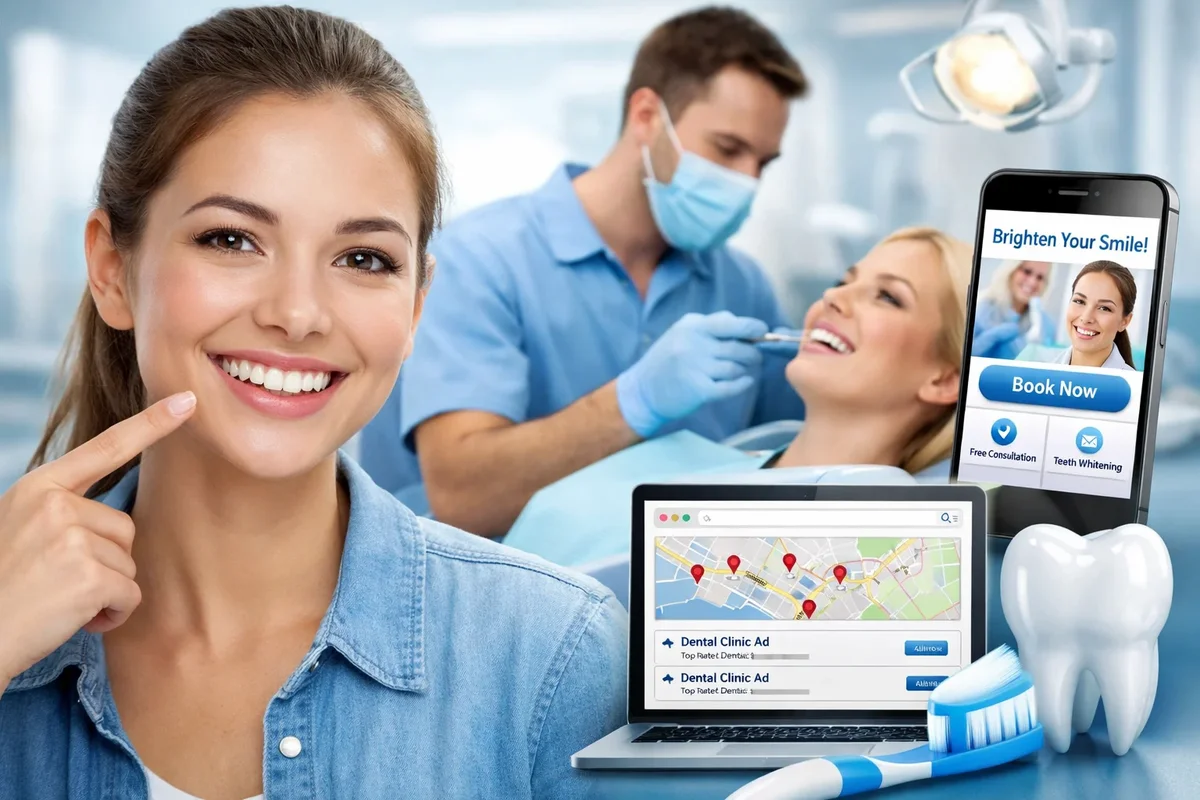
Legal, Ethical, and Compliance Rules in Dental Clinic Advertising
Long-term success with dental clinic ads depends not only on performance and creativity, but also on strict adherence to legal, ethical, and professional standards. Healthcare advertising carries greater responsibility than many other industries because it directly affects patient trust, safety, and decision-making. Dental clinic ads that ignore compliance may generate short-term leads, but they expose clinics to reputational damage, legal risk, and platform penalties ⚖️.
Understanding and respecting advertising rules is not a limitation—it is a competitive advantage. Clinics that advertise transparently and ethically build stronger trust, achieve better long-term results, and maintain stable ad accounts across platforms.
Why Compliance Matters in Dental Clinic Ads
Dental services are classified as healthcare, which means advertising is subject to stricter oversight than general commercial marketing. Search engines, social media platforms, and regulatory bodies closely monitor dental clinic ads for misleading claims, exaggerated results, or unethical messaging.
Non-compliant dental clinic ads may be disapproved, restricted, or permanently banned. Repeated violations can lead to account suspension, making future advertising far more difficult and expensive.
Protecting Patient Trust
Trust is the foundation of healthcare decisions. Dental clinic ads that exaggerate outcomes or hide important information erode patient confidence. Ethical advertising ensures patients feel informed rather than manipulated.
Clinics that prioritize honesty and clarity consistently attract higher-quality patients who are more satisfied and more likely to return 😊.
Truthful Claims and Evidence-Based Messaging
One of the most important rules in dental clinic ads is truthfulness. All claims must be accurate, verifiable, and supported by professional standards. Promising guaranteed results, painless procedures for everyone, or unrealistic transformations is considered misleading.
Effective dental clinic ads focus on benefits without making absolute promises. Phrases that emphasize individualized treatment, professional assessment, and realistic expectations are both compliant and persuasive.
Before-and-After Content Guidelines
Visual comparisons are powerful, but they must be used carefully. Dental clinic ads that include before-and-after imagery should clearly indicate that results vary by patient. Omitting disclaimers or presenting images as guaranteed outcomes violates advertising policies.
Transparency protects both the patient and the clinic from misunderstanding or disappointment.
Platform-Specific Rules for Dental Clinic Ads
Each advertising platform has its own policies governing dental clinic ads. Google requires compliance with healthcare advertising standards, while social platforms monitor content for sensationalism, fear-based messaging, and misleading health claims.
Ads that trigger unnecessary fear, shame, or urgency—such as implying severe consequences for not booking immediately—are often flagged. Ethical dental clinic ads educate and reassure rather than pressure 😌.
Restricted Language and Targeting
Certain language and targeting practices are restricted. Dental clinic ads should avoid targeting users based on sensitive health conditions or making assumptions about a person’s dental health.
Ads must speak broadly and respectfully, allowing patients to self-identify their needs without feeling judged or exposed.
Privacy, Data Protection, and Patient Information
Modern dental clinic ads rely heavily on data, but patient privacy must always come first. Clinics must ensure that tracking, remarketing, and lead collection comply with data protection regulations.
Forms, call tracking, and appointment requests should collect only necessary information and clearly explain how data will be used. Respecting privacy builds trust and reduces legal risk 🔐.
Ethical Targeting and Fair Representation
Ethical dental clinic ads avoid exploiting patient fears or insecurities. Messaging should empower patients with information rather than creating anxiety.
Fair representation also means inclusivity. Ads should reflect diversity and avoid stereotypes, ensuring all patients feel welcome and respected.
Professional Standards and Licensing Accuracy
All credentials, titles, and certifications mentioned in dental clinic ads must be accurate and current. Misrepresenting qualifications—even unintentionally—can result in serious consequences.
Ads should clearly reflect the services the clinic is licensed to provide and avoid implying specialties or endorsements that do not exist.
Consistency With On-Site Content
Claims made in dental clinic ads must match the information presented on the website and in-clinic materials. Inconsistencies raise red flags for both platforms and patients.
Alignment across ads, landing pages, and real-world services ensures credibility and compliance.
Long-Term Benefits of Ethical Dental Clinic Ads
Ethical and compliant dental clinic ads may feel more conservative, but they deliver stronger long-term results. Platforms reward trustworthy advertisers with better performance, and patients reward transparency with loyalty.
Clinics that commit to ethical advertising experience fewer disruptions, lower risk, and more sustainable growth 🌱.
In conclusion, legal and ethical compliance is not optional in dental clinic ads—it is essential. By focusing on truthful messaging, patient respect, privacy protection, and professional integrity, clinics create advertising systems that are not only effective, but also resilient and future-proof. Ethical dental clinic ads protect reputation, strengthen trust, and support lasting success in an increasingly regulated digital landscape.