
One of the first questions many people ask after a dentist recommends a crown is dental crowns does insurance cover. The short answer is that dental insurance may cover part of the cost of a dental crown, but coverage depends on several important factors. These usually include why the crown is needed, the type of dental insurance plan you have, your annual maximum benefit, waiting periods, deductibles, and whether the treatment is considered medically necessary rather than primarily cosmetic. Understanding dental crowns does insurance cover before beginning treatment helps you avoid unexpected expenses and allows you to make a more informed decision about protecting your oral health.
When people search for dental crowns does insurance cover, they are often looking for a simple yes or no answer. In reality, the answer is more detailed. Many insurance providers contribute toward crowns that restore a damaged, weakened, cracked, or heavily filled tooth because these treatments help preserve natural teeth and reduce the likelihood of more extensive procedures later. However, if a crown is requested mainly to improve appearance without a functional or clinical reason, insurance benefits may be limited or unavailable. Every insurance policy has its own rules, so reviewing your benefits before treatment is always worthwhile.
Understanding dental crowns does insurance cover also means knowing that insurance companies often evaluate whether less expensive treatment options could reasonably restore the tooth. If a filling, bonding procedure, or another conservative treatment is appropriate, the insurance company may not approve the full crown benefit. On the other hand, when enough tooth structure has been lost and a restoration is needed to strengthen the remaining tooth, coverage may become more likely. A comprehensive dental examination and appropriate diagnostic images help determine the most suitable treatment recommendation.
Another important point when considering dental crowns does insurance cover is that even when insurance contributes, patients frequently remain responsible for part of the overall treatment cost. Deductibles, annual benefit limits, co-payments, and coinsurance percentages can all affect your final out-of-pocket expenses. In addition, different crown materials, laboratory techniques, and clinical complexity may influence overall treatment fees. Final costs should always be confirmed after a professional examination and individualized treatment planning rather than estimated from general online information.
If you recently broke a tooth, completed root canal treatment, have a large filling that is failing, or notice pain while chewing, you may naturally wonder whether dental crowns does insurance cover applies to your situation. These circumstances often involve restoring both function and strength rather than simply improving appearance. Nevertheless, only your dentist and your insurance provider can determine whether your specific case meets the policy’s coverage requirements. This is why documentation, clinical findings, and treatment planning are important parts of the insurance process.
Patients should also remember that delaying treatment simply because they are unsure about dental crowns does insurance cover may allow a damaged tooth to deteriorate further. Small fractures can become larger, existing fillings may fail, and weakened teeth can become more difficult to restore over time. Although this does not happen in every situation, obtaining an early professional evaluation often provides more treatment options than waiting until symptoms become severe.
It is equally important to understand that insurance decisions are financial determinations rather than direct judgments about the quality or necessity of dental care. A recommendation from your dentist is based on your oral condition, while insurance companies apply policy terms to determine reimbursement. Because of this distinction, a recommended crown may still be the most appropriate treatment even if insurance coverage is partial or unavailable. Knowing how dental crowns does insurance cover works helps set realistic expectations before treatment begins.
If you are comparing treatment providers, ask for a written treatment estimate and, whenever possible, request a pre-treatment benefit review from your insurance company. This can provide a clearer picture of anticipated insurance contributions before treatment starts. Many dental clinics also help patients understand insurance paperwork and explain financing options when appropriate. Having these discussions in advance often reduces uncertainty and allows you to make decisions with greater confidence.
Reliable information is also valuable when researching dental crowns does insurance cover. Professional organizations such as the American Dental Association offer educational resources about restorative dentistry, while an experienced dental team can explain how clinical findings relate to your treatment recommendations. If you are considering treatment abroad or would like an individualized assessment, you can also contact the team through the Redent Klinik Contact Page to discuss your situation and determine which restorative options may be appropriate after a comprehensive examination.
Practical next step: If you are asking dental crowns does insurance cover, schedule a dental examination before making financial decisions. Bring your insurance information to your appointment, request a written treatment plan, ask whether pre-authorization or a benefit estimate is recommended, and review your expected coverage together with your dental provider. This approach helps you understand both your oral health needs and your potential insurance benefits before proceeding with treatment.
Dental Crowns Does Insurance Cover? A Quick Answer
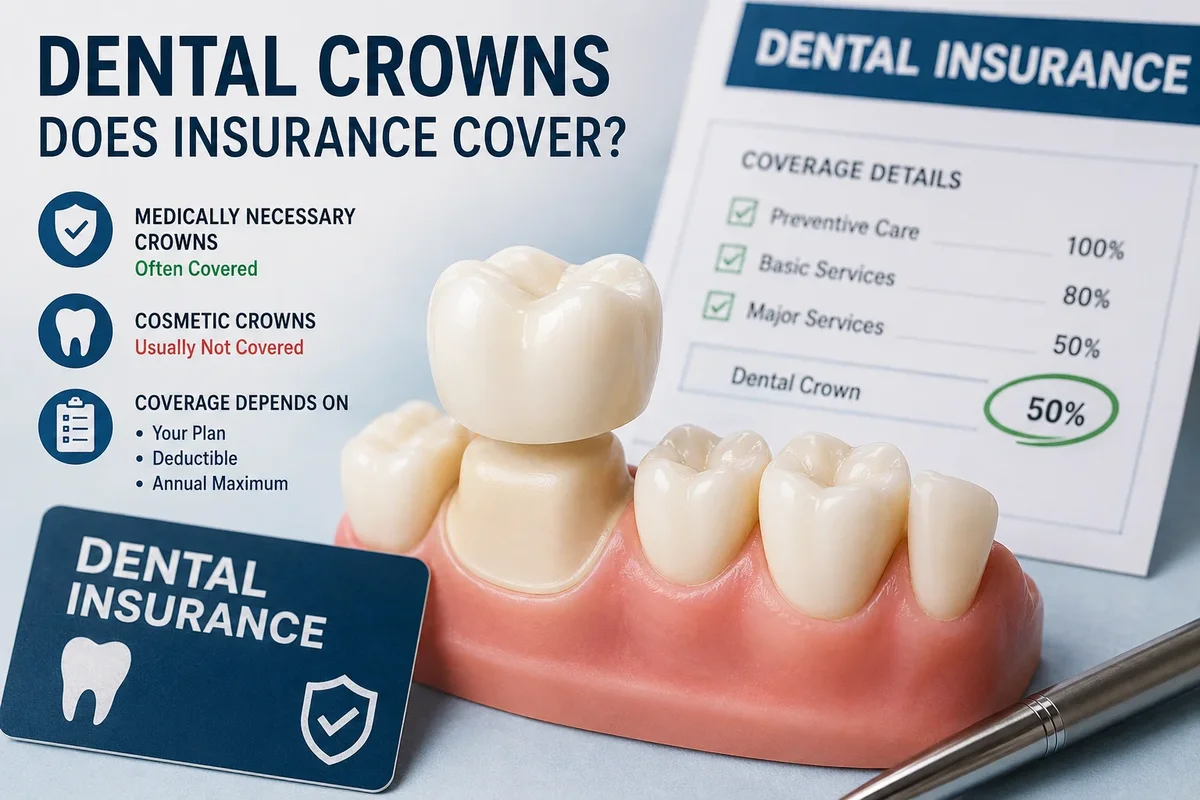
If you are searching for dental crowns does insurance cover, the most accurate answer is that coverage often depends on why the crown is needed, the details of your insurance plan, and your current dental condition. Many dental insurance policies provide partial benefits for crowns when they are considered medically necessary to restore a damaged or weakened tooth. However, the amount covered can vary significantly from one insurer to another, making it important to review your individual policy rather than relying on general estimates.
Understanding dental crowns does insurance cover is about more than simply knowing whether an insurance company will pay. It also helps you understand what treatment may be recommended, why your dentist suggests a crown instead of another restoration, and how to plan financially before beginning treatment. A well-informed decision usually combines clinical advice with a careful review of your insurance benefits.
Why Insurance May Cover a Dental Crown
One of the biggest factors affecting dental crowns does insurance cover is whether the procedure restores the function of a natural tooth rather than improving appearance alone. Insurance companies commonly distinguish between restorative treatment and cosmetic treatment.
A crown may be considered appropriate when it is recommended because of:
- A large cavity that cannot safely support another filling.
- A cracked or fractured tooth.
- A tooth weakened after root canal treatment.
- Extensive wear that affects chewing.
- Replacement of an older crown that has failed.
In these situations, insurance providers may contribute toward treatment because restoring the tooth may help preserve normal chewing function and reduce the likelihood of more extensive dental procedures later.
When Coverage May Be Limited
Although many people ask dental crowns does insurance cover, it is equally important to understand when benefits may be reduced or unavailable.
Coverage may be more limited if:
- The crown is primarily requested for cosmetic improvement.
- The insurance waiting period has not been completed.
- Your annual maximum benefit has already been used.
- The policy excludes specific crown materials.
- The treatment does not meet the insurer’s clinical criteria.
This does not necessarily mean the treatment is unnecessary. Instead, it simply reflects how the insurance policy applies its own reimbursement rules.
Insurance Approval Does Not Always Equal Treatment Necessity
Many patients mistakenly believe that insurance determines whether treatment is needed. In reality, your dentist evaluates your oral health based on clinical findings, diagnostic images, symptoms, and the long-term stability of the tooth.
The question of dental crowns does insurance cover is separate from whether a crown represents the most appropriate treatment. An insurance company decides financial reimbursement, while your dentist determines which restoration best protects your tooth.
Example Scenario
Imagine two patients each require a crown.
The first patient has a cracked molar after years of chewing pressure. Because the tooth is structurally compromised, the insurance company may classify the crown as restorative treatment.
The second patient wishes to improve the appearance of a slightly discolored front tooth that remains healthy and functional. Depending on the policy, insurance may classify this request as cosmetic and provide little or no reimbursement.
Although both patients receive crowns, the insurance outcome can be entirely different.
Questions to Ask Before Scheduling Treatment
If you are researching dental crowns does insurance cover, asking the right questions before treatment can reduce surprises later.
- Does my policy include major restorative treatment?
- What percentage of the crown cost is typically covered?
- Have I reached my annual insurance maximum?
- Does my plan require pre-authorization?
- Are there preferred providers within my network?
- Which crown materials receive insurance benefits?
- What costs might remain my responsibility?
Your dental office can often help prepare treatment estimates and submit documentation when your insurance company requests additional clinical information.
Why Early Evaluation Matters
Some patients postpone treatment because they remain uncertain about dental crowns does insurance cover. While financial planning is understandable, delaying evaluation may allow a damaged tooth to deteriorate further. A crack can become larger, decay can spread, or a weakened tooth may become increasingly difficult to restore.
An early examination does not obligate you to proceed immediately with treatment. Instead, it provides valuable information about your current oral condition, possible treatment options, and how urgent the situation may be.
Making the Right Decision
The most practical approach to dental crowns does insurance cover is to combine professional clinical advice with a careful review of your insurance policy. Rather than focusing only on reimbursement, consider the overall health of the tooth, the expected longevity of different treatment options, and whether delaying care could increase future complexity.
Your dentist may also explain whether alternatives such as a filling, onlay, or another restoration could be appropriate in your individual case. Choosing treatment based solely on insurance coverage may not always provide the best long-term outcome, so balancing clinical recommendations with financial considerations is often the most sensible approach.
If you are considering treatment and would like a personalized evaluation, the team at Redent Klinik Contact Page can explain available restorative options based on your examination. You can also learn more about restorative dentistry from the American Dental Association, which provides reliable educational information for patients.
What Should You Check Next?
Before deciding whether to proceed with treatment, review your insurance benefits, ask your dental provider whether pre-authorization is recommended, request a written treatment estimate, and discuss whether a crown is the most appropriate restoration for your specific tooth. If you experience persistent pain, a fractured tooth, difficulty chewing, or a failing restoration, arrange a professional dental examination promptly so your treatment options can be evaluated before the condition potentially becomes more complicated.
When Insurance Is Most Likely to Cover Dental Crowns
One of the most important parts of understanding dental crowns does insurance cover is knowing the situations in which insurance companies are generally more likely to contribute toward treatment. Although every dental insurance policy has its own rules, most providers evaluate whether a crown is considered a necessary restorative procedure rather than an elective cosmetic treatment. Knowing these criteria before scheduling your appointment can help you make better financial and clinical decisions.
When people research dental crowns does insurance cover, they often expect a simple yes-or-no answer. In reality, insurance companies usually examine the condition of the tooth, the supporting documentation from your dentist, your policy limitations, annual benefit maximums, waiting periods, and whether alternative treatments could reasonably restore the tooth. Understanding these factors can help you prepare realistic expectations before treatment begins.
Restorative Treatment Is More Likely to Receive Coverage
Insurance companies commonly provide benefits when a dental crown restores the strength, function, or longevity of a damaged natural tooth. The goal is often to preserve the tooth rather than allow further deterioration that could eventually require more complex treatment.
Situations that may increase the likelihood of insurance benefits include:
- A tooth with extensive decay that cannot safely support a filling.
- A tooth weakened after root canal therapy.
- A fractured or cracked tooth affecting chewing function.
- A tooth with multiple large existing fillings.
- A severely worn tooth requiring structural reinforcement.
- A replacement for an older crown that has reached the end of its service life, depending on policy requirements.
While these situations often fit restorative criteria, they do not automatically guarantee insurance reimbursement. Each insurer reviews claims according to the specific terms of the policy.
Cosmetic Reasons May Receive Limited Benefits
A common misunderstanding about dental crowns does insurance cover is that every crown qualifies equally. Insurance companies frequently distinguish between restoring function and improving appearance.
For example, if a healthy tooth is covered with a crown mainly to improve color, shape, or minor cosmetic imperfections, insurance benefits may be reduced or unavailable. On the other hand, if that same tooth has significant structural damage that affects function, coverage may become more likely.
This distinction is why your dentist carefully documents the clinical findings before recommending treatment.
Clinical Documentation Matters
Insurance companies often request evidence supporting the need for a crown. Depending on the insurer, this documentation may include:
- Dental X-rays.
- Clinical photographs.
- Descriptions of fractures or extensive decay.
- Records of previous restorations.
- Information about symptoms or chewing difficulties.
Providing complete documentation can help the insurance company understand why the recommended treatment is appropriate. However, approval still depends on your individual policy.
How Your Insurance Plan Influences Coverage
Even when a crown is clinically appropriate, your insurance policy determines how much financial assistance may be available. This is another important part of understanding dental crowns does insurance cover.
Your plan may include:
- Annual benefit maximums.
- Deductibles.
- Coinsurance percentages.
- Waiting periods for major restorative procedures.
- Restrictions on certain crown materials.
- Network provider requirements.
Because policies vary considerably, two patients receiving nearly identical treatment may have very different insurance reimbursements.
Timing Can Affect Insurance Benefits
Some patients delay treatment while trying to better understand dental crowns does insurance cover. Although reviewing insurance benefits is a sensible step, postponing treatment for an extended period may allow the condition of the tooth to worsen.
A small crack may become larger, a failing filling can continue to leak, and untreated decay may spread deeper into the tooth. As damage progresses, treatment recommendations may change, potentially requiring more complex restorative procedures.
This does not mean immediate treatment is necessary in every case. Instead, it highlights the value of obtaining a professional evaluation early so you understand your available options before the condition becomes more advanced.
Questions Worth Asking Before Treatment
Instead of asking only dental crowns does insurance cover, consider discussing these practical questions with both your dental office and insurance provider:
- Why is a crown recommended instead of another restoration?
- Is the treatment considered restorative or cosmetic?
- Does my insurance require pre-authorization?
- How much of my annual benefit remains?
- Will my chosen crown material affect reimbursement?
- Are there less invasive alternatives suitable for my tooth?
- What costs may remain after insurance contributes?
These questions often provide a clearer understanding of both the clinical recommendation and the financial aspects of treatment.
Balancing Cost With Long-Term Oral Health
While financial considerations are important, choosing treatment solely based on insurance coverage may not always be the best long-term decision. Sometimes preserving a compromised tooth with a properly planned crown may reduce the likelihood of additional restorative treatment later.
When discussing dental crowns does insurance cover, it is helpful to consider the broader picture. A treatment recommendation should be based on preserving oral function, maintaining comfort, and protecting healthy tooth structure whenever possible. Insurance benefits can support these goals, but they should not replace individualized clinical judgment.
If you would like professional guidance tailored to your situation, you can arrange an evaluation through the Redent Klinik Contact Page. For additional patient education about restorative dentistry and oral health, the American Dental Association provides trusted educational resources.
What Should You Check Before Moving Forward?
Before deciding on treatment, verify your insurance benefits, ask whether a pre-treatment estimate or pre-authorization is recommended, review your remaining annual coverage, and discuss why a crown has been advised instead of another restoration. If you have persistent pain, a cracked tooth, a failing filling, or difficulty chewing, request a professional dental examination so your treatment options can be evaluated based on your specific oral condition rather than insurance coverage alone.
What Factors Affect the Cost of Dental Crowns and Insurance Benefits?
Many patients searching for dental crowns does insurance cover are ultimately trying to answer another important question: How much will I actually have to pay? While insurance can reduce treatment expenses in some situations, the final amount you pay depends on much more than whether your policy includes crown coverage. The condition of the tooth, the material selected, laboratory work, your insurance benefits, and your dentist’s treatment recommendations all contribute to the overall financial picture.
Understanding dental crowns does insurance cover is therefore not only about insurance approval. It also involves learning how treatment is planned and which variables influence the overall cost. Reviewing these factors before treatment helps you avoid surprises and allows you to compare treatment options more confidently.
The Condition of the Tooth Is One of the Biggest Cost Factors
The current health of your tooth often has the greatest influence on treatment complexity. A tooth with a small fracture may require fewer additional procedures than a tooth affected by extensive decay, previous restorations, or structural damage.
For example, your dentist may determine that treatment includes:
- Removing existing decay.
- Replacing old fillings.
- Building up missing tooth structure before placing the crown.
- Root canal treatment if the dental pulp has been affected.
- Additional imaging or diagnostic procedures.
These treatments are evaluated individually during your examination. Even if you are researching dental crowns does insurance cover, it is important to remember that every patient’s clinical situation is different.
Different Crown Materials May Influence Overall Costs
Another important factor affecting both treatment fees and dental crowns does insurance cover is the material selected for your restoration. Modern dentistry offers several crown materials, each with different advantages depending on the location of the tooth, bite forces, appearance, and long-term treatment goals.
Common Crown Materials
- Porcelain or ceramic crowns for highly visible front teeth.
- Zirconia crowns for strength and aesthetics.
- Porcelain fused to metal crowns in selected clinical situations.
- Gold or metal alloy crowns for certain posterior teeth.
Some insurance plans reimburse crowns based on a standard restoration regardless of the material selected. If you choose a material with additional laboratory costs, you may be responsible for the difference. Because insurance policies vary, your dental office can help explain how your specific benefits apply.
Your Insurance Policy Plays a Major Role
When asking dental crowns does insurance cover, it is helpful to understand that insurance plans differ significantly. Even two plans from the same insurance company may provide different reimbursement levels depending on the employer, policy design, or optional coverage selected.
Your benefits may depend on factors such as:
- Annual benefit maximums.
- Remaining insurance balance for the current year.
- Deductibles.
- Coinsurance percentages.
- Waiting periods for major restorative procedures.
- Preferred provider networks.
- Coverage limitations for replacement crowns.
Because of these variables, it is impossible to estimate your exact insurance contribution without reviewing your individual policy.
Laboratory Work and Customization
Dental crowns are individually designed for each patient. The laboratory process involves creating a restoration that matches your bite, tooth shape, and, when appropriate, surrounding tooth color. The level of customization required may influence overall treatment costs.
While researching dental crowns does insurance cover, remember that crowns are not mass-produced products. They are custom restorations created to fit your specific tooth after careful clinical preparation and laboratory fabrication.
Additional Procedures Can Affect Total Expenses
Sometimes the crown itself represents only one part of the overall treatment plan. Depending on your oral condition, additional procedures may be recommended before the permanent restoration can be placed.
Examples include:
- Temporary crown placement.
- Core build-up procedures.
- Removal of old restorations.
- Periodontal treatment if gum health requires improvement.
- Occlusal adjustments to improve bite balance.
These additional treatments are recommended only when clinically appropriate and may influence both treatment complexity and insurance reimbursement.
Why Comparing Prices Alone Can Be Misleading
Patients understandably compare treatment fees while researching dental crowns does insurance cover. However, comparing prices without understanding what is included can lead to confusion.
One clinic may include diagnostic imaging, temporary restorations, follow-up visits, and laboratory services within its treatment estimate, while another may itemize these separately. Likewise, different materials and treatment approaches may result in different fee structures.
For this reason, the most useful comparison is not simply the advertised price but the complete treatment plan, the recommended materials, the expected clinical outcome, and how your insurance benefits apply.
Planning Ahead Financially
Rather than waiting until treatment begins, consider discussing financial planning during your consultation. Your dental team can often provide a written treatment estimate and explain how insurance benefits may apply based on the available information. Some clinics also offer staged treatment planning or financing options when appropriate, allowing patients to organize treatment according to both clinical priorities and financial considerations.
If you are considering restorative treatment, the team at Redent Klinik Contact Page can explain available treatment options after a comprehensive examination and help you better understand the factors influencing your individualized treatment plan. Additional educational resources about restorative dentistry are also available through the American Dental Association.
What Should You Check Before Making a Decision?
Before proceeding with treatment, ask your dental provider for a detailed written treatment plan, confirm what your insurance policy may reimburse, review whether additional procedures are recommended, and discuss which crown material is most appropriate for your individual situation. If you have persistent discomfort, visible tooth damage, repeated filling failures, or difficulty chewing, request a professional dental examination so treatment recommendations can be based on your oral health needs as well as your insurance coverage.
Who Is a Good Candidate for a Dental Crown Instead of Other Treatments?
When people search for dental crowns does insurance cover, they are usually thinking about costs, but another equally important question is whether a dental crown is actually the right treatment. Insurance coverage is only one part of the decision. The long-term success of your treatment depends on choosing the restoration that best matches the condition of your tooth, your oral health, your bite, and your personal treatment goals. In many situations, a crown is recommended because it protects and strengthens a tooth that would otherwise have a higher risk of further damage.
Understanding dental crowns does insurance cover should therefore begin with determining whether a crown is clinically appropriate. Even if insurance contributes toward treatment, your dentist will recommend a crown only when it is likely to provide better protection than less extensive restorations. Likewise, if a more conservative option is suitable, preserving as much healthy tooth structure as possible is often preferred.
Patients Who May Benefit Most From a Dental Crown
A dental crown is generally recommended when a tooth has lost enough strength that a conventional filling or bonding procedure may no longer provide predictable support. Crowns surround the visible portion of the tooth, helping distribute biting forces more evenly and reducing the likelihood of additional structural damage.
Your dentist may recommend a crown if you have:
- A tooth with extensive decay that cannot safely retain a large filling.
- A cracked or fractured tooth.
- A tooth weakened after root canal treatment.
- Multiple large fillings that have reduced the remaining tooth structure.
- Significant tooth wear from grinding or heavy biting forces.
- A broken cusp affecting chewing function.
- An older crown that no longer fits properly or has failed.
Many of these situations are also those in which patients begin researching dental crowns does insurance cover, since restorative treatment may qualify for partial insurance benefits depending on the policy.
When a Filling May Be a Better Option
Not every damaged tooth requires a crown. Modern restorative dentistry aims to preserve as much healthy tooth structure as possible whenever appropriate.
Your dentist may recommend a filling instead of a crown when:
- The cavity is relatively small.
- Sufficient healthy tooth structure remains.
- The tooth is structurally stable.
- The restoration can be completed predictably with a less invasive approach.
Although some patients assume that insurance approval automatically means a crown is necessary, treatment recommendations should always be based on clinical findings rather than reimbursement alone. Understanding dental crowns does insurance cover helps with financial planning, but it should not replace individualized treatment planning.
When Other Restorations May Be Considered
Depending on the extent of damage, alternatives to a full dental crown may also be appropriate. These options are selected based on the amount of remaining tooth structure, bite forces, aesthetic requirements, and long-term prognosis.
Possible Alternatives
- Composite fillings.
- Dental inlays.
- Dental onlays.
- Bonding procedures.
- Veneers in selected cosmetic situations.
Each option has its own advantages, limitations, and insurance considerations. During your consultation, your dentist will explain why one restoration may offer greater long-term protection than another.
Factors Your Dentist Will Evaluate
Before recommending a crown, your dentist performs a comprehensive assessment rather than relying on symptoms alone. This evaluation helps determine both the most appropriate treatment and whether additional procedures may be necessary.
Typical assessment factors include:
- The amount of remaining healthy tooth structure.
- Location of the tooth.
- Chewing forces.
- Presence of cracks.
- Previous dental restorations.
- Gum health.
- Bite alignment.
- Overall oral hygiene.
Understanding these clinical considerations provides better context when researching dental crowns does insurance cover. Insurance decisions often depend on documentation demonstrating why a crown is the most appropriate restoration.
How Lifestyle Can Influence Treatment Choice
Your daily habits also affect whether a dental crown is the best long-term solution. Patients who frequently grind or clench their teeth, chew hard foods, or participate in contact sports may place greater stress on restored teeth. In these situations, your dentist may discuss protective measures such as night guards or mouthguards in addition to restorative treatment.
Likewise, maintaining good oral hygiene and attending regular dental examinations can improve the longevity of many restorations. Although no dental restoration lasts forever, appropriate home care and professional maintenance play an important role in preserving both natural teeth and crowns.
Balancing Insurance With Clinical Need
While financial planning is understandably important, choosing treatment based only on the answer to dental crowns does insurance cover may not always lead to the most appropriate outcome. In some situations, preserving a compromised tooth with a crown may help reduce the risk of future fractures or repeated restorative procedures. In other cases, a more conservative treatment may provide excellent results while preserving additional natural tooth structure.
The ideal decision combines professional clinical advice, your personal priorities, and a clear understanding of your insurance benefits. Discussing all available options before treatment begins allows you to make an informed choice rather than focusing solely on reimbursement.
If you would like an individualized assessment, the team at Redent Klinik Contact Page can evaluate your oral health and explain whether a dental crown or another restorative option is most appropriate for your specific condition. For additional educational information about restorative treatments, the American Dental Association offers reliable patient resources.
What Should You Check Before Choosing a Crown?
Before moving forward with treatment, ask your dentist why a crown has been recommended instead of a filling, inlay, onlay, or another restoration. Review your insurance benefits, discuss the long-term advantages and limitations of each option, and request clarification if you have concerns about costs or treatment complexity. If you notice a cracked tooth, repeated filling failure, discomfort while chewing, or visible structural damage, arrange a professional dental examination promptly so the most appropriate restorative option can be determined based on your individual clinical needs.
What Happens During the Dental Crown Procedure?
After learning about dental crowns does insurance cover, many patients want to know exactly what the treatment involves. Understanding each step of the dental crown procedure helps reduce uncertainty and allows you to prepare both medically and financially. Although individual treatment plans vary, the overall process follows a series of carefully planned stages designed to restore the tooth while preserving as much healthy structure as possible.
If your insurance provider contributes toward treatment, they often evaluate not only why the crown is necessary but also the supporting documentation generated during these clinical steps. Therefore, understanding the procedure provides additional insight into how dental crowns does insurance cover applies in real clinical situations.
Step 1: Comprehensive Examination and Diagnosis
The process begins with a complete dental examination. Before recommending a crown, your dentist evaluates whether the tooth can be restored successfully and whether a crown offers the best long-term solution compared with fillings, onlays, or other restorative options.
Your examination may include:
- A detailed review of your symptoms.
- Clinical examination of the tooth.
- Digital X-rays or other diagnostic imaging.
- Assessment of existing fillings or restorations.
- Evaluation of your bite and chewing function.
- Inspection of surrounding gums and supporting bone.
These findings help determine whether a crown is appropriate and also provide documentation that may support insurance review when patients ask dental crowns does insurance cover.
Step 2: Preparing the Tooth
If a crown is recommended, the tooth must be carefully prepared. During this stage, damaged or weakened portions of the tooth are removed while preserving as much healthy tooth structure as possible.
Preparation may involve:
- Removing decay.
- Replacing old restorations if necessary.
- Shaping the tooth to create space for the crown.
- Strengthening the tooth with a core build-up when appropriate.
The amount of preparation varies depending on the condition of the tooth and the selected crown material. Every treatment plan is individualized rather than following a single standard approach.
What If the Tooth Needs Additional Treatment?
Sometimes your dentist discovers that additional procedures are necessary before the permanent crown can be placed. Examples include root canal treatment, periodontal care, or rebuilding severely weakened tooth structure.
These procedures may influence both treatment planning and how dental crowns does insurance cover applies under your insurance policy, since each service is evaluated separately.
Step 3: Taking Digital or Conventional Impressions
Once the tooth has been prepared, your dentist records its exact shape using either digital scanning technology or conventional dental impressions. These records allow the dental laboratory to fabricate a crown that fits accurately with your surrounding teeth and bite.
The laboratory uses these measurements to create a restoration designed specifically for your mouth. Unlike prefabricated restorations, every dental crown is customized for the individual patient.
Step 4: Temporary Crown Placement
Because laboratory fabrication requires time, many patients receive a temporary crown while waiting for the permanent restoration.
The temporary crown helps:
- Protect the prepared tooth.
- Maintain chewing comfort.
- Reduce sensitivity.
- Preserve tooth position.
- Support normal appearance during treatment.
Your dentist will explain how to care for the temporary restoration and which foods or habits should be avoided until the permanent crown is placed.
Step 5: Fabrication of the Permanent Crown
During the laboratory phase, skilled dental technicians fabricate the permanent crown using the selected material. The restoration is designed to match your bite, surrounding teeth, and aesthetic requirements whenever appropriate.
The choice of material may include ceramic, zirconia, porcelain fused to metal, or other restorative options depending on your clinical needs. Because different materials have different characteristics, your dentist will explain which option is most suitable for your individual case.
Step 6: Final Placement
At your final appointment, the temporary restoration is removed and the permanent crown is evaluated before cementation.
Your dentist checks:
- Overall fit.
- Bite alignment.
- Marginal adaptation.
- Comfort.
- Appearance.
- Contact with neighboring teeth.
If adjustments are needed, they are typically completed before the crown is permanently secured. Once the restoration is placed, your dentist provides instructions regarding oral hygiene, chewing, and follow-up care.
Recovery and Long-Term Maintenance
After treatment, mild sensitivity or temporary bite awareness may occur for some patients while the mouth adapts to the new restoration. Persistent discomfort, significant pain, or bite problems should always be reported to your dentist for evaluation.
Long-term maintenance usually includes:
- Brushing twice daily.
- Daily interdental cleaning.
- Routine professional examinations.
- Regular professional cleanings.
- Night guard use if recommended for teeth grinding.
Good oral hygiene helps protect both the crown and the underlying natural tooth, contributing to the long-term success of treatment.
How the Procedure Relates to Insurance Coverage
Patients researching dental crowns does insurance cover should remember that insurance companies often evaluate the complete clinical process rather than simply the final restoration. Diagnostic records, treatment planning, documented tooth damage, and the reason for treatment may all influence reimbursement decisions.
For this reason, maintaining clear communication with both your dental office and insurance provider before treatment begins is often beneficial. Your dental team may assist with treatment estimates, documentation, and benefit verification whenever appropriate.
If you would like a personalized evaluation, the team at Redent Klinik Contact Page can assess your oral health, explain the stages of treatment, and discuss the restorative options that best fit your clinical needs. You can also learn more about restorative dentistry through the American Dental Association, which provides reliable educational information for patients.
What Should You Check Before Scheduling Treatment?
Before beginning the dental crown procedure, ask your dentist whether any additional treatments are anticipated, confirm what your insurance policy may cover, discuss the recommended crown material, and request a written treatment plan. If you have persistent tooth pain, a fractured tooth, repeated restoration failure, or difficulty chewing, arrange a professional dental examination so your treatment can be planned based on your individual oral health rather than assumptions about insurance coverage alone.
Risks, Limitations, and Situations Insurance May Not Cover
Understanding dental crowns does insurance cover is not only about knowing when benefits are available. It is equally important to recognize the limitations of both dental crowns and insurance policies before beginning treatment. Every restorative procedure has potential risks, and every insurance plan contains specific exclusions, waiting periods, and reimbursement rules. Learning about these factors in advance helps you make realistic decisions and reduces the likelihood of unexpected costs or misunderstandings.
Although dental crowns are widely used to restore damaged teeth, they are not the ideal solution for every clinical situation. Likewise, insurance coverage is never automatic simply because a crown has been recommended. Both the clinical condition of the tooth and the terms of your insurance policy play important roles in determining the final treatment plan.
Insurance Does Not Cover Every Situation
One of the biggest misconceptions surrounding dental crowns does insurance cover is that any crown prescribed by a dentist will automatically qualify for insurance reimbursement. In reality, insurance providers review claims according to the specific benefits outlined in your individual policy.
Coverage may be reduced or unavailable in situations such as:
- The crown is primarily requested for cosmetic improvement.
- Your annual insurance maximum has already been reached.
- The required waiting period has not been completed.
- The selected crown material exceeds your policy’s standard allowance.
- The treatment falls outside your policy’s covered services.
- The insurer determines that another restoration may be clinically appropriate according to policy guidelines.
These situations do not necessarily indicate that the crown is inappropriate. They simply reflect how insurance companies apply contractual benefit rules.
Possible Risks Associated With Dental Crowns
While dental crowns are considered a well-established restorative treatment, patients should understand that every dental procedure carries potential risks. Your dentist will evaluate these possibilities during treatment planning and explain how they relate to your individual oral health.
Possible considerations include:
- Temporary tooth sensitivity after preparation.
- Minor discomfort while adjusting to the new bite.
- The need for bite adjustments after placement.
- Wear of the restoration over time.
- Damage caused by severe teeth grinding or trauma.
- Underlying tooth decay if oral hygiene is not maintained.
Most patients recover well after treatment, but regular follow-up appointments help identify any concerns early.
Not Every Tooth Can Be Saved With a Crown
Some patients researching dental crowns does insurance cover assume that a crown can restore every damaged tooth. However, if too little healthy tooth structure remains or if advanced periodontal disease has significantly affected support around the tooth, your dentist may recommend a different treatment approach.
In these situations, additional restorative procedures, periodontal treatment, or tooth replacement options may need to be discussed. The goal is always to select the treatment that offers the most predictable long-term outcome based on the specific clinical findings.
Insurance Policies Often Include Replacement Rules
Many insurance plans include limitations regarding replacement crowns. For example, if an existing crown is still considered functional according to the policy, insurance may not provide benefits for replacement even if you would prefer a newer restoration.
Some policies also specify minimum replacement intervals before another crown becomes eligible for reimbursement. Because these requirements differ between insurance providers, reviewing your individual policy before scheduling treatment is advisable.
Material Choices May Influence Out-of-Pocket Costs
Another important aspect of dental crowns does insurance cover involves crown materials. Some insurance companies reimburse treatment based on a standard restoration even if you choose a premium material for aesthetic or functional reasons.
For example, your dentist may recommend a particular material because it best suits the location of the tooth, your bite, or your cosmetic expectations. If the selected material exceeds your policy’s standard reimbursement level, you may be responsible for the remaining balance. Discussing these options before treatment begins allows you to understand both the clinical benefits and the financial implications.
Delaying Treatment Can Increase Complexity
Some patients postpone treatment while trying to better understand dental crowns does insurance cover. Although reviewing insurance benefits is an important step, delaying evaluation for a damaged tooth may increase treatment complexity in certain cases.
Potential consequences of postponing care may include:
- Progression of tooth decay.
- Expansion of existing cracks.
- Failure of older restorations.
- Greater loss of healthy tooth structure.
- Possible need for additional restorative procedures.
This does not mean every damaged tooth requires immediate treatment, but an early professional assessment provides valuable information about your current condition and available treatment options.
How to Reduce Financial Surprises
If your main concern is dental crowns does insurance cover, there are several practical steps that can help minimize unexpected expenses before treatment begins.
- Request a written treatment plan.
- Ask your insurance provider for a benefit estimate.
- Confirm whether pre-authorization is recommended.
- Review your annual insurance maximum.
- Discuss alternative treatment options with your dentist.
- Clarify whether additional procedures may be necessary.
Open communication between you, your dental office, and your insurance company often provides the clearest understanding of expected coverage.
Balancing Clinical Recommendations and Insurance Decisions
Insurance reimbursement should be viewed as one factor in the decision-making process rather than the only consideration. Your dentist recommends treatment based on preserving oral health, maintaining chewing function, and protecting natural teeth whenever possible. Insurance companies, on the other hand, determine financial benefits according to policy terms.
When evaluating dental crowns does insurance cover, combining professional clinical advice with a clear understanding of your insurance benefits usually leads to the most informed decision. Focusing only on immediate reimbursement may overlook important long-term oral health considerations.
If you would like a personalized assessment of your restorative options, you can schedule a consultation through the Redent Klinik Contact Page. Additional educational information about restorative dentistry and maintaining healthy teeth is available from the American Dental Association.
What Should You Check Before Proceeding?
Before committing to treatment, review your insurance policy carefully, ask whether replacement limitations or waiting periods apply, discuss the recommended crown material with your dentist, and request clarification about any additional procedures that may influence costs. If you have ongoing tooth pain, a visible fracture, repeated crown or filling problems, swelling, or difficulty chewing, arrange a professional dental examination promptly so an individualized treatment recommendation can be made based on your oral health rather than insurance considerations alone.
Alternatives to Dental Crowns and How Insurance May Compare
When researching dental crowns does insurance cover, it is helpful to remember that a dental crown is not always the only treatment option. Modern dentistry offers several restorative procedures, and the most appropriate choice depends on the condition of the tooth, the amount of healthy tooth structure that remains, your long-term oral health goals, and the recommendations of your dentist. Insurance coverage may also differ depending on the type of restoration selected, making it worthwhile to compare available options before making a final decision.
Understanding dental crowns does insurance cover means balancing clinical necessity with financial considerations. While insurance benefits are important, choosing a treatment based solely on reimbursement may not provide the most predictable long-term outcome. Instead, the ideal decision should preserve the natural tooth whenever possible while considering durability, function, appearance, and overall oral health.
Dental Fillings
A dental filling is often the most conservative restorative treatment when decay or damage is relatively small. Composite fillings restore lost tooth structure while preserving a larger portion of the natural tooth.
When a Filling May Be Appropriate
- Small to moderate cavities.
- Limited structural damage.
- Minimal tooth fracture.
- Healthy surrounding tooth structure.
Patients frequently ask dental crowns does insurance cover, but in some cases, a filling may provide sufficient restoration without requiring a crown. Insurance plans often classify fillings differently from crowns, and out-of-pocket expenses may vary depending on the policy.
However, if too much tooth structure has been lost, repeatedly replacing large fillings may not provide enough long-term support. In these situations, your dentist may recommend a crown to strengthen the remaining tooth.
Dental Inlays and Onlays
Inlays and onlays are restorations designed to repair teeth that require more than a filling but less than a full crown. These restorations preserve more natural tooth structure while providing additional strength in carefully selected cases.
An inlay generally fits within the chewing surface of the tooth, while an onlay extends over one or more cusps to provide additional protection.
Depending on your insurance policy, coverage for inlays and onlays may differ from coverage for crowns. If you are researching dental crowns does insurance cover, ask your dental provider whether these conservative alternatives are appropriate for your situation and whether your insurance plan treats them differently.
Dental Bonding
Bonding may be recommended for selected cosmetic improvements or relatively minor structural defects. Composite resin is carefully applied and shaped directly onto the tooth to improve appearance or restore small areas of damage.
Bonding may be suitable for:
- Small chips.
- Minor fractures.
- Limited cosmetic corrections.
- Small areas of wear.
Although bonding is less invasive than a crown, it may not provide the same level of structural reinforcement for teeth with extensive damage. Understanding this distinction is important when considering dental crowns does insurance cover, as insurance benefits may vary depending on the complexity and purpose of treatment.
Dental Veneers
Veneers are thin restorations that primarily improve the appearance of front teeth. They are commonly used to address discoloration, minor alignment concerns, or cosmetic imperfections while preserving much of the natural tooth surface.
Unlike crowns, veneers generally do not surround the entire tooth. Because they are often chosen for cosmetic reasons, insurance coverage may be limited depending on the policy.
If both veneers and crowns could address your concerns, your dentist will explain which option is more appropriate based on tooth strength, existing restorations, bite function, and long-term expectations.
Tooth Extraction and Replacement
Occasionally, a tooth cannot be restored predictably with a crown or another conservative restoration because of severe structural damage, extensive decay, or inadequate supporting tissues.
When preservation is no longer feasible, treatment alternatives may include:
- Dental implants.
- Dental bridges.
- Removable partial dentures.
Insurance coverage for these procedures differs considerably from crown coverage. Patients comparing treatment options should evaluate not only insurance reimbursement but also long-term maintenance, expected function, and preservation of surrounding teeth.
How Insurance May Compare Between Treatments
Many people searching dental crowns does insurance cover assume that all restorative procedures receive similar insurance benefits. In reality, insurance companies frequently classify treatments into different categories, each with its own reimbursement rules.
Coverage may vary depending on:
- The clinical purpose of treatment.
- Whether the procedure is restorative or cosmetic.
- Your annual insurance maximum.
- Deductibles and coinsurance.
- Waiting periods.
- Policy-specific exclusions.
Because every insurance plan is different, the only reliable way to estimate your benefits is to review your policy or request a treatment estimate through your dental office.
Making the Best Long-Term Decision
The answer to dental crowns does insurance cover should never be the sole factor guiding treatment decisions. Instead, consider how each restorative option affects your oral health over time. A less expensive treatment today may not always provide the most durable solution if the tooth requires additional structural support. Conversely, a crown may not be necessary when a conservative restoration can predictably preserve the tooth.
Your dentist evaluates multiple clinical factors before recommending treatment, including the strength of the remaining tooth, chewing forces, gum health, previous restorations, and your overall oral condition. Combining this professional assessment with a review of your insurance benefits usually leads to the most balanced decision.
If you would like personalized advice regarding restorative options, the team at Redent Klinik Contact Page can evaluate your specific situation and explain whether a crown or another restoration is more appropriate. For additional educational information about restorative dentistry, visit the American Dental Association, which offers reliable patient resources.
What Should You Check Before Choosing an Alternative?
Before selecting any restorative treatment, ask your dentist why one option is recommended over another, review how your insurance policy applies to each procedure, discuss the expected longevity and maintenance requirements, and request a written treatment estimate whenever possible. If you have persistent pain, a fractured tooth, repeated restoration failure, or uncertainty about preserving a damaged tooth, schedule a professional dental consultation so your treatment decision can be based on your individual clinical needs rather than insurance coverage alone.
Frequently Asked Questions About Dental Crowns Does Insurance Cover
Even after learning the basics of dental crowns does insurance cover, many patients still have practical questions about insurance benefits, treatment planning, and what they should expect before scheduling a procedure. Every insurance policy is different, and every dental condition is unique, so understanding the most common questions can help you make a more informed decision. The answers below provide general guidance, but your own dental examination and insurance policy should always be the final reference for treatment decisions.
Rather than focusing only on whether insurance pays for treatment, it is useful to understand how your oral health, insurance limitations, and restorative needs work together. Asking the right questions before treatment can help reduce uncertainty and improve communication with both your dental provider and your insurance company.
Does Dental Insurance Always Cover Dental Crowns?
No. The answer to dental crowns does insurance cover depends on your insurance plan and the reason the crown has been recommended. Many dental insurance policies provide benefits when a crown restores a damaged or weakened tooth. However, if the treatment is primarily cosmetic or does not meet the policy’s coverage criteria, benefits may be reduced or unavailable.
Reviewing your insurance documents before treatment helps clarify what your individual plan includes.
How Much Will Insurance Pay?
One of the most common questions related to dental crowns does insurance cover concerns reimbursement amounts. Unfortunately, there is no universal answer because policies vary considerably.
The amount your insurance contributes may depend on:
- Your annual benefit maximum.
- Your deductible.
- The percentage of coverage for major restorative procedures.
- The selected crown material.
- Whether your dentist participates in your insurance network.
Your dental office can often prepare a treatment estimate based on your available insurance information, although final reimbursement remains subject to your insurer’s review.
Can I Choose Any Type of Crown?
Patients frequently assume that every crown material receives identical insurance benefits. In reality, some insurance plans reimburse treatment according to a standard restoration regardless of the material selected.
Your dentist may recommend ceramic, zirconia, porcelain fused to metal, or another material depending on your clinical needs. If you choose a material that exceeds the policy’s standard allowance, additional personal expenses may apply.
Discussing material options during your consultation allows you to balance appearance, durability, function, and financial considerations.
Will I Need Pre-Authorization?
Some insurance companies recommend or require pre-treatment documentation before major restorative procedures. When researching dental crowns does insurance cover, ask both your insurance provider and your dental office whether pre-authorization is appropriate for your policy.
Pre-treatment review may include:
- Clinical photographs.
- Dental X-rays.
- Descriptions of tooth damage.
- Previous treatment history.
- Written treatment recommendations.
Although pre-authorization may provide a better understanding of anticipated benefits, it does not replace your insurance policy’s final claim determination.
Can I Delay Treatment Until My Insurance Renews?
Some patients consider postponing treatment in order to maximize future insurance benefits. While financial planning can be sensible, delaying restorative care should always be discussed with your dentist.
Depending on the condition of the tooth, postponement may increase the likelihood of:
- Further structural damage.
- Progression of decay.
- Expansion of existing cracks.
- More complex restorative treatment later.
Your dentist can explain whether waiting is clinically reasonable based on your specific oral condition.
What Happens If Insurance Does Not Cover My Crown?
Learning that insurance provides only partial reimbursement can be disappointing, but it does not necessarily mean treatment should be abandoned. Many dental clinics discuss financing options, phased treatment planning, or alternative restorative approaches when appropriate.
Understanding dental crowns does insurance cover means recognizing that insurance decisions are financial determinations rather than judgments about the clinical value of treatment. Your dentist’s recommendation is based on preserving your oral health, while the insurance company applies contractual policy rules.
Can My Dentist Help With Insurance Paperwork?
Many dental offices assist patients by preparing treatment estimates, submitting claims, providing supporting documentation, and answering questions about insurance terminology. While dental practices cannot guarantee claim approval, they can often simplify the administrative process.
If you have questions about dental crowns does insurance cover, bringing your insurance card and policy information to your consultation allows your dental team to provide more personalized guidance.
Should I Base My Decision Only on Insurance?
Probably not. Although insurance benefits are important, treatment decisions should also consider your long-term oral health, the condition of the tooth, expected durability, and the recommendations of your dentist.
Choosing a restoration solely because it has lower out-of-pocket costs may not always provide the most appropriate clinical outcome. Likewise, a crown should only be recommended when it offers meaningful benefits compared with more conservative restorative options.
Where Can I Learn More?
If you would like individualized advice about restorative treatment, you can contact the team through the Redent Klinik Contact Page. After a comprehensive examination, your dentist can explain whether a crown is appropriate for your specific situation and discuss how your insurance benefits may apply.
For additional patient education about restorative dentistry, oral health, and preventive care, the American Dental Association provides reliable educational resources that complement professional dental consultations.
What Should You Check Before Your Appointment?
Before scheduling treatment, review your insurance policy for deductibles, annual maximums, waiting periods, and coverage for major restorative procedures. Bring your insurance information to your consultation, ask whether pre-authorization is recommended, and request a written treatment estimate whenever possible. If you have persistent tooth pain, a fractured tooth, a loose restoration, sensitivity while chewing, or visible structural damage, seek professional dental advice promptly so your treatment options can be evaluated according to your individual oral health needs rather than insurance coverage alone.
What Should You Do Next If You Need a Dental Crown?
After exploring the question dental crowns does insurance cover, the next step is deciding how to move forward with confidence. While understanding insurance benefits is important, the best decision combines professional dental advice, a clear understanding of your treatment options, and realistic financial planning. Whether you have recently been told that you need a crown or are simply researching your options, taking a structured approach can help you protect both your oral health and your budget.
The answer to dental crowns does insurance cover varies from one insurance policy to another, but your next actions should remain largely the same regardless of your level of coverage. A timely examination, accurate diagnosis, and individualized treatment plan provide the information needed to determine whether a crown is appropriate and how your insurance benefits may apply.
Schedule a Comprehensive Dental Examination
The first and most important step is arranging a professional dental evaluation. A dentist cannot determine whether a crown is necessary based solely on symptoms or photographs. An examination allows your dentist to assess the condition of the tooth, identify the underlying cause of the problem, and determine whether a crown or another restorative option is most suitable.
Your appointment may include:
- A detailed review of your dental history.
- A clinical examination.
- Digital X-rays when appropriate.
- Assessment of your bite.
- Evaluation of existing restorations.
- Discussion of available treatment options.
These findings also provide the documentation that insurance companies frequently require when evaluating dental crowns does insurance cover.
Review Your Insurance Benefits Before Treatment
Once your dentist has prepared a treatment plan, review your insurance benefits carefully. Rather than relying on general online estimates, verify the details of your own policy because reimbursement rules differ considerably between insurance providers.
Questions worth asking include:
- Does my policy cover major restorative procedures?
- Have I met my deductible?
- How much of my annual benefit remains?
- Is pre-authorization recommended?
- Are there waiting periods that apply?
- Does the selected crown material affect reimbursement?
Having these answers before treatment begins can help you prepare financially and reduce unexpected expenses.
Understand All Available Treatment Options
Although many patients focus primarily on dental crowns does insurance cover, it is equally valuable to understand why your dentist recommends a crown instead of another restoration.
Depending on your clinical condition, possible treatment options may include:
- Composite fillings.
- Inlays.
- Onlays.
- Dental crowns.
- Replacement restorations.
- Other restorative procedures when appropriate.
Each option has different advantages, limitations, maintenance requirements, and insurance considerations. Your dentist can explain which approach is most appropriate for preserving your natural tooth.
Ask About Long-Term Oral Health
Insurance coverage is important, but your long-term oral health deserves equal attention. During your consultation, ask how each treatment option may affect chewing function, durability, future maintenance, and preservation of healthy tooth structure.
Helpful questions include:
- How much healthy tooth remains?
- What happens if treatment is delayed?
- Will this restoration likely require future replacement?
- How can I help maintain the restored tooth?
- Would a protective night guard be beneficial if I grind my teeth?
Understanding these issues helps you make decisions based on both immediate needs and long-term oral health goals.
Maintain Excellent Oral Hygiene After Treatment
Whether your insurance contributes significantly or only partially, protecting your investment in restorative treatment is essential. Good oral hygiene reduces the risk of decay around the margins of the crown and supports the health of surrounding teeth and gums.
Recommended habits generally include:
- Brushing twice each day with fluoride toothpaste.
- Cleaning between teeth daily.
- Attending routine professional dental examinations.
- Receiving regular professional cleanings.
- Avoiding habits that may damage teeth, such as chewing hard objects.
Although crowns are durable restorations, they still require ongoing care together with the natural tooth underneath them.
Know When to Contact Your Dentist
After treatment, contact your dental provider if you experience persistent pain, difficulty chewing, noticeable bite changes, swelling, or if the crown feels loose. Early evaluation often allows your dentist to identify concerns before they become more significant.
Likewise, if your insurance company requests additional documentation regarding dental crowns does insurance cover, your dental office may be able to assist with submitting the appropriate clinical records.
Balancing Insurance, Cost, and Clinical Care
The most effective way to approach dental crowns does insurance cover is to view insurance as one part of the overall treatment process rather than the only deciding factor. Clinical recommendations are based on preserving oral health and maintaining function, while insurance companies determine financial reimbursement according to policy terms.
Combining professional advice with a thorough understanding of your insurance benefits allows you to make a balanced decision that supports both your oral health and your financial planning. Rather than delaying necessary evaluation because of uncertainty about coverage, gathering accurate information early often leads to better decision-making.
If you would like an individualized assessment of your restorative options, the team at the Redent Klinik Contact Page can explain available treatments after a comprehensive examination and help you understand the factors that may influence your treatment plan. You can also find additional patient education through the American Dental Association, which provides reliable information about restorative dentistry and oral health.
Final Checklist Before Moving Forward
Before deciding on treatment, confirm why a crown has been recommended, review your insurance benefits in detail, request a written treatment estimate, discuss any alternative restorative options, and understand the expected maintenance requirements for your restoration. If you have persistent tooth pain, a cracked or heavily restored tooth, sensitivity while chewing, or uncertainty about the best treatment choice, arrange a professional dental consultation as soon as practical. An individualized examination remains the most reliable way to determine whether a dental crown is appropriate and how your insurance benefits may apply to your specific situation.
Disclosure: this page may contain affiliate links. We may earn a commission if you use them, at no extra cost to you.