
If you are searching for dental crowns medicaid coverage, the short answer is that coverage depends on several important factors, including the state where you live, your age, your Medicaid benefits, and whether your dentist considers the crown medically necessary. While many people hope that Medicaid automatically pays for every dental crown, the reality is more complex. Some Medicaid programs provide comprehensive dental benefits, while others offer only emergency treatment or limited restorative care. Understanding how dental crowns medicaid coverage works can help you avoid unexpected expenses and make better decisions about protecting your oral health.
For many patients, a dental crown is recommended after extensive tooth decay, a root canal treatment, a large filling, or a cracked tooth. A crown restores strength, function, and appearance while helping preserve the remaining natural tooth. Because crowns are often considered restorative rather than purely cosmetic, there are situations where dental crowns medicaid coverage may be available. However, every case is evaluated according to the rules of the individual Medicaid program, and approval should never be assumed before an examination and treatment planning.
One of the biggest misconceptions about dental crowns medicaid coverage is that every medically necessary crown is automatically approved. In reality, some Medicaid plans require documentation showing that the crown is the most appropriate treatment option. In certain situations, the program may instead cover a filling, extraction, or another restorative procedure if it meets the state’s clinical guidelines. This is why a professional dental examination is essential before making assumptions about benefits or treatment costs.
Adults and children may also have different levels of dental crowns medicaid coverage. Federal regulations require comprehensive dental benefits for most children enrolled in Medicaid through the Early and Periodic Screening, Diagnostic, and Treatment (EPSDT) benefit. Adult dental benefits, however, are determined by each state. Some states provide extensive restorative services, while others offer only limited emergency dental care. As a result, two patients with Medicaid may receive very different coverage even if they have similar dental conditions.
Another important point is that dentists typically evaluate whether saving the tooth is clinically appropriate before recommending a crown. If a tooth has severe structural damage that cannot be predictably restored, another treatment option may be recommended instead. Understanding dental crowns medicaid coverage therefore involves more than simply checking insurance benefits—it also requires determining whether a crown is the most suitable treatment for your specific oral health condition.
Patients frequently ask whether a crown is worth pursuing if Medicaid approval is uncertain. In many situations, preserving a healthy natural tooth can provide long-term functional benefits compared with removing the tooth. However, delaying necessary treatment while waiting for insurance decisions may allow decay, infection, or fractures to worsen. This is one reason why dentists often encourage early evaluation rather than waiting until pain becomes severe. Even if dental crowns medicaid coverage is unavailable, discussing all available treatment options early may help reduce future complications and potentially lower overall treatment complexity.
If you have already been told that you need a crown, your next step should be gathering accurate information instead of relying on assumptions or online discussions. Ask your dental office which procedures require prior authorization, whether documentation must be submitted to Medicaid, and whether alternative treatments may qualify for coverage. Every Medicaid plan has different administrative requirements, and understanding them before treatment begins helps reduce surprises.
Reliable information is equally important. The American Dental Association provides educational resources about restorative dentistry, while your state’s Medicaid office can explain the specific dental benefits available under your plan. Combining professional clinical advice with verified insurance information is usually the safest approach when evaluating dental crowns medicaid coverage.
If you are considering treatment abroad or comparing different restorative options, obtaining a personalized examination is equally valuable. At Redent Klinik, patients receive an individualized assessment that focuses on preserving healthy teeth whenever appropriate, discussing suitable restorative choices, and explaining expected treatment planning without making unrealistic promises about outcomes or costs. If you would like to learn more about your options or arrange an individual consultation, you can visit the Redent Klinik Contact Page.
Practical next steps:
- Confirm your state’s Medicaid dental benefits before scheduling treatment.
- Schedule a comprehensive dental examination to determine whether a crown is clinically appropriate.
- Ask whether prior authorization or supporting documentation is required.
- Discuss alternative treatments if dental crowns medicaid coverage is limited or unavailable.
- Seek professional advice promptly if you have persistent pain, a fractured tooth, swelling, or signs of infection, as delaying treatment may reduce the chances of preserving the natural tooth.
Does Dental Crowns Medicaid Coverage Include Crown Treatment?
One of the first questions people ask after being told they need a crown is whether dental crowns medicaid coverage will actually pay for the procedure. The answer is often “it depends.” Medicaid is jointly funded by the federal government and individual states, meaning each state has flexibility in deciding which adult dental services are covered. As a result, dental crowns medicaid coverage can vary significantly depending on where you live, your eligibility category, and the clinical reason for the treatment. Rather than assuming every crown will be approved or denied, it is more helpful to understand how coverage decisions are typically made and what steps you can take to improve your understanding before treatment begins.
Why Coverage Is Different From State to State
Unlike many private dental insurance plans that publish fairly consistent benefit schedules, Medicaid dental programs differ widely. Some states provide extensive restorative care for adults, while others focus primarily on emergency services such as pain relief or tooth extraction. Because of these differences, dental crowns medicaid coverage in one state may include medically necessary crowns, while another state may provide little or no coverage for the same procedure.
Children enrolled in Medicaid generally receive broader dental benefits through the Early and Periodic Screening, Diagnostic, and Treatment (EPSDT) program. Adults, however, are subject to state-specific benefit rules. This distinction explains why two family members covered by Medicaid may not have identical dental benefits.
Medical Necessity Plays an Important Role
Many Medicaid programs evaluate whether a dental crown is considered medically necessary before approving payment. A crown is often recommended when a tooth has lost a significant amount of healthy structure due to decay, trauma, or previous treatment. For example, after root canal therapy, a crown may help protect the remaining tooth from fracture.
However, dental crowns medicaid coverage does not always mean every damaged tooth qualifies for a crown. The treating dentist may need to demonstrate that a filling would not provide adequate long-term support or that another treatment would not achieve an acceptable clinical outcome. Supporting documentation, including X-rays and clinical notes, may be required before authorization is granted.
Situations That May Increase the Likelihood of Coverage
- A tooth has extensive structural damage but can still be restored.
- A root canal has been completed and additional protection is clinically appropriate.
- The crown is necessary to restore chewing function.
- The treatment supports long-term oral health according to Medicaid guidelines.
Meeting one or more of these conditions does not automatically guarantee dental crowns medicaid coverage, but they are common factors considered during the evaluation process.
When Coverage May Be Limited
There are also situations where Medicaid may recommend a different treatment instead of approving a crown. If the tooth cannot be predictably restored, extraction may be considered a more appropriate option according to the program’s clinical criteria. Likewise, if a less expensive restoration is expected to perform adequately, Medicaid may not approve a crown.
This can be frustrating for patients who hope to preserve every tooth. Nevertheless, understanding these guidelines helps set realistic expectations before treatment planning begins.
Questions to Ask Before Starting Treatment
Because every Medicaid plan is different, asking the right questions early can save both time and unnecessary stress. Instead of focusing only on whether dental crowns medicaid coverage exists, ask how the decision will be made for your specific case.
- Does my state’s Medicaid program cover crowns for adults?
- Will prior authorization be required?
- What documents must my dentist submit?
- If a crown is denied, what alternative treatments are available?
- Will I have any out-of-pocket expenses?
These questions help you understand both your benefits and your treatment options before making financial or clinical decisions.
Why an Individual Examination Matters
Internet articles can explain how dental crowns medicaid coverage generally works, but they cannot determine whether your tooth actually qualifies for a crown. Every patient’s oral health is different. The amount of remaining tooth structure, the location of the tooth, bite forces, previous restorations, gum health, and overall dental condition all influence the treatment recommendation.
During an examination, your dentist evaluates whether the tooth is restorable, whether a crown is the most suitable option, and whether additional procedures such as root canal treatment or gum therapy may be needed first. This personalized assessment is much more valuable than relying solely on generalized online information.
Comparing Coverage With Long-Term Value
Patients sometimes focus exclusively on whether dental crowns medicaid coverage pays for treatment, but another important consideration is the long-term value of preserving a healthy natural tooth. In appropriate cases, restoring a damaged tooth with a crown may help maintain chewing function and reduce the likelihood of more extensive treatment later. Conversely, every clinical situation is unique, and another restorative option may sometimes be more appropriate depending on the condition of the tooth.
Rather than deciding based only on insurance benefits, discuss both the clinical advantages and potential limitations of every treatment option with your dentist. A balanced conversation allows you to consider oral health, expected function, future maintenance, and financial planning together.
Planning Ahead Can Reduce Delays
If your dentist believes a crown is appropriate, submitting the required documentation promptly may help avoid unnecessary delays. Depending on the Medicaid program, authorization reviews may require additional information before a final decision is made. Preparing records early gives you more time to understand your benefits and discuss alternative plans if needed.
If you are exploring restorative treatment internationally or simply want another professional opinion regarding the condition of your tooth, a consultation can also help clarify available options. At Redent Klinik, patients receive individualized treatment planning based on their clinical findings, with clear explanations of restorative alternatives and expected treatment pathways. If you wish to arrange an evaluation, you can visit the Redent Klinik Contact Page to learn more about scheduling a consultation.
What You Should Check Before Making a Decision
- Verify your state’s current Medicaid dental benefits.
- Ask whether prior authorization is necessary.
- Confirm whether your dentist believes the tooth is restorable.
- Discuss alternative treatments if a crown is not approved.
- Review any expected personal costs before treatment begins.
- Seek professional dental advice promptly if you experience persistent pain, swelling, a cracked tooth, or difficulty chewing, since delaying evaluation may reduce the available treatment options.
When Will Medicaid Pay for a Dental Crown?
Many patients understand that dental crowns medicaid coverage varies from state to state, but they still want to know one practical answer: When is a crown actually likely to be covered? The decision is rarely based on the crown alone. Instead, Medicaid programs generally consider why the crown is needed, whether the tooth can reasonably be saved, whether alternative treatments are appropriate, and whether the requested procedure meets the state’s clinical guidelines. Understanding these factors allows you to make informed decisions instead of waiting for an approval without knowing what influences the outcome.
If your dentist recommends a crown, it does not automatically mean that dental crowns medicaid coverage will apply. Likewise, receiving Medicaid does not automatically mean your treatment will be denied. The approval process typically involves reviewing both your dental condition and the benefits included in your specific Medicaid plan. Knowing what reviewers often look for can help you prepare for discussions with your dentist and avoid unnecessary delays.
The Main Purpose of Medicaid Coverage Decisions
Medicaid programs are generally designed to support medically appropriate care rather than elective treatment. When evaluating dental crowns medicaid coverage, reviewers often consider whether the proposed crown is necessary to restore oral function, protect a weakened tooth, or prevent further deterioration that could require more extensive treatment later.
For example, a crown placed after root canal treatment on a back tooth may be easier to justify because molars are exposed to significant chewing forces. Similarly, a severely fractured tooth that remains restorable may qualify differently than a tooth with only minor cosmetic concerns. Every case is unique, which is why documentation from the treating dentist plays such an important role.
Common Clinical Situations That May Support Coverage
Although every Medicaid program has its own policies, there are several situations where dental crowns medicaid coverage may be more likely to be considered. These examples are intended to illustrate common clinical reasoning rather than predict approval.
Large Tooth Structure Loss
When a significant portion of a tooth has been destroyed by decay or previous restorations, a simple filling may no longer provide adequate strength. If the remaining tooth structure is still healthy enough to support a crown, your dentist may recommend full coverage restoration instead of repeated fillings.
Following Root Canal Treatment
Teeth that have undergone root canal therapy often become more brittle over time because much of the internal tooth structure has already been compromised. In many cases, placing a crown helps distribute chewing forces more evenly and may reduce the risk of future fractures. Whether this situation qualifies for dental crowns medicaid coverage depends on your state’s rules and supporting clinical evidence.
Traumatic Tooth Fractures
Accidents, sports injuries, or unexpected trauma can leave a tooth cracked or partially broken. If enough healthy structure remains, restoring the tooth with a crown may be considered an appropriate treatment option. Documentation such as radiographs, photographs, and clinical notes may help demonstrate why a crown has been recommended.
Situations Where Coverage May Be Less Likely
It is equally important to understand circumstances where dental crowns medicaid coverage may be limited. Knowing these situations allows patients to prepare for alternative treatment discussions instead of being surprised after a coverage decision.
- The tooth can be successfully restored with a filling instead of a crown.
- The damage is primarily cosmetic rather than functional.
- The tooth has extensive structural loss that makes long-term restoration unpredictable.
- The requested procedure does not meet the state’s Medicaid guidelines for restorative care.
- Required documentation or prior authorization has not been completed.
These examples do not automatically result in denial, but they are among the factors that may influence coverage decisions.
Why Prior Authorization Matters
Many Medicaid programs require prior authorization before restorative procedures begin. During this process, the dentist submits records explaining why a crown has been recommended. Depending on the state, this information may include digital X-rays, periodontal findings, photographs, chart notes, and a detailed treatment plan.
Without proper documentation, even a clinically appropriate case may experience delays. For this reason, patients should ask their dental office whether dental crowns medicaid coverage requires authorization before treatment is scheduled.
Balancing Coverage With Oral Health
Insurance approval should never be the only factor guiding your treatment decision. Waiting several months simply to determine whether dental crowns medicaid coverage applies may allow an already weakened tooth to deteriorate further. Additional decay, fractures, or infection could eventually reduce the chances of preserving the tooth.
Your dentist can explain whether immediate treatment is recommended or whether it is clinically reasonable to wait while insurance questions are resolved. This conversation is especially valuable because every patient’s dental condition progresses at a different rate.
How to Prepare Before Your Appointment
You can often make the consultation more productive by gathering information before your visit. Bring your Medicaid identification card, a list of medications, details of previous dental treatment, and any recent dental X-rays if available. These records may help your dentist evaluate your case more efficiently and determine whether additional documentation is needed for dental crowns medicaid coverage.
It is also helpful to write down your questions in advance. Patients frequently remember only part of the discussion after leaving the office, especially if they are experiencing pain. Having a written list ensures that important topics such as authorization requirements, expected timelines, and possible alternatives are addressed during the appointment.
Considering a Personalized Treatment Plan
Every damaged tooth presents different challenges. Some require only a conservative restoration, while others benefit from crown treatment or additional procedures before restoration can begin. Because of these differences, generalized information about dental crowns medicaid coverage should always be combined with an individual clinical evaluation.
If you are comparing treatment options or would like another professional opinion regarding restorative care, an individualized assessment can clarify the condition of the tooth, discuss available restorative solutions, and explain how treatment planning may differ according to your needs. At Redent Klinik, treatment recommendations are based on detailed clinical findings and patient-specific goals rather than assumptions about insurance alone. If you wish to arrange a consultation, you can visit the Redent Klinik Contact Page for additional information.
What to Check Before Moving Forward
- Confirm whether your state’s Medicaid program includes adult crown benefits.
- Ask your dentist whether the tooth is considered restorable.
- Verify whether prior authorization is required before treatment.
- Discuss alternative restorative options if coverage is unavailable.
- Understand that final treatment recommendations depend on clinical examination and individual findings.
- Request professional dental advice promptly if you experience increasing pain, swelling, tooth fractures, or difficulty chewing, as these symptoms may require timely evaluation regardless of insurance status.
Cost Factors and What to Expect If Medicaid Does Not Cover a Crown
One of the biggest concerns patients have after learning about dental crowns medicaid coverage is what happens if their Medicaid plan does not approve treatment. While many people immediately worry about paying the full cost, it is important to remember that every dental situation is different. The total expense of treatment depends on the condition of the tooth, the type of restoration recommended, the materials selected, the complexity of the procedure, and whether additional treatments are necessary before the crown can be placed. Instead of focusing only on a single price, understanding the factors that influence costs will help you make informed decisions and discuss realistic options with your dentist.
If dental crowns medicaid coverage is unavailable for your specific case, it does not necessarily mean that treatment is impossible. Many dental practices offer different restorative solutions, staged treatment planning, or financing arrangements that may make care more manageable. The key is to explore your options before delaying treatment, since postponing necessary care can sometimes increase both treatment complexity and future expenses.
Why Dental Crown Costs Vary
Unlike products with fixed prices, dental treatment is highly individualized. Two patients receiving crowns may have significantly different treatment plans because their oral health conditions are not identical. Even when dental crowns medicaid coverage is not available, the final cost cannot be estimated accurately without a professional examination.
Several factors influence the overall treatment plan, including:
- The amount of remaining healthy tooth structure.
- The location of the tooth in the mouth.
- The type of crown material recommended.
- Whether root canal treatment has already been completed.
- The health of the surrounding gums and supporting bone.
- The complexity of the bite and chewing forces.
- Laboratory techniques used to fabricate the crown.
Because every combination of these factors is unique, dentists typically explain expected costs only after completing a clinical evaluation and reviewing diagnostic images.
Additional Procedures That May Affect Total Cost
Patients sometimes assume that paying for a crown means paying for only one procedure. In reality, restoring a damaged tooth may involve several stages. If dental crowns medicaid coverage does not include all necessary procedures, understanding these possibilities beforehand can help you prepare financially.
Diagnostic Examination
A comprehensive examination usually includes a clinical assessment and appropriate radiographs. These allow the dentist to determine whether the tooth can be restored successfully or whether another treatment option would provide a better long-term outcome.
Core Build-Up
If a large portion of the tooth has been lost, additional restorative material may be needed to create a stable foundation for the crown. Not every tooth requires this step, but it is common in heavily restored teeth.
Root Canal Therapy
Some teeth require root canal treatment before crown placement. This is often recommended when infection or irreversible pulp damage is present. The need for endodontic treatment can significantly influence the overall treatment plan regardless of dental crowns medicaid coverage.
Temporary Crown
Many treatment plans include a temporary crown while the final restoration is being fabricated. Although temporary restorations are designed for short-term use, they help protect the prepared tooth until the permanent crown is ready.
Different Crown Materials May Influence Treatment Planning
Your dentist may discuss several restorative materials depending on your clinical needs. The most suitable option depends on factors such as durability, tooth location, appearance, bite forces, and remaining tooth structure rather than price alone.
- All-ceramic crowns are commonly selected for highly visible teeth because of their natural appearance.
- Porcelain-fused-to-metal crowns combine ceramic aesthetics with a metal substructure.
- Zirconia crowns are frequently chosen for their strength and versatility in many restorative situations.
- Metal-based crowns may still be appropriate in selected clinical cases where durability is the primary concern.
Rather than requesting a specific material based solely on internet research, discuss which option best suits your individual clinical condition.
If Medicaid Does Not Cover the Crown
Learning that dental crowns medicaid coverage is unavailable can be discouraging, but it should not automatically lead to postponing treatment indefinitely. Instead, ask your dentist to explain all available alternatives. Depending on the condition of the tooth, options may include monitoring, replacing an existing restoration, using another restorative technique, or considering extraction if the tooth cannot be predictably restored.
The most appropriate choice depends on your overall oral health, long-term goals, and the expected prognosis of the tooth. An honest discussion with your dentist often provides a clearer picture than relying on general online recommendations.
Financing May Be Worth Discussing
If immediate payment is difficult, many dental practices can explain whether financing or phased treatment planning is available. Every clinic has different policies, so it is worthwhile asking about payment arrangements before deciding to delay care. While financing does not change dental crowns medicaid coverage, it may provide additional flexibility if insurance benefits are limited.
Some patients also choose to compare treatment options in different locations after receiving a complete diagnosis. Regardless of where treatment is ultimately performed, obtaining a detailed examination first helps ensure that comparisons are based on the same clinical findings rather than assumptions.
Balancing Cost With Long-Term Oral Health
Although cost is understandably important, it should be considered alongside the long-term condition of the tooth. A weakened tooth that remains untreated may continue to fracture, develop recurrent decay, or become infected. In some cases, delaying restorative treatment can reduce the possibility of preserving the natural tooth, potentially leading to more extensive procedures in the future.
This does not mean every crown should be completed immediately. Rather, it highlights the importance of discussing the expected progression of your specific dental condition with your dentist so that financial planning and clinical priorities can be balanced appropriately.
Seeking an Individualized Treatment Assessment
General information about dental crowns medicaid coverage provides useful background, but treatment recommendations should always be based on your own oral health. An individualized consultation allows the dentist to evaluate the remaining tooth structure, determine whether the tooth can be predictably restored, explain suitable restorative options, and discuss the factors influencing both treatment planning and expected costs.
If you would like a personalized restorative assessment or another professional opinion regarding crown treatment, Redent Klinik offers individualized evaluations designed to help patients understand their options without unrealistic expectations. Additional information about consultations is available through the Redent Klinik Contact Page.
What You Should Check Before Making a Financial Decision
- Confirm whether your Medicaid plan covers any portion of crown treatment.
- Ask whether additional procedures are required before the crown can be placed.
- Request a written treatment plan explaining recommended procedures.
- Discuss possible restorative alternatives if coverage is unavailable.
- Ask about financing or phased treatment options if appropriate.
- Seek professional dental advice promptly if pain, swelling, a loose restoration, or a cracked tooth develops, since delaying treatment may affect the available restorative options.
Who Is a Good Candidate for Dental Crowns Under Medicaid?
Understanding dental crowns medicaid coverage is only one part of the decision-making process. The next important question is whether you are actually a suitable candidate for a dental crown. Insurance coverage and clinical suitability are not the same thing. A patient may qualify for Medicaid benefits but still not be an appropriate candidate for a crown if the tooth cannot be restored successfully. Likewise, someone whose Medicaid plan does not cover crowns may still benefit clinically from crown treatment. This is why dentists first evaluate the condition of the tooth before discussing insurance approval or payment options.
A dental crown is designed to strengthen and protect a tooth that has been weakened but still has enough healthy structure to function. The goal is to preserve the natural tooth whenever it is clinically reasonable. Before recommending treatment, your dentist will assess whether a crown offers a predictable long-term result or whether another approach would better meet your needs. Understanding how candidacy is determined can help you make realistic decisions about dental crowns medicaid coverage and avoid unnecessary delays in treatment.
The Main Goal of a Dental Crown
A dental crown is not placed simply because a tooth has a cavity. Instead, it is generally recommended when the remaining tooth structure needs additional protection that cannot be achieved with a conventional filling alone. While dental crowns medicaid coverage may apply in some situations, the first priority is determining whether preserving the tooth is clinically appropriate.
Your dentist considers several factors before recommending a crown, including the amount of healthy tooth remaining, the condition of the tooth root, surrounding bone support, gum health, and how the tooth functions during chewing. These clinical findings are often more important than insurance status when deciding on treatment.
Patients Who May Benefit From Crown Treatment
Although every case requires an individual examination, certain clinical situations commonly make crown treatment a reasonable option. These examples do not guarantee that dental crowns medicaid coverage will be approved, but they illustrate circumstances where crowns are frequently considered.
Large Existing Fillings
Teeth that have multiple large fillings may lose structural strength over time. As additional tooth structure is removed during repeated restorative procedures, the risk of fracture can increase. A crown may provide more complete protection if enough healthy tooth remains.
Teeth Following Root Canal Treatment
Root canal therapy removes infected or damaged tissue from inside the tooth, but it can also leave the remaining structure more vulnerable to fracture. Many back teeth benefit from additional protection with a crown after successful root canal treatment, depending on the amount of remaining tooth structure and chewing forces.
Cracked or Fractured Teeth
Some cracks affect only part of the tooth and can be stabilized with a crown if diagnosed early. Other fractures extend too deeply to support long-term restoration. An examination is necessary to determine which situation applies before making decisions regarding dental crowns medicaid coverage.
Severely Worn Teeth
Patients who grind or clench their teeth may experience significant wear over many years. When enough healthy structure remains, crowns may help restore function and protect weakened teeth as part of a comprehensive treatment plan.
When a Crown May Not Be the Best Choice
Even if you hope to preserve every natural tooth, there are situations where another treatment may be more appropriate than a crown. Understanding these circumstances helps patients approach discussions about dental crowns medicaid coverage with realistic expectations.
- The tooth cannot be restored predictably because too much structure has been lost.
- Advanced gum disease has significantly reduced bone support.
- A vertical root fracture is present.
- Extensive infection has affected the long-term prognosis.
- A more conservative restoration is expected to perform successfully.
Choosing an alternative treatment does not necessarily mean a crown failed to qualify. Instead, it may indicate that another option offers a better clinical outcome for your specific situation.
Age Is Usually Not the Deciding Factor
Patients often wonder whether age affects dental crowns medicaid coverage. In reality, age itself is rarely the main reason a crown is recommended or declined. Instead, the condition of the tooth, overall oral health, and Medicaid eligibility rules are much more influential.
Children covered through Medicaid often receive broader dental benefits than adults because of federal pediatric dental requirements. Adult benefits, however, depend largely on individual state Medicaid programs. Regardless of age, the dentist’s clinical evaluation remains essential when determining whether a crown is appropriate.
Overall Oral Health Matters
A crown restores an individual tooth, but it does not solve every oral health problem. Before placing a permanent restoration, your dentist may recommend treating active gum disease, improving oral hygiene, or addressing untreated decay elsewhere in the mouth. Building a crown on an unhealthy oral environment may reduce the long-term success of the restoration.
This is another reason why discussions about dental crowns medicaid coverage should include your overall oral condition rather than focusing exclusively on one tooth.
Questions Worth Asking During Your Consultation
Preparing questions before your appointment helps you better understand both your treatment options and your insurance situation. Consider discussing topics such as:
- Is my tooth strong enough to support a crown?
- Would another restoration provide a similar result?
- How urgent is treatment?
- Does my condition meet the clinical criteria for Medicaid documentation?
- What are the expected advantages and limitations of each treatment option?
These discussions provide much more meaningful guidance than relying solely on general information about dental crowns medicaid coverage.
Seeking a Personalized Evaluation
No online article can determine whether your tooth should receive a crown. A professional examination allows the dentist to assess radiographs, evaluate the remaining tooth structure, check your bite, examine the health of surrounding tissues, and explain whether a crown represents the most predictable long-term solution.
If you would like an individualized assessment or another professional opinion regarding restorative treatment, Redent Klinik provides patient-focused evaluations that explain suitable restorative options based on clinical findings rather than assumptions. You can learn more or arrange a consultation through the Redent Klinik Contact Page.
What You Should Check Before Deciding
- Confirm whether the tooth is considered restorable after examination.
- Ask your dentist why a crown is recommended instead of another restoration.
- Verify whether your Medicaid plan requires prior authorization.
- Discuss the expected long-term outlook for the tooth.
- Review alternative treatment options if a crown is not appropriate.
- Request professional dental advice promptly if your tooth becomes increasingly painful, breaks further, develops swelling, or interferes with chewing, as these changes may influence the available treatment options and timing.
The Dental Crown Procedure and Medicaid Approval Process
If your dentist recommends a crown and you are eligible for Medicaid, understanding both the treatment process and the insurance approval process can help reduce uncertainty. Many patients assume that once a dentist recommends a crown, treatment begins immediately. In reality, dental crowns medicaid coverage often involves several clinical and administrative steps before the permanent restoration is placed. Knowing what typically happens at each stage allows you to prepare for appointments, ask informed questions, and avoid unnecessary delays.
Although procedures may vary depending on the dental office and your state’s Medicaid program, the overall process generally includes diagnosis, treatment planning, documentation, possible prior authorization, tooth preparation, laboratory fabrication, and placement of the final crown. Understanding how these stages fit together is often just as important as understanding dental crowns medicaid coverage itself.
Step 1: Comprehensive Dental Examination
The process begins with a detailed clinical examination. During this visit, your dentist evaluates the affected tooth, nearby teeth, gum health, bite relationship, and overall oral condition. Diagnostic X-rays or other imaging may be recommended to determine whether the tooth can be predictably restored.
At this stage, the primary goal is not insurance approval but determining whether a crown represents the most appropriate treatment. Even if dental crowns medicaid coverage may be available, a dentist should first confirm that preserving the tooth is clinically reasonable.
What Your Dentist Evaluates
- Remaining healthy tooth structure.
- Presence of decay beneath existing fillings.
- Condition of the tooth root.
- Signs of infection or fracture.
- Health of the surrounding gums and bone.
- Chewing forces and bite alignment.
These findings form the basis for both treatment planning and any documentation that may later be submitted for Medicaid review.
Step 2: Determining Whether Prior Authorization Is Needed
Many state Medicaid programs require prior authorization before certain restorative procedures are performed. If your plan includes this requirement, your dental office will generally prepare supporting documentation explaining why a crown has been recommended.
Depending on local Medicaid policies, information submitted for dental crowns medicaid coverage may include:
- Diagnostic radiographs.
- Clinical photographs.
- Periodontal findings.
- Detailed treatment notes.
- An explanation of why alternative restorations may not be appropriate.
Submitting complete documentation from the beginning may help reduce requests for additional information, although review times differ between Medicaid programs.
Step 3: Waiting for the Coverage Decision
After documentation has been submitted, the Medicaid program reviews the request according to its clinical policies and benefit guidelines. During this period, patients sometimes become concerned about treatment delays. Whether waiting is appropriate depends on the condition of the tooth.
If the tooth is stable and your dentist believes postponing treatment presents minimal risk, waiting for the insurance decision may be reasonable. However, if symptoms such as increasing pain, infection, or progressive fracture develop, your dentist may recommend reassessing the treatment timeline regardless of dental crowns medicaid coverage.
Step 4: Tooth Preparation
Once treatment is approved—or if you decide to proceed independently—the next stage involves preparing the tooth for the crown. This procedure generally includes removing damaged tissue, shaping the remaining tooth structure, and creating sufficient space for the final restoration.
Every preparation is unique because each tooth has different structural requirements. The amount of reduction depends on the restorative material selected, the location of the tooth, and the condition of the remaining tooth structure.
Temporary Crown Placement
In many situations, a temporary crown is placed after tooth preparation. The temporary restoration protects the prepared tooth, reduces sensitivity, and helps maintain normal chewing function while the permanent crown is fabricated.
Patients should follow the dentist’s instructions carefully because temporary crowns are intended for short-term use and require gentle care until the definitive restoration is ready.
Step 5: Laboratory Fabrication
The permanent crown is usually fabricated using impressions or digital scans obtained after tooth preparation. Dental laboratories design the restoration to fit the prepared tooth while matching your bite and, when appropriate, the appearance of surrounding teeth.
The material selected for the crown depends on multiple factors including function, aesthetics, durability, and clinical suitability—not simply on dental crowns medicaid coverage. Your dentist can explain why a particular material has been recommended for your individual case.
Step 6: Final Crown Placement
When the final restoration is ready, your dentist checks several important details before permanently cementing the crown.
- Overall fit.
- Margin adaptation.
- Bite alignment.
- Contact with neighboring teeth.
- Appearance when applicable.
If adjustments are necessary, they are generally completed before the crown is permanently secured. Your dentist will also provide instructions for cleaning around the restoration and maintaining long-term oral health.
How Patients Can Help the Process
Although much of the administrative work is handled by the dental office, patients also play an important role during the treatment process. Understanding your Medicaid benefits, attending scheduled appointments, providing requested insurance information promptly, and following temporary crown instructions can all contribute to smoother treatment.
If you have questions about dental crowns medicaid coverage, ask them before treatment begins rather than after procedures have already been completed. Clarifying expectations early helps reduce misunderstandings regarding authorization, scheduling, and potential personal costs.
When Another Opinion May Be Helpful
If you are uncertain whether a crown is the best option, or if you would like additional guidance regarding restorative treatment, seeking another professional opinion can be valuable. A second evaluation may confirm the original recommendation, present alternative restorative approaches, or help you better understand the long-term outlook for the affected tooth.
At Redent Klinik, individualized consultations focus on preserving natural teeth whenever clinically appropriate while explaining available restorative solutions in clear, patient-friendly language. If you would like more information or wish to arrange an assessment, you can visit the Redent Klinik Contact Page.
What to Check Before Moving Forward
- Confirm whether prior authorization is required under your Medicaid plan.
- Ask what documentation has been submitted for review.
- Understand each stage of the crown procedure before treatment begins.
- Follow all temporary crown care instructions if one is placed.
- Attend follow-up appointments to complete treatment on schedule.
- Request professional dental advice immediately if your temporary crown becomes loose, you develop swelling, severe pain, or your tooth fractures further while waiting for treatment, as prompt evaluation may help prevent additional complications.
Risks of Delaying Treatment While Waiting for Medicaid Coverage
Many patients understandably hesitate to begin treatment until they know whether dental crowns medicaid coverage will help pay for the procedure. Financial planning is important, but delaying necessary restorative care can sometimes create additional oral health problems. Whether waiting is appropriate depends on the condition of the tooth, your symptoms, and your dentist’s clinical findings. In some situations, monitoring the tooth for a short period may be reasonable. In others, postponing treatment may increase the likelihood of complications that require more extensive care. Understanding these potential risks allows you to balance insurance considerations with your long-term oral health.
The purpose of a dental crown is generally to strengthen a tooth that has already lost a significant amount of healthy structure. If that weakened tooth continues to absorb normal chewing forces without adequate protection, the condition may gradually worsen. While dental crowns medicaid coverage is an important factor in treatment planning, preserving the tooth should remain the primary clinical objective whenever possible.
Why Damaged Teeth Often Continue to Weaken
A tooth rarely remains unchanged after significant damage has occurred. Large fillings, deep decay, cracks, or previous root canal treatment can reduce the natural strength of the tooth. Every bite places pressure on the remaining structure, and even normal daily chewing may contribute to additional wear over time.
Waiting for a decision regarding dental crowns medicaid coverage may be completely appropriate if your dentist believes the tooth is stable. However, if the tooth is already showing signs of structural weakness, postponing treatment could allow additional damage to occur before the final restoration is placed.
Possible Consequences of Delaying a Crown
Not every untreated tooth will develop complications, but understanding the possibilities helps patients make informed decisions instead of relying on assumptions.
Progression of Tooth Fractures
Small cracks may remain stable for a period of time, but repeated chewing forces can sometimes cause them to extend deeper into the tooth. If the fracture becomes extensive, treatment options may become more limited than they were during the initial examination.
Additional Tooth Structure Loss
Large areas of unsupported enamel are more vulnerable to breaking. Losing additional tooth structure can make future restoration more challenging and may influence the type of treatment recommended.
Recurrent Tooth Decay
If an existing restoration has begun to leak or decay is progressing beneath an older filling, postponing treatment may allow bacteria to continue damaging the tooth. Early intervention often preserves more healthy structure than treatment performed after decay has advanced.
Increased Tooth Sensitivity
Weakened teeth sometimes become increasingly sensitive to temperature changes or chewing pressure. While sensitivity does not always indicate serious damage, worsening symptoms should be evaluated rather than ignored while waiting for dental crowns medicaid coverage.
What If the Tooth Already Had a Root Canal?
Many dentists recommend crowns after root canal treatment because the remaining tooth structure may be more susceptible to fracture under heavy chewing forces. If your dentist has advised placing a crown after endodontic therapy, discuss how long it is reasonable to wait while insurance questions are being resolved.
The appropriate timeline varies depending on the location of the tooth, the amount of remaining structure, and your individual bite. Your dentist can explain whether delaying treatment is expected to carry minimal risk or whether earlier restoration is advisable.
Balancing Insurance Decisions With Clinical Priorities
Patients sometimes feel pressured to choose between waiting for dental crowns medicaid coverage and protecting their oral health. In reality, the best decision usually comes from discussing both topics together. Ask your dentist how urgent treatment is from a clinical perspective rather than assuming that every recommendation requires immediate action.
If your dentist believes waiting several weeks presents little additional risk, you may have time to complete authorization procedures or gather financial information. If there are concerns about progressive damage, however, delaying treatment simply because insurance has not yet responded may not always be the most appropriate choice.
Warning Signs That Should Not Be Ignored
While waiting for authorization or considering treatment options, monitor the affected tooth carefully. Contact your dentist promptly if you notice changes that suggest the condition may be worsening.
- Persistent or increasing pain.
- Pain when biting or chewing.
- Swelling of the gums or face.
- A visible crack becoming larger.
- A portion of the tooth breaking away.
- Difficulty chewing on the affected side.
- Persistent sensitivity that continues to worsen.
These symptoms do not automatically indicate a serious complication, but they warrant professional evaluation regardless of the status of dental crowns medicaid coverage.
Can Temporary Measures Help?
In certain situations, your dentist may recommend temporary protective measures while definitive treatment is being planned. These may include replacing a defective filling, smoothing rough tooth edges, adjusting the bite, or placing a temporary restoration. Such measures are intended to reduce risk while awaiting the next stage of treatment, but they do not permanently replace a properly planned crown when one is clinically indicated.
Always follow your dentist’s recommendations regarding diet, chewing habits, and oral hygiene during this period. Avoid using the affected tooth to bite particularly hard foods if your dentist has advised that the tooth is structurally weakened.
The Value of Early Communication
One of the most effective ways to reduce complications is maintaining regular communication with your dental office. If you are waiting for dental crowns medicaid coverage, ask whether additional documentation has been requested, whether authorization is still pending, and whether your symptoms have changed since the initial examination.
Updating your dentist about new discomfort or changes in the tooth allows treatment recommendations to be adjusted if necessary. Waiting silently while symptoms worsen can sometimes limit future restorative options.
Individualized Advice Makes a Difference
No article can predict how quickly a damaged tooth will change because every patient’s oral health is different. Some teeth remain stable for extended periods, while others deteriorate more rapidly due to heavy bite forces, extensive decay, or pre-existing fractures. A personalized examination remains the most reliable way to determine how urgently treatment should proceed.
If you would like another professional opinion regarding a weakened tooth or would like to better understand your restorative options, Redent Klinik provides individualized assessments focused on preserving natural teeth whenever clinically appropriate. You can obtain additional information or request a consultation through the Redent Klinik Contact Page.
What You Should Check Before Waiting
- Ask your dentist whether the tooth is stable enough to delay treatment safely.
- Monitor for increasing pain, swelling, or visible fractures.
- Confirm the current status of your Medicaid authorization request.
- Follow all recommendations regarding temporary restorations or dietary precautions.
- Maintain excellent oral hygiene around the affected tooth.
- Request professional dental advice immediately if symptoms worsen, the tooth breaks further, or chewing becomes increasingly uncomfortable, even if your dental crowns medicaid coverage decision is still pending.
Alternatives When Dental Crowns Medicaid Coverage Is Not Available
Discovering that dental crowns medicaid coverage is unavailable can feel disappointing, especially if your dentist has recommended a crown to restore a damaged tooth. However, a denied claim or limited Medicaid benefit does not necessarily mean you have no treatment options. The most appropriate alternative depends on the condition of the tooth, your oral health, your long-term goals, and the clinical findings from your examination. Instead of assuming extraction is the only remaining choice, it is worth discussing every available option with your dentist before making a final decision.
It is important to remember that a dental crown is recommended because it is believed to provide the most suitable restoration for a particular tooth. If dental crowns medicaid coverage is not available, your dentist will evaluate whether another conservative treatment can still provide a predictable outcome or whether a different treatment plan would better protect your oral health.
Why There Is No Single Alternative for Every Patient
Every damaged tooth is different. Some have extensive decay but strong roots, while others have only minor fractures or old restorations that need replacement. Because of these differences, there is no universal substitute for a crown. The right decision depends on clinical findings rather than insurance status alone.
When discussing alternatives to dental crowns medicaid coverage, your dentist considers factors such as:
- The amount of healthy tooth structure remaining.
- The location of the tooth.
- Your bite and chewing forces.
- The presence of infection or root damage.
- Your overall gum health.
- Your long-term restorative goals.
These considerations help determine whether a conservative restoration is still appropriate or whether another treatment provides a better long-term prognosis.
Large Composite Fillings
If enough healthy tooth structure remains, a large composite filling may be considered instead of a crown. Composite restorations bond directly to the tooth and can often repair moderate structural damage while preserving additional healthy tissue.
However, not every tooth is a good candidate for a filling. Teeth exposed to heavy chewing forces or those with extensive structural loss may require greater protection than a filling can provide. This is why treatment recommendations should never be based solely on the availability of dental crowns medicaid coverage.
Advantages of Composite Restorations
- Conservative removal of tooth structure.
- Natural tooth-colored appearance.
- Often completed in a single appointment.
- Suitable for selected restorative situations.
Whether a composite restoration is appropriate depends entirely on your individual examination findings.
Dental Onlays and Partial Coverage Restorations
Some teeth require more protection than a filling but less preparation than a full crown. In selected situations, your dentist may recommend an onlay or another partial coverage restoration. These restorations preserve more natural tooth structure while strengthening weakened areas.
Availability, suitability, and insurance benefits for these procedures vary, so patients should ask how they relate to dental crowns medicaid coverage within their specific treatment plan.
Monitoring the Tooth
Immediate treatment is not always necessary. If the damage is limited and your dentist believes the tooth is currently stable, monitoring may be an appropriate short-term approach. This does not mean treatment is permanently avoided; instead, regular examinations allow the dentist to detect changes before more significant problems develop.
Monitoring should always follow professional advice rather than personal assumption. Ignoring a weakened tooth without follow-up appointments may increase the risk of future complications.
Extraction When the Tooth Cannot Be Saved
Although preserving natural teeth is usually preferred whenever clinically possible, extraction may occasionally represent the most predictable treatment if the tooth has extensive structural destruction, severe root fractures, or advanced infection that cannot be successfully restored.
An extraction recommendation does not necessarily mean dental crowns medicaid coverage was denied unfairly. Instead, it may reflect the clinical reality that restoring the tooth would not provide a predictable long-term result.
If extraction becomes necessary, ask your dentist about future replacement options so you understand the long-term implications for chewing function and neighboring teeth.
Seeking a Second Professional Opinion
Patients sometimes receive treatment recommendations that differ between dental providers. If you are uncertain whether a crown is truly necessary or whether another restoration could be appropriate, obtaining a second opinion may provide additional confidence before making a decision.
A second evaluation can help answer questions such as:
- Can the tooth realistically be preserved?
- Is a crown the only predictable solution?
- Would another restoration perform adequately?
- How urgent is treatment?
- What are the expected advantages and limitations of each option?
This approach allows you to compare recommendations based on clinical evidence rather than assumptions regarding dental crowns medicaid coverage.
Balancing Cost With Long-Term Value
When insurance benefits are limited, many patients naturally focus on immediate expenses. However, choosing the least expensive treatment without considering long-term function may not always provide the best value. A restoration that performs well for your particular clinical situation may reduce the likelihood of additional treatment later, whereas postponing necessary care could increase future complexity.
Your dentist can explain the expected benefits, maintenance requirements, and limitations of each restorative option so you can balance financial considerations with long-term oral health goals.
Developing a Personalized Treatment Plan
Every patient’s needs are unique, and online articles cannot determine the most appropriate restoration for a specific tooth. A personalized examination allows the dentist to evaluate the amount of remaining tooth structure, review radiographs, assess bite forces, discuss available restorative choices, and explain how each option fits your individual oral health.
If you would like another professional assessment regarding restorative treatment or wish to compare possible alternatives when dental crowns medicaid coverage is limited, Redent Klinik provides individualized consultations focused on preserving natural teeth whenever clinically appropriate. Additional information about appointments is available through the Redent Klinik Contact Page.
What You Should Check Before Choosing an Alternative
- Ask whether your tooth can still be restored conservatively.
- Discuss the expected longevity and limitations of each treatment option.
- Confirm whether monitoring is clinically appropriate or whether treatment should proceed promptly.
- Understand how extraction could affect future chewing function and replacement needs.
- Consider obtaining a second professional opinion if you remain uncertain.
- Request professional dental advice immediately if pain, swelling, increasing tooth mobility, or additional fractures develop while considering alternatives, as these changes may alter the most appropriate treatment plan.
Financing Options and How to Reduce Out-of-Pocket Costs
Even after researching dental crowns medicaid coverage, many patients discover that they may still have some personal financial responsibility. Depending on your state’s Medicaid program, the reason the crown is needed, and the treatment recommended by your dentist, coverage may be partial, limited, or unavailable. Fortunately, paying entirely out of pocket is not the only possibility. Understanding financing options, discussing treatment priorities, and planning ahead can help make restorative dental care more manageable while allowing you to protect your long-term oral health.
It is important to remember that financial planning should always be combined with clinical planning. The most affordable treatment is not necessarily the most suitable treatment for your individual dental condition. Likewise, the most comprehensive treatment may not always be immediately necessary. By discussing both oral health and finances with your dentist, you can often develop a treatment strategy that balances medical needs with your budget.
Start by Confirming Your Actual Medicaid Benefits
Before assuming that you will need to pay the full cost yourself, verify exactly what your Medicaid plan includes. Some patients mistakenly believe that dental crowns medicaid coverage provides no benefits at all, while others expect complete reimbursement for every restorative procedure. The reality often falls somewhere in between.
Ask your dental office or Medicaid administrator questions such as:
- Does my specific Medicaid plan include adult crown benefits?
- Is prior authorization required?
- Which parts of treatment are covered?
- Will diagnostic examinations or X-rays be included?
- Are there annual benefit limitations?
Having clear answers before treatment begins helps prevent misunderstandings and allows you to prepare financially.
Request a Written Treatment Plan
One of the most effective ways to understand potential expenses is to request a detailed written treatment plan. Rather than focusing only on the crown itself, the treatment plan explains every recommended procedure and why each step may be necessary.
If dental crowns medicaid coverage does not include the complete treatment, the written plan helps identify which procedures may involve personal expenses. It also makes it easier to compare treatment recommendations if you seek another professional opinion.
A Treatment Plan May Include
- Diagnostic examination.
- Dental radiographs.
- Core build-up if necessary.
- Root canal treatment when indicated.
- Temporary restoration.
- Permanent crown placement.
- Follow-up appointments.
Not every patient requires all of these procedures, but understanding the complete treatment sequence makes financial planning much easier.
Discuss Financing With Your Dental Office
Many dental clinics understand that restorative treatment represents a significant financial commitment. For this reason, some practices offer payment arrangements or financing solutions designed to spread costs over time. Availability varies by practice and location, so it is worthwhile asking about available options before delaying care.
Although financing does not change dental crowns medicaid coverage, it may reduce the financial pressure associated with treatment if insurance benefits are limited.
Questions worth asking include:
- Are installment payment options available?
- Can treatment be completed in phases?
- Are financing partners available through the practice?
- When are payments expected during treatment?
Prioritize Treatment When Multiple Teeth Need Care
Some patients require more than one restoration. If finances are limited, your dentist may recommend prioritizing treatment according to clinical urgency rather than treating every tooth immediately.
For example, a tooth with active infection or severe structural weakness may require earlier attention than a stable restoration that can safely be monitored for a period. Prioritizing treatment allows you to focus available resources where they provide the greatest clinical benefit while continuing to evaluate dental crowns medicaid coverage for future procedures.
Do Not Delay Care Without Professional Advice
Choosing to postpone treatment because of financial concerns is understandable, but delaying restorative care without discussing the situation with your dentist may increase future treatment complexity. A damaged tooth can continue to weaken, develop recurrent decay, or fracture further over time.
Even if immediate treatment is not possible, your dentist may recommend temporary protective measures, monitoring appointments, or modifications to your treatment schedule that help reduce risk while financial arrangements are being organized.
Comparing Treatment Providers
Some patients choose to compare treatment recommendations between clinics after receiving a diagnosis. This approach may help them better understand available restorative options and expected treatment planning. However, comparisons are most meaningful when each provider has evaluated the same clinical condition using appropriate diagnostic information.
Rather than comparing prices alone, consider discussing:
- The reason a crown has been recommended.
- The expected prognosis of the tooth.
- The restorative material being suggested.
- The estimated treatment timeline.
- Recommended follow-up care.
This broader comparison often provides more useful information than evaluating costs in isolation.
Looking Beyond Immediate Costs
Financial decisions are important, but long-term oral health should also remain part of the conversation. A restoration that preserves a healthy natural tooth may reduce the need for more complex procedures later, depending on the clinical situation. Conversely, every treatment has advantages and limitations that should be discussed individually.
Instead of making decisions based solely on dental crowns medicaid coverage, consider how each treatment option supports your overall oral function, comfort, and future maintenance requirements. Your dentist can help explain these factors during a personalized consultation.
Individual Financial Planning and Professional Guidance
No online guide can accurately estimate your personal treatment costs because every patient’s dental condition is unique. The amount of remaining tooth structure, additional procedures required, laboratory techniques, restorative materials, and local clinical factors all influence treatment planning. A personalized consultation remains the most reliable way to receive accurate information.
If you would like an individualized assessment regarding restorative treatment, available options, or long-term planning, Redent Klinik provides comprehensive evaluations that explain treatment recommendations in clear language while considering each patient’s clinical needs. You can learn more or arrange an appointment through the Redent Klinik Contact Page.
What You Should Check Before Making a Financial Decision
- Verify exactly what your Medicaid dental benefits include.
- Request a written treatment plan before beginning treatment.
- Ask about financing or installment payment options if appropriate.
- Discuss whether treatment can safely be prioritized or completed in phases.
- Compare treatment recommendations based on clinical findings rather than price alone.
- Request professional dental advice promptly if your symptoms worsen while arranging finances, as delaying evaluation may reduce available treatment options regardless of dental crowns medicaid coverage.
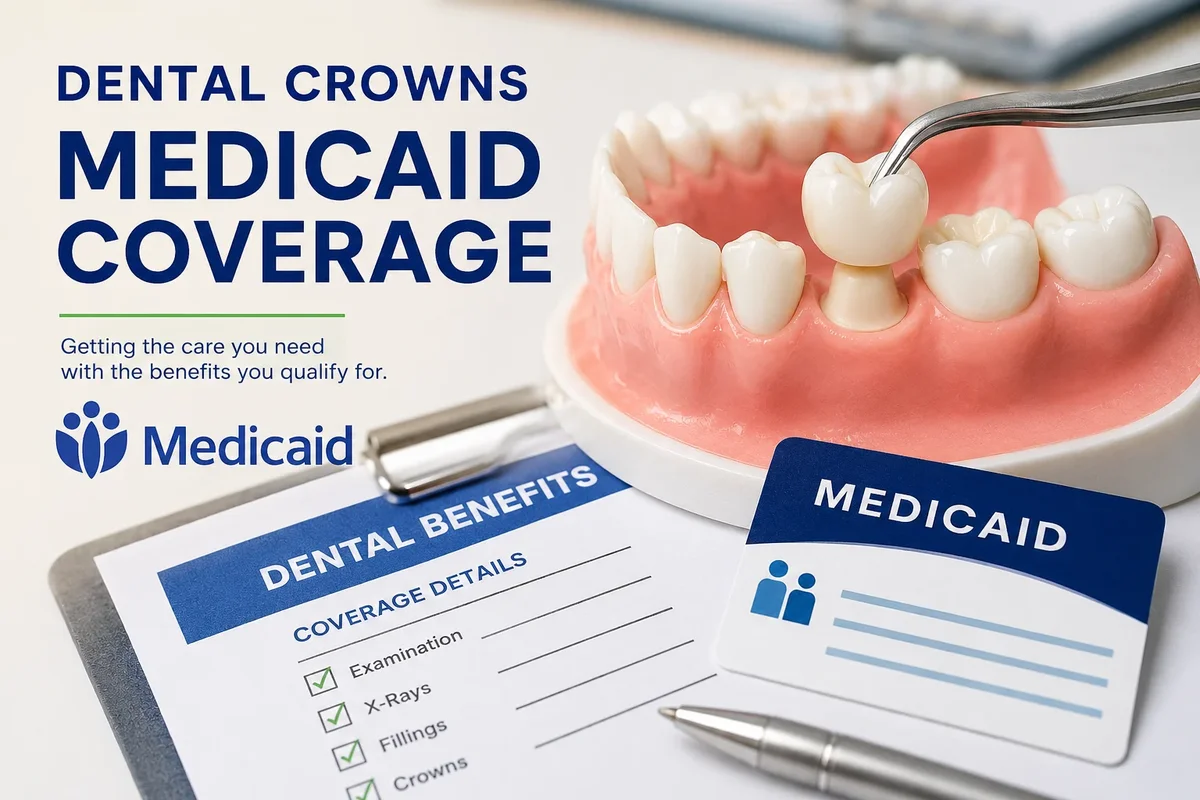
Frequently Asked Questions About Dental Crowns Medicaid Coverage and Your Next Step
After learning the basics of dental crowns medicaid coverage, many patients still have practical questions about how the process works in everyday situations. It is completely normal to wonder whether your crown will qualify, how long approval might take, what alternatives are available, and whether treatment should begin immediately or wait until insurance decisions are finalized. While no article can predict the outcome for every individual, understanding the most common questions can help you approach your dental appointment with realistic expectations and greater confidence.
The most important point to remember is that dental crowns medicaid coverage is only one part of the overall decision. Your dentist must first determine whether a crown is the most appropriate treatment based on the condition of your tooth. Once that clinical evaluation is complete, insurance benefits, documentation requirements, timing, and financial planning can be discussed in a way that reflects your individual needs.
FAQ: Does Medicaid Automatically Pay for Dental Crowns?
No. One of the most common misunderstandings about dental crowns medicaid coverage is that every recommended crown will automatically be approved. Medicaid dental benefits vary by state, and many programs evaluate whether the crown is considered medically necessary before deciding on coverage.
Approval may depend on several factors, including:
- Your state’s Medicaid dental program.
- Your age and eligibility category.
- The clinical condition of the tooth.
- Whether prior authorization is required.
- The supporting documentation submitted by your dentist.
Because policies differ, always verify your individual benefits rather than relying on general information.
FAQ: Can I Receive a Crown Immediately?
The answer depends on both your oral health and your insurance requirements. If dental crowns medicaid coverage requires prior authorization, your dentist may need to submit clinical records before treatment begins. In urgent situations involving pain, infection, or rapidly progressing damage, your dentist will explain whether temporary measures or alternative treatment should be considered while administrative decisions are pending.
Every patient’s situation is different, making professional evaluation essential before determining the most appropriate timeline.
FAQ: What Happens If My Crown Is Not Approved?
If your Medicaid program does not approve a crown, you still have options. Your dentist may recommend another restorative procedure if it is clinically appropriate, discuss financing arrangements, or explain whether monitoring the tooth is reasonable for a period of time.
The correct alternative depends on the amount of healthy tooth remaining, your chewing function, and the long-term outlook for the tooth—not simply on dental crowns medicaid coverage.
Possible Alternatives May Include
- A composite restoration when clinically suitable.
- A partial coverage restoration in selected cases.
- Temporary protective treatment.
- Monitoring with regular follow-up examinations.
- Extraction if the tooth cannot be predictably restored.
Your dentist can explain the advantages and limitations of each option based on your individual clinical findings.
FAQ: Is It Safe to Wait?
Some patients can safely wait while insurance decisions are being processed, while others should begin treatment sooner because the tooth is at greater risk of fracture or infection. The answer depends on your symptoms and the structural condition of the tooth.
If you experience increasing pain, swelling, or additional tooth damage while waiting for dental crowns medicaid coverage, contact your dentist promptly rather than waiting for the insurance process to finish.
FAQ: How Can I Improve My Chances of Keeping the Tooth?
Although patients cannot control Medicaid policy decisions, they can take several practical steps that support successful treatment planning.
- Attend your examination as soon as symptoms develop.
- Provide complete insurance information.
- Follow recommendations regarding temporary restorations.
- Maintain excellent daily oral hygiene.
- Avoid chewing very hard foods if the tooth has been weakened.
- Keep scheduled follow-up appointments.
Early professional evaluation often provides more treatment choices than waiting until extensive damage develops.
FAQ: Should I Seek Another Opinion?
If you remain uncertain about whether a crown is necessary or whether another restoration could be appropriate, obtaining a second professional opinion is entirely reasonable. Another dentist can evaluate your radiographs, examine the tooth, explain alternative treatment options, and discuss the expected long-term prognosis.
A second opinion is especially valuable when treatment is complex or when you would simply like greater confidence before making an important restorative decision.
Your Next Step After Reading About Dental Crowns Medicaid Coverage
By this point, you should have a clearer understanding of how dental crowns medicaid coverage works, why approval differs between Medicaid programs, what clinical factors influence treatment recommendations, and what alternatives may exist if a crown is not covered. However, online information should never replace an individual clinical assessment.
The most productive next step is scheduling a comprehensive dental examination. During this visit, your dentist can determine whether the tooth is restorable, explain why a crown has or has not been recommended, review any diagnostic imaging, discuss expected treatment planning, and clarify how your specific Medicaid benefits may apply.
If you are comparing restorative options, considering treatment abroad, or simply wish to receive another professional evaluation, an individualized consultation can help you understand your choices in greater detail. At Redent Klinik, treatment planning focuses on preserving natural teeth whenever clinically appropriate while providing clear explanations of restorative options, expected procedures, and realistic treatment pathways. If you would like additional information or wish to arrange a consultation, you can visit the Redent Klinik Contact Page.
Final Checklist Before Making Your Decision
- Confirm your state’s current Medicaid dental benefits.
- Verify whether prior authorization is required.
- Ask your dentist why a crown is recommended for your specific tooth.
- Review alternative restorative options if coverage is unavailable.
- Request a written treatment plan before beginning treatment.
- Discuss financing options if personal costs are expected.
- Maintain excellent oral hygiene while awaiting treatment.
- Seek professional dental advice immediately if you develop severe pain, swelling, a broken tooth, fever, difficulty chewing, or any sudden change in symptoms, as prompt evaluation is more important than waiting for a final dental crowns medicaid coverage decision.
Disclosure: this page may contain affiliate links. We may earn a commission if you use them, at no extra cost to you.