
What Is Dental Deep Cleaning and Why Is It Necessary?
Dental deep cleaning, also known as scaling and root planing, is a specialized dental procedure designed to treat gum disease and prevent further oral health complications. Unlike a routine dental cleaning, which focuses on the surface of the teeth and above the gumline, deep cleaning goes below the gumline to remove plaque, tartar, and bacteria that contribute to periodontal disease 🦠.
When patients suffer from gingivitis or more advanced stages of gum disease, dentists often recommend this procedure. It’s a crucial intervention to stop the progression of infection, reduce inflammation, and preserve the health of your gums and supporting bone structure. In short, it’s not just a cleaning—it’s an essential therapeutic treatment that protects your overall dental health.
The dental deep cleaning cost may initially surprise some patients, especially if they’ve never required anything beyond regular dental maintenance. However, when compared to the costs of treating advanced periodontal disease or tooth loss, deep cleaning is both preventive and cost-effective in the long run 💡.
Understanding the Procedure
Deep cleaning typically involves two steps:
- Scaling: This process removes tartar and plaque from above and below the gumline using manual tools or ultrasonic devices.
- Root planing: This step smooths the tooth roots to help the gums reattach and to prevent future buildup of plaque and bacteria.
Depending on the severity of the condition, the procedure may be split into two or more visits. Local anesthesia is usually applied to ensure patient comfort throughout the treatment 💉.
Why Deep Cleaning Matters
Gum disease is a silent destroyer of oral health. If left untreated, it can lead to gum recession, tooth mobility, and eventually, tooth loss. Deep cleaning not only addresses these concerns early but also improves breath, reduces bleeding, and enhances overall oral hygiene 🌬️.
Neglecting gum disease treatment can result in higher long-term expenses, as procedures like gum surgery, bone grafts, or dental implants become necessary. Therefore, understanding the dental deep cleaning cost and the value it brings is essential for making informed health decisions.
Is It Painful?
Thanks to modern dental techniques and local anesthesia, most patients report only mild discomfort during and after the procedure. Some may experience gum sensitivity or tenderness for a few days, but these symptoms are temporary and manageable.
When Is It Recommended?
Your dentist may suggest a deep cleaning if you show signs of:
- Bleeding gums
- Persistent bad breath
- Gum recession
- Pockets forming between the gums and teeth (usually measured during dental exams)
The True Value of Deep Cleaning 🧾
Although the dental deep cleaning cost might seem high upfront, it’s an investment in your long-term oral and general health. Many systemic diseases like diabetes and heart disease are linked to gum disease, so managing your oral health also supports your overall well-being ❤️.
According to the American Dental Association, early treatment of gum issues significantly reduces complications and can even prevent tooth loss. If you’re unsure about your gum health, book an evaluation soon. You can also reach out via our Redent Klinik Contact Page to schedule a consultation with our specialists.
Whether you’re noticing bleeding gums or it’s been a while since your last check-up, don’t underestimate the importance of periodontal care. Understanding the dental deep cleaning cost is just the first step in maintaining a confident, healthy smile 😊.
What Is Dental Deep Cleaning and Why Is It Necessary?
Dental deep cleaning, also known as scaling and root planing, is a specialized dental procedure designed to treat gum disease and prevent further oral health complications. Unlike a routine dental cleaning, which focuses on the surface of the teeth and above the gumline, deep cleaning goes below the gumline to remove plaque, tartar, and bacteria that contribute to periodontal disease 🦠.
When patients suffer from gingivitis or more advanced stages of gum disease, dentists often recommend this procedure. It’s a crucial intervention to stop the progression of infection, reduce inflammation, and preserve the health of your gums and supporting bone structure. In short, it’s not just a cleaning—it’s an essential therapeutic treatment that protects your overall dental health.
The dental deep cleaning cost may initially surprise some patients, especially if they’ve never required anything beyond regular dental maintenance. However, when compared to the costs of treating advanced periodontal disease or tooth loss, deep cleaning is both preventive and cost-effective in the long run 💡.
Understanding the Procedure
Deep cleaning typically involves two steps:
- Scaling: This process removes tartar and plaque from above and below the gumline using manual tools or ultrasonic devices.
- Root planing: This step smooths the tooth roots to help the gums reattach and to prevent future buildup of plaque and bacteria.
Depending on the severity of the condition, the procedure may be split into two or more visits. Local anesthesia is usually applied to ensure patient comfort throughout the treatment 💉.
Why Deep Cleaning Matters
Gum disease is a silent destroyer of oral health. If left untreated, it can lead to gum recession, tooth mobility, and eventually, tooth loss. Deep cleaning not only addresses these concerns early but also improves breath, reduces bleeding, and enhances overall oral hygiene 🌬️.
Neglecting gum disease treatment can result in higher long-term expenses, as procedures like gum surgery, bone grafts, or dental implants become necessary. Therefore, understanding the dental deep cleaning cost and the value it brings is essential for making informed health decisions.
Is It Painful?
Thanks to modern dental techniques and local anesthesia, most patients report only mild discomfort during and after the procedure. Some may experience gum sensitivity or tenderness for a few days, but these symptoms are temporary and manageable.
When Is It Recommended?
Your dentist may suggest a deep cleaning if you show signs of:
- Bleeding gums
- Persistent bad breath
- Gum recession
- Pockets forming between the gums and teeth (usually measured during dental exams)
The True Value of Deep Cleaning 🧾
Although the dental deep cleaning cost might seem high upfront, it’s an investment in your long-term oral and general health. Many systemic diseases like diabetes and heart disease are linked to gum disease, so managing your oral health also supports your overall well-being ❤️.
According to the American Dental Association, early treatment of gum issues significantly reduces complications and can even prevent tooth loss. If you’re unsure about your gum health, book an evaluation soon. You can also reach out via our Redent Klinik Contact Page to schedule a consultation with our specialists.
Whether you’re noticing bleeding gums or it’s been a while since your last check-up, don’t underestimate the importance of periodontal care. Understanding the dental deep cleaning cost is just the first step in maintaining a confident, healthy smile 😊.
Average Dental Deep Cleaning Cost in 2025 Across the U.S.
Understanding the average dental deep cleaning cost in 2025 is essential for anyone planning to maintain optimal oral health. As inflation and healthcare trends continue to evolve, so too do dental care prices. Whether you’re insured or not, it’s important to know what to expect financially when it comes to deep cleaning treatments 🧾.
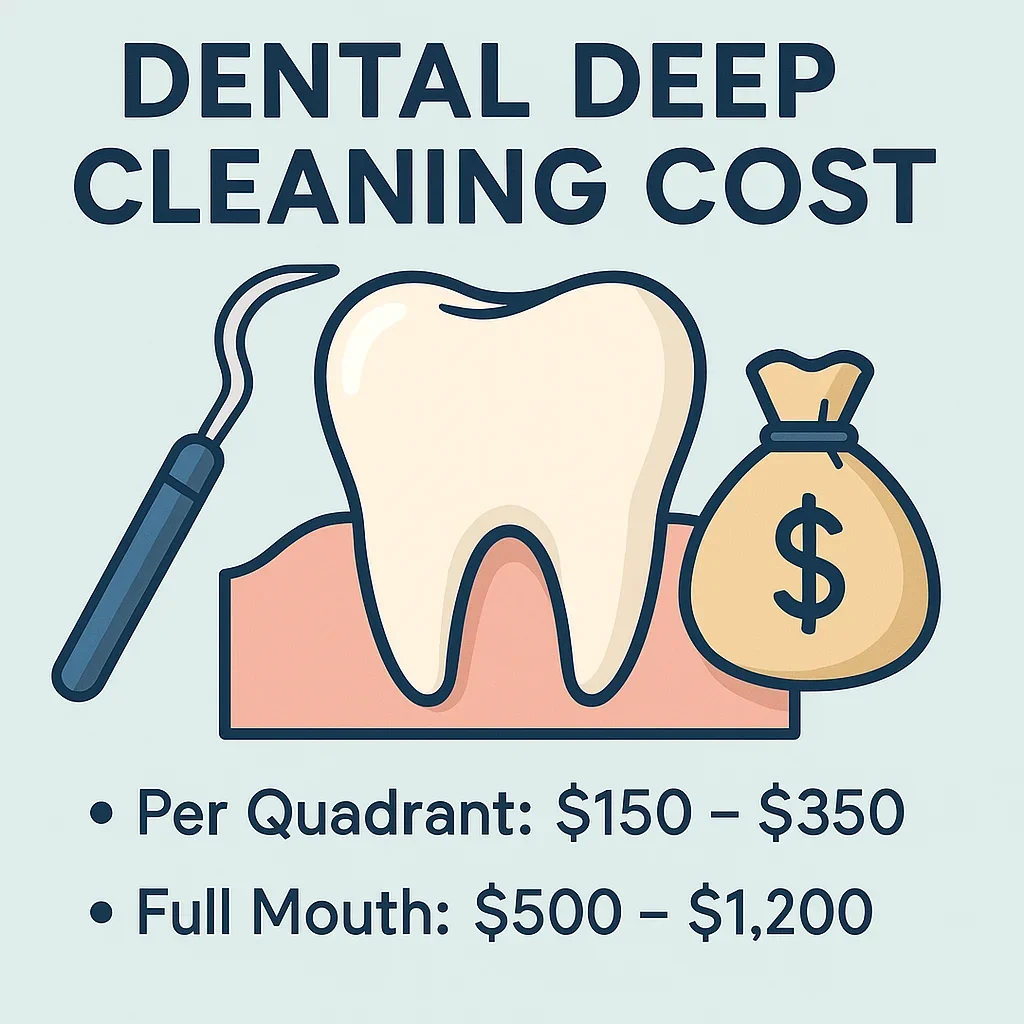
On average, the dental deep cleaning cost in the United States ranges between $150 to $350 per quadrant. Since your mouth is divided into four quadrants (upper left, upper right, lower left, and lower right), a full-mouth deep cleaning can cost anywhere from $600 to $1,400 depending on several factors, including location, severity of gum disease, and whether anesthesia or special technology is used.
Price Comparison Table by Region 🇺🇸
| Region | Price per Quadrant | Full Mouth Estimate |
|---|---|---|
| West Coast (e.g., California, Oregon) | $250 – $350 | $1,000 – $1,400 |
| Midwest (e.g., Illinois, Ohio) | $175 – $275 | $700 – $1,100 |
| South (e.g., Texas, Florida) | $150 – $275 | $600 – $1,100 |
| East Coast (e.g., New York, DC) | $225 – $325 | $900 – $1,300 |
Note that these are general price ranges, and your personal dental deep cleaning cost may vary depending on your provider and individual case.
Urban vs Rural Pricing
Geographic location greatly impacts dental costs. Urban areas with a high cost of living, such as Los Angeles or New York City, tend to charge higher rates. In contrast, rural or suburban clinics often offer more affordable options. It’s worth shopping around or contacting local clinics like Redent Klinik to request a personalized quote 📞.
What’s Included in the Price?
The dental deep cleaning cost typically includes:
- Initial exam and periodontal charting 🩺
- Scaling and root planing for each treated quadrant 🦷
- Local anesthesia (if necessary)
- Post-operative checkup
- Antibacterial rinses or localized antibiotics (may cost extra)
Additional Costs to Consider
Beyond the base cost, some providers may charge separately for the following:
- X-rays: $25 – $150 depending on type
- Antibiotic therapy: $30 – $100 per site
- Follow-up visits: $50 – $200
When assessing your total dental deep cleaning cost, don’t forget to factor in these potential additions. It’s also smart to ask the dental office for a written breakdown of all services during your consultation to avoid any surprises 📄.
Cost Compared to Other Dental Procedures
To provide context, here’s how the dental deep cleaning cost compares to other common dental services:
- Regular Cleaning: $75 – $125
- Filling (1 surface): $150 – $250
- Tooth Extraction: $150 – $300
- Crown: $1,000 – $1,500
As you can see, deep cleaning sits in the mid-range of dental costs. While not the cheapest, it provides crucial benefits that justify the investment 💡.
Why Prices Have Increased in 2025
In 2025, dental care costs have risen slightly due to a combination of inflation, labor shortages in healthcare, and advancements in dental technology. Clinics offering laser-assisted scaling or digital scanning often price higher due to equipment costs and added precision.
Expert Opinion 🧠
According to the American Dental Association, early intervention with procedures like deep cleaning not only improves oral health outcomes but can also significantly reduce long-term expenses tied to more advanced treatments. Preventive care is always more affordable than restorative care.
To get the most value, consider booking a consultation with your local dental provider or visit our Redent Klinik Contact Page to speak with a professional today.
Bottom line: the dental deep cleaning cost in 2025 may vary, but being informed about average pricing, what’s included, and your options can help you make the best decision for your smile 😁.
Factors That Influence Dental Deep Cleaning Cost
The dental deep cleaning cost isn’t fixed—it can vary widely based on a number of influencing factors. Understanding what affects pricing can help you better anticipate your total expense and avoid any unpleasant surprises. From the extent of gum disease to the technology used during treatment, every element plays a role in how much you’ll pay 💵.
1. Severity of Gum Disease
One of the most significant determinants of dental deep cleaning cost is the severity of your periodontal condition. Patients with mild gingivitis may only need minor scaling, while those with deep periodontal pockets or bone loss require more extensive root planing and frequent follow-ups. The more advanced the disease, the more time, tools, and skill are needed, all of which increase the overall cost 📈.
2. Number of Quadrants Needing Treatment
The mouth is divided into four quadrants. Dentists often charge per quadrant, meaning that if only one or two areas require deep cleaning, your dental deep cleaning cost will be lower. However, for full-mouth deep cleaning (all four quadrants), expect the cost to be significantly higher. This structure allows for more customized billing, based on individual needs.
3. Type of Dental Clinic or Provider
The facility you choose also impacts pricing. Private clinics in urban areas typically charge more than dental schools or community clinics. Some luxury dental centers offer amenities like sedation options or laser-assisted cleaning, which further increases the dental deep cleaning cost. In contrast, public clinics may provide services at a reduced rate or based on a sliding income scale 🏥.
4. Geographic Location
Your city or state can dramatically influence how much you pay. In major metropolitan areas, higher living and operational costs are reflected in dental service prices. For example, clinics in New York or San Francisco may charge double the amount seen in rural or suburban areas. This regional disparity makes “dental tourism” a consideration for some patients seeking a lower dental deep cleaning cost ✈️.
5. Dentist’s Experience and Reputation
Experienced periodontists or well-known dental practitioners may charge premium fees due to their expertise. While you might pay more, the assurance of quality care and successful outcomes can be worth the investment. Still, it’s important to compare reviews and credentials before choosing your provider.
6. Use of Technology and Equipment
Modern dental tools can enhance the efficiency and comfort of your treatment. For example, ultrasonic scalers, dental lasers, and digital periodontal probes improve precision but also contribute to higher costs. Clinics using advanced technology often pass some of those expenses to the patient, slightly raising the dental deep cleaning cost 🛠️.
7. Anesthesia or Sedation Requirements
While local anesthesia is typically included, patients with high anxiety or low pain tolerance may opt for sedation or nitrous oxide. These extras can add $50 to $300 or more to the total cost. It’s a good idea to discuss these options with your provider beforehand to get a complete price estimate.
8. Follow-Up Treatments or Maintenance
After the initial deep cleaning, you might need follow-up appointments, antibacterial rinses, or prescription mouthwashes. These ongoing maintenance sessions help prevent recurrence of gum disease but do increase the total dental deep cleaning cost over time. It’s a long-term commitment to your oral health 🦷.
9. Insurance Coverage and Payment Plans
If your dental insurance covers periodontal treatments, you may only be responsible for a portion of the fee. Some plans cover 50–80% of the dental deep cleaning cost, depending on your provider and deductible. For those without insurance, many clinics, including Redent Klinik, offer flexible payment plans to make treatment more accessible 💳.
10. Additional Services or Bundled Procedures
In some cases, a deep cleaning may be bundled with other dental services like exams, X-rays, or fluoride treatments. While these packages might seem more expensive upfront, they often provide better value in the long run. Always ask for an itemized quote so you understand how the dental deep cleaning cost breaks down.
Optimize Your Cost: Get a Written Estimate 📝
Before beginning treatment, request a detailed estimate that outlines all expected fees. This not only prevents financial surprises but also helps you compare prices across clinics. Transparency is key to avoiding hidden fees and ensuring that your investment yields the healthiest possible results.
If you’re seeking expert periodontal care with clear pricing, reach out to our team through the Redent Klinik Contact Page. We’re here to help you understand every aspect of your treatment—from procedure to price—with full transparency and compassion.
In conclusion, many variables impact the final dental deep cleaning cost. By understanding these factors in advance, you can make informed choices, control your budget, and achieve a healthier smile with peace of mind 😊.
Is Dental Deep Cleaning Covered by Insurance?
One of the most common questions patients ask before scheduling treatment is: “Is dental deep cleaning cost covered by insurance?” The answer is — it depends. Dental insurance policies vary widely in coverage, deductibles, and limitations, so understanding your plan is crucial before committing to treatment 📋.
In many cases, dental deep cleaning is considered a medically necessary procedure, especially when treating moderate to severe gum disease. As such, it’s often at least partially covered by insurance policies that include periodontal care. However, there are exceptions and conditions you should be aware of 🔍.
Typical Insurance Coverage
Most dental insurance plans classify deep cleaning under periodontal services. Depending on the policy, insurance might cover:
- 50% to 80% of the treatment cost
- Two quadrants per visit, up to four quadrants per year
- One deep cleaning per 24 months, unless deemed medically urgent
For example, if your dental deep cleaning cost totals $1,000 for a full mouth, your out-of-pocket responsibility may be as low as $200 to $500 after insurance contribution 💰.
What Insurance May Not Cover
Some basic or low-tier plans do not include periodontal treatments. Additionally, insurance may not cover:
- Follow-up maintenance visits (often recommended every 3–4 months)
- Antibiotic treatments or medicated rinses
- Deep cleaning procedures done for cosmetic rather than medical reasons
It’s vital to verify with your insurance provider whether your plan includes these services before assuming the dental deep cleaning cost will be fully reimbursed 🛑.
Understanding Your Dental Benefits 📑
Dental insurance typically comes with an annual maximum benefit, usually ranging between $1,000 and $2,000. Once this amount is used up — whether on exams, cleanings, or fillings — the remaining dental deep cleaning cost must be paid out-of-pocket by the patient. If you’ve already used a portion of your benefits this year, this may affect how much is covered.
Also, be aware of deductibles, which are the amount you must pay before insurance kicks in. For example, if your plan has a $100 deductible and your deep cleaning costs $800, insurance will reimburse you based on the $700 balance after your deductible is met.
Pre-Authorization May Be Required
Some insurance companies require pre-authorization before covering the treatment. This involves a dentist submitting documentation, such as X-rays or periodontal charting, to justify the medical necessity of deep cleaning. Without this step, you might be responsible for the full dental deep cleaning cost even if you have insurance.
In-Network vs. Out-of-Network Providers
Using a provider within your insurance network can make a big difference. In-network dentists have negotiated lower rates, meaning the same procedure may cost you less. Going out-of-network may still offer partial reimbursement, but the patient is often billed at full price and must handle claim paperwork themselves 📠.
No Insurance? No Problem
If you don’t have insurance, many clinics, including Redent Klinik, offer self-pay discounts, financing options, or dental membership plans. These alternatives can significantly reduce the overall dental deep cleaning cost and make it more manageable for uninsured patients.
Medicare and Medicaid Coverage
Traditional Medicare does not cover routine dental services, including deep cleaning. However, some Medicare Advantage plans include dental benefits that may partially cover the dental deep cleaning cost. Medicaid coverage varies by state, with some offering comprehensive dental benefits and others providing minimal assistance 🏛️.
Tips to Maximize Your Benefits
- Get a pre-treatment estimate from your dental provider
- Schedule appointments early in the year before benefits run out
- Inquire about in-house payment plans or third-party financing (e.g., CareCredit)
- Use Health Savings Accounts (HSA) or Flexible Spending Accounts (FSA) if available
Ultimately, the best way to clarify your insurance benefits is to speak directly with your provider. Understanding your coverage can help you make an informed decision and prepare for any out-of-pocket expenses associated with the dental deep cleaning cost.
If you’re unsure about your insurance eligibility or need help navigating your options, our experienced team is ready to assist. Contact us anytime via the Redent Klinik Contact Page for a personalized consultation 💬.
In summary, insurance can significantly reduce your dental deep cleaning cost, but understanding the fine print is essential. With the right planning and support, you can access high-quality periodontal care without financial stress 🙌.
Cost Breakdown: Per Quadrant vs Full Mouth Cleaning
When evaluating the dental deep cleaning cost, one of the most important distinctions to understand is the pricing structure: per quadrant versus full mouth cleaning. Dentists typically divide the mouth into four quadrants—upper left, upper right, lower left, and lower right—and treatment costs are often calculated accordingly. This approach ensures patients pay only for the areas requiring care, offering a more tailored pricing strategy 🎯.
What Does “Per Quadrant” Mean?
Per quadrant pricing is standard in periodontal treatments. If gum disease is localized to certain areas of the mouth, a dentist may recommend deep cleaning for only one or two quadrants. Each quadrant is treated separately, and the dental deep cleaning cost is billed individually.
Example:
If one quadrant costs $250, and you need treatment in three quadrants, your total would be $750. This system allows for flexible treatment plans and phased procedures, especially helpful for patients with budget constraints or mild periodontal issues 💵.
Average Per Quadrant Costs in 2025
- Low-range clinics: $100 – $150 per quadrant
- Mid-range providers: $175 – $250 per quadrant
- High-end practices or metro areas: $275 – $400 per quadrant
It’s important to note that these figures are estimates, and your actual dental deep cleaning cost can vary based on region, clinic reputation, and complexity of the case.
Full Mouth Deep Cleaning: When Is It Needed?
If periodontal disease affects all areas of the mouth, your dentist may recommend full-mouth scaling and root planing. This is typically performed over two visits, sometimes under anesthesia, especially in cases of severe gum inflammation or sensitivity.
The full mouth option may offer better value than quadrant pricing for widespread periodontal issues. A clinic may even provide a package rate for full-mouth treatment to make the dental deep cleaning cost more affordable as a whole 🎁.
Average Full Mouth Deep Cleaning Costs
| Clinic Type | Estimated Cost |
|---|---|
| Community Dental Clinics | $400 – $600 |
| General Dental Practices | $700 – $1,200 |
| Specialty Periodontists | $1,000 – $1,600 |
Which Option Is More Cost-Effective?
Whether per quadrant or full mouth pricing is better for you depends on several factors:
- Extent of gum disease — Localized issues may not need full mouth treatment
- Time availability — Some patients prefer to split treatment over several visits
- Budget considerations — Per quadrant treatment may be spread out financially
If you qualify for insurance reimbursement, your plan may dictate how many quadrants can be treated per session or year. Be sure to review your policy before deciding on a pricing structure.
Bundled Services vs Itemized Billing 🧾
Some dental offices provide bundled packages that include exams, X-rays, anesthesia, and post-treatment checkups. While the up-front price may seem higher, bundled packages often save money over time and simplify billing. Always ask your clinic if these are available when evaluating your dental deep cleaning cost.
At Redent Klinik, we provide transparent estimates whether you choose per quadrant or full mouth care. We guide you through your options and tailor the treatment plan to your unique dental needs 🦷.
Be Aware of Additional Costs
In both pricing models, the base cost may not include extras like:
- Medicated rinses or antibiotics
- Post-treatment maintenance visits
- Fluoride or desensitizing applications
Requesting an itemized estimate ensures there are no hidden fees and allows for a complete understanding of your final dental deep cleaning cost.
Conclusion: Know What You’re Paying For 💡
Choosing between per quadrant and full mouth treatment depends on your oral health condition, preferences, and budget. Regardless of the model, the investment in professional periodontal care is always worth it in terms of health outcomes and prevention of future complications.
Still unsure about your best option? Schedule a consultation with our team at Redent Klinik Contact Page for a personalized assessment and accurate quote tailored to your needs.
By understanding how the dental deep cleaning cost is structured, you can confidently plan your treatment and take proactive steps toward healthier gums and a brighter smile 😁.
How Dental Deep Cleaning Differs from Regular Cleaning
Many patients often confuse a standard dental cleaning with a deep cleaning procedure, but the two are vastly different in purpose, technique, and pricing. Understanding these distinctions is key to grasping why the dental deep cleaning cost is generally higher—and why it’s worth every penny when needed 🦷.
Purpose and Necessity
Regular cleaning, also known as prophylaxis, is a preventive service meant for patients with healthy gums. It removes plaque, tartar, and surface stains from the visible part of the teeth and slightly below the gumline. This is typically recommended every six months and keeps oral health in check 🪥.
In contrast, deep cleaning—also called scaling and root planing—is a therapeutic procedure designed for patients with gum disease. It goes beneath the gumline to remove bacteria and infected tissue. If left untreated, gum disease can lead to tooth loss, bone deterioration, and even systemic health issues.
This deeper level of treatment requires more time, skill, and aftercare, which contributes to the overall dental deep cleaning cost.
Procedure Breakdown
| Procedure | Regular Cleaning | Dental Deep Cleaning |
|---|---|---|
| Scope | Above the gumline | Below the gumline & roots |
| Goal | Prevent plaque/tartar buildup | Treat gum disease & inflammation |
| Frequency | Every 6 months | As needed based on gum health |
| Time Required | 30–45 minutes | 60–90 minutes per session |
| Average Cost | $75 – $150 | $600 – $1,400 (full mouth) |
Tools and Techniques Used
Regular cleanings use manual scalers and ultrasonic tools to clean teeth surfaces. Deep cleanings, however, utilize advanced periodontal instruments to reach deeper into gum pockets. The process often includes:
- Scaling: Removal of plaque and tartar from below the gumline
- Root Planing: Smoothing of the tooth root to promote gum reattachment
- Local Anesthesia: Often required due to the depth of cleaning
These added steps are why the dental deep cleaning cost reflects a more intensive, medical-grade treatment.
Healing and Recovery
After a routine cleaning, you’re good to go immediately. There may be slight sensitivity, but no downtime is needed.
With deep cleaning, it’s common to experience mild soreness, bleeding, and sensitivity for a few days post-procedure. Your dentist may also prescribe antibacterial rinses or schedule follow-up visits to monitor healing. These extra touchpoints contribute to the overall dental deep cleaning cost.
Outcomes and Benefits
- Regular Cleaning: Maintains oral health, prevents issues
- Deep Cleaning: Halts gum disease, prevents tooth loss, and may improve systemic health
According to the American Dental Association, regular cleanings are important, but once gum disease sets in, deep cleaning is the only way to restore health to the gums and prevent further damage.
Why the Cost Difference Matters
Some patients may experience sticker shock when they first learn about the dental deep cleaning cost. However, it’s essential to understand that you’re not just paying for a cleaning—you’re paying for a therapeutic intervention that protects your teeth and gums from irreversible damage 🧠.
In fact, early treatment with deep cleaning can save thousands of dollars by avoiding more invasive procedures like gum surgery, bone grafting, or implants later down the line.
Insurance Implications
Routine cleanings are often fully covered by insurance. Deep cleanings, though partially covered, may require a co-pay or additional out-of-pocket costs. For more clarity, contact your provider or speak with our team at the Redent Klinik Contact Page to explore your options and get a customized quote.
Summary 📝
The key takeaway is that while both cleanings are vital, they serve very different purposes. A regular cleaning is like a car wash, while a deep cleaning is more like repairing a damaged engine. As such, the dental deep cleaning cost is higher, but the benefits are profound—both for your smile and your health 😄.
Tips to Reduce Your Dental Deep Cleaning Cost
While the benefits of periodontal therapy are undeniable, many patients are understandably concerned about managing the dental deep cleaning cost. Fortunately, there are several effective strategies to minimize expenses without compromising the quality of care. With some research and planning, you can keep your smile—and your wallet—healthy 💰.
1. Use Dental Insurance Strategically
If you have dental insurance, be sure to verify your coverage before the procedure. Many policies cover 50% to 80% of periodontal treatments, including deep cleaning. Take advantage of in-network providers, who typically offer reduced rates. Using your plan early in the calendar year before reaching the annual maximum can also help reduce your out-of-pocket dental deep cleaning cost.
2. Ask About Payment Plans
Most dental clinics understand that not all patients can afford the entire cost upfront. That’s why many, including Redent Klinik, offer flexible payment plans. These options allow you to spread the dental deep cleaning cost over several months, making it more manageable without accruing interest or relying on credit cards 🗓️.
3. Consider Dental Membership Plans
Dental savings or membership plans are an excellent alternative for uninsured patients. For an annual fee, these plans offer discounted rates on a variety of services, including cleanings, X-rays, and even deep cleaning. Some clinics create custom plans tailored to your treatment needs, significantly reducing the overall dental deep cleaning cost.
4. Use Health Savings Accounts (HSA) or Flexible Spending Accounts (FSA)
If you have an HSA or FSA, you can use pre-tax dollars to pay for qualifying dental procedures. This can lead to substantial savings, especially when applied to higher-cost treatments like deep cleaning. Be sure to plan your treatment schedule before the year’s end to make the most of your FSA balance 📆.
5. Shop Around for Estimates
Don’t hesitate to get multiple quotes from different providers. The dental deep cleaning cost can vary greatly depending on the clinic, location, and dentist’s expertise. Comparing quotes can help you find the most competitive price—just be sure not to sacrifice quality for savings.
6. Look for Promotions and First-Time Discounts
Some clinics offer promotional pricing or first-time patient discounts on services like exams, X-rays, or even deep cleaning procedures. These offers can provide a great opportunity to reduce your overall dental deep cleaning cost, especially if you’re exploring new providers 🏷️.
7. Visit a Dental School
Dental schools often offer high-quality care at a reduced price, as services are performed by students under the supervision of licensed dentists. This can cut your dental deep cleaning cost by 30–50% while still ensuring safe, professional treatment. Search for accredited dental schools in your area to see if they offer this option 🎓.
8. Focus on Prevention to Avoid Repeat Treatments
One of the most effective ways to reduce long-term costs is to avoid the need for repeated deep cleanings. This means:
- Maintaining excellent oral hygiene at home 🪥
- Attending regular dental checkups
- Quitting smoking or tobacco use
- Managing diabetes and other health conditions
By following a proactive approach, you can minimize the likelihood of requiring another deep cleaning, which ultimately keeps your future dental deep cleaning cost down.
9. Ask for Itemized Bills
Request an itemized estimate before your procedure to ensure you’re only being charged for necessary services. Some providers may bundle extra treatments or services that may not be essential. Reviewing the bill carefully can help you eliminate unnecessary charges and reduce your overall dental deep cleaning cost 🧾.
10. Consider Abroad Treatment (Dental Tourism)
In some cases, traveling to another country for treatment can save thousands. Countries like Turkey, Mexico, and Hungary offer high-quality dental care at a fraction of U.S. prices. If you’re open to dental tourism, reach out to clinics with international reputations—like Redent Klinik—to explore this cost-saving option 🌍.
Final Thoughts
While deep cleaning is often more expensive than a routine dental procedure, smart financial planning can ease the burden. Whether through insurance, financing, discounts, or preventive care, there are many ways to reduce your dental deep cleaning cost without compromising your health or peace of mind.
Ready to take control of your gum health and your budget? Contact the team at Redent Klinik today for a customized plan that works for you. A healthy smile is closer—and more affordable—than you think 😊.
Dental Deep Cleaning Cost Without Insurance: What to Expect
For patients without dental insurance, navigating the dental deep cleaning cost can feel overwhelming. However, being uninsured doesn’t mean you have to delay essential periodontal care. With a clear understanding of typical pricing and available options, you can confidently plan for this important treatment—even without coverage 💡.
Typical Out-of-Pocket Costs
When paying out of pocket, the dental deep cleaning cost is usually higher compared to what insured patients pay. The national average in 2025 for uninsured individuals is as follows:
- Per quadrant: $200 – $350
- Full mouth (all four quadrants): $800 – $1,400
The exact amount depends on your location, the severity of your gum disease, and the clinic you choose. Urban areas and specialized periodontal offices tend to charge more, while suburban or community clinics may offer more competitive rates.
What’s Included in the Price?
When evaluating the dental deep cleaning cost as an uninsured patient, consider whether the price includes:
- Initial periodontal evaluation and probing
- Scaling and root planing
- Local anesthesia
- Post-procedure checkup
Some dental clinics bundle these services together, while others charge separately for each step. Make sure to request an itemized estimate to avoid hidden costs 🧾.
Affordable Alternatives for Uninsured Patients
1. In-House Dental Plans
Many dental offices offer in-house savings plans that act as an alternative to insurance. For a small monthly or annual fee, you receive discounted rates on various treatments, including deep cleaning. These plans can significantly lower your dental deep cleaning cost and often include preventive services as well.
2. Community Health Clinics
Federally Qualified Health Centers (FQHCs) and community clinics often offer dental services at a reduced cost for uninsured patients. Sliding fee scales based on income make treatment accessible for more people. While wait times may be longer, this can be a cost-effective way to access care 🏥.
3. Dental Schools
Dental schools provide services performed by supervised students at a fraction of the cost. You may pay only 50–70% of the standard dental deep cleaning cost while still receiving professional-level care under the oversight of licensed dentists 🎓.
4. Financing and Payment Plans
Even without insurance, many clinics provide third-party financing options like CareCredit or in-house payment plans. These allow you to spread the cost over time, usually interest-free for a limited period. At Redent Klinik, we help uninsured patients access flexible financing tailored to their budgets.
Tips to Save on Out-of-Pocket Costs
- Ask about first-visit promotions or new patient discounts
- Compare rates across multiple dental offices
- Consider full-mouth cleaning packages that may be cheaper than paying per quadrant
- Request preventive advice to avoid future periodontal treatments
Additionally, maintaining excellent oral hygiene post-treatment reduces the chance of needing future deep cleanings, further lowering your lifetime dental deep cleaning cost.
Tax Advantages
If you itemize deductions, medical and dental expenses that exceed 7.5% of your adjusted gross income may be tax-deductible. Keep all receipts and consult a tax advisor to explore this potential savings opportunity 🧾.
Why You Shouldn’t Delay Treatment
It might be tempting to postpone treatment due to cost concerns, but ignoring gum disease can lead to much more expensive procedures down the road. These may include tooth extractions, bone grafting, or even dental implants—all of which are far more costly than the initial dental deep cleaning cost.
The American Dental Association emphasizes that early intervention is both medically and financially beneficial. Taking care of your gums now saves you pain, time, and money in the future.
Start With a Consultation 🗓️
If you’re uninsured and unsure where to begin, reach out to us via the Redent Klinik Contact Page. We’ll walk you through your options, provide an affordable quote, and help you create a treatment plan that fits your health needs and your budget.
Bottom line: While paying the full dental deep cleaning cost without insurance can be a challenge, it is far from impossible. With the right approach, high-quality periodontal care can still be within reach 🙌.
How to Choose a Dental Clinic for Deep Cleaning in 2025
Choosing the right clinic for your periodontal care is just as important as understanding the dental deep cleaning cost. With so many providers available in 2025, finding a trustworthy, affordable, and experienced dental office can make a significant difference in both your oral health outcome and overall treatment experience 😁.
1. Check for Licensing and Credentials
Always verify that the clinic and dental professionals are licensed and in good standing with your state’s dental board. A periodontist or general dentist with advanced training in gum care is preferred for deep cleaning procedures. Credentials ensure you’re receiving safe and effective care, especially when the dental deep cleaning cost is a considerable investment 💼.
2. Ask About Periodontal Experience
Not all dentists specialize in gum disease treatment. Ask how many scaling and root planing procedures the clinic performs monthly. Experienced providers are more efficient, skilled at managing complications, and better equipped to handle varying degrees of periodontal disease—ensuring your dental deep cleaning cost translates into quality results.
3. Compare Pricing and Transparency
Before committing, request a written quote detailing all services included in the dental deep cleaning cost. Look for itemized breakdowns for anesthesia, X-rays, antibacterial treatments, and follow-up care. A trustworthy clinic should be transparent with pricing and willing to explain any charges clearly 🧾.
4. Read Reviews and Testimonials
Online reviews are a powerful tool for gauging patient satisfaction. Look for feedback on:
- Comfort during the procedure
- Professionalism of staff
- Cleanliness of the facility
- Billing accuracy and cost transparency
Websites like Google Reviews, Healthgrades, and Yelp can help you assess whether the dental deep cleaning cost at a particular clinic is justified by its reputation.
5. Technology and Equipment Used
Modern clinics often invest in advanced tools like ultrasonic scalers, dental lasers, and digital periodontal charting. These technologies can improve comfort and results, though they may also slightly increase the dental deep cleaning cost. Still, the added precision and efficiency are worth considering, especially for moderate to severe gum disease cases.
6. Evaluate Clinic Cleanliness and Atmosphere
Visit the clinic before scheduling your appointment. A clean, welcoming, and well-organized environment reflects high standards of care. Staff should be friendly, responsive, and happy to answer your questions. These qualities help ensure a smooth experience throughout your treatment, especially when you’re paying out-of-pocket for your dental deep cleaning cost.
7. Inquire About Payment Flexibility
Many clinics now offer:
- Monthly installment plans
- Third-party financing (e.g., CareCredit)
- Dental membership plans for the uninsured
If the upfront dental deep cleaning cost is a concern, choosing a provider with flexible payment terms can make a big difference in your ability to afford care without delay.
8. Assess Communication and Education
A quality dental clinic will take the time to educate you about your condition, treatment options, and post-cleaning care. You should never feel rushed or pressured. Clear explanations show respect for the patient and increase the overall value of the dental deep cleaning cost 🧠.
9. Ask About Follow-Up and Maintenance
Deep cleaning is only the beginning of gum disease management. A great clinic will outline a maintenance schedule and provide tools or advice for home care. Consider this ongoing relationship as part of the overall service quality you’re receiving for your dental deep cleaning cost.
10. Consider International Clinics for Cost Savings 🌍
In 2025, dental tourism is a growing trend. Clinics like Redent Klinik in Turkey offer world-class periodontal care at a fraction of the U.S. price. Many international clinics cater to global patients with English-speaking staff, transparent pricing, and concierge-level service.
Red Flags to Watch Out For 🚩
- Lack of cost transparency
- No discussion of follow-up care
- Pushy sales tactics
- Poor online reviews or no reviews at all
If a clinic seems more interested in your payment than your health, walk away. The right provider will prioritize your well-being over your wallet—and will ensure your dental deep cleaning cost is justified with excellent service and results.
Final Thought
Choosing the right dental clinic is a personal decision that should be based on trust, transparency, and professionalism. By doing your homework and asking the right questions, you’ll be well-positioned to find a provider who offers excellent care at a fair dental deep cleaning cost.
Need help making a decision? Contact us today through the Redent Klinik Contact Page for expert guidance and a free consultation tailored to your unique dental needs 😊.
Final Recap: Is Dental Deep Cleaning Worth the Cost?
After exploring every facet of the dental deep cleaning cost, from pricing structures to insurance coverage and cost-saving strategies, one critical question remains: Is it truly worth the investment? The answer is a resounding yes — and here’s why ✅.
Protecting Your Oral Health
Gum disease affects nearly half of adults over 30 in the U.S., and if left untreated, it can escalate into tooth loss, jawbone deterioration, and systemic health issues like heart disease and diabetes. Dental deep cleaning is often the first and most effective line of defense. While the dental deep cleaning cost may seem steep initially, the long-term savings — in both money and health — are undeniable 🦷.
Preventing More Expensive Treatments
Delaying or avoiding deep cleaning can result in far more costly procedures down the road. These may include:
- Periodontal surgery ($2,000–$4,000+)
- Bone grafting ($500–$3,000 per site)
- Dental implants ($3,000–$6,000 per tooth)
Compared to these, the average dental deep cleaning cost of $600–$1,400 is a relatively small price to pay to preserve your natural teeth and avoid surgical interventions 💸.
Improving Systemic Health
Numerous studies, including those cited by the American Dental Association, show links between gum health and overall health. Treating periodontal disease through deep cleaning may help reduce inflammation in the body, improving outcomes for patients with diabetes, cardiovascular conditions, and even respiratory issues. In this sense, the dental deep cleaning cost is an investment not just in your smile, but in your total body wellness 🫀.
Confidence and Quality of Life
Bleeding gums, chronic bad breath, and loose teeth can affect your self-esteem and daily comfort. Deep cleaning helps reverse these issues, giving you the confidence to eat, speak, and smile without worry. When factoring in quality of life improvements, the value of the dental deep cleaning cost becomes even more apparent ✨.
Personalized and Preventive Approach
Unlike a one-size-fits-all treatment, dental deep cleaning is tailored to your individual oral health needs. It’s a preventive measure that empowers you to take control before damage becomes irreversible. By proactively managing your gum health now, you’re taking the smartest financial and medical step forward.
Access to Affordable Options
Even for those without insurance, today’s dental landscape offers many ways to access affordable care. Clinics like Redent Klinik provide transparent pricing, flexible financing, and international-quality service at reduced rates. With so many options available, no one should feel like deep cleaning is out of reach.
Final Advice
Don’t let uncertainty or fear about the dental deep cleaning cost stop you from getting the care you need. Book a consultation, ask the right questions, and explore your coverage or payment options. An upfront investment today can save you thousands tomorrow—and more importantly, it protects your long-term health and happiness ❤️.
To get started, reach out to us through the Redent Klinik Contact Page for a personalized treatment plan. Our team is ready to walk you through every step, explain costs clearly, and ensure you receive expert care that fits your budget.
Remember: Your smile is priceless, but your dental deep cleaning cost doesn’t have to be. Let’s make your gum health a top priority today 🙌.