
One of the most common questions patients ask before starting treatment is simple but extremely important: dental implant how long does the entire process take? If you are considering replacing a missing tooth, understanding the realistic timeline helps you plan your schedule, budget, and expectations with confidence. Dental implants are a long-term solution, but the journey from consultation to final crown involves multiple carefully coordinated stages.
When people search for dental implant how long, they usually want clarity about three main things: how long the surgery lasts, how long healing takes, and how long the implant will last in the mouth. The answer depends on several factors including bone quality, overall health, whether bone grafting is needed, and whether the implant is placed immediately after extraction or months later. In general, the full treatment process can take anywhere from 3 to 9 months, and in complex cases, even up to a year.
Let’s break down the timeline step by step so you can clearly understand dental implant how long each phase requires. The first stage is the consultation and planning phase. This typically takes one or two appointments. During this period, your dentist evaluates your jawbone using X-rays or 3D imaging, reviews your medical history, and creates a personalized treatment plan. This planning stage usually takes 1–2 weeks, depending on diagnostic needs.
The second stage is implant placement surgery. Many patients worry about dental implant how long the procedure itself lasts. In reality, placing a single implant usually takes 30 to 90 minutes. The surgery is performed under local anesthesia, and most patients describe it as less uncomfortable than a tooth extraction. After surgery, a healing period begins, and this is where the most important biological process occurs.
The healing phase is known as osseointegration, which refers to the fusion of the titanium implant with the jawbone. If you are asking dental implant how long healing takes, the typical osseointegration period ranges from 3 to 6 months. During this time, the implant becomes stable and strong enough to support a crown. In patients with excellent bone density, healing may be closer to 3 months. In cases involving softer bone or additional procedures, it may take longer.
Another important part of understanding dental implant how long the full process lasts is whether bone grafting is required. If the jawbone is not thick or dense enough, a bone graft may be performed before or during implant placement. When grafting is done first, it can add 3–6 months to the overall timeline because the graft must heal before the implant can be securely placed.
After successful osseointegration, the next step is placing the abutment and dental crown. This stage usually requires 2–4 weeks. Impressions are taken, the custom crown is fabricated in a dental lab, and then it is securely attached. At this point, patients often feel that their smile is fully restored. So when patients ask dental implant how long until they can chew normally, the answer is typically several months from start to finish, depending on individual circumstances.
It’s also essential to address another version of the dental implant how long question: how long does the implant last? With proper oral hygiene and regular dental visits, implants can last 15–25 years or even a lifetime. According to the American Dental Association, dental implants are one of the most predictable and durable tooth replacement options available today. Their long-term success rate exceeds 95% in healthy patients.
If you are evaluating your personal situation and wondering dental implant how long your specific case might take, the best approach is to consult directly with an experienced implant dentist. Every patient’s timeline is unique. Smoking, diabetes, bone loss, and gum disease can influence healing speed and treatment length. For personalized guidance, you can visit the Redent Klinik Contact Page to schedule a consultation and receive a tailored evaluation.
In summary, when people search for dental implant how long, they are really asking about predictability and reliability. The surgical procedure itself is relatively quick. The healing phase typically requires several months. The final restoration stage adds a few additional weeks. However, the long-term reward is a stable, natural-looking tooth replacement that can last decades. 🦷✨
Understanding the complete timeline removes uncertainty and empowers you to move forward confidently. Dental implants are not an overnight fix, but they are a long-lasting investment in your oral health, comfort, and smile aesthetics. When properly planned and executed, the answer to dental implant how long becomes reassuring rather than intimidating: a few months of treatment for many years of confident smiling.
Dental Implant How Long From Start to Finish?
When patients search for dental implant how long from start to finish, they are usually trying to understand the complete journey—not just the surgery day. The total timeline includes consultation, preparation, surgical placement, healing, and final crown placement. While each case is unique, most full treatments range between 3 and 9 months. In more complex situations, it may extend to 12 months. Understanding every stage helps answer the common question: dental implant how long does the entire process realistically take?
Initial Consultation and Digital Planning
The first phase in determining dental implant how long treatment will take is the consultation and diagnostic stage. This usually requires one or two appointments over 1–2 weeks. During this time, your dentist performs clinical examinations, takes 3D scans or CBCT imaging, and evaluates bone density. Digital planning ensures that the implant is placed in the ideal position for strength and aesthetics.
If no additional procedures are required, the patient can move to surgery relatively quickly. However, if gum disease or infection is present, treatment may be required before implant placement. In such cases, when asking dental implant how long before surgery, the answer depends on how quickly oral health can be stabilized.
Tooth Extraction (If Needed)
If the damaged tooth is still present, extraction may be necessary. Patients frequently ask whether extraction adds time when calculating dental implant how long the overall treatment will take. The answer depends on whether immediate or delayed implant placement is planned.
Immediate Implant Placement
In some cases, the implant can be placed immediately after extraction. This shortens the timeline significantly. For patients eligible for this approach, dental implant how long from extraction to implant placement may be completed in a single visit.
Delayed Implant Placement
If infection, bone loss, or instability is present, the dentist may recommend waiting 6–12 weeks after extraction. This allows proper healing before implant surgery. In this scenario, when evaluating dental implant how long from extraction to final crown, the timeline naturally becomes longer.
Implant Surgery Appointment
The surgical placement itself is surprisingly quick. For a single implant, the procedure usually takes between 30 and 90 minutes. Many patients are relieved to learn that dental implant how long the surgery lasts is often less than expected. The procedure is performed under local anesthesia, and mild sedation may be offered for anxious patients.
After placement, the implant post is left to integrate with the bone. This begins the most critical biological phase of treatment.
Healing Phase and Osseointegration
The most important factor in answering dental implant how long from start to finish is osseointegration. This is the process where the titanium implant fuses with the jawbone. On average, this phase takes 3–6 months. Patients with excellent bone quality may heal closer to 3 months, while those requiring additional healing time may need up to 6 months or slightly longer.
Smoking, uncontrolled diabetes, and poor oral hygiene can extend this phase. Therefore, when calculating dental implant how long your personal treatment may take, lifestyle factors play a crucial role.
Abutment and Crown Placement
Once osseointegration is confirmed, the abutment (connector piece) is placed. This minor procedure usually requires one short visit. After that, impressions are taken to fabricate the final crown. The lab process typically takes 1–3 weeks.
At this stage, patients often revisit the core question: dental implant how long until I can eat normally? Most patients can gradually return to full chewing ability shortly after crown placement. Once the final restoration is attached, the implant functions like a natural tooth.
Total Timeline Overview
To summarize the full process of dental implant how long from start to finish:
- Consultation and planning: 1–2 weeks
- Extraction healing (if needed): 6–12 weeks
- Implant surgery: 1 day
- Osseointegration: 3–6 months
- Crown fabrication and placement: 2–4 weeks
Without complications, many patients complete treatment in approximately 4–6 months. With bone grafting or complex conditions, the answer to dental implant how long may extend closer to 9–12 months.
What Can Shorten or Extend the Timeline?
Several factors influence dental implant how long the full journey will take:
- Bone density and volume
- Need for bone grafting
- Presence of infection
- General health conditions
- Smoking habits
- Number of implants being placed
Modern techniques such as immediate loading or same-day implants may shorten treatment for selected patients. However, these are not suitable for everyone. A personalized assessment is always necessary.
Ultimately, when patients ask dental implant how long from start to finish, the answer is not a single number but a carefully planned sequence of stages. The key advantage of implants is long-term durability. A few months of treatment can provide decades of stable function and aesthetic improvement. 🦷✨
Understanding the full timeline removes uncertainty and builds confidence. By knowing exactly what to expect at each stage, patients can move forward feeling prepared, informed, and reassured about their investment in long-term oral health.
Dental Implant How Long Does Surgery Take?
One of the biggest concerns patients have before treatment is understanding dental implant how long the actual surgical procedure takes. Many people imagine a complex, hours-long operation, but in reality, implant surgery is usually much faster and more comfortable than expected. In most cases, placing a single dental implant takes between 30 and 90 minutes. However, the total appointment time may be slightly longer due to preparation, anesthesia, and post-operative instructions.
When evaluating dental implant how long surgery takes, it is important to separate the clinical procedure time from the overall visit time. The surgical placement itself is often completed within an hour for a straightforward case. More complex situations—such as multiple implants or full-arch restorations—naturally require more time.
What Happens During Implant Surgery?
To fully understand dental implant how long the surgery takes, it helps to know what happens during the procedure. The process typically includes:
- Administering local anesthesia
- Making a small incision in the gum tissue
- Preparing the bone site with precision drills
- Placing the titanium implant post
- Closing the gum tissue with sutures (if necessary)
The precision drilling stage is carefully controlled and guided by digital planning tools. Thanks to modern techniques, the placement is minimally invasive and highly accurate. For a single tooth replacement, patients are often surprised by how manageable the experience is. So when asking dental implant how long surgery lasts, the answer for a simple case is usually under one hour.
Single Implant vs. Multiple Implants
The number of implants being placed directly affects dental implant how long the procedure will take.
Single Tooth Implant
For one missing tooth, the procedure generally takes 30–60 minutes. Including preparation and recovery discussion, the full appointment may last about 90 minutes.
Multiple Implants
If two or three implants are placed in the same session, the time may extend to 1.5–2 hours. Each implant requires careful positioning and bone preparation. In these situations, the question of dental implant how long surgery takes becomes dependent on the number of implant sites.
Full-Arch or All-on-4 Procedures
For patients receiving full-arch restorations (such as All-on-4), surgery can take 2–4 hours. While this sounds lengthy, it replaces an entire arch of teeth in a single session. Therefore, when evaluating dental implant how long this advanced procedure takes, it is important to consider the amount of work being completed in one appointment.
Does Bone Grafting Increase Surgery Time?
If bone grafting is required during the same appointment, it can add 30–60 minutes to the procedure. Bone grafting is necessary when there is insufficient jawbone volume to support the implant. In this case, patients wondering dental implant how long surgery takes should expect a slightly longer session.
However, even with grafting, most procedures remain well within a few hours. Modern surgical techniques are designed to maximize efficiency without compromising safety or precision.
Anesthesia and Comfort
Another aspect influencing dental implant how long the overall appointment lasts is anesthesia. Local anesthesia typically takes 5–10 minutes to become fully effective. Some clinics also offer sedation for anxious patients, which may require additional preparation time.
Most patients report minimal discomfort during surgery. In fact, many say the experience is easier than a tooth extraction. After the implant is placed, mild soreness and swelling may occur, but these symptoms are manageable with medication and usually subside within a few days.
Recovery on the Day of Surgery
Although the question dental implant how long often focuses on the surgical duration, patients should also understand same-day recovery. Most individuals can return home shortly after the procedure. Rest is recommended for the remainder of the day, but many people resume light activities within 24 hours.
The implant itself remains beneath the gum during the healing phase. The visible tooth (crown) is placed later, after osseointegration. Therefore, surgery is only one step in answering dental implant how long the entire treatment requires.
Factors That Influence Surgical Duration
Several factors determine dental implant how long surgery will take:
- Number of implants being placed
- Bone quality and density
- Need for bone grafting
- Location of the implant (front vs. back teeth)
- Use of guided surgery technology
Guided implant surgery, which uses digital templates, can sometimes reduce chair time and increase precision. In these cases, the answer to dental implant how long surgery lasts may be shorter compared to traditional freehand methods.
Is the Surgery the Longest Part?
Interestingly, when patients ask dental implant how long the process takes, the surgical appointment is usually not the longest stage. The healing period, known as osseointegration, takes significantly more time. The surgery itself is relatively quick compared to the months required for the implant to fuse with the jawbone.
In summary, dental implant how long surgery takes depends primarily on the complexity of the case. For a single implant, expect around one hour. For multiple implants or full-arch procedures, several hours may be needed. Despite these variations, implant surgery remains a predictable and efficient procedure in modern dentistry. 🦷✨
Understanding the surgical timeline reduces anxiety and helps patients feel more prepared. When performed by an experienced implant dentist, the procedure is streamlined, precise, and designed to set the foundation for long-term success.
Dental Implant How Long Does Healing and Osseointegration Last?
After the surgical placement of an implant, the most critical phase begins: healing and osseointegration. When patients search for dental implant how long, they are often most concerned about this stage. Osseointegration is the biological process where the titanium implant fuses with the jawbone, creating a stable and permanent foundation for the final crown. This phase determines the long-term success of the treatment.
On average, when asking dental implant how long healing takes, the general answer is between 3 and 6 months. However, this timeline can vary depending on bone density, overall health, implant location, and whether additional procedures such as bone grafting were performed. Understanding each factor helps clarify why healing times differ from patient to patient.
What Is Osseointegration?
Osseointegration refers to the direct structural connection between living bone and the surface of a titanium implant. During this phase, bone cells grow around and attach to the implant surface. If you are evaluating dental implant how long the integration process lasts, it is important to understand that this is not something that can be rushed. The body requires time to build a secure biological bond.
In healthy patients with strong bone quality, osseointegration may be completed in as little as 8–12 weeks. In other cases, especially in the upper jaw where bone is softer, healing may require 4–6 months. Therefore, when answering dental implant how long healing lasts, the location of the implant plays a major role.
Healing Timeline Breakdown
First Week After Surgery
During the first 3–7 days, mild swelling and discomfort are normal. Patients often wonder whether these symptoms relate to dental implant how long full healing will take. However, this initial inflammation phase is only the beginning. Most swelling subsides within a week, and stitches (if used) are removed after 7–10 days.
Weeks 2–6: Early Bone Remodeling
In this period, the bone begins adapting to the implant surface. While the implant feels stable, the internal biological bonding is still developing. When considering dental implant how long integration takes, this early remodeling stage is crucial but invisible to the patient.
Months 2–6: Full Osseointegration
This is the primary integration window. The implant gradually becomes firmly anchored in the bone. Dentists typically wait until this phase is complete before placing the final crown. So, when patients ask dental implant how long before they can receive their permanent tooth, the answer depends largely on this osseointegration period.
Factors That Influence Healing Time
Several variables affect dental implant how long the healing process lasts:
- Bone Density: Dense bone (often in the lower jaw) integrates faster than softer bone.
- Smoking: Smoking slows blood flow and can extend healing time significantly.
- Systemic Health: Conditions like uncontrolled diabetes may delay integration.
- Bone Grafting: If grafting was performed, healing may take longer.
- Oral Hygiene: Proper hygiene reduces inflammation and supports faster recovery.
Because these factors vary widely, the answer to dental implant how long healing lasts must always be individualized. A healthy non-smoker with strong bone may complete integration faster than someone requiring additional procedures.
Can Healing Be Accelerated?
Many patients ask if there is a way to shorten dental implant how long osseointegration takes. While the biological process cannot be forced, certain modern implant surfaces are designed to encourage faster bone attachment. Additionally, maintaining excellent oral hygiene, avoiding smoking, and following post-operative instructions can optimize healing.
Some advanced protocols allow for immediate loading, where a temporary crown is placed shortly after surgery. However, this does not mean osseointegration is complete—it simply means the implant achieved sufficient initial stability. Even in these cases, the biological process determining dental implant how long full healing takes still continues beneath the surface.
How Do Dentists Confirm Healing?
Before placing the final crown, your dentist evaluates implant stability using clinical tests or specialized measurement devices. If you are wondering dental implant how long until confirmation of success, this evaluation typically happens around the 3–6 month mark.
X-rays may also be taken to assess bone levels around the implant. Once integration is confirmed, the next stage of restoration can safely proceed.
Why Patience Is Important
Although patients are eager to complete treatment quickly, understanding dental implant how long healing requires helps set realistic expectations. Rushing the process can compromise long-term stability. The months spent allowing proper integration are what give implants their durability—often lasting decades.
In summary, when patients ask dental implant how long healing and osseointegration last, the typical range is 3–6 months. This phase is the foundation of implant success. While initial discomfort resolves quickly, the deeper biological bonding takes time. 🦷✨
Ultimately, the answer to dental implant how long healing lasts depends on individual biology, lifestyle habits, and surgical conditions. With proper care and professional monitoring, this stage ensures that the implant becomes a stable, long-lasting replacement for a natural tooth.
Dental Implant How Long Before You Get the Crown?
After the implant post has been surgically placed, the next major milestone patients focus on is receiving the final crown. At this stage, many people again ask the essential question: dental implant how long before I get the permanent tooth? While the implant surgery itself may be completed in a single appointment, the visible restoration—the crown—requires careful timing. In most cases, patients receive their final crown approximately 3 to 6 months after implant placement. However, this timeline depends largely on healing and osseointegration.
Understanding dental implant how long before crown placement begins with recognizing the importance of stability. The implant must fully integrate with the jawbone before it can safely support chewing forces. Placing a crown too early may jeopardize the long-term success of the implant. Therefore, patience during this phase ensures durability and strength for many years to come.
The Standard Timeline Before Crown Placement
For most straightforward cases, the answer to dental implant how long before getting the crown is approximately 12 to 24 weeks. This timeframe allows complete osseointegration. During this period, the implant becomes firmly anchored in the bone.
Once the dentist confirms stability, the crown phase begins. This stage itself usually takes an additional 2–4 weeks. Therefore, when patients ask dental implant how long until the full tooth is visible, the total answer often ranges between 4 and 7 months from surgery.
Step-by-Step Process Before the Crown
1. Healing Cap or Cover Screw Phase
After implant placement, the implant may be covered by gum tissue or fitted with a small healing cap. This protects the implant during integration. Patients wondering dental implant how long this phase lasts should expect several months, depending on bone quality.
2. Abutment Placement
Once healing is complete, a minor procedure is performed to attach the abutment—the connector piece between the implant and crown. This appointment is usually short and minimally invasive. After abutment placement, the gum tissue needs approximately 1–2 weeks to heal before impressions are taken. This adds a small but important step when calculating dental implant how long before crown delivery.
3. Crown Fabrication
After impressions or digital scans are taken, the custom crown is fabricated in a dental laboratory. This process typically requires 1–3 weeks. During this time, patients may receive a temporary crown if aesthetics are a concern. Therefore, when evaluating dental implant how long until the final result, lab production time must also be included.
Immediate vs. Delayed Crown Placement
In certain cases, immediate loading may be possible. This means a temporary crown is attached shortly after implant placement. However, this does not mean osseointegration is complete. Patients often misunderstand dental implant how long by assuming that visible teeth equal full healing. In reality, the biological integration process continues for several months beneath the surface.
Immediate loading is typically reserved for patients with excellent bone density and strong primary implant stability. Not every case qualifies for this approach. Therefore, when considering dental implant how long before the final permanent crown, most patients should expect the traditional 3–6 month healing period.
Factors That Influence Crown Timing
Several variables can affect dental implant how long before crown placement:
- Bone Quality: Dense bone allows faster integration.
- Implant Location: Lower jaw implants often heal faster than upper jaw implants.
- Bone Grafting: If grafting was performed, additional healing time may be necessary.
- Overall Health: Conditions like diabetes can extend healing time.
- Smoking: Smoking may delay osseointegration.
Because these factors vary from patient to patient, the exact answer to dental implant how long before crown placement must be personalized.
Why Waiting Is Beneficial
While many patients are eager to complete treatment quickly, understanding dental implant how long before crown placement ensures better long-term outcomes. The waiting period allows the implant to become fully stable, reducing the risk of implant failure or loosening.
Once the final crown is placed, the implant functions like a natural tooth. Patients can chew comfortably, smile confidently, and maintain normal oral hygiene. The few months spent waiting provide the foundation for decades of reliable function. 🦷✨
Final Overview of Crown Timeline
To summarize the timeline clearly:
- Implant placement surgery: Day 1
- Osseointegration healing: 3–6 months
- Abutment placement and gum healing: 1–2 weeks
- Crown fabrication: 1–3 weeks
Therefore, when patients ask dental implant how long before receiving their final crown, the realistic expectation is typically 4–7 months in standard cases. Complex cases may take longer, especially if bone grafting or sinus lifting was required.
In conclusion, the timeline before crown placement reflects careful biological planning rather than unnecessary delay. The answer to dental implant how long before you get the crown depends primarily on proper healing. With patience and professional monitoring, the final result is a durable, natural-looking restoration designed to last many years.
Dental Implant How Long Do Results Last?
Beyond surgery and healing, one of the most important long-term questions patients ask is: dental implant how long do the results actually last? While much attention is given to the treatment timeline, the longevity of the implant is often the deciding factor for patients choosing this solution. Dental implants are widely recognized as one of the most durable and predictable tooth replacement options in modern dentistry. With proper care, they can last 15–25 years or even a lifetime.
When evaluating dental implant how long results last, it is essential to distinguish between the implant post, the abutment, and the crown. The titanium implant that integrates with the jawbone is designed to be permanent. The crown, however, may need replacement after 10–15 years due to normal wear and tear. Therefore, the answer to dental implant how long depends on which component is being considered.
Longevity of the Titanium Implant Post
The implant post is made of biocompatible titanium, which bonds directly with bone through osseointegration. Studies consistently show success rates above 95% over 10 years. When patients ask dental implant how long the implant itself lasts, the most accurate answer is that it can last decades, often for life, provided there are no complications.
Unlike natural teeth, implants cannot develop cavities. However, they are still vulnerable to gum disease and bone loss if oral hygiene is neglected. This means that the long-term answer to dental implant how long results last depends significantly on maintenance and lifestyle habits.
How Long Does the Crown Last?
While the implant post may be permanent, the crown is subject to daily chewing forces. On average, implant crowns last 10–15 years before they may require replacement. Patients who grind their teeth (bruxism) may experience faster wear. Therefore, when considering dental implant how long the visible tooth lasts, the realistic expectation is about a decade or more.
Factors That Influence Crown Longevity
- Material of the crown (zirconia, porcelain, ceramic)
- Bite alignment and chewing forces
- Presence of teeth grinding
- Oral hygiene quality
- Regular dental checkups
High-quality zirconia crowns tend to offer greater durability. Proper bite alignment also reduces excessive stress on the restoration. These elements all contribute to the overall outcome when asking dental implant how long results will remain stable.
What Can Shorten Implant Lifespan?
Although implants are highly successful, certain factors may compromise longevity. Patients researching dental implant how long results last should understand the potential risks:
1. Peri-Implantitis
This is a form of inflammation around the implant that can lead to bone loss. Poor oral hygiene and smoking increase this risk. If untreated, peri-implantitis may shorten how long an implant survives.
2. Smoking
Smoking significantly reduces blood flow to the gums and bone. Studies show smokers have higher implant failure rates. Therefore, lifestyle habits strongly affect dental implant how long the implant remains stable.
3. Uncontrolled Medical Conditions
Conditions such as uncontrolled diabetes can slow healing and increase infection risk. Good systemic health improves long-term success.
How to Maximize Implant Longevity
Patients who want to extend dental implant how long their results last should follow these guidelines:
- Brush twice daily with a soft-bristled toothbrush
- Floss around the implant daily
- Use antibacterial mouth rinse if recommended
- Visit the dentist every 6 months
- Avoid smoking
- Wear a night guard if grinding teeth
Routine professional cleanings allow early detection of any inflammation. Preventive care is the key factor determining dental implant how long your implant will function optimally.
Comparing Implants to Other Options
When comparing tooth replacement solutions, the answer to dental implant how long often favors implants over bridges or dentures. Traditional dental bridges typically last 7–10 years. Removable dentures may need adjustment or replacement within 5–8 years. Implants, by contrast, provide superior longevity and stability.
Additionally, implants preserve jawbone structure by stimulating bone during chewing. This prevents bone shrinkage that often occurs with missing teeth. Over time, this preservation supports the long-term answer to dental implant how long success can be maintained.
Long-Term Outlook
In summary, when patients ask dental implant how long results last, the most accurate response is that the implant post can last a lifetime, while the crown may need replacement after 10–15 years. With excellent oral hygiene and regular dental monitoring, many implants remain fully functional for decades. 🦷✨
The durability of implants makes them a worthwhile investment in long-term oral health. While the initial treatment requires patience during healing, the reward is a stable, natural-looking tooth replacement that can serve you reliably for many years. Ultimately, dental implant how long results last depends largely on how well you care for your oral health after placement.
Dental Implant How Long Does Pain and Swelling Last?
One of the most common concerns patients have before treatment is not just dental implant how long the entire process takes, but specifically how long discomfort will last after surgery. It is completely normal to feel anxious about post-operative pain and swelling. However, most patients are pleasantly surprised to learn that implant surgery is typically less painful than they expected. In fact, recovery is often easier than a tooth extraction.
When discussing dental implant how long pain lasts, the short answer is that most discomfort subsides within 3 to 7 days. Mild swelling may persist for up to a week, while tenderness in the area can last slightly longer. Severe pain is uncommon when the procedure is performed correctly and post-operative instructions are followed carefully.
What to Expect Immediately After Surgery
Understanding dental implant how long discomfort lasts begins with knowing what happens in the first 24 hours. Once the anesthesia wears off, patients may experience mild to moderate soreness at the surgical site. This is a natural inflammatory response as the body begins healing.
During this period, swelling is usually at its peak within 48–72 hours. Applying ice packs and taking prescribed medication significantly reduces inflammation. When patients ask dental implant how long swelling remains visible, the answer is typically 2–4 days for mild cases.
Pain Timeline Breakdown
Day 1–3: Initial Inflammatory Phase
This is when discomfort is most noticeable. Over-the-counter or prescribed pain relievers are usually sufficient. Most patients describe the sensation as manageable pressure rather than sharp pain. So when evaluating dental implant how long intense discomfort lasts, it is usually limited to the first few days.
Day 4–7: Rapid Improvement
By the fourth day, most swelling and pain begin to subside significantly. Patients can typically resume normal daily activities. At this stage, when someone asks dental implant how long recovery pain lasts, the answer is often “less than a week.”
Week 2 and Beyond: Minimal Sensitivity
After one to two weeks, the surgical site generally feels stable. Sutures (if placed) are removed within 7–10 days. Mild sensitivity may remain, but sharp pain is rare. The deeper osseointegration process continues silently beneath the gum without causing noticeable discomfort.
Factors That Influence Pain Duration
While the general timeline is predictable, certain factors affect dental implant how long pain and swelling may persist:
- Number of Implants: Multiple implants may cause slightly more post-operative discomfort.
- Bone Grafting: Additional procedures can extend swelling by a few days.
- Location of Implant: Back molar areas may feel more tender due to chewing forces.
- Patient Health: Smoking and uncontrolled diabetes may delay healing.
Despite these variables, most patients find that dental implant how long discomfort lasts is far shorter than they initially feared.
How to Minimize Pain and Swelling
Patients can actively reduce recovery time by following simple guidelines. If you are concerned about dental implant how long post-operative discomfort may last, consider these steps:
- Apply ice packs for 15–20 minutes during the first 24 hours
- Take prescribed medications as directed
- Avoid hard or chewy foods for several days
- Keep the surgical area clean but gentle
- Avoid smoking during healing
Following these instructions greatly improves comfort and ensures a smoother recovery. Proper care shortens how long noticeable swelling remains.
When Is Pain Not Normal?
Although mild discomfort is expected, persistent or worsening pain after one week should be evaluated. If someone asks dental implant how long severe pain should last, the answer is that severe pain is not typical and should not continue beyond the early recovery phase.
Signs that require professional evaluation include:
- Increasing swelling after day 3
- Fever
- Pus discharge
- Severe throbbing pain
Fortunately, such complications are rare when the procedure is performed under proper sterile conditions.
Comparing Implant Surgery to Tooth Extraction
Many patients who previously had extractions often report that implant surgery feels easier. When comparing dental implant how long pain lasts versus extraction pain, implants frequently cause less post-operative discomfort because they are more controlled and minimally traumatic procedures.
Additionally, since the implant is placed directly into prepared bone rather than removing infected tissue, inflammation is often limited. This makes recovery smoother than many expect.
Final Thoughts on Recovery Comfort
In summary, when patients ask dental implant how long pain and swelling last, the realistic expectation is 3–7 days of mild discomfort, with significant improvement after the first few days. Swelling typically resolves within one week. 🦷✨
Understanding the recovery timeline helps reduce anxiety and allows patients to prepare properly. While the healing phase of osseointegration continues for months, noticeable discomfort is short-lived. With appropriate aftercare and professional guidance, implant recovery is predictable, manageable, and far less intimidating than many imagine.
Dental Implant How Long After Extraction Can You Place an Implant?
One of the most common timeline questions patients ask is dental implant how long after a tooth extraction can an implant be placed? The answer depends on several clinical factors, including infection, bone quality, and treatment planning. In general, implants can be placed immediately after extraction, within a few weeks, or after several months of healing. The correct timing is determined by your dentist based on your individual condition.
Understanding dental implant how long you must wait after extraction begins with recognizing that not all extraction sites heal the same way. Some patients have strong, healthy bone that allows for immediate implant placement. Others may require a healing period to ensure the bone is stable and free of infection.
Immediate Implant Placement (Same-Day Implants)
In certain cases, the implant can be placed immediately after the tooth is removed. Patients often feel relieved when they learn that dental implant how long after extraction might be “the same day.” This approach reduces overall treatment time and may preserve bone and gum structure.
When Is Immediate Placement Possible?
- No active infection at the extraction site
- Strong, intact surrounding bone
- Good general health
- Stable implant positioning achievable
If these conditions are met, the dentist may proceed immediately. However, even if placed on the same day, osseointegration still requires several months. Therefore, while dental implant how long after extraction might be immediate, full treatment completion still follows the standard healing timeline.
Early Implant Placement (4–8 Weeks After Extraction)
In many situations, dentists recommend waiting 4–8 weeks after extraction before placing the implant. This allows soft tissue healing while preventing excessive bone shrinkage. For patients asking dental implant how long they should wait if minor infection or inflammation was present, this early placement window is often ideal.
During these weeks, the gum tissue closes and stabilizes. This improves surgical visibility and may enhance implant success rates. Early placement strikes a balance between immediate treatment and long delayed healing.
Delayed Implant Placement (3–6 Months After Extraction)
If the extracted tooth had significant infection, cyst formation, or severe bone loss, delayed implant placement is usually recommended. In this case, when patients ask dental implant how long after extraction, the answer may be 3 to 6 months.
Why Is Waiting Necessary?
- Allowing infection to fully resolve
- Ensuring bone regeneration
- Performing bone grafting if needed
- Creating a stable foundation
Although this extended timeline may seem frustrating, it increases long-term success. Rushing placement in compromised bone can jeopardize stability and prolong the overall answer to dental implant how long treatment ultimately takes.
The Role of Bone Grafting
After extraction, natural bone shrinkage occurs. If bone volume is insufficient, grafting may be performed at the time of extraction. Patients researching dental implant how long after extraction should understand that graft healing typically requires 3–6 months before implant placement.
In some cases, grafting and implant placement can be done simultaneously. In others, staged treatment is safer. The presence or absence of grafting significantly affects dental implant how long you must wait before proceeding.
Factors That Influence Timing
Several clinical variables determine dental implant how long after extraction is appropriate:
- Bone density and thickness
- Presence of infection
- Location of the tooth (front vs. back)
- Gum tissue health
- Patient’s systemic health conditions
Front teeth in the aesthetic zone sometimes require careful timing to preserve gum contours. Therefore, even if technically possible, immediate placement may not always be the best option.
Does Waiting Affect Success?
Patients sometimes worry that delaying treatment will negatively impact results. However, studies show that both immediate and delayed implants have high success rates when properly planned. The key factor influencing dental implant how long after extraction is not speed—but stability.
Allowing sufficient healing often improves long-term integration. The ultimate goal is not simply shortening dental implant how long the process takes, but ensuring predictable success.
Typical Timeline Overview
- Immediate placement: Same day as extraction
- Early placement: 4–8 weeks after extraction
- Delayed placement: 3–6 months after extraction
Each option has advantages depending on the clinical situation. Your dentist will evaluate X-rays and 3D scans to determine the safest and most effective timing.
In conclusion, when patients ask dental implant how long after extraction they must wait, the answer ranges from immediate placement to several months, depending on bone health and infection status. 🦷✨ While immediate placement shortens overall treatment time, delayed placement may provide greater stability in complex cases.
Ultimately, the decision is guided by careful diagnosis rather than convenience. Understanding the timing options allows patients to feel informed and confident as they move forward with implant treatment.
Dental Implant How Long With Bone Grafting?
For many patients, the question is not only dental implant how long the procedure takes, but specifically how long the process lasts when bone grafting is involved. Bone grafting is a common and highly predictable procedure used to rebuild jawbone volume before or during implant placement. If the jawbone is too thin, soft, or resorbed, grafting creates a stable foundation for long-term implant success. However, it does add time to the overall treatment plan.
When evaluating dental implant how long with bone grafting, the timeline typically extends by 3 to 6 months compared to straightforward cases. This additional period allows the grafted bone to integrate and become strong enough to support the implant. While this may seem lengthy, proper preparation significantly improves implant stability and longevity.
Why Bone Grafting Is Sometimes Necessary
After a tooth is lost or extracted, the surrounding bone begins to shrink. This natural process is called bone resorption. Patients who wait months or years before seeking replacement often require grafting. Therefore, when asking dental implant how long the full journey takes, it is important to understand whether bone loss is present.
Common reasons grafting may be required include:
- Long-term missing teeth
- Advanced periodontal disease
- Trauma or injury
- Infection-related bone destruction
- Thin bone in the upper jaw near the sinus
If bone volume is insufficient, placing an implant without grafting could compromise stability. In these cases, extending dental implant how long the process takes is a strategic decision for better long-term outcomes.
Types of Bone Grafting Procedures
Socket Preservation Graft
This type of graft is placed immediately after tooth extraction to preserve bone volume. If socket preservation is performed, the healing period before implant placement typically lasts 3–4 months. Patients researching dental implant how long with this procedure can expect a moderate extension in timeline.
Guided Bone Regeneration (GBR)
GBR is performed when bone width or height is inadequate. A bone substitute material and membrane are placed to encourage new bone growth. Healing generally requires 4–6 months before implant placement. Therefore, when asking dental implant how long with GBR, the answer often approaches half a year before surgery.
Sinus Lift Procedure
In the upper back jaw, the sinus cavity may limit implant placement. A sinus lift raises the sinus floor and adds bone beneath it. Healing after a sinus lift usually takes 6 months before implants can be safely inserted. This significantly influences dental implant how long treatment lasts in upper jaw cases.
Can Grafting and Implant Placement Be Done Together?
In some situations, minor grafting can be performed simultaneously with implant placement. If the implant achieves strong initial stability, this combined approach reduces overall treatment time. In these cases, dental implant how long the process takes may not be extended dramatically.
However, if bone deficiency is severe, staged treatment is safer. The graft must first integrate fully before implant placement. While this increases dental implant how long from start to finish, it significantly improves success rates.
Healing Timeline With Bone Grafting
- Bone graft healing: 3–6 months
- Implant placement surgery: 1 day
- Osseointegration after implant: 3–6 months
- Crown placement: 2–4 weeks
As seen above, when grafting is required, the complete answer to dental implant how long can range between 6 and 12 months in total. While this may feel like a long process, each stage builds a stable foundation for decades of implant function.
Does Bone Grafting Affect Implant Success?
Patients often worry that needing a graft reduces success rates. In reality, modern grafting techniques are highly reliable. Studies show that implants placed in properly healed grafted bone have success rates comparable to implants placed in natural bone. Therefore, although grafting extends dental implant how long the treatment lasts, it does not reduce predictability.
Is the Extended Timeline Worth It?
When patients ask dental implant how long with bone grafting and learn it may take close to a year, they sometimes hesitate. However, avoiding grafting when necessary can compromise implant stability and increase the risk of failure. A few additional months of preparation provide long-term structural support and prevent complications.
Additionally, bone grafting helps preserve facial structure by preventing jawbone collapse. This benefit extends beyond implant placement and contributes to overall oral health and facial aesthetics.
Final Perspective on Timeline With Grafting
In summary, when evaluating dental implant how long with bone grafting, patients should expect an additional 3–6 months before implant placement, followed by the standard healing period. The total process may take 6–12 months depending on complexity. 🦷✨
Although the timeline is longer, bone grafting ensures that the implant has the proper support needed for decades of stability. The extended answer to dental implant how long is ultimately an investment in strength, durability, and long-term oral health.
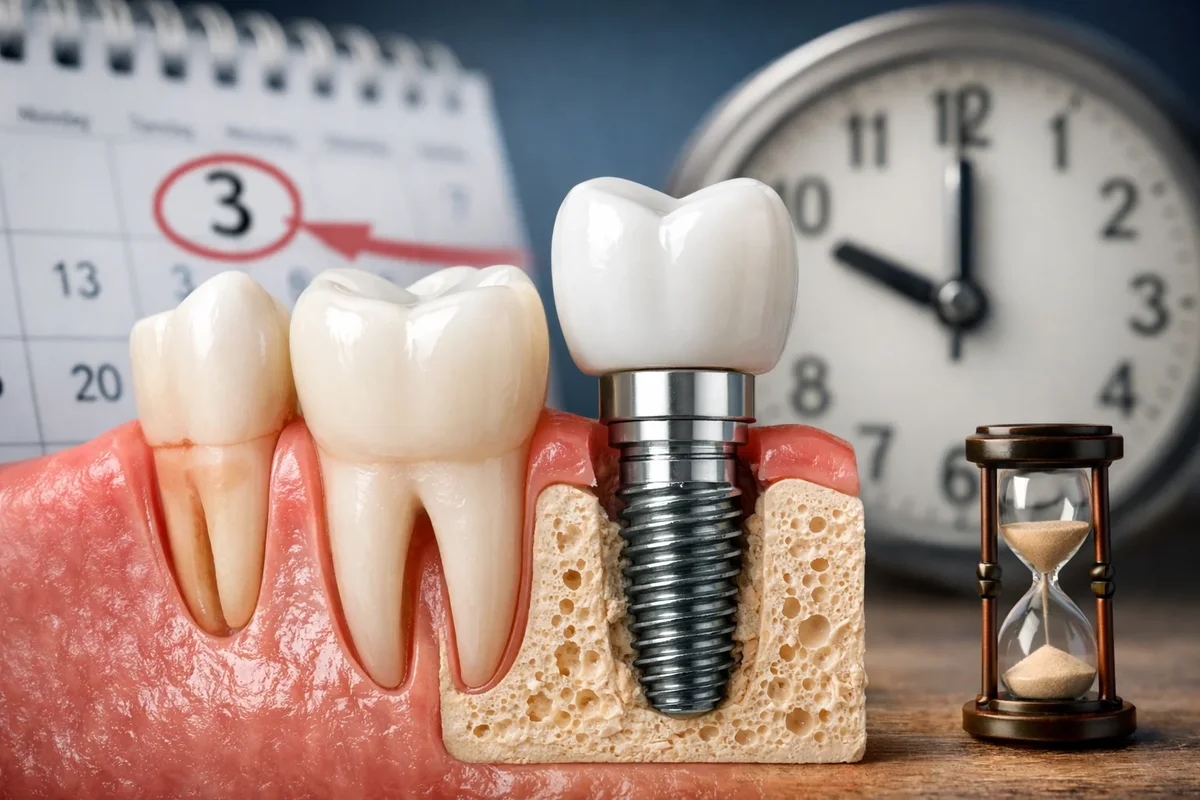
Dental Implant How Long Is the Entire Recovery Period?
When patients evaluate implant treatment, one of the final and most comprehensive questions they ask is: dental implant how long is the entire recovery period? While surgery may only take an hour, recovery is a multi-phase process involving soft tissue healing, bone integration, and functional adaptation. Understanding the full recovery timeline allows patients to prepare mentally, physically, and professionally for each stage of treatment.
To properly answer dental implant how long the entire recovery lasts, it is important to separate short-term healing from long-term biological integration. Immediate post-surgical recovery is relatively quick. However, complete internal healing can take several months. On average, the total recovery period ranges from 3 to 6 months, though complex cases involving bone grafting may extend this timeline to 9–12 months.
Phase 1: Immediate Post-Surgical Recovery (0–7 Days)
The first stage of recovery focuses on managing swelling, mild discomfort, and protecting the surgical site. When patients ask dental implant how long they need to rest after surgery, the answer is usually just 1–3 days for most routine cases.
What to Expect During the First Week
- Mild swelling peaking at 48–72 hours
- Slight bruising in some cases
- Minor tenderness while chewing
- Stitches removal within 7–10 days (if placed)
Most patients return to work within 24–48 hours. Therefore, when evaluating dental implant how long visible discomfort lasts, it is generally less than one week.
Phase 2: Early Healing and Tissue Stabilization (2–6 Weeks)
During this phase, the gum tissue fully closes around the implant. While discomfort is minimal, internal bone remodeling begins. Patients sometimes believe recovery is complete at this point, but when considering dental implant how long full recovery takes, deeper healing is still underway.
This period is critical for avoiding excessive pressure on the implant site. Dentists may recommend a soft-food diet temporarily. The implant feels stable, but osseointegration is still progressing.
Phase 3: Osseointegration (3–6 Months)
This is the most important stage when determining dental implant how long the entire recovery period truly lasts. Osseointegration is the biological bonding process between the implant and the jawbone. It typically requires 3 to 6 months for full stability.
Why This Phase Takes Time
- Bone cells gradually attach to the implant surface
- Micro-movements must be avoided to ensure bonding
- Bone density influences integration speed
Even though patients feel normal during this period, the internal healing continues. Therefore, when asked dental implant how long full recovery requires, dentists often refer primarily to this osseointegration window.
Phase 4: Final Restoration and Functional Adaptation
Once integration is confirmed, the final crown is placed. At this stage, many patients feel that recovery is complete. However, subtle adaptation still occurs as the bite adjusts to the new tooth. When calculating dental implant how long until everything feels completely natural, some patients may need a few additional weeks of adaptation.
Chewing strength gradually returns to normal levels. Unlike removable dentures, implants function like natural teeth and stimulate bone during chewing, preserving jaw structure long term.
Factors That Influence Total Recovery Time
Several variables determine dental implant how long the overall recovery period may last:
- Number of implants placed
- Bone quality and density
- Need for bone grafting
- Smoking habits
- Systemic health conditions
- Oral hygiene practices
Patients requiring sinus lifts or major grafting procedures may experience extended healing. In such cases, the answer to dental implant how long the entire recovery lasts may approach one year.
When Are You Fully Recovered?
Full recovery does not simply mean absence of pain. It means the implant is completely integrated, the crown is functional, and the surrounding tissues are healthy. Most patients reach this stage within 4–6 months. However, every case is unique.
Regular dental checkups during recovery help ensure the process remains on track. Professional monitoring significantly improves outcomes and confirms when recovery milestones are achieved.
Long-Term Maintenance After Recovery
Even after full recovery, maintenance plays a critical role. When patients ask dental implant how long the benefits last, the answer depends heavily on long-term care. Daily brushing, flossing, and routine dental visits protect against peri-implantitis and bone loss.
Unlike natural teeth, implants cannot decay, but the surrounding gum tissue must remain healthy. Therefore, long-term stability depends on continued hygiene and professional evaluation.
Final Summary of the Entire Recovery Period
To summarize clearly:
- Immediate discomfort: 3–7 days
- Soft tissue healing: 2–6 weeks
- Osseointegration: 3–6 months
- Complete recovery including crown placement: 4–7 months on average
In more complex cases involving grafting, dental implant how long full recovery lasts may extend to 9–12 months. 🦷✨
Ultimately, the recovery journey is gradual but predictable. While short-term healing is quick, long-term integration requires patience. The comprehensive answer to dental implant how long the entire recovery period lasts depends on biology, treatment complexity, and patient care. With proper planning and follow-up, dental implants provide stable, long-lasting function that makes the recovery investment worthwhile.