
When you search for a dental implant nearby, it often means you are looking for a trusted clinic close to your home or workplace that can provide effective, long-lasting tooth replacement solutions. Dental implants are considered the gold standard in modern dentistry for replacing missing teeth because they look, feel, and function almost exactly like natural teeth. In this comprehensive guide, we will explore everything you need to know about dental implants, why choosing a nearby clinic matters, the steps involved in the procedure, and how to ensure a smooth recovery.
Unlike dentures or bridges, which can sometimes feel unstable or require adjustments, implants are surgically placed into your jawbone, fusing with the bone over time. This creates a solid foundation for crowns, bridges, or even full-arch prosthetics. Whether you lost a tooth due to injury, decay, or gum disease, implants can restore your smile and confidence. By opting for a dental implant nearby, you also gain convenience, shorter travel time for appointments, and the ability to build a lasting relationship with your dentist. 🦷
Why Proximity Matters
Choosing a dental implant nearby is not just about convenience; it also directly impacts your treatment success. The implant process usually requires multiple visits for consultation, surgery, follow-up, and adjustments. Having a clinic close to you reduces stress and makes it easier to attend each session without disrupting your daily life. Furthermore, local clinics often understand the community’s specific needs, offer tailored pricing, and provide personalized care. If any complications occur, you can quickly return for immediate evaluation without long travel delays.
Understanding the Basics of Dental Implants
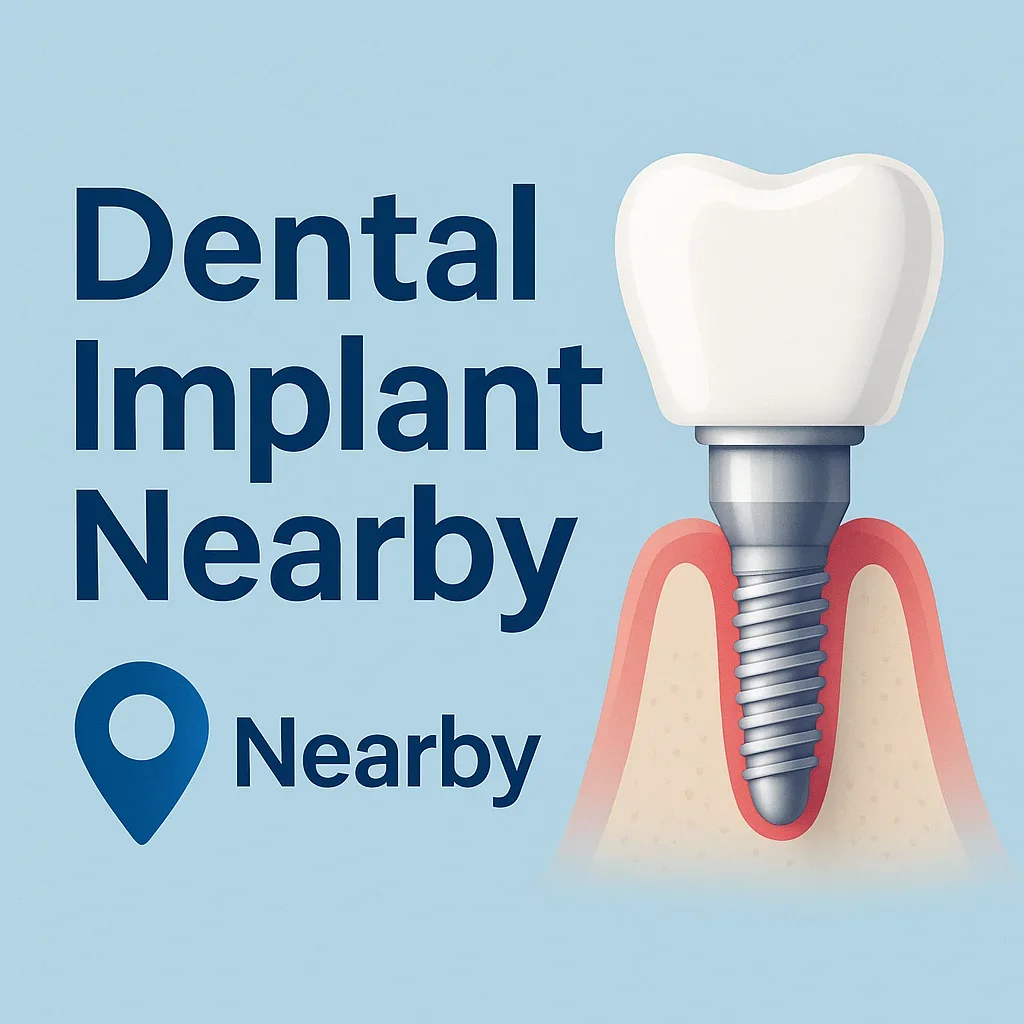
A dental implant consists of three essential parts:
- The Implant Post: A titanium or zirconia screw that integrates with your jawbone.
- The Abutment: A connector placed on top of the implant to support the crown.
- The Crown: A natural-looking artificial tooth that restores your smile.
These three components work together to create a permanent solution that not only looks natural but also helps maintain bone density, preventing jawbone deterioration—a common problem when teeth are missing.
Key Advantages of Nearby Dental Implants
Searching for a dental implant nearby offers both medical and practical benefits. First, implants help preserve your facial structure and prevent the sunken appearance that often develops after tooth loss. Second, implants do not rely on neighboring teeth for support, unlike traditional bridges, which means your healthy teeth remain untouched. Third, implants improve chewing efficiency and allow you to enjoy a diverse diet without discomfort. And finally, when placed in a conveniently located clinic, regular checkups are easier to schedule, which contributes to long-term success and satisfaction.
Factors to Consider When Selecting a Clinic
Not all dental clinics offer the same expertise or technology. Here are important factors to keep in mind:
- Experience: Look for dentists with extensive training in implantology.
- Technology: Clinics with 3D imaging and guided surgery tools provide more precise results.
- Reviews and Testimonials: Patient experiences can give you insights into the quality of care.
- Accessibility: A dental implant nearby ensures minimal travel stress, especially during recovery.
Many patients also prefer local clinics because they can more easily schedule emergency visits or same-day consultations if problems arise.
Health Benefits Beyond Tooth Replacement
One of the most significant advantages of implants is their effect on your oral and overall health. By restoring proper chewing function, implants improve digestion and nutrition. They also prevent neighboring teeth from shifting into empty spaces, maintaining a balanced bite. Additionally, because implants stimulate the jawbone, they reduce the risk of bone loss and gum disease. This is why dentists often recommend implants as the first choice for tooth replacement over removable dentures.
Cost and Long-Term Value
While the upfront investment for a dental implant nearby may seem higher compared to dentures or bridges, the long-term value is unmatched. Implants can last decades with proper care, often making them more cost-effective over time. Unlike dentures that need frequent replacements or bridges that may damage surrounding teeth, implants preserve natural oral structures. You should also consider the time and travel costs saved by choosing a clinic close to home. 💰
Aftercare and Maintenance
To ensure your implant lasts as long as possible, proper aftercare is crucial. Dentists typically recommend:
- Brushing twice daily with a soft-bristled toothbrush.
- Flossing or using interdental brushes to clean around the implant.
- Regular dental checkups every 6 months.
- Avoiding habits such as smoking, which can slow healing and increase implant failure risk.
By selecting a dental implant nearby, follow-up appointments become simpler, which improves your adherence to aftercare routines.
Finding Reliable Information
When researching dental implants, it’s important to rely on credible sources. You can visit the American Dental Association for authoritative information about implant procedures, safety, and ongoing research. If you want personalized guidance or to book an appointment, you can reach out directly through the Redent Klinik Contact Page for expert advice and consultation tailored to your needs.
Final Thoughts
Searching for a dental implant nearby is often the first step toward restoring your smile, confidence, and oral health. With modern technology and skilled dental professionals, implants can deliver life-changing results. By choosing a conveniently located clinic, you ensure accessibility, ongoing support, and personalized treatment. Remember that your decision will impact your health, comfort, and self-esteem for years to come. With the right care, your new implant can last a lifetime, allowing you to eat, smile, and live with confidence. 🌟
What Is a Dental Implant and How Does It Work?
When people search for a dental implant nearby, they are often trying to understand not only where they can get treatment but also what the procedure truly involves. A dental implant is an advanced dental solution designed to replace missing teeth with a durable, natural-looking alternative that integrates directly into the jawbone. Unlike dentures or bridges, implants become part of your oral structure, providing stability and strength comparable to real teeth. This section will explain the science behind implants, their parts, and how they function over time.
The Structure of a Dental Implant
A dental implant is not a single unit but a combination of three main components working together to restore your smile:
- Implant Fixture: This is the screw-like post, typically made of titanium or zirconia, which is surgically placed into the jawbone. It acts as an artificial tooth root.
- Abutment: A small connector placed on top of the implant fixture that links the crown to the implant post.
- Crown: The visible part of the implant, crafted from ceramic or porcelain, that looks and feels like a natural tooth.
The seamless integration of these parts ensures stability, durability, and natural aesthetics. By choosing a dental implant nearby, patients can easily follow up with their dentist during each stage of this process.
The Science of Osseointegration
The key factor that makes dental implants successful is a biological process called osseointegration. This occurs when the implant post fuses with the surrounding jawbone over several months. During this time, new bone cells grow around the implant surface, locking it firmly in place. This fusion gives implants the ability to withstand chewing forces just like natural teeth. It also helps prevent bone loss, which is a common consequence of missing teeth. A nearby clinic ensures patients can return for regular X-rays and checkups to confirm osseointegration is progressing correctly.
Step-by-Step Functionality
Understanding how implants work involves breaking the process into clear stages:
- Initial Consultation: Your dentist evaluates your oral health, bone density, and overall suitability for implants.
- Surgical Placement: The implant fixture is surgically inserted into the jawbone under local anesthesia or sedation.
- Healing Period: Osseointegration takes place over 3–6 months, ensuring the implant becomes stable.
- Abutment Placement: After healing, the abutment is attached to the implant.
- Crown Attachment: Finally, a custom-made crown is fixed, completing the restoration.
Each of these steps requires close follow-up. By working with a dental implant nearby, patients benefit from easier scheduling and reduced travel stress throughout the entire journey.
Different Types of Dental Implants
Not all implants are the same. Depending on your needs, dentists may recommend:
- Endosteal Implants: The most common type, inserted directly into the jawbone.
- Subperiosteal Implants: Placed under the gum but above the bone, often used when bone height is insufficient.
- All-on-4 Systems: A method where four implants support an entire arch of replacement teeth.
Discussing options with a dental implant nearby ensures you receive personalized advice suited to your bone structure, budget, and lifestyle.
Comparisons With Other Tooth Replacement Options
Many patients wonder why they should choose implants instead of dentures or bridges. Here are the differences:
- Implants: Permanent, stable, prevent bone loss, and do not harm neighboring teeth.
- Dentures: Removable, can slip during eating or speaking, may cause sore spots.
- Bridges: Require grinding down adjacent teeth for support, which can weaken them over time.
While implants may require a larger initial investment, their long-term benefits often outweigh other solutions. Finding a dental implant nearby means you can conveniently access this superior treatment while minimizing travel time.
Who Is a Candidate for Dental Implants?
Not everyone qualifies immediately for implants, but many patients can become eligible with proper preparation. Ideal candidates usually have:
- Healthy gums free of active infection.
- Adequate jawbone density to support the implant.
- Good overall health for safe healing and recovery.
If bone density is insufficient, your dentist may recommend grafting procedures to build support. The advantage of selecting a dental implant nearby is that follow-up visits for such preparatory treatments are easier to manage.
Longevity and Function
When properly placed and maintained, implants can last 20 years or longer—often a lifetime. Unlike dentures that may wear out every 5–7 years, implants provide reliable, long-term functionality. They allow patients to bite into apples, enjoy steak, and speak confidently without worrying about slipping or shifting. With a dental implant nearby, long-term maintenance is simplified since you can routinely visit your local clinic for checkups.
Emotional and Aesthetic Benefits
Beyond functionality, implants also restore confidence. Missing teeth can affect self-esteem, social interactions, and even career opportunities. A natural-looking implant eliminates these barriers, giving patients the ability to smile freely. By choosing a dental implant nearby, you also gain the emotional comfort of consistent care from a familiar dental team who understands your journey.
Conclusion: Why Understanding Implants Matters
In summary, a dental implant is a state-of-the-art solution that functions as a replacement root, supporting a crown that looks and feels like your real tooth. Through the process of osseointegration, implants become a permanent part of your oral structure. By searching for and choosing a dental implant nearby, you make it easier to undergo consultations, attend follow-ups, and ensure long-term success. This combination of medical science, convenience, and aesthetic transformation explains why implants are the top recommendation for modern tooth replacement. 🌟
Benefits of Choosing a Dental Implant Nearby
When you consider getting a dental implant nearby, the benefits extend far beyond just replacing a missing tooth. Dental implants are one of the most advanced restorative treatments in modern dentistry, offering not only a functional solution but also aesthetic, emotional, and practical advantages. Patients often find that choosing a clinic close to home improves their overall treatment experience, ensuring accessibility and personalized care. In this section, we will explore the major benefits of opting for a dental implant, focusing on both the medical science and the convenience of selecting a nearby provider.
Improved Oral Functionality
One of the most significant advantages of a dental implant is the restoration of oral functionality. Missing teeth make chewing difficult, limiting the foods you can enjoy. With a dental implant nearby, you can regain your ability to chew efficiently. The titanium post acts like a natural tooth root, providing a stable foundation for biting into foods like apples, nuts, or steak. Unlike removable dentures, which can slip or cause sore spots, implants remain firmly in place, giving you the confidence to enjoy meals without worry. 🍎
Natural Aesthetic Appearance
Dental implants are carefully designed to mimic the look and feel of natural teeth. The crowns are custom-made to match the shape, size, and color of your existing teeth. This makes them virtually indistinguishable from natural teeth, ensuring your smile looks natural and complete. By choosing a dental implant nearby, you can attend multiple fittings and follow-up appointments easily, allowing your dentist to perfect the aesthetics and guarantee your satisfaction.
Preservation of Jawbone Health
One unique benefit of implants compared to dentures or bridges is their ability to preserve bone density. When a tooth is lost, the jawbone in that area begins to deteriorate due to lack of stimulation. Over time, this can lead to changes in facial structure, such as sagging cheeks or a sunken appearance. Implants prevent this problem by stimulating the jawbone, just like natural tooth roots. With a dental implant nearby, you can conveniently schedule bone health checkups and ensure your oral structures remain strong and youthful.
Preventing Tooth Shifting
When there is a gap in your smile, neighboring teeth tend to shift into the empty space, causing misalignment. Misaligned teeth can lead to bite issues, TMJ discomfort, and difficulties in cleaning, which increases the risk of gum disease. Implants prevent this shifting by filling the gap permanently. Having a clinic close to you makes it easier to monitor your bite and alignment post-treatment.
Long-Term Durability
Dental implants are known for their long lifespan. With proper care, they can last for 20 years or more—often a lifetime. This makes them a cost-effective choice in the long run compared to dentures or bridges that require frequent replacement. Choosing a dental implant nearby adds to this benefit, as follow-up care and regular maintenance become more convenient, further extending the lifespan of your implant.
Boost in Confidence and Mental Well-Being
Missing teeth often have a psychological impact, leading to self-consciousness, reduced confidence, and hesitation to smile in public. Restoring your smile with a dental implant not only improves oral function but also enhances self-esteem. A dental implant nearby allows you to receive continuous care from the same dentist, strengthening trust and ensuring your emotional comfort throughout the journey. Smiling confidently can positively affect both social and professional life. 😃
Convenience of a Local Provider
Implant treatment typically involves several stages: consultation, surgery, healing, abutment placement, and final crown fitting. Each step requires visits to your dentist. By choosing a dental implant nearby, you minimize travel time and reduce stress. Local providers often understand community needs and can offer more flexible scheduling, including emergency care. Accessibility is a practical benefit that cannot be overstated, especially for patients who may need additional procedures like bone grafts or sinus lifts.
Emergency Care and Follow-Ups
Sometimes, post-surgical swelling, discomfort, or minor complications may arise. Having your dentist nearby ensures you can quickly access emergency care without long travel times. This proximity often leads to better outcomes because issues can be resolved immediately.
Speech Improvement
Missing teeth or ill-fitting dentures can cause slurred or unclear speech. Dental implants restore natural articulation by stabilizing the jaw and supporting the tongue in its correct position. With a dental implant nearby, follow-up appointments for adjustments can be completed without hassle, ensuring you regain clear and confident speech.
Better Oral Hygiene Maintenance
Unlike bridges, which require altering adjacent teeth, implants preserve natural tooth structure. They also make oral hygiene easier because you can brush and floss around them just like normal teeth. By working with a dental implant nearby, you can regularly visit your dentist for professional cleanings and receive personalized advice on maintaining implant hygiene.
Conclusion: Why Benefits Multiply When Nearby
In conclusion, choosing a dental implant nearby provides a multitude of benefits—from restored chewing power and natural appearance to bone preservation, durability, and enhanced confidence. The added convenience of a local provider ensures easier follow-ups, better aftercare, and quick access to emergency services if needed. These combined advantages make nearby dental implants the ideal choice for patients seeking both functional and emotional improvements. When you opt for a local clinic, you’re not only investing in your oral health but also in a smoother, stress-free treatment experience. 🌟
Step-by-Step Dental Implant Procedure Explained
For anyone searching for a dental implant nearby, understanding the full procedure can help ease anxiety and set realistic expectations. Dental implants are not completed in a single visit; rather, they involve a carefully structured series of steps that ensure stability, functionality, and long-lasting results. By breaking the process down into clear stages, patients can feel more confident about what lies ahead and understand why proximity to their clinic is such an important advantage.
Initial Consultation and Evaluation
The journey begins with an in-depth consultation. During this stage, your dentist will:
- Review your dental and medical history.
- Take digital X-rays and 3D cone-beam CT scans to evaluate bone density.
- Check for gum health, bite alignment, and oral hygiene practices.
This assessment helps determine if you are a good candidate for implants. If bone density is low, preparatory procedures like bone grafting may be recommended. Opting for a dental implant nearby makes it easier to attend these preliminary appointments and follow-up evaluations without the burden of long travel times.
Preparatory Procedures
Not every patient is ready for implants right away. Some may need additional treatments before placement:
- Bone Grafting: Used when the jawbone lacks sufficient density.
- Sinus Lift: Elevating the sinus membrane to allow implant placement in the upper jaw.
- Tooth Extraction: If a damaged or decayed tooth must be removed before implant placement.
These steps are vital to ensure long-term success. By choosing a dental implant nearby, you can undergo these preparatory procedures conveniently, with frequent follow-ups if needed.
Surgical Placement of the Implant Fixture
The surgical stage involves placing the titanium or zirconia post into the jawbone. This is done under local anesthesia, sedation, or general anesthesia depending on the patient’s comfort level. The implant acts as an artificial root, providing the foundation for the prosthetic tooth.
The Surgical Process
Here is what typically happens during surgery:
- The dentist makes a small incision in the gum to expose the bone.
- A hole is drilled precisely into the jawbone.
- The implant fixture is screwed securely into place.
- The gums are sutured closed over or around the implant.
This procedure usually takes about 1–2 hours per implant. Having a dental implant nearby ensures you won’t have to endure long travel times immediately before or after surgery, which can be physically exhausting.
Healing and Osseointegration Phase
After placement, the body needs time to heal and allow the implant to fuse with the bone in a process called osseointegration. This phase can take 3–6 months, depending on individual healing rates and bone quality. During this period, the implant becomes as stable as a natural tooth root.
Follow-up appointments are crucial to monitor healing progress. By selecting a dental implant nearby, you can easily attend these checkups, making sure everything is on track without disrupting your daily schedule.
Abutment Placement
Once osseointegration is complete, the next step is placing the abutment. This small connector attaches to the implant fixture and holds the crown in place.
Abutment Procedure
The gum is reopened slightly to expose the implant, and the abutment is attached. In some cases, a healing cap is used temporarily to shape the gum tissue around the abutment for a more natural appearance. Choosing a dental implant nearby makes this stage more convenient, as you may need multiple visits for proper adjustments.
Impression and Crown Placement
The final stage involves creating and placing the crown. Your dentist will take impressions of your teeth to craft a custom crown that matches the color, size, and shape of your natural teeth. Once fabricated, the crown is attached to the abutment, completing your smile restoration.
This crown is designed to blend seamlessly with your existing teeth, making it indistinguishable from the real thing. Having access to a dental implant nearby makes it easier to attend fittings and adjustments until the crown feels perfect.
Post-Procedure Care
After the crown placement, your dentist will provide instructions for care and maintenance. This includes regular brushing, flossing, and avoiding habits like smoking, which can interfere with healing. Follow-up visits will ensure the implant remains stable and healthy.
Practical Advantages of Local Care
Since dental implant treatment requires multiple stages over several months, having your provider nearby significantly improves your experience. It reduces travel stress, supports better follow-up adherence, and provides peace of mind that help is close by if complications arise.
Conclusion: The Importance of Proximity in the Procedure
The dental implant process is a multi-step journey involving evaluation, surgery, healing, abutment placement, and final crown fitting. While the procedure may take several months, the results are worth the wait. Choosing a dental implant nearby simplifies every stage of this journey by providing easier access to appointments, quicker responses to concerns, and more consistent care. This convenience enhances both medical outcomes and patient satisfaction, ensuring your new smile is strong, stable, and designed to last a lifetime. 🌟
How to Find the Best Dental Implant Nearby
Searching for the best dental implant nearby can feel overwhelming, especially with so many clinics and dentists advertising their services. However, finding the right provider is critical for ensuring a safe, effective, and long-lasting treatment. Dental implants are a long-term investment in both your oral health and overall well-being, so careful research and evaluation of local options is essential. This section will guide you through the key factors to consider, the steps to take, and how to determine whether a clinic is the right match for your needs.
Check the Dentist’s Qualifications and Expertise
The first step in choosing a dental implant nearby is to review the qualifications of the dentist who will perform the procedure. Implantology requires specialized training beyond general dentistry. Look for dentists who:
- Have completed post-graduate training in implantology or oral surgery.
- Hold memberships in professional organizations such as the American Dental Association.
- Regularly attend workshops and courses to stay updated with the latest techniques.
By verifying these qualifications, you ensure that your provider has both the knowledge and practical skills required to deliver successful implant treatments.
Evaluate Technology and Facilities
A modern clinic offering the best dental implant nearby will have advanced technology that improves precision and outcomes. This may include:
- 3D Cone Beam CT Scans: For accurate assessment of bone structure.
- Digital Impressions: For creating crowns that fit perfectly.
- Guided Surgery Tools: For precise implant placement.
Technology reduces risks and increases success rates. Choosing a clinic nearby with these facilities also makes it easier to return for scans and follow-up treatments without long travel times.
Read Patient Reviews and Testimonials
Word of mouth and online reviews can provide valuable insights into the quality of care at a clinic. Look for consistent positive feedback regarding professionalism, cleanliness, and patient outcomes. A dental implant nearby with high ratings and detailed testimonials is often a strong indicator of reliability and patient satisfaction.
What to Look for in Reviews
When reading reviews, pay attention to:
- How patients describe the comfort and success of their implant treatment.
- Whether the clinic provides clear explanations and good communication.
- Reports about aftercare and support for patients during recovery.
Compare Costs and Transparency
Dental implants can be a significant investment, and prices vary widely between providers. While searching for the best dental implant nearby, ask for detailed cost breakdowns that include consultation fees, surgery, implant parts, crowns, and follow-ups. Avoid clinics that provide vague pricing or hidden fees. Remember, the cheapest option is not always the best—quality materials and experienced professionals may come at a higher cost but ensure long-term success.
Typical Price Ranges
On average, dental implants may cost between $1,500 to $3,000 for the implant fixture, plus $500 to $3,000 for the crown, depending on materials and location. Comprehensive treatment for one tooth often totals $3,000 to $6,000. A nearby clinic allows easier financial consultations, installment planning, and transparent discussions about costs.
Accessibility and Location
One of the most practical advantages of choosing a dental implant nearby is accessibility. Implant treatment requires multiple visits over several months. Selecting a clinic close to home or work saves time, reduces travel-related stress, and makes it easier to stick to follow-up appointments. This convenience can also lead to better adherence to aftercare, improving overall treatment success.
Emergency and Aftercare Services
A reliable clinic offering the best dental implant nearby should also provide emergency services and comprehensive aftercare. Dental implant recovery sometimes involves minor complications such as swelling or discomfort, and having quick access to your dentist is essential. Ask whether the clinic offers same-day appointments, 24-hour contact options, or special care plans for implant patients.
Ask for Before-and-After Photos
Visual evidence of past cases can help you assess a clinic’s expertise. Before-and-after images of dental implant treatments show the quality of the work and the dentist’s ability to create natural-looking results. A dental implant nearby provider with a portfolio of successful cases is often more trustworthy than one without such transparency.
Personal Comfort and Communication
Finally, consider how comfortable you feel with the dentist and staff. Clear communication, empathy, and patient-focused care are critical factors. You should feel confident asking questions and receiving thorough answers. With a dental implant nearby, building this relationship is easier since you’ll be returning for multiple visits over time. Good rapport enhances your treatment experience and ensures long-term satisfaction.
Conclusion: Making the Right Choice Locally
Finding the best dental implant nearby requires careful research into qualifications, technology, reviews, pricing, and aftercare services. By focusing on a clinic that offers both professional excellence and convenient access, you maximize your chances of a smooth and successful implant journey. A nearby location provides peace of mind, reduces logistical challenges, and ensures that expert help is always within reach. Ultimately, the right choice combines medical expertise with local convenience, delivering a smile that is both beautiful and lasting. 🌟
Costs of Dental Implants: What to Expect 💰
One of the most common questions patients ask when searching for a dental implant nearby is about the cost. Dental implants are widely recognized as the gold standard for tooth replacement, but they also represent a significant investment. Understanding the breakdown of costs, what influences pricing, and why implants are worth the expense will help you make an informed decision. In this section, we’ll dive into the financial aspects of dental implants, comparing them to other restorative options and explaining why nearby access to your dentist can save you money in the long term.
Factors That Influence the Cost
The total price of a dental implant can vary greatly depending on several factors:
- Location of the Clinic: A dental implant nearby may cost less or more depending on local economic conditions and clinic reputation.
- Experience of the Dentist: Highly skilled implantologists often charge more for their expertise.
- Type of Implant and Material: Titanium implants are standard, while zirconia may cost extra.
- Preparatory Procedures: Tooth extractions, bone grafts, or sinus lifts increase overall costs.
- Number of Implants Needed: A single-tooth implant is less expensive than full-arch solutions such as All-on-4 implants.
Considering these factors will help you estimate the real cost of choosing a dental implant nearby and budget accordingly.
Typical Price Ranges
While exact pricing varies, here are average cost ranges in the United States and Europe:
- Implant fixture (screw): $1,500 – $3,000
- Abutment: $300 – $600
- Crown: $800 – $3,000
- Total single-tooth implant: $3,000 – $6,500
- All-on-4 full arch: $15,000 – $30,000 per jaw
These figures highlight why transparency in pricing is crucial when choosing the best dental implant nearby. Always request a written treatment plan that clearly states costs upfront.
Insurance and Payment Options
Unfortunately, many insurance plans categorize implants as “cosmetic” and may not fully cover them. However, partial coverage might apply to certain stages, such as tooth extraction or crowns. Some clinics also offer:
- Flexible payment plans.
- Third-party financing options with low or zero interest.
- Discounts for upfront payments.
Choosing a dental implant nearby also makes financial discussions easier, as you can schedule in-person consultations to go over payment plans in detail.
Hidden Costs to Watch For
When comparing clinics, be mindful of hidden fees. Some offices may advertise low implant prices but exclude necessary items like abutments, X-rays, or crown fittings. A trustworthy dental implant nearby will always provide a comprehensive breakdown of all costs, ensuring there are no surprises later.
Examples of Additional Expenses
- Diagnostic imaging (CT scans, X-rays): $100 – $500
- Bone grafting procedures: $400 – $2,500
- Sinus lift surgery: $1,000 – $3,000
- Temporary prosthetics: $200 – $500
These additional charges emphasize why upfront clarity is so important in your search for the best dental implant nearby.
Comparisons With Other Tooth Replacement Options
To understand whether implants are worth the cost, compare them to other solutions:
- Dental Bridges: $1,500 – $3,000 per tooth but may damage healthy adjacent teeth.
- Partial Dentures: $300 – $1,500 but lack stability and may require replacement every 5–7 years.
- Full Dentures: $600 – $5,000 but often uncomfortable and require adhesives.
While initial costs are higher, implants last significantly longer and preserve bone health, making them a more cost-effective solution in the long run. With a dental implant nearby, you also reduce travel-related costs and time, adding further value to your investment.
Long-Term Value of Implants
Think of implants not as an expense but as an investment. They preserve bone, protect surrounding teeth, and restore functionality for decades. Unlike dentures that often need replacement or bridges that may fail, implants are designed to last a lifetime. This longevity provides an exceptional return on investment. By choosing a dental implant nearby, you ensure consistent maintenance and follow-up, which further extends the lifespan of your implant.
How to Budget for Implants
If the price seems intimidating, consider these budgeting tips:
- Start with a consultation to get an accurate quote.
- Prioritize urgent implants (such as visible front teeth) first, then replace others gradually.
- Set up a savings plan dedicated to dental health.
- Explore financing programs offered by your dental implant nearby clinic.
Planning ahead ensures you won’t face unexpected financial stress during treatment.
Conclusion: Balancing Cost and Value
While the cost of a dental implant nearby may seem high initially, the long-term benefits—durability, natural appearance, oral health preservation, and improved quality of life—far outweigh the investment. Transparency, accessibility, and ongoing maintenance provided by a local clinic further enhance the value. By understanding the breakdown of costs and preparing financially, you can confidently move forward with this life-changing treatment. Ultimately, implants are not just about replacing teeth—they’re about restoring confidence, health, and the ability to smile without hesitation. 🌟
Recovery Tips After Getting a Dental Implant
Recovering from a dental implant nearby procedure is just as important as the surgery itself. Proper aftercare ensures that your implant integrates successfully with the jawbone and lasts for many years. While implants boast a high success rate, patient cooperation during recovery plays a critical role. Following clear guidelines, attending follow-up visits, and making small lifestyle adjustments can make the difference between a smooth healing process and potential complications. Below, we’ll walk through practical, step-by-step recovery tips so you can feel confident about your journey after implant placement.
The First 24 Hours After Surgery
The first day after implant placement requires extra caution. During this initial period, your body begins the healing process, and your actions directly influence the success of osseointegration.
- Rest: Avoid strenuous activities for at least 24 hours. Physical exertion can increase blood flow to the head and cause bleeding at the surgical site.
- Ice Packs: Apply cold compresses on the cheek near the surgical area to reduce swelling.
- Diet: Stick to soft, cool foods like yogurt, smoothies, and mashed potatoes. Avoid hot drinks and spicy foods.
Choosing a dental implant nearby makes it easier to return quickly to your dentist if excessive bleeding, pain, or swelling occurs during this crucial window.
Pain and Swelling Management
Mild discomfort and swelling are normal for the first few days after implant surgery. Your dentist will typically prescribe pain relievers or recommend over-the-counter medications. Swelling usually peaks around day two or three and then gradually subsides.
Practical Tips for Relief
- Elevate your head with extra pillows when sleeping to reduce swelling.
- Rinse your mouth gently with salt water (after 24 hours) to soothe tissues and prevent infection.
- Avoid smoking and alcohol, as they can slow healing and increase implant failure risk.
By choosing a dental implant nearby, you can easily schedule an additional appointment if swelling or pain doesn’t improve after the first week.
Dietary Adjustments During Recovery
Your diet is crucial in the weeks following surgery. Hard or sticky foods may disrupt the healing implant and should be avoided until your dentist gives clearance.
- Recommended Foods: Soft fruits, scrambled eggs, oatmeal, smoothies, soups.
- Avoid: Hard nuts, crusty bread, sticky candy, or chewing ice.
Maintaining a balanced diet rich in vitamins and protein will also accelerate healing. A dental implant nearby provider can offer personalized nutrition advice to aid recovery.
Oral Hygiene During Healing
Maintaining oral hygiene is vital, but brushing too aggressively near the implant can cause irritation.
- Use a soft-bristled toothbrush and non-abrasive toothpaste.
- Floss carefully around the implant using specialized floss or interdental brushes.
- Consider antimicrobial rinses recommended by your dentist.
With a dental implant nearby, you can attend regular cleanings and follow-up exams to ensure your oral hygiene routine supports implant success.
Activity Restrictions and Lifestyle Choices
During recovery, patients should avoid activities and habits that can compromise healing.
- Smoking: Nicotine constricts blood vessels, slowing tissue healing and increasing implant failure risk.
- Alcohol: Avoid excessive drinking, as it can interfere with medications and prolong swelling.
- Exercise: Resume light activities only after your dentist’s approval, typically after a week.
A nearby clinic can provide consistent lifestyle guidance and monitor your progress closely, ensuring your recovery stays on track.
Follow-Up Appointments
Regular follow-up visits allow your dentist to monitor healing, adjust sutures if necessary, and confirm that osseointegration is progressing properly. These checkups are crucial in detecting complications early, such as infection or implant instability.
By working with a dental implant nearby, you minimize disruptions to your daily routine, making it easier to attend each appointment and maintain accountability for your oral health.
What Happens During Checkups?
Your dentist may perform X-rays to evaluate bone fusion, check bite alignment, and assess gum tissue healing. If issues arise, early intervention is always more effective—and far more convenient when your clinic is close to home.
Signs You Should Contact Your Dentist Immediately
While most recoveries go smoothly, you should contact your dentist if you notice:
- Severe or worsening pain after the first few days.
- Persistent bleeding that does not subside.
- Unusual swelling or pus around the implant site.
- Fever or chills indicating possible infection.
Choosing a dental implant nearby means help is only a short trip away, giving you peace of mind throughout your recovery process.
Conclusion: Local Care for a Smooth Recovery
Recovering from a dental implant nearby involves rest, proper pain management, careful dietary choices, meticulous oral hygiene, and consistent follow-up care. By selecting a local provider, you benefit from easier access to emergency care, reduced travel stress, and personalized guidance at every step. With the right approach, recovery can be smooth and comfortable, setting the stage for a strong, stable implant that lasts for decades. Your smile deserves this level of attention and commitment—choosing a nearby dentist makes it all achievable. 🌟
Common Questions About Dental Implant Nearby
When patients begin searching for a dental implant nearby, they often have a series of important questions about the procedure, recovery, risks, and long-term expectations. Dental implants are a significant investment in oral health, and having clear, accurate answers builds confidence and helps patients make informed choices. In this section, we’ll address the most frequently asked questions in detail, ensuring that you have all the information you need before scheduling your consultation.
How Painful Is the Dental Implant Procedure?
One of the most common concerns is pain. Most patients are relieved to learn that implant surgery is performed under local anesthesia, and sedation may also be used for added comfort. During the procedure, you will feel pressure but not sharp pain. After surgery, mild discomfort, swelling, and tenderness are normal and can be managed with prescribed pain medication or over-the-counter options. Choosing a dental implant nearby ensures you can return for checkups if pain feels unusual or does not improve within a few days.
How Long Does the Whole Process Take?
The timeline varies, but most implant treatments span several months. Here’s a breakdown:
- Consultation and Evaluation: 1–2 visits.
- Surgical Placement: 1–2 hours per implant.
- Healing (Osseointegration): 3–6 months.
- Abutment and Crown Placement: 2–4 weeks after healing.
While this may seem lengthy, it ensures long-term stability. By selecting a dental implant nearby, you make these multiple visits easier to manage without travel fatigue.
Are Dental Implants Safe?
Yes, dental implants are safe when placed by qualified professionals. They have one of the highest success rates of any dental procedure—over 95% in healthy, non-smoking patients. Safety also depends on regular follow-ups, which are simpler to attend when your provider is nearby. Clinics offering dental implant nearby services often build strong patient relationships, ensuring ongoing care and monitoring.
Possible Side Effects
As with any surgery, minor side effects can occur, including swelling, bruising, and temporary discomfort. In rare cases, infection or implant failure may occur. Choosing an experienced dentist and a nearby location helps minimize these risks and provides rapid intervention if needed.
How Long Do Dental Implants Last?
With proper care, dental implants can last 20 years or more, and many patients enjoy them for a lifetime. Longevity depends on factors such as oral hygiene, lifestyle habits, and overall health. A dental implant nearby makes it easier to schedule biannual checkups, which significantly improves the long-term success of your implant.
Do Dental Implants Look Natural?
Absolutely. The crowns placed on implants are custom-made to match your existing teeth in shape, size, and color. Skilled dentists ensure that the result blends seamlessly with your natural smile. When you choose a dental implant nearby, you can attend fittings and adjustments more conveniently, allowing your dentist to fine-tune the aesthetics until they are perfect. 😃
Can Anyone Get Dental Implants?
Most adults in good health are candidates for implants, but certain conditions may require additional preparation. Patients with insufficient bone density may need bone grafting, while those with gum disease must undergo treatment first. Chronic conditions such as uncontrolled diabetes or heavy smoking can affect success rates. A dental implant nearby provider can assess your individual situation and develop a customized plan.
How Much Do They Cost?
Costs vary depending on the number of implants, type of materials, and location. On average, a single implant may cost between $3,000 and $6,000 in the United States. Additional procedures like grafts or sinus lifts can add to the total. Selecting a dental implant nearby clinic allows for easier discussions about financing, insurance, and payment options.
Will I Need to Take Time Off Work?
Most patients only need 1–2 days off work after the surgery, depending on the complexity of the case. Mild swelling and tenderness may persist for a few days, but normal activities can usually resume quickly. The convenience of a dental implant nearby means less time lost commuting for follow-ups, making recovery even easier.
Tips for Scheduling
Plan your surgery before a weekend or during vacation time for the smoothest recovery. Having your provider nearby also ensures quick access if you experience discomfort when returning to work.
How Do I Care for My Implants Long-Term?
Caring for implants is similar to caring for natural teeth. Brush twice daily, floss regularly, and avoid habits like chewing ice or opening bottles with your teeth. Regular dental visits are critical. A dental implant nearby ensures that these appointments are easy to keep, improving long-term outcomes significantly.
Conclusion: Peace of Mind Through Local Expertise
Patients considering a dental implant nearby often have many questions, and rightly so. Understanding the safety, cost, recovery, and long-term expectations helps build confidence in this life-changing treatment. Choosing a nearby provider enhances every aspect of the process—from easier communication and follow-ups to immediate assistance if complications arise. With answers to these common questions, you are better equipped to move forward with clarity, confidence, and peace of mind. 🌟
Risks and Complications You Should Know
While a dental implant nearby offers many life-changing benefits, it is still a surgical procedure, and like all medical treatments, there are potential risks and complications. Understanding these risks helps patients set realistic expectations and take the necessary precautions to improve success rates. Fortunately, most risks are rare, and with proper care, implants maintain a success rate above 95%. Below, we’ll examine the potential complications, how to reduce their likelihood, and why choosing a nearby clinic plays an important role in early detection and management.
Short-Term Surgical Risks
Immediately after implant surgery, patients may experience common but temporary side effects. These include:
- Swelling and Bruising: Usually peaks within 48 hours and subsides gradually.
- Pain or Tenderness: Mild to moderate discomfort can be managed with medication.
- Minor Bleeding: May occur for up to 24 hours after placement.
These short-term issues are normal and typically resolve within days. Choosing a dental implant nearby allows you to access your dentist quickly if symptoms seem excessive or unusual.
Infection at the Implant Site
One of the more serious risks is infection, known medically as peri-implantitis. This condition occurs when bacteria build up around the implant, leading to inflammation of the gums and bone loss.
How to Prevent Infection
- Maintain strict oral hygiene with daily brushing and flossing.
- Avoid smoking, which significantly increases the risk of infection.
- Follow all post-surgical care instructions from your dentist.
A dental implant nearby ensures you can attend regular cleanings and follow-ups, helping to detect and treat early signs of infection before they escalate.
Implant Failure or Loosening
Although rare, implants can fail to integrate with the bone. This is usually due to insufficient bone density, infection, or excessive stress on the implant during healing. Patients with uncontrolled diabetes, heavy smoking habits, or poor oral hygiene face higher risks.
If failure occurs, the implant may need to be removed, and the area may require bone grafting before replacement. With a dental implant nearby, complications can be addressed promptly, improving the chances of successful re-treatment.
Nerve or Tissue Damage
In rare cases, improper implant placement can affect nearby nerves, causing numbness, tingling, or pain in the lips, tongue, or gums. Tissue injury to the sinus cavity is another possible complication when implants are placed in the upper jaw.
Minimizing the Risk of Nerve Damage
- Choose a dentist who uses advanced 3D imaging for accurate planning.
- Ask whether guided implant surgery is available.
- Ensure your dentist has extensive training in implantology.
Working with an experienced dental implant nearby provider reduces these risks, as follow-ups are more accessible if unusual symptoms occur.
Sinus Problems
For implants placed in the upper jaw, there is a slight risk of sinus perforation. This happens when the implant extends into the sinus cavity, potentially causing sinus pain, pressure, or infection. Sinus lift surgery may be required to build up bone in these cases. Having a dental implant nearby allows easier scheduling of such additional treatments and faster resolution of any sinus-related concerns.
Peri-Implantitis and Long-Term Risks
Peri-implantitis is one of the most concerning long-term risks. This condition is similar to gum disease and results in inflammation and progressive bone loss around the implant. Without treatment, it may lead to implant failure.
Symptoms include gum redness, swelling, bleeding during brushing, and in advanced cases, loosening of the implant. Regular professional cleanings and X-rays at your dental implant nearby clinic are vital to prevent and manage peri-implantitis.
Allergic Reactions or Rejection
Though extremely rare, some patients may have sensitivity to materials such as titanium or zirconia. This can lead to irritation or implant rejection. A consultation and allergy test before surgery can help identify risks. If you are concerned, ask your dental implant nearby provider about hypoallergenic materials.
Systemic Health Concerns
Underlying health issues can affect implant outcomes. Patients with uncontrolled diabetes, autoimmune diseases, or those undergoing chemotherapy may have slower healing rates and higher complication risks. Localized care from a dental implant nearby ensures closer monitoring and more frequent follow-ups to minimize systemic risks.
Conclusion: Awareness and Local Support Are Key
Although complications are possible, the overwhelming majority of patients enjoy successful outcomes with dental implants. Being aware of potential risks empowers you to take preventive steps, such as maintaining excellent oral hygiene, attending regular checkups, and following your dentist’s instructions carefully. Choosing a dental implant nearby provides an additional layer of safety, as it ensures immediate access to professional care if concerns arise. With proper awareness and the right provider, dental implants remain one of the safest and most effective solutions for tooth replacement. 🌟
Alternatives to Dental Implants You Can Consider
Although a dental implant nearby is often considered the best solution for missing teeth, it’s not the only option available. Some patients may not be ideal candidates for implants due to bone density, health conditions, or budget limitations. In such cases, understanding alternative treatments is essential for making the right decision. In this section, we’ll explore the most common alternatives to implants, their pros and cons, and when they might be more suitable. This ensures you’re fully informed before committing to a long-term solution for your oral health.
Dental Bridges
A dental bridge is a common alternative that literally “bridges” the gap left by a missing tooth. It typically involves placing crowns on adjacent teeth, which support an artificial tooth in between. Bridges are less invasive than implants and do not require surgery.
Advantages of Bridges
- Faster treatment compared to implants (usually completed in 2–3 weeks).
- Lower upfront cost.
- Good aesthetics and function.
Disadvantages of Bridges
- Requires grinding down healthy adjacent teeth.
- Shorter lifespan (7–15 years) compared to implants.
- Does not prevent jawbone loss in the missing tooth area.
While not as durable as a dental implant nearby, bridges are a practical option for patients who prefer a quicker, less expensive solution.
Partial Dentures
Removable partial dentures consist of replacement teeth attached to a gum-colored base, which is held in place with clasps that grip nearby teeth. They are popular among patients missing multiple teeth in different areas of the mouth.
Pros of Partial Dentures
- Affordable compared to implants and bridges.
- Easy to repair or adjust if additional teeth are lost later.
- Non-invasive and no surgery required.
Cons of Partial Dentures
- Less stable and comfortable compared to implants.
- Can cause irritation or sore spots in the mouth.
- May need replacement every 5–7 years.
Patients often compare the convenience of partial dentures with the long-term stability of a dental implant nearby before deciding.
Complete Dentures
For patients missing all teeth in one or both arches, complete dentures provide a full replacement option. These removable prosthetics rest on the gums and can restore basic function and aesthetics.
Strengths of Complete Dentures
- Affordable solution for total tooth loss.
- Can be made relatively quickly.
- Improve facial structure and smile appearance.
Limitations of Complete Dentures
- Often unstable without adhesive.
- Reduced chewing efficiency compared to implants.
- Contribute to ongoing bone loss in the jaw.
While dentures serve an important role, many patients later upgrade to a dental implant nearby for improved stability and comfort.
Resin-Bonded Bridges (Maryland Bridges)
This conservative option uses a prosthetic tooth anchored by a metal or porcelain framework bonded to the back of adjacent teeth. It is less invasive than a traditional bridge because no crowns are required.
Pros
- Minimal alteration of surrounding teeth.
- More affordable than implants and traditional bridges.
- Quick procedure, often completed in two visits.
Cons
- Not as strong as traditional bridges or implants.
- Can become loose or detached under pressure.
- Best suited for front teeth with lower biting forces.
Patients who prefer a conservative solution while planning for a future dental implant nearby may consider resin-bonded bridges.
Implant-Supported Dentures
A hybrid option, implant-supported dentures combine the affordability of dentures with the stability of implants. A few strategically placed implants anchor the denture, preventing slipping and improving chewing ability.
Why Patients Choose This Option
- More stable than traditional dentures.
- Help preserve jawbone by stimulating bone tissue.
- More affordable than a full set of individual implants.
For patients who want the reliability of a dental implant nearby but cannot afford multiple implants, this hybrid option offers a practical compromise.
When to Consider Alternatives Over Implants
While implants are often the ideal solution, alternatives may be recommended in the following cases:
- Medical Conditions: Patients with uncontrolled diabetes or immune disorders.
- Bone Loss: Severe jawbone deterioration without interest in grafting procedures.
- Budget Constraints: Patients seeking immediate, affordable replacement.
- Time Sensitivity: Those who need faster results without months of healing.
Conclusion: Exploring Every Option
Though a dental implant nearby is often the best long-term solution for missing teeth, alternatives such as bridges, dentures, resin-bonded bridges, and implant-supported dentures provide valuable choices depending on your circumstances. The key is to consult with a trusted local dentist who can evaluate your oral health, discuss your goals, and present a treatment plan tailored to your needs. Whether you choose implants or an alternative, nearby care ensures accessible support, faster adjustments, and better outcomes. Having these options explained in detail allows you to make an empowered, informed decision about your smile and overall oral health. 🌟