
A healthy and confident smile is one of the most powerful features a person can have. Modern dentistry offers advanced solutions that allow people to restore damaged, missing, or unattractive teeth with natural-looking results. Among the most popular cosmetic and restorative treatments are dental implants and veneers. These treatments can transform smiles, improve oral health, and boost self-confidence dramatically. Understanding how dental implants and veneers work can help patients make informed decisions about improving their smile.
Both procedures are widely recommended by dental professionals and supported by organizations such as the American Dental Association. While each treatment serves a different purpose, combining dental implants and veneers often creates the most comprehensive and aesthetically pleasing results. Patients who suffer from missing teeth, worn enamel, discoloration, or irregular tooth shapes may benefit greatly from these modern dental solutions.
Understanding Dental Implants
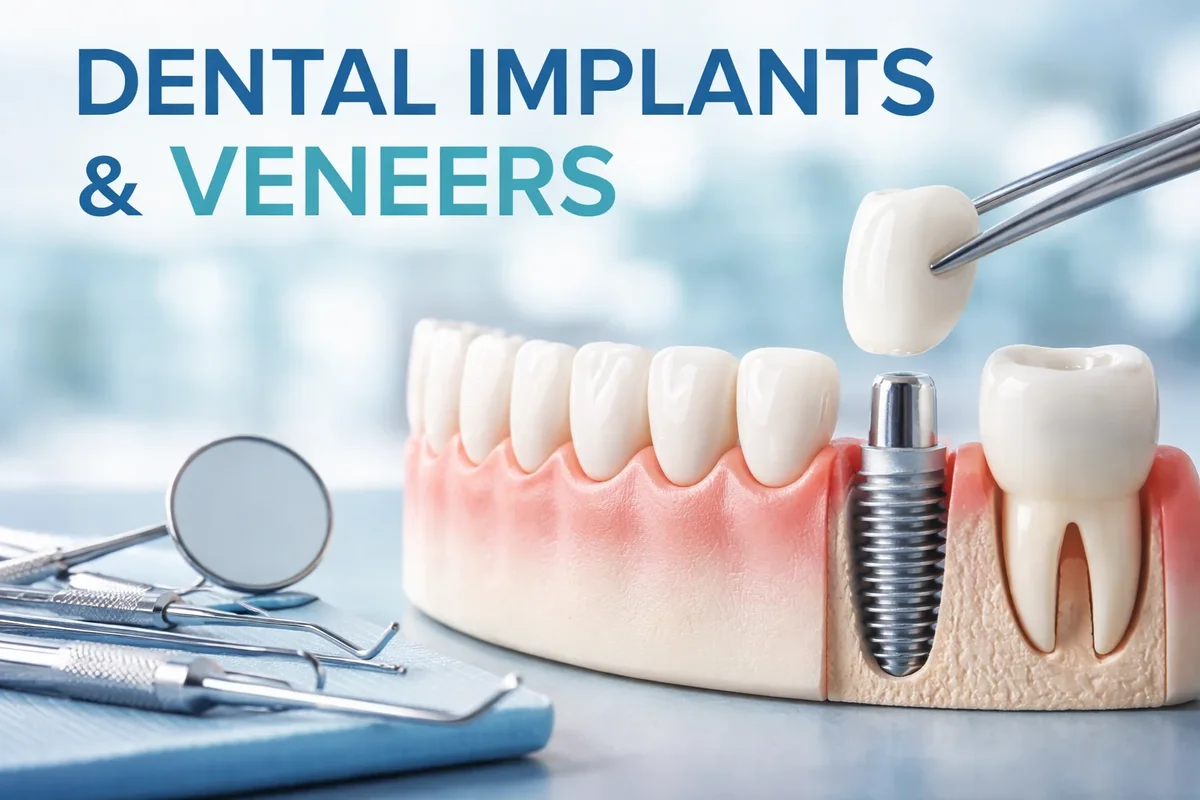
Dental implants are advanced tooth replacement solutions designed to replace missing teeth permanently. They consist of a small titanium post that is surgically placed into the jawbone. This titanium post acts as an artificial tooth root and provides a strong foundation for a crown, bridge, or denture.
One of the main advantages of dental implants is their ability to integrate with the bone through a biological process called osseointegration. This process ensures stability and durability, allowing implants to function like natural teeth. Patients who receive dental implants and veneers as part of a smile makeover often benefit from both improved oral function and enhanced aesthetics.
Dental implants are recommended for patients who:
- Have one or more missing teeth
- Possess sufficient jawbone density
- Maintain good oral hygiene
- Want a long-term solution instead of removable dentures
Because dental implants replace the tooth root, they also help prevent bone loss in the jaw. This is a major advantage compared to traditional bridges or removable prosthetics. Many people who undergo treatments involving dental implants and veneers report improved chewing ability and increased confidence in social situations.
Understanding Dental Veneers
While implants replace missing teeth, dental veneers are cosmetic restorations that enhance the appearance of existing teeth. Veneers are ultra-thin shells made from porcelain or composite resin that are bonded to the front surface of teeth.
Veneers are commonly used to correct:
- Tooth discoloration
- Minor misalignment
- Chipped or cracked teeth
- Gaps between teeth
- Uneven tooth shapes
When combined with dental implants and veneers, patients can achieve a complete smile transformation. For example, a patient missing one tooth may receive a dental implant for replacement, while veneers improve the appearance of surrounding teeth.
Porcelain veneers are particularly popular because they mimic the natural translucency of enamel. They are also resistant to stains from coffee, tea, and other foods. Patients who receive dental implants and veneers often notice that their smile appears brighter, more symmetrical, and more youthful.
Why Dental Implants and Veneers Are Often Combined
In modern cosmetic dentistry, combining dental implants and veneers is a powerful strategy for full smile restoration. Each treatment addresses different dental concerns. Implants replace missing teeth, while veneers improve the appearance of natural teeth.
For example, a patient may have the following concerns:
- One missing tooth
- Two discolored front teeth
- Minor spacing issues
In this situation, dentists may recommend a dental implant to replace the missing tooth and veneers to improve the shape and color of the surrounding teeth. This combination allows dentists to design a balanced and natural-looking smile.
Another reason dental implants and veneers work well together is that both treatments are highly customizable. Dentists carefully design the size, shape, and color of each restoration to match the patient’s facial features and natural teeth.
The Importance of Smile Design
Before starting treatment with dental implants and veneers, dentists often perform a process called digital smile design. This technique uses advanced imaging technology to analyze the patient’s facial proportions, gum line, and tooth alignment.
Digital smile design allows dentists to create a preview of the final results before treatment begins. Patients can see how dental implants and veneers will enhance their smile and discuss adjustments with their dentist.
During this planning stage, dentists evaluate several factors:
- Tooth proportions
- Smile symmetry
- Gum visibility
- Facial harmony
- Bite alignment
This personalized approach ensures that dental implants and veneers provide not only functional improvements but also aesthetically pleasing results.
Why Patients Choose Dental Implants and Veneers
People choose dental implants and veneers for many reasons, including health, aesthetics, and confidence. Missing or damaged teeth can affect speech, chewing ability, and overall oral health. Additionally, visible dental imperfections may impact self-esteem.
By restoring both function and appearance, dental implants and veneers offer a comprehensive solution for patients seeking long-lasting smile improvements.
Key benefits include:
- Natural-looking results
- Improved chewing ability
- Long-term durability
- Enhanced self-confidence
- Better oral health
Many international patients also travel abroad for treatments like dental implants and veneers due to high-quality care and advanced dental technology available in modern clinics.
If you are considering treatment, professional consultation is essential. Experienced dental teams evaluate your oral health and design a customized plan to ensure the best results. Patients can also reach out through the Redent Klinik Contact Page to receive expert guidance about personalized treatment options.
Ultimately, dental implants and veneers represent one of the most effective combinations in modern dentistry. Whether addressing missing teeth, cosmetic concerns, or both, these treatments can help patients achieve a beautiful, natural, and long-lasting smile. As dental technology continues to evolve, the success and popularity of dental implants and veneers will likely continue to grow among patients seeking reliable and aesthetically pleasing dental solutions. 😁
What Are Dental Implants and Veneers?
Modern dentistry offers several innovative treatments designed to restore both the function and appearance of teeth. Among the most effective and widely used solutions are dental implants and veneers. These treatments address different dental concerns but can work together to create a fully restored and aesthetically pleasing smile. Understanding what dental implants and veneers are, how they function, and when they are recommended can help patients make informed decisions about their oral health.
Many people today seek treatments that not only solve dental problems but also enhance confidence and overall quality of life. With advancements in cosmetic dentistry, dental implants and veneers have become key procedures in smile reconstruction. Dentists frequently recommend these treatments individually or in combination, depending on the patient’s needs. When planned correctly, dental implants and veneers can provide both long-term durability and natural-looking results.
Understanding the Purpose of Dental Implants
Dental implants are designed to replace missing teeth permanently. They are considered one of the most reliable tooth replacement methods available today. A dental implant consists of three main components:
- A titanium implant post inserted into the jawbone
- An abutment that connects the implant to the restoration
- A custom-made crown that functions as the visible tooth
The titanium post acts as an artificial tooth root. Over time, it fuses with the surrounding bone through a biological process known as osseointegration. This process allows the implant to become stable and strong enough to support a crown or bridge. When patients receive treatments involving dental implants and veneers, implants are typically used to replace missing teeth while veneers improve the appearance of the remaining teeth.
One major advantage of dental implants is their ability to preserve jawbone health. When a tooth is lost, the jawbone in that area can begin to deteriorate. Dental implants stimulate the bone in a similar way to natural tooth roots, helping to maintain bone density. Patients undergoing treatments with dental implants and veneers benefit not only from aesthetic improvements but also from long-term oral health protection.
Common Situations Where Dental Implants Are Recommended
Dentists typically recommend dental implants for individuals who:
- Have lost one or more teeth due to injury or decay
- Want a permanent alternative to removable dentures
- Have sufficient jawbone density for implant placement
- Maintain good oral hygiene and general health
Because of their durability and natural function, dental implants often become a foundational part of treatments that involve dental implants and veneers. When used together, implants restore missing teeth while veneers refine the appearance of natural teeth surrounding the implant.
What Are Dental Veneers?
While implants replace missing teeth, dental veneers are cosmetic restorations designed to improve the appearance of existing teeth. Veneers are thin shells made from porcelain or composite resin that are bonded to the front surface of teeth.
These restorations are carefully crafted to match the color, shape, and translucency of natural teeth. Dentists often recommend veneers for patients who want to correct aesthetic issues such as discoloration, uneven spacing, or chipped enamel. In many smile makeover procedures, dentists combine dental implants and veneers to achieve balanced and harmonious results.
Porcelain veneers are particularly popular because they are highly durable and stain-resistant. When patients receive dental implants and veneers, the veneers help ensure that the natural teeth match the implant crown perfectly in color and shape.
Common Dental Issues Veneers Can Correct
Dental veneers are an excellent solution for improving the visual appearance of teeth affected by:
- Severe discoloration that cannot be corrected with whitening
- Small gaps between teeth
- Minor alignment issues
- Chipped or worn enamel
- Irregular tooth shapes
When these issues are present alongside missing teeth, dentists may recommend a combination treatment using dental implants and veneers. This allows both structural and cosmetic problems to be addressed simultaneously.
How Dental Implants and Veneers Work Together
In comprehensive smile makeover treatments, dentists often combine dental implants and veneers to create a balanced result. Each treatment serves a unique purpose. Implants restore function and replace missing teeth, while veneers enhance the appearance of natural teeth.
For example, a patient may have lost a molar but also have visible cosmetic concerns such as stained or chipped front teeth. In this situation, a dental implant can replace the missing tooth, while veneers improve the aesthetics of the front teeth. By combining dental implants and veneers, dentists can restore both the function and beauty of the smile.
This approach is particularly common in full smile rehabilitation cases. Dentists carefully analyze the patient’s bite alignment, facial structure, and gum line before designing a treatment plan involving dental implants and veneers.
Why These Treatments Are So Popular
The popularity of dental implants and veneers has increased significantly over the past decade. Advances in dental technology have made these procedures more predictable, comfortable, and efficient than ever before.
Patients choose dental implants and veneers because they offer several key advantages:
- Natural appearance that closely resembles real teeth
- Improved chewing and speech function
- Long-lasting durability
- Enhanced smile symmetry
- Increased confidence and self-esteem
Many patients who undergo treatments involving dental implants and veneers report that their new smile feels and looks completely natural. Modern materials and digital smile design technology allow dentists to create restorations that blend seamlessly with natural teeth.
The Importance of Professional Evaluation
Before deciding on treatments involving dental implants and veneers, a professional dental evaluation is essential. Dentists will examine several factors, including:
- Overall oral health
- Bone density and gum condition
- Existing tooth structure
- Bite alignment
- Patient expectations
This assessment helps determine whether dental implants and veneers are the right combination for the patient. In some cases, additional treatments such as orthodontics or gum contouring may be recommended before starting the final smile restoration.
If you are considering treatment options involving dental implants and veneers, professional consultation is the best first step. Dental experts can evaluate your needs and create a customized treatment plan designed to restore both your oral health and your smile aesthetics.
Patients seeking personalized guidance can also contact specialists directly through the Redent Klinik Contact Page to learn more about treatment possibilities. With proper planning and expert care, dental implants and veneers can provide life-changing results that improve both dental function and overall confidence. 😁
Key Differences Between Dental Implants and Veneers
Although both treatments are widely used in modern cosmetic dentistry, dental implants and veneers serve very different purposes. Understanding the key differences between these two procedures helps patients determine which solution is most suitable for their needs. While both treatments contribute to a healthier and more attractive smile, they address different dental problems and involve distinct procedures.
Patients often ask whether they should choose dental implants and veneers, but the reality is that these treatments are not competitors. Instead, they complement each other. Dental implants replace missing teeth, while veneers enhance the appearance of existing teeth. When dentists combine dental implants and veneers in a treatment plan, the result can be a complete smile transformation that improves both function and aesthetics.
Purpose and Function
The most significant difference between dental implants and veneers lies in their purpose. Dental implants are designed to replace missing teeth, whereas veneers are used to improve the appearance of natural teeth.
Dental Implants: A Replacement for Missing Teeth
Dental implants are permanent solutions for missing teeth. When a tooth is lost due to injury, decay, or gum disease, an implant can replace the entire structure of the tooth, including the root. A titanium post is surgically inserted into the jawbone, which then supports a dental crown.
This approach makes dental implants one of the most durable restorative treatments available. When patients receive treatments involving dental implants and veneers, implants provide structural stability while veneers focus on cosmetic enhancement.
Dental implants are particularly beneficial because they:
- Restore full chewing function
- Prevent bone loss in the jaw
- Act like natural teeth
- Provide long-term stability
Because implants integrate with the bone, they become a permanent part of the mouth. This structural role is one of the key differences when comparing dental implants and veneers.
Dental Veneers: Cosmetic Enhancement for Natural Teeth
Unlike implants, dental veneers are purely cosmetic restorations. They are thin shells made from porcelain or composite resin that are bonded to the front surfaces of teeth. Veneers are designed to improve the color, shape, and alignment of natural teeth.
Patients who choose treatments involving dental implants and veneers often receive veneers to perfect the appearance of teeth surrounding a dental implant. This ensures that the entire smile looks balanced and natural.
Veneers are typically used to correct:
- Severely stained teeth
- Minor gaps between teeth
- Chipped or cracked enamel
- Slightly misaligned teeth
- Uneven tooth shapes
By improving these aesthetic issues, veneers complement the restorative role of dental implants in treatments involving dental implants and veneers.
Procedure Differences
Another major difference between dental implants and veneers involves the treatment process. Each procedure requires different preparation steps, treatment timelines, and levels of complexity.
Dental Implant Procedure
Dental implant treatment involves a surgical process. The procedure usually includes several stages:
- Initial consultation and digital imaging
- Surgical placement of the titanium implant into the jawbone
- Healing period for osseointegration (usually 3–6 months)
- Attachment of the abutment and dental crown
This multi-stage approach allows the implant to fuse with the bone securely. Patients who undergo smile reconstruction using dental implants and veneers often begin with implant placement before completing cosmetic treatments.
Although the process takes several months, the long-term benefits of dental implants make them a preferred solution for tooth replacement.
Veneer Placement Procedure
The process for placing veneers is much faster and less invasive. Veneer treatment typically involves two to three appointments:
- Initial consultation and smile design
- Minimal enamel preparation
- Digital impressions or scans
- Bonding of custom veneers
In many cases, veneers can be completed within a few weeks. When patients receive treatments combining dental implants and veneers, veneers are usually placed after implant crowns are finalized to ensure perfect color matching.
Durability and Longevity
Durability is another key factor when comparing dental implants and veneers. Both treatments are long-lasting, but they differ in lifespan and maintenance requirements.
Lifespan of Dental Implants
Dental implants are designed to be permanent. With proper care and oral hygiene, implants can last 20 years or more. In many cases, they can last a lifetime.
Patients who receive treatments involving dental implants and veneers often rely on implants as the structural foundation of their smile restoration.
Lifespan of Dental Veneers
Veneers are also durable, but they typically last between 10 and 15 years before replacement may be needed. Porcelain veneers are especially resistant to stains and wear.
Even though veneers may eventually need replacement, they remain an excellent cosmetic complement to dental implants in treatments involving dental implants and veneers.
Aesthetic Impact on the Smile
Both procedures play an important role in creating a beautiful smile. Dental implants restore missing teeth and maintain facial structure, while veneers enhance the color and symmetry of visible teeth.
When dentists combine dental implants and veneers, they can design a smile that looks natural, balanced, and harmonious with the patient’s facial features. Advanced digital smile design technology allows dentists to customize every aspect of the treatment.
This is why many patients choose comprehensive smile makeovers that involve dental implants and veneers. The combination ensures that every tooth in the smile looks healthy and aesthetically pleasing.
Which Treatment Is Right for You?
The decision between implants and veneers depends on the patient’s dental condition. People with missing teeth will likely need dental implants, while those seeking cosmetic improvements may benefit from veneers.
However, many patients achieve the best results through a combination of dental implants and veneers. This approach addresses both structural and aesthetic issues simultaneously.
If you are considering a smile makeover involving dental implants and veneers, professional consultation is essential. Dental specialists evaluate your oral health, jawbone condition, and cosmetic goals before recommending a personalized treatment plan.
Patients interested in exploring treatment options can also contact specialists through the Redent Klinik Contact Page to receive expert guidance and personalized recommendations.
Ultimately, understanding the key differences between dental implants and veneers allows patients to choose the most effective solution for restoring their smile. When used individually or together, these advanced treatments can dramatically improve both oral health and confidence. 😁
Who Is the Ideal Candidate for Dental Implants and Veneers?
Not every patient requires the same type of dental treatment. While some people may benefit from cosmetic enhancements alone, others may need restorative procedures to rebuild missing teeth. Determining whether someone is a suitable candidate for dental implants and veneers depends on several important factors, including oral health, bone density, lifestyle habits, and aesthetic goals.
Many patients who seek smile makeovers often ask whether dental implants and veneers are appropriate for them. In most cases, dentists evaluate the patient’s entire oral structure before recommending treatment. Because dental implants and veneers address different dental concerns, they are frequently combined in comprehensive smile restoration plans.
For example, a patient who has lost a tooth due to trauma may require a dental implant to restore function, while veneers may be used to improve the appearance of surrounding teeth. In these cases, treatments involving dental implants and veneers allow dentists to create a balanced and natural-looking smile.
General Requirements for Dental Implants and Veneers
Before starting treatments involving dental implants and veneers, dentists carefully examine the patient’s oral condition. Several general requirements help determine whether someone is a good candidate.
Good Overall Oral Health
Patients considering dental implants and veneers should have healthy gums and minimal untreated dental problems. Gum disease, severe tooth decay, or infections must typically be treated before cosmetic or restorative procedures begin.
Healthy gum tissue is particularly important for treatments involving dental implants and veneers. Dental implants require stable gum support to ensure proper healing and long-term success. Similarly, veneers bond best to strong, healthy enamel.
Sufficient Jawbone Density
Dental implants rely on strong jawbone structure to remain stable. Because implants act as artificial tooth roots, they must integrate with the bone through a process called osseointegration.
Patients who want treatments involving dental implants and veneers must have adequate bone density in the jaw. If bone loss has occurred due to missing teeth or periodontal disease, dentists may recommend bone grafting before implant placement.
This preparatory step ensures that the implant has a stable foundation, which is essential when combining dental implants and veneers for full smile restoration.
Ideal Candidates for Dental Implants
While veneers focus on cosmetic improvements, dental implants are primarily used to replace missing teeth. Patients who qualify for implant treatment often meet the following criteria.
Individuals With Missing Teeth
The most obvious candidates for dental implants and veneers are individuals who have lost one or more teeth. Tooth loss may result from injury, severe decay, or gum disease.
Dental implants restore both the function and appearance of missing teeth. When combined with veneers, the surrounding teeth can be reshaped or brightened to match the new implant crown. This combination allows dental implants and veneers to deliver a seamless and natural-looking smile.
Patients Seeking Long-Term Tooth Replacement
Many people prefer dental implants over removable dentures or traditional bridges because implants provide greater stability. Unlike removable prosthetics, implants function like natural teeth and do not require adhesives.
Patients who want permanent tooth replacement solutions often benefit greatly from treatments involving dental implants and veneers. Implants restore chewing ability, while veneers enhance the cosmetic aspects of the smile.
Ideal Candidates for Dental Veneers
While dental implants replace missing teeth, veneers are ideal for patients who want to improve the visual appearance of their natural teeth.
People With Cosmetic Dental Concerns
Patients who experience discoloration, chipped enamel, or uneven tooth shapes may benefit from veneers. When used alongside dental implants and veneers, veneers help ensure that the visible teeth match the implant restoration perfectly.
Common cosmetic issues treated with veneers include:
- Stained or discolored teeth
- Minor alignment problems
- Small gaps between teeth
- Worn or chipped enamel
- Irregular tooth shapes
By correcting these imperfections, veneers enhance the overall aesthetics of treatments involving dental implants and veneers.
Patients With Healthy Tooth Structure
Because veneers require bonding to the front surface of natural teeth, candidates should have sufficient enamel structure. Dentists remove a small amount of enamel before placing veneers, so strong underlying teeth are important.
Patients who combine dental implants and veneers typically have both missing teeth and cosmetic concerns affecting their remaining teeth.
Lifestyle Factors That Influence Candidacy
Several lifestyle factors also play an important role in determining whether someone is a good candidate for dental implants and veneers.
Commitment to Oral Hygiene
Good oral hygiene habits are essential for maintaining the success of dental implants and veneers. Patients must brush and floss regularly to prevent plaque buildup around implants and veneers.
Poor oral hygiene can lead to gum disease, which may compromise the stability of dental implants. Therefore, patients considering dental implants and veneers must be committed to maintaining proper dental care.
Non-Smoking or Reduced Smoking Habits
Smoking can interfere with the healing process after dental implant surgery. Tobacco use may also increase the risk of implant failure.
Patients planning treatments involving dental implants and veneers are often encouraged to quit smoking before and after the procedure to improve healing outcomes.
When Dental Implants and Veneers Are Combined
Many modern smile makeover procedures combine dental implants and veneers to address both structural and aesthetic dental issues simultaneously.
For example, a patient may have:
- A missing front tooth
- Discolored neighboring teeth
- Slightly uneven tooth alignment
In this case, a dental implant can replace the missing tooth, while veneers can reshape and brighten the surrounding teeth. By combining dental implants and veneers, dentists can design a harmonious smile that looks completely natural.
The Importance of Professional Consultation
The best way to determine whether dental implants and veneers are right for you is through a professional dental consultation. Dentists perform comprehensive examinations that may include digital scans, X-rays, and bite analysis.
These evaluations allow dental professionals to develop personalized treatment plans that maximize the benefits of dental implants and veneers. Every patient’s oral structure and goals are unique, so customized planning is essential.
If you are considering treatments involving dental implants and veneers, expert advice is the first step. Patients seeking personalized recommendations can reach out through the Redent Klinik Contact Page to discuss treatment options with experienced dental professionals.
Ultimately, the ideal candidate for dental implants and veneers is someone who wants to improve both the health and appearance of their smile. With proper evaluation and professional guidance, these treatments can provide long-lasting results that restore confidence and enhance overall quality of life. 😊
The Step-by-Step Procedure for Dental Implants and Veneers
Understanding the treatment process is one of the most important steps for patients considering dental implants and veneers. While these two procedures serve different purposes in dentistry, they often work together as part of a comprehensive smile makeover. Dentists carefully plan every stage of treatments involving dental implants and veneers to ensure both functional restoration and natural-looking aesthetic results.
The process for dental implants and veneers typically involves multiple phases, beginning with consultation and ending with long-term smile enhancement. Because dental implants involve surgery and veneers involve cosmetic bonding, the timeline and procedures differ significantly. However, when performed together, dentists coordinate each step to ensure that dental implants and veneers blend seamlessly in both color and structure.
Initial Consultation and Smile Assessment
The first step in any treatment involving dental implants and veneers is a detailed dental consultation. During this appointment, the dentist evaluates the patient’s oral health, discusses cosmetic goals, and determines whether both procedures are appropriate.
Comprehensive Oral Examination
Dentists begin by performing a full oral examination. This evaluation includes checking the health of the gums, existing teeth, jawbone condition, and bite alignment. Since dental implants and veneers serve different purposes, dentists must determine which areas require restorative treatment and which require cosmetic enhancement.
Digital imaging technologies such as 3D scans and panoramic X-rays are often used to analyze bone density and tooth positioning. These tools help dentists design precise treatment plans for dental implants and veneers, ensuring optimal results.
Digital Smile Design Planning
Many modern dental clinics use digital smile design software to visualize the final outcome before treatment begins. This technology allows dentists to simulate how dental implants and veneers will look after completion.
By adjusting tooth shape, color, and alignment digitally, dentists can plan the placement of implants and veneers to achieve perfect smile symmetry. Patients undergoing dental implants and veneers often appreciate being able to preview their future smile before the procedure begins.
Dental Implant Placement Procedure
Once the planning phase is complete, the next step in treatments involving dental implants and veneers is usually dental implant placement. Because implants replace missing teeth, they must be installed before veneers are placed.
Implant Surgery
Dental implant surgery is a precise procedure performed under local anesthesia. During the surgery, the dentist places a titanium implant post into the jawbone where the missing tooth used to be.
This titanium implant acts as an artificial tooth root and provides the structural foundation for the replacement tooth. In treatment plans involving dental implants and veneers, implant placement is critical for restoring proper chewing function and maintaining jawbone health.
The procedure typically takes about one to two hours depending on the number of implants placed. Most patients experience minimal discomfort and can return to normal activities within a few days.
Healing and Osseointegration
After implant placement, a healing period is necessary for the implant to fuse with the jawbone. This process, known as osseointegration, usually takes three to six months.
During this time, the bone grows around the implant, securing it firmly in place. Successful osseointegration is essential for the long-term stability of treatments involving dental implants and veneers.
Once healing is complete, the dentist attaches an abutment and places a custom-made crown on the implant. This crown functions as the visible tooth.
Preparation and Placement of Dental Veneers
After the dental implants are fully integrated and the crowns are placed, dentists begin the cosmetic phase of treatment involving dental implants and veneers. This stage focuses on improving the appearance of natural teeth.
Tooth Preparation for Veneers
Before placing veneers, the dentist gently reshapes the front surface of the teeth. A very thin layer of enamel is removed to create space for the veneer shell.
This step ensures that the veneers sit naturally and do not appear bulky. In smile makeover treatments involving dental implants and veneers, dentists carefully shape the teeth so the veneers match the implant crown perfectly.
Impression and Custom Veneer Fabrication
Once the teeth are prepared, the dentist takes digital impressions of the patient’s teeth. These impressions are sent to a dental laboratory where technicians create custom porcelain veneers.
The veneers are designed to match the color, shape, and translucency of natural enamel. Because treatments involving dental implants and veneers aim to create a uniform smile, dentists select shades that harmonize with the implant crown.
This fabrication process typically takes one to two weeks.
Bonding the Veneers
During the final appointment, the dentist permanently bonds the veneers to the teeth using specialized dental adhesive. A curing light hardens the bonding material, securing the veneers in place.
Once bonded, the veneers instantly transform the appearance of the teeth. Patients who complete treatments involving dental implants and veneers often notice dramatic improvements in smile brightness and symmetry.
Final Adjustments and Bite Alignment
After both procedures are complete, dentists perform final adjustments to ensure proper bite alignment and comfort. Treatments involving dental implants and veneers must maintain correct chewing function while also delivering aesthetic results.
The dentist may polish the veneers, adjust the implant crown, and verify that the bite feels natural. These adjustments help ensure that dental implants and veneers function harmoniously with the rest of the teeth.
What Patients Can Expect After Treatment
Once the procedures are completed, patients can enjoy a fully restored smile. Treatments involving dental implants and veneers not only improve aesthetics but also restore chewing efficiency and speech clarity.
Patients often report increased confidence and improved quality of life after completing dental implants and veneers. Because these restorations are custom-designed for each individual, the results appear natural and long-lasting.
For individuals interested in beginning their smile transformation, professional consultation is the first step. Patients can reach out through the Redent Klinik Contact Page to receive personalized treatment guidance from experienced dental specialists.
With proper planning and expert care, the step-by-step process of dental implants and veneers can deliver life-changing results, restoring both oral health and confidence in one’s smile. 😁
Benefits of Combining Dental Implants and Veneers for a Perfect Smile
Modern dentistry has evolved far beyond simple tooth repair. Today, patients seek comprehensive solutions that restore both the functionality and beauty of their smile. One of the most effective strategies for full smile restoration is combining dental implants and veneers. When these two treatments are used together, dentists can address multiple dental concerns simultaneously, resulting in a balanced, healthy, and aesthetically pleasing smile.
While each treatment can be highly effective on its own, the true potential of modern cosmetic dentistry often appears when dental implants and veneers are combined as part of a personalized smile makeover. Dental implants replace missing teeth and restore chewing function, while veneers improve the shape, color, and alignment of natural teeth. This dual approach allows dentists to correct structural issues and cosmetic imperfections at the same time.
Patients who undergo treatments involving dental implants and veneers often experience significant improvements not only in appearance but also in oral health and confidence. The following sections explore the key advantages of combining these advanced dental solutions.
Comprehensive Smile Restoration
One of the most important advantages of combining dental implants and veneers is the ability to restore the entire smile rather than addressing individual issues separately.
Replacing Missing Teeth
Missing teeth can negatively affect chewing ability, speech clarity, and facial structure. Dental implants provide a stable and permanent replacement for lost teeth. Because implants integrate with the jawbone, they function similarly to natural tooth roots.
When dentists combine dental implants and veneers, implants restore the missing teeth while veneers improve the appearance of the remaining natural teeth. This comprehensive approach ensures that every visible tooth contributes to a symmetrical and harmonious smile.
Enhancing the Appearance of Natural Teeth
Even if a patient receives a dental implant, surrounding teeth may still have cosmetic issues such as discoloration, chips, or uneven shapes. Veneers correct these imperfections by covering the front surface of natural teeth with thin porcelain shells.
By integrating dental implants and veneers, dentists can create a seamless appearance where the implant crown blends perfectly with the surrounding veneers.
Improved Facial Aesthetics
Another major benefit of combining dental implants and veneers is the improvement of overall facial aesthetics. Teeth play a critical role in supporting facial structure, and dental restoration can dramatically enhance a person’s appearance.
Restoring Facial Structure
When teeth are missing, the jawbone may begin to deteriorate, which can cause facial sagging over time. Dental implants stimulate the jawbone similarly to natural tooth roots, helping preserve bone density.
When paired with veneers, dental implants and veneers not only restore lost teeth but also create a youthful smile that enhances facial harmony.
Creating Smile Symmetry
Smile symmetry is essential for aesthetic appeal. Uneven tooth shapes, discoloration, or gaps can disrupt the balance of a smile. Veneers are designed to correct these imperfections by reshaping teeth and creating uniform alignment.
When dentists design treatments involving dental implants and veneers, they carefully analyze facial proportions and tooth positioning to ensure that the final smile appears natural and symmetrical.
Long-Term Durability and Stability
Another significant advantage of dental implants and veneers is their durability. Both treatments are designed to last for many years with proper care.
Durability of Dental Implants
Dental implants are considered one of the most durable restorative treatments in dentistry. Because they fuse with the jawbone, implants provide exceptional stability and can last decades.
Patients who receive treatments involving dental implants and veneers benefit from the long-term strength of implants, which support natural chewing function.
Longevity of Veneers
Porcelain veneers are also highly durable. With proper oral hygiene and regular dental checkups, veneers can last 10 to 15 years or longer. They are resistant to staining and maintain their appearance over time.
By combining dental implants and veneers, patients can enjoy a long-lasting smile transformation that requires minimal maintenance.
Enhanced Confidence and Quality of Life
The psychological benefits of improving one’s smile should not be underestimated. Many individuals feel self-conscious about missing or damaged teeth. Treatments involving dental implants and veneers can significantly improve self-esteem.
Boosting Self-Confidence
A bright and well-aligned smile often increases confidence in social and professional settings. Patients who complete treatments with dental implants and veneers frequently report feeling more comfortable smiling, speaking, and interacting with others.
Improved Daily Comfort
Dental implants restore chewing ability, allowing patients to enjoy a wider range of foods. Veneers improve tooth shape and alignment, making speech clearer and more comfortable.
When combined, dental implants and veneers contribute to a better overall quality of life by improving both oral function and appearance.
Personalized Smile Design
Every patient has unique dental needs and aesthetic preferences. Treatments involving dental implants and veneers are fully customizable to suit each individual’s smile.
Dentists carefully select the size, shape, and color of veneers to match the implant crown and natural teeth. Advanced digital imaging technology allows dentists to plan treatments involving dental implants and veneers with exceptional precision.
This personalized approach ensures that the final results appear natural and harmonious with the patient’s facial features.
Professional Guidance Is Essential
Although the benefits of combining dental implants and veneers are significant, proper planning and professional expertise are essential. Dentists must carefully evaluate oral health, bone density, and aesthetic goals before recommending treatment.
A professional consultation ensures that dental implants and veneers are performed safely and effectively. Experienced dental teams can design treatment plans that maximize both functional and cosmetic results.
If you are considering a smile transformation, expert advice can help you determine the best approach. Patients seeking personalized guidance can contact specialists through the Redent Klinik Contact Page to explore treatment options.
Ultimately, combining dental implants and veneers offers one of the most powerful solutions in modern dentistry. By addressing both structural and aesthetic concerns, this treatment approach allows patients to achieve a healthy, beautiful, and long-lasting smile. 😁
Recovery and Aftercare for Dental Implants and Veneers
Proper recovery and aftercare are essential for ensuring the long-term success of dental implants and veneers. While these treatments can dramatically improve both oral health and smile aesthetics, patients must follow recommended care instructions to protect their investment and maintain optimal results. Recovery from procedures involving dental implants and veneers varies depending on the complexity of the treatment, the number of restorations placed, and the patient’s overall oral health.
Dental implants involve a surgical procedure that requires healing time, while veneers are placed through a minimally invasive cosmetic process. When both treatments are performed as part of a smile makeover, dentists carefully coordinate the recovery timeline to ensure the stability and durability of dental implants and veneers. By following professional guidelines, patients can experience smooth healing and long-lasting results.
Immediate Recovery After Dental Implant Surgery
The recovery period following implant placement is one of the most important phases of treatments involving dental implants and veneers. Because implants must fuse with the jawbone, proper healing conditions are critical.
First 24–48 Hours After Surgery
During the first two days after implant surgery, patients may experience mild swelling, tenderness, or minor bleeding around the surgical area. These symptoms are normal and typically subside quickly.
Dentists often recommend the following steps to support healing after procedures involving dental implants and veneers:
- Apply cold compresses to reduce swelling
- Take prescribed pain medication if needed
- Avoid touching or disturbing the implant site
- Rest and limit physical activity
Patients should also avoid smoking during this period, as tobacco can interfere with healing and reduce the success rate of dental implants and veneers.
Diet During Early Healing
Diet plays a significant role in recovery. Dentists typically recommend soft foods during the first week after implant surgery. These foods help protect the implant area while allowing proper healing.
Recommended foods during early recovery include:
- Yogurt and smoothies
- Mashed potatoes
- Soft scrambled eggs
- Soup and soft vegetables
- Oatmeal or soft grains
Avoiding hard or crunchy foods ensures that the surgical area remains stable while the implant integrates with the bone. Protecting the implant site is essential for the long-term success of dental implants and veneers.
Healing Phase and Osseointegration
One of the defining aspects of dental implant treatment is the healing process known as osseointegration. This stage typically lasts three to six months and allows the implant to fuse securely with the jawbone.
Importance of Bone Integration
Osseointegration is what makes dental implants such a reliable solution for replacing missing teeth. As the bone grows around the implant, it creates a stable foundation for the final crown.
During this healing period, patients undergoing treatments involving dental implants and veneers must attend follow-up appointments so dentists can monitor progress and ensure proper integration.
Once the implant is fully integrated, the dentist attaches an abutment and the final crown. At this stage, the restorative portion of treatments involving dental implants and veneers is complete.
Recovery After Veneer Placement
Compared to dental implant surgery, recovery after veneer placement is relatively quick and comfortable. Veneers are bonded directly to the front surface of teeth and require minimal downtime.
Immediate Sensitivity After Veneer Bonding
Some patients experience mild sensitivity to hot or cold foods for a few days after veneers are placed. This sensitivity typically resolves quickly as the teeth adjust.
Patients who receive treatments involving dental implants and veneers may notice that their smile looks brighter and more balanced immediately after veneer placement.
Adapting to the New Smile
After veneers are placed, it may take a few days for patients to fully adapt to the feel of their new teeth. Speaking and chewing quickly become comfortable as the mouth adjusts to the new restorations.
Because veneers are custom-designed to match natural teeth, treatments involving dental implants and veneers often provide an extremely natural appearance.
Long-Term Oral Hygiene for Dental Implants and Veneers
Maintaining excellent oral hygiene is essential for protecting dental implants and veneers. Although implants cannot develop cavities, the surrounding gum tissue must remain healthy to prevent complications.
Daily Oral Care Routine
Patients who have undergone treatments involving dental implants and veneers should follow a consistent oral care routine that includes:
- Brushing teeth twice daily with a soft-bristle toothbrush
- Using non-abrasive toothpaste
- Flossing carefully around implants and veneers
- Using antibacterial mouthwash if recommended
These habits help prevent plaque buildup and maintain the health of both natural teeth and dental restorations.
Regular Dental Checkups
Routine dental visits are essential for monitoring the condition of dental implants and veneers. Dentists typically recommend checkups every six months to evaluate gum health, implant stability, and veneer condition.
Professional cleanings remove plaque and tartar that cannot be eliminated through brushing alone. These visits help ensure the long-term success of treatments involving dental implants and veneers.
Lifestyle Habits That Protect Your Smile
Certain lifestyle choices can help prolong the lifespan of dental implants and veneers. Patients should avoid habits that place excessive stress on dental restorations.
Avoiding Hard Foods and Teeth Grinding
Although veneers are durable, biting hard objects such as ice, pens, or hard candy may damage them. Dentists also recommend wearing a night guard if the patient grinds their teeth during sleep.
Protecting restorations helps preserve the longevity of treatments involving dental implants and veneers.
Limiting Stain-Causing Foods
Porcelain veneers are highly resistant to stains, but maintaining good habits still helps preserve their brightness. Limiting coffee, red wine, and tobacco use helps keep smiles looking vibrant.
Patients who maintain these habits often enjoy the aesthetic benefits of dental implants and veneers for many years.
When to Contact Your Dentist
Although complications are rare, patients should contact their dentist if they experience unusual symptoms such as persistent pain, swelling, or looseness around an implant.
Early intervention can prevent minor issues from becoming serious problems. Dentists who specialize in dental implants and veneers can quickly evaluate the situation and recommend appropriate solutions.
If you are considering treatment or need guidance about recovery, professional support is always available. Patients can reach experienced dental professionals through the Redent Klinik Contact Page for personalized advice.
With proper recovery practices and long-term care, dental implants and veneers can provide decades of functional and aesthetic benefits. Following your dentist’s instructions and maintaining good oral hygiene will ensure that your restored smile remains healthy, confident, and beautiful for many years to come. 😁
Costs and Factors Affecting Dental Implants and Veneers Treatment
One of the most common questions patients ask before beginning a smile makeover is how much dental implants and veneers cost. Because these procedures involve advanced dental technology, high-quality materials, and specialized expertise, the total investment can vary widely. However, understanding the cost structure of dental implants and veneers helps patients plan their treatment and evaluate the long-term value of restoring their smile.
Unlike simple dental procedures, treatments involving dental implants and veneers are highly customized. Each patient’s oral condition, number of missing teeth, cosmetic goals, and overall dental health will influence the total treatment cost. While the initial price may seem significant, many patients view dental implants and veneers as a long-term investment in oral health, functionality, and self-confidence.
Average Cost of Dental Implants
Dental implants are considered one of the most advanced and durable tooth replacement solutions available today. Because implant placement involves surgery, advanced imaging, and custom restorations, the cost is generally higher than traditional dental treatments.
Typical Implant Price Range
In many countries, the average cost of a single dental implant can range between:
- $2,000 – $5,000 per implant in the United States
- $1,500 – $3,000 in many European countries
- $500 – $1,200 in countries known for dental tourism
This price often includes the implant post, abutment, and crown. Patients who receive treatments involving dental implants and veneers typically begin with implant placement to replace missing teeth before moving on to cosmetic enhancements.
When multiple implants are needed, dentists may also recommend implant-supported bridges or full-mouth restoration procedures. These advanced treatments can increase the total investment but provide exceptional stability and longevity for patients undergoing dental implants and veneers.
Additional Procedures That May Affect Implant Cost
Some patients may require preparatory procedures before dental implant surgery. These treatments ensure the jawbone and gums are healthy enough to support the implant.
Additional procedures that can influence the cost of dental implants and veneers include:
- Bone grafting
- Sinus lift surgery
- Tooth extractions
- 3D imaging and diagnostic scans
Although these procedures may increase the initial investment, they are often essential for ensuring the long-term success of treatments involving dental implants and veneers.
Average Cost of Dental Veneers
Dental veneers are cosmetic restorations that enhance the appearance of natural teeth. Because veneers are custom-designed for each patient, their cost can vary depending on the materials used and the number of teeth treated.
Porcelain Veneer Price Range
Porcelain veneers are the most popular option due to their durability and natural appearance. The typical price per tooth is:
- $900 – $2,500 per tooth in the United States
- $700 – $1,800 in many European clinics
- $250 – $600 in dental tourism destinations
Patients receiving treatments involving dental implants and veneers may need several veneers to ensure the entire smile looks symmetrical and bright.
Composite Veneer Cost
Composite veneers are a more affordable alternative. While they may not last as long as porcelain veneers, they can still significantly improve the appearance of teeth.
The typical cost for composite veneers ranges from:
- $250 – $1,500 per tooth
Patients who combine dental implants and veneers often choose porcelain veneers because they provide better color stability and durability over time.
Key Factors That Influence the Cost of Dental Implants and Veneers
Several important factors determine the final cost of treatments involving dental implants and veneers. Because every smile restoration is unique, dentists must carefully evaluate each case before providing an accurate estimate.
Number of Teeth Being Treated
The most obvious factor influencing cost is the number of restorations required. Patients who need multiple implants or several veneers will have higher treatment costs.
For example, a patient needing one implant and two veneers will pay significantly less than someone requiring full-mouth restoration using dental implants and veneers.
Materials Used
The quality of materials also plays a significant role. High-end porcelain veneers and premium implant systems often cost more but provide better aesthetics and durability.
Patients choosing top-tier materials for dental implants and veneers usually benefit from longer-lasting results and improved natural appearance.
Experience of the Dental Specialist
The expertise of the dental professional performing the procedure can influence treatment costs. Highly experienced implantologists and cosmetic dentists often charge higher fees due to their advanced training and success rates.
However, when it comes to complex procedures like dental implants and veneers, choosing an experienced specialist greatly improves treatment safety and outcomes.
Location of the Dental Clinic
Geographic location also impacts pricing. Dental clinics in major metropolitan areas or countries with higher living costs often charge more for treatments involving dental implants and veneers.
This is one reason why many international patients travel abroad for dental treatments. Countries with strong dental tourism industries offer high-quality care at more affordable prices.
Why Dental Implants and Veneers Are Worth the Investment
Although treatments involving dental implants and veneers can represent a significant financial commitment, the long-term benefits often outweigh the initial cost.
Dental implants can last decades and help preserve jawbone health. Veneers improve smile aesthetics and resist stains, maintaining a bright and natural appearance for many years.
When combined, dental implants and veneers create a complete smile restoration that improves chewing ability, speech clarity, and overall confidence.
Patients frequently report that their new smile positively impacts both personal and professional aspects of their lives. The durability and aesthetic value of dental implants and veneers make them one of the most effective solutions in modern dentistry.
Getting a Personalized Treatment Estimate
The best way to determine the exact cost of dental implants and veneers is through a professional dental consultation. During this appointment, dentists evaluate your oral health, discuss treatment goals, and develop a customized plan.
This personalized approach ensures that the treatment meets both functional and cosmetic expectations. Patients interested in learning more about treatment options can contact experienced dental specialists through the Redent Klinik Contact Page for professional guidance.
Ultimately, understanding the cost and factors influencing dental implants and veneers helps patients make informed decisions about their dental health. With proper planning and expert care, these treatments can provide long-lasting results that restore both the function and beauty of your smile. 😁
Risks, Safety, and Success Rates of Dental Implants and Veneers
Modern dentistry has made remarkable progress in improving both the safety and effectiveness of restorative and cosmetic treatments. Today, dental implants and veneers are among the most reliable procedures used to restore smiles and improve oral function. While these treatments have high success rates and are widely considered safe, it is still important for patients to understand the potential risks, safety considerations, and long-term outcomes associated with dental implants and veneers.
With proper planning, experienced dental professionals, and careful aftercare, the vast majority of patients experience excellent results from treatments involving dental implants and veneers. Dentists follow strict clinical protocols to minimize risks and ensure that every restoration functions properly and looks natural.
Safety of Dental Implants and Veneers
The safety of dental implants and veneers has been well documented through decades of clinical research and patient outcomes. Both procedures use biocompatible materials that are designed to integrate safely with natural tissues.
Biocompatible Implant Materials
Dental implants are typically made from medical-grade titanium, a material known for its compatibility with human bone. Titanium has been used successfully in dental and orthopedic procedures for many years.
When patients receive treatments involving dental implants and veneers, the implant integrates with the jawbone through a biological process called osseointegration. This process creates a stable and durable foundation for the artificial tooth.
Because of this strong bond between bone and implant, dental implants can function very similarly to natural tooth roots. This stability is one reason why treatments involving dental implants and veneers have become so popular worldwide.
Safe Cosmetic Materials for Veneers
Dental veneers are typically made from porcelain or high-quality composite materials. These materials are designed to be both durable and biocompatible.
Porcelain veneers closely mimic the natural translucency of enamel, which allows dentists to create restorations that look realistic and aesthetically pleasing. When dentists combine dental implants and veneers, they carefully match the color and shape of veneers to the implant crown to ensure a harmonious smile.
Success Rates of Dental Implants and Veneers
One of the most reassuring aspects of modern dentistry is the high success rate associated with dental implants and veneers. With proper patient selection and professional care, these treatments can last for many years.
Dental Implant Success Rate
Dental implants have one of the highest success rates among dental procedures. Studies show that dental implants have a success rate of approximately:
- 95% – 98% for healthy patients
This high success rate is largely due to advancements in implant technology, surgical techniques, and digital imaging. Patients who follow post-treatment instructions and maintain good oral hygiene significantly improve the longevity of dental implants and veneers.
Implants placed by experienced specialists often last 20 years or more, making them a reliable long-term solution for tooth replacement.
Longevity of Dental Veneers
Dental veneers also demonstrate excellent durability. Porcelain veneers typically last between:
- 10 – 15 years or longer with proper care
Many patients enjoy their veneers for even longer periods if they maintain good oral hygiene and avoid habits that could damage the restorations. When combined with implants, dental implants and veneers create a durable and aesthetically pleasing solution for smile restoration.
Potential Risks of Dental Implants
Although dental implant procedures are generally safe, like any surgical treatment they carry some potential risks. Understanding these risks helps patients make informed decisions about dental implants and veneers.
Infection at the Implant Site
In rare cases, infection can develop around the implant site. This condition, known as peri-implantitis, may affect the surrounding gum and bone.
Proper oral hygiene and regular dental checkups significantly reduce the risk of infection after treatments involving dental implants and veneers.
Implant Failure
Although uncommon, implant failure may occur if the implant does not properly fuse with the jawbone. Factors that increase the risk of failure include:
- Poor bone density
- Smoking
- Uncontrolled diabetes
- Poor oral hygiene
Dentists carefully evaluate these risk factors before recommending treatments involving dental implants and veneers to ensure the best possible outcome.
Potential Risks of Dental Veneers
Dental veneers are minimally invasive and generally very safe. However, patients should still be aware of certain potential risks.
Tooth Sensitivity
Some patients experience mild tooth sensitivity after veneers are placed. This usually occurs because a thin layer of enamel is removed during preparation.
Sensitivity typically disappears within a few days and does not affect the long-term success of dental implants and veneers.
Veneer Damage
Although porcelain veneers are strong, they can chip or crack if exposed to excessive force. Biting hard objects or grinding teeth may damage veneers.
Dentists often recommend wearing a night guard if the patient has a history of teeth grinding. Protecting the restorations helps maintain the durability of dental implants and veneers.
How Dentists Minimize Risks
Professional dental teams take multiple precautions to ensure the safety of dental implants and veneers. Advanced technology and careful treatment planning significantly reduce the likelihood of complications.
Digital Treatment Planning
Modern clinics often use 3D imaging and digital smile design software to plan implant placement and veneer alignment. These technologies allow dentists to place implants with exceptional precision.
This level of accuracy improves both safety and aesthetics in treatments involving dental implants and veneers.
Personalized Treatment Plans
Every patient has unique dental needs. Dentists create personalized treatment plans that consider bone density, gum health, bite alignment, and cosmetic goals.
This customized approach ensures that dental implants and veneers function correctly and look natural.
When to Seek Professional Advice
Although complications are rare, patients should contact their dentist if they notice unusual symptoms such as persistent pain, swelling, or looseness around an implant or veneer.
Early evaluation allows dentists to address potential issues before they become serious. Patients considering treatment can also seek expert advice through the Redent Klinik Contact Page to discuss personalized treatment options.
Ultimately, the safety and success of dental implants and veneers depend on proper diagnosis, experienced dental professionals, and responsible aftercare. When these factors are combined, patients can achieve a long-lasting smile restoration that improves both oral health and confidence. 😁
How to Choose the Right Dentist for Dental Implants and Veneers
Choosing the right dental professional is one of the most important steps in achieving successful results with dental implants and veneers. Because these treatments involve both advanced restorative techniques and cosmetic expertise, the dentist’s experience, technology, and treatment planning approach can significantly influence the final outcome. Patients considering dental implants and veneers should take the time to research dental clinics carefully and ensure they are working with qualified professionals who specialize in modern smile restoration.
A skilled dentist does more than simply place restorations. They evaluate facial structure, oral health, bite alignment, and aesthetic goals to create a personalized treatment plan. When properly designed and executed, dental implants and veneers can provide a long-lasting, natural-looking smile that improves both confidence and dental function.
Look for Specialized Experience in Dental Implants and Veneers
One of the first factors to consider when choosing a dentist is their level of experience with dental implants and veneers. These procedures require different skill sets. Implant placement involves surgical precision, while veneer placement requires advanced cosmetic design skills.
Training in Implant Dentistry
Dental implants require specialized training in oral surgery and implantology. A dentist who regularly performs implant procedures will have greater familiarity with bone structure, implant placement techniques, and potential complications.
Patients seeking treatments involving dental implants and veneers should ask whether the dentist has completed additional implant training or certifications. Experienced implant dentists often have extensive case portfolios demonstrating successful outcomes.
Expertise in Cosmetic Dentistry
Cosmetic dentistry plays an equally important role when placing veneers. Veneers must match the shape, color, and translucency of natural teeth. Dentists who specialize in cosmetic dentistry understand how to design veneers that complement facial proportions.
When dental implants and veneers are combined in a smile makeover, the dentist must carefully coordinate the appearance of implant crowns with the surrounding veneers. This level of aesthetic detail requires significant experience.
Evaluate Technology and Diagnostic Tools
Modern dental clinics rely on advanced technologies to improve accuracy and patient safety. Clinics offering dental implants and veneers should use digital diagnostic tools that allow for precise treatment planning.
3D Imaging and Digital Scanning
Three-dimensional imaging systems allow dentists to examine the jawbone, nerve pathways, and tooth structure before implant placement. This technology improves surgical accuracy and reduces complications.
Digital scanning also allows dentists to design veneers with exceptional precision. These tools help ensure that dental implants and veneers fit perfectly and blend naturally with surrounding teeth.
Digital Smile Design
Digital smile design technology enables dentists to simulate the final results of treatments involving dental implants and veneers before procedures begin. Patients can see a preview of their future smile and provide feedback.
This collaborative planning process helps ensure that the final restorations match the patient’s expectations.
Review Before-and-After Case Examples
Before selecting a dental clinic, patients should review previous treatment cases. Many experienced dentists display before-and-after photographs showing results from smile makeovers involving dental implants and veneers.
Assessing Real Patient Results
Reviewing past cases helps patients evaluate the dentist’s aesthetic style and technical skill. Look for examples where implant crowns and veneers appear natural and symmetrical.
High-quality cases demonstrate the dentist’s ability to create balanced results using dental implants and veneers.
Reading Patient Reviews
Online patient reviews can also provide valuable insight into the clinic’s reputation. Positive testimonials often indicate that previous patients were satisfied with their treatments involving dental implants and veneers.
Look for comments about professionalism, communication, comfort during procedures, and overall treatment satisfaction.
Consider Personalized Treatment Planning
Every smile is unique. The best dentists understand that treatments involving dental implants and veneers should never follow a one-size-fits-all approach.
Comprehensive Consultation
A thorough consultation allows the dentist to assess oral health, discuss cosmetic goals, and explain treatment options. During this appointment, the dentist should review X-rays, digital scans, and medical history before recommending dental implants and veneers.
This detailed evaluation ensures that the treatment plan addresses both functional and aesthetic needs.
Customized Smile Design
Customized smile design ensures that veneers and implant crowns match the patient’s natural facial features. Dentists consider several factors during planning:
- Tooth size and proportions
- Facial symmetry
- Gum line shape
- Smile width
- Bite alignment
By carefully analyzing these elements, dentists can design dental implants and veneers that look natural and balanced.
Ask About Materials and Laboratory Quality
The quality of materials used for restorations plays a significant role in the longevity and appearance of dental implants and veneers.
Implant System Quality
High-quality implant systems are manufactured using advanced titanium alloys that integrate well with bone. Reliable implant brands often come with long-term clinical data supporting their safety and durability.
Patients should ask which implant system the dentist uses for treatments involving dental implants and veneers.
Porcelain Veneer Craftsmanship
Dental veneers are often crafted by specialized dental laboratories. High-end porcelain veneers are layered to replicate natural enamel translucency.
When combined with implant crowns, these veneers create seamless aesthetic harmony in treatments involving dental implants and veneers.
Importance of Communication and Patient Comfort
Another key factor when choosing a dentist is the level of communication and patient care provided. A good dentist ensures that patients fully understand each stage of the dental implants and veneers process.
Clear Explanation of Procedures
Patients should feel comfortable asking questions and discussing concerns. Dentists should clearly explain the timeline, costs, and expectations associated with dental implants and veneers.
Comfort During Treatment
Modern dental clinics often offer sedation options and advanced techniques to minimize discomfort. Patients undergoing dental implants and veneers should feel relaxed and confident throughout the treatment process.
Where to Begin Your Smile Transformation
If you are considering a smile makeover involving dental implants and veneers, choosing the right dentist is the first and most important step. Working with experienced professionals ensures that your treatment is safe, precise, and aesthetically pleasing.
Patients who want personalized advice and professional evaluation can connect with experienced specialists through the Redent Klinik Contact Page. A detailed consultation allows dental professionals to assess your needs and design a customized plan for dental implants and veneers.
Ultimately, selecting a qualified dentist ensures that your smile transformation is both successful and long-lasting. With the right expertise, advanced technology, and careful planning, dental implants and veneers can deliver life-changing results that enhance both oral health and personal confidence. 😊