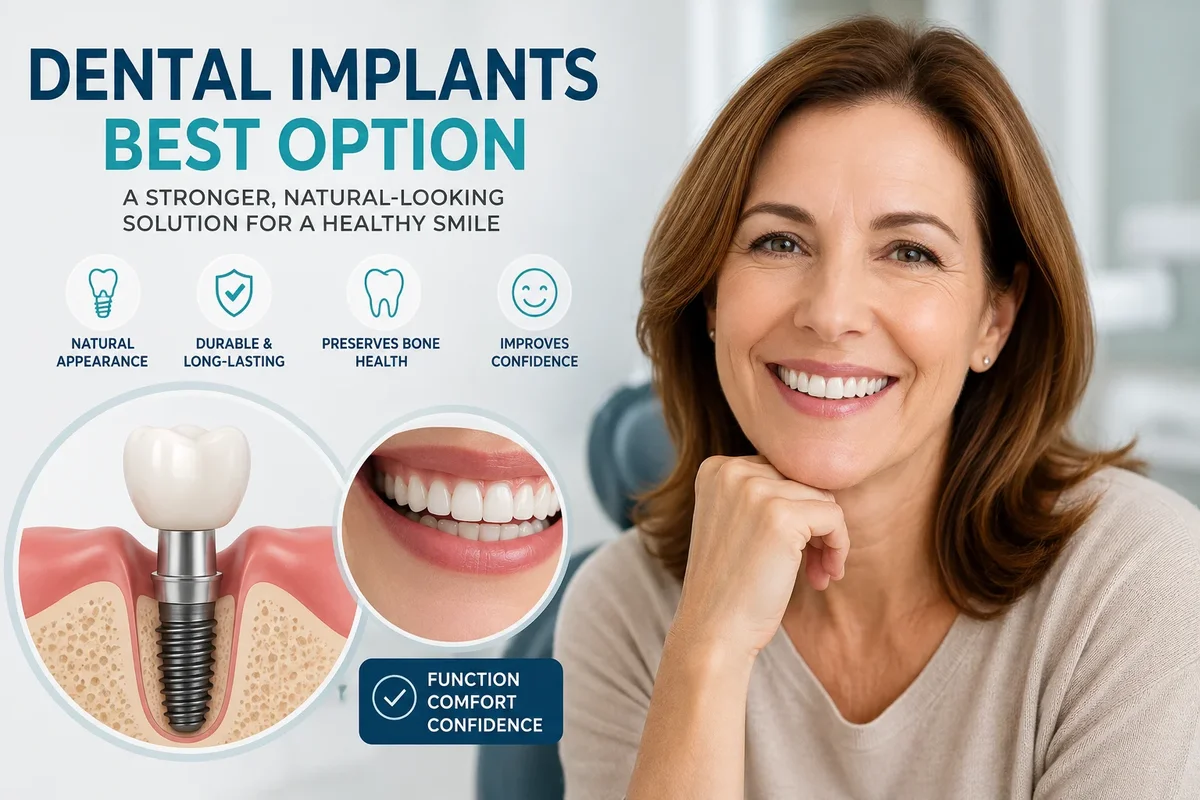
Dental Implants Best Option: A Practical Guide to Making the Right Choice

dental implants best option

Many people searching for dental implants best option want one simple answer: are dental implants truly the right solution for replacing missing teeth? In many situations, dental implants are considered one of the most reliable long-term tooth replacement methods because they replace both the visible tooth and the underlying root, helping maintain chewing ability, appearance, and jawbone support. However, dental implants best option does not automatically apply to every individual. The right treatment depends on factors such as your oral health, bone volume, medical history, lifestyle, budget, and long-term expectations. A personalized examination by an experienced dental professional remains the most important step before making any treatment decision.

If you have lost a single tooth, several teeth, or even all of your teeth, you may be comparing implants with bridges or removable dentures. While every treatment has advantages and limitations, many patients investigate whether dental implants best option is the most suitable solution because implants are designed to function independently without relying on neighboring teeth. They also provide stability that many patients appreciate during eating and speaking. That said, every smile is different, and what works well for one person may not be the ideal choice for someone else.

Understanding when dental implants best option applies begins with knowing your own goals. Some people prioritize long-term durability, while others focus on lower initial costs or shorter treatment times. Some patients have healthy jawbone structure and excellent oral hygiene, making implants a realistic possibility. Others may require additional procedures such as bone grafting before implant placement can even be considered. These differences explain why no ethical dentist can recommend treatment without first performing a clinical examination and reviewing diagnostic images.

One of the reasons many professionals discuss dental implants best option is that implants help preserve jawbone by stimulating the bone similarly to natural tooth roots. After a tooth is lost, the surrounding bone naturally begins to shrink over time. Although this process varies from person to person, maintaining bone volume is often an important factor in preserving facial structure and supporting future oral health. This benefit is one reason implants are frequently recommended when clinically appropriate.

Comfort is another factor that leads people to research dental implants best option. Unlike removable dentures, implant-supported restorations remain fixed in the mouth and generally do not require adhesives. Many patients report greater confidence when eating, laughing, and speaking because properly restored implants are designed to remain stable during everyday activities. Nevertheless, successful outcomes depend on careful planning, precise placement, healing, and consistent oral hygiene after treatment.

Cost naturally becomes part of the conversation whenever someone searches for dental implants best option. Although implants often involve a higher initial investment than some alternative treatments, treatment costs vary significantly depending on the number of implants required, whether bone grafting or sinus augmentation is necessary, the restoration materials selected, laboratory work, geographic location, and the complexity of the case. For this reason, accurate pricing can only be provided after a complete examination and individualized treatment plan. It is more helpful to compare long-term value alongside initial treatment expenses rather than focusing solely on the first quotation.

Medical history also influences whether dental implants best option is appropriate. Certain systemic conditions, medications, smoking habits, uncontrolled periodontal disease, or insufficient bone volume may require additional planning or alternative treatment approaches. These situations do not automatically prevent implant treatment, but they highlight why comprehensive assessment is essential. A dentist may recommend improving oral health first before proceeding with implant surgery.

If aesthetics are important to you, researching dental implants best option is understandable. Modern implant-supported crowns are designed to blend naturally with surrounding teeth when treatment is carefully planned. Gum health, bite alignment, smile design, and restoration materials all contribute to the final appearance. Achieving natural-looking results requires coordination between clinical examination, digital planning, laboratory fabrication, and ongoing maintenance.

Proper maintenance should never be overlooked. Even when dental implants best option fits your situation, implants still require daily brushing, interdental cleaning, professional check-ups, and routine maintenance. They cannot develop cavities like natural teeth, but the surrounding gums and bone remain susceptible to inflammation if plaque accumulates. Long-term success depends not only on the procedure itself but also on the patient’s commitment to oral hygiene and regular dental visits.

Reliable information is an important part of making an informed decision. Educational resources from organizations such as the American Dental Association can help you understand implant treatment, oral health recommendations, and questions to discuss during your consultation. Combining trustworthy educational information with a personalized clinical assessment gives you a much stronger foundation for deciding whether implants are appropriate.

If you are comparing treatment options, a consultation allows your dentist to evaluate bone quality, gum health, bite function, existing restorations, medical history, and your personal goals before recommending a solution. Clinics experienced in comprehensive implant planning, including Redent Klinik, can explain the advantages, limitations, expected treatment stages, and possible alternatives based on your individual needs rather than offering a one-size-fits-all recommendation. If you would like to discuss your situation in more detail, you can request an evaluation through the Redent Klinik Contact Page.

Practical next step: Before deciding whether dental implants best option describes your situation, schedule a professional dental consultation that includes a clinical examination and appropriate diagnostic imaging. Prepare questions about suitability, expected treatment stages, healing time, maintenance requirements, possible alternatives, and the factors that may influence your personalized treatment plan and overall costs. This approach helps you make an informed decision based on your own oral health rather than general information alone.

Are Dental Implants the Best Option for Missing Teeth?

Many people searching for dental implants best option are trying to answer a practical question rather than simply learn about implants. They want to know whether implants are the right choice for their own situation, how they compare with other treatments, and whether now is the right time to proceed. The honest answer is that dental implants best option can be an excellent solution for many patients, but the decision should always be based on a complete dental examination, diagnostic imaging, and a discussion of your personal goals. Missing teeth affect much more than appearance. They can influence chewing efficiency, speech, bite alignment, jawbone health, and overall confidence. Understanding how implants fit into your individual treatment plan is the first step toward making an informed decision.

Why Dental Implants Are Often Considered the Best Option

One reason many dentists discuss dental implants best option is because implants replace the missing tooth root as well as the visible crown. Unlike some alternative treatments, implants are placed into the jawbone where they are designed to support a restoration independently. This means neighboring healthy teeth usually do not need to be reshaped simply to replace one missing tooth.

Many patients appreciate this conservative approach because preserving natural tooth structure is generally beneficial whenever possible. In addition, implant-supported restorations are designed to provide stability during eating and speaking, allowing many patients to feel more confident in daily life. While every treatment has advantages and disadvantages, these characteristics explain why dental implants best option frequently appears in discussions about modern tooth replacement.

Situations Where Dental Implants May Be Suitable

Whether dental implants best option applies to you depends on several important clinical factors. A dentist may evaluate:

  • The number of missing teeth.
  • Your gum health.
  • The amount and quality of jawbone.
  • Your bite relationship.
  • General medical history.
  • Smoking habits.
  • Long-term oral hygiene commitment.

Patients who have healthy gums, sufficient bone volume, and realistic expectations are often good candidates for implant treatment. However, even if bone loss has already occurred, this does not automatically eliminate implants as a possibility. Some individuals may benefit from additional procedures before implant placement, depending on their specific clinical findings.

Single Missing Tooth

For one missing tooth, dental implants best option is commonly discussed because an implant can replace the missing tooth without placing additional stress on adjacent healthy teeth. This approach may help maintain natural tooth structure while restoring function and appearance.

Several Missing Teeth

When multiple teeth are missing, implants may support bridges or other fixed restorations. Depending on the clinical situation, this may reduce the number of individual implants required while still providing a stable restoration.

Complete Tooth Loss

People missing all teeth frequently compare implant-supported restorations with conventional removable dentures. Implant-supported solutions may improve stability and chewing performance for some patients, although treatment planning varies considerably between individuals.

When Dental Implants May Not Be the Immediate Best Option

Although many searches focus on dental implants best option, implants are not automatically recommended for everyone. Some situations require additional planning before treatment can begin.

Examples include:

  • Active gum disease requiring treatment.
  • Insufficient jawbone that may require augmentation.
  • Poor oral hygiene habits.
  • Certain uncontrolled medical conditions.
  • Heavy smoking that may increase treatment risks.
  • Temporary health situations requiring postponement.

These factors do not necessarily prevent implant treatment. Instead, they help dentists determine the safest and most appropriate sequence of care.

Comparing Dental Implants with Other Tooth Replacement Options

Understanding alternatives helps patients decide whether dental implants best option truly matches their priorities.

Dental Bridges

Traditional bridges may provide an effective solution for some patients, particularly when neighboring teeth already require crowns. Treatment time can sometimes be shorter than implant therapy. However, bridge treatment may involve preparing adjacent teeth, making clinical circumstances an important consideration.

Removable Dentures

Removable dentures generally involve a lower initial treatment cost than implants. They may be appropriate for certain medical, anatomical, or financial situations. However, some patients experience movement during eating or speaking and may require periodic adjustments as the jawbone changes over time.

Leaving the Space Untreated

Replacing a missing tooth is not always an emergency, but delaying treatment indefinitely may allow neighboring teeth to shift, affect bite balance, or contribute to gradual bone loss. During a consultation, your dentist can explain whether delaying treatment is appropriate for your specific circumstances.

Cost Considerations

Cost is one of the most common reasons people investigate dental implants best option. Implant treatment generally involves several components that influence the total investment, including diagnostic imaging, implant surgery, healing, restorative components, laboratory work, and the complexity of treatment.

Additional procedures, such as bone grafting or sinus augmentation, may also influence the final treatment plan. Because every patient’s needs differ, responsible providers avoid quoting guaranteed prices without an examination. A personalized treatment plan provides a far more accurate understanding of expected costs than general online estimates.

Long-Term Value

Many patients evaluating dental implants best option consider more than the initial cost. Long-term maintenance, durability, comfort, chewing function, and preservation of surrounding oral structures are often equally important when comparing treatment options.

No dental restoration lasts forever under every circumstance, and future maintenance may still be required. However, careful planning, appropriate maintenance, and regular dental reviews may contribute to long-term treatment success.

Making the Right Decision for Your Situation

The question is not simply whether dental implants best option is true in general. The more important question is whether implants represent the best option for your oral health, expectations, lifestyle, and treatment goals.

A personalized consultation allows your dentist to review clinical findings, discuss realistic treatment options, explain expected benefits and limitations, and compare implants with bridges or removable dentures without unnecessary pressure. Clinics experienced in implant planning, including Redent Klinik, can provide individualized treatment recommendations based on diagnostic findings and your long-term oral health objectives.

What to check next: Before deciding whether dental implants best option applies to you, request a comprehensive dental examination that includes diagnostic imaging, an assessment of your gum health and jawbone, a discussion of possible alternatives, estimated treatment stages, maintenance requirements, and individualized cost factors. Professional advice is especially important if you have multiple missing teeth, existing gum disease, significant bone loss, or ongoing medical conditions that could influence treatment planning.

Dental Implants Best Option Cost Factors Explained

One of the first questions people ask after learning about implants is how much treatment will cost and whether dental implants best option also represents good long-term value. While it is natural to compare prices, focusing only on the lowest quote can sometimes overlook important factors that influence treatment quality, durability, maintenance, and overall patient experience. The reality is that dental implants best option should be evaluated by considering both immediate expenses and the long-term benefits that may come from choosing a treatment designed specifically for your oral health needs. Every patient has unique anatomical conditions, treatment goals, and restorative requirements, which means there is no universal price that applies to everyone.

If you are researching dental implants best option, it is helpful to understand that implant treatment is usually planned in several stages. Each stage contributes to the overall investment and should be evaluated together rather than individually. An experienced dentist develops a personalized treatment plan after a clinical examination and appropriate imaging, allowing costs to reflect the actual complexity of your case rather than a general online estimate.

Why Implant Costs Vary Between Patients

People often wonder why one clinic provides a different estimate from another. The answer is that dental implants best option depends on far more than simply placing an implant. The treatment plan may include diagnostic procedures, surgical planning, restorative design, laboratory work, follow-up appointments, and long-term maintenance recommendations.

Several factors commonly influence the final treatment cost, including:

  • The number of missing teeth.
  • The number of implants required.
  • The condition of the jawbone.
  • Whether bone grafting or sinus augmentation is necessary.
  • The type of restoration placed on the implant.
  • Materials selected for crowns or bridges.
  • The complexity of the bite.
  • Digital planning and imaging requirements.
  • Geographic location of the clinic.
  • Individual healing requirements.

Because these variables differ from patient to patient, ethical providers avoid guaranteeing prices before completing a full assessment.

Understanding the Different Parts of Implant Treatment

Initial Consultation and Examination

The first step in determining whether dental implants best option fits your situation is a comprehensive consultation. During this appointment, the dentist reviews your medical history, examines your gums, evaluates missing teeth, and discusses your expectations. Diagnostic imaging may also be recommended to assess bone volume and surrounding anatomical structures.

This stage is important because accurate treatment planning helps reduce unexpected complications and ensures that recommendations are based on your individual oral health rather than assumptions.

Diagnostic Imaging

Three-dimensional imaging is commonly used during implant planning because it provides detailed information about bone quality, bone height, nerve locations, and sinus anatomy. Although imaging contributes to treatment costs, it also supports safer planning and more predictable decision-making.

When evaluating dental implants best option, many patients discover that careful planning is just as important as the surgical procedure itself.

Implant Placement

The surgical phase involves placing the implant into the jawbone. Depending on your treatment plan, one implant may replace a single missing tooth, while multiple implants may support bridges or full-arch restorations.

The complexity of surgery varies considerably between patients. Someone with excellent bone volume may require a straightforward procedure, while another patient may need preparatory treatment before implant placement becomes appropriate.

Final Restoration

After healing, a custom restoration is attached to the implant. The restoration may be a crown, bridge, or full-arch prosthesis depending on the number of missing teeth.

The material selected for the restoration, laboratory craftsmanship, and aesthetic requirements all influence the overall treatment investment. These decisions should balance function, appearance, and long-term maintenance rather than focusing exclusively on cost.

Looking Beyond the Initial Price

People researching dental implants best option frequently compare implants with bridges and removable dentures based solely on the first treatment estimate. While this approach is understandable, it may not provide the full picture.

Long-term value may include factors such as:

  • Comfort during eating and speaking.
  • Preservation of neighboring teeth.
  • Jawbone support.
  • Daily convenience.
  • Expected maintenance requirements.
  • Potential replacement or repair needs over time.

Although every restoration may eventually require maintenance, evaluating these factors alongside the initial investment often leads to a more balanced decision.

Can Lower Prices Always Mean Better Value?

Not necessarily. Choosing dental implants best option involves evaluating the complete treatment experience rather than selecting the lowest advertised fee.

When comparing providers, consider asking:

  • What does the treatment estimate include?
  • Are diagnostic procedures included?
  • Which implant system is being recommended?
  • What restorative materials will be used?
  • How many follow-up appointments are included?
  • How will future maintenance be managed?
  • What alternatives are appropriate for my case?

These questions often provide more meaningful information than comparing headline prices alone.

Financing May Influence Your Decision

Some patients postpone treatment because they assume implants are financially out of reach. In reality, many clinics offer structured payment solutions or financing arrangements depending on local regulations and available services.

When considering dental implants best option, discussing payment options during your consultation may help you understand whether treatment can be planned in a way that fits your financial circumstances. Financing availability varies by clinic and country, so it is always best to request current information directly.

Why Personalized Treatment Planning Matters

Every patient has different priorities. One person may value aesthetics above everything else, while another focuses on chewing ability or long-term stability. Someone replacing one front tooth has very different treatment needs from someone restoring an entire arch.

Because of these differences, determining whether dental implants best option applies to your situation requires balancing oral health, functional needs, expected longevity, maintenance responsibilities, and financial considerations together.

Experienced implant providers, including Redent Klinik, typically explain each treatment stage, discuss realistic expectations, compare alternative solutions, and develop a personalized plan rather than recommending identical treatment for every patient. If you would like more information about an individualized assessment, you can visit the Redent Klinik Contact Page. For additional educational information about oral health and tooth replacement, the American Dental Association also provides valuable patient resources.

What you should check next: Before deciding whether dental implants best option is appropriate for you, request a written treatment plan that explains the recommended procedures, diagnostic findings, estimated treatment stages, possible alternatives, maintenance requirements, and the factors influencing your personalized costs. Professional advice is especially important if you have complex restorative needs, significant bone loss, existing gum disease, or questions about financing and long-term treatment planning.

Who Is the Best Candidate for Dental Implants?

One of the most important questions patients ask is not simply whether dental implants best option is an effective treatment, but whether it is the right treatment for them. Dental implants have transformed modern restorative dentistry, yet suitability depends on much more than having one or more missing teeth. Every patient has different oral health conditions, medical history, lifestyle habits, and expectations. For that reason, determining whether dental implants best option applies to your situation requires a comprehensive evaluation rather than relying on general information found online. Understanding the characteristics of a good implant candidate helps you make an informed decision before beginning treatment.

Many people assume age is the deciding factor. In reality, overall oral and general health usually play a much larger role than chronological age. Healthy adults of different ages may be suitable candidates, while younger individuals with incomplete jaw development or adults with untreated oral disease may need additional care before implant treatment becomes appropriate. Instead of asking, “Am I too old?” or “Am I too young?”, it is more useful to ask whether your mouth provides a healthy foundation for successful implant treatment.

Healthy Gums Are an Essential Starting Point

When evaluating whether dental implants best option is appropriate, dentists begin by examining gum health. Dental implants rely on healthy surrounding tissues for long-term support. Active periodontal disease can damage the gums and bone supporting both natural teeth and implants.

If gum disease is identified, treatment is usually recommended before implant placement. Addressing inflammation first can improve the overall health of your mouth and create a more favorable environment for future restorative procedures. This does not necessarily mean implants are impossible—it simply means treatment may need to follow a different sequence.

Signs That Your Gums May Need Attention

  • Bleeding during brushing or flossing.
  • Persistent bad breath.
  • Swollen or tender gums.
  • Loose teeth.
  • Gum recession.
  • Previous diagnosis of periodontal disease.

If any of these symptoms are present, a periodontal evaluation should usually be completed before deciding whether dental implants best option fits your circumstances.

Bone Volume and Bone Quality Matter

A dental implant is placed into the jawbone, making bone availability one of the most important factors in treatment planning. After a tooth is lost, the surrounding bone naturally begins to shrink over time. The longer a tooth has been missing, the greater the possibility of bone reduction.

Fortunately, reduced bone volume does not automatically eliminate implants as an option. Modern dentistry includes procedures that may help prepare certain patients for implant treatment, depending on their clinical condition. Bone grafting or sinus augmentation may sometimes be recommended before or during implant therapy.

How Bone Is Evaluated

Your dentist may recommend three-dimensional imaging to assess:

  • Bone height.
  • Bone width.
  • Bone density.
  • Location of nerves.
  • Position of the maxillary sinus.
  • Overall implant placement possibilities.

This information allows treatment recommendations to be based on your anatomy rather than assumptions.

General Health Can Influence Treatment Planning

Although many patients researching dental implants best option focus primarily on the mouth, overall health also plays an important role. Certain medical conditions do not automatically prevent implant treatment, but they may influence timing, healing, or treatment planning.

Your dentist will usually review:

  • Current medications.
  • Diabetes management.
  • Heart conditions.
  • Immune system disorders.
  • Previous radiation therapy.
  • Osteoporosis medications.
  • Smoking history.

Providing accurate medical information helps the dental team develop a safer and more personalized treatment plan.

Lifestyle Habits Affect Long-Term Success

Another important consideration when determining whether dental implants best option is appropriate involves daily habits. Dental implants require long-term maintenance just like natural teeth.

Oral Hygiene

Patients willing to brush carefully, clean between teeth or implants, and attend regular professional examinations generally place themselves in a stronger position for maintaining implant health over time.

Smoking

Smoking may increase the risk of healing complications and can affect gum health. While smokers are not automatically excluded from implant treatment, many dentists recommend reducing or stopping tobacco use to support better healing and long-term maintenance.

Teeth Grinding

Patients who clench or grind their teeth may place additional forces on restorations. Your dentist may recommend protective appliances or adjustments as part of your overall treatment plan.

Which Patients Often Benefit Most?

Although every situation is unique, dental implants best option is commonly considered for patients who:

  • Have one or more missing teeth.
  • Want a fixed rather than removable solution.
  • Have healthy gums or are willing to complete periodontal treatment first.
  • Have adequate bone or are suitable candidates for bone augmentation.
  • Can maintain excellent oral hygiene.
  • Understand that treatment requires multiple stages and healing time.
  • Want to preserve neighboring healthy teeth whenever possible.

These characteristics often support successful treatment planning, but they do not replace a professional examination.

When Another Treatment May Be More Appropriate

There are situations where dental implants best option may not represent the most suitable immediate recommendation. Examples may include:

  • Untreated severe gum disease.
  • Insufficient bone requiring extensive reconstruction.
  • Medical conditions requiring stabilization.
  • Patients seeking the shortest possible treatment timeline.
  • Individuals unable to maintain adequate oral hygiene.

In these situations, your dentist may discuss bridges, removable dentures, staged treatment, or preliminary procedures before reconsidering implants.

The Importance of a Personalized Consultation

No online article can determine whether dental implants best option applies to your specific needs. Only a professional assessment can evaluate your oral anatomy, bite, gum condition, medical history, and long-term treatment goals.

During a consultation, your dentist should explain not only whether implants are possible, but also why they are recommended—or why another treatment may better suit your circumstances. Experienced providers, including Redent Klinik, emphasize individualized treatment planning rather than a one-size-fits-all approach. A consultation may include clinical photographs, digital imaging, treatment alternatives, expected timelines, and maintenance recommendations. If you would like to arrange an individualized assessment, you can visit the Redent Klinik Contact Page. For additional patient education regarding oral health and restorative care, the American Dental Association provides reliable information.

What to check before making your decision: Ask your dentist to evaluate your gum health, bone quality, medical history, bite alignment, and oral hygiene habits before deciding whether dental implants best option is the most appropriate treatment. Request professional advice promptly if you have loose teeth, bleeding gums, long-term missing teeth, uncontrolled medical conditions, or uncertainty about whether implant treatment or an alternative restoration would better meet your long-term needs.

Step-by-Step Dental Implant Treatment Process

Understanding the treatment journey helps many patients feel more confident when deciding whether dental implants best option is right for them. While every case is unique, implant treatment generally follows a structured sequence that allows the dentist to evaluate your oral health, plan the procedure carefully, support proper healing, and restore function with a custom-made replacement tooth. Knowing what to expect at each stage also makes it easier to compare implants with bridges or removable dentures. If you are considering whether dental implants best option fits your personal situation, learning the complete treatment process can help you prepare realistic expectations and make informed decisions together with your dental professional.

It is important to remember that treatment timelines vary considerably. Some patients require only straightforward implant placement followed by healing and restoration, while others benefit from preparatory procedures before implants can safely be placed. Your individual anatomy, bone condition, medical history, and restorative goals all influence the final treatment plan.

Step 1: Initial Consultation and Comprehensive Examination

The first stage in determining whether dental implants best option applies to your case is a detailed consultation. During this appointment, the dentist gathers information about your overall health, dental history, current symptoms, and treatment expectations.

A comprehensive evaluation commonly includes:

  • Review of your medical history.
  • Clinical examination of teeth and gums.
  • Assessment of bite alignment.
  • Evaluation of missing teeth.
  • Discussion of previous dental treatments.
  • Review of medications and lifestyle factors.

This consultation is also an opportunity to discuss your priorities. Some patients value aesthetics most, while others focus on chewing function, treatment duration, or long-term maintenance. These goals help guide personalized treatment planning.

Step 2: Diagnostic Imaging and Digital Planning

Why Imaging Matters

Before confirming whether dental implants best option is appropriate, dentists often recommend panoramic radiographs or three-dimensional CBCT imaging. These images provide detailed information that cannot be obtained through a visual examination alone.

Diagnostic imaging helps evaluate:

  • Bone height and width.
  • Bone density.
  • Location of nerves.
  • Sinus anatomy.
  • Position of adjacent teeth.
  • Possible implant locations.

Careful digital planning allows the dental team to develop an individualized treatment approach based on your anatomy rather than relying on generalized assumptions.

Creating a Personalized Treatment Plan

Following the examination, your dentist explains the available treatment options. If dental implants best option appears suitable, the discussion may include the number of implants required, estimated treatment stages, expected healing periods, restorative choices, maintenance recommendations, and possible alternatives.

This is also the appropriate time to discuss estimated costs, understanding that final expenses depend on your personalized treatment plan rather than standard pricing.

Step 3: Preparatory Procedures When Needed

Not every patient proceeds directly to implant placement. Some individuals require preliminary treatment to improve the long-term outlook of implant therapy.

Preparatory care may include:

  • Professional periodontal treatment.
  • Extraction of non-restorable teeth.
  • Bone grafting.
  • Sinus augmentation.
  • Treatment of oral infections.
  • Improvement of oral hygiene before surgery.

These additional steps are recommended only when clinically appropriate and help create a healthier environment for future implant placement.

Step 4: Implant Placement Procedure

What Happens During Surgery?

Once the treatment plan is complete, the implant is surgically placed into the jawbone under appropriate local anesthesia. The procedure itself varies depending on the number of implants being placed and the complexity of the case.

During this stage, the titanium implant serves as an artificial tooth root that will later support the final restoration. While reading about dental implants best option, many patients worry about discomfort during surgery. Your dentist will explain the planned anesthesia and post-operative care instructions before treatment begins.

Immediately After Surgery

Following implant placement, temporary swelling or mild discomfort may occur as part of the normal healing process. Your dentist provides individualized instructions regarding oral hygiene, diet, activity, and follow-up appointments. Healing experiences differ between patients, making personalized advice particularly important.

Step 5: Healing and Osseointegration

One of the defining characteristics of dental implants best option is the healing phase known as osseointegration. During this period, the implant gradually integrates with the surrounding bone, creating the foundation needed to support the future restoration.

Healing time varies according to several factors, including:

  • Bone quality.
  • General health.
  • Smoking status.
  • Location of the implant.
  • Whether additional procedures were performed.

Your dentist monitors healing during scheduled review appointments to ensure that recovery is progressing appropriately.

Step 6: Placement of the Final Restoration

Once healing is complete, impressions or digital scans are used to fabricate your custom restoration. Depending on your treatment plan, this may be:

  • A single implant-supported crown.
  • An implant-supported bridge.
  • A full-arch restoration.

The restoration is designed to restore function, appearance, and bite harmony while blending naturally with surrounding teeth whenever possible. At this stage, many patients begin to fully appreciate why dental implants best option is often recommended for suitable candidates seeking a fixed tooth replacement solution.

Step 7: Long-Term Maintenance

Completing treatment is not the end of the process. Long-term success depends on consistent maintenance and regular professional reviews.

Daily Home Care

  • Brush thoroughly twice each day.
  • Clean around implants using recommended interdental aids.
  • Follow personalized hygiene instructions.
  • Avoid neglecting routine dental care.

Professional Follow-Up

Regular examinations allow your dentist to monitor implant health, surrounding gums, bite function, and the condition of the restoration. Early identification of potential problems often allows conservative management before more significant complications develop.

Making an Informed Decision

The complete treatment journey demonstrates why dental implants best option should never be viewed as a single procedure but rather as a carefully planned process involving diagnosis, preparation, surgery, healing, restoration, and maintenance. Every stage contributes to the overall outcome, making comprehensive planning just as important as the implant placement itself.

Clinics experienced in implant dentistry, including Redent Klinik, typically emphasize individualized treatment planning and clear communication throughout every phase of care. Patients are encouraged to understand the benefits, limitations, expected timelines, and available alternatives before beginning treatment. If you would like to discuss your own circumstances, you can request an evaluation through the Redent Klinik Contact Page. For additional educational information about oral health and restorative treatment, the American Dental Association provides helpful patient resources.

What to check before proceeding: Before deciding whether dental implants best option is appropriate for your needs, ask your dentist to explain each treatment stage, expected healing periods, possible preparatory procedures, maintenance responsibilities, estimated appointment schedule, and available alternatives. Professional advice is especially important if you have significant bone loss, ongoing gum disease, complex restorative needs, or medical conditions that may influence treatment planning or recovery.

Risks, Recovery, and Long-Term Success of Dental Implants

When deciding whether dental implants best option is the right solution, it is important to look beyond the benefits and understand the recovery process, possible risks, and the factors that contribute to long-term success. Every dental procedure carries some degree of risk, and implant treatment is no exception. However, careful planning, appropriate case selection, good oral hygiene, and regular follow-up appointments can help support favorable outcomes. Instead of asking whether implant treatment is completely risk-free, a better question is whether the potential benefits outweigh the possible risks for your individual situation. A thorough consultation allows your dentist to explain these considerations based on your oral health, medical history, and treatment goals.

Patients researching dental implants best option often discover that successful treatment is not determined by surgery alone. Long-term results depend on proper healing, maintenance, lifestyle choices, and ongoing professional care. Understanding these elements before treatment helps you make realistic and informed decisions.

Understanding the Recovery Process

Recovery after implant placement varies from one patient to another. Some individuals return to normal daily activities relatively quickly, while others require a longer healing period depending on the complexity of the procedure and whether additional treatments such as bone grafting were performed.

Immediately after surgery, it is common to experience temporary symptoms that gradually improve as healing progresses. These may include:

  • Mild swelling around the surgical area.
  • Temporary tenderness.
  • Minor bruising.
  • Sensitivity during chewing.
  • Small amounts of bleeding during the first day.

Your dentist will provide personalized instructions regarding medication, oral hygiene, eating habits, and follow-up appointments. Following these recommendations carefully supports the healing process and helps reduce unnecessary complications.

What to Expect During the First Few Days

Most patients are advised to eat softer foods for a period recommended by their dentist and avoid placing unnecessary pressure on the surgical area. Gentle oral hygiene remains important, although your dentist may recommend temporary modifications around the implant site while healing begins.

Although many people researching dental implants best option worry about discomfort, recovery experiences differ significantly between individuals. Your treatment plan, general health, and the number of implants placed all influence the healing process.

Possible Risks Associated with Dental Implants

No dental procedure can eliminate risk entirely. Understanding potential complications helps patients make balanced decisions rather than relying on unrealistic expectations.

Infection

As with any surgical procedure, infection is a possible complication. Maintaining good oral hygiene, attending follow-up appointments, and following post-operative instructions may help reduce this risk.

Delayed Healing

Healing may take longer in certain individuals due to medical conditions, smoking, or other personal health factors. Your dentist evaluates these risks during the consultation to determine whether any modifications to treatment planning are appropriate.

Insufficient Bone Integration

The implant must integrate with the surrounding jawbone during the healing phase. In some situations, this process may not occur as expected. When evaluating whether dental implants best option fits your circumstances, your dentist considers bone quality, overall health, and lifestyle factors that may influence healing.

Mechanical Complications

Although implant-supported restorations are designed for long-term function, components such as crowns, screws, or bridges may occasionally require maintenance or repair over time due to normal wear, bite forces, or accidental damage.

Factors That Can Influence Long-Term Success

Patients often assume that surgery alone determines the outcome. In reality, the long-term performance of dental implants best option depends on many interconnected factors.

Excellent Oral Hygiene

Daily brushing and cleaning around implants remain essential throughout the life of the restoration. Although implants cannot develop cavities, the surrounding gum tissue and supporting bone require continuous care.

Regular Professional Check-Ups

Routine dental examinations allow early identification of inflammation, bite changes, restoration wear, or other issues that may benefit from timely intervention.

Healthy Lifestyle Choices

General health habits may influence oral health as well. Reducing tobacco use, managing systemic health conditions, and following your dentist’s maintenance recommendations can contribute to better long-term outcomes.

Managing Bite Forces

Patients who grind or clench their teeth may place additional stress on implant-supported restorations. If necessary, your dentist may recommend protective appliances to help reduce excessive loading during sleep.

How Long Can Implant Restorations Last?

One reason many people investigate dental implants best option is the potential for long-term function when implants are properly maintained. However, no responsible dental professional can guarantee a specific lifespan because outcomes depend on many individual variables.

These include:

  • Oral hygiene.
  • Smoking status.
  • Bone quality.
  • Medical history.
  • Regular professional maintenance.
  • Bite forces.
  • Overall treatment planning.

Rather than focusing on a specific number of years, it is more helpful to understand that consistent maintenance and professional monitoring play an important role throughout the lifetime of the restoration.

Recognizing When You Should Contact Your Dentist

Following implant treatment, certain symptoms should be evaluated promptly rather than ignored.

You should contact your dental provider if you notice:

  • Persistent or increasing pain.
  • Significant swelling that worsens instead of improving.
  • Continuous bleeding.
  • Mobility of the restoration.
  • Pus or signs of infection.
  • Difficulty biting comfortably after healing.

Early assessment allows your dentist to identify the cause and recommend appropriate management before problems become more complex.

Balancing Risks and Benefits

When comparing restorative options, understanding both advantages and limitations helps determine whether dental implants best option matches your priorities. For many suitable candidates, implants provide stability, support jawbone preservation, and restore chewing efficiency. However, treatment also requires surgery, healing time, ongoing maintenance, and regular professional reviews.

Every patient values these factors differently. Someone seeking the shortest possible treatment may choose differently from someone focused on preserving neighboring teeth or achieving a fixed restoration. This is why individualized treatment planning remains essential.

Making an Informed Long-Term Decision

Choosing dental implants best option should involve more than comparing online reviews or advertised prices. A comprehensive evaluation helps determine whether implants align with your oral health, lifestyle, expectations, and long-term goals.

Experienced implant providers, including Redent Klinik, typically explain expected recovery, maintenance requirements, possible risks, treatment alternatives, and realistic outcomes before beginning care. This allows patients to make well-informed decisions without unnecessary pressure. If you would like to arrange an individualized consultation, you can visit the Redent Klinik Contact Page. Additional educational information about oral health, implant care, and preventive dentistry is also available through the American Dental Association.

What to check before moving forward: Before deciding whether dental implants best option is suitable for your circumstances, discuss your medical history, gum health, bone condition, expected healing period, maintenance responsibilities, and potential risk factors with your dentist. Request professional advice promptly if you experience persistent pain, unusual swelling, implant mobility, or any concerns during recovery, as early evaluation often supports more effective management.

Dental Implants vs Bridges and Dentures: Which Is the Best Option?

When patients search for dental implants best option, they are often comparing implants with two other common tooth replacement methods: dental bridges and removable dentures. Each treatment can restore missing teeth, but they differ in cost, treatment process, maintenance, longevity, comfort, and suitability. Rather than asking which solution is universally superior, it is more helpful to understand which option best matches your individual oral health, lifestyle, and long-term goals. A personalized consultation allows your dentist to explain the benefits and limitations of every treatment so that you can make an informed decision based on your specific circumstances rather than general opinions.

Choosing the right restoration involves balancing several factors at the same time. Initial treatment cost may be important, but so are chewing ability, appearance, maintenance requirements, preservation of healthy teeth, recovery time, and future oral health. By comparing these aspects carefully, you can better understand whether dental implants best option accurately reflects your own treatment needs.

Dental Implants: A Fixed and Independent Solution

Dental implants are designed to replace both the missing tooth root and the visible crown. Because the implant is placed into the jawbone, it functions independently without typically relying on adjacent natural teeth for support.

Potential Advantages of Dental Implants

  • Help preserve neighboring healthy teeth.
  • Provide a fixed restoration that does not normally require removal.
  • May contribute to maintaining jawbone stimulation after tooth loss.
  • Often provide good stability during eating and speaking.
  • Can replace a single tooth, multiple teeth, or support full-arch restorations.

These characteristics explain why many patients investigate whether dental implants best option suits their situation. However, implants also involve surgery, healing time, and sufficient bone support, making proper case selection essential.

Potential Considerations

  • Higher initial treatment investment compared with some alternatives.
  • Healing period before the final restoration in many cases.
  • Possible need for bone grafting or other preparatory procedures.
  • Ongoing maintenance and regular professional reviews remain essential.

Dental Bridges: A Traditional Fixed Alternative

A dental bridge replaces one or more missing teeth by attaching an artificial tooth to crowns placed on neighboring teeth. Bridges have been successfully used for many years and may be appropriate under certain clinical conditions.

Potential Advantages of Bridges

  • Usually shorter overall treatment time than implant therapy.
  • No implant surgery required.
  • Can be appropriate when adjacent teeth already require crowns.
  • Provides a fixed restoration.

Potential Limitations

  • Adjacent healthy teeth may need preparation.
  • Does not replace the missing tooth root.
  • May not provide the same jawbone stimulation as an implant.
  • Future maintenance requirements vary depending on individual circumstances.

For some patients, bridges represent an excellent solution. For others, preserving healthy neighboring teeth makes dental implants best option a more attractive alternative.

Removable Dentures: A Practical Option for Certain Patients

Complete or partial removable dentures continue to play an important role in modern dentistry. They may be especially appropriate for patients seeking a non-surgical approach or for those with specific medical or financial considerations.

Potential Advantages of Dentures

  • Generally lower initial treatment cost.
  • No implant surgery required.
  • Suitable for replacing multiple or all missing teeth.
  • Treatment may be completed more quickly in some cases.

Potential Limitations

  • May move during eating or speaking.
  • Some patients require adhesives.
  • Periodic adjustments may become necessary over time.
  • Jawbone changes can influence denture fit.

While dentures remain an effective solution for many individuals, patients looking for greater stability often explore whether dental implants best option better aligns with their expectations.

Comparing the Most Important Decision Factors

Comfort

Many patients report appreciating the stability of implant-supported restorations because they remain fixed in the mouth. Bridges also provide a fixed solution, whereas removable dentures may require an adjustment period.

Appearance

Modern implants, bridges, and dentures can all provide attractive aesthetic results when carefully planned. The final appearance depends on treatment design, surrounding gum health, laboratory craftsmanship, and individual anatomy rather than the restoration type alone.

Maintenance

Every restoration requires maintenance. Even if dental implants best option appears suitable, implants still require daily cleaning and routine professional examinations. Bridges and dentures also have specific hygiene recommendations that should be followed carefully.

Treatment Time

Bridges and dentures may sometimes be completed more quickly than implant therapy because implants usually require a healing period before the final restoration is attached. However, treatment timelines vary depending on each patient’s clinical needs.

Long-Term Planning

Some patients prioritize preserving healthy neighboring teeth and supporting jawbone health, while others focus on reducing the number of appointments or minimizing initial treatment costs. Neither approach is universally correct. The most appropriate decision depends on balancing your priorities with professional clinical recommendations.

Questions to Ask During Your Consultation

If you are deciding whether dental implants best option fits your situation, consider asking your dentist:

  • Am I a suitable candidate for implants?
  • Would a bridge or denture better match my oral condition?
  • Will healthy neighboring teeth need preparation?
  • Do I have enough bone for implant placement?
  • How many appointments will each option require?
  • What maintenance is recommended for each restoration?
  • How might my medical history influence treatment planning?

These questions encourage a balanced discussion focused on your individual needs rather than generalized comparisons.

Choosing the Best Option for Your Situation

Although many people conclude that dental implants best option provides the greatest long-term value for their circumstances, another solution may be more appropriate depending on your health, finances, treatment priorities, or anatomical conditions. The goal is not simply to choose the newest technology, but to select the treatment that offers the most appropriate balance of function, comfort, maintenance, and long-term oral health.

Experienced implant providers, including Redent Klinik, typically compare implants, bridges, and dentures objectively while considering your clinical findings and personal goals. During a comprehensive consultation, your dentist can explain why one treatment may be recommended over another and answer questions about expected timelines, maintenance, and alternative options. If you wish to discuss your own case, you can request an appointment through the Redent Klinik Contact Page. For additional educational information about restorative dentistry and oral health, the American Dental Association offers reliable patient resources.

What to check before making your decision: Ask your dentist to compare implants, bridges, and dentures specifically for your oral health rather than relying on general recommendations. Request professional advice if you have multiple missing teeth, existing gum disease, significant bone loss, difficulty wearing dentures, or uncertainty about which treatment offers the most appropriate balance of function, maintenance, aesthetics, and long-term value for your individual situation.

Financing and Payment Options for Dental Implant Treatment

For many patients, the decision about dental implants best option is influenced not only by clinical suitability but also by financial planning. Even when implants appear to offer the most appropriate long-term solution, understanding how treatment may be paid for is an important part of making a confident decision. Rather than focusing solely on the total estimated cost, it is helpful to consider the available payment options, possible insurance benefits, treatment staging, and the overall value of investing in your oral health. Because every treatment plan is unique, financial discussions should always take place after a comprehensive examination and personalized treatment proposal.

Patients often delay replacing missing teeth because they assume implant treatment is financially out of reach. In reality, many dental practices provide flexible ways to organize treatment according to individual circumstances. Whether dental implants best option fits your budget depends on several factors, including the complexity of your case, the number of implants required, the need for additional procedures, and the payment solutions offered by the treating clinic.

Why Implant Treatment Costs Differ

One of the most common misconceptions is that there is a single standard price for implant treatment. In fact, no responsible dental provider can accurately determine the total cost before examining your oral condition.

When evaluating whether dental implants best option is appropriate, the treatment estimate may depend on:

  • The number of missing teeth.
  • The number of implants required.
  • Bone quality and available bone volume.
  • Whether bone grafting or sinus augmentation is necessary.
  • The type of restoration selected.
  • Laboratory materials and manufacturing techniques.
  • Digital imaging and treatment planning.
  • Overall case complexity.

Because every patient presents different clinical conditions, personalized treatment planning remains the only reliable method for calculating expected costs.

Common Ways Patients Finance Implant Treatment

Paying in Full

Some patients choose to complete payment before treatment begins. Depending on the clinic and local regulations, administrative procedures may vary. Paying in full may simplify treatment planning, although it is only one of several possible approaches.

Installment Payment Plans

Many dental clinics offer installment arrangements that divide treatment expenses over multiple payments. Availability differs according to country, local financial regulations, and individual practice policies.

If you are considering whether dental implants best option suits your financial situation, ask whether payment plans are available and whether different treatment phases can be scheduled accordingly.

Third-Party Financing

Some clinics work with financial institutions that provide healthcare financing. These arrangements vary considerably between countries and providers. Before accepting financing, review repayment schedules, interest rates, eligibility criteria, and contractual obligations carefully.

Can Treatment Be Completed in Stages?

One practical way to improve affordability is through phased treatment planning. Depending on your oral health needs, your dentist may recommend completing treatment over multiple stages.

Examples may include:

  • Treating active gum disease first.
  • Completing extractions before implant placement.
  • Scheduling bone grafting separately.
  • Replacing the most urgent missing teeth first.
  • Planning additional implants in future phases.

Not every patient is suitable for staged treatment, but discussing this possibility may help determine whether dental implants best option can fit both your clinical needs and financial priorities.

Understanding Dental Insurance

Insurance coverage for implant treatment differs widely depending on your provider, policy, country, and specific benefits. Some plans may contribute toward diagnostic procedures or restorative components, while others may provide little or no implant-related coverage.

Before beginning treatment, contact your insurance provider to clarify:

  • Whether implant treatment is included.
  • Annual benefit limits.
  • Waiting periods.
  • Coverage for diagnostic imaging.
  • Coverage for crowns or implant restorations.
  • Required documentation for claims.

Your dental clinic may also help provide treatment documentation when appropriate, although insurance decisions remain the responsibility of the insurer.

Looking Beyond the Initial Investment

When comparing treatment options, many patients naturally focus on the first quotation they receive. However, evaluating dental implants best option also involves considering long-term value rather than only initial cost.

Questions worth asking include:

  • How long is the expected treatment process?
  • Will neighboring healthy teeth require preparation?
  • What maintenance will each restoration require?
  • How stable is the restoration expected to be?
  • What future adjustments may become necessary?

These discussions often provide a more balanced understanding than comparing prices alone.

Questions to Ask Before Accepting a Treatment Estimate

Whether you are comparing multiple clinics or reviewing a single proposal, asking detailed questions can help you understand exactly what is included.

Important Questions

  • What procedures are included in the estimate?
  • Are diagnostic scans included?
  • Will additional procedures increase the total cost?
  • How many appointments are expected?
  • What maintenance appointments are recommended?
  • What payment methods are accepted?
  • Are financing options available?

Having clear answers to these questions makes it easier to evaluate whether dental implants best option aligns with both your oral health goals and financial planning.

Avoid Making Decisions Based Only on Price

Although affordability is important, choosing treatment based solely on the lowest advertised fee may not always produce the most appropriate outcome. Comprehensive diagnosis, careful planning, clinician experience, restoration quality, communication, and long-term maintenance all contribute to successful implant care.

A personalized treatment plan provides significantly more meaningful information than promotional pricing alone. Understanding the reasons behind each recommended procedure allows you to compare treatment proposals more accurately.

Planning for Long-Term Oral Health

For many suitable candidates, dental implants best option represents a long-term investment in oral function and quality of life rather than simply another dental procedure. However, every patient’s priorities differ. Some individuals prefer shorter treatment times, while others prioritize preserving natural teeth, improving chewing efficiency, or minimizing future maintenance.

Experienced providers, including Redent Klinik, generally discuss treatment costs only after a comprehensive clinical evaluation and personalized planning. During your consultation, the dental team can explain estimated treatment stages, financing possibilities where available, expected maintenance, and appropriate alternatives without making unrealistic promises about pricing or outcomes. If you would like to request an individualized assessment, you can visit the Redent Klinik Contact Page. For additional educational information regarding oral health and restorative dentistry, the American Dental Association provides valuable patient resources.

What to check before making your financial decision: Request a written treatment plan that clearly outlines recommended procedures, estimated treatment stages, possible additional treatments, payment options, financing availability, maintenance expectations, and any questions related to insurance coverage. Professional advice is especially important if you are comparing several treatment options, planning phased care, or balancing financial considerations with long-term oral health goals before deciding whether dental implants best option is the right investment for your individual situation.

Frequently Asked Questions About Dental Implants Best Option

Patients researching dental implants best option often encounter a large amount of information online, making it difficult to distinguish between facts, opinions, and marketing claims. Asking the right questions is one of the most effective ways to understand whether implant treatment matches your oral health needs and long-term goals. The answers below address many of the concerns patients commonly discuss during consultations. While these explanations provide general guidance, they cannot replace a professional examination, diagnostic imaging, and a personalized treatment plan developed by your dentist.

Understanding these frequently asked questions allows you to evaluate dental implants best option more confidently and prepare meaningful questions before your consultation.

Are Dental Implants Always the Best Option?

No. Although many patients are suitable candidates, dental implants best option does not apply universally. The most appropriate treatment depends on several clinical and personal factors, including gum health, bone quality, medical history, the number of missing teeth, oral hygiene habits, treatment expectations, and financial considerations.

Some individuals benefit more from implant-supported restorations, while others may achieve appropriate results with bridges or removable dentures. A comprehensive dental examination is essential before any recommendation can be made.

How Long Does Implant Treatment Usually Take?

There is no single treatment timeline for dental implants best option. The duration depends on your individual treatment plan.

Factors influencing treatment time include:

  • Whether tooth extraction is required.
  • Bone quality and healing.
  • The need for bone grafting.
  • The number of implants.
  • Overall oral health.
  • Healing response after surgery.

Your dentist can explain the expected sequence of appointments after reviewing your diagnostic findings.

Is Implant Surgery Painful?

Many patients worry about discomfort before treatment. Implant placement is generally performed using appropriate local anesthesia, and your dentist will explain what to expect during and after the procedure.

Recovery experiences vary between individuals. Mild swelling or tenderness may occur following surgery, but personalized post-operative instructions are provided to support healing. Discussing any concerns during your consultation helps create realistic expectations before proceeding with dental implants best option.

Can Smokers Receive Dental Implants?

Smoking does not automatically prevent implant treatment, but it may influence healing and long-term maintenance. Your dentist will evaluate your overall oral condition and explain how tobacco use may affect treatment planning.

If you are considering whether dental implants best option is appropriate, discussing smoking habits openly allows your dentist to provide recommendations based on your individual situation.

What Happens If There Is Not Enough Bone?

Reduced jawbone volume is a common concern among patients with long-standing missing teeth. Fortunately, insufficient bone does not always eliminate implant treatment as a possibility.

Depending on your clinical findings, your dentist may discuss procedures such as:

  • Bone grafting.
  • Sinus augmentation.
  • Alternative implant positioning.
  • Different restorative options.

Diagnostic imaging helps determine whether additional preparation is appropriate before confirming that dental implants best option fits your circumstances.

How Do Dental Implants Compare with Bridges?

Dental implants and bridges both restore missing teeth, but they differ in several important ways.

Dental Implants

  • Usually function independently.
  • Help preserve neighboring healthy teeth.
  • Require sufficient bone support.
  • Involve surgical placement.

Dental Bridges

  • Do not require implant surgery.
  • May involve preparing adjacent teeth.
  • Can provide a fixed restoration.
  • May be appropriate in selected clinical situations.

The right choice depends on your individual oral condition rather than a universal rule.

Do Dental Implants Require Special Care?

Yes. Although implants cannot develop dental decay like natural teeth, the surrounding gum tissue and bone require lifelong care.

Patients choosing dental implants best option should be prepared to:

  • Brush thoroughly every day.
  • Clean around implants using recommended interdental aids.
  • Attend routine professional examinations.
  • Follow maintenance advice provided by the dental team.

Good oral hygiene plays an important role in maintaining healthy tissues around implant-supported restorations.

Are Dental Implants Worth the Investment?

This question depends entirely on your priorities. Some patients value long-term stability, preservation of neighboring teeth, and fixed restorations. Others prioritize lower initial treatment costs or shorter treatment times.

Rather than asking whether dental implants best option is worth the investment for everyone, consider whether implants align with your own expectations, oral health needs, and financial planning. Your dentist can compare implants with alternative treatments based on your specific situation.

Can Older Adults Receive Dental Implants?

Chronological age alone rarely determines eligibility. Overall health, gum condition, bone quality, and healing capacity are usually more important factors.

Many healthy older adults successfully receive implant-supported restorations after appropriate evaluation. Conversely, younger individuals with untreated oral disease or incomplete jaw development may require different treatment planning.

What Questions Should I Ask During My Consultation?

If you are evaluating dental implants best option, preparing questions before your appointment can help you understand your available treatment options.

Helpful Questions Include:

  • Am I a suitable candidate for implant treatment?
  • Do I have enough bone?
  • Are additional procedures recommended?
  • What alternatives should I consider?
  • How long is my expected treatment process?
  • How should I maintain my restoration?
  • Which factors influence my personalized treatment costs?
  • What follow-up appointments will I need?

These questions encourage meaningful discussions based on your individual needs rather than generalized online information.

Making Your Decision with Confidence

The purpose of these frequently asked questions is not to convince every patient that dental implants best option is the correct answer. Instead, the goal is to help you understand when implants may be appropriate, when alternative treatments should be considered, and why individualized planning remains essential.

Experienced implant providers, including Redent Klinik, evaluate each patient independently by considering oral health, medical history, diagnostic imaging, treatment goals, and personal preferences before recommending any restorative solution. If you would like to arrange a personalized consultation, you can visit the Redent Klinik Contact Page. For additional evidence-based oral health information, the American Dental Association provides educational resources for patients considering restorative dental care.

What to check before requesting treatment: Before deciding whether dental implants best option matches your needs, prepare a list of questions about your oral health, treatment timeline, expected maintenance, available alternatives, financial planning, and long-term care requirements. Request professional advice if you have uncertainty about bone quality, existing gum disease, multiple missing teeth, ongoing medical conditions, or any concerns about the suitability of implant treatment for your individual circumstances.

dental implants best option

Your Next Step: How to Decide If Dental Implants Are the Best Option

After comparing treatment options, learning about the procedure, understanding possible risks, and reviewing financial considerations, many patients reach the same question: What should I do next? Determining whether dental implants best option truly applies to your situation is not about finding a universal answer—it is about understanding your individual oral health needs and selecting the treatment that offers the most appropriate balance of function, aesthetics, comfort, maintenance, and long-term value. The most informed decisions are made after combining reliable educational information with a comprehensive professional examination.

While online research provides an excellent starting point, it cannot evaluate your jawbone, gum condition, bite relationship, medical history, or restorative needs. For this reason, the final decision regarding dental implants best option should always be based on personalized clinical findings rather than generalized recommendations. Every patient has different priorities, and the ideal treatment plan reflects those individual goals.

Step 1: Define Your Treatment Priorities

Before attending your consultation, take time to identify what matters most to you. Understanding your priorities helps both you and your dentist evaluate the available treatment options more effectively.

Questions to Ask Yourself

  • Do I want a fixed or removable replacement?
  • Is preserving neighboring healthy teeth important to me?
  • How important are long-term stability and comfort?
  • Am I comfortable with a treatment that involves surgery?
  • Can I commit to excellent oral hygiene and regular dental visits?
  • Do I prefer completing treatment quickly, or am I willing to invest more time for a long-term solution?

Your answers will help guide discussions about whether dental implants best option aligns with your expectations.

Step 2: Schedule a Comprehensive Examination

No online article, regardless of how detailed, can determine whether implants are suitable for your specific circumstances. A comprehensive examination remains the foundation of responsible treatment planning.

During your appointment, your dentist will typically evaluate:

  • Overall oral health.
  • Condition of the gums.
  • Bone height and density.
  • Existing restorations.
  • Bite alignment.
  • Medical history.
  • Lifestyle factors that may influence healing.

These findings allow the dental team to determine whether dental implants best option is clinically appropriate or whether another treatment should be considered.

Step 3: Compare Every Available Treatment Option

One of the signs of a thorough consultation is that your dentist discusses all reasonable alternatives rather than recommending only one solution.

Treatment Options May Include

  • Single dental implants.
  • Implant-supported bridges.
  • Implant-supported full-arch restorations.
  • Traditional fixed bridges.
  • Partial removable dentures.
  • Complete removable dentures.

Each option has different advantages, limitations, maintenance requirements, treatment timelines, and financial considerations. Comparing them objectively helps ensure that your decision is based on evidence rather than assumptions.

Step 4: Understand the Complete Treatment Plan

If your dentist believes dental implants best option is appropriate, request a clear explanation of the proposed treatment sequence.

Your treatment plan should address:

  • Diagnostic findings.
  • Number of implants recommended.
  • Need for additional procedures.
  • Expected healing periods.
  • Estimated appointment schedule.
  • Maintenance recommendations.
  • Alternative treatment possibilities.

Understanding each phase reduces uncertainty and allows you to make a confident, informed decision.

Step 5: Discuss Financial Planning

Financial considerations naturally influence treatment decisions. Rather than focusing only on the initial estimate, discuss the complete treatment plan and the factors that influence personalized costs.

Topics Worth Discussing

  • Payment schedules.
  • Available financing options.
  • Insurance documentation.
  • Possibility of staged treatment.
  • Future maintenance expectations.

Responsible providers explain that treatment costs vary according to each patient’s clinical condition and avoid guaranteeing prices before completing a comprehensive examination.

Step 6: Commit to Long-Term Maintenance

Choosing dental implants best option also means accepting responsibility for long-term oral care. Even the most carefully planned implant restoration requires consistent maintenance to support healthy surrounding tissues.

Successful long-term care generally includes:

  • Daily brushing.
  • Cleaning between teeth and implants.
  • Routine professional examinations.
  • Professional hygiene appointments.
  • Following individualized home-care recommendations.

Viewing implants as a long-term partnership between patient and dental team helps create realistic expectations about future care.

Step 7: Know When to Seek a Second Opinion

In some situations, obtaining a second professional opinion can help clarify complex treatment decisions. This may be particularly useful if:

  • You have extensive tooth loss.
  • Several treatment approaches have been suggested.
  • Bone grafting has been recommended.
  • You have significant medical conditions.
  • You remain uncertain after your first consultation.

A second opinion should not be viewed as distrust but as part of making a careful healthcare decision.

Making a Decision with Confidence

The purpose of researching dental implants best option is not simply to identify the most popular treatment. Instead, it is to determine which restorative solution best supports your oral health, daily function, appearance, long-term comfort, and personal goals.

Many patients ultimately choose implant treatment because of its stability and ability to restore missing teeth without typically relying on adjacent natural teeth. Others may decide that bridges or removable dentures better match their clinical circumstances, treatment priorities, or financial plans. Both decisions can be appropriate when they are based on a comprehensive evaluation and clear communication with an experienced dental professional.

At Redent Klinik, individualized treatment planning focuses on understanding each patient’s unique oral condition before recommending any restorative solution. Rather than applying a one-size-fits-all approach, the dental team evaluates diagnostic findings, treatment expectations, maintenance requirements, and available alternatives so patients can make informed decisions with confidence. If you are ready to discuss your own situation, you can request a consultation through the Redent Klinik Contact Page. For additional evidence-based educational information about oral health and restorative dentistry, the American Dental Association offers reliable patient resources.

Final practical guidance: Before deciding whether dental implants best option is the right choice for you, schedule a comprehensive dental consultation that includes a clinical examination, appropriate diagnostic imaging, and a personalized discussion of treatment options. Ask your dentist to explain your suitability, possible alternatives, expected treatment stages, maintenance responsibilities, and individualized cost factors. Professional advice is especially important if you have long-term missing teeth, gum disease, bone loss, ongoing medical conditions, or uncertainty about which restorative solution best supports your long-term oral health.

Disclosure: this page may contain affiliate links. We may earn a commission if you use them, at no extra cost to you.