
When it comes to restoring a healthy, confident smile, one of the most common questions patients ask is whether dental implants covered by insurance truly exist. For many, the high success rate and natural appearance of dental implants make them the best long-term solution for missing teeth. However, the financial aspect often creates confusion — especially when it comes to understanding how much of the cost is covered by dental insurance. This detailed guide will help you understand what dental implants are, their benefits, and how insurance coverage fits into your treatment plan in 2025.
Dental implants are artificial tooth roots made from biocompatible titanium or zirconia materials. They are surgically placed into the jawbone to replace missing teeth and serve as stable anchors for crowns, bridges, or dentures. Compared to removable dentures or traditional bridges, implants offer a more natural look and feel, improved chewing ability, and long-term stability. Patients often describe them as the closest replacement to real teeth. 🌟
From a medical standpoint, dental implants are considered both restorative and aesthetic. They preserve jawbone density by preventing bone loss, which typically occurs after tooth extraction. Additionally, implants maintain facial symmetry and support oral health by preventing surrounding teeth from shifting. These health advantages are part of the reason why insurance companies are gradually expanding their coverage to include certain aspects of dental implant procedures — though full coverage is still rare.
The keyword dental implants covered by insurance often sparks confusion because policies vary widely depending on the provider, plan type, and country. In the past, most dental insurance plans classified implants as “cosmetic” procedures, providing little to no reimbursement. However, this perception is shifting. Many insurers now recognize dental implants as a necessary part of oral rehabilitation, especially when tooth loss affects speech, chewing, or bone structure. As a result, select plans offer partial coverage, which can significantly reduce out-of-pocket expenses for patients.
It’s essential to distinguish between medical and dental insurance when considering dental implants covered by insurance. Medical insurance might contribute if the tooth loss was caused by an accident, trauma, or disease requiring surgical intervention. Dental insurance, on the other hand, may cover related procedures like extractions, bone grafts, or the final crown placement rather than the implant itself. Understanding this division helps you plan strategically and maximize your benefits. 💡
Patients should also pay attention to annual maximums — the total amount an insurer will pay within a policy year. For example, if your annual dental maximum is $1,500, that’s the upper limit of what your insurer will contribute, regardless of the implant cost. Since a single implant can cost between $3,000 and $6,000, partial coverage still offers significant financial relief. To verify your benefits, you can contact your insurance provider directly or consult your dental clinic’s insurance coordinator. At Redent Klinik Contact Page, experienced staff can assist you in reviewing your plan and submitting pre-authorization requests to confirm coverage eligibility.
Another important factor is the waiting period. Some insurance policies require you to hold the plan for 6–12 months before implant procedures are covered. Others may only cover replacements for teeth lost after the policy’s effective date. Reviewing the fine print helps avoid unexpected denials. Always check for “missing tooth clauses,” which can exclude teeth lost before the coverage began. This small detail can determine whether your dental implant procedure qualifies for partial reimbursement.
When exploring whether dental implants covered by insurance apply to you, it’s also useful to understand the coding system used by insurers. Dental procedures are billed using CDT (Current Dental Terminology) codes. Each implant-related procedure — from surgical placement to abutment connection and crown fitting — has its own code. Knowing these codes can make communication with your insurer more precise and transparent. Additionally, when insurance companies see that your dentist has submitted detailed diagnostic documentation, they are more likely to approve coverage for medically necessary procedures.
From a long-term financial perspective, even if insurance only covers a fraction of the cost, investing in dental implants is often more cost-effective than other options. Bridges and dentures typically require replacement or adjustment every 5–10 years, while implants can last a lifetime with proper care. That’s why many patients and dental professionals agree that even partial insurance coverage makes implants a smart investment. Over time, patients experience better oral health, higher confidence, and fewer maintenance costs.
As of 2025, more insurers in the United States and Europe are adapting their plans to include partial reimbursement for implant components. Organizations like the American Dental Association continue to advocate for broader implant coverage as part of comprehensive oral health care. Their research shows that tooth replacement is not merely cosmetic — it is essential for maintaining nutrition, speech, and psychological well-being.
In summary, dental implants covered by insurance are becoming increasingly common, though full coverage remains limited. By understanding how dental implants work, reviewing your insurance plan carefully, and working with experienced dental professionals, you can minimize expenses while achieving a natural and lasting smile. 🦷✨
Why Insurance Coverage for Dental Implants Matters 💳
For many patients, the phrase dental implants covered by insurance represents not just financial relief, but access to a better quality of life. Dental implants are widely recognized as the most durable and natural-looking solution for missing teeth, but their cost can be a major barrier. Understanding why insurance coverage is so crucial helps patients make informed choices about their oral health, long-term financial planning, and treatment expectations. In this section, we’ll explore the importance of insurance coverage, how it affects treatment accessibility, and why it plays a key role in modern dental care.
The Rising Popularity of Dental Implants
Over the past decade, dental implants have become the preferred treatment for missing teeth due to their high success rate (over 95%) and ability to mimic natural teeth. According to the American Dental Association, millions of implants are placed each year in the United States alone. Despite their growing demand, implants remain one of the most expensive dental procedures — and this is precisely why insurance coverage matters so much. When patients discover that dental implants may be partially reimbursed, it opens the door to restoring oral health without the overwhelming financial burden.
Without insurance, a single dental implant can range between $3,000 and $6,000, depending on location, materials, and the complexity of surgery. If bone grafting or sinus lifts are needed, the costs can climb higher. Patients who seek dental implants covered by insurance often find that even partial coverage makes the difference between postponing treatment and starting immediately. It’s not just about saving money — it’s about improving overall health and preventing further complications like bone loss and gum disease.
How Lack of Insurance Coverage Impacts Oral Health
Patients who delay treatment due to cost often face worsening oral health issues. Missing teeth can lead to bone resorption, facial sagging, and difficulty chewing or speaking properly. When insurance does not cover implants, patients may opt for cheaper alternatives like removable dentures or bridges. However, these solutions are often less stable and require replacement every few years. The absence of sufficient coverage essentially forces patients into short-term solutions instead of durable, long-term restorations. That’s why having dental implants covered by insurance can be a turning point for many individuals seeking a permanent fix.
Financial and Emotional Benefits of Coverage
Insurance coverage doesn’t just alleviate financial stress; it also provides psychological comfort. Knowing that a portion of your treatment will be reimbursed encourages patients to pursue proper care sooner. From a broader perspective, when insurance companies include implant coverage, it reflects an acknowledgment that oral health is a vital part of overall well-being. Patients feel supported, not just medically but emotionally, because they’re no longer alone in managing high treatment costs. 🌿
Improved Accessibility and Equality in Dental Care
Historically, dental implants were viewed as a luxury procedure accessible only to those who could afford them out of pocket. Today, as more insurance providers recognize the functional and medical importance of implants, they’re slowly becoming a mainstream treatment option. This evolution helps close the gap in oral healthcare inequality. People from various socioeconomic backgrounds can now consider implants as a viable solution — not just an aesthetic upgrade. The wider availability of dental implants covered by insurance is making comprehensive dental rehabilitation achievable for more people worldwide.
Encouraging Preventive and Restorative Dental Health
Another reason why insurance coverage matters lies in prevention. When patients can afford restorative procedures like implants, they are less likely to experience further dental deterioration. Implants preserve bone health, support neighboring teeth, and prevent the progression of oral diseases. Insurance companies that support implant coverage indirectly encourage long-term oral health, which reduces overall medical costs in the future. In other words, including dental implants in insurance policies is not just beneficial for patients — it’s also a cost-saving strategy for insurers in the long run.
Influence of Insurance on Treatment Planning
Dentists often tailor treatment plans based on a patient’s financial capability and insurance benefits. When dental implants covered by insurance are part of the equation, patients can move forward with comprehensive treatment instead of settling for partial restorations. It allows dentists to recommend the best possible procedures — from guided implant surgery to custom crowns — without worrying about affordability constraints. As a result, patient satisfaction, long-term success rates, and clinic reputation all improve significantly.
How Insurance Drives Innovation in Implant Dentistry
Interestingly, broader insurance coverage has also stimulated technological advancements in the dental implant industry. As demand increases, dental manufacturers and clinics invest in new materials, digital planning tools, and more efficient surgical techniques. This competitive environment leads to reduced overall costs and improved results for patients. The growing acceptance of dental implants covered by insurance acts as a catalyst for continuous innovation and accessibility in modern dentistry.
Redent Klinik’s Approach to Insurance and Affordability
At Redent Klinik Contact Page, the team prioritizes making dental implants accessible to everyone. The clinic assists patients with insurance paperwork, pre-authorization, and claim submission to ensure they receive the maximum possible coverage. Patients are also guided through alternative financing options such as flexible monthly payment plans or health savings accounts (HSAs). This comprehensive approach reflects how forward-thinking dental providers are adapting to meet patient needs and reduce financial barriers to treatment.
Summary: The Real Value of Insurance in Implant Dentistry
Ultimately, the significance of having dental implants covered by insurance extends far beyond monetary savings. It symbolizes a shift toward recognizing dental health as an integral part of human well-being. With more insurers understanding the essential function of implants, patients can look forward to better coverage, reduced costs, and improved oral health outcomes. By choosing clinics that work closely with insurance providers and offer transparent pricing, individuals can achieve their dream smiles without unnecessary financial strain. 🌟
Types of Dental Insurance Plans That May Cover Implants 🏥
When it comes to understanding whether dental implants covered by insurance applies to your specific case, it’s essential to know that not all dental plans are created equal. Insurance companies structure their coverage differently, with various exclusions, limitations, and reimbursement levels. The type of insurance plan you have can make a significant difference in how much you pay out of pocket for dental implant treatment. In this section, we’ll examine the main types of dental insurance plans, how they work, and which ones are most likely to include implant coverage.
1. Dental Preferred Provider Organization (PPO) Plans
PPO plans are among the most common and flexible dental insurance options available. They allow you to choose your dentist freely while offering reduced fees when you visit an in-network provider. Many PPO plans now provide partial coverage for implants, recognizing them as essential for restoring oral function. Patients with PPO coverage may find that procedures related to dental implants covered by insurance—such as tooth extractions, bone grafting, and implant crowns—are partially reimbursed.
In most cases, PPO insurance will pay between 30% and 50% of the total implant cost, depending on your deductible and annual maximum limit. However, coverage specifics vary from one insurer to another. Patients should always confirm whether the implant placement (CPT code D6010) and the abutment or crown are included in their plan benefits. Some insurers categorize these as separate services, meaning each may have different reimbursement rates.
Advantages of PPO Coverage
- Wide selection of dentists and specialists.
- Partial coverage for major restorative procedures like implants.
- Flexibility to combine dental and medical benefits for trauma-related cases.
Limitations of PPO Plans
- Higher monthly premiums compared to HMO plans.
- Annual maximum limits may cap benefits at $1,000–$2,000 per year.
- Potential waiting period before implant procedures become eligible for coverage.
2. Health Maintenance Organization (HMO) Dental Plans
HMO dental plans, also known as Dental Health Maintenance Organizations (DHMOs), typically offer lower premiums but more restrictive coverage. These plans require you to choose a primary care dentist within the insurance network. While HMO plans cover basic and preventive care like cleanings and fillings, implant coverage is less common. In most cases, HMO plans exclude implants altogether and instead cover dentures or bridges as alternatives.
However, some modern DHMO plans have started to evolve, offering limited coverage or discounts for dental implants covered by insurance procedures. This coverage is often part of a premium plan tier, where members pay a slightly higher monthly rate to gain access to implant-related benefits. If you’re considering an HMO plan, always review the benefit summary for phrases like “major restorative procedures” or “implant surgical placement.” These indicate that some level of reimbursement may be available.
Advantages of HMO Dental Plans
- Lower monthly premiums, making them affordable for individuals and families.
- Predictable co-pays for basic dental services.
- Potential add-ons or discounts for implant-related care at select clinics.
Limitations of HMO Dental Plans
- Restricted to in-network providers only.
- Limited or no implant coverage unless stated in premium-tier options.
- Referral required for specialized treatments such as implant surgery.
3. Indemnity or Fee-for-Service Dental Insurance
Indemnity plans, often referred to as traditional dental insurance, provide the most flexibility but are less common today. Under this model, the patient pays the dentist directly, and the insurance company reimburses a portion of the bill based on the usual and customary fee (UCR) structure. These plans can be beneficial for those seeking dental implants covered by insurance because they often include broader categories for major procedures.
In indemnity plans, coverage for implants depends on the insurer’s interpretation of medical necessity. If the implant replaces a tooth lost due to trauma or disease, reimbursement is more likely. The reimbursement percentage for major procedures usually ranges between 50% and 80%, though it’s essential to check for waiting periods and annual limits. Patients who value freedom of choice in selecting dental professionals often prefer indemnity plans despite their higher premiums.
Advantages of Indemnity Plans
- Freedom to choose any dentist, specialist, or implant surgeon.
- Potential for higher reimbursement rates for complex procedures.
- Coverage may include implant crowns, abutments, and even bone grafts.
Limitations of Indemnity Plans
- Higher upfront costs and premiums.
- Reimbursement depends on insurer’s evaluation of necessity.
- Possible delays in claims processing and approval.
4. Combination Dental and Medical Insurance Policies
One of the most overlooked ways to get dental implants covered by insurance is through combined dental and medical policies. When tooth loss is caused by an accident, systemic illness, or jawbone deterioration, medical insurance may contribute to part of the implant cost. For example, if a patient loses a tooth due to a car accident, the surgical portion of the implant procedure might be billed under medical insurance, while the crown is covered under dental insurance. This hybrid approach often leads to the highest reimbursement outcomes.
Key Scenarios Where Medical Insurance May Help
- Accidental trauma resulting in tooth loss or bone damage.
- Reconstruction following oral cancer or congenital conditions.
- Jawbone restoration procedures deemed medically necessary.
5. Discount Dental Plans and Membership Programs
For patients without traditional insurance, discount dental plans or membership programs can provide cost savings. These are not insurance per se but offer negotiated discounts at participating clinics. Redent Klinik, for instance, provides flexible in-house payment programs that significantly reduce implant costs. Patients can combine such membership benefits with financing options like CareCredit or Health Savings Accounts (HSAs). This approach allows you to experience the benefits of dental implants covered by insurance—in a more flexible, pay-as-you-go structure.
At Redent Klinik Contact Page, specialists can help patients identify the most suitable plan or combination of financing options. Whether through PPO, HMO, or hybrid insurance plans, the key is understanding which parts of the implant procedure your policy covers — from consultation to surgery and final restoration.
In conclusion, knowing the different types of insurance plans is crucial for maximizing your benefits and minimizing out-of-pocket expenses. While not every plan offers full coverage, more insurers are adapting their benefits to reflect the growing medical importance of implants. Patients who take time to compare options and verify details often find that having dental implants covered by insurance is more achievable than they initially thought. 🦷💡
How to Check If Your Insurance Covers Dental Implants 🔍
One of the most important steps before committing to implant surgery is determining whether your policy includes dental implants covered by insurance. Many patients mistakenly assume their insurance automatically covers these procedures, only to be surprised by unexpected out-of-pocket costs later. Checking coverage thoroughly helps you plan financially, avoid denials, and ensure a smooth treatment journey. In this section, we’ll guide you through the exact steps to verify coverage, interpret policy documents, and communicate effectively with both your dentist and your insurance provider.
Step 1: Review Your Dental Insurance Policy Carefully
The first step is to review your dental insurance documentation, often referred to as your “Summary of Benefits and Coverage.” This document outlines the types of dental treatments included in your plan, along with reimbursement rates and limitations. Look specifically for the “Major Restorative Procedures” category. If dental implants are listed under this section, it’s a strong indicator that your plan includes at least partial coverage for them.
Some insurers explicitly mention implants, while others use more general terms like “prosthetic replacements” or “fixed restorations.” Even if dental implants covered by insurance is not clearly stated, you should still contact your insurance provider to confirm. Insurance language can be complex — sometimes “not covered” only refers to specific components (e.g., the surgical placement), while other parts like the abutment or crown might still qualify for partial reimbursement.
Pro Tip:
Use your plan’s online portal to download a detailed policy PDF. Search for keywords such as “implant,” “major services,” “surgery,” or “prosthodontics.” This helps you pinpoint relevant coverage sections quickly. 📄
Step 2: Call Your Insurance Provider for Direct Confirmation
Once you’ve reviewed the paperwork, the next step is to call your insurance company directly. Speaking to a representative ensures you get the most current information about your plan’s implant benefits. When you call, have your insurance ID, group number, and your dentist’s treatment plan ready. Ask specific, targeted questions like:
- Does my plan cover dental implants or related procedures?
- What percentage of the cost does my insurance reimburse for implant placement?
- Are diagnostic imaging and bone grafting included under my benefits?
- Is there a waiting period before implants are eligible for coverage?
- What is my annual maximum for dental services?
Document every detail the representative provides — including their name, date of conversation, and any reference numbers. This documentation is crucial if you need to appeal a denied claim later. Patients who are methodical about this step are much more likely to have successful outcomes when claiming dental implants covered by insurance.
Step 3: Request a Pre-Authorization or Pre-Treatment Estimate
A pre-authorization (also known as a pre-treatment estimate) is an official document that confirms how much of the implant procedure your insurance will cover before treatment begins. This process involves submitting your dentist’s treatment plan and diagnostic images to the insurance company for review. Within a few weeks, you’ll receive an estimate stating how much the insurer will pay and how much you’ll owe out of pocket.
This step is essential for clarity. Pre-authorization ensures that both you and your dentist understand exactly what is covered, minimizing financial surprises. It also provides legal protection — if your insurer initially approves coverage but later attempts to deny it, you can use the pre-authorization as evidence. 🧾
Benefits of Pre-Authorization
- Clear breakdown of covered and non-covered services.
- Accurate cost estimation before surgery.
- Reduced risk of post-treatment claim disputes.
Step 4: Verify the CDT and CPT Codes Used in Your Treatment Plan
Dental and medical insurance companies rely on procedure codes to determine coverage eligibility. For implants, common Current Dental Terminology (CDT) codes include:
- D6010 – Surgical placement of implant body
- D6056 – Prefabricated abutment
- D6065 – Implant-supported porcelain/ceramic crown
When checking if your policy includes dental implants covered by insurance, ask your dentist to list all applicable CDT codes. Share these with your insurer and request confirmation of which are reimbursable. In some cases, your medical insurance may also play a role, especially if the tooth loss is due to an accident or medical condition. Coordination between both policies can substantially increase your total reimbursement.
Step 5: Understand the “Missing Tooth Clause” and Waiting Periods
Many dental plans include a “missing tooth clause,” which excludes coverage for implants if the tooth was lost before the policy began. Similarly, waiting periods—ranging from six months to one year—may apply before you’re eligible for major procedures like implants. Knowing these details helps you plan timing strategically.
If you recently switched insurance providers or started a new plan, make sure to clarify whether pre-existing missing teeth are covered. Some insurers may allow exceptions if you can prove the tooth was lost due to a covered condition or trauma.
Step 6: Consult Your Dental Clinic’s Insurance Coordinator
Dental offices, especially specialized clinics like Redent Klinik Contact Page, often have insurance coordinators who handle these verifications daily. These professionals know exactly how to navigate pre-authorization, claims submission, and appeal processes. They can also identify hidden benefits within your plan that you might overlook. For example, certain policies may categorize bone grafting as “periodontal surgery,” which could be partially reimbursable under different coverage codes.
Working with a knowledgeable coordinator increases your chances of maximizing dental implants covered by insurance while minimizing administrative stress. They can even contact your insurer on your behalf, provide necessary documents, and negotiate directly if a claim is initially rejected.
Step 7: Cross-Check with the American Dental Association and State Guidelines
The American Dental Association offers extensive resources and coding guides that help patients and dentists understand insurance terminology. Additionally, some U.S. states require dental insurers to include coverage for reconstructive procedures deemed medically necessary. Reviewing ADA guidelines or contacting your state’s insurance department can help you determine if your situation qualifies for mandated coverage.
Step 8: Keep Written Confirmation and Receipts
Always keep copies of all correspondence, pre-authorizations, and payment receipts. These records are essential for submitting claims and appealing denials. In some cases, insurance companies may retroactively request verification of treatment details, and having clear documentation makes this process seamless. Organized records also allow you to track your remaining annual benefits and plan future treatments accordingly.
Summary: Take Control of Your Coverage
Verifying whether you have dental implants covered by insurance may seem daunting at first, but by following these steps carefully, you can avoid confusion and financial surprises. Knowledge is power — when you understand your benefits, codes, and coverage limitations, you can confidently move forward with your implant journey. Whether you handle the process personally or with the help of a dental clinic’s insurance expert, proper verification ensures you receive the coverage you deserve and the smile you’ve been waiting for. 😁
Common Limitations and Exclusions in Implant Coverage ⚠️
Even as more insurance providers expand their benefits to include dental implants covered by insurance, many patients are still surprised by the fine print that limits how much coverage they actually receive. Understanding these restrictions is crucial to avoid unexpected expenses. Insurance policies often include exclusions, annual maximums, waiting periods, and specific eligibility criteria that can drastically affect your reimbursement rate. This section explains the most common limitations, how they work, and what you can do to minimize their impact.
1. Annual Maximum Limits and Deductibles
Most dental insurance plans impose an annual maximum limit — typically between $1,000 and $2,500 per year — which caps how much the insurer will pay for all dental treatments combined. This means that even if your plan technically lists dental implants covered by insurance, you might reach your maximum quickly if other procedures are billed in the same year.
For example, if your implant procedure costs $4,000 and your annual maximum is $1,500, your insurer will pay only up to that limit, and you’ll be responsible for the remaining $2,500. Additionally, most plans include a deductible, usually between $50 and $200, that must be paid before coverage begins. These financial thresholds are often overlooked but play a significant role in determining your total cost.
Tip:
If possible, spread implant procedures across multiple calendar years. This strategy allows you to use your annual maximum for each phase of treatment (surgery, abutment, and crown placement) and maximize your reimbursement.
2. Waiting Periods and Eligibility Rules
Many insurance policies have waiting periods ranging from six months to a full year before major restorative procedures like implants become eligible for coverage. These waiting periods are designed to prevent patients from enrolling solely to use benefits immediately. If you recently purchased a new policy, check when coverage for implants begins to avoid scheduling treatment too early.
Additionally, insurers often require continuous enrollment. If there’s a gap in your coverage, you might have to restart the waiting period. This rule can be particularly frustrating for patients seeking dental implants covered by insurance after changing jobs or switching providers. Always confirm your coverage start date in writing and ask your insurer whether prior insurance history can be credited toward the waiting period.
3. The “Missing Tooth Clause”
One of the most significant obstacles to getting dental implants covered by insurance is the “missing tooth clause.” This clause excludes coverage if the tooth was lost before your insurance policy took effect. For instance, if you lost a tooth in 2022 but your policy started in 2024, the implant to replace that tooth might not qualify for reimbursement.
Insurance companies include this clause to prevent retroactive claims for pre-existing conditions. However, there are exceptions — if the tooth loss occurred due to trauma or a medical condition, you might appeal for an exemption. Submitting dental records, X-rays, and your dentist’s statement can strengthen your case. At Redent Klinik Contact Page, insurance specialists frequently assist patients in preparing such documentation for successful appeals.
How to Handle a Missing Tooth Clause
- Ask your dentist for written proof that the tooth loss is recent or medically related.
- Request your insurer to review your claim under medical necessity rather than cosmetic classification.
- Submit a pre-authorization form with supporting X-rays and diagnostic reports.
4. Cosmetic vs. Medical Classification
Another limitation arises when insurers classify implants as “cosmetic” rather than “restorative.” Cosmetic procedures are often excluded from dental insurance policies. This classification can be misleading because dental implants also restore essential oral functions such as chewing, speaking, and preventing bone loss. The growing recognition of these medical benefits is encouraging insurers to re-evaluate coverage policies, but some still exclude implants under the cosmetic category.
When verifying coverage for dental implants covered by insurance, ask your provider whether they classify implants under restorative or cosmetic procedures. If your case involves functional or structural correction — such as bone deterioration or trauma recovery — emphasize medical necessity in your claim documentation. Including letters from both your dentist and physician can help reclassify the procedure for partial reimbursement.
5. Limitations on Implant Components
Some insurance plans separate implant treatment into different components: the surgical implant placement, the abutment, and the final crown. It’s common for only one or two of these stages to be covered. For example, your policy might reimburse the crown but exclude the titanium post or surgical procedure. Knowing this distinction is essential when estimating total costs for dental implants covered by insurance.
Example:
- Surgical Placement (CPT D6010): Often excluded or covered partially under medical insurance.
- Abutment (CPT D6056): May qualify for partial reimbursement under dental plans.
- Crown (CPT D6065): Usually covered as part of major restorative procedures.
When your dentist provides an itemized estimate, verify each code with your insurance provider to determine which parts are covered. This proactive approach prevents billing surprises and allows you to plan your payments effectively.
6. Network and Provider Restrictions
Some insurance plans — especially Health Maintenance Organization (HMO) models — restrict coverage to specific in-network dentists or implant specialists. If you choose an out-of-network provider, your reimbursement rate might drop significantly, or the procedure may not be covered at all. Before scheduling surgery, confirm whether your chosen dentist participates in your insurance network.
Preferred Provider Organization (PPO) plans are more flexible but still require verification to ensure you receive the highest benefit rate. Selecting an in-network implant specialist not only improves your coverage eligibility but can also simplify pre-authorization and claims processing.
7. Frequency Limitations and Replacement Clauses
Some insurance plans limit how frequently they will cover implant-related procedures. For instance, policies may allow coverage for an implant or prosthetic replacement only once every five to ten years. This restriction applies even if your implant crown breaks earlier due to an accident or material defect. Reviewing these clauses beforehand helps you plan future maintenance and repairs without unexpected costs.
8. Exclusions for Certain Materials or Brands
Another subtle but impactful limitation involves material-based exclusions. Certain premium implant systems or ceramic materials may be excluded from coverage because insurers consider them “upgrades.” While titanium implants are generally accepted, zirconia or other advanced biomaterials might not qualify for reimbursement under standard plans. Always ask your dentist to list materials and their corresponding CDT codes in your pre-authorization request.
9. Coordination with Secondary Insurance or Medical Plans
If you have dual coverage — for example, dental and medical insurance or a spouse’s plan — coordination of benefits determines which plan pays first. Proper coordination can maximize your reimbursement, but if mishandled, it may cause delays or denials. Ask both insurers to clarify primary and secondary coverage responsibilities in writing.
Conclusion: Navigating Insurance Limitations Effectively
Insurance exclusions and limitations can be frustrating, but they don’t have to be deal-breakers. The key is preparation and communication. By understanding the small print, verifying codes, and working closely with your dental clinic, you can often overcome these barriers. Clinics like Redent Klinik Contact Page help patients interpret policies and file appeals successfully. Remember, every plan is different — but with proper guidance, you can still enjoy the advantages of having dental implants covered by insurance and achieve a lasting, healthy smile that’s worth every effort. 🦷💪
How to Maximize Your Insurance Benefits for Implants 💰
Once you’ve confirmed that your policy includes dental implants covered by insurance, the next step is learning how to maximize those benefits effectively. Many patients miss out on hundreds or even thousands of dollars in potential reimbursement simply because they’re unaware of how dental insurance works. By understanding your plan’s structure, utilizing available tools, and working strategically with your dental provider, you can significantly reduce your out-of-pocket costs while receiving top-quality care. This section outlines detailed strategies to help you make the most of your dental implant coverage.
1. Understand the Details of Your Coverage Plan
The foundation of maximizing any insurance benefit starts with knowledge. Every insurance plan has specific limits, deductibles, co-payments, and exclusions. Carefully review the “Major Restorative Services” section of your policy, as this is where coverage for implants is usually listed. If dental implants covered by insurance is explicitly stated, note the percentage of reimbursement and any annual maximum limits.
For instance, some plans cover 50% of the cost of implant-supported crowns or abutments, while others only pay a set amount per procedure. Always verify whether the percentage applies to the entire treatment or just specific components. The more you understand your coverage, the easier it becomes to plan treatment phases and manage expenses efficiently.
Pro Tip:
Request a complete breakdown of your policy’s dental codes (CDT codes) for implants. Knowing which codes your insurer recognizes can make a big difference when your dental office submits claims.
2. Use Pre-Authorization to Your Advantage
Pre-authorization is one of the most effective tools for maximizing dental implants covered by insurance. When your dentist submits a detailed treatment plan, including diagnostic images and procedure codes, the insurance company reviews it and sends back an estimate of what will be covered. This not only helps you understand your financial responsibility but also ensures smoother claim processing later.
Once approved, pre-authorizations are typically valid for a specific time frame (often 6 to 12 months). Schedule your implant surgery within that period to ensure your claim remains valid. Keep a copy of the pre-authorization letter for your records; it serves as official confirmation that the insurer has agreed to cover the stated portion of your procedure.
Why Pre-Authorization Matters:
- Prevents unexpected denials or claim disputes later.
- Clarifies which procedures, materials, and codes are covered.
- Provides a documented estimate of your total out-of-pocket cost.
3. Time Your Treatments Around Annual Maximums
Most dental insurance plans reset their annual maximum benefit on January 1st. If your implant procedure involves multiple stages — such as extraction, bone grafting, implant placement, and crown fitting — consider spreading them over two calendar years. This allows you to use two annual maximums instead of one, effectively doubling your available coverage for dental implants covered by insurance.
For example, you can complete the surgical placement in December and the crown restoration in February of the following year. By splitting procedures this way, you optimize reimbursement without exceeding your yearly limit. This strategy is particularly helpful if your policy caps annual dental benefits at $1,500 or $2,000.
4. Coordinate Dual Coverage (If You Have Two Plans)
If you have dual dental insurance — for example, your own plan plus your spouse’s plan — coordinate the benefits carefully. Insurance companies follow the “Coordination of Benefits” (COB) rule to determine which plan pays first. The primary insurer pays its share first, and the secondary insurer may cover part or all of the remaining balance. This can dramatically lower your total expenses.
To ensure the best results, inform both insurers of your dual coverage. Submit claims to your primary insurer first, and once processed, forward the Explanation of Benefits (EOB) to your secondary provider. Many patients with dual coverage successfully get 70–90% of their dental implants covered by insurance costs reimbursed using this method.
Example Scenario:
- Primary insurer covers 50% of your implant crown.
- Secondary insurer covers 40% of the remaining balance.
- Your out-of-pocket cost is reduced to a minimal percentage.
5. Leverage Medical Insurance When Applicable
Don’t overlook the possibility of using medical insurance in conjunction with your dental plan. Some medical policies provide coverage if implants are required due to trauma, congenital defects, or disease-related bone loss. If your dentist deems the procedure medically necessary, they can submit documentation to your medical insurer for review. Combining both dental and medical benefits increases your chances of having dental implants covered by insurance in full or in large part.
Additionally, bone grafting, sinus lifts, or jaw reconstruction procedures are sometimes categorized as medically necessary treatments under certain policies. These elements can often be billed separately to medical insurance for partial reimbursement, further reducing your total cost.
6. Maximize Employer-Sponsored or Group Insurance Benefits
If your dental insurance is part of a group plan through your employer, check whether your company offers a Health Savings Account (HSA) or Flexible Spending Account (FSA). Both allow you to use pre-tax dollars to pay for qualified medical and dental expenses, including implants. By combining insurance reimbursement with HSA or FSA funds, you can significantly cut your effective costs while maintaining a steady cash flow.
Advantages of HSAs and FSAs:
- Reduce taxable income while paying for dental care.
- Cover deductible or co-payment amounts that insurance doesn’t reimburse.
- Funds can be applied directly toward implant-related treatments.
7. Work with an Experienced Dental Office
Partnering with a dental clinic experienced in insurance coordination is key. At Redent Klinik Contact Page, staff members handle claim submissions, pre-authorizations, and appeals for patients daily. They ensure every eligible component is billed correctly, maximizing what patients receive from their insurance. This expertise is invaluable because small clerical errors — such as incorrect CDT codes or missing documentation — can lead to denials.
A qualified dental office will also help identify overlapping benefits between your dental and medical insurance, ensuring that no potential reimbursement is overlooked. Their assistance can often turn a 40% coverage rate into 60% or more simply by submitting detailed diagnostic reports and justifications for medical necessity.
8. File Appeals When Necessary
If your claim for dental implants covered by insurance is denied, don’t assume it’s final. Many denials are overturned upon appeal, especially when patients provide additional documentation. Include a letter of medical necessity from your dentist, X-rays, treatment plans, and photographs showing the functional need for implants. Insurance companies often reconsider when presented with new evidence.
Appeals should be filed promptly — typically within 30 to 90 days of receiving your denial notice. Clinics like Redent Klinik often handle this process for patients, improving the likelihood of approval.
9. Stay Informed and Updated
Insurance coverage policies evolve regularly. Each year, more insurers recognize the importance of implant therapy for long-term oral health. Stay updated on your insurer’s latest benefit changes by subscribing to newsletters or logging into your member portal. Even if your current plan offers minimal coverage, next year’s policy update may include expanded benefits for dental implants covered by insurance.
Conclusion: Strategic Planning Equals Real Savings
Maximizing insurance benefits for dental implants requires proactive planning, clear communication, and persistence. By combining pre-authorization, strategic timing, dual coverage, and expert guidance from dental professionals, you can substantially reduce your financial burden. Remember, successful reimbursement isn’t about luck — it’s about strategy. Work closely with your dentist, know your plan inside and out, and take advantage of every resource available. When managed properly, dental implants covered by insurance can turn from a financial challenge into an affordable investment in your long-term health and confidence. 🦷✨
Alternative Financing Options When Insurance Falls Short 💳
While more plans today include dental implants covered by insurance, the reality is that full coverage remains rare. Even with partial reimbursement, many patients still face considerable out-of-pocket expenses. The good news is that there are several effective financing options available to make implant treatment more accessible. From healthcare credit lines to dental membership programs, these solutions can bridge the financial gap and ensure that patients don’t delay treatment due to cost. This section explains the most practical alternatives, their advantages, and how to use them wisely alongside your insurance benefits.
1. Dental Financing Plans Offered by Clinics
Many dental clinics now offer in-house financing plans that allow patients to spread the cost of treatment over several months or years. At Redent Klinik Contact Page, for example, patients can choose flexible payment plans with low or zero interest. These arrangements are particularly helpful when your insurance provides only partial coverage for implants.
Instead of paying the remaining balance upfront, patients can divide payments into manageable monthly installments. This approach makes it easier to proceed with treatment immediately, rather than waiting until more savings accumulate. It also ensures that you don’t lose coverage eligibility for dental implants covered by insurance due to policy expiration or annual benefit resets.
Benefits of Clinic-Based Financing:
- Quick approval process directly at the dental office.
- No lengthy bank paperwork or credit bureau impact.
- Customizable payment durations to fit your budget.
Potential Considerations:
- May require an initial down payment.
- Interest rates vary depending on the total treatment cost and plan length.
- Failure to meet payments can affect future credit eligibility with the clinic.
2. Third-Party Healthcare Financing Companies
Companies like CareCredit, Sunbit, and LendingClub offer healthcare-specific financing designed for medical and dental procedures. These options are excellent for patients who don’t have full dental implants covered by insurance. They operate similarly to credit cards but often provide interest-free periods ranging from 6 to 24 months if payments are made on time.
Patients can use these financing solutions to pay the portion not covered by insurance, including surgical placement, abutments, and crowns. Approval is typically fast and based on a soft credit check, meaning it won’t harm your credit score. Moreover, many dental offices are partnered with these lenders, allowing instant use of funds once approved.
Advantages of Third-Party Financing:
- Accessible for patients with varying credit profiles.
- Interest-free options for shorter payment terms.
- Dedicated to healthcare, ensuring funds go directly to your dentist.
Drawbacks to Consider:
- Late or missed payments can trigger high interest rates.
- Long-term loans may result in paying more overall.
3. Health Savings Accounts (HSA) and Flexible Spending Accounts (FSA)
Health Savings Accounts (HSA) and Flexible Spending Accounts (FSA) are powerful tools for covering dental implant expenses that exceed your insurance benefits. These accounts allow you to use pre-tax income for medical and dental treatments, effectively reducing your taxable income. Many patients combine their insurance reimbursement with HSA or FSA funds to fully cover the cost of dental implants covered by insurance.
HSAs are typically available to individuals with high-deductible health plans and roll over unused funds from year to year. FSAs, on the other hand, are employer-sponsored and must generally be used within the same calendar year. Both options are ideal for paying deductibles, co-payments, or procedures excluded from your insurance policy.
Key Benefits of HSA/FSA Accounts:
- Reduce taxable income by using pre-tax dollars for dental expenses.
- Can be used for both dental and medical procedures related to implants.
- Allow strategic planning for elective treatments in the coming year.
4. Dental Membership and Discount Plans
For patients without adequate coverage or who have reached their annual insurance limit, dental membership or discount plans can offer valuable savings. These programs are not traditional insurance; rather, they function as subscription-based discount systems where patients pay a small annual or monthly fee for access to reduced rates on various treatments, including implants.
Membership plans often provide 10–60% discounts on standard procedure fees and sometimes include complimentary check-ups or cleanings. Some clinics, like Redent Klinik Contact Page, include dental implant discounts in their membership programs, making them an affordable way to fill the gap when your plan doesn’t fully cover treatment.
Advantages:
- No waiting periods or annual maximums like insurance.
- Immediate savings on procedures such as implants, crowns, and bone grafts.
- Ideal for uninsured or underinsured patients seeking flexible payment solutions.
Important Notes:
- Discount percentages vary by clinic and treatment complexity.
- These programs are not a substitute for insurance but a supplement.
5. Personal or Medical Loans
For those unable to qualify for specialized financing, traditional personal loans are another viable path. Many banks and online lenders now offer medical or dental loans with fixed interest rates and predictable monthly payments. While interest may apply, loans offer the flexibility to pay large dental bills over several years.
If your insurance partially reimburses your implant procedure, you can use the loan to pay upfront costs and repay it after receiving the reimbursement. This strategy helps manage timing gaps between your insurance payout and your dental office’s billing cycle. For patients pursuing dental implants covered by insurance but not fully funded, this approach can provide immediate financial relief.
Tips for Responsible Borrowing:
- Compare loan offers from multiple institutions to find the lowest interest rate.
- Choose a repayment term that aligns with your monthly budget.
- Check if your bank offers special medical financing terms with lower rates.
6. Crowdfunding and Employer Assistance Programs
Modern financial challenges have also led to creative funding solutions like crowdfunding campaigns and employer-based dental care support. Platforms such as GoFundMe or GiveForward enable patients to share their stories and raise funds from friends, family, or communities. While this may not be a traditional route, it can help cover the balance after applying your insurance benefits.
Some employers now offer “dental care stipends” or reimbursement programs as part of wellness initiatives. These stipends can supplement your existing insurance plan, helping cover implant-related expenses not reimbursed under your standard benefits.
7. Combine Financing Options for Maximum Flexibility
The most successful approach often involves combining several financing methods. For instance, you might use insurance coverage for a portion of the surgery, apply HSA funds for the deductible, and finance the remainder through a healthcare credit line. By strategically layering these options, you can minimize your upfront payment while ensuring timely completion of treatment. This method allows you to gain the advantages of dental implants covered by insurance while leveraging additional resources to fill financial gaps.
Conclusion: A Path Toward Affordable, Confident Smiles
While insurance coverage remains a critical part of managing implant costs, alternative financing solutions ensure that quality dental care is within reach for everyone. By combining smart financial planning, flexible payment options, and professional guidance from trusted clinics like Redent Klinik, you can achieve your dream smile without unnecessary financial stress. Remember, delaying treatment often leads to higher costs later — so explore all available options, plan wisely, and move forward with confidence. With strategic use of both insurance and financing, dental implants covered by insurance can become a reality for virtually any budget. 🦷💪
Real Patient Experiences: Getting Dental Implants Covered 🧾
For many people, discovering that they can get dental implants covered by insurance feels like an unexpected victory — but the journey to that point is rarely straightforward. Real-world patient experiences show that understanding policy details, asking the right questions, and working closely with your dentist can lead to significant savings. In this section, we’ll look at true-to-life examples, lessons learned from patients who successfully navigated their insurance process, and professional advice from dental experts on how to handle similar situations.
1. The Power of Persistence: Maria’s Story
Maria, a 48-year-old teacher, had lost two teeth following a bicycle accident. Her first call to her insurance company left her discouraged — the representative told her that implants weren’t covered under her current dental plan. However, Maria didn’t give up. She requested a written copy of her policy, carefully reviewed it, and noticed that trauma-related treatments might be reimbursed under medical insurance.
Working with her oral surgeon, she obtained a letter of medical necessity and submitted it with X-rays and photos of her accident. Within six weeks, her claim was approved, and she received partial reimbursement for both implants. Maria’s case highlights an important truth: many successful cases of dental implants covered by insurance come from persistence and thorough documentation rather than luck.
Lesson Learned:
- Always request documentation from your dentist — visual proof strengthens your case.
- Look for overlap between dental and medical insurance benefits.
- File appeals if your first claim is denied; initial rejection is common but not final.
2. The Role of Pre-Authorization: David’s Experience
David, a 55-year-old accountant, needed a full-mouth reconstruction due to severe gum disease. His insurance initially covered only extractions and dentures. However, his dentist suggested submitting a pre-authorization for implant-supported restorations, emphasizing the medical necessity of maintaining jawbone integrity. The insurance provider reviewed the case and approved coverage for part of the surgery, implant abutments, and final crowns.
Because of the pre-authorization, David knew exactly what portion would be paid before treatment began. His insurance covered 45% of the total cost — a huge relief compared to paying entirely out-of-pocket. This shows how proper planning and communication between patient, dentist, and insurer can maximize the chance of having dental implants covered by insurance.
Lesson Learned:
- Never skip pre-authorization — it clarifies coverage before treatment.
- Detailed documentation of bone health or jaw structure increases approval chances.
- Always ask your clinic to use accurate CDT codes for each implant component.
3. Combining Benefits: Sarah and Tom’s Dual Coverage Success
Sarah and her husband Tom both had separate dental insurance plans through their employers. When Sarah needed two implants, she discovered that her plan would cover only 40% of the procedure. Her husband’s plan, however, allowed for secondary reimbursement of another 30%. By coordinating the benefits and filing claims in the correct order, the couple saved over $2,000 in out-of-pocket expenses.
This case demonstrates the value of leveraging dual insurance plans strategically. Many couples fail to realize that coordination of benefits can apply to dental implants covered by insurance, not just routine dental care. The key is ensuring that claims are submitted first to the primary insurer and then to the secondary, along with the Explanation of Benefits (EOB) from the first claim.
Lesson Learned:
- Dual insurance plans can combine to cover up to 70–90% of costs.
- Ask both insurers to confirm coordination rules before treatment begins.
- Keep copies of every EOB and pre-authorization document.
4. Overcoming Denials: The Case of James
James, a 62-year-old retiree, faced an initial claim denial when he tried to get his dental implants covered by insurance. His insurer classified implants as cosmetic. However, his dentist appealed the decision, providing a written explanation showing that the missing teeth were causing bone loss and difficulty chewing. He also attached radiographic evidence and a letter from a nutritionist verifying that his chewing limitations affected his diet.
Three months later, the appeal was approved under “functional restoration.” The insurer reimbursed 50% of the implant cost, demonstrating that persistence and professional advocacy can make a significant difference. Many patients, like James, succeed after appeal when supported by detailed medical and dental documentation.
Lesson Learned:
- Don’t accept cosmetic classification without a fight — highlight functionality.
- Include medical documentation, X-rays, and statements from professionals.
- Appeals often succeed when claims are reclassified under “restorative” or “functional” categories.
5. How Dental Clinics Facilitate Successful Coverage
At Redent Klinik Contact Page, patients share similar success stories, thanks to the clinic’s proactive approach. The staff thoroughly reviews each patient’s insurance policy before treatment, identifies the most favorable CDT codes, and prepares supporting materials for claims. By handling pre-authorization, appeals, and direct communication with insurers, clinics like Redent help patients unlock benefits they didn’t know existed.
These efforts have resulted in many cases of dental implants covered by insurance that might otherwise have been denied. Dental coordinators are trained to interpret insurance terminology, ensuring that each treatment step — from surgical placement to final restoration — is documented in compliance with policy requirements.
What Professional Support Adds:
- Streamlined paperwork and faster claim approval.
- Improved success rates for coverage authorization.
- Peace of mind knowing an expert is managing your insurance communication.
6. Lessons from Unsuccessful Cases
Not all patients receive favorable outcomes, but unsuccessful claims still offer valuable lessons. Some patients fail to get dental implants covered by insurance because they skip the pre-authorization process, misunderstand waiting periods, or choose out-of-network providers. Others forget to provide detailed diagnostic reports, leading insurers to classify their procedures as elective rather than medically necessary.
Learning from these cases, it’s clear that preparation and documentation make all the difference. Patients who proactively gather their medical and dental records, verify coverage beforehand, and partner with experienced clinics have far better results than those who take a passive approach.
Common Pitfalls to Avoid:
- Assuming implant coverage without written confirmation.
- Ignoring annual maximum limits or missing tooth clauses.
- Failing to submit appeals or additional documentation after a denial.
7. Insights from Insurance Coordinators
Insurance coordinators emphasize that every patient’s journey is unique. Factors such as the cause of tooth loss, the complexity of treatment, and the plan’s structure all determine the outcome. The best results for dental implants covered by insurance occur when patients remain informed, proactive, and cooperative with their dental office. Coordinators recommend always keeping a detailed folder containing policy summaries, pre-authorization forms, claim receipts, and appeal letters.
Additionally, some insurers update their policies annually. Patients should revisit coverage details each year, as a previously excluded procedure might later be included under new terms. Staying informed ensures that opportunities for reimbursement aren’t missed.
Conclusion: Real Results, Real Lessons
These patient stories prove that getting dental implants covered by insurance is absolutely possible with persistence, proper documentation, and collaboration with your dentist. The process may require multiple steps — verification, pre-authorization, and sometimes appeals — but the financial rewards can be substantial. Whether through trauma-related coverage, dual insurance benefits, or medical necessity arguments, patients across the world are finding ways to make dental implants affordable. By following their examples and seeking professional guidance from trusted providers like Redent Klinik, you too can turn your implant journey into a success story — and regain your smile with confidence. 😄
How to File and Track Your Dental Implant Insurance Claim 🗂️
Understanding how to properly file and track your insurance claim can make the difference between getting your dental implants covered by insurance and facing unnecessary denials or delays. While dental offices often assist patients in this process, taking an active role yourself ensures accuracy, transparency, and faster reimbursement. In this section, we’ll break down every step of the insurance claim process — from preparation and submission to follow-up and appeal — so that you can manage your implant claims confidently and efficiently.
1. Step One: Gather All Necessary Documentation
Before submitting any claim, it’s essential to compile complete and accurate documentation. Insurance companies require proof that your dental implant procedure is both legitimate and medically necessary. This typically includes diagnostic records, treatment plans, and itemized billing details. Missing information is one of the top reasons insurers delay or deny coverage for dental implants covered by insurance.
Essential Documents to Collect:
- Treatment Plan: A written report from your dentist outlining the procedures, materials, and estimated costs.
- Radiographic Evidence: X-rays or CBCT scans showing missing teeth or bone loss.
- Letter of Medical Necessity: A statement from your dentist or oral surgeon explaining why implants are needed for function or health reasons.
- Itemized Billing: A detailed list of procedures coded using CDT codes such as D6010 (implant placement) or D6065 (implant crown).
- Insurance Policy Copy: To verify coverage terms and confirm that implant-related procedures are eligible.
Having all these documents organized in a digital and printed format ensures a smoother submission process. You can also request your dental provider to include photographs or clinical notes to reinforce the medical necessity of the procedure.
2. Step Two: Verify Coverage Before Submission
Even before filing, contact your insurance provider to verify that your plan includes dental implants covered by insurance. Ask specific questions: Are implant posts, abutments, and crowns covered separately or together? What are the waiting periods and annual limits? If your provider requires pre-authorization, ensure that your dentist submits it in advance. This step minimizes unexpected denials after the procedure is completed.
It’s wise to keep a log of the conversation with your insurer, noting the representative’s name, date, and reference number. This record can serve as evidence if disputes arise later during claim processing or appeals.
Tip:
Request a written confirmation or email from your insurance provider outlining the scope of implant coverage. This will act as a safeguard against inconsistencies in claim evaluation.
3. Step Three: Submitting the Claim
Once your documentation is complete, your dental office will usually file the claim electronically or by mail. Electronic submissions tend to process faster — often within 10–15 business days. Ensure that the claim includes all necessary CDT codes, diagnostic attachments, and signatures. Some dental offices submit claims directly to both dental and medical insurers when a procedure qualifies for dual coverage.
If your clinic doesn’t handle claims, you can file directly by downloading the dental claim form from your insurer’s website. Fill it carefully, attach all supporting documents, and send it to the address listed on your policy. Make sure to keep copies of everything — insurers occasionally request additional documentation after initial submission.
Pro Tip:
When submitting multiple procedures under one claim (e.g., extraction, bone graft, implant, and crown), label each step with its proper code. This improves the likelihood of approval for all treatment phases.
4. Step Four: Tracking Your Claim Status
After submission, most insurers offer online portals where patients can monitor the claim’s progress. Regularly checking your claim status helps you identify issues early, such as missing documentation or pending reviews. Some offices, such as Redent Klinik Contact Page, provide claim-tracking assistance and notify patients when reimbursement is issued.
If you don’t see updates within two weeks, call the insurance provider to verify that your claim was received and is being processed. When contacting them, reference your claim number and ask for a timeline for completion. Staying proactive ensures you’re not left waiting indefinitely for reimbursement on your dental implants covered by insurance.
Questions to Ask While Tracking:
- Has the claim been received and entered into the system?
- Are any additional documents required?
- What is the estimated completion or payment date?
- Are any portions of the treatment under review for medical necessity?
5. Step Five: Understanding the Explanation of Benefits (EOB)
Once your insurer processes the claim, they’ll issue an Explanation of Benefits (EOB). This document details what was covered, how much was reimbursed, and what remains your responsibility. Many patients misinterpret EOBs, assuming a denial means no payment at all — but sometimes it only indicates that additional clarification is needed.
Review your EOB carefully to ensure all billed services are listed correctly. Pay attention to sections labeled “Reason for Denial” or “Not Covered” — these often provide specific guidance for resubmission. If an implant-related code is missing or misclassified as cosmetic, contact your dental office immediately to correct and resubmit it.
Key Terms to Understand in EOB:
- Allowed Amount: The maximum fee the insurer deems payable for a procedure.
- Deductible: The amount you must pay before insurance starts covering costs.
- Coinsurance: The percentage you share with the insurer after the deductible.
- Denial Codes: Reference numbers explaining why specific items were not reimbursed.
6. Step Six: Filing an Appeal If Denied
If your claim for dental implants covered by insurance is denied, don’t give up. Many claims are initially rejected due to missing codes, insufficient documentation, or misunderstandings about policy language. You have the right to appeal the decision, usually within 30 to 90 days of receiving your EOB.
Your appeal should include a cover letter summarizing your request, copies of all prior submissions, and any new documentation — such as letters of medical necessity, updated X-rays, or physician statements. Dental offices with experience in appeals can often help craft a more persuasive resubmission.
Common Appeal Success Factors:
- Strong medical necessity justification for functional restoration.
- Updated diagnostic images showing oral health deterioration without treatment.
- Reference to policy language confirming implant eligibility.
Persistence pays off — many patients win reimbursement after a second or even third review.
7. Step Seven: Coordinating Dual Claims (Dental + Medical)
In some cases, dental implants can be covered by both dental and medical insurance, especially when the procedure addresses trauma or disease-related bone loss. To optimize this, file first with your dental insurer and, after receiving their EOB, submit the remaining costs to your medical insurer with supporting documents. This two-tiered strategy can significantly reduce your total expense for dental implants covered by insurance.
Be sure to note the claim number from the first submission on the secondary claim to maintain continuity between insurers. Redent Klinik specialists frequently assist patients in coordinating such dual submissions for maximum benefit.
8. Step Eight: Maintain a Record of All Communications
Keep a dedicated folder — digital or physical — containing every piece of correspondence, including emails, claim forms, EOBs, and notes from phone conversations. Documentation not only helps track progress but also supports your position if future audits or disputes arise. Organizing these records helps you spot coverage patterns, identify common errors, and prepare for smoother claims in the future.
Conclusion: A Strategic Approach to Successful Claims
Filing and tracking your dental implant insurance claim requires diligence, organization, and communication. By understanding each stage of the process — from initial verification to appeal — you can confidently manage your reimbursement journey. Patients who actively participate tend to receive faster and more favorable outcomes than those who rely solely on providers. Partnering with an experienced clinic like Redent Klinik ensures that every form, code, and justification is prepared perfectly. With persistence and accuracy, you can make dental implants covered by insurance a financial reality — turning a complex process into a rewarding success story. 🦷✅
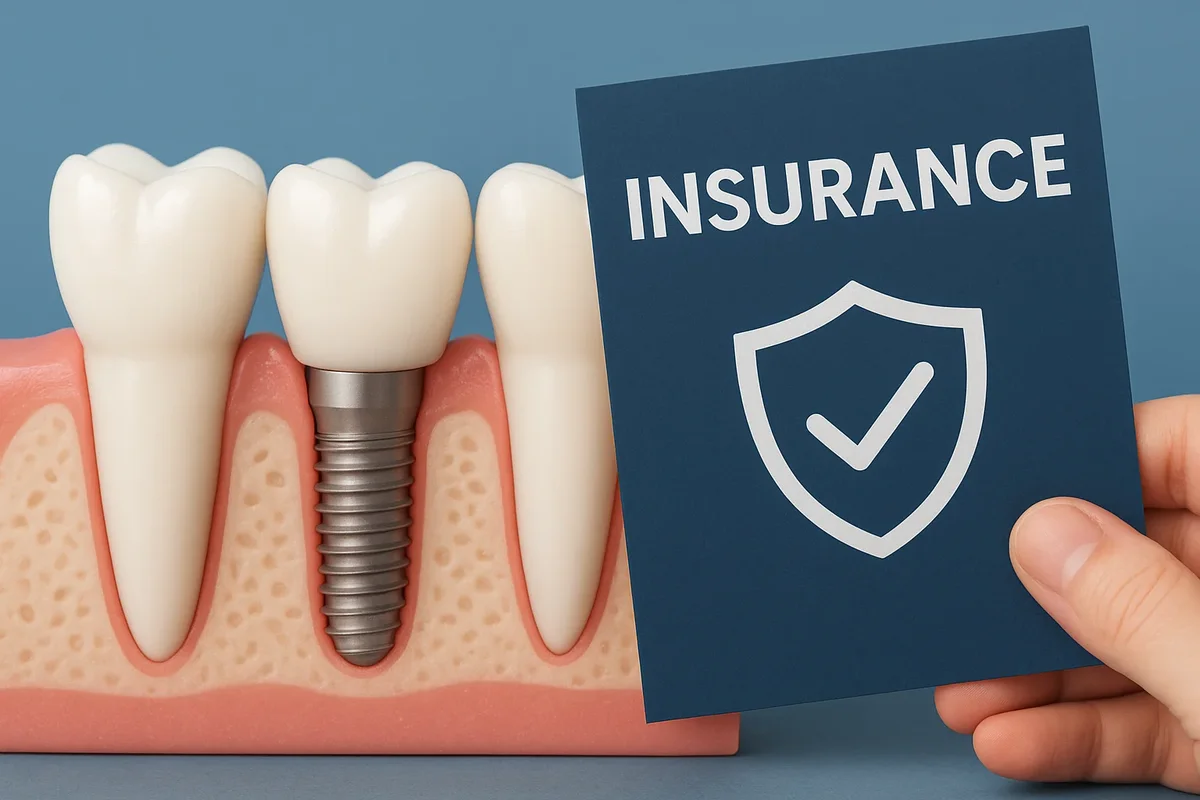
Future Trends: How Insurance Coverage for Dental Implants Is Evolving 🚀
Over the last decade, dental implants covered by insurance has shifted from being a rare exception to a growing standard. As more insurers recognize the medical and functional importance of implants, coverage policies are expanding to reflect modern oral health priorities. Looking ahead, several key trends suggest that patients will soon enjoy even broader access, lower costs, and faster reimbursement for implant treatments. This section explores the current trajectory of insurance evolution, emerging technologies shaping policy decisions, and expert predictions on what patients can expect in the near future.
1. The Rising Recognition of Dental Implants as Medically Necessary
Traditionally, dental implants were considered cosmetic and excluded from coverage. However, mounting scientific evidence has changed that perspective. Studies from institutions like the American Dental Association emphasize that implants prevent bone resorption, restore mastication, and improve long-term oral health — making them essential, not elective. Insurers are beginning to classify implant treatments under “functional restoration,” which makes dental implants covered by insurance far more achievable than in the past.
Modern policies increasingly differentiate between elective cosmetic implants and medically necessary procedures — such as those following trauma, congenital defects, or disease-related tooth loss. This shift aligns dental implant coverage with other reconstructive surgeries like joint replacements or bone grafts.
What This Means for Patients:
- More policies are recognizing implants as medically necessary, not cosmetic.
- Insurers now reimburse procedures that preserve bone and facial structure.
- Medical and dental coverage integration is improving annually.
2. Integration of Dental and Medical Insurance Systems
One of the most significant changes driving the future of dental implants covered by insurance is the integration between dental and medical coverage. Many insurers are merging administrative systems or introducing “hybrid” plans that handle oral surgeries, implant placements, and prosthetic restorations under a unified policy. This eliminates the confusion patients often face when submitting claims to multiple insurers.
As these integrations continue, procedures like bone grafting, sinus lifts, or reconstructive jaw surgeries will likely fall under shared medical-dental categories, making them easier to approve and process.
Expected Developments:
- Streamlined billing systems linking dental and medical codes.
- Automated cross-approval for implant-related surgeries.
- Better communication between dental clinics and insurance databases.
3. AI and Data Analytics in Claim Processing
Artificial intelligence is beginning to play a role in how insurers assess claims for dental implants covered by insurance. Advanced data systems can now evaluate X-rays, CBCT scans, and medical reports automatically to determine eligibility. This reduces human error, shortens review time, and improves transparency.
AI-powered systems also analyze historical claim data to predict which patients are most likely to benefit from implants long-term, encouraging insurers to approve more claims proactively. As machine learning becomes more accurate, claim processing for implants could soon take days instead of weeks.
Advantages of AI-Driven Claim Systems:
- Faster approval times with fewer manual reviews.
- Objective, data-based decisions rather than subjective human assessments.
- Improved fraud detection and reduced documentation redundancies.
4. Expansion of Employer-Sponsored and Governmental Dental Benefits
Employers and government programs are playing an increasing role in expanding access to implant coverage. Many large corporations are now enhancing their employee dental plans to include partial or full implant benefits. Similarly, in several countries, public health initiatives are exploring subsidies for medically necessary implants, especially for elderly or post-trauma patients.
This marks a substantial policy shift: dental implants are being recognized as essential for maintaining nutrition, mental health, and speech function — all of which tie directly to quality of life. As this recognition grows, we can expect the number of cases of dental implants covered by insurance to rise globally.
Examples of Evolving Support:
- Expanded implant coverage in premium corporate dental plans.
- Public healthcare subsidies for trauma and cancer reconstruction cases.
- Inclusion of implant benefits for seniors in retirement programs.
5. The Role of Advocacy and Consumer Awareness
Advocacy from professional organizations, patient communities, and dental clinics is also driving progress. Awareness campaigns highlight the long-term cost savings of implants compared to bridges or dentures. By emphasizing durability and health impact, these efforts encourage insurers to expand benefits for dental implants covered by insurance.
Clinics like Redent Klinik Contact Page play a vital role in educating patients about their insurance rights and assisting them in filing claims correctly. As patients become more informed, insurers face greater pressure to modernize policies to meet demand.
Key Areas of Patient Empowerment:
- Access to online claim portals and digital resources.
- Educational content on how implants improve oral and overall health.
- Increased transparency in policy language and reimbursement structures.
6. Value-Based Insurance Models
Value-based care models, which focus on long-term health outcomes rather than one-time procedures, are starting to influence dental insurance design. Insurers now realize that approving implants can prevent recurring costs related to gum disease, bone loss, and bridge replacements. Consequently, more policies are incorporating implant coverage as part of preventive care strategies.
This model ensures better resource allocation — rather than denying implants and later paying for complications, insurers prefer to cover them upfront. This shift could significantly increase the percentage of dental implants covered by insurance over the next decade.
Advantages of Value-Based Coverage:
- Focuses on patient health outcomes rather than procedure frequency.
- Reduces long-term costs associated with poor oral health.
- Encourages early, proactive restorative care using implants.
7. Global Insurance Policy Trends
Globally, the movement toward comprehensive dental coverage is gaining traction. In Europe and parts of Asia, insurance companies and government health agencies increasingly view dental implants as essential restorative solutions. This trend is expected to influence North American insurance providers as well, creating more parity across global markets.
Countries like Germany, the UK, and Japan already offer partial reimbursement for implant procedures under public insurance for medically justified cases. As international competition rises among insurers, U.S. companies are also expanding implant coverage to remain competitive.
Emerging Global Insights:
- Cross-border dental tourism prompting insurers to extend global coverage.
- Unified billing systems allowing claim portability across countries.
- Rising partnerships between dental networks and insurers worldwide.
8. Predictive Analytics for Personalized Coverage
Future dental insurance plans will likely use predictive analytics to tailor coverage for individual patients. By assessing genetic risk factors, bone density, and oral health history, insurers will offer personalized implant packages. This innovation makes dental implants covered by insurance more efficient, as patients receive customized coverage suited to their biological and clinical profiles.
For example, if AI analysis predicts a high likelihood of jawbone resorption after tooth loss, the policy may automatically pre-approve implant placement as preventive care. This approach ensures faster approvals and reduces delays in treatment initiation.
9. Digital Transformation in Insurance Communication
Another major advancement is the digitization of the insurance communication process. Patients and dentists can now upload X-rays, treatment plans, and receipts directly through online portals. This development accelerates approval cycles and minimizes administrative errors. Clinics like Redent Klinik already use secure digital claim submission systems, helping patients achieve faster results for dental implants covered by insurance.
Moreover, mobile applications will soon allow patients to track claim status, receive instant notifications, and communicate directly with claim adjusters. This level of transparency marks a new era of convenience in dental insurance management.
Conclusion: A Future of Greater Access and Affordability
The future of dental implants covered by insurance looks promising. With the convergence of technology, data analytics, and policy reform, dental implants are rapidly transitioning from luxury procedures to standard care. Patients will increasingly benefit from simplified claim processes, more generous coverage limits, and broader medical recognition of implant therapy. As insurers modernize and patients become more proactive, the vision of universal implant coverage — once a distant dream — is becoming a realistic, achievable goal. 🌟🦷