
One of the most common questions patients ask before starting implant treatment is simple yet important: dental implants doctor called what exactly? If you are considering replacing missing teeth with dental implants, understanding who performs this procedure is essential for both your safety and long-term results. The term dental implants doctor called does not point to just one single job title. Instead, it refers to several dental professionals who are specially trained to place and restore dental implants depending on the complexity of the case.
Many people assume that any dentist can place implants, but this is not always true. While some general dentists are trained in implant dentistry, most implant procedures are performed by specialists. This is why patients often search online for dental implants doctor called to understand who they should trust with such a permanent and life-changing treatment 🦷.
In simple terms, a dental implants doctor called a specialist in implant dentistry may be a periodontist, oral surgeon, prosthodontist, or a highly trained general dentist with advanced implant education. Each of these professionals plays a different role in implant treatment, and choosing the right one depends on your oral health, bone condition, and treatment goals.
The reason this question matters so much is that dental implants are not like fillings or routine cleanings. Implant placement involves surgery, bone integration, and precise prosthetic restoration. That is why knowing the dental implants doctor called for your situation can significantly impact success rates, healing time, and overall satisfaction.
From a medical standpoint, dental implants require an in-depth understanding of jawbone anatomy, bite alignment, gum health, and long-term oral function. This is why a dental implants doctor called a specialist usually undergoes years of additional training beyond dental school. According to the American Dental Association, implant dentistry often requires advanced surgical and restorative education to ensure predictable outcomes.
Patients also search for dental implants doctor called because the terminology can be confusing. Terms like “implant dentist,” “implant specialist,” or “implant surgeon” are often used interchangeably online. However, these are not always official titles. Understanding the correct professional designation helps patients avoid misinformation and choose qualified care 😊.
Another reason people want clarity about the dental implants doctor called is cost transparency. Implant treatment involves multiple stages, and different specialists may be involved at each step. One doctor may place the implant, while another restores the crown. Knowing who does what helps patients better understand treatment plans and pricing structures.
It is also important to note that modern dental clinics often use a team-based approach. In such cases, the dental implants doctor called the implant surgeon works alongside prosthetic specialists to deliver optimal results. This collaborative model improves accuracy, aesthetics, and long-term implant success.
If you are unsure which specialist you need, the best starting point is a professional consultation. Clinics like Redent Klinik offer comprehensive implant evaluations where the appropriate dental implants doctor called for your case is determined after imaging and clinical assessment. You can easily schedule a consultation through the Redent Klinik Contact Page.
In summary, when patients ask dental implants doctor called, they are really asking who is qualified, experienced, and medically trained to perform implant treatment safely. Understanding this distinction empowers you to make informed decisions, avoid unnecessary risks, and achieve long-lasting results with confidence 💙.
Why Patients Often Ask: Dental Implants Doctor Called What?
It may sound like a simple question, but there is a very real reason why so many people search online for dental implants doctor called. Dental implants are a major medical and financial decision, and patients naturally want to know exactly who is responsible for performing such an advanced procedure. Unlike routine dental treatments, implants involve surgery, healing phases, and long-term functional outcomes, which makes the choice of doctor especially important 🦷.
When patients type dental implants doctor called into a search engine, they are usually trying to reduce uncertainty. Many people feel anxious about oral surgery, and understanding the doctor’s title, training, and role helps build trust. The more informed a patient feels, the more confident they become about moving forward with treatment.
Confusion Caused by Multiple Dental Specialties
One major reason behind the popularity of the query dental implants doctor called is confusion. Implant dentistry does not belong to only one dental specialty. Different professionals can legally place implants depending on their education and licensing. This overlap often leaves patients unsure whether they need a surgeon, a specialist, or a general dentist.
For example, a patient may hear terms like “implant dentist,” “implant surgeon,” or “implant specialist” used interchangeably. However, these labels are not always standardized. This is why the phrase dental implants doctor called becomes a key search term—it reflects a patient’s need for clarity and certainty.
Patient Safety and Long-Term Results Matter
Another important reason patients ask dental implants doctor called is safety. Dental implants require precise placement into the jawbone. Incorrect positioning can lead to nerve damage, sinus complications, implant failure, or long-term discomfort. Patients want reassurance that the person performing the procedure has the appropriate surgical background and experience.
From a patient’s perspective, knowing the dental implants doctor called a qualified specialist reduces fear and builds confidence. It also helps set realistic expectations about recovery time, healing, and final results 😊.
The Role of Education and Advanced Training
Patients are increasingly aware that dental implants are not a basic dental skill. This awareness drives the question dental implants doctor called because people want to understand what kind of education is required. Implant specialists often complete additional years of training in surgery, bone biology, and prosthetic design.
Knowing that a dental implants doctor called a specialist has undergone extensive education reassures patients that their treatment is based on science, precision, and experience rather than trial and error.
Financial Commitment Increases the Need for Clarity
Dental implants represent a significant investment. Because of this, patients want to know exactly who they are paying and why. Searching for dental implants doctor called is often part of a broader effort to compare clinics, understand credentials, and justify costs.
Patients may wonder whether paying more for a specialist provides better long-term value. Understanding the dental implants doctor called a trained expert helps patients feel confident that they are investing in durability, aesthetics, and oral health rather than temporary solutions.
Trust, Communication, and Comfort
Beyond technical skill, patients care deeply about trust and communication. When people search for dental implants doctor called, they are often trying to find a professional who can explain the procedure clearly, answer questions patiently, and guide them through each stage of treatment.
A knowledgeable dental implants doctor called a specialist is usually better equipped to educate patients, manage expectations, and address concerns. This human element is just as important as clinical expertise 💬.
Modern Patients Are More Informed Than Ever
Today’s patients actively research their healthcare providers. The search term dental implants doctor called reflects a shift toward informed decision-making. Patients want transparency, credentials, and proof of competence before committing to treatment.
This trend highlights why clinics must clearly explain who performs implant procedures and what qualifications they hold. When patients understand the dental implants doctor called a qualified professional, trust naturally follows.
In conclusion, patients ask dental implants doctor called because they want clarity, safety, value, and peace of mind. This question represents a deeper desire to make the right healthcare choice—one that leads to a confident smile, strong oral function, and long-term success 😄.
Different Types of Dental Implant Specialists Explained
When patients search for dental implants doctor called, they are often surprised to learn that there is more than one correct answer. Dental implant treatment is a multidisciplinary field, meaning several types of dental professionals may be involved depending on the patient’s needs. Understanding these different specialists helps patients make informed decisions and feel confident about their treatment journey 🦷.
The phrase dental implants doctor called does not describe a single job title because implant dentistry combines surgery, restorative dentistry, and long-term oral health management. Each specialist brings a unique skill set, and in many advanced clinics, they work together as a coordinated team.
Periodontists: Gum and Bone Specialists
One of the most common answers to dental implants doctor called is a periodontist. Periodontists specialize in gum health and the supporting structures of the teeth, including jawbone. Since dental implants rely on healthy bone and gum tissue, periodontists are highly qualified to place implants.
A periodontist receives additional years of training after dental school, focusing on surgical procedures, bone regeneration, and implant placement. For patients with gum disease, bone loss, or a history of periodontal problems, the dental implants doctor called a periodontist is often the safest and most effective choice.
Oral and Maxillofacial Surgeons
Another common answer to dental implants doctor called is an oral surgeon. Oral and maxillofacial surgeons are trained extensively in surgical procedures involving the face, jaw, and mouth. They are often responsible for complex implant cases that involve bone grafting, sinus lifts, or multiple missing teeth.
Because of their surgical expertise, oral surgeons are frequently the dental implants doctor called for patients with complicated anatomical conditions or medical risk factors. Their training allows them to manage both routine and highly complex implant surgeries safely and efficiently.
When Oral Surgeons Are Preferred
If a patient requires extensive bone augmentation, wisdom tooth removal combined with implant placement, or treatment under sedation, the dental implants doctor called an oral surgeon may be recommended. Their hospital-based surgical training adds an extra layer of safety for high-risk cases.
Prosthodontists: Restoration and Aesthetics Experts
A less commonly known but equally important answer to dental implants doctor called is a prosthodontist. Prosthodontists specialize in restoring missing teeth and designing crowns, bridges, and implant-supported dentures. While they may not always place the implant themselves, they play a critical role in the final outcome.
In many cases, the dental implants doctor called a prosthodontist focuses on bite alignment, aesthetics, and long-term functionality. This is especially important for patients seeking natural-looking results or full-mouth implant restorations 😊.
Team-Based Implant Dentistry
Modern implant dentistry often involves collaboration. A periodontist or oral surgeon may place the implant, while a prosthodontist designs and attaches the final crown. In this model, the dental implants doctor called varies by treatment stage, but the patient benefits from specialized expertise at every step.
General Dentists with Advanced Implant Training
Some general dentists also qualify as the dental implants doctor called for certain cases. These dentists complete advanced implant courses, certifications, and hands-on training programs. For straightforward implant cases with good bone quality, a highly trained general dentist may safely perform the procedure.
However, it is important for patients to verify experience and credentials. While a general dentist can be the dental implants doctor called in select cases, complex situations often require specialist involvement.
Why Knowing the Difference Matters
Understanding the different answers to dental implants doctor called empowers patients to ask the right questions. Instead of assuming all implant providers have the same background, patients can evaluate training, specialization, and experience.
This knowledge reduces risk, improves outcomes, and ensures that implant treatment is tailored to individual needs. Whether the dental implants doctor called a periodontist, oral surgeon, prosthodontist, or advanced general dentist, the key is matching the specialist to the complexity of the case.
In conclusion, the reason there are multiple answers to dental implants doctor called is because implant dentistry is both surgical and restorative. Each specialist plays a vital role, and understanding these roles helps patients achieve safe, long-lasting, and aesthetically pleasing results 😄.
Is a Periodontist the Same as a Dental Implants Doctor?
One of the most frequent follow-up questions after learning about implant dentistry is whether a periodontist is the same as the dental implants doctor called for treatment. The short answer is: very often, yes. Periodontists are among the most qualified professionals to perform dental implant procedures, but understanding why requires a closer look at their training and role in oral health 🦷.
Patients commonly search for dental implants doctor called because they want a clear and trustworthy specialist. Periodontists are dentists who specialize in the prevention, diagnosis, and treatment of gum disease and in the placement of dental implants. Their expertise makes them a top choice for implant surgery, especially when gum and bone health are critical factors.
What Makes Periodontists Highly Qualified for Implants?
After completing dental school, periodontists undergo several additional years of specialized training. This advanced education focuses heavily on surgical techniques, bone regeneration, soft tissue management, and implant placement. Because dental implants depend on the successful integration of the implant with the jawbone, this background is essential.
For this reason, many professionals agree that a periodontist is often the dental implants doctor called when patients want a high level of surgical precision and predictable outcomes. Their daily clinical work involves the very tissues that support implants—gums and bone.
Gum Health and Implant Success
Healthy gums are a foundation for successful implants. Patients with a history of gum disease are at higher risk of implant complications if not properly managed. This is where the dental implants doctor called a periodontist becomes especially valuable.
Periodontists are trained to treat gum disease before implant placement and to monitor gum health long after the procedure. This long-term approach significantly improves implant survival rates and overall oral health 😊.
Bone Loss and Regenerative Procedures
Bone loss is a common challenge for patients considering implants. Periodontists are experts in bone grafting and regenerative procedures that rebuild lost bone. When patients ask dental implants doctor called for cases involving bone deficiency, a periodontist is often the ideal answer.
By restoring bone volume, periodontists create a stable foundation for implants, making treatment possible even for patients who were previously told they were not candidates.
Are Periodontists Always the Best Choice?
While periodontists are highly qualified, they are not the only answer to dental implants doctor called. The best specialist depends on the complexity of the case. For example, patients needing extensive jaw surgery or sedation may benefit more from an oral surgeon. Those focused on cosmetic restoration may work closely with a prosthodontist.
However, for patients whose primary concerns involve gum health, bone support, and implant stability, the dental implants doctor called a periodontist is often the most appropriate choice.
Collaboration with Other Specialists
In modern dentistry, implant treatment is often collaborative. A periodontist may place the implant, while another specialist restores the crown. In such cases, the dental implants doctor called varies by stage of treatment, but the periodontist remains central to surgical success.
This team-based approach ensures that each aspect of treatment is handled by a professional with focused expertise, leading to better long-term results 😄.
How Patients Benefit from Seeing a Periodontist
Patients who choose a periodontist as the dental implants doctor called often benefit from reduced complication risks, improved healing, and personalized maintenance plans. Periodontists emphasize prevention and long-term care, not just the surgical procedure itself.
They also educate patients on how to maintain implants properly, reducing the risk of peri-implantitis and other complications.
In conclusion, while a periodontist is not the only possible answer to dental implants doctor called, they are one of the most trusted and scientifically grounded options. Their deep understanding of gum and bone biology makes them uniquely qualified to deliver safe, durable, and successful implant outcomes.
Can a Prosthodontist Be the Dental Implants Doctor Called for Complex Cases?
When patients continue researching dental implants doctor called, they often encounter the term prosthodontist and wonder whether this specialist is the right choice for implant treatment. The answer is yes—especially in complex or aesthetically demanding cases. Prosthodontists are dental specialists who focus on restoring missing teeth, and their role in implant dentistry is both critical and highly specialized 🦷.
Unlike other specialists who primarily focus on surgical placement, a prosthodontist is often the dental implants doctor called when precision, bite function, and natural appearance are top priorities. Their training centers on how teeth should look, feel, and function once treatment is complete.
Who Is a Prosthodontist?
A prosthodontist is a dentist who completes several additional years of advanced training after dental school. This education focuses on complex dental restorations, including crowns, bridges, dentures, and implant-supported prosthetics. Because dental implants ultimately serve as replacements for missing teeth, prosthodontists are uniquely qualified to plan and manage these restorations.
For patients asking dental implants doctor called when aesthetics and long-term functionality matter most, a prosthodontist is often a key part of the treatment team.
The Prosthodontist’s Role in Implant Dentistry
In many cases, a prosthodontist does not place the implant surgically. Instead, they plan the entire treatment from the final result backward. This approach is known as “prosthetically driven implant planning.” In this model, the dental implants doctor called a prosthodontist determines the ideal implant position to support the final crown or bridge.
This planning-first approach reduces complications and ensures that implants are placed in positions that support proper chewing, speech, and facial aesthetics 😊.
Complex and Full-Mouth Implant Cases
Prosthodontists are often the dental implants doctor called for complex cases such as full-mouth restorations, implant-supported dentures, or patients with bite problems. These treatments require an advanced understanding of jaw alignment, occlusion, and force distribution.
For example, in All-on-4 or All-on-6 implant cases, a prosthodontist plays a critical role in designing the final prosthetic teeth so that they look natural and function comfortably over many years.
Collaboration with Implant Surgeons
In modern implant dentistry, collaboration is essential. A prosthodontist often works closely with a periodontist or oral surgeon. While the surgeon places the implant, the prosthodontist designs and attaches the final restoration. In this scenario, the dental implants doctor called changes depending on the phase of treatment.
This team-based approach ensures that both surgical accuracy and restorative excellence are achieved. Patients benefit from multiple layers of expertise rather than relying on a single provider.
Why Prosthodontists Are Essential for Aesthetic Results
Dental implants are not only about replacing missing teeth—they are also about restoring confidence. Prosthodontists are experts in tooth shape, color, and alignment. When patients care deeply about how their smile will look, the dental implants doctor called a prosthodontist becomes especially important.
They consider facial proportions, lip support, and smile symmetry, ensuring that implant restorations blend seamlessly with natural teeth 😄.
Long-Term Function and Maintenance
Another reason a prosthodontist may be the dental implants doctor called is long-term durability. Improperly designed restorations can lead to implant overload, fractures, or discomfort. Prosthodontists are trained to distribute biting forces correctly, protecting implants over time.
They also develop maintenance plans to help patients care for their implants and restorations, extending their lifespan and reducing future complications.
Is a Prosthodontist Right for Everyone?
Not every implant case requires a prosthodontist as the primary provider. For straightforward single-tooth implants, another specialist may handle both placement and restoration. However, for patients with multiple missing teeth, bite issues, or cosmetic concerns, the dental implants doctor called a prosthodontist is often the best choice.
Ultimately, understanding whether a prosthodontist should be involved helps patients make informed decisions. When complexity increases, so does the value of specialized expertise.
In conclusion, a prosthodontist can absolutely be the dental implants doctor called for complex cases. Their advanced training in restoration, aesthetics, and function makes them indispensable for achieving predictable, long-lasting, and beautiful implant results 💙.
Oral Surgeons and Their Role in Dental Implant Surgery
Another very common and highly trusted answer to the question dental implants doctor called is an oral and maxillofacial surgeon. Oral surgeons play a central role in dental implant surgery, particularly in cases that require advanced surgical skill, complex anatomy management, or additional procedures such as bone grafting. For many patients, especially those with challenging conditions, the dental implants doctor called an oral surgeon is the safest and most effective choice 🦷.
Oral surgeons are dental specialists with extensive surgical training focused on the mouth, jaw, and facial structures. Their background makes them uniquely qualified to handle the surgical aspects of implant placement, especially when complications or anatomical limitations are present.
Who Is an Oral and Maxillofacial Surgeon?
An oral and maxillofacial surgeon is a dentist who has completed several additional years of hospital-based surgical training after dental school. This training includes procedures involving bone, nerves, sinuses, and facial structures. When patients search for dental implants doctor called in relation to surgery, oral surgeons are often at the top of the list.
Because implant placement involves drilling into the jawbone and placing a titanium fixture, surgical expertise is critical. Oral surgeons perform these procedures daily, making them highly experienced in managing both routine and complex implant cases.
When Is an Oral Surgeon the Best Choice?
Not every implant case requires an oral surgeon, but many do. Patients with severe bone loss, impacted teeth, sinus involvement, or medical risk factors often benefit from seeing the dental implants doctor called an oral surgeon. Their ability to manage complications and perform advanced surgical techniques adds a strong layer of safety.
For example, upper jaw implants may require sinus lift procedures to create enough bone height. In such cases, the dental implants doctor called an oral surgeon is especially valuable due to their experience working near sinus cavities.
Bone Grafting and Advanced Procedures
Bone grafting is one of the most common additional procedures required before implant placement. Oral surgeons are experts in harvesting, placing, and stabilizing bone graft materials. When patients ask dental implants doctor called for cases involving bone reconstruction, oral surgeons are frequently recommended.
They are also trained to manage nerve positioning, reducing the risk of numbness or nerve injury during implant surgery.
Sedation and Patient Comfort
Another major reason patients choose the dental implants doctor called an oral surgeon is access to advanced sedation options. Oral surgeons are licensed to provide various levels of anesthesia, including IV sedation and general anesthesia.
This is especially helpful for anxious patients or those undergoing multiple implant placements in a single visit. Comfort and safety during surgery significantly improve the overall patient experience 😊.
Oral Surgeons vs Other Implant Specialists
While oral surgeons excel in surgery, they may not always complete the final restoration. In many cases, the dental implants doctor called an oral surgeon places the implant, while a prosthodontist or general dentist attaches the crown later.
This division of roles ensures that each stage of treatment is handled by the most qualified professional. Surgery is managed by the oral surgeon, while aesthetics and bite alignment are handled by restorative specialists.
Team-Based Implant Care
Modern dental implant treatment often relies on teamwork. The dental implants doctor called an oral surgeon works closely with other specialists to plan implant placement precisely. This coordination improves outcomes and minimizes the risk of implant failure.
Digital imaging, surgical guides, and 3D planning tools further enhance accuracy, allowing oral surgeons to place implants with remarkable precision.
Long-Term Success and Surgical Precision
Implant success begins with proper placement. Poor angulation or depth can compromise the entire treatment. This is why many patients feel reassured knowing the dental implants doctor called an oral surgeon has handled the surgical phase.
Their deep understanding of facial anatomy and healing biology contributes directly to long-term implant stability and patient satisfaction 😄.
In conclusion, an oral and maxillofacial surgeon is one of the most respected answers to dental implants doctor called, particularly for surgical and complex cases. Their advanced training, experience with bone and anatomy, and ability to manage complications make them a cornerstone of successful implant dentistry.
General Dentists vs Implant Specialists: Who Should You Choose?
As patients continue researching dental implants doctor called, one of the most practical questions they face is whether a general dentist is sufficient or if a specialist is necessary. This decision can significantly affect treatment outcomes, costs, and long-term implant success. While both options can be appropriate in certain situations, understanding the differences helps patients make confident, informed choices 🦷.
The term dental implants doctor called does not automatically exclude general dentists. Many general dentists today receive advanced training in implant dentistry. However, the scope of their expertise and experience may differ from that of dedicated implant specialists.
What General Dentists Can Offer
A general dentist is trained to diagnose oral health conditions, perform restorative procedures, and manage overall dental care. Some general dentists pursue additional certifications and continuing education courses in implant dentistry. In straightforward cases, these dentists may be the dental implants doctor called for single-tooth replacements with adequate bone and healthy gums.
For patients with good oral health, no significant bone loss, and simple implant needs, a highly trained general dentist can safely perform implant placement and restoration 😊.
Advantages of Choosing a General Dentist
One benefit of choosing a general dentist as the dental implants doctor called is convenience. Patients may already have an established relationship with their dentist, which can improve communication and trust. Additionally, treatment may be completed in one location without referrals.
General dentists may also offer more flexible scheduling and potentially lower costs for uncomplicated cases.
Limitations of General Dentists in Implant Dentistry
Despite these advantages, general dentists may have limitations. Implant dentistry involves surgical precision, anatomical complexity, and long-term risk management. In complex cases, a general dentist may not be the ideal dental implants doctor called.
Patients with bone loss, gum disease, medical conditions, or aesthetic concerns often require specialist-level expertise. In such cases, relying solely on a general dentist may increase the risk of complications or implant failure.
What Implant Specialists Bring to the Table
Implant specialists—including periodontists, oral surgeons, and prosthodontists—focus extensively on implant-related procedures. For patients seeking the most qualified dental implants doctor called, specialists often provide a higher level of predictability and safety.
These professionals manage implant cases daily and are trained to handle complications such as bone grafting, sinus lifts, and complex restorations.
Experience and Case Volume
One of the biggest differences between a general dentist and a specialist is experience. Specialists typically place and restore far more implants over their careers. When patients ask dental implants doctor called with the highest success rates, specialists often stand out.
Higher case volume translates into refined techniques, faster problem-solving, and better long-term outcomes.
How to Decide Who Is Right for You
The right dental implants doctor called depends on your individual needs. If your case is simple and your general dentist has documented implant training, that may be sufficient. However, if your case involves multiple missing teeth, bone loss, or cosmetic demands, a specialist is usually the safer choice.
Patients should ask direct questions about training, experience, and complication management before choosing their provider.
Second Opinions and Referrals
It is perfectly acceptable—and often wise—to seek a second opinion. A responsible general dentist will refer patients to a specialist when appropriate. This collaborative approach ensures that the dental implants doctor called for your case is truly the best match.
Team-based care improves outcomes and reduces unnecessary risks 😄.
Long-Term Success Should Guide Your Choice
Dental implants are intended to last for decades. Choosing the right dental implants doctor called is not just about convenience or cost—it is about long-term success, comfort, and oral health stability.
While general dentists play an important role in implant dentistry, specialists remain the gold standard for complex and high-risk cases.
In conclusion, deciding between a general dentist and an implant specialist depends on case complexity, provider experience, and patient expectations. Understanding these differences empowers patients to choose the dental implants doctor called who will deliver safe, durable, and satisfying results 💙.
How to Know If Your Dental Implant Doctor Is Qualified
Once patients understand the different answers to dental implants doctor called, the next crucial step is determining whether the chosen professional is truly qualified. Dental implants are a long-term medical solution, and the success of treatment depends heavily on the doctor’s education, experience, and clinical judgment. Knowing how to evaluate credentials helps patients avoid unnecessary risks and make confident decisions 🦷.
Because implant dentistry is practiced by various professionals, the title alone is not enough. When patients search for dental implants doctor called, they are really asking how to identify someone who is safe, skilled, and experienced.
Education and Formal Training Matter
The first factor to evaluate is education. A qualified dental implants doctor called a specialist will have completed advanced training beyond dental school. This may include a specialty program in periodontics, oral surgery, or prosthodontics, or extensive post-graduate implant education for general dentists.
Patients should not hesitate to ask where the doctor received implant training and how many years of focused education they completed. Formal training indicates that the dental implants doctor called understands both the science and surgical principles behind implants 😊.
Continuing Education and Certifications
Implant dentistry continues to evolve. A qualified dental implants doctor called stays current through continuing education, certifications, and professional memberships. Participation in implant-focused courses and conferences reflects a commitment to excellence.
Doctors who invest in ongoing education are better equipped to use modern techniques, digital planning tools, and evidence-based protocols.
Experience and Case Volume
Experience is one of the most reliable indicators of competence. When evaluating a dental implants doctor called, patients should ask how many implants the doctor has placed or restored. A higher case volume usually correlates with refined skills and better outcomes.
Experience also means the ability to recognize potential complications early and manage them effectively. This level of insight only develops over time.
Before-and-After Documentation
A reputable dental implants doctor called should be able to show real case examples. Before-and-after photos, digital scans, or case studies demonstrate both technical ability and aesthetic judgment.
These examples help patients visualize results and confirm that the doctor has experience with cases similar to theirs.
Use of Diagnostic Technology
Modern implant dentistry relies on advanced diagnostics. A qualified dental implants doctor called should use 3D imaging such as CBCT scans to assess bone volume, nerve positioning, and implant placement accuracy.
Doctors who rely only on basic X-rays may miss critical details, increasing the risk of complications.
Treatment Planning and Transparency
Clear communication is another hallmark of a qualified dental implants doctor called. The doctor should explain the procedure step by step, discuss alternatives, and outline risks honestly.
Patients should receive a comprehensive treatment plan, including timelines, stages, and maintenance expectations. Transparency builds trust and helps patients feel informed and in control 😄.
Willingness to Refer or Collaborate
A confident and ethical dental implants doctor called knows when collaboration is needed. Referring to or working with other specialists shows professionalism, not weakness.
This team-based mindset ensures that patients receive the highest standard of care for every phase of treatment.
Patient Reviews and Reputation
Patient feedback offers valuable insight. Reviews and testimonials can reveal how a dental implants doctor called treats patients, manages discomfort, and supports long-term care.
Consistently positive reviews often reflect strong communication skills, technical competence, and patient satisfaction.
Long-Term Follow-Up and Maintenance
Dental implants require ongoing care. A qualified dental implants doctor called will emphasize follow-up visits, hygiene protocols, and implant maintenance.
Doctors who focus only on placement without long-term planning may compromise implant longevity.
In conclusion, identifying a qualified dental implants doctor called requires looking beyond titles. Education, experience, technology, transparency, and long-term commitment all matter. When patients evaluate these factors carefully, they greatly increase their chances of safe treatment, successful healing, and lasting implant results 💙.
When Should You See a Dental Implant Specialist?
After understanding the different answers to dental implants doctor called, many patients ask an equally important question: when is it truly necessary to see a specialist? While some implant cases are straightforward, others require advanced expertise. Knowing the right time to consult a specialist can prevent complications, reduce long-term costs, and significantly improve treatment success 🦷.
The search for dental implants doctor called often reflects uncertainty about whether a general dentist is enough or if specialist care is required. The answer depends on your oral health condition, medical history, and treatment goals.
Signs You Should See an Implant Specialist Immediately
There are clear situations where the dental implants doctor called a specialist is not optional but essential. Patients with advanced gum disease, bone loss, or multiple missing teeth should seek specialist evaluation early in the process.
If you have been missing teeth for a long time, bone shrinkage is likely. In such cases, a specialist such as a periodontist or oral surgeon is often the dental implants doctor called to assess bone regeneration needs.
History of Gum Disease or Bone Loss
Patients with a history of periodontal disease face higher implant risks. Gum inflammation and bone loss can compromise implant stability. This is where the dental implants doctor called a periodontist becomes particularly important.
Specialists can treat gum disease, rebuild bone, and create a stable foundation before implant placement, increasing long-term success 😊.
Complex Medical Conditions
Certain medical conditions require careful planning. Diabetes, osteoporosis, autoimmune diseases, and smoking history can affect healing. In these cases, the dental implants doctor called a specialist has the experience to manage risks appropriately.
Specialists are trained to coordinate care with physicians and adjust treatment protocols to ensure safe outcomes.
Multiple or Full-Mouth Implants
Replacing multiple teeth or planning full-mouth implant restorations is complex. Bite alignment, force distribution, and aesthetics must all be carefully balanced. For these cases, the dental implants doctor called a specialist—often a prosthodontist working with a surgeon—is strongly recommended.
These treatments require advanced planning and execution that goes beyond basic implant placement.
All-on-4 and Similar Systems
Procedures like All-on-4 demand precise implant angulation and prosthetic design. The dental implants doctor called for these treatments typically has extensive experience in full-arch restorations.
Improper planning can lead to mechanical failure, discomfort, or aesthetic dissatisfaction.
Previous Implant Failure
If you have experienced implant failure in the past, seeing a specialist is critical. Failed implants often indicate underlying issues such as infection, poor bone quality, or incorrect placement. In such cases, the dental implants doctor called a specialist can identify and correct the root cause.
Specialists are trained in implant removal, site rehabilitation, and re-implantation strategies.
Aesthetic Expectations and Smile Design
For patients with high aesthetic expectations, the dental implants doctor called a specialist ensures natural-looking results. Front-tooth implants, smile line considerations, and facial harmony require advanced restorative planning.
Specialists consider not only the tooth but also lips, gums, and facial structure 😄.
When a General Dentist Refers You
A trustworthy general dentist knows when to refer. If your dentist recommends a specialist, it is usually because your case exceeds routine complexity. This referral ensures that the dental implants doctor called for your case has the appropriate expertise.
Referrals should be seen as a positive step toward better care, not an inconvenience.
Second Opinions Are a Smart Choice
If you are unsure, seeking a second opinion from a specialist can provide clarity. A qualified dental implants doctor called a specialist will evaluate your case objectively and explain whether advanced care is necessary.
This step often gives patients peace of mind and confidence in their treatment decision.
Timing Matters for Implant Success
Delaying specialist care can worsen bone loss and complicate treatment. Seeing the right dental implants doctor called at the right time preserves options and improves outcomes.
Early consultation allows for preventive planning rather than corrective treatment later.
In conclusion, you should see a specialist whenever complexity, risk, or long-term success is a concern. Understanding when the dental implants doctor called a specialist is needed empowers patients to protect their oral health, investment, and quality of life 💙.
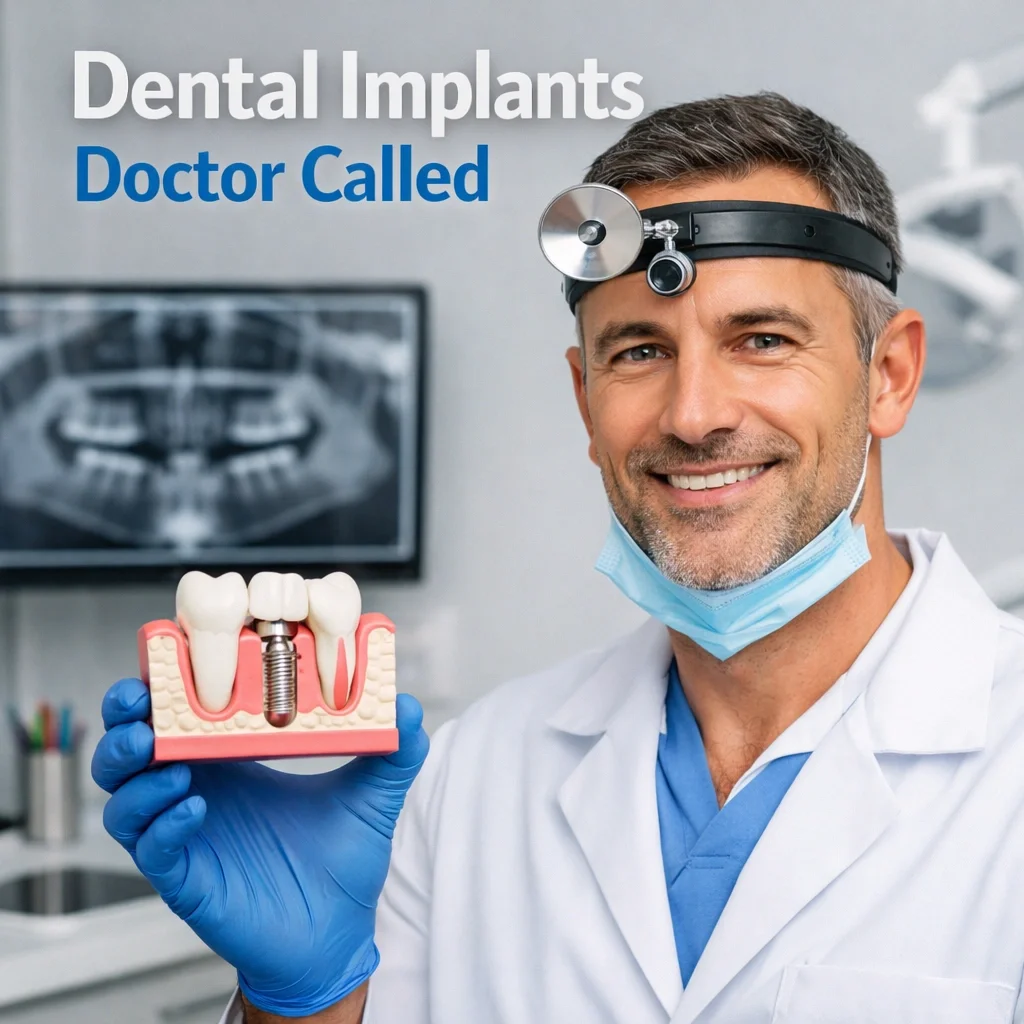
Choosing the Right Dental Implant Doctor for Long-Term Success
Understanding dental implants doctor called is only part of the journey. The most important decision patients ultimately face is choosing the right provider for long-term success. Dental implants are designed to last for decades, and the quality of the doctor’s planning, execution, and follow-up care directly affects whether that promise is fulfilled 🦷.
Patients often search for dental implants doctor called because they want reassurance—not just about titles, but about outcomes. Long-term success means stable implants, healthy gums, natural appearance, and comfortable function year after year.
Why Long-Term Thinking Matters in Implant Dentistry
Dental implants are not short-term treatments. Once placed, they integrate with the jawbone and become part of your oral structure. Choosing the wrong dental implants doctor called for your case can lead to complications that appear years later, such as bone loss, gum inflammation, or implant failure.
A long-term mindset ensures that implants are placed in the correct position, with proper spacing, depth, and angulation. This level of foresight separates an average provider from a truly qualified dental implants doctor called.
Experience Over Marketing Claims
Many clinics advertise implant services, but marketing language can be misleading. When evaluating a dental implants doctor called, patients should prioritize proven experience over promotional promises.
Ask how long the doctor has been placing implants, how many cases they handle annually, and whether they manage long-term follow-up care. True expertise is built over time, not through advertising slogans 😊.
Consistency in Implant Protocols
A reliable dental implants doctor called follows evidence-based protocols consistently. This includes proper diagnostics, sterile surgical technique, controlled loading timelines, and structured maintenance programs.
Consistency reduces risks and improves predictability, which is essential for implants intended to last decades.
The Importance of Comprehensive Treatment Planning
Long-term success begins before surgery. A qualified dental implants doctor called takes time to plan thoroughly—evaluating bone quality, bite forces, gum health, and aesthetic goals.
This planning phase may include 3D imaging, digital smile design, and collaboration with other specialists. Rushed planning often leads to compromised results.
Individualized Care, Not One-Size-Fits-All
Every patient’s anatomy and goals are different. The right dental implants doctor called customizes treatment rather than applying the same approach to every case.
Customization ensures that implants align with facial structure, speech patterns, and chewing dynamics.
Post-Treatment Care and Maintenance
Implant success does not end when the crown is placed. Ongoing care is essential. A responsible dental implants doctor called provides clear maintenance guidelines, follow-up schedules, and hygiene recommendations.
Regular monitoring allows early detection of issues such as inflammation or bite imbalance, protecting implants long term 😄.
Communication and Patient Education
Choosing the right dental implants doctor called also means choosing someone who communicates clearly. Patients should feel comfortable asking questions and fully understand each stage of treatment.
Doctors who educate their patients empower them to care for their implants properly, significantly extending implant lifespan.
Trust and Professional Ethics
A trustworthy dental implants doctor called is honest about limitations. They will not push implants if alternative treatments are more appropriate, and they will recommend referrals when necessary.
Ethical decision-making is a strong indicator of long-term success.
Making the Final Decision with Confidence
Ultimately, choosing the right dental implants doctor called is about aligning expertise with your specific needs. Titles matter, but experience, planning, communication, and aftercare matter more.
Patients who take time to research, ask questions, and seek qualified professionals are far more likely to enjoy stable, comfortable, and natural-looking implants for many years.
In conclusion, long-term success with dental implants depends on choosing the right provider—not just any dental implants doctor called, but one who prioritizes precision, ethics, and lifelong oral health 💙.